NBQ Album Release

I first caught the New Bop Quintet (NBQ) a few months ago, and since that appearance, they have had considerable success; playing at the Wellington Jazz Festival, appearing in large venues and touring. Now after months on the road they have an album out. An album that could best be termed, a love letter to Hard Bop; that accessible blues-infused genre that quickly became a touchstone for Jazz lovers of all stripes. Outside of the Great American Songbook, the Hard-Bop era produced the best-loved Jazz standards. Many of them are featured on the album. 
Putting out albums of familiar Jazz standards was avoided for a time as it invited comparisons with the originals. Now seventy years later there are fresh ears and enough distance to evaluate equitably. It is a well-recorded album and the musicianship is of a high standard. In addition, the more traditional stylists sound comfortable playing alongside modern conceptionalists like pianist Field. It has always been a feature of Jazz that the older styles influence subsequent developments. This is the perpetual two-way dialogue that keeps the music relevant. 

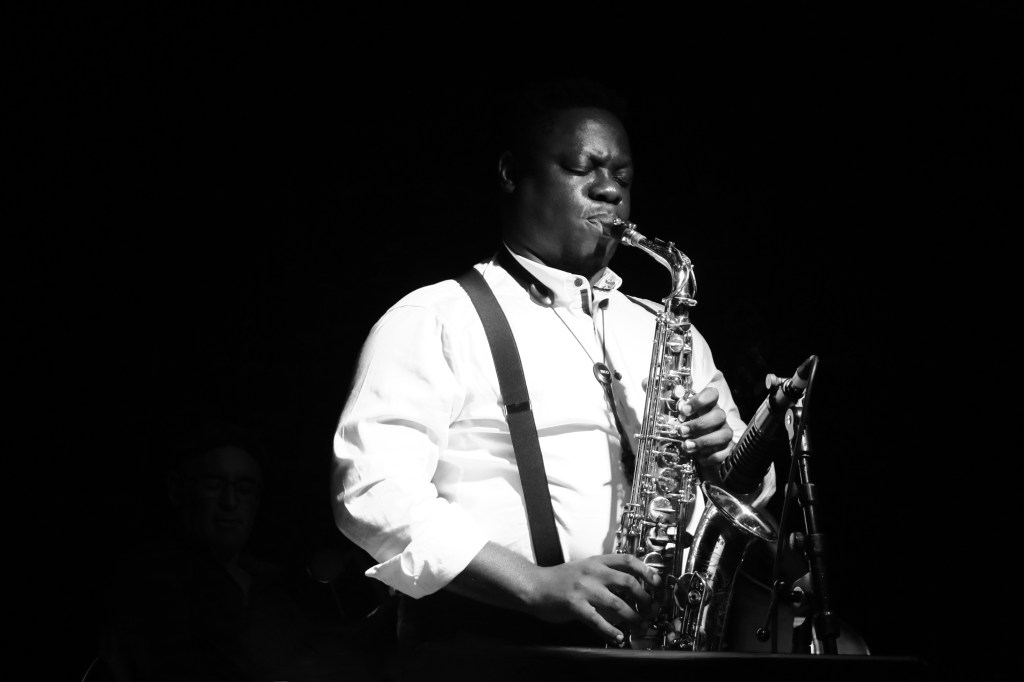
I have never heard Mike Booth sound better, and Pete France, who we wish we heard more often. Both played beautifully, that tone. As they played there was the pervading sense that an essence had been captured. The most experienced of the quintet members is undoubtedly Dr Frank Gibson Jr. He is a versatile drummer and one of the most recorded artists in Aotearoa. He always sounds great but he absolutely killed it on this date. With rhythms like that pulsing underneath them, the band must have felt that anything was possible. His ability to carve up time and urge others on is his gift.
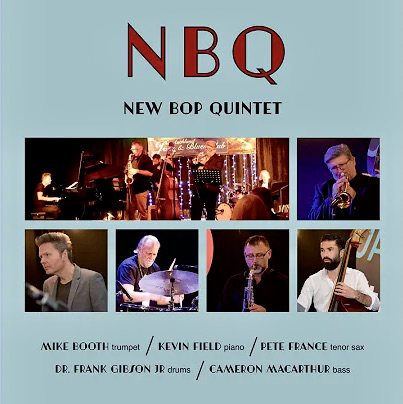
Graduating from the UoA Jazz school in 2012, Cameron McArthur was the youngest band member, but since graduating he quickly established himself as one of the pre-eminent bass players in the city. Lastly, on piano, Keven Field. His rhythmic and harmonic approach is unique and forward-looking. He is undoubtedly a modern stylist and most at home alongside the likes of Matt Penman, Julien Lage or Mike Moreno. Having him on board gave the album a strong post-millennium foothold.  

While predominantly featuring much-loved standards, there were also four originals. One each was penned by Gibson and McArthur and two by Booth. The compositions all referenced the Hard Bop style and did so convincingly. Gibson’s tune ‘Beaver Fever’ was irresistible. The last time HBQ played I singled out ‘Speak no Evil’ (Shorter) and Soy Califa (Gorden) for comment. During Wednesdays live gig, the arrangements of Green Dolphin Street (Kaper Bronislaw) and Stablemates (Golson) stood out. The arrangements were by France and Field respectively. Booth is also a fine arranger (watch out for the AJO’s new release.

Gibson

The gig lineup differed from the album personnel in one respect, Wil Goodinson had replaced McArthur. He was the youngest band member by a wide margin, but he gave a great performance. His solos were melodic and inventive and he is already nipping at the heels of the more experienced bass players. Lastly, credit must be given to the producers David Innes and Terrance O’Neil-Joyce. They poured heart and soul into this project and should take a bow. 

Mike Booth (trumpet), Dr Frank Gibson Jr (drums), Keven Field (piano), Pete France (tenor saxophone), Cameron McArthur (bass), *live gig Wil Goodinson (bass). The album is out on the Manu 6022 Label and available from stores.
JazzLocal32.com is rated as one of the 50 best Jazz Blogs in the world by Feedspot. The author is a professional member of the Jazz Journalists Association, poet & writer. Some of these posts appear on related sites.
Trioglodytes

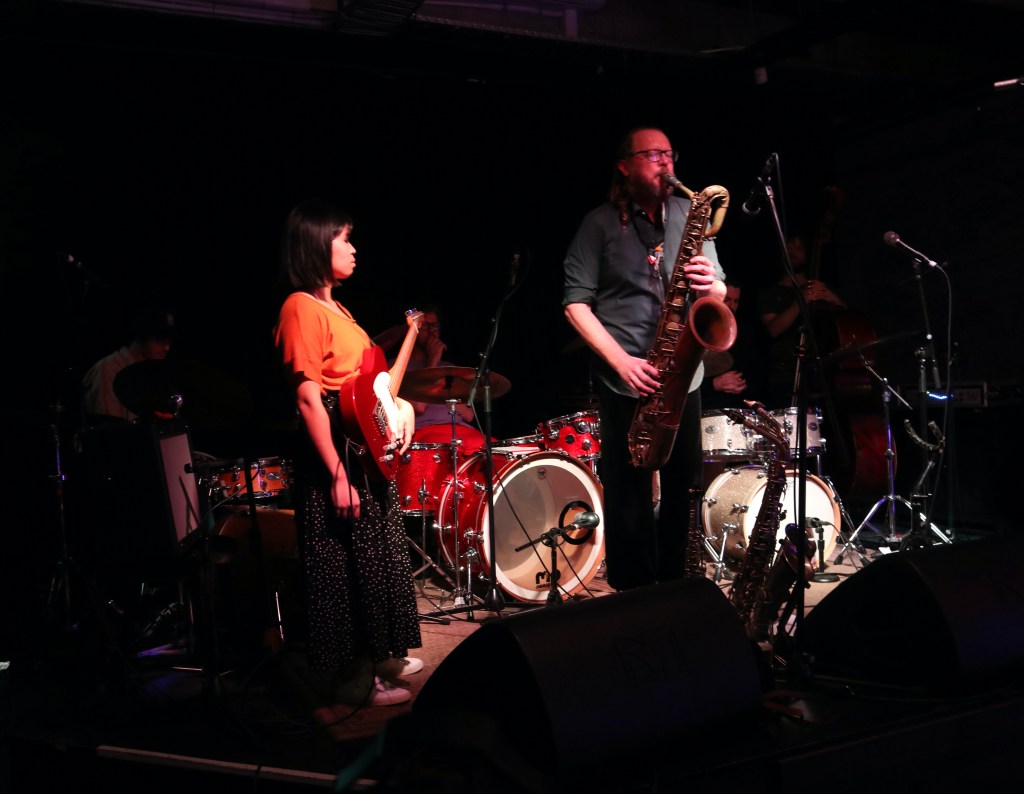
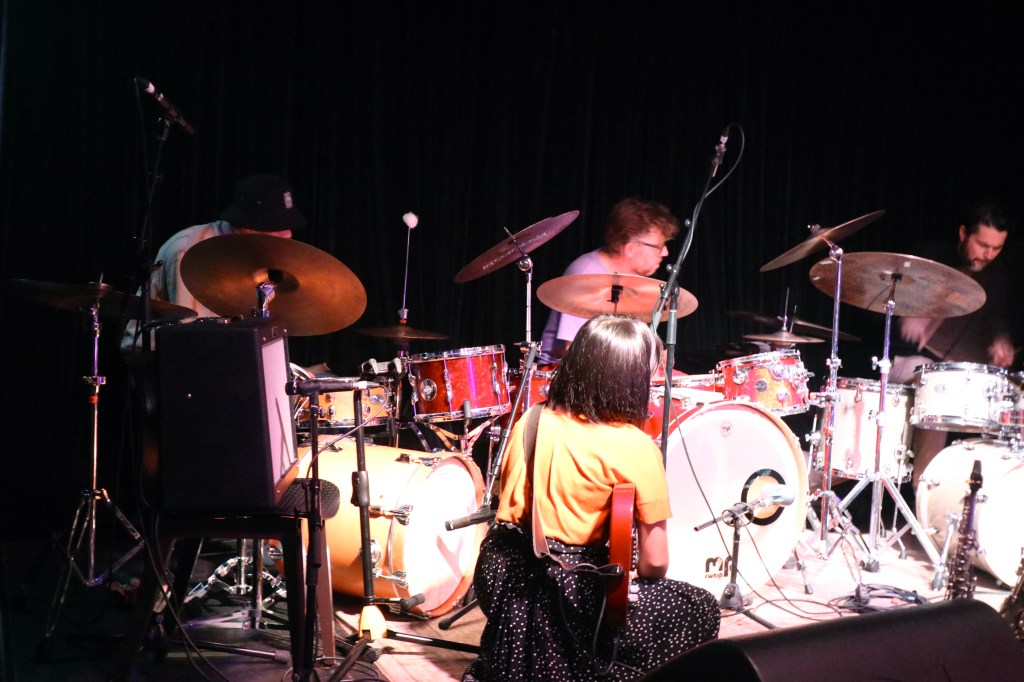
The Jeff Henderson Trioglodyte project came into being during a period that future anthropologists might well dub the neo-geographical isolation era. The Trioglodyte name evokes an image of cave-dwellers, of waiting out a storm and sheltering beside a roaring fire as the icy wind bites at their door. Like all of Henderson’s projects, this one was memorable and full of surprises. It was guaranteed to clear the cobwebs from a listeners brain and it did so by cunning means.  It had three drummers, THREE DRUMMERS.

Humans are hardwired to look for familiar patterns in the world about them. It is how they have survived. But when those patterns become too familiar inertia sets in and complacency follows. This is especially the case with music. Free music confounds some listeners but if they listened, really listened, they would find the familiar. Umberto Eco the Italian semiotician and philosopher pointed out the following. “All music has rules, it is just that some listeners fail to recognise them. When a decision is made not to adhere to any recognisable form, as in avant-garde music, that is a rule”.       

The Trioglodytes took us on a journey and although it seemed to traverse unfamiliar territory, in reality, it did not. What we experienced was largely primal and it triggered parts of our brain that we have been conditioned to ignore. The gig opened with a long passage of hypnotic drum beats. From three drummers who were in sync and yet communicating with each other. The usual tune forms had been abandoned but delineations existed to guide us between the sections or mood changes.

Henderson is the master of this type of performance art and because he was performing in front of a Jazz audience he placed Jazz totems throughout the 90 minutes. The first such totem was the opening line from Bags Groove. It was played a number of times, elided, and suddenly abandoned. It was totemic because it demonstrated the power of a familiar melodic line, which has embedded in its essence the unuttered form. 

We heard many such references throughout the gig and none were resolved in expected ways. Humans may be hard-wired to seek out familiar patterns and forms, but we are also devotees of puzzle-solving. If we were never challenged atrophy would set in. The references touched on loved Jazz standards through to mystical Albert Ayler lines. My favourite was the powerful phrase from Sun Ra’s invitation to depart via Spaceways Incorporated. ‘If you find earth boring, just the same old, same thing’ (June Tyson memorably sings this in the Sun Ra movie ‘Space is the Place’). I have posted three excerpts and one of those contains that reference.     

Others may have reacted differently and there is no right or wrong way to experience a gig like this. I left the gig with a smile on my face and an appreciation of the journey. And the freer sections brought fourth an unexpected memory of an old black and white film. Of Berber reed players dancing about a campfire in the desert and playing brief squealing phrases over endless hypnotic drum beats. 

Trioglodytes: Jeff Henderson (saxophones), Eamon Edmundson-Wells (bass), Chris O’Connor (drums) 

Guests: Kathleen Tomacruz (guitar), Julien Dyne (drums), Larsen Taylor (drums), Neva Tekela-Pule (Moog synthesizer).  

The gig took place at Anthology, CJC Jazz Club, 16 June 2021

JazzLocal32.com is rated as one of the 50 best Jazz Blogs in the world by Feedspot. The author is a professional member of the Jazz Journalists Association, poet & writer. Some of these posts appear on related sites

CTI All-Stars Tribute

Jazz Funk is a subgenre of Jazz and although it draws on R & B and Soul it is a distinct niche. While it draws on many sources, it never completely overlaps them. It is a black American sound. it is accessible with a strong backbeat, good arrangements and shorter but tightly focussed solos. Above all it is danceable and that brings joy. Back in the seventies, it received a measure of grief from both sides of the spectrum. Jazz purists complained that It was not cerebral enough or too reliant on electric instruments while some in the broader music press complained that it was too much like mainstream Jazz. 

From today’s perspective, such nonsense is laughable. When Jimmy Smith, Gil Scott-Heron, Herbie Hancock, George Benson and Freddy Hubbard started releasing stunning Jazz Funk albums the naysayers were left with album sized chunks of egg on their faces. 

A few days ago Ben McNicoll brought his popular Jazz Funk unit to the CJC. His unit is called the CTI All-stars Tribute band and the reference is a potent one. The original CTI Allstars were leaders who came together for a large California concert: George Benson, Freddie Hubbard, Hubert Laws, Stanley Turrentine, Hank Crawford, Johnny Hammond, Ron Carter, Billy Cobham and Airto Moreira. The CTI label was the brainchild of record producer Creed Taylor. 

Povo

A man whose legacy is incalculable. He worked at Bethlehem Records, ABC-Paramount, Verve, Impulse and A&M before founding CTI (and its imprints). He signed John Coltrane for Impulse, Antonio Carlos Jobim and Stan Getz to Verve. He signed Oliver Nelson, Gil Evans, Bill Evans, Wes Montgomery and many more. His last great project, the CTI label captured a moment in Jazz history, bringing with it those warm funk-infused albums and for a time, a wider audience.  

Crab Apple

McNicoll is a musician who puts in the hard yards and he captured the CTI vibe perfectly. While featuring a gig of covers is not a CJC thing, this was much more than that. Yes, CTI covers were aired, but only in the context of an over-arching project. McNichol’s band offered us a valuable window into this epoch and his selection of overlooked standards captured the vibe to a tee.  It was great to see these numbers aired as they are often left languishing in the shadows. 

The tunes were infectious and they soon brought people to their feet and on a chilly winters night, what could be better? They were tunes redolent of an era and they were happy tunes. For those in the audience around during the seventies, they brought back fond memories, for the rest, the joy of discovery. Among the tunes played were Freddy Hubbards ‘Red Clay’, ‘Gibraltar’ and ‘Povo’. The ‘Taxi’ theme, Herbie Hancock’s ‘Hornet (a funky tune written around two notes), A Bob James and a Wayne Shorter tune and very pleasingly Idris Muhammed’s ‘Crab Apple’, a Louisiana funk classic. This is the music that you can hear in the New Orleans clubs. A unique sound that rides a groove to the moon and back. 

McNicoll

I have put up the ‘Povo’ and ‘Crab Apple’ cuts. The band featured Ben McNicolls on baritone saxophone, soprano saxophone and tenor saxophone, Joe Kaptein on Rhodes, Mostyn Cole on electric bass, Kurt Dyer on percussion, Andy Keegan on drums and special guest Jason Herbert on guitar.  The gig was at Anthology, CJC Jazz Club, 9 June 2021.

I would also like to acknowledge McNicoll for his tireless work on behalf of the Auckland Jazz scene. Most know him as the person who introduces the gigs each week, but the observant will be aware that he also helps set-up and pack-down; he does the sound checks and sits at the ‘desk’ and on top of that he frequently organises gigs for other musicians. He is a prime example of how a not-for-profit organisation remains functional. In short, he us the archetypal (unpaid) A & R person.


JazzLocal32.com was rated as one of the 50 best Jazz Blogs in the world by Feedspot. The author is a professional member of the Jazz Journalists Association, poet & writer. Some of these posts appear on related sites.
Steve Barry Quartet

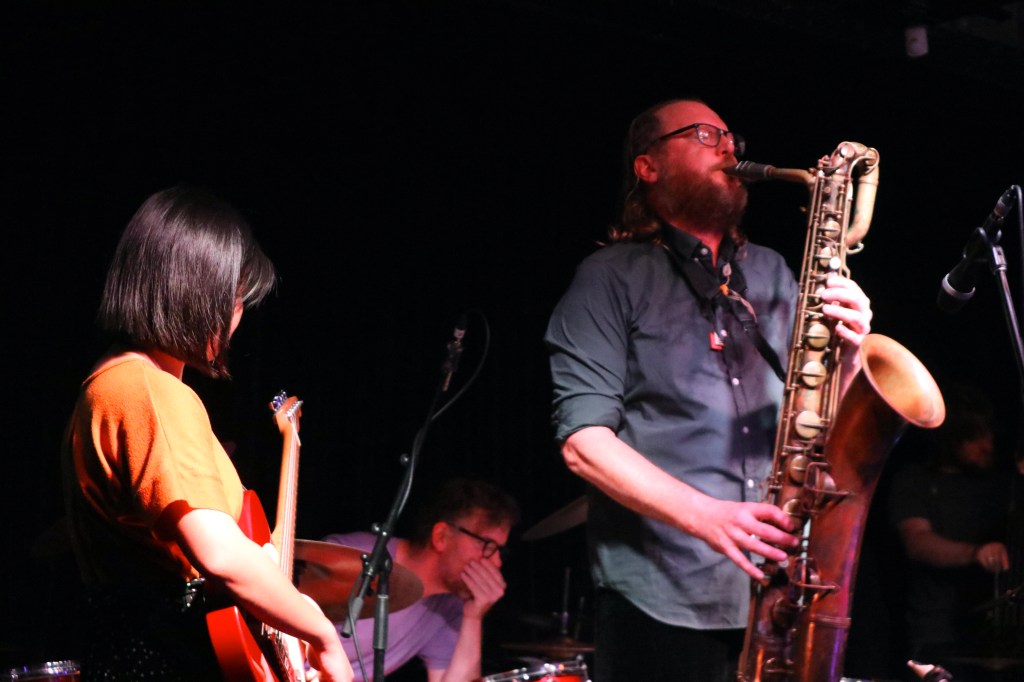
I clearly recall the first time I heard Steve Barry. It was around eleven years ago at the1885. He was not long back from Australia, bringing with him bass player Alex Boneham and drummer Tim Firth. At that time the Creative Jazz Club was located in a dark atmospheric basement; an ill-lit venue bordering on gloomy and perfect for a Jazz club. You would grab a drink, sink into a well-worn leather armchair with broken webbing and wait for the band to begin. 

The music that night was unforgettable. Somewhat denser than I was accustomed to at the time, but never-the-less fully engaging and exciting. When the second tune was announced I pushed record on my iPhone because I knew that I was hearing a piece of music that merited further attention. It was a tune that he was working on and it would appear on his first album a short time later. That was the year of Aaron Parks and his Invisible Cinema, and Barry’s tune was titled ‘Parks’. I listened to that phone clip an awful lot over the following months and I could hear the future. 

Each time Barry has appeared in New Zealand he has showcased fresh ideas. He is a forward-thinking and innovative composer/pianist and as such he never rests on his laurels. Although born in New Zealand, Australia claimed him long ago. He is popular there, has obtained a doctorate and awards there and teaches at the Sydney Con. As expected, he brought us new compositions this visit, but as I listened I was also reminded of that first gig. While he moves on constantly and is not composing or playing in the way he did back then, there is still a hint of that younger player. Of past learnings gathered and picked through as he builds fresh iterations, crafted in part from the bones. I am not surprised that he studied with Craig Taborn.

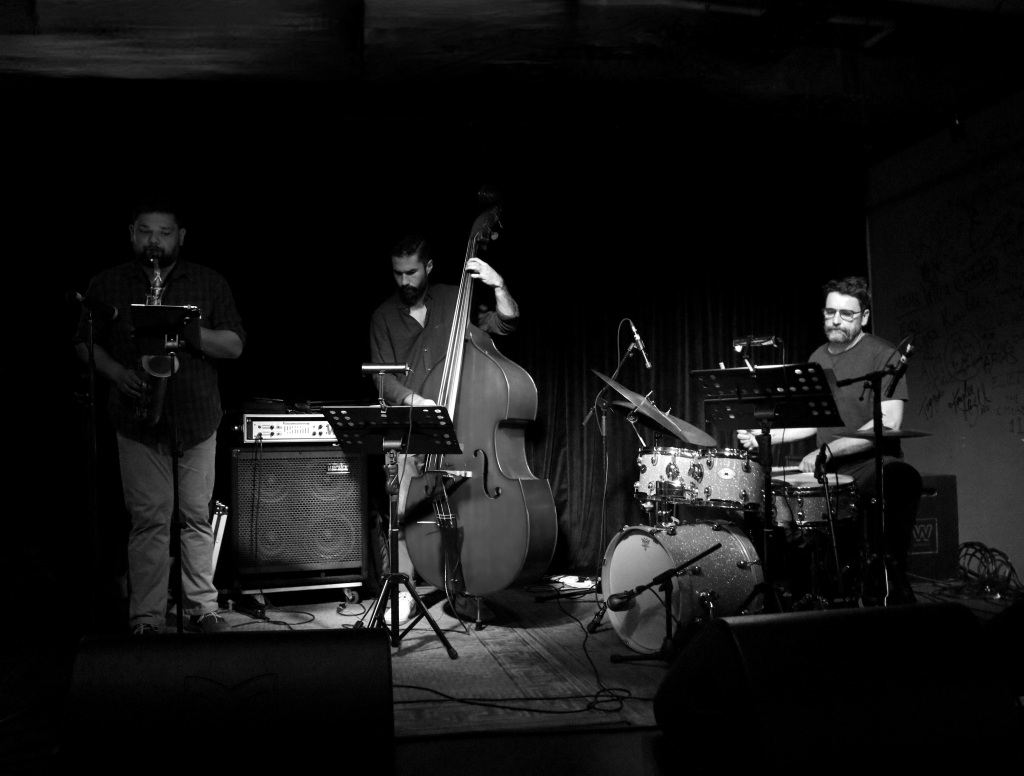
His compositions are no doubt demanding and require good responsive players. He had assembled just such a crew for his CJC Anthology gig. Callum Passels on alto, Cameron McArthur on bass and Ron Samsom on drums. Local musicians of the highest quality. Passels has a gorgeous tone, but what sets him apart is his ability to push at the boundaries. His best work occurs when playing compositions that afford him certain freedoms and these compositions worked well for him. At times he would run over the lines which contrasted nicely with his tight unison playing. The sort of advanced musical thinking I associate with Warne Marsh. Perhaps because this was a quartet, the music also felt more spacious. The density and serialism were still evident but as always with Barry, there were fresh vistas revealed at each turn. 

The gig took place at Anthology K’Road for the (CJC Creative Jazz Club). 2 June 2021. For Barry’s album visit Rattle Records or stevebarrymusic.bandcamp.com

JazzLocal32.com was rated as one of the 50 best Jazz Blogs in the world by Feedspot. The author is a professional member of the Jazz Journalists Association, poet & writer. Some of these posts appear on related sites.
Gjazz5 ~ Olivier Holland

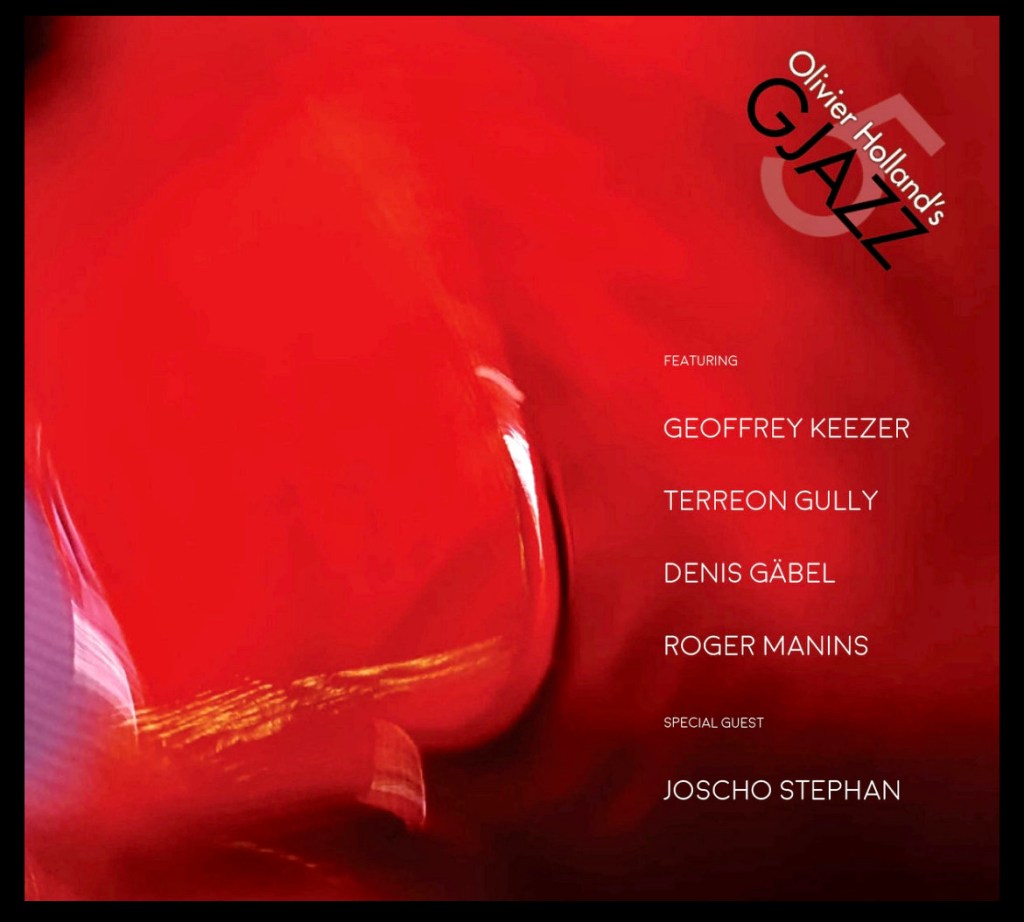
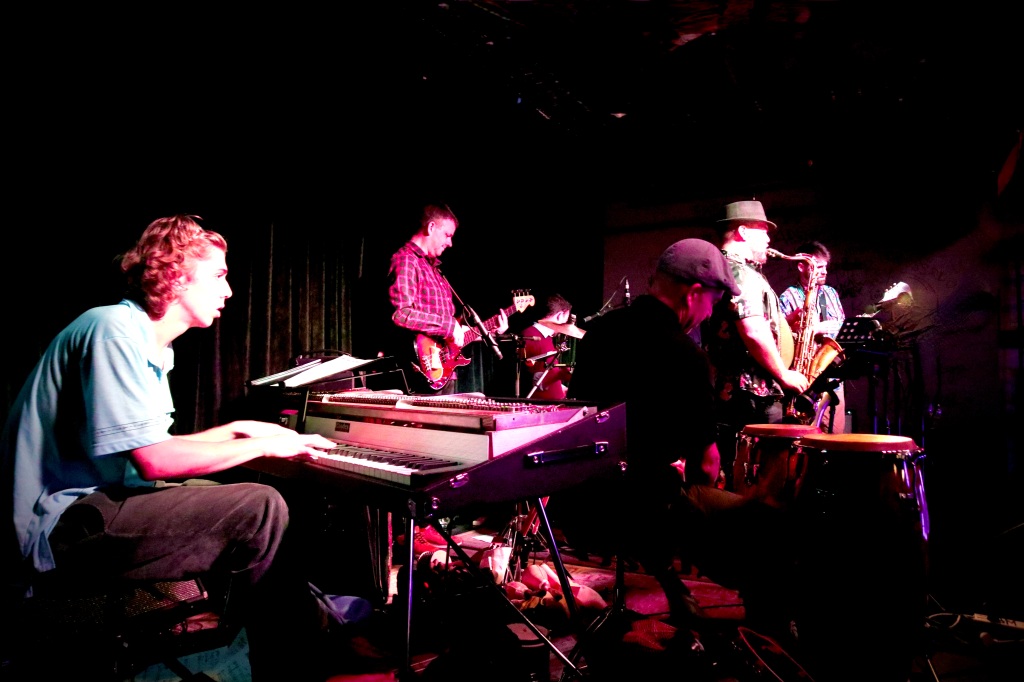
Olivier Holland’s GJazz5 Album release (NZ) was bound to be a significant event as Holland doesn’t do half-measures. When he commits to a project he gives it his all and this project was no exception. Sometime in 2018, he and fellow Auckland musician Roger Manins flew to Germany to record 13 new compositions. Joining them, a formidable lineup of internationally acclaimed musicians and their destination, the renowned Fatorria Musica Studios in Osnabrück.

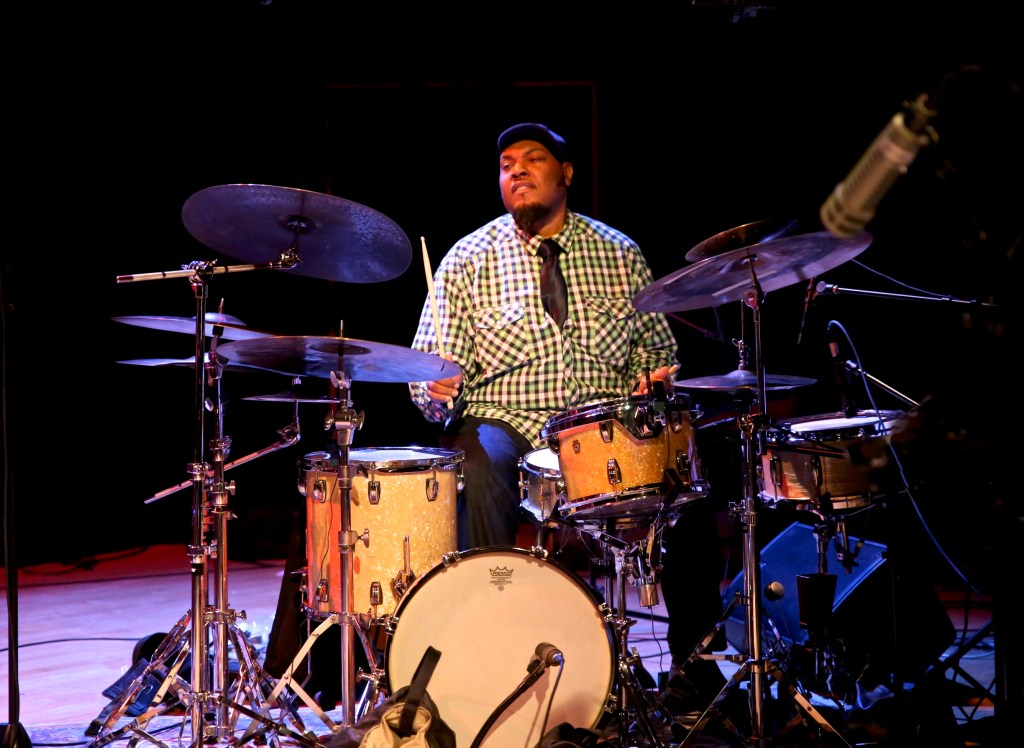
Holland’s compositions are always engaging and these ones, especially so. To give them their best airing he had engaged a number of Jazz luminaries; Geoffry Keezer pianist and educator (USA), Terreon ‘Tank’ Gully on drums (USA), Denis Babel on tenor saxophone (Germany), Roger Manins tenor saxophone (NZ) and guest artist Joscho Stephan guitar (Germany). Holland was formerly from Germany but he is now a senior tutor at the University of Auckland Jazz School.

When you put good material in front of good improvising musicians you can expect good results, but sometimes, that little bit extra is extracted and then the magic. This is a marvellous album and deserving of acclaim. It traverses a range of moods without ever detracting from the overarching mellow vibe. This is a recording you will want to play over and over, and each listening will yield fresh gold.  

The first track ‘$10 Per Rat’ has both edge and humour. Holland is known for his throwaway verbal lines on stage and this bleeds through into his writing. He will quickly tell an audience that they shouldn’t read any particular meanings into his tune titles, but then he will follow up with an improbable story to the delight of all present. Good musicianship and good banter are happy bedfellows in my experience. 

Track two, ‘Mrs Bombastic’ is the perfect vehicle for Keezer who sets the mood with his evocative intro. There is nothing bombastic about this tune which is reflective, spacious and beautiful. Following that is Morse Code, a tune true to name, dancing over compelling rhythmic patterns with an insistent ostinato bass line. The next tune ‘What?’ appeals to me enormously with its Afro Cuban feel and its funky danceable street vibe – Gabel, ‘Tank’ and everyone, killing it.

‘For Heidi’ was written for Holland’s partner. An achingly beautiful ballad and wonderfully realised by the musicians. The first album is rounded off by ‘EasyAz’. No Kiwi needs to have this term explained, but for the benefit of others, it’s a laid-back vibe that we value so much in this country.  The musicians at the live gig told me that playing the tune was far from ‘easyaz’. The old adage about Jazz holds true here, complex music made to sound easy, ‘easy as’. 

The only tune not composed by the leader is the first number on the second disk, ‘Tanktified’ by ‘Tank’ Gully. This is a cleverly constructed groove piece and it ties the album halves together nicely. On ‘Dog’ we hear Manins at his best, navigating the warp and weft of the bass lines and beats as he rides over the stop-start segments effortlessly. Another great solo from Keezer as well. Guitarist Joscho Stephan appears on tracks (1), (6) and 13) and his fluid delivery is tightly focussed, enhancing the vibe. ‘EasyAz’ drops into a nice swing feel which soloists Manins Stephan, Gabel, Keezer and Holland, power through as easy as – pumped by ‘Tank’s high octane fuel. 

There are no B side tunes here — Venus Fly Trap (a gorgeous solo by Gabel), ‘Bad Tuesday’ which made me smile (Kiwi Jazz fans will get the reference immediately as it is a big nod to Hollands friend and colleague Kevin Field and his delightful composition ‘Good Friday’), ‘Don’t Worry’ (has that dreamy Pharaoh Sanders like vamp), ‘Van Dump’ (tasty unison lines and forward momentum riding on top of a flurry of heart-stopping beats, and those two blistering tenor solos), Lastly ‘10c A Fly’ a joyful tune co-credited to Holland and his son David. What a treat, and as with all of these pieces, carried on Hollands impeccable bass lines and his gravity-defying compositional architecture. None of the musicians can be set apart from the whole because all of the musicians stand out, this was truly a meeting of musical minds.

Following the recording, Holland made several trips to the northern hemisphere, nurturing the project to completion. Then, COVID happened and the American and German musicians were unable to travel to the album release. It would take more than an international pandemic to put a crimp in Holland’s style though and a release was planned using Auckland musicians (colleagues and former pupils). 

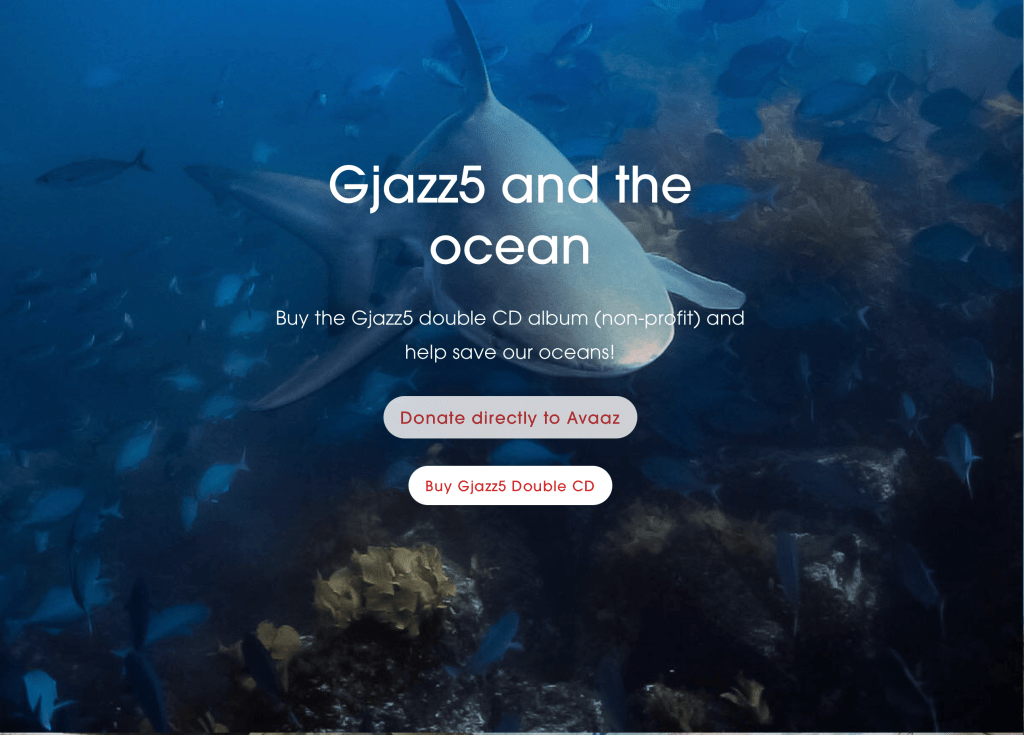
The New Zealand gig was well signalled on social media with album teasers and a commitment to donate part of the album proceeds to a marine sanctuary off the coast of Africa. On top of that Holland generously forwent sales profits above cost. $5 from each sale plus a generous contribution from his own pocket was destined for Avaaz, a well respected oceanic environmental cause. If anyone is surprised at this generous turn, they don’t know him. His environmental interests are well known and based on first-hand observations as a diver and a blue water yachtsman (he originally sailed to New Zealand from Europe). 

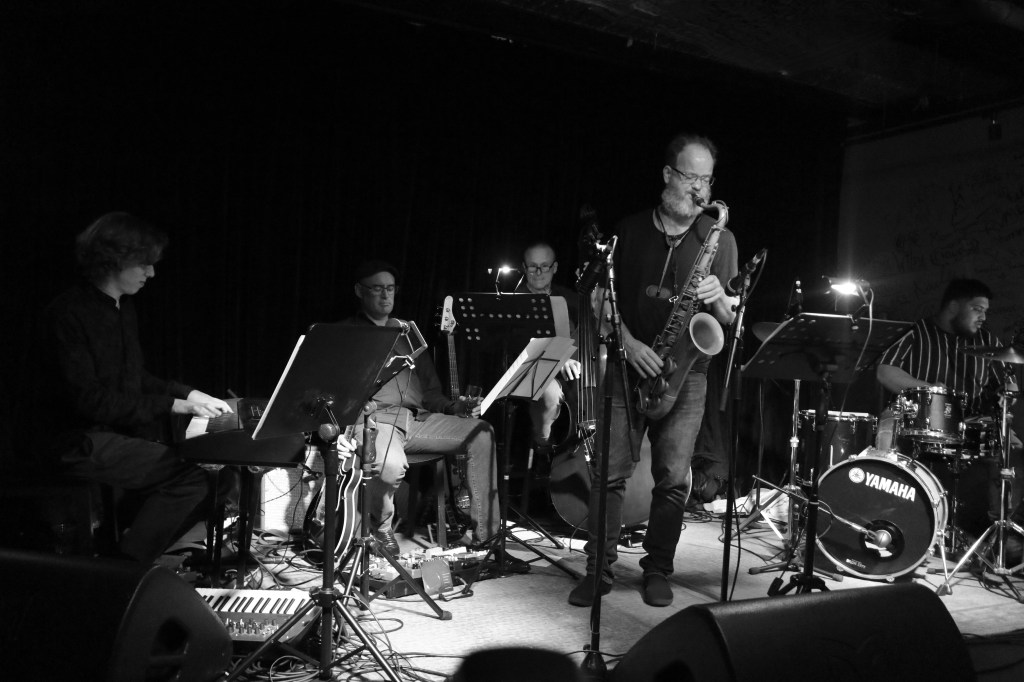
I have posted several numbers from the New Zealand gig and they are a small sampling from a superb nights entertainment. Beside Holland was Roger Manins, the only two from the recording band. Filling in for the internationals and killing it, were Dixon Nacey on guitar, Thabani Gapara on alto saxophone, Joe Kaptein on keys and Malachai Samuelu on drums. I am sure that these tunes were challenging, but you wouldn’t know it. More guitar parts were included in the charts and why not with Dixon in the mix. Roger was on top of his game as always and the other three were marvellous. The University of Auckland Jazz School alumni and tutors under Holland’s leadership did the University proud.

In addition to the Auckland clips, I have included some clips from the album. The local gig took place at Anthology for the CJC Jazz Club on 26 May 2021.

JazzLocal32.com was rated as one of the 50 best Jazz Blogs in the world by Feedspot. The author is a professional member of the Jazz Journalists Association, poet & writer. Some of these posts appear on related sites.
Mireya Ramos

Mireya Ramos was an unexpected musical treat because our borders, with very few exceptions, have been long closed to all but Kiwi returnees (and most recently Australian tourists). Ramos is from New York. Very few international musicians have managed to cross the border, and only if they obtained an exemption and subjected themselves to a strict quarantine. 

With the Australian Bubble just opened I assumed that Ramos must have come from Australia, but in fact, she arrived here with her acclaimed Flor de Toloache all-female Mariachi styled band to perform at WOMAD 2020. Within days of arrival, the borders had closed behind her. For many pre-lockdown international visitors, the border closure proved to be a silver lining as visas were extended and they could avoid the horrors unfolding elsewhere in the world.  

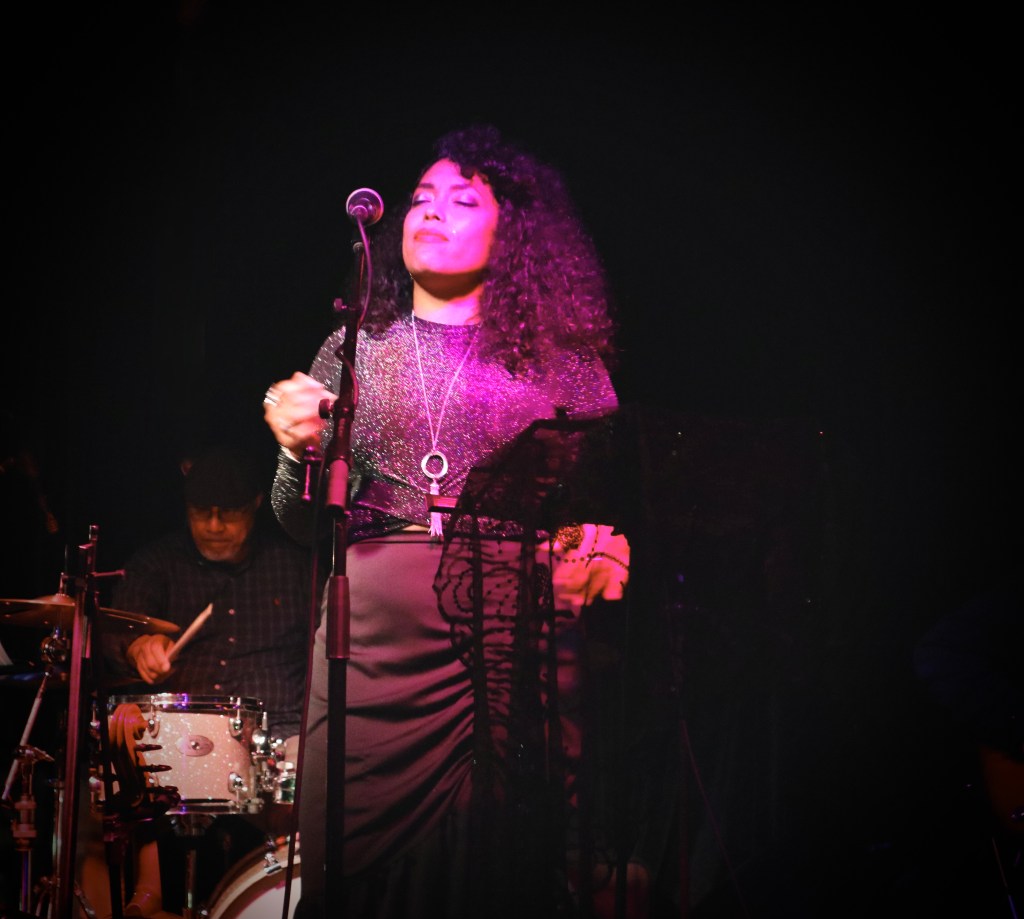
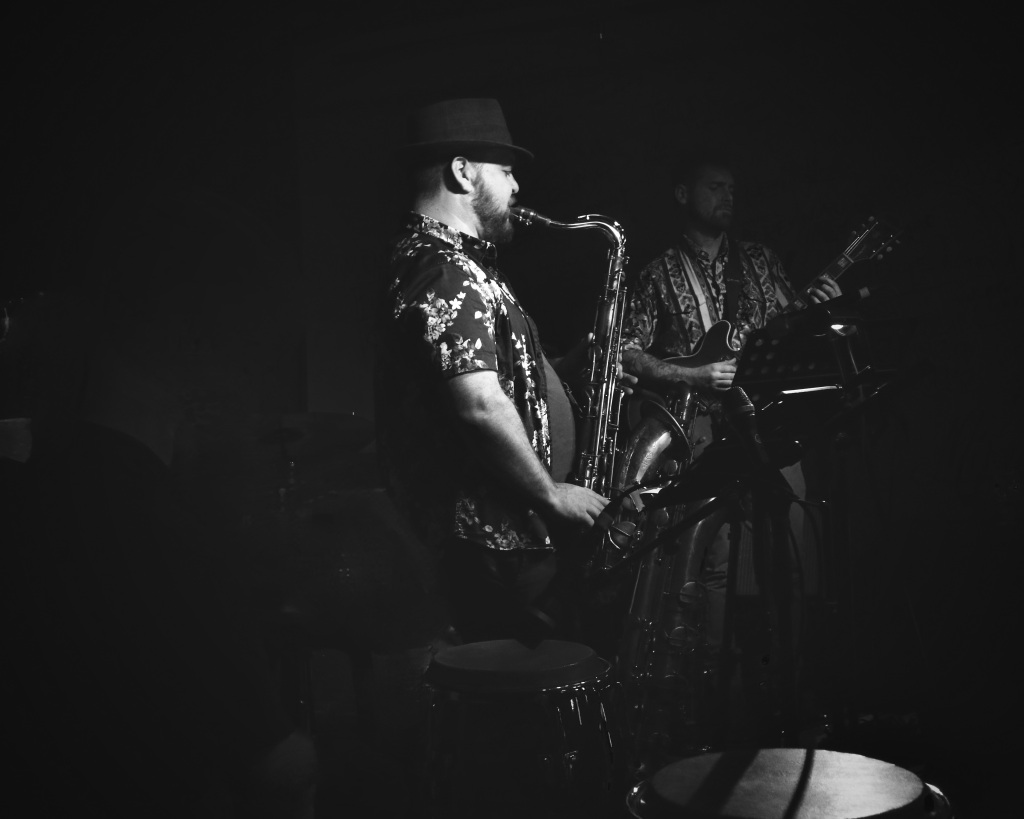
Mireya Ramos is a multi Grammy-nominated (and winning) artist and although the rest of her all-female mariachi band members returned home, she and her partner Andy Averbuch did what creatives do best, they got busy. During the year she has recorded and toured the country and her gigs have attracted enthusiastic audiences everywhere. Her CJC gig featured a variety of Latin and Central American styles with the addition of popular standards.   

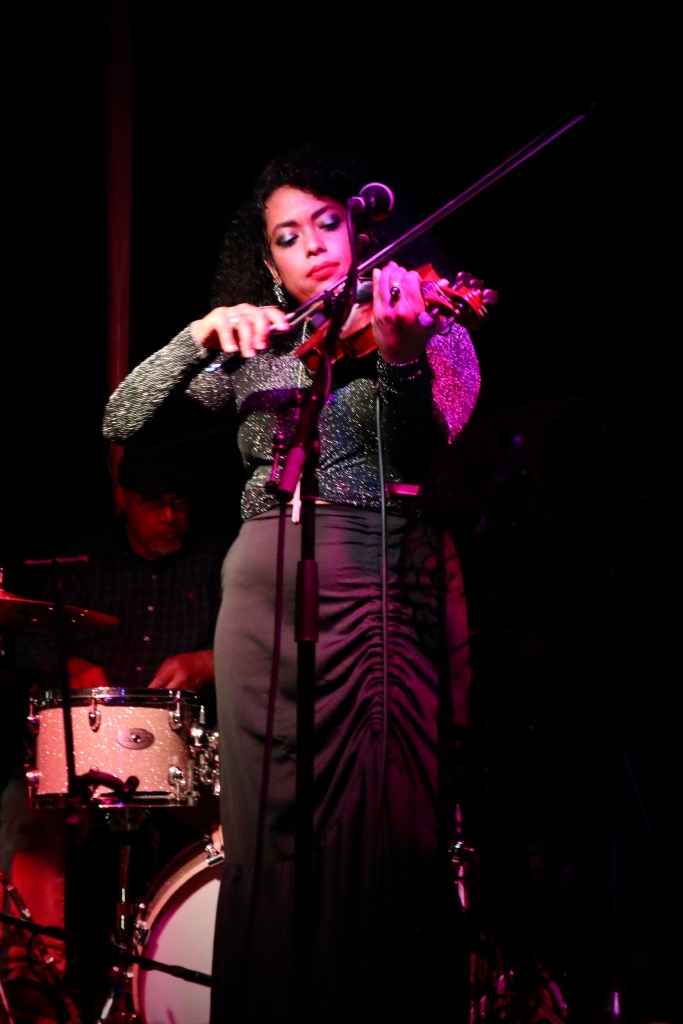
Her music draws on many genres, but all coloured by a stylistic uniqueness. She is both a vocalist and a violinist and that appealed as well. The violin is not unknown in improvised music, but sadly it is still uncommon. I am fond of the violin in Jazz and Jazz fusion styles and particularly so with Argentinean music. 

Listening Jazz audiences are always eager to hear traditional and blended South American music. A good example was the version of ‘Fever’ which morphed into an Afro-Cuban groove. Of all the tunes, that appealed to me the most. It is not often that we get to hear the many and varied Latin styles and whenever we do, we are left wanting more.   

Guitarist Andy Averbuch and Bass player Alex Griffith had opportunities to stretch out during solos and they made the most of that, but when Dr Mark Baynes and Lance Bentley locked into a Clave, the magic happened. Ramos has been received enthusiastically in New Zealand and after the pandemic recedes, I am sure that she will be encouraged to return. The band: Mireya Ramos (vocals @ violin), Andy Averbuch (guitar), Dr Mark Baynes (piano, keys), Alex Griffith (bass), Lance Bently (drums).

JazzLocal32.com was rated as one of the 50 best Jazz Blogs in the world by Feedspot. The author is a professional member of the Jazz Journalists Association, poet & writer. Some of these posts appear on related sites.