CJC – Ben Sinclair band – Manins/Koopman

The CJC always manages to find interesting lineups and the Ben Sinclair quartet and sextet (+2) was no exception.   This is a young band and the often ironic or whimsical song titles comprising the set material are also contemporary.    Ben is not long out of University and his chops as a fast developing Tenor player (doubling effectively on Alto) are evident.   The band opened the first set with a quartet lineup and a song titled ‘Printy‘ (dedicated to a favourite desktop printer).   The initial configuration was two Tenor Saxophones (Ben Sinclair + Jimmy Garden), Cameron McArthur (Bass) and Johnny White (Drums).    The Tenors focussed on unison playing or soloing and so there was only a slight nod towards chordal structure.   This was raw, inventive and occasionally challenging music and it underscored the tone of the numbers that followed.   By the third number the quartet had expanded to include two French-Horns and a Flugal, which enhanced the concept and added considerable texture and depth.    The groups sound was original, but during the fifth number, the second Tenor Sax player Jimmy Garden managed to toss in a brief quote from ‘Softly as a morning sunrise‘ which brought instant smiles of recognition from the audience.

The second set was headed by a three-part suite titled ‘The Bourne Trilogy‘ (referencing the movie).     For this suite the band was enhanced by the addition of Matt Steele (Piano); an often fiery and Tyner influenced soloist.   The octet was completed by Liz Stokes (Trumpet and Flugal), and the two French Horn players (one also a woman).   This trilogy showed how mature Ben’s writing is and when playing these charts the bands enjoyment of the material was obvious.   This suite worked on all levels and the nice soloing rounded out the performance.

Last but not least was ‘Snake Attack’.   The number was high energy and the band had tightened up on their delivery while allowing for free-flowing solos and a locked-together kick-ass groove.    Drummer Johnny White particularly caught my attention in this last number as he set up a tight ‘E.S.T.'(Magnus Ostrom) type beat (nicely accented by rim-shots).

The ‘Roger Manins regular jam session’ followed the CJC sets and that was the icing on the cake for me, as I got to hear the nucleus of Roger’s band for the first time.   The band set up in minutes and were soon playing their first number ‘Beatrice‘, which was profoundly beautiful and deep in-the-pocket from the first bar.    Roger (on Tenor) is a monster musical force and his band swings like a well oiled gate.   You always know when a Tenor player uses his axe as a confident extension of self; when every shade of meaning is conveyed without the musician needing to rely on an excess of notes.    He has chops to burn but more importantly he lets the music speak for itself.

For a number of months I have heard people speaking in reverential whispers about wunderkind guitarist Peter Koopman.    I just love Jazz guitar and so when I learned that he would perform as part of Roger’s band, I was pleased.  This guy is freakin amazing and to hear his rapid fire licks and intelligently constructed lines is to hear the very best that New Zealand Jazz guitar has to offer.    I would advise everyone to get down and hear this band as soon as they can as gifted musicians like Peter are likely to be sucked into the wider Jazz universe someday soon.   Matt Steele was on piano and extremely fine bass player Thomas Botting played as if his life depended on it (I have a weakness for bass played in the upper register).   This guy along with the highly energised drummer Johnny White powered the band.  Others joined the band at times including a singer (Chelsea) and a female Banjo player who tackled Mile Davis ‘Solar’ with confidence and ease.  With Peter and Roger exerting their benign influence; the less experienced musicians could not have been more supported.

I urge Jazz lovers to support this club and if the last months offerings are typical then you certainly wont be disappointed.

Oslo

A few days ago an extremist murdered 69 young Labour Party activists on Utoya Island and 7 more in central Oslo.  The purpose of this senseless massacre was to cower a nation and to stop the ruling Labour Party in its tracks.   Neither has occurred as Norway is made of sterner stuff than that and more than a million people gathered in Oslo to underscore their deeply held commitment to tolerance and humanism.   A sense of shared humanity will continue to steer this small nations course and no far-right fundamentalist will be able to derail that purpose.  By now most people get the bitter irony of this massacre, as the atrocity was perpetrated against one of the worlds most peace-loving and tolerant peoples (Oslo is the home of the Nobel Peace Prize and the Oslo Peace Accord).    Norway not only looks after its own citizens well, but it sets an example to the wider world when it comes to foreign aid.

This was no shadowy middle-eastern jihadi as a few foolish people had suggested, but an altogether more recognisable figure was resposible.   A pathetically deluded white male who professed  admiration for the worst genocidal killers of Europe.

Norway has produced many fine Jazz musicians and I have included several clips which can speak for themselves.    The first is the tune ‘Oslo‘ by ‘Mathias Eick‘.   What begins as an eerie trumpet call soon evolves into a gently swinging tribute to this peace-loving city.  The second is a tune by ‘Jan Garbarek‘ and ‘Shankar’ and is titled ‘paper nut’.   ‘Garbarek’ will need little introduction to Jazz audiences.

Sardegna Cool – Mare Nostrum Jazz

The Lost Chords find Paolo Fresu in Monaco. Fr...

Image via Wikipedia

Paolo Fresu, a Sardinian genius of the trumpet and flugelhorn is a gifted arranger/composer.    This quickly becomes evident when you listen to his multi faceted recordings, as he is equally fluent with mainstream, fusion, big-band orchestras or multi-phonic experimental Jazz.

Fresu was born on the sunny Mediterranean Island of Sardinia in 1961 (Berchidda).  By the age of 11 years he had picked up the trumpet and his course was set. Later he was admitted to the Cagliari Conservatory and the University of Performing Arts Bologna.

The signature Paolo Fresu sound hints at ‘Miles‘ in an unselfconscious way, but more importantly it is a very Italian sound and rooted deeply in the Sardinian landscape. Over recent years Fresu has showcased both Sardinia and more recently Corsica in his work (His latest ECM album has him improvising against the sounds of a traditional Corsican mens choir and the sound can only be described as haunting or other-worldly)

Paulo Fresu is a pillar of the modern Italian Jazz scene; he is extremely well-known across Europe and increasingly so in America. He records with ECM, EMI, Columbia, Blue Note and RCA, plus a number of smaller Italian and European labels. His disks are reasonably easy to obtain (through New Zealand record shops like Marbecks or Parsons) and Amazon has a wide range on offer. He has recorded with Carla Bley, Enrico Rava, Stefano Bollani, Dave Liebman, Tino Tracanna, Gianluigi Trovesi, Furio di Castri, Antonello Salis, Uri CaineRalph Towner and so the list goes on.

I have been lucky enough to visit Italy a number of times and from the first visit I was dazzled by the vibrant Italian Jazz scene.  It is fair to say that I was guided in this by my close friends Patrizia and Gianni and it was through them that I discovered a talented group of Sardinian Jazz musicians (Fresu and Tracanna among them).  Patrizia and Gianni live in Milano but ‘Patty’ was born in Sardinia and has connections to Jazz musicians from there.

The first clip is Paolo Fresu at his ballad playing best. The second is Paolo Fresu and the ‘Orchestra Jazz della Sardegna‘- George Gershwins Porgy & Bess (Summertime). Many will easily spot this as the Gil Evans/Miles Davis version – Gunther Schuller provided Paolo with the transcription.  The second piece is a TV clip of Paolo Fresu showing a DJ how trumpet multiphonics would work played against a sampled loop.

Another highly recommended CD is ‘Kind of Porgy and Bess’.  In this a 5 piece band renders this music into utterly modern Italian Jazz (Fresu (t), Nguyen Le (g), Furio de Castro (d), Dhafer Youssef (oud,v), Antonio Salis (p,e-p,h), Roberto Gatto (b).  There is a world of enjoyment and excitement in Jazz Italia – don’t miss out.

Grazzie Paolo.

Touching greatness: ‘Jazz Life’ Photography

When a musician reaches higher than other mortals to give us a glimpse of an unknown truth, we marvel at the invention and the daring.  It is human to seek connection with greatness because we want to experience that sound again; weighing up what we have witnessed and desiring to understand it better. In the hands of the most gifted practitioners of the Jazz arts this connection can be made through photography, painting or the print media.  If the ink, paint or emulsion is spilt for the sake of it then the magic is not communicated, but if the photographer is William Claxton and the wordsmith is Joachim Berendt then we are deeply enriched. In 1960 Claxton and Berendt undertook a massive road journey in a Cadillac; traveling the highways of America and capturing the ‘Jazz Life‘. Berendt is a respected musicologist and between them they recorded something else; an unvarnished glimpse into the America of the time.   This is Americana in print and it gives a deep context to the music.

When viewing Claxton photographs we feel that we can almost touch the soul of the artist and while some of the portraits are deliberately posed they still convey the deepest sense of casual intimacy.  This is the very essence of greatness that we have been seeking and we feel lucky to have these images, this music and these stories in our lives.  It makes us part of the Jazz Life; insiders.

This is a truly great book in all senses of the word. It stands knee-high in its slipcase and weighs enough to have been the subject of warnings by physiotherapists.  Once it has been safely transported home (using a heavy haulage transporter) and the (momentary) feelings of guilt at outlaying so much on one book have been overcome, get a friend to help you lift it onto the table.

The joy then unfolds page by wonderful page; touching greatness through the eyes of William Claxton.  A journey into the heart of the American Jazz Life

Disclaimer: I certainly did not outlay the $1,500 per copy that the TASCHEN collectors edition sells for at Amazon, but I refuse to say what I actually paid on the grounds that could get me into trouble at home if I did.

August gigs: Nock, Hirst, Manins & Samson

retiring at 80 yrs

For those who are easily led by their particular pied-piper there is live music to be had every week.   In the recent past Auckland live Jazz had been harder to find than other genres, but due to a happier alignment of the stars that is no longer a problem.

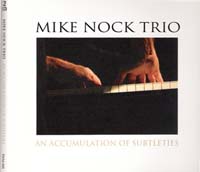
The big news is that Mike Nock (p) has been booked into the CJC for two nights – August 10th -11th.   I never miss a chance to see Mike when is in town and so I grabbed two of the first tickets on the market as they wont last long.   Seeing Mike in this warm intimate space will be pure magic.   He will be playing with Roger Manins (ts), Brett Hirst (b) Ron Sansom (d). The club is to be congratulated for bringing together such a line up and having such a good piano must have helped to clinch the deal.  For details and ticket prices follow the link from this site to the CJC (local clubs).   I urge you to become GJC members, visit the club or at least subscribe to the CJC gigs update.

As soon as I learned that the AJO (Auckland Jazz Orchestra) was playing at the Masonic in Devonport I notified a few friends.   I would gladly have attended with them having seen this big-band 6 days earlier, but work prevented me.   Here is a report from the Masonic gig (and about Merv Thomas):

Subject: Last night; Hi John, We went down to the Masonic last night and lucked in to Merv’s last performance.   His 80th birthday is today. He performed in a quintet with Bernie Allen and other ‘old’ friends and sang Tea for Two!  A large group of his family were there with several generations. Also a trombone quartet.  Happy birthday was sung, and some speeches.   I can’t imagine that this was his last blow.    A good night.  Those kids in the Jazz Orchestra are very talented.   Cheers Ruth.

Mike Booth the founder of the AJO has given me some forward dates for the bands gigs.   He said:  “We will be trying Thursdays [once a month at the Masonic Devonport] – There will be a cover charge and we will try this until the end of the year.  Starts Thursday 11 August.”

Lastly I will be going to see the Alex Churchill – Andrea Lisa band on the 3rd of August.    Andrea Groenewald (g) is someone to watch.  She and Alex Churchill have recently graduated from the Massey School of music (Albany campus).

Mike Nock trio

Mikes recent album

A Big Auckland Sound – CJC-AJO

Andrea on the bandstand

during a break
Resting AJO Brass  @CJC 

I may have become addicted to Jazz big-bands and so when the opportunity presented itself recently to sit in the fourth row at the Roger Fox – Alan Broadbent concert, I took it.   I survived that proximity with surprising ease and it was inevitable that I would need a bigger dose next time.    The sonic blast had not even wiped the smile from my face.

Now a month later I was attending a gig where the (AJO) ‘Auckland Jazz Orchestra‘ was playing and so I decided to test my limits.    Knowing that I could tolerate the maximum levels of exposure I sat in the front row.  So close in fact that the bell of  Andrew Hall’s Tenor Saxophone was only half a meter away.   This proved to be an excellent concert and to be that close was to feel part of the band by proxy.

The ‘Auckland Jazz Orchestra‘ is a collective; drawing on local talent who meet monthly to explore the Jazz big- band sound.   While clearly in the tradition of the great rehearsal bands like the Thad Jones band, they also appear to have striven to create an authentic Auckland vibe.    If this was their aim, then they have certainly succeeded.

Founding member Mike Booth (trumpet) is a Jazz veteran.  He has recently returned from overseas and his presence is strongly felt.  The other guiding presence is current conductor Tim Atkinson.   Both have written and arranged charts (as have other members of the band).   The ethos of this band is in fact to put a local stamp on the music and that excites me.  The territory bands of the pre-60’s American scene were legendary and they grew in stature by creating unique geographical identities.   Basie was identifiably KC, Goodman a Chicagoan etc.    This territorial competition acted as a real stimulus to the bands.  Originality and greatness grew directly out of that as they scrambled to make their mark .

The other vital factor was the schooling that the newer band members got from playing with the more experienced musicians.   Bill Crow, famous bassist, tells of being gently chided (or alternately encouraged) between numbers and this hot-house learning on-the-hoof communicated what his band mates expected of him.   He also recalls being schooled by members of the band between gigs.   Amazingly he had only just picked up the bass months before.  He soon attained iconic status and the big bands he worked in were part of his university.    This on-the-road education system for Jazz musicians has been an essential part of the mix in developing good reading and tight ensemble playing skills.   When the players solo, there is a cushion of warm sound embracing them and smaller groups seldom give that opportunity.

The band is: Alto saxes – Steve Sherriff, Theo Clearwater,  Tenor saxes – Jimmy Garden , Andrew Hall;  Bari Alex Churchill;  Trombones – Merv Thomas, Mike Ashton, Mike Young, Steve Taylor; Trumpets – Mike Booth,  Rowan Bolley, Jo Spiers, Pete Barwick; Drums – Cameron Sangster;  Bass – Thomas Botting;  Guitar – Andrea Groenewald;  Piano – Adam Fuhr.

The opening number ‘Green Dolphin Street‘ was brilliantly arranged by conductor Tim Atkinson.   The band quickly coalesced into a smooth unit as they moved into this and showed the skill of the band as a whole.   The other tune that leapt out and grabbed me was ‘All things in 5 & 3’ (composed & arranged by Mike Booth).    This was a wonderful number and it became evident that it had been written around the changes of ‘All the things you are’ – but in 5/4 & 3/4.   With Auckland-referencing tunes like ‘Rangitoto‘ and ‘On the water‘ (Mike Booth – part of the Auckland Harbour suite) a picture was being painted note by note.  Among the original tunes was the swinging bossa sounding ‘Lucky charms‘ (Tim Atkinson) and ‘Reservations‘ Andrew Hall.   We heard great solos by (new friend) Andrea Groeneveld (g), Steve Sherriff (as), Mike Booth(t) and Andrew Hall (ts).    It was also good to see the well-known Merv Thomas(tb) in the band among these considerably younger musicians.

The ‘Creative Jazz Club‘ is an intimate space and having a 17 piece band in that room made it all the more so.    A famous precedent would be the even smaller ‘Village Vanguard‘ in NY, which hosts the Thad Jones rehearsal band each Monday night.     The club was full and in Tardis fashion every new comer was able to find a space.   More of that please; my tolerance is far from reaching its limit.

Festivals in the sun

Upstairs Jazz Club

On a continent twelve hours flight from here it is Jazz festival season (preferably flying Air New Zealand, with the Alyn Shipton selected Jazz soundtrack to get you through the long haul north).

Two weeks ago the well-respected San Francisco Jazz festival was held and the San Francisco Fillmore Jazz Festival is winding up about now.The latter is a 4th of July weekend festival and it is the way a lot of West Coast people enjoy Independence Day.   It always seems to get good reviews and part of its appeal is the easy-going vibe, free concerts and food.  My daughter-in law confirmed that it was an endless combination of Jazz , food, and craft stalls and an excellent way to spend long lazy days in the sun (hers is the larger photo).  The festival included the Mingusamungus band (dedicated to Charles Mingus) and the Contemporary Jazz Orchestra (strong Thad Jones/Ellington influence).

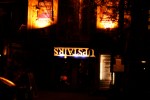
Further north and still running at the time of writing this is the worlds biggest Jazz Festival, The Montreal Jazz Festival.   I was in Montreal 7 months ago and caught the small L’off Jazz festival which profiles local Quebec Jazz.  While there I visited as many Jazz clubs as I could cram into a week (two or three a night) but the ‘Upstairs’ was undoubtably my favourite place (off Rue St Catherine).   It is actually in a basement (but the Upstairs neon sign is hung upside down).   It was there I saw a young Montreal based guitarist Carl Naud and his band.    In this group I saw a restless hungry spirit that hinted at Coltrane’s legacy but was reaching well beyond that.   Memories of that fabulous club and that edgy young band will remain with me for a very long time.  The Upstairs is part of the main summer festival and artists like Gary Peacock are appearing there.

This year at the Montreal Jazz Festival much-loved son, Canadian ex-pat Kenny Wheeler has returned as the main attraction.    Kenny is an artist I have loved since I first heard his deep melodic lines and signature stratospheric high-end squalls.   He is more often playing Flugelhorn than trumpet and his sound is unmistakable.    His ‘music for large and small ensembles’ is a Jazz masterpiece and regarded rightly as being a desert-island-disk.  Most often playing in the company of fellow UK resident John Taylor (p) and often with John Surman (s) Palle Danielsson (b) & Peter Erskine – all top rated ECM artists.    This clip is from some years back but it profiles Kenny Wheeler (fh), John Taylor (p), Palle Danielsson (b) , John (Crumbles) Abercrombie (g) and Peter Erskine.

Fillmore in the sun

Cooking at the CJC

Tony, Kevin & Craig @CJC

Sometimes you have high expectations of a gig only to find that they have been exceeded.  This was certainly the case at Auckland’s Wednesday night Creative Jazz Club, held at the ‘1885 Britomart’.

The CJC gigs are held in the basement of an old building in Galway Street (the ‘1885 Britomart’) and it has the look of a pre 1900’s ships chandlers or bond store.    This is the perfect performance space for Jazz because it fits the archetypes of the best clubs of the world.   It is in a basement, intimate, comfortable and has good acoustics (oh and a nice piano).  It was damn cold outside and so we were hoping the club would be warm and it was; warm and inviting in the best possible way.   As we descended the two flights of stairs we could hear the pianist Kevin Field exploring a few voicings on the piano and with just those few chords we knew that we were in for a great night.

The Kevin Field (+ Craig Walters) band started with a medium paced number and soon settled into a tight groove.  This was the sort of band that brought an ever-increasing smile to your face and as they laid out the melody of each tune and then mined the changes for improvisational gold.  Their version of ‘this will be my shining hour‘(Harold Arlen) was a miracle of high energy and exploration.  They just tore it up and the fast paced riffs and increasingly risky explorations brought hoots of delight from the crowd.   I have heard this tune 100’s of times but I have never liked it more than on Wednesday night.

The saxophonist was ex-pat Kiwi Craig Walters, who lives and works in Sydney and travels internationally.   This cat is certainly post-Coltrane and his impeccable Jazz credentials showed on this gig.   He has that way of all good Jazz musician’s; an engaging manner, great chops (and the ability to make subtle self-deprecating insider jokes).   The rhythm section were all locals and probably need no introduction as they are among our best and brightest.

Kevin Field is a lovely pianist and his post-bop voicings would enhance any group.   He teaches Piano at the Auckland School of Music (his real job) but he is also a respected leader about town.   Kevin Haines is probably NZ’s best bass player and we are used to seeing him performing in a variety of settings.   On some of the ballads like ‘blame it on my youth‘ his solo’s were impeccable as he anchored the group – holding the centre of the sound in his fingertips.   I want to make special mention of the drummer Tony Hopkins because this guy drummed up a storm.    I must confess that I have been a fan since I saw him in my youth (blame it on my youth).   He was all over the kit in the best possible way and if this is what 70 year olds drum like then there will be younger players applying for septuagenarian status all over town.   Tony is not only an impeccable time-keeper but he managed on this gig to sit high in the mix without overwhelming the others. At times he and Kevin Haines would glance appreciatively at each after a particular lick was exchanged and this high level musical communication is at the heart of all good Jazz.

I will watch future CJC events with interest because great Jazz, thin crust margarita pizza and a warm spot in the corner of a Jazz club is my idea of heaven.