Final Score 2011

A personal view on the best of the best Jazz albums of 2011.
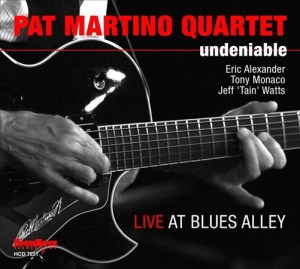
(1) My pick for best album of the year is – ‘Undeniable’Pat Martino Quartet – Live at Blues Alley *****. This is as close to a perfect album as it is possible to get and the move from ‘Blue Note’ to the ‘High Note’ label has worked well for Pat. Because it is a live recording and because there is a magical interplay between the band members and the audience the band drops deeper into the groove than ever. I love Jazz guitar and I love Pat Martino for his warm groove vibe. He is always superb but on this album he has reached new heights.

The trade mark sound is still there but the musical ideas appear fresh and exciting. While every track is near perfect, the last track ‘Side Effect’ is simply astonishing. After two listens I realised that the tune was based upon the changes to Cal Massey’s ‘These are Soulful Days’. Lee Morgan Played this tune and for a while it dropped out of the repertoire. It later appeared on a Joey DeFrancesco album on which Pat was the guest artist. It hardly seems possible to improve upon that groove Jazz classic but Pat has done so. Late last year I heard this band play in Birdland and during the break I spoke to Pat. For months ‘These are Soulful Days’ had been stuck in my brain and I could not recall who had recorded it. Thinking it was Grant Green or Wes Montgomery I asked him. ‘Oh I think it cropped up on a Joey D’ album’, he said. Then it all came back to me – it was Pat on guitar on that CD. I felt embarrassed and said, ‘you were on guitar I recall’. He smiled and told me that he had been working on a new version with a changed head. Now I realise that this was the tune Pat spoke of and that is the icing on the cake for me.

It is not only Pats extraordinary soloing but his comping that commands attention here. When the others are soloing he appears to comp a walking bass line in unison with the foot pedal bass line of Tony Monaco’s fiery B3. To me this comping feels as solid as Freddie Greens. The other band members are Tony Monaco (B3), Eric Alexander (ts), Jeff ‘Tain’ Watts (drums). Tony Monaco just gets better and better and my friend B3 player Michel Benebig regards him as being up there with the all time greats. Eric Alexander is also superb here. He has had a long tenure with Pat and Tony and he is the perfect fit for this music. Lastly there is Jeff ‘Tain’ Watts. His credentials are second to none and because he is such a versatile drummer he was the perfect choice. His drumming is responsive and inventive and it may be his inclusion that lifts the album to perfection.
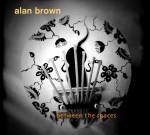
(2) My pick of first equal for the best New Zealand Jazz Album of the year is Alan Brown’s – Between The Spaces. **** For a review of this album see my earlier post. I play this album every week and my enjoyment has not diminished over the months of listening. I have purchased a number of copies to give to family as Christmas presents. Support New Zealand Jazz and purchase a few copies for presents now. There are copies available from JB Hi Fi in Queen Street. Other than that order from Ode Records online. The recipients will love you for it and you will put a groove into Christmas that can never be erased.
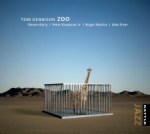
(3) The other pick for the best New Zealand Jazz album of the year (first equal) is Tom Dennison’s –Zoo. **** This album works on so many levels and every New Zealand Jazz lover should rush out and buy a copy. For more information read my review in an earlier post in this blog. I especially enjoyed writing that review and even though I may have resorted to hyperbole it was justified. The CD launch of ‘Zoo‘ is to be held at the CJC on Wednesday 25th January 2012. Again I would urge you to rush out to JB Hi Fi and grab a few copies as gifts. You can also purchase from Rattle Records online or download. Your Christmas holidays would be the poorer without these two albums and so if you want the love and admiration of your most difficult relatives – buy New Zealand Jazz as gifts.

(4) Best Jazz Club of the Year; no contest – the CJC. Thanks Roger, Caro and Ben for the music and the place to enjoy it in.

(5) Best New Zealand Record label – Rattle Records. Keep doing what you do Steve you are growing our music in the best possible way. You have the touch and the vision.

(6) Best World Music/Jazz album – Natalia Mann’s – Pacif.ist. This is also recorded by Rattle Records and it is an extraordinary and exotic journey to embark on. I will be doing a review of this fabulous album shortly. One rainy night I turned up to the launch of this album and was entranced from the first chord. Natalia Mann plays harp and on this album she is accompanied by 10 musicians (mostly Turkish musicians playing traditional instruments). Her husband is the drummer and the array of Turkish percussion instruments at his command is impressive.

(7) Best Jazz House Party of the year was when Roger Manins rocked Mt Wellington to its core with the help of Michel & Shem Benebig (B3 and voice) – plus a large and very enthusiastic horn section. It took me nearly a month to get ‘Every Day I Sing The Blues’ out of my head. I am not complaining though.

(8) Best Jazz anecdote of the year is from Peter Kings new biography on living the Jazz life. Peter is an alto player and he was playing at one of the better London clubs in the early 60’s when a very drunken Peter O’Toole sauntered over during a break and plonked himself down at the drum kit. The drummer yelled “Hey get off now” to which O’Toole starchily informed him that he was Peter O’Toole the actor. The drummer fired back immediately, “I don’t care if you’re Lawrence of Arabia, you can get off those fucking drums immediately”.

Lastly I must thank the musicians, many of whom have become close friends. Jazz musicians are the unsung heroes of music because they reach beyond the ordinary every time they play. They do this for the sake of creating something magical and best of all we get to participate in that magic. None gets rich or even earn a basic living from their playing but they do it anyhow. When walking a tightrope, backwards steps are not an option.

Thanks to all who read this blog which has been running now for around ten months. I have had over 6000 hits during that time and that is what keeps the momentum. The site has followers from many countries and that is satisfying, as it promotes New Zealand Jazz beyond these shores. Keep visiting the site, make comments and forgive my occasional typos. This blog is about promoting and analyzing the music we all love – Jazz and improvised music in all its forms.

These are soulful days – Pat Martino in 2009.               

Yours in the Music and have a happy and safe Festive Season.

John Fenton – Jazz Local 32.

Joel Haines trio

Joel Haines is a well-known and established New Zealand guitarist.  He also comes from an exceptionally talented musical family and this carries additional expectations.  While this was very much a funk-Jazz gig Joel had brought a little of the rock-god to the bandstand.   Many post Jim Hall Jazz guitarists bring elements of the Rock dialect into Jazz and in this case we certainly heard strong hints of that.   Accompanying him was veteran funk Jazz organist Alan Brown on a Hammond B3 portable (XK-3C) and Stephen Thomas on a classic 1960’s Rogers drum kit.   Joel played his stunningly beautiful Ibenez hollowbody guitar on all numbers except one.

The gig was always going to be loud (and it was) but interestingly not as much as some bands when playing in this confined club space.   I was surprised by this as I was in the front row.   The answer may lie in the fact that Joel uses an older style valve amp which he did not feed into a PA.    Alan Brown used a Lesley Unit with valve amplification and at one point I could hear someone in the audience say appreciatively – “look at the glow and pulse of those valves”.   It was brother Nathan.  It is possible that hearing analogue uncompressed sound is more pleasant to the ear.

The set began with one of Alan’s compositions ‘Minor Avalanche’.    The tune has a solid vamp which builds and builds.   Over that Joel played his funky bluesy lines with Stephen locking into the groove.     The second number (‘Ferret droppings’ – by Noel Haines) was slower and in consequence we saw more of what the trio was capable of.    There was time to construct well thought-out solo’s and the drumming was a little looser, with more cymbal work and less kick drum.   Needless to say Alan always acquits him self well with a Jazz audience as he smilingly punches out his signature staccato chords while dazzling with his right hand.

On the third track, Alan Brown’s ‘Shades of Blue’ we struck the mother lode.    I have loved this tune from the minute I first heard it on the Alan Brown trio album ‘About That Time’ – Ode Records.    ‘Shades of Blue’ is a great tune and above all it is a perfect vehicle for improvisation.    Several bars into the number there are a couple of compelling hooks and nice as they are they are not overdone; leaving you wanting more.  Alan certainly knows how to write good charts.   It was on this number that we saw Joel at his best.    His solo was fabulous and every note counted.   As he bent the strings and worked his pedals you could hear echos of ‘Electric Ladyland’.  Not sounding like a clone of Hendrix but taking the sounds deep into a Jazz context.

Joel’s ‘Live at Wembley’ was a nice ballad with long melodic lines and his other contributions were tunes interestingly titled ‘Who Flung Dung’ and ‘Hangover’.

Yes there were plenty of licks and tricks of technique but the band took us way beyond cliché.

‘Zen Dogs’ unleashed by Neil Watson

There are any number of moods that a band can capture when fronting a Jazz gig and all are valid in their way.   Where this band is concerned fun is the most obvious descriptor because Neil Watson’s ‘Zen Dogs’ were clearly there to enjoy themselves.   Everyone was soon drawn in and the enjoyment was palpable throughout the club.

The band had a loose feel and that is not to say that they were casual in their approach to the music because they nailed every tune and then some.  I am sure that the Zen Dogs name is tongue-in-cheek, but that in-the-moment relaxed approach brought the music home in a very Zen-like way; ‘stop trying so hard and suddenly you are there’.

From the onset Neil bantered with the audience and band in that good-natured way that jazz audiences love.   After the second number he told the audience “We are the Zen Dogs and we wear small emblazoned gold rings with secret symbols inset.  We form a circle and touch these together before playing, in order to charge each other with Zen power’.    To that the saxophonist Lewis McCallum asked nervously, “What did you say we had to touch together”?

The first tune up was ‘Booga Gee‘ (Watson) which communicated that Lou Donaldson Boogaloo feel.   The jive walking pace and accented beats set the night up perfectly.    Next was ‘Lime House Blues‘ which took us back further to the earliest days of two-beat Jazz.  That tune was written in 1922 (Furber/Braham) and had a famous 1930’s film was named after it.   Many have showcased this popular Jazz standard; Louis Armstrong, Sydney Bechet, Ella Fitzjerald, Les Paul (the latter with Chet Atkins).    While it is possible that the tune has been played before on a (Mexican) Fender Telecaster, I am unaware of it.   What is certain is that we heard a fresh and spirited interpretation on Wednesday.    This version was true to the original, but riotous and filled with the joyous abandon – a ‘mad and bad’ blues as the lyrics state.

Also among the offerings was a tribute to Wes Montgomery called ‘Wes de Money‘ (Watson), an astonishing evocation of Charles Mingus on ‘Meters to Go‘ and a Jelly Roll Morton tribute titled ‘Jelly Roll‘.    Throw in Monk’s ‘I Mean You‘ and a few more originals and you have the set list.   To play such an eclectic mix of tunes was a bold move (drawing as they did from the entire Jazz spectrum).  In the hands of this band the choices knitted together and not every band could have pulled this off so convincingly.    The key to attaining such cohesion was three-fold; they communicated their enjoyment of the material, their musicianship was superb and they held the audience from start to finish.

The band were Neil Watson (guitar, leader),   Louis McCallum (alto sax, clarinet & electronic effects), Olivier Holland (bass), Ron Samsom (drums).

Neil handled his slim necked Fender as if it was an extension of his own limbs.    This effortless skill has been gained from his many years working as a professional musician (both here and overseas).   There is the hint of rock-god in his act but it is delivered with a cheeky grin.   This guy does not take himself too seriously but he does invest everything into the music.   A friend of mine recalls seeing him play at the Tauranga Jazz festival when Neil was barely a teenager and he was impressed back then.

Louis McCallum played straight alto sax, clarinet and at times his alto sound was electronically altered by a small Korg analogue box.   Rather than choosing a modern synthesized saxophone he had purchased a $3 mini microphone and strapped it below the mouthpiece.    This simple approach produced interesting effects, but unlike the synthesized sax the effects can be turned off and on at will.    Using his clarinet in juxtaposition to Neil’s Fender gave ‘Lime House Blues’ the feel of being ultra modern while remaining respectful of a trusty old war-horse.  Louis also demonstrated an ability to deliver the BeBop and Post-Bop lines that some of the tunes called for.

Oli Holland is a fine bass player and he performed extremely well in this line-up.  He is certainly no mere journeyman as he showed amply during the night.   At times he would feed lines back to Neil and his performance on the Charles Mingus number is something I won’t easily forget.  Only an artist deeply versed in the history of Jazz could have captured the Mingus bass lines in the way that he did.   He also told the Mingus story in fresh way.  The Mingus oeuvre is interesting, as it sits slightly outside of the mainstream.   Hints of the anarchic and loose nature of that music were communicated well and I wish more bands would do this material.   Perhaps it is just too hard?

The remaining band member was drummer Ron Samsom.   If a band wanted to explore a wide spectrum of music and still retain a modern feel then he would be the drummer of first choice.   That is because he is freer, looser in style and more open than many drummers.   Because he has the ears of a seasoned professional he is able to respond well in any given situation.   To hear him play on ‘Lime House Blues‘ and ‘Jelly Roll‘ was to hear a modern stylist demonstrating that he could channel the two-beat style of a Baby Dodds or Poppa Joe Jones.   On the Mingus number he ‘dropped bombs’ and sat on the ride cymbal.   Ron never sounds complacent on the kit and perhaps that’s what sets him apart.    To have Ron and Oli together in a band is to add an x-factor.

The night had been billed as psychedelic jazz swinging by the early days of the music.   That is a fair description as it indicates the entire Jazz spectrum traversed.     The oft used phrase serious-fun is all that I can add to that.   The band have been recording this material and will lay down additional tracks early in the New Year – the album when it is completed will certainly be on my wish list.