Tiny Hearts ‘Alluvium’ Review

Tiny Hearts

Some acts appear to arrive out of no-where.  All of the rehearsing and scuffling hidden from the common gaze.  Others invite you in at ground level, letting you see the raw material as it evolves, letting you see the promise, beckoning from the future.  Letting you see the influences, the base metal.  For a pop act the former makes sense, for improvised music it makes no sense at all.  Improvised music should move at will, explore awkward corners and morph into new shapes as it feeds off the life around it.  Standing still is death.

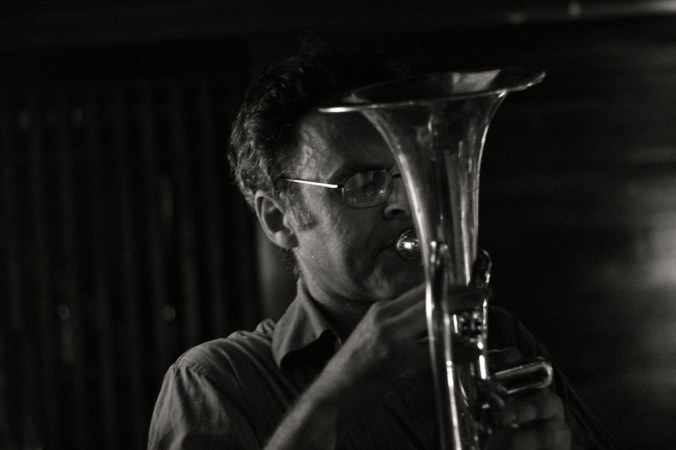
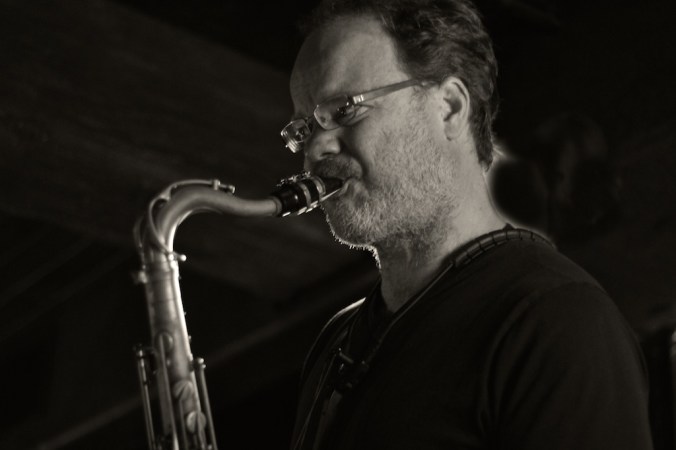
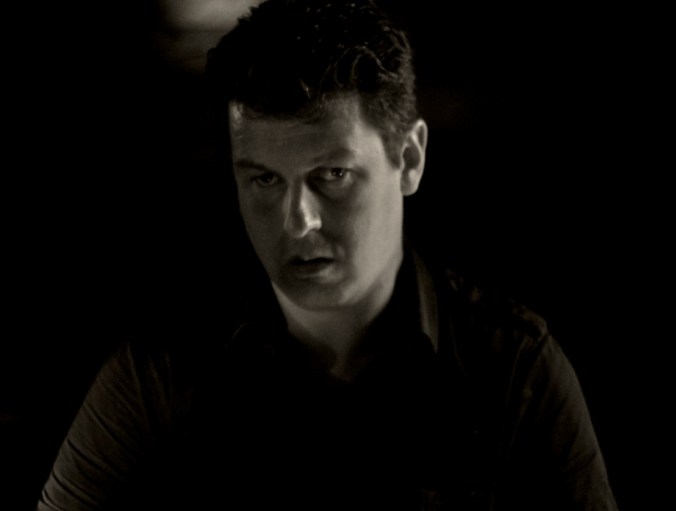
Last time this band was in town the name ‘Tiny Hearts’ had not yet surfaced.  They were the ‘Dilworths’ then, but the music was just as beguiling.  One of the things that I quickly learned was the strength of the bands influences, powerful tributaries feeding a common cause.  I was momentarily tempted to view the group as a discrete entity, a single project, but now I’m not so sure.  The more that I learn about them, the more I see the individual strengths of the musicians, where they’ve come from and where they’re headed.  Each of them have excelled in former projects but there is more.  Together they exude an organic quality, growing, evolving in unison.  Expressing the moment.  IMG_2404 - Version 2
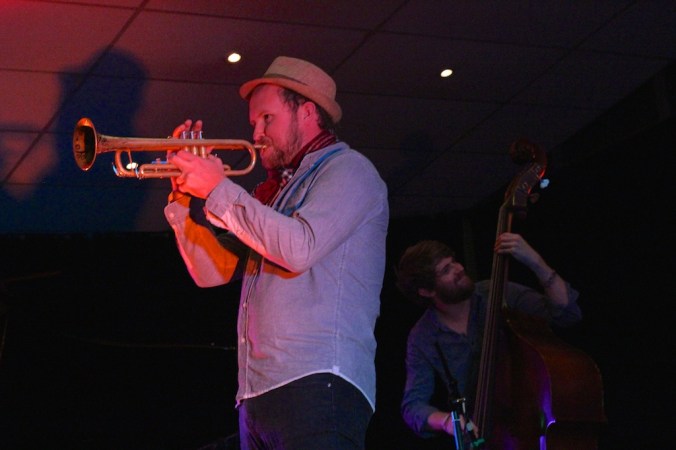
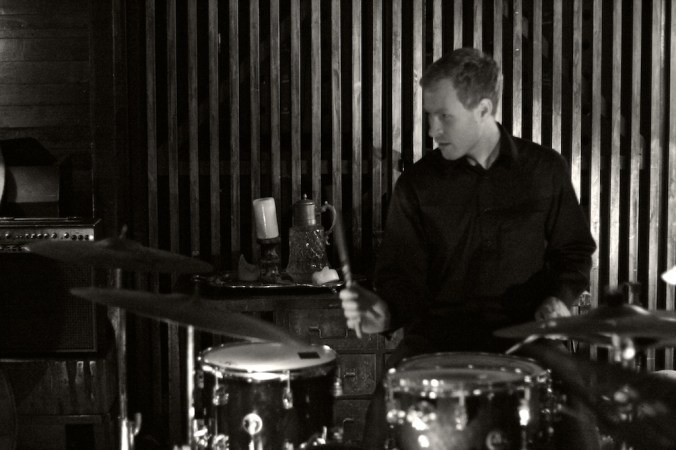
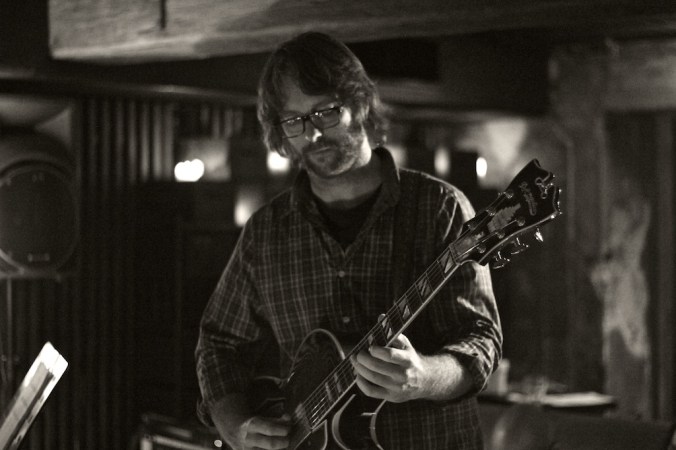
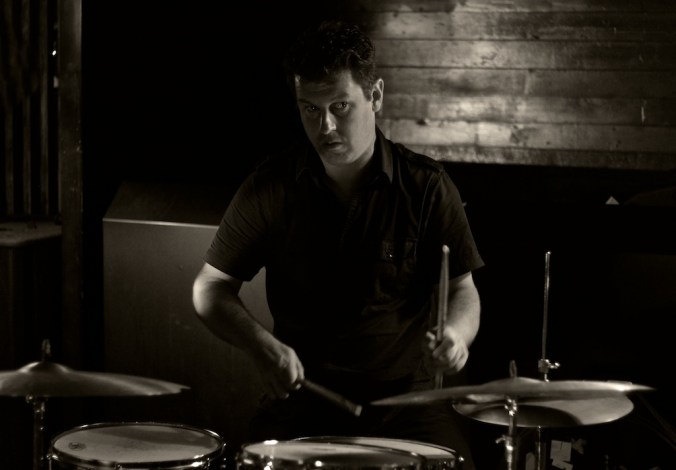
I was familiar with a few of the tunes, the ones played during the ‘Dilworths’ tour.   I had also kept in touch with the musicians and seen clips as they developed their program along the way.  These are great compositions, but the performances lift them to another level.  All of the pieces have the individual musicians stamp imprinted on them.  This is in keeping with the ‘Tiny Hearts’ ethos.  A Steve Barry tune is unmistakably his, A Dilworth or Jackson tune likewise.  While most of the tunes were written with ‘Tiny Hearts’ in mind, they often referenced earlier projects or perhaps give a nod to future offshoots.   The ink was hardly dry on Tom Botting’s atmospheric Balclutha chart when he visited with the ‘Dilworths’ last time.  ‘Big Sea Reprise’ takes up the baton from Paul Derricott’s amazing Big Sea (Arrow) album.   I loved that album and asked Derricott about it when I caught their act last week.  He told me that he had liked the album as first, but then developed some doubts.  It lay fallow for a few years, then Paul revived it.  He is now pleased with it.   IMG_2370 - Version 2
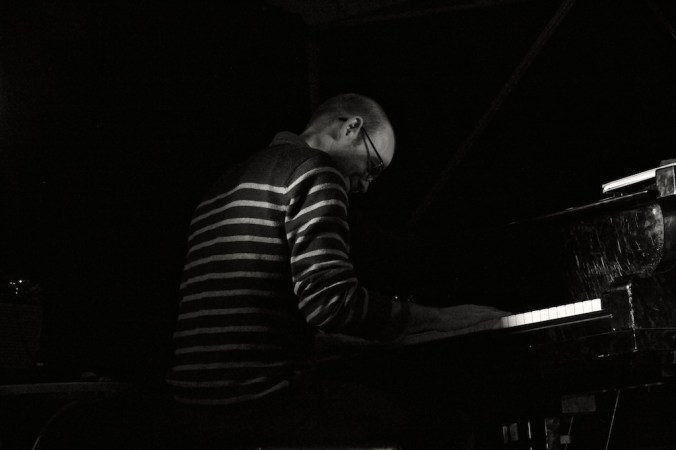
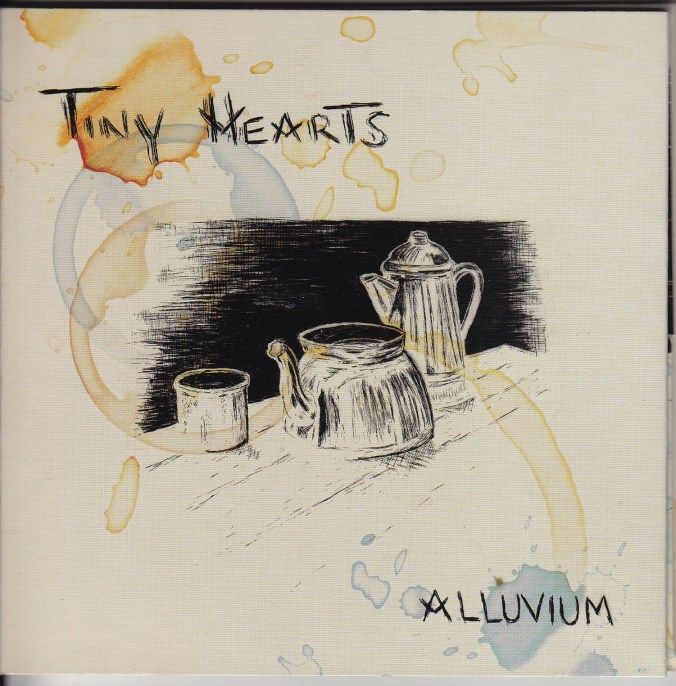
Dilworth is the fronts person for the group, his friendliness and confidence making him and obvious choice.  Musically, all speak equally.  The composition of the band is part Australian and part Kiwi if you count their countries of origin.  In reality they’re best described as Australians.  Musicians like Barry and Botting could never be confined to our small Islands.  Dilworth, Derricott and Jackson are Sydney musicians with solid reputations.  If you are growing curious then here is my challenge.  Purchase a copy of ‘Alluvium’.  If you already possess it then order copies of: ‘Big Sea’ by Derricott, ‘Steve Barry’ the eponymous titled award-winning album by Barry, ‘Caravana Sun’ by Dilworth,  ‘Cosmontology’ by Jackson.   I have just ordered the latter to complete my set.   I also spoke to the band about future projects and there are plenty in store.  A Paul Derricott, a Steve Barry and a Dave Jackson album are in the wind.    IMG_2373 - Version 2
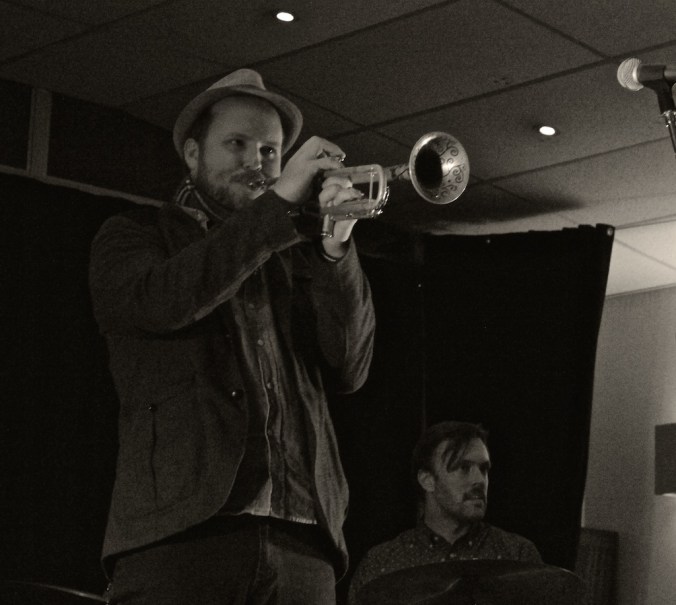
I missed their CJC gig as I was in Australia, but I caught them at the Auckland Jazz and Blues Club.   Reading the venue perfectly, they devoted much of the night to the Ellington/Strayhorn songbook.  This was not done begrudgingly as they revelled in the chance to play sets dominated by these timeless standards.  As the night progressed we whooped and clapped as numbers like ‘It don’t mean a thing’ brought the joy among us.  Embarking upon a night of unprepared swing era tunes would catch a lessor band on the hop.  For these guys it came naturally.

If you get the feeling that these musicians are in the middle of a massive and self-perpetuating project then you would be right.  For those who haven’t worked it out, the title says it all.  Alluvium comes from the Latin ‘to wash against’.  Loose base metals tumbling together in a stream.  That sounds about right.  I can’t wait to see them again in any of their incarnations.  They really are extraordinary.
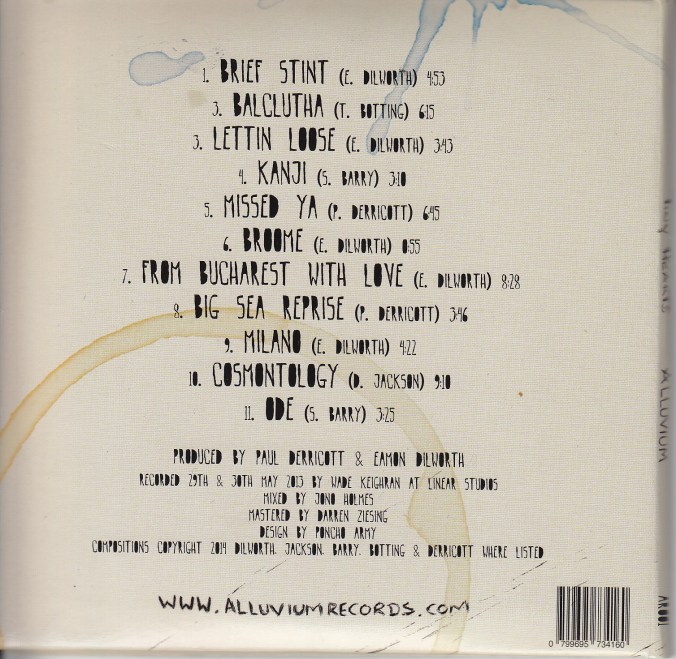
 

Tiny Hearst rear

Who: Tiny Hearts – ‘Alluvium’  Eamon Dilworth (trumpet), Steve Barry (piano), Dave Jackson (saxophone), Tom Botting (bass), Paul Derricott (drums).


http://www.davejacksonmusic.com/     –      stevebarrymusic.bandcamp.com/
www.eamondilworth.com/     –    paulderricott.com/


John Bell – Horn Free @ CJC

IMG_2515 - Version 2

John Bell is an iconoclast, always bringing something new and unexpected to the bandstand.   There is also a rich vein of tongue in cheek humour that runs though his onstage banter.  Like his music, it takes unexpected twists and turns.  That is not to say that his shows lack serious intent as he utilises quality musicians; doing what they do well.   It is perhaps best to describe his gigs as full of Zen humour, the sort that Carla Bley is so adept at.  The slap in the face accompanying a sly tickle of the ribs.  Even Bells instruments are other than the expected.  A metallophone instead of a vibraphone (vibes, sans motor and Leslie unit as played by Gary Burton these days).  A horn in a gig titled Horn Free (and an obscure tenor horn at that).  I was equally unsurprised when I was invited to their live recording date; “Last Modern Jazz Qtet Concert’.  Perfect.

To do justice to his music Bells gigs require quirky and talented musicians.  Good readers, good time keepers, prepared to veer off at a moments notice into uncharted realms.  No genre remains un-pillaged in the source material for John Bells compositions; Korean folk songs, bebop or brass band music.  When he announces a standard it is best to think popular Korean TV program theme, Sonny Sharrock or Sankey Hymn.   Nothing is what it seems in his Kaleidoscopic world of shimmering sweet and suddenly dissonant sounds.   The music is weighed up and re-evaluated long after the event.   It leaves an impression hanging in the air for weeks and because of that it is somehow more satisfying than predicable gigs.  Perhaps it is in the ears of the listener, but to my ear this was brave and satisfying music.  It made me happy.

IMG_2496 - Version 2

Watching an animated vibes player is pure theatre.  They throw themselves into the task more than other instrumentalists.  At times Bell would launch him self forward with apparent fury. His left foot trailing behind him as the energy released.  This wonderful two or four mallet dance was a product of the reduced amplification.  Body, mallet and instrument interacting with intensity.  IMG_2508 - Version 2

The rest of the lineup consisted of guitar, drums and bass.  A mix of veterans and up and coming players.   Neil Watson was on guitar and he is the perfect foil for Bell.   He is at least as iconoclastic as Bell, with wild forays ranging from the joyously punk to fusion bebop.  Watson is a respected musician about town and if he has boundaries they are not immediately obvious.  Stylistically he is often somewhere east of Frissel, Montgomery and Ribot.  He has gradually been adding more slide guitar into his repertoire (and now a pedal steel guitar is part of his bag of tricks).  Watson provided one composition to the gig and while different to Bells compositions it was equally enjoyable.   A well-known musician sitting beside me whispered, “That is in the time signature of Take Five, but it is way further out”.

IMG_2504 - Version 2 (1)

Eamon Edmunson Wells was on bass and Cameron Sangster on traps.   While Bell and Watson often leave the known universe to explore the outer reaches,  Edmunson Wells and Sangster hold the ship intact.  I have heard both often, but never in this context.  I was extremely impressed by their efforts and my respect has deepened for both.  If you do something well in a straight-ahead context that doesn’t necessarily translate into a more avant garde setting.   Musicians like Joey Baron show us just how far you can stretch if you are so minded.   It pleases me to see younger musicians following this braver path.  IMG_2513 - Version 2

The audience numbers were not as good as they could be and that was a pity.  This music is a rare treat and it deserves our attention.  All you need to enjoy music like this is a pair of open ears.  If you listen, really listen, you will soon have a smile on your face.

(an updated audio to clip to be added shortly in this space) 

Who: John Bell (metallophone, tenor horn), Neil Watson (guitars), Eamon Edmunson Wells (bass), Cameron Sangster (drums).

Where: CJC (Creative Jazz Club), 1885 Britomart, Auckland, New Zealand      www.creativejazzclub.co.nz   

Asher Truppman Lattie / J Y Lee emerging artist series

IMG_1936 - Version 2

Thirty years ago Jazz students kept close to the safer standards for a first time club gig.  Post millennium Students reference a variety of genres; even during a single number.  That may sound like a recipe for disaster and if handled ineptly it would be.  What I heard on this gig was at times clever and perhaps even cheeky.  It bodes well for the adventures ahead.  It is important that Jazz retains a sense of adventure and joy.  There is certainly room for serious explorations, but music that takes itself too seriously is a downer.

The programming of CJC gigs ensures that a variety of acts.  This is a particular strength.  I have remarked upon this before and it is this practice that enables the Jazz club to hold ’emerging artists’ gigs every so often.   It is far from being a weak commercial proposition as these nights usually draw significant crowds.  Everyone who follows this music knows that artists don’t emerge from their studies fully formed.  They develop incrementally; as they practice, play beside better musicians and as they perform in front of discriminating audiences.  Having a project in hand like the ’emerging artists’ series is an important step.  There are a number of Jazz schools in New Zealand (and some very good teachers in the private sector).  It is therefore important that we evaluate the students.  So far the quality of emerging artists has been impressive.  IMG_1957 - Version 2

There was a double billing on the 6th August.  First up was the Asher Tuppman Lattie quintet, followed by the J Y Lee Sextet.  Following tradition the band members were all fellow students or recently graduated students and the reasoning behind this practice is sound.  If they appeared with well established and highly competent musicians, a lingering doubt could remain.  Would they have sounded as good without the latter?  Choosing from fellow students gives context and synergy.  Everyone needs to step up in unison.   IMG_1953 - Version 2

I have posted a number titled ‘Tango’ which provides a context for my initial comments.  At first it appears to be traditional Jazz Tango fare as it briefly utilises the raspy sounds made famous by Gato Barbieri.  Then you get a sense of fun, as it playfully takes the genre apart.  We get bebop and the merest hint of free in what follows.   The vaudevillian feel of the piece worked well.  It is similar to the sounds I heard during my explorations of Italian Jazz, a country where the blurring of Jazz, folk and free is often elevated to high art.  Jazz Tango is something that I love and I’m not sure Kiwi’s get this.  Listen to Gerry Mulligan with Aster Piazzolla or Gary Burton or even Carla Bley and you will find Tango gold.  The Jazz Tango master who appeared to acclaim at the recent Wellington Jazz Festival was probably ignored by most Jazz fans.  Their loss.  The pianist Connor McAneny  played the first set.  He is an imposing presence; not because he is dominant, but because his assuredness when comping and his tasteful solos grow ever more confident.

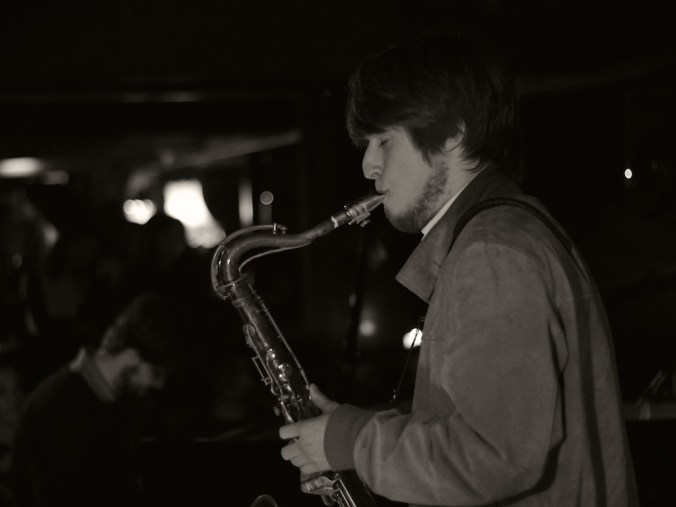
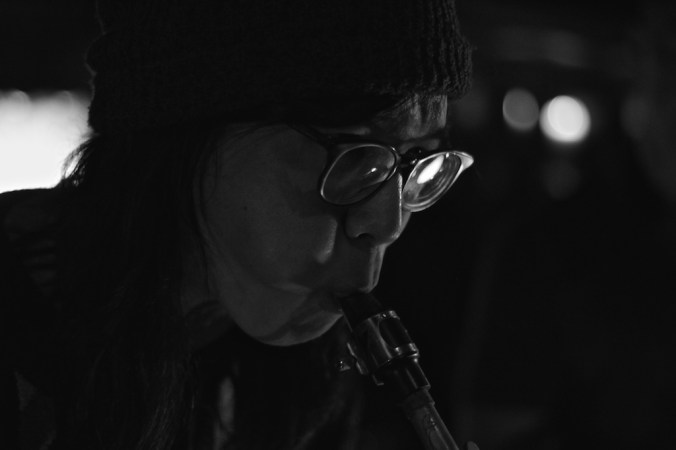
Second up was J Y Lee, a young alto player who is often seen around town.   He is heard in many lineups and his taste for the avant garde has added a piquancy to his sound.  His played a  varied set, giving him the ability to demonstrate a range of his writing and playing skills.   Utilising Chelsea Prastiti on vocal lines was a masterstroke as the colour she adds to an ensemble is unique.   As in the Asher Tuppman Lattie set the second horn player was Sam Weeks.   Sam had played Alto in first set but took up tenor duties for the second set with J Y Lee.  I have put up a piece which shows Weeks and Lee playing together.   The arranged head is tight and melodic and as the piece opens out, everyone is given a chance to stretch a little.  IMG_1950 - Version 2

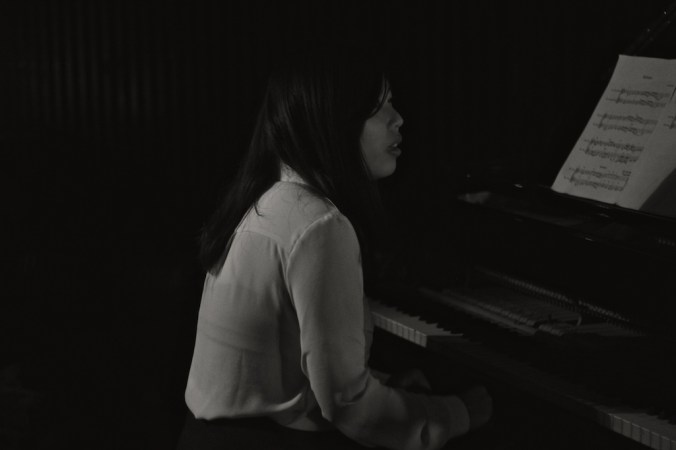
The pianist for the second set was Chrystal Choi.  She is a gifted pianist and it is a real shame that we don’t see her more often.  In spite of having well-developed chops she never over-plays.  Every note counts and she is definitely one to watch.   Bass player Djordje Nikolic and drummer Tristan Deck played both sets.   I have only heard Nikolic a few times but he acquitted himself well.   Tristan Deck is increasingly seen about town and it is no wonder that he is employed more often.  His time feel and confidence mark him out.

There was a good attendance for the gig and judging by the whoops and cheers everyone enjoyed it.

Where: CJC (Creative Jazz Club)  www.creativejazzclub.co.nz

Mark Lockett Trio @ CJC Winter 2014

IMG_1869 - Version 2

Mark Lockett lives in New York these days but he manages to visit Auckland every so often.   This year, as he did in 2012 when he released ‘Sneaking out after midnight’, he appeared with a trio.  Lockett is an engaging personality and his often quirky good humour spills into his playing.  He is probably the most unusual drummer I have seen.  One manifestation of this is the way he holds his sticks which is sometimes more than a third of the way down.   It’s as if he puts his entire body into the task in hand, partly lowering himself over the kit and listening intently to each sound and sensing each player; feeling for the spaces in between.

IMG_1892 - Version 2

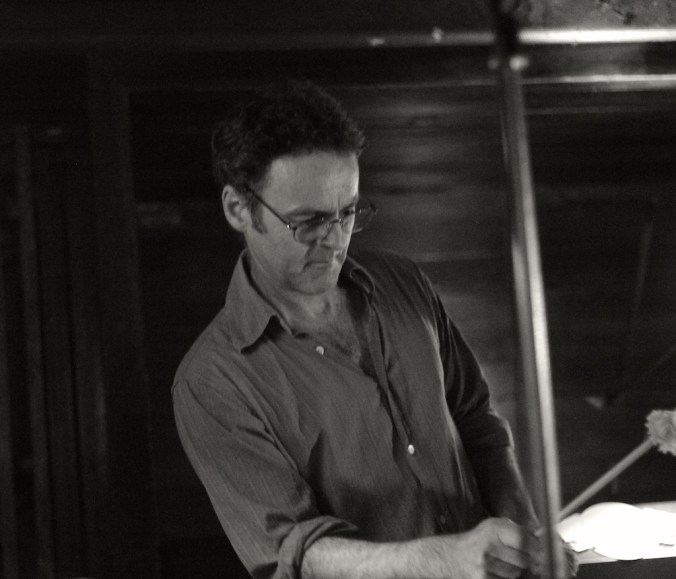
There is an apparent deliberation that accompanies each beat or flurry, holding back for a micro second , then dropping the stick.   What is more interesting is his ability to convey the maximum of effect when playing quietly.  He isn’t a loud drummer but he conveys a world of sound.  Reminding us as he uses elbows, hand palms, rims and stands, that the drum kit is a subtle and incredibly musical instrument in the right hands.  His are the right hands.  Lockett’s compositions are also quirky and there is always the hint of a delightful joke in the offing.   These jokes stretch beyond the humorous titles, unfolding as musical stories with clever narrative lines.  His communication skills are such that the audiences follow with delight.  The humour is gentle but deeply imbedded and perhaps this is the best hook of all.  This tour was appropriately titled, ‘Flying by the seat of my pants’.IMG_1865 - Version 2

There are definite risks with trios like this, as they tempt saxophonists to self indulgently noodle once freed from chordal constraints.   Manins was perfect with this trio and used the opportunity to build upon the existing narratives.   At times playing outside but never once disconnected from the bass in drums.  He clearly took his lead from Lockett.  He is known for his intuitive reading of varying bandstand situations, a particular strength of his.  IMG_1867 - Version 2

The bass player Umar Zakaria had never played at the CJC before and in fact when I saw his name on the web site I thought that he had come from New York with Lockett.   When I spoke to him it surprised me to hear a Kiwi accent.   Zakaria has been attending the School of Music in Wellington and I believe that he is doing his honours at present.  My belief that he was an experienced offshore musician was not dispelled until I spoke with him after the gig.  His solos were interesting and he ably supported the others.  This was a good night of music from a solid band, that entertained without taking itself too seriously. 

Who: Mark Lockett Trio – ‘By the seat of my pants tour’.  Mark Lockett (drums and compositions), Roger Manins (tenor saxophone), Umar Zakaria (upright bass).

Where: CJC (Creative Jazz Club), Britomart 1885, Auckland New Zealand.   www.creativejazzclub.co.nz