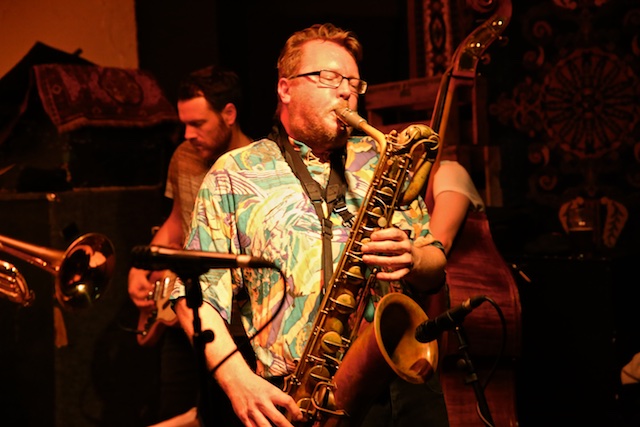
The alternative music scene in Auckland is surprisingly strong and although at times appearing hermetically sealed against the outside world, it flourishes in discrete self-contained units. There are no neon signs proclaiming ‘underground music found here. If you visit Karangahape Road on the right night, deploying a seismometer to the footpath outside St Kevin’s Arcade, or to the walls of the Parisian Tie Factory, the readings will red-line. The digital spikes are an indication of subterranean life. I love these basement venues and reclaiming them in the right way is an art form. The basements I refer to were once utilitarian storehouses from a bygone era, a monotoned boring past wearing walk shorts – now softened by memory. Now, they emit a frisson of mystique and risk – alternative music lives here. A towering presence in this shadowy world is musician Jeff Henderson. 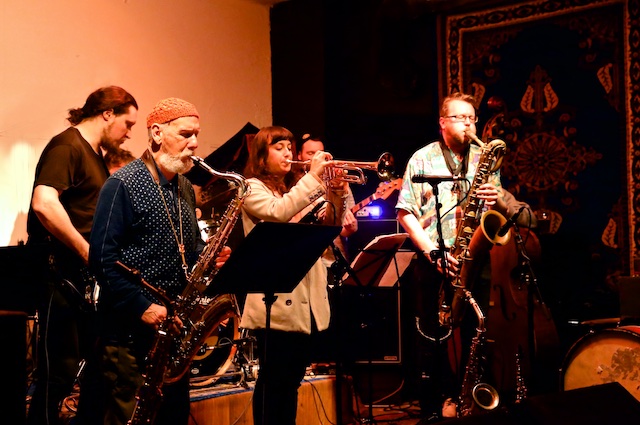
The aptly named ‘Dreamville’ project came to my attention when Henderson appeared at the CJC in 2015 it floored me, the concept grounded in a reality we often overlook and at our peril. The primal bubbling energy underpinning sound itself. The first time I heard ‘Dreamville Jazzmares’ the lineup was different – a quintet; reeds, vibes, guitar, upright bass and drums. Now, the album features an octet and for the Auckland release, Henderson added an extra horn and electric bass. While it is tempting to reference a Sun Ra band or perhaps Zorn’s Electric Masada, this is overwhelmingly a manifestation of Henderson’s originality. A gifted composer, talented musician and tongue in cheek visionary.
While the careful listener may initially find a lot that feels familiar, the familiar is illusionary, snatches of past and future, wearing clothes made of mist. The relationship with other projects is in the end superficial. This is important original work and there is no mistaking that. When listening to the Auckland release an additional realisation struck me. Rhythm is the dominant force in Henderson’s compositions. His deeply woven rhythms extend way beyond the drums and percussion (there are two drummers – at times three). Here every instrument is rhythmically charged under his guidance. During the live performance in Auckland Henderson often picked up a bright red parade bass drum. As he tapped out rhythms on the side or accented beats behind the complex interwoven trap drummers, a marvellous polyrhythmic effect occurred. An effect heard in Polynesian drumming. The beats, strums, wails and chords often fall in step – primal morse – dot-dash-dah in myriad combinations.
.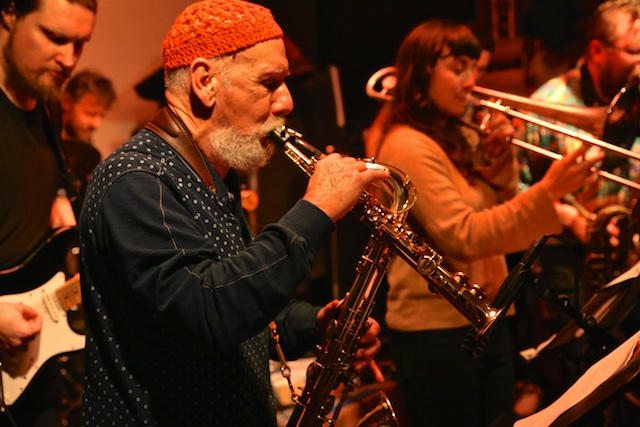
Phill Dadson, Jim Langabeer, Liz Stokes
The Dreamsville Wellington recording band is Jeff Henderson (alto, baritone, c-melody saxophones, voice, bass drum), Bridget Kelly (tenor saxophone, clarinet, bass clarinet), Gerard Crewdson (trumpet, trombone, tuba, voice), Daniel Beban (guitar), Julian Taylor (guitar), Tom Callwood (acoustic, electric bass), Joe McCallum (drums, Percussion), Anthony Donaldson (drums). This is a suite that lends itself to variation and interpretation like few others. Kelly and Crewdson worked well with Henderson, creating a cohesive multi-horn dialogue, rich in texture and fulsome. Having two drummers, two guitars, and a strong doubling bass player, gave the contrast and gut-punch required.
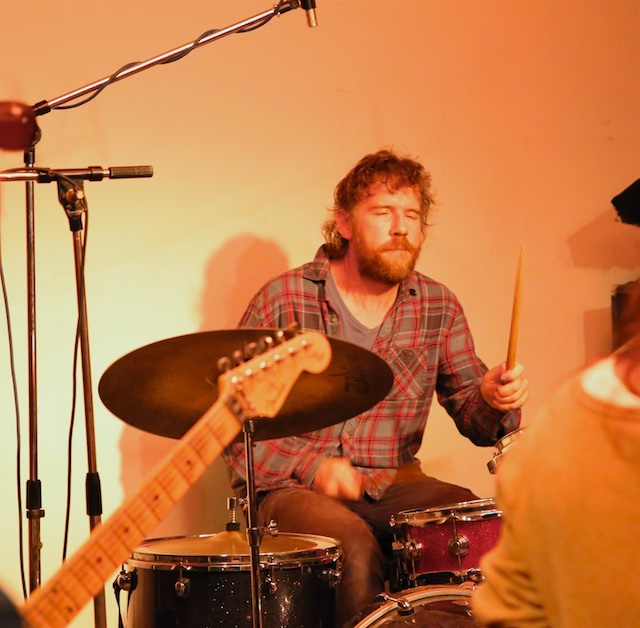
Chris O’Connor
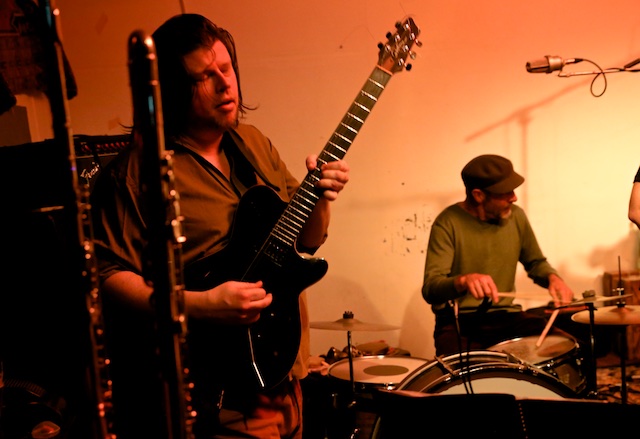
The Auckland band were; Jeff Henderson (alto, c-melody, baritone saxes, voice, bass drum), Jim Langabeer (alto flute, sopranino, tenor, soprano saxes), Liz Stokes (trumpet, trombone), Tom Rodwell (guitar), Phill Dryson (guitar, voice), Tom Callwood (electric bass), Eamon Edmunson-Wells (upright bass), Anthony Donaldson (drums, percussion), Chris O’Connor (drums, percussion). Although different, this was a rich heady brew – the composition loosened, but always guided by Henderson’s astute hand. His method of guiding the composition riveting to onlookers, his signals unusual but effective, call and response signalling a new direction. An entire language developed – a ‘conduction’ that could lengthen, shorten or guide a musician towards untapped zones.
My favourite signal is his use of voice – eerie otherworldly high pitched vocal phrases – mimicking instruments, some of which have not yet been invented, strangely beautiful, deeply human. Langabeers alto flute was the counterweight, earthy, and sonorous, but his sopranino was freed from gravity (at times he played multiphonics on tenor or played two horns at once). Everyone gave their best – exhausted as they were afterwards.
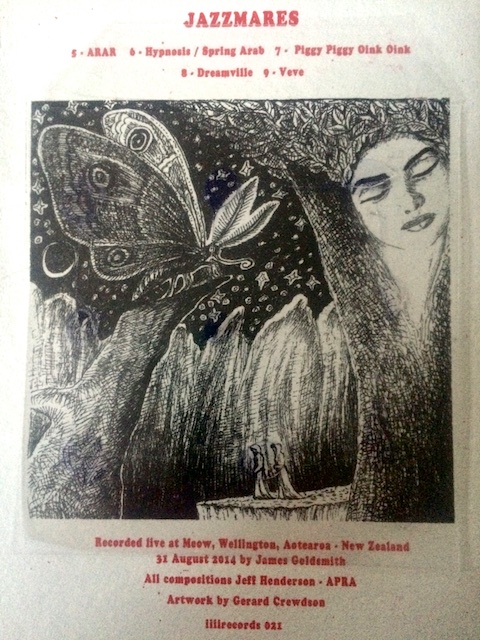
The album is selling out fast but copies can be obtained or ordered from Henderson in Auckland or in Wellington from Slow Boat Records or Rough Peel. It is also available on Bandcamp at iiiirecords.bandcamp.com. I strongly advise ordering the double CD as it is a thing of beauty, the size of a penguin paperback. The artwork was created by band member Gerard Crewdson, a multi-talented artist, and musician. The images are exquisite with a subtle disquiet lurking behind the peaceful overarching beauty. Here I am minded of the engravings of John Buckland Wright (a New Zealand born illustrator and engraver who attained considerable fame in 1930s London). The live gig took place in the Wine Cellar on the 23rd of June 2016.
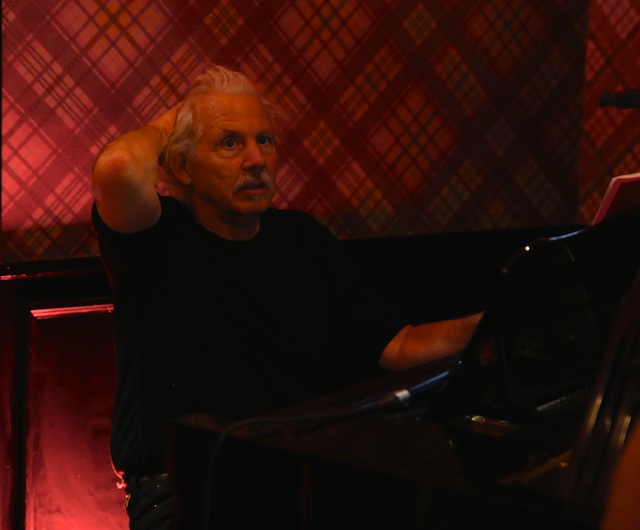 To the best of my knowledge, Jonathan Besser has not played at the CJC (Creative Jazz Club) before. While he is best known as an important composer for The New Zealand Symphony Orchestra, The New Zealand String Quartet and The Royal New Zealand Ballet, he is also a significant leader of small ensembles. Ensembles which venture far into the territory of experimental, electronic and improvised music. It is impossible to separate the man from his music. It is eclectic, original and often plaintive but generally with a sly twist of humour thrown in. In spite of his standing in the music world, Besser is modest. At the CJC he was happy to lead from the piano, which was in partial darkness and at the rear of the ensemble. His instructions were brief and staccato as if part of the unfolding suite. When he did pick up the microphone to speak to the audience he exuded an eccentric charm, bandstand asides peppered with self-effacing humour, garnished with sudden smiles.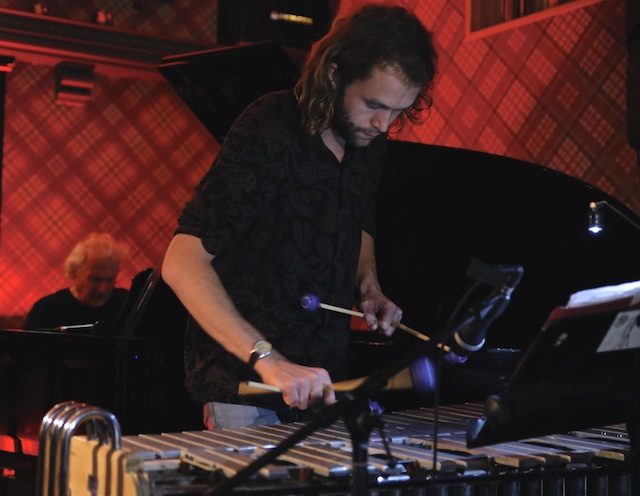
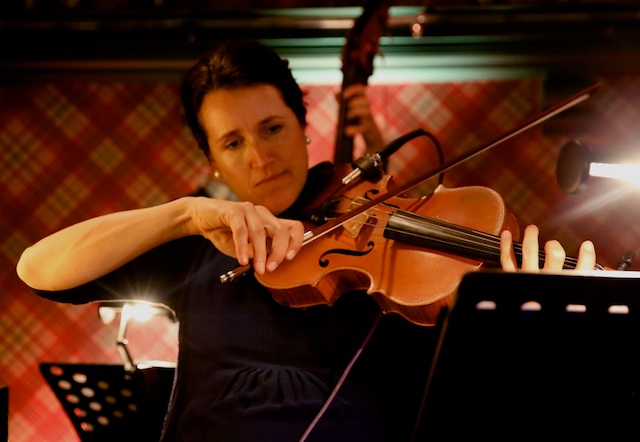 I met Besser briefly during Natalia Mann’s ‘Pacif.ist’ tour and later at the Auckland Art Gallery during the opening of Billy Apples ‘Sound Works’ exhibition. On that occasion, the Nathan Haines Quartet played Besser’s innovative compositions. I really hope that someone recorded that. It was extraordinary music, based upon prescribed letters of the alphabet. These were then allocated using the 12 tone scale as a formula to locate equivalent notes. The order of Billy Apple’s words dictating the order of notes.
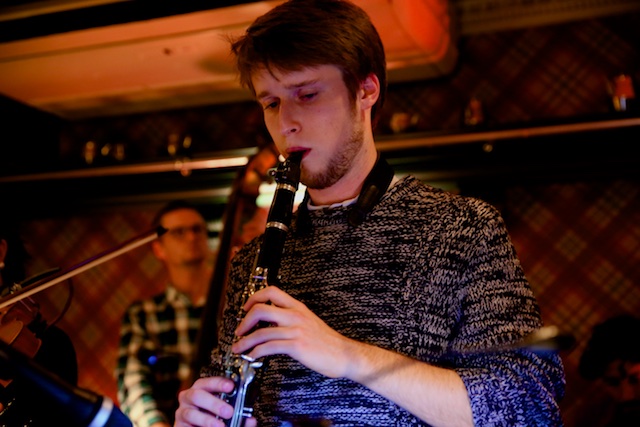 The music was not Klezmer and later I asked Besser about his influences – were there strong Jewish influences? “I am a Jewish man and I used Jewish scales, but apart from that no. I draw upon many, sources”. It interested him that I heard Argentinian references. “I have done Tango projects in the past and that is possible”. It was partly the combination of instruments, the delicious overlay of melancholia and the accents – not so far from the music of master musician Dino Saluzzi.
 The segments of music making up the suite seldom lasted longer than 4 minutes. The spaces between them brief. The mood seldom deviated from the wistful, evoking a sense of intangible longing – for something remembered – but just out of reach, a nostalgia as ancient as time itself. There were a few cheerful pieces as well, but I preferred the former. The Zestniks update themselves regularly, this time adding Caro Manins vocal lines, her wordless vocals followed the viola or clarinet in gentle unison. No one is better suited to this than Manins – she has worked with the likes of Norma Winstone after all.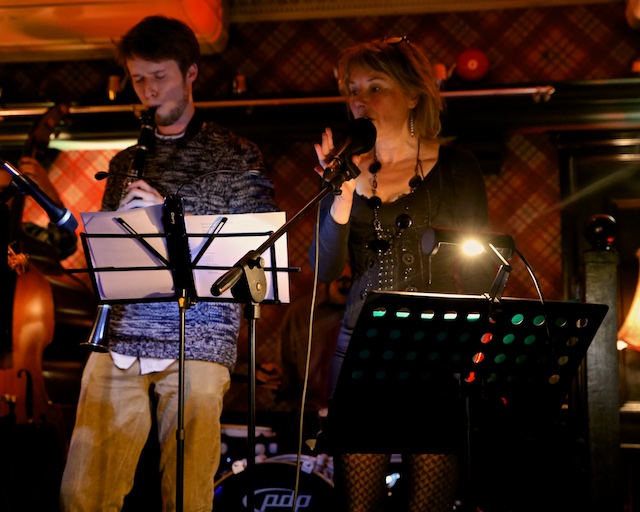
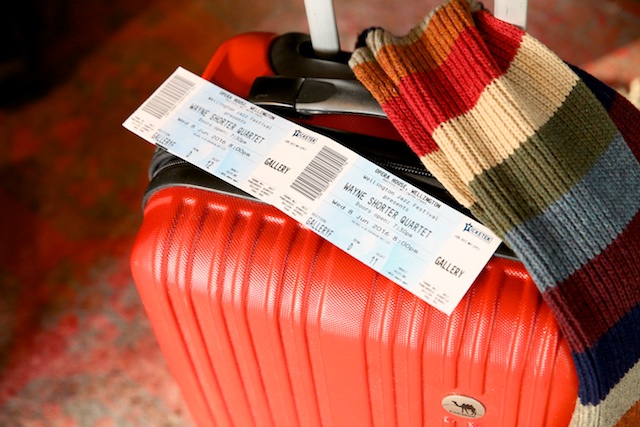 When we talk about Wayne Shorter’s music we immediately run into obstacles. Wayne is like a Zen Master, deliberately confounding our every expectation. To begin such a journey our rational minds need emptying. As the journey unfolds we move beyond comforting reference points; this requires a letting go, real courage. The 2016 Wayne Shorter band is a musical ‘Voyager’, a spacecraft assembled out of earthly components, but sending encrypted sonic messages from an unknown place. What is on offer is a shared journey – but only if we are brave enough. Once you commit there is no looking back.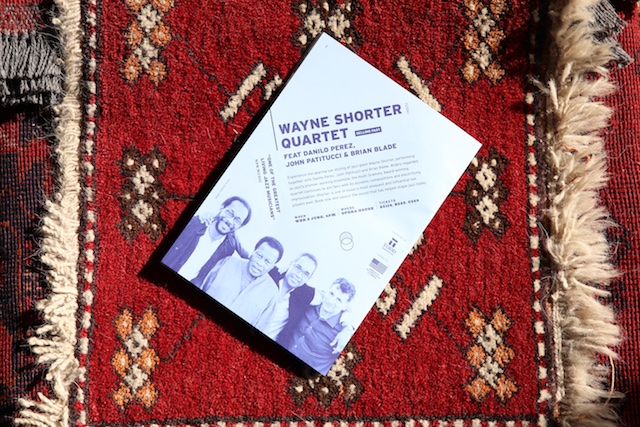
 Thanks to Rodger Fox and the CJC management we were lucky enough to see five times Grammy nominee, Jazz vocalist Karrin Allyson in our Auckland Jazz Club last Wednesday night. Seeing an artist like this in a concert hall is one thing; seeing her in the warm intimate surroundings of a small Jazz club and just a metre away is quite another. Always a sucker for quality Jazz vocalists I first heard her in 1992 (the album ‘I Thought About You’ was the first of hers I purchased). On the basis of her recorded output, I booked for both the CJC gig in Auckland and the Wellington Jazz Festival concert. The flights between these cities are surprisingly affordable when you book in advance, and these opportunities don’t come around often when you live in the South Pacific.
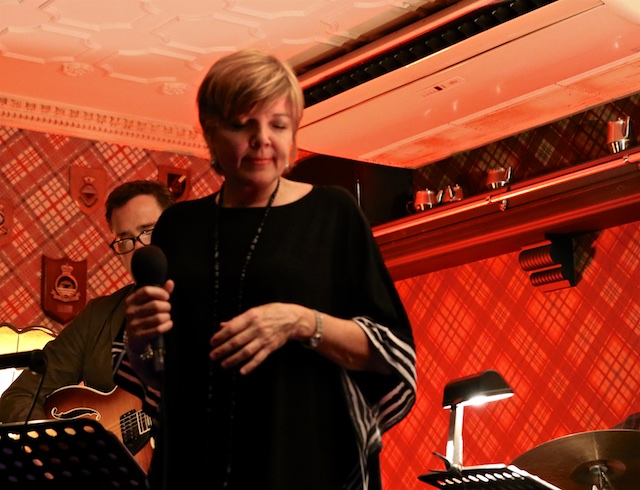 Following her 1992 release further albums came out and by the time ‘Ballads: for Coltrane’ and ‘In Blue’ were released there was no mistaking it. This was an important vocal interpreter. Her voice has particular qualities, an attractive smoky veneer, but then there’s that extra something. A sense of shared intimacy, a way of interpreting lyrics in an original way while still paying tribute to earlier interpreters. Her version of ‘O Barquino’ or ‘Double Rainbow’ (both by Jobim) immediately brings to mind the fabulous Elis Regina. Her ‘West Coast Blues’ conjures up Wes Montgomery just as much as the instrumentalists. She scats in ways that adds value to the narrative content of the song, never overdone and always wonderfully inventive. It came as no surprise, therefore, that she could conquer an audience in a heart beat.
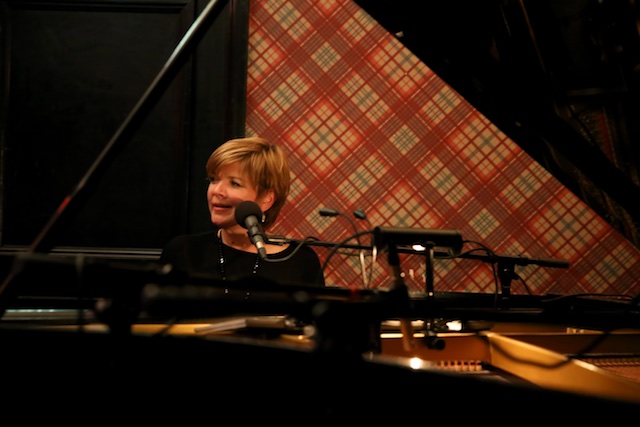 From the first vocal number, Allyson teased the audience, turning the lyrics into a conversation. Her set list spanned her Concord recordings including her recent release ‘Many a New Day: Karrin Allyson Sings Rogers & Hammerstein’ (When I think of Tom/Hello Young Lovers). Everything she performed was extraordinary but when she moved to the piano and accompanied herself on ‘Bye Bye Country Boy’ I was especially delighted. For some unaccountable reason, few vocalists interpret Blossom Dearie and more’s the pity. Dearie was a true original and a fiendishly clever Jazz vocalist. Her voice had a deceptive depth if you listened properly and like Allyson her ability to communicate was perfectly honed. It is fitting that Allyson should tackle Blossom Dearie as she is able to convey the same wry humour and wrap it up in a very attractive vocal package. She was simply killing in her interpretation.
 Accompanying Allyson was the Tom Warrington trio. Although it is five years since we saw them last, they have been regular visitors to New Zealand thanks to Fox. Tom Warrington is a superb bassist, having worked with everyone from Peggy Lee to Stan Getz. His list of credits is staggering. Formerly based in LA, where he was constantly in demand and no wonder. The choices underpinning each note he plays are beyond caveat. His musicality, teaching and compositional skills of the highest order. Today he lives a quieter life in rural New Zealand. When you hear his bass lines, and especially during a ballad, you recall the classic piano-trio bass players. Loading each note with meaning and carrying as much weight as any chordal instrument. Warrington has released four superb albums with this trio and all are highly recommended.
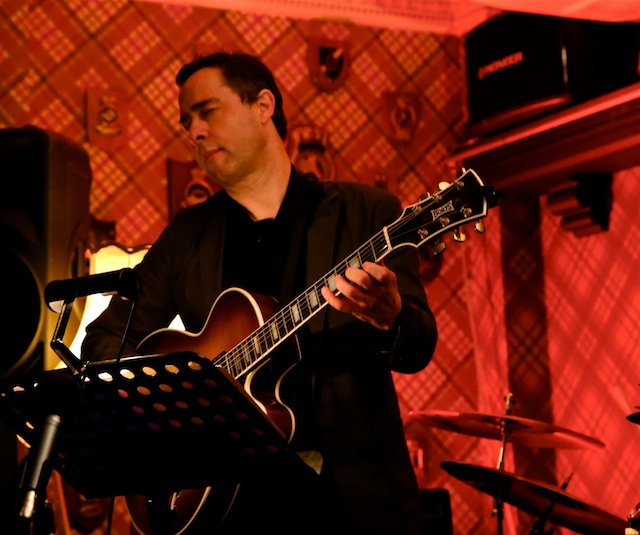 On chordal duties was Larry Koonse, playing a lovely hollow body Borys guitar. An impressive guitarist and a stalwart of the LA Jazz scene. Again, he is widely recorded, also releasing a number of albums under his own name. In many ways, Koonse encapsulates the best of the pre-millennial guitar tradition. That said, his fresh approach to tunes is also very much evident. His voice leading is a masterclass; dissonant/consonant inversions that have more bottom than most guitarists can muster in a lifetime and a gorgeous warm tone which lingers in the memory long after the gig. This, together with his other skills, makes him the perfect accompanist for a vocalist. When he played ‘Bolivia’ (Cedar Walton) with the trio, it took on the urgency and excitement that the tune demands. On ‘Whisper Not’ (Benny Golson) he extracted unalloyed beauty. I have known Larry for a decade and speaking to him after the gig, I complimented him on those tunes. At that point, my mouth raced way ahead of my brain and I said, “that was ‘Speak Low’ wasn’t it”? That fact that my slip of the tongue had accidentally come up with an exact antonym of ‘Whisper not’ made his day.
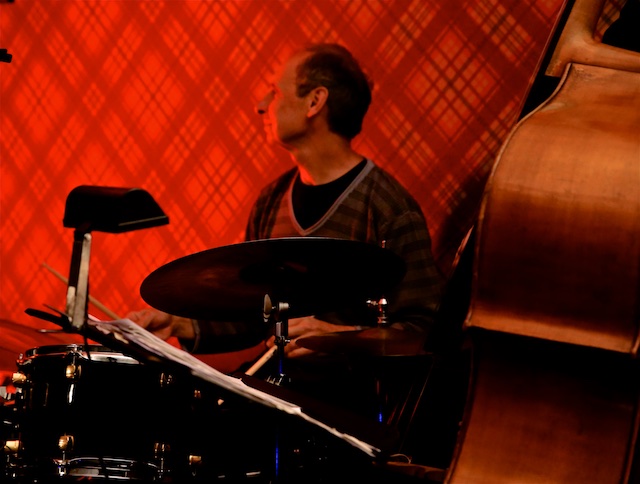 Last but not least is the Warrington Trio drummer Joe La Barbera. No one needs reminding of his long list of credits and impeccable credentials. As Warrington said during the introductions. “As everyone knows, Joe La Barbera was in the last Bill Evans trio. This puts us in some rarefied air”. Along with Marc Johnson, he breathed new life into that trio. While rightly famous for his superb drum work with Evans, he is a multi-faceted drummer; having also worked in avant-garde settings and with medium to larger sized ensembles such as ‘The West Coast All Stars’, ‘The Woody Herman Band’ and with ‘Kenny Wheeler’. He has often worked with famous vocalists such as Tony Bennett and Karrin Allyson. La Barbera has an inclusive quality that enhances bass and guitar but never overshadows them. When he solos, it is to the point. His stick and brush work add subtlety and texture – the effect always jaw-dropping. It is easy to see why he is so much in demand. A musical drummer who gives so much while working so hard to support the others.
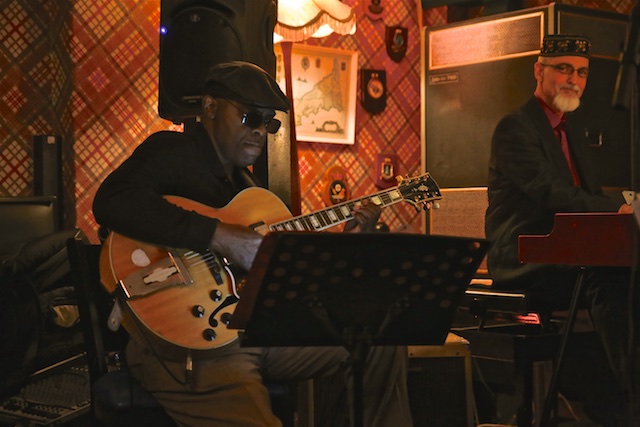 Auckland spoils us with long runs of clement weather, but when winter hits we suffer. Having effectively avoided any meaningful autumn we suddenly plunged into a week of cold wet days. There was no better time for the Michel Benebig/Carl Lockett band to arrive. As we grooved to the music, a warmth flooded our bodies within minutes. Nothing invokes warmth like a well oiled B3 groove unit and the Benebig/Locket band is as good as it gets. The icing on the cake was seeing Shem with them. A singer with incredible modulation skills and perfect pitch, able to convey the nuances of emotion with a casual glance or a single note. The way she moves from the upper register to the midrange, silken.
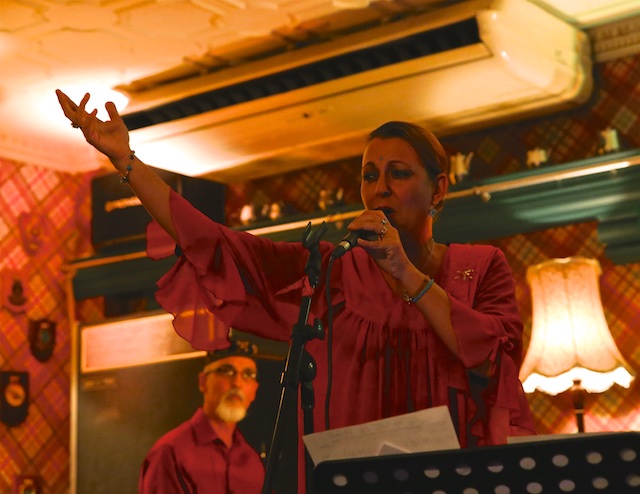 Michel Benebig has been travelling to New Zealand for years, and his connection with the principals of the UoA Jazz school has been a boon for us. He generally brings his partner Shem with him, but last time work commitments in her native New Caledonia kept her at home. Michel just gets better and better and the way his pedal work and hands create contrasts and tension defies belief. It is therefore not surprising that Michel attracts top rated guitarists or saxophonists to his bands. The best of our local groove guitarists have often featured and a growing number of stand-out American artists (see earlier posts on this band). Of these, the New York guitarist Carl Locket is of particular note. I first heard Lockett in San Francisco four years ago and he mesmerised me with his deep bluesy lines and time feel. Although comfortable in a number of genres, he is the ideal choice for an organ/guitar groove unit.
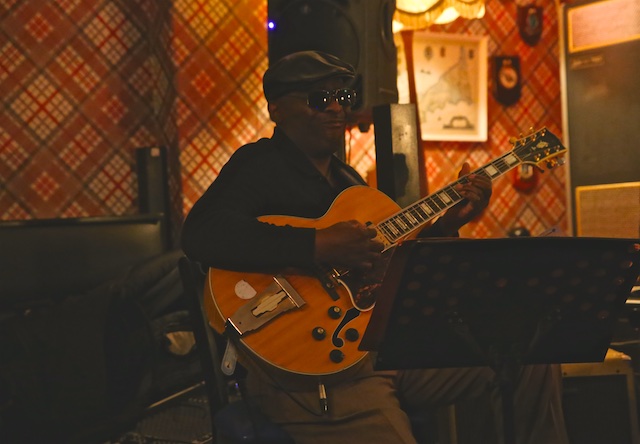 The band played material from their recent album (mostly Benebig’s compositions) and a few standards. There were also compositions by Shem Benebig. Their approach to arranging standards is appealing – numbers like Johnny Mandel’s ‘Suicide is Painless’ are transformed into groove excellence. We heard that number performed at the band’s last visit and the audience loved to hear it repeated. This visit, we heard a terrific interpretation of ‘Angel Eyes’ (Matt Dennis). I confess that this is one of my favourite standards (Ella regarded it as her favourite ballad). Anita O’day performed it beautifully as did Frank Sinatra and Nat Cole. The only groove version I can recall is the relatively unknown Gene Ammons cut (a bonus number added in later years to his ‘Boss Tenor’ album with organist Johnny ‘Hammond’ Smith). That version took the tune at a very slow pace, so slow in fact that you initially wondered if Ammons had nodded off before he came in. It was wonderful for all that (who can resist Ammons).
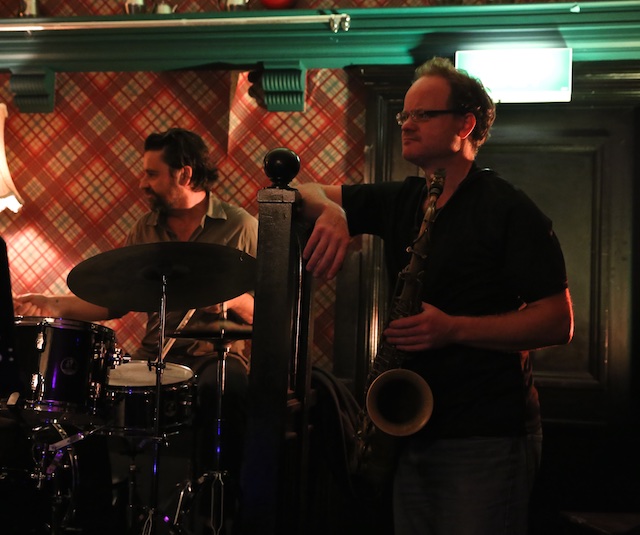 The band began the tune at a slow pace (but not as slow as Ammons), then once through, picking up the tempo, the band settling into a deeper groove, drummer Samsom and the guitarist really locking together, giving the Benebig’s room to create magic. That locked-in beat is often at the heart of an organ-guitar unit and when done well it adds bottom to the sound. Locket’s style of comping is the key to that effect, the entry point for the drummer, the way the guitarist lays back on the beat and comps in a particular way. Samsom heard and responded as I knew he would. He is a groove merchant at heart. On tenor saxophone, Roger Manins was on home turf. Dreamily caressing the melody before his solo.
 JazzLocal32.com