 During the next two months, the weekly New Zealand Jazz gig posts will be replaced by blog posts from the road. I am writing this from Amsterdam, the 3rd stop in a road trip around the edges of Europe. Time permitting I will cover the music I encounter along the way, but also literature, art and architecture. The golden rule of any blog is to keep posting on time, so I will try to achieve that (iPad and WiFi allowing). The JL32 blog gets upwards of 36,000 hits a year, every visitor expecting Jazz; I hope this expansion of topic sits well with them.
Somewhere over the arctic circle I watched the new Miles biopic (‘Miles Ahead’) on the inflight entertainment. My expectations weren’t high; purely on the basis of my past experiance of Jazz movies (I hated ‘Whiplash’). I always want them to be good, but they seldom are. On the other hand Jazz documentaries like the CharlesLloyd ‘Arrows into infinity’ and the sad but lovely Chet Baker doco ‘Let’s get Lost’ are beyond reproach. In spite of the many time blurred flashbacks and the strange plot, the ‘Miles Ahead’ movie worked for me. A drug-fuelled fictionalised clash with gangsterish music industry hired guns, took us deep inside the seedier aspects of NY nightlife – it was the music though that carried the movie to sublime heights. Sensibly, every frame, every scrap of dialogue served as a backdrop to the music. The tasteful segments of ‘Sketches of Spain’ or his later fusion tracks were simply haunting. Don Cheedle was superb as director and as Miles. Ewan McGregor’s character stretched credulity a bit, but hey – see this movie.
When we landed at Heathrow that tired old gag, ‘breakfast in San Francisco, dinner in London, luggage in Paris’, became a reality for us. Wild eyed, temporarily luggage less and frazelled, we rode across a very warm London towards our hotel. While in the taxi I posted that we’d landed in the UK, and almost immediately I received a gig invitation from the gifted London Jazz guitarist Rob Luft. Jet lagged and all I jumped at the chance, having caught and reviwed one of Luft’s New Zealand gigs earlier in the year. A guitarist with impeccable chops but more importantly a guitarist who makes the instrument sing. I would rather hear a joyous performance than a technically proficient one. With Luft you get both. The gig I attended had Luft playing in the band of a fantastic Brazilian singer ‘La Luna’ (Luna Cohen Fonseca Ramos). The remaining band members were Sam Watts (piano) (UK), Matheus Nova (bass) (Brazil), Jansen Santana (percussion) (Brazil).
I set out through the bank holiday mayhem towards Barnes, a leafy London suburb I had never visited previously. The underground presented me with a variety of puzzles of the sort that chess masters thrive on. The change machine was out of order, and the only train to Barnes was not running due to line closures. To make matters worse my phone wouldn’t roam and so the directions were locked out of sight. Luckily I had been well briefed by Robb Luft, so by changing trains several times and catching a bus, I eventually arrived at Barnes Station. Barnes Station is not actually in Barnes and a 20 minute walk through woodland followed. Two fox sightings later I arrived at the oldest Jazz venue in London. ‘The Bulls Head’ hotel beside the Thames. 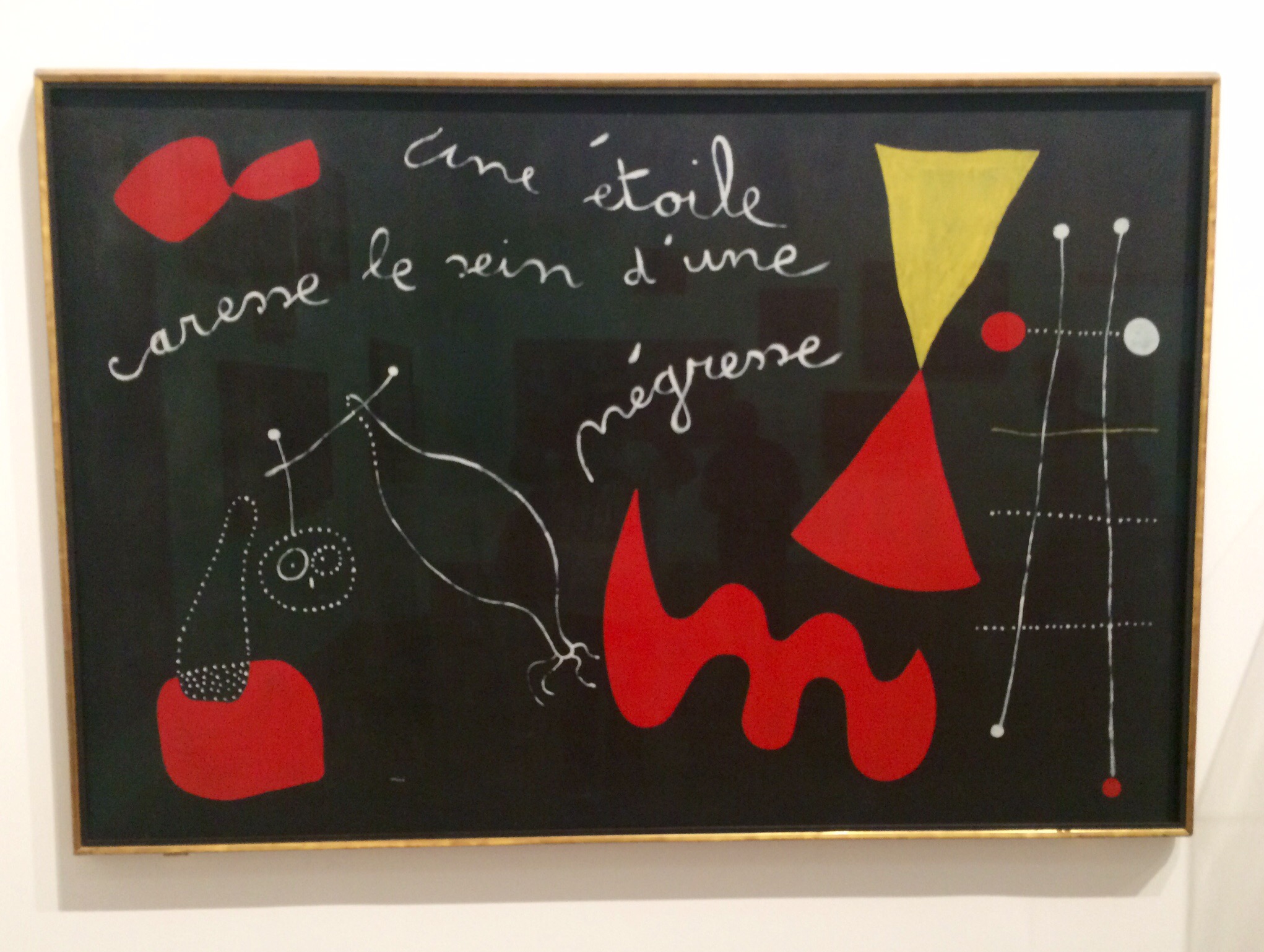
The club is small and cosy and it was jam-packed (note to Jeremy Corben there is no such thing as ram-packed). La Luna is from one end of Brazil while the remaining Brazilan band members are from a different region. Regional separation often brings stylistic variation, especially with South American music, the differences can be subtle but they really do matter. This blending of styles works well, especialled when the rythmic accents of the Brazilian rhythm section are leavened by the piano of Watts. His nice bright touch and interesting voicings skilfully blending with the punchy electric bass lines of Nova and the complex polyrhythms of Santana. As I anticipated, Luft was superb. Sometimes comping behind the vocalist, sometimes deploying tasty fills, the perfect counterpoint to La Luna. She sang soulfully, and as with all authentic latin vocalists, the voice came from deeper in the throat. I have often listened to singers like the immortal Elis Regina and marvelled at the intonation and the unique time feel. So it was with La Luna. The interplay between the two Londoners and the Brazilians made for a happy cross pollination. Two numbers in particular made the gig special, a composition by Luft which allowed him to stretch out a little; a piece with a clever head arrangement that snagged you on its hook. The other, a song in English by La Luna – a funky happy number that swung like crazy. Luft is hoping to return to New Zealand sometime soon – I really hope so – he was truly magnificent.
I had two more days in London and so I sought out the Tate Modern. Last time I visited there I encountered my first Jackson Pollack. I can remember the moment of contact clearly; a sudden encounter during which I felt that I was being shot through with high voltage electricity. The kinetic power of those splotches and dots could light up half of London. On arrival I learned that the big pollock was on tour (as were the Roy Lichtenstein works). I slowly made my way through photography exhibitions and rooms full of installations. Eventually I arrived at the remaining Pollock – stunning. It has been said that his splashes were better controlled than a fine sable brush in another painters hand. In adjoining rooms were Kandisky’s, several Picasso’s, a Degas, a room full of Rothco paintings (alongside a Monet) – Braque, Matisse – and then I saw it, the Miro. Any Miro enthrals me but this one is in a class of its own. Love at first sight.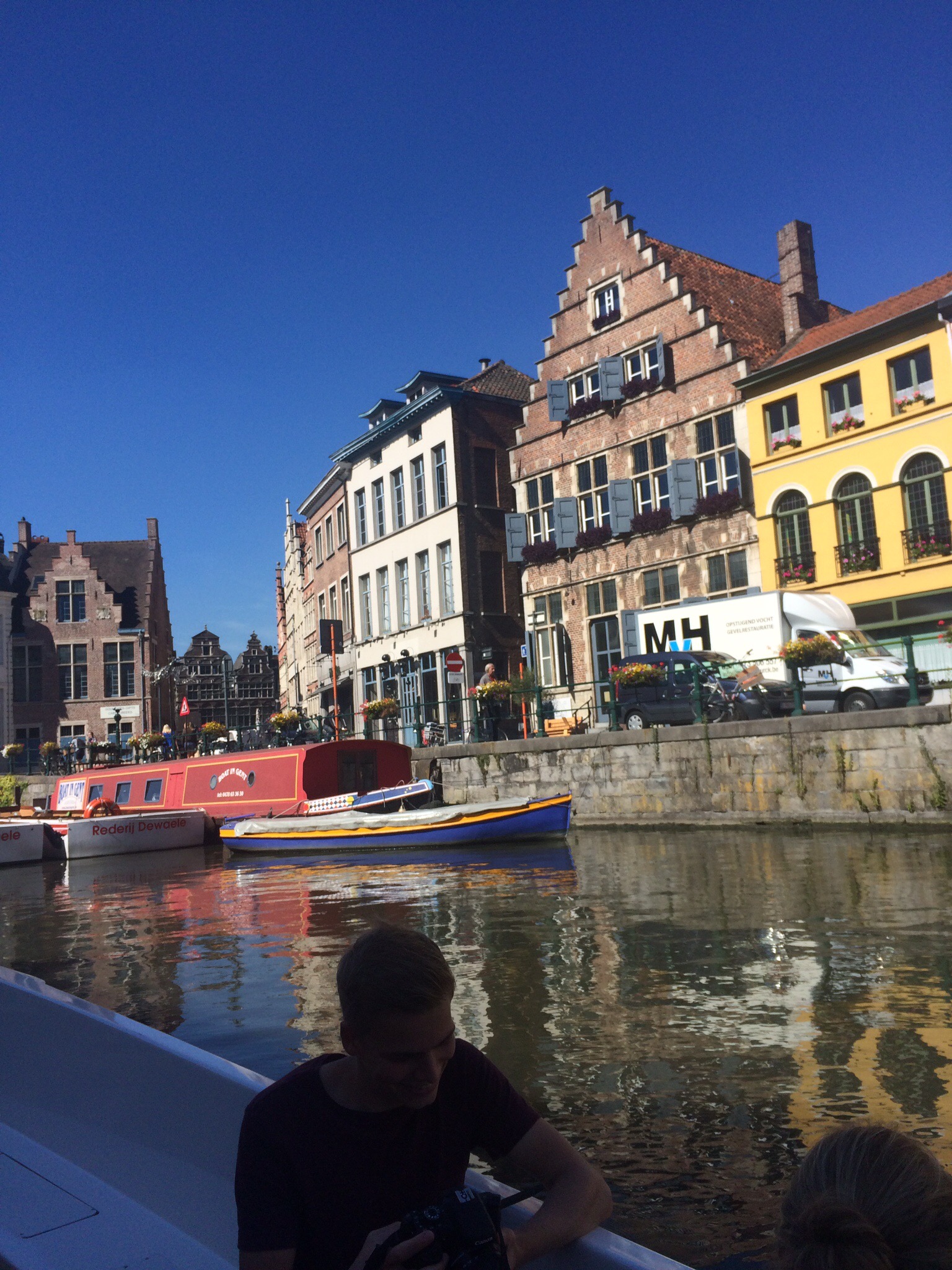
When we arrived in Ghent we were able to relax for a few days. There are several Jazz clubs in that beautiful city, but our stay was filled with lazy walks on the cobbled streets,seriously over eating, boat trips up the canals and viewing the artistic gems on offer (and in nearby Bruges). The famous triptych by Van Eich in St Baafs cathedral was undergoing restoration, but a smaller replica conveyed the power of this famous painting. A tentative step towards humanism in art. A Peter Paul Rubens is located in a side chapel. It was the Flemish architecture which stole the show in the end. Medieval factories, store houses, churches, castles and guild buildings dotted along the ancient canal system. The old town is a living, working, compact museum. Right outside our hotel window was the castle Gravensteen, a perfectly formed castle, looking like it could resist any seige. It was built in 1180 by the famous Crusader Knight Philip de Alsace. It had every feature that you’d expect from a perfectly formed castle of the Middle Ages – slots through which to pour boiling water onto attackers, turrets for the archers, a deep moat and an impregnable towering inner keep. The walls looked higher than in most castles. . . . . Next stop the sweet smoky streets of Amsterdam.

Posted from Amsterdam 1st September 2016.
 I was always going to love Amsterdam and it didn’t disappoint. The city has long been associated with the arts and with quality improvised music. It is a mature, liberal city comfortable in its skin, a place where you can legally purchase honey-cured Moroccan Hash in coffee bars, visit astonishing art galleries or enjoy good music at Jazz clubs like the Bimhuis. It is a city like few others, a truly happy place moving at its own pace. In spite of its laid back feel, the unhurried chaos, there is an underlying work ethic that makes everything run like clockwork. Like Venice it is a maze of pretty canals. Unlike Venice, the main source of transportation is the bicycle. An incalculable number pass you as you walk the canals, they even have their own multi-story parking buildings.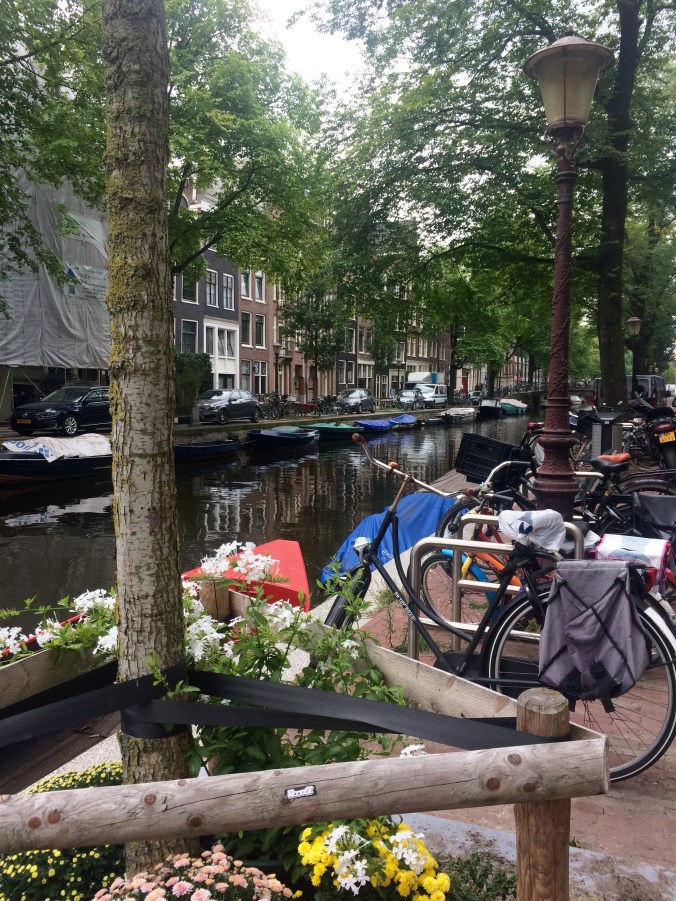


 The Bimhuis (or Bim as it is affectionately known) is an amazing venue, acoustically perfect; with seating sloping towards the stage and clear sight lines. It seats about 150 people and has an excellent restaurant attached. From the restaurant you can see the busy harbour, from the auditorium you can see intercity trains passing below. The Bim has its own online radio station and is set up for high quality recording. If you’re ever near Amsterdam, you’d be crazy not to treat yourself to a to meal and music there.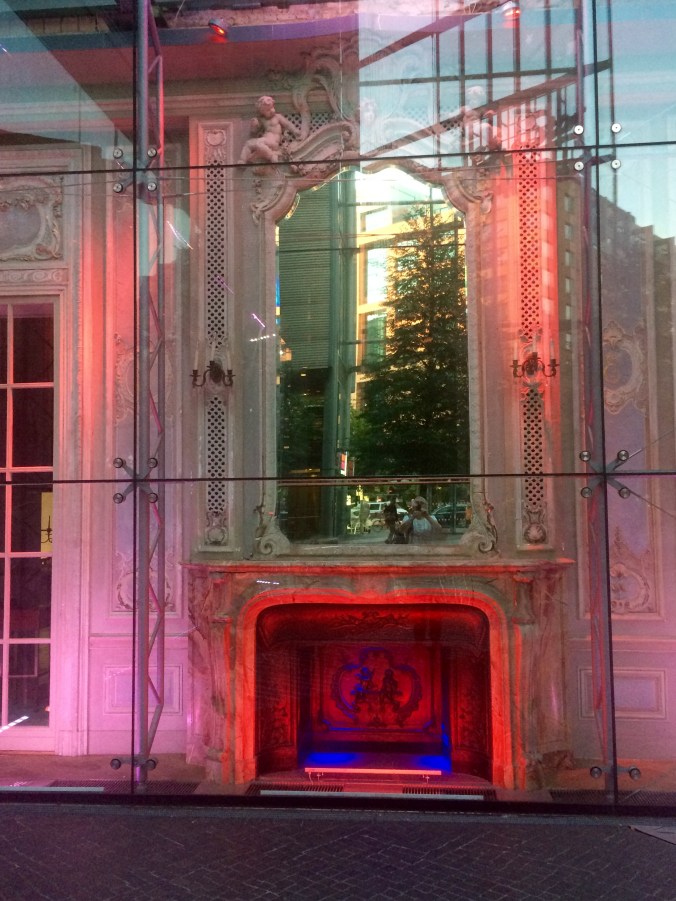


 JazzLocal32.com