Ihjt
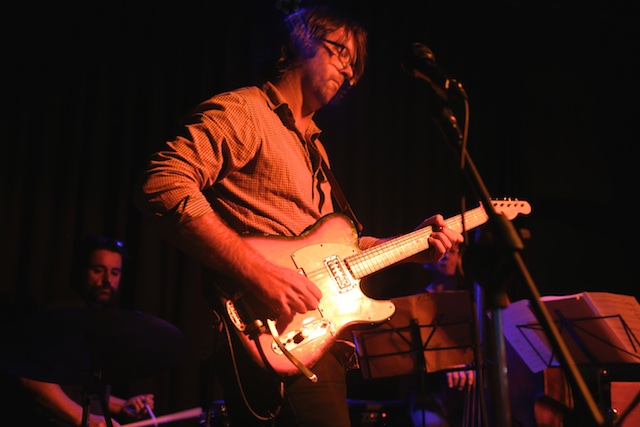 Tubular Live: Having earlier reviewed the long anticipated Neil Watson ‘Tubular’ album I looked forward to the live launch. The Thirsty Dog gig was well attended, the audience extremely enthusiastic and no wonder. Although we saw a slightly different line-up from the album band, they were on fire from the first note. Watson, always a confident performer, was more in command than I have ever seen him and he communicated his musical vision effortlessly. Perhaps this was due to the long gestation of the material, but now he had a platform to extend the concepts further and he grabbed the opportunity. The evening seamlessly covered the breadth of guitar jazz and beyond. While much of the material was influenced by Jazz/Rock or improvisations built on genres like surf guitar, the gentler mainstream Jazz heroes of the past like Johnny Smith and Errol Garner were also honoured.
  On the ‘Tubular’ album his musical influences are evident. At the live gig, he stared those influences down and carved out his own space. He is one of the few New Zealand musicians who can convincingly occupy Frisell or Ribot territory and he demonstrated that. The perfect example was his rendering of the classic five beat Mambo Picadillo by Tito Puente. He began with a solo intro, dissonant chords offering brief hints as to where he was heading. As he developed his theme the audience gasped in delight as Errol Garners ‘Misty’ emerged, morphing into the gentler Johnny Smith version of ‘Moonlight in Vermont’. That it worked at all is a tribute to his musicianship, that it was done so well all the more so. The Mambo was well-arranged and just superb, not a foot remained still and the bar staff stopped in their tracks, swaying. Another tour de force (not on the album) was his arrangement of ‘Hard rains are going to fall’ (Dylan). This followed his gentle ballad ‘Kerala’.
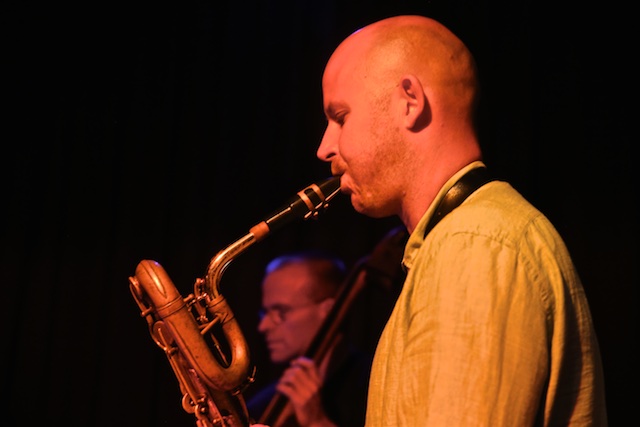
The band finished the last set with an upbeat number and there was no way the audience was going to let things lie there. Watson in keeping with his quirky humour and well within his brief; finished with the 1959 surf/rock guitar classic ‘Sleepwalk’ (Santo & Johnny). Accompanying him he had the talented and versatile Ron Samsom (drums) and Olivier Holland (upright bass). Replacing Grant Winterburn on Keyboards and Roger Manins on tenor saxophone was Cameron Allen. If anyone can replace two talented musicians and do so convincingly it is Allen. Instead of a tenor he played baritone saxophone and at other times his array of keyboards and ‘doogon’. I have video but I am still experiencing upload problems – I will upload when sorted.
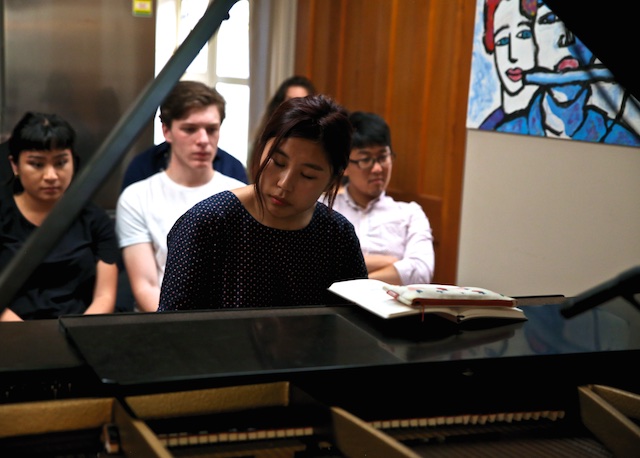 Crystal Choi (private concert): This particular invitation-only concert was organised by Jonathan Crayford and the invitations were swiftly taken up. Crayford is a legendary figure on the New Zealand music scene and when he gets behind a young artist, people pay attention. I have watched Choi develop musically over the years, but I had not seen her perform for some time. In the past she has appeared with students, part of an ensemble, seldom stepping into the limelight for long. This was a departure, a brave step into the challenging world of improvised solo piano. Developing artists (and even experienced performers) struggle with this format, some panic and resort to noodling. When Crayford introduced the concert he stated, “Crystal is amazing, and what you are about to hear will speak for itself”. He was right.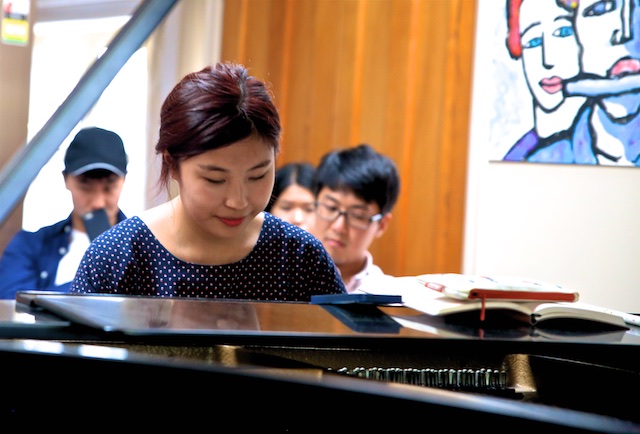
What we witnessed was a rapidly maturing artist. She exuded a confidence I had not seen before and her ideas were well-developed, all communicated with the utmost clarity. There were two sets and most of the compositions were her own. It was a large crowd for such a small space, but not a soul talked, shuffled, clinked glasses or coughed. She had them all in rapt attention as she wove her stories around themes and explored harmonic visions. This is the right musical space for Choi and I hope she develops it further. A sound that is more European in concept than American, where space, melody, and nuance are dominant. As she worked her way through the sets, everything flowed. If this is what she is like at 22 years of age, I can’t wait to hear her at 32. The sound was well captured and surprisingly, there were no awkward echoes or untoward harmonics considering the size of the room. It certainly helped that she had a ‘Grotrian’ grand to perform on. I hope that we see more solo piano from Choi.
Neil Watson ‘Tubular’ Live: Watson (guitars, compositions), Cameron Allen, (baritone sax, keyboards, electronics), Ron Samsom (drums), Olivier Holland (upright bass) @ the CJC (Creative Jazz Club), Thirsty Dog, Auckland.15th February 2017
Chrystal Choi: Solo piano – 12th February 2017
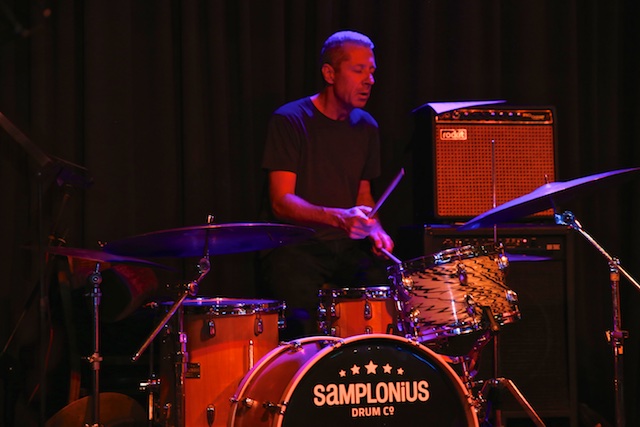 The Australian and New Zealand improvising scenes are a homogenous entity and long may it remain so. If the traffic sometimes appears one-sided, that is a natural consequence of our artists moving to the bigger scene; the exchange benefiting both. Many of those who jump the Tasman do well and they always return for gigs, tours, or sometimes to conduct workshops. Without these exchanges with Australia and beyond, our improvised music scene would be the poorer. This traffic brings us a number of talented Australians, musicians who probably would not have the opportunity to come otherwise; those collegial connections count for something. Drummer Simon Barker is one of those.
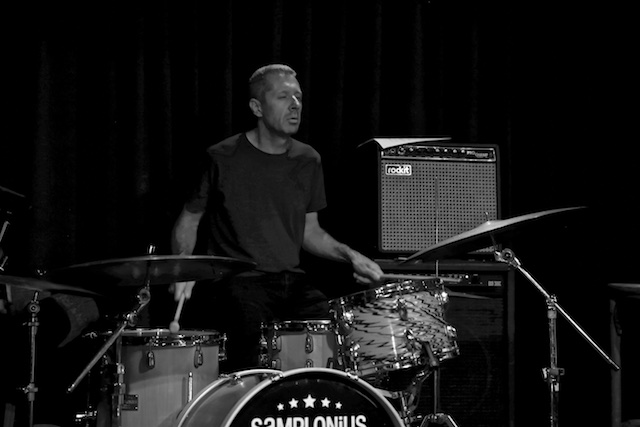 Barker was in Auckland early last year with Carl Dewhurst. Together they are the amazing ‘Showa44’, a duo which I reviewed during their visit. Anyone who follows Barker will know how versatile he is, and above all the musical integrity and originality he brings to whatever situation he is in. Barney McAll’s award-winning ‘Mooroolbark’ and ‘Showa44’ are very different propositions but Barker sits comfortably at the heart of both; of equal importance is his teaching. While in Auckland, he held a workshop at the Auckland University Jazz School and undertook three days of intensive one-on-one teaching with students (and established musicians). Students I spoke to said that they valued the opportunity enormously.
 The first set featured Barker solo. It is not often that a drummer performs solo and to pull that off requires something beyond mere drum chops. Barker brings something that is uniquely himself to the kit, and he is able to communicate a story, not just a beat. He began with a tribute to an obscure central North Island Polynesian drummer (sadly the name alludes me). He has never met this person but saw a clip of him performing in the traditional Polynesian, polyrhythmic style. He had a traditional wooden drum mounted beside his big tom and working between this and his kit, he created intricate cross rhythms, worthy of a row of skilled drummers.
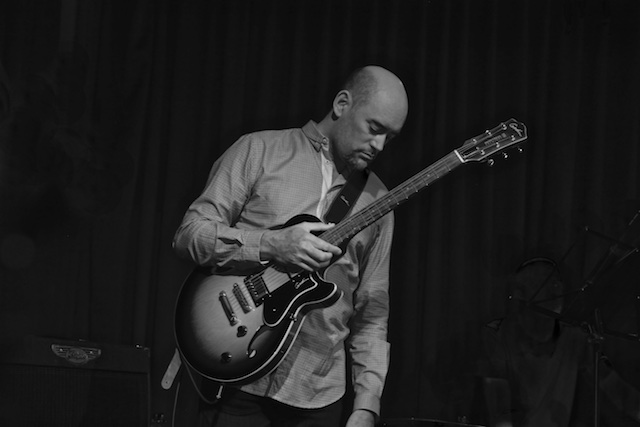
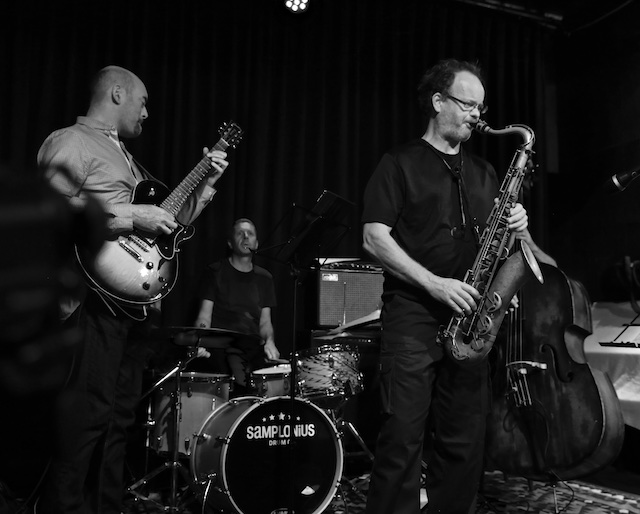 His second and shorter piece he described as a chant and it was. The hypnotic intensity carried the audience to the last beat; just as the first piece had. He is not only a storyteller on his instrument but he is capable of creating an orchestral sound. The audience loved it. The second set was something of an impromptu affair but none the less enjoyable for that. Also on stage for that set was Dixon Nacey, Olivier Holland, and Roger Manins. So busy was Barker’s schedule that the quartet had not found time to rehearse. Even the set list was once settled on the bandstand.
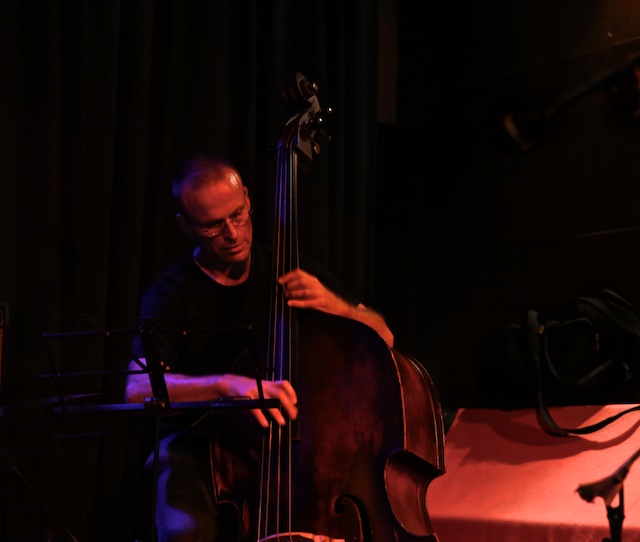 They began with ‘All the things you are’ and turned it on its head. The introduction performed by Holland and Barker alone was a blast. Drummer and bass exchanging phrases, challenging each other, leavening the exchanges with humour. When Nacey and Manins came in they exposed the bones of the tune. It was well done and in spite of its raw originality, the echoes of the melody hung in the air as implied offerings. The remainder of the set were original compositions and a rendition of the complex but ever popular Oleo (Rollins). Keep visiting Australians, we value you.
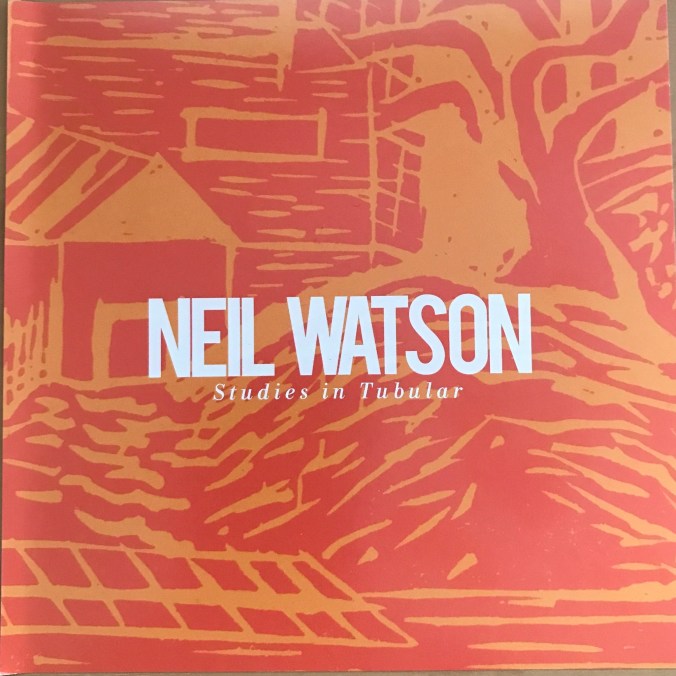 A review copy of the album ‘Studies in Tubular’ arrived in my letterbox a few days ago and it is vintage Neil Watson. It was recorded in 2011 and left to mature like a fine wine; it was worth the wait. I haven’t asked Watson why he titled the album ‘Studies In Tubular’, but the title feels appropriate. My first thought was that it might reference Mike Oldfield’s trippy minimalist classic ‘Tubular Bells’, and then I recalled that the word ‘tubular’ was once surfer slang for ‘exceptionally good’. Whatever the reason, this is exceptionally good music. The surf reference is not such a great stretch either when you listen carefully. This is deliciously eclectic music and although it touches on many sources, it is an original and highly satisfying offering. Referencing many things but never beholden to any of them.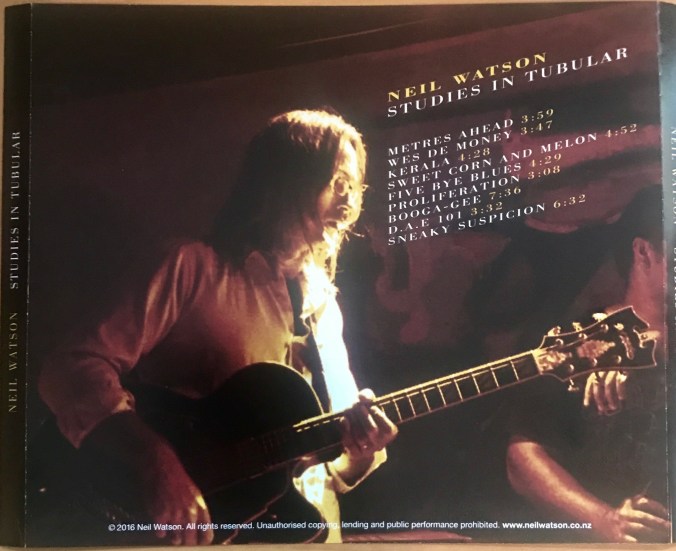
 JazzLocal32.com