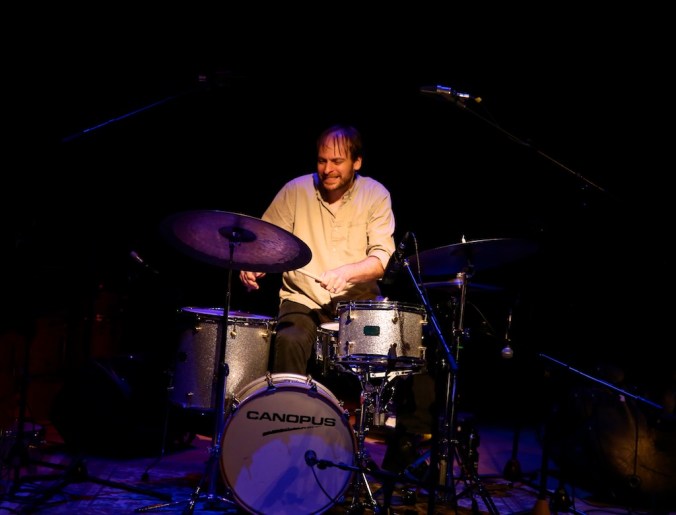
When drummer Ari Hoenig was among us recently, it was as if he came from another dimension; he was future and past – a Jazz time lord. The elements of the old were all there at his finger tips, but also something that was forward looking. He could lead with a melodic line, he could set up a groove, he was a colourist plus and he could subdivide time in ways that made me doubt reality. As he played, stuff happened on the kit that I had not seen before; it felt like a new dawn of drumming, but here’s the thing; as fresh as it was, it was also the most natural thing imaginable – nothing jarred – everything flowed from a deep well of musical knowledge. He was deep inside the music, looking half crazy – inside the tune and outside. He was so integrated with the keyboardist Nitai Hershkovitz that they appeared as a single unit. I detect Ari’s influence in modern drummers and because his influence is so palpable, I thought it a good idea to engage some local Jazz drummers on the topic. Here are Ron Samsom, Mark Lockett and Stephen Thomas with a few insights.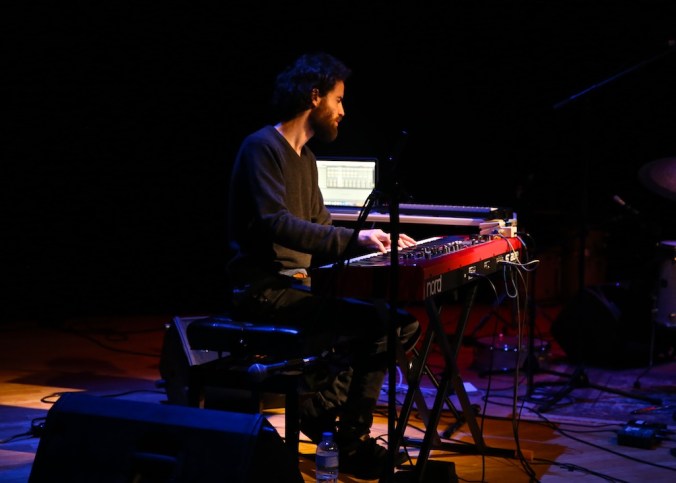
JL32: Ron, when you introduced Ari and Nitai in Auckland you spoke of Ari’s influence on modern Jazz drumming. You described him as an innovator; suggesting that he may not be aware himself of the extent of his influence. Could you expand on that and tell us why?
Ron Samsom: Well, Ari is a pretty humble guy really and I didn’t want to embarrass him in my introduction. But in reality, what he has accomplished in terms of the development of new drumming language, is pretty remarkable. I mean coming out of the tradition of implied pulse modulation with drummers like Tony Williams, Elvin Jones or even newer generation players like Jeff Watts, Ari has developed the ability to stay “outside” the ground rhythm for what seems like an eternity. The influence on younger players coming out of NYC is pretty evident. Just check out Henry Cole, Marcus Gilmore to name a couple of guys who seem to be going even further with this concept and their own language.
JL32: Mark, I think that you have had previous contact with Ari and maybe with Nitai as well. Can you tell me something about that and about bringing the project to New Zealand?
Mark Lockett: I studied with Ari for six years, I would travel to NYC and take several lessons go away transcribe my lessons and practice like crazy for a few months then do it all again. Last year we were hanging at Smalls after Ari’s gig one night and I said ‘Hey you should come out to New Zealand sometime I’ll hook it up.’ As soon as we moved back to NZ Ari contacted me and asked if we could do something so I organised a New Zealand tour on the back of him visiting Australia.
JL32: Stephen, I saw you at the Auckland gig and like the rest of us you were blown away. How do you evaluate Ari’s work and how do you see his place among modern drummers?
Stephen Thomas: Ari Hoenig is the type of drummer who has inspired a whole generation of jazz drummers and music enthusiasts in general. Because of this, we were all amazed to see Ari play “in the flesh” as for us kiwis, our exposure to his playing comes from things like YouTube and mp3’s and the like. When I went to his gig in Auckland, from the very first stroke of the cymbal it was clear to me he was on a completely different level to anything I’d really seen before. Ari is clearly a pioneer of modern jazz drumming that has inspired a whole generation of musicians. His mastery of rhythmic subdivisions, polyrhythms and musical time has inspired not just jazz drummers but musicians in general far and wide. He really is at the forefront of modern drummers.
JL32: Ron, Ari appeared to hold the sticks differently, firmer, at times further down – perhaps because of this his flurries and modulation were so precise. Old school drummers must puzzle at this. Can you tell me a little about these evolving hand positions?
Ron Samsom: When he was in the workshop, Ari was quick to point out that “praying mantis” was a visual term used by one of his early teachers as a descriptor of his unorthodox style. I think we need to remember that the ‘drum set’ is a fairly new instrument and there are lots of options in terms of technical approach. The bottom line is really ’the sound’ and I don’t think you could ever fault Ari in terms of dynamic control and timbre. I think he is all about the sound. He plays drums that are wide open in tuning and resonance but finds a way to control this through his approach. You can hear him use the harmonics of the drums to create colour and depth – it’s a beautiful thing. How he achieves this is a great question.
JL32: Mark, I have seen you hold the sticks in a similar way. Can you talk us through this and explain how it alters control?
Mark Lockett: A lot of drummers in NYC e.g. Bill Stewart and Paul Motian hold the sticks a bit more rigidly and different to a lot of drummers I see out here. I remember Michael Brorby at Acoustic Recording Studio (NYC) saying that this grip which is using more forearm helps create a much more accurate and defined cymbal pattern. It was the great Australian drummer Darryn Farrugia who turned me on to holding the sticks a lot further up closer to the middle as this gives you more bounce and it worked for me.
JL32: Stephen, I think that so called Jazz drumming orthodoxy is being subtly deconstructed post millennium. Can you comment on his technique from a drummers perspective?
Stephen Thomas: I think this question really sums up the music world we find ourselves in post millennium especially in the internet era. We are exposed to such a wide variety of music through online mediums that it is hardly surprising the traditional art form of “jazz” is evolving at a rapid pace and taking on influences from many other sonic worlds and styles of music. I think in this same vein, individual drummers are finding their own voice which is informed not just by the history of jazz but also by other distinct styles and sounds of music. Although this is not a new concept, Ari Hoenig is very far down this road, as he is such a unique voice behind the instrument, you would know his playing from just hearing the first few measures of music. This is no easy feat and something we all aspire to.
In terms of technique, I think Ari has developed his own technique which has allowed him to pursue this unique voice. In some ways, his technique is quite unorthodox and from my humble observation, it seemed to me he was using a lot of tension in his physical body to generate his sound. The fact he has been able to make this work for him is very unique and I think is a good reminder that there is no real ‘right or wrong’ in terms of technique as it is what brings the individuality out in drummers. As as a small side note, however – although this works for Ari, mere mortals like myself who have had body tension/pain issues in our playing have found it to be a stumbling block that we are seeking to overcome and I think long term, too much tension can become an issue.
JL32: Ron, I saw some astonishing neo-colourist drumming; subtle accenting and gentle cymbal work, but then turning on a dime. Ari seemed to extend the concept way beyond the Paul Motian model. He would suddenly create a melodic line or just tap out an accelerating beat in the centre of the snare. Can you comment on this extension of the colourist palette?
Ron Samsom: I don’t really know enough of Paul Motian’s playing to offer a solid opinion – but the trio records with Joe Lovano and Bill Frisell are pretty great examples of how a drummer can colour and support melodic ideas or become an entity in its own right. I think what Motian’s playing did for everyone, is suggest that the drummer could be more. Drums could be melodic, textural, a motivating soloist/accompanist, a complete musical statement onto itself. Ari’s playing has all of these things in spades but I’d hesitate to say it’s beyond Motian’s achievements – It’s just context. Ari is communicating with his generation of improvisers that are versed in rhythm scale, odd time, implied modulation etc. but these are just tools to convey music. They are not music without context and personalisation.
JL32: Mark, that was some seriously deep stuff that Nitai was playing. I have heard Brad Mehldau do something similar. This is brave, as it will leave the purists behind. It sounds exciting to me. Would you like to comment on their use of deep improvisational groove music as a vehicle?
Mark Lockett: I don’t really think this is anything new, but in this setting, there was only a duo so this gave Ari and Nitai lots of space to stretch out and they weren’t confined to a bass player or another comping instrument being in the mix. I think the rhythmic vocabulary they draw upon brings a real element of excitement to the music. I think Ari chooses his sidemen very wisely and consequently, they sound like a band and want to play together rather than have their own agenda.
Stephen Thomas: I really dug how at the Auckland show I was at, Nitai had some PHAT bass synth going on. So much so that at one point, because he and Ari were so locked in, I thought the bass drum had like a sub-bass mic or something on it which was a good indication of how impeccable their time feel was and how locked in they were even just as a duo! This is probably what I meant before about jazz taking on influences from other sound worlds and musical styles, with electronic timbres in the fold more and more. What stood out to me and I said this to Ron after the show, was that although there were only two musicians playing, you never felt like there was any lack in terms of sound or textures which was kind of mind blowing. Also, it was clear that both Ari and Nital are so versed in jazz vocabulary that even though some of what they played was “non-traditional”, there was a depth to what they were playing which was hard to describe. The well of musical concepts and language that they both had was very deep, to say the least, and I was left feeling very inspired indeed.
JL32: Guys, what do you want your students to take away from this experience?
Mark Lockett: The students I spoke to after the concerts were totally blown away and I saw them beaming. I heard one student say ‘this concert changed my whole musical trajectory’. I think if the students can be inspired to listen, learn, practice, want to get better and create that’s really all anyone could hope for their students.
Stephen Thomas: think Ari gave us a fantastic provocation to pursue individuality behind the instrument, whilst reminding us to pursue a depth of knowledge and language of the jazz tradition. Although this can sound like an oxymoron, Ari Hoenig seems to personify this as he is such a unique voice whilst having all the language and depth there too. This is inspiring for students to keep checking out the history whilst also pursuing what gets them going musically and sonically, to hopefully find their own place in the music world and create something which is ultimately fun and rhythmically/musically satisfying! Every time I see an inspiring player, the thing that really gets me is the amount of joy and playfulness they have whilst making music and Ari had this in spades, which I think we can all learn from. It’s a great reminder that music ultimately should be a joyful and playful experience which we can bring our own personality and emotions to which can ultimately move people and bring joy and healing to a world which needs it!
JL32: Thanks for your insights guys. I know how busy you all are and I appreciate that you put down the sticks to answer these questions so thoroughly. Finally, thanks for supporting JazzLocal32.com.
Ron Samsom is a Canadian born Kiwi and the course coordinator at the University of Auckland Jazz School. He is well recorded and has worked with Jazz musicians from many continents. Mark Lockett has just returned after many years in New York and he teaches, tours and gigs around Australasia. Stephen Thomas is a gifted New Zealand drummer who is increasingly in demand for high-end gigs and highly regarded on the New Zealand Jazz scene.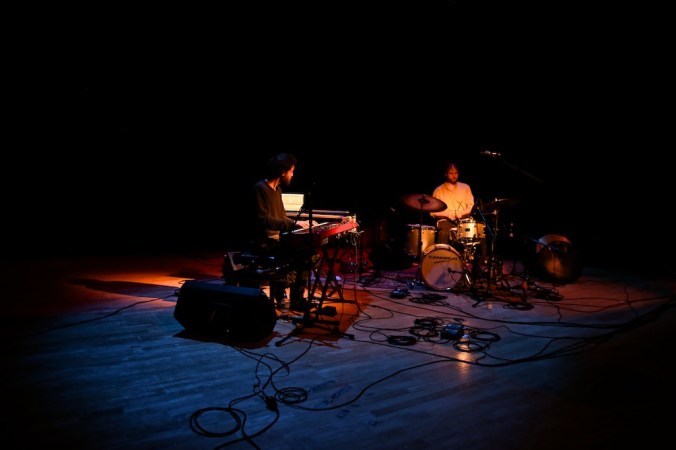
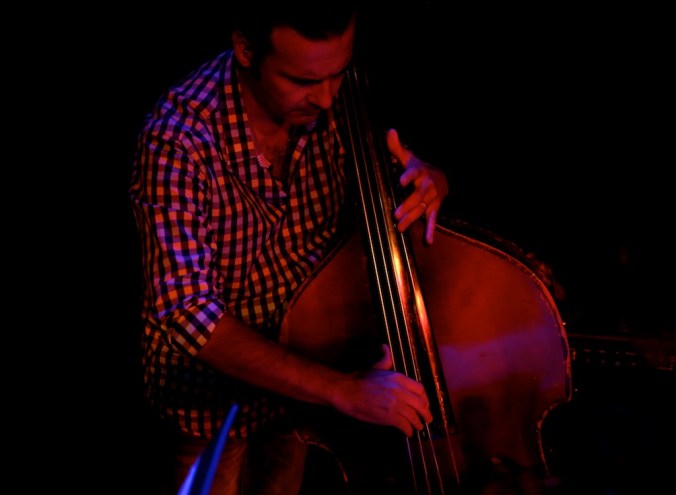 There have been two bass-player led groups at the CJC in as many months and both have been excellent. Last weeks featured group was a trio led by Rubim de Toledo: a Canadian from Alberta, of Brazilian origin and a well-established musician. Like many modern improvisers, his influences are diverse; that said his music fits squarely into the Jazz mainstream. The first thing to grab me was his big rounded tone, gifting the tunes with a richness and beauty that captivated from start to finish. While most bass sits deep within the mix, de Toledo’s voice spoke clearly; not by overcrowding his band-mates nor by punching through the others as an electric bassist might, but because every musical utterance sounded right. His melodicism and clarity of ideas were enhanced by devices which I found appealing; his occasional and appropriate use of vibrato at the end of a line, sometimes, rarely, he combined this with a slight bending of the note. He is definitely a successor to the Evans trio model; a bassist who communicates as an equal.
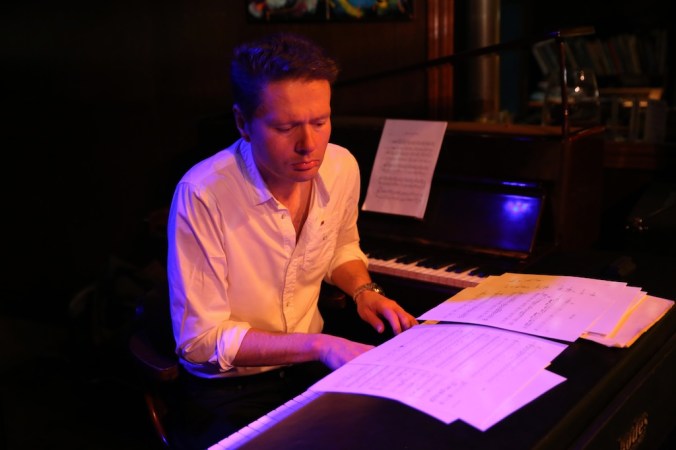 In a live setting and with unfamiliar sidemen, the best plan is to loosen the reigns. This he did and with Kevin Field on Rhodes and fellow Canadian and long time friend Ron Samsom on drums the gig gelled. Much of the gig showcased his compositions, some from his 2014 album ‘The Bridge”. The three standards he played were a killing version of Maiden Voyage (Herbie Hancock), Work Song (Nat Adderly) and a rendering of ‘Recordeme’ (Joe Henderson). His own compositions ranged from the thoughtful ‘Autumn Celeste’ to evocative panoramic tunes like ‘The Gap’ (about the Rockies) and ‘Red Eye’ (about a Brazilian train known locally as the train of death). The gig was a pleasure from start to finish and the enthusiastic audience response said it all.
 As I was leaving de Toledo handed me a copy of his recent album ‘The Bridge’ and it wasn’t until yesterday that I found time to play it. What a truly beautiful album this is; beautifully crafted arrangements and tunes which burn with a quiet intensity at any tempo. On ‘The Bridge’, he is surrounded by an ensemble of talented Albertans and a guest artist from the USA. The lineup of bass, trumpet, saxophone, trombone, keyboards, drums (and on track 8 a vocal) is well conceived – balancing airiness with textural richness. The musicianship throughout is noteworthy; particularly Sean Jones on trumpet, a well respected musician from the USA: the keyboardist and everyone making this album memorable. As you would expect with an ensemble and with an album as skillfully recorded as this, de Toledo is less dominant. Here he lets his charts tell the story and they certainly do.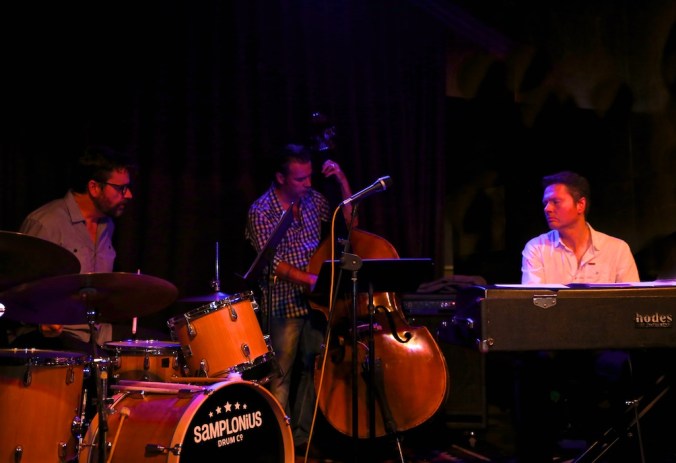
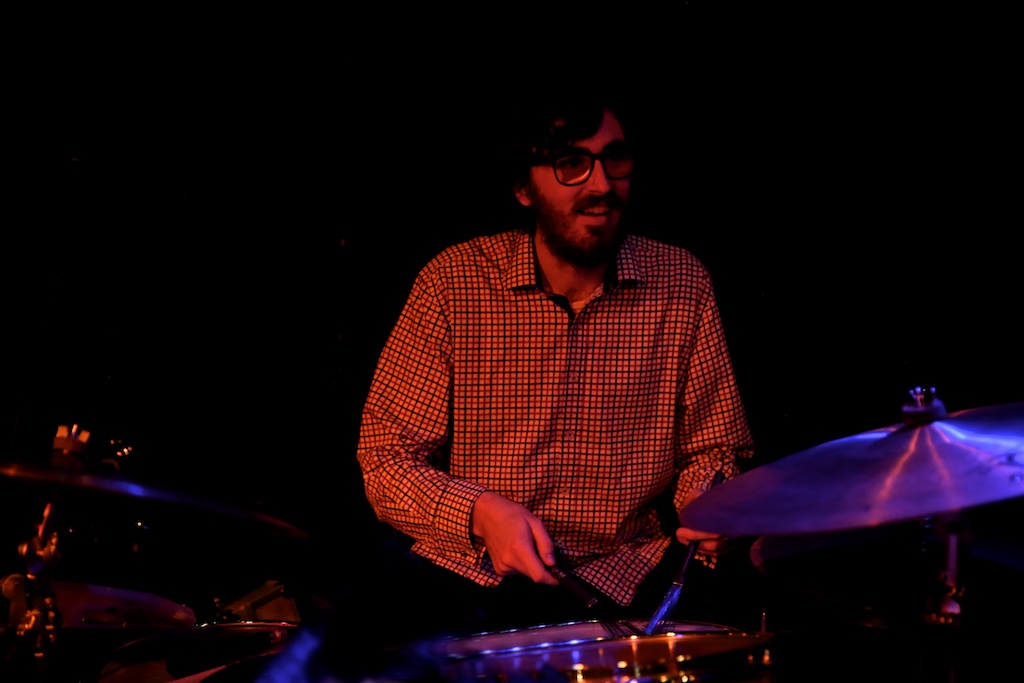 In spite of his relative youth, Stephen Thomas is counted as one of New Zealand's better Jazz drummers. He approaches his craft with care and intelligence and it shows in his playing. While his technical skills are superb, he can also communicate on a human level and this is important as it speaks of character. Thomas is a regular on the scene, but like many sidemen and most drummers, he prefers to remain in the shadows. On Wednesday he changed that focus and convincingly staked his claim as band leader.
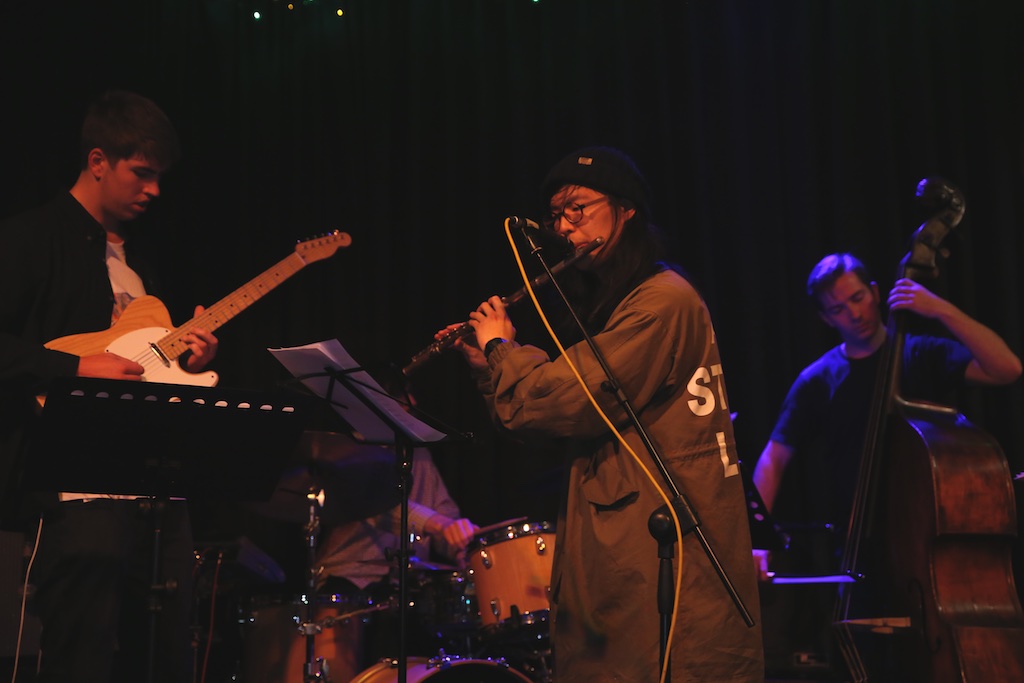 The ingredients that contribute to a successful gig are often intangible, but this gig ticked a number of those boxes. While tailored to suit a Jazz audience, it did so without being remote or elitist. Another reason the gig worked was because Thomas used humour to good effect; not just his on stage banter but in the music as well. In a live setting this is important – interacting with the listeners on some level, bringing them inside the circle.
 Thomas has an abiding interest in the Ellington/Mingus/Roach, 'Money Jungle' recording and Wednesday provided him with a further opportunity to explore that project. While unusual as a source of standards material, it is a great album to focus on – the perfect vehicle for deconstruction. At the time it was recorded, it stood out for a number of reasons. In fact it shouldn't have worked at all, as the trio members reputedly disliked each other. Each had marked stylistic differences and Ellington was of an earlier generation. Ellington told the others that what they would play on the record should be a collective decision; then he turned up with a set list of his own tunes. The one tune which was not Ellington's was by Juan Tizol – a man who Mingus had once been in a knife fight with and because of whom, he was sacked by Ellington. What should have been a disaster for many reasons was a success. A brave post-bop recording by artists firmly rooted in other eras.
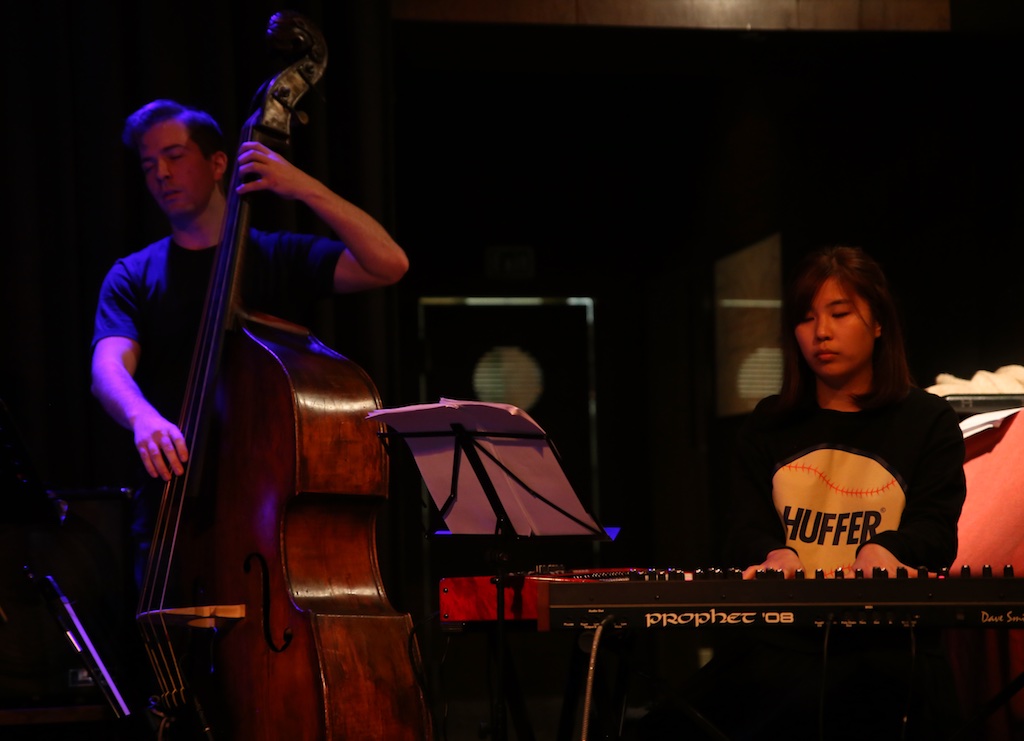
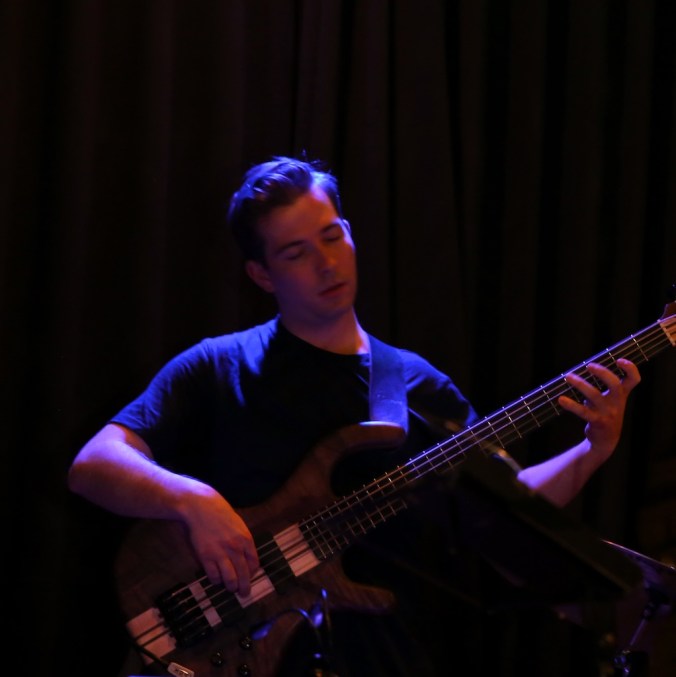 Dennison is a first class musician and someone we don’t hear nearly enough of on the Jazz circuit. He rarely gets to the CJC but when he does it is always a treat. These days he is mostly found doing session work or backing visiting artists and it is hardly surprising that he is a bass player of choice. Whether on upright bass or electric bass he is equally proficient; always an engaging presence, always demonstrating a deep musicality. He has one more string to his bow which can’t be overlooked and that is composition. His tunes are often whimsical, but whatever the mood, a deftly crafted structure sits beneath every phrase. Never over done, bass driven and just right. There is also a thread of melancholia and wistfulness in his ballad writing: these are difficult emotions to evoke and anyone with knowledge of poetry will know, that only the most skilful poets do the moods justice. Dennison can.
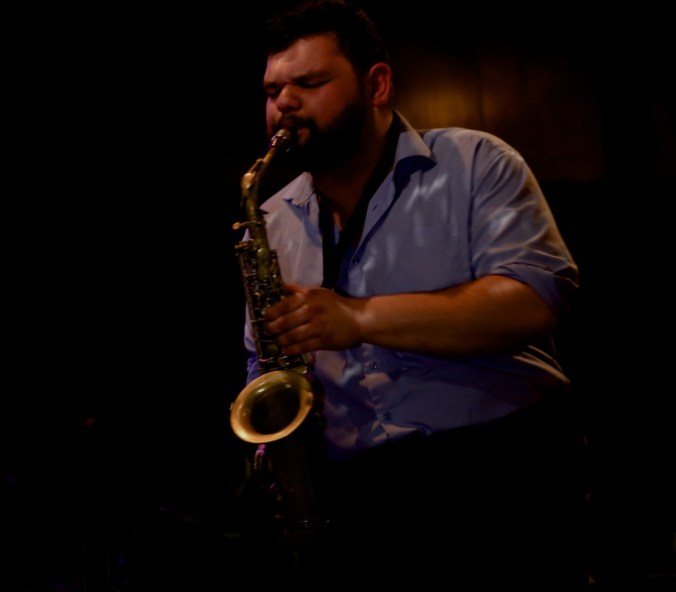 Passels playing was another high point of the evening for me. He just gets better every time we hear him. He is also exactly the right person to interpret mood. I liked the way he approached the tunes, working his way inside them methodically. Sometimes angular, at other times teasing at the melody. During the ballads, he often began with sparse phrasing, establishing mood without overstatement; then, slowly telling his story as if looking at the theme from differing viewpoints. Although he plays decisively, he carefully modulates; generally without flourish or vibrato – pushing at a note until subtle multiphonic textures form – his paper-thin Konitz-like tone saying more than any honk. His versatility is also an asset. Any player who can comfortably move outside and inside while still maintaining a theme is a person worth listening to.
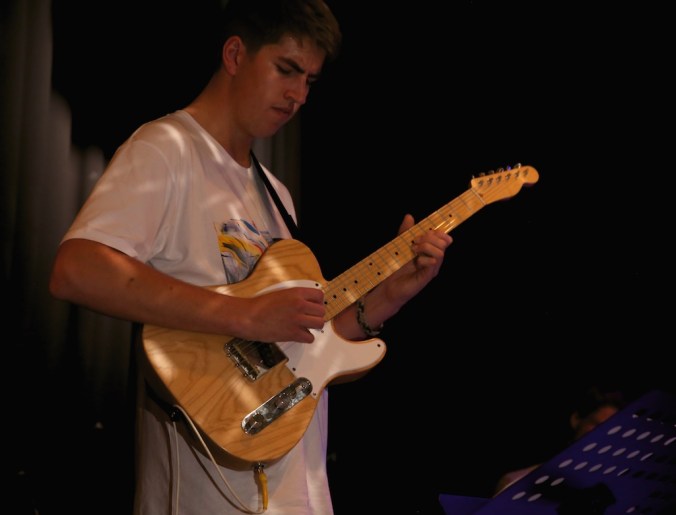 McAneny, who initially faced a cable problem, overcame it quickly and delivered a fine performance. Having a Rhodes and a guitar together can be problematical, but the charts and McAneny’s nimbleness enabled him to avoid crowding the space. Howell gave a nice performance and his lines are terrific; He knows what he’s doing but I’d like to hear him bite into his solos a bit more. Drummer Adam Tobeck was on solid ground with this group, he obviously enjoyed the company and reacted well to whatever was thrown his way. After not playing here for a few years, he is now a regular on the bandstand. I like his drum work very much.
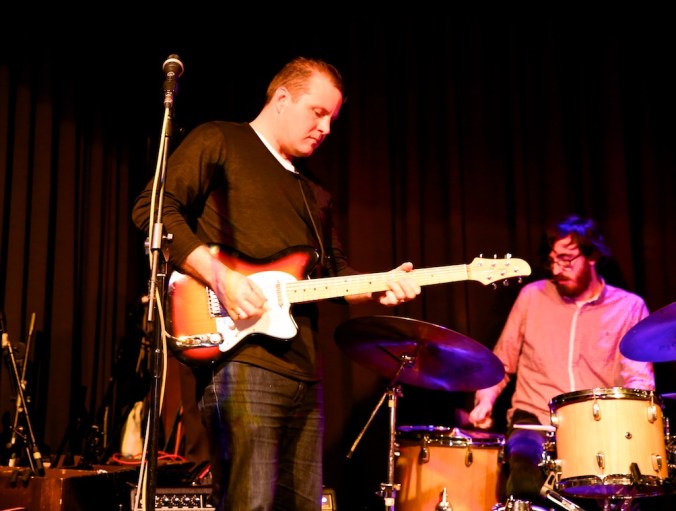 The last time Nick Granville played in Auckland was 2014. A year prior to that he released his Rattle Jazz album ‘Refractions’ here At that time the CJC was located in an old downtown basement venue and that feels like a lifetime ago. Wellington is his home base and Wellington keeps Granville busy. He teaches, he gigs about town, he backs visiting artists, he plays in shows, he records, he tours and he is the featured guitarist in the Rodger Fox Big Band. The last time I saw him play was in Wellington, but that was a few years ago. Much water has passed under the bridge since then and his reputation has meantime grown apace. I have also kept an eye on his teaching clips, and his ongoing evolution as a musician is evident in these. Almost everything Granville plays is coloured by the blues in some way; that is his thing. On a mid-winter night, it is my thing as well.
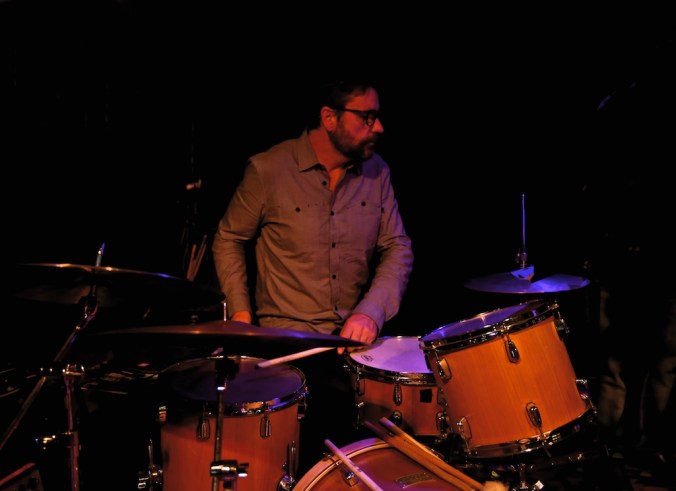
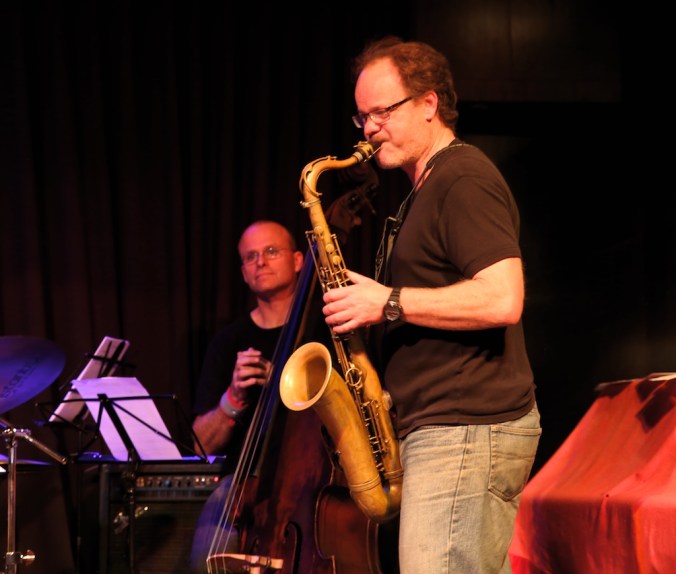 With the exception of ‘Alone Together’ by Schwartz/Dietz, all compositions were Grenville’s. Some were from his Rattle Album, such as Tossed Salad & Scrambled Eggs or Blues For Les, while others were much newer. The compositions were all ear-grabbing and most appeared to reference geographical locations or old TV programs. ‘Funky New Orleans Groove Thing’ was certainly true to label; a rhythm-driven groove piece that generated white heat. With Stephen Thomas on the job, the New Orleans beat never sounded better. Thomas is an exceptional drummer.
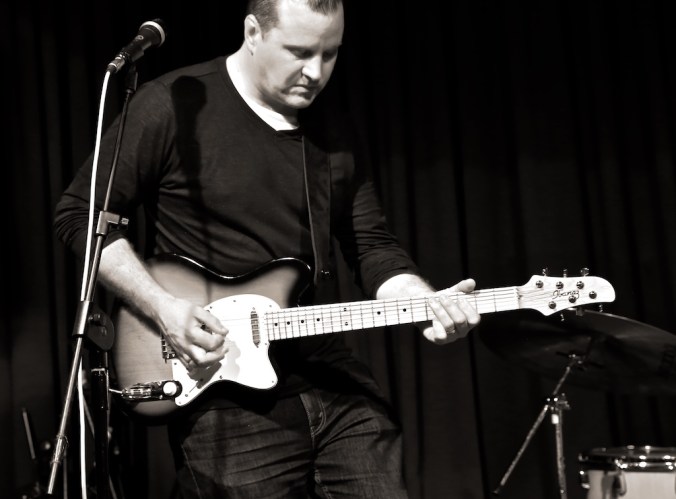 A tune that I have heard Granville play previously is ‘Somewhere You’ve Been’. The title is a clever play on Wayne Shorter’s ‘Footprints’. The tune, although not a contrafact of Footprints is close enough to bring it to mind, It is nicely constructed and a good vehicle for a band to play off. For this gig Granville had wisely engaged old friends; Roger Manins, Oli Holland and Steven Thomas. Together on the bandstand, they represented genuine firepower and everyone dug deep when it came to delivering solos
 JazzLocal32.com