Tigran Hamasyan ~ The Call Within

Any album by the brilliant Armenian Jazz pianist Tigran Hamasyan is going to elevate our spirits, and his new release, ‘The Call Within’ does just that. The title suggests quiet introspection, but instead, a vast cosmology is revealed. It is infinitely expansive and any expectations of meditative reflection should therefore be set aside. In the album, Hamasyan utilises the richness of his birthplace Armenia, but in doing so he paints the tunes onto a broader canvas. 
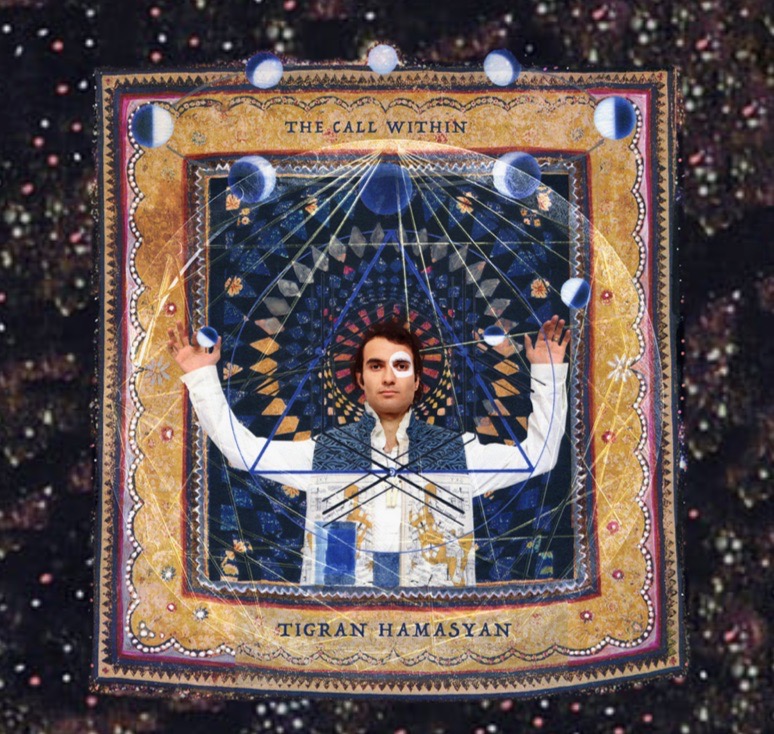
‘The Call Within’ features a core trio plus guests. The guests however, are so well integrated into the mix that the unit feels like a medium-sized ensemble. Alongside Hamasyan: Evan Marien (bass) and Arthur Hnatek (drums). Guests: Tosin Abasi (guitar), Areni Agbabian (vocals) and Artyom Manukyan (cello). The generous use of keyboards interwoven with piano is also a factor in providing this unusually rich palette.  

The first track, ‘Levitation 21’ begins with a meditative chant over a simple motif. Then, without warning, the music comes at you like a freight train. This sudden mood switch is deftly executed and it sets up an other-worldly syncopation. The effect constantly catches you off guard as the tension rises then drops. It is call and response and it is stop-time, but not as we know it. 

The use of stop-time is even more pronounced on ‘Our Film’ and as the album progresses, the listener becomes aware of many such contrasts. Some of these contrasting figures are deftly interwoven, placing one inside of the other. The heavily percussive co-exists with gently rippling arpeggios, which by contrast, are played with extraordinary delicacy. And over this come the drums and bass who dance like magical dervishes. 

On ‘Old Maps’, rippling arpeggios introduce a celestial choir and the notes fall from Hamasyan’s fingertips like rain drops. I especially loved this track, as it felt like the universe singing to humanity. Poets and musicians are beguiled by maps and love them as archetypes. The maps theme is again updated in the last piece titled ‘New Maps

There are quieter moments as well, such as the intriguingly titled ‘At a Post-Historic Seashore’ but whatever the mood, your attention never flags. As each new vista appears you feel like a wayfarer on a beguiling quest. This is the genius of the album and what ever the phrase or section, you feel like it is was just for you. Throughout, Hamasyan draws on ancient Armenian scales and on modality. Perhaps that is why it sounds both familiar and exotic. 

At each turn, Hamasyan and his collaborators deliver energised performances and in doing so they shake us from our pandemic-induced inertia. This is the album we need right now. It is an affirmation of all that is wonderful in the world. It is European Jazz at its finest. Like three of his previous albums, this one has been released on the Warners ‘Nonesuch’ label. It is available through Bandcamp or from record stores.

Tigran Hamasyan (keyboards, piano, voices), Evan Marien (electric bass), Arthur Hnatek (drums) and with guests: Tosin Abasi (guitar), Areni Agbabian (vocals), Artyom Manukyan (cello)

JazzLocal32.com was rated as one of the 50 best Jazz Blogs in the world by Feedspot. The author is a professional member of the Jazz Journalists Association. Many of these posts also appear on Radio13.co.nz

Bach In Reykjavik

It has long been acknowledged that Bach’s DNA is deeply embedded in Jazz practice. While Bill Evans surprised some fans when he named Bach as a primary influence, the Baroque composers influence is actually widespread in all of western improvised music. Over the years there have been numerous Bach crossover albums and while the best were marvellous, others sounded slightly awkward. The more recent Bach referencing albums have moved beyond the swing approach and in doing so they have reached deep inside the essence of the music. Like a good Jazz head-arrangement, Bach’s music provides an exquisite architecture for improvisers to explore. I am enthusiastic about a number of these modern explorations.

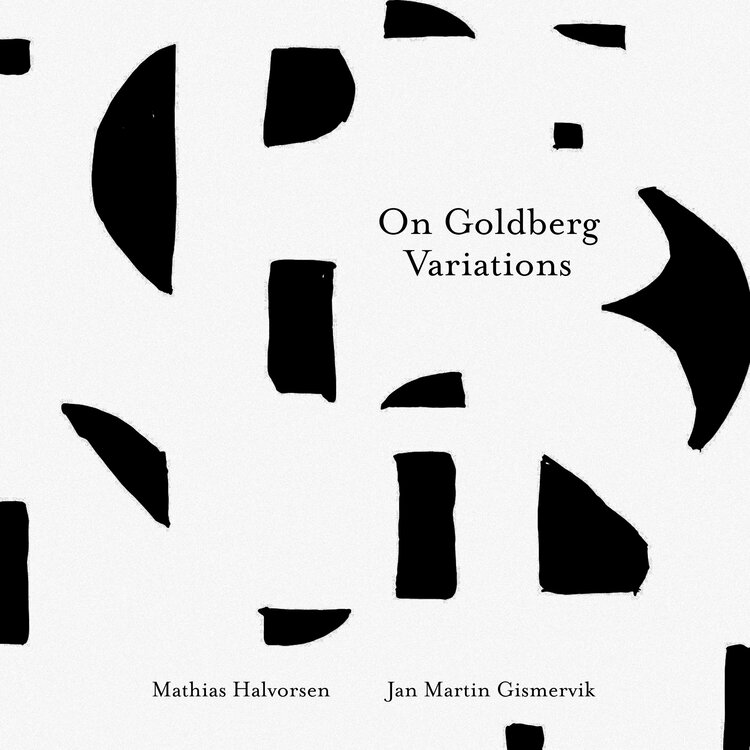
A few days ago a review copy of ‘On Goldberg Variations’ (Backlash Music) arrived. I was immediately intrigued, as the album was recorded in Reykjavik. The musicians are classical improvising pianist, Mathias Halvorsen and Jazz percussionist, Jan Martin Gismervik. Both are Norwegian although Halvorsen is at present living in Iceland. I am an enthusiast for Nordic and Icelandic artistry and I wondered if those spacious northern landscapes would influence their approach. After listening, my answer is yes. Halvorsen pointed out that the two are more closely aligned with the Norwegian scene, but it is no stretch to imagine how recording in Iceland can add a layer of influence. 

Lines

While the album is directly informed by the notation of the Goldberg Variations, it is also referred to as new music. Here, the musical ideas have been examined with care, extracted and then reduced to their essence. In the track titled ‘other voices’ a sub-minimalist approach is evident; with the musicians utilising fragments; and the results are both familiar and unfamiliar. To quote Halvorsen:

(It) can best be compared to looking at a familiar world through a continuously changing kaleidoscope’.

Stripped of ornament, and elided, the silence between the notes becomes essential in the decoding. We sense what lies between and it is visceral. We follow and are surprised as the motifs and rhythms fall into place. Those familiar with the Goldberg Variations will find themselves attempting mental reconstructions as fragments of rhythm or melody, appear and then vanish. Humans are hard-wired to look for patterns, and in searching for them here, we are drawn inside a spacious pristine world. We compare what we know, or what we think we know and out of that comes the new.

Halvorsen & Gismervik

The pieces reveal a filmic soundscape of stark beauty. ‘Numbers’ beguiles us with long ostinato passages and again the minimalist approach allows us to explore the sonic subtleties. ‘Running’ takes us closer to a known form but then injects long bars of silence between the phrases. ‘Together’ comes closer to Jazz sensibilities with its resonant voicings, which dance. Everything merits a deeper listening here as the journey is in part, subliminal; it will stretch some listeners toleration as avant-garde music frequently does. It worked for me and took me back to the extraordinary Bley/Giuffre/Swallow albums such as ‘Freefall’ (ECM). 

For those keen to hear some other contemporary approaches to improvised Bach, I recommend Brad Mehldau’s ‘After Bach’ (Nonesuch). This album achieved tremendous cut through and juxtaposes Mehldau’s own compositions with Bach’s. That album references ‘The Well-Tempered Clavier’. It is closer to the original Bach charts. A sumptuous delight from start to finish. 

For another unusual look at the ‘Goldberg Variations’, people could check out Uri Caine’s ‘Goldberg Variations’ album. This was released by ‘Winter & Winter’ and is gorgeously packaged. Like Mehldau, Caine plays some of the variations as written, but the rest appear as blues, electronica, gamba quartet and in many unusual ensemble configurations. There is also humour and joy.

If you’re afraid of iconoclasm, these will not be for you; but if you are up for sonic adventures, dive in and go with it.

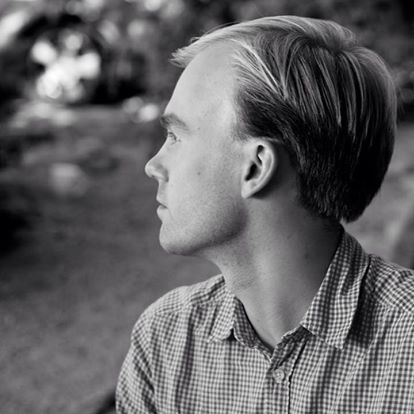
Pianist Mathias Halvorsen


Percussionist Jan Martin Gismervik

JazzLocal32.com was rated as one of the 50 best Jazz Blogs in the world by Feedspot. The author is a professional member of the Jazz Journalists Association. Many of these posts also appear on Radio13.co.nz
Dr Tom Botting Rediscovers Aotearoa

Bass player Tom Botting recently returned to Aotearoa and his first Auckland gig was well received. Even as a gangly student he impressed, and the regular attendees at the CJC hold fond memories of those Britomart Jam Sessions where he featured so prominently. Soon after that, he moved overseas, gaining a doctorate at the Sydney Conservatory. Like many of our musical exports, he returning annually, and many of the tunes that we heard last Wednesday were first showcased during those back-home tours. 

His compositions are always memorable and often evocative. Now, he has returned to weather out the pandemic, bringing with him some new tunes, and updated arrangements of older ones. They are no longer isolated in a disparate setlist but are played sequentially and in geographical alignment. While the tunes are not presented as a suite, they nevertheless evoke a strong sense of place. And whether intended it or not, they present a cinematic journey across our landscapes. Here, Botting has achieved what locals often cannot. His yearning from afar for our landscapes and archetypes has led him to create something sublime. 

The tune titles in these sets speak of mountains or the places immediately in their shadow; Mitre Peak, Mt Aspiring, The Remarkables, Hamner Springs, etc. I have posted a YouTube clip titled Hidden Waterfall and it is one of his more recent compositions. It begins with a pedal tone on piano, around which the bass introduces striking motifs, and then, a new line is introduced by the alto. 

The piece is simply captivating and clarity is achieved by ensuring that no instrument gets in the way of another. It’s not easy to strike that fine balance and it’s extremely clever writing. Each segment stands on its merits, and yet, sits comfortably within the arc of the overall composition. It is a good example of less being more or to put it another way, as something complex rendered into ear-grabbing approachability. 

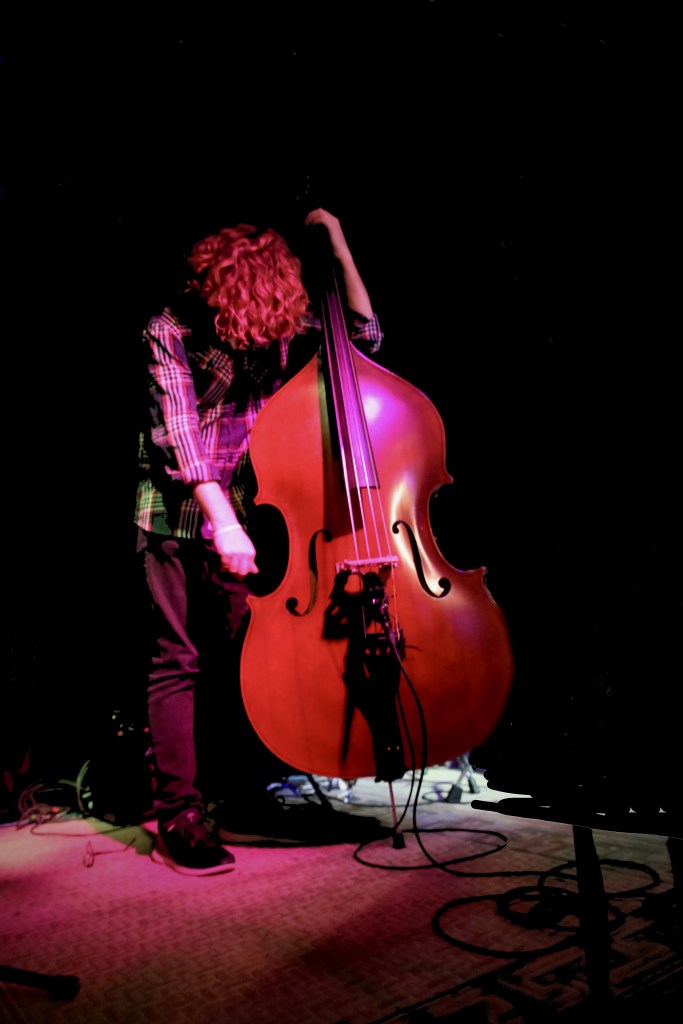
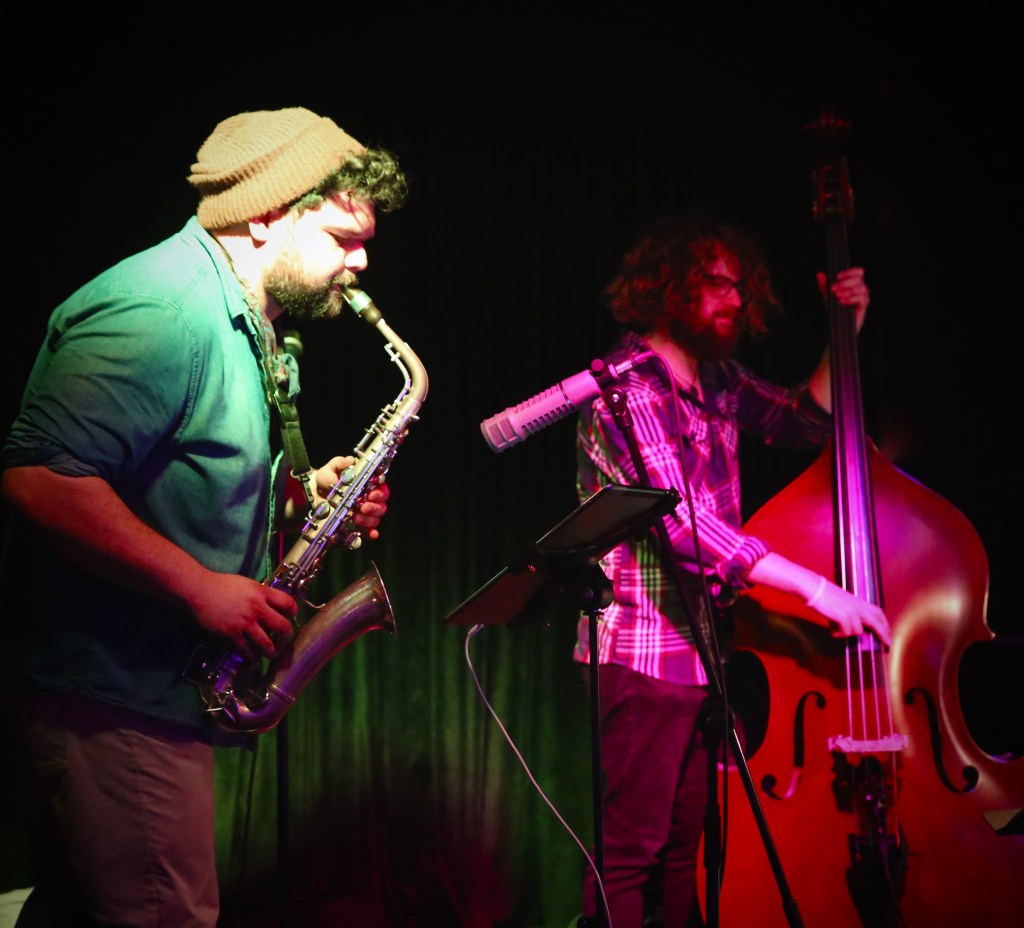
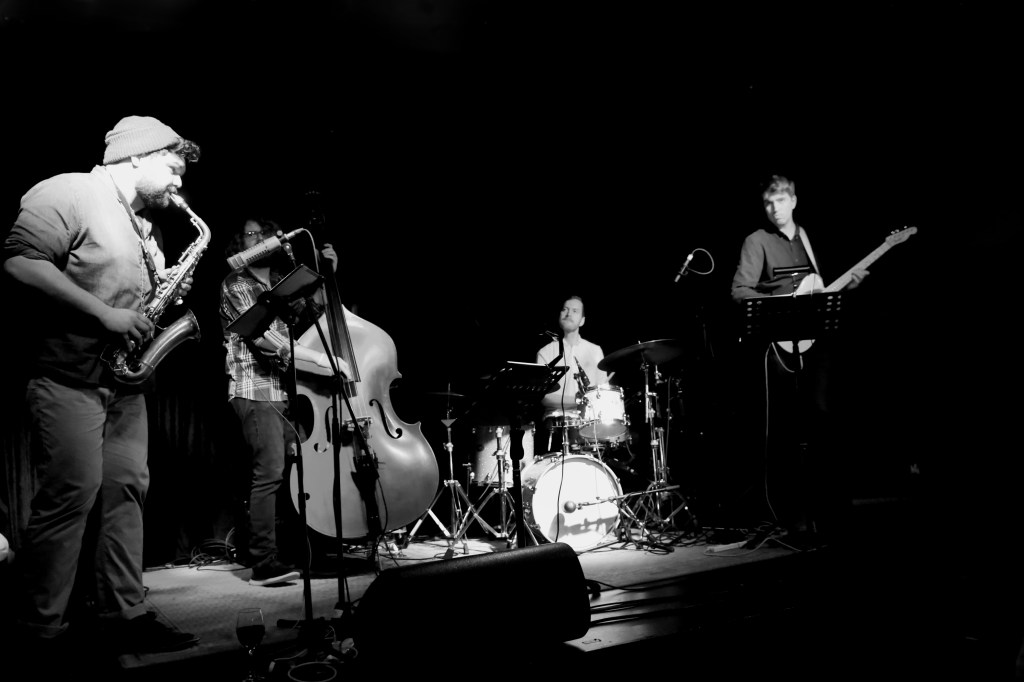
Botting is a superb bass player and he poured everything into his tunes. He was always one to absorb himself in his playing and that has not changed. As he plays you see nothing but hair and fingers, but what you hear is the essence of the man. Beside him was Callum Passells on alto and he pulled out a great performance. An approach at times reminiscent of Shorter, and always with that gorgeous tone.  Partially hidden on the left of the stage was guitarist Michael Howell, and again a good performance from him. His newfound confidence is reaping dividends. To complete the quintet were Kevin Field and Jono Sawyer. Both are consummate professionals and they maintained the standard of playing that we have come to expect of them. Pick up bands of this quality make a visitor happy to return.     

There is a rich tradition of pastoral music in Aotearoa, most notably Douglas Lilburn. There is also the extraordinarily beautiful Ondas Album (ECM) by our premier Jazz Export Mike Nock. It is good to see a body of work of this quality adding to that tradition. Botting had already performed a concert in Wellington prior to reaching Auckland and a recording from that gig may soon be in the offing. The Auckland concert was recorded by RNZ and those unable to make the gigs should watch out for the broadcast. This music will appeal to most Jazz lovers, whatever their preferences. 

Tom Botting (upright bass, compositions), Kevin Field (piano), Michael Howell (guitar), Callum Passells (alto saxophone), Jono Sawyer (drums).  The gig took place at Anthology, K’Road for the CJC Creative Jazz Club, 5 August 2020

Joe Kaptein / Ben Gailer

The gigs introducing young emerging artists are a time-honoured tradition at the CJC Jazz Club. It is one of the reasons why Carolyn and Roger Manins formed the cooperative well over a decade ago. It is a vital part of club programming, as it tests the metal of emerging musicians by exposing them to a seasoned Jazz audience. The gigs also give us a glimpse of the future; they reveal who has yet to shine, and who will soon be nipping at the heels of seasoned musicians.

Both Joe Kaptein and Ben Gailer are students at the University of Auckland Jazz school.  Kaptein is in his third year of studies and Gailer has recently completed his honours studies. Stylistically, the musicians presented very different offerings and the contrasting approaches gave us a unique insight into the breadth of teaching available at the Jazz school. It was a showcase for the band leaders and a showcase for their tutors, with many of the latter hiding in the shadows and beaming throughout. 

First up, was the Joe Kaptein sextet. The band was a mixture of former and current Jazz students (plus two tutors), with Kaptein leading on keyboards, Michael Gianan on guitar, Roger Manins on tenor saxophone, Will Goodinson on electric bass, Elijah Whyte drums and Ron Samsom on percussion. The compositions were all Kapteins and it was immediately obvious why he chose keyboards over the piano. I have heard Kaptein perform as a sideman on several occasions, and his preferred palette is that drawn from the older analogue keyboard instruments. On this occasion, he had a Render Rhodes as his primary keyboard and a variety of augmentations (one machine in an intriguing case, the knobs and dials reminiscent of the moon landing console). 

The first time I heard Kaptein was like hearing 70s Jazz reimagined. I have always thought that the era deserved further appraisal, as the journey back then was curtailed by the Jazz police. It is possible, that Kaptein found this style without reference, but nevertheless, he has encapsulated a modern version of that older trippy explorative vibe. His compositions are mature and packed with surprise.  In typical post-bop fashion, there were references to the waypoints of the jazz journey; but above all, these numbers spoke of joy.  

The second set featured a sixteen-piece ensemble led by Ben Gailer and what he presented wowed everyone in the room. Arranging and composing for an orchestra is a complex task, but to bring such an orchestra to a Jazz club on your first gig there is beyond brave. All of the charts had been arranged by Gailer and many of the compositions were his own. His own material stood up very favourably amongst the standards ’There will Never be Another You’ and a fresh sounding take on Hancocks ‘Maiden Voyage’. That speaks for itself.

It’s hard to know where to start in evaluating a set like this as it covered so much fertile ground. There was his energised conducting, somewhat reminiscent of Darcy James Argue with its expressive flourishes as he urged the sections on. There were the finely textured arrangements which balanced dissonance with melodicism in a precise and pleasing measure, and then, there was his pianism which shone through all of that. That is a lot to bundle together but he did so with real class. I can’t wait to hear where his journey takes him next.

Ben Gailer

Because of the sight-lines and the seating, I could not set my video up for that set and I cursed that I had not brought audio-recording equipment with me. What I did, was record it on my phone as an aid in evaluating the performance. Posting iPhone capture is not ideal, but with luck, a better recording of this large ensemble may become available at a later date. I certainly hope so.

Joe Kaptein Sextet: Kaptein (keyboards, effects), Roger Manins (tenor saxophone), Michael Gianan (guitar), Will Goodinson (electric bass), Elijah Whyte (drums), Ron Samsom (percussion)

Ben Gailer Orchestra: Ben Gailer (compositions, arrangements, piano, Fender Rhodes), Lukas Fritsch (reeds), Cameron Kelso (reeds), Felix Hayes-Tourelle (reeds), Daniel McKenzie (reeds), Charlie Harmer (reeds), Jake Krishnamurti (Trumpet), Jack Thirtle (trumpet), Nick Curry (trumpet), Caleb Probine (trumpet), Jono Tan (trombone), Esther Simpson (trombone), Zachary Lim (trombone), Michael Gianan (guitar), Hank Trenton (bass), Rhohil Kishore (drums).

The orchestra was a mixture of present and recently graduated UoA Jazz school pupils.