Happenstance is the midwife to surprise and in the musical universe, random events occur often. They appear unheralded, bringing chaos or joy and for seasoned improvisers, they are welcome visitors. So it was with Hot Foot, a band cobbled together in haste; a sonic singularity, a concentration of energy. The advertised gig was an organ trio, but at the last minute, that event was rescheduled, so with hours to spare, Roger Manins revived Hot Foot and how fortuitous that turned out to be.
There is provenance to Hot Foot, but the details remain sketchy. Leader Manins hinted that they had once played at a village market but a long time ago. He introduced the trio with a story about a Sydney band of similar configuration. A saxophone trio he’d played in as a much younger man. For him, that had been a formative experience, a chance to play without the safety net of a chordal instrument. A chance to cut his musical teeth alongside more experienced players and to road test the Sonny Rollins Way Out West trio thing.
On Wednesday, the spirit of Rollins hung over the proceedings, the way Manins gnawed away at a tune and tugged at its fabric without losing the form. We were treated to long intros where a familiar melody was hinted at, then abandoned to a flurry of arpeggios. It was riveting to watch and to hear. There were clear signals and subtle hints as the intros unfolded; sometimes accompanied by verbal exclamations or questions directed at the audience or to Jazz School students. The solos were extracted from the tunes by paring them back and then exposing the naked ideas; sometimes stopping at the brink of freedom. If this sounds chaotic it was not. It was a masterclass for Jazz lovers and it was realised in a spirit of joy and levity.
A saxophone trio reveals the melodic lines unadorned, but in doing so there are specific responses required from a bass player and a drummer. Cameron McArthur’s bass gave us some pared-back harmonic references and more importantly, he centred the trio. In this instrumental configuration, it is important that a bass player holds the form, and McArthur did so admirably. This not only gave the saxophonist the room he needed but opened up opportunities for the drummer.
Drummer Ron Samsom made the most of his space and his musical intelligence came to the fore. His was a modulated voice as there was nothing that intruded or jarred, there was a pulse but it was mainly implied. He explored the kits melodic possibilities and added flashes of colour. Improvisers function best in a high trust environment and that was what we saw last week. It is here where experience counts and where a band manifests personality.
The gig also unleashed Manins alter ego, Comedian Roger. There are often flashes of humour in his musical performances and it is especially evident when he introduces tunes. He never takes himself too seriously and this balances his serious commitment to his art form. His humour is unplanned and you never know what is coming next. The CJC audiences love to see this side of him. The clip I have posted is a Monk tune titled ‘Ask Me Now’. This is a favourite of mine and judging by the whoops of delight when the coda morphed into the tune, it is an audience favourite also. The bravura, the exploration, the verbal interactions; Among the tunes played were songbook standards like favourite ‘Sunny Side of the Street’ (Dorothy Fields/ Jimmy McHugh), Strode Rode (Rollins) and an Australasian Jazz standard, the blistering rendition of Bernie McGann’s ‘Latitude’. Ask Me Now is a question I am happy to answer. Yes, this was a very good night.
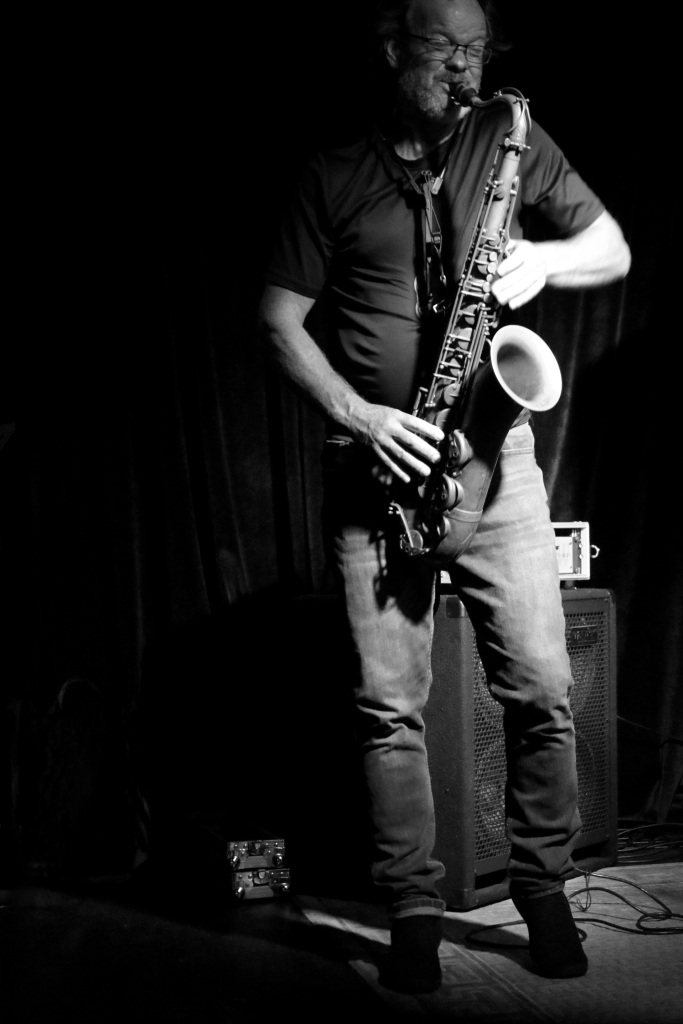
Hot Foot Saxophone Trio: Roger Manins (tenor saxophone), Cameron McArthur (upright bass), Ron Samsom (drums)
The gig took place at Anthology, CJC (Creative Jazz Club), Auckland. March 2021
It’s impossible to over-estimate the influence that the CJC (Creative Jazz Club) has had on the Auckland and wider New Zealand Jazz scene. For those unfamiliar with its history, the club was set up over a decade ago, as a place to bring original improvised music to discriminating listening audiences. A secondary function was to ensure that emerging artists were given a shot on select gig nights. Last week brought two bands, the Ben Frater Band and the Rachel Clarke band.
Frater is an undergraduate at the UoA Jazz School and for an emerging performer, his drum-work shows surprising maturity. In common with many up-and-coming performers, his approach is not confined to any particular style and this openness has informed his approach. The gig was billed as swing influenced, but leaning towards fusion, and the descriptor was accurate. Frater is a compelling drummer and he will further enrich the local scene.
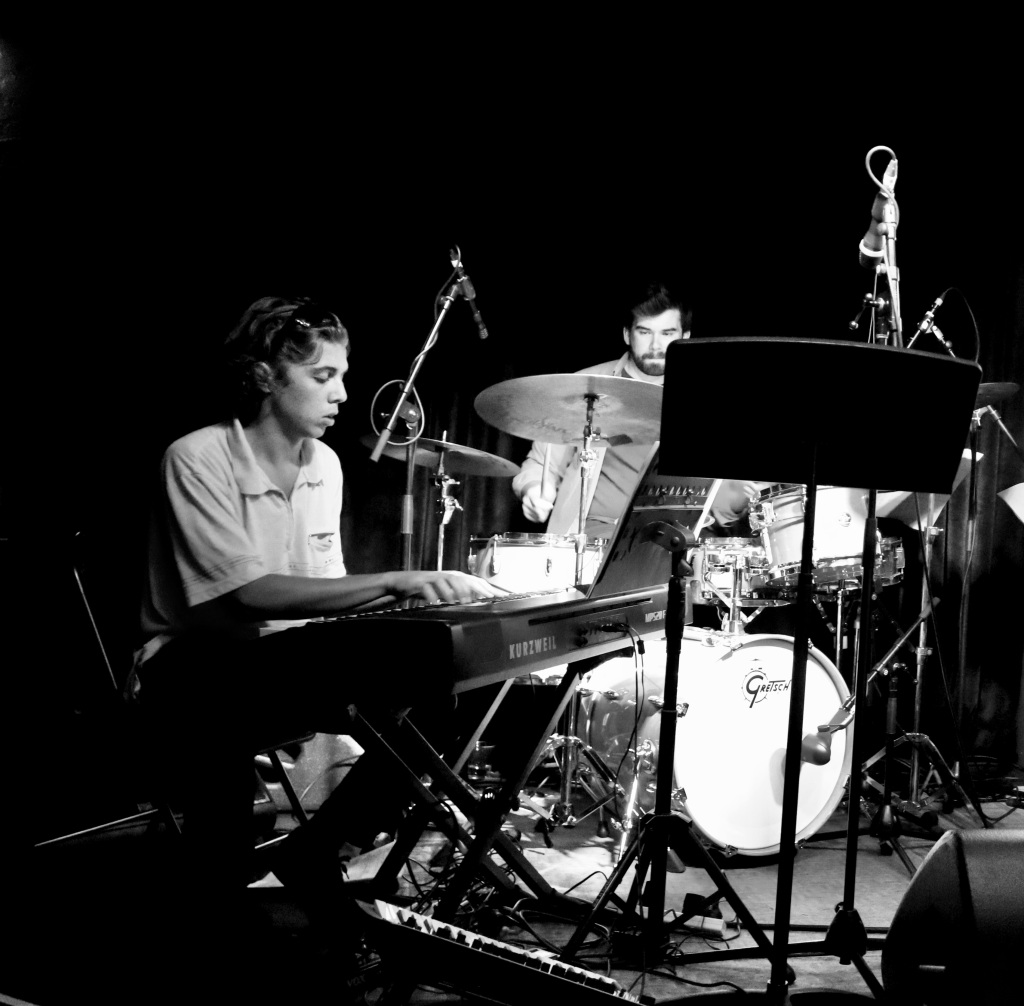
The leader enrolled former and current students for this gig and in consequence, a shared vision was evident. CJC audiences are by now quite familiar with guitarist Michael Gianan and with keyboard wiz Joe Kaptein; both have featured often during the last year. The other band members were Jimmy Olsen on electric bass, Andrew Isdale on tenor saxophone and Jack Thirtle on trumpet.
Olson was a powerhouse with those urgent pumping bass-lines; the sounds of Jazz-fusion deserve slippery grooves like that. And Kaptein impressed as he always does, his calm demeanour belying what was flowing from his fingertips. He backed into the pieces like a pro and established grooves on top of grooves; then he reached underneath the bonnet and messed with the sound in a good way.
The groove tunes took a bold step in the direction of improvised Jazz electronica; the direction of Eivind Aaset in particular. I hope that Frater takes us further down that road. It has until now been a Nordic sound and it is extremely popular in the northern regions. This band gave it a Kiwi flavour, and I for one am ready for more. I have posted a clip titled ‘Montgomery’ (Frater).
The second set brought us, vocalist, Rachel Clarke’s band. Clarke had assembled some formidable firepower. Ben Frater and Jimmy Olsen were present again, Gretel Donnelly and Chelsea Prastiti as backing vocalists, Nathan Haines on flute, Alex Pies on guitar and Ron Samsom on percussion. Clarke is a recent graduate from the UoA Jazz Programme and I first heard her when she was called on at short notice to replace Caitlin Smith at a live gig, just days before the first lockdown.
All of the tunes in Clarke’s set had a Latin flavour and more specifically, a Portuguese flavour. Many of the tunes were sung in Portuguese. Again, it is a credit to the Auckland University Jazz School that they nurture such diversity within their programme structure. Out of this diversity, an Auckland sound is being forged.
It can be daunting to find yourself in front of a large discriminating Jazz audience, but Clarke demonstrated her ability to win an audience over. She has a fine voice and she mastered the rhythmic complexities of her Latin tunes with ease. Alex Pipes also nailed the rhythms, with Olsen, Samsom and Frater adding counter pulse and texture. Nathan Haines provided perfect fills and a gorgeous solo or two. His Latin Flute chops are legendary.
JazzLocal32.com was rated as one of the 50 best Jazz Blogs in the world by Feedspot. The author is a professional member of the Jazz Journalists Association.
For those who don’t live where we live, live gig reports could feel like salt rubbed into a wound. I write from a warm Pacific Island. A place where the virus is not in the community but where we can roam free (we don’t have snakes) and where we have live music available. We have had two short sharp lockdowns this year and as we emerged from each of them, the music venues filled up with enthusiastic punters; so what better way to exit the last lockdown but with joyful noise. Ruckus is a genre defying, assemblage of anarchic improvisers under the guidance of David Ward.
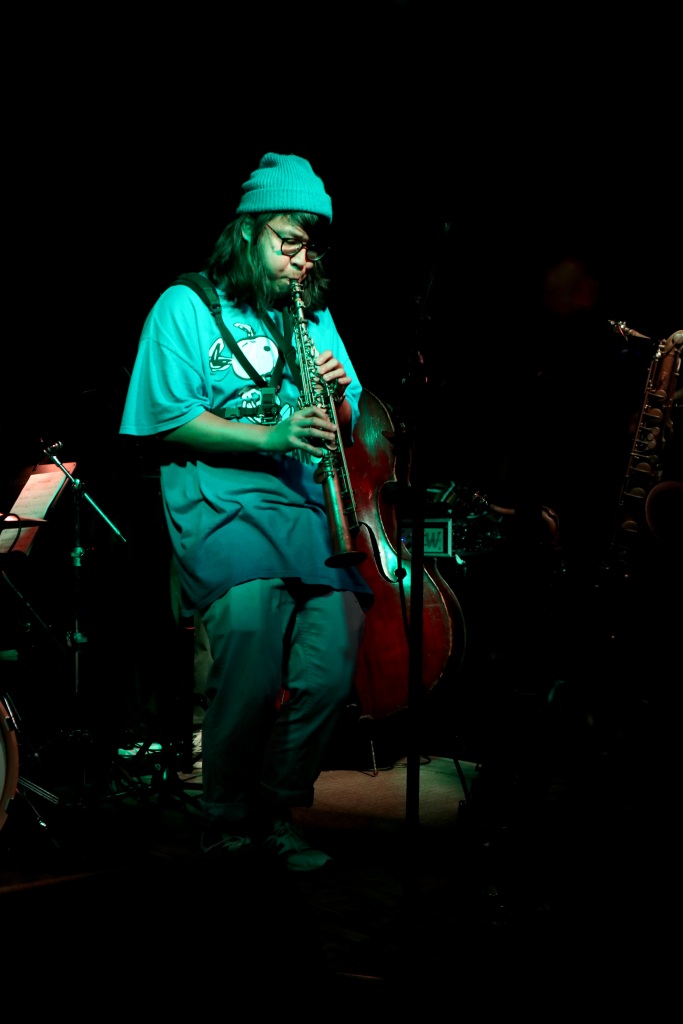
Last week saw the inclusion of saxophonist J. Y. Lee in the Ruckus lineup and his bold delivery added piquancy. There were three Monk tunes performed, and on these, Lee played Baritone saxophone. The richer palette worked well and the contrasting instrumentation gave the jagged bouncing lines of Monk’s compositions a rich earthy feel. Ruckus is one of several local groups which invariably include Monk tunes in their repertoire. Ward’s quirky Monk arrangements are always worth listening to.
Ward’s arrangements for Ruckus are also notable for their eclecticism, their lack of cliche. blues, Americana, latin tinge, free and swing and all fused into a jazz-grounded brew. There were folksy ballads and a tango referencing tune (I have posted the latter). This time, there was less Americana influence but it was still evident. The band’s sound is crafted from pedal steel guitar, a standard electric guitar (or guitars), drums, upright bass and multiple saxophones.
As always, Neil Watson alternated between pedal steel guitar and standard electric guitar. He and Ward are old hands at this material and they play off each other well. When both played guitar they never got in each other’s way, throwing challenging lines between them or else comping quietly as they laid down a cushion for the other.
Eamon Edmundson Wells upright bass work stood out on this gig. He sounded great. This is the type of band where he is at his best, the type of band where a degree of freedom is afforded him. Tristan Deck again proved his worth as a multi-faceted and capable drummer. I loved the stick work on the tango-esque number.
JazzLocal32.com was rated as one of the 50 best Jazz Blogs in the world by Feedspot. The author is a professional member of the Jazz Journalists Association.Some of the posts also appear on other sites.
The pandemic hasn’t stopped the music, and while it is true that the clubs, bars and concert halls are placed out of reach for many, music has the qualities of water. It will flow through the cracks until it has found its own level. The recent Kiwi lockdown was mercifully short, and in random and serendipitous ways new music found me. As always, I was happy when it did. Below are three very different albums – check them out.
Early Risers ~ John Scurry’s Reverse Swing
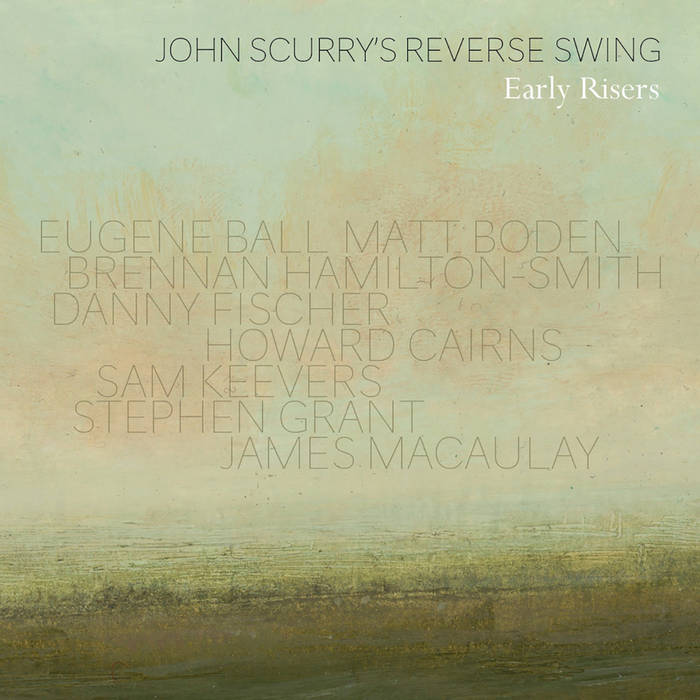
During our recent lockdown I received an album in the post from Lionsharecords. The album, ‘Early Risers’ is John Scurry’s Reverse Swing ensemble, his second such release. Scurry’s earlier Reverse Swing album ‘Post Matinee’ was showered with praise, with one American reviewer describing it as ‘Ellingtonian’. The 2020 album has 19 original tunes spread over two CD’s and we are invited to view each volume as distinct but complementary.
Having recently travelled to New Orleans, I detected those influences in this band immediately. When you spend any time in NOLA, you realise that that city’s influences are very broad indeed. Everything from swing to soulful gator-funk, from Sun Ra to the various free jazz offshoots. It is a living, breathing up to the minute music and one with its own flavour. So it is with ‘Early Risers’, and with this album there are also a multiplicity of rich local influences.
I loved the album for its warmth and approachability. It is instantly engaging, but this is not a nostalgic romp. There is real depth here and many treasures are revealed to the deep listener. The interplay between the musicians is simply stunning and their time feel beyond caveat. Track one on the first album is my favourite and while comparisons can be odious, this gave me the same feeling as I had when first hearing the Cy Touff Octet & Quintet album. Perhaps there is even a hint of ‘West Coast’ as well – Sheldon ?
There are many moods and whether a gentle ballad or a hotter number, all contribute uniquely to the whole. Underpinning each number are the quiet urgings of leader John Scurry’s guitar. We hear swing style guitar infrequently these days and more’s the pity. The tunes here were all penned by Scurry and he is also the co-arranger and producer. He has been a popular feature of the Australian scene for many years and I wonder what took him so long to launch this particular project. to listen go to Early Risers Lionsharecords
The other arranger (and horn arranger) is trumpeter Eugene Ball. Ball is another veteran of the Melbourne scene and a Bell award winner. I associate him with the moderism of Andrea Keller. Here you are overwhelmed by the richness of his sound. His tone production is often reminiscent of the latter-day swing trumpeters like Harry Sweets’ Edison and Henry ‘Red’ Alan.
I have also encountered James McCauley, and again I associate him with Keller. He is perfect in these very different rolls. The band members here are John Scurry (guitar, arrangements), Eugene Ball (trumpet, arrangements), Brennan Hamilton-Smith (clarinet), Stephen Grant (alto sax), Matt Boden (piano) Howard Cairns (bass), Danny Fischer (drums), + Sam Keevers (piano). The textures, tunes and uncanny interplay render this a terrific album. It may have its roots in traditional swing, but I defy anyone, whatever their taste in jazz, not to love this. It is released on Julien Wilson’s lionsharecords.com and on bandcamp. All art-work by John Scurry.
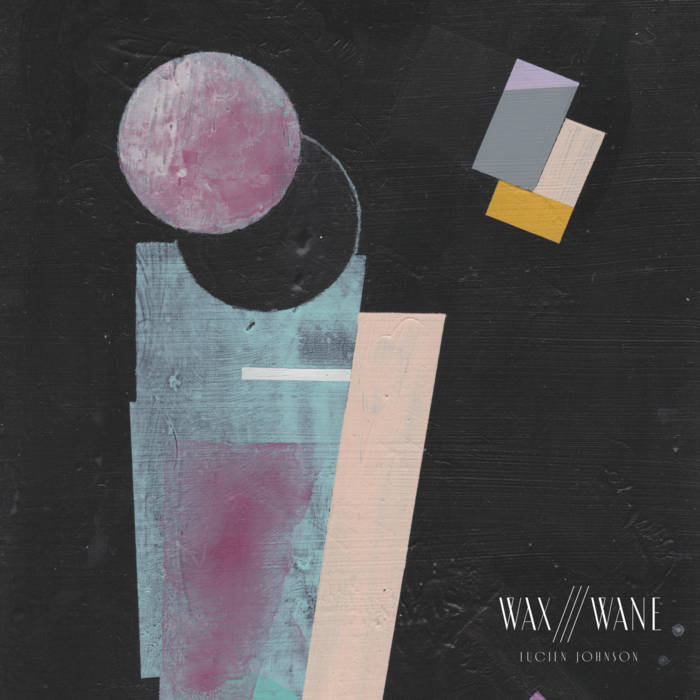
Wax///Wane ~ Lucien Johnson
Wax///Wane was released over summer and I’ve just caught up with it. I am always keen to check out gigs or albums featuring Lucien Johnson, so I downloaded it on Bandcamp. There was no information about the band or the recording on the album page, but my ears began to fill in the gaps. John Bell had to be the vibes player, surely it was him (an online search confirmed that)? Few south of the equator punch out modal grooves quite as convincingly as Bell. Of the remaining four musicians, two were known to me and two not. Michelle Velvin was on harp, Tom Callwood on upright bass, Cory Champion on drums and Riki Piripi on percussion (listed under the undividual tks).
The album features six compositions and each of these has an evanescent quality. They hint at places we think we might know, but can’t quite remember. Blue Rain, Forest Rendezvous, and Rubicon appear as if in a dream and as with the missing liner notes, we are encouraged to fill in the gaps with our imagination.
Blue Rain
Johnson has chosen his bandmates well. Bell and Callwood are genre defying and have open-ears, and as with Johnson are well immersed in the freer regions of improvised music. I have seen Cory Champion several times, but never heard him in this context; very impressive. Adding a harp player and percussionist added texture in finely hued layers, and this gave the album that delightful Alice Coltrane feel. It’s great to see the harp revived as an improvisers instrument and especially with the vibes. They could get in each others way, but in skilled hands this is avoided and a shimmering pulse arises to good effect.
Johnson is a musician we most often associate with the Wellington scene, but these days he is perhaps better termed an international musician. Like all modern saxophonists, there is a foundation of Coltrane in his sound. There is also an airy freedom. Here, he has curated a groove fest. The sort of grooves that Bobby Hutcherson, Alice and John Coltrane, Julian Priester and others explored. It is what might be loosely termed spiritual Jazz. Music defying the mundane, an invitation to a better place where gravity is abandoned. In times like this we need music, and actually, we need more music like this. Music that stimulates the imagination and doesn’t preach. The playing here is superb but don’t over think the experience, sink into it and enjoy the trip. The cover-art is by Julien Dyne. Available on Bandcamp Lucienjohnson.bandcamp.com
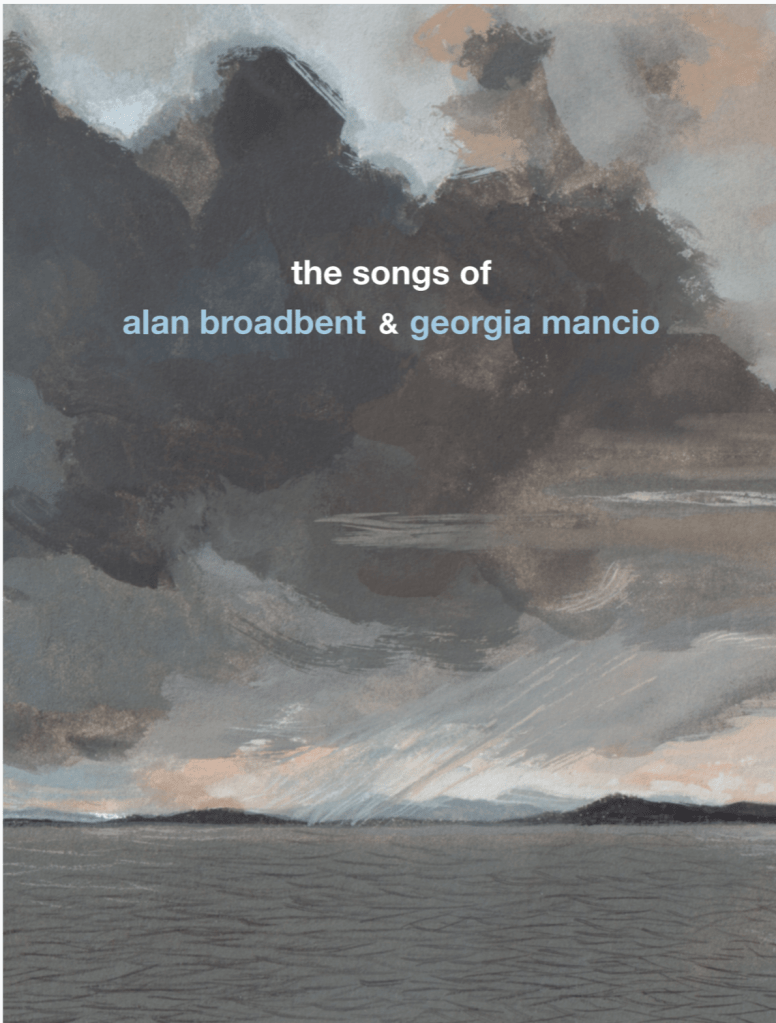
Alan Broadbent/Georgia Mancio ~ ‘Quiet is the Star’
Alan Broadbent has an unerring ear for melody and this is in part, why he makes such a sensitive accompanist. While his albums can really swing, they also take direct aim at the heart. An astonishing technical mastery is evident but it is never allowed to obscure the essence of a tune. To put it more simply, he connects us to real emotions and to human life with its manifest joys and frailties. There are innumerable facets to his long and formidable career and none should be overlooked.
Most recently, he released ‘Trio in Motion’ his second album with bassist Harvie S and drummer Billie Mintz. And if you haven’t done so before now, check out his discography, a body of work that astounds; critically acclaimed albums, two Grammys and so it goes. The man is a legend.
‘Quiet is the Star’ is the second album from the Broadbent/Mancio duo. Their last album’ Songbook’ aired in 2017 and it was pure delight; this new release is a welcome follow up. Georgia Mancio is a London-based award-winning vocalist and lyricist and the pairing has reaped dividends. They have performed together since 2013 and toured Europe and elsewhere to acclaim.
Mancio has a lovely voice and she uses it to great effect, her emphasis though is on breathing life into her lyrics. The stories she reveals are intimate and she invites the listener to share in these experiences. While all good duos are conversational, here we are invited in on the conversation and it is a privilege. Released by Roomspin Records 27 March. Cover artwork Simon Manfield.
JazzLocal32.com was rated as one of the 50 best Jazz Blogs in the world by Feedspot. The author is a professional member of the Jazz Journalists Association.some of these posts also appear in other music sites. When purchasing, please support the Bandcamp platform whenever possible. Respect musicians rights.



 JazzLocal32.com