Rare, Obscure, Overlooked

I’ve always been attracted to the albums which populate the margins. The material that is overlooked, and when discovered, brings with it a sense of having unearthed something rare. These discoveries make us feel like insiders, the inheritors of secret knowledge. And once we possess the navigation tools we join other explorers. Crossing terra incognito on a quest for sonic treasure.  

The albums are often rare private issues or bootlegs. Or they appear, then vanish during the collapse of a niche label, never to be reissued. Sometimes they are recordings taken by clubs from a live feed. Many archival treasures have been unearthed from these sources. This is the realm of mislabeled or rejected treasures, languishing in the vault of a disinterested multinational or forgotten in a private home. But by far the richest source, the recordings made by musicians, and stored away for posterity.  

Before the era of digital micro-recorders, people with scant respect for copyright smuggled recording devices into concert halls or practice rooms (obsessives like Dean Benedetti, Bird’s stalker, dangling his crude mic through a hole in the ceiling and covertly recording Bird practicing). I met people who wired themselves like police snitches and secreted a mic up each sleeve (stereo capture) and held their arms aloft during a concert in order to get the best sound. 

In my collection, I have examples of all of the above which leads me to the focus of this post. When the domination of 33rpm LPs was overrun in 1983 by the CD format, record companies had a field day, reissuing popular albums. For the big labels, it was largely about estimating the number of units that could be sold. For the smaller labels, it was a marginal enterprise and runs could be limited. During this period a determined group of obsessives digitised the bootleg tapes and the missing 78’s, EP’s and LP’s, old favourites which never made the cut. In Tamaki Makaurau there were several local musicians who had worked in broadcasting and they possessed the expertise to clean up and digitise scratched or hissy analogue recordings. This involved mysterious processes like ‘de-clicking’ and transferring micro-segments to fill a dropout. They did this for altruistic reasons and a number of rare recordings survive because of these efforts. 
Hawes Live At The Great American Music Hall #2

One of my lockdown projects has been to sort through these older albums and craft a playlist. Because of the nature of the material, some of it I have not posted as it has not yet become available on streaming services. Here are a few that took my fancy.

Paul Bley ~ Mr Joy (Limelight 1968). This album doesn’t appear in Spotify or in most discographies. It is an interesting and very rare album filled with great material. With Bley (p) are Gary Peacock (b) and Billy Elgart (d). The liner notes are hilarious and random. ‘Voice: Why do they call you Mr Joy? MJ: Because I’m unhappy about a lot of things’ Mr Joy went on to say that he was unhappy about imitators and impersonators, his own performance, but happy about people with open ears like Gary Peacock and Billy Elgart. The ghosts of Annette Peacock and Ornette Coleman inform this album.  

Anita O’Day ~ Angel Eyes (Emily Records/Lobster Records 78-81). These fabulous Anita O’Day small group sessions are a hybrid of two Japanese recording dates – 1979 and 1981. It came at the most troubled period of her life when her addiction problems were made public after a bust. Here, she is with her partner John Poole (trio leader and drummer). Poole has been blamed for her woes of that time, but later evidence suggests that he took the heat to protect her. She kept in touch with him and gave him work long after they parted. This is not the bright sassy O’Day of later years, but a smoky-voiced vocalist channelling her pain. Some may think that material like this should be forgotten, but I disagree. Would we ditch the difficult Billy Holiday years? This is Anita at her most soulful. A later limited compilation from these sessions was released by Kayo. My copy was extracted from two EP/LPs and has bespoke liner notes. John Poole (drums), Don Abney (piano), Dwight Dickerson #2 (piano) Harvey Newmark (bass). My converted copy finally corrupted.

Jimmy Giuffre 3 ~ Flight Bremen 1961 (Hat Hut / Radio Bremen) This Giuffre/Bley/Swallow album was taken from the live feed by Radio Bremen and later released by Hat Hut. It does not appear in many discographies and is particularly interesting as it proceeds the ground-breaking album ‘Free Fall’ and ‘Free Fall Revisited’. This adventurous music shocked many Giuffre fans who purchased it thinking that they were getting more of ‘The Train and The River’ trios. He changed his trio to include Bley and Swallow in 1961 (after 17 folksy albums with his old trio). During this period the discographies can be confusing. An album called ‘Fusion’ came out and ‘Fly Away Little Bird’ on the French OWL label. In 1989 ‘Life of a Trio: Sunday’ came out.   Free music was still very controversial in 1961 – ‘Flight Bremen’ is a bridge between the two styles. My copies are all extracted from LPs. Giuffre on clarinet.
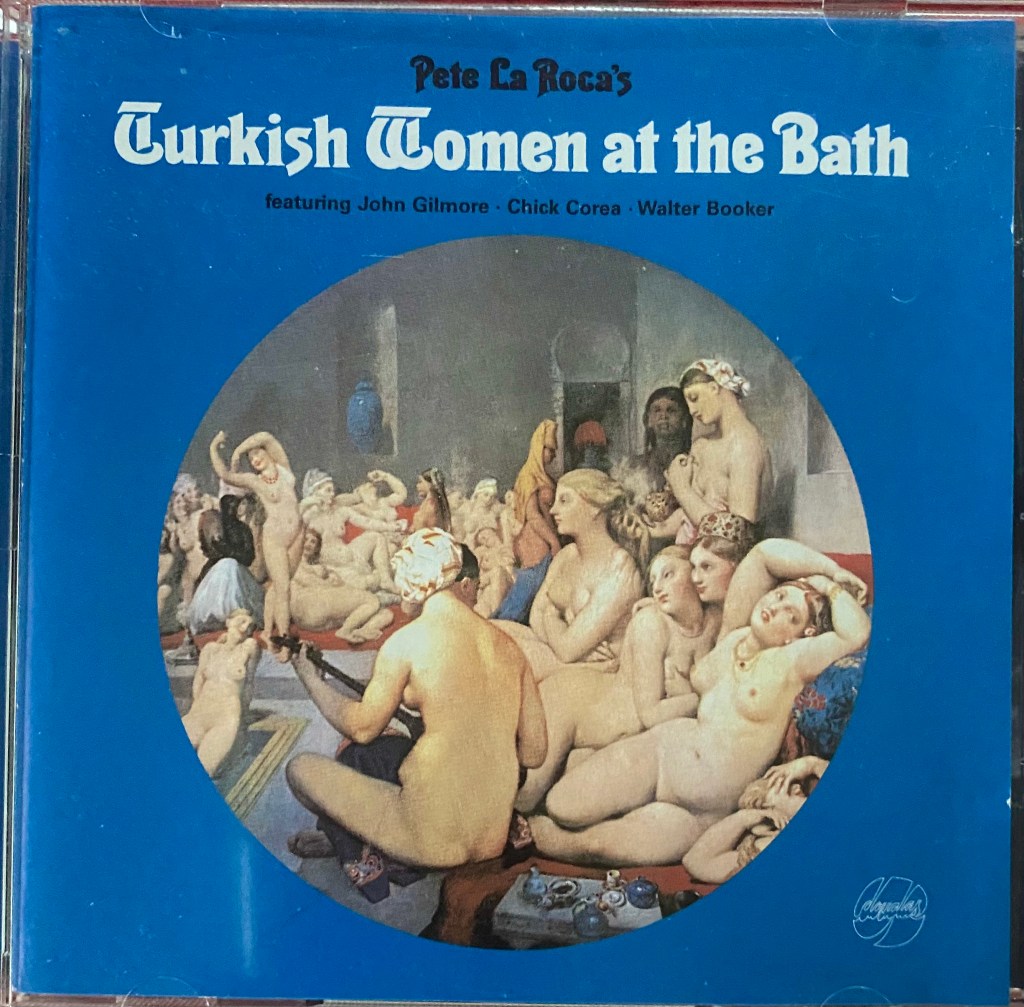
Turkish Women at the Bath ~ Pete La Roca (Fresh Sound May 1967). This recording has an interesting tale to tell. After it was recorded, a well-known member of his band (not the leader) released it under his own name. La Roca was incensed and went to court over the copyright. After a long court battle, he won the case, and all existing copies were recalled. It was later released by Fresh Sound with the correct attribution. La Roca studied and became a copyright attorney and had a successful practice defending artists against violations like those he suffered. It is an exceptional album filled with modal grooves and open compositions. The personnel, Pete La Roca (drums), John Gilmore (tenor sax), Chick Corea (piano), Walter Booker (bass). La Roca is an interesting drummer who could create a loose swing feel over freer music. Gilmore is fabulous. 

Steve Kuhn ~ Oceans in the Sky (Owl 1989). The French label Owl was always worth checking out and this straight-ahead album is a gem. With Kuhn are Miroslav Vitous (bass) and Aldo Romano (drums). It was recorded in Paris, probably to suit the Czech bassist and Italian drummer. Nothing in Jazz quite evokes the feeling of looking down from space like this. Every time I listen to it I am overjoyed afresh. I wore out one copy and purchased a new one upon re-issue. ‘The Island’ by Ivan Lins is glorious. Such a lovely slow swing feel and if they laid any further back on the beat, they’d surely fall.
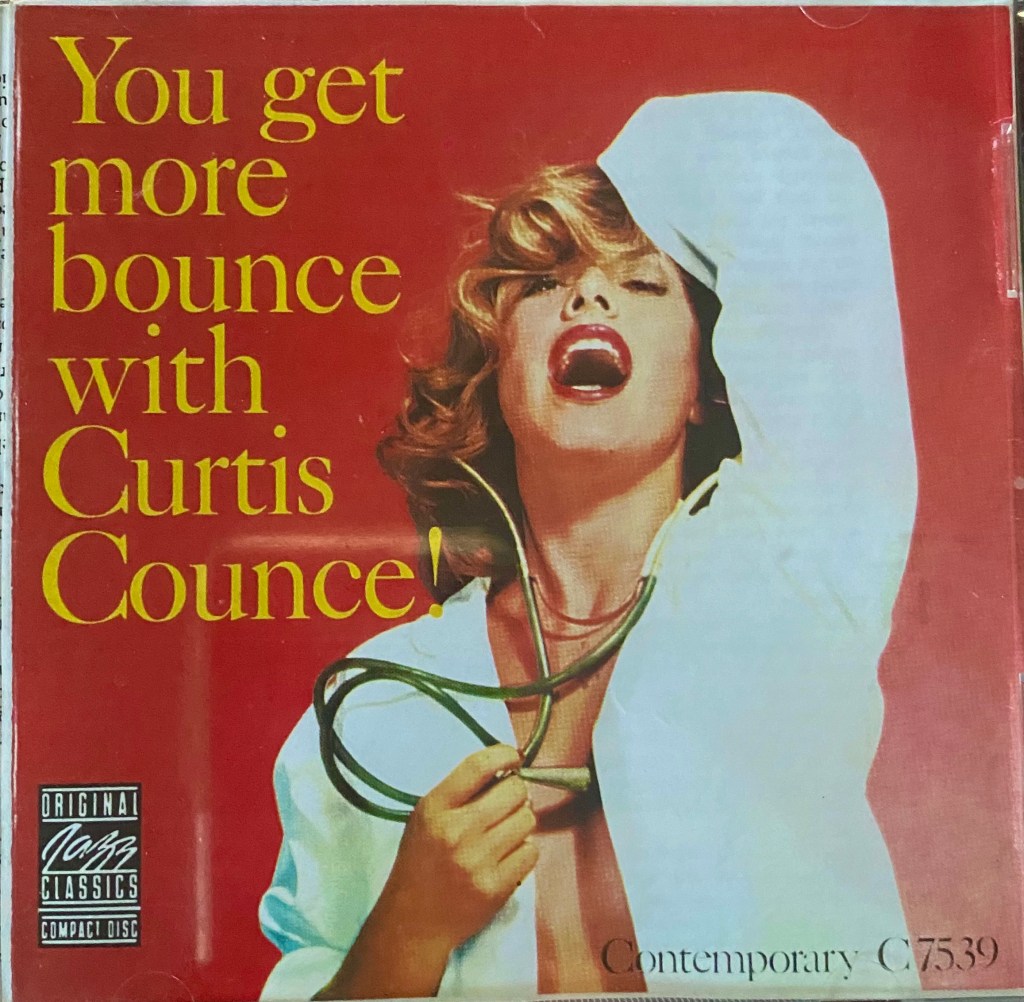
Playboy styled covers were popular on the West Coast

Curtis Counce ~ You Get More Bounce With Curtis Counce (Contemporary 1956). Curtis Counce was a star that burned out far too soon. He died of a heart attack while his career was on the rise. Counce, a stellar bass player, managed to play with an extraordinarily talented range of musicians before forming his own quintet in the Bay Area. In his lineup were some of the finest musicians on the west coast. Carl Perkins (piano), Harold Land (tenor), Jack Sheldon (trumpet), Frank Butler (drums). It was opportune for Counce, that Land quit the Clifford Brown/Max Roach band because he missed his family. Land has one of the most recognisable sounds on tenor saxophone, Perkins was a rising star, but tragically, he died of a drug overdose just as the band was becoming famous. He is one of those pianists who was reaching for a fresh approach and his loss at such a young age is lamented to this day. The album cover would possibly not pass muster today. Contemporary often took a playboy approach to cover art.

Jazz Studio 2 ~ Holywood (Decca monaural LP 1954). There were at least three in this set, volume 1 featured east coasters like Hank Jones. ‘Volume 2’ is an early example of the cool west coast sound and the nonet features heavyweights of the day. The personnel: Don Fagerquist (trumpet), Milt Bernhart (trombone), John Graas (French horn), Herb Geller (alto saxophone), Jimmy Giuffre (tenor, baritone, clarinet), Marty Paich (piano), Howard Roberts (guitar), Curtis Counce (bass), Larry Bunker (drums). Unsurprisingly, Paich does most of the arrangements with a few by John Graas. Bunker is always attention-grabbing as a drummer (or vibes player), most memorably with Bill Evans in the ‘65 trio’.
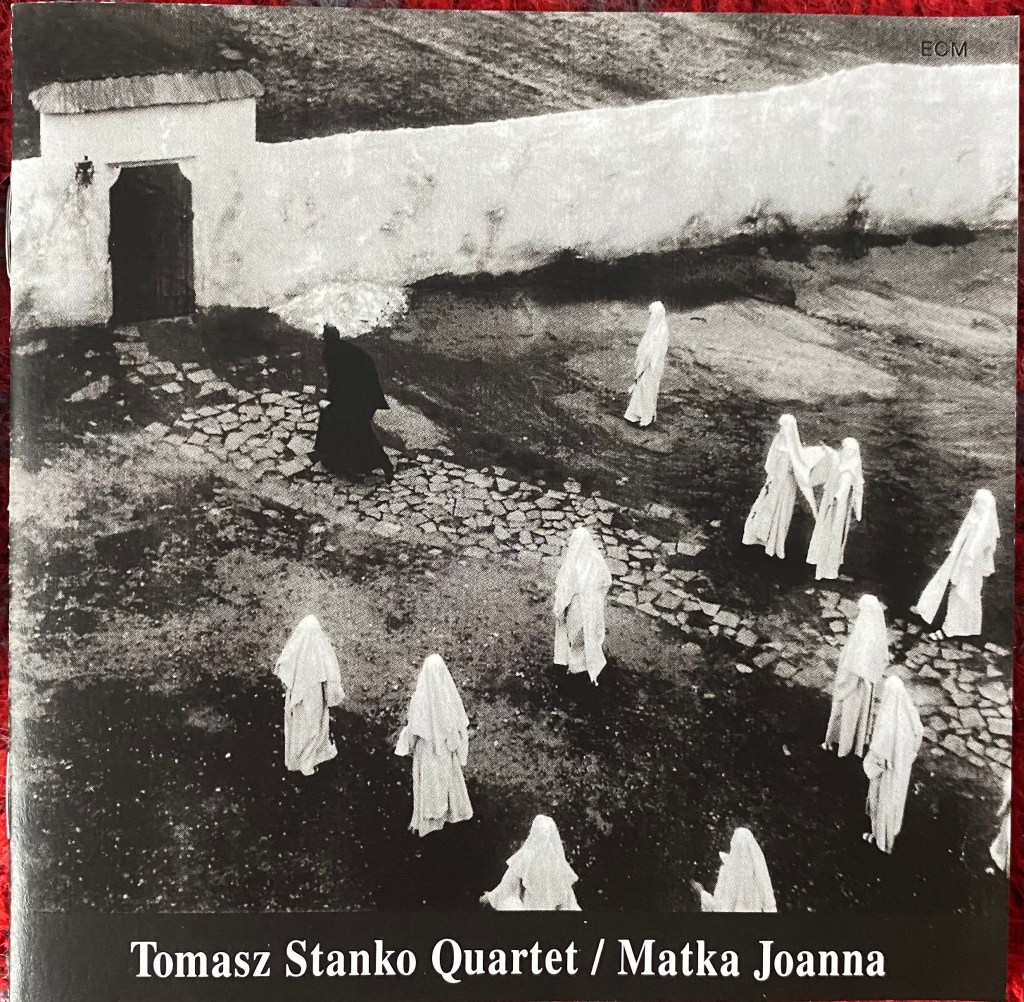
Matka Joanna ~ Tomasz Stanko Quartet ( ECM 1994). This and the two albums that follow are in the overlooked category, hiding in plain sight. ‘Matka Joanna’ (Mother Joan) is a tribute to the award-winning Jerzy Kawalerowicz film about a group of possessed, eroticised, nuns on the rampage and set in the middle ages. The unusual genre called Nunsploitation thrived in the eastern bloc and became an outlet for artistic subversives during the communist era. Thirty-three years after the film came out Stanko produced this open, free-exploration in tribute. There are many reasons to like this with its dreamy vibe, but high on the list are the musicians. Stanko was a trailblazer with his euro-free inside-outside approach, an original. His east European style of Jazz was always informed by the world he grew up in, and particularly by Kristof Komeda. With Bobo Stenson on piano, Anders Jormin on bass, and best of all, Tony Oxley on drums, how could this not be extraordinary? Very few people know of this album and that puzzles me.

Nothing Ever Was Anyway. Music of Annette Peacock (ECM 1997) Marilyn Crispell Trio. This is a highly rated album, but perhaps because it is free improvised it remains on the margins. Marilyn Crispell is living proof that free improvised avant-garde music can also be beautiful. Her spaciousness, phrasing, and interactions with others, mark her out as one of the greats. She has recorded in New Zealand with Jeff Henderson and the late Richard Nunns (check that out on Rattle, it’s still available and streamed). 

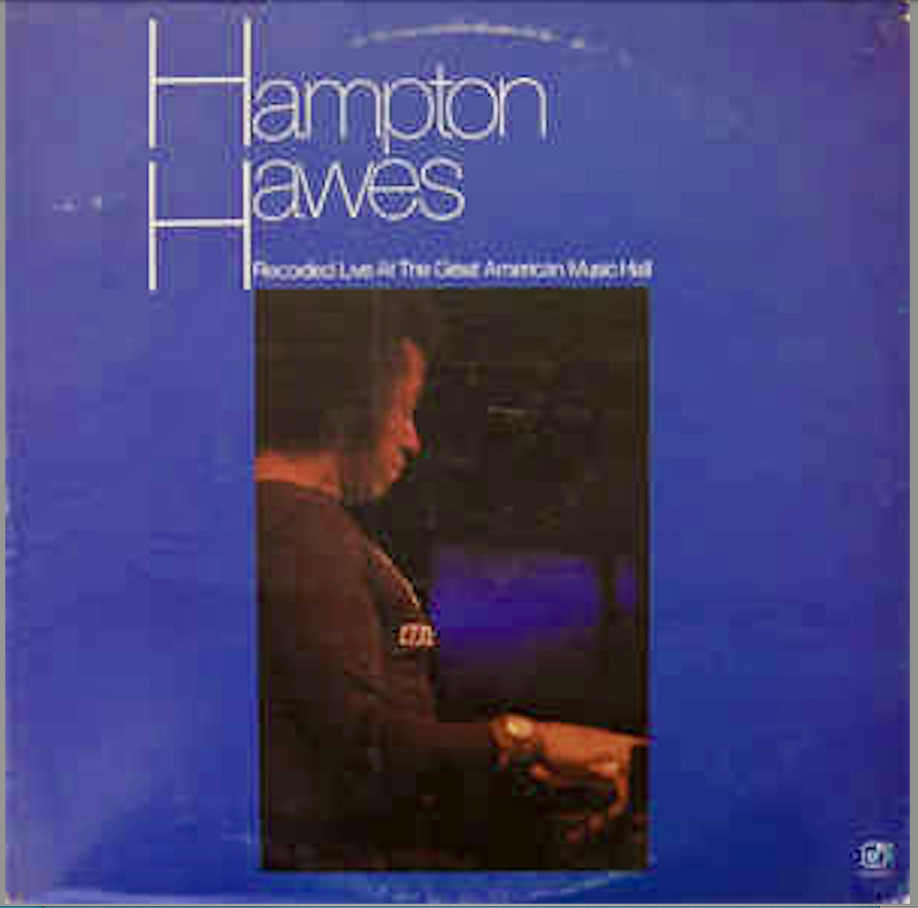
Hampton Hawes At the Great San Francisco Music Hall (Concord 1975). There were two issues of this album and the details are sketchy. Mine was a vinyl conversion with no liner notes. Also hard to find is the Swedish ‘Black Lion’ album ‘Spanish Steps’. Hawes was a superb pianist and his playing was always recognisable (increasingly, passionately, funky over the years). Everything by Hawes is worth having and a lot is up on Spotify. Sadly the ‘Great American Music Hall’ album is not. On that disk, he shouts and stomps as he builds the tension. The rare ‘Black Lion’ albums only appear on YouTube. The clip below is from a year later than the ‘Great San Francisco Music Hall’ recording. 

The best source for small-label, rare, and previously unreleased recordings is Bandcamp. There are some great Dewey Redman recordings there for example. For Dewey, check out Barney McAll’s ExtraCelestial Arts page (a never before heard Dewey release) and also check out the great Canadian free Jazz unit, Jon Ballantine Trio with Dewey. I would like to acknowledge Welly Choy and John Good, who started many on this journey for the overlooked.

JazzLocal32.com is rated as one of the 50 best Jazz Blogs in the world by Feedspot. The author is a professional member of the Jazz Journalists Association, poet & writer. Some of these posts appear on related sites

Kiwi Jahzz ~ from the underground basements of Aotearoa

Last month, a new Kiwi record label was launched and if the first releases are anything to go by, it will surely become a popular destination for ‘out’ improvised music fans. The Kiwi Jahzz label is a significant addition to the Aotearoa recorded music scene, and like Budweiser, it reaches places that others don’t

The music found in these underground basements has long been a magnet for adventurous listeners, and especially for younger musicians who often cut their avant-garde teeth there. With the arrival of the pandemic, lockdowns followed suit and clubs took a hit. One of those venues was The Wine Cellar under St Kevin’s arcade. A popular home for independent music. 

A hundred yards away in a nearby uptown basement, Jeff Henderson devised a plan. Why not move the Audio Foundation gear into the Wine Cellar. This included recording equipment and a ready-made audience. Out of that has come a string of recordings and a desire to make the music available to a wider audience. This is what musical freedom sounds like as the gigs are captured live. These recordings are street raw and bristling with energy, the sounds escaping from dark basements. 

Henderson is known for taking his time over a piece and for letting the moment dictate pace and length. A groove or vamp can run for as long as it needs to and with each utterance informing the direction of travel. It is music often liberated from harmonic distractions or from predictable pulses, so as it wends its way, it draws on a lifetime of experience, with each moment revealing yet another nested story. 

With the double trios recorded so far, the pieces have been shorter and this is perhaps a concession to the medium. In a darkened club you are more attuned to longer pieces, at home there are distractions. All but one of the initial releases features the Trioglodyte Trio. The core Trioglodyte lineup being Jeff Henderson, Eamon Edmundson-Wells and Chris O’Connor. It is perhaps more accurate to describe these albums as Trioglodyte led double trios because most of the releases to date feature a guest trio as well. A mixture of well-known musicians and enthusiastic up and comers. 

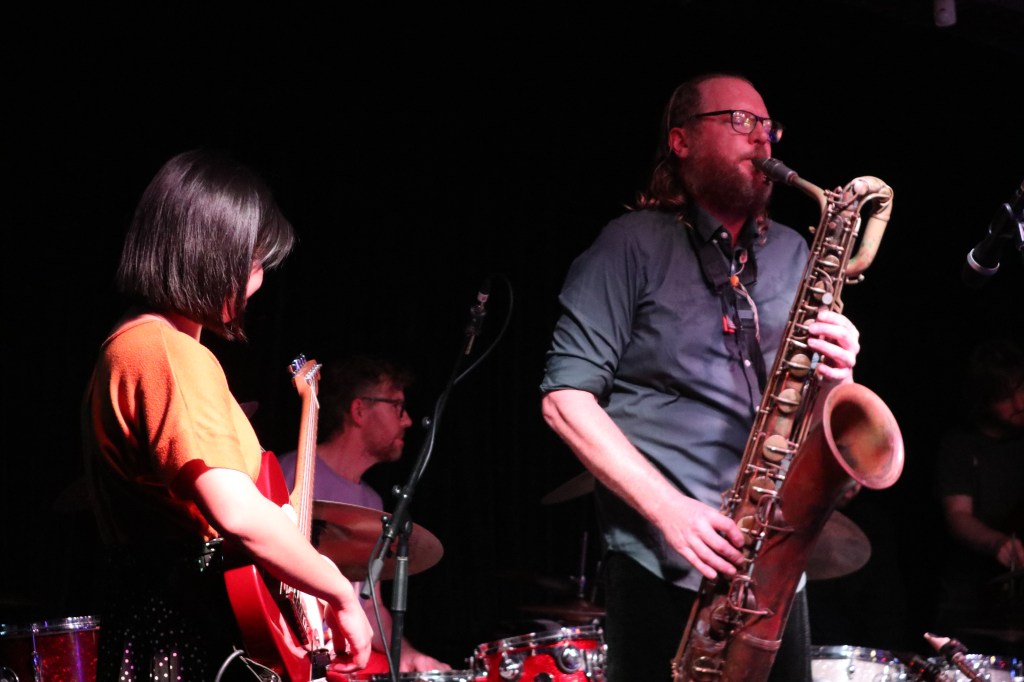
While Henderson is not a musician to blow his own trumpet, his baritone saxophone could flatten the walls of Jericho. He is the guiding force behind the growth of the improvised ‘out’ music scene in Aotearoa and his determination has built a sustainable and vibrant presence.  A saxophonist, composer, producer and visionary, someone formidable.

Rated X (Davis)

With him in the Trioglodyte trio are Eamon Edmundson-Wells on bass and Chris O’Connor on drums (and percussion). O’Connor is a legend across many genres and Edmundson-Wells has built a solid reputation in settings like this. The pair are the perfect foils for Henderson, being adept at reacting instinctively and both capable of carrying considerable weight. Edmundson-Wells is a powerful and unfaltering presence and this frees up Henderson to forge a melodic path. Meanwhile, O’Connor does what he is renowned for, delivers his extraordinary pulses in marvellously unexpected ways. 

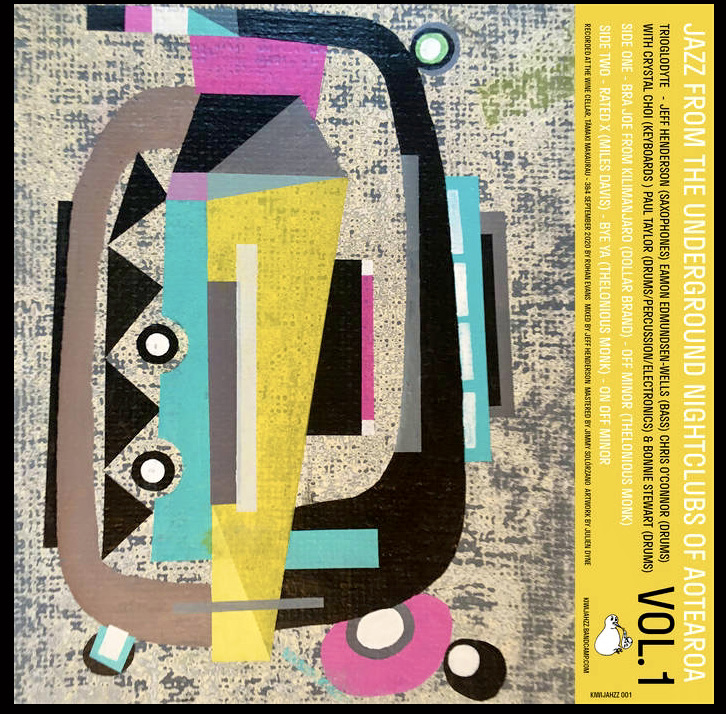
Vol 1’ is modestly titled but don’t let that fool you, because immediately you click on the arrow, the introductory track comes right at you, delivering hammer blows to the senses. Perhaps there should be a warning upfront; beware there will be no ECM styled five seconds of silence beforehand. That track is titled ‘Bra Joe’. 

Henderson opens with an extraordinary squalling attack as he strides into the tune like a Titan, casting aside all that he deems superfluous. Underneath his saxophone, you are aware of the pumping and scuffling of Edmundson-Wells and O’Connor, followed by the second trio. Crystal Choi on keyboards, Bonnie Stewart on drums and Paul Taylor on percussion and electronics. This may be a short number, but the impact will linger long afterwards.

The second track ‘Bra Joe from Kilamajaro’ is a reimagining of the Dollar Brand standard. Here the pace is slowed and the volume lowered but the intensity is not. The way it unfolds over a long slow vamp imparts something of an Alice Coltrane vibe, with Choi’s keys rippling joyfully beneath the bass. In fact, every track references a Jazz standard (more or less). Some might wonder why an album of adventurous free music features standards, but the music here is as out and adventurous as you might wish. And as with most improvised music, there is an implication of fun, of not taking ourselves too seriously. My favourite track is definitely ‘Rated X’ (Miles Davis). This is a multi-layered sonic feast and everyone gets to strut their stuff here. Miles smiles I’m sure. On this particular track, it is easy to understand why Henderson is held in such high regard. The ideas just bubble from his horn and everyone responds in kind.  And Bonnie Stewart (is this the Irish born Bonnie Stewart, the drummer songwriter, who performs with SIMA in Sydney). I have always been a fan of Choi on keys and this is the proof of the pudding; she was always reaching for this space. And then Taylor, electronics and percussion; his inclusion rounding off the ensemble nicely. This is the way modern avant-garde music has been tracking of late, two, even three drummers, which offers more punch. 

Milestones (Davis)

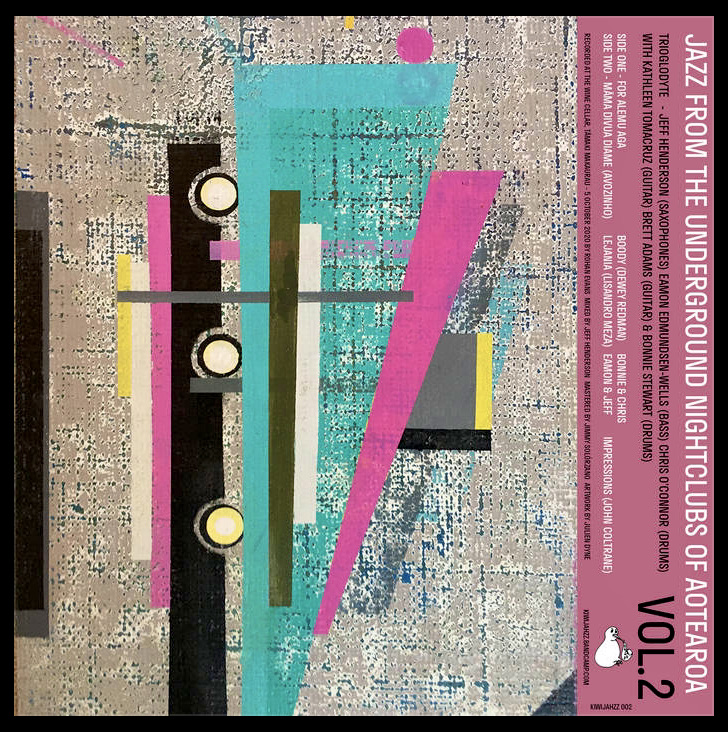
Vol 2’ has a different mood entirely. It opens with a moody piece of Frisell styled Americana, with one guitarist playing chords over a soft drone while the other answers. When Henderson comes in, new possibilities open up, and a subtle interplay involving all six musicians takes this into freer territory. Track two has a delightful New Orleans barroom kind of vibe. Again, Henderson leads the way with raw gutbucket blues. It shouldn’t surprise anyone to hear him play like a soulful Texas tenor player (complete with shouts) as there is ample evidence of this on earlier Henderson led albums. As you move through the tracks the Americana theme merges with other influences, a two drummer conversation titled Bonnie & Chris, a short piece titled Eamon & Jeff.  And following that is the blistering and rollicking ‘Impressions’; this last piece is best described as a Knitting Factory styled blues with the drums and percussion setting up the tune. Unadulterated crazy magic. Apart from Trioglodyte, the album features guitarists Kat Tomacruz and Bret Adams plus drummer Bonnie Stewart.

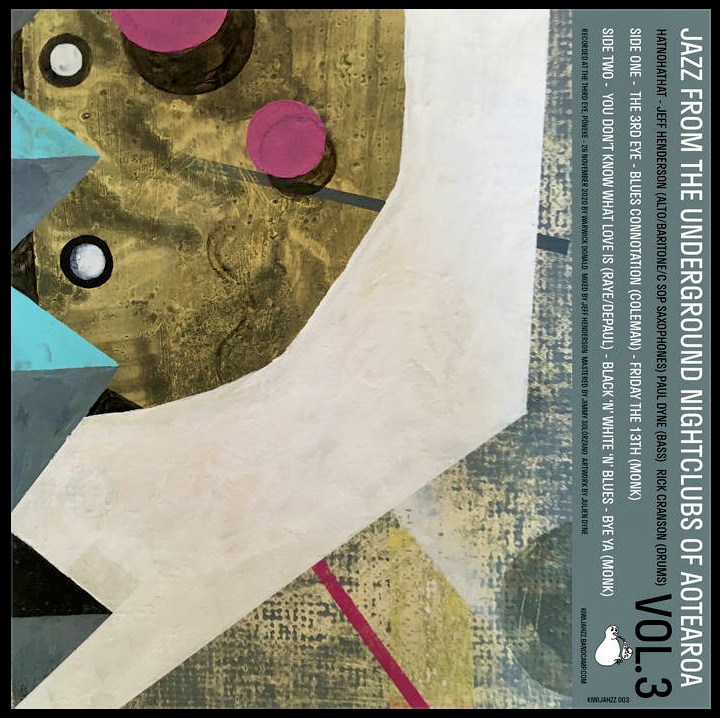
Vol 3’ is not a Trioglodyte album and unlike the other three in the series, it was recorded in Wellington at the Poneke Beer Loft (November 2020). Here Henderson is with bassist Paul Dyne and drummer Rick Cranson. All are heavy hitters and well used to traversing the jagged lines of Monk and responding to the keening cries of an Ornette Coleman tune. As well, the tracklist offers freely improvised pieces and a standard. The liner notes make reference to Henderson’s garrulous saxophone, and while that is accurate, it is also true that we can find a more measured and interrogatory tone from him here. Perhaps because this traverses familiar ground with old friends, the trio decided to take an oblique look at the material. This is particularly evident on the Raye/de Paul war-horse ‘You Don’t Know What Love Is’. Together they have recut this diamond and revealed burning shafts of light hitherto unseen, and in doing so, they forged a minimalist route to the lustre. ‘Black ‘n’ White ‘n’ Blues’, dances joyfully over ostinato bass lines and a steady pulse, Colemans ‘Blues Connection’ is delightful and captures the essence of the great man; also, the two Monk tunes ‘Bye Ya’ and ‘Friday the 13th’ refresh and delight. 

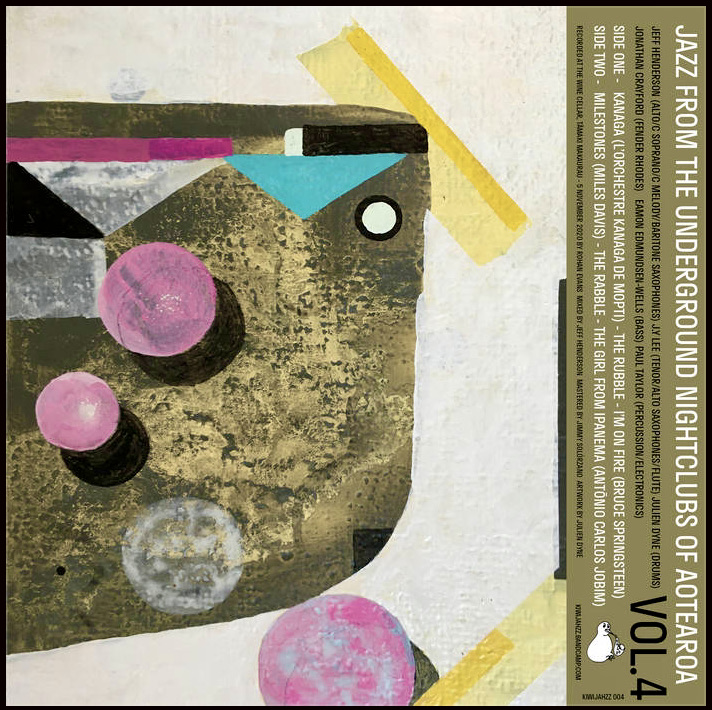
Vol 4’ is another Wine Cellar recording and the lineup here is mouth-watering. There is no Chris O’Conner in the core trio this time, but his replacement Julien Dyne slots in seamlessly. Dyne is a marvellous drummer, comfortable in a multitude of settings. He is also responsible for the great artwork on all four of these releases. And as if there were not already an embarrassment of riches, Jonathan Crayford features on Fender Rhodes. The other musicians are J Y Lee on alto & flute (a player featuring in many innovative bands about town) and as in Vol 1, Paul Tayler on percussion and electronics. This album takes in a broader perspective on improvised music. It is filled with interesting cross-genre references and it invokes many moods. Here Henderson deploys a fuller armoury of alto, C soprano, baritone and C Melody saxophones.

The opener has an Afro Beat feel. Powerful propulsive and utilising repeated phrases to amp up the tension. Track two ‘The Rubble’, by contrast, is a dark filmic piece powered by the percussive utterances of Dyne and Taylor and the mood deepened by the arco bass of Edmundson-Wells.  Three is airy and open, wending its way purposefully, led by Crayford as he sets the pace and mood. People unfamiliar with free improvised music often fail to comprehend that this type of music can on occasion be gentle and reflective. It is honest music dictated by the moment. The flute and saxophone are pelagic birds circling above the rolling swells of a vast ocean. A most appealing piece.  

Track four, ‘Milestones’ (Davis) is a wonderful Dewey doing Miles fifteen-minute romp and the best reimagining of the tune I’ve heard in ages. This is so good that I had to put it on repeat play. The two saxophones playing unison lines, then Henderson (and Lee) playing the changes before launch off, Crayford dropping space chords underneath and soloing like Sun Ra’s chosen successor, Dyne, Taylor and Edmundson-Wells lifting the intensity beyond the high watermark. This track is everything you could ever wish from a Jahzz group. No wonder Tony Williams kept begging Miles to keep the tune in the repertoire post Bitches. Again 5 stars. There is one more standard ‘The Girl from Ipanema’.  They have taken a ‘same beach different girl’ approach here. This is completely free and not a bossa beat in evidence. This is a musical territory that the Norwegian electronic improvisers claim so convincingly. It is explorative and anyone with open ears will enjoy the ride. Mood dominates and form is irrelevant.  Having some of our best musicians collaborating on a project like this is a masterstroke. The open-eared must support Kiwi Jahzz and if we do there will certainly be more riches in store. You can find downloads and high quality streaming at Bandcamp on kiwijahzz.bandcamp.com

Footnote: A pointless question is sometimes asked of me, ‘but is this Jazz’. My response is, who cares, followed by, but did you listen with open ears and did the music talk to you? That’s all a listener needs to know about approaching unfamiliar music. Perhaps in future, I will answer by suggesting that they may be confusing Jazz with Jahzz.

Jazz is a catch-all descriptor for a broad swath of improvised music, and like all attempts to define an open art form, it eventually hits a brick wall. Jazz doesn’t require a scholarly explanation because the listener ‘just knows’; or as Pat Metheney put it, ‘you can’t see, touch or smell Jazz (unless you’re Frank Zappa), but a listener can recognise it immediately. Sound is air vibrations passing over the small bones in the inner ear, then it becomes electrical impulses. Jazz is physics fused with alchemy. 

JazzLocal32.com is rated as one of the 50 best Jazz Blogs in the world by Feedspot. The author is a professional member of the Jazz Journalists Association, poet & writer. Some of these posts appear on related sites