Rattle Records released these excellent albums a few weeks apart. They demonstrate that New Zealand’s improvising musicians are of the highest calibre. Both feature Hayden Chisholm, and the albums enrich each other as if by design, although recorded at opposite ends of the world.
Embers (Unwind)

This album is the fifth by Unwind, and their second as a trio. The Unwind albums have all been striking for their unadorned beauty, each feeling like a high point. Yet the inventiveness appears endless as they maintain their upward creative trajectory. Only the best musicians can react to each other with such nuance, their quietism filling any listening space.
Much rests on Hayden Chisholm’s alto saxophone sound, which is preternaturally pure. It’s as clean as Desmond or Konitz, yet utterly unique. It has softness, but a softness that conveys strength and a fluidity that affords him endless possibilities. When playing live, his impact on audiences is palpable. The flute-like alto sounds he creates speak with unusual clarity, creating a balm that the world needs. Feted internationally, known for his skilful use of micro-tonality and throat singing, all his strengths are evident on this album.
A distinctive sound like Chisholm’s requires just the right musicians. Norman Meehan and Paul Dyne are that. In part, because they have been bandmates for years, but it is more than familiarity. On bass, Dyne carries the weight effortlessly, while Meehan’s blues-infused minimalism says as much in between the spaces as in the moments when the hammer meets the wire. You can feel the weight of his ideas behind every note. Thoughtful musicians like this know best how to optimise opportunities. They react instinctively, and nothing is overthought.
The first number, ‘Around Again’, opens with Chisholm’s plaintive alto keening through the silence, then Meehan’s evocative gospel chords follow. It is an elegant piece and a lovely opening to an album brimming with gems. It exudes a gentle strength that is the hallmark of this band.
Another number, ‘Good Friday’, conjures subtle emotions. It captures a nostalgic essence, as if evoking a time long past. One we cannot fully recall – a reaction best described by the Japanese term ‘Sabi’. I have seldom heard a piece of Western music that captures that emotion as perfectly as this ballad. And everything in the album flows similarly. Meehan’s compositions are a joy.
During the album release concert, a particular moment had the audience gasping. After setting the shruti-board drone in motion, the alto began the intro. The pianist was ‘laying out’, listening intently, unaware that his foot had depressed a pedal. An ethereal resonance soon became evident as the harmonics of the alto reacted with the piano. Realising, Chisholm edged closer to the piano and worked with it. A sublime moment of happenstance that had musicians and audience smiling in delight.
It is our good fortune that Chisholm regularly returns to Aotearoa, the country of his birth. He has an extensive offshore discography, but when playing with old friends, there is a special Kiwi kind of synergy. A reminder that spiritual jazz lives here too. The album is available from Rattle Records in either digital or CD form. https://rattle.co.nz/catalogue/releases/embers
Release and Return (Chisholm/Crayford)
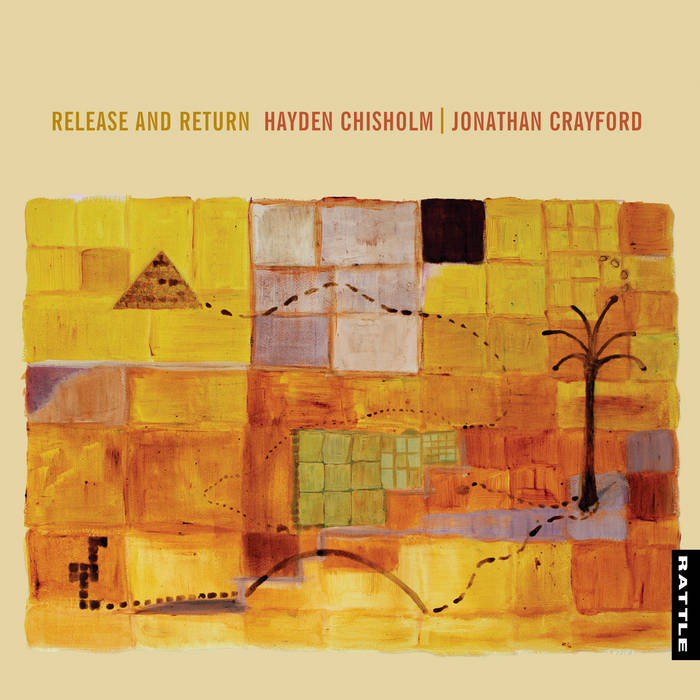
‘Release and Return’ is a duo album featuring Jonathan Crayford on piano and Hayden Chisholm on alto saxophone. It is another standout album, but in a different way from Unwind (reviewed above). It feels more exploratory and is not as consciously introspective. The album captures the joy of master musicians engaging without preconception. As a duo album, the sonorities can be explored more fully.
Both of these musicians are adept at working with harmonic resonances: Crayford, who prefers audiences to refrain from clapping until the decaying echoes of a final chord are exhausted, and Chisholm with his skillful use of microtonality.
Mature improvisers like these can draw on everything that they have experienced; it is what forms musical character. Both have travelled widely and listen with open minds to what other cultures or genres offer, be it classical, Carnatic, Spanish or Japanese traditions.
Crayford’s lovely ‘JC Ballad’ hints at Bach, and in Chisholm’s playing, the influence of Eastern musical traditions is evident, especially when he plays against a drone. In ‘Eldest Daughter’, the wistful opening tune (Crayford), the melody plays softly above, while Crayford’s right hand sounds at times like a feather stroking the strings of a Koto, his left hand, meanwhile, finds the pulse and swing.
Release and Return stirs deep emotional responses in the listener with its visceral lines, sometimes tender, sometimes raw, as the human condition is examined. This album speaks of freedom and the uncontrived nature of the music that makes it so.
The album can be purchased from Rattle Records or accessed in digital or CD format via Bandcamp. https://rattle.co.nz/catalogue/releases/release-and-return
 JazzLocal32.com