Those lucky enough to attend any of Jake Baxendale’s ‘Waypeople’ concerts last year will have anxiously awaited the release of this album and his release tour. It is music brimming with exotic textures and tasteful arrangements, but it is more besides. When I attended the concert, I sensed that I was hearing something important. It made a statement about the maturity and evolution of Aotearoa’s improvised music scene and also conveyed a message that the world needs to hear right now. This spoke to our times and cut deep.
Before the advent of written language, and for a good while after, important stories were poetised and sung. This enabled generations to memorise and pass on vital cultural knowledge. In fact, poems were sung and accompanied by musicians long after the arrival of the written word, and the practice of silent reading didn’t occur in the West until well into the Middle Ages (sometime between 900-1200 BCE), and in China, during the Song Dynasty (around 1100 CE).
To the ancients, reading was a communal activity, and so it was with the Tao Te Ching. It spread through oral transmission much like Homer’s epics. Therefore, while various texts are available today, hearing it with musical accompaniment feels right. To the Taoists, music deepened the connection with the natural world and awakened ancient memories. As the Tang Poet Li Bai wrote:
‘The monk from Shu with his green silk lute . . .
Has brought me by one touch of the strings,
The breath of pines in a thousand valleys’
‘Waypeople’ is an album that joins a journey begun over 2,500 years ago, and in doing so, it incorporates the cultural expressions and voices found on that journey. Here, the ancient wisdom of the Tao Te Ching is clothed in a contemporary jazz idiom, utilising the oldest of instruments, the human voice and accompanied by saxophones, clarinets, piano, vibraphone, trumpet, drums, flute, oboe and guzheng. The use of the guzheng is particularly relevant here, as it dates back to the time of Tao Te Ching itself.
Throughout the album, selected passages of the Tao Te Ching are sung or intoned. Some verses are urgent and imploring, others reflective–opposites are brought into balance. It is therefore entirely appropriate that the translation is that of beloved contemporary author, Ursula Le Guin. What these musicians have captured is the ebb, flow and essence of these important verses. A balance has been found between the old and new, and the ‘old master’ Lao Tzu would surely smile on this endeavour.
Our world today is like it was in the Warring States (475-221 BCE)– it is out of balance. It is obvious that humanity has again taken many wrong turns, so now is the time to retrace our steps and heed this ancient wisdom. Choose peace over war, quiet and reflection over clamour. So, attend the gig if it comes to your town, buy the album on Bandcamp, listen deeply and reflect. There is no time to lose. https://jakebaxendale.bandcamp.com/album/waypeople – or check out the teaser on YouTube
The musicians are from Wellington and Auckland. Chelsea Prastiti (voice), Jia Ling, (guzheng), Jake Baxendale (compositions, alto, tenor & baritone saxophones, clarinet & bass clarinet), Callum Passells (sopranino & alto saxophones), Daniel Hayles (piano & vibraphone), Johnny Lawrence (double bass), Cory Champion (drums & effects), Louisa Williamson (flute tk 2), Ben Hunt (trumpet tk 5), Kaito Walley (trombone tks 2 & 5), J Y Lee (flute tk 10), Millie Mannins (oboe tk 10) – btw how nice to see Roger Manins daughter in this lineup.
“No competition, no blame” – Tao Te Ching
JazzLocal32.com was rated as one of the 50 best Jazz Blogs in the world by Feedspot. The author is a professional member of the Jazz Journalists Association, a Judge in the 7VJC International Jazz Competition, and a poet & writer. Some of these posts appear on other sites with the author’s permission.
Nearly 30 years have passed since ECM released Nils Petter Molvær’s popular ‘Khmer’ album. It was a departure from the ECM fare of the day, and not without risk, but it found a receptive audience and sold like hot cakes. NPM (Molvær) laid down a new direction for Jazz, and the 1990s saw a subsequent rise of ambient-leaning improvised music (a genre variously labelled as Jazz acoustic/electronica, future jazz, Nu jazz, etc). It has exerted an increasingly pervasive influence on other Jazz forms over time.
Since the release of ‘Khmer’, NPM has released dozens of albums, and his status on the European jazz scene is unimpeachable. Many of his albums, such as the original ‘Khmer’, were studio-recorded, but, superb as those albums are, this music thrives on live performance. It is mostly danceable, and the club lighting and pulsating audience create a feedback loop, intensifying the atmosphere. In ‘Khmer Live in Bergen’, you can sense that added energy.
There is an unmistakable filmic quality to this mood-dominant music, conjuring up imaginary worlds that linger on the outer edge of reality. The listener is invited on a journey, and a narrative unfolds, but it remains elusive. Unless you immerse yourself. The song titles hint at a narrative, but the ebb and flow of the music fleshes it out. Ambient-leaning music always exalts mood over the strictures of form.
Song of Sand
Despite the title, this is not an exact recreation of the original ‘Khmer’ album. There is no ‘Khmer’ track, for instance, but there are four tracks from the original. As much as a fresh take on the title track might have appealed, the inclusion of ‘Song of Sand’ more than makes up for it. If ever a track evokes powerful dreamscapes, it is this. A distant pulse is heard, soft at first, followed by muffled voices – then the trumpet as the music becomes more immediate, the sound of a caravan navigating its way through dunes, perhaps – each step evenly paced, as it advances over the vast sand-blown landscape. Five of the tracks have appeared on other albums. Of those, I particularly liked ‘Vilderness’, with its Jon Hassell-like resonance, punchy basslines and soaring multiphonic interludes.
This is an ensemble in the truest sense, and in many ways, a traditional offering in fresh raiment. Everything you hear, including the samples, is created in real time. This is a collective improvisation that moves freely inside a flexible form. Sculpting sound in this way requires many deft hands. Four of the musicians played on the original ‘Khmer’ album: Molvær, Jan Bang, Eivind Aarset and Rune Arnesen. The full ensemble: Nils Petter Molvær (trumpet), Eivind Aarset (guitar & electronics), Jan Bang (live sampling), Pål “Strangefruit” Nyhus (DJ, MPC, programming), Audun Erlien (bass), Per Lindvall (drums), Rune Arnesen (drums, percussion).
It is on Edition Records and will be released on August 5, 2025. You can pre-order from Bandcamp now.
JazzLocal32.com was rated as one of the 50 best Jazz Blogs in the world by Feedspot. The author is a professional member of the Jazz Journalists Association, a Judge in the 7VJC International Jazz Competition, and a poet & writer. Some of these posts appear on other sites with the author’s permission.
Darren Pickering’s third Small Worlds album, ‘Three’, is a welcome addition to the earlier volumes. While it follows the successful formula developed in volumes one and two, it sounds fresh and endlessly explorative. Throughout the album, snaking lines float, dreamlike, over repeating patterns and carefully layered grooves. Out of this comes the quartet’s cinematic sound. Jazz and cinema are twin arts as they evolved together, often feeding from the same well of resonance. Because of that focus on imagery, you can get inside the sound and experience it on many sensory levels. Listening to this is like watching a great movie – in a theatre – on a rainy day.
This is a superb quartet; unsurprisingly, after two previous albums, they are hyperaware of interplay. This is particularly important in an album like this, as the soundscape is so open. The liner notes indicate they have equal input into the artistic direction, which makes sense; the democratised approach is evident. This is jazz for our times, probing but gentle and unashamedly open to influences.
As with the first two albums, the tune times vary in length, enhancing the listening experience. Nothing is extended beyond its natural endpoint. Like the written word, contrasts like this punctuate the ebb and flow. There are small, meaningful solos, but they are skillfully interwoven into through-composed pieces.
Immediately noticeable is Pickering’s touch, and the underlying digital or analogue wizardry never overwhelms. While often understated, his pianism shines throughout. Pickering is a thoughtful composer and writes to his strengths.
Guitarist Heather Webb is pitch-perfect throughout, her sound is so distinctive, with lines that fold effortlessly into the mix. Her avoidance of anything showy or unnecessarily loud marks her as a mature player. I wish more guitarists understood this. The same can be said for the drummer Jono Blackie and bass player Pete Fleming. Both blend into the mix, thus enhancing the music, making the whole greater than the sum of its parts.
The rainy day groove is particularly evident in ‘Soft Life’. With Webb running her silken lines over Pickering’s synthesised arpeggiation, and the measured, but perfectly placed, beats like slow-dancing footsteps. And the faster-paced ‘Tauhou Waltz’ has a similar vibe. The album maintains this flow, touching on various moods, but always speaking in a calm voice. The album can be accessed from Rattle Records or Bandcamp. https://darrenpickeringsmallworlds.bandcamp.com/album/three
Under Ocean (Chris Cody/Charlie Tait)
I have long been an enthusiast for Chris Cody’s work, and his two latest releases, each different from what went before, enhance an already impressive discography. Cody has a gift for examining cultural intersections. He gathers events and places, past and present and puts them under a musical microscope, always leaving us with a sense of what it means to be human.
‘Under Ocean’ is a fresh approach with electronic enhancements and a duo format. The album traverses mental and physical landscapes in unexpected ways and, in doing so, expands not only Cody’s repertoire but the boundaries of improvised ambient-style music. The album is co-led by Charlie Tait, a multi-instrumentalist, sound designer and engineer. Tait is no stranger to sonic creations like this, and the resultant cross-fertilisation of jazz, classical, and ambient electronic music is fascinating.
There is an increasing imperative for improvising musicians to create music like this as a reaction to the realities of our overly commercialised modern life, to examine our interior landscapes or the natural world. It also reacts to the ugliness that intrudes on the quieter spaces. They combine new and old musical technologies to good effect, as evidenced in the atmospheric opening track, ‘Salt’, which contrasts with ‘Rumble’s’ free playing and the melancholic ‘Lost World’, bringing different moods together as a satisfying whole.
Mountain to Sea (Chris Cody)
Landscape itself is a featured guest artist on most of Cody’s albums, as his writing always conveys a strong sense of place. I am not referring to specific geographic locations, although they sometimes feature, but to something deeper – cerebral. Cody has a gift for inviting introspection, and as we listen, we examine our relationship to the landscapes and regions he evokes. It is the first thing you become aware of when listening to his albums; ‘Mountain to Sea’ is no exception.
His compositions and arrangements impress here, but his thoughtful playing is also notable. His lines and voicings convey an instinctive lyricism, an organic sound that has always defined him. The tunes contain nostalgic echoes, but speak of hope too, a heart-on-the-sleeve musical humanism. And, as in previous albums, he conveys more with less. There is ample room for his bandmates to shine, and they do. The care and loving attention each one brings to the project is evident. It is no wonder the unit sounds so good when you consider the musicians, a mix of veterans and younger players, but all exemplary: bass player Lloyd Swanton (a member of The Necks who appeared in Auckland recently) and who appeared on an earlier album ‘The Outsider’ (reviewed recently on this blog), and Sandy Evans, an acclaimed saxophonist on the Australian jazz scene, and lastly Tess Overmyer, a gifted young Australian alto saxophonist, presently based in New York.
‘Mountains’, a ballad, opens with Ellingtonian chords that speak of grandeur, followed by two beautiful solos, lifted to further heights by bass lines that never intrude, but soar like a raptor. Similarly, ‘Quiet’ reminds me of Evan Parker’s opening on Kenny Wheeler’s ‘Sea Lady’ (Music for Large and Small Ensembles). Ripples, bird calls, lead into an elegiac anthem for the natural world, a place not separate from humankind, with alto, tenor and soprano perfectly balanced, drawing from the same musical well. This is also evident in ‘Dream’.
As with previous albums, Cody’s daughter Maya has created marvellous cover art.
JazzLocal32.com was rated as one of the 50 best Jazz Blogs in the world by Feedspot. The author is a professional member of the Jazz Journalists Association, a Judge in the 7VJC International Jazz Competition, and a poet & writer. Some of these posts appear on other sites with the author’s permission.
The artists profiled here have some things in common. Both have Swiss heritage, work in countries other than the ones they were born in and take a fearless approach to improvising. They are separated in years and in experience but not in their approach. Both seek to extend the language of improvised music and have something interesting to say.
Alex Ventling ~ The View
This is a beautiful duo album; it will stay with you if you listen with open ears. It is fresh and original but snatches of the tradition are still evident, nestling in the compositions. From the opening track, ‘Spiders Steps’, Monkish elements creep in, as jagged spidery lines evolve into a gentle swing. The tune is perfectly rounded. It says a lot and yet does so concisely and simply. It is the perfect beginning for a superb album. Ventling’s pianism is evident throughout, but strikingly so in his resonant ‘In the Mists’. Good pianists know what to play and when, but gifted pianists understand how to sculpt sound and curate even the decaying chords. There are synths but they are used in ways that never once spoil the acoustic mood. That is so on ‘First Train to Finse’ which features guest artist Kim Paterson on trumpet. How lovely to hear him again in this ‘Silent Way’-like setting.
It is an album of surprises as the moods shift constantly. Importantly, they do so without once breaking the flow. Out of it all shines a radiant simplicity, a ‘mysterioso’ simplicity. One blended with oblique Monkish references and a northern European sensibility, a very Nordic soundscape, evoking open spaces, where the music breathes.
With Ventling is a gifted drummer, Phelan Burgoyne. He is the perfect foil for the pianist as he is a master of subtlety. He possesses an acute sonic awareness and understands how to work in the spaces between the notes. He is especially attuned to the harmonic possibilities as he adds his textural touches. This is a masterclass in colourist drumming and I cannot imagine any drummer doing better. He is co-credited as a composer, a collaboration which goes back years. Their synergy is evidenced in every minute of this recording.
This is a very mature album for a musician embarking on his musical journey. The album was released by the Trondheim label Sonic Transmission Records and is available on vinyl and digitally via Bandcamp (or the streamers).
Nik Bärtsch Ronin ~ Spin
Nik Bärtsch’s Ronin has been around since 2002, established following his earlier Ritual Groove Music album (2001). Since then Ronin has released 9 albums with cultural and musical influences scattered throughout; the most obvious being Steve Reich, John Cage and Morton Feldman. He was a drummer before he was a pianist and intricate rhythmic patterns and cycles are evident in everything he does. The other important influence is his abiding interest in Zen Buddhism and taken as a whole, those influences have coalesced, resulting in a unique musical path. His style has been dubbed Zen Funk, but it is improvised music of the highest order and the band has been delighting Jazz critics and Jazz-festival-goers for many years. His seven ECM albums brought him wide critical acclaim.
‘Spin’ works the rich seams opened in earlier albums. This band adheres to its minimalist principles while introducing freshness and open exploration. I have always been drawn to mesmeric or trance music, and this music is, but the tunes also invite quiet reflection. There is freedom within constraints, and that appeals to the heart and intellect.
The first track, ‘Modul 66’, was composed to showcase bass player Jeremias Keller, who recently joined the band. This highlights a subtle shift in emphasis, without changing the ever-present groove. The deep grooves are especially evident in ‘Modul 70-51’ which is mesmerising. A pulse that pulls you deeper into the music without once dulling the senses. This is achieved by surprising chordal and modulation shifts which function like Zen surprises. This is apparent in ‘Modul 40’ which is endlessly inventive.
The way this band works together is extraordinary, moving the emphasis mysteriously as they dance around each other like voodoo priests. It was recorded live at the Big Ears Festival, so ‘Spin’ should be enjoyed in one listening; each ‘module’ informs the next. I recommend that you listen with headphones or in a quiet room. It would be a shame to miss the subtlety. Nik Bärtsch (piano, Keyboard), Sha (bass clarinet, alto saxophone), Jeremias Keller (bass), Kasper Rast (drums). ‘Spin’ is self-released and available on Bandcamp or the streamers.
Other Recommendations to Check Out.
Rob Luft and Kit Downes are artists I have profiled before. Both appear on an interesting album by vocalist Paula Rae Gibson. The album, ‘The Roles We Play To Disappear’ has been referred to as ambient, electronica, and Avante-jazz. It seamlessly embraces many genres and is evidence of how improvised music is growing in multiple directions. Albums like this bring fresh audiences and that is a healthy thing. It is refreshing in these days of awful commercial music to see artists forging uncompromising artistic paths. It is available as a CD or download from Bandcamp.
Rob Luft and Elena Duni recently met with Manfred Eicher to discuss a new ECM release. This is welcome news as the first two releases were stunning. I interviewed Luft during lockdown and have reviewed his albums often. If you haven’t done so already check them out. My review of ‘Lost Ships’ is on this site at http://www.jazzlocal32.com/?s=Luft
Alex Ventling and Kim Paterson recorded on Ventling’s recent tour through New Zealand. ‘Conversations’ is a lovely standards album and is available on Spotify.
One of my favourite Jazz musicians Chris Cody (Sydney/France) has just released two interesting albums. The first is ‘Mountain To Sea’ with Sandy Evans, Tessie Overmyer and Lloyd Swanton. The second and most recent is ‘Under Ocean’, co-credited to Charlie Tait, an ambient improvised album conjuring powerful images. An interesting development from an artist who never fails to please. More on this soon.
JazzLocal32.com was rated as one of the 50 best Jazz Blogs in the world by Feedspot. The author is a professional member of the Jazz Journalists Association, a Judge in the 7VJC International Jazz Competition, and a poet & writer. Some of these posts appear on other sites with the author’s permission.
The Bird of a Thousand Voices is an astonishing project, and as I listened and wrote, I weighed up the various superlatives. No other term sufficed. And, to describe it as a concept or a themed album would woefully undervalue it too. The depth and breadth of Tigran Hamasyan’s project is breathtaking and evaluating it requires fulsome engagement. I am not implying that it is unapproachable as there are delightful melodies as light as air, and exotic rhythms to engage, but underlying every note are other worlds, endlessly unfolding–worlds that beg exploration.
It is a transmedia project with the parts slotting together like pieces of a deliciously exotic puzzle. There is a film, an ancient manuscript, imaginative artworks, an interactive game, a stage show, and a timeless story, all wrapped in and around the extraordinary music of Tigran. It is utterly unique. His sound, touch, and visionary approach as he creates improvised music is singular, and few could pull this off so convincingly.
The project was inspired by an ancient Armenian folktale (Hazaran Blbul), involving an anthropomorphic bird. The fable tells of an era of great unrest, so the bird embarks on a spiritual quest, seeking world harmony. Still, as with all great quests, physical, spiritual and psychological difficulties are encountered along the way. Tigran states in his summary, that it struck him as a metaphor for the problems confronting today’s world; conflict, inequality and ecological disasters.
While the project references an ancient Armenian folktale, the bird theme is universal. Birds are sacred to most Middle Eastern, Mediterranean and Northern European cultures. They are frequently seen as messengers from the gods who can predict the future. Some believe they represent the soul or beauty and offer hope of peace. And, it is not just in myths. They warn us today of biodiversity loss, begging us to do better.
Among the promotional material is a video referencing a medieval illuminated manuscript from Armenia. Inside the manuscript, birds dance out of the vellum pages as Tigran’s Steinway is filmed being airlifted to a mountaintop, and the music dances too. Tigran’s distinctive pianism is immediately recognisable, but a deeper otherworldly quality appears during this recording. His delicate filigree motifs repeat and evolve, choirs or a single voice, echo key phrases and staccato percussive interludes rise, then fade; however, what stays with you is not technique but something more elemental. The project is a prime example of improvised music reaching beyond the familiar as improvised music should.
illustration excerpted from Armenian archives image
The album engages on many levels and should be enjoyed as the creators intended; by listening, watching, gaming, and contemplating. In collaboration with Tigran, Dutch filmmaker Ruben Van Leer has created cinematographic wonders integral to the music, as has illustrator Khoren Matevosyan. As you enter the website to participate in the game or to enjoy the illustrations and installations, you will find dozens of gifted collaborators credited. While there are too many to mention, the principal musicians are Tigran Hamasyan (piano, keyboards, drum programming, compositions, concept), Areni Agbabian (vocals), Sofia Jernberg (vocals), Vahram Sargsyan (vocals), Nate Wood (drums and bass).
The vinyl album can be purchased via tigranhamasyan.com His music is also available on the usual streaming platforms.
JazzLocal32.com was rated as one of the 50 best Jazz Blogs in the world by Feedspot. The author is a professional member of the Jazz Journalists Association, a Judge in the 7VJC International Jazz Competition, and a poet & writer. Some of these posts appear on other sites with the author’s permission.
I was idling my way through the morning when a message from a friend in the UK lit up my phone. ’I’m sitting in a Jazz club in Dublin, and I have a Kiwi couple with me whose daughter is an Auckland-based jazz musician. She plays in a band with guitarist Keith Price, do you know her?’ I know Price well and have attended many of his gigs but the name Francesca Parussini didn’t ring a bell. I had missed Price’s last gig so I checked through my invitations and saw that she was a saxophonist and a member of Price’s new band LacLu. The other band member was Maximilian Crook, a versatile, tasteful up-and-coming drummer. I messaged Price for more information and learned that LacLu had recently recorded, resulting in an EP album, due for release later in the year.
Fast forward to last week, when a review download arrived. I listened and was delighted by what I heard. The LacLu album taps into an expansive realm akin to Spiritual/Astral Jazz, whose definition has expanded over the years to encompass improvised music reverencing the natural world. As human-induced chaos and degradation of the environment assails us, music that invites us to reflect on nature is increasingly appealing. The influences cited in the liner notes are Frissell, Lovano and Motian. While influences are evident — touches of Americana, colourist drumming and content-rich minimalism — the album is forward-looking and more than a tribute.
The opener, ‘Winter Fog Morning’, is in two parts. Beginning with haunting pedalled phrases on the guitar, gentle drum and cymbal taps, and whispery phrases from the horn, each underscoring the other as they paint a landscape with deft sonic strokes. You hear what could be bird calls rising out of the fog. The scene has been set and part two expands the vista. What follows at a lilting gait is a melodically and texturally rich tapestry that is both raw and caressing. I live where Price lives, among the Waitākere hills, ragged coastlines and foggy wooded valleys, and the band has captured the beauty of that landscape.
The third track, ‘Stella by Starlight’, pays tribute to a loved standard but pared back, reduced to its essence and done in a way that only skilled improvisers could pull off. Scant phrases of the loved melody appear, change and evaporate. Here especially, Price shows us what he is made of, his playing is evocative and tasteful. This is a gem and it is hard to believe that the drummer and saxophonist are not seasoned performers like Price. They are recent jazz school graduates, but despite the disparity in years and experience, the band performs as equals. The last track, ’Friends and Whanau’ rounds the album off nicely, reminding the listener of our human connections, and the interconnectedness of all life. Here the warm shadings of Americana are most evident.
Throughout there is spaciousness, seamless interaction and open improvisation around composed motifs. The name Laclu references a lake in Ontario and a general locality. The area is described as having ‘indistinct boundaries’. Price grew up near there but never visited the lake and perhaps that is the perfect metaphor for the album. What appears to be place-specific is more than that. It is any place where nature rules, places we can call home if we work with nature, not against it.
Keith Price (guitar), Francesca Parussini (tenor saxophone), Maximilian Crook (drums) – Ainsley Duyvestyn-Smith cover photography, recorded at the Kenneth Myers Centre Tāmaki Makaurau. The album is available on Bandcamp and streaming platforms – click through here at laclu3.bandcamp.com/album/laclu-self-titled
JazzLocal32.com was rated as one of the 50 best Jazz Blogs in the world by Feedspot. The author is a professional member of the Jazz Journalists Association, a Judge in the 7VJC International Jazz Competition, and a poet & writer. Some of these posts appear on other sites with the author’s permission.
Earlier this month ‘Blue Note in My Suitcase’ was released by B3 Master Michel Bénébig. It is his sixth album and his first with a Jazz orchestra. The album hits the groove spot immediately, and as you listen you realise what a perfect pairing Bénébig’s B3 and the Le Grande B3 Orchestra is, aided convincingly by Lachlan Davidson’s lovely arrangements. The charts are well constructed, giving free rein to the soloists and never overwhelming the organ. Davidson is a respected Australian arranger, teacher, band leader and multi-instrumentalist and his influence is strongly felt here.
It is always a pleasure to hear Bénébig’s in-the-pocket playing but with an orchestra like this charging the atmosphere, he digs deeper than ever into the groove. The ten tunes on the album are excellent groove vehicles, all written by Bénébig, with Davidson credited as co-composer on ‘Try To Explain’. I have always appreciated Bénébig’s writing but he has excelled himself here.
The opener ‘Alenka’s Mood’ is warm and funky, immediately infecting you with its slinky rhythm. It offers up a promise which is fulfilled throughout. As you work through the tunes you are drawn back to the days when infectious danceable music like this was loaded onto jukeboxes and played in steamy groove joints pulsating with dancers. The music brings a smile to your face and fills you with joy and, like his earlier ‘Shuffle’ album, you will reach for it repeatedly. Joining him is Bénébig’s daughter Lucia who is responsible for designing the album cover and creating animation for a promotional YouTube clip. I have posted the YouTube cut ‘Black Cat’ from the album.
A time-honoured B3 big band tradition is followed here, featuring 13 horns which lends considerable heft to the rhythm section. It would be easy to drown out soloists and to eclipse the organ with a behemoth like this but the soloists get plenty of room to shine, and shine they do. The album is available now on Spotify and a vinyl edition is on the way for audiophiles.
Mick Fraser (trumpet 1), Shane Gillard (trumpet 2), Gianni Mariucci (trumpet 3), Rob Planck (trumpet 4), Roger Schmidl (trombone 1), Ben Gillespie (trombone 2), Jessica Jacobs (trombone 3), Adrian Sherriff (bass trombone), Lachlan Davidson (alto sax 1/flute 1/sop sax), Rob Simone (alto sax 2/flute 2), Anton Delecca (tenor Sax 1/clarinet 2), Paul Cornelius (tenor sax 2/clarinet 1), Stuart Byrne (baritone sax/bass clarinet), Jack Pantazis (guitar), Gideon Marcus (drums), Michel Bénébig (A105 Hammond organ Leslie 147), Phil Noy (recording engineer), Lachlan Carrick (mastering Engineer), Lucia Bénébig (front cover art)
~Random Delights~
Sambandha: Heartcore For Nepal
Recently, I received a press release from colleague Arlette Hovinga. The project outlined was the vision of Mikaela Bokova, the manager of Kurt Rosenwinkel’s independent music label, Heartcore Records. The object was to raise money for disadvantaged children in Nepal, and on board for this recording are an impressive list of jazz and world music luminaries: John McLaughlin, Christian McBride, Terri Lyne Carrington, Gerald Clayton, Kit Downes, Anmol Mahara and Dinesh Pun. Sambandha was written by combining two traditional Nepalese folk tunes, and it’s performed by the 20-piece children’s choir Bokova organised while running a music workshop at Mangala School, Babiyachaur, Nepal.
The revenue from the release will go towards buying the children’s musical instruments. In your browser or here, click on heartcore-records.com then once opened, locate Sabandha and purchase your download (5 Euros). It can also be purchased in Bandcamp. Please pass on the word and enjoy. I play this often. You will also find a delightful video on YouTube on the making of this by typing Heartcore for Nepal Sambandha. There is a deficit of joy in today’s world, but giving to those in the greatest need is a sure way to top up the supply.
Skilaa: Tiger In The Water
The cut I am posting is tagged ‘psychedelic R&B’ and the descriptor is intriguing. Everyone featured in this band is an accomplished jazz musician and it shows. Boundaries have been deliberately blurred until a new, fresh kind of music emerges, which catches your attention because it is familiar but not familiar. The concept, compositions and delightful artwork are those of vocalist Chelsea Prastiti. Her boundless energy is evident here. In Aotearoa, it is not unusual for Jazz-trained musicians to make inroads into Indie-Rock, Soul-Funk and Indie-Pop and do it well, even better (think The Beths). Skilaa will be a band to watch. The band are Chelsea Prastiti (vocals, compositions, artwork), Tom Denison (bass), Adam Tobeck (drums), and Michael Howell (guitar) with guest vocalist Crystal Choi (recorded by Callum Passels).
The ‘Astounding Eyes of Rita’ – Trio Natalino Marchetti, Francesco Savoretti, Mauro Sigura
I have previously posted on Mauro Sigura, an oud improviser. He recently sent me this clip of his trio featuring oud, with accordion and percussion. The tune is a well-known composition by Anouar Brahem, ‘The Astounding Eyes of Rita’. Improvised music like this is prevalent across the Mediterranean region and deserves a wider audience. This is such a lovely tune and so beautifully realised here. Mauro Sigura (oud), Francesca Savoretti (percussioni), Natalino Marchetti (fisarmonica). Recorded in Rome.
There is something about the oud that awakens the deepest of emotions. Like the sound of an ancient temple gong, it resonates soulfully. It is primarily a modal instrument, using ‘Maqams scales’, a system as complex and varied as the modes used by Coltrane. So, when the chance arose to interview a Jazz oud player, I jumped at it.
Mauro Sigura was born in Turin, where he began his Jazz career playing the bouzouki and guitar. Later, he moved to the island of Sardinia where he found a uniquely ancestral form of music, one for which he developed a deep musical connection. Since then, he has performed throughout the world and participated in numerous festivals. His ensembles reach beyond the confines of genre. They have originality, depth, rhythm and groove. Younger listeners especially, are hungry for such music.
I heard Sigura’s current Quartet while judging the Italian-based 7VirtualJazzClub competition. His entry enthused the judging panel and he deservedly picked up first prize in the Pros & Amateurs section. Shortly after, we exchanged contact details and set up the interview.
~ ~ ~
Mauro, congratulations again on your, 7VirtualJazzClub Competition win. Your music has a rare beauty which pulls on the heartstrings. It is as if you have unearthed a forgotten memory from the distant past. This effect may be evident because the oud is the forbear of many stringed instruments like the guitar, mandolin, bouzouki, lute etc. It is like an echo flowing through time, bringing past and present together.
Q. Could you tell me what the oud means to you, and why you chose it?
A. First of all, thank you for your kind words! As you said, the oud is an instrument that somehow crosses time, has an ancestral link with the cultures of the past, [it] tells of trade exchanges, travels, and meetings between cultures. I came to oud through bouzouki and Greek music, where it is easy to listen to an oud. Then, I started studying Ottoman classical music.
Q Your last album, Terravetro, paired the oud with a minimalist piano. On your recent album, Dunia, there was a Fender electric guitar and an electric bass. Did you have that relationship between ancient and modern in mind?
A. Yes, all my music always tries to connect distant places not only in space but also in time. everything must tie together, but the challenge is to try to do it in the most natural way possible.
Carthago (from Terravetro)
Q. Your recent quartet is great. It could be viewed as either mainstream jazz or as World Jazz. The contrasts and textures are interesting. Especially so with ‘La Danza di Amarech’. Notable are the tight bass lines and edgy drum rhythms, the oud’s earthiness against the electric guitar’s brighter sounds, and that hint of funk over Middle Eastern rhythms and melodies. Could you tease that out and provide an insight into your compositional approach?
A. It depends on the compositions. For example, in ‘La Danza di Amarech’ I started from the bass line and its connection with the drums, the theme came last. I often start from the bass line to then create the theme, then, once a basic theme has been defined, I intervene by inserting more jazz-like modulations. However, it is not a fixed rule, in fact sometimes I have an oud groove or a theme in my mind and that becomes the starting point, or it can start from a traditional rhythm of Ottoman music. For example, ‘Dunia’ is built on a traditional Ottoman rhythm in 10/8, [called] the ‘semai’.
Q. Tell me about your current quartet drummer. She is amazing.
A. Evita is amazing! She has ability,and creativity, she is an excellent composer, so she was able to give us useful advice in [the] studio. In Italy, she plays with the best musicians, such as Enrico Rava, but she often also plays with DeeDee Bridgewater. I saw her play in Sardinia in 2021 and I said: “this girl must play on my record at all costs!” and I succeeded. This year she released her first solo album as a singer-drummer, for Paolo Fresu’s record label. She has a great career ahead.
Q. Do you have any ongoing projects with this particular quartet?
A. It is a quartet that I created for Italy and Western Europe. In fact, with the acoustic quartet, I often play in Eastern Europe and I needed something more attractive to Central-Western Europe. So I’m working to try to propose it to these geographical areas. The album was released on October 8th, so we are still in a phase where Dunia is looking for the best direction.
Q. You record on ’S’Ard’, a Sardinian label but I see you were born in Turin.
Are your forebears from Sardinia?
A. My father was born in Sardinia, but my mother was born near Turin. In 2005 I moved to Sardinia, retracing the path taken by my grandparents in the 1950s, when they left Sardinia to go work in Turin.
Q. Sardinia has produced jazz greats like Paulo Fresu. It evokes an ancient past and a Phoenician connection. The bagpipes may have originated there, but is there an oud tradition?
A. No, there is a tradition of the guitar, but not of the oud, although some elements of the traditional Sardinian guitar certainly have a North African origin.
Q. You have a distinctive sound and approach. Different from Dhafer Youssef or Anouar Brahem. Part of that is due to the pairing of the instruments, but there appear to be regional influences too. Would you like to comment?
A. Yes, certainly, Sardinia, with its ancestral atmospheres, has a strong influence on my compositions. The spaces, the light, the nature are much stronger here than in other parts of Italy and the musical tradition is also very strong, alive and wild and this more or less unconsciously influences me every time. My next challenge will be to look for the influences that Phoenician, Carthaginian and Arab music have left in the Sardinian musical tradition, in particular in the vocal tradition. I would like to start from there, building a Sardinian project that justifies the presence of oud.
Q. Who are your musical influences?
A. Obviously, the ones already mentioned by you Dhafer Youssef or Anouar Brahem influenced me a lot, but also Jan Garbarek and Eivind Aarset. I am used to listening to all good music, from rock, to jazz, to pop to metal and I let myself be influenced by everything without prejudice. I have listened to a lot of Pat Metheny, Miles Davis, Kenny Garrett, but also traditional Greek music (rebetiko), Ottoman classical music, Arabic and Kurdish music, but in general I like all the traditional music. I am very interested in music played with a few simple instruments, especially the music of nomadic people. My music comes out of all this.
Q. I see you studied philosophy. Did any particular philosopher inform your approach to music?
A. No. Perhaps philosophy has influenced my approach to the concepts of my albums. I try to create the album around a concept, but beyond this, no. No philosopher has influenced me by directing me to music.
Q. You performed throughout Europe, but what grabbed my attention was that you performed in Petra, ‘the city that time forgot’. Tell me about that experience.
A. It was an amazing experience! We were invited by the Amman Jazz Festival and the Dante Alighieri Society in Jordan. When they [approached] us about the option for a concert in Petra, I couldn’t believe it. We played for the Bedouin community that lives inside the site. It was a concert for a few close friends, in a unique atmosphere suspended in time. While I was playing I found myself in a sort of emotional trance and I lost the sense of the duration of the concert. It was a strange sensation, but it was as if those rocks were carrying the music forward independently of us [as the players].
Q. Do you see yourself as being in or extending the Sufi oud tradition?
A. I’m very flattered by your question, but I don’t know the Sufi tradition well enough and I always want to have a respectful approach towards those elements of traditional cultures that I don’t know in depth. So, to answer your question I would say no, even if a certain idea of mystical-transcendent trance is present in many of my compositions. If we can take people to another, different, new place, where everyone is on the same level, then we can start talking again.
Q. Who was the vocalist on Dunia and were there any guest artists?
A. Her name is Elena Ledda and she is the most famous Sardinian singer and, also, one of the most famous in the Italian world music panorama. She gave me a great gift of herself by putting her splendid and unmistakable voice in the song. Elena is the only guest in Dunia.
Q. I look forward to hearing more of your albums. Thank you for your time and for the detailed and illuminating answers.
A. It has been my pleasure!
You can order these recordings from Mauro Sigura’s website, from S’Ard records, or locate them on Deezer, Spotify or Apple Music.
JazzLocal32.com was rated as one of the 50 best Jazz Blogs in the world by Feedspot. The author is a professional member of the Jazz Journalists Association, a Judge in the 7VJC International Jazz Competition, and a poet & writer. Some of these posts appear on other sites with the author’s permission.
There are many ways to navigate troubled times. You can deny reality, scream into the void, surf the waves of absurdity, bitterly declaim, or seek quiet while you gather your thoughts. Many prefer the latter, although the other responses are also valid. The last few years have felt particularly untethered as a growing flock of anxieties encircle us. In this space, I reach for artisan teas from China and the type of music that invites reflection. All the albums I review here slow the world’s orbit to a sensible pace and invite reflection.
Inverted ~ Auckland Jazz Orchestra
We lost Phil Broadhurst back in 2020, but his legacy is enduring, and unsurprisingly, he is constantly in the thoughts of the musicians he worked with. Here, we have a loving tribute to the man and his music, appropriately performed by the AJO, a jazz orchestra peopled with musicians who knew him well. It is the AJO’s fourth album and arguably their finest to date. Tribute albums may be commonplace, but tribute albums like this, born out of fondly remembered connections with the subject artist, stand out from the rest.
Phil Broadhurst was quiet-spoken but a colossus on the local music scene. He was a musician with many musical talents, all informed by his passions. This was particularly evident in his post-millennium Rattle albums, with their Francophile influence. As a composer, he was particularly gifted, so it is fitting that the compositions on the album were all drawn from that period. Mike Booth, Tim Atkinson and Andrew Hall crafted the arrangements and what an extraordinary job they have done. The arrangements are ‘voiced’ beautifully and thanks to the skill of the musicians, perfectly realised. The album has significantly raised the bar for local jazz orchestras and it places Tāmaki Makaurau firmly on the jazz orchestra map.
Fortunately, Phil was able to guest on some of these tracks before he passed and it is moving to hear him. We know that he was delighted with what he heard. It is also moving that his beloved partner, Julie Mason, appears on piano on the remaining tracks. I won’t name all the personnel or soloists here because the list is long, but check out the album on Bandcamp.
I rate everything on the album, but my favourite tracks are ‘Pat’, with Phil teasing wistful magic out of his lovely tune, and Pukeko. Pat features Broadhurst, McNichol on tenor, and Booth on trumpet, the latter, rising to the occasion (Booth arranges both). Pukeko features Gianan on guitar and Booth on flugelhorn. The album is available at Rattle Jazz on Bandcamp.
Volume Two ~ Darren Pickering
Deep listeners will appreciate this album for its subtle interplay and warm embrace. It is a fine example of today’s forward-looking improvised music, drawing as it does on the sounds we can all too easily overlook as we drown in the endless iterations of soulless commercialism. Cinematic phrases, slow textural electronic grooves teasing out rich soundscapes, the kind you might hear fleetingly emanating from a softly lit apartment on a summer’s night, wanting to hear more.
It is an album that will reward repeated listening as the subtle minimalism if examined with open ears, will reveal an expansiveness. Pickering has previously demonstrated other musical sides, but I am glad he has chosen to further this one. The band were perfect for what he has created here, understanding that space serves sound.
There is balance and variety. The opener ‘Oneroa Bay’ sets the tone nicely for what follows. For those who crave something more traditional, there is ‘Blue Mind’, a blend of the crystalline ECM aesthetic and the warm embracing Impulse grooves. Or ‘Mazawati Tea’, an update on the swinging groove trio/quartets we love.
There is also a degree of abstraction, sometimes floating under a slow-wending evocative melody line as in ‘Reverse’ or pushing at the outer edges of form as in ‘La Perla (for Benjamin)’. The production is of the highest quality thanks to the deft curation of Pickering, Rapaki Studios and the Rattle crew.
Released by Rattle Records and available on Bandcamp; Darren Pickering, piano, Modular, iPad, composition; Mitch Dwyar, guitar; Pete Fleming, Bass; Mitch Thomas, drums.
Dahab Days ~ Rob Luft
Rob Luft and I often meet up when I pass through London, but it’s been a while. However, I managed to conduct a long-form interview with him late one winter’s night during the pandemic lockdowns. We were relaxed as we ranged over many topics, including the possibility of this album.
With gigs cancelled everywhere as the world slipped into an enforced state of hibernation, Luft found himself becalmed in Egypt. He remained there for a considerable time, but far from being dismayed, he embraced the situation and opened himself to the sights and sounds of North Africa. The musical and other influences he explored at that time have informed this album.
You hear the colours and sounds of Egypt, not by emulating an Oud or street caller, but by creating a musical world that throws up filmic images. It is especially so on ‘African Flower’, an interpretation of Ellington’s tune, which in Luft’s hands knits east and west, past and present together seamlessly. His ‘Endless Summer’ is where Luft’s compositional skills are most evident. The skilful integration of the human voice lines tells me that the influence of Kenny Wheeler lives on in the current generation of London jazz musicians. Most of the compositions are Luft’s.
The last track, an arrangement by Luft of a traditional tune, Lamma Bada Yatathanna, is as respectful as it is innovative. We hear and sense the Arab streets. Collaborating with Elina Duni has added depth to his compositional chops and this album benefits from that. Luft’s powerful presence on guitar is evident, but he has left his bandmates ample room to shine. The result is that the album is more than just a guitar album. It works on many levels. I wish more guitarists grasped this.
Since we spoke last, Luft has co-led a second ECM album with vocalist Elina Duni and returned to a full schedule of touring and gigging. He has always been an artist to watch. If you listen to Dahab Days, you will hear why.
Rob Luft, acoustic and electric guitars, kalimba; Joe Webb, piano and Hammond organ; Tom McCredy, bass guitar; Corrie Dick, drums, percussion; Alice Zawadzki, violin, vocals; Byron Wallen, trumpet;, Steve Buckley, alto saxophone, penny whistle.
Dahab Days is available on Rob Luft Bandcamp in digital or vinyl format.
‘Ondulation’ ~ Alan Brown
Alan Brown’s ‘Ondulation’ album epitomises the sentiment expressed in the post’s header: a quieter place in times of turmoil. It explores quieter regions differently, radiating all-encompassing warmth and conjuring a world of sensory imagery. It is not the first of Brown’s albums to explore ambient improvised electronically enhanced music, but this album opens a portal into something new. It expands on earlier work by adding new digital voices. The resulting textures are rich and nicely contrasted by gently probing piano lines.
Brown has been exploring this genre for quite a few years. The deeper he dives, the richer the rewards for the listener. The first track, ‘Decider’ is particularly appealing, especially when a young woman’s voice emerges like a beckoning siren. The voice is faint but compelling. The harder we strain to catch the words, the deeper we fall inside the music.
The rest of the album flows like an otherworldly, beguiling narrative, and the journey should be enjoyed for itself, not over-analyzed. These are worlds crafted for our senses to interact with. We may hear them differently according to mood or disposition. Jazz experimentalism is common in northern Europe. Here, we have a way to go to catch up. Albums like this help us on that journey, and in my view, what Brown has achieved here compares favourably with the works of Aaset, Molvaer and Bang.
Humans have been shaping sound since the beginning of time by bending notes, creating new textures, creating new chords and playing with harmonics. But while the circuit board and its predecessors extend the sonic possibilities, it is due to the creativity of musicians like Brown that something uniquely human results. You can purchase and check out the album at Seventh House Rattle Records.
Alan Brown, Piano, Ondomo, electronics
LacLu ~ Winter/Fog/Morning
Screenshot
This last piece, Winter/Fog/Morning, is a teaser for a Rattle album due to appear later this year. Like the other albums reviewed, it fits nicely into the theme of a quieter place in times of turmoil. It is atmospheric, so I immediately wondered if that was Te Henga Valley morning, where the guitarist lives. Price, like me, lives in the Waitakere Ranges foothills. The seasons and rainforest mists make a spectacular showing there.
It is good to see younger emerging players alongside experienced ones. Price’s guitar work is gorgeous and never overstated, his gentler side is evident here. I have been to several gigs where Max Crook played and he is establishing himself as a reliable band member, open to new ideas. This is my first time hearing Francesca Perussini but I will watch out for the album with interest.
Keith Price is a Canadian guitarist living in Aotearoa. He is the Convener of Jazz Specialization, School of Music, Faculty University of Auckland. Francesca Parussini, on tenor saxophone and Max Crook, drums, have been involved in the Jazz programme at UoA. Cover art by Ainsley Duyvestyn-Smith.
JazzLocal32.com was rated as one of the 50 best Jazz Blogs in the world by Feedspot. The author is a professional member of the Jazz Journalists Association, a Judge in the 7VJC International Jazz Competition, and a poet & writer. Some of these posts appear on other sites with the author’s permission.
William Butler Yeats said, ‘The world is full of magic things, waiting patiently for our senses to grow sharper’. I believe this absolutely and am reminded of it when my senses connect with a certain kind of music. Music that transcends mere form and engages with the cosmos. That is the domain of improvised music, a calling requiring a musician to discover magic during a tricky tightrope walk. Then, to cast a spell over those open enough to receive it.
With the advent of applications like ChatGPT, a future unleashing self-generating algorithms is at hand. When that happens, the quantum of magic in the world will diminish and experiencing the magic of creativity goes to the core of what it means to be human.
When an improviser engages with an instrument, the weight of human history informs every choice. It is not number-crunching. The music can arise from ‘form’ or from a conscious decision to avoid elements of form. It can go wrong but still be ‘right’. It is a journey feeding off human interactions, drawing power from those on a bandstand, a live audience or a perceived audience. It is time travel backwards and forwards, but rooted in the eternal now.
Jazz musicians often talk about music as a form of magic, mention the intuitive responses between high-level players, talk about creating new worlds out of beauty or pain, out of nostalgia for a past they never had, and how what we term as ‘character’ is required for a musician to make music that speaks to us. The earliest written references to music refer to ceremonial occasions, funeral rituals, grand processions, weddings or attempts to appease the gods of nature.
Rhythm and pulse are powerful trance mediums, and we respond to unease by embracing trance. Does an algorithm delight in beauty, express pain, have character, feel uneasy or nostalgic?
Tomasz Stanko stated that improvising is about transcendence. He saw it as a form of magic and as religion. The improviser who chimes with our innermost being expresses something about what it means to be human; our propensity for storytelling, our empathy or disquiet, and revealing our innate curiosity.
It is no accident that many improvisers are stargazers or that album covers and tune titles have countless cosmic references. Improvising musicians reach beyond and embrace the improbable. And it is not just the musicians. The listeners participate—if we dare. Our receptivity triggers deep listening, and we react to what we hear by urging the musicians on. We share in the magic because listeners are part of the equation.
Like many, I have watched the advent of generative algorithms with fascination and dread. AI provides valuable tools that will benefit humanity, but there is an urgent need for boundaries and rules. It is for scientists, bioethicists, machine learning gurus and politicians to wade through this minefield. We hope before it is too late.
For creatives, there is a degree of clarity finally emerging, and it was heartening to see the script writers strike, drawing a firm line in the sand. They sought assurance regarding their intellectual property. They wanted to create boundaries and protect what is human.
The clever algorithms do not behave like human learners or human creatives. They can learn in nanoseconds by scanning vast databases and sucking up everything within reach. Software like chatGPT does not concern itself with ethical considerations or the need to verify information or concern itself with intellectual property rights. The algorithms are attracted to ‘noise’; homing in on controversy—like a bee to a pretty flower.
There are reports by writers that novels have been stolen, rejigged and blended to create so-called ‘new’ works. Such theft is beyond human mimicry. A plagiariser can be sued, issued a desist order or required to pay compensation. An array of zeros and ones cannot.
Music industry pundits are evaluating these developments, but I am not holding my breath. The prominent players in the industry utilise such tools to enrich themselves, and always at the expense of the content creators.
The industry has an appalling record of disrespecting artists’ rights and not remunerating them fairly. Inversely, AI is also being deployed by some to identify similarities between segments within tunes. As the software improves, tiny musical sequences come under the digital microscope. Lengthy court battles follow, lick versus lick. Educators, fearful that they may not be able to recognise AI-assisted examination cheating, rely on A1 programs to sniff out other AI programs. It is a strange new world in which past inequities are made worse.
The most pressing issue for the creative sector is to draw a clear line between human-directed creations and purely AI-generated works. Then, setting boundaries and sorting out the copyright implications. And as is often the case, we are late to the party as our inventions wreak havoc.
I love music machines and software, whether analogue or digital, amplifying, distorting or sampling. They enrich the music we listen to. I love to see a guitarist or keyboard player tweaking a peddle board, iPad or slider. I love to watch a recording technician or a student hunched over a mixing desk or computer screen. Humans direct all of the above activities and extend the possibilities of the machines at their disposal.
What humans do with software is astonishing. The music of Eivind Aasart, Jon Hassell or Alan Brown would not be possible without this clever circuitry. Thanks to such specialised equipment, they can capture the nuances of natural acoustic environments or dream-scape worlds. All of the above artists use the devices as extensions of self.
It’s about the magic, and only humans can conjure that up. I attended a jazz gig recently where an 18-piece student band from the University of Auckland Jazz School played alongside Michel Benebig, a master B3 player. They had worked hard to realise his charts and performed well. The delighted smiles on the student’s faces as they experienced the music swirling about them was an essential part of the performance. It was not flawless, but it was better for that. Human imperfections speak of promise, of possibility. As I age, I need the quantum of magic in my life to increase. The deadman’s hand of AI-generated music does not do that for me.
JazzLocal32.com was rated as one of the 50 best Jazz Blogs in the world by Feedspot. The author is a professional member of the Jazz Journalists Association, a Judge in the 7VJC International Jazz Competition, and a poet & writer. Some of these posts appear on other sites with the author’s permission.
This post is the first of two book reviews. The books I review dovetail as they are part of the same story. Tomasz Stańko and Krzysztof (Komeda) Trzciński were bandmates, but they were more than that. They were innovators and extraordinary musicians, leaving behind them a rich legacy. One that is rightly elevating them to positions of greater significance. Anyone who watched the Homeland series on TV will be familiar with Stańko’s music, even if they don’t know his name. With Komeda, it is the same as his film themes live on in memory.
My grandmother was Polish. She would probably have disliked the music these musicians created. That combination of melodicism edging on dissonance, but that said, she would have recognised the Slavic modes and rhythms underlying it. Their music draws on the themes and modes of Cold War Poland. You hear fragments of marches, eastern European rhythms, and mostly, you can detect a melancholic filmic quality
I admit to an obsession with Komeda and an enduring one, but why? After all, he only officially released one jazz recording, Astigmatic. That single recording was enough to secure his place in the jazz pantheon, and, like so many others, I was bewitched at first hearing. It begged the question; how could such extraordinary music emerge from such difficult conditions? Jazz in Poland during the Soviet era was either forbidden or marginalised by the state apparatus. The two books I review here provide rare insights into those times by opening a window into the creative life of an extraordinary group of musicians and their willing enablers.
For years the only sources of information about this era were articles written for papers like the Guardian or Jazz magazines. Fascinated, I wanted to learn more about Krzysztof ‘Komeda’ Trzciński and Tomasz Stańko, so when the English language editions of these two books appeared, I ordered them immediately. They did not disappoint. Each has a different style; one an autobiography, a prompted stream-of-consciousness recollection, the other relying on interviews with musicians, fans and filmmakers (plus assorted private archives).
Tomasz Stanko, Desperado,an autobiography:
The compelling thing about this autobiography is the easy narrative flow. Throughout, Stańko responds fulsomely to the occasional prompts of interviewer Rafał Księżyk. He is a natural communicator, his responses taking us deep inside his creative process. And, unlike Komeda, who was shy and hated interviews, Stańko bares his soul, never dodging awkward topics.
Interviewer: ‘What attracted you to jazz?
Stańko: I realise now that I have a penchant for the unstable, the anarchic…this is all nonconformist music.
And on life in Soviet Poland,
“The Vodka flowed like a river. During communism, people drank because what else was there to do?
When he smoked a joint for the first time, he said: ‘Well, bugger me: that’s my thing”.
He was desperately poor during his early years as a musician and often homeless, but notwithstanding that, he was a deft navigator when it came to pursuing his musical dreams. He recalls sleeping in a basement storeroom underneath the Klub Hybrydy in Warsaw, where friends had painted a window on a wall to make it more bearable. Musicians were not considered productive and so were not entitled to the accommodation privileges provided to others by the state.
He began discreetly gigging while still in high school, as jazz was only tentatively emerging from the forbidden and moving into the ‘jazz catacomb’ era. He describes the jazz of that era as a hybrid Trad, rapidly moving towards modern. Like Trzciński (Komeda) he taught himself jazz by covertly listening to Conover’s Voice of America. When he joined the Komeda Quintet a few years later, he and many others had moved through the ‘modern’ styles to become free players (creating a Euro-free style). On this topic, he is illuminating.
Regarding his free-jazz album TWET:
‘I’d laid the groundwork for the quintet. Even the older musicians like Wojciech Karolak who didn’t like free, respected my music. And then playing free became widespread (in Poland). Nowadays, young musicians, whether they’re capable of it or not, are keen to play ‘free’. The less capable the keener they are. Not everybody does it well.
Later
‘Something that had begun in Europe, which they didn’t have in the States. It was a joining-together of melodic playing and free . . . A rather unconventional kind of scale and the particular application of two voices. My signature language is not so much based on scales as on a certain melodic atonality . . . my aesthetic imposes this otherness and accentuates it. I move into the realm of beauty, but at the same time, break it up completely, finding myself in a different world. All my compositions and ballads employ simple ideas, but sometimes a counterpoint will appear that knocks everything sideways. You don’t always hear it consciously, but it works underneath”.
And this.
“When we played (free) in the quintet, we completely switched off. Everything worked based on intuitive listening. We were sensitive to delicate nuances which gave us some kind of form to latch onto. Whole structures emerged: some sort of symphony began to take form. But there is a problem with pure improvisation. It is simply the best type of music – if it works. Only, unfortunately, it is beyond our control and so it doesn’t always work. I have had moments of complete freedom and played at my best, except the best moments playing free can’t be repeated. My style (today) uses free with some form.
He explains that, while they were not playing jazz exactly like the Americans, it came from a related set of circumstances. It may have been different, but of all the European nations, the Poles understand best what oppression means. Polish history can be summarised as a thousand years of suffering. The word Slav is the origin of the word slave.
‘It was a different aesthetic and even though it was an American art form, we had been cut off from the black experience. We had another set of difficult conditions and it is those difficult conditions that created our artists. Free jazz was a kind of underground. It was theatrical as well and it appealed to young people. I sometimes felt a bit strange on the scene, with my romantic melodiousness, but I survived because of the quality of my sound.
There is no bitterness in these recollections, telling Księżyk that he found constant pleasure in the richness of life. He did not like Moscow-styled communism but considered himself a lifelong lefty.
“I would argue about Communism (as opposed to Socialism) with John Surmon, Peter Brotzmann and Tony Oxley. I’d say it (communism) was all crap. The most interesting people in the West were those with leftist intentions. They were always my best friends and the finest people: intelligent, open, tolerant, and modern, artistically. They were lefties, and it’s still like that. The right in the artistic field is inextricably linked to failure, compromise, a lack of talent.”
Throughout, he comes across as thoughtful and self-aware. As the reader, you are the privileged voyeur, almost holding your breath, not wishing to break the spell. Learning about the structure of his music, gaining insights into his motivations, and sensing what it was like to be an impoverished Soviet-era jazz musician.
He describes himself as definitely optimistic but with a melancholic nature. He goes on to explain that all Polish music of those times was melancholic. His fellow musicians give a name to this which is zal. Zal is a nostalgia for what you never had – a very Polish concept.
‘(Music) deals with the order of things in its ‘own’ way. It doesn’t need any questions, any words or any conclusions. Creating new worlds and beauty… a state that is both mystical and deep… And which we celebrate without posing those big unanswerable questions.
‘Magic is in the same domain as art. It exists in the mind, externalises itself, interacts with the outside world… Rhythm produces trance, and trance is a response to unease. So we create new worlds and artistic beauty. Improvising is about transcendence.
‘I play motifs, maybe two and then open them out. I create (a) mood, then the magic arrives and I’m lost deep inside the music.
Stańko was a musical mystic, extremely knowledgeable about art, poetry, philosophy, the cosmos and science. He draws upon these themes constantly. We learn that he would often visit a galley and sit in front of a painting for weeks until a new tune or album emerged (Dark Eyes). Or contemplate a poem for a long time. An example of this is Wisława, dedicated to his friend the Nobel Laureate poet Wisława Szymborska. He was also fascinated by philosophy.
He had a fruitful, collaborative and enduring relationship with ECM as well, and his high regard for Manfred Eicher is evident throughout. For fans of ECM these accounts will be illuminating.
I lingered over his every recollection. Chuckled when he described how the Polish free players improvised during the inaugural performance of Penderiki’s modern classical masterpiece, much to his consternation, but the last paragraph was the one I liked the best. The place where I felt that I glimpsed his essence.
‘I am going to keep moving forward because there is a space ahead of me. Like those Portuguese sailors in Lisbon, who stood looking out at the ocean, knowing there is something out there but didn’t know what. They sailed not knowing what but believing that there was something wonderfully mysterious. I still have that sense of mystery knowing that musically something strange is going to happen, that I will be moving into areas (previously) unknown to me. And that is where I will be found.
I have read a lot of Jazz autobiographies and biographies over the years but seldom has a biography spoken to me as powerfully as this. Maybe it was the geek in me, delighting in the words and thoughts of a musician I love. Whatever, I strongly recommend it. Play the albums as they are mentioned and follow a profound musical journey. A very Cold War journey towards freedom and release.
The English edition is published by Equinox (Series editor by Alyn Shipton, Royal Acadamy of Music, London. Tomasz Stańko is interviewed by Rafał Księżyk, translated by Halina Maria Boniszewska.
Disclaimer: the tenses and word order can be different in Polish and this comes across in the quotes. I have mostly kept them intact. Acknowledgment: The photos used from the book are credited to Anna Stańko.
JazzLocal32.com is rated as one of the 50 best Jazz Blogs in the world by Feedspot. The author is a professional member of the Jazz Journalists Association, a Judge in the 7VJC International Jazz Competition, and apoet & writer. Some of these posts appear on other sites with the author’s permission.
It is on the margins that the most interesting discoveries are made. The manifestations are bolder because they are not as beholden to the gravitational centre. Whether freshly minted or previously overlooked, the best of them radiate an eternal essence. Norway and New New Zealand are far from the centre and the musicians performing in the shadows of the Cold War were too. Creating on the margins can even be a blessing and these albums all feel like that to me.
Alex Ventling/Hein Werstguard (Aotearoa, New Zealand/Switzerland/ Norway)
‘In Orbit’ is a freely improvised album recorded in Denmark recently. It is an exploration that teases the sonic possibilities of both instruments, utterly transcending their physical limitations, a duo of prepared piano and guitar. And the consequent freedom arises from in-the-moment imaginings unfettered by restrictive form. It is a very Zen concept and a desired state in Buddhist meditation. In a duo, this requires trust and openness, and as with all such artistry, it occurs when the disciplines of form have been understood and then transcended. To again use Buddhist terminology, form and formlessness are not separate.
The first piece, ‘Overture’, is beguiling, with its painterly spacious soundscapes. It is the perfect first track, opening the listener to what follows. The beauty of the piece is palpable. As the journey unfolds, the focus alters, and the engaged listener is gifted a glimpse of what the musicians see, of things great and small examined in their minutia or marvelled at as they float past like miasma. I like this approach very much, as the stories are as long or short as they should be. Some like delicate miniatures under a magnifying glass, others robust and energy filled. There is much to enjoy in this release. Their journey ahead will be worth following.
This is a direction that many of the more adventurous musicians embark upon, reminding me of how I felt when first encountering the Ganelin Trio or Ivand Aaset. The music speaks of the earth’s highest places, lonely outer edges; of the overlooked things we pass over all too easily, and cerebral locations where interesting ideas grow.
Alex Venting – prepared piano, Hein Werstguard – guitar – released in Trondheim by alexventling.bandcamp.com
I Had The Craziest Dream: Bebop/Hardbop in Postwar London Vol 2
This absolute gem of an album had been released as an adjunct to the 2022 Barbican exhibition titled Postwar Modern: New Art in Brittain. It appeared on Bandcamp last month. The album features various artists, many of them bebop players, covering the period of the mid 1940s through to the late 1950s. This was a time of postwar recovery when few American LPs were available and because of post-war austerity measures, tours by American Musicians were infrequent. Periods of grey austerity often provide fertile breeding grounds for counter-cultures to flourish in London, setting the scene for the youthful embrace of Modernism. While demobbed parents yearned for a peaceful life, their children did not. The new Jazz forms bore little resemblance to the big band swing of their parents, soon a subset of youth flocked to Soho to hear exciting players pushing the boundaries. The Beat-influenced hipsters had arrived.
The Jazz musicians were either London-born locals like Ronnie Scott, Tubby Hayes or Stan Tracey or coloured musicians from the Caribbean British Colonies. Afro-Caribbean musicians like Joe Harriott, Dizzy Reece and Shake Keane, who blazed like comets, and surprisingly, none had learned their craft in the USA. They arrived self-taught, bringing a deep appreciation of Charlie Parker and Dizzy, overlaid with the rhythms of Jamaica or St Vincent. Soho was seedy and a melting pot of cultures. In that environment, exciting music happened.
London’s postwar jazz should have been better known outside of England. The players were world-class, but because of their lower profile often struggled to get cut through. Although it is over 60 years too late, there is a growing appreciation for their contribution. This recording is just a sampling of what is now available on vinyl, CD, streaming apps and Bandcamp. While Ronnie Scott is the best-known Jazz musician from that era, people should check out the recording legacy of Tubby Hayes and Joe Harriott. Both burned out young but left an indelible mark on the musical landscape. Some on the compilation later made it to America, like vibes player/pianist Vic Feldman, who featured on the Miles Davis disk ‘Seven Steps to Heaven’ or the excellent blind pianist Eddie Thompson (who learned to play at a blind institute alongside George Sheering).
The two tracks I posted grabbed my attention. I had forgotten how much I love Bebop and these tracks took me back. On the Tubby Hayes track ‘Blues for Those Who Thus Desire’, I was amazed to learn that he played every instrument on the track except bass and drums. I initially found it hard to believe, but a reviewer later confirmed that Tubby played Baritone Sax, Alto Sax, Tenor Sax, Vibraphone and Piano. It was possibly an out-take and only included in a compilation album much later.
The second posted track featuring Joe Harriott on alto is with the Tony Kinsey Quartet. As they play ‘Fascinating Rhythm’ Joe tears through the head, paring it back to the minimum, gives a quote and then lets forth a flurry of fluid Bebop lines. Joe Harriott always takes my breath away. Later he moved on from Bebop to explore Freejazz and is regarded as a true pioneer of the genre.
Ganelin Trio: Eight Reflections of the Past Century
This album was recorded in 1999 and released in 2013 by the avant-garde Israeli label Auris Media. It has recently found its way to Bandcamp and I am delighted to have located it there. I always thought highly of the Ganelin Trio and like many fans of European free music, regarded ‘Slava’ Ganelin as a trailblazer. The trio was once famously described by critic Chris Kelsey, as ‘arguably the world’s greatest Free Jazz Ensemble’. Their undisputed impact is all the more amazing when you consider that the Ganelin Trio were formed in the Soviet Union at a time when Jazz was all but forbidden by the higher authorities.
My first encounter with this engaging music was to purchase ‘Non-Troppo’, followed by ‘Poco-A-Poco’. The Albums were always hard to get, and consequently, the band drifted from my mind. I was therefore delighted when ‘Eight Reflections of the Past Century’ and several other albums appeared on Bandcamp. It is worth checking those and other Ganelin albums on the streaming platforms, or if you’re lucky, finding a rare reissue or second-hand copy.
Ganelin frequently strikes out for new ground and each project sets the bar a little higher. He was never a musician to run out of ideas and nor do the band members. I am sure that this music would trip up many sidemen, but like is traded for like here. Unlike his earlier trios, there is no saxophone. Instead, the leader plays piano and synthesizer, which adds unusual colour to the palette. The album has moments of abandonment, crazy joy and moments of raw beauty. It is one of those albums which wraps itself around you and puts you in a room with the band.
Slava Ganelin and I are roughly the same age, growing up during the Cold War. My viewpoint was from the safest of possible distances, the South Pacific, although the whole experience still terrified and fascinated me. Ganelin’s childhood was spent in Stalin’s Lithuania but in defiance of the restrictions, or perhaps because of them, artistic freedom was embraced to the fullest. I have just finished reading a translation of the Tomasz Stanko biography. Many Soviet-era Polish improvisers also took a similar musical path. The desire for freedom becomes a lifeblood when it is denied. Stanko talks of experiencing freedom through self-directed musical expression and transcendence. While I can only glean fragmentary references about Ganelin’s life as a Jewish man in Soviet Lithuania, his courageous music tells me everything I need to know. This is free music fizzing with soul.
JazzLocal32.com is rated as one of the 50 best Jazz Blogs in the world by Feedspot. The author is a professional member of the Jazz Journalists Association, a Judge in the 7VJC International Jazz Competition, a poet & writer. Some of these posts appear on other sites with the author’s permission.
The Outsider is the latest release by acclaimed Jazz Pianist Chris Cody, and as with his previous albums, he unflinchingly holds a mirror up to life past and present. Cody has demonstrated an uncanny knack for drawing back the veil on what we wilfully overlook; colonisation, alienation, belonging and dislocation. And he does so while offering us hope and sublimely beautiful music. This album elevates his already impressive discography to new heights as he chronicles the new reality.
The title of the album is apt, for its reference to Camus and because we have all of us become outsiders to the lives we once knew. Camus, a French Algerian, wrote his famous novel in 1942 when the European peace was in tatters, the menace of fascism threatened and when the colonised were challenging the hegemony of the old world order. We are living through similar times with a pandemic isolating us, authoritarians threatening us and the postwar consensus looking shakey. We are also confronting our colonial pasts as indigenous voices speak truths.
The echoes of the world that Camus wrote about are familiar to Cody as he has lived in and performed extensively in France and the former French colonies. Although Australian, his creative milieu is the world at large. He is not only well qualified to tell this story but his skill as a composer, arranger and pianist enables him to tell it well. As the narrative unfolds a rich textural palette is utilised. The octet sounds bigger or smaller depending on the mood.
The inclusion of the Oud not only broadens the palette but it highlights Cody’s arranging skills. The Oud is a spectacular instrument with evocative brightness and because of its authoritative voice, it is mostly heard with small jazz ensembles. Here, the Oud was woven beautifully into the whole, the three horns giving pleasing contrast. North African stories have immense clarity when spoken through an Oud.
This is a great lineup, and consequently, they deliver a tight performance whether supporting the soloists or leaning into those delightful bittersweet orchestral voicings. I strongly recommend this album which can be purchased only on Bandcamp either digitally or in CD form. I would opt for the CD, as the artwork by Maya Cody is stunning. Very few album covers match the music as well as this cover does. Purchase at chriscody.bandcamp.com
JazzLocal32.com is rated as one of the 50 best Jazz Blogs in the world by Feedspot. The author is a professional member of the Jazz Journalists Association, a Judge in the 7VJC International Jazz Competition, and apoet & writer. Some of these posts appear on other sites with the author’s permission.
This lovely album by Allana Goldsmith and Mark Baynes is timely because it arrives at a crucial historical juncture. For a long time after the period of colonisation the beautiful indigenous language, Te Reo Maori, was suppressed in Aotearoa/New Zealand. After determined efforts by indigenous speakers, the decline was reversed, but there is a long way to go. Albums like this are indications of a gathering momentum.
‘E Rere Rā’ has been well received by Jazz audiences (and beyond). It has received critical acclaim offshore. It is a Te Rao Maori journey which takes its place alongside genres as diverse as opera, hip hop and pop. It is a joy to see this flowering of our indigenous language. Te Reo Jazz vocals were earlier brought to audiences by Whirimako Black, who recorded Jazz Standards and performed at festivals. Goldsmith has also been a pioneer in this field, performing Te Reo Jazz for a number of years, writing many of her own lyrics in Te Reo and composing tunes as vehicles.
Goldsmith’s association with the respected broadcaster, educator, and Jazz pianist, Dr Mark Baynes goes back a number of years and the collaboration has been fruitful. They appeared about town in the clubs and bars and toured further afield. They recently appeared at the Wellington Jazz Festival. Baynes is constantly widening his repertoire and he’s a pianist willing to take on new challenges. The last time I saw him was with a Latin ensemble where he delivered compelling solos while effortlessly navigating the complex rhythms.
The album is stylistically broad, with a generous nod to soul and funk. It evokes the vibe of singing late into the night; gathering friends and family close. Such events are a timeless Aotearoa tradition; evoking warmth and sometimes sadness. It is especially so with ‘Tipuna’ (grandparents and ancestors) and with the heartfelt ballad ‘Whakaari’ (a volcanic island off the North Island/Te Ika-a-Maui coast). The lament ‘Whakaari’ references the terrible eruption of the Whakaari Island volcano. When it erupted, many lives were lost or blighted. It is a sacred place for Maori, but a place with layers of sadness. This ballad captures that perfectly.
Allan Goldsmith (co-leader, vocals compositions/arrangements) Mark Baynes co-leader, keyboards, compositions/arrangements) Hikurangi-Schaverien-Kaa (drums), Riki Bennett (Taonga Puora), Dennson, Alex Griffith (5) & Will Goodinson (2) (bass), Kim Paterson (trumpet, flugel) (3,10), Cam Allen (saxophones) (5), Mike Booth (trumpet, horn arrangement (5), Jono Tan (trombone) (5) and Michael Howell (guitar) (4,8). The album can be purchased from music outlets, Bandcamp or accessed via streaming platforms. Please support local music and especially music that tells our unique stories.
JazzLocal32.com is rated as one of the 50 best Jazz Blogs in the world by Feedspot. The author is a professional member of the Jazz Journalists Association, a Judge in the 7VJC International Jazz Competition, and apoet & writer. Some of these posts appear on other sites with the author’s permission.
A famous conductor of classical music once stated that a good composition would please almost everyone, but that a truly great composition should divide an audience. With improvised music, it is hopefully different, as early experimentalists like Sun Ra, Terry Riley, John Zorn, Jon Hassell and Miles opened our ears to limitless sonic possibilities. Each of them reached beyond the strictures of conventional form and brought us to new and interesting places. Julien Wilson has achieved that with his double release ‘Meditations and ‘Mutations’. These are albums for our times. Albums for deep listeners and open-minded explorers. They are an exquisite curation of sound itself.
We are living in strangely unsettling times and that is when true creatives embark on their bravest quests. In troubled times most of us reach for the comfort of the known, but true creatives reach for the unknown. This speaks to the deeper purpose of art, to find meaning amidst a world of seeming chaos. These two albums are extraordinary in every sense of the word. Here, overlooked acoustic riches are revealed incrementally and rare beauty is revealed. The forms do not appear randomly but are crafted into an unfolding narrative.
Solo saxophone albums are rare, but such open and free explorations are rarer. There is however a lineage for this and for me it began with the astonishing John Surmon. Surmon’s ‘The Amazing Adventures of Simon Simon’ set a very high bar and few have dared to follow. While there is a similarity, Wilson brings fresh ideas and an enhanced sense of spaciousness to the equation. He also utilises effects as he sculpts the sound. On both albums, his primary horn is the tenor saxophone (on Meditations he also plays soprano and on Mutations a Bb clarinet and alto saxophone). To achieve such depth and orchestral breadth with horns is astonishing.
And more so, when you consider that the cuts were recorded in one take (without overdubs); working with and capturing the acoustics at hand. The saxophones and human breath may be the originators of the sounds, but it is Wilson’s imagination and deft manipulation of the devices at his disposal that make this project something special.
Wilson’s influences are either close to home or beyond the confines of our ephemeral world. He reflects on what he has experienced, on the wonders of the cosmos and on who has inspired him. While on ‘Meditations’ he pays tribute to the lamented saxophonist Mark Simmonds, on’ Mutations’ it is to James Webb and the subsequent cosmic revelations. To the latter album, he has added Bb clarinet and alto saxophone as contrasting voices. On Mutations, Wilson evokes a rawness and an honesty that is entirely fitting when confronting the immensity of the beyond. It is on Mutations that the albums are at their most experimental and where listeners truly experience the unknown. I love both and for different reasons but they belong together and both are indispensable. Especially so for those who consider themselves engaged and open-eared.
The albums were recorded in Melbourne during the first lockdown and are available from Lionsharerecords in vinyl, CD and in Hi Fidelity digital formats including 24bit/96kHz. All of the above are available through julienwilson.bandcamp.com If you search for Wilson on Spotify you won’t find him, he is opposed to the exploitation of those mega streamers – like Wilson I implore you to support Bandcamp. To date, the platform has returned well over a billion dollars to the content creators which is where the money rightfully belongs.
JazzLocal32.com is rated as one of the 50 best Jazz Blogs in the world by Feedspot. The author is a professional member of the Jazz Journalists Association, a Judge in the 7VJC International Jazz Competition, and apoet & writer. Some of these posts appear on other sites with the author’s permission.
Jim left us in January, and the shock of his unexpected passing robbed me of the right words. In the following weeks, I mulled over my inaction, wanting to do justice to his story? Then I caught covid and more time passed. While it is usual to post an obituary within days of someone passing, I paused and reflected. And as I deliberated, I could sense his presence, knowing that he would approve of my waiting until the right words appeared. Jim’s life was a Zen koan, and you can’t rush a koan.
We had spoken on the phone a week before he died and arranged a ‘hang’ in a nearby coffee bar. It was sometimes hard to catch him on the phone, but when he picked up you could feel the warmth radiating from the handset. The conversations were slow grooves. He would speak softly, radiate peace and intersperse his comments with periods of reflective silence. Jim seldom rushed his words, and the silences felt all the more weighty for it. He spoke as he played because he understood the power of space between sounds.
I had known him for over a decade, but I wished I had known him for longer. He was a musician’s musician; the term used to describe a player of significance but one who is scandalously under-acknowledged. He had been on the Jazz scene his entire adult life and had played alongside some of the greats, but his natural habitats were in the Spiritual Jazz and avant-garde scenes. Many assume that the music of the avant-garde is strident. In Jim’s hands, the music was reflective, spiritual and embedded in indigenous culture.
He could crack open a note and let it breathe in multi-phonic splendour. He could whisper into a flute and then unexpectedly send forth a flurry of breathy overtones. He had great chops and visionary ideas, but he was not egotistical. Jim was about the music and not about himself. He was an educator and an empowerer. It was about transmission – telling the story, enjoying the moment and passing on the flame.
He had written the liner notes for one of the first American Spiritual Jazz albums incorporating his Buddhist name (Tony Scott’s ‘Music for Zen Meditation). He’d recorded with poets and acolytes and played alongside Dave Liebman and Gary Peacock. He also had a presence on many New Zealand albums but seldom as a leader. At first, I put this down to modesty, but now I think otherwise. His musical journey inclined him towards humility; he possessed that in the best sense. Gentle souls leave softer footprints.
He gave more to music than he received; to understand why you should know something else about Jim, his long involvement with Zen Buddhism. It was a particular connection that we had. Each of us had connected with Buddhism in our youth which informed our attitude towards in-the-moment music. Although I meditated then, mine was of the Beat variety of Zen, remaining a lazy ‘psychedelic’ Buddhist. Jim took his practice seriously, spending time in Zen Mountain Monastery, Mt Tremper, upper New York State.
While on that scene he performed with other spiritually engaged Jazz musicians like Gary Peacock, Chris Dahlgren and Jay Weik. And amazingly, performed with famous Beat poets like Alan Ginsberg and Anne Waldman who had an association with the centre, and together, had set up the Jack Kerouac School of Disembodied Poetics at the Naropa Institute. In New York, he connected with Tony Scott and Dave Liebman. Later, Jim established a New Zealand Sangha in the ZMM lineage and brought out their first teacher.
I recall messaging him when I was last in San Francisco to tell him I was seeking the forgotten Jazz Clubs, the homes of lost poets and the San Francisco Zen Centre. Names leapt across the cyber-void, Black Hawk, Kerouac, Kaufman and DiPrima. Back and forth we messaged during that week. He, tapping out fragmentary reminisces of his Dharma experiences in America and recalling some of the Jazz musicians he’d encountered (eg. Jaco Pastorius, Rashid Ali, Arthur Rhames, Gary Peacock, Dave Leibman).
I, responded with pictures of a priceless Rupa as I stood in the Zen Centre Meditation room; buying a new translation of Han Shan’s Cold Mountain poems and sending him a picture of the cover. And me, reliving Ginsberg’s visions of Moloch as I wandered the corridors of his trippy nemesis, the Sir Francis Drake hotel. Buddhist practice, poetry and improvised music are old acquaintances. It was our instinctive connection.
I would bump into Jim at gigs. And he would say, “I hoped you’d be here, I have this for you” passing over a booklet on Finnish Jazz or a CD. He would press them into my hand without explanation and carry on talking about other things. These were Zen puzzles for me to unravel. I realised what treasures they were only later.
He came to my seventieth birthday, a house party where he enjoyed the young musicians playing. He was photographed, deploying his best smile as he posed among us. On that occasion, he handed me a bag of goodies, a limited edition double album – a live concert featuring Arthur Rhames, Jaco Pastorius and Rashid Ali. Handwritten by sharpie was the cryptic inscription ‘jimjazz ⅕’ – another koan to solve. Did he record this?
Important chroniclers like Norman Meehan have written about him, but I’m sure there is more to say. His family and musician friends will create a fuller discography, preserve his charts and update his filmography. It is important. Because he was not a self-promoter, he could surprise you when he appeared in line-ups. With Indian vocalists like Sandhya Sanjana, Tom Ludvigson & Trever Reekie’s Trip to the Moon band, at the NZ Music Awards, at numerous Jazz Festivals and on movie soundtracks. And he played and contributed to daughter Rosie Langabeer’s various out-ensembles. He played the flute on the ‘Mr Pip’ soundtrack and saxophone on daughter Rosie Langabeer’s soundtrack for the indie film GODPLEX
He released at least two notable local albums as a leader, but perhaps there are more? Jim’s Africa/Aroha album with Barry Young (SUPERBREW) was released as an LP by Ode in 1984 and re-released in 2007. It has remained popular with jazz lovers. Prophetically, his composition Aroha cropped up on the hospital Spotify playlist during his last hours. The album broke fresh ground in New Zealand with its freedom-tinged Afrobeat and World Jazz influences. It is gorgeous.
Around 2016 Jim undertook a research and performance project at the Auckland University Jazz School, where he was awarded a Masters’s Degree with first-class Honours. Out of that came his finest recording Secret Islands (Rattle). After recording, Jim phoned me and asked if I would write the liner notes and I was pleased to be on board. He also used my photographs.
I am an enthusiast of avant-garde music and a fan of Jim’s approach, so it was a labour of love. Secret Islands is one of a select group of albums that tells a New Zealand Jazz story. It could not have come from anywhere else. I had heard the band play a preview of the album and loved what I heard. The recording took things to another level. It featured an all-star lineup. With Jim’s vision and Rosie and the other player’s contributions, it was sure to hit a sweet spot. Later a live performance was reprised at the Audio Foundation with Jim on flute and tenor, Jeff Henderson on drums, Rosie Langabeer on Piano, Neil Feather on an experimental instrument and Eamon Edmundson-Wells on bass, with Roger Manins on Alto. It was a superb performance. I will never forget it. The Secret Islands album (clip above) featured Jim Langabeer on winds and reeds, Rosie Langabeer, piano and Fender Rhodes, Neil Watson, guitars, Eamon Edmundson-Welles, bass, Roger Manins, alto saxophone and Chris O’Connor, drums.
One last album that deserves mention is One Way Ticket – Daikajo. Released in 1995 by ‘Dharma Communications’ Zen Mountain Zen Monestry NY and produced by Jim. On it, he leads the ensemble on alto saxophone, silver flute and shakuhachi. Like most of Jim’s albums, it is Spiritual Jazz. A subgenre of improvised music that is experiencing revival worldwide.
Just before the first lockdown, I visited him at his Farm Cove home as I wanted to record an oral history. I switched on my recorder while the conversation ran for two or three hours. It often veered into the esoteric. When Ī played it back, I realised that I needed another session with a greater focus on Jim’s achievements. I can usually keep an interview on track, but in Jim’s case, words were like pebbles in a pond. A series of moments setting off ripples haiku-like.
Before I knew it the pandemic had arrived. I had lost my window of opportunity. Jim passed at the height of the second lockdown, and much as I wanted to attend his funeral, I couldn’t. I participated online and remembered him in silence, a copy of Secret Islands beside me and his tune Tangi playing softly in the other room. We loved Jim and mourn his untimely passing.
Footnote: The Rupa (Buddhist image) is an antique statue located in the San Francisco Zen Centre. It is likely the Bodhisattva Kuan Yin or Maitreya in Bodhisattva form. The video is Jim’s tune Ananda’s Midnight Blues which I filmed at CJC Jazz Club, Auckland. I have also included the clip ‘Tangi’ from Secret Islands. Lastly, I would like to fondly acknowledge Jim’s daughters, Rosie, Catherine and Celia Langabeer, and Jim’s partner Lyndsey Knight, who together, acted as fact-checkers.
JazzLocal32.com is rated one of the 50 best Jazz Blogs in the world by Feedspot. The author is a professional member of the Jazz Journalists Association, poet & writer.Some of these posts appear on other sites with the author’s permission.
Alex Ventling is a musician worth keeping an eye on. His learning pathway is intriguing and his music is vibrant. He is an improviser in the true sense, avoiding inertia as he gathers information without and within. His method is to locate a point of equanimity and in doing so, honouring both the collective and the innate. Although Ventling was born in my city I had not encountered his eerily-beautiful music until recently. He was unfamiliar because he left us for Basel straight after high school, studying extensively in Switzerland and Northern Europe. That course of action has yielded dividends for the musician and for the listener. This post is about his journey but also something deeper, unlocking the creative spirit.
JL32: Hi Alex, I know that you are just out of MIQ, so welcome to my Waitakere home.
AV: Thanks John it’s nice to be here for a few weeks of relaxation and freedom. This sort of freedom is quite rare in the world right now.
JL32: You are regarded as a Swiss pianist although you were born in Tāmaki Makaurau. How do you view yourself?
AV: I still feel like I’m a Kiwi kid, but one (embedded) in Europe. There I discovered a culturally rich world and I am exploring that. My mother is Swiss Italian and my father is German American, so I have many cultural connections, but those particular connections only come into play when you experience the cultures first hand.
Trondheim
JL32: I have been thinking about musical nationalism lately and about what Dave Holland said. That musical nationalism should be acknowledged but not overemphasized. He saw Jazz as a universal art form. How do you react to that?
AV: Yeah, I agree. There is so much to be said about how different peoples perceive a musician’s career and it relates to the values they have. So, moving about (between countries) you create music in different cities, and even though Europe is quite small in area, there is such a diversity of musical thinking.
JL32: So where did your musical journey begin?
AV: I grew up on the North Shore with a strong connection to Leigh where my mum did her marine biology degree, and I had a good piano teacher early on. She took the time to find out what music I related to. She allowed me to explore more open music, something closer to improvising. And at Pinehurst school, the Jazz pianist Dr Mark Baynes led our Jazz band, so I was very fortunate. He introduced me to people like Bud Powell, Keith Jarrett and Aaron Parks and I would listen to his recommendations on the school bus and ask for more each week.
JL32: And I bet you heard a lot of Brad Mehldau.
AV: Yes, because Mark was starting his thesis on Brad around then. And so at 19, I left for Basel in Switzerland, intending for it to be a gap year, a reconnecting with my roots. I stopped off in New York on the way to attend a New York Film Academy Music course. I’m interested in the visual arts, especially when combined with music.
At that point, I was still deciding on what I wanted to do with my life; music or design. Then, while passing through Singapore I applied to Berklee Jazz School as they do auditions there. After my audition, I was accepted by Berklee and offered a scholarship. In the end, I decided not to take the offer up. In Basel, I thought the whole thing through carefully and decided to study there instead.
JL32: I am interested in this because it is not a typical study pathway for an aspiring Kiwi Jazz musician.
AV: In hindsight, I am glad that I rejected that offer because I had nowhere near the capabilities that Berklee required and while they would have developed those skills, or any good Jazz school would have, I believe that I could have emerged into a sea of pianists who sounded much like each other.
JL32: So you settled on the Basel Jazz Campus. How was that different?
AV: The teachers certainly challenged us, we had Jorge Rossy, Larry Grenadier, Jeff Ballard, Mark Turner, Bill McHenry, but the focus was interesting (not just about developing chops).
‘by the way, I don’t care what ‘you’ can play and what ‘you’ can do. What I care about is what ‘we’ can do together.
That changed the way I thought about group playing. I learned how to listen to myself with others and to view everything as a learning opportunity. There was a huge emphasis on listening at the Basel Jazz Campus. That is not to say that virtuosity is not valid, but we were encouraged to go beyond that. So, less focus on individualism and more about connections. Play something that the music is asking for rather than what your ego suggests.
(Brad Mehldau now teaches there also)
JL32: That is a nice segue to a related question. I’m interested in your involvement with Buddhist Vipassana meditation and how that practice factors into your development as a musician. I want to come back to that as it ties in nicely with what you are saying, but to continue with the European teaching methods you’ve encountered. Do you see this as being different from what is offered elsewhere?
AV: Perhaps there is a cultural component to this. In some cultures, you have to play louder, faster or say it quickly to be heard. So to jump ahead a bit, that is what the Jazz School in Trondheim Norway is so aware of in their teachings. An amazing place. I managed to spend my last semester in Trondheim while completing my European Jazz Masters. They talk a lot about the generative potential of the musician. They are training your ears and the inner musician so that you draw on that, then translate that onto your instrument. If you develop that first, you will learn afterwards what technique you require to express what you have inside. Scandinavian Jazz schools tend to reorder priorities over many traditional Jazz Schools by putting skills development second. The generative potential and your skills can then be complimentary.
JL32: You are the second European trained musician to express similar views. Rob Luft who was at the Royal Academy in London was told something similar. But back to Basel, tell me something about the bands you formed during and after your studies there? The YouTube clips of those bands are captivating. Was the trio the unit you formed first?
AV: The trio, which I still have, arose out of my time in Basel. I wanted to start there because as a pianist, that particular classic piano trio form is the holy grail of Jazz. That trio is a multinational affair with the UK born Phelan Burgoyne on drums. Btw, Phelan was in a band with Rob Luft. He is now living in Florence with his Italian wife. And we had fellow student James Kruttli on bass, so yes, the trio is still going and we have more to say. Our last gig was in Berlin but we haven’t had many opportunities to play lately due to COVID. We had a different bassist in Berlin but it was a great reunion for me and Phelan. Before that, and weeks before COVID hit, we toured New Zealand of course. You reviewed that (We laugh about the white piano wish it a peaceful slumber). You play on what you are given, you adjust and play off that. That’s the attitude of pianist improvisers because you can’t bring your piano to a gig.
Jl32: How do you see the trio evolving?
AV: So the trio is still going and I’ve been playing more free music and loving that. Improvisers need to channel these varying experiences (even difficult pianos) and react to new places. Since I’ve been travelling, in Copenhagen, Berlin, Trondheim there are fresh ideas and we all have new tunes to share. So what was initially an acoustic piano trio is now involving a Korg Prologue synthesiser. We have evolved from a tunes trio to something else, last gig we only played two tunes per set and between we played free.
JL32: So do you enjoy playing free?
AV: I love it and that is mainly because I’ve been exposed to Scandinavian music, the free scene in Copenhagen and also in Berlin.
JL32: Both of those locations have well developed free scenes, Have you found a difference?
AV: Berlin is more of an animal, a beast of its own I would say.
JL32: Open exploration and embracing hybridity?
AV: Yes improvisers should include their other influences and experiences, what’s around them and whatever else they are going through, even the non-musical elements. The places they’ve travelled through, the people they’ve met, the cultures they’ve encountered, soak it up and translate that into music. That’s when you get interesting results. This can be seen as the traditional journey for improvisers in a sense, many of the standards were just pop songs of the day reinterpreted. I have a trio I play with right now in Scandinavia where we mostly improvise, but we also play jazz standards and fragment them.
JL32: I’ve heard you do a version of Someday My Prince will Come as a reharm.
AV: Exactly. That was a fully-fledged new arrangement until the melody line was barely perceivable anymore.
JL32: I just found an album on Bandcamp which is essentially Pakistani devotional music in conjunction with a Nordic Jazz Guitarist and bass. It remains what it is, devotional music, but through a Jazz lens. Nothing is forced.
AV: What you said then, through a jazz lens, I find it interesting when Jazz musicians or other kinds of artists look at something through their own lens, something different, often not even music. I mentioned before the school in Copenhagen I attended, the Rythmic Music Conservatory, they are all about that. People come there from vastly different styles and genres. We would embark on our different projects and get feedback from each other on our projects, a classical clarinettist, an extended technique only saxophonist, a hip-hop artist etc. When a Rap artist gives feedback on a piece by an improvising pianist like me, I will hear something different to what a Jazz musician will tell me. That musician will talk about aspects that I might not have considered. It’s more of a zoomed-out perspective. It is also nourishing to let go of that thing where you need to prove yourself (to people who know your thing)
JL32: With your Alex And The Wavemakers Quartet, you were exploring, expanding, you added a human voice, a Korean voice. I loved that. Were you influenced in any way by that European thing, like Kenny Wheeler/Norma Winstone, Weber, Endresen etc, interwoven vocal lines, melodic interplay?
AV: The reference you made to Kenny Wheeler and Norma Winstone, I had certainly heard that, but I came to the use of wordless voice differently, using voice as a rhythmic instrument. So in the group, you are referring to, Alex and the Wavemakers, I was very much influenced by the Swiss musician Nik Bartsch and his Ronin band.
JL32: Yeah I rate that band, percussive serialism, tell me more.
AV: So that’s the sort of sound I was going for, rhythmic organisms so that every musician had a piece of the rhythmic puzzle and we would all interlock. I would compose the rhythmic cycles so that they all knew where they were, but I didn’t want the voice to stand out by having lyrics. Everyone needed to be an equal part of a collective sound. So it worked out well with the Korean Singer Yumi Ito. She is a phenomenal singer, and also Japanese singer Song Yi Jeon (there is material featuring both availableon YouTube). Song, who has a strong voice brought quite a powerful flavour to the band. It started with the Nik Bartsch influence but we ended up doing a lot more improvising (Bartsch concentrates on micro improvisations). We even had solos.
JL32: And has that approach changed?
AV: So that’s a strong part of my listening background, but in Scandinavia and particularly Copenhagen I’ve been concentrating more on improvising; where people are using a lot of textural approaches, thinking more about bringing together sonic textures. So the new group, the one I sent you this morning and which I started in Trondheim, has piano, synth, violin, vibraphone and drums. So changing the lineup and forming a new quartet was driven by COVID and the lack of gigs, but I’m developing a concept out of that.
JL32: Yeah having a palette like that opens up a world of possibilities. As a composer, it must give you more scope. So do you prefer writing through-composed pieces or something looser?
AV: Yes that’s a good question and I’ve been thinking about that a lot. Where do I lie between completely free and completely arranged? I find that whole area interesting, arranged, textures, free, and that’s where these cultural differences come into play. My observation is, that the further north you go, the more musicians think about composing beyond or before the notes are written.
JL32: As in they’ve internalised the ideas?
AV: Yes, working out structures in advance, but then the actual notes and rhythms can be completely free, but perhaps the dynamic, interplay, vibe and textures will be strict and fixed. So the complete opposite to how classical music forms are notated. So you don’t start with a melody, rhythm, set of chords.
JL32: So you’re not necessarily thinking cycle of fifths, how to resolve or traditional forms?
AV: Oh yes, you’re probably right. There’s nothing wrong with that traditional approach at all, but nobody is talking about composition quite like the Scandinavians do. It’s a given that Jazz musicians will be familiar with song forms, scales etc, but does it matter if you have an individual approach? A process that you develop. In Copenhagen, it wouldn’t necessarily matter if you had little knowledge of traditional song forms. If you have a process of your own, then that’s perfectly valid.
JL32: I saw a video featuring Dave Holland, where a bass player student asked him how many notes ahead he thought. His reply was none.
‘during a free-flowing enjoyable conversation with friends, how many words ahead do you think or plan’?
So he was saying, once you know how to speak, how you use speech is an in-the-moment creative process.
AV: And you’re not thinking about which word you’re going to use. So you have a basic competency in language and you use it. So with this conversation now, we are not thinking about our next word, but we are thinking about what will we do with those words. Ideas are forming and I think that it is the same with music. The smallest details can make big differences and that is part of the minimalist approach. Listening to Nik Bartsch I discovered what delight you can get with these minimal changes, so I’m a big fan of minimalism. The composer-pianist from Norway, Christian Wallumod, exemplifies that. There are minimal and subtle changes that can occur over time when you are in a certain musical zone. This happens when a group is at a certain level and can shine a light on these (subtleties). It is fascinating when musicians are playing free, find their space, stay there for a while, then tell a story with those details.
JL32: The Melbourne pianist Andrea Keller exploits those subtle variations to great effect, but she will also place them against fragments of the unsubtle.
AV: Nik Bartsch talks about that in his book, (where he refers to) the unobtrusive difference. He quotes Stravinsky or Morton Feldman when he says, it is of the highest art when you can repeat something, change it very slightly, repeat a form many times over but it is the subtle differences. That creates the art. Christian Wallumrød gets variations out of simple major triads for example.
JL32: Again the internal battle with yourself over utilising all the chops you possess or telling a story in subtle ways.
AV: Which is what we were talking about, in developing an inner voice which tells you what you want to express. A different set of skills is required to express simple ideas well.
JL32: What about eliminating the bass, removing the anchor?
AV: Yes in my Trondheim quartet we don’t have a bass which can be liberating. I wondered if it would work at first, but once I’d prepared the left side of the piano with blue-tack mutes, I realised that they would take away a lot of the overtones and sustain, giving me a more percussive bass sound – even sounding at times like a Fender Bass.
JL32: Nik Bartsch again. The harmonics are gone and you hear the patterns clearly – like Ta-tunk, ta-tunk.
AV: yes exactly, he utilises that. And then you are more of a percussion instrument again. I prepare the bottom two octaves of the piano, but also the top two octaves using wood, wooden cutlery between the strings. On a grand piano, I put the wood between two of the strings, leaving the third-string resonating (there are three strings to a note in the upper register of a grand).
JL32: There is a marvellous pianist in Auckland named Hermione Johnson who deploys a wide range of effects, some soft (stroked chopsticks), some percussive, some more like the gamelan.
AV: Other harder objects and especially metals can give a strong gamelan sound; activating some of the frequencies in the soundboard and the strings. I think that prepared piano lends itself more to a percussive sound. While you can add to the sustain, it is a lot easier to take away, it is a subtractive exercise, eliminating the sustain but then adding to the attack depending on the materials used. I will be releasing an album soon with a Norwegian guitarist named Hein Westgaard playing a semi hollow-body guitar plugged directly into the amp. Without using pedals. I am playing prepared piano with varying acoustic preparations and it is completely improvised (it will be available on Bandcamp once released).
JL32: The minimalist approach and use of extended technique have always been with us, even going back to previous centuries.
AV: And those forms will always be underdogs.
JL32: It can be extremely rewarding although deep listening is required. In a world full of easily accessible and disposable things, connecting deeper music to audiences must have challenges.
AV: Yes, but that’s what improvisers do. I’ve been playing with another guitarist in Trondheim who plays Baritone Guitar and he bows it with a cello bow. He uses lots of pedals and creates these atmospheric worlds of sound and he loops it and feeds it through a granulation process. Much like Stian Westerhus the experimental guitarist, also a Norwegian.
JL32: Eivind Aaset is someone I listen to a lot (a Norwegian guitarist who frequently works with Jan Bang, Arve Hendrikson and other notable improvisers). An American reviewer felt that this type of Nordic live improvisation and sound sculpting was like an extension of Bitches Brew.
AV: And it is influenced by the film music tradition. We had a class at Trondheim Jazz-Line NTNU called sound drama. It was about improvisation and group improvisation and trying to avoid tonal and rhythmical structures (the discussion turned to deep listening, which led us to Buddhist meditation and the influence it has had on improvisers like Gary Peacock and our own Jim Langabeer, who both attended the Woodstock Zen centre)
JL32: So on deep listening and mindfulness, how did you get into practising Vipassana Mindfulness Meditation?
AV: I began practising Vipassana about six years ago, starting with a ten-day course in silence, no reading material, no distractions, no music, no talking. I went into it out of curiosity, but it turned out to be life-changing. I meditated feeling that it could be beneficial to music-making but not sure how. It turned out to be more than I expected and it was not about changing a person but making them more themselves. It strips you down and gives you tools. While I was in Basel I wrote a paper on Vipassana meditation and its connection to improvised music. In attempting to break down the elements I found some astounding relationships. There is a word common to Vipassana (and Buddhism in general), equanimity, and when you apply that to group playing it benefits the music. Letting go of your ego, not judging your performance while playing, living in the now. The music will tell you where to go and what it needs. This requires level-headedness.
JL32: Learning to be the observer perhaps?
AV: Yes the observer living in the moment. It’s hard not to think forward or back.
JL32: The restless monkey-mind demanding novelty, craving?
AV: Accept change as it happens as the observer. At first, I thought that I had to be reactive in Jazz, but now I think that being responsive is better, there is a difference. Making an instantaneous decision based upon everything that you’ve learnt and without ego. Being more giving to your fellow musicians. I don’t want to parrot the drummer or any band member in a rhythmical trade. Those ideas were in my Basel Thesis. I am now keen to explore how this could relate to composition.
JL32: European Jazz is developing multiple strong identities and often at warp speed.
AV: Especially the former Eastern Bloc countries. I hope that the free explorations continue but the internet could dilute that originality. Original ideas, folk music and new ways of exploring sound are very important in Scandinavia, but my Trondheim tutors worry about the risks posed by internet overload.
JL32: Speaking authentically is vital for improvisers and I hope Jazz never travels down the ersatz road that commercial music has. I guess that this is a good place to wrap things up. Thanks for coming over and agreeing to a grilling. By the way, I can’t wait to hear the new band.
AV: I will send you a copy when it’s out. I return to Copenhagen and Trondheim in two days, so I must head home and grab my surfboard.
JL32: Where will you surf?
AV: Tawheranui.
You can find Alex Ventling’s albums on streaming platforms, Bandcamp or by contacting him via his website AlexVentling.com
JazzLocal32.com is rated as one of the 50 best Jazz Blogs in the world by Feedspot. The author is a professional member of the Jazz Journalists Association, poet & writer.Some of these posts appear on related sites.
There is something satisfying about evaluating an anticipated album before the listening public gets to experience it, and whether it arrives digitally, or through the post, it can bring with it a heightened sense of expectation. It is a series of brush strokes unveiled before the paint is dry, and best of all it is unsullied by the crude measure of market vagaries. You listen with care, hoping that the music will speak to you and when it does you feel lucky.
The best improvisers never settle, they reach waypoints then quietly move on. Andrea Keller is just such a musician. She is a creative force in perpetual motion and her steady output attests to that. And while each album or performance reveals something unforeseen, the connection to what came before is evident in the compositional DNA. To maintain such an arc without faltering is rare, but then Keller is a unique musician.
I have followed her work for some time and found the journey rewarding. There is a strong sense of the experimental in what she does but it never feels random. She can play with extremes while navigating a delicate path in between. When amidst these contrasting realities she is at her best and Systems Over-Ride is a prime example.
It is entirely consistent with her musical openness, that she expresses a fascination with both free jazz and doom metal; this is referenced in the liner notes and it makes sense that she should navigate a course between these turbulent waters. She is in her element here. This quintet of Wave Riders, Keller aside, features a fresh crew. It compliments her 2013 Wave Rider album (and all of her albums) by moving on.
As the pieces unfold, Keller’s pianism is always at its heart, with her unhurried serialism and melodic interjections drawing you ever deeper; notes and the spaces deployed to maximum effect. Much is implied beyond the notes too, as the tunes navigate a course between the turbulent waters ruffling the music’s edge. The quintet members respond in kind, and there are solos of course, but the album breathes as one.
As we approach the first quarter of the 21st century there is a rightness to these explorations. This is contemporary jazz as it should be. A leading US Jazz biographer and Journalist recently posted this meme, ‘People whose interest in Jazz stops with mid 20th Century recordings are missing the whole point of that music’. There is no endpoint to an improvisers journey. This is the direction of travel, ready or not.
The lineup here features Scott McConnachie (saxophones), Jack Richardson (guitar), Mick Meagher (bass), Rama Parawata (drums) plus specially commissioned remixes using fragments from the studio session – remixes by Nicole Lizēe, Bree van Reyk, Joe Talia, Philip Rex & Theo Carbo.
It is available from Bandcamp in double vinyl, limited edition Compact Disk or Digitally at www.andreakeller.bandcamp.com (Spotify should be avoided or used as a last resort, I support Neil Young and the artists who have pulled their content from that platform)
JazzLocal32.com is rated as one of the 50 best Jazz Blogs in the world by Feedspot. The author is a professional member of the Jazz Journalists Association, poet & writer.Some of these posts appear on related sites.
‘Seventh House Music’ is a recent imprint of ‘Rattle Records’ and a portal into a specific sub-genre of free improvised music. The parent label, Rattle, occupies a unique place in the cultural life of Aotearoa. It is a natural home for innovative and predominantly Kiwi art music and the new imprint has emerged at an auspicious time. Rattle has just celebrated its thirtieth anniversary. It is a taonga, drawing inspiration from many sources, including that of Aotearoa’s indigenous peoples, and due to the careful curation by Steve Garden, it maps a unique arc of creativity. Or to quote from the website: ‘music born of open-ended boundary-free creativity, new music for open ears.
‘Exiles’ is the first album from Seventh House Music, and presciently, it appeared in the week of Jon Hassell’s passing. It engages the psyche, much like Hassell’s music. Adventurous music like this has been around for some time, but until recently, unaccountably, it has mostly flown under the radar. In fact, this is the second collaboration between Steve Garden and Ivan Zagni. Their first release, ‘Trouble Spots’ came about after a long collaboration and it finally appeared last year. I reviewed it in a post titled ‘Adventurous Spirits’ on this blog site.
This album feels a lot bolder and it is as compelling as it is confronting. I would not categorise this as ambient music as it demands attention from the first. There is no equivocation here as the album hauls you deep inside its soundscapes and without preamble. You attempt to regain your equilibrium as you perceive the unfamiliar in the familiar. This is a world that Alice would have delighted in, a place where nothing is quite what it seems and where change can happen deceptively. You accustom yourself to a direction only to find that the moon and stars are not where you thought they were.
There is a narrative flow throughout, but it is not dependant on the known. It laps gently at your feet in First Wave, then drops you unexpectedly into something utterly different. You strain to hear as a distant and disembodied voice urges,
“you’ve got to stop dreaming at night’ (did I imagine hearing that?).
Twenty-Three Fifty-Nine becomes a minimalist piano piece with crystalline chords dropping out of the ether. And there is subtle humour as well, as fragments of spoken word mess with your head. As in Collapse, which opens with percussion and delightfully so, and out of the rhythmic shapes emerges competing voices.
“I was close to my mother, (pause), in real life I mean”. “The twilight of the gods”
In times of upheaval, there is nothing more cathartic than a truly immersive experience, a place where the complexities of the world can be encountered, upended, then reordered. As always with Rattle productions, the artwork and booklet are pitch-perfect. Whomever UnkleFranc is, he/she should take a bow. Very few labels present such an attractive package and even fewer maintain such unerring consistency over time. If you haven’t checked out expansive psychedelic filmic music, this would be a great place to start. If you are familiar with adventurous music then you won’t need a second invitation. If you have noise-canceling headphones, grab them and push play: you will thank me, I promise.
The album was produced, recorded, and mixed by Garden and Zagni, with some mysterious others credited. It is available on Bandcamp or better yet on CD complete with a comprehensive ArtBook. Seventhhousemusic.bandcamp.com
‘Murmurs’ is the second Alan Brown album to be released in recent months, and like Alargo, it delves into free-improvised sound-sculpted music. While this is a solo album, it features many voices, shaped and curated by a variety of electronic means. One of the devices utilised is an iPad and this willingness to experiment and to push at the boundaries of technology is part of what makes Brown a trailblazer.
Most importantly, Brown is a master of nuance and although he utilises an array of machines he humanises the effects and instruments at his disposal. There is always a keen acoustic awareness and he evokes a sense of the spaces he occupies. There is wizardry, but it is subservient to mood and texture. It is the continuation of an interesting and evolving journey and one we are lucky to share.
The layering and looping effects on Murmur are seamless, as themes shimmer and shift. And because the changes flow so naturally, you are always inside the music. Transmission becomes Murmur and so on throughout. And because of these beguiling and subtle shifts, you lose your awareness of time and become more aware of space. I am unsure what the piece titled Halting Problem refers to, but it had me standing on a mountain top and breathing clear crisp air. In effect, these are engagements, and each invites the listener to become a participant. One will find a mountain top, another something entirely different.
Our world is peppered by ugly social media outbursts, appearing to lurch from crisis to crisis. Because of that, our awareness of human shortcomings increases and we can easily become disoriented, angry or despairing. This album provides respite and applies a balm. It is a call to pause and reflect. It slows our steps and guides us to our better selves, and out of that, refreshed, we are the better for it.
Devils Gate Outfit was recorded live at Wellington’s Meow two months ago. The album is bursting with restless spirits, and I am not surprised that such a powerful genie was let out of the bottle so quickly. There are multitudes of spirits hovering over the recording, fragmentary echoes of Ornette and Miles, but the predominant voices are those which haunt the ragged windy Wellington coastline. All are paid their due, but the album is unconfined by the many streams that feed it. It is above all a succinct commentary on the breadth of improvised music that is thriving in Aotearoa right now.
The album is out on Kiwi Jahzz, a natural home for adventurous and original free music. And it captures a particular night at Meow where the band holds a residency. The playing is great, and so is the overarching vibe. Delivering great performances without defaulting to any ‘look at me’ moments. It is a band uncoupled from tired old formulas and thus able to move as freely as it desires. Sometimes this results in tantalisingly fleeting glimpses of the past, then just as suddenly you are plunged into the forward-looking improvised groove music favoured by younger audiences.
The album is loosely programmatic but does not follow a linear storyline. It establishes a theme, then drops kaleidoscopic images. letting the music paint evocative sound pictures. There is a wealth of musicianship evident here as well. I am familiar with most of the players (apart from Steve Roche and David Donaldson). Although new to me, I am delighted to hear both for the first time. It was also good to hear Cory Champion expanding his percussion role to Vibes.
I am picking that drummer/composer Anthony Donaldson is the nominal leader in this outfit and around him are a truly formidable crew. The interactions between them are impressive as they navigate that fine line between spontaneity and cohesion. The slow-burning bluesy Wood Drift is the closest thing to straight ahead and it is a delightfully spacious piece of music – it could (and should) find cut-through with any Jazz taste. And I can never hear enough of Blair Latham’s playing. On Wood Drift, his woody sonority and captivating lines caress the melody against a gentle background of Daniel Beban’s understated guitar and Callwood’s bass, setting up Champion, Roache and Beban for solos, such a languid and appealing groove tune.
Contrasting nicely, The Portal to Red Rocks is a burner and a showcase for Latham on saxophone and the very capable Roche. Here the bass and drums provide propulsive energy as they navigate the shifting rhythms and washes of electronic effects. If I had to pick a tune that best exemplifies the album it would be the opener Storm of the Century. Anthony Donaldson owns this track and it is his pulse that sets the others free. I will be surprised if this isn’t a contender for Tui Jazz Album of the year.
The Devils Gate Outfit: Anthony Donaldson (drums), Tom Callwood (double bass), Steve Roche (cornet, baritone horn, Cassio), Blair Latham (saxophones, bass clarinet, David Donaldson (bass banjo, percussion), Daniel Beban (guitar, electronics), Cory Champion (vibes, percussion, synthesizer) It was released 19 October 2021, on Kiwi Jahzz and is available digitally on Bandcamp: kiwijahzz.bandcamp.com
School of Hard Nocks ~ by Village of The Idiots
This amazing recording is extracted from a number of live shows organised by the visionary drummer Anthony Donaldson. Among the shows referenced are ‘Seven Samurai’ ‘Oils of Ulan’ Po Face’ and others. The overarching implied theme is the Samurai film genre. This is an album where open conversations occur between two art forms. It belongs to an interesting subgenre of improvised music and in my view an avenue worthy of continued exploration. You encounter it convincing in Zorn’s Filmworks. These were reimagined soundtracks, or more accurately, soundtracks to reimagined movies. Music aligned to the essence and untethered from any strict narrative form. Auckland/Canadian guitarist Keith Price did just this with his reimagined The Good the Bad and the Ugly score. Jazz has always been associated with the cinema, but extending the brief and pushing into clearer air is where the gold lies.
The album is painted on a vast canvas and has a cast that must rival that of a Spaghetti Western (or Carla Bley/Paul Haines Escalator Over the Hill). Thirty-one musicians are credited here and a significant number of them are high profile improvisers. Throughout, they come and go, as larger and smaller ensembles change places, with some artists like Jonathan Crayford appearing on a single track. The mood can shift at lightning speed, as a tune ends abruptly and a fresh exploration emerges. Another aspect that can’t be overlooked is the underlying humour. Music like this is not pitched at the serious-faced, dinner suit/ball gown-clad denizens of dress circles (although I’d love to see that attempted). It is anarchic and plays with imagery. The open-eared will quickly grasp this point and every piece of mind-fuckery will bring them joy.
There are so many good performances and so many great musicians here that it is beyond my scope to enumerate them all. When you see names like Anthony Donaldson, Jeff Henderson, Bridget Kelly, Daniel Beban, John Bell, Patrick Bleakley, Lucien Johnson, Jonathan Crayford, Chris O’Connor, Steve Cournane, Riki Gooch, Richard Nunns and Tom Callwod on a setlist, you check it out immediately. The way the units are configured creates a unique set of textures and there can be no doubt that this is a drummers band. Donaldson’s drumming leaves a powerful impression, but he leaves plenty of space for other percussionists. A glance at the lineup tells that story best, as I counted seventeen drummers and percussionists on the album. As they come and go, they never get in each other’s way and this is a tribute to the arranging. Some of course are doubling on percussion instruments (e.g. Noel Clayton plays guitar, bass banjo and punching bag, while Maree Thom plays electric bass, upright bass, bass drum and accordion). And to complete the illusion of filmic authenticity, Donaldson adds foley to his drum/percussion roles.
For a full listing of the musicians involved check out Donaldson’s site. Better yet buy immediately. The album was digitally released on Bandcamp in early November 2021 and it can be located at anthonydonaldson.bandcamp.com
JazzLocal32.com is rated as one of the 50 best Jazz Blogs in the world by Feedspot. The author is a professional member of the Jazz Journalists Association, poet & writer.Some of these posts appear on related sites.
‘Where Rivers Meet’ is a celebration of adventurous improvised music and it offers us a fresh window into the works of three departed titans (one still among us). The composers examined are Ornette Coleman, Albert Ayler, Dewey Redman and Anthony Braxton, and while the spirit of these extraordinary musicians is evoked, this should not be regarded as a retrospective. What the SNJO have achieved is an in-the-moment exaltation of free spirits. The charts and performances are living breathing entities, rooted in the now.
This is another waypoint on the open-ended journey that Coleman, Ayler, Redman and Braxton embarked upon. A journey that had no final destination in mind and the SNJO has approached these suites in that same enquiring spirit. Improvised music is at its best when it is not time-locked.
Were lesser hands involved, it could be risky to combine arranged orchestral music with compositions that are famously organic, but here, it works well. The orchestration is never overdone and it adds contrast and unexpected texture to these vibrant open tunes. The charts were orchestrated by four arrangers, Tommy Smith, Geoffrey Keezer, Paul Towndrow and Paul Harrison. Each suite is made up of three tunes by the composers and there are four soloing saxophonists involved, each tackling a different suite.
The SNJO was established by Smith in 1995 and it is regarded as one of the pre-eminent jazz orchestras in Europe. It is also one of the most innovative. No matter what your taste in improvised music, you will find much to enjoy in this album. Ornette Coleman’s “Peace’ is a familiar and much-loved standard and the rendition by Towndrow is fabulous (on alto). The same applies to Dewey Redman’s lovely ‘Joie De Livre’ (Konrad Wiszniewski on tenor), or Ayler’s ‘Going Home’ (Tommy Smith on tenor).
The meatier out-material is there also, Martin Kershaw is outstanding on the Braxton suite. I love this and ‘Composition 245’ especially. This is pure exaltation and Kershaw is killing. Here the spirit of Braxton shines brightest: minimalism, keening reeds, discordant joyfulness, space, tantalisingly distant vocalisations, swooping descents into quiet. Smiths sensitive, gorgeous rendition of Ayler’s ‘Ghosts’ is in a similar spirit.
The performance took place in St Giles Cathedral Edinburgh while the gifted Russian expressionist, Maria Rud painted the cover artworks in real time (and in the presence of the orchestra). Spontaneous conversations between open art forms is the new realty and executed perfectly here. While there were no audience members present due to COVID, the artists have somehow magicked us into this hallowed space.
It also is nice to see some younger players alongside the veterans. I have been following James Copus rise with considerable interest. A wonderful player with an abundance of interesting ideas to communicate.
Anyone who follows JazzLocal32.com will know that I endeavour to keep a focus on local improvised music, or that of Aotearoa in general. In this case, there is a strong local connection between the SNJO, Smith, and Wellington drummer John Rae. Smith and Rae formed their first band in Edinburgh when Rae was 14 and later they recorded together. Between 2000 and 2003, Rae was the SNJO drummer.
The album was recorded in Edinburgh but it crosses a multitude of borders. Reminding me that local is about more than mere geography. Local can be a community of interest, a connectedness – beyond borders. The degree of separation is minimal in the Jazz world anyhow. Perhaps, Dave Holland put it best when he pled, ‘let’s not over-analyse the nationalist tendencies in Jazz’. No matter where we are from, it’s how well, and how authentically we tell our story. This is truly great music, universal music, full stop.
JazzLocal32.com is rated as one of the 50 best Jazz Blogs in the world by Feedspot. The author is a professional member of the Jazz Journalists Association, poet & writer.Some of these posts appear on related sites.
As Aotearoa’s Jazz musicians become increasingly confident of their place in the world, it is timely to acknowledge those who paved the way. A significant figure in this journey is saxophonist and winds player Brian Smith. I had been meaning to interview him for some time and the recent lockdown provided the ideal opportunity. I have long been aware of just how innovative London Jazz was during the 60s and 70s. The output was considerable, different from what was happening elsewhere and it stands up well to this day and there is an increasing interest among jazz fans and Jazz historians in pouring over this material. Over a lengthy Zoom call, we discussed his musical career and in particular his involvement in the UK Jazz scene. What follows is extracted from that wide-ranging discussion.
Where Smith grew up and how he first engaged with music was the obvious place to start, but then as we proceeded I was struck by how modest Smith was, quietly brushing aside his considerable achievements in true Kiwi fashion. And the more we talked, the more I realised that a colourful piece of Jazz history was unravelling.
JL32: Hi Brian, thanks for agreeing to the interview.
Smith: Greetings John, where would you like to start?
JL32: Where were you born?
Smith: I was born in Wellington but I grew up in Stratford, Taranaki. It was there that I learned piano and later switched to the saxophone.
JL32: Did you start gigging in the Naki?
Smith: Yes as a schoolboy I was part of a band that played for local dances. It was so much fun that I stayed at school an extra year; beyond when I’d intended to leave.
JL32: what were your musical interests at that time?
Smith: It was then that my friends and I encountered 78s by the likes of Humphrey Littleton, Bennie Goodman, Louis Armstong, Lionel Hampton. I still have those under my bed (laughs and points). So, my first jazz interest was more Eddie Condon and I particularly liked the clarinet player Edmund Hall. It was his ‘feel’. It was hard to get records here then. But also among those recordings, I soon discovered Joe Newman, Wardall Grey, and early Miles.
JL32: Did Wardall Grey lead you to discover Dexter?
Smith: No, I discovered Dexter later, also Miles album ‘Around Midnight’ a little later again, those was significant albums for me.
After playing in a few small bands, Smith moved to Auckland (1958) and it was there, that he joined the Bob Paris dance band, later moving to Australia with them. During his time in Auckland, he became increasingly active on the jazz scene, playing at places like Trades Hall. When the Bob Paris band moved across the ditch, he went with them, joining the exodus of Kiwi musicians like Mike Nock who had left for Australia a few years earlier.
JL32: When we were discussing the Auckland clubs and musicians, you mentioned trumpeter Dave Ironside. I knew Dave well and I often wonder what became of him as I went to Sydney with him in 1967.
Smith: Yeah, Dave was a great bloke, he had a really good sense of humour, very funny.
JL32: And when was your move to Australia?
Smith: It was in 1960, I went on the Wanganella with Rick Laird, Barry Woods, Neddy Sullivan and Mike Walker, I was sick for two or three days as I recall (laughs). The trip cost us £30 each, a fortune in those days.
JL32: Did you get much work across the ditch?.
Smith: Well, after moving to Australia with the band, I met up with lots of musicians, such as Kiwi pianist Dave McCrae and our association was to continue later in London. (reaches into a box and produces a few Bob Paris recordings – one with vocalist Ricky May ). Later I obtained a residency on the Gold Coast through Bob Paris. That was where I met my wife. We were given accommodation and a percentage of the door. My wife was a receptionist at that hotel, she made sure that I was fed.
JL32: You connected with a lot of interesting Jazz musicians while in Sydney, notable Aussies, Kiwis such as Mike Nock, and others from much further afield.
JL32: Did you by any chance meet up with a blind multi-instrumentalist Claude Papesch while you were there?
Smith: Yes, I was driven around Kings Cross by him. (much laughter as we reminisced about this as we had both been nervous passengers while Papesch drove). Bob Gillett, Andy Brown, and I lived near Claude, and once after he’d painted his flat, he asked us to check the bits he’d missed and tap the wall to show him. He was such a character, a nice guy, he would call around and knock, and we would sit there quietly, then he would enter and find us one by one, feeling our ears and faces and naming us. I heard that he eventually became mayor of the Blue Mountains. Anyhow, after two years of gigging around Australia I moved back to Auckland. Once back home I played regularly with the likes of Tony Hopkins.
JL32: Lachie Jamieson was around then, did you know him?
Smith: Oh yes, a great drummer and vibes player. I played with him a bit too, and another drummer back from the USA, Ray Edmundson. Lochie was a big deal in Auckland as he’d played with Sonny Rollins, Ira Sullivan, and bands around Chicago. And apart from Tony Hopkins, I played regularly with Mike Walker, Marlene Tong, different people. Some tours happening around then.
Then a few years later, I packed up and decided to move to the UK as my wife came from Lancashire. On the way, I had a one-night stopover in New York, and during that night, I attended three gigs. I heard John Coltrane, Charles Mingus, and Herbie Hancock. Clifford Jorden was the tenor player with Mingus which was at the Half Note.
JL32: What was your first destination in the UK?
Smith: I went to Manchester and met a few people on the scene. One of them was a bloke called Ernie Garside, who managed a Jazz Club there. I would sit in from time to time and my wife’s brother would come with me. He eventually became Maynard Ferguson’s manager. At that time Maynard was playing in Manchester. This was not long before his London concerts. Ernie Garside asked if I wanted to play in Maynard’s band and I did. It got busy as I was juggling three bands.
JL32: If it’s 69/70 you would have been playing with Nucleus, Tubby Hayes Big Band, and Maynard Ferguson.
Smith: Yes, and one or two other things were happening. I was playing with Alan Price as well.
JL32: I have listened to recordings of Tubby Hayes from that period. Nice band.
Smith: There was a TV Show and bits that were recorded. I had no solos but I was in the saxophone section with Alan Skidmore and Peter King. Peter King was great, I played with him quite a bit, a real nice guy.
JL32: I have jotted down a list of the significant UK bandleaders of that era you’ve played and recorded with: Graham Collier (70), Maynard Ferguson (65-75), Michael Gibbs (63-70), Keith Tippett (78), Mike Westbrook (69), Humphrey Littleton, Tubby Hayes, and particularly the Scottish horn player and composer Ian Carr (69-82). You have regularly played alongside UK-based Jazz greats like Kenny Wheeler, Stan Sulzman, John Marshall, Alan Holdsworth, Peter King, Tony Oxley, Stan Tracey Barre Philips, Jack Bruce, John Surman, and many more. And course Alexis Korner, the proto blues unit that influenced John Mayal, the Stones, etc. That’s some list.
Smith: It was a busy time.
JL32: I want to spend a bit of time on ‘Nucleus’, but before I do, I see you played regularly with Kenny Wheeler.
Smith: Yes and he was such a humble guy. He would come away from a concert or recording session after playing well, look concerned and ask us if he played alright.
JL32: At around that time was Kenny working with John Taylor and Norma Winstone, right?
Smith: Yes Norma Winstone and John Taylor were actually in Nucleus at one point, during my time the only other vocalist was Joy Yates (a Kiwi). But back when I first arrived, there were other people important to me. Rick Laird was in London by then and he was working at Ronnie Scotts. He introduced me to a drummer, percussionist called John Stephens who ran the Spontaneous Music Ensemble.
JL32: He was a notable early free player. Tell me more?
Smith: He was good to me. He had a caretaker flat off Harley Street. He let me stay there and I played with him at the ‘Little Theatre Club’, with Trevor Watts. I played with the Spontaneous Music Ensemble a bit at that time. Dave Holland would come up, Kenny Wheeler, Jeff Klien, Evan Parker. One night Chick Corea turned up and sat in and I didn’t know who he was at the time. We were playing a lot of free stuff and he was stomping and slapping the piano sides.
JL32: Anyone else?
Smith: Oh yes I was with Alexis Korner between 1965-66).
JL32: Did you ever encounter the legendary Phil Seaman?
Smith: yes, once I recall we were on the same gig.
Note: Alexis Korner Blues Incorporated was a very important band at the time and the great British blues bands like the Stones and John Mayal were all heavily influenced by it. Musicians like Jack Bruce, Mick Jagger, Charlie Watts, Ginger Baker, and Graham Bond were all in the band at some point. The Alexis Korner band moved freely between jazz and blues venues and included Jazz standards in the repertoire.
JL32: Was the 1970 album ‘Elastic Rock’ the first Nucleus album you were on? I think that you were a founding member of that band.
Smith: I was. The band was formed by the Scottish trumpeter and arranger Ian Carr and multi-instrumentalist (Sir) Karl Jenkins, I was with them right up to when I left the UK and on many of the albums between 1970-82, except when I was touring with Maynard Ferguson.
JL32: It was very successful. I arrived in London in 1985 and it was still popular then. Don’t you think the term Jazz-Rock Fusion was a bit of a marketing exercise? To my ears, you were a jazz unit edging at times into free territory. Not nearly as rock-sounding as in the guitar-heavy fusion bands. Listening again I find stronger synergies between Nucleus and the late 70’s output by Bennie Maupin or Eddie Henderson etc. And it sounded like a true collective with no egos dominating.
Smith: Yes we were a collective and you could argue that there was a synergy between our music and the era you mention. Nucleus did do well and there were a few other Kiwis who joined the band after I did. Billy Kristian, Dave McCrae, Roger Sellers, Joy Yates.
JL32: Overall, 45 members are listed as passing through the band, and there were 21 albums by my count. You are credited on many of those albums. And some well-known figures from the London Jazz scene came and went; Kenny Wheeler, Tim Whitehead, Tony Coe, Gordon Beck, John Taylor, Norma Winstone, Allan Holdsworth, Neil Ardley and so many more. And of course, you were in the core group. I notice that your playing attracted favourable mentions from reviewers.
Smith: Oh well (downplaying it), I got along with Ian and it worked out for me. There were quite a few of us (Kiwis) in London during the 70s, Frank Gibson and Bruce Lynch for example. We were all doing different things. Anyhow, the last tour I did with Maynard was March 75, and I went back to Nucleus and played with them right up until when I returned home. Bob Bertles the Australian saxophonist filled in while I was touring with Maynard.
During his time in London, Smith was often in brass sections accompanying well-known popular musicians or visiting artists. These included: Gladys Night And The Pips, Donavan, Dusty Springfield, Nancy Wilson, T Bone Walker, Georgie Fame, Alan Price.
JL32: You played tenor, soprano, and alto flute. Your soprano sounded great and the arrangements were interesting. Did you write any of the tunes?
Smith: Yes I wrote a few.
JL32: I’m guessing that the tune Taranaki would be you, there’s a clue there.
Smith: Yes that’s me (laughs).
JL32: What about arranging?
Smith: The arranging was basically whoever wrote the tune and then everyone had input.
JL32: And so not long after, Nucleus won the Best European Band competition at Montreux.
Smith: Yes that was 1970 around the time we released Elastic Rock, our first album. The big radio stations used to sponsor bands, all of the big European stations, and our sponsors were the BBC and we won (laughs). So because we won at the Montreux Jazz Festival, as best European band, the prize was an appearance at the Newport Jazz Festival.
JL32: How was that?
Smith: Fantastic, yeah, so after Montreux, we travelled to Newport. It was in the afternoon, I can’t remember which day, but it was funny actually, because Dave McCrae and Rick Laird were there also with the Buddy Rich band. And Mike Nock with Fourth Way on the same weekend as well.
JL32: So you got together for a hang?
Smith: Yeah, because we hadn’t seen each other for quite a while. And then we played one night in New York at the Village Gate. It was amazing.
JL32: Did this lead to more work for Nucleus?
Smith: After we returned, we toured a lot, Italy and Germany in particular, Festivals and clubs. It became a regular thing.
Nucleus gained a significant following and after Elastic Rock, many successful albums followed. They reflected the times and the restlessness of 70s youth culture, complete with psychedelic cover art and cross-genre appeal, but they were firmly grounded in the Jazz tradition. The albums following: We’ll Talk About it Later, Solar Plexis, Belladonna, Roots, Labyrinth, Under The Sun, Snakehips Etcetera, Alleycat, In Flagranti Delicto, Out of The Long Dark, Awakening (and more after Brian Smith left). The labels during the 70s were Vertigo, Capitol, Mood. Some are still on issue and most will be available on streaming sites (one Nucleus album is also available on Bandcamp featuring Smith)
JL32: You played with Kieth Tippett’s Frames around then? You are credited on ‘Music for Imaginary Films. With Stan Tracey.
Smith: Yes I played with Stan a few times, but there was a trombonist named Malcolm Griffiths. He and I got a quintet together for just a little while in 1977, and we did a couple of gigs and a broadcast and Stan Tracey was on that with Brian Spring and Dave Green. And another one I did some playing with was a great piano player, Gordon Beck. I was in a band with him called Gyroscope right at the beginning. At around that time I started touring America with Maynard and Gyroscope hired Stan Sulzmann.
JL32: I associate him most strongly with Kenny Wheeler’s ‘Music for Small and Large Ensembles’. (we agree that this double album is an essential desert island disk)
Smith: yeah Stan and I were pretty good friends and still keep in touch. Oh, and in the late 70s, Dave McCrae put a band together called ‘Pacific Eardrum’. That band did two or three albums, one before I joined, and several later, including one after I returned which we all did back here in New Zealand.
JL32: So looking back over that period, what gave you the most satisfaction?
Smith: Well playing Nucleus, but playing with Maynard especially so. I’d always had this thing about the big band era, the bands that toured America constantly, and (having) the chance to do that in 1974. I spent a whole year in America and I was touring around the whole time. It was just that whole road thing, being on the bus with a bunch of guys and having a good time, playing some good music. Once upon a time, it was like going to school, that’s where musicians made a name for themselves. I learned a lot playing with that band. Sometimes it was the incidental things, like playing at the Bulls Head in Barnes, playing with small units, like the Tony Lee Trio as a guest, or with Martin Drew. And Paz, that was a Latin Band run by Dick Crouch and we recorded a few things. That was a great band and I enjoyed that.
JL32: Do you think that it gives you an edge playing with big bands?
Smith: Well it depends on the person, but it is a good training ground, and for young players, they must play with lots of different people, whether in small ensembles or large. Learning to read but also learning to blend in, hearing the phrasing, and knowing how to react.
JL32: When you returned to New, Zealand I guess people wanted to take lessons. I heard somewhere that you taught Roger Manins for a while.
Smith: He used to come to my place in Glenfield when I lived there, maybe for a year or so. I like Roger, we get along fine.
JL32: And in the years after you returned I recall the Brian Smith Band and an album ‘Southern Excursions’.
Smith: Yes that was with Frank (Gibson) and Billy (Kristian), and my friend Jeff Castle, a pianist from England. He came out here and lived with us for a year in 1984. And then there was the collective ‘Space Case’. We did three or four albums with that band. There was Kim Paterson on trumpet, Murray McNabb on piano and Bruce Lynch on bass (and later on, Andy Brown) and George Chisholm did some trumpet things as well, that was around 84-86. I also did an album with Jacqui Fitzgerald in the 80s. Then there was the time when Roger Fox brought Anita O’Day out and Louis Bellson and we did a brief tour. Lastly my album Taupo (Ode), with Billy Kristian, Kevin Field, Kim Paterson, Lance Sua, Kevin Haines, Alain Koetsier. The two Moonlight Sax albums did pretty well also.
JL32: Have you done much teaching?
Smith: Yes I’ve done a lot. I taught at Northcote College for 20 years and other schools, Papakura, Rosehill College, Kings College. The last school I worked at was Whangaparaoa College.
JL32: I don’t suppose musicians ever retire because I’ve seen you doing gigs about town over recent years.
Smith: Yes there have been a few, and I had a regular gig at a local bar called the Paroa Bar until this lockdown. With Frank, Dean Kerr, and Neville Grenfell on trumpet. Then we had a band with Dean and his brother and a Sunday spot at Muldoon’s in Orewa for a time. Again that was with Frank and Dean, and an occasional gig at Downbeat as well. We don’t know what will happen at present, but I’m hoping the Paroa Bar opens up soon. They’ve got a nice big stage.
JL32: We’ve covered a bit of ground.
Smith: Yes that’s about all I can recall at the moment but there may be a few holes in it.
JL32: Thanks for giving me so much of your time Brian.
Smith: Well, I’m off to play a few notes.
The interview covered a lot of ground, but I knew that there would be much more to uncover. I have always had an interest in British Jazz and so when a new Bandcamp label, Jazz in Britain Archival Project was launched, I took note. Going through it this morning I have located four albums featuring Brian Smith. Some of these contain never-before-released material. Smith expressed a particular fondness for Paz and there is a Paz recording among the Ron Mathewson archival tapes. There is an unreleased Live Nucleus session titled Solar, and best of all Neil Ardley’s ‘Kaleidoscope’ and Alan Cohen’s band Oracle. Here is the lineup on the Oracle Album: Kenny Wheeler, Henry Lowther, Mike Osborne, Alan Skidmore, Brian Smith, John Surman, Chris Pine, Mike Gibbs, Martin Fry, Ron Mathewson, Trever Tomkins. I will watch this space with keen interest.
I can’t help but wonder if the kids’ Smith taught, realised, that he’d once played a part in the wild and heady days of London’s music scene.
Additional sources: The Penguin Guide to Jazz on CD, The Rough Guide to Jazz, The British Jazz Project, ephemera such as posters and pamphlets. Acknowledgments British Jazz Archives.
JazzLocal32.com is rated as one of the 50 best Jazz Blogs in the world by Feedspot. The author is a professional member of the Jazz Journalists Association, poet & writer.Some of these posts appear on related sites.
Last month, a new Kiwi record label was launched and if the first releases are anything to go by, it will surely become a popular destination for ‘out’ improvised music fans. The Kiwi Jahzz label is a significant addition to the Aotearoa recorded music scene, and like Budweiser, it reaches places that others don’t
The music found in these underground basements has long been a magnet for adventurous listeners, and especially for younger musicians who often cut their avant-garde teeth there. With the arrival of the pandemic, lockdowns followed suit and clubs took a hit. One of those venues was The Wine Cellar under St Kevin’s arcade. A popular home for independent music.
A hundred yards away in a nearby uptown basement, Jeff Henderson devised a plan. Why not move the Audio Foundation gear into the Wine Cellar. This included recording equipment and a ready-made audience. Out of that has come a string of recordings and a desire to make the music available to a wider audience. This is what musical freedom sounds like as the gigs are captured live. These recordings are street raw and bristling with energy, the sounds escaping from dark basements.
Henderson is known for taking his time over a piece and for letting the moment dictate pace and length. A groove or vamp can run for as long as it needs to and with each utterance informing the direction of travel. It is music often liberated from harmonic distractions or from predictable pulses, so as it wends its way, it draws on a lifetime of experience, with each moment revealing yet another nested story.
With the double trios recorded so far, the pieces have been shorter and this is perhaps a concession to the medium. In a darkened club you are more attuned to longer pieces, at home there are distractions. All but one of the initial releases features the Trioglodyte Trio. The core Trioglodyte lineup being Jeff Henderson, Eamon Edmundson-Wells and Chris O’Connor. It is perhaps more accurate to describe these albums as Trioglodyte led double trios because most of the releases to date feature a guest trio as well. A mixture of well-known musicians and enthusiastic up and comers.
While Henderson is not a musician to blow his own trumpet, his baritone saxophone could flatten the walls of Jericho. He is the guiding force behind the growth of the improvised ‘out’ music scene in Aotearoa and his determination has built a sustainable and vibrant presence. A saxophonist, composer, producer and visionary, someone formidable.
Rated X (Davis)
With him in the Trioglodyte trio are Eamon Edmundson-Wells on bass and Chris O’Connor on drums (and percussion). O’Connor is a legend across many genres and Edmundson-Wells has built a solid reputation in settings like this. The pair are the perfect foils for Henderson, being adept at reacting instinctively and both capable of carrying considerable weight. Edmundson-Wells is a powerful and unfaltering presence and this frees up Henderson to forge a melodic path. Meanwhile, O’Connor does what he is renowned for, delivers his extraordinary pulses in marvellously unexpected ways.
‘Vol 1’ is modestly titled but don’t let that fool you, because immediately you click on the arrow, the introductory track comes right at you, delivering hammer blows to the senses. Perhaps there should be a warning upfront; beware there will be no ECM styled five seconds of silence beforehand. That track is titled ‘Bra Joe’.
Henderson opens with an extraordinary squalling attack as he strides into the tune like a Titan, casting aside all that he deems superfluous. Underneath his saxophone, you are aware of the pumping and scuffling of Edmundson-Wells and O’Connor, followed by the second trio. Crystal Choi on keyboards, Bonnie Stewart on drums and Paul Taylor on percussion and electronics. This may be a short number, but the impact will linger long afterwards.
The second track ‘Bra Joe from Kilamajaro’ is a reimagining of the Dollar Brand standard. Here the pace is slowed and the volume lowered but the intensity is not. The way it unfolds over a long slow vamp imparts something of an Alice Coltrane vibe, with Choi’s keys rippling joyfully beneath the bass. In fact, every track references a Jazz standard (more or less). Some might wonder why an album of adventurous free music features standards, but the music here is as out and adventurous as you might wish. And as with most improvised music, there is an implication of fun, of not taking ourselves too seriously. My favourite track is definitely ‘Rated X’ (Miles Davis). This is a multi-layered sonic feast and everyone gets to strut their stuff here. Miles smiles I’m sure. On this particular track, it is easy to understand why Henderson is held in such high regard. The ideas just bubble from his horn and everyone responds in kind. And Bonnie Stewart (is this the Irish born Bonnie Stewart, the drummer songwriter, who performs with SIMA in Sydney). I have always been a fan of Choi on keys and this is the proof of the pudding; she was always reaching for this space. And then Taylor, electronics and percussion; his inclusion rounding off the ensemble nicely. This is the way modern avant-garde music has been tracking of late, two, even three drummers, which offers more punch.
Milestones (Davis)
‘Vol 2’ has a different mood entirely. It opens with a moody piece of Frisell styled Americana, with one guitarist playing chords over a soft drone while the other answers. When Henderson comes in, new possibilities open up, and a subtle interplay involving all six musicians takes this into freer territory. Track two has a delightful New Orleans barroom kind of vibe. Again, Henderson leads the way with raw gutbucket blues. It shouldn’t surprise anyone to hear him play like a soulful Texas tenor player (complete with shouts) as there is ample evidence of this on earlier Henderson led albums. As you move through the tracks the Americana theme merges with other influences, a two drummer conversation titled Bonnie & Chris, a short piece titled Eamon & Jeff. And following that is the blistering and rollicking ‘Impressions’; this last piece is best described as a Knitting Factory styled blues with the drums and percussion setting up the tune. Unadulterated crazy magic. Apart from Trioglodyte, the album features guitarists Kat Tomacruz and Bret Adams plus drummer Bonnie Stewart.
‘Vol 3’ is not a Trioglodyte album and unlike the other three in the series, it was recorded in Wellington at the Poneke Beer Loft (November 2020). Here Henderson is with bassist Paul Dyne and drummer Rick Cranson. All are heavy hitters and well used to traversing the jagged lines of Monk and responding to the keening cries of an Ornette Coleman tune. As well, the tracklist offers freely improvised pieces and a standard. The liner notes make reference to Henderson’s garrulous saxophone, and while that is accurate, it is also true that we can find a more measured and interrogatory tone from him here. Perhaps because this traverses familiar ground with old friends, the trio decided to take an oblique look at the material. This is particularly evident on the Raye/de Paul war-horse ‘You Don’t Know What Love Is’. Together they have recut this diamond and revealed burning shafts of light hitherto unseen, and in doing so, they forged a minimalist route to the lustre. ‘Black ‘n’ White ‘n’ Blues’, dances joyfully over ostinato bass lines and a steady pulse, Colemans ‘Blues Connection’ is delightful and captures the essence of the great man; also, the two Monk tunes ‘Bye Ya’ and ‘Friday the 13th’ refresh and delight.
‘Vol 4’ is another Wine Cellar recording and the lineup here is mouth-watering. There is no Chris O’Conner in the core trio this time, but his replacement Julien Dyne slots in seamlessly. Dyne is a marvellous drummer, comfortable in a multitude of settings. He is also responsible for the great artwork on all four of these releases. And as if there were not already an embarrassment of riches, Jonathan Crayford features on Fender Rhodes. The other musicians are J Y Lee on alto & flute (a player featuring in many innovative bands about town) and as in Vol 1, Paul Tayler on percussion and electronics. This album takes in a broader perspective on improvised music. It is filled with interesting cross-genre references and it invokes many moods. Here Henderson deploys a fuller armoury of alto, C soprano, baritone and C Melody saxophones.
The opener has an Afro Beat feel. Powerful propulsive and utilising repeated phrases to amp up the tension. Track two ‘The Rubble’, by contrast, is a dark filmic piece powered by the percussive utterances of Dyne and Taylor and the mood deepened by the arco bass of Edmundson-Wells. Three is airy and open, wending its way purposefully, led by Crayford as he sets the pace and mood. People unfamiliar with free improvised music often fail to comprehend that this type of music can on occasion be gentle and reflective. It is honest music dictated by the moment. The flute and saxophone are pelagic birds circling above the rolling swells of a vast ocean. A most appealing piece.
Track four, ‘Milestones’ (Davis) is a wonderful Dewey doing Miles fifteen-minute romp and the best reimagining of the tune I’ve heard in ages. This is so good that I had to put it on repeat play. The two saxophones playing unison lines, then Henderson (and Lee) playing the changes before launch off, Crayford dropping space chords underneath and soloing like Sun Ra’s chosen successor, Dyne, Taylor and Edmundson-Wells lifting the intensity beyond the high watermark. This track is everything you could ever wish from a Jahzz group. No wonder Tony Williams kept begging Miles to keep the tune in the repertoire post Bitches. Again 5 stars. There is one more standard ‘The Girl from Ipanema’. They have taken a ‘same beach different girl’ approach here. This is completely free and not a bossa beat in evidence. This is a musical territory that the Norwegian electronic improvisers claim so convincingly. It is explorative and anyone with open ears will enjoy the ride. Mood dominates and form is irrelevant. Having some of our best musicians collaborating on a project like this is a masterstroke. The open-eared must support Kiwi Jahzz and if we do there will certainly be more riches in store. You can find downloads and high quality streaming at Bandcamp on kiwijahzz.bandcamp.com
Footnote: A pointless question is sometimes asked of me, ‘but is this Jazz’. My response is, who cares, followed by, but did you listen with open ears and did the music talk to you? That’s all a listener needs to know about approaching unfamiliar music. Perhaps in future, I will answer by suggesting that they may be confusing Jazz with Jahzz.
Jazz is a catch-all descriptor for a broad swath of improvised music, and like all attempts to define an open art form, it eventually hits a brick wall. Jazz doesn’t require a scholarly explanation because the listener ‘just knows’; or as Pat Metheney put it, ‘you can’t see, touch or smell Jazz (unless you’re Frank Zappa), but a listener can recognise it immediately. Sound is air vibrations passing over the small bones in the inner ear, then it becomes electrical impulses. Jazz is physics fused with alchemy.
JazzLocal32.com is rated as one of the 50 best Jazz Blogs in the world by Feedspot. The author is a professional member of the Jazz Journalists Association, poet & writer.Some of these posts appear on related sites.
It had been quite a while since the pianist and composer Ben Wilcock and I last caught up, so when I heard about his new album, I set up a ZOOM interview. It was a wide ranging discussion, more like a hang really, and because we were both relaxed we found a lot to talk about. The most obvious place to start was with Greek Mythology, a topic that we both had an interest in. Exploring this topic backgrounded the album nicely and the consequent intertextuality enhanced my appreciation of the project.
So, Tethys was a Titan and the daughter of Uranus and Gaia (Sky and Earth). She was associated with bathing spots and rivers. Among her siblings were Hyperion and Oceanus (the latter her brother and husband). Tethys later gave birth to the numerous water gods and nymphs who appear throughout Greek literature (Oceanids).
My assumption that the album directly referenced this mythology was only partly true. In fact, the prime inspiration was a series of SciFi novels titled ‘The Hyperion Cantos’ by Dan Simmons. I had no knowledge of his works, as my basic reference for Hyperion was John Keats’ aborted poem. My bad. The Hyperion Cantos is now on my reading list.
Aenea
The project topic was an immediate hook, but the way that Wilcock tackled it makes it extremely interesting. In the novels, the river Tethys flows between different worlds and in order to capture the mood of those worlds, he assigned each tune to a different world or place. He also decided that the pieces should not be programmatic and with that in mind he allocated each tune to a world after they were recorded.
The artistry of the musicians and the arrangements lead you to think that the work is through-composed, but in reality it is ninety percent improvisation and much of that free. Therefore, I was not surprised to learn that the tunes were mostly captured in one-take. Each of them sparkles with a spontaneity which arises from that in-the-moment approach. The tunes are mostly Wilcock originals but with three standards interposed, the juxtaposition works very well.
The blistering rendition of Gillespie’s ‘Groovin High’ is a roller coaster ride, pulling at the very fabric of the tune, and much like the hot music of the Mos Eisley Cantina in Star Wars, you wish that you could hang there. As Wilcock put it, ‘melody over chaos time’. Another standard is a take on de Paul/Rayes ‘Star Eyes’, a tune made famous by Tommy Dorsey. The remaining standard is ‘La Rosita’ (brought into the Jazz lexicon by Ben Webster and Coleman Hawkins). All of the above are assigned a different mood (e.g La Rosita has an old movie vibe, later settling into a delicious Ahmed Jamal groove with its easy loping swing).
As interesting as the standards are, it is the originals that truly reel you in. Right from the opening number you know that you are in for a treat as a succession of expansive tunes entice you phrase by phrase. This is an album that rewards repeat listening. Some are slow burners while others are edgy, and in spite of the oblique references to familiar music, this is a forward looking and original album.
First Gate
One of the things Wilcock and I spoke of was how improvising artists hate to be confined or pigeon-holed. This album firmly establishes Wilcock as a capable modern stylist. Yes, he is adept at creating a Peterson, Monk or Garner vibe, but he is so much more than that. There is free improvisation on this album and he is very much at home in this space. I can’t wait to hear more. This must surely be his direction of travel from here out.
When you check out the album, listen to the slow burning and bluesy ‘Sol Draconi Septum’. A tune where the form is implied and liberated. Or check out the extraordinary ‘The Secret Life of Music’, which opens with a scuffling dissonant urgency (think Paul Bley), then unexpectedly merges into a delightfully syncopated Willie the Lion stride romp. Then there is ‘Aenea’ with its otherworldly violin soaring over the trio like a circling eagle; and that subtle elegant progression in the middle which briefly reminds you of Evans playing The Peacocks.
With the colourist drumming and interactive bass, the openness of the offering is reinforced. That the music could be simultaneously inside and outside, is a tribute to the musicians. And Wilcock’s piano is superb throughout, a joy from start to finish and worth the album price alone. Accompanying Wilcock are his frequent collaborators, John Rae (drums) and Dan Yeabsley (bass). On a number of tracks they are joined by the interesting violinist Tristan Carter. No one put a foot wrong here.
I have always been a fan of John Rae’s drumming and partly because it is always totally appropriate to each situation. Therefore, I shouldn’t have been surprised to hear those spare, Motian-like, colourist pulses emanating from his well tuned drum heads. I love minimalism and there is plenty of it to enjoy on this album. The best example can be found in ‘First Gate’. Here, the quartet speaks as one and they capture the very essence of minimalist Jazz, something rare, sparse and beautiful. The opening bar begins with three chords, then the sound decays as the seconds tick (how wonderful), gradually that tap, tap, tap and the arco bass or snatches of violin. Five stars for this tune.
The last number on the album is Star Eyes and as the trio settles into a warm groove, we are eased back to the familiar. Having experienced this journey. I know that I will return often; these are worlds that beg a deeper exploration. To purchase the album visit Thick Records (follow the link). It is also available on streaming services, but it is best to purchase and support these artists – this one you will want to own in any case.
JazzLocal32.com is rated as one of the 50 best Jazz Blogs in the world by Feedspot. The author is a professional member of the Jazz Journalists Association, poet & writer.Some of these posts appear on related sites.
In September 2014, the Scottish guitarist Simon Thacker brought Ritmata to Auckland. I recall that night clearly, as his innovative genre-defying music and entertaining banter enchanted the CJC audience. Since that time, I have followed his endeavors with interest and there has been much to marvel at. As one reviewer put it “(Thacker) is one of the most important musicians of his generation”. He has toured widely, is classical guitar tutor in a number of prestigious universities and has appeared as a soloist with leading orchestras.
Along the way, he has formed various ensembles as he reimagines cultural musical traditions. He is a master of the unexpected and each performance arises from his pan-cultural journeys. At first his music sounds familiar, but upon further listening, you realise that you were mistaken. What you are hearing is something new.
This is a musician with boundless imagination and although his music may be fed by diverse streams and is respectful, it is not confined by the past. The last time we communicated he made that point beautifully. “At no point in history is music more exciting than what we will hear tomorrow”.
His latest project Pashyanti began as a solo project in 2019 and he toured it through the Indian subcontinent, appearing at two of the biggest Indian Jazz festivals along the way. That was to be followed by an appearance at last year’s Edinburgh Festival Fringe (cancelled due to covid), but as with all of Thacker’s projects there is constant evolution underway. This year he has invited contemporary dancer Aishwarya Raut (from the Rambert dance school) to collaborate with him. Together, aided by skillful camerawork and gorgeous lighting, they have conjured up a sonic and visual feast.
There are four segments to the show: MunaSata, Omanjana, Ekla Chalo Re and Nirjanavana. I loved them all, but perhaps because I lived through the sixties, I found Nirjanavana the most compelling. The musicianship and dancing and effects were astounding, as was the otherworldly lighting. Throughout, you will experience the vibe of flamenco or the displaced time of latin music, some Jazz harmonies, slick references to a multitude of eastern traditions and above all, high wire artistry.
The concert is on until 29 August. Pashyanti appears as the Made in Scotland Showcase, an Edinburgh Festival Fringe event. And best of all, it is available online to viewers worldwide via the ticketing Fringe Player app (follow the link). I urge anyone with a love of acoustic guitar, dance or astonishing musicianship to grab a ticket immediately.
JazzLocal32.com is rated as one of the 50 best Jazz Blogs in the world by Feedspot. The author is a professional member of the Jazz Journalists Association, poet & writer.Some of these posts appear on related sites.

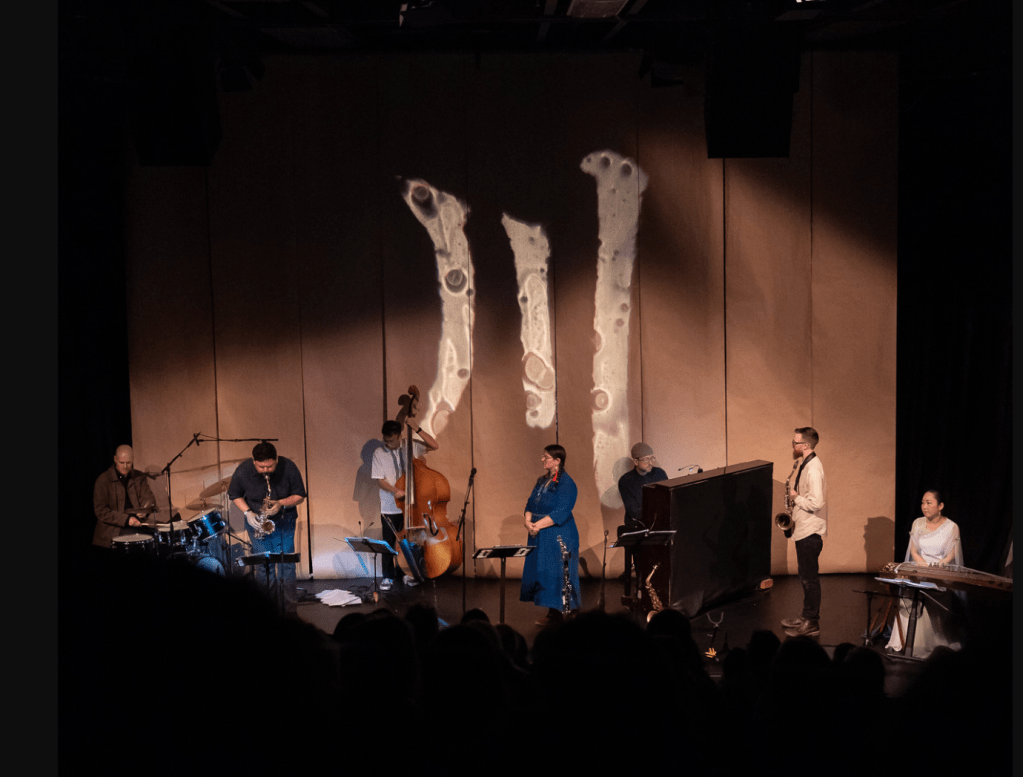



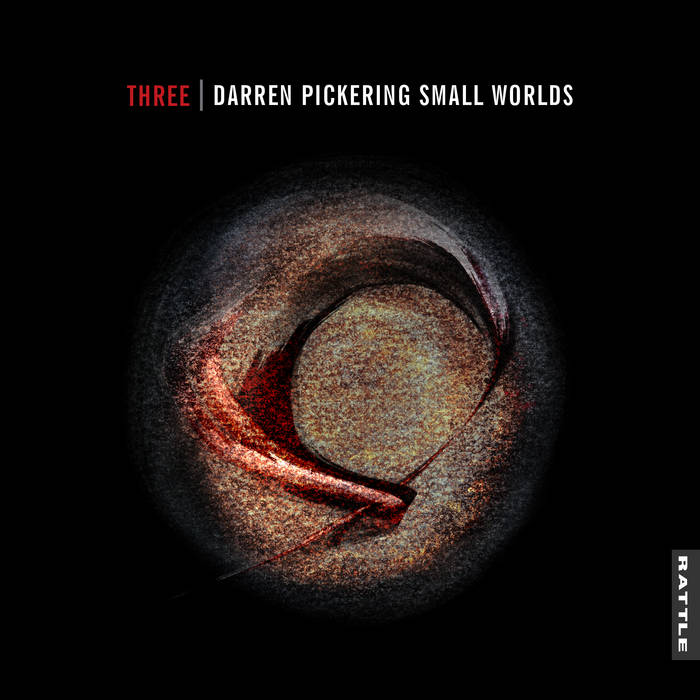
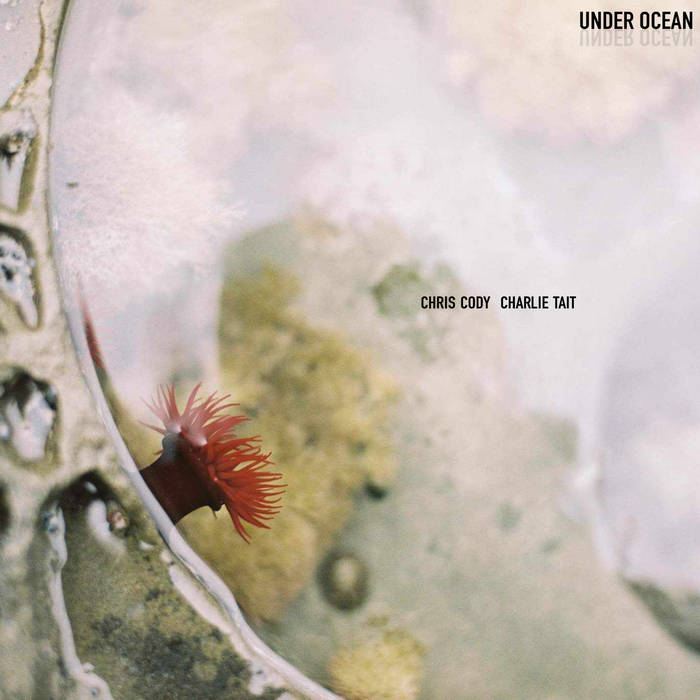
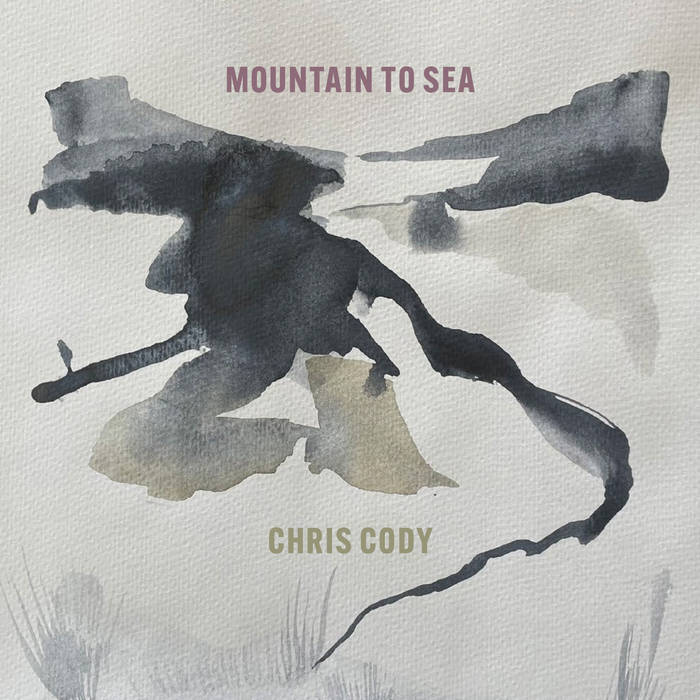
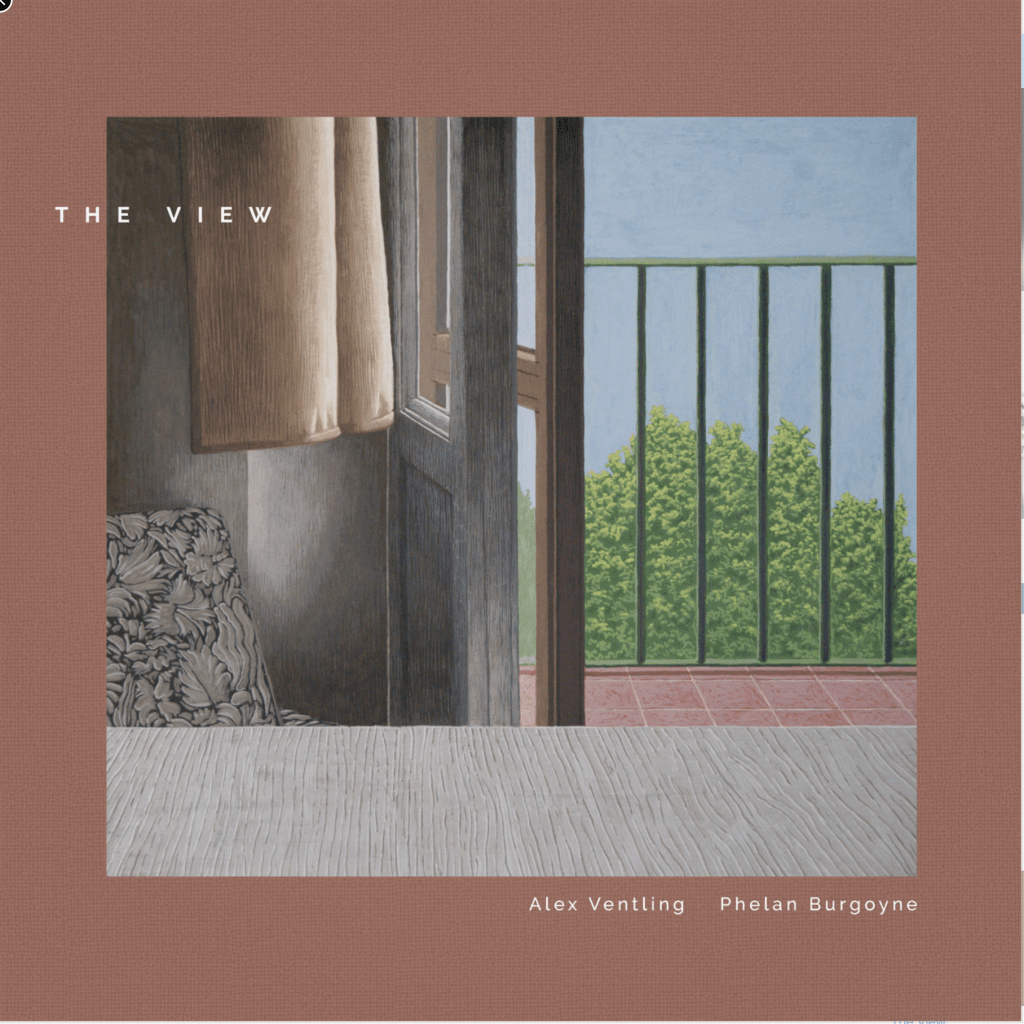
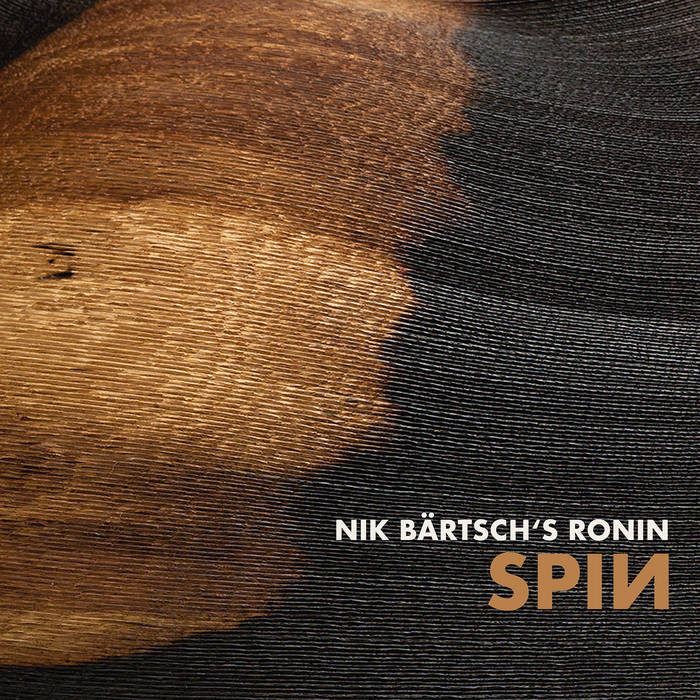
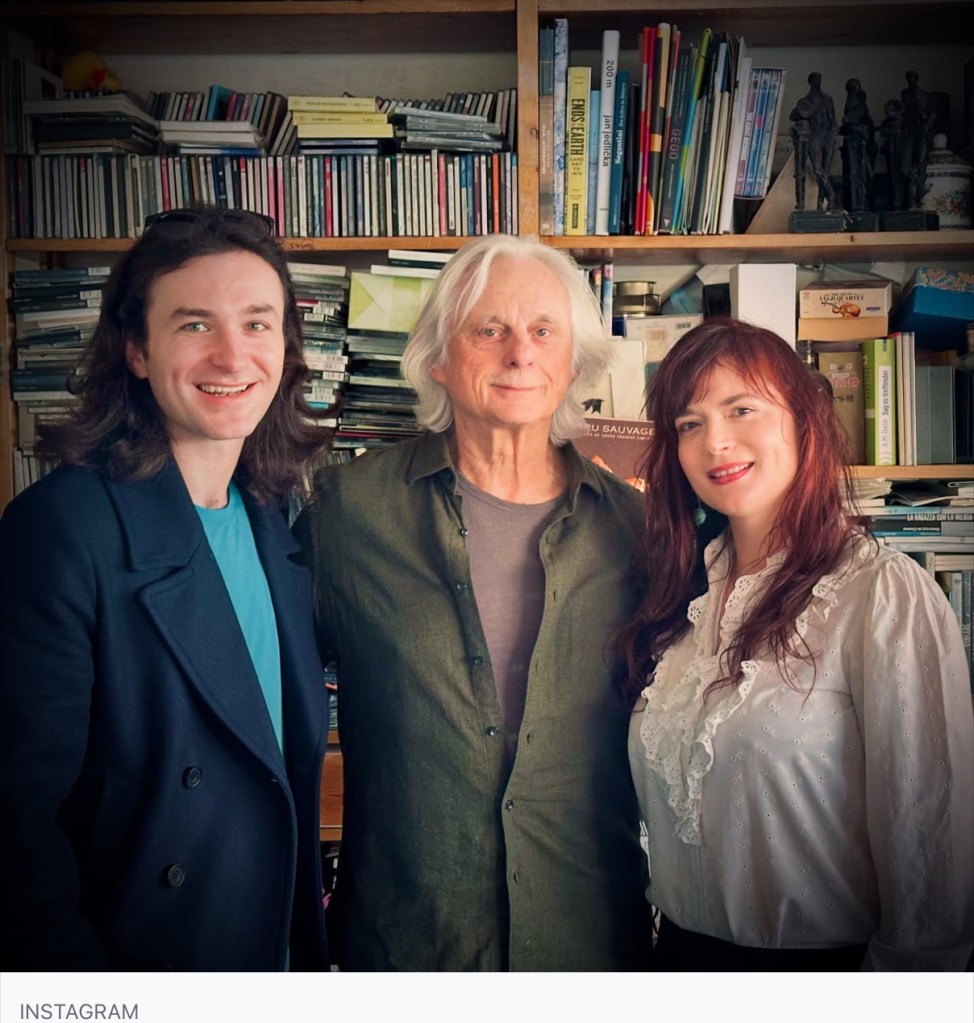
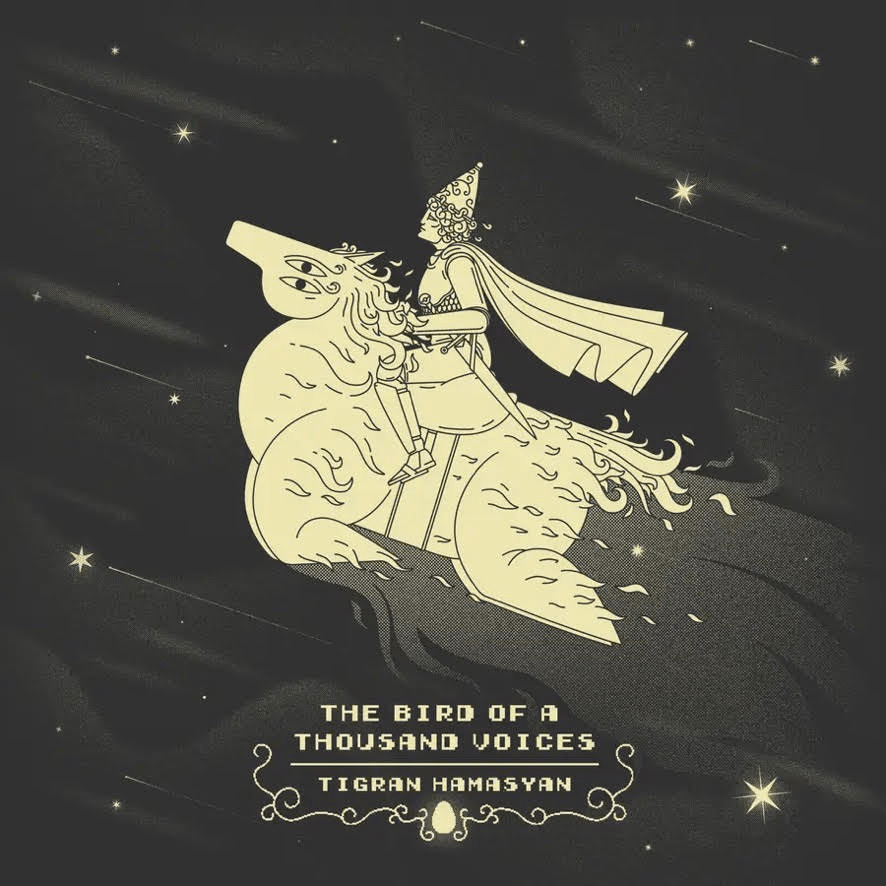
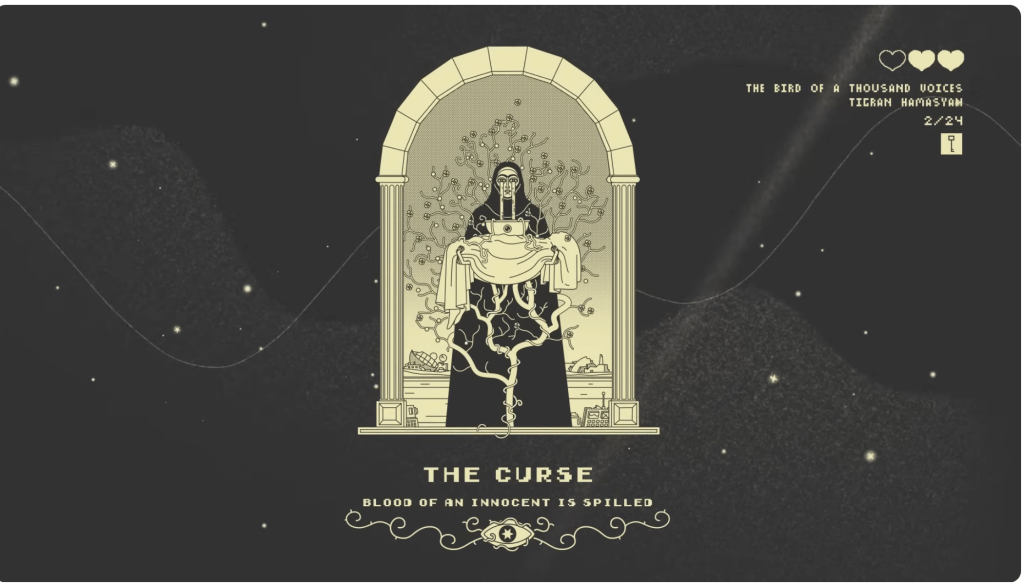
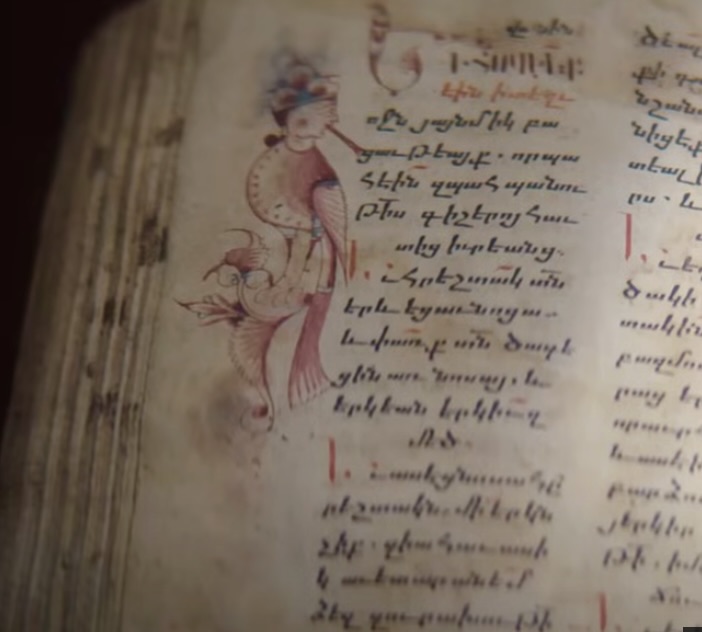

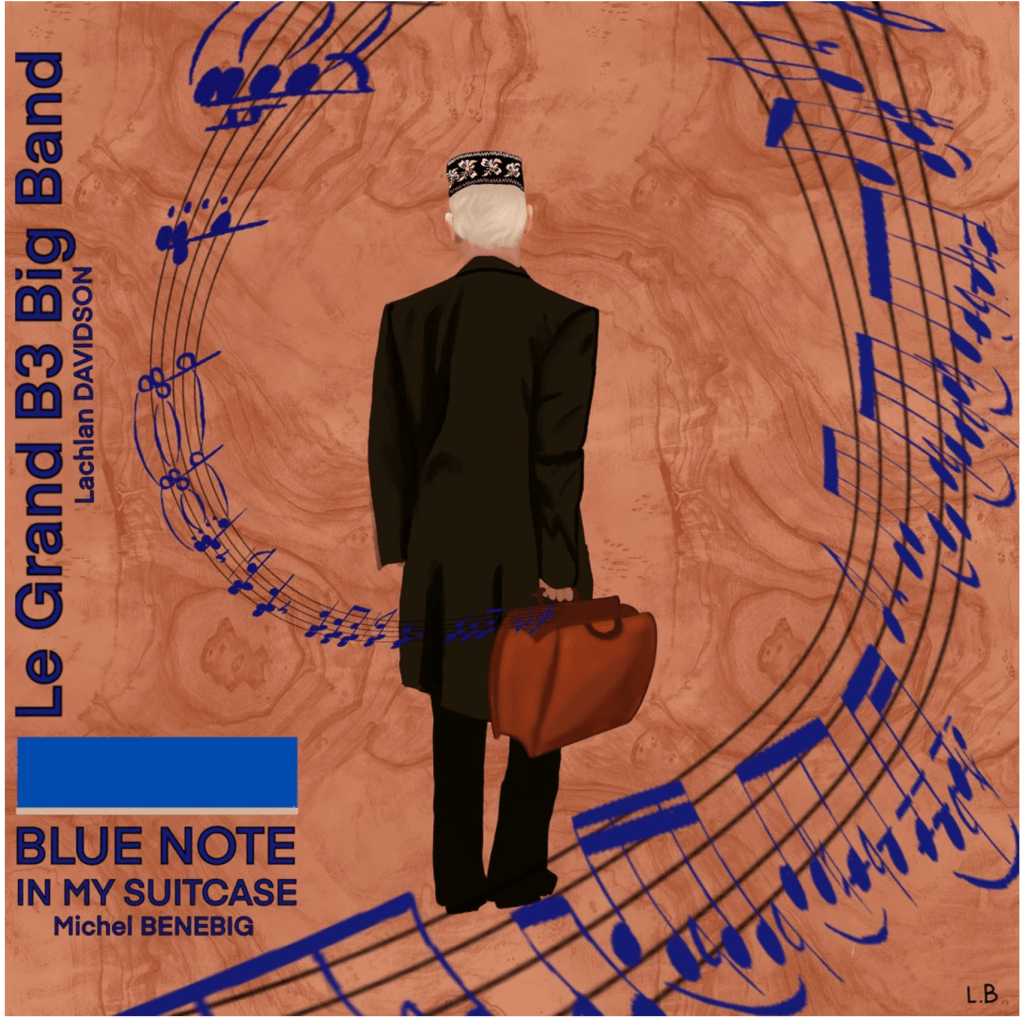


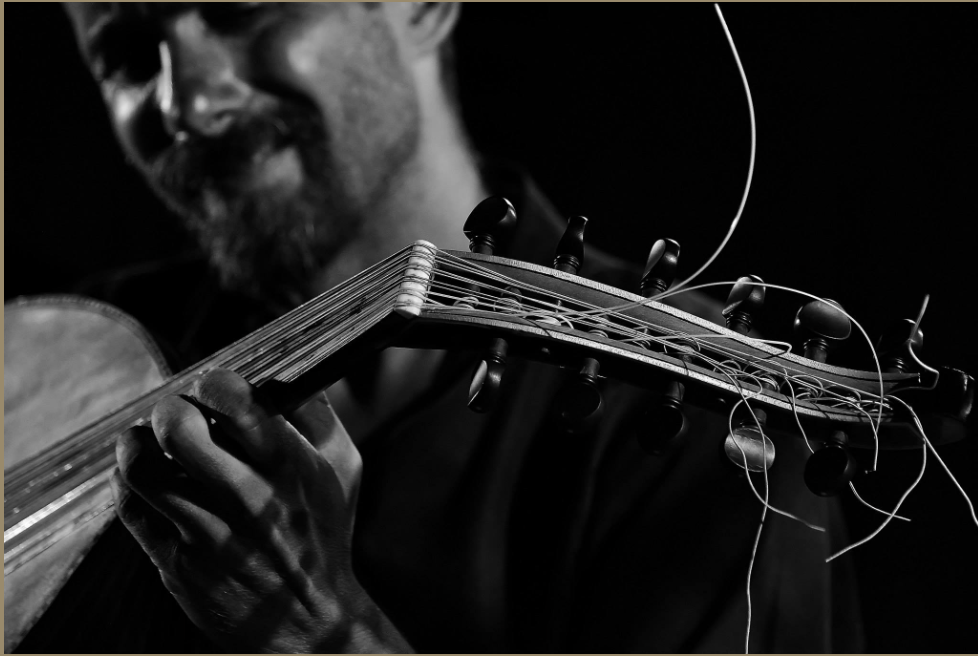

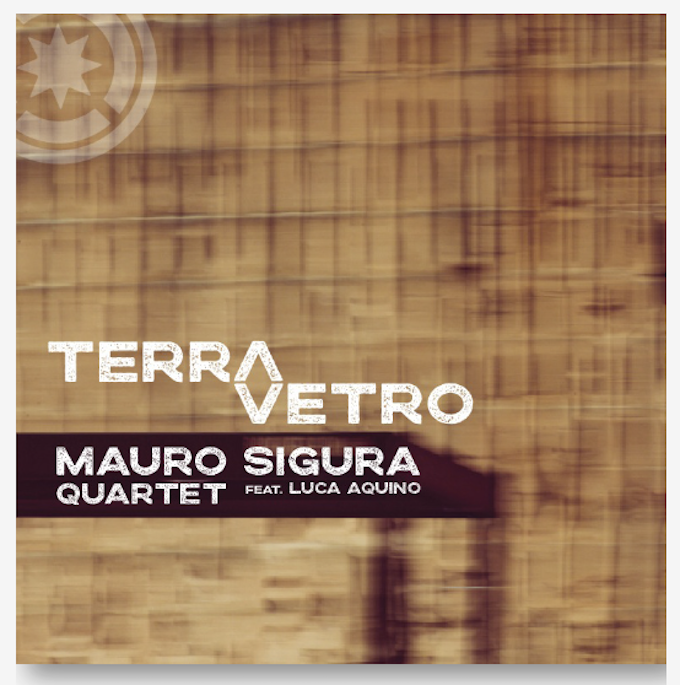






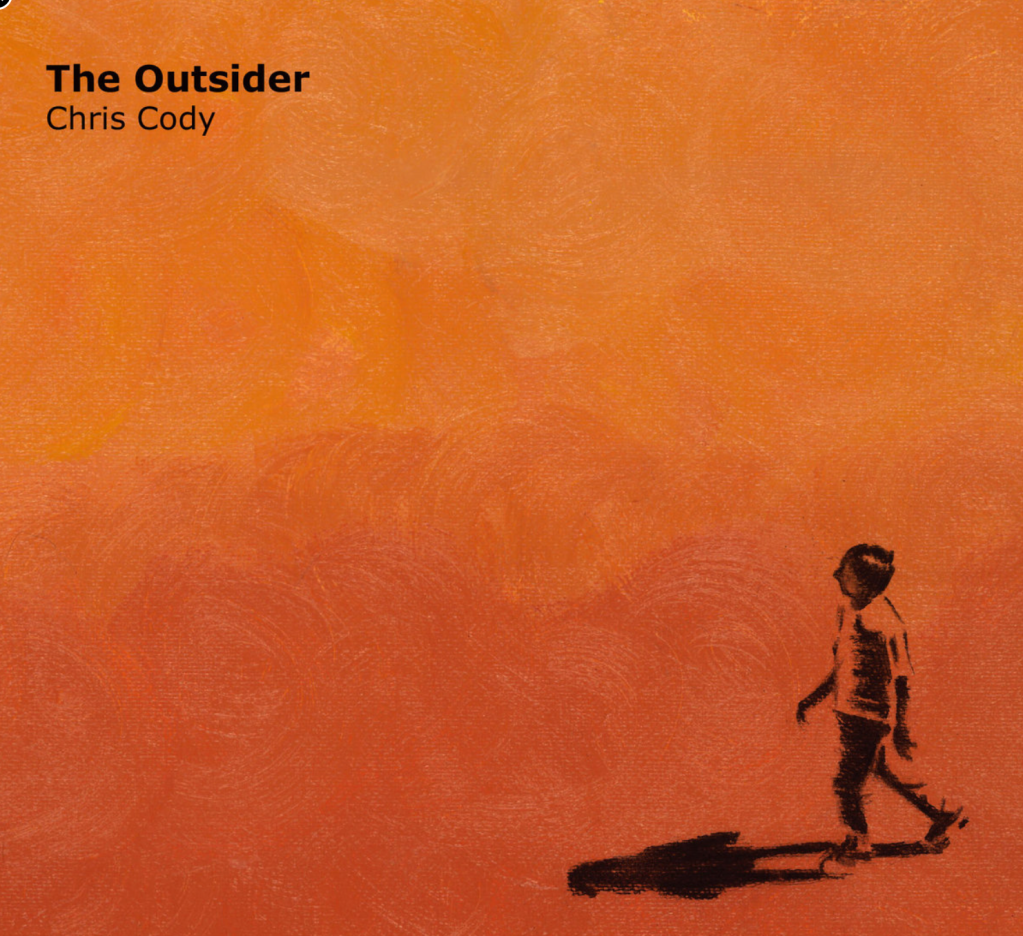

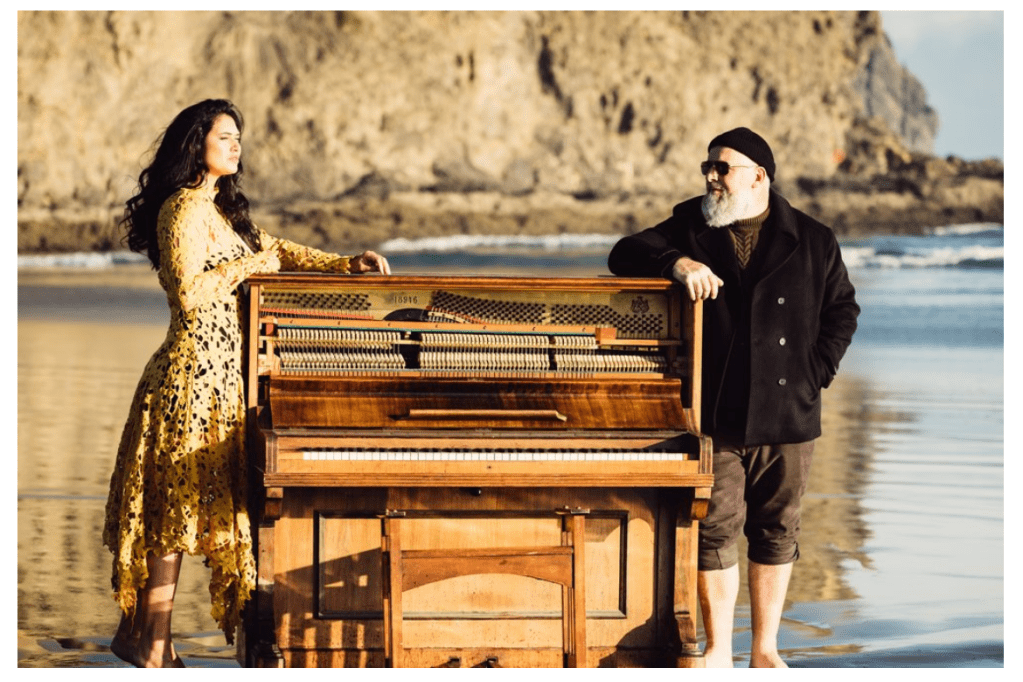

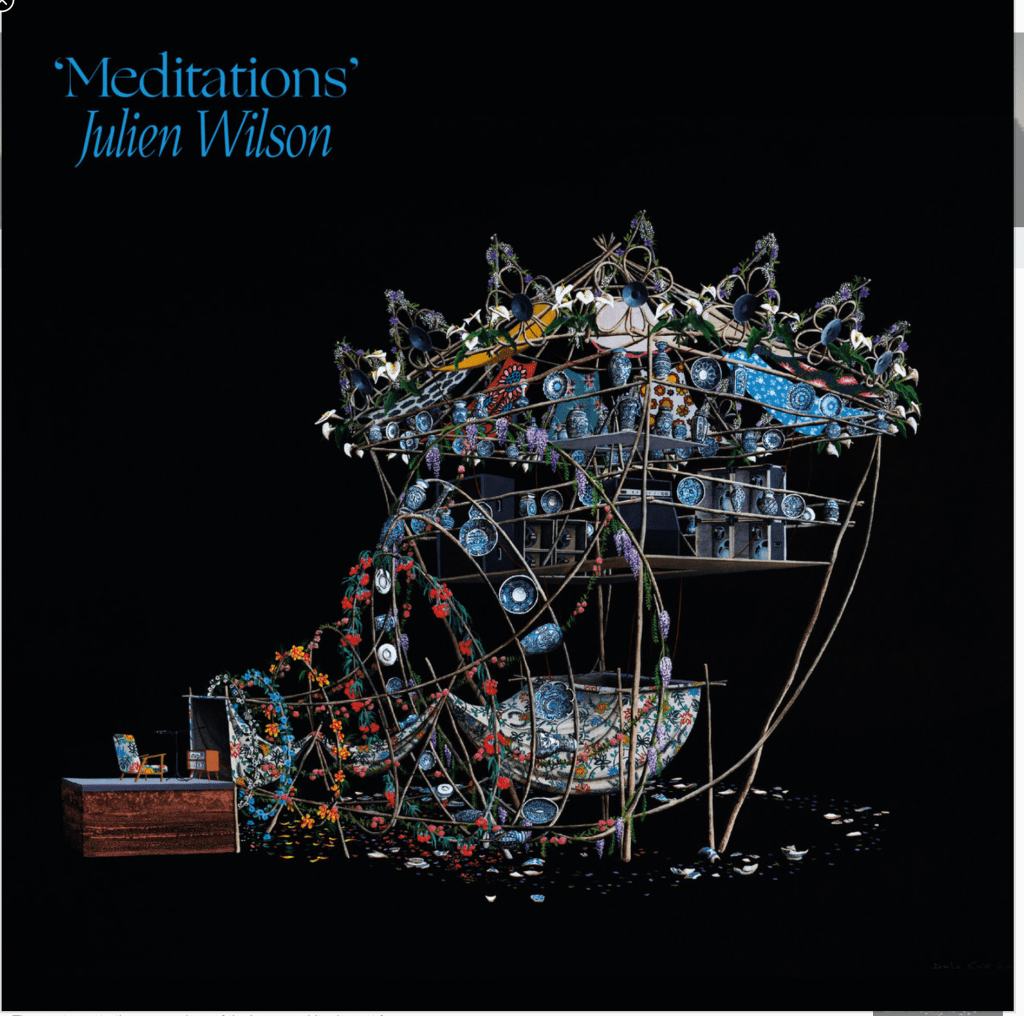

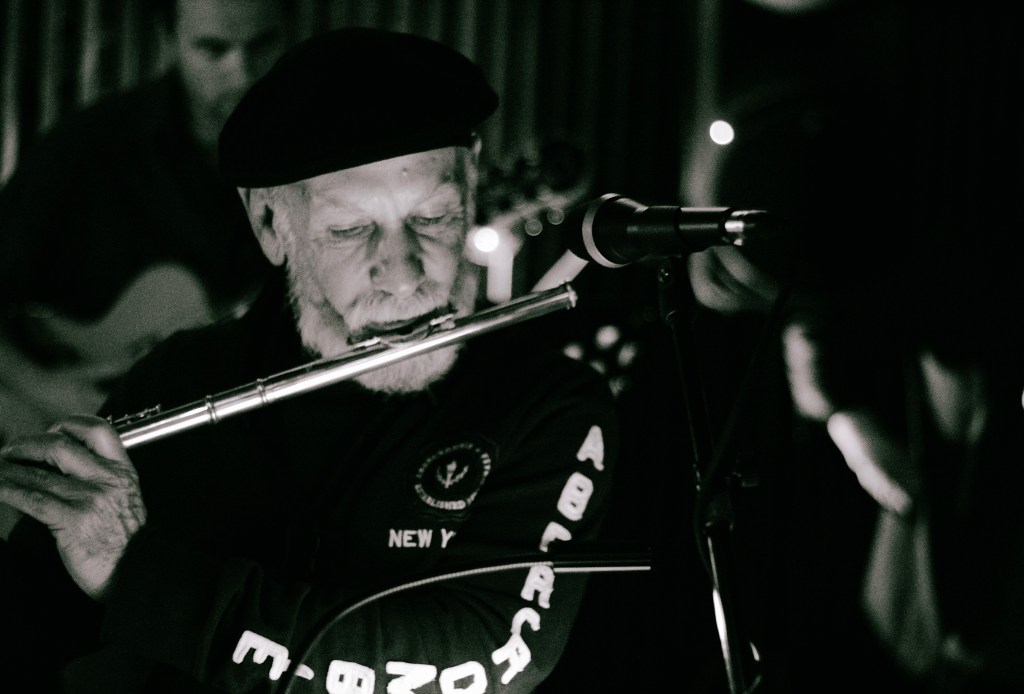


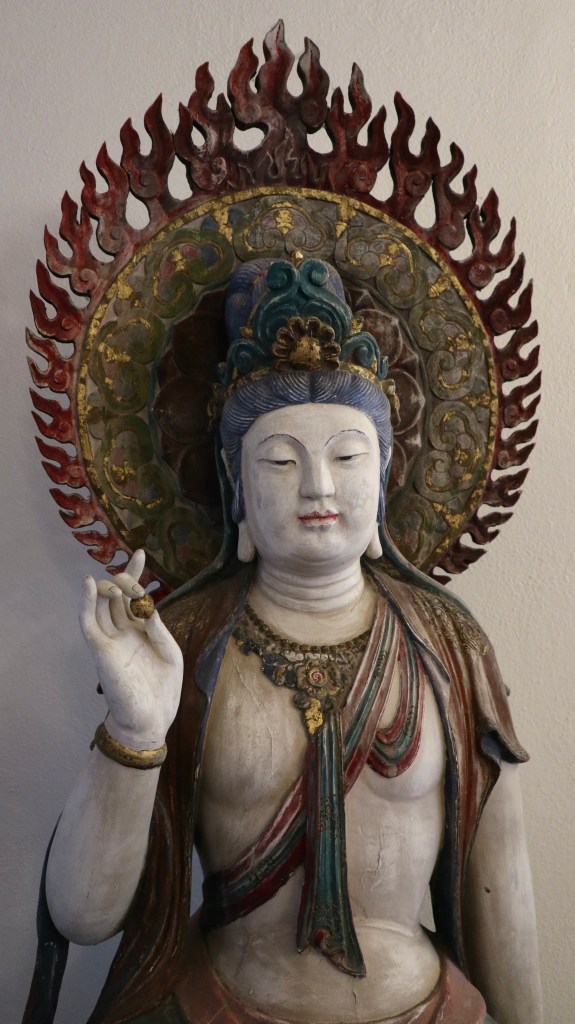





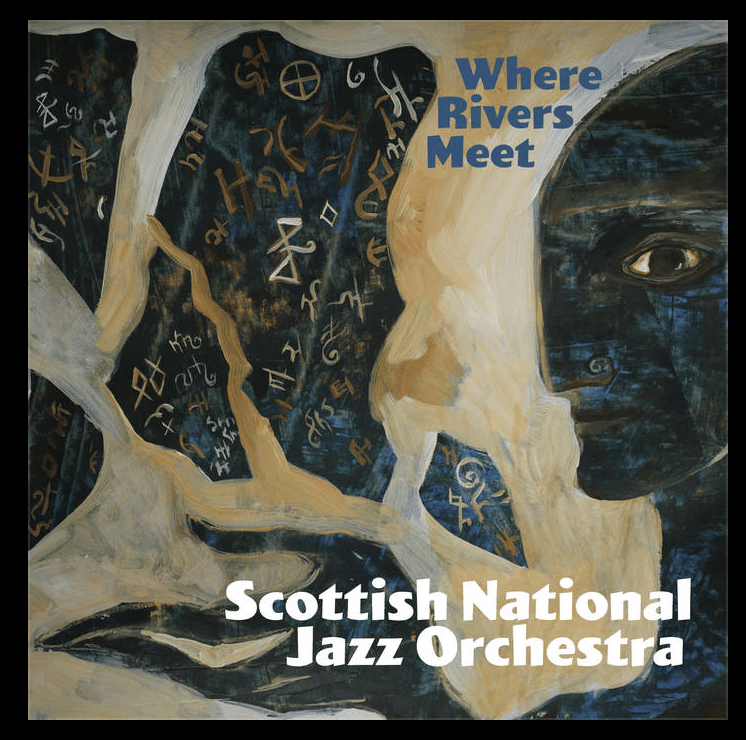
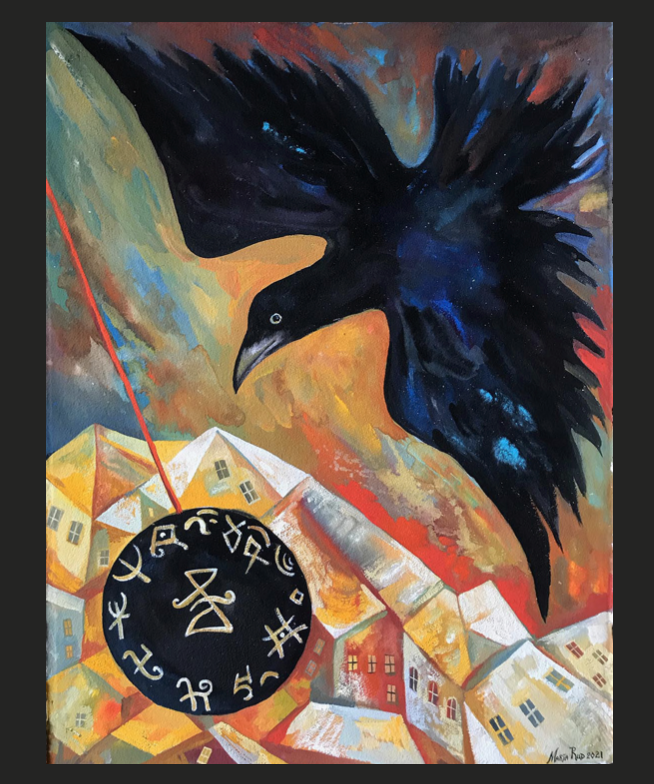

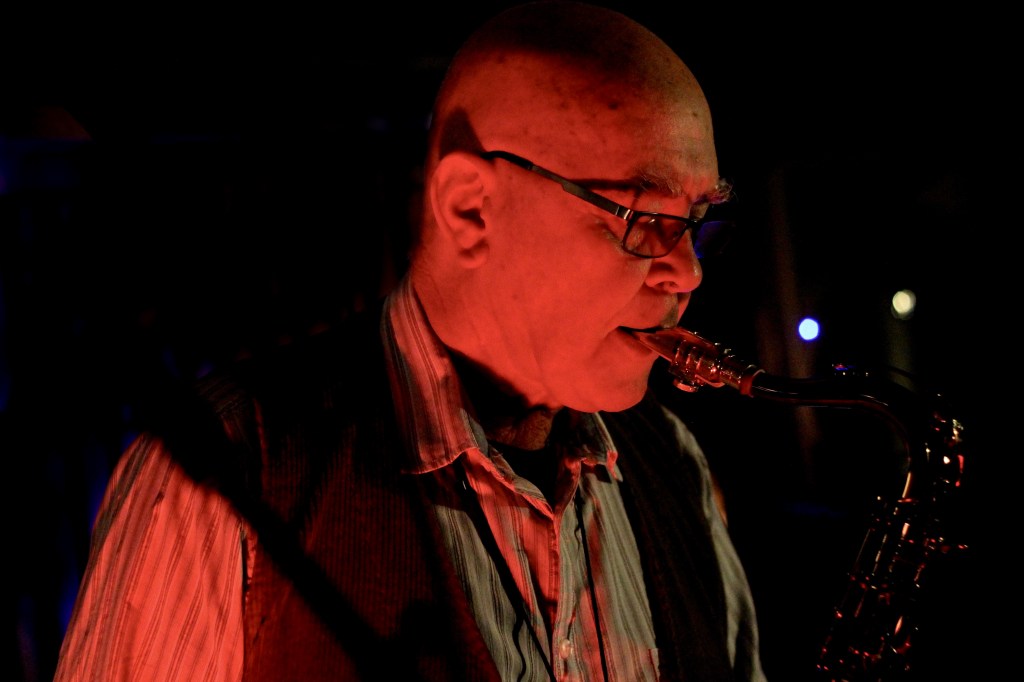
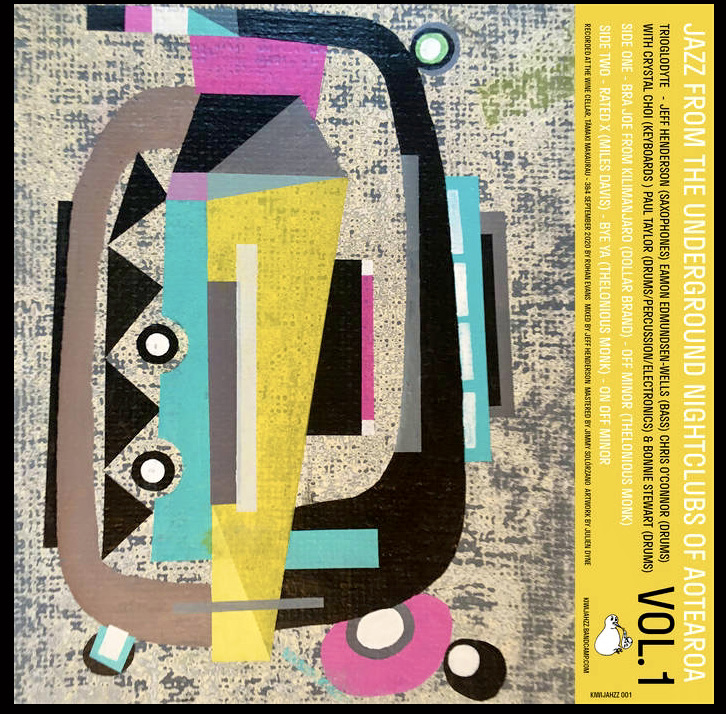
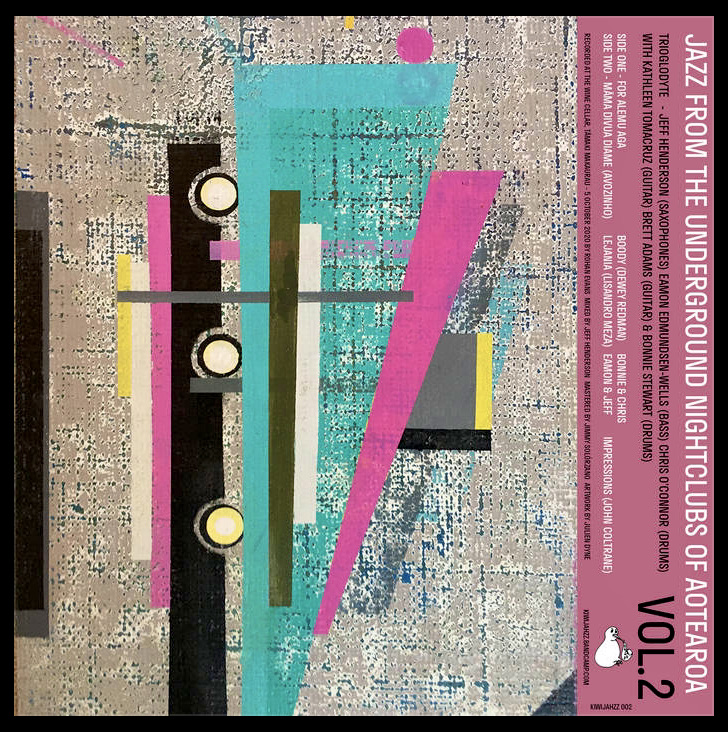
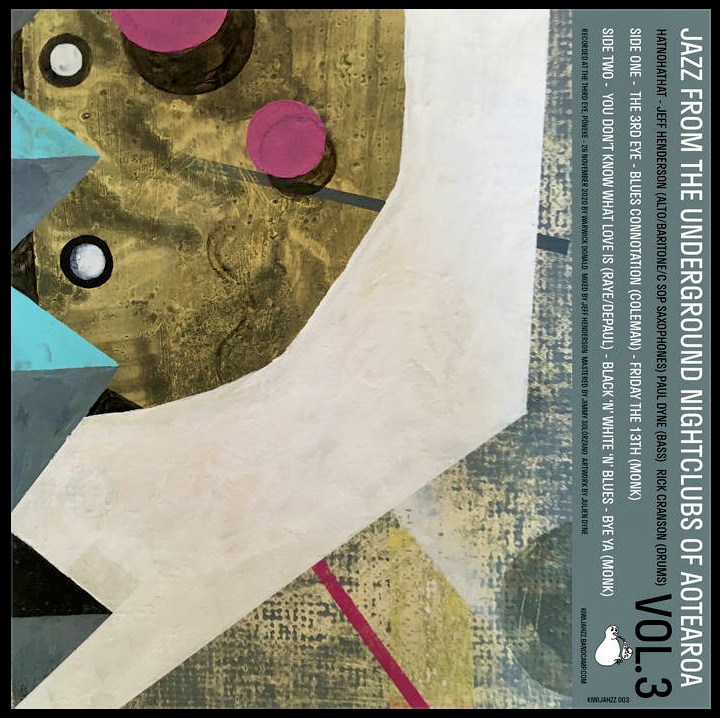

 JazzLocal32.com