The artists profiled here have some things in common. Both have Swiss heritage, work in countries other than the ones they were born in and take a fearless approach to improvising. They are separated in years and in experience but not in their approach. Both seek to extend the language of improvised music and have something interesting to say.
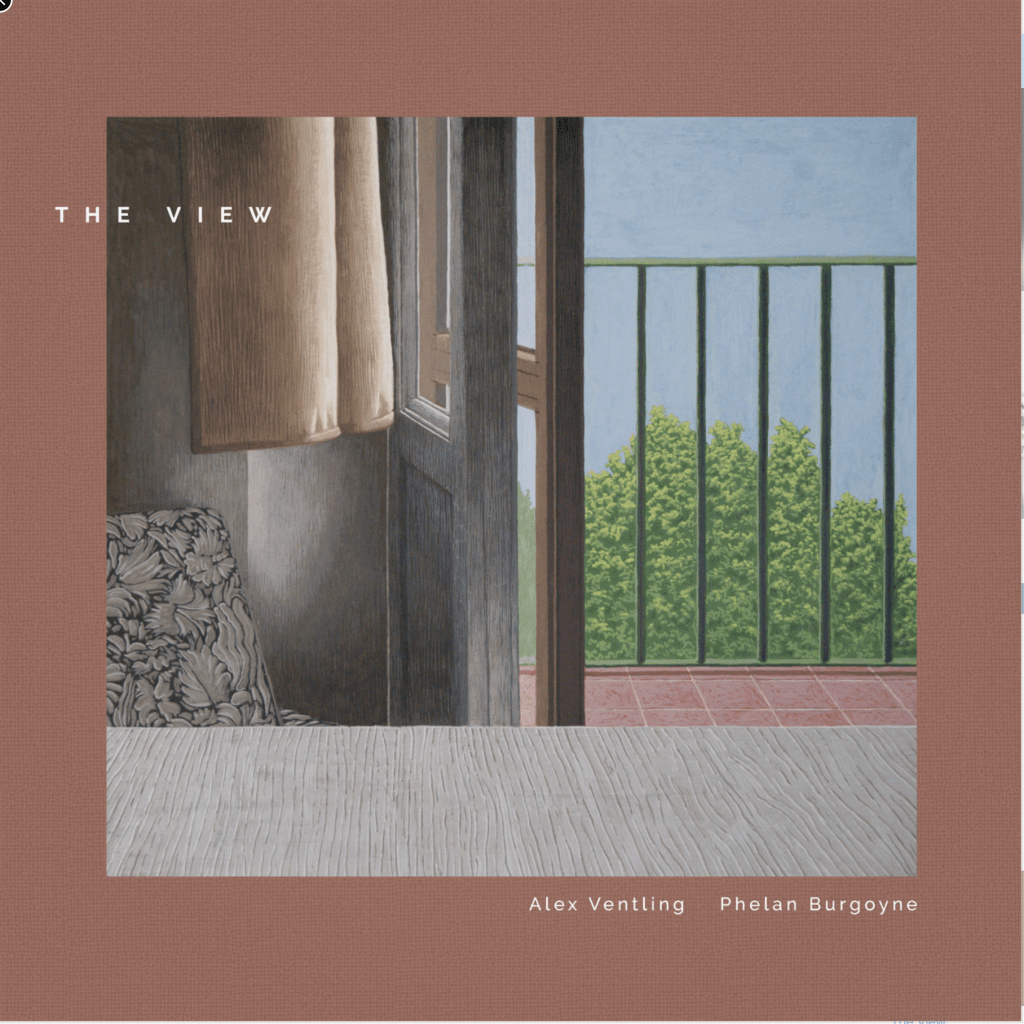
Alex Ventling ~ The View
This is a beautiful duo album; it will stay with you if you listen with open ears. It is fresh and original but snatches of the tradition are still evident, nestling in the compositions. From the opening track, ‘Spiders Steps’, Monkish elements creep in, as jagged spidery lines evolve into a gentle swing. The tune is perfectly rounded. It says a lot and yet does so concisely and simply. It is the perfect beginning for a superb album. Ventling’s pianism is evident throughout, but strikingly so in his resonant ‘In the Mists’. Good pianists know what to play and when, but gifted pianists understand how to sculpt sound and curate even the decaying chords. There are synths but they are used in ways that never once spoil the acoustic mood. That is so on ‘First Train to Finse’ which features guest artist Kim Paterson on trumpet. How lovely to hear him again in this ‘Silent Way’-like setting.
It is an album of surprises as the moods shift constantly. Importantly, they do so without once breaking the flow. Out of it all shines a radiant simplicity, a ‘mysterioso’ simplicity. One blended with oblique Monkish references and a northern European sensibility, a very Nordic soundscape, evoking open spaces, where the music breathes.
With Ventling is a gifted drummer, Phelan Burgoyne. He is the perfect foil for the pianist as he is a master of subtlety. He possesses an acute sonic awareness and understands how to work in the spaces between the notes. He is especially attuned to the harmonic possibilities as he adds his textural touches. This is a masterclass in colourist drumming and I cannot imagine any drummer doing better. He is co-credited as a composer, a collaboration which goes back years. Their synergy is evidenced in every minute of this recording.
This is a very mature album for a musician embarking on his musical journey. The album was released by the Trondheim label Sonic Transmission Records and is available on vinyl and digitally via Bandcamp (or the streamers).
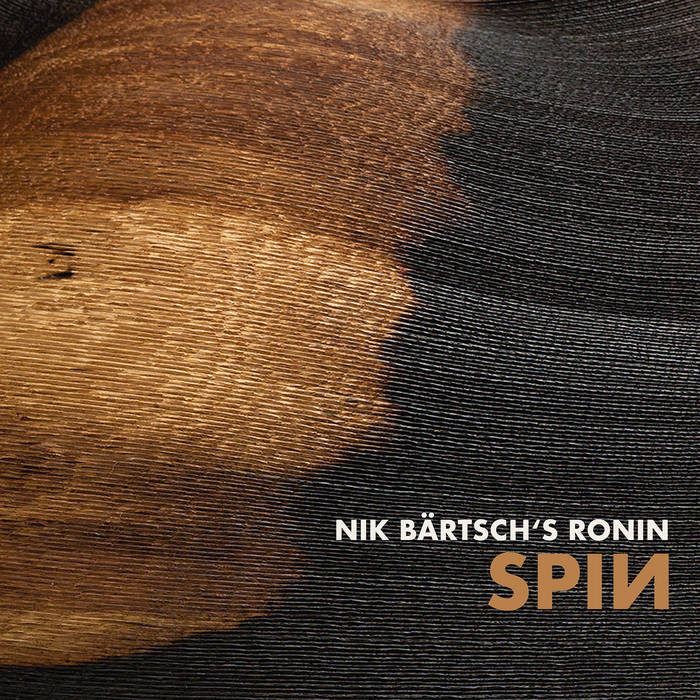
Nik Bärtsch Ronin ~ Spin
Nik Bärtsch’s Ronin has been around since 2002, established following his earlier Ritual Groove Music album (2001). Since then Ronin has released 9 albums with cultural and musical influences scattered throughout; the most obvious being Steve Reich, John Cage and Morton Feldman. He was a drummer before he was a pianist and intricate rhythmic patterns and cycles are evident in everything he does. The other important influence is his abiding interest in Zen Buddhism and taken as a whole, those influences have coalesced, resulting in a unique musical path. His style has been dubbed Zen Funk, but it is improvised music of the highest order and the band has been delighting Jazz critics and Jazz-festival-goers for many years. His seven ECM albums brought him wide critical acclaim.
‘Spin’ works the rich seams opened in earlier albums. This band adheres to its minimalist principles while introducing freshness and open exploration. I have always been drawn to mesmeric or trance music, and this music is, but the tunes also invite quiet reflection. There is freedom within constraints, and that appeals to the heart and intellect.
The first track, ‘Modul 66’, was composed to showcase bass player Jeremias Keller, who recently joined the band. This highlights a subtle shift in emphasis, without changing the ever-present groove. The deep grooves are especially evident in ‘Modul 70-51’ which is mesmerising. A pulse that pulls you deeper into the music without once dulling the senses. This is achieved by surprising chordal and modulation shifts which function like Zen surprises. This is apparent in ‘Modul 40’ which is endlessly inventive.
The way this band works together is extraordinary, moving the emphasis mysteriously as they dance around each other like voodoo priests. It was recorded live at the Big Ears Festival, so ‘Spin’ should be enjoyed in one listening; each ‘module’ informs the next. I recommend that you listen with headphones or in a quiet room. It would be a shame to miss the subtlety. Nik Bärtsch (piano, Keyboard), Sha (bass clarinet, alto saxophone), Jeremias Keller (bass), Kasper Rast (drums). ‘Spin’ is self-released and available on Bandcamp or the streamers.
Other Recommendations to Check Out.
Rob Luft and Kit Downes are artists I have profiled before. Both appear on an interesting album by vocalist Paula Rae Gibson. The album, ‘The Roles We Play To Disappear’ has been referred to as ambient, electronica, and Avante-jazz. It seamlessly embraces many genres and is evidence of how improvised music is growing in multiple directions. Albums like this bring fresh audiences and that is a healthy thing. It is refreshing in these days of awful commercial music to see artists forging uncompromising artistic paths. It is available as a CD or download from Bandcamp.
Rob Luft and Elena Duni recently met with Manfred Eicher to discuss a new ECM release. This is welcome news as the first two releases were stunning. I interviewed Luft during lockdown and have reviewed his albums often. If you haven’t done so already check them out. My review of ‘Lost Ships’ is on this site at http://www.jazzlocal32.com/?s=Luft
Alex Ventling and Kim Paterson recorded on Ventling’s recent tour through New Zealand. ‘Conversations’ is a lovely standards album and is available on Spotify.
One of my favourite Jazz musicians Chris Cody (Sydney/France) has just released two interesting albums. The first is ‘Mountain To Sea’ with Sandy Evans, Tessie Overmyer and Lloyd Swanton. The second and most recent is ‘Under Ocean’, co-credited to Charlie Tait, an ambient improvised album conjuring powerful images. An interesting development from an artist who never fails to please. More on this soon.
JazzLocal32.com was rated as one of the 50 best Jazz Blogs in the world by Feedspot. The author is a professional member of the Jazz Journalists Association, a Judge in the 7VJC International Jazz Competition, and a poet & writer. Some of these posts appear on other sites with the author’s permission.
News that a live recording of Alice Coltrane’s previously unreleased 1971 Carnegie Hall concert was about to drop caused excitement in Jazz circles. 2024, designated by Impulse ‘The Year of Alice’, will see other Alice projects realised, and Shiva Loka is the opener. The quality is great, even though it doesn’t have the degree of sound separation a studio recording has, but that is no bad thing. Being live, the album captures the excitement in the moment and invites us to breathe the spiritual air surrounding Coltrane. And as you take in what is unfolding, the sheer joy of it, it is impossible not to picture the audience sitting about you in rapt absorption. This is an immersive experience and, as such, it reveals the beating heart of Spiritual jazz.
There are four tracks and from the first note played you are present in that great hall. Track one ‘Journey in Satchidananda’ is a tranquil, mesmerising piece. At first, gentle cymbals reminiscent of a temple gong, then a long vamp on bass and with drums answering; out of nowhere, harp strings, Coltrane making them sing like a choir of celestial angels. At that point, you discern voices quietly chanting, followed by flute, then saxophone. The magic has arrived and it never leaves throughout.
The second track, while also tranquil, has a questioning spirit. Arpeggiating harp, arco bass, tiny percussion instruments and then the saxophones keening. Archie Shepp and Pharoah Sanders interact conversationally, as new sonic textures are opened up. An intensity develops as the album unfolds with the tranquil opening tunes followed by incrementally wilder, ecstatic pieces.
We hear two sides of Alice Coltrane in this recording. Both are astonishing in different ways and there is never a moment of doubt about who holds the musical centre. On the first two tracks, she reigns as a peaceful goddess; on the last two, surrounded by an army of titans, she is the epicentre of an ecstatic storm. There was a time when she was primarily regarded as the keeper of John’s flame, but here, she is revealed as the unrivalled queen of Spiritual Jazz, extending his legacy and claiming her own.
The last two tracks ‘Africa’ and ‘Leo’ are compositions by John Coltrane, but it would be wrong to regard these as mere covers as they transform the material into something not heard before. For these last two numbers, Coltrane switches from harp to piano and the fiery goddess radiates her power. She is percussive, with stinging chords, and snatches of chromaticism. Here, and in the last track especially, the rawness and power of the band has been fully unleashed. Thunderous percussion and pounding bass, staccato utterances from the horns and raining down on the keys, Coltrane’s hands.
It is hardly surprising that she chose these particular musicians as they have all been associated with her or John at some point. Coltrane on harp, piano and vocals, Pharoah Sanders on saxophones and flute (at times chanting through the flute), Archie Shepp on saxophones and flute, Jimmy Garrison and Cecil McBee on bass, Ed Blackwell and Clifford Jarvis on drums, Tulsi Reynolds on tamboura, Kumar Kramer on harmonium. As you listen you marvel at the beauty and raw power. It is an album that will stay with you for a long time. It is out on Impulse too, which explains the warm embrace of the sound.
The concert was recorded the year she released ‘Journey to Satchidananda’, her fourth Impulse album and not long after another acknowledged masterpiece ‘Ptah, the El Daoud’. My first thought was, why wait so long to release such an exceptional album, but on reflection, it was a good decision. Now is the time to fully acknowledge Alice Coltrane’s legacy. Available online or from the better local retail outlets.
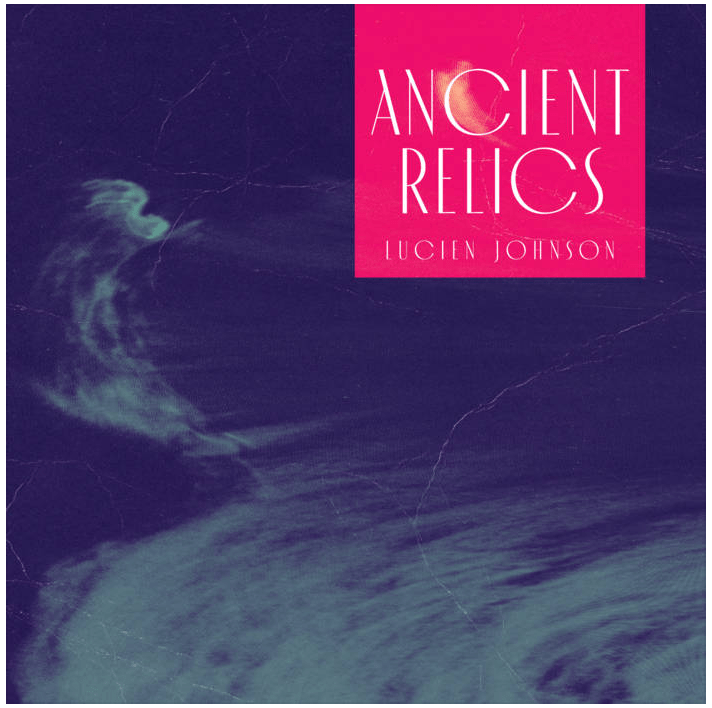
Ancient Relics ~ Lucien Johnson
As ‘The Year of Alice’ gets underway it is great to acknowledge this release by Aotearoa/New Zealand saxophonist-composer Lucien Johnson. It is fresh material that references the tradition of Astral/Spiritual Jazz and it does so with reverence while bringing a local perspective. It is natural for those born under our South Pacific skies to gaze upward; far-dreaming Pacific star-gazers discovered our islands. That sense of worlds beyond is evident throughout, as it references space clutter and objects left over from the past. It could also reference the cluttered inner orbits of our minds.
As the album begins, the unhurried pace appeals instantly, informing you that this is a place for deep listening. On the title track, ‘Ancient Relics’, Johnson’s effortless melodicism floats over texturally rich vamps reminiscent of drones while piano and harp shimmer, and merge. This opener is unmistakably Alice-like and wonderfully so. The languid measured bass lines are perfect too, anything more would have spoiled the mood, with the gentle pulse from percussion and drums, whispering, quietly through the mix.
My favourite tracks are ‘Space Junk’ and ‘Satellites’, evoking the wonders of space while reminding us of our responsibilities as galactic sojourners. Space is the theme, but closer to home than the distant stars. If ‘Ada’ refers to the protocol of distance between objects in orbit, then all of the tunes appear to reference space junk; the ever-increasing proliferation of satellites circling the Earth. A recent report pointed out that every reentry leaves debris and puts the Earth’s magnetic field at risk.
This is an exceptional group of musicians and the right ones to bring Johnson’s vision home. All are from Aotearoa/New Zealand, some receiving accolades beyond our shores. Johnson is better known in Europe where he gained a reputation playing in free-jazz ensembles and composing for theatre. Since returning he has quickly established himself as an important local recording artist, recently receiving a Jazz Tui for composition.
Jonathan Crayford on piano (also a Jazz Tui recipient), has a solid international reputation, often playing in London, New York and across Europe. Percussionist Julien Dyne is another internationally recognised artist as is harpist Natalia Lagi’itaua Mann. Rounding off the ensemble bassist Tom Callwood, and drummer Cory Champion, both respected musicians. I was especially delighted to see improvising harpist Mann in the lineup as it has been a while since I saw her perform. Her World-Jazz Rattle album ‘Pasif.Ist’ is an absolute gem.
The album is available at Rattle Records, Bandcamp
JazzLocal32.com was rated as one of the 50 best Jazz Blogs in the world by Feedspot. The author is a professional member of the Jazz Journalists Association, a Judge in the 7VJC International Jazz Competition, a contributor to All About Jazz, poet & writer. Some of these posts appear on other sites with the author’s permission.
This post is the first of two book reviews. The books I review dovetail as they are part of the same story. Tomasz Stańko and Krzysztof (Komeda) Trzciński were bandmates, but they were more than that. They were innovators and extraordinary musicians, leaving behind them a rich legacy. One that is rightly elevating them to positions of greater significance. Anyone who watched the Homeland series on TV will be familiar with Stańko’s music, even if they don’t know his name. With Komeda, it is the same as his film themes live on in memory.
My grandmother was Polish. She would probably have disliked the music these musicians created. That combination of melodicism edging on dissonance, but that said, she would have recognised the Slavic modes and rhythms underlying it. Their music draws on the themes and modes of Cold War Poland. You hear fragments of marches, eastern European rhythms, and mostly, you can detect a melancholic filmic quality
I admit to an obsession with Komeda and an enduring one, but why? After all, he only officially released one jazz recording, Astigmatic. That single recording was enough to secure his place in the jazz pantheon, and, like so many others, I was bewitched at first hearing. It begged the question; how could such extraordinary music emerge from such difficult conditions? Jazz in Poland during the Soviet era was either forbidden or marginalised by the state apparatus. The two books I review here provide rare insights into those times by opening a window into the creative life of an extraordinary group of musicians and their willing enablers.
For years the only sources of information about this era were articles written for papers like the Guardian or Jazz magazines. Fascinated, I wanted to learn more about Krzysztof ‘Komeda’ Trzciński and Tomasz Stańko, so when the English language editions of these two books appeared, I ordered them immediately. They did not disappoint. Each has a different style; one an autobiography, a prompted stream-of-consciousness recollection, the other relying on interviews with musicians, fans and filmmakers (plus assorted private archives).
Tomasz Stanko, Desperado,an autobiography:
The compelling thing about this autobiography is the easy narrative flow. Throughout, Stańko responds fulsomely to the occasional prompts of interviewer Rafał Księżyk. He is a natural communicator, his responses taking us deep inside his creative process. And, unlike Komeda, who was shy and hated interviews, Stańko bares his soul, never dodging awkward topics.
Interviewer: ‘What attracted you to jazz?
Stańko: I realise now that I have a penchant for the unstable, the anarchic…this is all nonconformist music.
And on life in Soviet Poland,
“The Vodka flowed like a river. During communism, people drank because what else was there to do?
When he smoked a joint for the first time, he said: ‘Well, bugger me: that’s my thing”.
He was desperately poor during his early years as a musician and often homeless, but notwithstanding that, he was a deft navigator when it came to pursuing his musical dreams. He recalls sleeping in a basement storeroom underneath the Klub Hybrydy in Warsaw, where friends had painted a window on a wall to make it more bearable. Musicians were not considered productive and so were not entitled to the accommodation privileges provided to others by the state.
He began discreetly gigging while still in high school, as jazz was only tentatively emerging from the forbidden and moving into the ‘jazz catacomb’ era. He describes the jazz of that era as a hybrid Trad, rapidly moving towards modern. Like Trzciński (Komeda) he taught himself jazz by covertly listening to Conover’s Voice of America. When he joined the Komeda Quintet a few years later, he and many others had moved through the ‘modern’ styles to become free players (creating a Euro-free style). On this topic, he is illuminating.
Regarding his free-jazz album TWET:
‘I’d laid the groundwork for the quintet. Even the older musicians like Wojciech Karolak who didn’t like free, respected my music. And then playing free became widespread (in Poland). Nowadays, young musicians, whether they’re capable of it or not, are keen to play ‘free’. The less capable the keener they are. Not everybody does it well.
Later
‘Something that had begun in Europe, which they didn’t have in the States. It was a joining-together of melodic playing and free . . . A rather unconventional kind of scale and the particular application of two voices. My signature language is not so much based on scales as on a certain melodic atonality . . . my aesthetic imposes this otherness and accentuates it. I move into the realm of beauty, but at the same time, break it up completely, finding myself in a different world. All my compositions and ballads employ simple ideas, but sometimes a counterpoint will appear that knocks everything sideways. You don’t always hear it consciously, but it works underneath”.
And this.
“When we played (free) in the quintet, we completely switched off. Everything worked based on intuitive listening. We were sensitive to delicate nuances which gave us some kind of form to latch onto. Whole structures emerged: some sort of symphony began to take form. But there is a problem with pure improvisation. It is simply the best type of music – if it works. Only, unfortunately, it is beyond our control and so it doesn’t always work. I have had moments of complete freedom and played at my best, except the best moments playing free can’t be repeated. My style (today) uses free with some form.
He explains that, while they were not playing jazz exactly like the Americans, it came from a related set of circumstances. It may have been different, but of all the European nations, the Poles understand best what oppression means. Polish history can be summarised as a thousand years of suffering. The word Slav is the origin of the word slave.
‘It was a different aesthetic and even though it was an American art form, we had been cut off from the black experience. We had another set of difficult conditions and it is those difficult conditions that created our artists. Free jazz was a kind of underground. It was theatrical as well and it appealed to young people. I sometimes felt a bit strange on the scene, with my romantic melodiousness, but I survived because of the quality of my sound.
There is no bitterness in these recollections, telling Księżyk that he found constant pleasure in the richness of life. He did not like Moscow-styled communism but considered himself a lifelong lefty.
“I would argue about Communism (as opposed to Socialism) with John Surmon, Peter Brotzmann and Tony Oxley. I’d say it (communism) was all crap. The most interesting people in the West were those with leftist intentions. They were always my best friends and the finest people: intelligent, open, tolerant, and modern, artistically. They were lefties, and it’s still like that. The right in the artistic field is inextricably linked to failure, compromise, a lack of talent.”
Throughout, he comes across as thoughtful and self-aware. As the reader, you are the privileged voyeur, almost holding your breath, not wishing to break the spell. Learning about the structure of his music, gaining insights into his motivations, and sensing what it was like to be an impoverished Soviet-era jazz musician.
He describes himself as definitely optimistic but with a melancholic nature. He goes on to explain that all Polish music of those times was melancholic. His fellow musicians give a name to this which is zal. Zal is a nostalgia for what you never had – a very Polish concept.
‘(Music) deals with the order of things in its ‘own’ way. It doesn’t need any questions, any words or any conclusions. Creating new worlds and beauty… a state that is both mystical and deep… And which we celebrate without posing those big unanswerable questions.
‘Magic is in the same domain as art. It exists in the mind, externalises itself, interacts with the outside world… Rhythm produces trance, and trance is a response to unease. So we create new worlds and artistic beauty. Improvising is about transcendence.
‘I play motifs, maybe two and then open them out. I create (a) mood, then the magic arrives and I’m lost deep inside the music.
Stańko was a musical mystic, extremely knowledgeable about art, poetry, philosophy, the cosmos and science. He draws upon these themes constantly. We learn that he would often visit a galley and sit in front of a painting for weeks until a new tune or album emerged (Dark Eyes). Or contemplate a poem for a long time. An example of this is Wisława, dedicated to his friend the Nobel Laureate poet Wisława Szymborska. He was also fascinated by philosophy.
He had a fruitful, collaborative and enduring relationship with ECM as well, and his high regard for Manfred Eicher is evident throughout. For fans of ECM these accounts will be illuminating.
I lingered over his every recollection. Chuckled when he described how the Polish free players improvised during the inaugural performance of Penderiki’s modern classical masterpiece, much to his consternation, but the last paragraph was the one I liked the best. The place where I felt that I glimpsed his essence.
‘I am going to keep moving forward because there is a space ahead of me. Like those Portuguese sailors in Lisbon, who stood looking out at the ocean, knowing there is something out there but didn’t know what. They sailed not knowing what but believing that there was something wonderfully mysterious. I still have that sense of mystery knowing that musically something strange is going to happen, that I will be moving into areas (previously) unknown to me. And that is where I will be found.
I have read a lot of Jazz autobiographies and biographies over the years but seldom has a biography spoken to me as powerfully as this. Maybe it was the geek in me, delighting in the words and thoughts of a musician I love. Whatever, I strongly recommend it. Play the albums as they are mentioned and follow a profound musical journey. A very Cold War journey towards freedom and release.
The English edition is published by Equinox (Series editor by Alyn Shipton, Royal Acadamy of Music, London. Tomasz Stańko is interviewed by Rafał Księżyk, translated by Halina Maria Boniszewska.
Disclaimer: the tenses and word order can be different in Polish and this comes across in the quotes. I have mostly kept them intact. Acknowledgment: The photos used from the book are credited to Anna Stańko.
JazzLocal32.com is rated as one of the 50 best Jazz Blogs in the world by Feedspot. The author is a professional member of the Jazz Journalists Association, a Judge in the 7VJC International Jazz Competition, and apoet & writer. Some of these posts appear on other sites with the author’s permission.
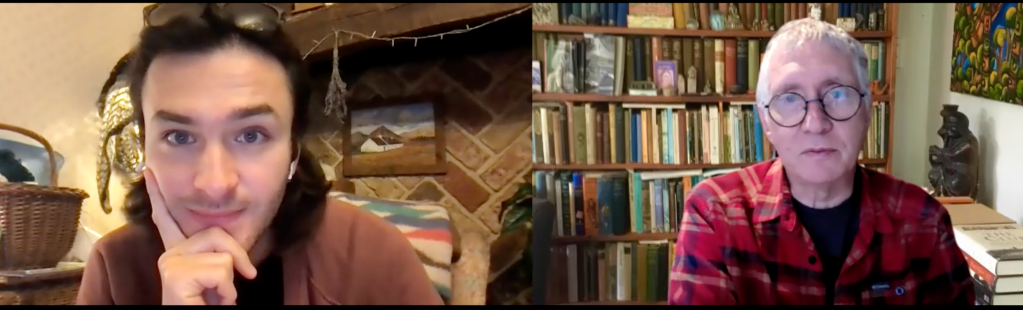
One of the few pleasures of lockdown is that it has afforded me time to conduct long-form interviews. But while I had the time, the subject of this interview was back touring again and his hectic schedule meant that dates and time zones had to be navigated with precision. Consequently, our pre-interview messaging often occurred during gig breaks. Guitarist Rob Luft is a significant presence on the UK and European Jazz scene. He is articulate and a good storyteller and so transcribing our zoom call has been a pleasure. We talked for nearly two hours.
It was basically a long-distance hang, and when Jazz people are interviewed they tend to intersperse the geeky stuff with funny asides. This was no exception. For my part, I couldn’t wait to hear about his ECM experience with Manfred Eicher, but the unexpected foray into the joys of Arab music and being alone with Tutankhamun were the icing on the cake. It was never in doubt that Luft’s star would rise and it has risen on the back of sound judgement and hard work. And in aligning himself with astonishing vocalists like Alina Duni he has broadened his horizons. It is unusual to hear a young guitarist embracing thoughtful minimalism but in doing this he has shown real maturity. Under his fingers, less is invariably more.
JL32: Hi Rob, nice to see you again man and thanks for agreeing to an interview when you are so busy gigging. I know that you had a gig in Oxford last night and were at Ronnie Scotts much of last week, before that on tour in Europe.
Luft: Hi John, good to see you too after a long strange few years. It’s been a while since we last met up.
JL32. Yes, after your trip to New Zealand in 2016 (see review) we got together in London, first at the Barnes Jazz Club for the launch of Luna Cohens ‘November Skies’ album and then, a year later at Ronnie Scotts where you were playing with Kit Downes.
Luft: And I have played with both since, with Luna on my recent album and with Kit on a gig recently.
JL32: According to your discography you have been very busy since we last spoke. There was your Riser album with Joe Wright (sax), Joe Webb (keys), Tom McCredie (bass) and Corrie Dick (drums), and then, a follow-up album with the same lineup adding vocalist Luna Cohan and on ‘Flumpit’ Byron Wallen. And over that same period, you were sideman on around eight albums.
Luft: Yes and other projects, but, 2020 was almost completely dry of gigs because of COVID. We had the inverse experience to New Zealand because the UK was hit early and we were not open like your country. Especially gig wise.
JL32: The last time we spoke you told me that you and the Albanian Jazz vocalist Elina Duni had an ECM album under discussion, and of course that came to pass with the beautiful ‘Lost Ships’. Looking at the release date, that must have coincided with the arrival of restrictions in the UK.
Luft: Well in the rest of Europe, after the initial lockdown, there were still gigs happening, I was able to play gigs in France, Italy, Germany, Spain and Switzerland throughout the summer. In the UK it was very different.
JL32: I’d like to come back to that, but before we proceed further, a few biographical details if you don’t mind. I know that you were born in the London area and that you went to the Royal Academy of Music where you won the Kenny Wheeler Prize.
Luft: Yes, and I had a bizarre sort of experience at the Academy. The class groups for the Jazz Studies Bachelor’s course were very small and in my year there were only five, then later four of us. And in my group was Jacob Collier, so for the best part of four years, I was there with Jacob who was obviously a multi-instrumentalist. We had no drummer in our year and so usually you would have a full group playing with you, and so Jacob would play a different instrument when each guest artist came to visit us. There was John Abercrombie, Kenny Wheeler, Stan Sulzman and so on, and Jacob would be there playing a different instrument for each ensemble. There was no sense of continuity or band sensibility because Jacob was fulfilling so many roles, quite bizarre actually.
JL32: So in some ways your studies forced you to forge your own path.
Luft: I guess because the Academy only took in pupils who had advanced abilities at the outset. Less teaching and a more autodidactic approach, they encouraged that. They would get these great artists like Jerry Bergonzi to come in and play with us rather than teach us in the traditional sense. It was amazing to have people like John Abercombie come in and I’d be with him for a couple of days at a time.
JL32: That must have been especially good for you as a guitarist.
Luft: For me it was optimal. And obviously, the people coming in with Kenny Wheeler, like John Taylor, Norma Winstone and that class of musicians.
JL32: Abercrombie, Wheeler, Taylor, they are no longer with us.
Luft: Yes, back then Kenny Wheeler’s Big Band would come in and rehearse, imagine, you’re eighteen years old and you watch these legendary Jazz figures come in and rehearse in your music hall, it was amazing. Kenny had a huge influence on me, on my harmonic and textural approach. And Stan (Sulzman), a lovely player, and Ray Warleigh, they were all in that band, Ray was originally from Australia I think (SadlyWarleigh is also no longer with us).
JL32: Kenny was across every style huh.
Luft: He was eclectic, as was Stan, across everything from playing alongside English folk guitarist Nick Drake to playing free alongside Evan Parker. And I love that open eclecticism, the Academy was like that, never dictatorial or saying, you have to play like this.
JL32; The UK scene historically, appears to have possessed enough confidence to do its own thing, not thinking that they had to sound exactly like American players. It appears to have an original voice, much as the Scandinavian scene does. What do you think?
Luft: Yeah it’s very similar to the Scandinavian Jazz scene. You will understand, because we meet up in London, that it’s a melting pot, with influences coming from all over Europe and everywhere else. Afro Caribean musicians because of the connections formed way back in colonial times. Or the Indian community in North London creating a hub of South Indian music and by the same token, there is a huge West African community bringing their traditional music, Ghanain, Congolese for example.
JL32: Like Shabaka Hutchings?
Luft: Exactly, Shabaka comes from a Barbadian background and is influenced by Calypso music.
JL32: And earlier, Joe Harriot from Jamaica, who was world-leading in his free and world fusion explorations.
Luft: Yes, and that’s the melting pot of London. So many forms of music around and played at a high level. And you came to see us in Barnes with the Brazillian vocalist Luna Cohen and her band features Brazillian musicians. I played with them again recently and Luna is on one of my recent albums.
JL32: She sung wordless vocal lines, I love that.
Luft: I especially love that as a guitarist, the Pat Metheney group of the eighties, and Kenny with Norma Winstone, I can’t get away from it in my head, the vocalese. And the psychedelic jazz of the seventies, Mahavishnu and Alan Holdsworth. One of the first gigs I ever saw was Holdsworth with Jimmy Haslip and Gary Husband (Gary playing the drums and not keyboards). For better or worse, seeing that trio changed my life.
JL32: Is Gary Husband English (Luft nods) I had no idea?
Luft: A few months after my New Zealand trip I met McLoughlin at the Montreaux Jazz Festival and he adjudicated in a competition I had entered. Then his band played with the two winning bands, I got second place, all of us jamming a blues together and doing solos. I had to pinch myself and say, is this happening (laughs). He’s lovely, just lovely, and he speaks incredibly good French, but I was slightly dismayed that his North Yorkshire accent has all but disappeared.
JL32: So moving to 2020 and your album ‘Life as a Dancer’, did you record that before or after the ECM album ‘Lost Ships’?
Luft: That was recorded six months before. I remember that session well because Byron had been held up. He needed to pick up his Flumpet which had a sticky valve. It sounds like a comedy sketch now (laughs), very Monty Python, me on the phone saying we need your Flumpet. We were recording and only had the studio booked for a limited time. When he arrived we only had time left for one take and he nailed it.
JL32: I admire openness in writing, even after adding two extra voices (after Riser), that album still sounds spacious, and the palette creates a nice textural balance.
Luft: I think you could say that the quintet was more inspired by textual, ambient ideas, perhaps Eno, more open and a washier sound, more open to explorations. We laid down a very simple progression and let the music go where it wanted to.
JL32: Are you drawn to open, model or spiritual jazz?
Luft: Yes, that new Coltrane album exemplified that, it blew me away. I am always inspired by that modal era, and when you add the electric guitar, electronics, which touches on those psychedelic influences, Eno, Byrne, then that whole world of sonic exploration opens.
JL32: Jon Hassell?
Luft: Oh yeah, a huge loss. In 2019 I was on tour with Arve Hendrikson (Norwegian Trumpeter associated with Hassell), and I discovered Hassell after I had heard Arve, and I said to him, ‘hang on, there is so much in your playing that comes from Jon Hassell and I had no idea’.
JL32: And guitarist Eivind Aaset, electronics improviser Jan Bang?
Luft: ‘Dream Logic’ is one of my favourite albums. The Norwegians are masters, they are like folk musicians. I met Eivind and Arild Anderson recently when I played at the Molde Jazz Festival, and I came to the realisation that these are deep folk musicians. Masters of sound, it’s about sound and the local roots. And Sidsel Endresen who is the biggest influence on Elina is astonishing.
JL32: And last year, there was another album that was released. A trio with Norwegian bassist and vocalist Ellen Andrea Wang, You on guitar and Jon Falt on drums (Falt is the long time drummer with the ECM Bobo Stenson Trio).
Luft: I’m a huge fan of Jon Falt and I love Bobo Stenson, a big influence across Europe, Here, he has an almost Jarrett-like status.
JL32: Again that open airy free sound – like the American pianist, Marilyn Crispell, minimalism and depth.
Luft: The trumpet player who appears on ‘Life is a Dancer’, Byron Wallen, has an album. I’m on tour with him at present. He plays trumpet, Flugel, Flumpet, piano, conch and reads poems. He’s of Belizian Descent and has this gorgeous dulcet voice, and while he reads a poem I play minimalistic triadic chords. A beautiful conversation, voice above the texture.
JL32: Obviously, the thing I am keen to explore is your co-led album ‘Lost Ships’ and your impressions of recording with ECM. ‘Lost ships’ is the album that I am most likely to recommend to friends and your playing is a great example of less being more. You are understated, not all over the vocalist, but it feels so expansive. And all of you, relatively sparse instrumentation, Flugel, piano, guitar, vocals and not always at the same time, but a big sound.
Luft: I can tell you an amazing story about that recording. At that point, some countries like Italy were beginning to experience COVID but for us, it was a vague awareness of distant storm clouds gathering. We were there in the south of France and the days were mild. The studio Manfred had hired was in Avignon and the Israeli pianist Shai Maestro had just finished recording. And Manfred was there setting up the mics and desk levels, and then he had to return to Munich unexpectedly. So the set-up was complete and we had the engineer, but we were suddenly self-producing.
I was initially gutted, but Alina who had recorded with Manfred before, said, this is an opportunity. His presence is everywhere in the studio, so we should draw on that and record as if he were here guiding us. We should play as though he were sitting on the other side of the glass. And we would do a take and listen and say to ourselves, how would Manfred view this, and it was kind of liberating because we had unexpected freedom and as a young guitarist, I might have been intimidated otherwise.
JL32: Tell me more about the vibe.
Luft: I mean Manfred has produced some of my favourite albums like Metheney’s ‘Bright Sized Life’, John Abercrombie’s ‘Timeless’ with De Johnette/Hammer and many of my favourite guitar albums, so it took some of the weight off my shoulders to be imagining his presence. And as you pointed out, I felt able to play in a minimalist spacious way and I didn’t deploy all of my usual tricks and language. I just told myself, be an ECM guitarist and it worked. I’ve been told that Manfred loves the album and that he plays it at dinner parties, so it’s a good sign.
JL32: I would like to touch on the arranging, the writing, configuration etc.
Luft: I did a fair bit of the arranging and we were lucky to bring onboard other musicians, Matthieu Michel on Flugelhorn, they call him the Kenny Wheeler of Switzerland, a mellifluous tone reminiscent of the Northern Europeans. Manfreds a fan of his playing and he’s featured on a few ECM albums, with artists like Susanne Abbuehl. And Fred Thomas who is a multi-instrumentalist. He went to the Academy about ten years before me, in the same year as Kit Downes (also an ECM artist). What I’m trying to say is that it is all very incestuous (laughs). It’s a beautiful thing that the entire Jazz world is so connected.
Getting back to ‘lost Ships’, it came out in November 2020, during the month that Europe called a circuit-breaker lockdown. So right on release after the promise of clubs finally opening up again, lockdown. It was like a switch being turned off. We were gutted that we could not promote our album and only one concert survived. We had a big release tour locked down and suddenly in my diary, everything had to be crossed out.
The one remaining concert was the Cairo Jazz festival, Egypt! So in the middle of a lockdown, I showed up at Heathrow, guitar in tow, and boarded an Egyptian Airlines flight, without Matthieu. We were a trio with just Alina and Fred. But there was one gig on the way in Galicia Spain which was streamed and from there we flew directly to Cairo. (clip shown)
As we exited the Cairo terminal, the wafts of heat just swept over us, in stark contrast to wintery London. Taxi touts everywhere, shouting, and obviously no lockdown. We had two gigs at the festival and instead of live-streaming with no audience, we had a gorgeous venue and a full capacity audience. The Cairo Jazz Festival is amazing and we learnt an Arabic song for it, an ancient maqam from the 14th century.
We met loads of great musicians and the director of the festival, Amr Salah said, why are you getting on a plane to fly into a lockdown? What will you do when there are no gigs? Why don’t you just miss the flight and stay in Egypt? It was a wine-fueled evening and we decided on the spot to do just that. We soon found ourselves exploring the wonders of upper and lower Egypt. There were no tourists and we had the ancient sites virtually to ourselves. I must be one of the few people to stand beside Tutankhamun without company. And it was just us inside the anti-chamber of the Great Pyramid of Giza. And one thing led to another and I stayed there seven months.
JL32: Did I hear you correctly, seven months?
Luft: I was there living my life as normal, learning a bit of Arabic, and I fell in love with the country. And for whatever reason, the desert or perhaps a lack of testing, but very few cases of the virus appeared.
JL32: And are there any projects underway, ECM or otherwise?
Luft: Well three months ago Alina and I received an email from Manfred asking us to do another record. The finer details of which are under discussion right now and we might be recording in March 2022. And although we suffered through missing the lockdown release gigs, all of those bookings are suddenly active again, with promoters wanting us to appear all over. Strangely, I am busier with gigs now than I have ever been. In a few days, we head for Paris for a week of gigs, then around France. And another factor is that Elina and I work perfectly well as a duo and promotors find that easier to plan for. (some European countries have numbers restrictions again).
JL32: And how is the album doing?
Luft: By modern standards well and the sales are constant with gigs opening up again. Loads of Radio Play in Germany and Italy especially. ECM is essentially an old fashioned business and what they do is remarkably successful. Manfred is across it all and he uses only a small number of studios and a handful of trusted engineers. There’s one in the South of France where we recorded, there’s one in Lugano south Switzerland. Even the famous Rainbow Studio in Oslo is not used anymore because the room is different. He values spaces and forms high trust relationships with certain engineers, and he probably delegates more than people think. Including delegating to the musicians. I have been told by other ECM musicians that his presence is felt, but not inserted into the project. Not insisting, I want you to do this now.
JL32: Any plans for a down-under tour in future?
Luft: The Melbourne scene is an important Jazz hub and the Melbourne diaspora (of jazz musicians) is felt throughout the world. We have a good friend in Melbourne who keeps threatening to organise a tour. If we were to go to Melbourne we would certainly try to facilitate a trip to New Zealand. And I would tour with Alina, it’s just a question of time. My mentality now, since we started touring again is, every concert is a blessing, a gift. Even if it’s stressful to get there with quarantine or with testing, we brush that aside and give the concert our all. I don’t want to lose that.
JL32: And I want to mention another name, someone you know. James Copus the Flugel player. I reviewed the recent Scottish National Jazz Orchestra album where they honour some free-jazz titans and James was playing in the orchestra. I loved his ‘Dusk’ recording.
Luft: Yes, James is one of my oldest friends, we shared a flat in North London, we drank too much, jammed too loudly and annoyed the neighbours. We would rehearse in our room with Balkan brass ensembles and the poor neighbours were incensed. We have known each other since we were fifteen as we were both in the National Youth Jazz Orchestra. And in the Royal Academy, we were in the same year with Jacob Collier. James and I are going to record together next year.
JL32: I see that you recorded as guest guitarist with the SNJO.
Luft: Yes one album. Tommy Smith is amazing, the UK Michael Brecker.
JL32: A few final questions. On ‘Lost Ships’ there is no bass player and minimal drums. How did you approach that?
Luft: Yes, it freed up space, but it also put a lot of responsibility onto my shoulders as a guitarist. So that’s why I used the electronics to give me an octave below and to fill out that space a bit more. And if there is a drummer they needed to be very aware. Play more with the lower toms and bass drum. I played bass lines sometimes while comping, it’s a flavour. You can’t talk about bassless jazz without thinking, Paul Motian Trio. In my head, that’s the textbook on how to do it.
JL32: Current influences?
Luft: I try to listen to new stuff all the time. Actually, Egypt was amazing for that. Being immersed in a whole world of Egyptian singers and musicians was great, I had no idea it existed. And now I hear that and it touches me deeply. It’s incredible the way the Oud players, singers and violinists improvise within a mode and often microtonally. No pianos anywhere. I’m a huge fan of Anouar Brahem, so to walk into a cafe, drink a really strong coffee and hear musicians doing what he does, magic, all of that drone-based modal music.
It’s lament music. Alina often points out to audiences, that once you cross the Bosphorus and arrive in the Middle East, something fundamental in the music changes. So in the West, a major key song is a happy song and a minor key song is a sad song. Once you cross the Bosphorus, the minor key becomes the happy song. And Jazz gets that as it understands dancing the sadness away.
JL32: So with Alina, you will have been exploring this type of music.
Luft: Because she’s from Albania, an ancient cultural melting pot, the Ottoman Turkish influence is strong, but it’s also a Mediterranean country with Italian and other influences. So Turkish microtonality blended with an Italian folky balladesque. And touches of Rock and Pop. The Balkans region influences me more and more. So I have an Oud now and I am beginning to explore that. The Oud shops of Cairo are the Tin Pan Alley of the Middle East. We have to innovate to keep moving.
JL32: And the recent album by Norwegian bass player Ellen Andrea Wang that you featured on. That is a prime example of the forward-momentum of improvised music. I get quite a few albums from that region for review, and many are similar to ‘Closeness’ in that they blend pop sensibilities with hardcore Jazz. Like folksy ballads alongside tunes like Ornette’s Lonely Woman or some Americana like Wayfaring Stranger.
Luft: All over London there are Jazz gigs in small venues featuring this exact type of music, so you get teenagers coming along in droves, and sometimes I do gigs like that. We will throw in a Radiohead or a Nick Drake number with Jazz harmonies. I love the excitement on the faces of new audiences as they hear that mix but also relate to the straight Jazz content. Brad Mehldau led the way. Many young Londoners are becoming tired of shallow formulaic pop music and they are searching. And they discover new stars like Shabaka Hutchings who is very popular. Myele Manzanza from Wellington is also very successful in London, he has real crossover appeal.
JL32: I am interested in your work as an accompanist, your sensitivity and awareness of the vocalist. Not every guitarist gets that, many overplay, miss the nuances when comping. Although you have a number of instrumental albums, you also gravitate towards vocalists. Are you drawn to them or do they seek you out?
Luft: I’ve always been drawn to singers because I love the spoken word. A number of years ago I studied at University College London, a degree course in the science of language. Along the way, I managed to pick up two additional languages, with a degree of proficiency, French and Italian, and I’m fascinated with the connection between poetry and melody. Voice and guitar, that extra layer that can be added. So I am drawn to them, but maybe it works both ways as they call me back for more gigs.
JL32: It appears that we’ve been talking for nearly two hours so I’d better wrap up and let you get some sleep (it’sMidnight in the UK). Thanks, for giving me so much time man, it’s been a really interesting and fun catch-up.
Luft: And you too John. Let’s hope that our paths will cross sometime in the new year or very soon after.
JazzLocal32.com is rated as one of the 50 best Jazz Blogs in the world by Feedspot. The author is a professional member of the Jazz Journalists Association, poet & writer.Some of these posts appear on related sites.
I’ve always been attracted to the albums which populate the margins. The material that is overlooked, and when discovered, brings with it a sense of having unearthed something rare. These discoveries make us feel like insiders, the inheritors of secret knowledge. And once we possess the navigation tools we join other explorers. Crossing terra incognito on a quest for sonic treasure.
The albums are often rare private issues or bootlegs. Or they appear, then vanish during the collapse of a niche label, never to be reissued. Sometimes they are recordings taken by clubs from a live feed. Many archival treasures have been unearthed from these sources. This is the realm of mislabeled or rejected treasures, languishing in the vault of a disinterested multinational or forgotten in a private home. But by far the richest source, the recordings made by musicians, and stored away for posterity.
Before the era of digital micro-recorders, people with scant respect for copyright smuggled recording devices into concert halls or practice rooms (obsessives like Dean Benedetti, Bird’s stalker, dangling his crude mic through a hole in the ceiling and covertly recording Bird practicing). I met people who wired themselves like police snitches and secreted a mic up each sleeve (stereo capture) and held their arms aloft during a concert in order to get the best sound.
In my collection, I have examples of all of the above which leads me to the focus of this post. When the domination of 33rpm LPs was overrun in 1983 by the CD format, record companies had a field day, reissuing popular albums. For the big labels, it was largely about estimating the number of units that could be sold. For the smaller labels, it was a marginal enterprise and runs could be limited. During this period a determined group of obsessives digitised the bootleg tapes and the missing 78’s, EP’s and LP’s, old favourites which never made the cut. In Tamaki Makaurau there were several local musicians who had worked in broadcasting and they possessed the expertise to clean up and digitise scratched or hissy analogue recordings. This involved mysterious processes like ‘de-clicking’ and transferring micro-segments to fill a dropout. They did this for altruistic reasons and a number of rare recordings survive because of these efforts.
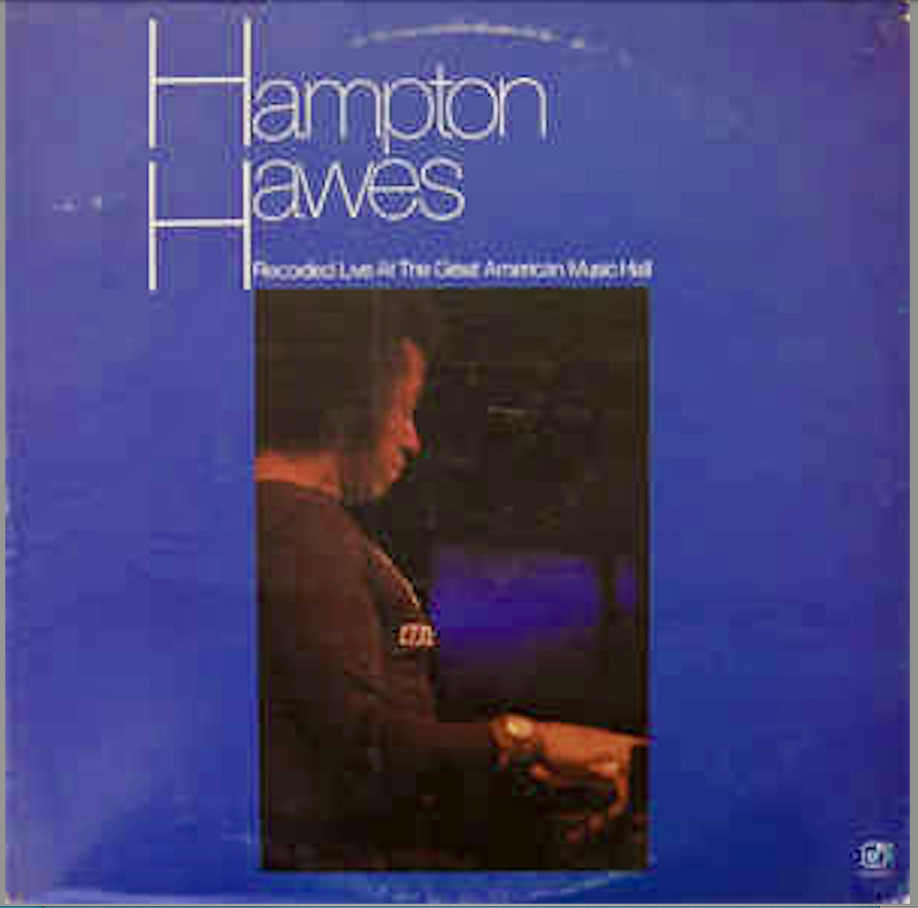
Hawes Live At The Great American Music Hall #2
One of my lockdown projects has been to sort through these older albums and craft a playlist. Because of the nature of the material, some of it I have not posted as it has not yet become available on streaming services. Here are a few that took my fancy.
Paul Bley ~ Mr Joy (Limelight 1968). This album doesn’t appear in Spotify or in most discographies. It is an interesting and very rare album filled with great material. With Bley (p) are Gary Peacock (b) and Billy Elgart (d). The liner notes are hilarious and random. ‘Voice: Why do they call you Mr Joy? MJ: Because I’m unhappy about a lot of things’ Mr Joy went on to say that he was unhappy about imitators and impersonators, his own performance, but happy about people with open ears like Gary Peacock and Billy Elgart. The ghosts of Annette Peacock and Ornette Coleman inform this album.
Anita O’Day ~ Angel Eyes (Emily Records/Lobster Records 78-81). These fabulous Anita O’Day small group sessions are a hybrid of two Japanese recording dates – 1979 and 1981. It came at the most troubled period of her life when her addiction problems were made public after a bust. Here, she is with her partner John Poole (trio leader and drummer). Poole has been blamed for her woes of that time, but later evidence suggests that he took the heat to protect her. She kept in touch with him and gave him work long after they parted. This is not the bright sassy O’Day of later years, but a smoky-voiced vocalist channelling her pain. Some may think that material like this should be forgotten, but I disagree. Would we ditch the difficult Billy Holiday years? This is Anita at her most soulful. A later limited compilation from these sessions was released by Kayo. My copy was extracted from two EP/LPs and has bespoke liner notes. John Poole (drums), Don Abney (piano), Dwight Dickerson #2 (piano) Harvey Newmark (bass). My converted copy finally corrupted.
Jimmy Giuffre 3 ~ Flight Bremen 1961 (Hat Hut / Radio Bremen) This Giuffre/Bley/Swallow album was taken from the live feed by Radio Bremen and later released by Hat Hut. It does not appear in many discographies and is particularly interesting as it proceeds the ground-breaking album ‘Free Fall’ and ‘Free Fall Revisited’. This adventurous music shocked many Giuffre fans who purchased it thinking that they were getting more of ‘The Train and The River’ trios. He changed his trio to include Bley and Swallow in 1961 (after 17 folksy albums with his old trio). During this period the discographies can be confusing. An album called ‘Fusion’ came out and ‘Fly Away Little Bird’ on the French OWL label. In 1989 ‘Life of a Trio: Sunday’ came out. Free music was still very controversial in 1961 – ‘Flight Bremen’ is a bridge between the two styles. My copies are all extracted from LPs. Giuffre on clarinet.
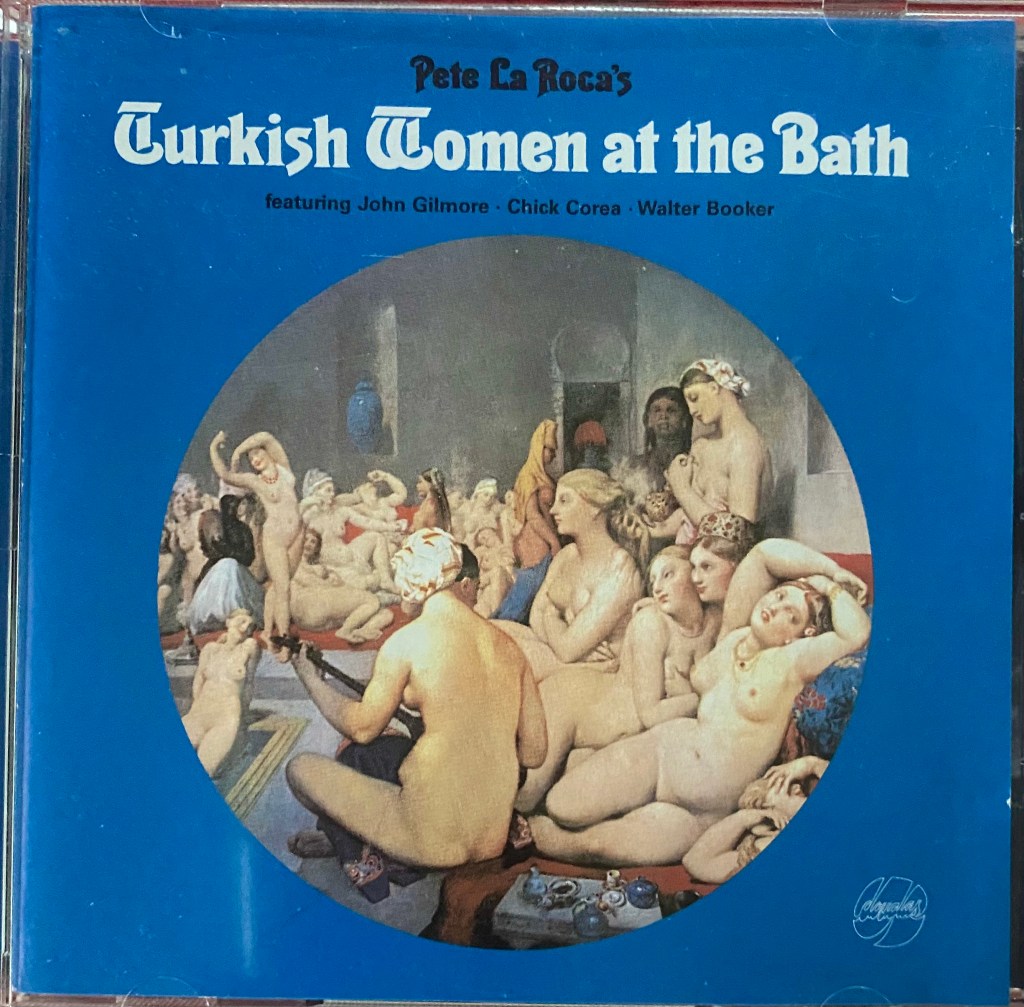
Turkish Women at the Bath ~ Pete La Roca (Fresh Sound May 1967). This recording has an interesting tale to tell. After it was recorded, a well-known member of his band (not the leader) released it under his own name. La Roca was incensed and went to court over the copyright. After a long court battle, he won the case, and all existing copies were recalled. It was later released by Fresh Sound with the correct attribution. La Roca studied and became a copyright attorney and had a successful practice defending artists against violations like those he suffered. It is an exceptional album filled with modal grooves and open compositions. The personnel, Pete La Roca (drums), John Gilmore (tenor sax), Chick Corea (piano), Walter Booker (bass). La Roca is an interesting drummer who could create a loose swing feel over freer music. Gilmore is fabulous.
Steve Kuhn ~ Oceans in the Sky (Owl 1989). The French label Owl was always worth checking out and this straight-ahead album is a gem. With Kuhn are Miroslav Vitous (bass) and Aldo Romano (drums). It was recorded in Paris, probably to suit the Czech bassist and Italian drummer. Nothing in Jazz quite evokes the feeling of looking down from space like this. Every time I listen to it I am overjoyed afresh. I wore out one copy and purchased a new one upon re-issue. ‘The Island’ by Ivan Lins is glorious. Such a lovely slow swing feel and if they laid any further back on the beat, they’d surely fall.
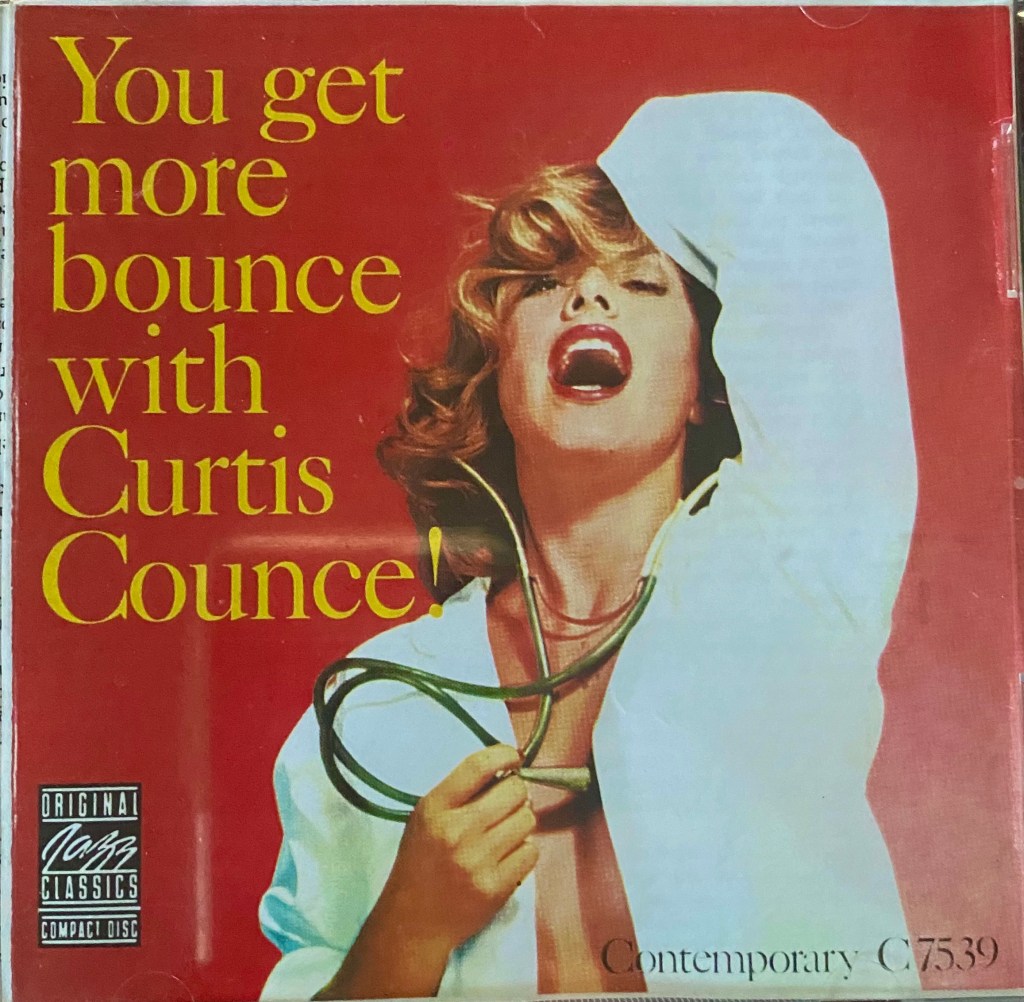
Playboy styled covers were popular on the West Coast
Curtis Counce ~ You Get More Bounce With Curtis Counce (Contemporary 1956). Curtis Counce was a star that burned out far too soon. He died of a heart attack while his career was on the rise. Counce, a stellar bass player, managed to play with an extraordinarily talented range of musicians before forming his own quintet in the Bay Area. In his lineup were some of the finest musicians on the west coast. Carl Perkins (piano), Harold Land (tenor), Jack Sheldon (trumpet), Frank Butler (drums). It was opportune for Counce, that Land quit the Clifford Brown/Max Roach band because he missed his family. Land has one of the most recognisable sounds on tenor saxophone, Perkins was a rising star, but tragically, he died of a drug overdose just as the band was becoming famous. He is one of those pianists who was reaching for a fresh approach and his loss at such a young age is lamented to this day. The album cover would possibly not pass muster today. Contemporary often took a playboy approach to cover art.
Jazz Studio 2 ~ Holywood (Decca monaural LP 1954). There were at least three in this set, volume 1 featured east coasters like Hank Jones. ‘Volume 2’ is an early example of the cool west coast sound and the nonet features heavyweights of the day. The personnel: Don Fagerquist (trumpet), Milt Bernhart (trombone), John Graas (French horn), Herb Geller (alto saxophone), Jimmy Giuffre (tenor, baritone, clarinet), Marty Paich (piano), Howard Roberts (guitar), Curtis Counce (bass), Larry Bunker (drums). Unsurprisingly, Paich does most of the arrangements with a few by John Graas. Bunker is always attention-grabbing as a drummer (or vibes player), most memorably with Bill Evans in the ‘65 trio’.
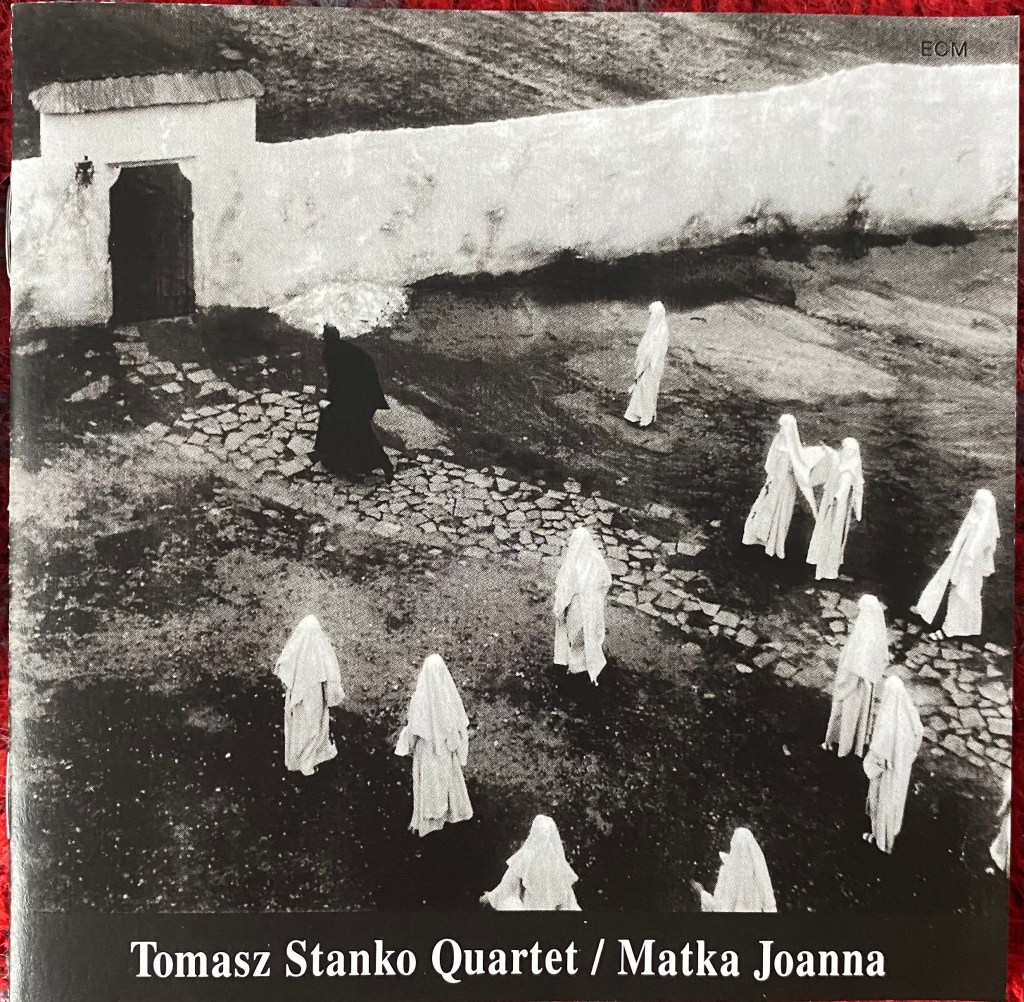
Matka Joanna ~ Tomasz Stanko Quartet ( ECM 1994). This and the two albums that follow are in the overlooked category, hiding in plain sight. ‘Matka Joanna’ (Mother Joan) is a tribute to the award-winning Jerzy Kawalerowicz film about a group of possessed, eroticised, nuns on the rampage and set in the middle ages. The unusual genre called Nunsploitation thrived in the eastern bloc and became an outlet for artistic subversives during the communist era. Thirty-three years after the film came out Stanko produced this open, free-exploration in tribute. There are many reasons to like this with its dreamy vibe, but high on the list are the musicians. Stanko was a trailblazer with his euro-free inside-outside approach, an original. His east European style of Jazz was always informed by the world he grew up in, and particularly by Kristof Komeda. With Bobo Stenson on piano, Anders Jormin on bass, and best of all, Tony Oxley on drums, how could this not be extraordinary? Very few people know of this album and that puzzles me.
Nothing Ever Was Anyway. Music of Annette Peacock (ECM 1997) Marilyn Crispell Trio. This is a highly rated album, but perhaps because it is free improvised it remains on the margins. Marilyn Crispell is living proof that free improvised avant-garde music can also be beautiful. Her spaciousness, phrasing, and interactions with others, mark her out as one of the greats. She has recorded in New Zealand with Jeff Henderson and the late Richard Nunns (check that out on Rattle, it’s still available and streamed).
Hampton Hawes At the Great San Francisco Music Hall (Concord 1975). There were two issues of this album and the details are sketchy. Mine was a vinyl conversion with no liner notes. Also hard to find is the Swedish ‘Black Lion’ album ‘Spanish Steps’. Hawes was a superb pianist and his playing was always recognisable (increasingly, passionately, funky over the years). Everything by Hawes is worth having and a lot is up on Spotify. Sadly the ‘Great American Music Hall’ album is not. On that disk, he shouts and stomps as he builds the tension. The rare ‘Black Lion’ albums only appear on YouTube. The clip below is from a year later than the ‘Great San Francisco Music Hall’ recording.
The best source for small-label, rare, and previously unreleased recordings is Bandcamp. There are some great Dewey Redman recordings there for example. For Dewey, check out Barney McAll’s ExtraCelestial Arts page (a never before heard Dewey release) and also check out the great Canadian free Jazz unit, Jon Ballantine Trio with Dewey. I would like to acknowledge Welly Choy and John Good, who started many on this journey for the overlooked.
JazzLocal32.com is rated as one of the 50 best Jazz Blogs in the world by Feedspot. The author is a professional member of the Jazz Journalists Association, poet & writer.Some of these posts appear on related sites.
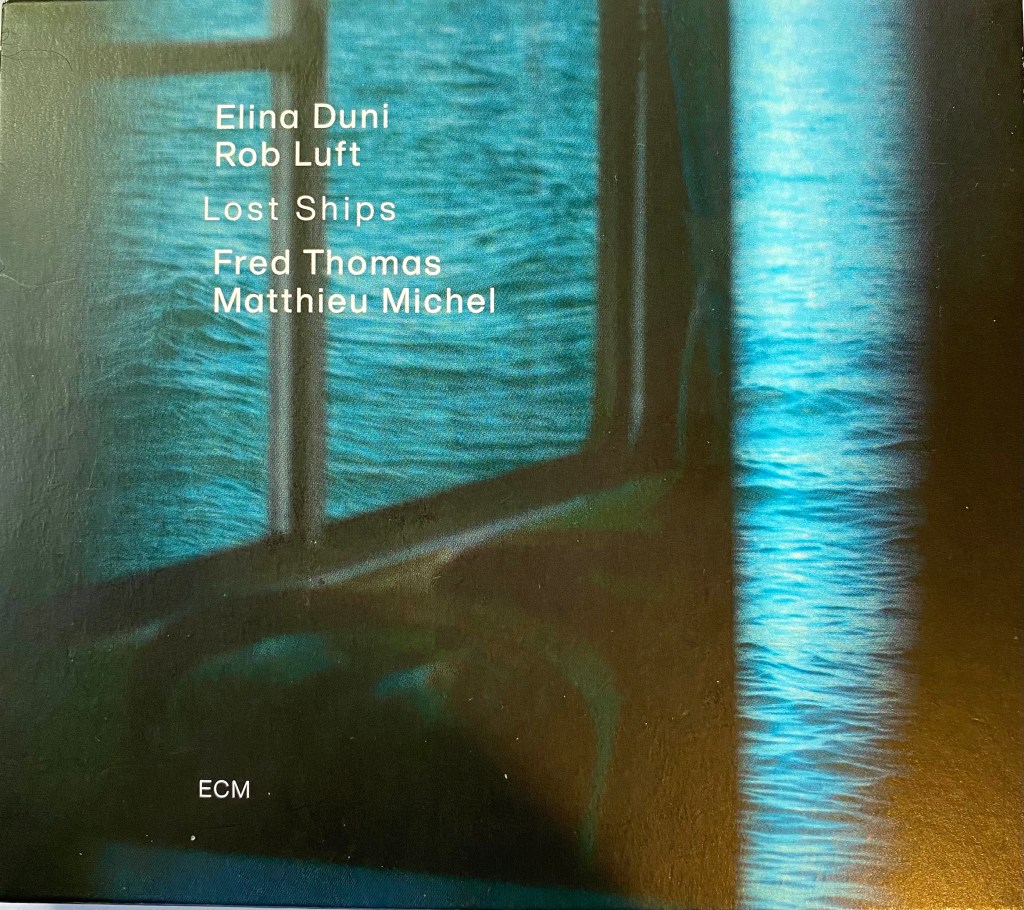
Lost Ships on ECM is an album that rewards deep listening. It is deliciously spacious and unbelievably beautiful and the powerful images and exquisite stories will remain with you long after listening. It speaks in many languages, as disparate as Albanian and English. The Romance, Germanic and Balkan tongues unified in improvised song form. The album is a collaboration between UK Jazz guitarist Rob Luft and Albanian born Jazz vocalist Elina Duni. Together they have crafted a rare and precious document. It is especially relevant for current times while gently referencing a fading past.
Like many ECM albums, originals, traditional folk tunes and jazz standards are approached with a Euro-Jazz sensibility. An approach where less is much more and an almost preternatural clarity is realised Everything sounds fresh and the album achieves this by breathing new life into what we recognise and by delighting us with the unfamiliar. As always with ECM albums, the recording quality is impeccable, and the musicians take full advantage of this.
The first number ‘Bella Ci Dormi’ (Beauty, You Sleep) is a traditional Italian song conveying intense longing. It opens with the piano and guitar setting up the tune for Duni; her voice, caressed by the delicacy of the arrangement. Duni has an extraordinarily beautiful voice and Luft has gifted her the perfect arrangements. The next tune ‘Brighton’, an original by Duni and Luft is sung in French (with the flugelhorn as another dominant voice).
There is a songbook standard, ‘I am a Fool to Want You’ (Sinatra/Wolf/Herron) and a loved chanson classic ‘Hier Encore’ (Charles Aznavour). This establishes the pattern throughout. Songs from many sources sitting comfortably together. The song ‘Wayfaring Stranger’ (trad USA) was made famous by Johnny Cash, but it has previously been recorded by Jazz musicians (Charlie Haden and Shirley Horn). The two traditional Albanian songs are a rare treat. In ‘Kur Me Del Ne Dere’ or ‘N’at Zaman’, it is not hard to discern the eastern European flavour.
Among the originals are some wonderful tunes, ‘Flying Kites’ is stunning as are ‘Lux’ and ‘Empty Street’. As lovely as the rest are, my highest praise goes to the title track ‘Lost Ships’. The song pays tribute to the migrants who lost their lives in the Mediterranean; gently but powerfully urging us to take action on environmental and humanitarian issues before we find ourselves lost ships on an empty sea.
The trio accompanying Duni is not of a typical alignment. It has two chordal instruments and the pianist doubles on drums. Then there is the flugelhorn. Such sensitive players all. And Luft is on every track and he is a powerful presence without being overt. It is his astonishing voicings and delicately placed runs; none intruding on the vocalist but never-the-less conveying a quiet strength by exploiting timbre and speaking whisper-soft. This was a perfect match and I am not surprised that ECM picked them up.
The last time I encountered Luft, was at Ronnie Scotts, playing a gig with Kit Downes, and it was there that he told me of this ECM project. At the time I had not heard of Duni, but a few months later and back in New Zealand, I posted enthusiastically on the Norwegian avant-garde vocalist Sidsel Endresen. Luft messaged me immediately to say that there was a connection between Duni and Endresen. Intrigued, I kept an eye out for the album, and then the pandemic hit.
I was determined to grab a copy, a real copy, complete with brooding artwork and an outer sleeve. ECM has the imprint of artistic integrity and I avoid listening to any ECM recording in a compressed format if I can. I badly wanted to hear the album, but I waited. I was informed that it could take two months due to pandemic shipping delays, but it took much longer. It finally arrived as winter approached and I took it out of the letterbox as dusk fell. I put it on as darkness fell and let the sounds wash over me. I loved it from the first note. It had been my lost ship, and now it was found.
Lost Ships: Elena Duni (vocals, compositions), Rob Luft (guitar, compositions), Fred Thomas (piano, drums), Matthieu Michael (flugelhorn).
JazzLocal32.com is rated as one of the 50 best Jazz Blogs in the world by Feedspot. The author is a professional member of the Jazz Journalists Association, poet & writer.Some of these posts appear on related sites.





 JazzLocal32.com