Artemis ~ Blue Note Records

In 2017, seven leading Jazz performers came together as a group and toured Europe. The group was so successful that they embarked on a bigger project. They chose the name Artemis, which is appropriate for an ensemble of musically formidable women. Artemis (or Diana to the Romans) was the Goddess of the hunt & of nature; the goddess with nothing to prove. In an ancient universe crowded with ubiquitous male gods, Artemis was universally popular. 

When you bring a group of band leaders together in the Rock world, the term Supergroup is often applied; in the jazz world, it is applied sparingly.  It is commonplace for Jazz greats to move between groups and when the term is applied, it is seldom as a marketing formula.  Artemis is a supergroup by any definition, but it is the musicianship that makes it so. Anyone of these musicians is a drawcard on a bill and while a group of leaders in itself, offers no guarantee of success, this project proved the pudding. The lineup of Rosnes, Aldana, Jenson, Cohen, Ueda, Miller and Mclorin Salvant was a winner. 

The nominal leader is Renee Rosnes, pianist and arranger.  Five of the band have penned tunes and there are several well-chosen modern standards (Fool on the Hill – Lennon/McCartney) (If it’s Magic – Stevie Wonder). The first track, Alison Miller’s ‘Goddess of the Hunt’ comes closest to a title track and it is a marvellous vehicle for improvisation. It begins with an arresting ostinato pulse, and as other voices enter, the intensity increases. The tune has lush harmonies which flesh out the sound to make it sound a larger unit.  Miller is a great Jazz drummer, but her compositional skills should not be overlooked either. Check out her ‘Glitter Wolf’ Album on Bandcamp, is a favourite of mine.

The second tune ‘Frida’ is by Aldana. A ballad evoking wistfulness and inviting reflection (was it Frida Kahlo)? Fool on the Hill (Lennon/McCartney) is cleverly reharmonised and has a similar mood. The contrasts are delicious; sweet and tart tastefully juxtaposed. Here, trumpeter Jenson reminds me of fellow Canadian, the much-lamented Kenny Wheeler; a nice arrangement. ‘Big Top’ (Rosnes) uses stop-time and surprise to great effect; the tasty solos by Rosnes and Aldana having more edge than a blindfolded knife-thrower. 

There are two tracks featuring Mclorin Salvant and they are as breathtaking as you’d expect from this world acclaimed Jazz vocalist. ‘If it’s Magic’ (Wonder) will surely turn up in her repertoire as will Cry, Butterfly, Cry (Rocco Accetta).  Nocturno (Cohen) is a moody slow burner with an ancient to modern feel. Cohen’s origins are evident here, a sound painting of a sultry sunset. Her clarinet is sublime. Step Forward (Ueda) is a fast-paced tune which opens with bass and clarinet dancing around each other in a joyous abandon, while Miller and Rosnes urge them on to greater heights. 

 If there was one track that had me gasping from the first phrase it was Lee Morgan’s composition Sidewinder’ – in truth, it made more impact than the famous original. This snake, unlike his forbear, has slowed its slither and is luxuriating happily as it grooves across a sunlit clearing. The voicings are reminiscent of an Oliver Nelson arrangement and the interplay between the musicians is quite extraordinary. Muted trumpet, clarinet and that unhurried, luscious, undulating groove. 

Artemis may be a multi-national and multi-ethnic line up but in the end, the thing that counts most is the universality of their music; Renee Rosnes (piano), Melissa Aldana (saxophone), Ingrid Jenson (trumpet), Anat Cohen (clarinet), Norika Ueda (upright bass), Alison Miller (drums), Cecile Mclorin Salvant (vocals). 

JazzLocal32.com was rated as one of the 50 best Jazz Blogs in the world by Feedspot. The author is a professional member of the Jazz Journalists Association. Many of these posts also appear on Radio13.co.nz – check it out.
Dr Tom Botting Rediscovers Aotearoa

Bass player Tom Botting recently returned to Aotearoa and his first Auckland gig was well received. Even as a gangly student he impressed, and the regular attendees at the CJC hold fond memories of those Britomart Jam Sessions where he featured so prominently. Soon after that, he moved overseas, gaining a doctorate at the Sydney Conservatory. Like many of our musical exports, he returning annually, and many of the tunes that we heard last Wednesday were first showcased during those back-home tours. 

His compositions are always memorable and often evocative. Now, he has returned to weather out the pandemic, bringing with him some new tunes, and updated arrangements of older ones. They are no longer isolated in a disparate setlist but are played sequentially and in geographical alignment. While the tunes are not presented as a suite, they nevertheless evoke a strong sense of place. And whether intended it or not, they present a cinematic journey across our landscapes. Here, Botting has achieved what locals often cannot. His yearning from afar for our landscapes and archetypes has led him to create something sublime. 

The tune titles in these sets speak of mountains or the places immediately in their shadow; Mitre Peak, Mt Aspiring, The Remarkables, Hamner Springs, etc. I have posted a YouTube clip titled Hidden Waterfall and it is one of his more recent compositions. It begins with a pedal tone on piano, around which the bass introduces striking motifs, and then, a new line is introduced by the alto. 

The piece is simply captivating and clarity is achieved by ensuring that no instrument gets in the way of another. It’s not easy to strike that fine balance and it’s extremely clever writing. Each segment stands on its merits, and yet, sits comfortably within the arc of the overall composition. It is a good example of less being more or to put it another way, as something complex rendered into ear-grabbing approachability. 

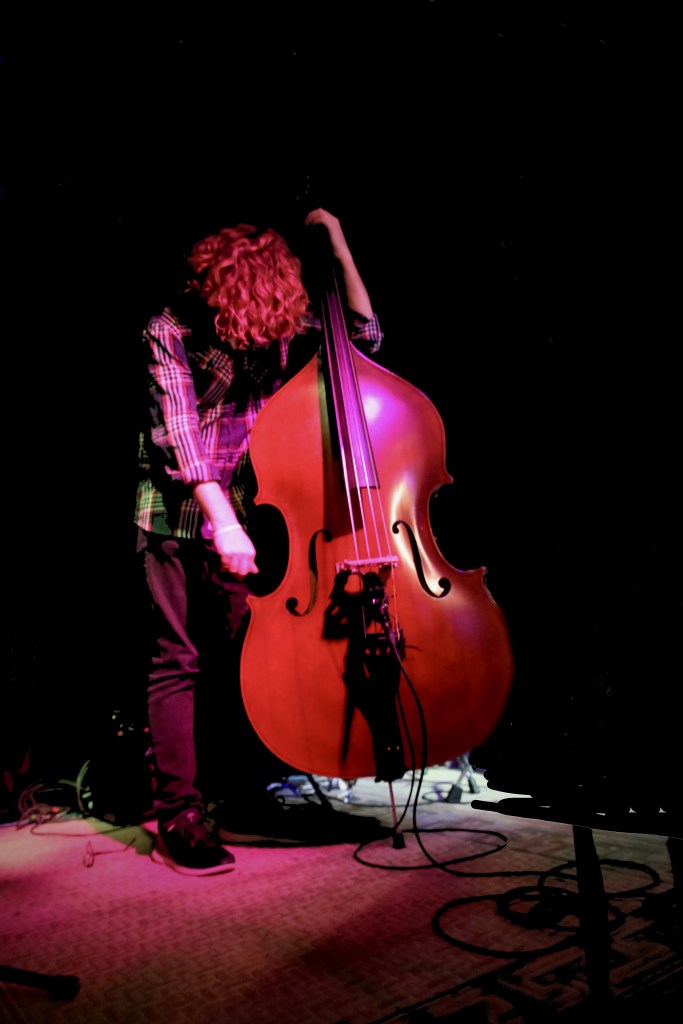
Botting is a superb bass player and he poured everything into his tunes. He was always one to absorb himself in his playing and that has not changed. As he plays you see nothing but hair and fingers, but what you hear is the essence of the man. Beside him was Callum Passells on alto and he pulled out a great performance. An approach at times reminiscent of Shorter, and always with that gorgeous tone.  Partially hidden on the left of the stage was guitarist Michael Howell, and again a good performance from him. His newfound confidence is reaping dividends. To complete the quintet were Kevin Field and Jono Sawyer. Both are consummate professionals and they maintained the standard of playing that we have come to expect of them. Pick up bands of this quality make a visitor happy to return.     

There is a rich tradition of pastoral music in Aotearoa, most notably Douglas Lilburn. There is also the extraordinarily beautiful Ondas Album (ECM) by our premier Jazz Export Mike Nock. It is good to see a body of work of this quality adding to that tradition. Botting had already performed a concert in Wellington prior to reaching Auckland and a recording from that gig may soon be in the offing. The Auckland concert was recorded by RNZ and those unable to make the gigs should watch out for the broadcast. This music will appeal to most Jazz lovers, whatever their preferences. 

Tom Botting (upright bass, compositions), Kevin Field (piano), Michael Howell (guitar), Callum Passells (alto saxophone), Jono Sawyer (drums).  The gig took place at Anthology, K’Road for the CJC Creative Jazz Club, 5 August 2020

Joe Kaptein / Ben Gailer

The gigs introducing young emerging artists are a time-honoured tradition at the CJC Jazz Club. It is one of the reasons why Carolyn and Roger Manins formed the cooperative well over a decade ago. It is a vital part of club programming, as it tests the metal of emerging musicians by exposing them to a seasoned Jazz audience. The gigs also give us a glimpse of the future; they reveal who has yet to shine, and who will soon be nipping at the heels of seasoned musicians.

Both Joe Kaptein and Ben Gailer are students at the University of Auckland Jazz school.  Kaptein is in his third year of studies and Gailer has recently completed his honours studies. Stylistically, the musicians presented very different offerings and the contrasting approaches gave us a unique insight into the breadth of teaching available at the Jazz school. It was a showcase for the band leaders and a showcase for their tutors, with many of the latter hiding in the shadows and beaming throughout. 

First up, was the Joe Kaptein sextet. The band was a mixture of former and current Jazz students (plus two tutors), with Kaptein leading on keyboards, Michael Gianan on guitar, Roger Manins on tenor saxophone, Will Goodinson on electric bass, Elijah Whyte drums and Ron Samsom on percussion. The compositions were all Kapteins and it was immediately obvious why he chose keyboards over the piano. I have heard Kaptein perform as a sideman on several occasions, and his preferred palette is that drawn from the older analogue keyboard instruments. On this occasion, he had a Render Rhodes as his primary keyboard and a variety of augmentations (one machine in an intriguing case, the knobs and dials reminiscent of the moon landing console). 

The first time I heard Kaptein was like hearing 70s Jazz reimagined. I have always thought that the era deserved further appraisal, as the journey back then was curtailed by the Jazz police. It is possible, that Kaptein found this style without reference, but nevertheless, he has encapsulated a modern version of that older trippy explorative vibe. His compositions are mature and packed with surprise.  In typical post-bop fashion, there were references to the waypoints of the jazz journey; but above all, these numbers spoke of joy.  

The second set featured a sixteen-piece ensemble led by Ben Gailer and what he presented wowed everyone in the room. Arranging and composing for an orchestra is a complex task, but to bring such an orchestra to a Jazz club on your first gig there is beyond brave. All of the charts had been arranged by Gailer and many of the compositions were his own. His own material stood up very favourably amongst the standards ’There will Never be Another You’ and a fresh sounding take on Hancocks ‘Maiden Voyage’. That speaks for itself.

It’s hard to know where to start in evaluating a set like this as it covered so much fertile ground. There was his energised conducting, somewhat reminiscent of Darcy James Argue with its expressive flourishes as he urged the sections on. There were the finely textured arrangements which balanced dissonance with melodicism in a precise and pleasing measure, and then, there was his pianism which shone through all of that. That is a lot to bundle together but he did so with real class. I can’t wait to hear where his journey takes him next.

Ben Gailer

Because of the sight-lines and the seating, I could not set my video up for that set and I cursed that I had not brought audio-recording equipment with me. What I did, was record it on my phone as an aid in evaluating the performance. Posting iPhone capture is not ideal, but with luck, a better recording of this large ensemble may become available at a later date. I certainly hope so.

Joe Kaptein Sextet: Kaptein (keyboards, effects), Roger Manins (tenor saxophone), Michael Gianan (guitar), Will Goodinson (electric bass), Elijah Whyte (drums), Ron Samsom (percussion)

Ben Gailer Orchestra: Ben Gailer (compositions, arrangements, piano, Fender Rhodes), Lukas Fritsch (reeds), Cameron Kelso (reeds), Felix Hayes-Tourelle (reeds), Daniel McKenzie (reeds), Charlie Harmer (reeds), Jake Krishnamurti (Trumpet), Jack Thirtle (trumpet), Nick Curry (trumpet), Caleb Probine (trumpet), Jono Tan (trombone), Esther Simpson (trombone), Zachary Lim (trombone), Michael Gianan (guitar), Hank Trenton (bass), Rhohil Kishore (drums).

The orchestra was a mixture of present and recently graduated UoA Jazz school pupils.

Passells/Howell/Deck

This trio has been around for a while, but the musicians are all active with a variety of other projects. They frequently appear as sidemen and they first teamed up during their Auckland University Jazz School years. Passells has been teaching, composing, appearing as an altoist (and a drummer), and adding his skills to some adventurous and diverse projects. Howell is a member of various bands, such as the Jazz Tui nominated Alchemy and the Jazz Tui Award winning GRG67 who launched their second album recently. It was reviewed on this site. Deck is a gifted and versatile drummer and his work as a member of the much lauded Indie Pop group The Beths is as noteworthy as his Jazz offerings.  He is also a member of GRG67.

 As a composer and a performer,  Passells takes a path less followed. He’s a melodicist and often appears in units where the arc is not reliant on chordal harmonies.  This moves the attention to melody, and most of all, it reveals his lovely tone. The alto is an unusual instrument in this regard, as its tonal qualities can alter markedly, depending on who plays it. Perhaps, because it is aligned so closely to the human voice? It has also been suggested that the airway of an alto player can exert a stronger influence than with other horns. While a tenor can also be individualised, it is more inclined to speak on its own terms. Passells alto voice is distinctive,

There was no bass with this unit and without such anchoring, the melody lines seemed to float unencumbered. When the alto was playing the guitar would either play unison lines, lay out or provide timely interjections. The reverse occurred when Howell played. The drums however, were a solid presence and provided continuity and momentum. As a result, the tunes felt conversational and at times, thoughtful. And the ears followed the musical dialogue easily, in spite of the elided grammar. Passells introduced the tunes as he usually does and his trade-mark humour was evident. He has an easy going banter, often self-deprecating, and laden with random references.

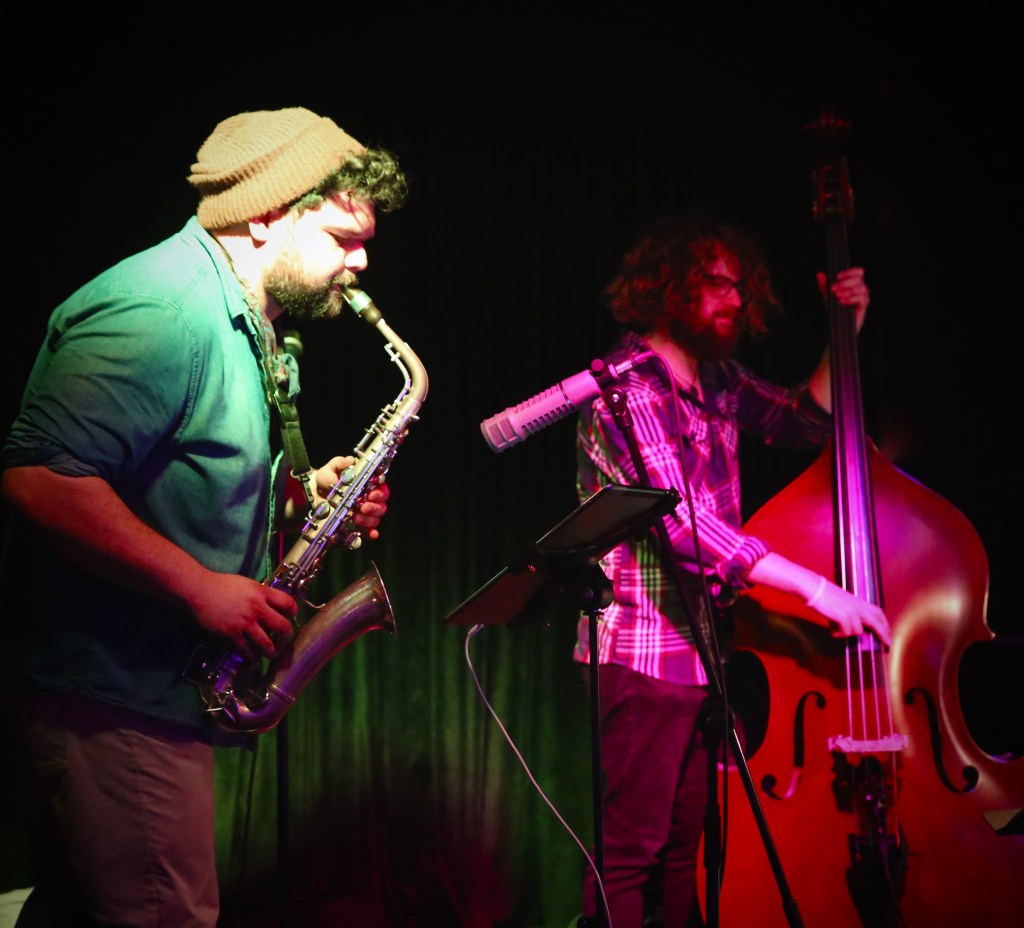
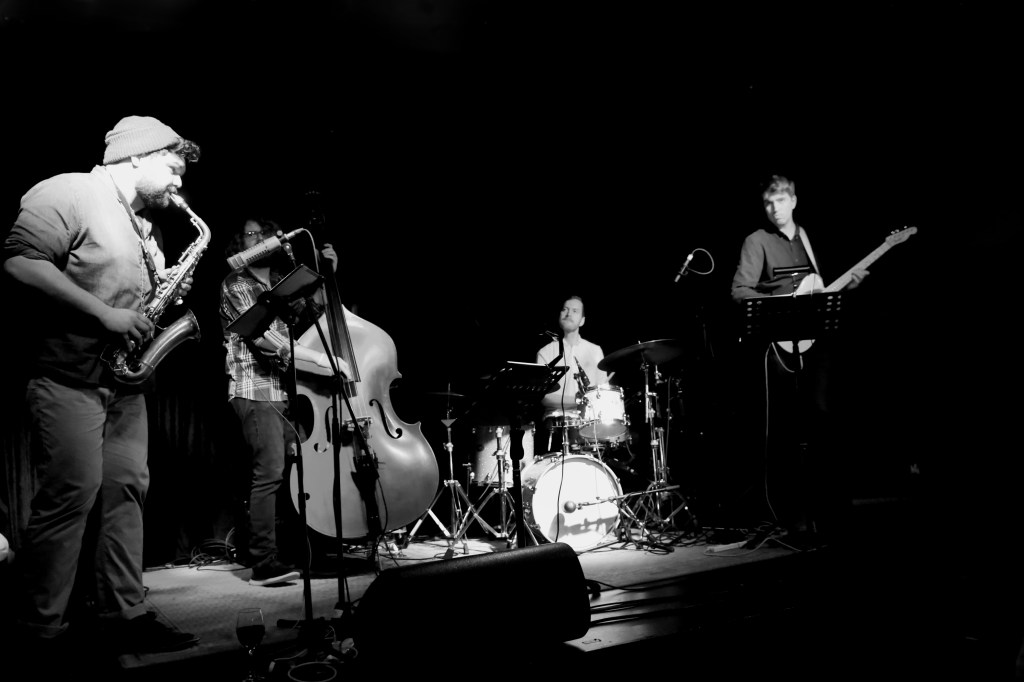
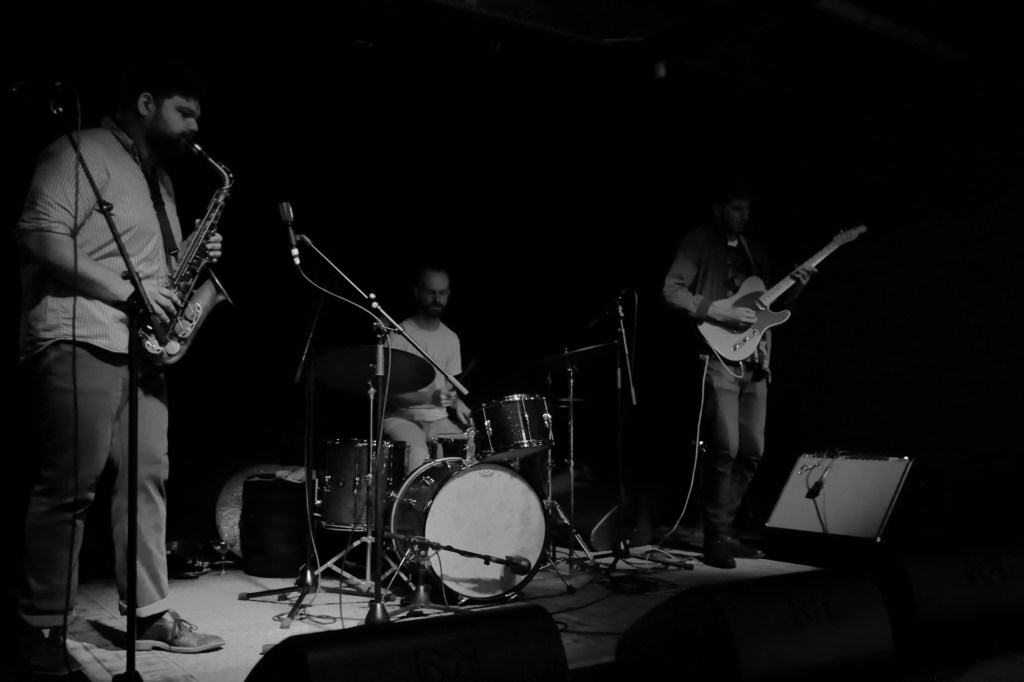
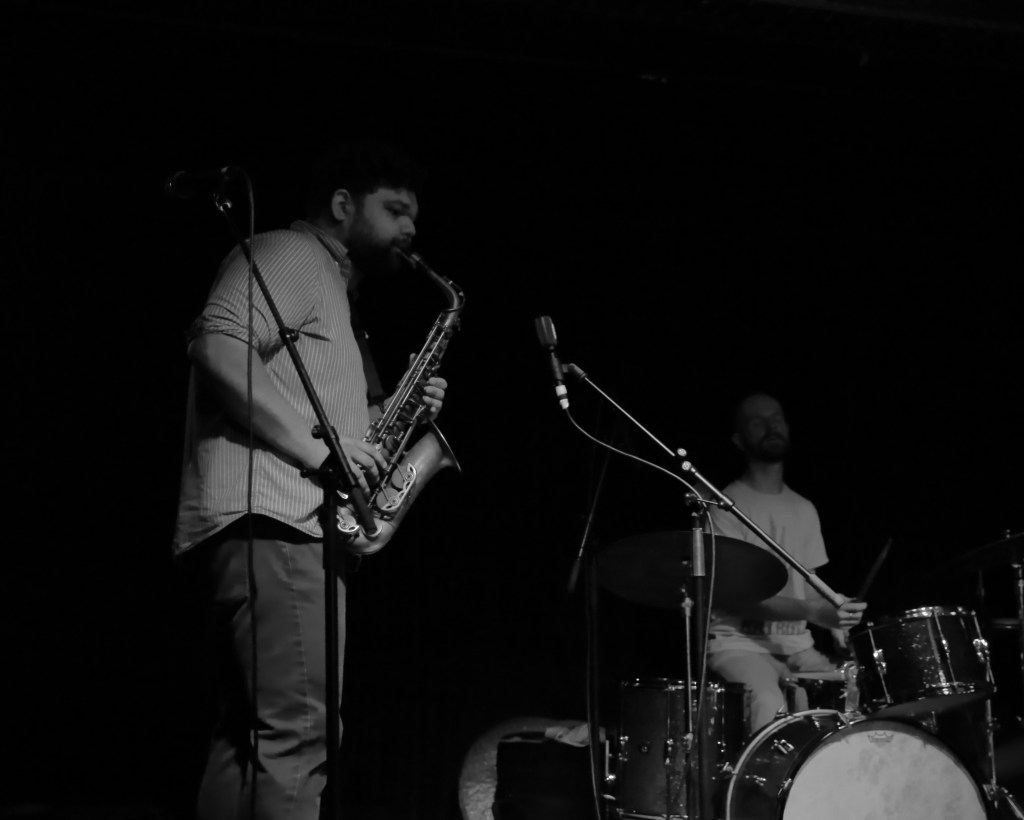
The band played in near darkness which provided atmosphere, but made filming a difficult proposition. By the second set, the lighting had improved slightly and I have posted a tune from that set. The tune I posted is interesting, as there are frequent unison lines played, with guitar and alto speaking as one. It is reminiscent of Marsh with Konitz, but the drums pull the music in a different direction. Out of that confluence come interesting tensions. This is ripe territory for a group of this configuration and the seasoned listeners picked up on the various references. 

Callum Passells (alto sax), Michael Howell (guitar), Tristan Deck (drums)

The gig took place at Anthology K’Road, for the CJC, Auckland 22 July, 2020

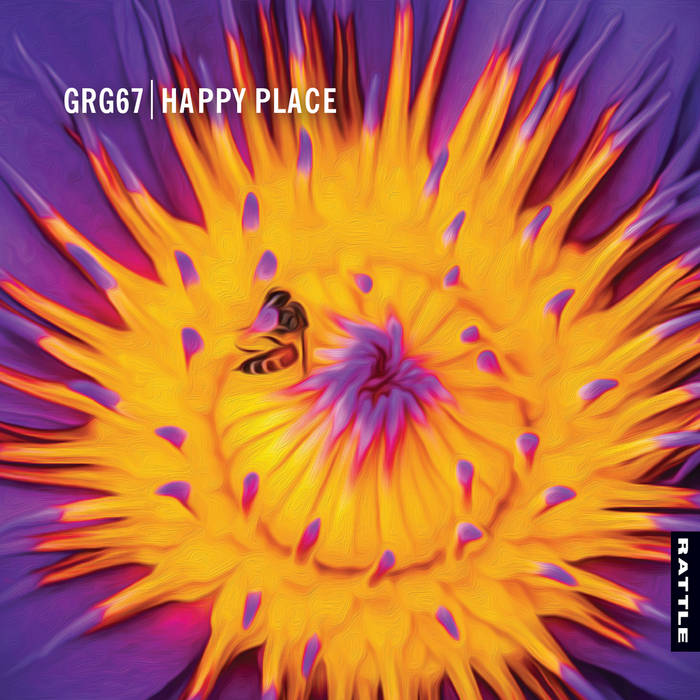
GRG67 ~ Happy Place

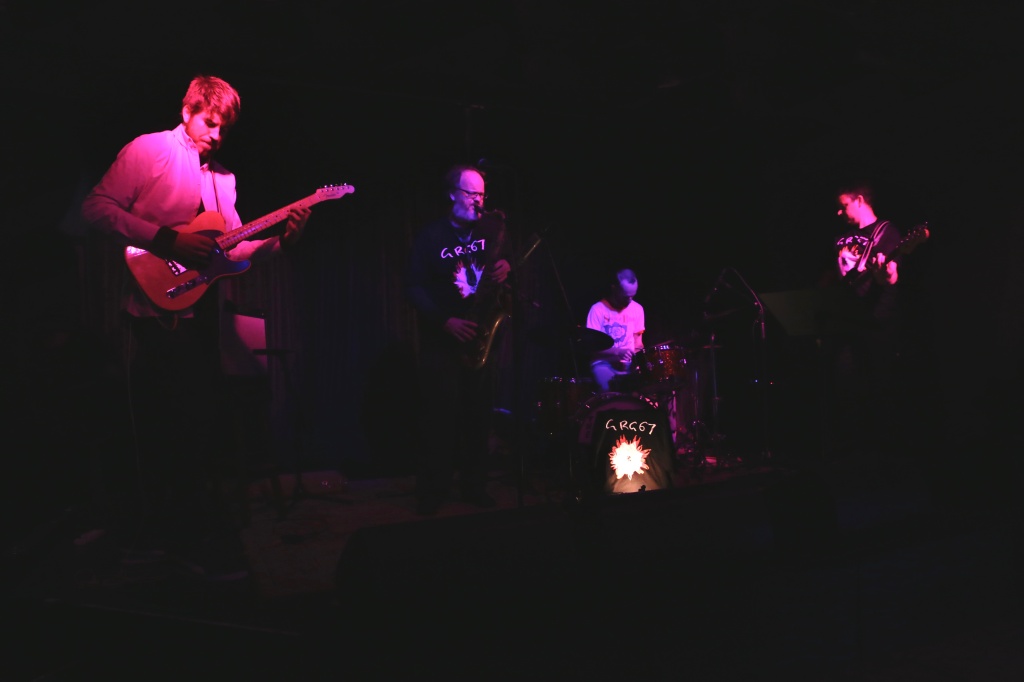
The first gig after lockdown restrictions brought a record audience to the Creative Jazz Club.  Now, a week later, with a second gig achieving similar results, it is obvious that the thirst for quality live-improvised music in Auckland has not been dented. And what better way to whet the appetite than with the 2019 Tui Award-winning band, Roger Manins  GRG67. This is a truly magnificent quartet and it occupies a special place in the lexicon of Kiwi improvised music. Sitting at the juncture between free and inside, and doing so with an ease that pleases everyone.

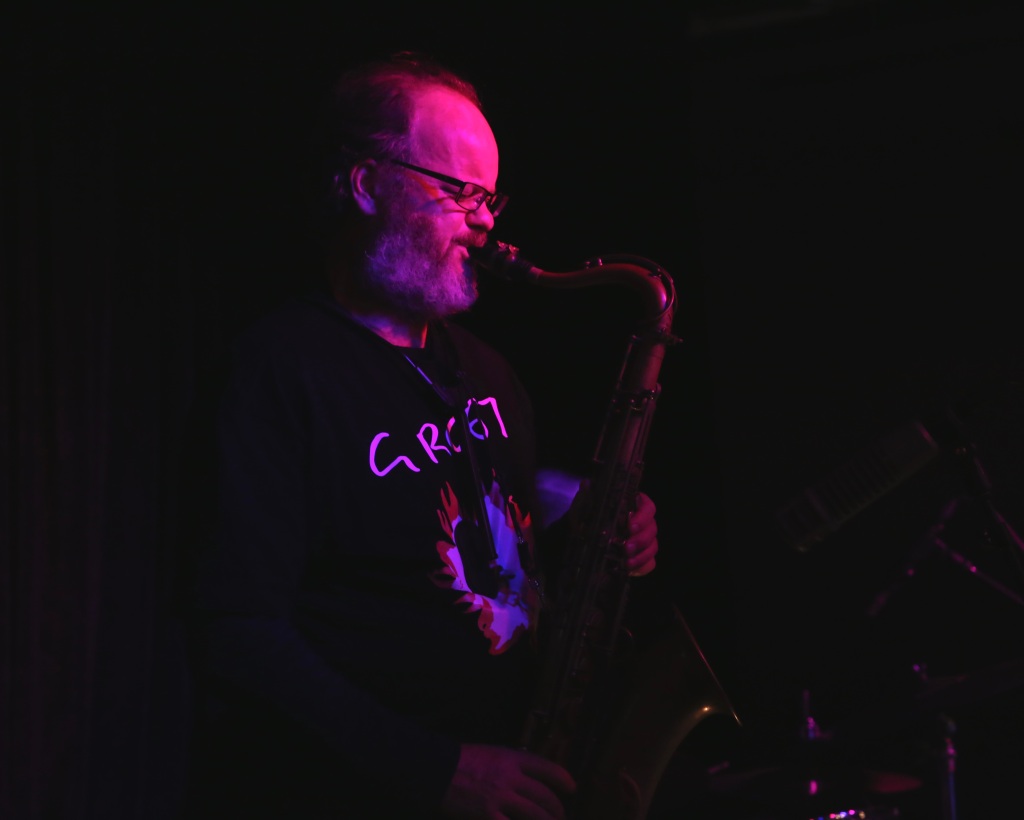
Roger Manins is a drawcard and the highest level of playing is always expected of him. His long years of playing on the bandstand, and often in challenging situations, has honed his craft to a fine point. To burnish his already impeccable credentials he has now added a Doctorate of the Musical Arts to his resumé. Most of the compositions and arrangements on the album are Manins, but as with the previous GRG67 album, there is also a tune by Mostyn Cole featured. 

The GRG67 album The Thing won a Jazz Tui, but the band has not rested on its laurels. Happy Place is not just more of the same. On this album, the writing and playing have taken on an additional edge. It explores form in many oblique ways and then roams into freer air. They sounded cohesive before, but now they sound even more so. There is new confidence to their playing and it is nowhere more evident than with guitarist Michael Howell. 

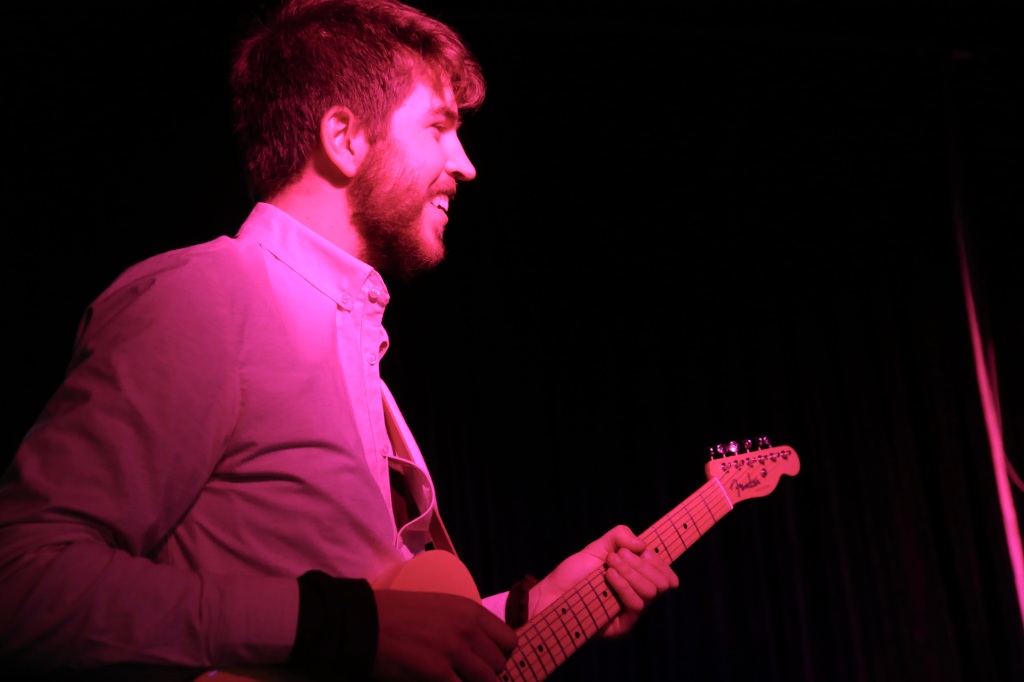
Howell has long shown such promise and it is pleasing to see it realised. He took obvious delight in sparring with Manins and his solos were masterful. Tristan Deck on drums likewise. His role here was to stretch the ensemble, to urge them on when the moment called for it. He achieved that while never losing sight of his interactive role. Deck has many irons in the fire, but I wish we saw him playing here more often. On electric bass was Mostyn Cole, a regular bass player at CJC gigs. He is reliable and experienced and one of an elite group of first-call bass players when an overseas artist is in town. In this band, he was liberated from that role and his obvious delight in the music shone through. 

I have posted a clip titled ‘Frizz’ which is deliciously melodic. Listen to more tracks on Rattle Bandcamp, and if you do, purchase a copy. The tight unison lines on MayWayDay will blow you away and the free-spirited Shoint 67 will groove you to your soul. 

There were no weak links in this chain. They wove in and around each other and fired off crazy lines over urging pulses, and from the safety of our chairs, those present swayed along. This was also our happy place. So this is where Jazz sits in 2020. Forward-looking, but bringing the old into bright fresh spaces, and doing so without contrivance.  

Roger Manins (tenor saxophone)

Michael Howell (guitar)

Mostyn Cole (electric bass)

Tristan Deck (drums)

https://rattle-records.bandcamp.com/album/happy-place