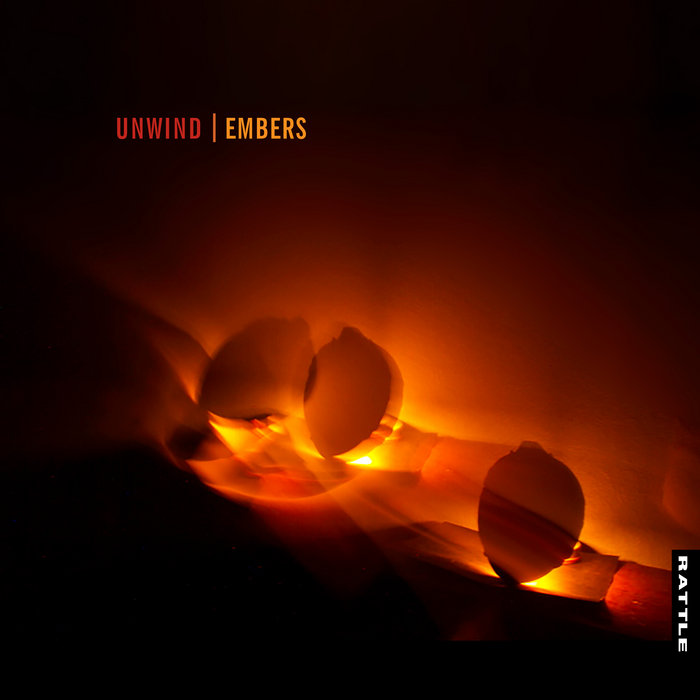
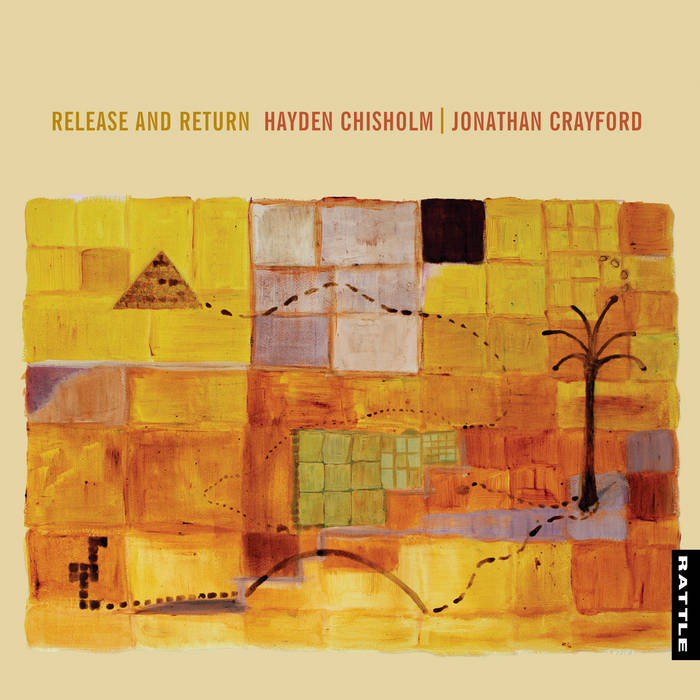
Embers / Release & Return 

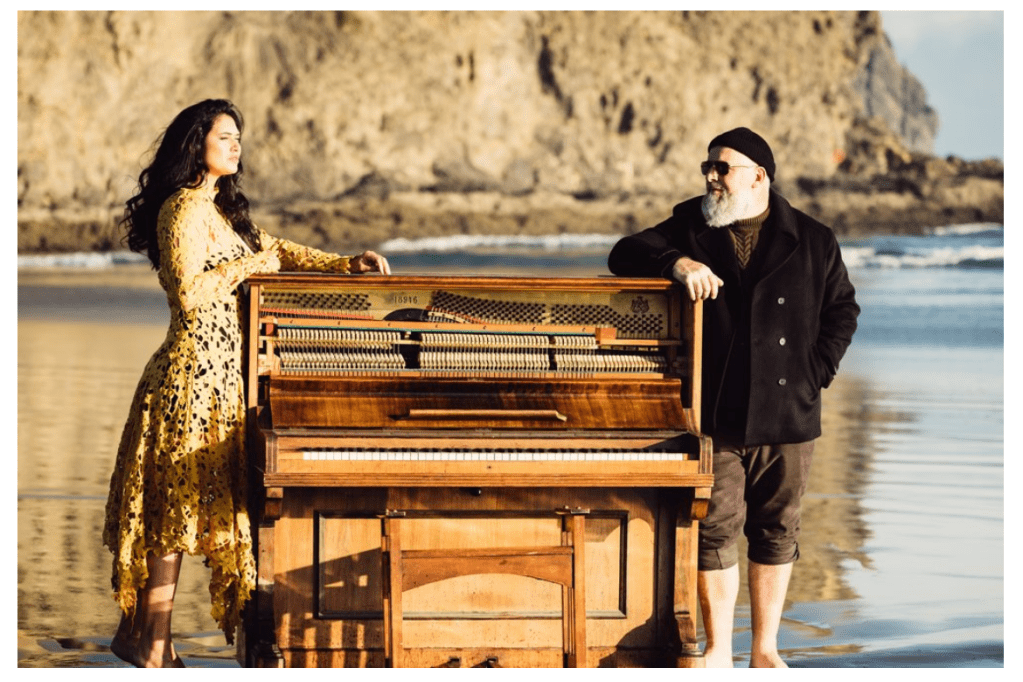
Rattle Records released these excellent albums a few weeks apart. They demonstrate that New Zealand’s improvising musicians are of the highest calibre. Both feature Hayden Chisholm, and the albums enrich each other as if by design, although recorded at opposite ends of the world. 

Embers (Unwind)

This album is the fifth by Unwind, and their second as a trio. The Unwind albums have all been striking for their unadorned beauty, each feeling like a high point. Yet the inventiveness appears endless as they maintain their upward creative trajectory. Only the best musicians can react to each other with such nuance, their quietism filling any listening space.    

Much rests on Hayden Chisholm’s alto saxophone sound, which is preternaturally pure. It’s as clean as Desmond or Konitz, yet utterly unique. It has softness, but a softness that conveys strength and a fluidity that affords him endless possibilities. When playing live, his impact on audiences is palpable. The flute-like alto sounds he creates speak with unusual clarity, creating a balm that the world needs. Feted internationally, known for his skilful use of micro-tonality and throat singing, all his strengths are evident on this album.

A distinctive sound like Chisholm’s requires just the right musicians. Norman Meehan and Paul Dyne are that. In part, because they have been bandmates for years, but it is more than familiarity. On bass, Dyne carries the weight effortlessly, while Meehan’s blues-infused minimalism says as much in between the spaces as in the moments when the hammer meets the wire. You can feel the weight of his ideas behind every note. Thoughtful musicians like this know best how to optimise opportunities. They react instinctively, and nothing is overthought.  

The first number, ‘Around Again’, opens with Chisholm’s plaintive alto keening through the silence, then Meehan’s evocative gospel chords follow. It is an elegant piece and a lovely opening to an album brimming with gems. It exudes a gentle strength that is the hallmark of this band. 

Another number, ‘Good Friday’, conjures subtle emotions. It captures a nostalgic essence, as if evoking a time long past. One we cannot fully recall – a reaction best described by the Japanese term ‘Sabi’. I have seldom heard a piece of Western music that captures that emotion as perfectly as this ballad. And everything in the album flows similarly. Meehan’s compositions are a joy. 

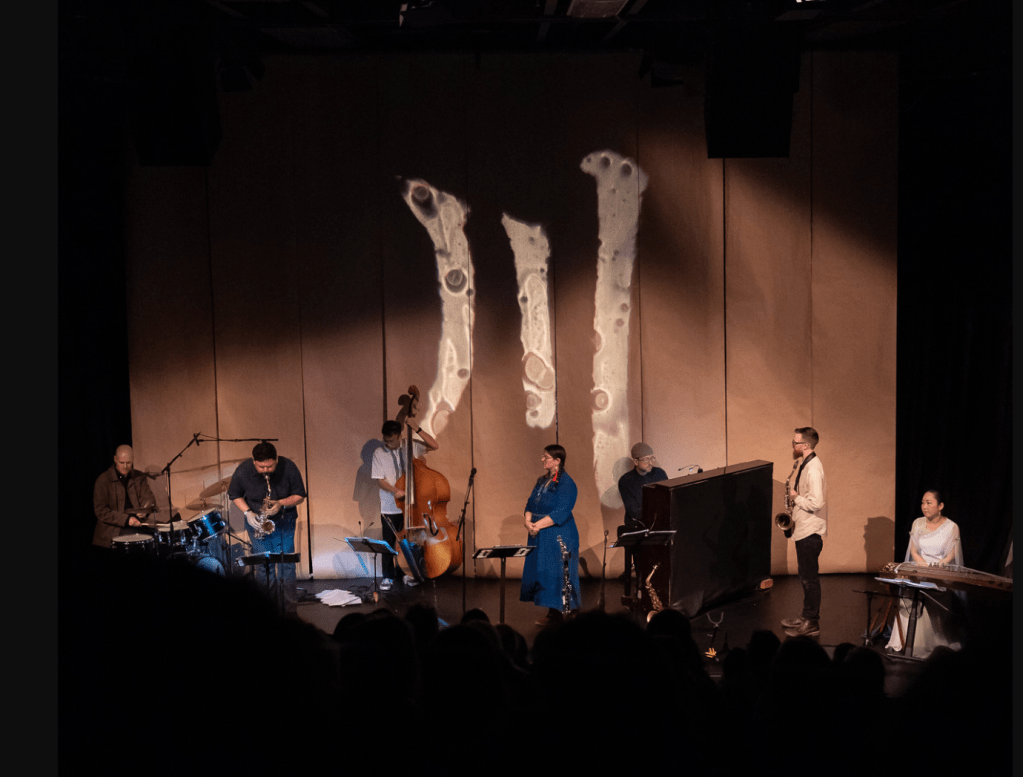
During the album release concert, a particular moment had the audience gasping. After setting the shruti-board drone in motion, the alto began the intro. The pianist was ‘laying out’, listening intently, unaware that his foot had depressed a pedal. An ethereal resonance soon became evident as the harmonics of the alto reacted with the piano. Realising, Chisholm edged closer to the piano and worked with it. A sublime moment of happenstance that had musicians and audience smiling in delight. 

It is our good fortune that Chisholm regularly returns to Aotearoa, the country of his birth. He has an extensive offshore discography, but when playing with old friends, there is a special Kiwi kind of synergy. A reminder that spiritual jazz lives here too. The album is available from Rattle Records in either digital or CD form. https://rattle.co.nz/catalogue/releases/embers

Release and Return (Chisholm/Crayford)

‘Release and Return’ is a duo album featuring Jonathan Crayford on piano and Hayden Chisholm on alto saxophone. It is another standout album, but in a different way from Unwind (reviewed above). It feels more exploratory and is not as consciously introspective. The album captures the joy of master musicians engaging without preconception. As a duo album, the sonorities can be explored more fully. 

Both of these musicians are adept at working with harmonic resonances: Crayford, who prefers audiences to refrain from clapping until the decaying echoes of a final chord are exhausted, and Chisholm with his skillful use of microtonality. 

Mature improvisers like these can draw on everything that they have experienced; it is what forms musical character. Both have travelled widely and listen with open minds to what other cultures or genres offer, be it classical, Carnatic, Spanish or Japanese traditions. 

Crayford’s lovely ‘JC Ballad’ hints at Bach, and in Chisholm’s playing, the influence of Eastern musical traditions is evident, especially when he plays against a drone. In ‘Eldest Daughter’, the wistful opening tune (Crayford), the melody plays softly above, while Crayford’s right hand sounds at times like a feather stroking the strings of a Koto, his left hand, meanwhile, finds the pulse and swing. 

Release and Return stirs deep emotional responses in the listener with its visceral lines, sometimes tender, sometimes raw, as the human condition is examined. This album speaks of freedom and the uncontrived nature of the music that makes it so. 

The album can be purchased from Rattle Records or accessed in digital or CD format via Bandcamp.    https://rattle.co.nz/catalogue/releases/release-and-return

Elementa /Almost Love ~ Reviews

The two albums reviewed feature musicians from Wellington, Aotearoa/New Zealand. The first is by guitarist Callum Allardice, an award-winning musician with an impressive résumé. The second is an EP by vocalist Ella Dunbar-Wilcox (Ella Sophie), her first release.

Elementa ~ Callum Allardice

Elementa is a fine album and Allardice’s best to date. With this release and with this band, he has found the perfect vehicle to showcase his astonishing guitar fluency and compositional chops. He is known for crafting fine charts and melodic compositions and has won the APRA award for best jazz composition three times, but here, he shines as a fully rounded guitarist at the top of his game. There is no mistaking the lineage he arises from, Rosenwinkel and Moreno, and this album sees him vying for a place alongside those who extend that vocabulary, like Charles Altura or Gilad Hekselman.   

Allardice’s supporting musicians are well-known in the Trans-Tasman music scene. The quartet includes accomplished Australian pianist Luke Sweeting, respected Australian-based Kiwi bassist Thomas Botting, and a tasteful drummer Hikurangi Schaverien-Kaa from Wellington. These musicians have previously collaborated with Allardice in groups such as The Jac and The Antipodeans, and are familiar figures to jazz audiences in New Zealand.

His accompanying musicians will be familiar. A lineup of Trans-Tasman stalwarts who have played alongside Allardice before in bands such as The Jac and The Antipodeans. The Australian pianist, Luke Sweeting, is a familiar face to jazz audiences in Aotearoa, as is the Australian-based Kiwi Thomas Botting, a respected bass player. The tasteful Wellington drummer Hikurangi Schaverien-Kaa rounds out the quartet.

There is a lot to like here, with the first track, ‘Stone Eyes’, setting up the rest of the album nicely (embedded). It has an otherworldly quality, and like the title track, it reveals Allardice’s remarkable technical skill as he spins out his mesmeric lines. His tone is inviting and warm. The guitarist is virtuosic throughout, but never just for virtuosity’s sake, and this is the clearest indicator of his maturity as a player. Also of note is a fine solo by Sweeting on ‘Odyssey’.    

Processed with VSCO with c1 preset

The album is on the Australian Earshift Music label and will be released shortly. It can be purchased via the artist’s website or from www.earshift.com

Ella Sophie ~ Almost Love

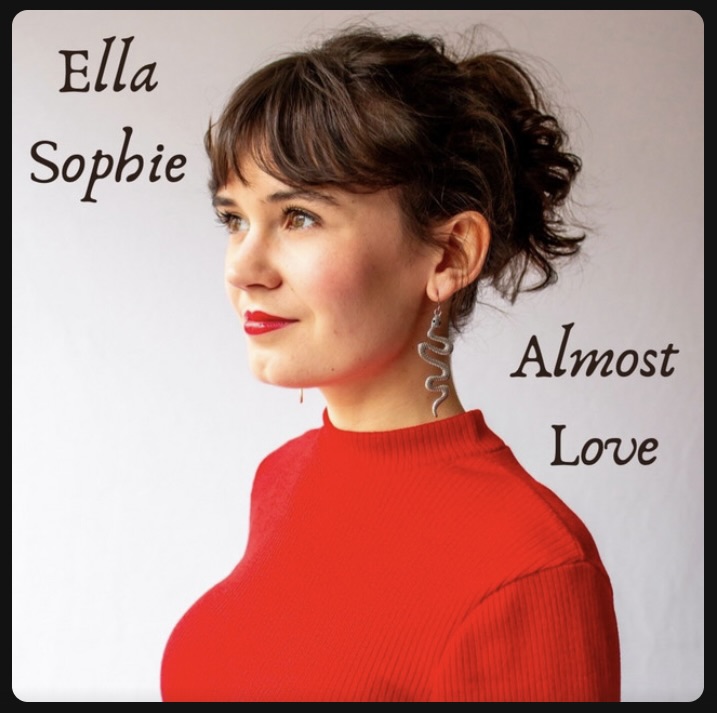
‘Almost Love’ is the first release EP by Ella Dunbar-Wilcox (Ella Sophie), a New Zealand vocalist, pianist and composer. She is studying for her Masters on the West Coast of America after completing a BMus at the New Zealand School of Music. When I played the album, it was hard to believe that I was hearing a first release. You could add this to a playlist of well-known Jazz vocalists and it would fit in perfectly. The approach is old school, but in the best way, as she interprets by subtle means, making the tunes her own. 

The album is mostly Song Book ‘standards’, but her original, ‘Take a Clue’ is a fine composition and fits in nicely. Taking a more traditional approach has paid off. There is an ease, a certain cool, teased out by her playful phrasing and minimal but deft touches of vibrato. Much of that is technique but there is much more on display here. She draws you in, conveys intimacy as she tells a story and makes you a believer. Embedded is ‘I’m Old Fashioned’.

She is receiving airplay in her home country and elsewhere and her voice has been compared favourably to some iconic jazz vocalists. When I played the EP, Anita O’Day and even Blossom Dearie came to mind, with that hint of playfulness in her sound and phrasing. She is also a pianist, but she has engaged a pianist and some LA musicians for this album, and they are just right for her. The other musicians are Alex Frank, Ryan Shaw, Josh Nelson, Talley Sherwood, Ben Burget, and David Donnelly.  

‘Almost Love’ was released by ‘TriTone’ and is available digitally on Apple Music, Spotify and YouTube. 

JazzLocal32.com was rated as one of the 50 best Jazz Blogs in the world by Feedspot. The author is a professional member of the Jazz Journalists Association, a Judge in the 7VJC International Jazz Competition, and a poet & writer. Some of these posts appear on other sites with the author’s permission. 
LacLu (Self Titled)

I was idling my way through the morning when a message from a friend in the UK lit up my phone. ’I’m sitting in a Jazz club in Dublin, and I have a Kiwi couple with me whose daughter is an Auckland-based jazz musician. She plays in a band with guitarist Keith Price, do you know her?’ I know Price well and have attended many of his gigs but the name Francesca Parussini didn’t ring a bell. I had missed Price’s last gig so I checked through my invitations and saw that she was a saxophonist and a member of Price’s new band LacLu. The other band member was Maximilian Crook, a versatile, tasteful up-and-coming drummer. I messaged Price for more information and learned that LacLu had recently recorded, resulting in an EP album, due for release later in the year.   

Fast forward to last week, when a review download arrived. I listened and was delighted by what I heard. The LacLu album taps into an expansive realm akin to Spiritual/Astral Jazz, whose definition has expanded over the years to encompass improvised music reverencing the natural world. As human-induced chaos and degradation of the environment assails us, music that invites us to reflect on nature is increasingly appealing. The influences cited in the liner notes are Frissell, Lovano and Motian. While influences are evident — touches of Americana, colourist drumming and content-rich minimalism — the album is forward-looking and more than a tribute. 

The opener, ‘Winter Fog Morning’, is in two parts. Beginning with haunting pedalled phrases on the guitar, gentle drum and cymbal taps, and whispery phrases from the horn, each underscoring the other as they paint a landscape with deft sonic strokes. You hear what could be bird calls rising out of the fog. The scene has been set and part two expands the vista. What follows at a lilting gait is a melodically and texturally rich tapestry that is both raw and caressing. I live where Price lives, among the Waitākere hills, ragged coastlines and foggy wooded valleys, and the band has captured the beauty of that landscape.

The third track, ‘Stella by Starlight’, pays tribute to a loved standard but pared back, reduced to its essence and done in a way that only skilled improvisers could pull off. Scant phrases of the loved melody appear, change and evaporate. Here especially, Price shows us what he is made of, his playing is evocative and tasteful. This is a gem and it is hard to believe that the drummer and saxophonist are not seasoned performers like Price. They are recent jazz school graduates, but despite the disparity in years and experience, the band performs as equals. The last track, ’Friends and Whanau’ rounds the album off nicely, reminding the listener of our human connections, and the interconnectedness of all life. Here the warm shadings of Americana are most evident. 

Throughout there is spaciousness, seamless interaction and open improvisation around composed motifs. The name Laclu references a lake in Ontario and a general locality. The area is described as having ‘indistinct boundaries’. Price grew up near there but never visited the lake and perhaps that is the perfect metaphor for the album. What appears to be place-specific is more than that. It is any place where nature rules, places we can call home if we work with nature, not against it. 

Keith Price (guitar), Francesca Parussini (tenor saxophone), Maximilian Crook (drums) – Ainsley Duyvestyn-Smith cover photography, recorded at the Kenneth Myers Centre Tāmaki Makaurau. The album is available on Bandcamp and streaming platforms – click through here at laclu3.bandcamp.com/album/laclu-self-titled   

JazzLocal32.com was rated as one of the 50 best Jazz Blogs in the world by Feedspot. The author is a professional member of the Jazz Journalists Association, a Judge in the 7VJC International Jazz Competition, and a poet & writer. Some of these posts appear on other sites with the author’s permission. 
The Year of Alice

Shiva Loka ~  Alice Coltrane

News that a live recording of Alice Coltrane’s previously unreleased 1971 Carnegie Hall concert was about to drop caused excitement in Jazz circles. 2024, designated by Impulse ‘The Year of Alice’, will see other Alice projects realised, and Shiva Loka is the opener. The quality is great, even though it doesn’t have the degree of sound separation a studio recording has, but that is no bad thing. Being live, the album captures the excitement in the moment and invites us to breathe the spiritual air surrounding Coltrane. And as you take in what is unfolding, the sheer joy of it, it is impossible not to picture the audience sitting about you in rapt absorption. This is an immersive experience and, as such, it reveals the beating heart of Spiritual jazz.  

There are four tracks and from the first note played you are present in that great hall. Track one ‘Journey in Satchidananda’ is a tranquil, mesmerising piece. At first, gentle cymbals reminiscent of a temple gong, then a long vamp on bass and with drums answering; out of nowhere, harp strings, Coltrane making them sing like a choir of celestial angels. At that point, you discern voices quietly chanting, followed by flute, then saxophone. The magic has arrived and it never leaves throughout.

The second track, while also tranquil, has a questioning spirit. Arpeggiating harp, arco bass, tiny percussion instruments and then the saxophones keening. Archie Shepp and Pharoah Sanders interact conversationally, as new sonic textures are opened up. An intensity develops as the album unfolds with the tranquil opening tunes followed by incrementally wilder, ecstatic pieces.

We hear two sides of Alice Coltrane in this recording. Both are astonishing in different ways and there is never a moment of doubt about who holds the musical centre. On the first two tracks, she reigns as a peaceful goddess; on the last two, surrounded by an army of titans, she is the epicentre of an ecstatic storm. There was a time when she was primarily regarded as the keeper of John’s flame, but here, she is revealed as the unrivalled queen of Spiritual Jazz, extending his legacy and claiming her own. 

The last two tracks ‘Africa’ and ‘Leo’ are compositions by John Coltrane, but it would be wrong to regard these as mere covers as they transform the material into something not heard before. For these last two numbers, Coltrane switches from harp to piano and the fiery goddess radiates her power. She is percussive, with stinging chords, and snatches of chromaticism. Here, and in the last track especially, the rawness and power of the band has been fully unleashed. Thunderous percussion and pounding bass, staccato utterances from the horns and raining down on the keys, Coltrane’s hands.   

It is hardly surprising that she chose these particular musicians as they have all been associated with her or John at some point. Coltrane on harp, piano and vocals, Pharoah Sanders on saxophones and flute (at times chanting through the flute), Archie Shepp on saxophones and flute, Jimmy Garrison and Cecil McBee on bass, Ed Blackwell and Clifford Jarvis on drums, Tulsi Reynolds on tamboura, Kumar Kramer on harmonium. As you listen you marvel at the beauty and raw power. It is an album that will stay with you for a long time. It is out on Impulse too, which explains the warm embrace of the sound.

The concert was recorded the year she released ‘Journey to Satchidananda’, her fourth Impulse album and not long after another acknowledged masterpiece ‘Ptah, the El Daoud’. My first thought was, why wait so long to release such an exceptional album, but on reflection, it was a good decision. Now is the time to fully acknowledge Alice Coltrane’s legacy. Available online or from the better local retail outlets. 

Ancient Relics ~ Lucien Johnson 

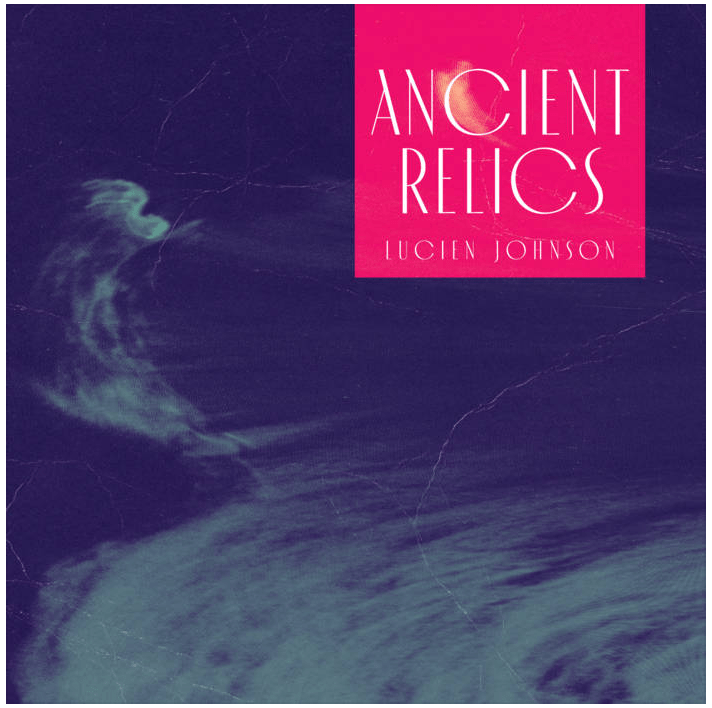
As ‘The Year of Alice’ gets underway it is great to acknowledge this release by Aotearoa/New Zealand saxophonist-composer Lucien Johnson. It is fresh material that references the tradition of Astral/Spiritual Jazz and it does so with reverence while bringing a local perspective. It is natural for those born under our South Pacific skies to gaze upward; far-dreaming Pacific star-gazers discovered our islands. That sense of worlds beyond is evident throughout, as it references space clutter and objects left over from the past. It could also reference the cluttered inner orbits of our minds. 

As the album begins, the unhurried pace appeals instantly, informing you that this is a place for deep listening. On the title track, ‘Ancient Relics’, Johnson’s effortless melodicism floats over texturally rich vamps reminiscent of drones while piano and harp shimmer, and merge. This opener is unmistakably Alice-like and wonderfully so. The languid measured bass lines are perfect too, anything more would have spoiled the mood, with the gentle pulse from percussion and drums, whispering, quietly through the mix.   

My favourite tracks are ‘Space Junk’ and ‘Satellites’, evoking the wonders of space while reminding us of our responsibilities as galactic sojourners. Space is the theme, but closer to home than the distant stars. If ‘Ada’ refers to the protocol of distance between objects in orbit, then all of the tunes appear to reference space junk; the ever-increasing proliferation of satellites circling the Earth. A recent report pointed out that every reentry leaves debris and puts the Earth’s magnetic field at risk. 

This is an exceptional group of musicians and the right ones to bring Johnson’s vision home. All are from Aotearoa/New Zealand, some receiving accolades beyond our shores. Johnson is better known in Europe where he gained a reputation playing in free-jazz ensembles and composing for theatre. Since returning he has quickly established himself as an important local recording artist, recently receiving a Jazz Tui for composition. 

Jonathan Crayford on piano (also a Jazz Tui recipient), has a solid international reputation, often playing in London, New York and across Europe. Percussionist Julien Dyne is another internationally recognised artist as is harpist Natalia Lagi’itaua Mann. Rounding off the ensemble bassist Tom Callwood, and drummer Cory Champion, both respected musicians. I was especially delighted to see improvising harpist Mann in the lineup as it has been a while since I saw her perform. Her World-Jazz Rattle album ‘Pasif.Ist’ is an absolute gem. 

The album is available at Rattle Records, Bandcamp

JazzLocal32.com was rated as one of the 50 best Jazz Blogs in the world by Feedspot. The author is a professional member of the Jazz Journalists Association, a Judge in the 7VJC International Jazz Competition, a contributor to All About Jazz, poet & writer. Some of these posts appear on other sites with the author’s permission. 
Conversations ~ Nacey/Haines

It is not the first time Kevin Haines and Dixon Nacey have recorded together and I hope it won’t be the last. There is a symmetry binding these musicians, one born of respectful dialogue between generations. Both are well-established and neither has anything to prove. When the stars align in this way, the conditions are right for intimate conversations and that is what we get here. In a departure from their earlier trio albums with Samsom  (Cross Now and Oxide), there are a number of standards here, which are balanced by originals composed by the pair. From the swinging rendition of ‘Stompin’ at the Savoy’ to the Nacey original , ‘Sco’, the album establishes the depth of its conversational credentials.

It is surprisingly rare to come across ‘standards’ gigs these days as new music is in the ascendency. It was at such a gig that I first saw Nacey, Haines and friends, play these lovely tunes, vehicles that have stood the test of time. In a quieter moment during the second set, they played Herb Ellis’s Detour Ahead. It was extremely well realised and I thought at the time; these guys should record a few standards as their interpretations bring something fresh to bear. 

The album arose from a MAINZ project and there is an irony in that MAINZ (Music and Audio Institute of New Zealand) is considering closing the school. That would be shameful and a disservice to the wider community. There has seldom been a time in human history when we need the arts as much as in the present times. This is especially so with music which can guide, calm, challenge and interpret life’s vicissitudes. The pandemic, however, has given cover to the philistines and everyone from Councils to Academic institutes is wielding a destructive knife. 

The album was self-released and is available on streaming platforms. If you type ‘Dixon Nacey & Kevin Haines, Conversations’ into your search bar you’ll find it. Past and present sit comfortably here and a touch of nostalgia is always welcome in troubled times like these.

JazzLocal32.com is rated as one of the 50 best Jazz Blogs in the world by Feedspot. The author is a professional member of the Jazz Journalists Association, a Judge in the 7VJC International Jazz Competition, and a poet & writer. Some of these posts appear on other sites with the author’s permission

Swings & Roundabouts ~ Mark Lockett

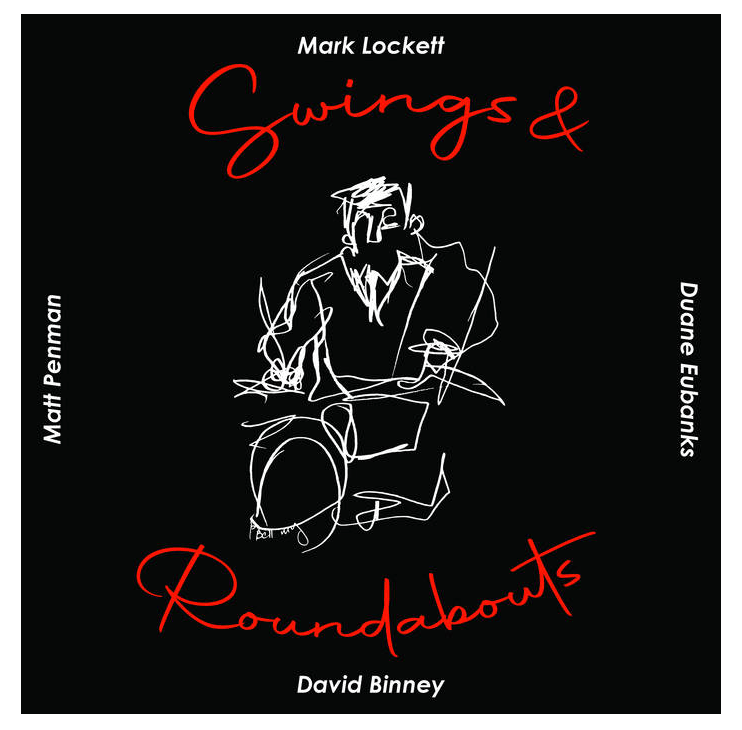
Mark Lockett has released his seventh album Swings & Roundabouts, arguably his finest. The project had been in gestation for a while but like many projects, it was delayed by the pandemic. Still, once the travel restrictions were lifted he headed for New York, engaged some of New York’s finest Jazz musicians and set up the session in the Samurai Hotel Recording Studio, Queens—a studio versed in the intricacies of recording jazz tracks.

Lockett may be a Wellingtonian and from Aotearoa, but he is very much a citizen of the world. He has spent his most productive years dividing his time between New York, Melbourne and his hometown, and frequently touring in between. Over recent years, he is most often caught with chordless configurations, especially saxophone, bass and drums. His drumming style is interesting and these configurations afford him more room compositionally (and as a player). He is first and foremost a storyteller, and his ability to amplify his stories benefits from this type of spaciousness.   

I have often seen Lockett perform with chordless trios, but adding another horn has created interesting possibilities. He has always preferred these configurations and this is another step along the way. These are often referred to as saxophone quartets or trios but unlike Lee Konitz’s famous ‘Motion’, where the drummer kept as much in the background as possible, this is a very democratic unit where everyone shines. The compositions are all by the leader and there are unmistakable references to Ornette, and perhaps even Jerry Mulligan’s chordless quartets (Happy go Lucky). In reality, the term cordless is misleading as chords feature in the head arrangements, but above all, these compositions provide an opportunity for untethered linear improvisation. 

It is hard to imagine a better unit for this project. Dave Binney on alto saxophone, whether moving with his light-as-air alacrity or gently probing at the compositions, locates the most interesting pathways forward. And as he goes, flashes across the firmament with rapid-fire lines. I love what he does here. Duane Eubanks is also well-suited to finding the essence of these interesting tunes and burnishing what he finds. A respected veteran who delivers and provides the counterweight of solidity. The unison lines and the moments where these two converge in counterpoint are immaculate. It is also, always a pleasure to hear Matt Penman and he is so consistent in what he brings to a performance that I have come to doubt that he could ever put a foot wrong. His sound is woody and rich and his lines are perfect. Above all, he lifts those around him. 

And none of this would work with a mediocre or reticent drummer and Lockett is far from being either. His unusually melodic approach to the kit and his ability to react in the moment gifts his band some real meat to chew on. I have never heard him play better. If the release tour heads your way, don’t miss it, and buy the album. Swings and Roundabouts is available on all platforms and is released by Thick Records,  www.thickrecords.co.nz

JazzLocal32.com is rated as one of the 50 best Jazz Blogs in the world by Feedspot. The author is a professional member of the Jazz Journalists Association, a Judge in the 7VJC International Jazz Competition, and a poet & writer. Some of these posts appear on other sites with the author’s permission

Goldsmith/Baynes ~ E Rere Rā

This lovely album by Allana Goldsmith and Mark Baynes is timely because it arrives at a crucial historical juncture. For a long time after the period of colonisation the beautiful indigenous language, Te Reo Maori, was suppressed in Aotearoa/New Zealand. After determined efforts by indigenous speakers, the decline was reversed, but there is a long way to go. Albums like this are indications of a gathering momentum.

‘E Rere Rā’ has been well received by Jazz audiences (and beyond). It has received critical acclaim offshore. It is a Te Rao Maori journey which takes its place alongside genres as diverse as opera, hip hop and pop. It is a joy to see this flowering of our indigenous language. Te Reo Jazz vocals were earlier brought to audiences by Whirimako Black, who recorded Jazz Standards and performed at festivals. Goldsmith has also been a pioneer in this field, performing Te Reo Jazz for a number of years, writing many of her own lyrics in Te Reo and composing tunes as vehicles.

Goldsmith’s association with the respected broadcaster, educator, and Jazz pianist, Dr Mark Baynes goes back a number of years and the collaboration has been fruitful. They appeared about town in the clubs and bars and toured further afield. They recently appeared at the Wellington Jazz Festival. Baynes is constantly widening his repertoire and he’s a pianist willing to take on new challenges. The last time I saw him was with a Latin ensemble where he delivered compelling solos while effortlessly navigating the complex rhythms.    

The album is stylistically broad, with a generous nod to soul and funk. It evokes the vibe of singing late into the night; gathering friends and family close. Such events are a timeless Aotearoa tradition; evoking warmth and sometimes sadness. It is especially so with ‘Tipuna’ (grandparents and ancestors) and with the heartfelt ballad ‘Whakaari’ (a volcanic island off the North Island/Te Ika-a-Maui coast). The lament ‘Whakaari’ references the terrible eruption of the Whakaari Island volcano. When it erupted, many lives were lost or blighted. It is a sacred place for Maori, but a place with layers of sadness. This ballad captures that perfectly.

Allan Goldsmith (co-leader, vocals compositions/arrangements) Mark Baynes co-leader, keyboards, compositions/arrangements) Hikurangi-Schaverien-Kaa (drums), Riki Bennett (Taonga Puora), Dennson, Alex Griffith (5) & Will Goodinson (2) (bass), Kim Paterson (trumpet, flugel) (3,10), Cam Allen (saxophones) (5), Mike Booth (trumpet, horn arrangement (5), Jono Tan (trombone) (5) and Michael Howell (guitar) (4,8). The album can be purchased from music outlets, Bandcamp or accessed via streaming platforms. Please support local music and especially music that tells our unique stories. 

JazzLocal32.com is rated as one of the 50 best Jazz Blogs in the world by Feedspot. The author is a professional member of the Jazz Journalists Association, a Judge in the 7VJC International Jazz Competition, and a poet & writer. Some of these posts appear on other sites with the author’s permission.