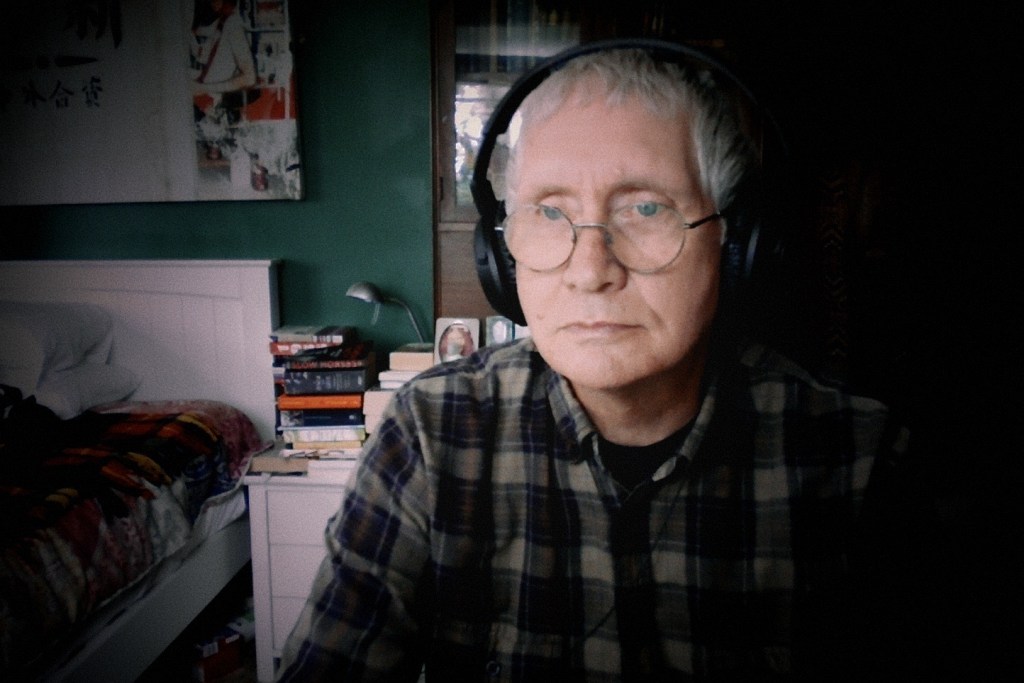
Darren Pickering/Chris Cody

Three (Darren Pickering Small Worlds)
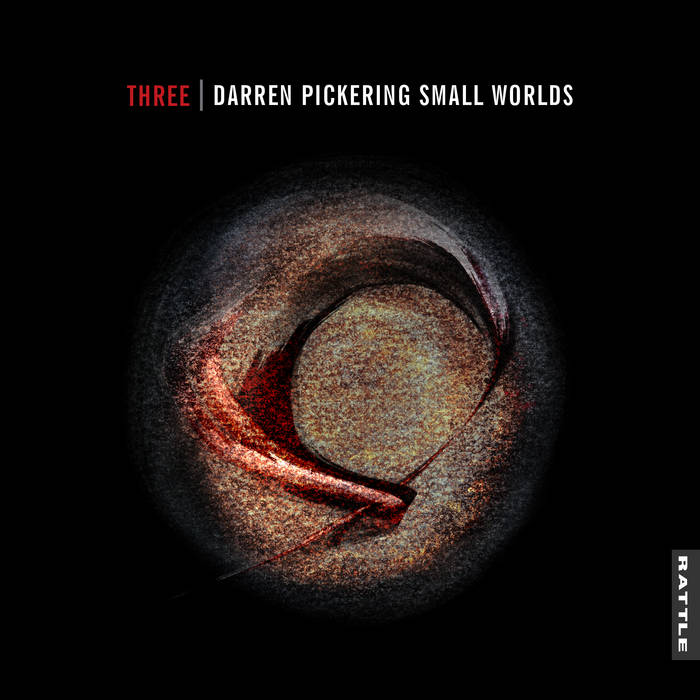
Darren Pickering’s third Small Worlds album, ‘Three’, is a welcome addition to the earlier volumes. While it follows the successful formula developed in volumes one and two, it sounds fresh and endlessly explorative. Throughout the album, snaking lines float, dreamlike, over repeating patterns and carefully layered grooves. Out of this comes the quartet’s cinematic sound. Jazz and cinema are twin arts as they evolved together, often feeding from the same well of resonance. Because of that focus on imagery, you can get inside the sound and experience it on many sensory levels. Listening to this is like watching a great movie – in a theatre – on a rainy day. 

This is a superb quartet; unsurprisingly, after two previous albums, they are hyperaware of interplay. This is particularly important in an album like this, as the soundscape is so open. The liner notes indicate they have equal input into the artistic direction, which makes sense; the democratised approach is evident. This is jazz for our times, probing but gentle and unashamedly open to influences. 

As with the first two albums, the tune times vary in length, enhancing the listening experience. Nothing is extended beyond its natural endpoint. Like the written word, contrasts like this punctuate the ebb and flow. There are small, meaningful solos, but they are skillfully interwoven into through-composed pieces.

Immediately noticeable is Pickering’s touch, and the underlying digital or analogue wizardry never overwhelms. While often understated, his pianism shines throughout. Pickering is a thoughtful composer and writes to his strengths.

Guitarist Heather Webb is pitch-perfect throughout, her sound is so distinctive, with lines that fold effortlessly into the mix. Her avoidance of anything showy or unnecessarily loud marks her as a mature player. I wish more guitarists understood this. The same can be said for the drummer Jono Blackie and bass player Pete Fleming. Both blend into the mix, thus enhancing the music, making the whole greater than the sum of its parts. 

The rainy day groove is particularly evident in ‘Soft Life’. With Webb running her silken lines over Pickering’s synthesised arpeggiation, and the measured, but perfectly placed, beats like slow-dancing footsteps. And the faster-paced ‘Tauhou Waltz’ has a similar vibe. The album maintains this flow, touching on various moods, but always speaking in a calm voice. The album can be accessed from Rattle Records or Bandcamp. https://darrenpickeringsmallworlds.bandcamp.com/album/three

Under Ocean (Chris Cody/Charlie Tait)
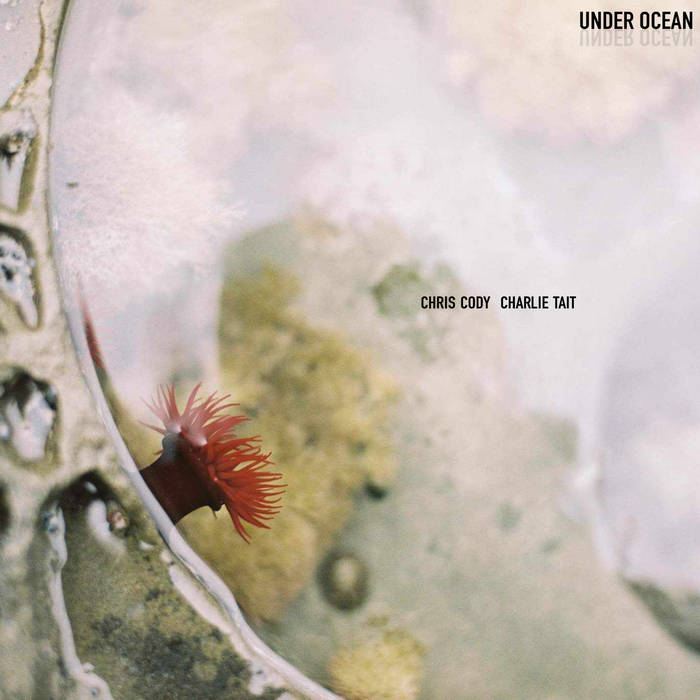
I have long been an enthusiast for Chris Cody’s work, and his two latest releases, each different from what went before, enhance an already impressive discography. Cody has a gift for examining cultural intersections. He gathers events and places, past and present and puts them under a musical microscope, always leaving us with a sense of what it means to be human.  

‘Under Ocean’ is a fresh approach with electronic enhancements and a duo format. The album traverses mental and physical landscapes in unexpected ways and, in doing so, expands not only Cody’s repertoire but the boundaries of improvised ambient-style music. The album is co-led by Charlie Tait, a multi-instrumentalist, sound designer and engineer. Tait is no stranger to sonic creations like this, and the resultant cross-fertilisation of jazz, classical, and ambient electronic music is fascinating. 

There is an increasing imperative for improvising musicians to create music like this as a reaction to the realities of our overly commercialised modern life, to examine our interior landscapes or the natural world. It also reacts to the ugliness that intrudes on the quieter spaces. They combine new and old musical technologies to good effect, as evidenced in the atmospheric opening track, ‘Salt’, which contrasts with ‘Rumble’s’ free playing and the melancholic ‘Lost World’, bringing different moods together as a satisfying whole. 

Mountain to Sea (Chris Cody) 
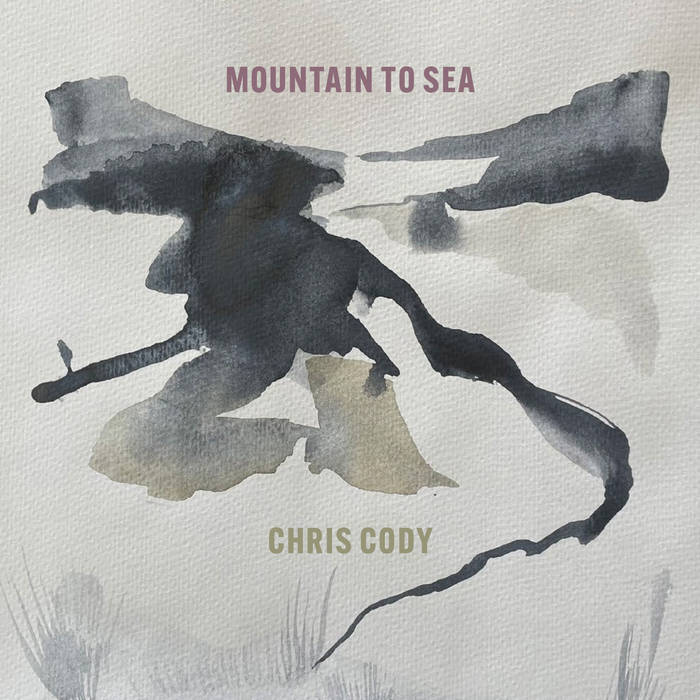
Landscape itself is a featured guest artist on most of Cody’s albums, as his writing always conveys a strong sense of place. I am not referring to specific geographic locations, although they sometimes feature, but to something deeper – cerebral. Cody has a gift for inviting introspection, and as we listen, we examine our relationship to the landscapes and regions he evokes. It is the first thing you become aware of when listening to his albums; ‘Mountain to Sea’ is no exception. 

His compositions and arrangements impress here, but his thoughtful playing is also notable. His lines and voicings convey an instinctive lyricism, an organic sound that has always defined him. The tunes contain nostalgic echoes, but speak of hope too, a heart-on-the-sleeve musical humanism. And, as in previous albums, he conveys more with less. There is ample room for his bandmates to shine, and they do. The care and loving attention each one brings to the project is evident. It is no wonder the unit sounds so good when you consider the musicians, a mix of veterans and younger players, but all exemplary: bass player Lloyd Swanton (a member of The Necks who appeared in Auckland recently) and who appeared on an earlier album ‘The Outsider’ (reviewed recently on this blog), and Sandy Evans, an acclaimed saxophonist on the Australian jazz scene, and lastly Tess Overmyer, a gifted young Australian alto saxophonist, presently based in New York.    

‘Mountains’, a ballad, opens with Ellingtonian chords that speak of grandeur, followed by two beautiful solos, lifted to further heights by bass lines that never intrude, but soar like a raptor. Similarly, ‘Quiet’ reminds me of Evan Parker’s opening on Kenny Wheeler’s ‘Sea Lady’ (Music for Large and Small Ensembles). Ripples, bird calls, lead into an elegiac anthem for the natural world, a place not separate from humankind, with alto, tenor and soprano perfectly balanced, drawing from the same musical well. This is also evident in ‘Dream’. 

As with previous albums, Cody’s daughter Maya has created marvellous cover art.    

Both albums are available on Bandcamp at https://chriscody.bandcamp.com/

JazzLocal32.com was rated as one of the 50 best Jazz Blogs in the world by Feedspot. The author is a professional member of the Jazz Journalists Association, a Judge in the 7VJC International Jazz Competition, and a poet & writer. Some of these posts appear on other sites with the author’s permission. 

Embers / Release & Return 

Rattle Records released these excellent albums a few weeks apart. They demonstrate that New Zealand’s improvising musicians are of the highest calibre. Both feature Hayden Chisholm, and the albums enrich each other as if by design, although recorded at opposite ends of the world. 

Embers (Unwind)

This album is the fifth by Unwind, and their second as a trio. The Unwind albums have all been striking for their unadorned beauty, each feeling like a high point. Yet the inventiveness appears endless as they maintain their upward creative trajectory. Only the best musicians can react to each other with such nuance, their quietism filling any listening space.    

Much rests on Hayden Chisholm’s alto saxophone sound, which is preternaturally pure. It’s as clean as Desmond or Konitz, yet utterly unique. It has softness, but a softness that conveys strength and a fluidity that affords him endless possibilities. When playing live, his impact on audiences is palpable. The flute-like alto sounds he creates speak with unusual clarity, creating a balm that the world needs. Feted internationally, known for his skilful use of micro-tonality and throat singing, all his strengths are evident on this album.

A distinctive sound like Chisholm’s requires just the right musicians. Norman Meehan and Paul Dyne are that. In part, because they have been bandmates for years, but it is more than familiarity. On bass, Dyne carries the weight effortlessly, while Meehan’s blues-infused minimalism says as much in between the spaces as in the moments when the hammer meets the wire. You can feel the weight of his ideas behind every note. Thoughtful musicians like this know best how to optimise opportunities. They react instinctively, and nothing is overthought.  

The first number, ‘Around Again’, opens with Chisholm’s plaintive alto keening through the silence, then Meehan’s evocative gospel chords follow. It is an elegant piece and a lovely opening to an album brimming with gems. It exudes a gentle strength that is the hallmark of this band. 

Another number, ‘Good Friday’, conjures subtle emotions. It captures a nostalgic essence, as if evoking a time long past. One we cannot fully recall – a reaction best described by the Japanese term ‘Sabi’. I have seldom heard a piece of Western music that captures that emotion as perfectly as this ballad. And everything in the album flows similarly. Meehan’s compositions are a joy. 

During the album release concert, a particular moment had the audience gasping. After setting the shruti-board drone in motion, the alto began the intro. The pianist was ‘laying out’, listening intently, unaware that his foot had depressed a pedal. An ethereal resonance soon became evident as the harmonics of the alto reacted with the piano. Realising, Chisholm edged closer to the piano and worked with it. A sublime moment of happenstance that had musicians and audience smiling in delight. 

It is our good fortune that Chisholm regularly returns to Aotearoa, the country of his birth. He has an extensive offshore discography, but when playing with old friends, there is a special Kiwi kind of synergy. A reminder that spiritual jazz lives here too. The album is available from Rattle Records in either digital or CD form. https://rattle.co.nz/catalogue/releases/embers

Release and Return (Chisholm/Crayford)

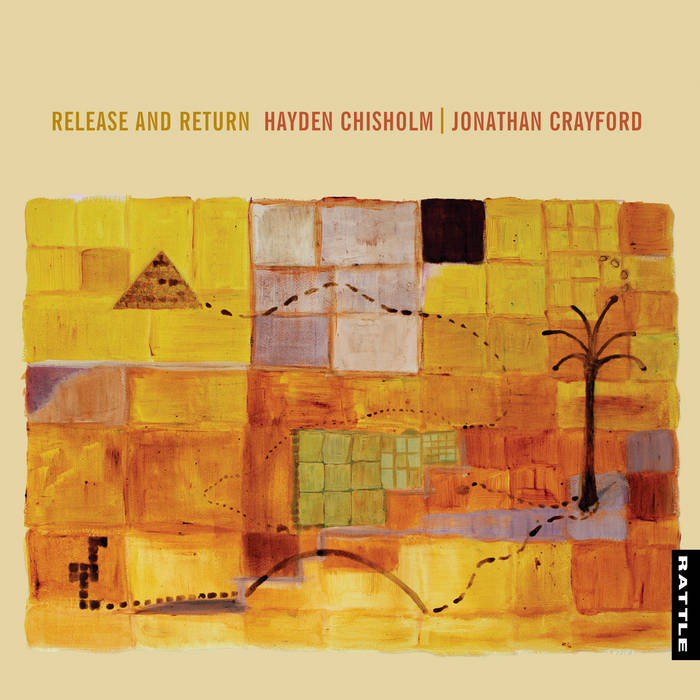
‘Release and Return’ is a duo album featuring Jonathan Crayford on piano and Hayden Chisholm on alto saxophone. It is another standout album, but in a different way from Unwind (reviewed above). It feels more exploratory and is not as consciously introspective. The album captures the joy of master musicians engaging without preconception. As a duo album, the sonorities can be explored more fully. 

Both of these musicians are adept at working with harmonic resonances: Crayford, who prefers audiences to refrain from clapping until the decaying echoes of a final chord are exhausted, and Chisholm with his skillful use of microtonality. 

Mature improvisers like these can draw on everything that they have experienced; it is what forms musical character. Both have travelled widely and listen with open minds to what other cultures or genres offer, be it classical, Carnatic, Spanish or Japanese traditions. 

Crayford’s lovely ‘JC Ballad’ hints at Bach, and in Chisholm’s playing, the influence of Eastern musical traditions is evident, especially when he plays against a drone. In ‘Eldest Daughter’, the wistful opening tune (Crayford), the melody plays softly above, while Crayford’s right hand sounds at times like a feather stroking the strings of a Koto, his left hand, meanwhile, finds the pulse and swing. 

Release and Return stirs deep emotional responses in the listener with its visceral lines, sometimes tender, sometimes raw, as the human condition is examined. This album speaks of freedom and the uncontrived nature of the music that makes it so. 

The album can be purchased from Rattle Records or accessed in digital or CD format via Bandcamp.    https://rattle.co.nz/catalogue/releases/release-and-return

The Quantum of Magic

William Butler Yeats said, ‘The world is full of magic things, waiting patiently for our senses to grow sharper’. I believe this absolutely and am reminded of it when my senses connect with a certain kind of music.  Music that transcends mere form and engages with the cosmos. That is the domain of improvised music, a calling requiring a musician to discover magic during a tricky tightrope walk. Then, to cast a spell over those open enough to receive it.  

With the advent of applications like ChatGPT, a future unleashing self-generating algorithms is at hand. When that happens, the quantum of magic in the world will diminish and experiencing the magic of creativity goes to the core of what it means to be human.

When an improviser engages with an instrument, the weight of human history informs every choice. It is not number-crunching. The music can arise from ‘form’ or from a conscious decision to avoid elements of form. It can go wrong but still be ‘right’. It is a journey feeding off human interactions, drawing power from those on a bandstand, a live audience or a perceived audience. It is time travel backwards and forwards, but rooted in the eternal now. 

Jazz musicians often talk about music as a form of magic, mention the intuitive responses between high-level players, talk about creating new worlds out of beauty or pain, out of nostalgia for a past they never had, and how what we term as ‘character’ is required for a musician to make music that speaks to us. The earliest written references to music refer to ceremonial occasions, funeral rituals, grand processions, weddings or attempts to appease the gods of nature. 

Rhythm and pulse are powerful trance mediums, and we respond to unease by embracing trance. Does an algorithm delight in beauty, express pain, have character, feel uneasy or nostalgic?  

Tomasz Stanko stated that improvising is about transcendence. He saw it as a form of magic and as religion. The improviser who chimes with our innermost being expresses something about what it means to be human; our propensity for storytelling, our empathy or disquiet, and revealing our innate curiosity. 

It is no accident that many improvisers are stargazers or that album covers and tune titles have countless cosmic references. Improvising musicians reach beyond and embrace the improbable. And it is not just the musicians. The listeners participate—if we dare. Our receptivity triggers deep listening, and we react to what we hear by urging the musicians on. We share in the magic because listeners are part of the equation.  

Like many, I have watched the advent of generative algorithms with fascination and dread. AI provides valuable tools that will benefit humanity, but there is an urgent need for boundaries and rules. It is for scientists, bioethicists, machine learning gurus and politicians to wade through this minefield. We hope before it is too late. 

For creatives, there is a degree of clarity finally emerging, and it was heartening to see the script writers strike, drawing a firm line in the sand. They sought assurance regarding their intellectual property. They wanted to create boundaries and protect what is human. 

The clever algorithms do not behave like human learners or human creatives. They can learn in nanoseconds by scanning vast databases and sucking up everything within reach. Software like chatGPT does not concern itself with ethical considerations or the need to verify information or concern itself with intellectual property rights. The algorithms are attracted to ‘noise’; homing in on controversy—like a bee to a pretty flower. 

There are reports by writers that novels have been stolen, rejigged and blended to create so-called ‘new’ works. Such theft is beyond human mimicry. A plagiariser can be sued, issued a desist order or required to pay compensation. An array of zeros and ones cannot. 

Music industry pundits are evaluating these developments, but I am not holding my breath. The prominent players in the industry utilise such tools to enrich themselves, and always at the expense of the content creators. 

The industry has an appalling record of disrespecting artists’ rights and not remunerating them fairly. Inversely, AI is also being deployed by some to identify similarities between segments within tunes. As the software improves, tiny musical sequences come under the digital microscope. Lengthy court battles follow, lick versus lick. Educators, fearful that they may not be able to recognise AI-assisted examination cheating, rely on A1 programs to sniff out other AI programs. It is a strange new world in which past inequities are made worse.

The most pressing issue for the creative sector is to draw a clear line between human-directed creations and purely AI-generated works. Then, setting boundaries and sorting out the copyright implications. And as is often the case, we are late to the party as our inventions wreak havoc.

I love music machines and software, whether analogue or digital, amplifying, distorting or sampling. They enrich the music we listen to. I love to see a guitarist or keyboard player tweaking a peddle board, iPad or slider. I love to watch a recording technician or a student hunched over a mixing desk or computer screen. Humans direct all of the above activities and extend the possibilities of the machines at their disposal. 

What humans do with software is astonishing. The music of Eivind Aasart, Jon Hassell or Alan Brown would not be possible without this clever circuitry. Thanks to such specialised equipment, they can capture the nuances of natural acoustic environments or dream-scape worlds. All of the above artists use the devices as extensions of self.  

It’s about the magic, and only humans can conjure that up. I attended a jazz gig recently where an 18-piece student band from the University of Auckland Jazz School played alongside Michel Benebig, a master B3 player. They had worked hard to realise his charts and performed well.  The delighted smiles on the student’s faces as they experienced the music swirling about them was an essential part of the performance. It was not flawless, but it was better for that. Human imperfections speak of promise, of possibility. As I age, I need the quantum of magic in my life to increase. The deadman’s hand of AI-generated music does not do that for me.   

JazzLocal32.com was rated as one of the 50 best Jazz Blogs in the world by Feedspot. The author is a professional member of the Jazz Journalists Association, a Judge in the 7VJC International Jazz Competition, and a poet & writer. Some of these posts appear on other sites with the author’s permission.

Inside Outside ~ a listeners lament

The term inside outside has a specific meaning in Jazz theory. There are well-delineated subcategories like side-stepping or side-slipping and in the hands of jazz writers, it can simply imply the comfort with which a player moves between playing the changes and free improvisation within a tune. Then there is the where. The joy of entering a club as you descend a winding staircase and feeling your heart skip a beat as you cross the threshold. That particular inside is about belonging and it is the salt being rubbed into the wound of a deprived club-goer. 

Inside is about the clubs, where the music has intensity and the physicality of the experience communicates directly; bypassing the mundane and teasing the senses one by one. The rawness brings everything straight to the heart and to the gut; the magic and the mistakes; it’s visceral, and you can feel the pulse beating against your body. 

When the pandemic hit, clubs closed the world over and we wondered how we would survive. We were sound junkies suddenly deprived of our fix. We missed the warmth. We missed being able to whisper our enthusiasm to the stranger beside us as a phrase took our fancy. We missed the ‘hang’ with the musicians during breaks, and above all, we missed that moment when the band hit the pocket and an involuntary sigh escaped our lips. That blissful experience of bathing in refined sound.

Inside Outside ~ Komeda ~ Astigmatic 1965

We were lucky in New Zealand as we eradicated the first round of the virus swiftly and thereafter we lived in splendid isolation for much longer than most. It was a time of normal life, sans travel or travellers. It was a time when the clubs remained open and when local music was the only and best game in town. That freedom lasted for the best part of two years and with only minor interruptions. Overseas, the death knell of iconic clubs was grimly sounding out. 

Then Omicron sneaked past the watchtower and took hold in the shadows. We paused, adjusted and looked outwards again. We are open to the world but the virus is the snake in the grass. It is back to normal and not back to normal because after the pandemic comes ‘the great forgetting’ as the young resume their lost lives and leave behind the silent ones. The cohort of the risk-averse, the older ones who are not yet ready to enter a subterranean venue. I am one of those. 

The older you are the more likely you are to be immune-compromised (or have a partner who is). Having experienced live jazz since my youth I am doing it tough and I am not alone. For a while, I thought that I was an outlier, but one by one, friends have outed themselves. Jazz radio DJs, record producers, journalists and musicians; the older ones. As if admitting to a crime, they drop their voices and whisper that they haven’t been inside a jazz club for ages. Perhaps it’s the fear of being mocked by the young and brave?

The thing about music is that it flows like water, seeping through the cracks and finding new levels. It is the law of physics that sound will find a willing ear so all is never lost. And although the clubs are temporarily off-limits the outside venues beckon. Open-air festivals are being planned and there are numerous bars with outside seating. Places where a person can bask in the winter sun and idle away an afternoon. And as one door closes another opens so we follow new music as it pops up online. Find time to think and to write about music, disappearing behind noise-cancelling headphones; listening to the new with fresh ears and to the old as if hearing for the first time. Pushing hard against the listening boundaries. Listening deeper and hearing more.    

Inside

Despite missing live music, my life is music rich. Review copies pour into my inbox daily and live-streamed concerts vie for my attention. I scan Bandcamp for the edgier improvised hybrid offerings, conduct interviews with musicians and hang with them over lazy lunches, I write reviews, judge musical competitions and involve myself in musicians’ causes. Biding my time until it’s safe enough to head down a staircase again.  

Footnote: Staying away from the upcoming CJC Wax///Wane concert with Lucien Johnson, Jonathan Crayford, Tom Callwood and Cory Champion will sorely test my resolve. I truly love that album and Lucian’s work. It’s my sort of thing and the musicians are quite extraordinary. 

JazzLocal32.com is rated as one of the 50 best Jazz Blogs in the world by Feedspot. The author is a professional member of the Jazz Journalists Association, poet & writer. Some of these posts appear on related sites.