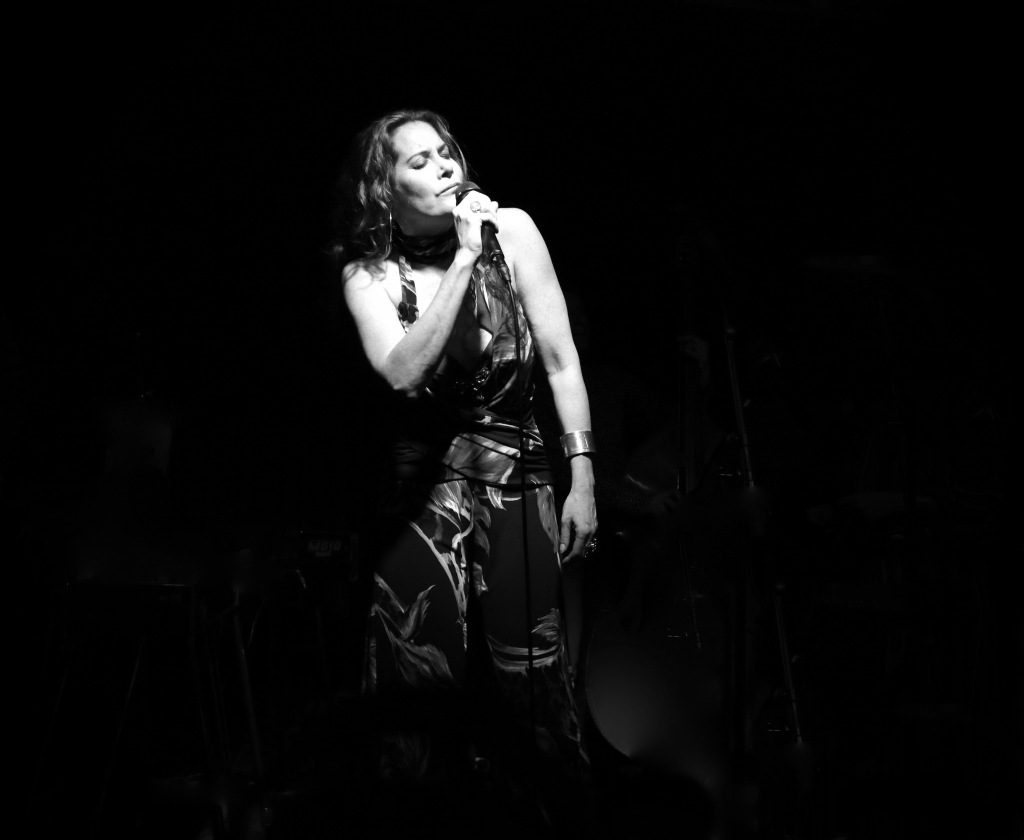
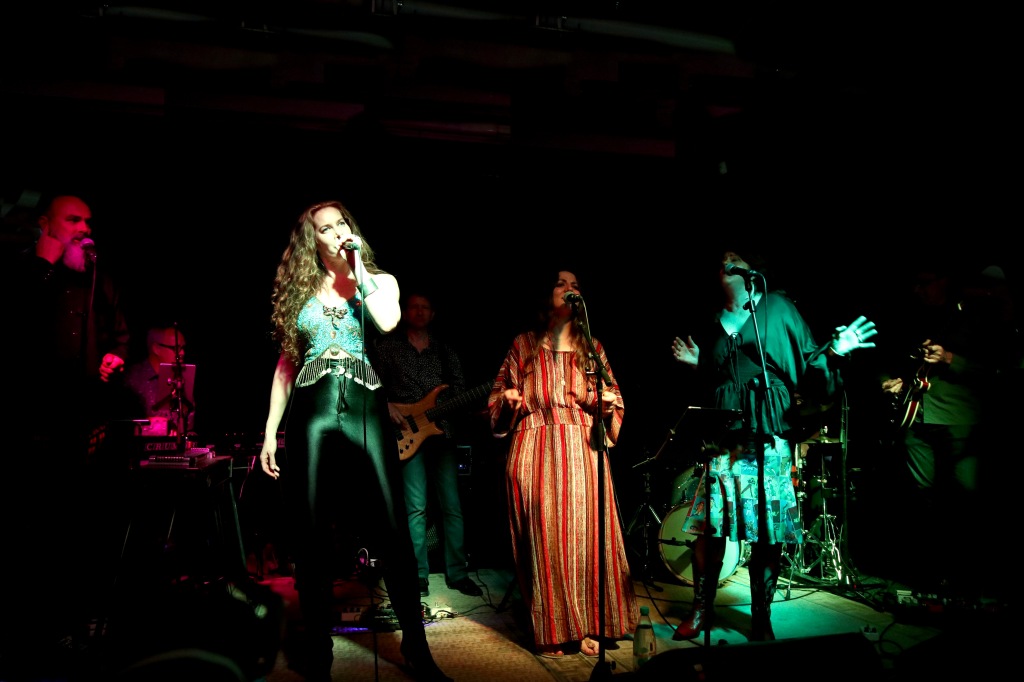
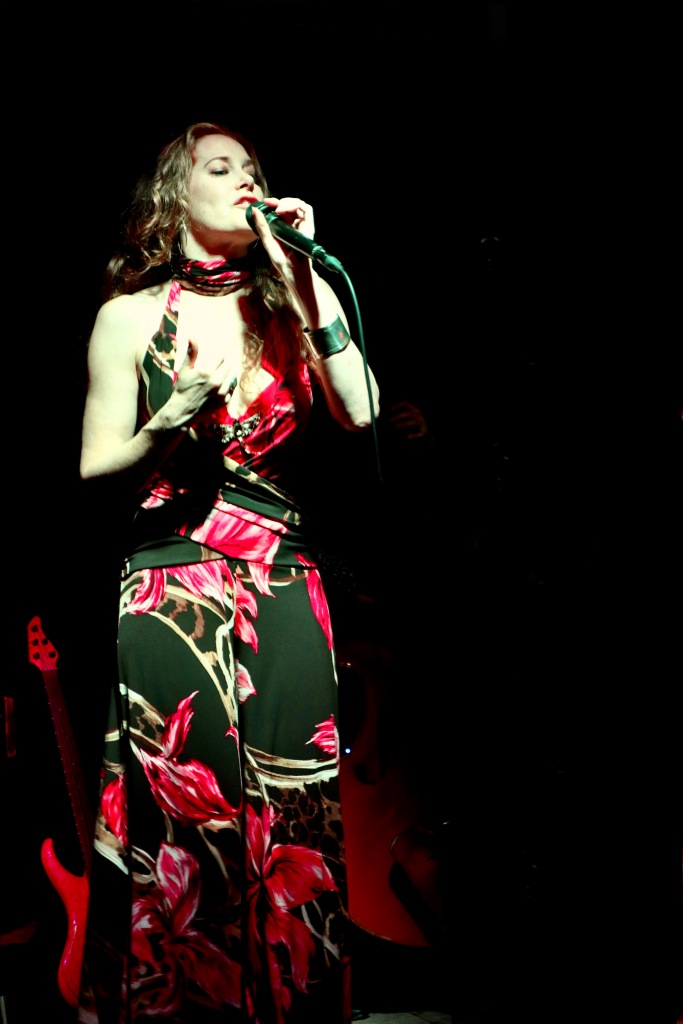
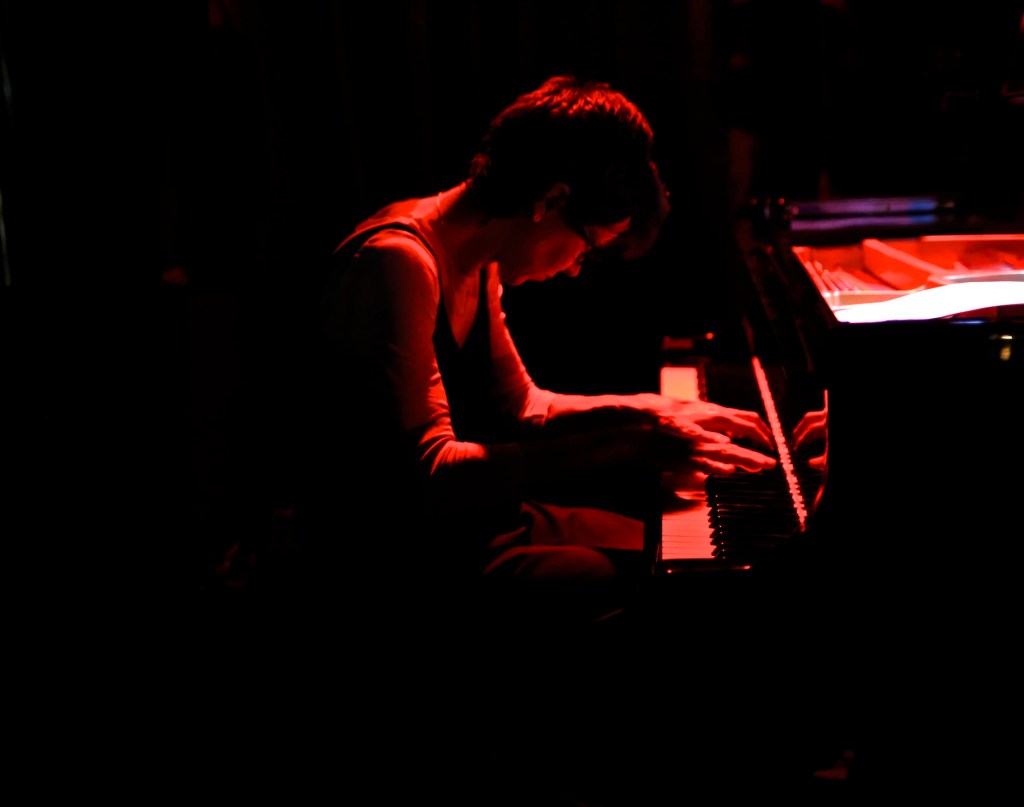
Some stories play out quietly while others are thrown into sharp relief against a tapestry of upheaval. ShekBand is from Ukraine, and as missiles fly about them, it is tempting to place their project solely within the context of the unprovoked invasion. That would be a mistake. While the horror is inescapable, there is a bigger story at play here and ShekBand tells that story eloquently through their music. It is not usual to see musicians this young touring and recording, but their achievements are a testament to their dedication, a supportive home environment and the quality of a Ukraine Jazz education. Wars destroy, musicians create and the human spirit is bigger than war. This is an album to inspire; it is a beacon of hope.
Yesterday I wished Shekband’s drummer Maksym Shekera a happy birthday. He turned 12 years old. Along with his sister, Anna (14) and Artem (16) they are about to leave Ukraine. Their first album The Inflatable Ram has just been released and they have a tour of Europe ahead of them. The itinerary will take them to Warsaw, Berlin, Leipzig then back to Warsaw and on to Lithuania. They have been looking forward to getting on the road. Attend a gig if you can.
The album is filled with delights and as the respected bass player, Jeff Ballard commented, “All the compositions are well thought out. They are full of invention and cover a very large range of expression – very dramatic and sensitive qualities. Great stuff.” Among the 9 tunes on the album, you will hear original compositions, Ukrainian folk references and their arrangement of a Wayne Shorter Standard.
Having fled Kyiv without their instruments they sought practice instruments along their escape route: old drums, town hall pianos, gaffer taped double bases. Emerging from air-raid shelters they focused on the tunes and to tweaked the arrangements. They eventually found a haven in the southwest, but they must now undertake some perilous journeys. Last week they drove back to Kyiv and were able to retrieve some instruments. It was a dangerous place to be. Today they face the missiles again as they drive towards the Polish border.
Credit is also due to Patricia Johnston, co-owner of Taklit Artist and Concert Management in France. She came across these musicians during the 7VirtualJazzClub competition and her company awarded them an honourable mention. That company is behind the release on HGBS Blue/Black Forest Sounds. Patricia and I are fellow 7VJC judges and so I offered my assistance. The English version of the official press release is my small contribution. Yours will be to listen to the album and when physical copies are available please purchase one. From today it will be available on all major streaming platforms. Search for The Inflatable Ram or ShekBand on Spotify, Tidal, AppleTunes etc. Give likes, share and post comments. With our help, this will be the first step on a long and rewarding journey.
For more information on the plight of Ukrainian musicians during the invasion, refer to my two earlier Ukraine posts which are available on this site.
JazzLocal32.com is rated as one of the 50 best Jazz Blogs in the world by Feedspot. The author is a professional member of the Jazz Journalists Association, poet & writer.Some of these posts appear on related sites.
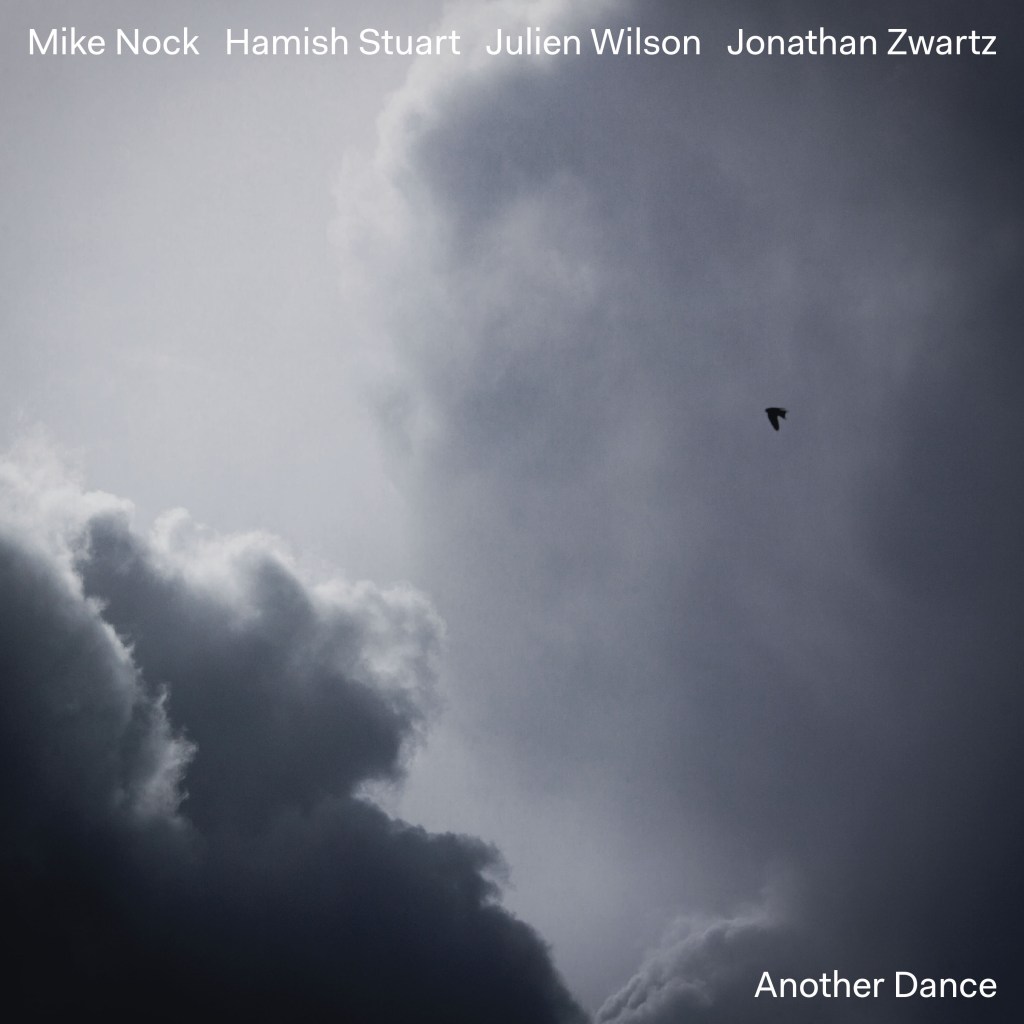
This is an ensemble of seasoned observers operating from their shared vantage point of empathy and humanism. Jazz at its best reflects the world about it and it never shirks from truth-telling. To achieve this, primal emotions must be invoked. Something to cut through the memes, words, pretty tunes or familiar licks that inhabit our everyday life. It is not that the aforementioned attributes lack validity, but there are many a dances we can choose. This dance invites us to remember, to do better and to pay our dues in the turbulent world that we helped create.
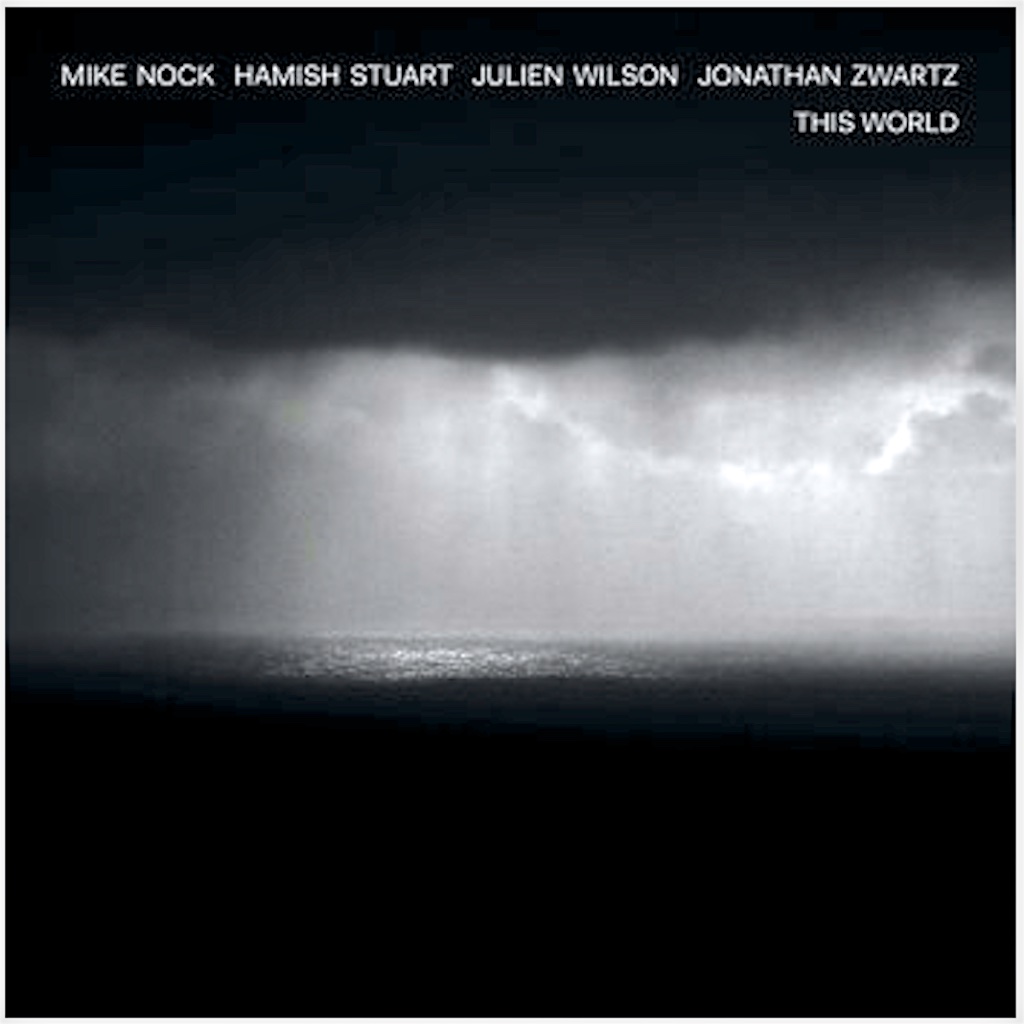
It is unsurprising that this particular group locates the stark beauty hidden among the ashes and the ebbing floodwaters. The mood is darker than in ‘This World’ but in spite of that, the album resonates with hope. It is the hope that follows acknowledgement. This is an album for our times and it touches on the rawness of the human predicament and it does so unflinchingly. To add further context, it was cut in the midst of the epidemic; surreal and unexpected chaos that has characterised our existence of late.
The tunes are all originals composed for the album and it feels like a collaboration in the fullest sense, musicians attuned to each other and to the musical possibilities unfolding ahead.
Deception (MP3)
For example, the intro to ‘Deception’ opens with a single chord, echoed quickly by another. The latter is more percussive, stinging, beautiful, and as those chords decay the mood is established with a series of sparse utterances. This is one of Mike Nock’s trademark devises, to beguile without overwhelming, to explore from an oblique viewpoint, then land you deep inside the tune. When you become aware of the others, everyone is so in sync that it takes your breath away. The process is seamless. This is the product of good writing and great musicianship, with Nock’s compositional input particularly evident throughout (especially so in ‘Winter’).
Winter (MP3)
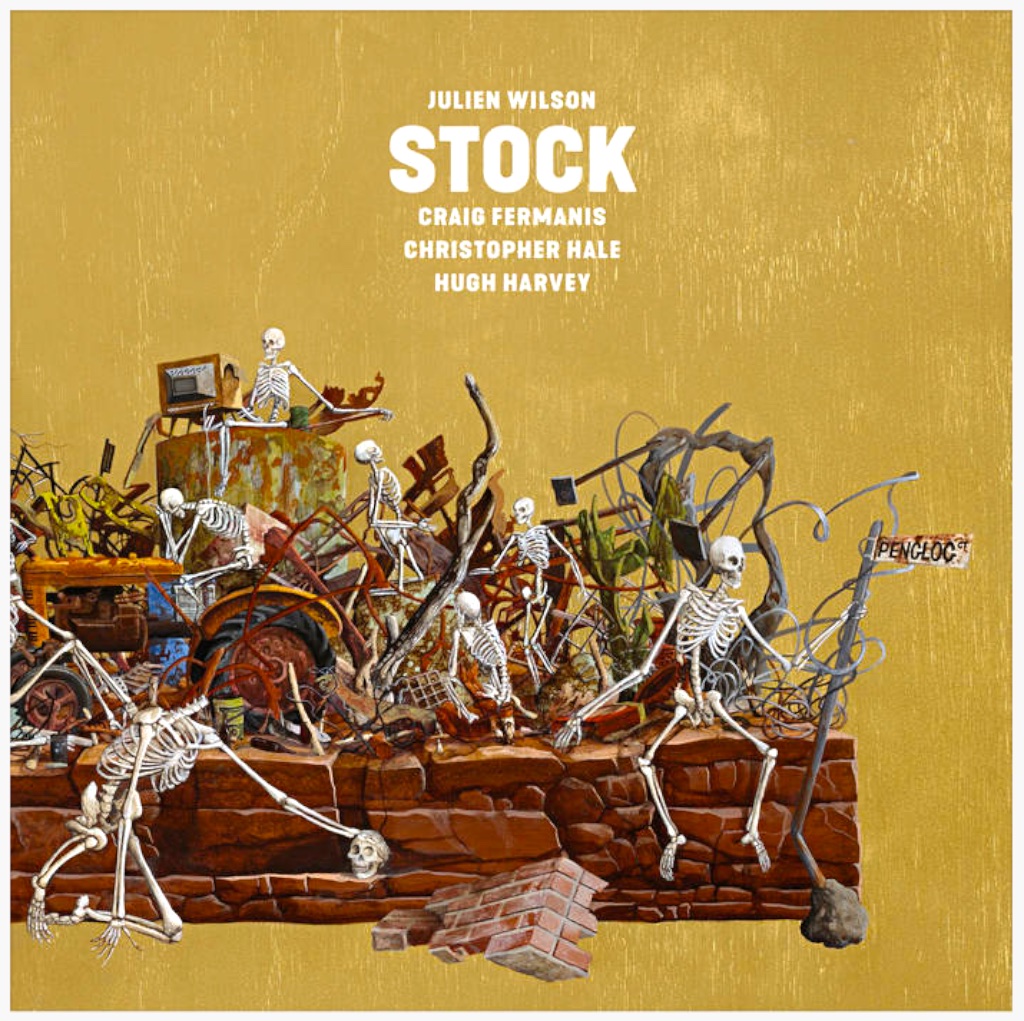
Any of Julien Wilson’s fans will be delighted with his performance here. Although practically vibrato-less (as modern saxophonists are), he captures a Getz like warmth; on occasion his upper register breaking into cries or sighs, tugging at the heartstrings.
I introduced the album to a friend who was floored by its beauty. Wilson, Stuart and Zwartz react so instinctively to Nock’s phrasing and subtle comping. Adding depth, subtlety, texture and gently playing with the time. Zwartz and Stuart are the go-to musicians for an album like this and without them, the album would be the poorer. However overworked the phrase is, this group are rightly referred to as a supergroup. ‘This World’ attracted accolades and award nominations. ‘Another Dance’ is on the same trajectory.
Mike Nock (piano), Hamish Stuart (drums), Julien Wilson (saxophone, effects), Jonathan Zwartz (bass)
The album is produced by Lionshare Records and is available in digital format on Bandcamp.
There is good quality streaming available upon purchase, and downloads are available in either standard CD format or the higher quality HD 24bit/96khz Audiophile Quality. I downloaded the Audiophile quality album and for those who have good equipment, it is a must. I have seldom heard such astonishing sound definition. It is like being in the studio and hearing the instruments breathe.
JazzLocal32.com is rated as one of the 50 best Jazz Blogs in the world by Feedspot. The author is a professional member of the Jazz Journalists Association, poet & writer.Some of these posts appear on related sites.
Footnote: I hadn’t realised that the tune credits were embedded in each individual track listing. In a message exchange with Julien Wilson later he pointed that out. When I wrote that I detected Mike Nock’s hand in the composition ‘Winter’, I was both wrong and right. ‘Winter’ was composed by Jonathan Zwartz as a tribute Nock’s beautiful ‘Ondas’ from the ECM album of the same name. What a great tribute to a seminal album.
There is something satisfying about evaluating an anticipated album before the listening public gets to experience it, and whether it arrives digitally, or through the post, it can bring with it a heightened sense of expectation. It is a series of brush strokes unveiled before the paint is dry, and best of all it is unsullied by the crude measure of market vagaries. You listen with care, hoping that the music will speak to you and when it does you feel lucky.
The best improvisers never settle, they reach waypoints then quietly move on. Andrea Keller is just such a musician. She is a creative force in perpetual motion and her steady output attests to that. And while each album or performance reveals something unforeseen, the connection to what came before is evident in the compositional DNA. To maintain such an arc without faltering is rare, but then Keller is a unique musician.
I have followed her work for some time and found the journey rewarding. There is a strong sense of the experimental in what she does but it never feels random. She can play with extremes while navigating a delicate path in between. When amidst these contrasting realities she is at her best and Systems Over-Ride is a prime example.
It is entirely consistent with her musical openness, that she expresses a fascination with both free jazz and doom metal; this is referenced in the liner notes and it makes sense that she should navigate a course between these turbulent waters. She is in her element here. This quintet of Wave Riders, Keller aside, features a fresh crew. It compliments her 2013 Wave Rider album (and all of her albums) by moving on.
As the pieces unfold, Keller’s pianism is always at its heart, with her unhurried serialism and melodic interjections drawing you ever deeper; notes and the spaces deployed to maximum effect. Much is implied beyond the notes too, as the tunes navigate a course between the turbulent waters ruffling the music’s edge. The quintet members respond in kind, and there are solos of course, but the album breathes as one.
As we approach the first quarter of the 21st century there is a rightness to these explorations. This is contemporary jazz as it should be. A leading US Jazz biographer and Journalist recently posted this meme, ‘People whose interest in Jazz stops with mid 20th Century recordings are missing the whole point of that music’. There is no endpoint to an improvisers journey. This is the direction of travel, ready or not.
The lineup here features Scott McConnachie (saxophones), Jack Richardson (guitar), Mick Meagher (bass), Rama Parawata (drums) plus specially commissioned remixes using fragments from the studio session – remixes by Nicole Lizēe, Bree van Reyk, Joe Talia, Philip Rex & Theo Carbo.
It is available from Bandcamp in double vinyl, limited edition Compact Disk or Digitally at www.andreakeller.bandcamp.com (Spotify should be avoided or used as a last resort, I support Neil Young and the artists who have pulled their content from that platform)
JazzLocal32.com is rated as one of the 50 best Jazz Blogs in the world by Feedspot. The author is a professional member of the Jazz Journalists Association, poet & writer.Some of these posts appear on related sites.
Devils Gate Outfit was recorded live at Wellington’s Meow two months ago. The album is bursting with restless spirits, and I am not surprised that such a powerful genie was let out of the bottle so quickly. There are multitudes of spirits hovering over the recording, fragmentary echoes of Ornette and Miles, but the predominant voices are those which haunt the ragged windy Wellington coastline. All are paid their due, but the album is unconfined by the many streams that feed it. It is above all a succinct commentary on the breadth of improvised music that is thriving in Aotearoa right now.
The album is out on Kiwi Jahzz, a natural home for adventurous and original free music. And it captures a particular night at Meow where the band holds a residency. The playing is great, and so is the overarching vibe. Delivering great performances without defaulting to any ‘look at me’ moments. It is a band uncoupled from tired old formulas and thus able to move as freely as it desires. Sometimes this results in tantalisingly fleeting glimpses of the past, then just as suddenly you are plunged into the forward-looking improvised groove music favoured by younger audiences.
The album is loosely programmatic but does not follow a linear storyline. It establishes a theme, then drops kaleidoscopic images. letting the music paint evocative sound pictures. There is a wealth of musicianship evident here as well. I am familiar with most of the players (apart from Steve Roche and David Donaldson). Although new to me, I am delighted to hear both for the first time. It was also good to hear Cory Champion expanding his percussion role to Vibes.
I am picking that drummer/composer Anthony Donaldson is the nominal leader in this outfit and around him are a truly formidable crew. The interactions between them are impressive as they navigate that fine line between spontaneity and cohesion. The slow-burning bluesy Wood Drift is the closest thing to straight ahead and it is a delightfully spacious piece of music – it could (and should) find cut-through with any Jazz taste. And I can never hear enough of Blair Latham’s playing. On Wood Drift, his woody sonority and captivating lines caress the melody against a gentle background of Daniel Beban’s understated guitar and Callwood’s bass, setting up Champion, Roache and Beban for solos, such a languid and appealing groove tune.
Contrasting nicely, The Portal to Red Rocks is a burner and a showcase for Latham on saxophone and the very capable Roche. Here the bass and drums provide propulsive energy as they navigate the shifting rhythms and washes of electronic effects. If I had to pick a tune that best exemplifies the album it would be the opener Storm of the Century. Anthony Donaldson owns this track and it is his pulse that sets the others free. I will be surprised if this isn’t a contender for Tui Jazz Album of the year.
The Devils Gate Outfit: Anthony Donaldson (drums), Tom Callwood (double bass), Steve Roche (cornet, baritone horn, Cassio), Blair Latham (saxophones, bass clarinet, David Donaldson (bass banjo, percussion), Daniel Beban (guitar, electronics), Cory Champion (vibes, percussion, synthesizer) It was released 19 October 2021, on Kiwi Jahzz and is available digitally on Bandcamp: kiwijahzz.bandcamp.com
School of Hard Nocks ~ by Village of The Idiots
This amazing recording is extracted from a number of live shows organised by the visionary drummer Anthony Donaldson. Among the shows referenced are ‘Seven Samurai’ ‘Oils of Ulan’ Po Face’ and others. The overarching implied theme is the Samurai film genre. This is an album where open conversations occur between two art forms. It belongs to an interesting subgenre of improvised music and in my view an avenue worthy of continued exploration. You encounter it convincing in Zorn’s Filmworks. These were reimagined soundtracks, or more accurately, soundtracks to reimagined movies. Music aligned to the essence and untethered from any strict narrative form. Auckland/Canadian guitarist Keith Price did just this with his reimagined The Good the Bad and the Ugly score. Jazz has always been associated with the cinema, but extending the brief and pushing into clearer air is where the gold lies.
The album is painted on a vast canvas and has a cast that must rival that of a Spaghetti Western (or Carla Bley/Paul Haines Escalator Over the Hill). Thirty-one musicians are credited here and a significant number of them are high profile improvisers. Throughout, they come and go, as larger and smaller ensembles change places, with some artists like Jonathan Crayford appearing on a single track. The mood can shift at lightning speed, as a tune ends abruptly and a fresh exploration emerges. Another aspect that can’t be overlooked is the underlying humour. Music like this is not pitched at the serious-faced, dinner suit/ball gown-clad denizens of dress circles (although I’d love to see that attempted). It is anarchic and plays with imagery. The open-eared will quickly grasp this point and every piece of mind-fuckery will bring them joy.
There are so many good performances and so many great musicians here that it is beyond my scope to enumerate them all. When you see names like Anthony Donaldson, Jeff Henderson, Bridget Kelly, Daniel Beban, John Bell, Patrick Bleakley, Lucien Johnson, Jonathan Crayford, Chris O’Connor, Steve Cournane, Riki Gooch, Richard Nunns and Tom Callwod on a setlist, you check it out immediately. The way the units are configured creates a unique set of textures and there can be no doubt that this is a drummers band. Donaldson’s drumming leaves a powerful impression, but he leaves plenty of space for other percussionists. A glance at the lineup tells that story best, as I counted seventeen drummers and percussionists on the album. As they come and go, they never get in each other’s way and this is a tribute to the arranging. Some of course are doubling on percussion instruments (e.g. Noel Clayton plays guitar, bass banjo and punching bag, while Maree Thom plays electric bass, upright bass, bass drum and accordion). And to complete the illusion of filmic authenticity, Donaldson adds foley to his drum/percussion roles.
For a full listing of the musicians involved check out Donaldson’s site. Better yet buy immediately. The album was digitally released on Bandcamp in early November 2021 and it can be located at anthonydonaldson.bandcamp.com
JazzLocal32.com is rated as one of the 50 best Jazz Blogs in the world by Feedspot. The author is a professional member of the Jazz Journalists Association, poet & writer.Some of these posts appear on related sites.
‘Where Rivers Meet’ is a celebration of adventurous improvised music and it offers us a fresh window into the works of three departed titans (one still among us). The composers examined are Ornette Coleman, Albert Ayler, Dewey Redman and Anthony Braxton, and while the spirit of these extraordinary musicians is evoked, this should not be regarded as a retrospective. What the SNJO have achieved is an in-the-moment exaltation of free spirits. The charts and performances are living breathing entities, rooted in the now.
This is another waypoint on the open-ended journey that Coleman, Ayler, Redman and Braxton embarked upon. A journey that had no final destination in mind and the SNJO has approached these suites in that same enquiring spirit. Improvised music is at its best when it is not time-locked.
Were lesser hands involved, it could be risky to combine arranged orchestral music with compositions that are famously organic, but here, it works well. The orchestration is never overdone and it adds contrast and unexpected texture to these vibrant open tunes. The charts were orchestrated by four arrangers, Tommy Smith, Geoffrey Keezer, Paul Towndrow and Paul Harrison. Each suite is made up of three tunes by the composers and there are four soloing saxophonists involved, each tackling a different suite.
The SNJO was established by Smith in 1995 and it is regarded as one of the pre-eminent jazz orchestras in Europe. It is also one of the most innovative. No matter what your taste in improvised music, you will find much to enjoy in this album. Ornette Coleman’s “Peace’ is a familiar and much-loved standard and the rendition by Towndrow is fabulous (on alto). The same applies to Dewey Redman’s lovely ‘Joie De Livre’ (Konrad Wiszniewski on tenor), or Ayler’s ‘Going Home’ (Tommy Smith on tenor).
The meatier out-material is there also, Martin Kershaw is outstanding on the Braxton suite. I love this and ‘Composition 245’ especially. This is pure exaltation and Kershaw is killing. Here the spirit of Braxton shines brightest: minimalism, keening reeds, discordant joyfulness, space, tantalisingly distant vocalisations, swooping descents into quiet. Smiths sensitive, gorgeous rendition of Ayler’s ‘Ghosts’ is in a similar spirit.
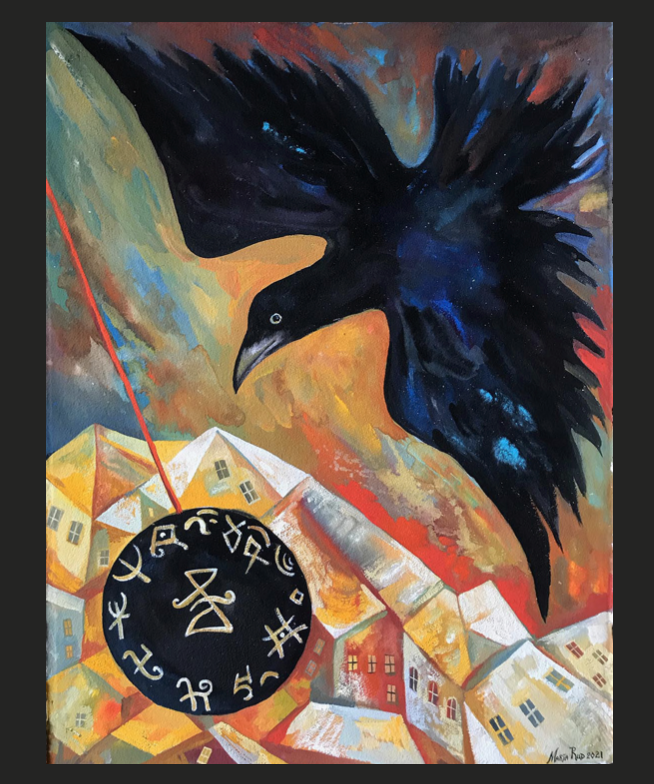
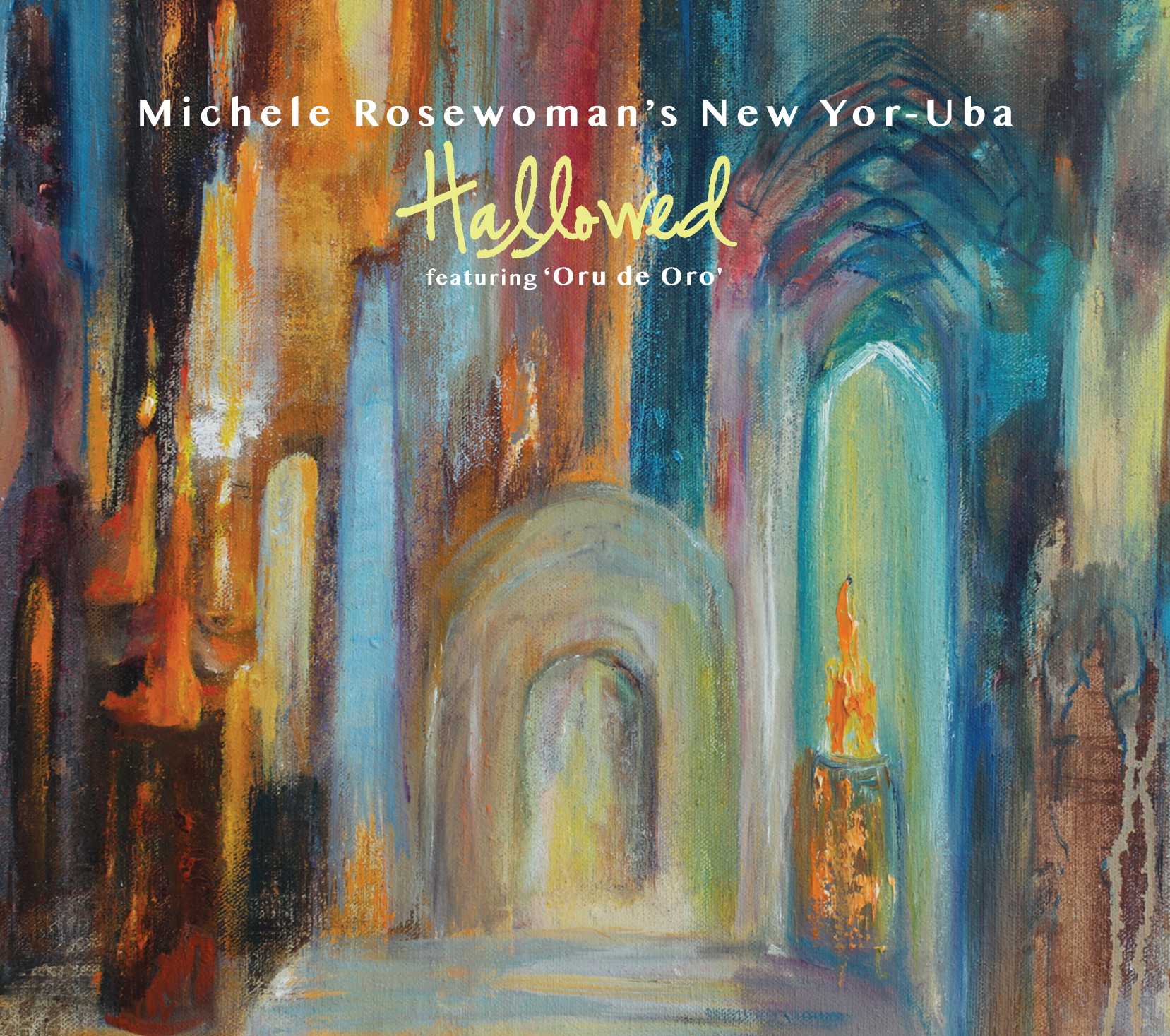
The performance took place in St Giles Cathedral Edinburgh while the gifted Russian expressionist, Maria Rud painted the cover artworks in real time (and in the presence of the orchestra). Spontaneous conversations between open art forms is the new realty and executed perfectly here. While there were no audience members present due to COVID, the artists have somehow magicked us into this hallowed space.
It also is nice to see some younger players alongside the veterans. I have been following James Copus rise with considerable interest. A wonderful player with an abundance of interesting ideas to communicate.
Anyone who follows JazzLocal32.com will know that I endeavour to keep a focus on local improvised music, or that of Aotearoa in general. In this case, there is a strong local connection between the SNJO, Smith, and Wellington drummer John Rae. Smith and Rae formed their first band in Edinburgh when Rae was 14 and later they recorded together. Between 2000 and 2003, Rae was the SNJO drummer.
The album was recorded in Edinburgh but it crosses a multitude of borders. Reminding me that local is about more than mere geography. Local can be a community of interest, a connectedness – beyond borders. The degree of separation is minimal in the Jazz world anyhow. Perhaps, Dave Holland put it best when he pled, ‘let’s not over-analyse the nationalist tendencies in Jazz’. No matter where we are from, it’s how well, and how authentically we tell our story. This is truly great music, universal music, full stop.
JazzLocal32.com is rated as one of the 50 best Jazz Blogs in the world by Feedspot. The author is a professional member of the Jazz Journalists Association, poet & writer.Some of these posts appear on related sites.
I’ve always been attracted to the albums which populate the margins. The material that is overlooked, and when discovered, brings with it a sense of having unearthed something rare. These discoveries make us feel like insiders, the inheritors of secret knowledge. And once we possess the navigation tools we join other explorers. Crossing terra incognito on a quest for sonic treasure.
The albums are often rare private issues or bootlegs. Or they appear, then vanish during the collapse of a niche label, never to be reissued. Sometimes they are recordings taken by clubs from a live feed. Many archival treasures have been unearthed from these sources. This is the realm of mislabeled or rejected treasures, languishing in the vault of a disinterested multinational or forgotten in a private home. But by far the richest source, the recordings made by musicians, and stored away for posterity.
Before the era of digital micro-recorders, people with scant respect for copyright smuggled recording devices into concert halls or practice rooms (obsessives like Dean Benedetti, Bird’s stalker, dangling his crude mic through a hole in the ceiling and covertly recording Bird practicing). I met people who wired themselves like police snitches and secreted a mic up each sleeve (stereo capture) and held their arms aloft during a concert in order to get the best sound.
In my collection, I have examples of all of the above which leads me to the focus of this post. When the domination of 33rpm LPs was overrun in 1983 by the CD format, record companies had a field day, reissuing popular albums. For the big labels, it was largely about estimating the number of units that could be sold. For the smaller labels, it was a marginal enterprise and runs could be limited. During this period a determined group of obsessives digitised the bootleg tapes and the missing 78’s, EP’s and LP’s, old favourites which never made the cut. In Tamaki Makaurau there were several local musicians who had worked in broadcasting and they possessed the expertise to clean up and digitise scratched or hissy analogue recordings. This involved mysterious processes like ‘de-clicking’ and transferring micro-segments to fill a dropout. They did this for altruistic reasons and a number of rare recordings survive because of these efforts.
Hawes Live At The Great American Music Hall #2
One of my lockdown projects has been to sort through these older albums and craft a playlist. Because of the nature of the material, some of it I have not posted as it has not yet become available on streaming services. Here are a few that took my fancy.
Paul Bley ~ Mr Joy (Limelight 1968). This album doesn’t appear in Spotify or in most discographies. It is an interesting and very rare album filled with great material. With Bley (p) are Gary Peacock (b) and Billy Elgart (d). The liner notes are hilarious and random. ‘Voice: Why do they call you Mr Joy? MJ: Because I’m unhappy about a lot of things’ Mr Joy went on to say that he was unhappy about imitators and impersonators, his own performance, but happy about people with open ears like Gary Peacock and Billy Elgart. The ghosts of Annette Peacock and Ornette Coleman inform this album.
Anita O’Day ~ Angel Eyes (Emily Records/Lobster Records 78-81). These fabulous Anita O’Day small group sessions are a hybrid of two Japanese recording dates – 1979 and 1981. It came at the most troubled period of her life when her addiction problems were made public after a bust. Here, she is with her partner John Poole (trio leader and drummer). Poole has been blamed for her woes of that time, but later evidence suggests that he took the heat to protect her. She kept in touch with him and gave him work long after they parted. This is not the bright sassy O’Day of later years, but a smoky-voiced vocalist channelling her pain. Some may think that material like this should be forgotten, but I disagree. Would we ditch the difficult Billy Holiday years? This is Anita at her most soulful. A later limited compilation from these sessions was released by Kayo. My copy was extracted from two EP/LPs and has bespoke liner notes. John Poole (drums), Don Abney (piano), Dwight Dickerson #2 (piano) Harvey Newmark (bass). My converted copy finally corrupted.
Jimmy Giuffre 3 ~ Flight Bremen 1961 (Hat Hut / Radio Bremen) This Giuffre/Bley/Swallow album was taken from the live feed by Radio Bremen and later released by Hat Hut. It does not appear in many discographies and is particularly interesting as it proceeds the ground-breaking album ‘Free Fall’ and ‘Free Fall Revisited’. This adventurous music shocked many Giuffre fans who purchased it thinking that they were getting more of ‘The Train and The River’ trios. He changed his trio to include Bley and Swallow in 1961 (after 17 folksy albums with his old trio). During this period the discographies can be confusing. An album called ‘Fusion’ came out and ‘Fly Away Little Bird’ on the French OWL label. In 1989 ‘Life of a Trio: Sunday’ came out. Free music was still very controversial in 1961 – ‘Flight Bremen’ is a bridge between the two styles. My copies are all extracted from LPs. Giuffre on clarinet.
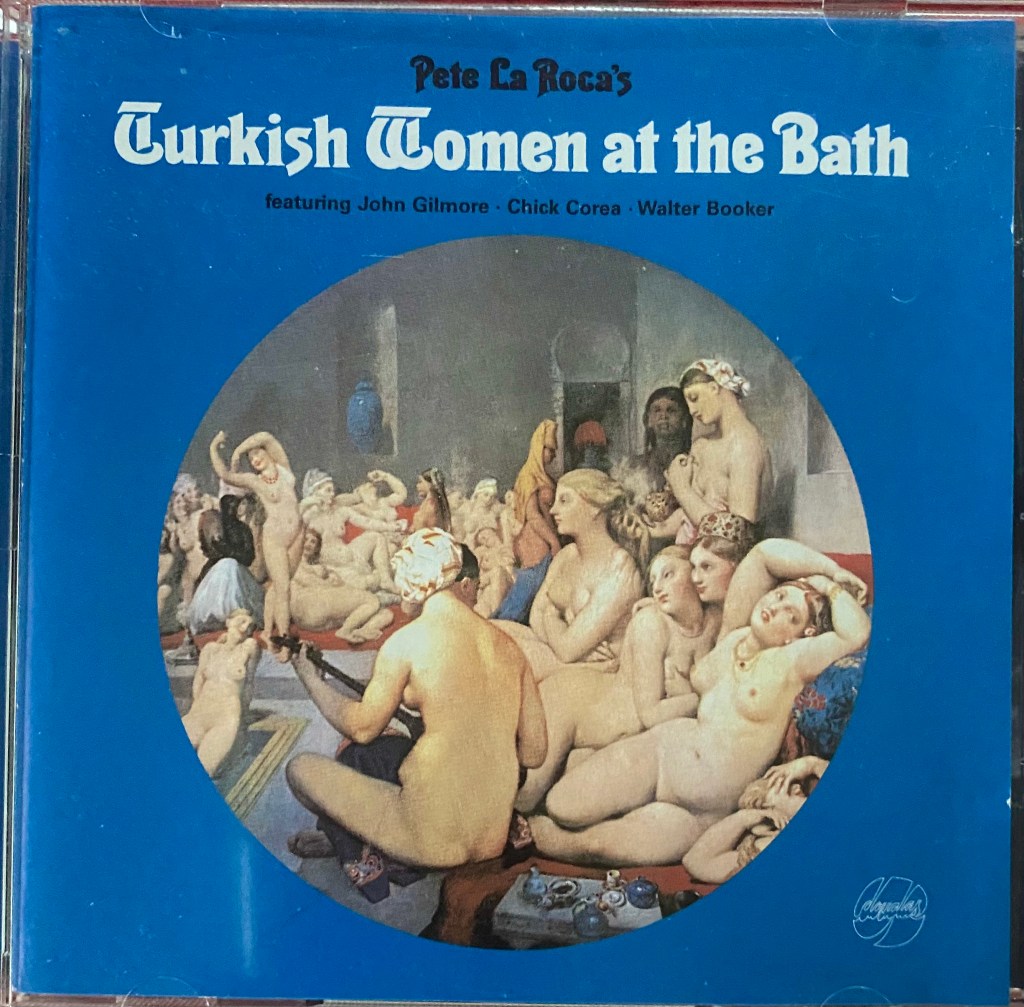
Turkish Women at the Bath ~ Pete La Roca (Fresh Sound May 1967). This recording has an interesting tale to tell. After it was recorded, a well-known member of his band (not the leader) released it under his own name. La Roca was incensed and went to court over the copyright. After a long court battle, he won the case, and all existing copies were recalled. It was later released by Fresh Sound with the correct attribution. La Roca studied and became a copyright attorney and had a successful practice defending artists against violations like those he suffered. It is an exceptional album filled with modal grooves and open compositions. The personnel, Pete La Roca (drums), John Gilmore (tenor sax), Chick Corea (piano), Walter Booker (bass). La Roca is an interesting drummer who could create a loose swing feel over freer music. Gilmore is fabulous.
Steve Kuhn ~ Oceans in the Sky (Owl 1989). The French label Owl was always worth checking out and this straight-ahead album is a gem. With Kuhn are Miroslav Vitous (bass) and Aldo Romano (drums). It was recorded in Paris, probably to suit the Czech bassist and Italian drummer. Nothing in Jazz quite evokes the feeling of looking down from space like this. Every time I listen to it I am overjoyed afresh. I wore out one copy and purchased a new one upon re-issue. ‘The Island’ by Ivan Lins is glorious. Such a lovely slow swing feel and if they laid any further back on the beat, they’d surely fall.
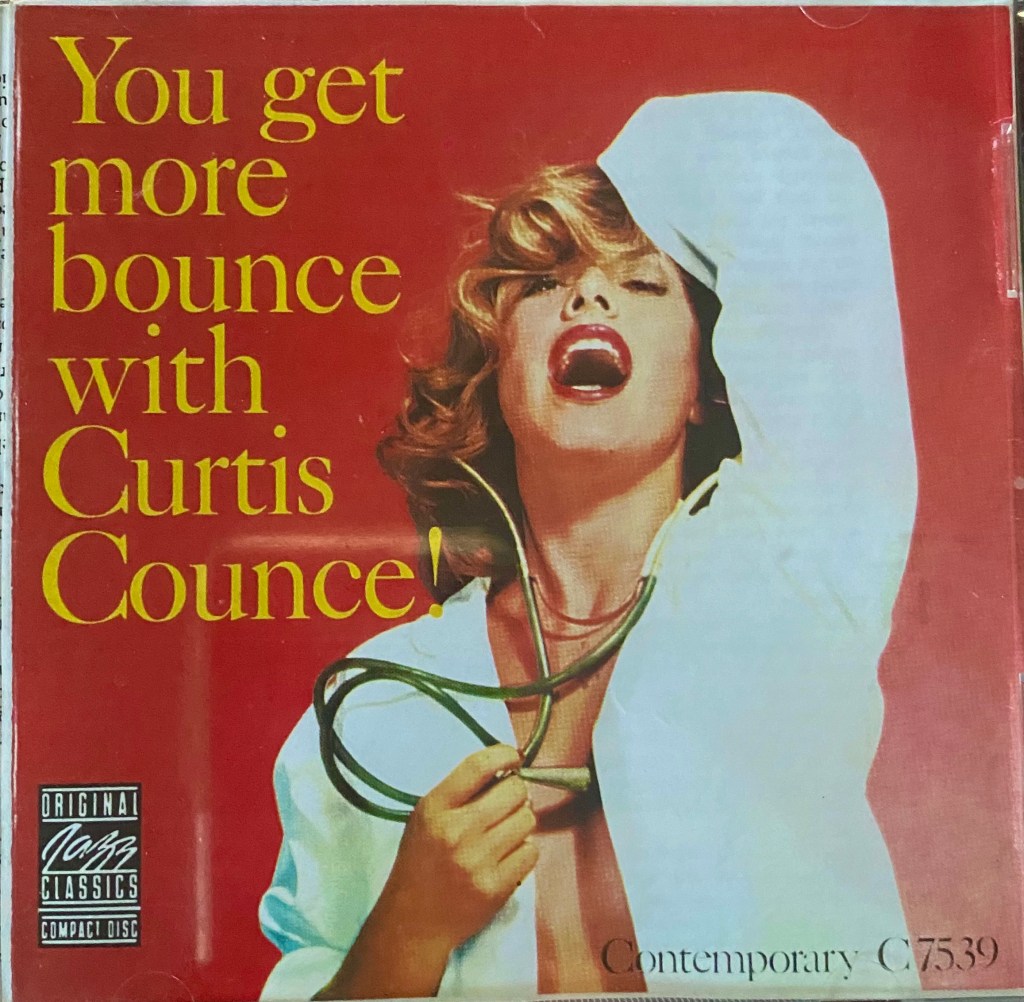
Playboy styled covers were popular on the West Coast
Curtis Counce ~ You Get More Bounce With Curtis Counce (Contemporary 1956). Curtis Counce was a star that burned out far too soon. He died of a heart attack while his career was on the rise. Counce, a stellar bass player, managed to play with an extraordinarily talented range of musicians before forming his own quintet in the Bay Area. In his lineup were some of the finest musicians on the west coast. Carl Perkins (piano), Harold Land (tenor), Jack Sheldon (trumpet), Frank Butler (drums). It was opportune for Counce, that Land quit the Clifford Brown/Max Roach band because he missed his family. Land has one of the most recognisable sounds on tenor saxophone, Perkins was a rising star, but tragically, he died of a drug overdose just as the band was becoming famous. He is one of those pianists who was reaching for a fresh approach and his loss at such a young age is lamented to this day. The album cover would possibly not pass muster today. Contemporary often took a playboy approach to cover art.
Jazz Studio 2 ~ Holywood (Decca monaural LP 1954). There were at least three in this set, volume 1 featured east coasters like Hank Jones. ‘Volume 2’ is an early example of the cool west coast sound and the nonet features heavyweights of the day. The personnel: Don Fagerquist (trumpet), Milt Bernhart (trombone), John Graas (French horn), Herb Geller (alto saxophone), Jimmy Giuffre (tenor, baritone, clarinet), Marty Paich (piano), Howard Roberts (guitar), Curtis Counce (bass), Larry Bunker (drums). Unsurprisingly, Paich does most of the arrangements with a few by John Graas. Bunker is always attention-grabbing as a drummer (or vibes player), most memorably with Bill Evans in the ‘65 trio’.
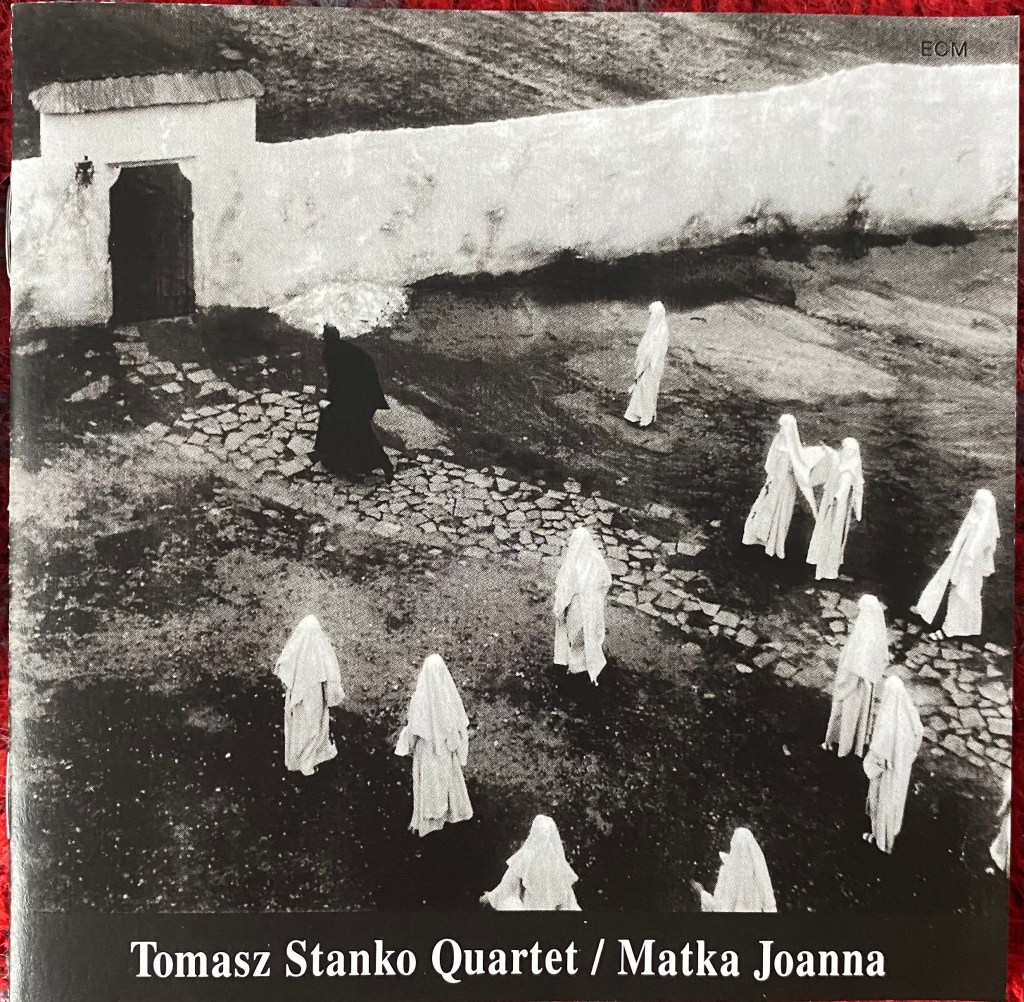
Matka Joanna ~ Tomasz Stanko Quartet ( ECM 1994). This and the two albums that follow are in the overlooked category, hiding in plain sight. ‘Matka Joanna’ (Mother Joan) is a tribute to the award-winning Jerzy Kawalerowicz film about a group of possessed, eroticised, nuns on the rampage and set in the middle ages. The unusual genre called Nunsploitation thrived in the eastern bloc and became an outlet for artistic subversives during the communist era. Thirty-three years after the film came out Stanko produced this open, free-exploration in tribute. There are many reasons to like this with its dreamy vibe, but high on the list are the musicians. Stanko was a trailblazer with his euro-free inside-outside approach, an original. His east European style of Jazz was always informed by the world he grew up in, and particularly by Kristof Komeda. With Bobo Stenson on piano, Anders Jormin on bass, and best of all, Tony Oxley on drums, how could this not be extraordinary? Very few people know of this album and that puzzles me.
Nothing Ever Was Anyway. Music of Annette Peacock (ECM 1997) Marilyn Crispell Trio. This is a highly rated album, but perhaps because it is free improvised it remains on the margins. Marilyn Crispell is living proof that free improvised avant-garde music can also be beautiful. Her spaciousness, phrasing, and interactions with others, mark her out as one of the greats. She has recorded in New Zealand with Jeff Henderson and the late Richard Nunns (check that out on Rattle, it’s still available and streamed).
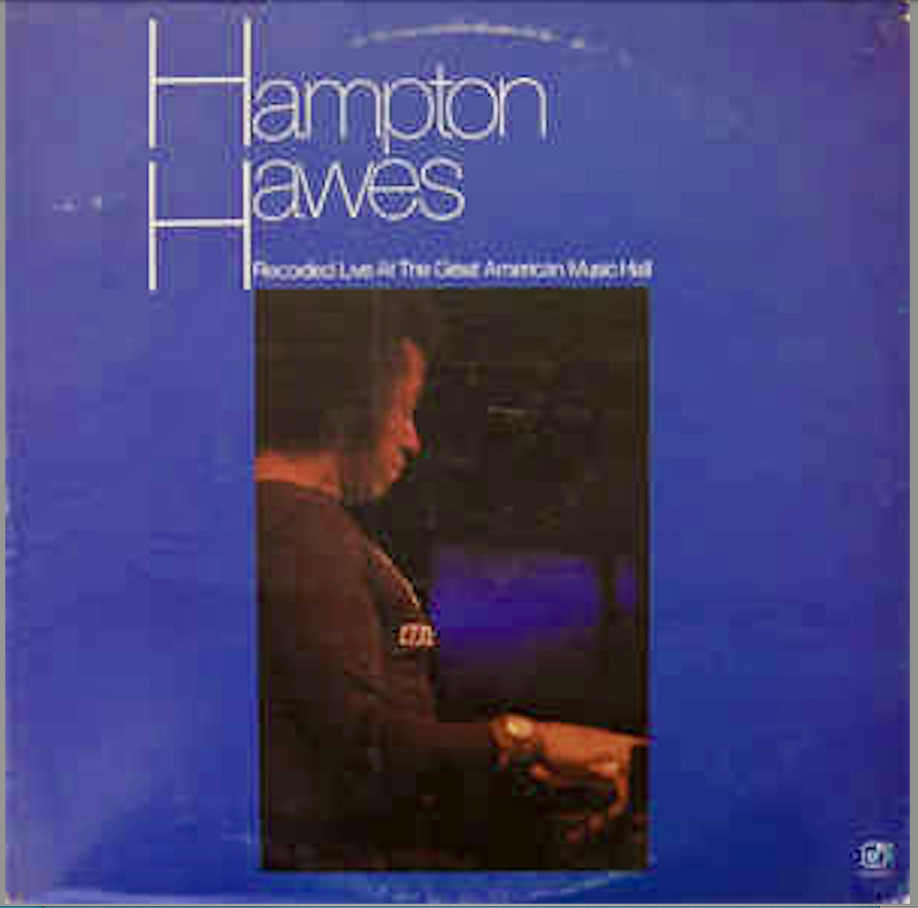
Hampton Hawes At the Great San Francisco Music Hall (Concord 1975). There were two issues of this album and the details are sketchy. Mine was a vinyl conversion with no liner notes. Also hard to find is the Swedish ‘Black Lion’ album ‘Spanish Steps’. Hawes was a superb pianist and his playing was always recognisable (increasingly, passionately, funky over the years). Everything by Hawes is worth having and a lot is up on Spotify. Sadly the ‘Great American Music Hall’ album is not. On that disk, he shouts and stomps as he builds the tension. The rare ‘Black Lion’ albums only appear on YouTube. The clip below is from a year later than the ‘Great San Francisco Music Hall’ recording.
The best source for small-label, rare, and previously unreleased recordings is Bandcamp. There are some great Dewey Redman recordings there for example. For Dewey, check out Barney McAll’s ExtraCelestial Arts page (a never before heard Dewey release) and also check out the great Canadian free Jazz unit, Jon Ballantine Trio with Dewey. I would like to acknowledge Welly Choy and John Good, who started many on this journey for the overlooked.
JazzLocal32.com is rated as one of the 50 best Jazz Blogs in the world by Feedspot. The author is a professional member of the Jazz Journalists Association, poet & writer.Some of these posts appear on related sites.
Last month, a new Kiwi record label was launched and if the first releases are anything to go by, it will surely become a popular destination for ‘out’ improvised music fans. The Kiwi Jahzz label is a significant addition to the Aotearoa recorded music scene, and like Budweiser, it reaches places that others don’t
The music found in these underground basements has long been a magnet for adventurous listeners, and especially for younger musicians who often cut their avant-garde teeth there. With the arrival of the pandemic, lockdowns followed suit and clubs took a hit. One of those venues was The Wine Cellar under St Kevin’s arcade. A popular home for independent music.
A hundred yards away in a nearby uptown basement, Jeff Henderson devised a plan. Why not move the Audio Foundation gear into the Wine Cellar. This included recording equipment and a ready-made audience. Out of that has come a string of recordings and a desire to make the music available to a wider audience. This is what musical freedom sounds like as the gigs are captured live. These recordings are street raw and bristling with energy, the sounds escaping from dark basements.
Henderson is known for taking his time over a piece and for letting the moment dictate pace and length. A groove or vamp can run for as long as it needs to and with each utterance informing the direction of travel. It is music often liberated from harmonic distractions or from predictable pulses, so as it wends its way, it draws on a lifetime of experience, with each moment revealing yet another nested story.
With the double trios recorded so far, the pieces have been shorter and this is perhaps a concession to the medium. In a darkened club you are more attuned to longer pieces, at home there are distractions. All but one of the initial releases features the Trioglodyte Trio. The core Trioglodyte lineup being Jeff Henderson, Eamon Edmundson-Wells and Chris O’Connor. It is perhaps more accurate to describe these albums as Trioglodyte led double trios because most of the releases to date feature a guest trio as well. A mixture of well-known musicians and enthusiastic up and comers.
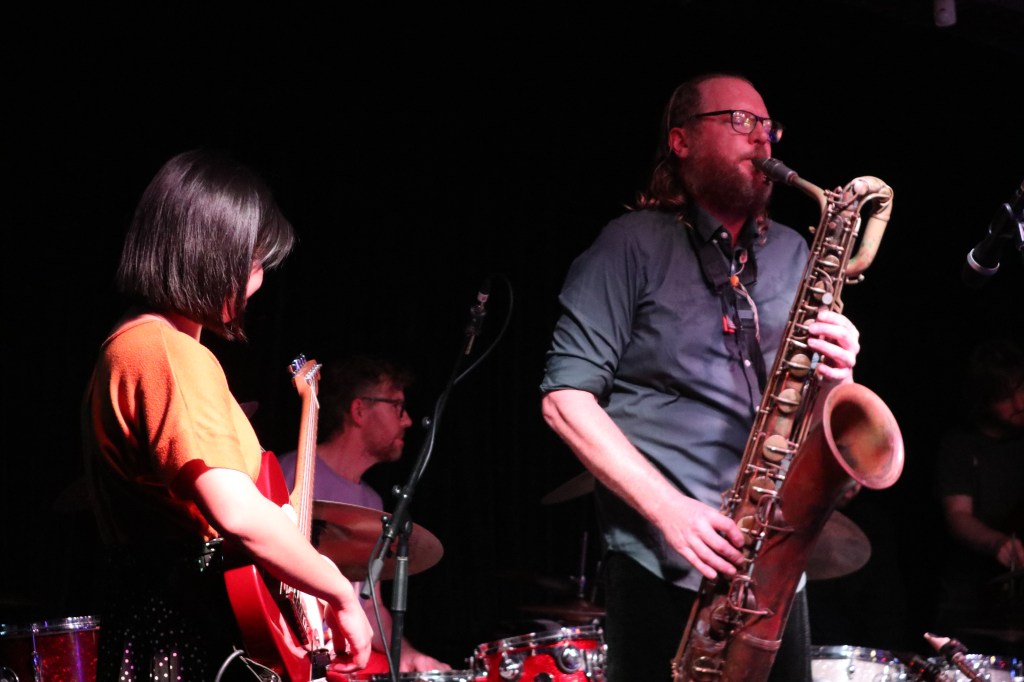
While Henderson is not a musician to blow his own trumpet, his baritone saxophone could flatten the walls of Jericho. He is the guiding force behind the growth of the improvised ‘out’ music scene in Aotearoa and his determination has built a sustainable and vibrant presence. A saxophonist, composer, producer and visionary, someone formidable.
Rated X (Davis)
With him in the Trioglodyte trio are Eamon Edmundson-Wells on bass and Chris O’Connor on drums (and percussion). O’Connor is a legend across many genres and Edmundson-Wells has built a solid reputation in settings like this. The pair are the perfect foils for Henderson, being adept at reacting instinctively and both capable of carrying considerable weight. Edmundson-Wells is a powerful and unfaltering presence and this frees up Henderson to forge a melodic path. Meanwhile, O’Connor does what he is renowned for, delivers his extraordinary pulses in marvellously unexpected ways.
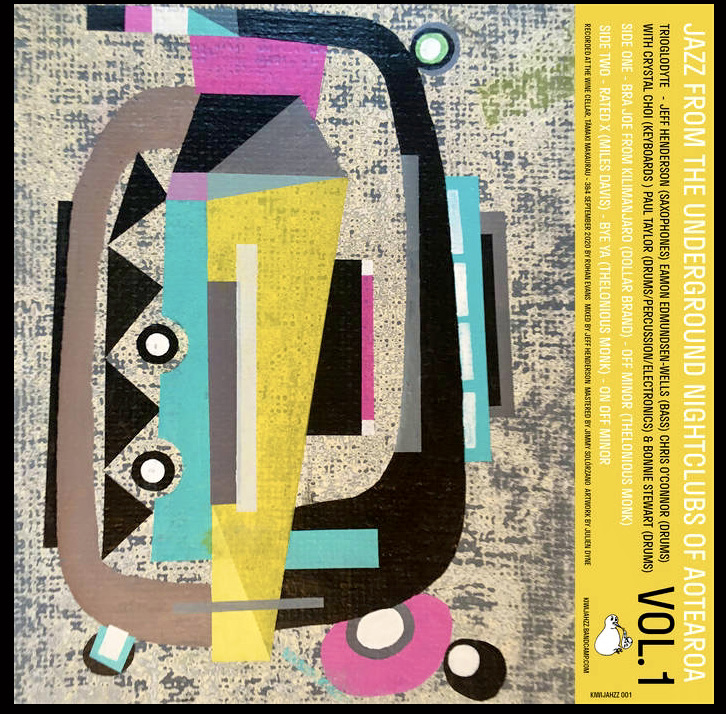
‘Vol 1’ is modestly titled but don’t let that fool you, because immediately you click on the arrow, the introductory track comes right at you, delivering hammer blows to the senses. Perhaps there should be a warning upfront; beware there will be no ECM styled five seconds of silence beforehand. That track is titled ‘Bra Joe’.
Henderson opens with an extraordinary squalling attack as he strides into the tune like a Titan, casting aside all that he deems superfluous. Underneath his saxophone, you are aware of the pumping and scuffling of Edmundson-Wells and O’Connor, followed by the second trio. Crystal Choi on keyboards, Bonnie Stewart on drums and Paul Taylor on percussion and electronics. This may be a short number, but the impact will linger long afterwards.
The second track ‘Bra Joe from Kilamajaro’ is a reimagining of the Dollar Brand standard. Here the pace is slowed and the volume lowered but the intensity is not. The way it unfolds over a long slow vamp imparts something of an Alice Coltrane vibe, with Choi’s keys rippling joyfully beneath the bass. In fact, every track references a Jazz standard (more or less). Some might wonder why an album of adventurous free music features standards, but the music here is as out and adventurous as you might wish. And as with most improvised music, there is an implication of fun, of not taking ourselves too seriously. My favourite track is definitely ‘Rated X’ (Miles Davis). This is a multi-layered sonic feast and everyone gets to strut their stuff here. Miles smiles I’m sure. On this particular track, it is easy to understand why Henderson is held in such high regard. The ideas just bubble from his horn and everyone responds in kind. And Bonnie Stewart (is this the Irish born Bonnie Stewart, the drummer songwriter, who performs with SIMA in Sydney). I have always been a fan of Choi on keys and this is the proof of the pudding; she was always reaching for this space. And then Taylor, electronics and percussion; his inclusion rounding off the ensemble nicely. This is the way modern avant-garde music has been tracking of late, two, even three drummers, which offers more punch.
Milestones (Davis)
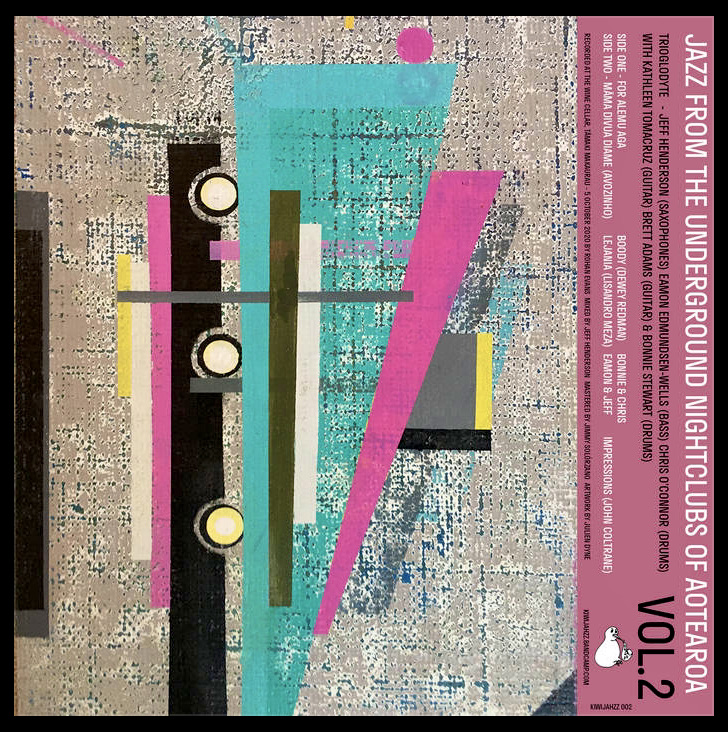
‘Vol 2’ has a different mood entirely. It opens with a moody piece of Frisell styled Americana, with one guitarist playing chords over a soft drone while the other answers. When Henderson comes in, new possibilities open up, and a subtle interplay involving all six musicians takes this into freer territory. Track two has a delightful New Orleans barroom kind of vibe. Again, Henderson leads the way with raw gutbucket blues. It shouldn’t surprise anyone to hear him play like a soulful Texas tenor player (complete with shouts) as there is ample evidence of this on earlier Henderson led albums. As you move through the tracks the Americana theme merges with other influences, a two drummer conversation titled Bonnie & Chris, a short piece titled Eamon & Jeff. And following that is the blistering and rollicking ‘Impressions’; this last piece is best described as a Knitting Factory styled blues with the drums and percussion setting up the tune. Unadulterated crazy magic. Apart from Trioglodyte, the album features guitarists Kat Tomacruz and Bret Adams plus drummer Bonnie Stewart.
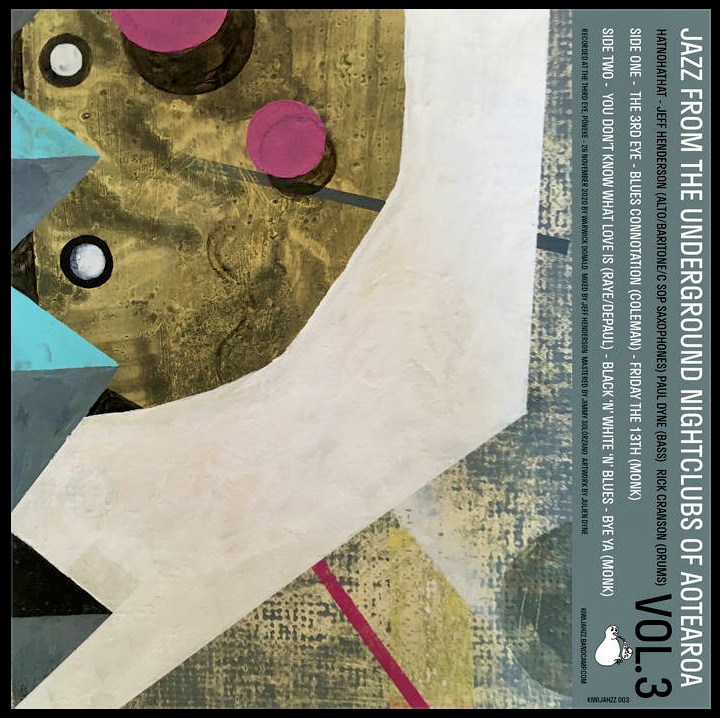
‘Vol 3’ is not a Trioglodyte album and unlike the other three in the series, it was recorded in Wellington at the Poneke Beer Loft (November 2020). Here Henderson is with bassist Paul Dyne and drummer Rick Cranson. All are heavy hitters and well used to traversing the jagged lines of Monk and responding to the keening cries of an Ornette Coleman tune. As well, the tracklist offers freely improvised pieces and a standard. The liner notes make reference to Henderson’s garrulous saxophone, and while that is accurate, it is also true that we can find a more measured and interrogatory tone from him here. Perhaps because this traverses familiar ground with old friends, the trio decided to take an oblique look at the material. This is particularly evident on the Raye/de Paul war-horse ‘You Don’t Know What Love Is’. Together they have recut this diamond and revealed burning shafts of light hitherto unseen, and in doing so, they forged a minimalist route to the lustre. ‘Black ‘n’ White ‘n’ Blues’, dances joyfully over ostinato bass lines and a steady pulse, Colemans ‘Blues Connection’ is delightful and captures the essence of the great man; also, the two Monk tunes ‘Bye Ya’ and ‘Friday the 13th’ refresh and delight.
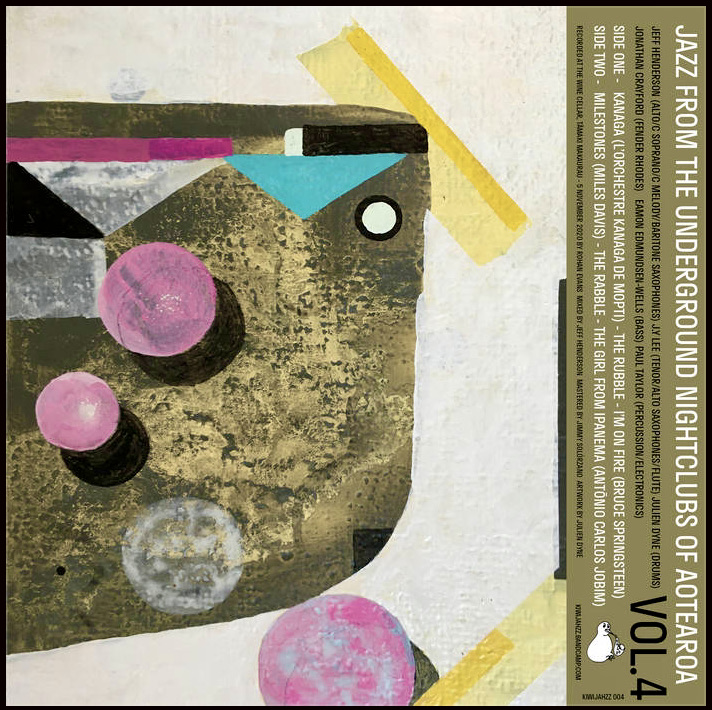
‘Vol 4’ is another Wine Cellar recording and the lineup here is mouth-watering. There is no Chris O’Conner in the core trio this time, but his replacement Julien Dyne slots in seamlessly. Dyne is a marvellous drummer, comfortable in a multitude of settings. He is also responsible for the great artwork on all four of these releases. And as if there were not already an embarrassment of riches, Jonathan Crayford features on Fender Rhodes. The other musicians are J Y Lee on alto & flute (a player featuring in many innovative bands about town) and as in Vol 1, Paul Tayler on percussion and electronics. This album takes in a broader perspective on improvised music. It is filled with interesting cross-genre references and it invokes many moods. Here Henderson deploys a fuller armoury of alto, C soprano, baritone and C Melody saxophones.
The opener has an Afro Beat feel. Powerful propulsive and utilising repeated phrases to amp up the tension. Track two ‘The Rubble’, by contrast, is a dark filmic piece powered by the percussive utterances of Dyne and Taylor and the mood deepened by the arco bass of Edmundson-Wells. Three is airy and open, wending its way purposefully, led by Crayford as he sets the pace and mood. People unfamiliar with free improvised music often fail to comprehend that this type of music can on occasion be gentle and reflective. It is honest music dictated by the moment. The flute and saxophone are pelagic birds circling above the rolling swells of a vast ocean. A most appealing piece.
Track four, ‘Milestones’ (Davis) is a wonderful Dewey doing Miles fifteen-minute romp and the best reimagining of the tune I’ve heard in ages. This is so good that I had to put it on repeat play. The two saxophones playing unison lines, then Henderson (and Lee) playing the changes before launch off, Crayford dropping space chords underneath and soloing like Sun Ra’s chosen successor, Dyne, Taylor and Edmundson-Wells lifting the intensity beyond the high watermark. This track is everything you could ever wish from a Jahzz group. No wonder Tony Williams kept begging Miles to keep the tune in the repertoire post Bitches. Again 5 stars. There is one more standard ‘The Girl from Ipanema’. They have taken a ‘same beach different girl’ approach here. This is completely free and not a bossa beat in evidence. This is a musical territory that the Norwegian electronic improvisers claim so convincingly. It is explorative and anyone with open ears will enjoy the ride. Mood dominates and form is irrelevant. Having some of our best musicians collaborating on a project like this is a masterstroke. The open-eared must support Kiwi Jahzz and if we do there will certainly be more riches in store. You can find downloads and high quality streaming at Bandcamp on kiwijahzz.bandcamp.com
Footnote: A pointless question is sometimes asked of me, ‘but is this Jazz’. My response is, who cares, followed by, but did you listen with open ears and did the music talk to you? That’s all a listener needs to know about approaching unfamiliar music. Perhaps in future, I will answer by suggesting that they may be confusing Jazz with Jahzz.
Jazz is a catch-all descriptor for a broad swath of improvised music, and like all attempts to define an open art form, it eventually hits a brick wall. Jazz doesn’t require a scholarly explanation because the listener ‘just knows’; or as Pat Metheney put it, ‘you can’t see, touch or smell Jazz (unless you’re Frank Zappa), but a listener can recognise it immediately. Sound is air vibrations passing over the small bones in the inner ear, then it becomes electrical impulses. Jazz is physics fused with alchemy.
JazzLocal32.com is rated as one of the 50 best Jazz Blogs in the world by Feedspot. The author is a professional member of the Jazz Journalists Association, poet & writer.Some of these posts appear on related sites.
It had been quite a while since the pianist and composer Ben Wilcock and I last caught up, so when I heard about his new album, I set up a ZOOM interview. It was a wide ranging discussion, more like a hang really, and because we were both relaxed we found a lot to talk about. The most obvious place to start was with Greek Mythology, a topic that we both had an interest in. Exploring this topic backgrounded the album nicely and the consequent intertextuality enhanced my appreciation of the project.
So, Tethys was a Titan and the daughter of Uranus and Gaia (Sky and Earth). She was associated with bathing spots and rivers. Among her siblings were Hyperion and Oceanus (the latter her brother and husband). Tethys later gave birth to the numerous water gods and nymphs who appear throughout Greek literature (Oceanids).
My assumption that the album directly referenced this mythology was only partly true. In fact, the prime inspiration was a series of SciFi novels titled ‘The Hyperion Cantos’ by Dan Simmons. I had no knowledge of his works, as my basic reference for Hyperion was John Keats’ aborted poem. My bad. The Hyperion Cantos is now on my reading list.
Aenea
The project topic was an immediate hook, but the way that Wilcock tackled it makes it extremely interesting. In the novels, the river Tethys flows between different worlds and in order to capture the mood of those worlds, he assigned each tune to a different world or place. He also decided that the pieces should not be programmatic and with that in mind he allocated each tune to a world after they were recorded.
The artistry of the musicians and the arrangements lead you to think that the work is through-composed, but in reality it is ninety percent improvisation and much of that free. Therefore, I was not surprised to learn that the tunes were mostly captured in one-take. Each of them sparkles with a spontaneity which arises from that in-the-moment approach. The tunes are mostly Wilcock originals but with three standards interposed, the juxtaposition works very well.
The blistering rendition of Gillespie’s ‘Groovin High’ is a roller coaster ride, pulling at the very fabric of the tune, and much like the hot music of the Mos Eisley Cantina in Star Wars, you wish that you could hang there. As Wilcock put it, ‘melody over chaos time’. Another standard is a take on de Paul/Rayes ‘Star Eyes’, a tune made famous by Tommy Dorsey. The remaining standard is ‘La Rosita’ (brought into the Jazz lexicon by Ben Webster and Coleman Hawkins). All of the above are assigned a different mood (e.g La Rosita has an old movie vibe, later settling into a delicious Ahmed Jamal groove with its easy loping swing).
As interesting as the standards are, it is the originals that truly reel you in. Right from the opening number you know that you are in for a treat as a succession of expansive tunes entice you phrase by phrase. This is an album that rewards repeat listening. Some are slow burners while others are edgy, and in spite of the oblique references to familiar music, this is a forward looking and original album.
First Gate
One of the things Wilcock and I spoke of was how improvising artists hate to be confined or pigeon-holed. This album firmly establishes Wilcock as a capable modern stylist. Yes, he is adept at creating a Peterson, Monk or Garner vibe, but he is so much more than that. There is free improvisation on this album and he is very much at home in this space. I can’t wait to hear more. This must surely be his direction of travel from here out.
When you check out the album, listen to the slow burning and bluesy ‘Sol Draconi Septum’. A tune where the form is implied and liberated. Or check out the extraordinary ‘The Secret Life of Music’, which opens with a scuffling dissonant urgency (think Paul Bley), then unexpectedly merges into a delightfully syncopated Willie the Lion stride romp. Then there is ‘Aenea’ with its otherworldly violin soaring over the trio like a circling eagle; and that subtle elegant progression in the middle which briefly reminds you of Evans playing The Peacocks.
With the colourist drumming and interactive bass, the openness of the offering is reinforced. That the music could be simultaneously inside and outside, is a tribute to the musicians. And Wilcock’s piano is superb throughout, a joy from start to finish and worth the album price alone. Accompanying Wilcock are his frequent collaborators, John Rae (drums) and Dan Yeabsley (bass). On a number of tracks they are joined by the interesting violinist Tristan Carter. No one put a foot wrong here.
I have always been a fan of John Rae’s drumming and partly because it is always totally appropriate to each situation. Therefore, I shouldn’t have been surprised to hear those spare, Motian-like, colourist pulses emanating from his well tuned drum heads. I love minimalism and there is plenty of it to enjoy on this album. The best example can be found in ‘First Gate’. Here, the quartet speaks as one and they capture the very essence of minimalist Jazz, something rare, sparse and beautiful. The opening bar begins with three chords, then the sound decays as the seconds tick (how wonderful), gradually that tap, tap, tap and the arco bass or snatches of violin. Five stars for this tune.
The last number on the album is Star Eyes and as the trio settles into a warm groove, we are eased back to the familiar. Having experienced this journey. I know that I will return often; these are worlds that beg a deeper exploration. To purchase the album visit Thick Records (follow the link). It is also available on streaming services, but it is best to purchase and support these artists – this one you will want to own in any case.
JazzLocal32.com is rated as one of the 50 best Jazz Blogs in the world by Feedspot. The author is a professional member of the Jazz Journalists Association, poet & writer.Some of these posts appear on related sites.
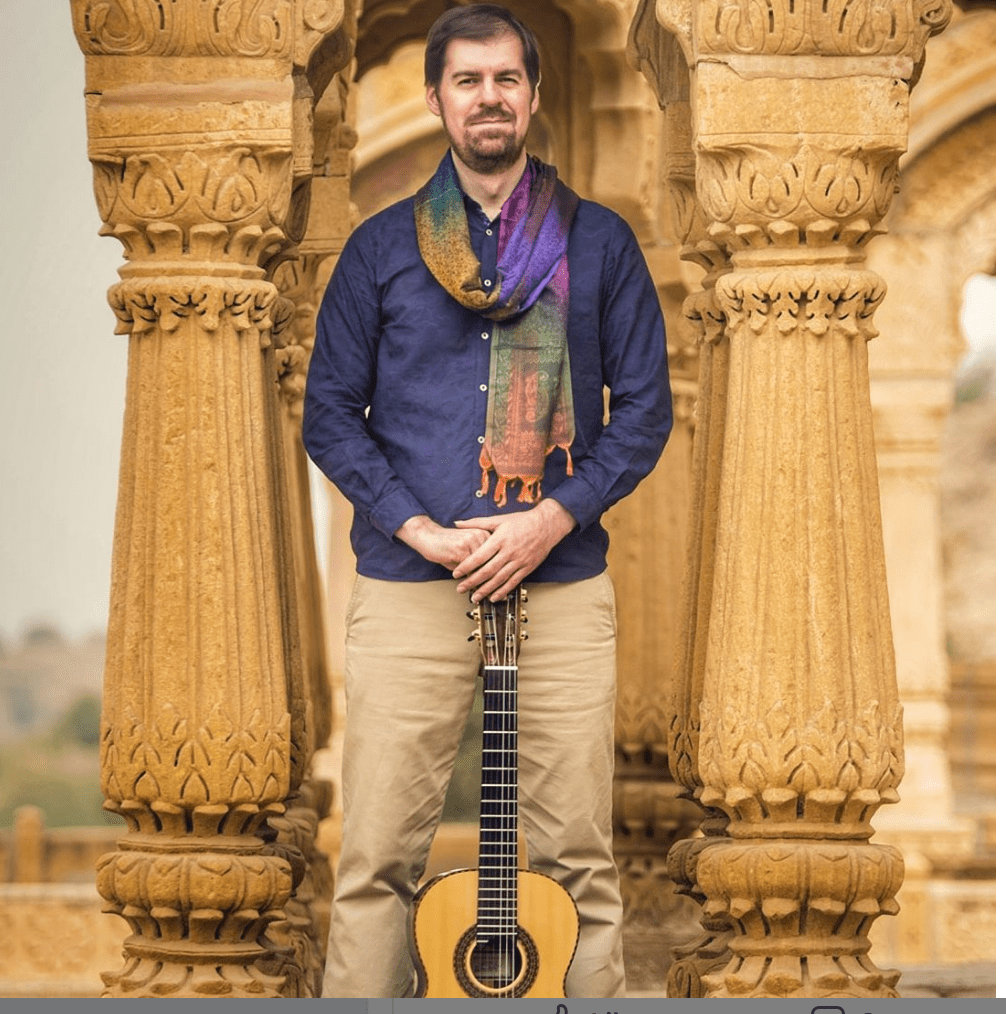
In September 2014, the Scottish guitarist Simon Thacker brought Ritmata to Auckland. I recall that night clearly, as his innovative genre-defying music and entertaining banter enchanted the CJC audience. Since that time, I have followed his endeavors with interest and there has been much to marvel at. As one reviewer put it “(Thacker) is one of the most important musicians of his generation”. He has toured widely, is classical guitar tutor in a number of prestigious universities and has appeared as a soloist with leading orchestras.
Along the way, he has formed various ensembles as he reimagines cultural musical traditions. He is a master of the unexpected and each performance arises from his pan-cultural journeys. At first his music sounds familiar, but upon further listening, you realise that you were mistaken. What you are hearing is something new.
This is a musician with boundless imagination and although his music may be fed by diverse streams and is respectful, it is not confined by the past. The last time we communicated he made that point beautifully. “At no point in history is music more exciting than what we will hear tomorrow”.
His latest project Pashyanti began as a solo project in 2019 and he toured it through the Indian subcontinent, appearing at two of the biggest Indian Jazz festivals along the way. That was to be followed by an appearance at last year’s Edinburgh Festival Fringe (cancelled due to covid), but as with all of Thacker’s projects there is constant evolution underway. This year he has invited contemporary dancer Aishwarya Raut (from the Rambert dance school) to collaborate with him. Together, aided by skillful camerawork and gorgeous lighting, they have conjured up a sonic and visual feast.
There are four segments to the show: MunaSata, Omanjana, Ekla Chalo Re and Nirjanavana. I loved them all, but perhaps because I lived through the sixties, I found Nirjanavana the most compelling. The musicianship and dancing and effects were astounding, as was the otherworldly lighting. Throughout, you will experience the vibe of flamenco or the displaced time of latin music, some Jazz harmonies, slick references to a multitude of eastern traditions and above all, high wire artistry.
The concert is on until 29 August. Pashyanti appears as the Made in Scotland Showcase, an Edinburgh Festival Fringe event. And best of all, it is available online to viewers worldwide via the ticketing Fringe Player app (follow the link). I urge anyone with a love of acoustic guitar, dance or astonishing musicianship to grab a ticket immediately.
JazzLocal32.com is rated as one of the 50 best Jazz Blogs in the world by Feedspot. The author is a professional member of the Jazz Journalists Association, poet & writer.Some of these posts appear on related sites.
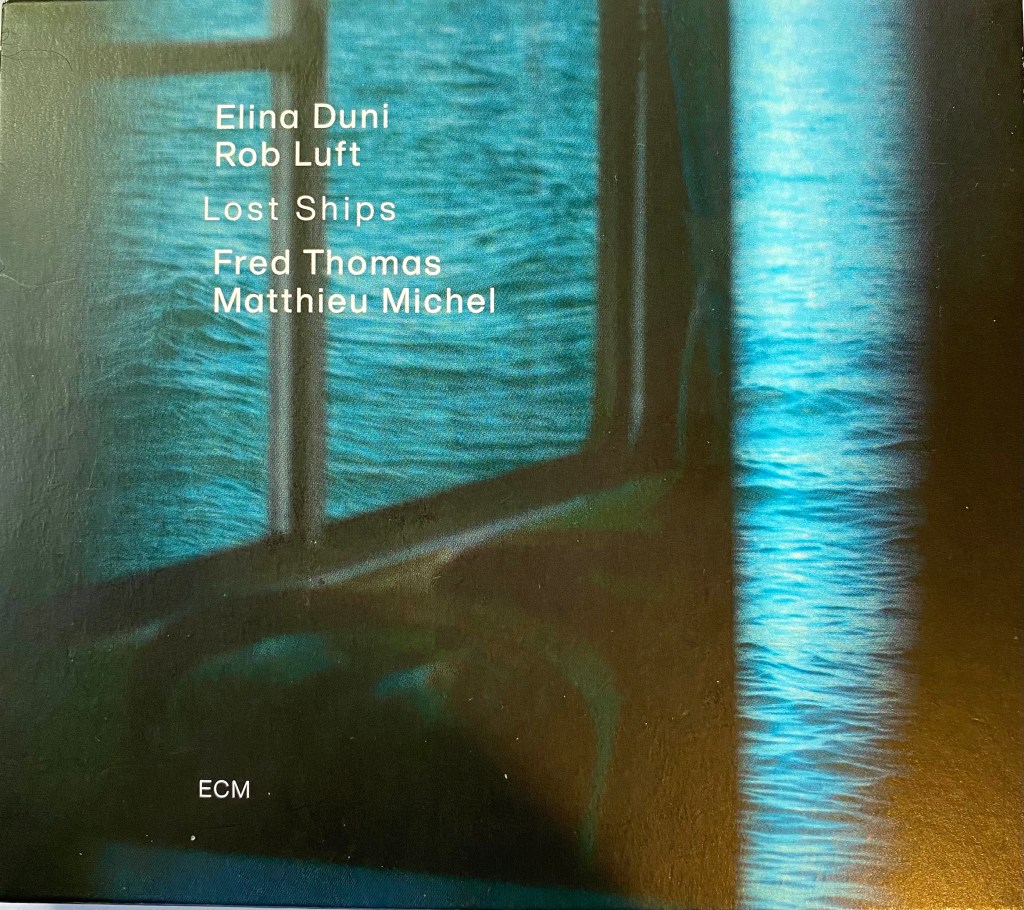
Lost Ships on ECM is an album that rewards deep listening. It is deliciously spacious and unbelievably beautiful and the powerful images and exquisite stories will remain with you long after listening. It speaks in many languages, as disparate as Albanian and English. The Romance, Germanic and Balkan tongues unified in improvised song form. The album is a collaboration between UK Jazz guitarist Rob Luft and Albanian born Jazz vocalist Elina Duni. Together they have crafted a rare and precious document. It is especially relevant for current times while gently referencing a fading past.
Like many ECM albums, originals, traditional folk tunes and jazz standards are approached with a Euro-Jazz sensibility. An approach where less is much more and an almost preternatural clarity is realised Everything sounds fresh and the album achieves this by breathing new life into what we recognise and by delighting us with the unfamiliar. As always with ECM albums, the recording quality is impeccable, and the musicians take full advantage of this.
The first number ‘Bella Ci Dormi’ (Beauty, You Sleep) is a traditional Italian song conveying intense longing. It opens with the piano and guitar setting up the tune for Duni; her voice, caressed by the delicacy of the arrangement. Duni has an extraordinarily beautiful voice and Luft has gifted her the perfect arrangements. The next tune ‘Brighton’, an original by Duni and Luft is sung in French (with the flugelhorn as another dominant voice).
There is a songbook standard, ‘I am a Fool to Want You’ (Sinatra/Wolf/Herron) and a loved chanson classic ‘Hier Encore’ (Charles Aznavour). This establishes the pattern throughout. Songs from many sources sitting comfortably together. The song ‘Wayfaring Stranger’ (trad USA) was made famous by Johnny Cash, but it has previously been recorded by Jazz musicians (Charlie Haden and Shirley Horn). The two traditional Albanian songs are a rare treat. In ‘Kur Me Del Ne Dere’ or ‘N’at Zaman’, it is not hard to discern the eastern European flavour.
Among the originals are some wonderful tunes, ‘Flying Kites’ is stunning as are ‘Lux’ and ‘Empty Street’. As lovely as the rest are, my highest praise goes to the title track ‘Lost Ships’. The song pays tribute to the migrants who lost their lives in the Mediterranean; gently but powerfully urging us to take action on environmental and humanitarian issues before we find ourselves lost ships on an empty sea.
The trio accompanying Duni is not of a typical alignment. It has two chordal instruments and the pianist doubles on drums. Then there is the flugelhorn. Such sensitive players all. And Luft is on every track and he is a powerful presence without being overt. It is his astonishing voicings and delicately placed runs; none intruding on the vocalist but never-the-less conveying a quiet strength by exploiting timbre and speaking whisper-soft. This was a perfect match and I am not surprised that ECM picked them up.
The last time I encountered Luft, was at Ronnie Scotts, playing a gig with Kit Downes, and it was there that he told me of this ECM project. At the time I had not heard of Duni, but a few months later and back in New Zealand, I posted enthusiastically on the Norwegian avant-garde vocalist Sidsel Endresen. Luft messaged me immediately to say that there was a connection between Duni and Endresen. Intrigued, I kept an eye out for the album, and then the pandemic hit.
I was determined to grab a copy, a real copy, complete with brooding artwork and an outer sleeve. ECM has the imprint of artistic integrity and I avoid listening to any ECM recording in a compressed format if I can. I badly wanted to hear the album, but I waited. I was informed that it could take two months due to pandemic shipping delays, but it took much longer. It finally arrived as winter approached and I took it out of the letterbox as dusk fell. I put it on as darkness fell and let the sounds wash over me. I loved it from the first note. It had been my lost ship, and now it was found.
Lost Ships: Elena Duni (vocals, compositions), Rob Luft (guitar, compositions), Fred Thomas (piano, drums), Matthieu Michael (flugelhorn).
JazzLocal32.com is rated as one of the 50 best Jazz Blogs in the world by Feedspot. The author is a professional member of the Jazz Journalists Association, poet & writer.Some of these posts appear on related sites.
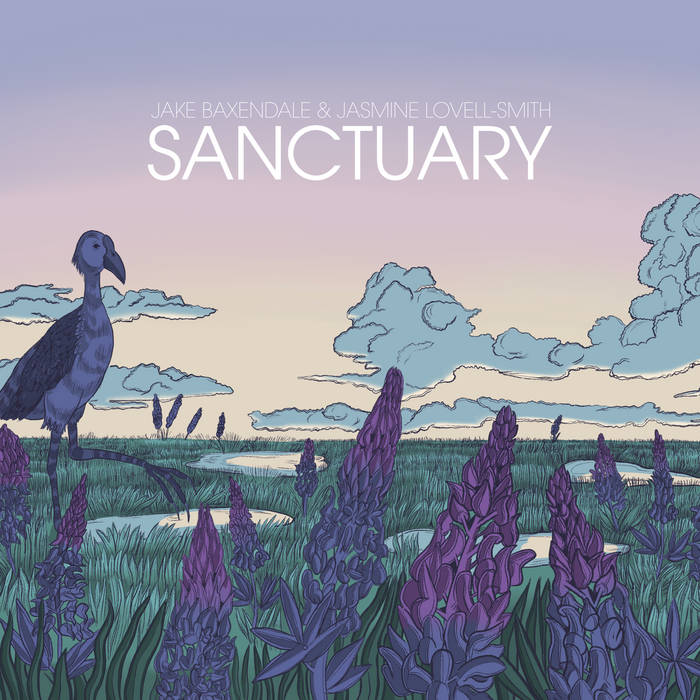
If you follow the New Zealand improvised music scene, you need to check out ‘Sanctuary’, a collaborative album released by the Wellington-based saxophonists’ Jasmine Lovell-Smith and Jake Baxendale. And although the release date was only a month ago, it is already receiving significant attention, including from outside these shores. When you listen to Baxendale’s Walt Whitman referencing ‘Leaves of Grass’ Suite or Lovell-Smiths gorgeous ‘Sanctuary’ suite you will understand why.
The album is replete with imaginative writing. Of tastefully painted brush strokes from an unusually rich colour palette, and this enabled by the configuration of the eleven-piece ensemble. It is saying something important but never at the expense of approachability, for example, Baxendale’s suite, the opener, brings Mingus to mind. Mingus in a Felliniesque wonderland.
The album is getting cut through because it is superbly realised and above all because it speaks convincingly of our times. In Lovell-Smith’s case, there is a distinct pastoral quality to her work and it invites us to reflect. This is similar to the approach that Maria Schneider takes, drawing attention to what is often passed over in haste and clothing the political in a softer raiment.
Because of the writing and the quality of the musicianship, this is an especially cohesive ensemble; but nevertheless, the voices of the individual musicians shine through strongly. First and foremost among the soloists are the co-leaders, Baxendale on alto saxophone and Lovell-Smith on soprano saxophone, each featuring strongly on the album. Both give stunning performances. They have assembled a formidable line up here and no one falls short. Among the fine performances, Blair Lathem on bass clarinet and baritone, Ben Hunt on trumpet, Louisa Williamson on tenor, Hikurangi Schaverien Kaa on drums, Aleister Campbell on guitar and Anita Schwabe on piano (with her innate sense of swing).
Baxendale is acknowledged as an important New Zealand composer and he has frequently been nominated (and has won) Jazz Tui awards. He is the spokesperson for the award-winning group The Jac (the winner of this year’s Tui with ‘A Gathering). He has travelled the world with his music and is associated with a number of New Zealand’s finest jazz units. Also a noted composer is Lovell-Smith who has resided, taught and performed in a number of countries, especially the USA and Mexico. Her return to New Zealand has enriched the scene here as she brings valuable insights and experience with her. Her innovative group the Noveltones is well worth catching.
The subject matter for the two suites, and for the additional pieces are perfectly pitched. Whitman the beloved poet and humanist who spoke his truth in unforgiving times. His love of nature and his common cause with open-minded souls. And Sanctuary, that loaded word that evokes both safety and confinement. The album was recorded after our borders with the world had closed. And while the album evokes a sense of our enforced isolation, it also speaks to our interconnectedness; of human beings existing in a complex ecosystem, and hopefully realising that this is a rare window of opportunity. Music like this helps illuminate our way.
To purchase or download the album visit jasminelovellsmith.bandcamp.com – Tell friends about it and support New Zealand music.
JazzLocal32.com is rated as one of the 50 best Jazz Blogs in the world by Feedspot. The author is a professional member of the Jazz Journalists Association, poet & writer.Some of these posts appear on related sites.
With the opening of borders between New Zealand and Australia, it was hoped that improvising musicians could begin touring again. Apart from three returnees and several stragglers who chose to shelter in place, we had not seen an international for fifteen months. Unfortunately, the pandemic reestablished itself in Australia and that window closed within a week of its opening. There was, however, one musician who timed it perfectly and that was saxophonist Andy Sugg.
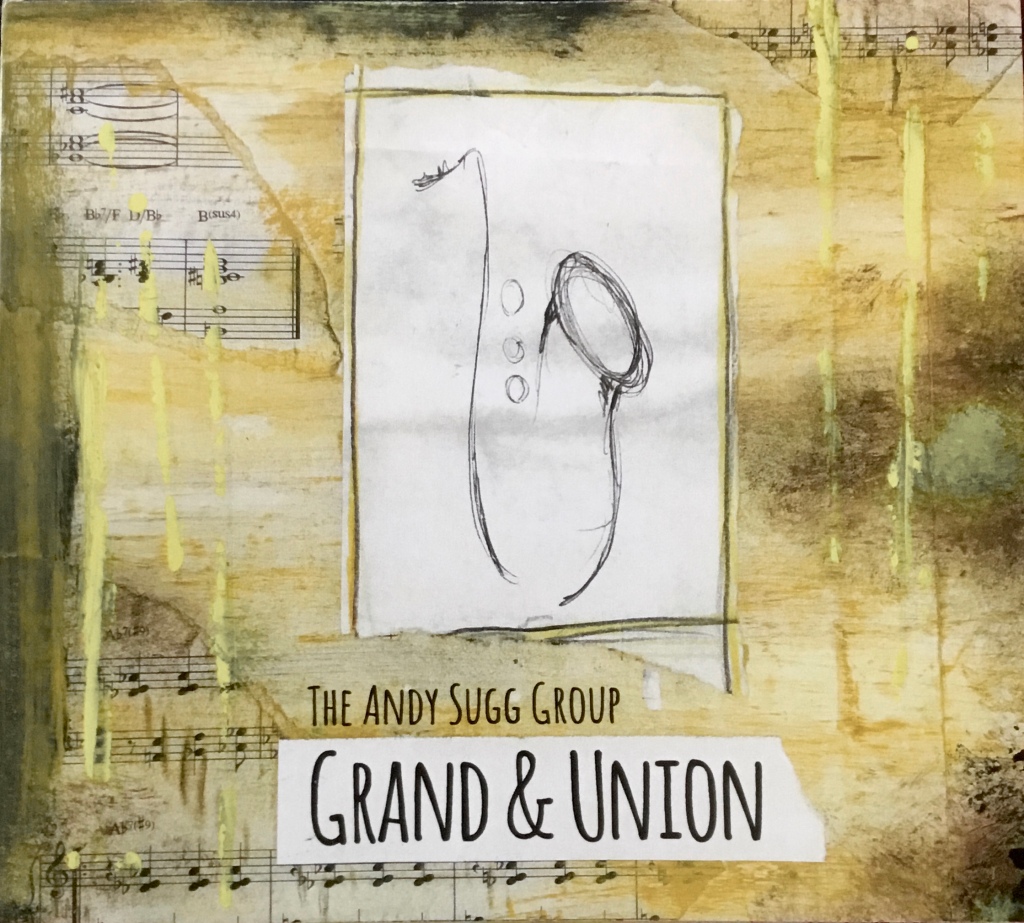
He flew out of Melbourne just days before another lockdown was announced and we were very pleased that he had slipped the net. Sugg is a gifted saxophonist with broad appeal and there was no better way to break the tour drought. The tour was billed as an album release but the setlist also included earlier compositions and two tasty standards. The album titled Grand & Union was recorded in New York in mid-2019 and released last year. For obvious reasons Sugg was unable to take to the road and certainly not with his New York-based bandmates.
Grand & Union is a rail hub in Brooklyn but it is also a metaphor for the album. ‘A musical intersection where styles and motifs merge before moving somewhere else’. It is an album of diverse stylistic influences but the musicians’ craft a tasteful amalgam from the underlying base metals. In the liner notes, the leader mentions Stravinsky as a prime inspiration and ‘The Rite Stuff’ with its deep propulsive groove is the most overt reference; a stunning piece, which evokes the now without jettisoning the history underpinning it.
Sugg is a particularly coherent improviser who takes a listener along as he tells his ear-catching stories, and his tone is particularly arresting. Warm as toast and seldom straying into the lower registers. On the soulful ‘Ruby Mei’, his sound reminded me of the great melodic improviser, Ernie Watts. Much credit is also due to his New York bandmates who are seasoned musicians all, and who worked as a tight cohesive unit.
His Auckland gig featured a local rhythm section and they also acquitted themselves well. The first set opened with the title track Grand & Union and was followed by Ruby Mei and other tunes from the album, Then came a more expansive offering in several sections. This enabled Sugg and the band to stretch out. This was a gig of highly melodic offerings and as an added treat, the second set featured two popular standards. A musician said to me recently; playing a popular standard to a discriminating audience, means, that you must play it extremely well and you must insert something of yourself into it. They did. The standards were the gorgeous ‘Someday My Prince Will Come (Churchill/Morey) and the much loved ‘In a Sentimental Mood’ (Ellington). The audience shouted their approval, obviously delighted. I have posted a YouTube clip from the Auckland gig.
While each of the local musicians has experience playing with offshore artists, considering how long that has been, they were very much on form. Of particular note was Wellington drummer Mark Lockett. I could hear people commenting enthusiastically about his drumming between numbers. They were right to comment as he pulled one out of the bag that night. He and Sugg go back a long way and the connection was obvious.
The gig took place at Anthology for the CJC Creative Jazz Club on 14 July 2021. I recommend the album and it’s worth checking out Sugg’s earlier album also. To order physical copies, download or stream, visit AndySugg.Bandcamp.com
The album personnel: Andy Sugg/tenor saxophone. Brett Williams/piano & keyboards, Alex Claffy/acoustic & electric bass, Jonathan Barber/drums.
Gig personnel: Andy Sugg/tenor saxophone, Keven Field/piano, Mostyn Cole/acoustic bass, Mark Lockett/drums
JazzLocal32.com is rated as one of the 50 best Jazz Blogs in the world by Feedspot. The author is a professional member of the Jazz Journalists Association, poet & writer.Some of these posts appear on related sites.
Drummer led albums often tell stories in different ways and the releases reviewed here exemplify that. On the surface, they are dissimilar, but both convey raw energy and immediacy. These improvisers transcend the ordinary in their search for an ancient to modern language.
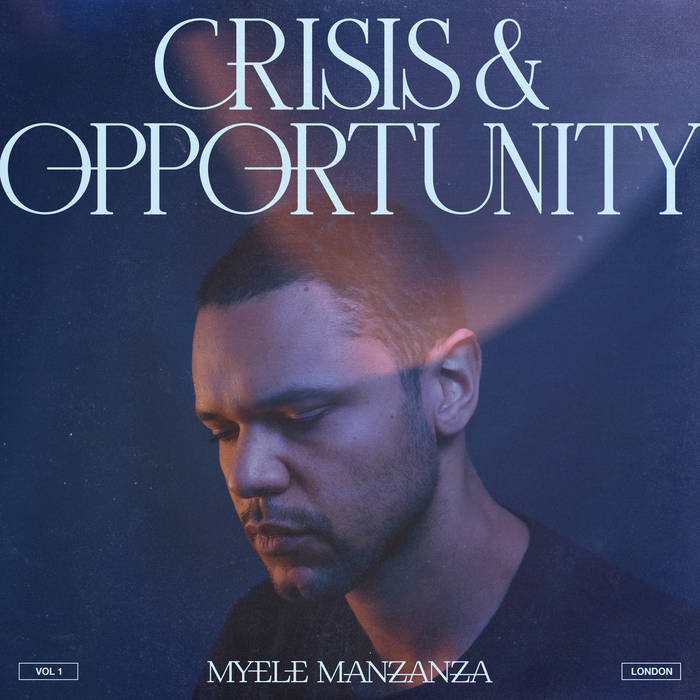
CRISIS & OPPORTUNITY
The first is a newly released album by Myele Manzanza titled Crisis and Opportunity. It is the artist’s eighth release. And this time, his compositions were crafted while the artist was locked down in London during the worst months of the UK COVID crisis. As with his previous albums, there is something big-hearted about this work. As you listen, you gain the sense that he is telling a story that transcends time and place. This is realised through some very fine writing and crafted over his warm mesmerising beats.
Crisis & Opportunity Cover
Manzanza draws on strong roots and influences. He is a Kiwi, a citizen of the world and of African heritage. His father is a Master Congolese drummer and his formative years playing hand drums will have informed his approach to the kit. Among the other influences evident are broken-beat and Jazz electronica. Out of these influences and his own life experiences, alchemy is forged. He is forward-looking and overtly political. He is someone to watch with interest.
Teaser to Crisis & Opportunity
Joining him on the album are some London musicians plus Mark-de Clive-Lowe (a Kiwi Keyboard maestro based in LA). I am familiar with trumpet player James Copus, as his impressive Dusk album came to my attention quite recently. The other horn player is George Crowley on tenor saxophone. When the horns are playing in unison it is hard to believe that the horn line is not much bigger. On piano is Ashley Henry and on bass Benjamin Muralt. Both chasing those hypnotic dancing beats to good effect. And with de Clive-Lowe adding his deft brush strokes, a magnificent Album is realised. If you go to his Bandcamp label you can purchase a digital copy or order vinyl. www.myelemanzanza.bandcamp.com
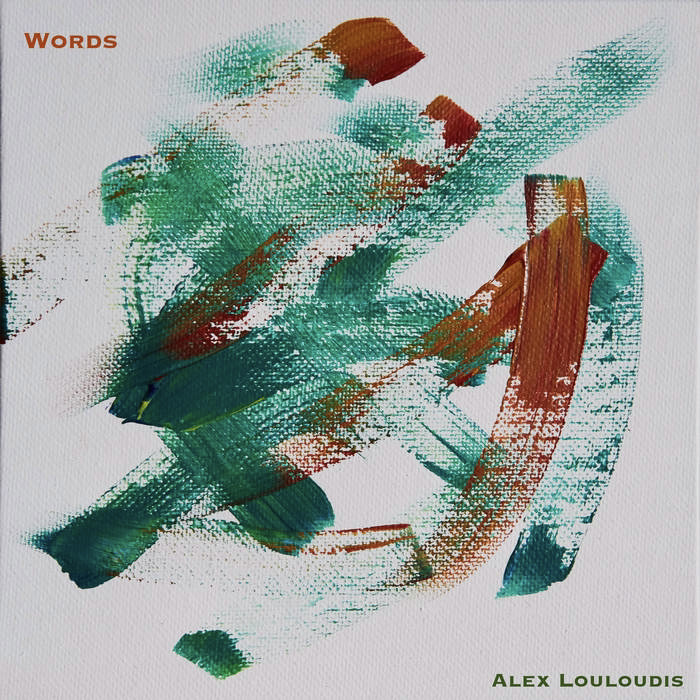
WORDS
The other drummer led album that caught my attention is a free-jazz album released by Alex Louloudis. It arrived as a digital review copy with very little attached information, so I embarked on some research. In reality, the music speaks for itself and the biographical details are of less importance. The first track of ‘Words’ is ‘Surviving’ and it pulls you into a frenetic life-dance full of raw beauty and endless recalibration. It is propulsive and joyous and I fell for it immediately. It is the sort of track that brings me back to listen over and again and because of the immediacy, you know it’s real.
This is free music that can move inside or outside with extraordinary ease. Nothing is quite what it seems and the river of sound flows over a cushion of compelling beats. There is often an ostinato bass line as in The Magic of 3. The melodic lines avoid the obvious and there is almost no repetition of phrases. In the right musical hands, following such principles opens up huge possibilities. This is a killing band and it is unmistakably a drummers band.
I learned that Alex Louloudis was born in Drama, Greece, moved to America to study at the age of 19 and that he records on the Belgian based label ‘Off’. Since completing his studies in New York, Louloudis has moved among like-minded improvisers and attracted favourable attention. Although the artist was previously unknown to me (my bad), he has certainly come to the notice of important musicians and commentators (Gary Bartz, Billy Harper, Reggie Workman, Oliver Lake, Jeff Ballard, to mention just a few). The title track ‘Words’ is the final track and it rounds off the album perfectly. Opening to soft brush beats, it morphs into a dreamy slow-moving rendition of Over the Rainbow, which in turn introduces the reflectively cutting poem, recited by Rosdeli Marte.
The musicians: Alex Louloudis (drums), Raphael Statin (tenor saxophone), Dean Torrey (bass), Rosdeli Marte (vocals #1,6), Kaelen Ghandhi (tenor saxophone (# 1,6), Aaron Rubinstein (guitar #1,6), is available from Bandcamp at https://stilll-off.bandcamp.com/album/words
In this post, I have deviated from my usual practice of reviewing only albums from Aotearoa, New Zealand (or those offshore who maintain connections to our rohe). During the Covid lockdowns, I worked with the world Jazz community on platforms like the Jazz Journalists Assn site to ensure that the musician’s stories still were being told. Many writers were unable to engage, and in my country, we had freedoms others did not. No rule is worth having if it cannot be broken for a good cause. ‘Words’ is the exception that proves the rule and I couldn’t resist.
JazzLocal32.com was rated as one of the 50 best Jazz Blogs in the world by Feedspot. The author is a professional member of the Jazz Journalists Association, poet & writer.Some of these posts appear on related sites.
The pandemic hasn’t stopped the music, and while it is true that the clubs, bars and concert halls are placed out of reach for many, music has the qualities of water. It will flow through the cracks until it has found its own level. The recent Kiwi lockdown was mercifully short, and in random and serendipitous ways new music found me. As always, I was happy when it did. Below are three very different albums – check them out.
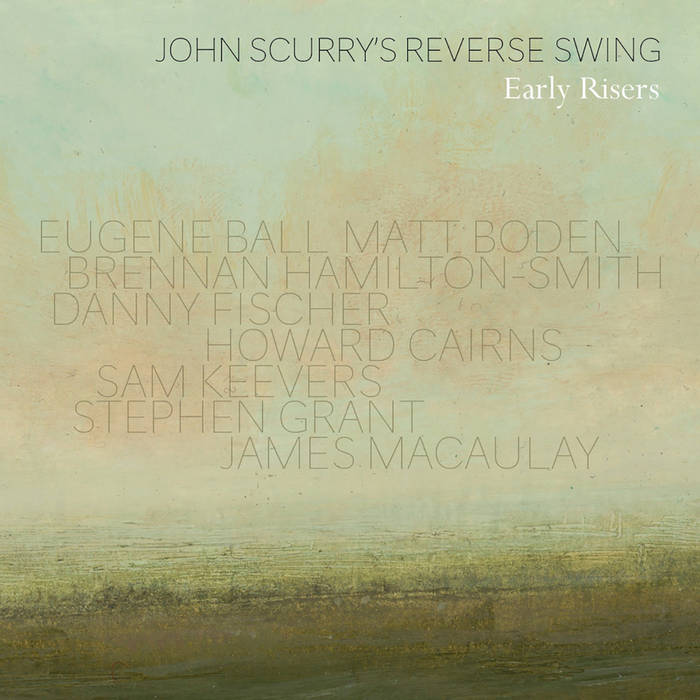
Early Risers ~ John Scurry’s Reverse Swing
During our recent lockdown I received an album in the post from Lionsharecords. The album, ‘Early Risers’ is John Scurry’s Reverse Swing ensemble, his second such release. Scurry’s earlier Reverse Swing album ‘Post Matinee’ was showered with praise, with one American reviewer describing it as ‘Ellingtonian’. The 2020 album has 19 original tunes spread over two CD’s and we are invited to view each volume as distinct but complementary.
Having recently travelled to New Orleans, I detected those influences in this band immediately. When you spend any time in NOLA, you realise that that city’s influences are very broad indeed. Everything from swing to soulful gator-funk, from Sun Ra to the various free jazz offshoots. It is a living, breathing up to the minute music and one with its own flavour. So it is with ‘Early Risers’, and with this album there are also a multiplicity of rich local influences.
I loved the album for its warmth and approachability. It is instantly engaging, but this is not a nostalgic romp. There is real depth here and many treasures are revealed to the deep listener. The interplay between the musicians is simply stunning and their time feel beyond caveat. Track one on the first album is my favourite and while comparisons can be odious, this gave me the same feeling as I had when first hearing the Cy Touff Octet & Quintet album. Perhaps there is even a hint of ‘West Coast’ as well – Sheldon ?
There are many moods and whether a gentle ballad or a hotter number, all contribute uniquely to the whole. Underpinning each number are the quiet urgings of leader John Scurry’s guitar. We hear swing style guitar infrequently these days and more’s the pity. The tunes here were all penned by Scurry and he is also the co-arranger and producer. He has been a popular feature of the Australian scene for many years and I wonder what took him so long to launch this particular project. to listen go to Early Risers Lionsharecords
The other arranger (and horn arranger) is trumpeter Eugene Ball. Ball is another veteran of the Melbourne scene and a Bell award winner. I associate him with the moderism of Andrea Keller. Here you are overwhelmed by the richness of his sound. His tone production is often reminiscent of the latter-day swing trumpeters like Harry Sweets’ Edison and Henry ‘Red’ Alan.
I have also encountered James McCauley, and again I associate him with Keller. He is perfect in these very different rolls. The band members here are John Scurry (guitar, arrangements), Eugene Ball (trumpet, arrangements), Brennan Hamilton-Smith (clarinet), Stephen Grant (alto sax), Matt Boden (piano) Howard Cairns (bass), Danny Fischer (drums), + Sam Keevers (piano). The textures, tunes and uncanny interplay render this a terrific album. It may have its roots in traditional swing, but I defy anyone, whatever their taste in jazz, not to love this. It is released on Julien Wilson’s lionsharecords.com and on bandcamp. All art-work by John Scurry.
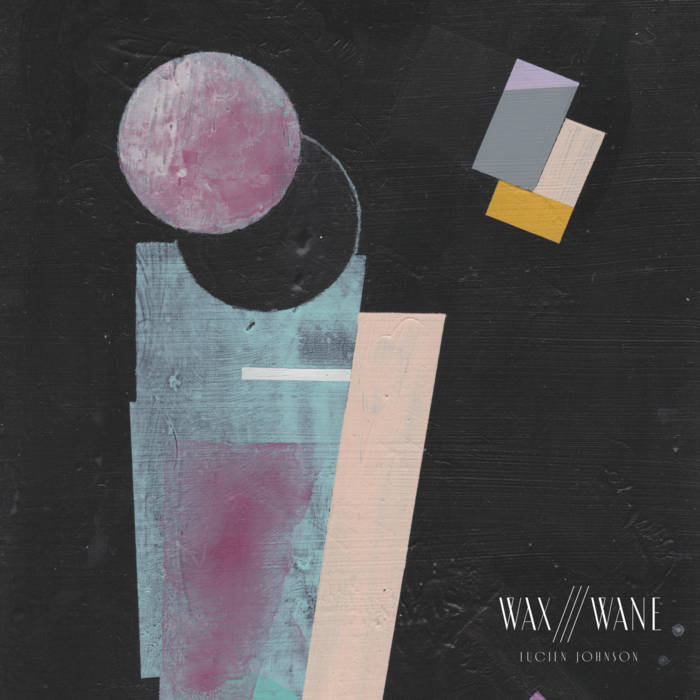
Wax///Wane ~ Lucien Johnson
Wax///Wane was released over summer and I’ve just caught up with it. I am always keen to check out gigs or albums featuring Lucien Johnson, so I downloaded it on Bandcamp. There was no information about the band or the recording on the album page, but my ears began to fill in the gaps. John Bell had to be the vibes player, surely it was him (an online search confirmed that)? Few south of the equator punch out modal grooves quite as convincingly as Bell. Of the remaining four musicians, two were known to me and two not. Michelle Velvin was on harp, Tom Callwood on upright bass, Cory Champion on drums and Riki Piripi on percussion (listed under the undividual tks).
The album features six compositions and each of these has an evanescent quality. They hint at places we think we might know, but can’t quite remember. Blue Rain, Forest Rendezvous, and Rubicon appear as if in a dream and as with the missing liner notes, we are encouraged to fill in the gaps with our imagination.
Blue Rain
Johnson has chosen his bandmates well. Bell and Callwood are genre defying and have open-ears, and as with Johnson are well immersed in the freer regions of improvised music. I have seen Cory Champion several times, but never heard him in this context; very impressive. Adding a harp player and percussionist added texture in finely hued layers, and this gave the album that delightful Alice Coltrane feel. It’s great to see the harp revived as an improvisers instrument and especially with the vibes. They could get in each others way, but in skilled hands this is avoided and a shimmering pulse arises to good effect.
Johnson is a musician we most often associate with the Wellington scene, but these days he is perhaps better termed an international musician. Like all modern saxophonists, there is a foundation of Coltrane in his sound. There is also an airy freedom. Here, he has curated a groove fest. The sort of grooves that Bobby Hutcherson, Alice and John Coltrane, Julian Priester and others explored. It is what might be loosely termed spiritual Jazz. Music defying the mundane, an invitation to a better place where gravity is abandoned. In times like this we need music, and actually, we need more music like this. Music that stimulates the imagination and doesn’t preach. The playing here is superb but don’t over think the experience, sink into it and enjoy the trip. The cover-art is by Julien Dyne. Available on Bandcamp Lucienjohnson.bandcamp.com
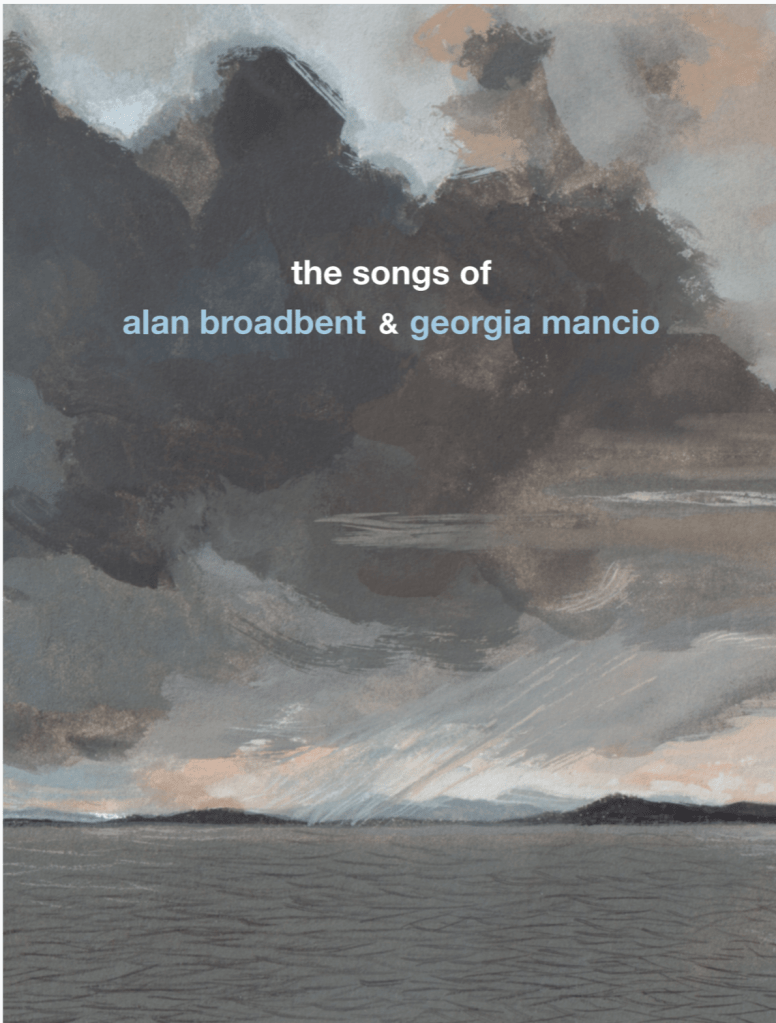
Alan Broadbent/Georgia Mancio ~ ‘Quiet is the Star’
Alan Broadbent has an unerring ear for melody and this is in part, why he makes such a sensitive accompanist. While his albums can really swing, they also take direct aim at the heart. An astonishing technical mastery is evident but it is never allowed to obscure the essence of a tune. To put it more simply, he connects us to real emotions and to human life with its manifest joys and frailties. There are innumerable facets to his long and formidable career and none should be overlooked.
Most recently, he released ‘Trio in Motion’ his second album with bassist Harvie S and drummer Billie Mintz. And if you haven’t done so before now, check out his discography, a body of work that astounds; critically acclaimed albums, two Grammys and so it goes. The man is a legend.
‘Quiet is the Star’ is the second album from the Broadbent/Mancio duo. Their last album’ Songbook’ aired in 2017 and it was pure delight; this new release is a welcome follow up. Georgia Mancio is a London-based award-winning vocalist and lyricist and the pairing has reaped dividends. They have performed together since 2013 and toured Europe and elsewhere to acclaim.
Mancio has a lovely voice and she uses it to great effect, her emphasis though is on breathing life into her lyrics. The stories she reveals are intimate and she invites the listener to share in these experiences. While all good duos are conversational, here we are invited in on the conversation and it is a privilege. Released by Roomspin Records 27 March. Cover artwork Simon Manfield.
JazzLocal32.com was rated as one of the 50 best Jazz Blogs in the world by Feedspot. The author is a professional member of the Jazz Journalists Association.some of these posts also appear in other music sites. When purchasing, please support the Bandcamp platform whenever possible. Respect musicians rights.
I have been absent during the last month as my computer was deliberately unplugged. I needed time to walk among trees, read and spend time with visiting family. None of the above kept me from checking out new music and it afforded me some time to reflect more on the global changes feeding Jazz. There is nothing quite like a pandemic to make us re-evaluate our place in the world and to make us value comity over isolation. These connecting threads lead us into every corner of the improvised music diaspora.
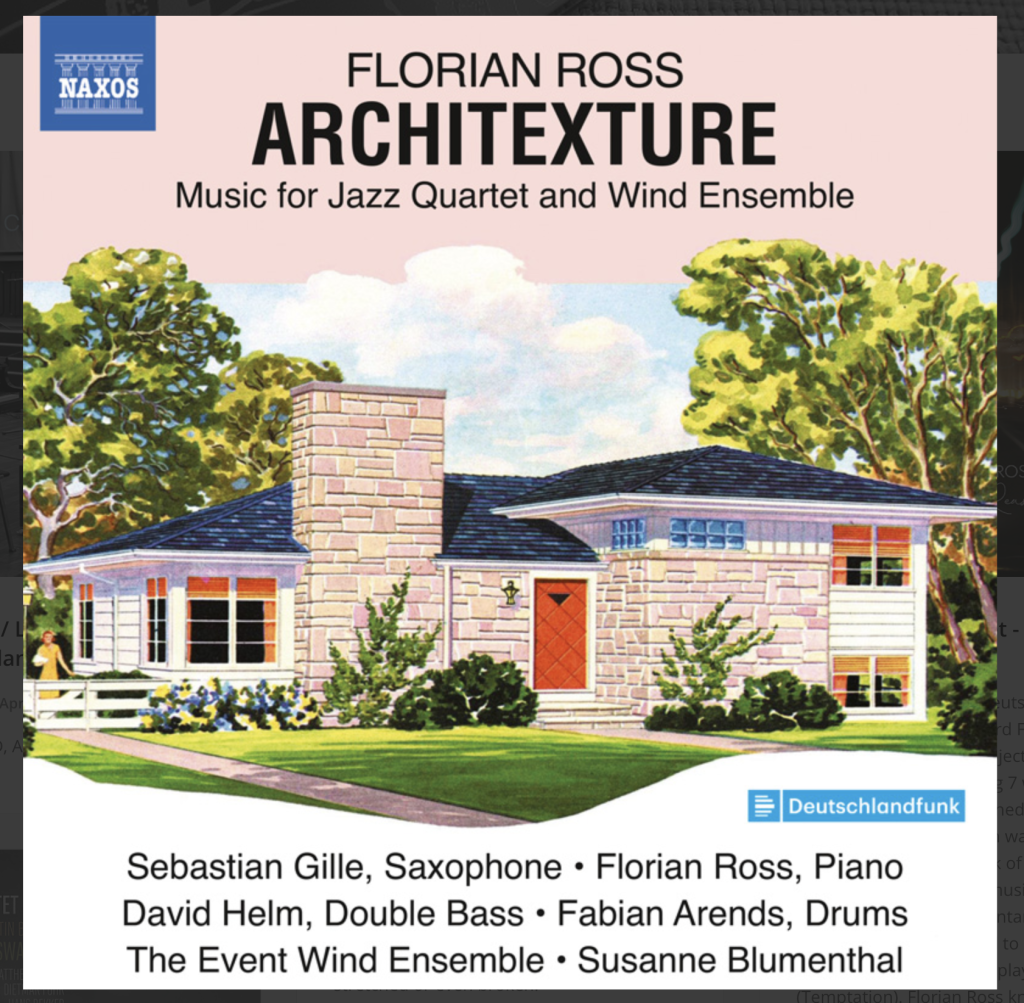
Just in time for the holidays, I gave several Christmas presents to myself. The first was Keith Jarrett’s magnificent ‘Sun Bear Concerts’ box-set, recorded in Japan (which I had long lusted after). It was fitting in light of the news that Jarrett is unlikely to perform or record again due to a debilitating stroke. This boxset has often been overlooked. It is a musical statement of pure genius. The second album was a recent release ‘Architexture’ by the German Jazz musician Florian Ross. ‘Architexture’ is an extraordinary album, sitting astride the broader traditions of ensemble Jazz. It is configured atypically and consequently it has a distinctly airy feel to it.
The album features a traditional jazz quartet, augmented by a conducted seven-piece wind ensemble. Ross is a gifted composer (and pianist) and his music has often been performed by large jazz orchestras such as the WDR. In this case, a more unusual configuration has let in additional light, while at the same time offering a rich and diverse textural soundscape. Using this palate Ross has crafted a programatic and personal journey through the world’s architecture.
The music speaks strongly of place, but not just Germany (where Ross lives). It speaks of the locations where his favourite architecture is found, and out of that comes an idiosyncratic chiasma. The streams that feed this album are plentiful and among them the twentieth century western classical tradition. The only composition not his own is an arrangement of Elgar’s Nimrod (var.9) for saxophone and wind ensemble. Elgar composed many of his works in a rented cottage and it is ‘Brinkwells Cottage’ in conjunction with Elgar’s works which inspired that particular arrangement.
From start to finish, this is a worthwhile journey, an evocation of archtectural visions, the places and sounds that inspired their constructions, and of course of Ross’s connection to those places. Alvaro Siza of Portugal, Antoni Gaudi of Catalonia Spain, the incomparable Oscar Niemeyer who designed Brasilia and many more. His Developments 1-4 are short through-composed pieces dedicated to specific architectural spaces or forms; Brazilian Architecture, the floor plan of a cathedral, the suburban prefabricated house, Bavarian Rococo; and dear to my heart ‘Glebe Cottage’ the home of Jazz pianist John Taylor.
The Album is out on the German Naxos label and can be accessed on streaming sites. I urge you to buy a physical copy as the booklet is a small masterpiece. Featured are some wonderful musicians, Florian Ross (piano, compositions) Sebastian Gille (saxophone), David Helm (double bass), Fabian Arends (drums), The Event Wind Ensemble, Susanne Blumenthal (noted conductor). The album can be ordered in stores or online. For more information check out www.florianross.de
Just before Christmas I attended a concert by Auckland based Musician Ben Fernandez. The occasion was the release of his latest album ‘The Music Never Stopped’ but it also served as a homage to the spirit that was evident in the community during the New Zealand COVID lockdowns. Fernandez is of Goan extraction but was musically active in Mumbai before settling in New Zealand. He studied Jazz at several Auckland institutions and is a regular performer about town. He has also maintained a connection to the Bollywood Film industry. Along the way his musical influences have been rich and varied and he showcased many of those during his concert of mostly original compositions.
There was a spontaneous improvised piano piece, A tribute to his former teacher Phil Broadhurst, tunes written for various family members and of particular interest to me, a duo involving Persian musician Rasoul Abbasi. Abbasi played a Kamancheh which is an ancient-bowed instrument with a wonderfully mournful tone. The composition itself, and the contrast between piano and Kamancheh worked to the advantage of both (I have posed a sound clip). This ability to make strong and authentic intercultural connections is where Fernandez excels. It spoke to the universality of the improvised music traditions, and of empathy and the Jazz sensibilities.
Another tune of Fernandez which captured a pan-global essence was a piece written for a beloved family member ‘Chuchi’. I have included that as a video clip. The line-up was varied and featured many of the musicians he had studied with such as Andrew Hall (who gave a great saxophone solo on the heartfelt tribute to Phil Broadhurst). The musicians on the trio number were Jo Shum (bass) and Ron Samsom (drums). The concert finished up with Auckland vocalist Maria O’flaherty singing a great rendition of the much-loved standard ‘What a Difference a Day Makes’. In light of the pandemic, the tune had added resonance. ‘The Music Never Stopped’ features Ben Fernandez (compositions, arrangements, piano), Jo Shum (bass), Ron Samsom (drums), Warren Mendonsa (guitar), Rasoul Abbasi (Kamancheh), Jess Rogers (vocals), CeleBRationChoir conducted by Alison Talmadge. The album is available from benfernandez.com
While writing this, a number of interesting review copies and new releases hit my inbox. Among them, a soon to be released album from a Lebanese Jazz bassist Makram Aboul Hosn titled ‘Transmigration’. This wonderfully inventive musician has released his first album under extremely adverse conditions. As well as facing the devastation of COVID19 in Lebanon, there have been ongoing violent political upheavals, Banks froze the artists touring money, and if that were not enough, there was a devastating Port Explosion. The recording of ‘Transformation’ went ahead anyhow only three days after that last mentioned cataclysm. His is an album well worth checking out and to top off the stelar ensemble performances there are a number of guest artists like Joe Locke (who appeared remotely). The album will soon be available from all major streaming platforms. This is proof that high-quality Jazz exists everywhere. The artists are Makram Aboul Hosn, Nidal Abou Samra, Christopher Shaheen, Khaled Yassine, Joe Locke, Tariq Amery, Sima Itayim. Release date 18th February.
The last album to be mentioned is an ECM offering by Norwegian Kantele player and folk/Jazz vocalist Sinikka Langeland. The cut I will post is from her last release and it is so measured and so beautiful that it sends a shiver down the spine. Langeland is accompanied by Jazz Nordic legends in this album. She performs with the likes of Arve Henriksen, Trygve Seim and Anders Jorman. The YouTube track posted is ‘Deep in the Forest’. Available from all music stores and from streaming sources.
All of the above demonstrate the multiplicity of influences feeding Jazz. From multiple streams come deeper rivers.
JazzLocal32.com was rated as one of the 50 best Jazz Blogs in the world by Feedspot. The author is a professional member of the Jazz Journalists Association.Many of these posts also appear on Radio13.co.nz – check it out.
This has been a season of upheavals and delays, and Caitlin Smith’s album, ‘You Have Reached Your Destination’ was no exception’. The gig sold out long ago, but then it was delayed twice. It finally went ahead last Wednesday and there was a rush to get a good seat. In typical kiwi fashion, what passes for a queue had formed; a ragged line, reordering itself in illogical surges as it snaked across the footpath of K’ Road. Smith is popular and like many vocalists, she has followers from across the music spectrum.
She brought a medium-sized ensemble with her, including backing vocalists, piano, keyboards, two guitars, drums, basses and a pedal-steel/slide-guitarist. I am used to hearing Smith with her trio, but this was new to me.
The band had a warm and enveloping sound, with Smith, clearly relishing the energy surrounding her. She has a strong voice, and it cut through. The first number was pure Americana, not just because of the pedal steel guitar, but the organ and backing vocals, and above all the lyrics. On several of the later numbers, they were joined by the gifted Nigel Gavin, and if anyone can channel authentic Americana he can.
The setlist followed the album order (minus a few tunes). There were few introductions, and this was intentional. The night was about letting the music speak and to achieve that best it needed an uninterrupted flow. I enjoyed the gig and couldn’t wait to hear the recorded album.
The physical album comes in exceptionally beautiful packaging, and importantly, the front cover has a brail title. In doing so, the senses are immediately directed within, or as Smith puts it, ‘let your ears guide you through this experience without other sensual distractions’. It was an invitation to a deep listening experience. The first tune, Grand Companion, was the perfect start point and from that point on you are guided between tracks by footsteps.
Much as Joni Mitchel or Rickie Lee Jones did, Smith uses predominantly Jazz Musicians in her bands. Musicians who can respond to nuance and work with her (not just back her). On the album’s opening track, Grand Companion, you hear John Bell on vibes, and what an inspired choice. His silken fills adding textural contrast: and Keven Field on Rhodes and piano. The live gig featured 10 musicians, but the album has a bigger cast (for example, pedal steel guitarist Janek Croydon, other backing vocalists and drummers). Paul Symons picked up this role on Wednesday and he doubled on slide guitar and vocals. The well known Aaron Coddel on bass(s).
On both the album and at the gig, the interaction between the chordal instruments was central. What a delight to hear Alan Brown and Kevin Field finishing each other’s musical sentences or trading fills. And Dixon Nacey, a guitarist who can accompany a vocalist with incredible sensitivity and a first-choice musician for a gig like this.
Track two ‘The Story so Far’ has a southern soul feel and the backing singers are the icing on a beautiful cake. ‘No Mans Land’ picks up the overarching theme of the album which is self-realisation on a sometimes difficult journey. Prayer for a miracle reminds me of Patrice Rushen’s disco-funk, ‘Tug of War’ closer to a straight-ahead Jazz number.
This is an honest album that touches on loves lost, inner struggles and sobriety. Smith is sight impaired, but she never complains. It is part of who she is, and she occasionally jokes about it. In between numbers, a few band members slipped off stage to grab a drink and when it was time to call them back, she said, ‘I can see what you’re doing’. ‘What can you see’ yelled someone in the front row, ‘Very little actually’ she replied, grinning.
When I looked at the album liner notes, I was surprised to see when it was recorded. This album is a gem. It was worth the wait and I hope it puts Smith where she deserves to be; a widely acknowledged vocalist among our greatest. It has been over 10 years in gestation and now it has arrived. It is a credit to Smith and to all involved, and it also underscores just what magnificent work Roundhead Studios do. As I played it through, a tug of emotion brought a lump to my throat. The mahi paid off royally and the wait was worth it, we have our own Joni.
Album: Caitlin Smith (vocals, Wurlitzer, and compositions), Kevin Field (piano, Rhodes), Alan Brown (keys, B3), John Bell (vibes), Janek Croydon (pedal steel), Dixon Nacey (guitar), Aaron Coddel (bass), Nick Gaffaney (drums), Chris O’Connor (drums), Jeremy Hoenig (tabla loop), Finn Scholes (trumpet), Oliver Emmitt (trombone), vocal backing: Mate Ngaropo, Rebecca Le Harle, Callie Blood.
Gig: Caitlin Smith (vocals, piano), Kevin Field (piano), Alan Brown (keys), Dixon Nacey (guitar), Nigel Gavin (guitar), Aaron Coddel (bass), Paul Symons (pedal steel, slide guitar, vocals), Jono Sawyer drums, Callie Blood + Chelsea Prastiti (backing vocals).
The gig took place at Anthology K’Road for the CJC Creative Jazz Club, Nov 4, 2020. Order the album from stores or Caitlin Smith.com
JazzLocal32.com was rated as one of the 50 best Jazz Blogs in the world by Feedspot. The author is a professional member of the Jazz Journalists Association.Many of these posts also appear on Radio13.co.nz – check it out.
By any measure, Andrea Keller is an extraordinary musician and her latest release, ‘Life is Brut[if]al’ is the proof of the pudding. This is music for our times, and it reflects her well-documented and highly original creative journey. Keller is Melbourne based and like most musicians in recent months, her activities have been severely curtailed. The insidious grip of the virus is causing ever tighter lockdown restrictions, but creatives are used to working in challenging conditions, and happily, her prodigious output continues. This artist has a work ethic that few can equal, and we are the beneficiaries.
The term tune is wholly inadequate to describe how the pieces unfold and although the substitute term journey is somewhat cliched, it is accurate. As we listen, we find ourselves in a world located far from the mundane, a world full of intricacy and wonder, but revealed via the medium of minimalism and kaleidoscopic shifting patterns. This is Keller’s preferred space as her various influences have led her here. She is an extraordinary pianist with a deft touch, but her compositional skills are very much to the forefront in this work.
As one would expect, Keller has gathered some of Melbourne’s finest musicians about her for this project. Her ensemble writing is always about collaboration: Scott McConnachie (soprano and alto saxophone), Julien Wilson (tenor, saxophone and bass clarinet) and Jim Keller (voice), alongside Five Below band members Stephen Magnusson (guitar), Sam Anning (double bass), Mick Meagher (electric bass), James McLean (drums). Andrea Keller plays piano throughout.
The first piece ‘Meditations on Light’ is the longest and it is the perfect opener as it invites a reflective mood before diving deeper. It opens with a soft pulse, followed by guitar; the latter evoking the sound of a wine-soaked finger rubbed on crystal. Then you hear Keller, moving slowly and purposefully; a T. E. Lawrence riding out of the distant desert haze. By this point, anyone with open ears and a receptive heart will be fully engaged. You listen and the realities and cares outside the door fade into obscurity. The soprano, when it enters, soars ecstatically above the drums and bass. It has the feel of a Fellini movie and the album is worth buying for this track alone.
The second track ‘Dear John/Joan’ is more somber and mysterious. It reminded me of church bells and mourners in an Italian village, and again it is eerily filmic. Perhaps it reflects the loss of connection that the world is currently experiencing. Bley and Burton achieved a similar effect with ‘A Very Tang Funeral’. That is followed by the title track ‘Life is Brut[if]al’; a powerful track which takes a freer path over a long earthy vamp. I love this track, especially, as the freedom seeking soprano dances so unbound. This track best sums up that happy place where freer music talks to its growing audience. An intersection for the adventurous and a place where the finest of improvised music is headed.
After that comes ‘Suicidal Snails’ and ‘Blip ‘the former featuring reeds in unison and the latter, a short but sweet segment featuring tenor saxophone. The penultimate, ‘Youth Unleashed’ finds us exploring the free again.
The final track incorporates portions of Rainer Maria Rilke’s profound prose, from ‘Letters to a young poet’. The track is ‘Love in Solitude (disassembled)’. This intertextuality is the icing on the cake and perhaps the point where the album makes its strongest claim to greatness. This is art music and it is timeless.
Uptown Jazz Cafe – photograph J Fenton
Born of Czech parents and growing up in the ethnically and musically diverse city of Melbourne, Keller has been gifted an ecumenical viewpoint. Her album speaks to the world and beyond, and due to its originality, depth and fluid interplay it is a five-star achievement. This album and its predecessor ‘The Composers Circle’ are part of her ‘Monday Nights at Jazzlab’ series. ‘Five Bellow Live’ won the 2019 Jazz Bell Award for the best Jazz Ensemble.
Keller is a multi-award winner, renowned educator and mentor. She was contemplating a visit to New Zealand in the New Year, but travel restrictions will likely prevent that. Until then, I will remember Keller performing at the Uptown Jazz Cafe (and the night before at Jazzlab). They were wonderful performances, and my photographs and these albums, reinforce that memory.
During the writing of this post, an email arrived in my inbox, informing me that Keller is about to release yet another album; this time of solo piano titled ‘Journey Home’. There is also a related film to be released on DVD. The latter, a collaboration with filmmaker Hayley Miro Browne; a tale of their fathers, fleshed out with graphics and Erik Keller’s photographs of the 70’s Czech Republic. Again, this speaks to the work ethic and the creativity of this gifted artist. I have my order in. To purchase the above or any of Keller’s self-released albums, visit her Bandcamp site. It is a treasure trove. There is also merchandise available, and who could resist that gorgeous artwork by Luke Fraser. AndreaKeller.Bandcamp.com
In 2017, seven leading Jazz performers came together as a group and toured Europe. The group was so successful that they embarked on a bigger project. They chose the name Artemis, which is appropriate for an ensemble of musically formidable women. Artemis (or Diana to the Romans) was the Goddess of the hunt & of nature; the goddess with nothing to prove. In an ancient universe crowded with ubiquitous male gods, Artemis was universally popular.
When you bring a group of band leaders together in the Rock world, the term Supergroup is often applied; in the jazz world, it is applied sparingly. It is commonplace for Jazz greats to move between groups and when the term is applied, it is seldom as a marketing formula. Artemis is a supergroup by any definition, but it is the musicianship that makes it so. Anyone of these musicians is a drawcard on a bill and while a group of leaders in itself, offers no guarantee of success, this project proved the pudding. The lineup of Rosnes, Aldana, Jenson, Cohen, Ueda, Miller and Mclorin Salvant was a winner.
The nominal leader is Renee Rosnes, pianist and arranger. Five of the band have penned tunes and there are several well-chosen modern standards (Fool on the Hill – Lennon/McCartney) (If it’s Magic – Stevie Wonder). The first track, Alison Miller’s ‘Goddess of the Hunt’ comes closest to a title track and it is a marvellous vehicle for improvisation. It begins with an arresting ostinato pulse, and as other voices enter, the intensity increases. The tune has lush harmonies which flesh out the sound to make it sound a larger unit. Miller is a great Jazz drummer, but her compositional skills should not be overlooked either. Check out her ‘Glitter Wolf’ Album on Bandcamp, is a favourite of mine.
The second tune ‘Frida’ is by Aldana. A ballad evoking wistfulness and inviting reflection (was it Frida Kahlo)? Fool on the Hill (Lennon/McCartney) is cleverly reharmonised and has a similar mood. The contrasts are delicious; sweet and tart tastefully juxtaposed. Here, trumpeter Jenson reminds me of fellow Canadian, the much-lamented Kenny Wheeler; a nice arrangement. ‘Big Top’ (Rosnes) uses stop-time and surprise to great effect; the tasty solos by Rosnes and Aldana having more edge than a blindfolded knife-thrower.
There are two tracks featuring Mclorin Salvant and they are as breathtaking as you’d expect from this world acclaimed Jazz vocalist. ‘If it’s Magic’ (Wonder) will surely turn up in her repertoire as will Cry, Butterfly, Cry (Rocco Accetta). Nocturno (Cohen) is a moody slow burner with an ancient to modern feel. Cohen’s origins are evident here, a sound painting of a sultry sunset. Her clarinet is sublime. Step Forward (Ueda) is a fast-paced tune which opens with bass and clarinet dancing around each other in a joyous abandon, while Miller and Rosnes urge them on to greater heights.
If there was one track that had me gasping from the first phrase it was Lee Morgan’s composition Sidewinder’ – in truth, it made more impact than the famous original. This snake, unlike his forbear, has slowed its slither and is luxuriating happily as it grooves across a sunlit clearing. The voicings are reminiscent of an Oliver Nelson arrangement and the interplay between the musicians is quite extraordinary. Muted trumpet, clarinet and that unhurried, luscious, undulating groove.
Artemis may be a multi-national and multi-ethnic line up but in the end, the thing that counts most is the universality of their music; Renee Rosnes (piano), Melissa Aldana (saxophone), Ingrid Jenson (trumpet), Anat Cohen (clarinet), Norika Ueda (upright bass), Alison Miller (drums), Cecile Mclorin Salvant (vocals).
JazzLocal32.com was rated as one of the 50 best Jazz Blogs in the world by Feedspot. The author is a professional member of the Jazz Journalists Association.Many of these posts also appear on Radio13.co.nz – check it out.
Any album by the brilliant Armenian Jazz pianist Tigran Hamasyan is going to elevate our spirits, and his new release, ‘The Call Within’ does just that. The title suggests quiet introspection, but instead, a vast cosmology is revealed. It is infinitely expansive and any expectations of meditative reflection should therefore be set aside. In the album, Hamasyan utilises the richness of his birthplace Armenia, but in doing so he paints the tunes onto a broader canvas.
‘The Call Within’ features a core trio plus guests. The guests however, are so well integrated into the mix that the unit feels like a medium-sized ensemble. Alongside Hamasyan: Evan Marien (bass) and Arthur Hnatek (drums). Guests: Tosin Abasi (guitar), Areni Agbabian (vocals) and Artyom Manukyan (cello). The generous use of keyboards interwoven with piano is also a factor in providing this unusually rich palette.
The first track, ‘Levitation 21’ begins with a meditative chant over a simple motif. Then, without warning, the music comes at you like a freight train. This sudden mood switch is deftly executed and it sets up an other-worldly syncopation. The effect constantly catches you off guard as the tension rises then drops. It is call and response and it is stop-time, but not as we know it.
The use of stop-time is even more pronounced on ‘Our Film’ and as the album progresses, the listener becomes aware of many such contrasts. Some of these contrasting figures are deftly interwoven, placing one inside of the other. The heavily percussive co-exists with gently rippling arpeggios, which by contrast, are played with extraordinary delicacy. And over this come the drums and bass who dance like magical dervishes.
On ‘Old Maps’, rippling arpeggios introduce a celestial choir and the notes fall from Hamasyan’s fingertips like rain drops. I especially loved this track, as it felt like the universe singing to humanity. Poets and musicians are beguiled by maps and love them as archetypes. The maps theme is again updated in the last piece titled ‘New Maps
There are quieter moments as well, such as the intriguingly titled ‘At a Post-Historic Seashore’ but whatever the mood, your attention never flags. As each new vista appears you feel like a wayfarer on a beguiling quest. This is the genius of the album and what ever the phrase or section, you feel like it is was just for you. Throughout, Hamasyan draws on ancient Armenian scales and on modality. Perhaps that is why it sounds both familiar and exotic.
At each turn, Hamasyan and his collaborators deliver energised performances and in doing so they shake us from our pandemic-induced inertia. This is the album we need right now. It is an affirmation of all that is wonderful in the world. It is European Jazz at its finest. Like three of his previous albums, this one has been released on the Warners ‘Nonesuch’ label. It is available through Bandcamp or from record stores.
Tigran Hamasyan (keyboards, piano, voices), Evan Marien (electric bass), Arthur Hnatek (drums) and with guests: Tosin Abasi (guitar), Areni Agbabian (vocals), Artyom Manukyan (cello)
JazzLocal32.com was rated as one of the 50 best Jazz Blogs in the world by Feedspot. The author is a professional member of the Jazz Journalists Association.Many of these posts also appear on Radio13.co.nz
The first gig after lockdown restrictions brought a record audience to the Creative Jazz Club. Now, a week later, with a second gig achieving similar results, it is obvious that the thirst for quality live-improvised music in Auckland has not been dented. And what better way to whet the appetite than with the 2019 Tui Award-winning band, Roger Manins GRG67. This is a truly magnificent quartet and it occupies a special place in the lexicon of Kiwi improvised music. Sitting at the juncture between free and inside, and doing so with an ease that pleases everyone.
Roger Manins is a drawcard and the highest level of playing is always expected of him. His long years of playing on the bandstand, and often in challenging situations, has honed his craft to a fine point. To burnish his already impeccable credentials he has now added a Doctorate of the Musical Arts to his resumé. Most of the compositions and arrangements on the album are Manins, but as with the previous GRG67 album, there is also a tune by Mostyn Cole featured.
The GRG67 album The Thing won a Jazz Tui, but the band has not rested on its laurels. Happy Place is not just more of the same. On this album, the writing and playing have taken on an additional edge. It explores form in many oblique ways and then roams into freer air. They sounded cohesive before, but now they sound even more so. There is new confidence to their playing and it is nowhere more evident than with guitarist Michael Howell.
Howell has long shown such promise and it is pleasing to see it realised. He took obvious delight in sparring with Manins and his solos were masterful. Tristan Deck on drums likewise. His role here was to stretch the ensemble, to urge them on when the moment called for it. He achieved that while never losing sight of his interactive role. Deck has many irons in the fire, but I wish we saw him playing here more often. On electric bass was Mostyn Cole, a regular bass player at CJC gigs. He is reliable and experienced and one of an elite group of first-call bass players when an overseas artist is in town. In this band, he was liberated from that role and his obvious delight in the music shone through.
I have posted a clip titled ‘Frizz’ which is deliciously melodic. Listen to more tracks on Rattle Bandcamp, and if you do, purchase a copy. The tight unison lines on MayWayDay will blow you away and the free-spirited Shoint 67 will groove you to your soul.
There were no weak links in this chain. They wove in and around each other and fired off crazy lines over urging pulses, and from the safety of our chairs, those present swayed along. This was also our happy place. So this is where Jazz sits in 2020. Forward-looking, but bringing the old into bright fresh spaces, and doing so without contrivance.
As New Zealand adjusted to the first easing of the pandemic restrictions, Leo Coghini, a young Wellington musician released a set of three improvised solo piano albums. They were recorded at studio 310, New Zealand School of Music, Victoria University and all on a single day.
The albums titled ’Wellington Solos’ were released on the SkyDeck label and an immediate drawcard was the gorgeous brooding cover art. When a package looks that good, there is the lure of promise, and in that spirit, I sat down, closed my eyes and played all three.
part 18 (Coghini)
As I listened through, it became obvious that these albums were something unique. Only the bravest of improvisers record abstract solo piano albums and those who do so are generally seasoned musicians with established avant-garde credentials. Coghini is modest, perhaps even shy, but what confidence he mustered on that day in November, and how astonishing the result.
As I evaluated the material it was impossible not to bring Jarretts 70’s explorations to mind; the joyful free improvisation built on delicate motifs, the way the tunes begin; unwind, are reconstructed and concluded. When you consider that this is Coghini’s first recording in his own name and that he is still an undergraduate, it is all the more impressive. You can feel his absorption, but he fully engages. This not a musician abstracting for mere abstraction’s sake; here there is clarity of purpose and the images he conjures are accessible to the listener.
Part 02 (Coghini)
In a project like this, the nakedness of the piano is exposed and a recording must capture the pivot between instrument and artist. It should achieve that without the hand of the recording technicians being discernible. This recording achieved that to perfection. The right piano in the right hands when recorded properly sings.
I first encountered Coghini in 2017 at an emerging artists gig. On that occasion, his band played standards and I noticed his gentle swing feel. Later I heard him in a different context, as a sideman on the award-winning ‘Fearless Music’ album by Umar Zakaria. By then a confident and adventurous Coghini had emerged and after this latest offering, we can be certain that he will continue to impress.
Creativity is essential to human survival. It is the fuel of adaption and as Darwin pointed out, those who fail to adapt fail to thrive. Creatives understand this and none more so than improvising musicians. It is therefore not surprising that musicians increased their outpoint in a variety of ways during lockdown.
In the early weeks, I noticed a feverish burst of activity from improvisers as solo concerts streamed and unreleased albums materialised; appearing as if conjured out of nowhere. Many of these albums landed in my inbox but because I was caught up in an international journalism project I put them aside for a time. As my posts appeared more frequently and in far away places an increase in review copies landed.
It has been my usual practice to confine my posts to New Zealand or to Australian artists and I try to confine offshore posts to artists I’ve heard live. I rarely venture beyond those self-imposed limits, but during the pandemic, I have broken that rule and moved beyond. These albums provide a snapshot of two diverse locations. They portray an interrupted world but also the constancy of improvisers. Their creativity is what keeps us sane. Improvised music illustrates our connectedness as it builds new languages out of old. It is a universal heart beat created from the babel that is life on earth.
‘The Gathering’ (The Jac) New Zealand
From the time of their formation, accolades for the ‘The Jac’ have kept coming. They are an eight-piece ensemble with a great sound and underpinning that are experienced players, nice compositions and some tasteful arranging. Although they are essentially a Wellington ensemble they have attracted musicians from all over, this giving them a distinct and cosmopolitan flavour. The talented Jake Baxendale is the front person, but there is also real depth surrounding him. On this latest album the quality of the overall musicianship is particularly evident.
While some long-established groups remain static, ‘The Jac’ keeps reaching for new heights. They are rooted in the now and reflect multi-genre inclusiveness. The future of Jazz demands this, as it is not a dead language.
The sound clip I have embedded is titled Tui (composed by Jake Baxendale). This delightful tune is nominated in the composition category for this year’s New Zealand Jazz Awards. The powerful contribution of Nick Tipping on bass and Mathew Allison on trombone especially grab the attention.
Tui (Baxendale)
This is the Jac’s third studio album but the release plans have been impacted by the pandemic. They have therefore decided to release part of the album on Bandcamp and to release the rest closer to 2021. Why not download the early release digital tracks now and pre-order the rest? The musicians deserve your support. You really need to hear this.
‘Totem’ ( Ferdinando Romano / w Ralph Alessi) Italy
Some albums take a few listenings to get inside, but I fell for this one instantly. With further listening, the attraction increased. Having a modern trumpet stylist like Alessi on board was an inspired choice, but it was also Romano’s engaging compositions that reeled me in. This is a master class in less being more. It is minimalism but it is not stark, perhaps, because it’s from the warmer south.
The musicians move like dancers. Gliding between the fluid embrace of the ensemble playing and the crystalline melodic solo lines with ease, and also playing with real conviction. This is definitely a European sound and at times reflective, but while the music resonates cerebrally, it can find the heart in an instant.
Compositions as finely balanced as this could easily be overwhelmed, but the band reacts to every nuance. There is texture, but melody is dominant. There is dissonance, but never overdone. The tone is set from the first number titled ‘Gecko’; opening over the leader’s pedal on bass, Alessi beguiling us with gentle smears and caressing lines. Then, seamlessly, Caputo picks up the thread, Magrini next, then the ensemble and outro. As a composition, it flows beautifully.
It is natural that Alessi grabs our attention as he is a master of his instrument, but in spite of that, the septet sounds like a band of equals. There are no weak links. This is an album I am likely to play often and hopefully, there will be more like this from Romano.
‘Giulia’ was the second Italian album to come my way during the lockdown period and like the first, it is close to the ECM aesthetic. There is deliberation and a sense of purpose behind each phrase and you can feel this especially in the spaces between. At the centre, the clarity and silken softness of Cataldo’s guitar work.
The airy compositions are all the leaders. For the project, he engaged Marc Copland and Adam Nussbaum, both celebrated American musicians and both perfectly suited to realise his vision. The remaining band member is Pietro Leveratto, an Italian bass player of repute. Together they weave a cohesive storyline and in doing so enter the listener’s consciousness. Before you realise it you are on the journey with them.
Levante (Cataldo)
I have often visited the Mediterranean and hold a deep love for Sicilia which is Cataldo’s home base. The moods here speak of languid salty air and of the startling blue of the Siracusa seafront. I can think of few places on earth so evocative or beautiful. It is the birth and the death place of Archimedes. When an errant Roman soldier was about to slay him, his last words were ‘do not disturb my circles’. Was this in mind when Cataldo wrote his epilogue piece ‘Circles’?
The pieces here all evoke strong images. Some of the connections are obvious as with Levante (my favourite piece), while others are illusive. And presiding over all is the haunting cover art. Was there ever a more beautiful image. Giulia, the daughter of Cataldo and the presiding spirit over this beautiful album.
I live on another island deep in the South Pacific Ocean and that is a long way distant from Sicilia. It is physically distant but this music somehow connects the two places and for those who live on Islands, and who love Islands deeply, those connections hold mystical power.
My general rule is to confine my posts to New Zealand or Australian bands, or to local gigs by visiting musicians. Very occasionally, I post from further afield or review albums from the wider Jazz diaspora. In this case, my self imposed categories both fit and they don’t. The first album is Polish in origin, but the leader, Michal Martyniuk, has lived in both New Zealand and Poland. Each alternate track was recorded with Kiwi musicians. The second album is the astonishing New Yor-Uba ensemble and I have a story to tell about my brief but memorable online interactions with the leader, New York-based Michele Rosewoman. The next album is by the Italian born pianist Roberto Magris, who I narrowly missed catching up with when I was in Prague and Trieste. And lastly a heads-up. Jason Miles is about to release an album featuring Jay Rodriguez, a frequent visitor to New Zealand. Anything with Rodriguez will be worth checking out.
Resonate (Michal Martyniuk)
Resonate is an album that has shaped itself over time. The recordings took place in different countries and in three instances, the recordings were separated by more than four years. In spite of that, there is a remarkable cohesion throughout. I have reviewed Martyniuk previously and I follow his journey carefully. Anyone who has paid attention to his live performances and to his recorded output will understand why the spacial and time disparities are irrelevant. Martyniuk has an intense artistic focus and his mind-set is not to move on until he is completely satisfied. While it may not be a formula for producing albums in swift succession, it is a recipe which pays dividends for him. Like all strong leaders, he communicates his vision to the musicians and because of that, we get synergy and flow between tracks.
It is an album of beautiful pianism and an album that I would place firmly in the European modern jazz mainstream. I believe it is equal to the best coming out of Europe. He also has a keen sense of which musicians will work with his compositions and more importantly, which will react to the other musicians. His New Zealand trio is Martyniuk (keys) with Cameron McArthur (bass) and Ron Samsom (drums) (plus the Polish guitarist Kuba Mizeracki track two). His Polish quintet features Martyniuk (keys), Jakub Skowronski (tenor saxophone), Mizeracki (guitar), Bartek Chojnacki (upright bass) and Kuba Gudz (drums. Since reconnecting with his Polish roots and performing in Poland, Martyniuk has carved a strong niche for himself. With his career on the rise, we may see him less and less, but if you do get wind of a visit, grab a ticket. You can purchase the album through his Bandcamp site and if downloading I recommend the Wav option.
No matter how many times I listen to ‘Hallowed and I have listened often, my evaluation is always the same. This is an album of extraordinary depth and a testament to Rosewoman and her unique perspective on Afro Cuban music in America. Hallowed is the culmination of thirty-six years work, and of many successful and innovative collaborations. This latest album follows her acclaimed ‘New Yor-Uba, 30 Years: a musical celebration of Cuba in America’. Rosewoman deservedly garnered a Cuban Jazz Grammy for that. It was rated #1 by NPR in the Latin Jazz category. Although what she plays is always accessible, Rosewoman has long been regarded as an adventurous musician but she defies easy pigeonholing. Her early influences like Mingus informed her trajectory while her association with the likes of Greg Osby, Steve Colman, Julien Priester,and Oliver Lake plus a plethora of gifted Cuban musicians set her final course. The bulk of this latest album was the result of a commission by Chamber Music America. Long ago when websites were new, I decided to check out some online Jazz sites. I was enthusiastic about Rosewoman’s Quintessence albums and I found her site and typed her name into a message box. Within minutes her reply came back and it astounded me that I could talk to a musician in real-time. In the mid-nineties that felt like magic.
In the wrong hands, a large ensemble, weaving intricate clave rhythms can overwhelm. On Hallowed, the charts are meticulously crafted, allowing the music to breathe naturally. The orchestration here is simply exquisite. Each track begins with a particular rhythm, moving subtly to other rhythms and moods as the listener is drawn into the essence of the music, which in spite of its intricacy takes you on an expansive and heartwarming journey. As you listen you feel the warmth and undulating caress of a Cuban breeze. The heart of the album is the commissioned work titled Oru de Oro (Room of Gold). This should be listened to following the track order and the 10 tracks enjoyed as a whole. As with most Cuban music, the rhythms of the Bata are the threads upon which all else rests and although the warp and weft pulse and change, the centre always holds. There are many master musicians on this album and it could be described as an amalgamation of worlds, a uniting of times past and present.Although not prolific as a recording artist, this is Rosewoman at her best. It is hard to see how she could surpass this, but given her previous albums, she probably will.
To date Robert Magris has led or co-led around 30 albums and ‘Sun Stone’ is a recent offering from the Kansas City ‘JMood’ label. He is a veteran of the European Jazz scene and his consistent output has frequently brought him into contact with respected American Jazz musicians.He travels widely, performing at festivals and gigs throughout the world. These fruitful collaborations have frequently taken him to America where he has cut some well-received albums in recent years. While a mainstream Post-bop stylist, he is never-the-less difficult to categorise precisely. Like many pianists who have been around a while, he has absorbed many influences and to these, he has added his own southern European voice.
‘Sunstone’ the album features the respected multi-instrumentalist Ira Sullivan and the rest of the sextet apart from Magris hail from either Florida or Chicago. The first number and title track is a crackling energised number which sets the tone for much that follows, but there are also some reflective numbers. On several of the later tracks, Sullivan is heard to great effect on flute.Magris is from Trieste and he often performs in nearby Prague with the MUH trio. It was in those two cities where I almost caught up with him a few years ago. Trieste appeals to me greatly, so perhaps next time?
JazzLocal32.com was rated as one of the 50 best Jazz blogs in the world by Feedspot. The author is a professional member of the Jazz Journalists Association.
The number of quality Jazz albums coming out of Australia these days is impressive and considering the lack of support from the mainstream music industry, surprising.I have met a number of Australian improvisers over the years and the best of them have one thing in common, a burning desire to reach beyond the mundane. They communicate this passion in spite of the obstacles and they do it convincingly. The best of these are respected across the wider Jazz world. They are a cohort that brings joy to those hear them and the least we can do is pay them our fullest attention. In November 2019, I became aware of four recent Australian albums: Andrea Kellers ‘Transients, volumes 1 & 2,’’This World’ (a collaboration between Mike Nock, Julian Wilson, Hamish Stuart and Jonathan Zwartz) and ‘Stock’ by Julien Wilson. A common denominator linking the above recordings is Wilson, who appears on all four albums (and is the founder of the Melbourne based Lionshare Records). Christopher Hale appears in three of them.
This World: Anyone who has followed pianist Mike Nock over the years will always be hungry for more of his artistry. He never disappoints. A few years ago Wilson confided that he had been planing a collaboration with Nock but that prior commitments always seemed to get in the way. Then in 2018 disaster struck when Nock was hit by a car on a pedestrian crossing. Many feared that his injuries could curtail his career and his fans hoped for a swift recovery. Not long after he left the hospital (and against the odds), he joined Wilson, Stuart and Zwartz for a standards gig. They sounded so good together that they agreed to record an album of originals (with each contributing compositions). Next, Zwartz obtained an arts council grant, and they headed for Sony Studios.
While the results of the two-day session are a testament to their compositional skills, it is their tasteful interplay that remains with you. The album is a thing of soulful beauty, with the compositions coexisting in happy juxtaposition. For example, the cheerfully reflective tune Old’s Cool (Nock) is followed by the moody In The Night Comes The Rain (Zwartz). If you follow the tracklist in chronological order you could be forgiven for thinking that the album is about Nock’s accident. In the Night Comes The Rain – Home – The Dirge – Aftermath– We shall Rise Again; perhaps that is not the case at all, but whatever the motivation the album is an essential addition to any Jazz collection. What musical heavy-weights these musicians are and how effortlessly they weave their magic. There is a hint of ECM about this recording and not least due to the amazing cover artwork by the Icelandic earth photographer Polly Ambermoon.
Transients volume 1 & 2: Late last year I came across the Transients albums by the multi-award-winning pianist and composer Andrea Keller. I first encountered Keller two years ago while I was visiting family in Melbourne. Her compelling stylistic originality intrigued me and I made a point of attending several of her performances in a row; resolving to keep an eye on her output from then on. On the first night she was decidedly minimalist and embedded deep within an ensemble; the second night a fearless explorer in a serialist vein. These two albums offer variety, innovation. The Transients project began in 2016 and since that time a series of interlinking trios have appeared, culminating in these extraordinary 2019 albums.
This is music that requires your engagement and it is deeply rewarding when you listen properly. It is clear evidence that Australian music is developing its own distinct voice. The opening track on the first album is titled Musings and it is the perfect hook to draw you deep inside an intriguing world. As the tracks unfold you realise that you are listening kaleidoscopically. Phrases form and change along with mood. It is an interesting approach as the various trios sound like a band that could be playing as a larger ensemble. less is more. It is as if it is a bigger unit but with instruments redacted to achieve greater clarity. In spite of the contrasting moods and instrumental configurations, there is a unified heart; so much so that you can easily imagine how each piece would sound if the alternate trios played the piece. On volume two this is realised. On volume 1 you experience the journey while on volume two you are invited to examine it afresh. Many of the tunes like Saint Misha and Sleep Cycles are later reimagined, familiar but not familiar.
It is hard to praise the Transients albums enough and while it is obviously Keller who deserves the lions share of the accolades, the individual musicians excel themselves under her guidance. Wilson on tenor saxophone, clarinet and bass clarinet has long been a favourite of mine. He and the astonishing Stephen Magnusson have previously stunned us when appearing on recordings (notably with Barney McAll). With the addition of James Macaulay on trombone, Sam Anning or Christopher Hale on bass, James McLean or Leigh Fischer on drums and Flora Carbo on Alto, Keller has found the right mix of colours for her masterwork.
Stock: Like This World, Stock was released by Julien Wilson’s Lionshare Records. It is a joyful, freedom embracing, open-hearted exploration of sonic possibilities. It enhances sound, but the electronic effects which it utilises to good advantage are tastefully deployed. This is an album which immediately brings a smile to your lips, exuding as it often does the sounds of a perfect summer (a happier summer than Australia is experiencing at present). It was recorded in 2019 and released by the artists on New Year’s Day 2020. It is the sound of now and I was delighted to hear in the new decade with this gem. Some, wrong-headedly, think that post-millennium Jazz like this has abandoned past learnings; they are mistaken. These artists have no need to look over their shoulder because the past has been absorbed into and informs everything they do as they move the music forward. While Stock is Wilson’s concept it is clearly a collaborative effort. No one creates at this level unless they are inside each other’s heads. The quartet has performed a while but this was a time to share their vision with a wider audience. The tracks cover many moods – here I have posted a joyfully ‘out’ track.
Wilson is noted for his skilful articulation; an artist who can wring new tears out of old ballads and carve scorching pathways through an up-number; one of the few Australasian reeds players who maintains his clarinet chops at this level. This feels like a fruitful direction for him as the step change has a rightness about it. As the album progresses, moving from the filmic to the elegiac, you marvel at the inventiveness. Yes, guitarist Craig Fermanis has a Metheny vibe, but this is an original offering and beholden to no one. He is magnificent throughout and able to create nuance out of controlled chaos, and Christopher Hale’s electric bass work and Hugh Harvey’s drums or percussion are so integrated that the band presents as a single fluid entity. It is the integration of the voices and of ideas within a free-flowing framework that worked for me. It plots an interesting path forward and in doing so brings us along with it.
My last word is about the presentation and the sound quality of the above albums. The recording and mixing standards here are very high. All have eye-grabbing artwork but in the case of the Lionshare albums, the standard is extraordinary. Wilson has an eye for great cover art, intuitively understanding that the relationship between the eye and the ear is important. Music is about more than just sound. I know that he gives careful consideration to such matters, whether it’s the eerily atmospheric work of the Icelandic earth photographer Polly Ambermoon or the marvellous creations of Dale Cox. The albums are all released on Bandcamp. We should all purchase whatever we can through the Bandcamp platform as the artists share is considerably greater there. In addition, we get streaming at Hi-Fi quality and the albums and other merch can be accessed directly. The two Lionshare Albums are also available in 24bit/96kHz audiophile quality and are downloadable for burning. If you have a high-end audio system you should grab the 24bit versions as these are the best quality available to us.
This World: Mike Nock (piano), Hamish Stuart (drums), Julien Wilson (reeds) Jonathan Zwartz (bass). Transients 1&2: Andrea Keller (piano), Julien Wilson (tenor saxophone & clarinet), James Macaulay (trombone), Stephen Magnusson (guitar), Floro Carbo (alto saxophone), Sam Anning (double bass), Christopher Hale (bass guitar), Leigh Fisher (drums), James McLean (drums). Stock: Julien Wilson (reeds, effects), Craig Fermanis (guitar), Christopher Hale (bass guitar), Hugh Harvey (drums & percussion)
Have you ever heard one of New Zealand’s iconic pop songs and wondered how it would sound reimagined as Jazz? The journey from popular song to Jazz piece is a well-trodden path. Many tunes that we now refer to as ‘Jazz standards’ began their life as tunes written for broadway musicals or for the popular music market. For a tune to successfully cross that divide it needs to be well constructed and to lend itself to reharmonisation. With ‘Alchemy’, this elusive symmetry is realised.
In the late twentieth century, classic Beatles tunes or those of Michael Jackson, Prince and Stevie Wonder were effortlessly adapted as Jazz vehicles. If you hear Uri Caine, Brad Mehldau, Herbie Hancock or the Kiwi Jazz pianist Jonathan Crayford playing ‘Blackbird’ you might conclude that Blackbird was written with a Jazz pianist in mind. These crossovers are a tribute to the composer and to the transformational skills of arranging Jazz Musicians.
A few years ago the award-winning New Zealand writer/director/producer Mark Casey embarked on an ambitious project to recast a number of New Zealand’s best-loved pop songs as Jazz tunes. It was a significant and perhaps a risky undertaking but gradually the project gathered momentum. In mid-December, ‘Alchemy’ was released and immediately, it rose up the NZ music charts. This is a significant achievement but it is not down to Casey alone. His masterstroke was engaging leading New Zealand Jazz Pianist Kevin Field as the Musical Director. Field is not only a gifted Jazz Pianist and acknowledged Warner recording artist, but his skills as an arranger and vocal accompanist are beyond question. Creative New Zealand came to the party and backed the proposal.
As the project moved forward a variety of Kiwi Jazz musicians were approached, some working in New York, most local, and one by one they came aboard. When the album was about to be recorded, I was asked by Field and Casey if I would be interested in witnessing the recording process. I was. I seldom pass up a chance to become a fly-on-the-wall during recording sessions and this project fascinated me. Being an embedded observer in such situations is always intriguing. It affords a writer the opportunity to gain insights that would otherwise be invisible. As the musicians turned up to rehearsals and to recording day there was a palpable sense of enthusiasm. No one questioned Fields guidance as he tweaked the charts and made suggestions. And any sense of disconnect between the pop and Jazz world evaporated swiftly. This was not pop Jazzed up. It was Jazz, and although there were reharmonisations and Jazz rhythms, the integrity of original tunes remained intact.
In the recording studio were Auckland’s premier Jazz and Soul singers and a selection of experienced Jazz instrumentalists. On vocals were Caitlin Smith, Lou’ana Whitney, Chelsea Prastiti, Allana Goldsmith, Bex Peterson and Marjan Nelson. On piano and keyboards was Keven Field, Roger Manins was on tenor saxophone, Richard Hammond on electric and acoustic bass, Michael Howell on acoustic and electric guitar, Ron Samsom and Stephen Thomas on drums and percussion. In addition, there were two special guests, Michael Booth (trumpet) and Nathan Haines (soprano saxophone). This was serious firepower and thanks to the arrangements, all well deployed. The NY based ex-pat bass player Matt Penman had arranged tracks 7 & 12 and Marjan co-arranged tracks 4 & 8 with Field.

There are six vocalists on the album and they sing two tunes each. Careful thought had obviously been given to who would sing each song because the strengths of the individual vocalists were well matched to the tunes. For example, the warm but wistful lyricism of Chelsea Prastiti paired with ‘I’m glad I’m not a Kennedy’ (Shona Laing), the heartfelt reflectiveness of Caitlin Smith with ‘I hope I never’ (Tim Finn) or the engaging bell-like clarity of Marjan singing ‘Brown girl’ (Aradhna Patel). Together the musicians delivered something unique. This is a project which works and the more you listen to it the more you are beguiled. It is Kiwiana and it could be the perfect soundtrack for your summer.
‘Alchemy’ the album is available in New Zealand stores or from online sources.