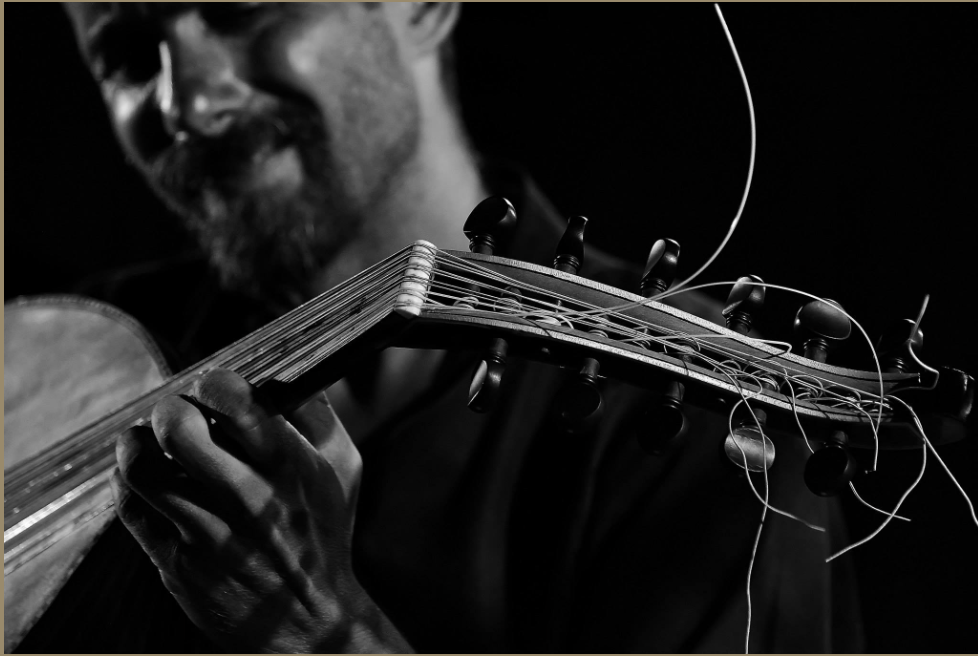
There is something about the oud that awakens the deepest of emotions. Like the sound of an ancient temple gong, it resonates soulfully. It is primarily a modal instrument, using ‘Maqams scales’, a system as complex and varied as the modes used by Coltrane. So, when the chance arose to interview a Jazz oud player, I jumped at it.
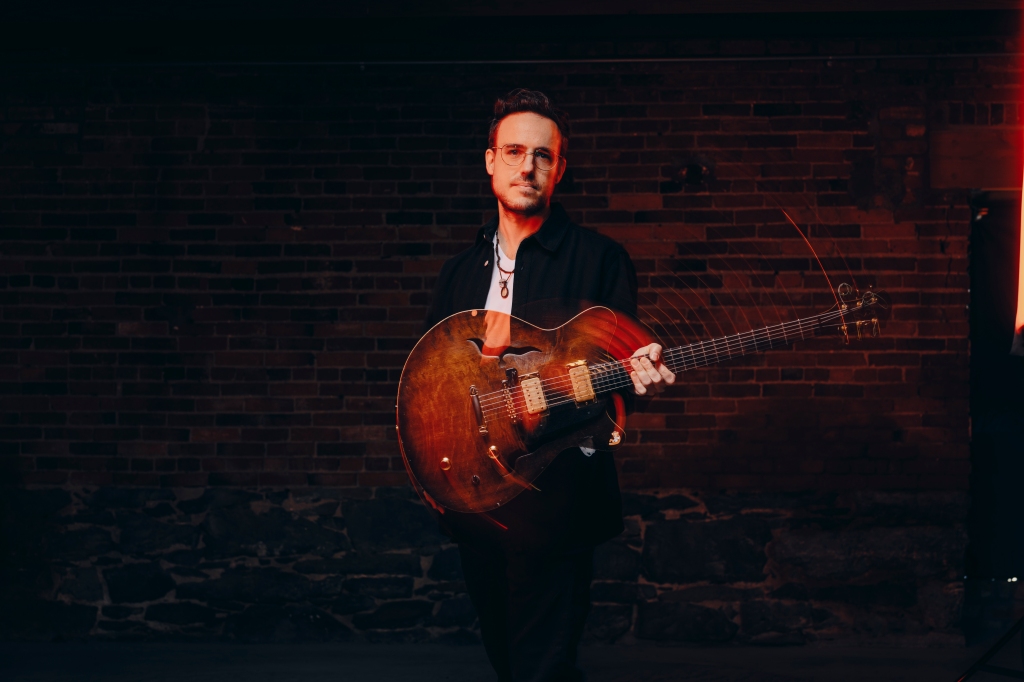
Mauro Sigura was born in Turin, where he began his Jazz career playing the bouzouki and guitar. Later, he moved to the island of Sardinia where he found a uniquely ancestral form of music, one for which he developed a deep musical connection. Since then, he has performed throughout the world and participated in numerous festivals. His ensembles reach beyond the confines of genre. They have originality, depth, rhythm and groove. Younger listeners especially, are hungry for such music.
I heard Sigura’s current Quartet while judging the Italian-based 7VirtualJazzClub competition. His entry enthused the judging panel and he deservedly picked up first prize in the Pros & Amateurs section. Shortly after, we exchanged contact details and set up the interview.
~ ~ ~
Mauro, congratulations again on your, 7VirtualJazzClub Competition win. Your music has a rare beauty which pulls on the heartstrings. It is as if you have unearthed a forgotten memory from the distant past. This effect may be evident because the oud is the forbear of many stringed instruments like the guitar, mandolin, bouzouki, lute etc. It is like an echo flowing through time, bringing past and present together.
Q. Could you tell me what the oud means to you, and why you chose it?
A. First of all, thank you for your kind words! As you said, the oud is an instrument that somehow crosses time, has an ancestral link with the cultures of the past, [it] tells of trade exchanges, travels, and meetings between cultures. I came to oud through bouzouki and Greek music, where it is easy to listen to an oud. Then, I started studying Ottoman classical music.
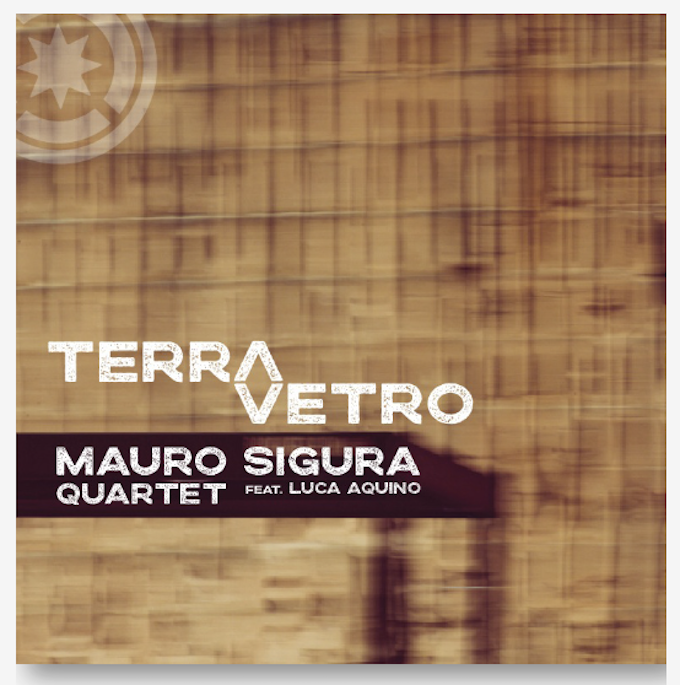
Q Your last album, Terravetro, paired the oud with a minimalist piano. On your recent album, Dunia, there was a Fender electric guitar and an electric bass. Did you have that relationship between ancient and modern in mind?
A. Yes, all my music always tries to connect distant places not only in space but also in time. everything must tie together, but the challenge is to try to do it in the most natural way possible.
Q. Your recent quartet is great. It could be viewed as either mainstream jazz or as World Jazz. The contrasts and textures are interesting. Especially so with ‘La Danza di Amarech’. Notable are the tight bass lines and edgy drum rhythms, the oud’s earthiness against the electric guitar’s brighter sounds, and that hint of funk over Middle Eastern rhythms and melodies. Could you tease that out and provide an insight into your compositional approach?
A. It depends on the compositions. For example, in ‘La Danza di Amarech’ I started from the bass line and its connection with the drums, the theme came last. I often start from the bass line to then create the theme, then, once a basic theme has been defined, I intervene by inserting more jazz-like modulations. However, it is not a fixed rule, in fact sometimes I have an oud groove or a theme in my mind and that becomes the starting point, or it can start from a traditional rhythm of Ottoman music. For example, ‘Dunia’ is built on a traditional Ottoman rhythm in 10/8, [called] the ‘semai’.
Q. Tell me about your current quartet drummer. She is amazing.
A. Evita is amazing! She has ability,and creativity, she is an excellent composer, so she was able to give us useful advice in [the] studio. In Italy, she plays with the best musicians, such as Enrico Rava, but she often also plays with DeeDee Bridgewater. I saw her play in Sardinia in 2021 and I said: “this girl must play on my record at all costs!” and I succeeded. This year she released her first solo album as a singer-drummer, for Paolo Fresu’s record label. She has a great career ahead.
Q. Do you have any ongoing projects with this particular quartet?
A. It is a quartet that I created for Italy and Western Europe. In fact, with the acoustic quartet, I often play in Eastern Europe and I needed something more attractive to Central-Western Europe. So I’m working to try to propose it to these geographical areas. The album was released on October 8th, so we are still in a phase where Dunia is looking for the best direction.

Q. You record on ’S’Ard’, a Sardinian label but I see you were born in Turin.
Are your forebears from Sardinia?
A. My father was born in Sardinia, but my mother was born near Turin. In 2005 I moved to Sardinia, retracing the path taken by my grandparents in the 1950s, when they left Sardinia to go work in Turin.
Q. Sardinia has produced jazz greats like Paulo Fresu. It evokes an ancient past and a Phoenician connection. The bagpipes may have originated there, but is there an oud tradition?
A. No, there is a tradition of the guitar, but not of the oud, although some elements of the traditional Sardinian guitar certainly have a North African origin.
Q. You have a distinctive sound and approach. Different from Dhafer Youssef or Anouar Brahem. Part of that is due to the pairing of the instruments, but there appear to be regional influences too. Would you like to comment?
A. Yes, certainly, Sardinia, with its ancestral atmospheres, has a strong influence on my compositions. The spaces, the light, the nature are much stronger here than in other parts of Italy and the musical tradition is also very strong, alive and wild and this more or less unconsciously influences me every time. My next challenge will be to look for the influences that Phoenician, Carthaginian and Arab music have left in the Sardinian musical tradition, in particular in the vocal tradition. I would like to start from there, building a Sardinian project that justifies the presence of oud.
Q. Who are your musical influences?
A. Obviously, the ones already mentioned by you Dhafer Youssef or Anouar Brahem influenced me a lot, but also Jan Garbarek and Eivind Aarset. I am used to listening to all good music, from rock, to jazz, to pop to metal and I let myself be influenced by everything without prejudice. I have listened to a lot of Pat Metheny, Miles Davis, Kenny Garrett, but also traditional Greek music (rebetiko), Ottoman classical music, Arabic and Kurdish music, but in general I like all the traditional music. I am very interested in music played with a few simple instruments, especially the music of nomadic people. My music comes out of all this.
Q. I see you studied philosophy. Did any particular philosopher inform your approach to music?
A. No. Perhaps philosophy has influenced my approach to the concepts of my albums. I try to create the album around a concept, but beyond this, no. No philosopher has influenced me by directing me to music.
Q. You performed throughout Europe, but what grabbed my attention was that you performed in Petra, ‘the city that time forgot’. Tell me about that experience.
A. It was an amazing experience! We were invited by the Amman Jazz Festival and the Dante Alighieri Society in Jordan. When they [approached] us about the option for a concert in Petra, I couldn’t believe it. We played for the Bedouin community that lives inside the site. It was a concert for a few close friends, in a unique atmosphere suspended in time. While I was playing I found myself in a sort of emotional trance and I lost the sense of the duration of the concert. It was a strange sensation, but it was as if those rocks were carrying the music forward independently of us [as the players].
Q. Do you see yourself as being in or extending the Sufi oud tradition?
A. I’m very flattered by your question, but I don’t know the Sufi tradition well enough and I always want to have a respectful approach towards those elements of traditional cultures that I don’t know in depth. So, to answer your question I would say no, even if a certain idea of mystical-transcendent trance is present in many of my compositions. If we can take people to another, different, new place, where everyone is on the same level, then we can start talking again.
Q. Who was the vocalist on Dunia and were there any guest artists?
A. Her name is Elena Ledda and she is the most famous Sardinian singer and, also, one of the most famous in the Italian world music panorama. She gave me a great gift of herself by putting her splendid and unmistakable voice in the song. Elena is the only guest in Dunia.
Q. I look forward to hearing more of your albums. Thank you for your time and for the detailed and illuminating answers.
A. It has been my pleasure!
You can order these recordings from Mauro Sigura’s website, from S’Ard records, or locate them on Deezer, Spotify or Apple Music.
JazzLocal32.com was rated as one of the 50 best Jazz Blogs in the world by Feedspot. The author is a professional member of the Jazz Journalists Association, a Judge in the 7VJC International Jazz Competition, and a poet & writer. Some of these posts appear on other sites with the author’s permission.
 JazzLocal32.com