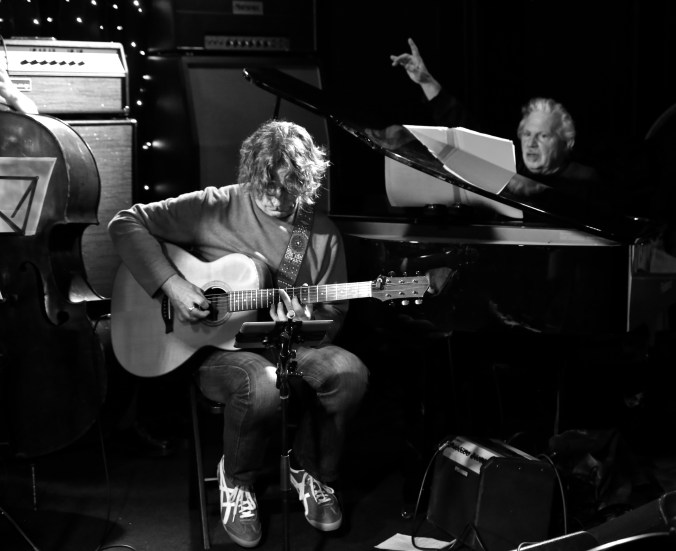
 There is an inescapable charm surrounding any Besser performance and Wednesday’s Zestniks gig at the Backbeat bar was no exception. While his music has many strands feeding it and although it can be hard to categorise, it is never the less rooted in the Jewish musical traditions. Besser is somewhat of an icon in Arts circles and deservedly so. The arc of his work has a momentum that few could emulate. As it alights on various styles or genres it borrows their raiment, and seemingly without compromising what lies at the music’s heart; gathering what is necessary and no more. Over the years he has collaborated with leading conceptual artists, filmmakers, symphony orchestras, electronic adventurers and Jazz musicians. The Zestnics performance reflected much of this fascinating journey.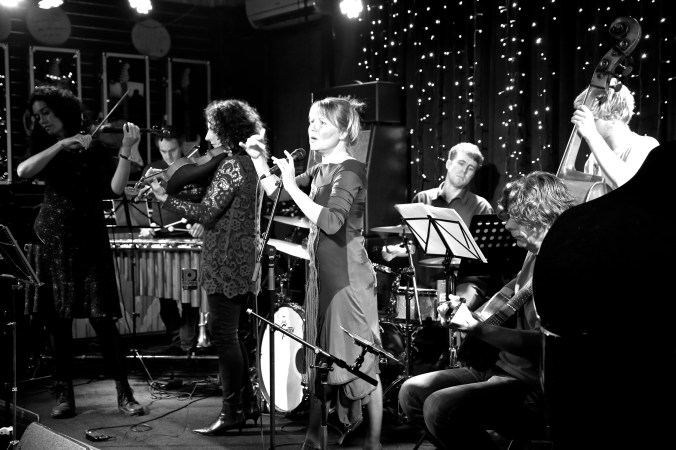
I am always drawn to performers who leaven their gigs with an appropriate portion of banter and Besser’s comments and asides were delightful. They were delivered with a deadpan expression and consequently were nicely understated. As with music, timing and delivery are everything. Many of the tunes were from his ‘Gimel Suite’ and a quick investigation of the word leads you to a cornucopia of meanings. It is the third letter of the Hebrew alphabet, it is a letter imbued with special qualities and it this case it is a footing or foundation for composition. This is an ancient to modern music and I suspect that those listening will have conjured their own associations. Because I have recently travelled through eastern Europe, I heard the warp and weft of Polish or Czech street music. 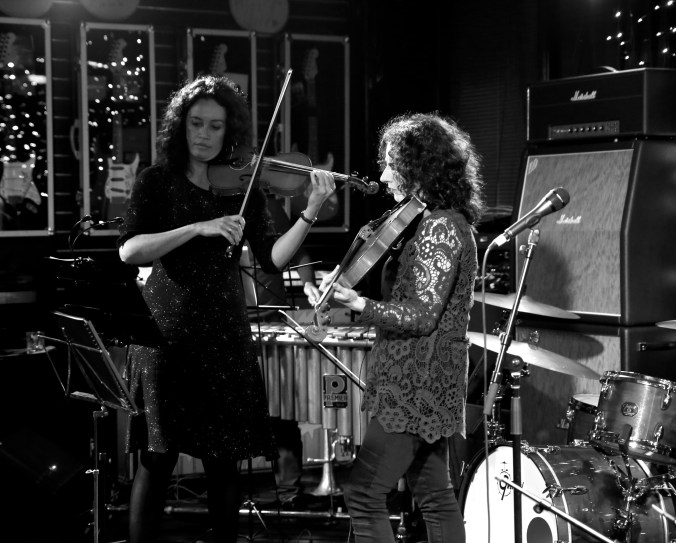
The other ensemble members came from a variety of disciplines and this was fitting. Caro Manins on vocals with her deep knowledge of ancient Sephardic Ladino music; Nigel Gavin, an adventurous ‘World music’ musician who ignores artificial boundaries; John Bell, a Vibes player from the free to groove or ‘World’ end of town; Eamon Edmundson-Wells on bass, a versatile bass player and also frequently seen in avant-garde settings; Alistair Deverick on drums, navigating those exhilarating rhythms. Lastly were two from the expanded Black Quartet; Peau Halapua on violin and Sophie Buxton on viola – popular classical musicians and sometimes seen with Jazz or ‘World’ ensembles. Besser, of course, was on piano.
Some of the tunes were nostalgic or even mournful, some were brimming with joy – all were enjoyable. The tunes never strayed too far from the notation, but there were some brief improvised sections which balanced things up nicely. I have posted the last number of the gig and while I am not sure of the title, I know that it brought the house down.
The gig took place on the 4th of July, 2018 at the Backbeat Bar, K’Road, for the CJC Creative Jazz Club.
 There are a finite number of notes in a scale or colours in the visual spectrum, but an infinite number of possibilities arise. Embracing the latter, multi-instrumentalist, multimedia sculptor and composer Finn Scholes constantly scans the landscape for new material. When he locates something shiny, he appropriates it as a magpie might, storing it in memory until he can bend it to a new purpose. A musician with few boundaries; a disruptor of complacency, his open ears and pioneering disposition equipping him well for his musical explorations. The genius of this music is that the listener will find any number of references, and each according to that persons taste. Any attempt to narrow the music down to a specific range of source materials, or to the prime influences, will, therefore, fall short; there is no correct answer.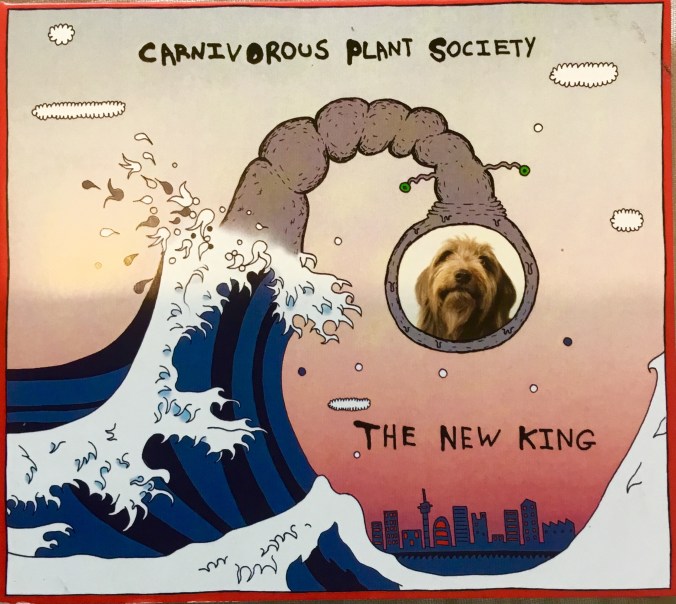

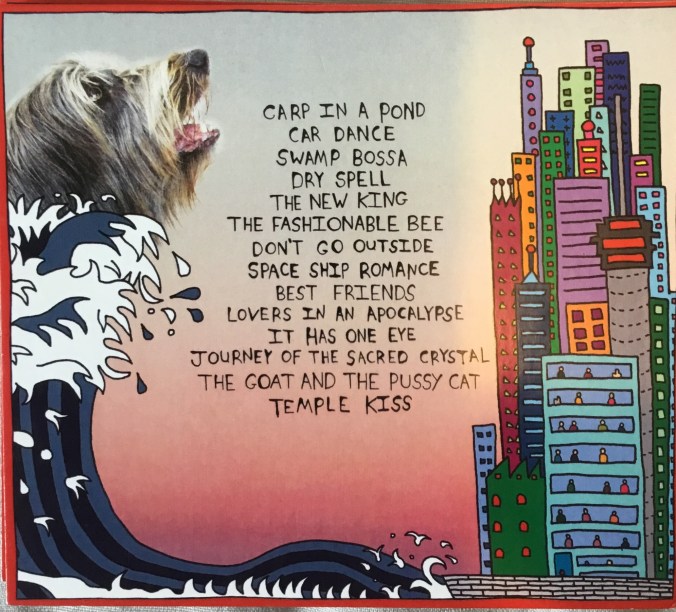

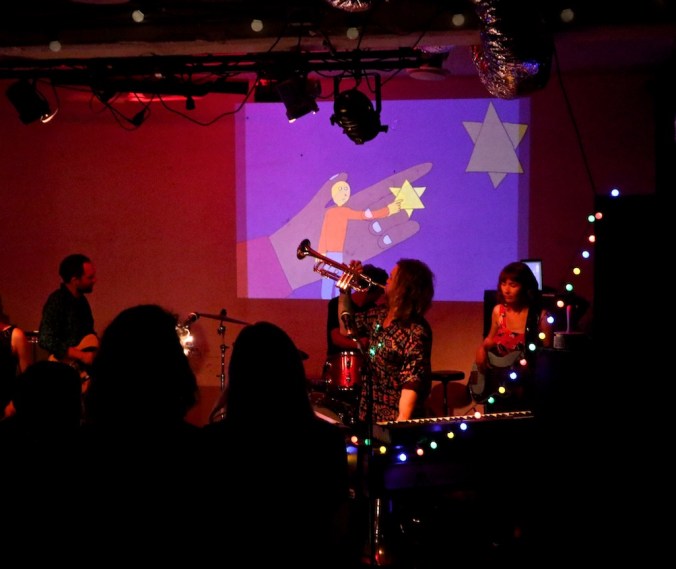
 Music has a million functions, some of them mysterious; it is the soundtrack to our lives. One of those functions, should not be underestimated, is to bring fun into our day. In this age of multi-media music performance the use of film and theatre is generally ceded to heavy metal or pop. That is a shame because Jazz audiences can react favourably to music when accompanied by these various forms of media. This works well at the Golden Dawn. Sometimes when the CJC is held upstairs, we get random film and images playing across the musicians as they perform. Who can forget the crazy brilliance of ‘The Grid’ (see earlier post). While happenstance can work; truly effective interaction needs working into a performance and be way slicker than a silly strobe light or an embarrassing disco chandelier. The Carnivorous Plant Society presented a coordinated performance and it enhanced the music on offer.
  This is very much a Finn Scholes project and it has been around for some time. Scholes is primarily known as a trumpeter (often playing the avant-garde end of town). Increasingly these days he is a keyboard player and showman. Last year I saw him with this group; belting out his signature brassy Mexican trumpet sound while playing an analogue synth with his left hand. The performance often tipped into the surreal because Scholes wore a Mexican ‘night of the dead’ wrestling mask. Not an image or a sound I will easily forget.
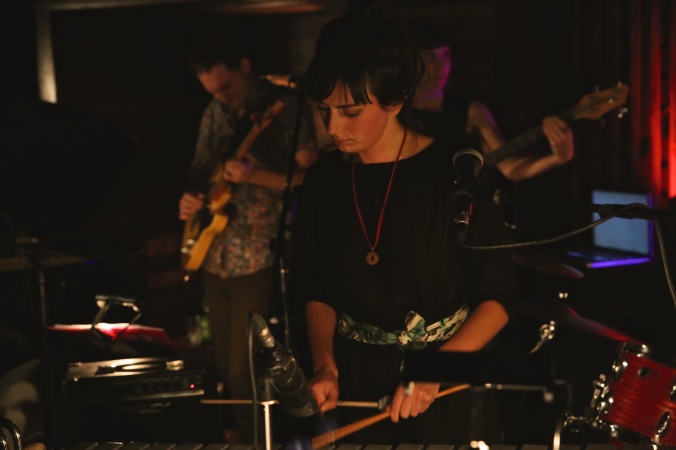
 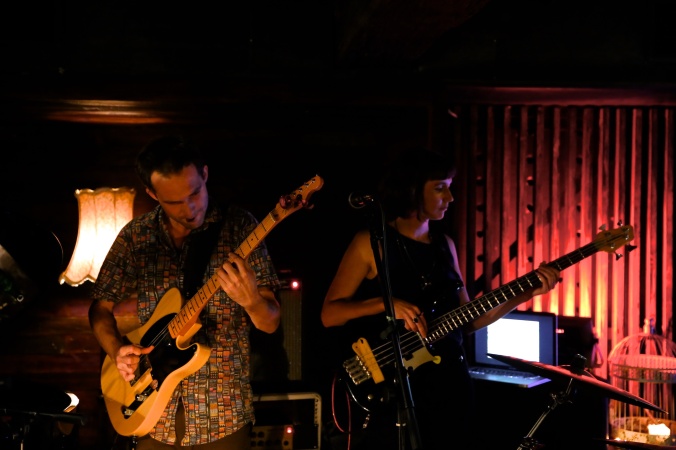 The Carnivorous Plant Society is a quintet but there are many more instruments, pedals and electronic devices than there are band members. Scholes plays trumpet, tuba, piano, numerous keyboards, electronics – Siobhanne Thompson, vibraphone, violin, percussion, pocket trumpet – Tam Scholes, electric guitar – Cass Mitchell, Electric Bass – Alistair Deverick, drums, electronics. With use of loops, wizard like gadgets and Siva like arms, a number of sounds are generated at once.
 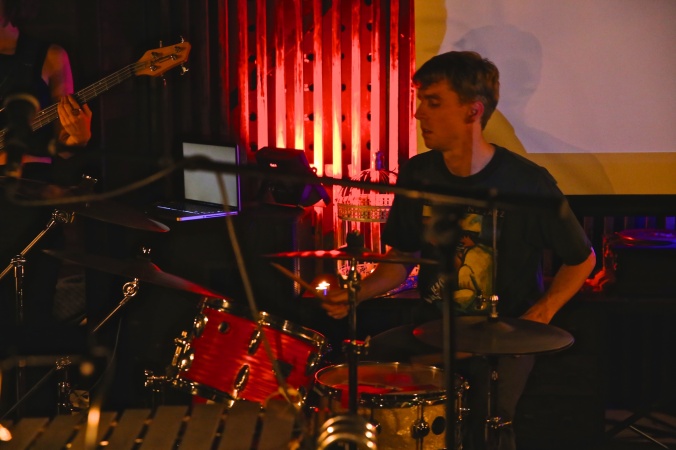 The occasional use of voice-over samples was far from being gratuitous as the ‘Max Headroom’ like humour often lay in these samples. There were strange Stephen King like stories of robots taking over the world and oddly quirky adventures relayed. The latter as if being recalled by deadpan 1950’s radio hosts. Many of these performed against brightly coloured cartoon graphics that played over their heads. The graphics were brilliant and although I have no evidence for supposing this, I presume that someone in the quintet (or a close friend hip to the project) created them.
 JazzLocal32.com