Reviews From The Edge

Fragile Magic & Tenging ~ Ingi Bjani (Iceland)

Before I became aware of the trio albums, I was already familiar with the Ingi Bjarni Quintet through his Tenging album, which I can only describe as extraordinary. Tenging is an album of breathtaking beauty and invention, evoking an ECM aesthetic. I love to hear musicians who boldly tell unique stories and flirt with the unexpected. There are many things to like about this album, such as the folksy, often Slavic-referencing modal melodies, the minimalism and the way the tunes are structured, often atypically. The essence of the group is especially evident in the title track, “Tenging.

There is excitement but also a sense of space and calm. Throughout, the music fully engages the listener. They are all excellent musicians, achieving a unity of purpose that is rare in a young band like this. The Norwegian trumpeter Jakob Eri Myhre has a Nordic edgy breathiness about his sound, and the Estonian guitarist Merje Kägu is just marvellous. My first encounter with this Quintet was as a 7VirtualJazzClub judge. Guitarist Merje Kägu was a knockout during that clip, a Nordic version of Mary Halvorson.  

Fragile Magic, the trio album, will be released in March. Advancing the concepts explored in earlier trio releases. Here, the bass, drums and piano achieve perfect balance. As with the larger ensembles, the players breathe the same musical air. The interplay is of the highest order. The compositions often arise from Satie-like minimalism and build on that, expanding the themes. Here, the exquisite touch, a feature of Skúlson’s playing, is accentuated. The pianist can also adopt a more percussive approach, contrasting his gentle minimalism. 
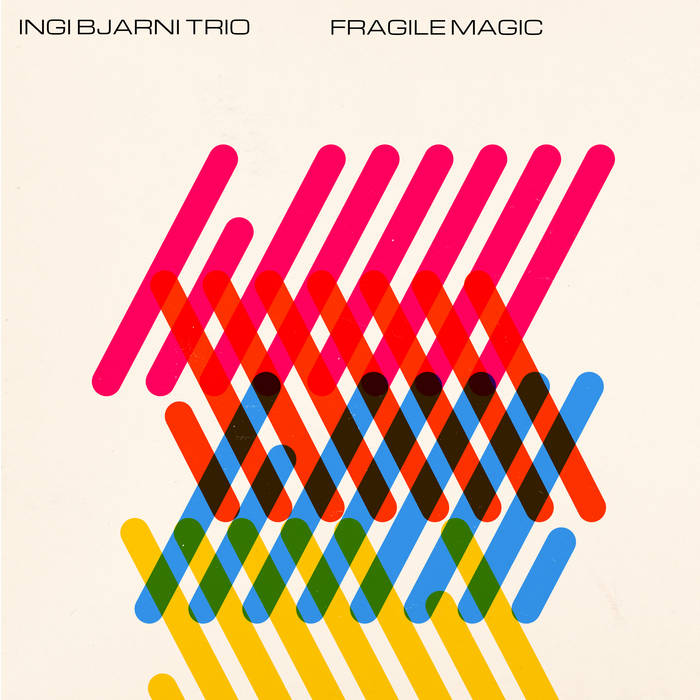
Ingi Bjani (full name Ingi Bjani Skúlson) is a celebrated musician in Iceland. Now, the wider Jazz world is starting to notice. His trio albums and quintet are the best known, but he has an established quartet and performs in a duo and solo. He attended the F.I.H. School of Music in Reykjavík, Den Haag Royal Conservatory in the Netherlands and undertook a Jazz Master’s in composition at Oslo and Copenhagen conservatories. His mentors have included many notables, including Aaron Parks and Anders Jormin. If you are new to his work, start with Tenging” and take it from there.

The musicians on Fragile Magic: Ingi Bjarni Skúlson (Piano), Bárður Reinert Poulsen (bass), (Faroe Isles) and Magnús Trygvason Eliassen (drums).  Bandcamp, {Spotify ~ (sample track)}

The musicians on Tenging: Ingi Bjarni (piano, compositions), Jakob Eri Myhre, Merje Käju (guitar), Daniel Andersson (bass), Tore Ljøkelsøy (drums) ~ Ingi Barjani Quintet is available on Bandcamp @  https://ingibjarni.bandcamp.com/album/tenging

Flicker & Polar Bird ~ Andrea Keller (Australia)

Andrea Keller’s recorded output is bold, engaging and original. This album is no exception. “Flicker & Polar Bird” is a double album and her twenty-third release as a leader. The album is the result of her time as the Coombs Creative Arts Fellow in 2022 and also features various commissions undertaken between 2010 and 2022. 

The first disk, Flicker, has a deliciously melancholic feel. Not one of weighty sadness but the pleasant melancholia of Shakespeare: ‘A melancholia of mine own…a sundry rumination of my travels. Flicker is just that, as Keller reflects and reimagines older works and places them alongside new compositions. Composers like Keller arouse deep emotions in a listener, aided by pianistic minimalism and the judicious use of open sonic textures. The relationships between pieces are carefully thought through, as are the musicians she chooses to realise her visions. Completing the trio is John Mackey, a superb tenor saxophonist and Miroslav Bukovsky, the trumpeter who appeared with Keller on The Komeda Project album. Completing the complement of musicians are two six-piece string sections (Canberra & Sydney) and two voices. 

The second disk, “Polar Bird”, brings in the voices of Rachel Toms and Liam Budge, reciting a poem, singing wordlessly and reading prose. The addition of human voices is in keeping with the overall vibe, as they blend into the mix. The vocalists are instruments. Everything on these albums invites a deeper listening, as the beauty of the playing and the compositions stir varying emotional responses. Anyone who follows Keller will know to expect originality and excellence and how nice hearing an E.E. Cummings poem intoned so beautifully. 

The trio musicians are Andrea Keller (compositions, arranging, piano), John Mackey (tenor saxophone) and Miroslav Bukovsky (trumpet). All of Andrea Keller’s albums are available on Bandcamp in digital, CD or vinyl formats @   https://andreakeller.bandcamp.com/album/flicker-polar-bird

Devotion ~ Muriel Grossmann (Spain)

When I saw an invitation to review Devotion in my inbox, I listened, intrigued. It halted me in my tracks; how had I not been aware of this musician before? What started as layered electrically-tinged grooves morphed into spiritual jazz and referencing other genres as it seamlessly navigated pulsing vamps. What appeared at first to be a classic groove unit was that, but also something else entirely. During the first track, “Absolute Truth”, pulsing and unhurried, the groove mesmerises; then Muriel Grossmann winds her way into a solo that builds its momentum and wows you. From there, we hear one stunning solo after another, amazingly cohesive, considering that each soloist takes a different approach to effect.

It’s hard to know how to unpack a cornucopia like this. It doesn’t feel like a studio album, but it is. Imagine descending a flight of stairs to find yourself in the jazz club of your dreams. A heady zone that affects you at the molecular level as the music and vibe wash over you. The tunes captivate one by one, great compositions, but also the ideal vehicles for collective and individual improvisation. I love a good groove unit, but it has been a long time since I was this blown away by one. There are echoes of Lonnie Smith, Pat Martino and Pharoah Sanders, but the album stands steadfastly on its merits. It borrows echoes from the past and creates something uniquely new. 

Grossmann is a multi-instrumentalist with nine instruments credited, and out of this comes the expansive sound. The listener quickly realises that her compositions and the various textures under her fingers elevate the extraordinary soundscape. All of that, and they can swing like crazy. The musicians: Muriel Grossmann (tenor, alto and soprano saxophones, flute, percussion, tambura, upright bass, kalimba, harmonium), Radomir Milojkovic (guitars), Abel Boquera (Hammond B3 organ), Uros Stamenkovic (drums). This double album available digitally, on CD and vinyl, through Bandcamp @ https://murielgrossmann.bandcamp.com/album/devotion-2 

In Green” EP ~ Taylor Griffin (Aotearoa/New Zealand)
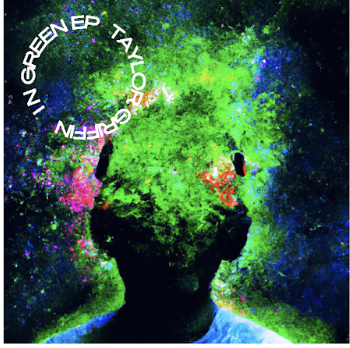
In Green” is a groove-based EP due to be released around now. A debut album written and produced by Taylor Griffin, a drummer from Tāmaki Makaurau/Auckland and co-produced by well-known Auckland Jazz musician Nathan Haines. The title track, “In Green”, opens with an inviting piano segment, played against background club chatter, shortly after dropping you into a deep and pleasant groove. The rest of the album flows nicely from there, maintaining the groove of the opening track.

The album oozes the warm sounds of summer with its danceable urban groove feel. The laid-back vibe and accessibility are the result of well-constructed compositions and the skilful integration of vocal lines woven into the instrumental mix, a clincher for me. The vocalese of Rachael Clarke, Saia Falou and Griffin is perfect, complementing and blending with Nathan Haines’s airy flute lines and soprano saxophone. The playing is tight and the mix is just right, everyone sounds good. 

This is a fine debut release for Griffin. The band: Taylor Griffin (drums, compositions, percussion, vocals, arrangements), Leo McMenamin (Keyboards), Robert Picot (guitar), Guy Harrison (trumpet synths), Charlie Isdale (alto and tenor saxophone, flute), Geoff Ong (guitar, bass), special guests Nathan Haines (flute, soprano saxophone), Michal Martyniuk (Rhodes, synths).

JazzLocal32.com was rated as one of the 50 best Jazz Blogs in the world by Feedspot. The author is a professional member of the Jazz Journalists Association, a Judge in the 7VJC International Jazz Competition, and apoet & writer. Some of these posts appear on other sites with the author’s permission. 

Andrea Keller ~ Systems Over-Ride

There is something satisfying about evaluating an anticipated album before the listening public gets to experience it, and whether it arrives digitally, or through the post, it can bring with it a heightened sense of expectation. It is a series of brush strokes unveiled before the paint is dry, and best of all it is unsullied by the crude measure of market vagaries. You listen with care, hoping that the music will speak to you and when it does you feel lucky. 

The best improvisers never settle, they reach waypoints then quietly move on. Andrea Keller is just such a musician. She is a creative force in perpetual motion and her steady output attests to that. And while each album or performance reveals something unforeseen, the connection to what came before is evident in the compositional DNA. To maintain such an arc without faltering is rare, but then Keller is a unique musician.

I have followed her work for some time and found the journey rewarding. There is a strong sense of the experimental in what she does but it never feels random. She can play with extremes while navigating a delicate path in between. When amidst these contrasting realities she is at her best and Systems Over-Ride is a prime example. 

It is entirely consistent with her musical openness, that she expresses a fascination with both free jazz and doom metal; this is referenced in the liner notes and it makes sense that she should navigate a course between these turbulent waters. She is in her element here. This quintet of Wave Riders, Keller aside, features a fresh crew. It compliments her 2013 Wave Rider album (and all of her albums) by moving on. 

As the pieces unfold, Keller’s pianism is always at its heart, with her unhurried serialism and melodic interjections drawing you ever deeper; notes and the spaces deployed to maximum effect. Much is implied beyond the notes too, as the tunes navigate a course between the turbulent waters ruffling the music’s edge. The quintet members respond in kind, and there are solos of course, but the album breathes as one.

As we approach the first quarter of the 21st century there is a rightness to these explorations. This is contemporary jazz as it should be. A leading US Jazz biographer and Journalist recently posted this meme, ‘People whose interest in Jazz stops with mid 20th Century recordings are missing the whole point of that music’. There is no endpoint to an improvisers journey. This is the direction of travel, ready or not.

The lineup here features Scott McConnachie (saxophones),  Jack Richardson (guitar), Mick Meagher (bass), Rama Parawata (drums) plus specially commissioned remixes using fragments from the studio session – remixes by Nicole Lizēe, Bree van Reyk, Joe Talia, Philip Rex & Theo Carbo.   

 It is available from Bandcamp in double vinyl, limited edition Compact Disk or Digitally at www.andreakeller.bandcamp.com  (Spotify should be avoided or used as a last resort, I support Neil Young and the artists who have pulled their content from that platform)

JazzLocal32.com is rated as one of the 50 best Jazz Blogs in the world by Feedspot. The author is a professional member of the Jazz Journalists Association, poet & writer. Some of these posts appear on related sites

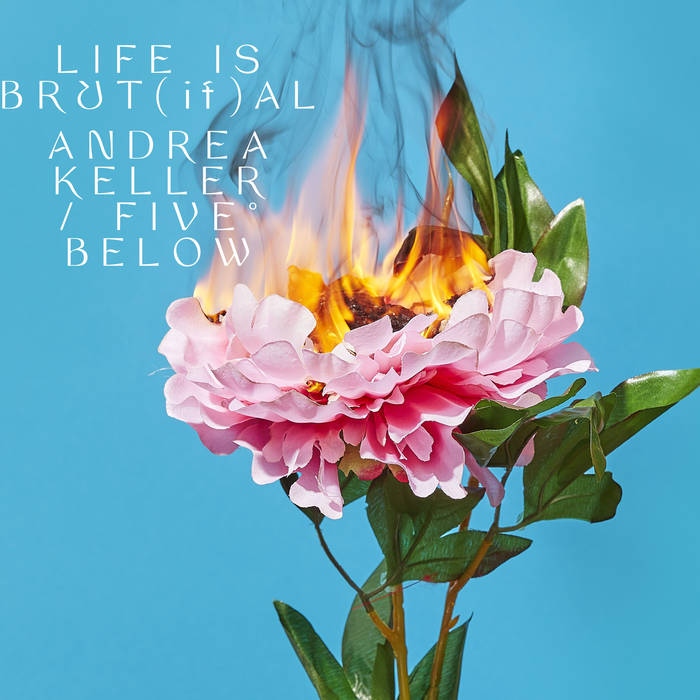
Life is Brut[if]al ~ Andrea Keller

By any measure, Andrea Keller is an extraordinary musician and her latest release, ‘Life is Brut[if]al’ is the proof of the pudding.  This is music for our times, and it reflects her well-documented and highly original creative journey. Keller is Melbourne based and like most musicians in recent months, her activities have been severely curtailed. The insidious grip of the virus is causing ever tighter lockdown restrictions, but creatives are used to working in challenging conditions, and happily, her prodigious output continues. This artist has a work ethic that few can equal, and we are the beneficiaries. 

The term tune is wholly inadequate to describe how the pieces unfold and although the substitute term journey is somewhat cliched, it is accurate.  As we listen, we find ourselves in a world located far from the mundane, a world full of intricacy and wonder, but revealed via the medium of minimalism and kaleidoscopic shifting patterns. This is Keller’s preferred space as her various influences have led her here.  She is an extraordinary pianist with a deft touch, but her compositional skills are very much to the forefront in this work.  

As one would expect, Keller has gathered some of Melbourne’s finest musicians about her for this project. Her ensemble writing is always about collaboration: Scott McConnachie (soprano and alto saxophone), Julien Wilson (tenor, saxophone and bass clarinet) and Jim Keller (voice), alongside Five Below band members Stephen Magnusson (guitar), Sam Anning (double bass), Mick Meagher (electric bass), James McLean (drums). Andrea Keller plays piano throughout. 

The first piece ‘Meditations on Light’ is the longest and it is the perfect opener as it invites a reflective mood before diving deeper.  It opens with a soft pulse, followed by guitar; the latter evoking the sound of a wine-soaked finger rubbed on crystal. Then you hear Keller, moving slowly and purposefully; a T. E. Lawrence riding out of the distant desert haze. By this point, anyone with open ears and a receptive heart will be fully engaged. You listen and the realities and cares outside the door fade into obscurity.  The soprano, when it enters, soars ecstatically above the drums and bass. It has the feel of a Fellini movie and the album is worth buying for this track alone.  

The second track ‘Dear John/Joan’ is more somber and mysterious. It reminded me of church bells and mourners in an Italian village, and again it is eerily filmic. Perhaps it reflects the loss of connection that the world is currently experiencing. Bley and Burton achieved a similar effect with ‘A Very Tang Funeral’.  That is followed by the title track ‘Life is Brut[if]al’; a powerful track which takes a freer path over a long earthy vamp. I love this track, especially, as the freedom seeking soprano dances so unbound. This track best sums up that happy place where freer music talks to its growing audience. An intersection for the adventurous and a place where the finest of improvised music is headed. 

After that comes ‘Suicidal Snails’ and ‘Blip ‘the former featuring reeds in unison and the latter, a short but sweet segment featuring tenor saxophone. The penultimate, ‘Youth Unleashed’ finds us exploring the free again.  

The final track incorporates portions of Rainer Maria Rilke’s profound prose, from ‘Letters to a young poet’. The track is ‘Love in Solitude (disassembled)’. This intertextuality is the icing on the cake and perhaps the point where the album makes its strongest claim to greatness. This is art music and it is timeless. 

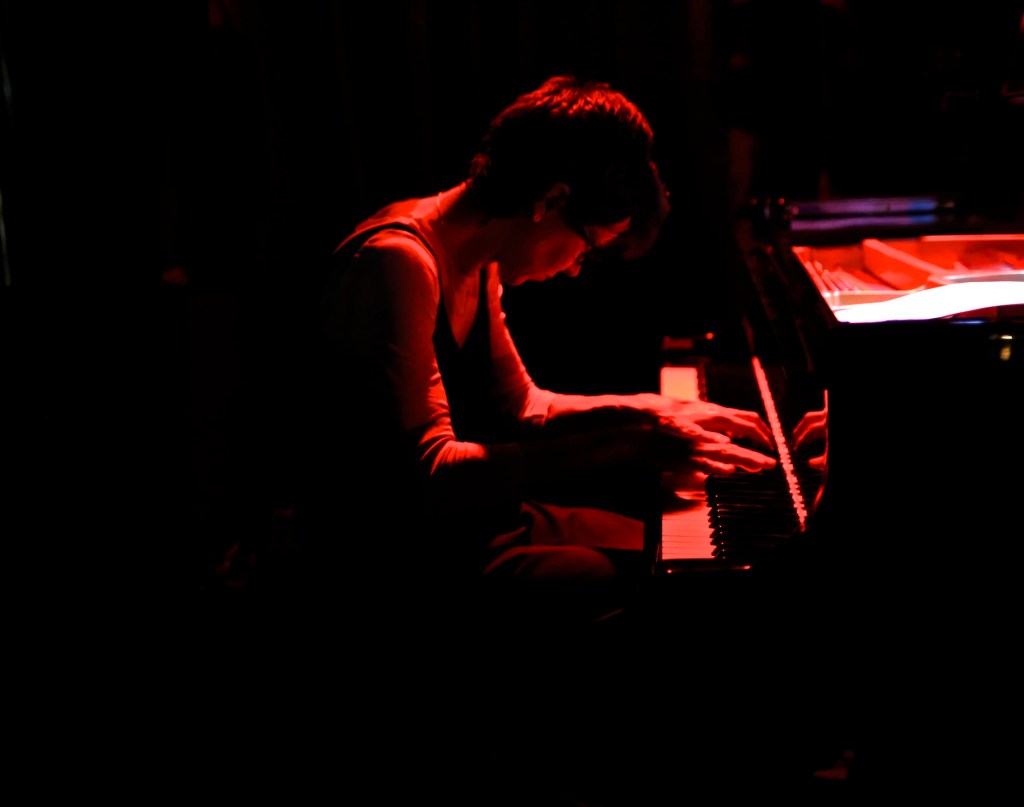
Uptown Jazz Cafe – photograph J Fenton

Born of Czech parents and growing up in the ethnically and musically diverse city of Melbourne, Keller has been gifted an ecumenical viewpoint. Her album speaks to the world and beyond, and due to its originality, depth and fluid interplay it is a five-star achievement.  This album and its predecessor ‘The Composers Circle’ are part of her ‘Monday Nights at Jazzlab’ series. ‘Five Bellow Live’ won the 2019 Jazz Bell Award for the best Jazz Ensemble. 

Keller is a multi-award winner, renowned educator and mentor. She was contemplating a visit to New Zealand in the New Year, but travel restrictions will likely prevent that. Until then, I will remember Keller performing at the Uptown Jazz Cafe (and the night before at Jazzlab). They were wonderful performances, and my photographs and these albums, reinforce that memory. 

During the writing of this post, an email arrived in my inbox, informing me that Keller is about to release yet another album; this time of solo piano titled ‘Journey Home’. There is also a related film to be released on DVD. The latter, a collaboration with filmmaker Hayley Miro Browne; a tale of their fathers, fleshed out with graphics and Erik Keller’s photographs of the 70’s Czech Republic. Again, this speaks to the work ethic and the creativity of this gifted artist. I have my order in. To purchase the above or any of Keller’s self-released albums, visit her Bandcamp site. It is a treasure trove. There is also merchandise available, and who could resist that gorgeous artwork by Luke Fraser.  AndreaKeller.Bandcamp.com

Australian Improvisers 2019


Aust Improvisers (1).jpg

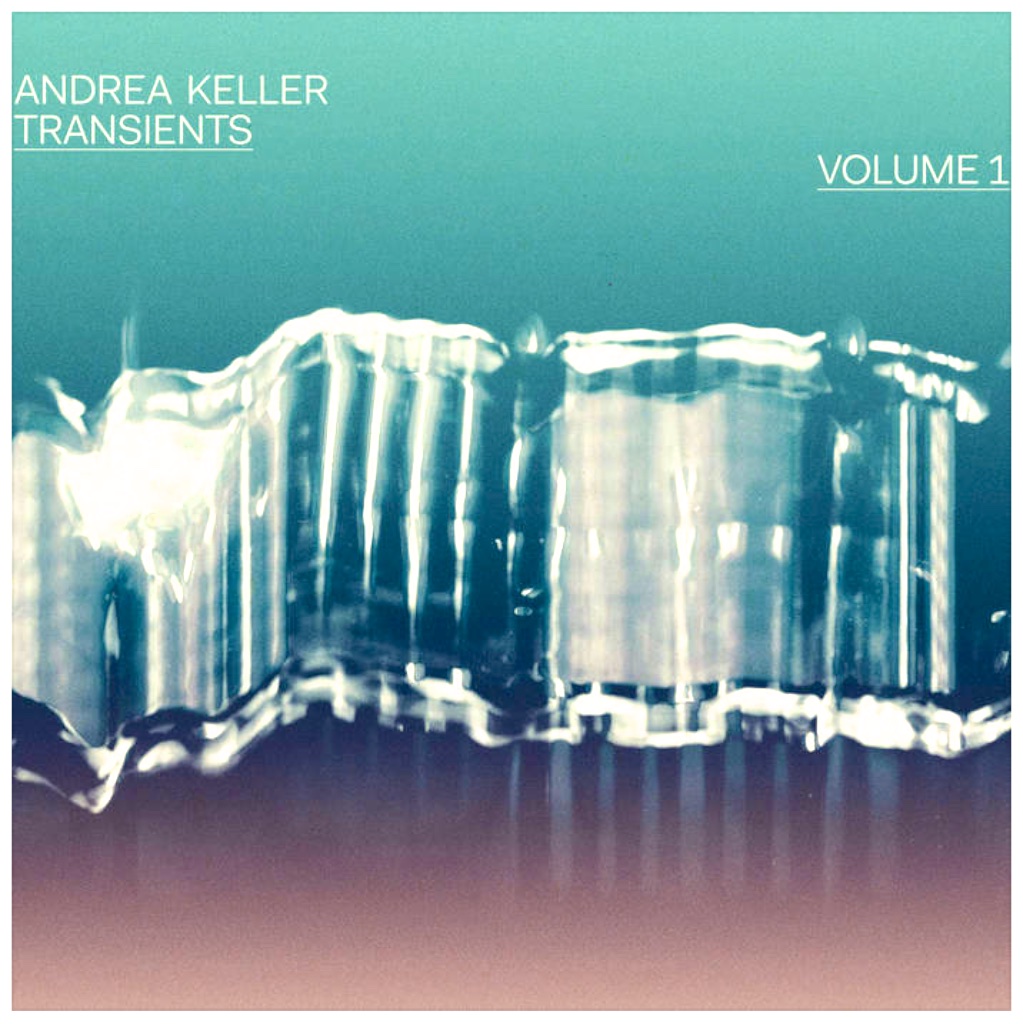
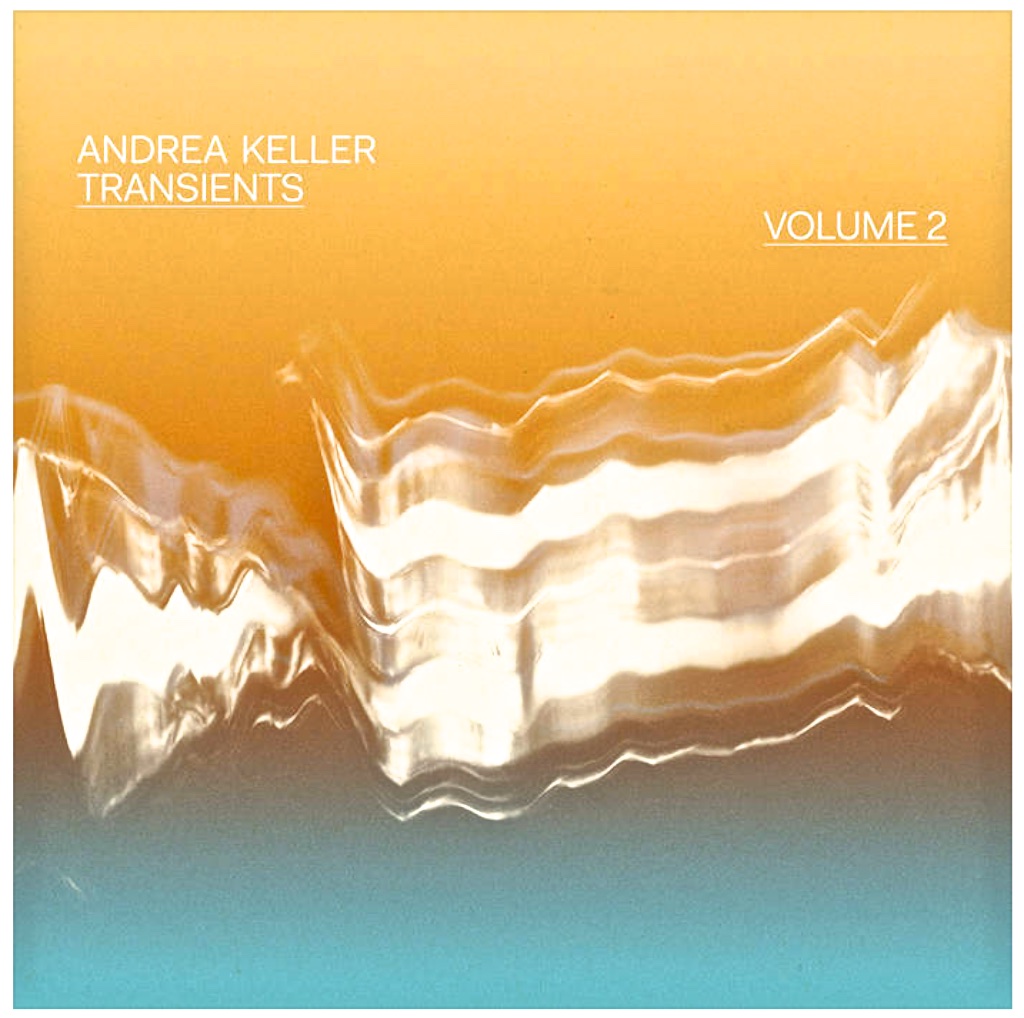
The number of quality Jazz albums coming out of Australia these days is impressive and considering the lack of support from the mainstream music industry, surprising.  I have met a number of Australian improvisers over the years and the best of them have one thing in common, a burning desire to reach beyond the mundane. They communicate this passion in spite of the obstacles and they do it convincingly. The best of these are respected across the wider Jazz world. They are a cohort that brings joy to those hear them and the least we can do is pay them our fullest attention. In November 2019, I became aware of four recent Australian albums: Andrea Kellers ‘Transients, volumes 1 & 2,’  ’This World’ (a collaboration between Mike Nock, Julian Wilson, Hamish Stuart and Jonathan Zwartz) and ‘Stock’ by Julien Wilson. A common denominator linking the above recordings is Wilson, who appears on all four albums (and is the founder of the Melbourne based Lionshare Records). Christopher Hale appears in three of them.

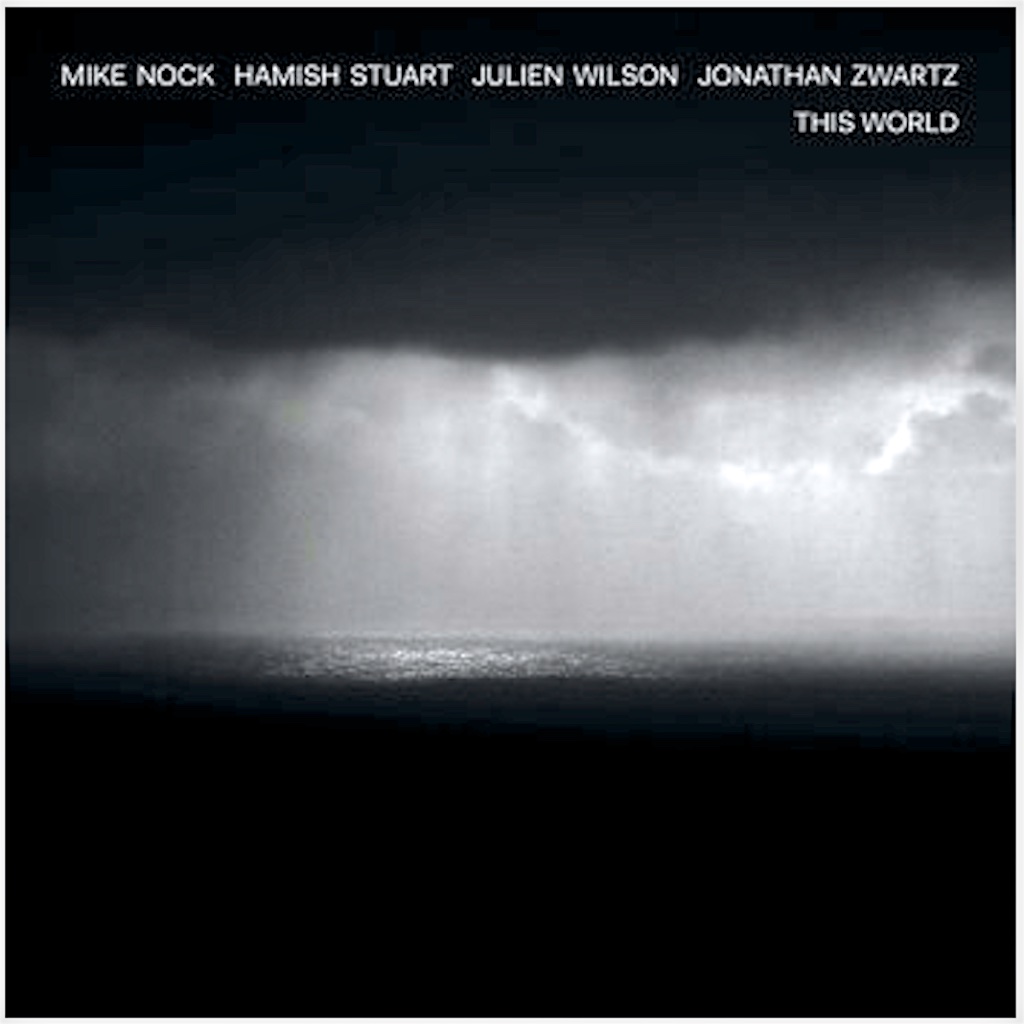
This World: Anyone who has followed pianist Mike Nock over the years will always be hungry for more of his artistry. He never disappoints. A few years ago Wilson confided that he had been planing a collaboration with Nock but that prior commitments always seemed to get in the way. Then in 2018 disaster struck when Nock was hit by a car on a pedestrian crossing. Many feared that his injuries could curtail his career and his fans hoped for a swift recovery. Not long after he left the hospital (and against the odds), he joined Wilson, Stuart and Zwartz for a standards gig. They sounded so good together that they agreed to record an album of originals (with each contributing compositions). Next, Zwartz obtained an arts council grant, and they headed for Sony Studios.

While the results of the two-day session are a testament to their compositional skills, it is their tasteful interplay that remains with you. The album is a thing of soulful beauty, with the compositions coexisting in happy juxtaposition. For example, the cheerfully reflective tune Old’s Cool (Nock) is followed by the moody In The Night Comes The Rain (Zwartz). If you follow the tracklist in chronological order you could be forgiven for thinking that the album is about Nock’s accident. In the Night Comes The Rain – Home – The Dirge – Aftermath  – We shall Rise Again; perhaps that is not the case at all, but whatever the motivation the album is an essential addition to any Jazz collection. What musical heavy-weights these musicians are and how effortlessly they weave their magic. There is a hint of ECM about this recording and not least due to the amazing cover artwork by the Icelandic earth photographer Polly Ambermoon. 

Aust Improvisers.jpg   

Transients volume 1 & 2: Late last year I came across the Transients albums by the multi-award-winning pianist and composer Andrea Keller. I first encountered Keller two years ago while I was visiting family in Melbourne. Her compelling stylistic originality intrigued me and I made a point of attending several of her performances in a row; resolving to keep an eye on her output from then on. On the first night she was decidedly minimalist and embedded deep within an ensemble; the second night a fearless explorer in a serialist vein. These two albums offer variety, innovation. The Transients project began in 2016 and since that time a series of interlinking trios have appeared, culminating in these extraordinary 2019 albums.

Aust Improvisers (3).jpg

This is music that requires your engagement and it is deeply rewarding when you listen properly. It is clear evidence that Australian music is developing its own distinct voice. The opening track on the first album is titled Musings and it is the perfect hook to draw you deep inside an intriguing world. As the tracks unfold you realise that you are listening kaleidoscopically. Phrases form and change along with mood. It is an interesting approach as the various trios sound like a band that could be playing as a larger ensemble. less is more. It is as if it is a bigger unit but with instruments redacted to achieve greater clarity. In spite of the contrasting moods and instrumental configurations, there is a unified heart; so much so that you can easily imagine how each piece would sound if the alternate trios played the piece. On volume two this is realised. On volume 1 you experience the journey while on volume two you are invited to examine it afresh. Many of the tunes like Saint Misha and Sleep Cycles are later reimagined, familiar but not familiar.


It is hard to praise the Transients albums enough and while it is obviously Keller who deserves the lions share of the accolades, the individual musicians excel themselves under her guidance. Wilson on tenor saxophone, clarinet and bass clarinet has long been a favourite of mine. He and the astonishing Stephen Magnusson have previously stunned us when appearing on recordings (notably with Barney McAll). With the addition of James Macaulay on trombone, Sam Anning or Christopher Hale on bass, James McLean or Leigh Fischer on drums and Flora Carbo on Alto, Keller has found the right mix of colours for her masterwork. 

Aust Improvisers (2).jpg

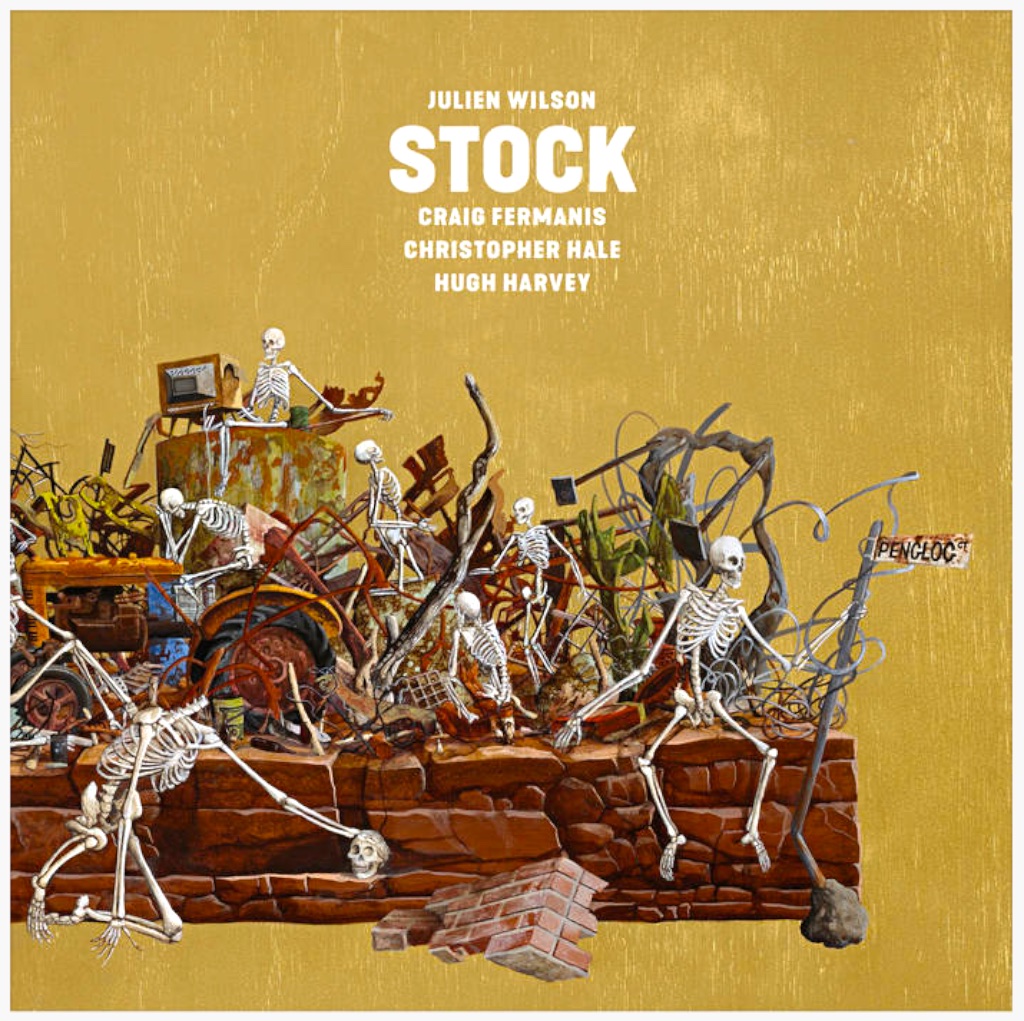
Stock: Like This World, Stock was released by Julien Wilson’s Lionshare Records. It is a joyful, freedom embracing, open-hearted exploration of sonic possibilities. It enhances sound, but the electronic effects which it utilises to good advantage are tastefully deployed. This is an album which immediately brings a smile to your lips, exuding as it often does the sounds of a perfect summer (a happier summer than Australia is experiencing at present). It was recorded in 2019 and released by the artists on New Year’s Day 2020. It is the sound of now and I was delighted to hear in the new decade with this gem. Some, wrong-headedly, think that post-millennium Jazz like this has abandoned past learnings; they are mistaken. These artists have no need to look over their shoulder because the past has been absorbed into and informs everything they do as they move the music forward. While Stock is Wilson’s concept it is clearly a collaborative effort. No one creates at this level unless they are inside each other’s heads. The quartet has performed a while but this was a time to share their vision with a wider audience. The tracks cover many moods – here I have posted a joyfully ‘out’ track.

Wilson is noted for his skilful articulation; an artist who can wring new tears out of old ballads and carve scorching pathways through an up-number; one of the few Australasian reeds players who maintains his clarinet chops at this level. This feels like a fruitful direction for him as the step change has a rightness about it. As the album progresses, moving from the filmic to the elegiac, you marvel at the inventiveness. Yes, guitarist Craig Fermanis has a Metheny vibe, but this is an original offering and beholden to no one. He is magnificent throughout and able to create nuance out of controlled chaos, and Christopher Hale’s electric bass work and Hugh Harvey’s drums or percussion are so integrated that the band presents as a single fluid entity. It is the integration of the voices and of ideas within a free-flowing framework that worked for me. It plots an interesting path forward and in doing so brings us along with it.   

My last word is about the presentation and the sound quality of the above albums. The recording and mixing standards here are very high. All have eye-grabbing artwork but in the case of the Lionshare albums, the standard is extraordinary. Wilson has an eye for great cover art, intuitively understanding that the relationship between the eye and the ear is important. Music is about more than just sound. I know that he gives careful consideration to such matters, whether it’s the eerily atmospheric work of the Icelandic earth photographer Polly Ambermoon or the marvellous creations of Dale Cox. The albums are all released on Bandcamp. We should all purchase whatever we can through the Bandcamp platform as the artists share is considerably greater there. In addition, we get streaming at Hi-Fi quality and the albums and other merch can be accessed directly. The two Lionshare Albums are also available in 24bit/96kHz audiophile quality and are downloadable for burning. If you have a high-end audio system you should grab the 24bit versions as these are the best quality available to us.  

This World: Mike Nock (piano), Hamish Stuart (drums), Julien Wilson (reeds) Jonathan Zwartz (bass). Transients 1&2: Andrea Keller (piano), Julien Wilson (tenor saxophone & clarinet), James Macaulay (trombone), Stephen Magnusson (guitar), Floro Carbo (alto saxophone), Sam Anning (double bass), Christopher Hale (bass guitar), Leigh Fisher (drums), James McLean (drums). Stock: Julien Wilson (reeds, effects), Craig Fermanis (guitar), Christopher Hale (bass guitar), Hugh Harvey (drums & percussion)

https://julienwilson.bandcamp.com    https://andreakeller.bandcamp.com

Melbourne Musicians

Andrea K (3)It was a foolish oversight on my part – I hadn’t visited Melbourne in fifteen years. I had seen quite a few Melbourne improvisers perform in Sydney or Auckland but failed to track them back to their native habitat. The last time I was there, Bennett’s Lane was still a thing, but closed for two weeks. That was the week between Christmas and New Year; that arid Jazzless desert in the live music calendar. With family now residing in Melbourne, I decided to atone for my sins and I headed off while the Jazz calendar was over-flowing with tasty offerings.

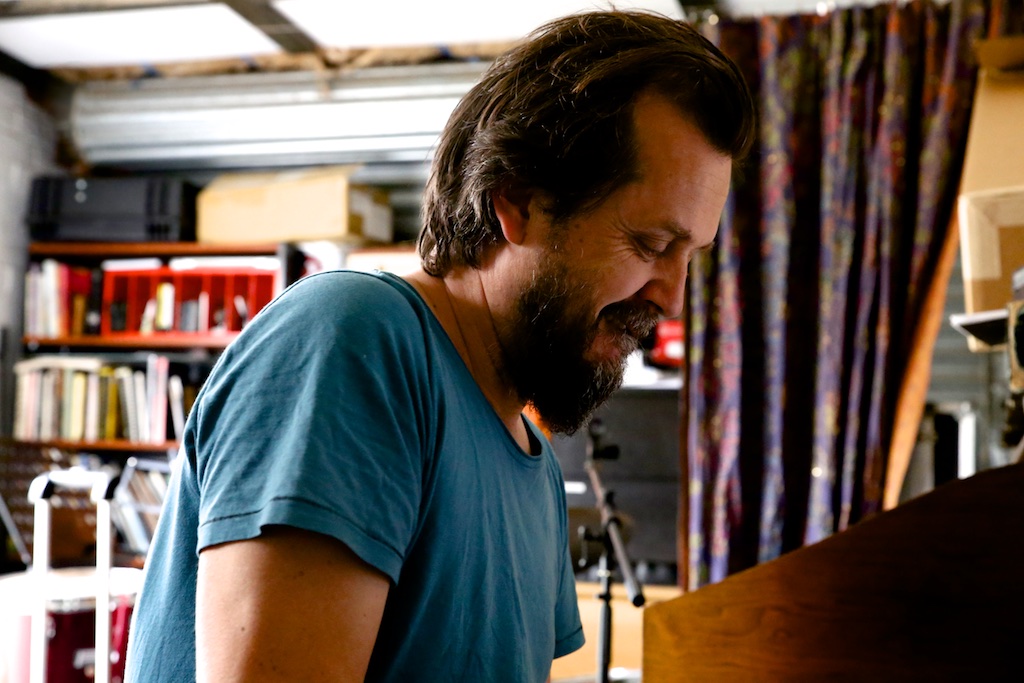
My first stop en route was Sydney where I met up with Mike Nock. That evening we caught a gig at the Foundry 616 where Nadje Nordhuis and James Shipp were playing. When Nock enters a venue the room rearranges itself. You immediately become aware of people in the dark interior, gathering quietly to pay their respects. It was great to see him looking so well and to hear about his new projects. We miss him in Auckland as he has not played here for over a year.  I had previously seen Noordhuis perform when the Darcy James Argue band came through Auckland. She is a member of both the Darcy Argue and the Maria Schnieder ensembles – Shipp is a vibraphonist percussionist and ‘synthesisist’ and well-known in New York. The gig opened the Sydney Women’s Jazz Festival and it was well received. I was also delighted to catch up with Thomas Botting who played bass for that particular gig.  A robustly healthy and startlingly fit Botting. After a few days with my daughter and grandchildren, I headed to the domestic airport and Melbourne. IMG_1930

To my delight, I was greeted at Melbourne Airport by large signs reading – ‘Welcome Home from Jail Granddad’. Aussie humour is unique and often intentionally embarrassing. Hiding behind false sensibilities is not an option. If you don’t like good-natured piss-take humour – go elsewhere (Kiwis get this). It is no accident that our lost, lamented and beloved Kiwi comedian John Clarke and the actor/comedian Bruno Lawrence settled there. A larrikin world-view runs through the music as well. There is a unique openness about much of Australian improvised music. It is of course informed by the Jazz roots of America, but strangely unbeholden to it. The musicians are liberal-minded and many are unashamedly strident in their political views – this can feed the music as well. New iterations of the Liberation Music Orchestra are forming in Melbourne and that makes perfect sense. Andrea K (9)

There were quite a few Melbourne musicians on my list and at the top was Barney McAll. It is no secret that I am fascinated by the depth and scope of McAll’s music and interviewing him is always an interesting experience. Some musicians go to great lengths to hide from personal scrutiny, believing that their music is all you need to know about them. That is an entirely valid viewpoint, but a curse if you’re a biographer or reviewer looking for context. When I review, I try to avoid armchair appraisals; attending live music whenever possible; eager to know something of the musician, the thought processes, philosophical leanings; hoping to look behind the mask. Possessing a stubborn belief that an artist and the music are two sides of an alchemic essence.Andrea K (11)

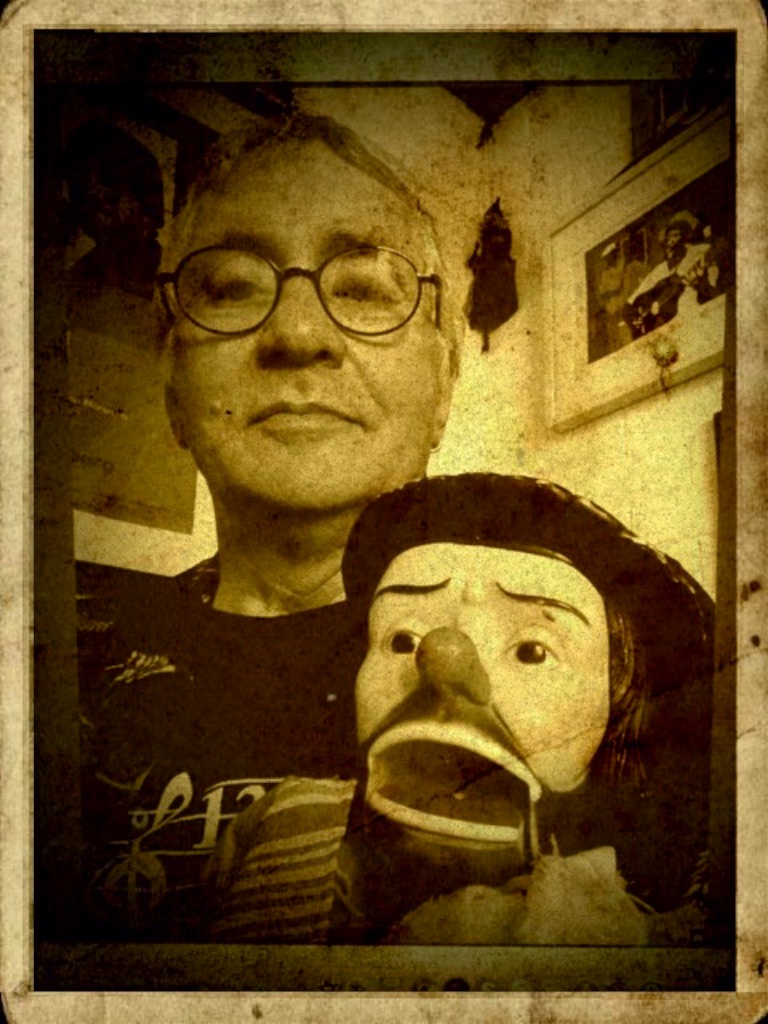
McAll texted me his address and I ventured out into the heat, trying to make sense of the train system. I got off somewhere in the outer suburbs; prophetically, somewhere near Mooroolbark. There was a bing and I looked at my phone. The text read, ‘Round the back your grace – ignore the dog’. McAll greeted me warmly and we went inside for a Vegemite crumpet. As he was wearing military-style camouflage, I didn’t dare tell him that Kiwis only eat Marmite (look up the great Marmageddon debate which erupted after the Christchurch earthquake).  It is always a pleasure talking to McAll, but unforeseen things occur when your guard is down. He played me some new compositions, showed me a video he was working on and we discussed the coming year’s projects. Then unexpectedly, I found myself the subject. Being interviewed about my poetry and the duty of creative artists to get their work out there. As we talked, and as if it were the most natural thing in the world, he handed me a grinning ventriloquist’s dummy and sat another in the next chair. The discussion continued, was filmed in real time; two child-sized puppets and me; and the McAll directing it Fellini fashion. For more about McAll’s recent ‘Hearing The Blood’ album or his catalogue, go to iTunes, Spotify or www.extracelestialarts.bandcamp.com  – read my recent blog post, December 4, 2017. Andrea K (14)

While I was there, McAll phoned Julien Wilson to find out his gig schedule for me. There was a gig of his on in Northcote and so I dashed back to the Jazz Corner hotel before heading out into the warm Melbourne night. It was an auspicious night to be out and about in Melbourne as the divisive and ill-considered same-sex marriage plebiscite had delivered a resounding yes vote. Whole inner suburbs were closed as revellers partied. Adding to the celebratory mood, a significant World Cup qualifying match was underway (which the Aussies subsequently won to the chagrin of Kiwis who lost their qualifying match). All of the above spells happy chaos in an art and sports-mad city. And I had music happening – lots of it. A scarfed man sitting opposite me on the tram was laughing and crying in turns.  He was so drunk that his eyes revolved in opposite directions. Someone asked him if he was anticipating a win and he nodded chuckling, then just as quickly he cried inconsolably – ‘Cats are bastards’ he mumbled – ‘I just fell over one and hurt my arm’.Andrea K (10)

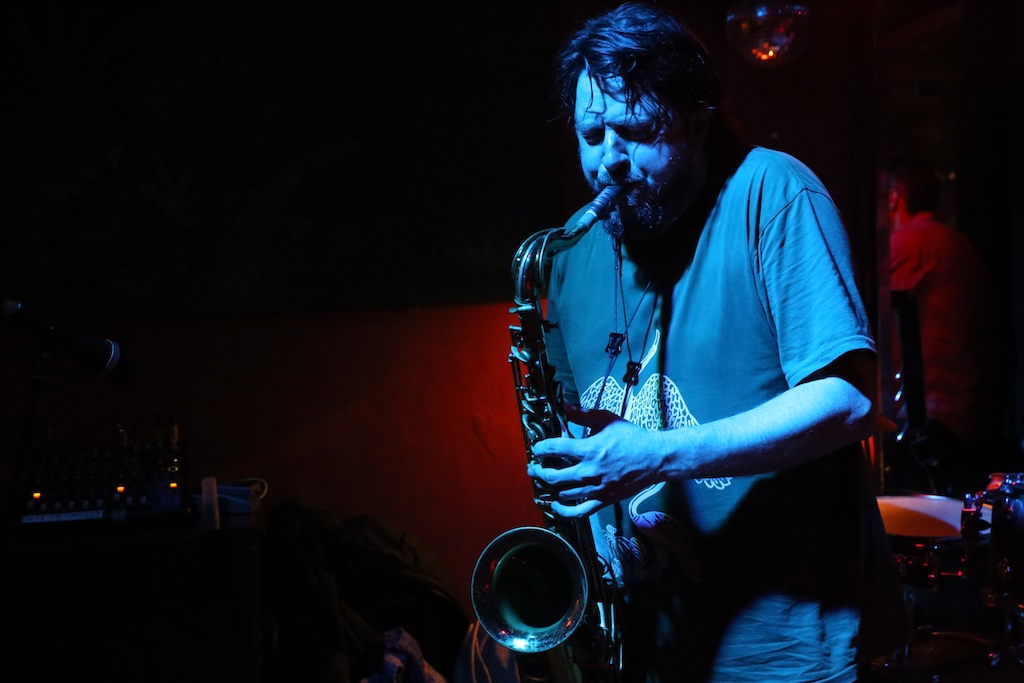
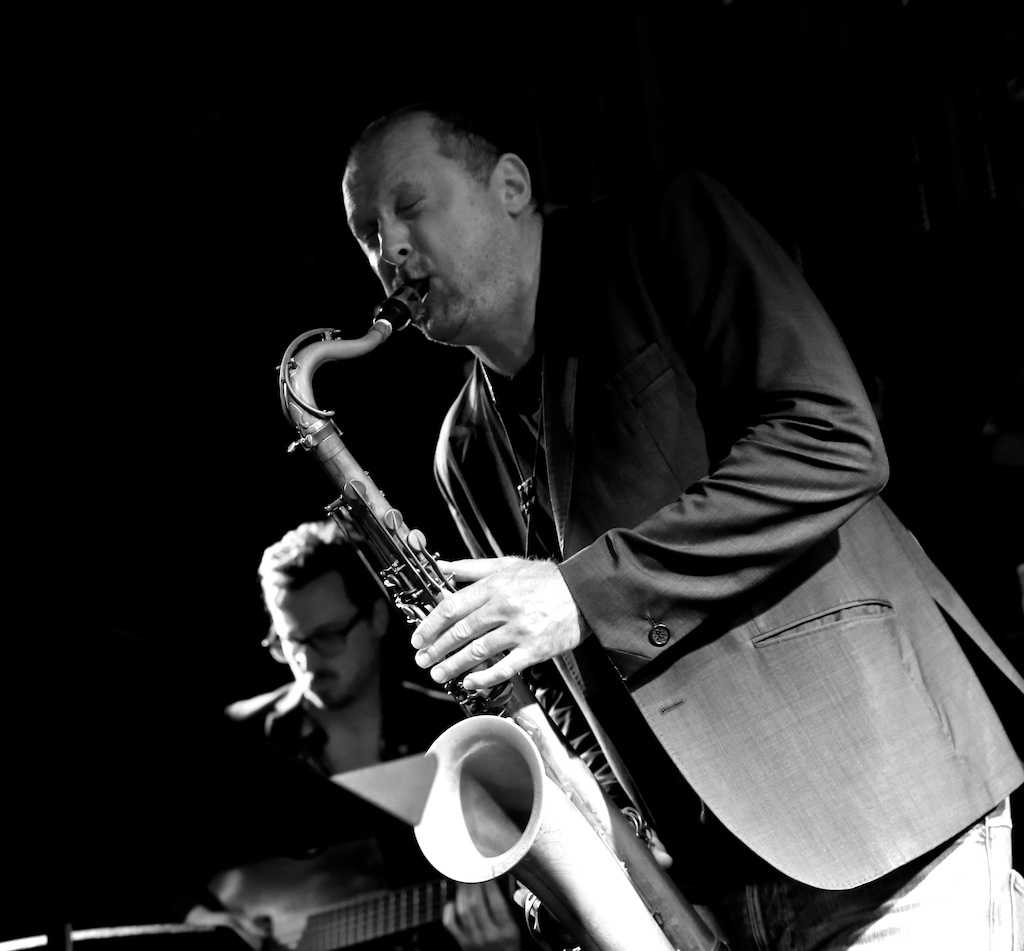
Jules Wilson is a tall friendly man and he plays like he lives with his heart on his sleeve. I have followed his Facebook posts and listened to his music for years; no-one is ever left wondering what his worldview is. Like many musicians, he loathes injustice or inequality and you can hear this manifest in his sound. Not in an angry way but in an earnest cajoling way, demanding that humanity ups it’s game. Creating original improvised music taps into a deep well of experience and with mature players, their character oozes through the notes. A lot of modern saxophonists have a raspiness to their tone and often produce a vibrato-less sound. Wilson has a rich full-bodied sound and it touches on an era when the tenor giants ruled the world. Appropriately there is often some breathy vibrato at the end of a phrase. This is not to say that he is an old-fashioned player because he isn’t. It is rather that the history is in that tone – ancient to modern.  This is always

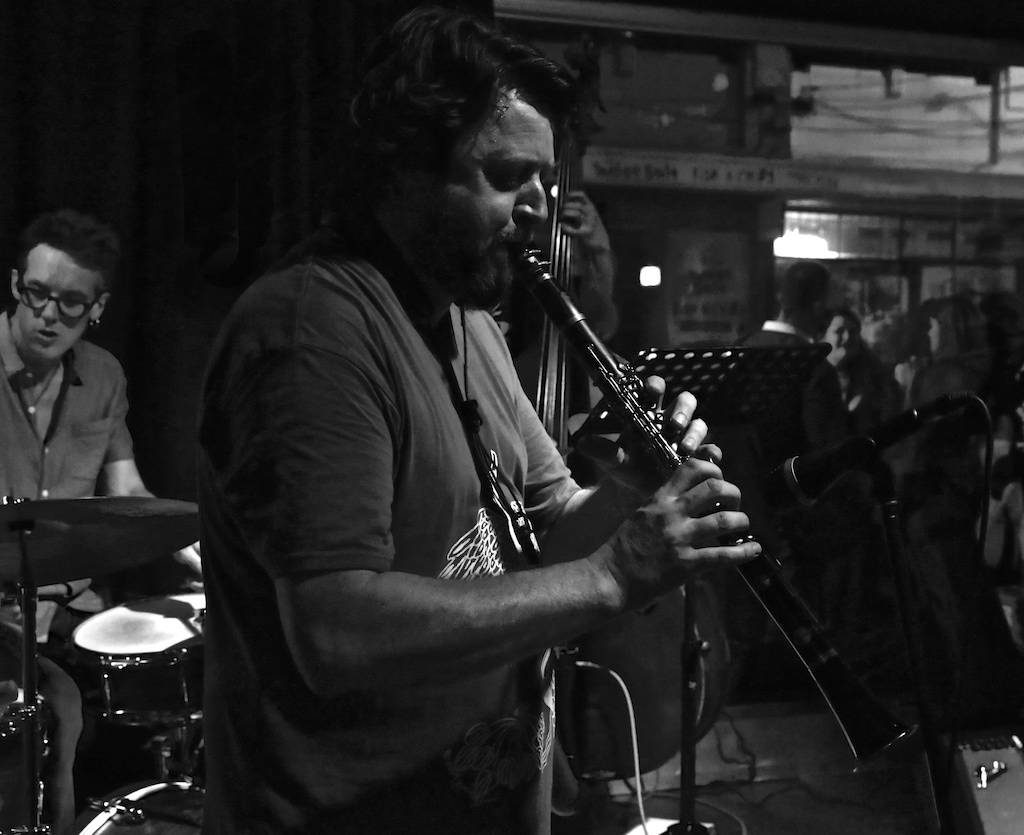
There is another factor which could influence his tenor sound – he doubles on clarinet. The clarinet is the first horn he mastered. While many saxophonists treat that horn like a difficult inlaw, Wilson perseveres, regarding it with a begrudging affection. I was stunned by the beauty of his clarinet playing and how modern the instrument sounded in his hands (he played a fast-paced bop classic, not a ballad).  I asked him in the break how he felt about the horn – “it’s a punishing unforgiving instrument, but I can’t bring myself to abandon it” he told me.

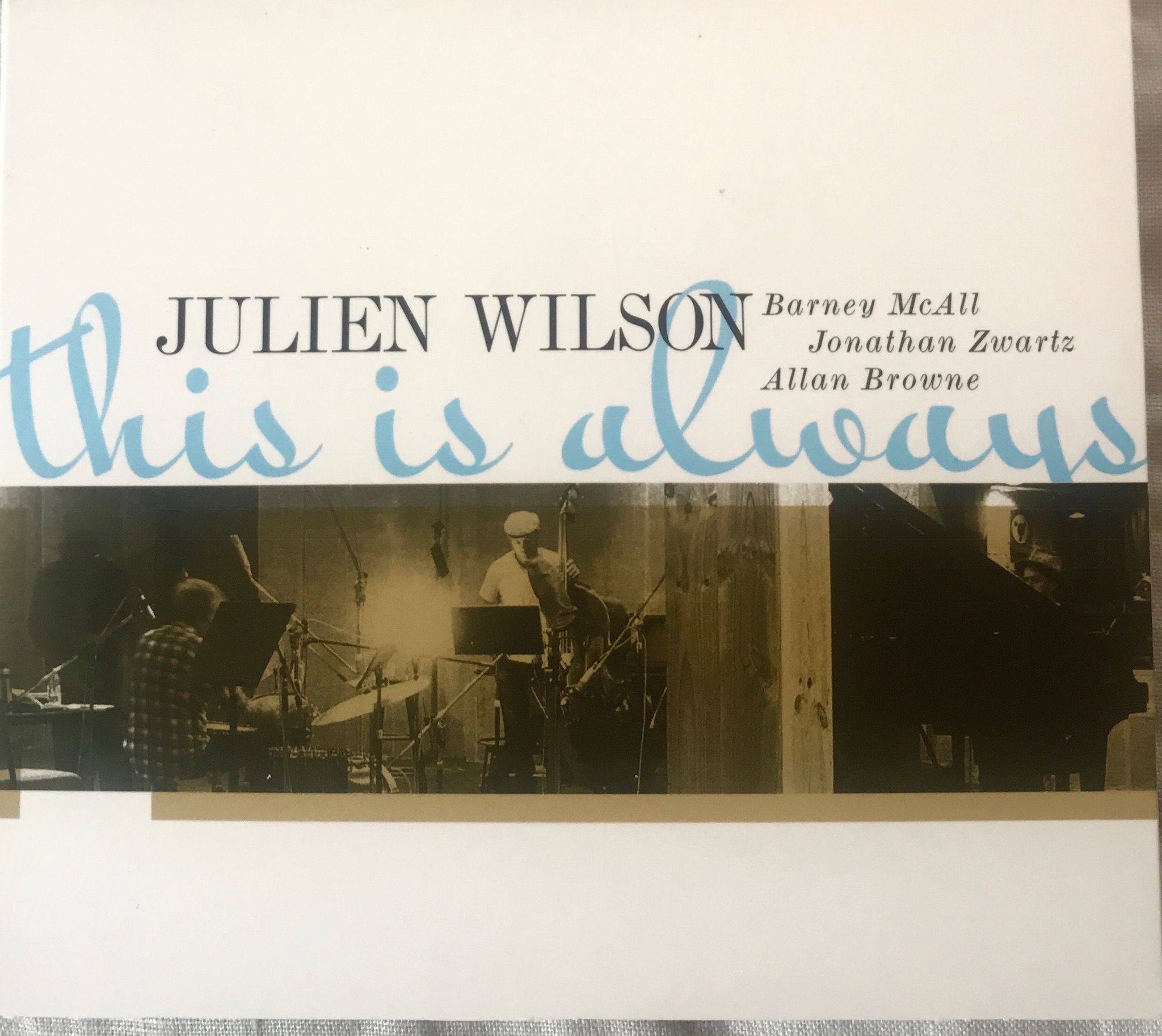
Wilson came sharply onto my radar with McAll’s extraordinary Mooroolbark album but he has long been one of Australia’s most successful Jazz Musicians. Winning the National Jazz Award in 1994, The Music Council of Australia Freedman Fellowship in 2006, The 2008 Bell Award – Artist of the Year, a Bell Award trifecta in 2014 and the APRA Art Music Award for Excellence in 2016.  I have recently been listening to his back catalogue which is available on Band Camp (some CD albums are also still available).  His output is diverse and all of it interesting – an edgy album with Jim Black, Mark Hellas and Steve Magnussen – several recordings with his popular trio (Stephen Grant on accordion and Stephen Magnusson on guitar) – an extraordinary couple of albums featuring Barney McAll on piano, Jonathan Zwartz bass and Allan Browne on drums.  There are around twenty albums in all. All are worth a listen but his ‘This is Always’ album is an absolute gem (the live ‘This Narrow Isthmus’ which followed, likewise). The former harks back to a specific era in the best possible way – not as a tribute album, but as a rekindling of a bright flame.  

The story behind the album is instructive as it takes us to the heart of an in-the-moment creative process. The musicians wanted to capture the vibe and style of the famous Prestige Meeting Sessions.  McAll and Wilson swapped a few charts but had no detailed discussions – no rehearsals were scheduled.  On the day of recording, the four turned up at the studio with a ‘first-take’ approach. No baffles and no headphones were used. This allowed for a sense of immediacy and real-time heightened interaction.  McAll reimagining the piano styles of the era in passing – some Evans like intros and even using the locked hand’s style briefly. Wilson sending forth a flurry of swoon-worthy fat warm tones.  None of this sounded contrived – it sounded like the present and past fused into a cohesive whole. The album is an important milestone in Australian music and no antipodean Jazz lover should be without a copy. It should not be regarded as a trip down memory lane, but as a testament to the eternal now. The unsuspecting will believe it to be a loved classic album of the Prestige-era and scratch their heads to place it.

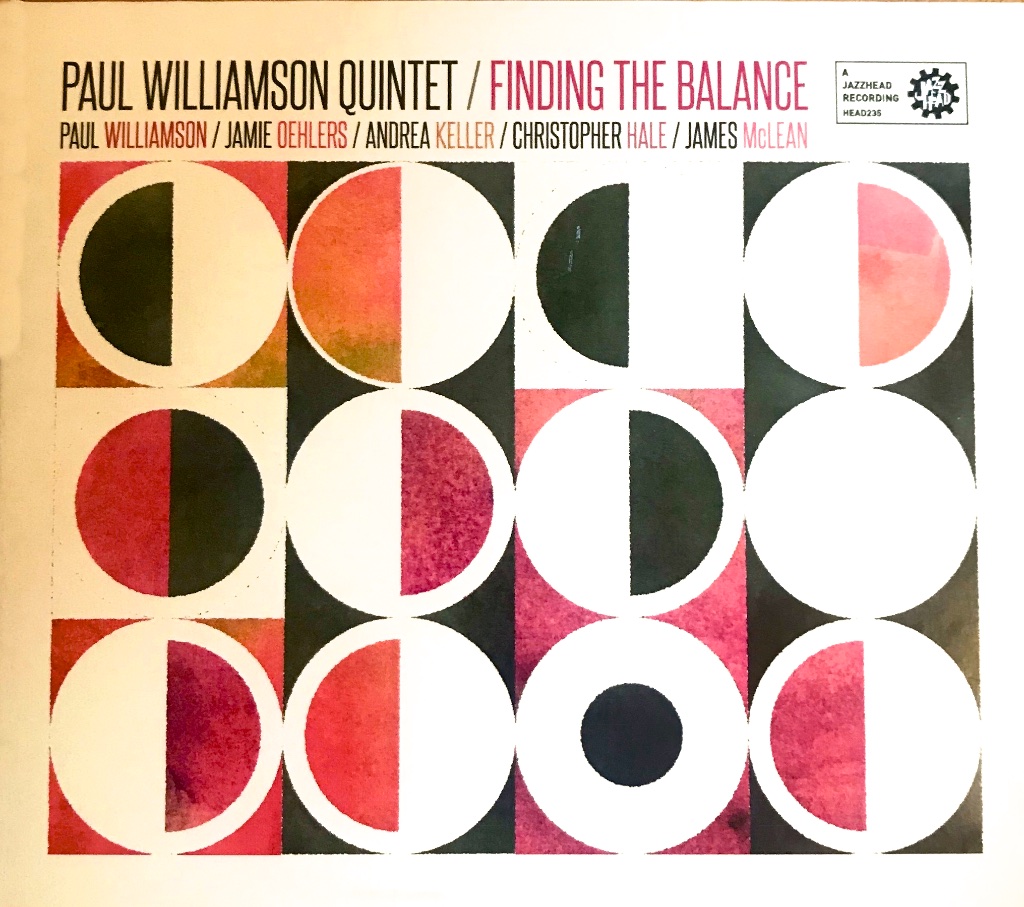
When Bennetts Lane passed into history, the Melbourne club scene rose to the challenge.  The Bennetts management (or some of them but minus the name – it’s a complicated story) opened a new club in the industrial heartland of Brunswick. The JazzLab is a stunning venue. Situated in a basement, it has all that old-school Jazz Club vibe but not at the expense of good taste. It is comfortable but not over-decorated (I have seen some shockers in other countries, trying so hard to be cool that they end up as museums to kitsch). More importantly, the sight lines are good and the acoustics great. I attended the JazzLab with expat Auckland musician Matt Steele and my son Jeremy and the gig was a treat. It was the album release of ‘Finding The Balance’ by the Paul Williamson Quintet. This was a solid unit with an inexhaustible array of talented firepower and good tunes.  All were new to me except Jamie Oehlers, who I see perform regularly.  Andrea K (2)

Andrea K (12)

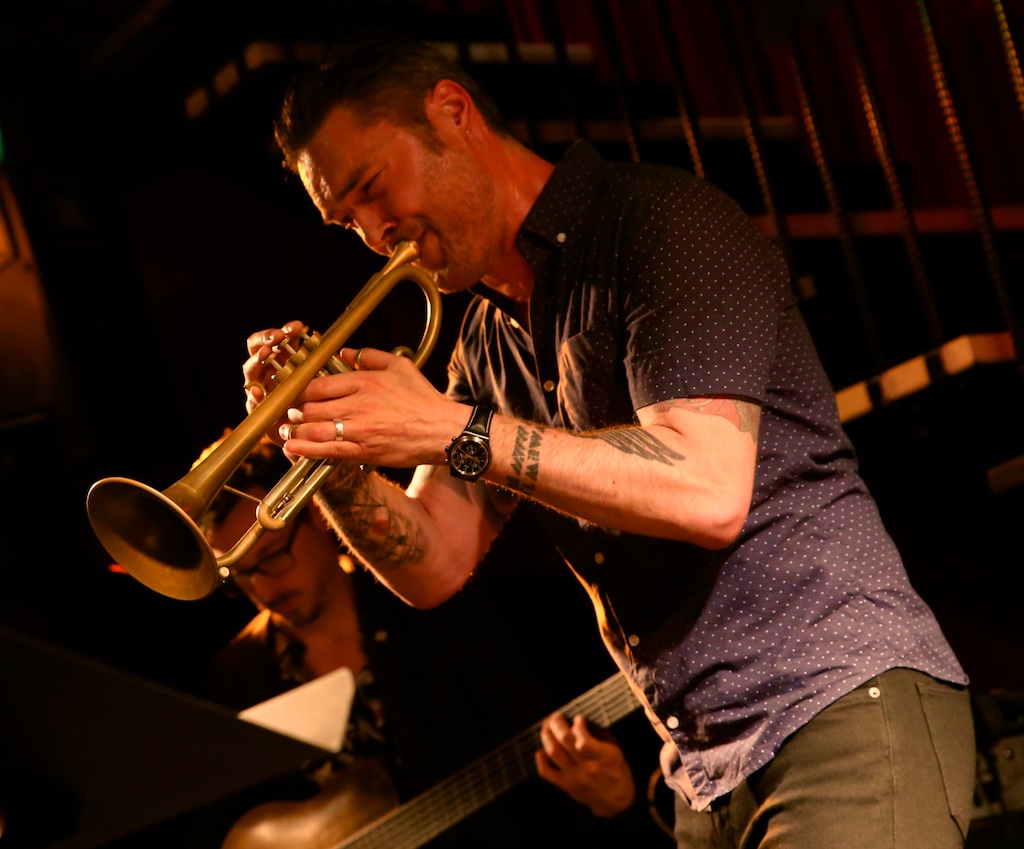
The unit had swags of punch and plenty of textural contrasts.  It was big enough to sound like a larger ensemble at times, but the writing allowed individuals to shine. Oehlers was on fire, hitting sweet spot after sweet spot during solos – carving his path through the air like a titan. Closer to earth, but equally attention-grabbing was the leader Williamson – his sound control impressive – his trumpet speaking a very human dialect. I had not encountered Andrea Keller before, but her tasteful minimalist approach also caught my attention – it contrasted nicely with the fulsome horns. The remaining musicians a six-string electric bass player Christopher Hale and a very tasty drummer James Mclean. It was a great launch in an interesting venue – what could be better.  Andrea K (13)

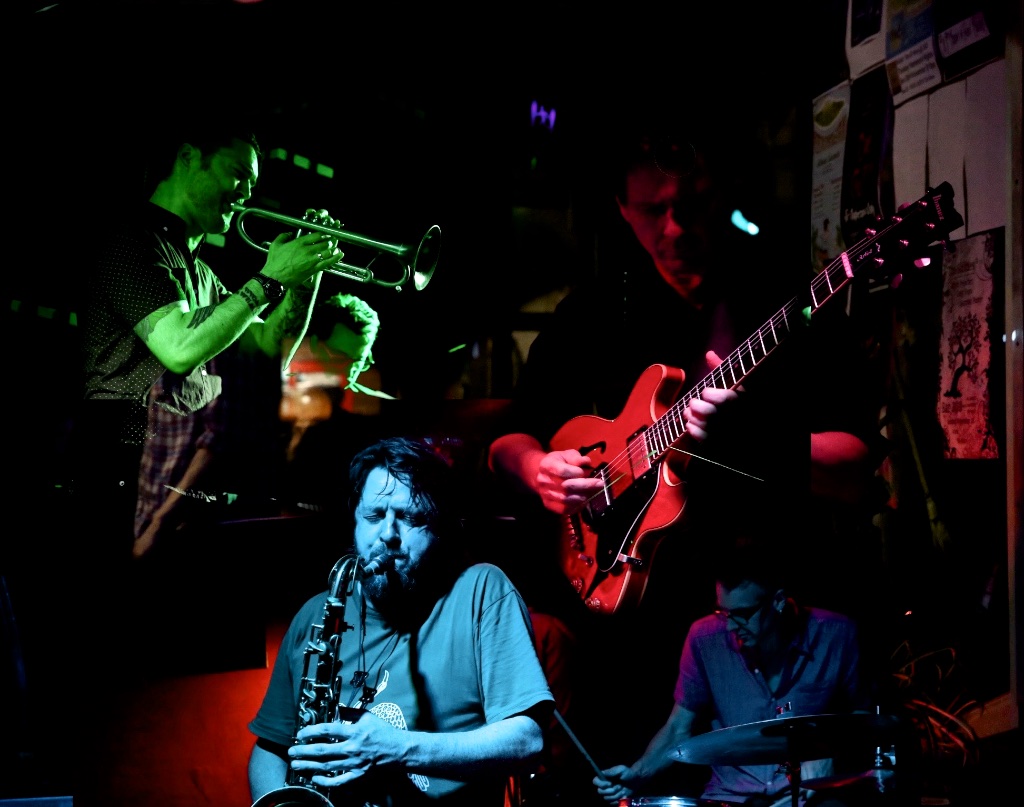
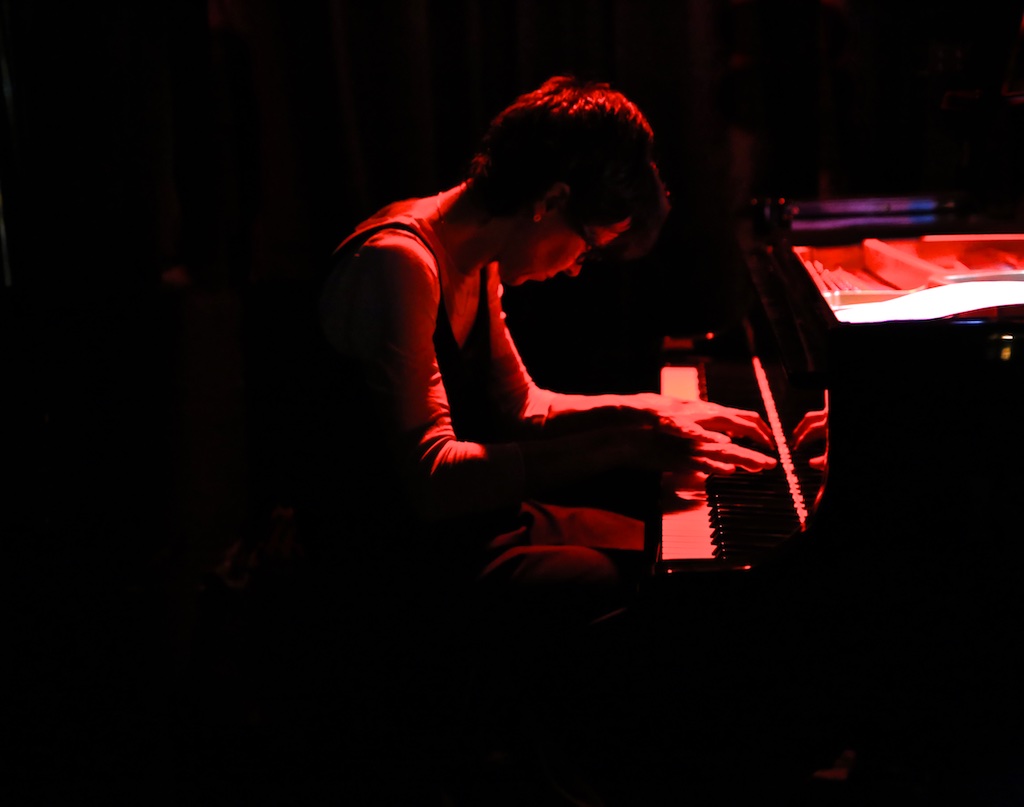
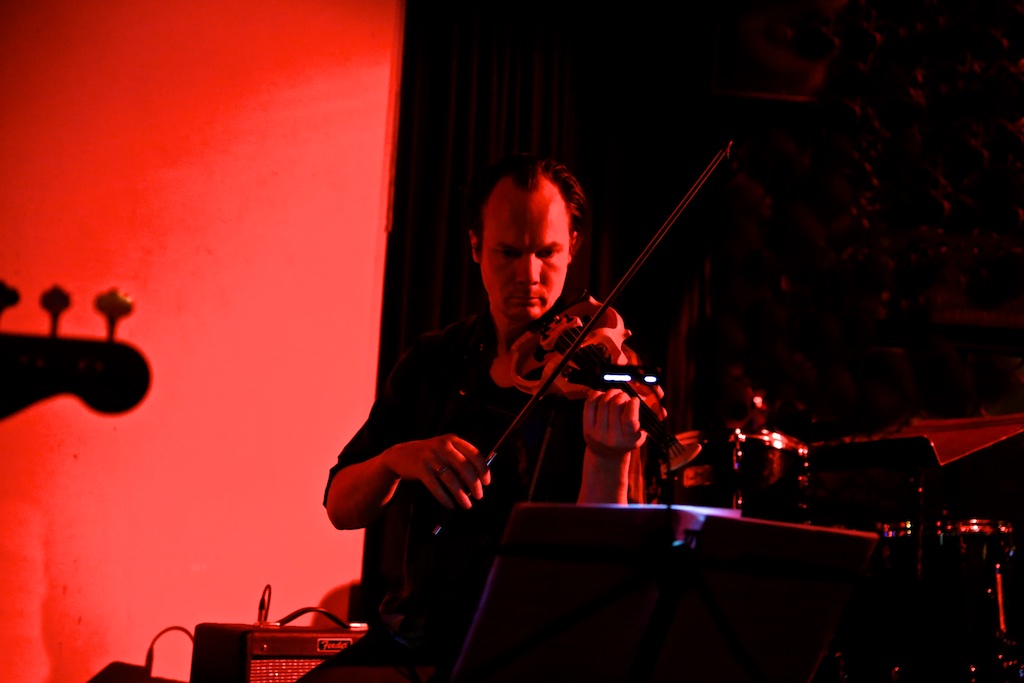
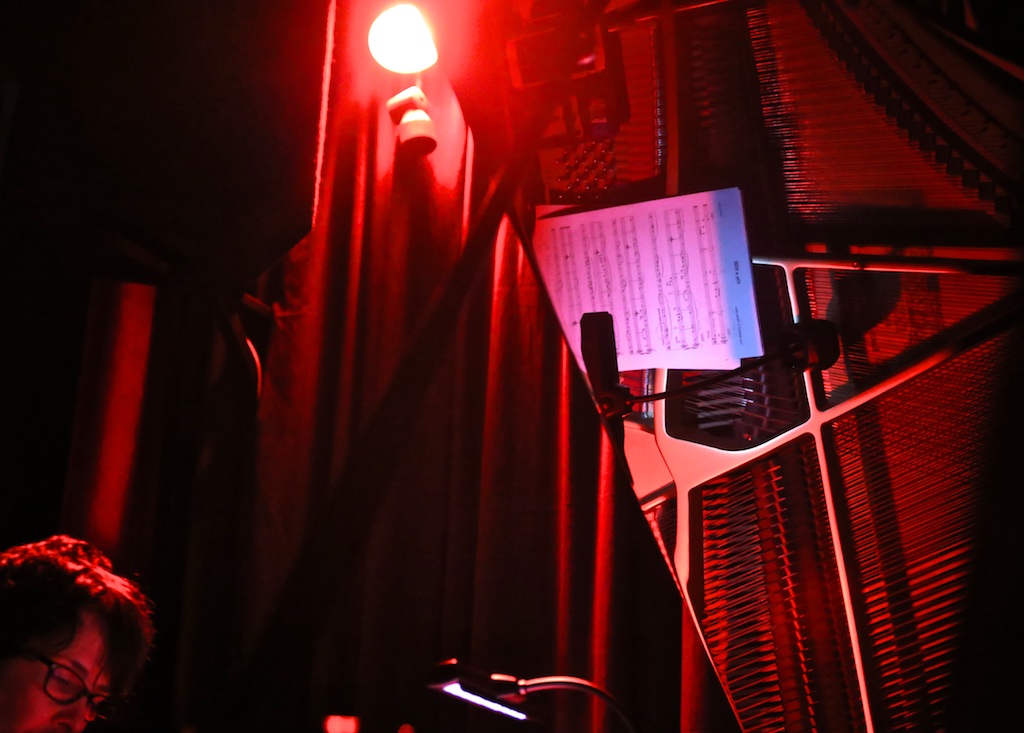
Keller, in particular, intrigued me, so I looked through the gig guide to see if she was playing elsewhere. My luck was in as she was leading an interesting trio at the Uptown Jazz Cafe in Fitzroy. The next night, was a warm one, and I walked to Fitzroy, pausing to eat street food on the way. Finally, I stumbled up the stairs to a very warm Uptown Jazz Cafe. The venue was not air-conditioned and ill-lit, but the gloom and the heat added to the ambiance. As the band set up, a shaft of dim orange light beamed on them, illuminating the trio as ghostly orange specters – enlarging and distorting their forms as it projected them onto a screen. The music bordered on avant-garde and the setting was therefore perfect. Andrea K (1)

The trio of piano, violin, and electric bass didn’t disappoint.  Keller’s serialist credentials were very much on-show as she spun out a filigree of wonderfully intricate patterns. At first, appearing to be repeating motifs, but a more careful listening revealing otherwise. Finely detailed changes to the underlying structure guided the ear into a finely wrought lace work of notes. In this, I detected the influence of Riley or other adventurous souls.  The violin and bass meeting the challenge, adding colour, texture, and melodic contrast (I didn’t catch their names). I had recently been listening to Terry Riley’s ‘Lazy Afternoon Among the Crocodiles’, so this gig was very pleasing to my ear. Andrea K

I saw other gigs during the week, but the standouts were those mentioned. Melbourne is a city of the arts and a very European styled city. It is therefore not surprising that Jazz flourishes there. I have traveled through many of the worlds great cities in the past year, but this city is as Jazz rich as the best. Andrea K (4)

Barney McAll: www.extracelestialarts.bandcamp.com + iTunes, Spotify etc

Julien Wilson: www.julienwilson.com (sample tracks and purchase) + iTunes etc

Andrea Keller:  www.andreakellerpiano.com.au/ + iTunes etc

Paul Williamson: paulwilliamson.bandcamp.com + iTunes etc