
The term inside outside has a specific meaning in Jazz theory. There are well-delineated subcategories like side-stepping or side-slipping and in the hands of jazz writers, it can simply imply the comfort with which a player moves between playing the changes and free improvisation within a tune. Then there is the where. The joy of entering a club as you descend a winding staircase and feeling your heart skip a beat as you cross the threshold. That particular inside is about belonging and it is the salt being rubbed into the wound of a deprived club-goer.
Inside is about the clubs, where the music has intensity and the physicality of the experience communicates directly; bypassing the mundane and teasing the senses one by one. The rawness brings everything straight to the heart and to the gut; the magic and the mistakes; it’s visceral, and you can feel the pulse beating against your body.
When the pandemic hit, clubs closed the world over and we wondered how we would survive. We were sound junkies suddenly deprived of our fix. We missed the warmth. We missed being able to whisper our enthusiasm to the stranger beside us as a phrase took our fancy. We missed the ‘hang’ with the musicians during breaks, and above all, we missed that moment when the band hit the pocket and an involuntary sigh escaped our lips. That blissful experience of bathing in refined sound.
We were lucky in New Zealand as we eradicated the first round of the virus swiftly and thereafter we lived in splendid isolation for much longer than most. It was a time of normal life, sans travel or travellers. It was a time when the clubs remained open and when local music was the only and best game in town. That freedom lasted for the best part of two years and with only minor interruptions. Overseas, the death knell of iconic clubs was grimly sounding out.
Then Omicron sneaked past the watchtower and took hold in the shadows. We paused, adjusted and looked outwards again. We are open to the world but the virus is the snake in the grass. It is back to normal and not back to normal because after the pandemic comes ‘the great forgetting’ as the young resume their lost lives and leave behind the silent ones. The cohort of the risk-averse, the older ones who are not yet ready to enter a subterranean venue. I am one of those.
The older you are the more likely you are to be immune-compromised (or have a partner who is). Having experienced live jazz since my youth I am doing it tough and I am not alone. For a while, I thought that I was an outlier, but one by one, friends have outed themselves. Jazz radio DJs, record producers, journalists and musicians; the older ones. As if admitting to a crime, they drop their voices and whisper that they haven’t been inside a jazz club for ages. Perhaps it’s the fear of being mocked by the young and brave?
The thing about music is that it flows like water, seeping through the cracks and finding new levels. It is the law of physics that sound will find a willing ear so all is never lost. And although the clubs are temporarily off-limits the outside venues beckon. Open-air festivals are being planned and there are numerous bars with outside seating. Places where a person can bask in the winter sun and idle away an afternoon. And as one door closes another opens so we follow new music as it pops up online. Find time to think and to write about music, disappearing behind noise-cancelling headphones; listening to the new with fresh ears and to the old as if hearing for the first time. Pushing hard against the listening boundaries. Listening deeper and hearing more.
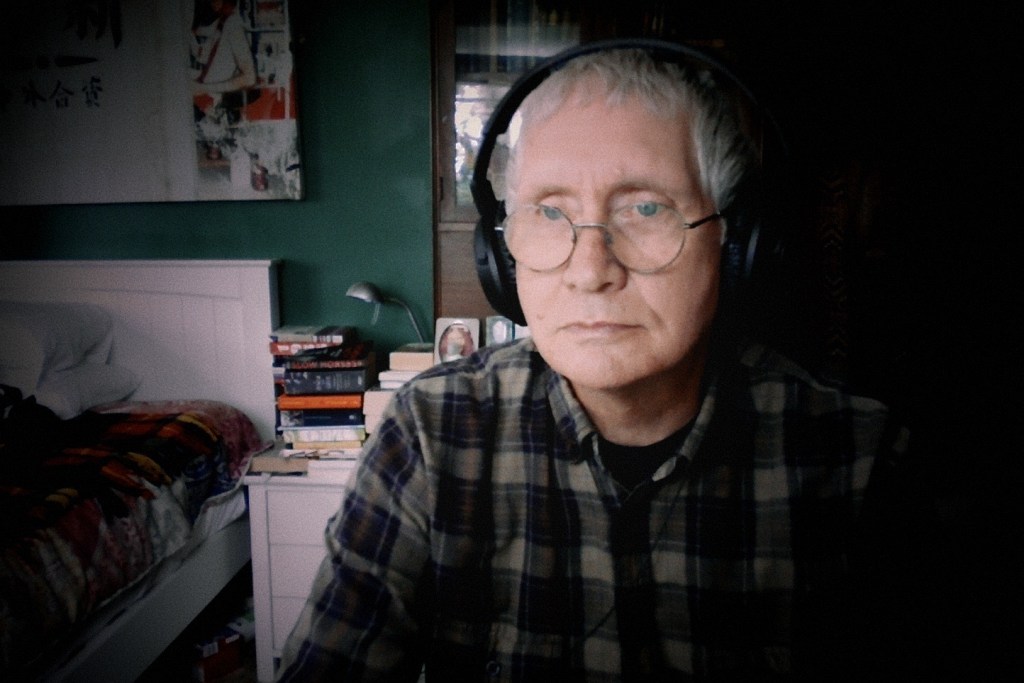
Despite missing live music, my life is music rich. Review copies pour into my inbox daily and live-streamed concerts vie for my attention. I scan Bandcamp for the edgier improvised hybrid offerings, conduct interviews with musicians and hang with them over lazy lunches, I write reviews, judge musical competitions and involve myself in musicians’ causes. Biding my time until it’s safe enough to head down a staircase again.
Footnote: Staying away from the upcoming CJC Wax///Wane concert with Lucien Johnson, Jonathan Crayford, Tom Callwood and Cory Champion will sorely test my resolve. I truly love that album and Lucian’s work. It’s my sort of thing and the musicians are quite extraordinary.
JazzLocal32.com is rated as one of the 50 best Jazz Blogs in the world by Feedspot. The author is a professional member of the Jazz Journalists Association, poet & writer. Some of these posts appear on related sites.


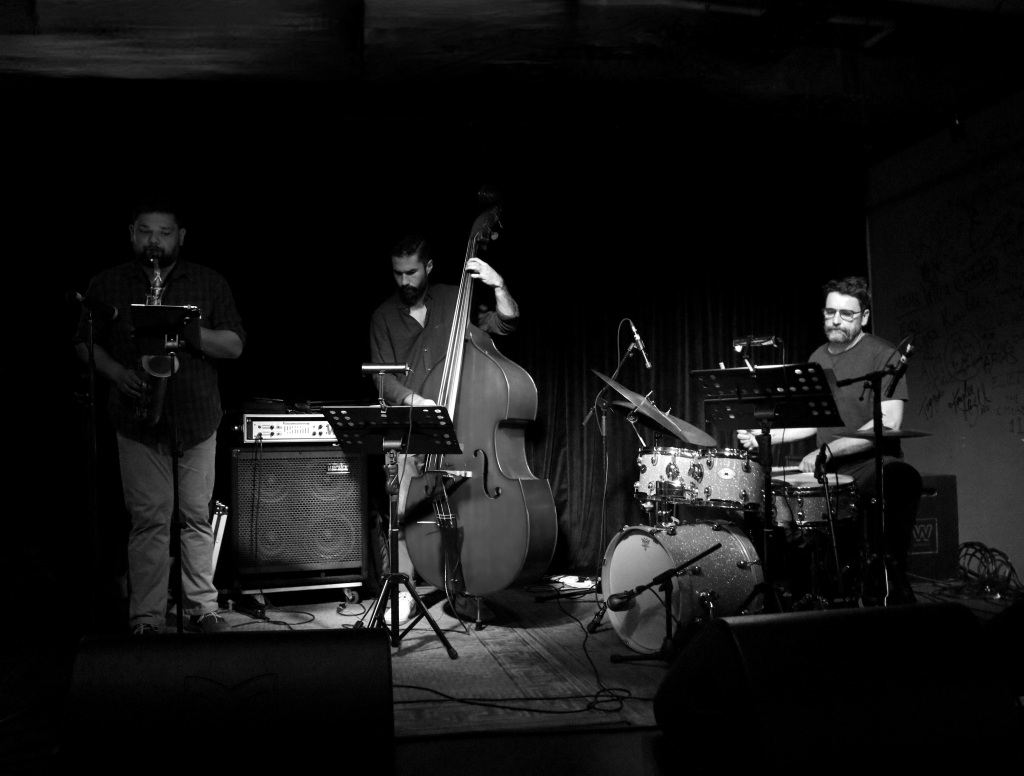
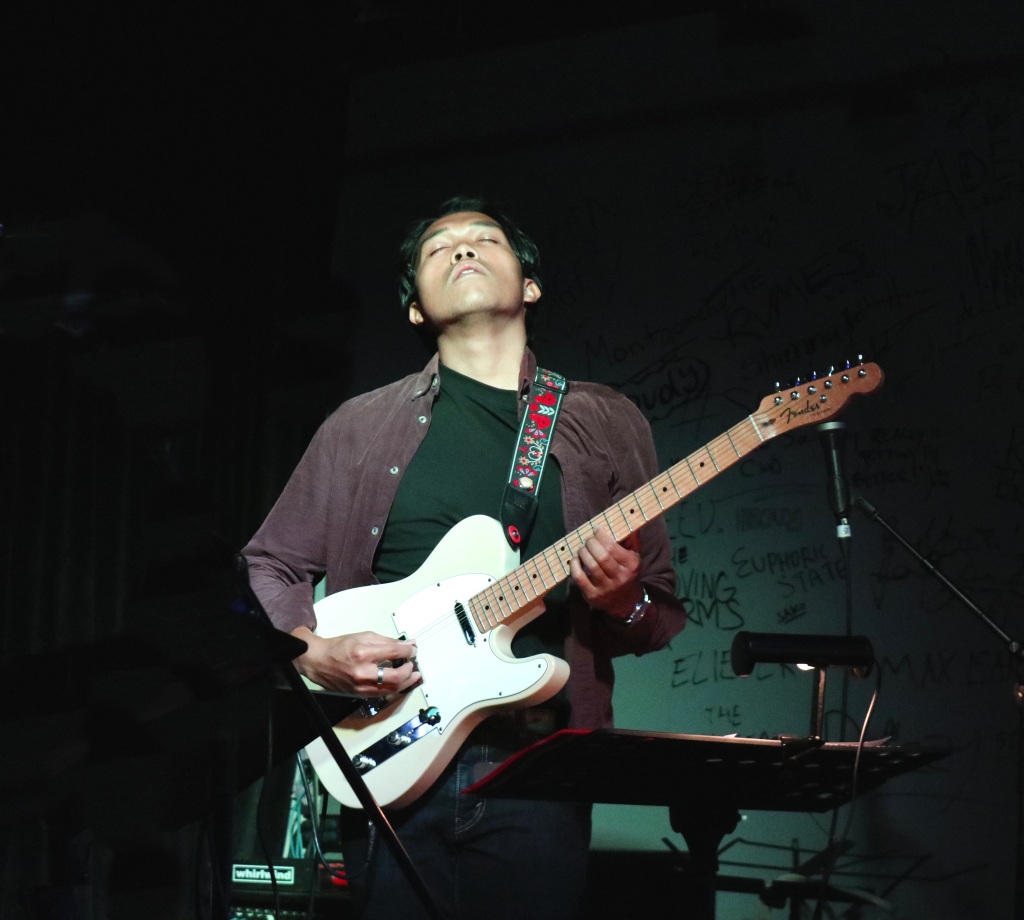
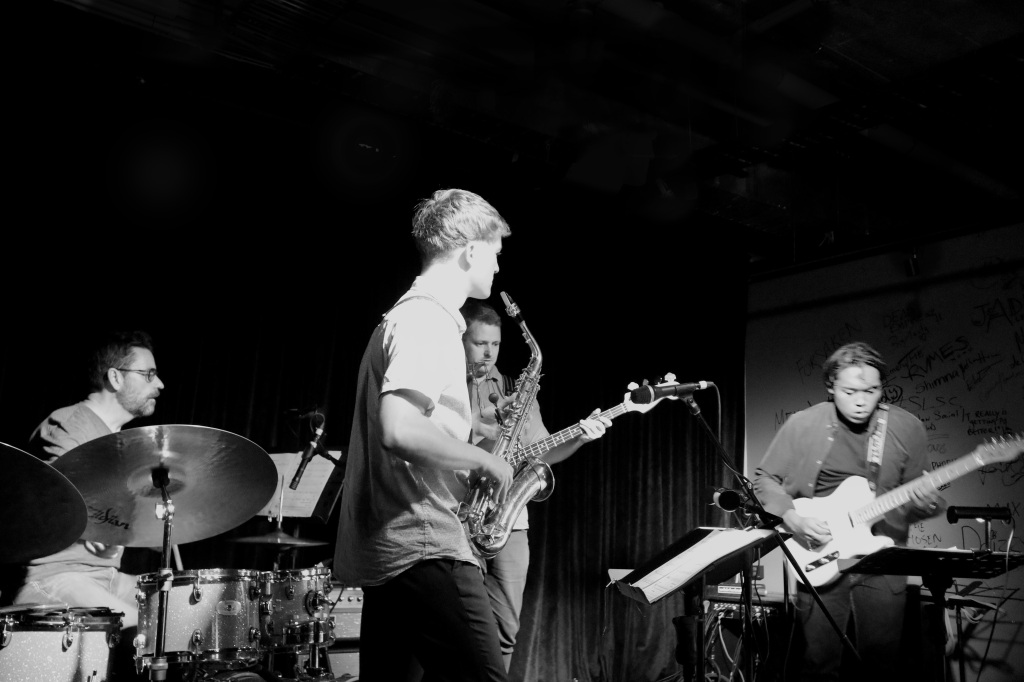

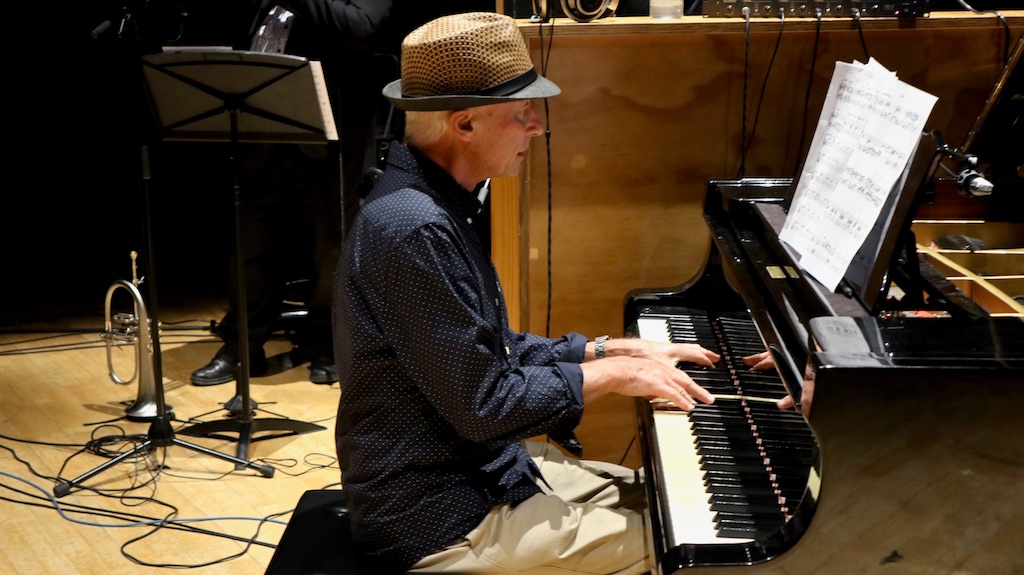
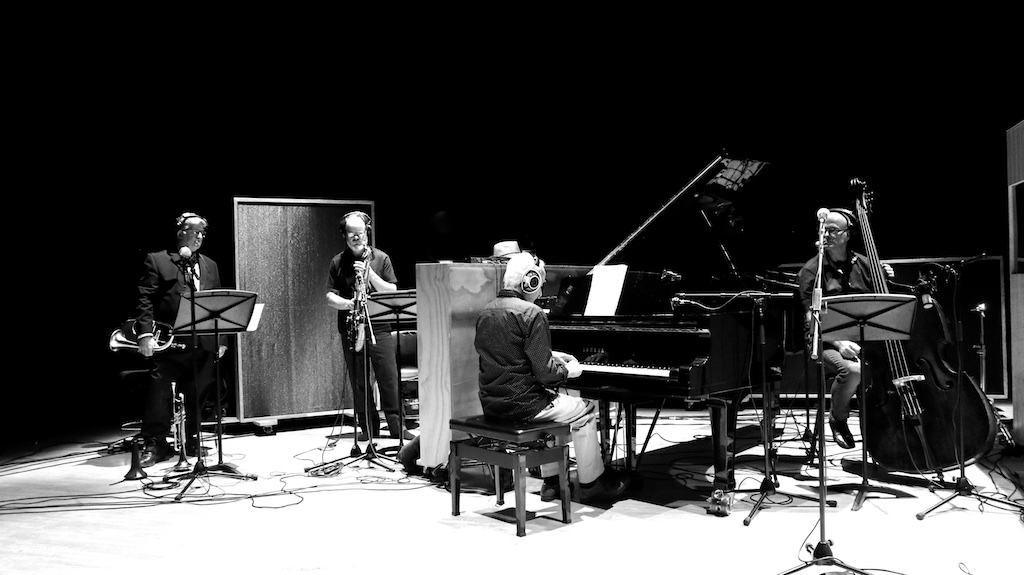
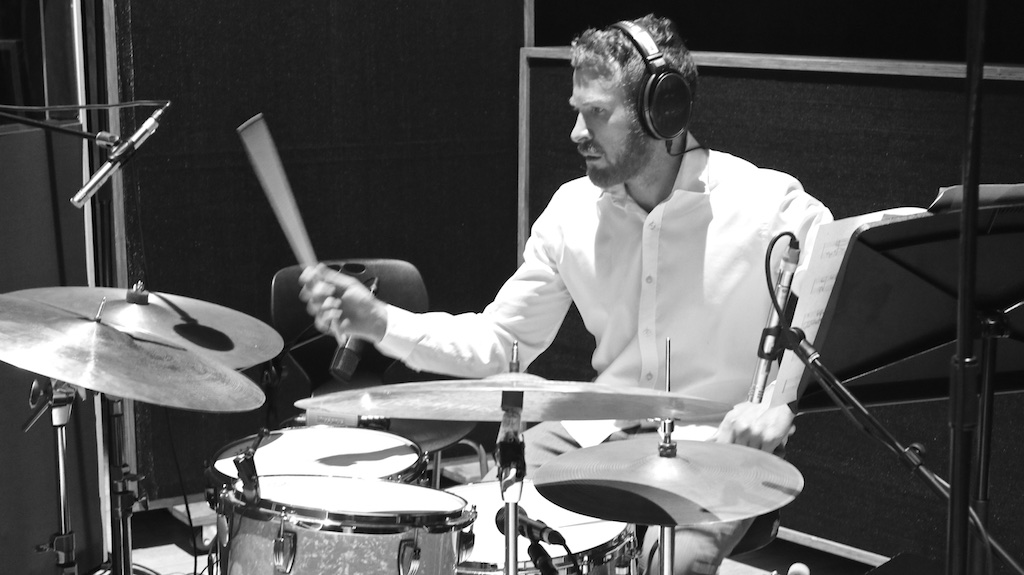
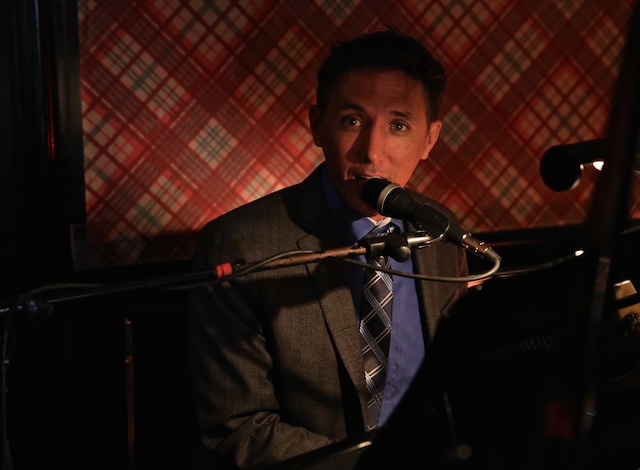 Dan Bolton is an Australian born, New York based musician, at present touring New Zealand. His first show was at the CJC (Creative Jazz Club) in Auckland. While singer, songwriters who accompany themselves on piano, are a firmly established tradition in Jazz, we see them on tour very rarely. Many Jazz vocalists (like Ella Fitzgerald) could accompany themselves well, but few choose to do so. A number of notable musicians mastered this skill, notably Nat Cole, Ray Charles, and Shirley Horn. Doing two jobs simultaneously is always harder than doing one and especially where vocals and piano are concerned. The energies and postures require careful coordination and I suspect that this is harder than accompanying yourself on guitar.
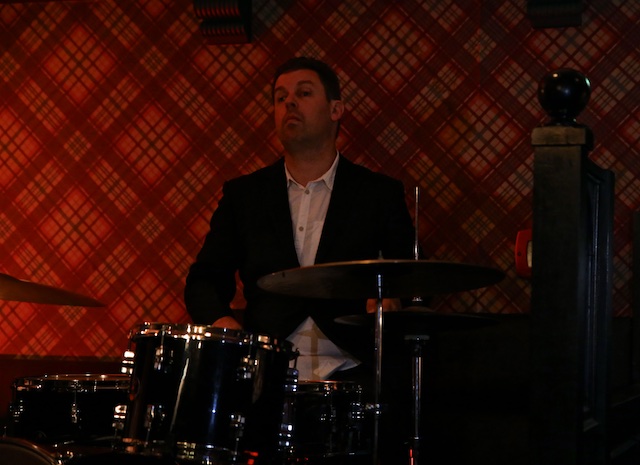 Bolton is unusual in that he composes tunes which feel modern, but in a style reminiscent of the Great American Songbook; many of his tunes, are not dissimilar from those which came out of Tin Pan Alley, having the vibe of Irving Berlin or Cole Porter. The melodies are catchy in a time honoured way and the lyrics often biting; sometimes capturing our post-millennial angst. Many of Bolton’s tunes centre on the age-old themes of love and loss, others sarcastically critique modern American life. All maintain their sense of originality, in spite of the above comparisons.
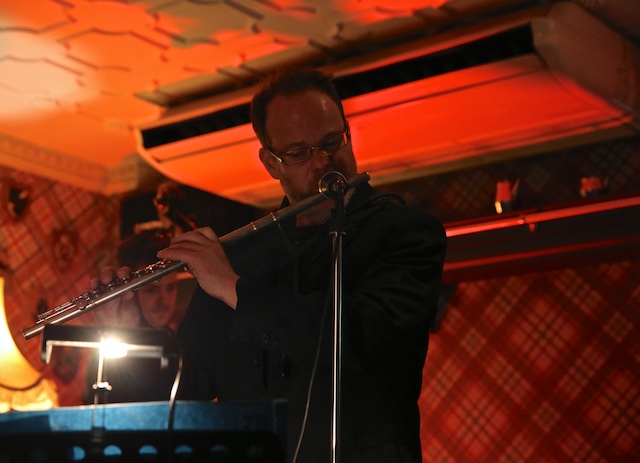 Travelling with Bolton is the perennially popular drummer Mark Lockett. Lockett, like Bolton, lives in New York, but for several months of each year, he travels as band-leader, (or as hired gun as in this case). Lockett was born in New Zealand and he always gets a welcome reception when he makes it back. Watch out on gig noticeboards for him. He has another tour coming up shortly and this time with an organ trio. On tenor saxophone and flute was Auckland’s Roger Manins, his swoon-worthy ballad chops manifesting in their full glory. Mostyn Cole featured on upright bass, a regular at the CJC and an able musician. We heard some tantalising snippets of arco bass from him – more of that, please.
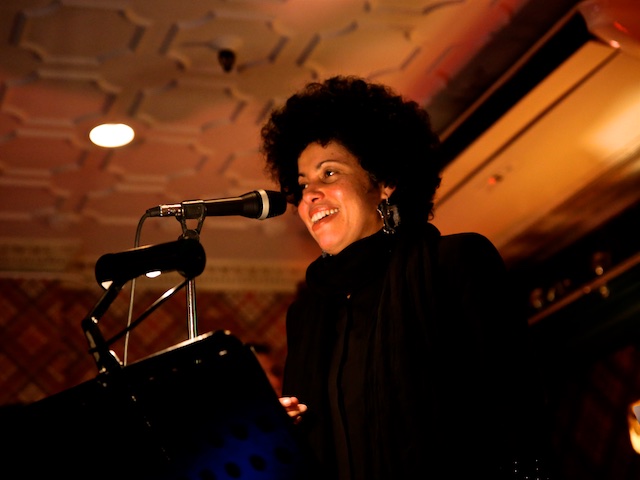 Last Wednesday saw the Venezuelan-born vocalist Jennifer Zea performing at the CJC. Her appearance was long overdue, the audience enthusiastic in anticipation of spicy South American Rhythms and the warm tones of the Spanish language in song form. When you look at where Venezuela sits on the map, you learn a lot about its music. Located in the northeast of South America, bordered by the Caribbean and by Brazil, positioned on a unique musical axis. Music blithely ignores the artificial barriers imposed by cartographers and politicians. Even Trump’s insulting wall could never be built high enough to stem musical cross-pollination. Music goes where people go, and remains as an echo long after they have moved on. Jennifer Zea is an embodiment of her country’s music; folk traditions, newer forms (Jaropo), Jazz, Soul, Bossa influences from Brazil and a pinch of Mambo, Salsa or Merengue.
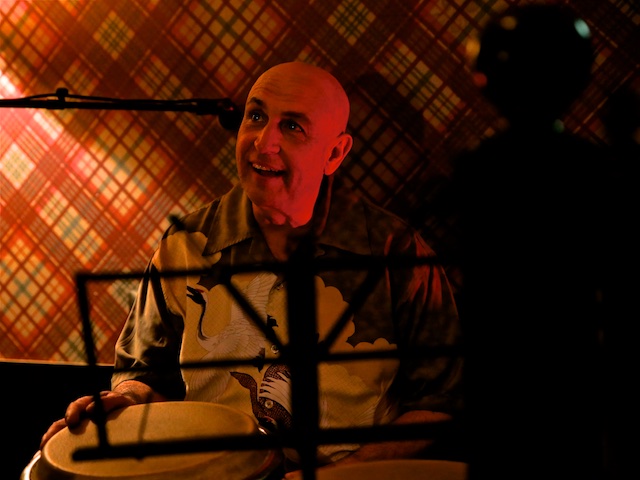 The Caribbean region is the prime example of musical cross-pollination; rhythms and melodies, vocal forms and hybrid harmonization, a constant evolution into new and vibrant forms while updating and preserving the discrete pockets of older folk music styles. A weighty tome titled ‘Music and the Latin American Culture – Regional Traditions’ makes two observations; the music of the Venezuelan region is mostly hot or vibrant (see the definition of Salsa) and there is a strong underlying tradition of shamanism (manifest in musical form). The hypnotic rhythms and chants remain largely intact according to Schecter. With percussionist, Miguel Fuentes backing her, Zea conveyed the compellingly hypnotic soulful quality of her traditional music to good effect.
 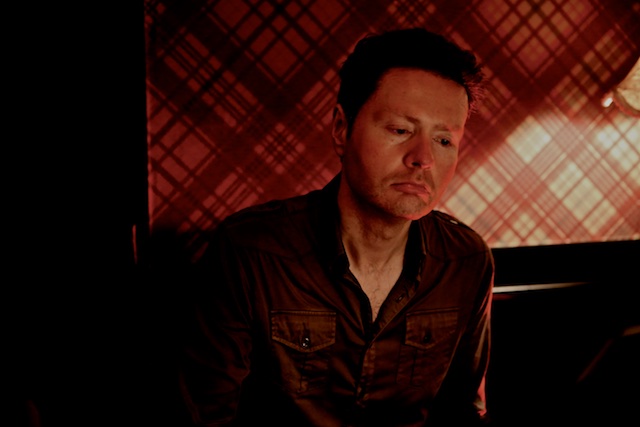 Fuentes was born in the USA but grew up in Puerto Rico. These days like Zea, he lives in Auckland. Music like this demands high-quality authentic latin percussion and that’s exactly what happened. Traps drums were not needed here. Regular Zea accompanist, Jazz Pianist Kevin Field was also in the lineup. Field plays in many contexts and his accompanist credentials are second to none. He has regularly worked with Zea and (like Fuentes) most notably on her lovely 2012 release ‘The Latin Soul’. If you have a love of Cubano or Caribean style music, grab a copy of this album. Even on straight-ahead gigs, I have heard Field sneak in tasty clave rhythms. If you want to hear cross-rhythms at their best – skillfully woven by Field and Fuentes, it is on this album. An added incentive are the compositions, mostly by Field and Zea (and Jonathan Crayford). On upright bass for this gig was Mostyn Cole, an experienced bassist now residing in the Auckland region.
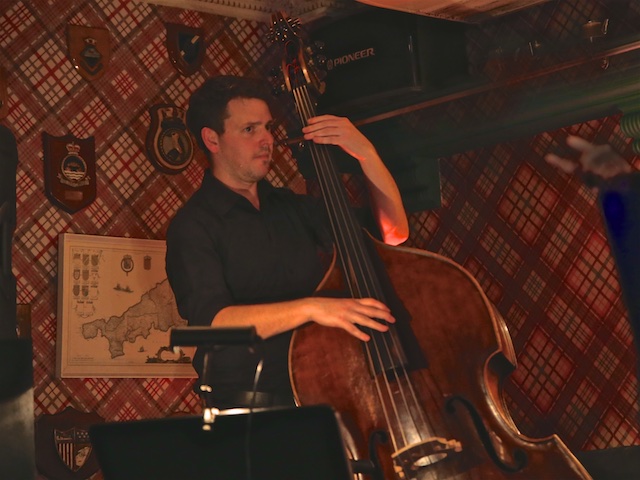 The gig featured some Zea compositions, three standards and to my delight some authentic Bossa. The Bossa tunes were mostly by the Brazilian genius Tom Jobim and sung in Portuguese (which is not her native language). Although Portuguese is the most commonly spoken language in Latin America, it is only the main spoken language of one country, Brazil. To learn Bossa she spent time with a teacher in order to understand the nuances and deep meanings. While respecting the Bossa song form she had the confidence to bring the music closer to her own Venezuelan musical traditions. Even her intonation was redolent of her region, unmistakably Hispanic South American.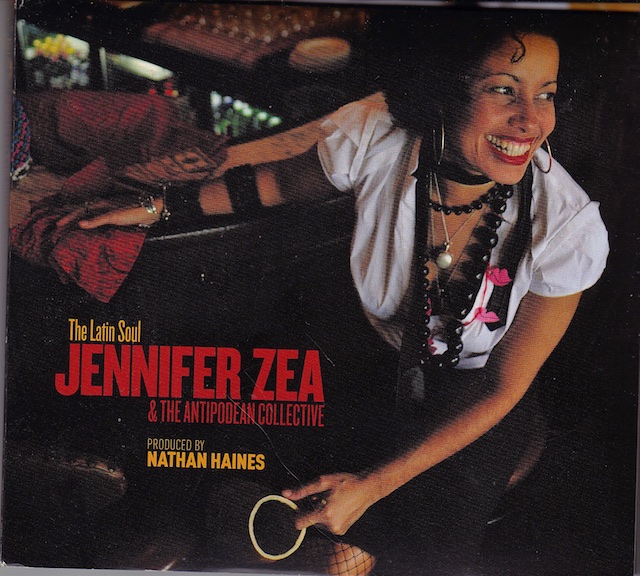
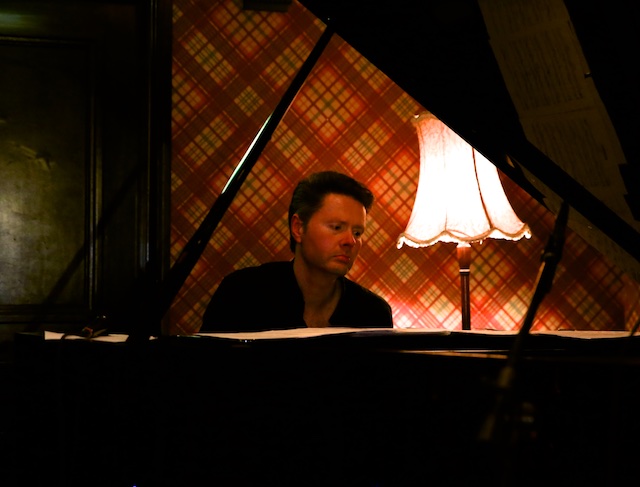 Kevin Field has for many years been regarded as a phenomenon on the New Zealand Jazz scene. A gifted pianist and composer whose approach to composition and harmony is strikingly original. When you listen to many pianists you can hear their influences, discern the pathways that led them to where they are. With Field, those influences are less obvious. I suspect that this independence, originality, makes it easier for him to strike out in any direction of his choosing. On his ‘Field of Vision’ album, he moved into uncrowded space, one occupied by very few Jazz pianists. It was Jazz without compromise but utilising grooves, rhythms, and melodies of other genres. The music contained distinct echoes of the disco/Jazz/funk era, crafting it carefully and forging a new post-millennial sound.
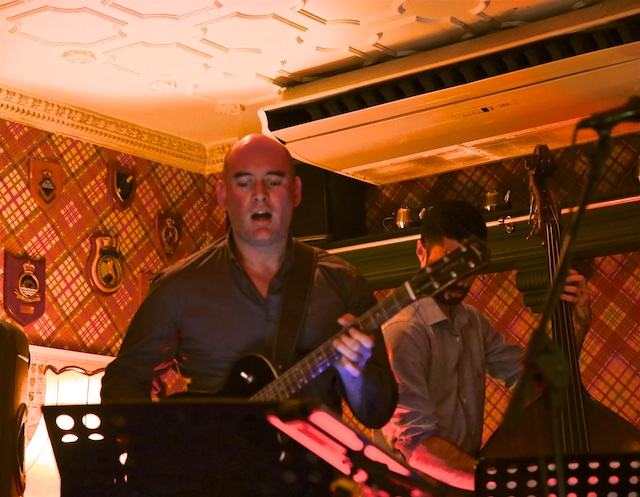 The tunes were all memorable and within a few listenings, you could hum the themes. This is not so common in modern Jazz and less so with music (like Fields) which retains its Jazz complexity. In Fields case, the clean melodic hooks do not come at the expense of harmonic invention. That is a tricky balancing act and one he achieves convincingly. His co-leadership of ‘DOG’ took him in a different direction again, but the same deftly crafted grooves astounded us. His recent album ‘The A-List’, was a further excursion into the disco/Jazz/funk realm. It is slightly tongue in cheek while still challenging the listener to think outside the square. Artists like this take the music forward, it is up to us to catch up.
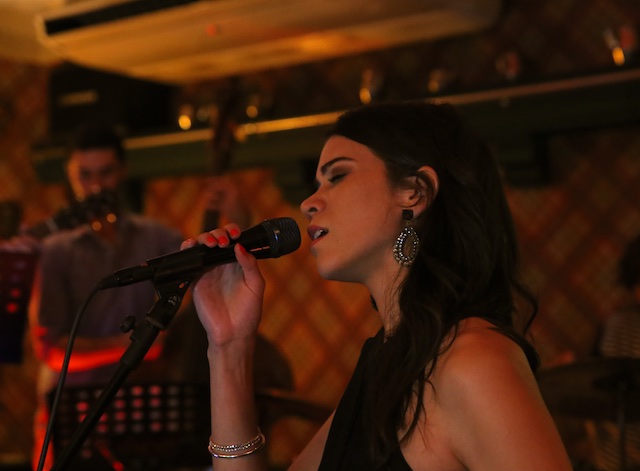 They played at the Wellington Jazz festival recently and for many Wellingtonians, this was their first exposure to the group. I saw that show and I immediately noticed how the familiar tunes had subtly changed. ‘Perfect Disco’ with its energised danceable funk momentum was recast as a duo piece. Field and vocalist Chaperon wowed them with that number. We also heard this duo version last week. Other familiar tunes had developed into profoundly interactive exchanges. The sort that can only occur between highly attuned musicians. This is where the guitar mastery and the deep listening of Nacey came into its own. His Godin guitar soaring with stunning clarity while Field reacted in kind, urging them further out with each challenge.
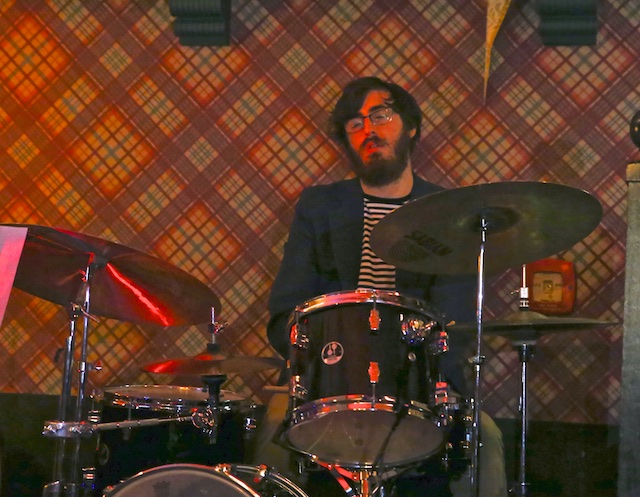 Again we see Thomas and McArthur doing what they do best. Working hard and rising to the challenge. Thomas laying down the tricky rhythms and while McArthur runs his bass lines. While pleasant to the ear, there is not doubt at all that these compositions required skill and concentration. It is on gigs like this that the musicians familiarity with the material and each other pays dividends. It was also nice to hear Chaperon on some new and old material. She is a real crowd pleaser – she looks great on stage and sings up a storm.
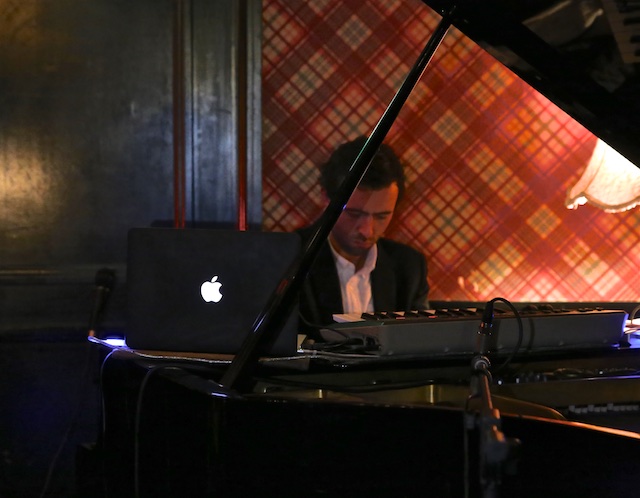 I can’t remember when I first became conscious of Polish Jazz, but after Tomasz Stanko, Poland was forever on my listening radar. After that, I would listen to Polish improvisers whenever I came across them, Wasilewski, Komeda etc, and all the more so when I discovered later in life that I was a quarter Polish. In light of the above, I was naturally interested when I came across an Auckland-based, Polish-born pianist Michal Martyniuk. He was standing in for Kevin Field at a Nathan Haines gig – around the time of “The Poets Embrace’ release. Since then I have seen him with various iterations of Haines’ bands but until last week, never at a gig where he was the leader.
 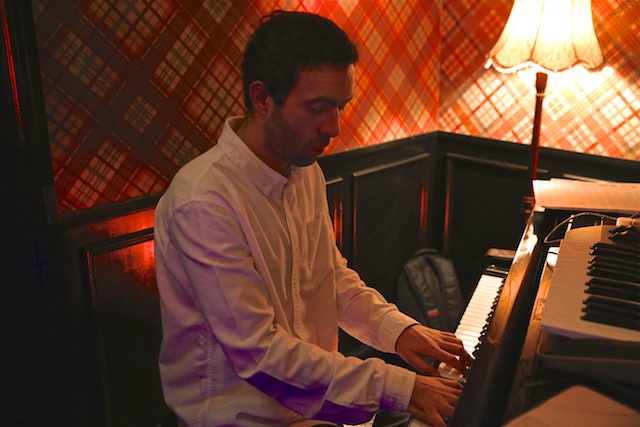 It is an oft-debated topic, but I sometimes hear references to time and place in original music. After hearing Martyniuk I could identify his northern European influences. When I asked the pianist about the artists he most admires, he quickly identified Lyle Mays and Pat Metheny (also Weather Report plus Miles and Herbie). The Metheny/Mays reference is definitely evident but sifted through a Eurocentric filter. Mays, although influenced by Evans never sounded like a typical American pianist. Martyniuk’s compositions and performance contain all of the hallmarks of modern Euro jazz, a sound I hear in the Alboran Trio, Wasilewski and younger pianists like Michal Tokaj. A warmer sound than the Scandinavian pianists but as light filled and airy. There is a beauty to Martyiuk’s playing, a stylistic identity. For such a young pianist to have located this special sound is impressive.
 Something that many post-millennial Jazz musicians avoid, is evoking a sense of beauty. I can understand that because it must be done well or not at all. It is the territory of balladeers like Ben Webster and the territory of artists like Metheny. This was done well. The compositions were cleverly constructed around developing themes and with nothing was rushed, allowing melodic inventions to manifest. The tunes were also cleverly modulated, subtly amping up the tension to good effect at key points. Like Bennie Lackner, he used electronic keyboards to enhance or emphasize a phrase, but very sparingly.
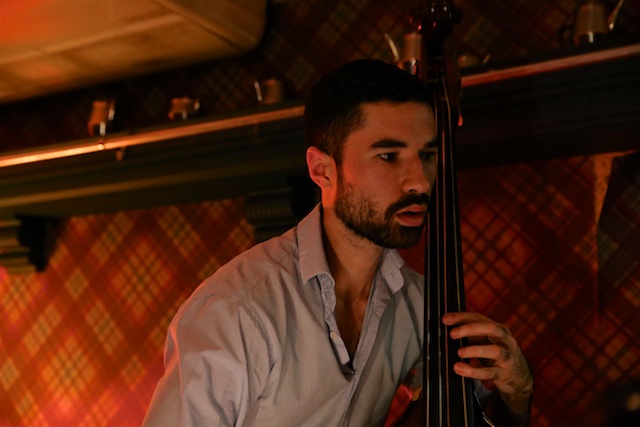
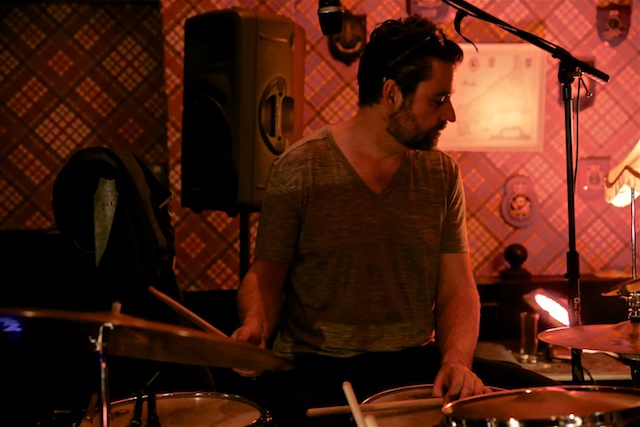 Again we see a musician deploying a top rated rhythm section to good advantage. With McArthur and Samsom behind him, he again showed wisdom. He worked with them and they gave him plenty in return. Although we often see this particular bass player and drummer in diverse situations, they appeared very comfortable here. The overall effect was that of interplay and cohesion.
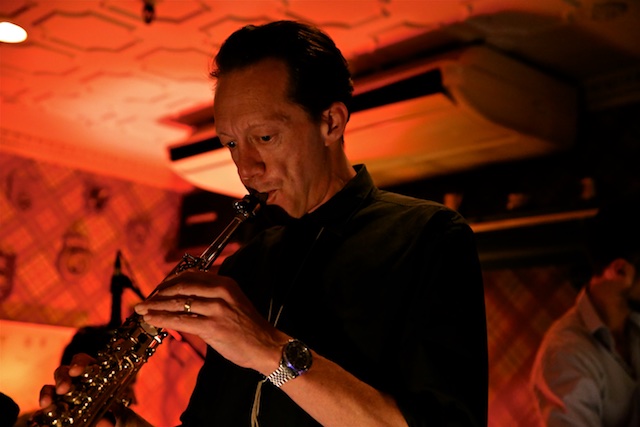 Martyniuk came to New Zealand around ten years ago and he attended the Auckland School of Music. Along with producer Nick Williams, he is soon to release a Jazz infused Soul album which will feature internationally renowned artists like Kevin Mark Trail, Nathan Haines, Miguel Fuentes and others. Judging by the huge audience at this gig his future looks very rosy indeed. The Jazz club turned away dozens of attendees in the end. A good problem to have.
 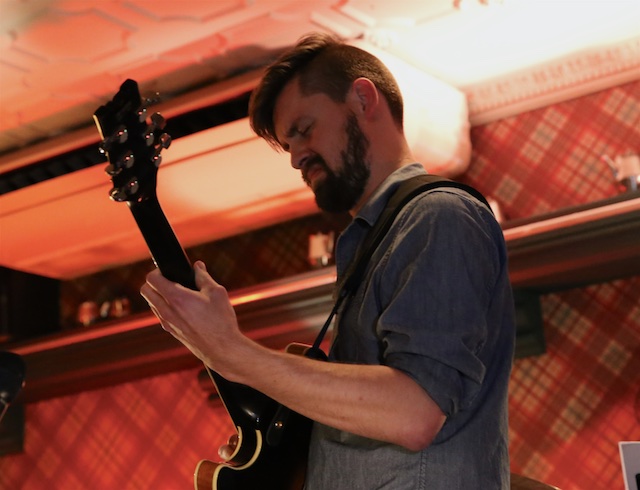 When I started attending the CJC, I heard Peter Koopman quite often. He was always impressive, but never a showy guitarist. His approach matched his quiet demeanor, an easy-going manner obscuring a real determination to excel at his craft. Before long he moved to Sydney and although the local Jazz scene laments this musicians rite of passage, we also know it is the right thing. At best, these offshore journeys produce the Mike Nocks and the Matt Penmans, and we all benefit from that.
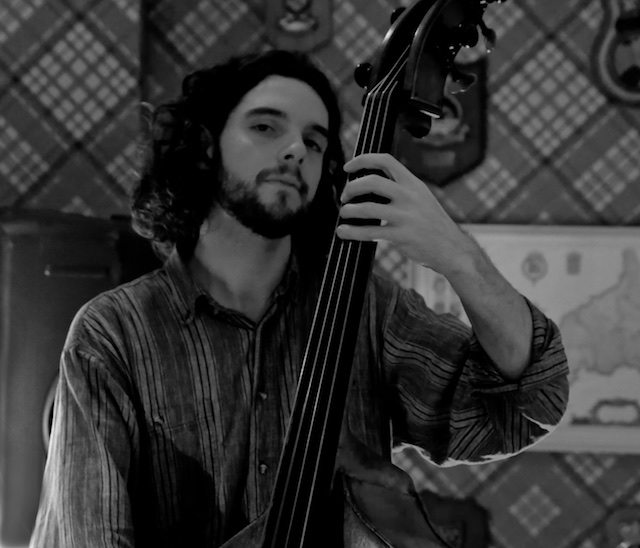 We have seen him back in New Zealand a few times during the last five years, but this is his first visit leading a guitar trio. As anticipated, we experienced a more mature Koopman, his guitar work showcasing well-honed skills. Australia is a merciless testing ground for improvising musicians and especially so for guitarists. Working in the same scene as Carl Dewhurst or James Muller, and holding your own, the proof of the pudding. In 2014 Koopman was placed 3rd in the Australian National Jazz Awards, which are held at Wangaratta each year. These awards are fiercely contested and that is no small accomplishment.
 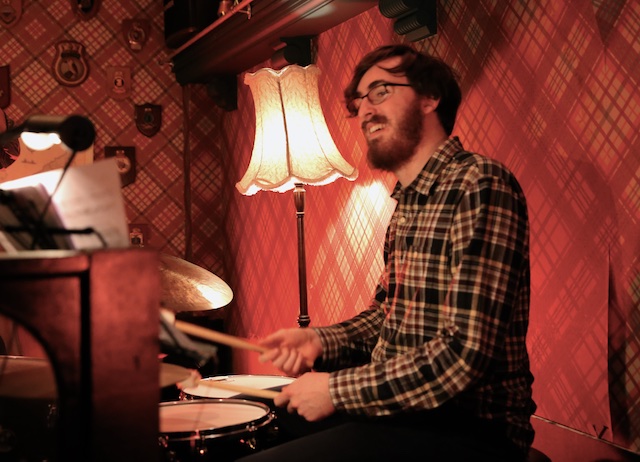 The Inner Westies Trio for the New Zealand trip was Peter Koopman (guitar), Max Alduca (bass) and Stephen Thomas (drums). The guitarist and Bass player from West Sydney, the drummer from West Auckland. Alduca is a compelling bass player, and a drawcard on his own. He often includes a touch of tasteful arco bass in his performance. I last saw him when he toured with the ‘Antipodeans’, an innovative young ensemble, populated with musicians from three countries. Alduca made a hit then and reinforced our positive view of him this night. He has a number of gigs about Auckland aside from the CJC gig. A player bursting with originality and with a notable way of engaging with audiences. Nice to see him back and especially in this company.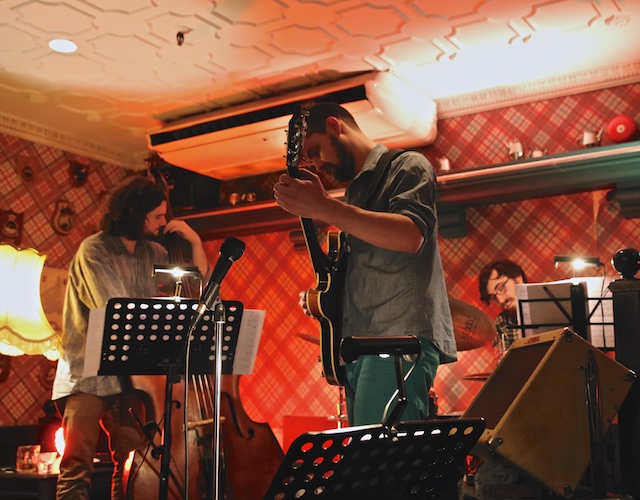
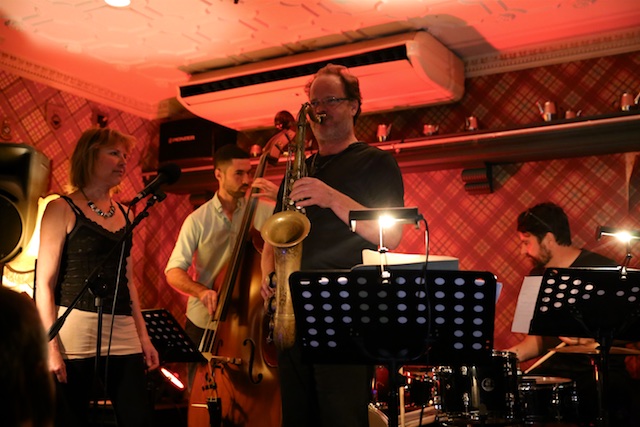 The Joni Mitchell/ Charles Mingus project is always ripe for reevaluation and I’m glad that Caro Manins was the one to explore it again. The connection between Joni and Jazz experimentalism runs deep. Rolling Stone Magazine figured it out early on, describing her as a ‘Jazz savvy experimentalist’. While the connection is obvious in her 1979 ‘Mingus’ album the move toward a freer music and towards harmonic and rhythmic complexity began earlier in the mid 70’s. Initially coming up through the American folk tradition, she gradually embraced a different style. She would later say, “Anyone could have written my earlier music, but Hejira (and later albums) could only have come from me”. From the 70’s on, she utilised her own guitar tunings and often incorporated pedal point, chromaticism, and modality in her compositions. If you look at her later musical collaborations, names like Jaco Pastorius, Herbie Hancock, and Wayne Shorter stand out.
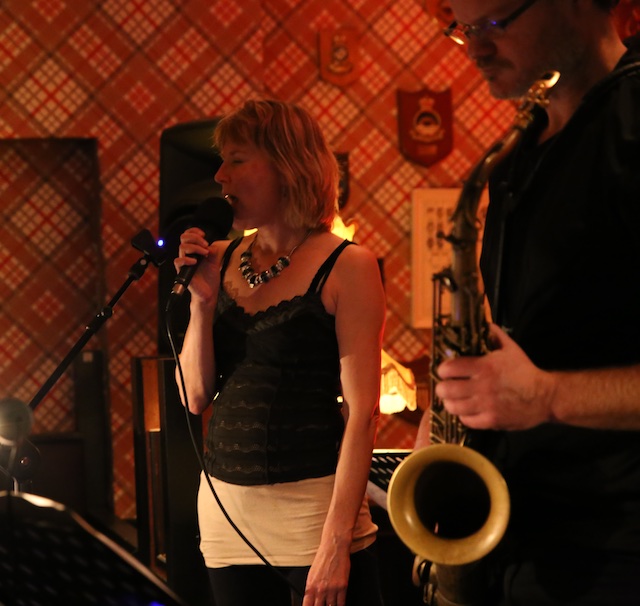 To her amazement at the time, a dying Charles Mingus asked Joni to call by. He told her that he had written a number of songs for her. Mingus passed before the completion of her project, but he heard all of the tunes except ‘God must be a Bogey Man’. Her ‘Mingus’ album followed soon after. “It was as if I had been standing by a river – one toe in the water. Charles came along and pushed me in – sink or swim”.
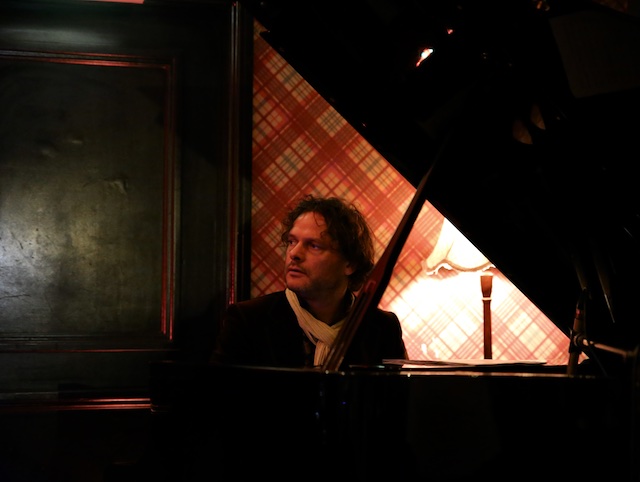 The project deserved a good lineup and it got one. Caro Manins, Roger Manins, Jonathan Crayford, Cameron McArthur and Ron Samsom. Crayford was especially interesting on this gig. His abstract explorative adventuring replaced by rich traditional voicings – his solos a history lesson; from locked hands chord-work to impressionistic delicacy. All of the musicians were respectful of Joni’s body of work and they understood that the best way to honour her legacy was by interpreting her work honestly and imaginatively. Not every tune came from Joni’s ‘Mingus’ album but all followed the Joni/Mingus/Jazz theme.
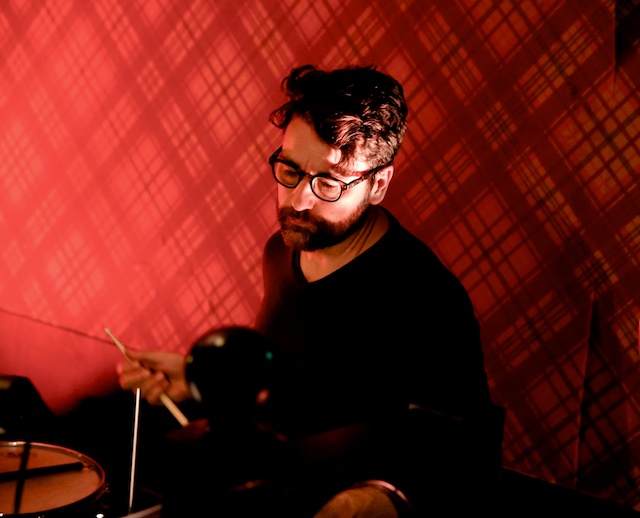 The gig was very well attended (no surprise there) and the audience enthusiastic. This was a CJC (Creative Jazz Club) event and it took place at the Albion Hotel on 29th June 2016. Caro Manins (leader, arranger, vocals), Jonathan Crayford (piano), Roger Manins (tenor saxophone), Cameron McArthur (Bass), Ron Samsom (drums, percussion).
 Thanks to Rodger Fox and the CJC management we were lucky enough to see five times Grammy nominee, Jazz vocalist Karrin Allyson in our Auckland Jazz Club last Wednesday night. Seeing an artist like this in a concert hall is one thing; seeing her in the warm intimate surroundings of a small Jazz club and just a metre away is quite another. Always a sucker for quality Jazz vocalists I first heard her in 1992 (the album ‘I Thought About You’ was the first of hers I purchased). On the basis of her recorded output, I booked for both the CJC gig in Auckland and the Wellington Jazz Festival concert. The flights between these cities are surprisingly affordable when you book in advance, and these opportunities don’t come around often when you live in the South Pacific.
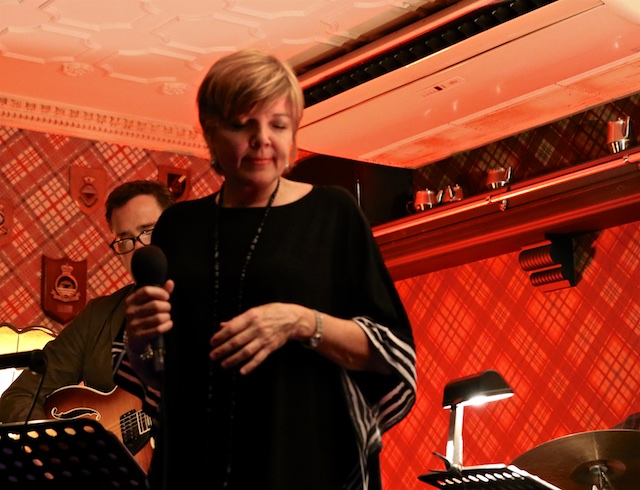 Following her 1992 release further albums came out and by the time ‘Ballads: for Coltrane’ and ‘In Blue’ were released there was no mistaking it. This was an important vocal interpreter. Her voice has particular qualities, an attractive smoky veneer, but then there’s that extra something. A sense of shared intimacy, a way of interpreting lyrics in an original way while still paying tribute to earlier interpreters. Her version of ‘O Barquino’ or ‘Double Rainbow’ (both by Jobim) immediately brings to mind the fabulous Elis Regina. Her ‘West Coast Blues’ conjures up Wes Montgomery just as much as the instrumentalists. She scats in ways that adds value to the narrative content of the song, never overdone and always wonderfully inventive. It came as no surprise, therefore, that she could conquer an audience in a heart beat.
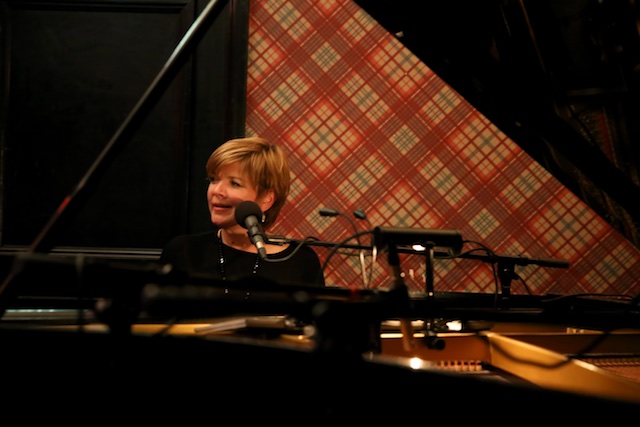 From the first vocal number, Allyson teased the audience, turning the lyrics into a conversation. Her set list spanned her Concord recordings including her recent release ‘Many a New Day: Karrin Allyson Sings Rogers & Hammerstein’ (When I think of Tom/Hello Young Lovers). Everything she performed was extraordinary but when she moved to the piano and accompanied herself on ‘Bye Bye Country Boy’ I was especially delighted. For some unaccountable reason, few vocalists interpret Blossom Dearie and more’s the pity. Dearie was a true original and a fiendishly clever Jazz vocalist. Her voice had a deceptive depth if you listened properly and like Allyson her ability to communicate was perfectly honed. It is fitting that Allyson should tackle Blossom Dearie as she is able to convey the same wry humour and wrap it up in a very attractive vocal package. She was simply killing in her interpretation.
 Accompanying Allyson was the Tom Warrington trio. Although it is five years since we saw them last, they have been regular visitors to New Zealand thanks to Fox. Tom Warrington is a superb bassist, having worked with everyone from Peggy Lee to Stan Getz. His list of credits is staggering. Formerly based in LA, where he was constantly in demand and no wonder. The choices underpinning each note he plays are beyond caveat. His musicality, teaching and compositional skills of the highest order. Today he lives a quieter life in rural New Zealand. When you hear his bass lines, and especially during a ballad, you recall the classic piano-trio bass players. Loading each note with meaning and carrying as much weight as any chordal instrument. Warrington has released four superb albums with this trio and all are highly recommended.
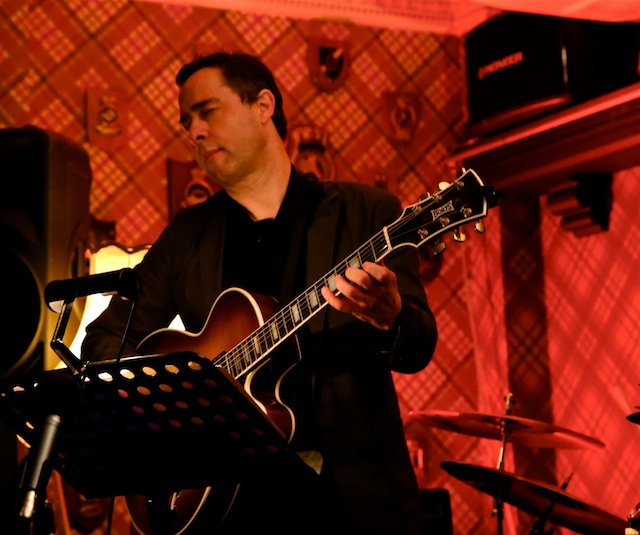 On chordal duties was Larry Koonse, playing a lovely hollow body Borys guitar. An impressive guitarist and a stalwart of the LA Jazz scene. Again, he is widely recorded, also releasing a number of albums under his own name. In many ways, Koonse encapsulates the best of the pre-millennial guitar tradition. That said, his fresh approach to tunes is also very much evident. His voice leading is a masterclass; dissonant/consonant inversions that have more bottom than most guitarists can muster in a lifetime and a gorgeous warm tone which lingers in the memory long after the gig. This, together with his other skills, makes him the perfect accompanist for a vocalist. When he played ‘Bolivia’ (Cedar Walton) with the trio, it took on the urgency and excitement that the tune demands. On ‘Whisper Not’ (Benny Golson) he extracted unalloyed beauty. I have known Larry for a decade and speaking to him after the gig, I complimented him on those tunes. At that point, my mouth raced way ahead of my brain and I said, “that was ‘Speak Low’ wasn’t it”? That fact that my slip of the tongue had accidentally come up with an exact antonym of ‘Whisper not’ made his day.
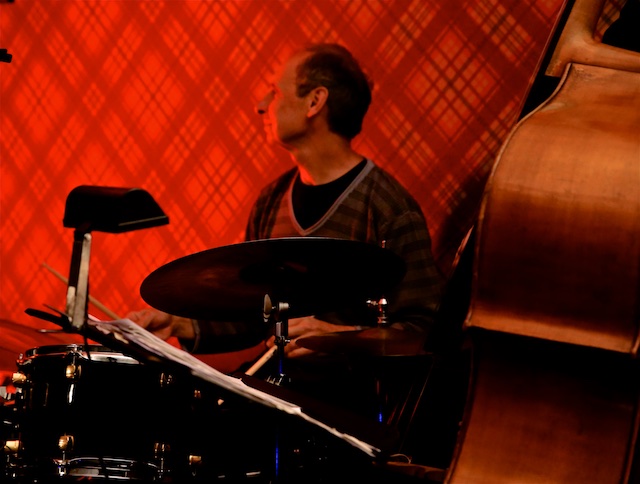 Last but not least is the Warrington Trio drummer Joe La Barbera. No one needs reminding of his long list of credits and impeccable credentials. As Warrington said during the introductions. “As everyone knows, Joe La Barbera was in the last Bill Evans trio. This puts us in some rarefied air”. Along with Marc Johnson, he breathed new life into that trio. While rightly famous for his superb drum work with Evans, he is a multi-faceted drummer; having also worked in avant-garde settings and with medium to larger sized ensembles such as ‘The West Coast All Stars’, ‘The Woody Herman Band’ and with ‘Kenny Wheeler’. He has often worked with famous vocalists such as Tony Bennett and Karrin Allyson. La Barbera has an inclusive quality that enhances bass and guitar but never overshadows them. When he solos, it is to the point. His stick and brush work add subtlety and texture – the effect always jaw-dropping. It is easy to see why he is so much in demand. A musical drummer who gives so much while working so hard to support the others.
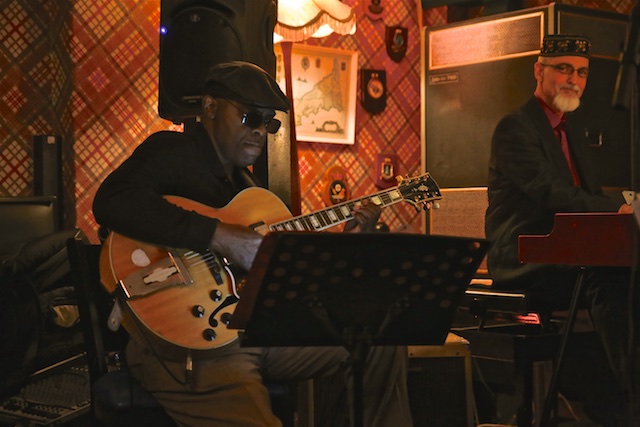 Auckland spoils us with long runs of clement weather, but when winter hits we suffer. Having effectively avoided any meaningful autumn we suddenly plunged into a week of cold wet days. There was no better time for the Michel Benebig/Carl Lockett band to arrive. As we grooved to the music, a warmth flooded our bodies within minutes. Nothing invokes warmth like a well oiled B3 groove unit and the Benebig/Locket band is as good as it gets. The icing on the cake was seeing Shem with them. A singer with incredible modulation skills and perfect pitch, able to convey the nuances of emotion with a casual glance or a single note. The way she moves from the upper register to the midrange, silken.
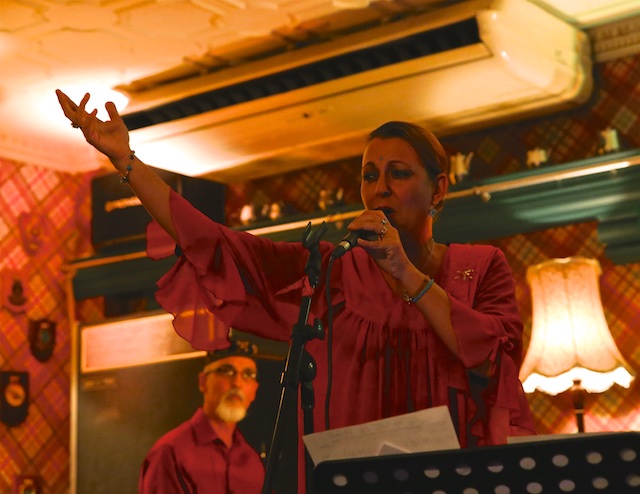 Michel Benebig has been travelling to New Zealand for years, and his connection with the principals of the UoA Jazz school has been a boon for us. He generally brings his partner Shem with him, but last time work commitments in her native New Caledonia kept her at home. Michel just gets better and better and the way his pedal work and hands create contrasts and tension defies belief. It is therefore not surprising that Michel attracts top rated guitarists or saxophonists to his bands. The best of our local groove guitarists have often featured and a growing number of stand-out American artists (see earlier posts on this band). Of these, the New York guitarist Carl Locket is of particular note. I first heard Lockett in San Francisco four years ago and he mesmerised me with his deep bluesy lines and time feel. Although comfortable in a number of genres, he is the ideal choice for an organ/guitar groove unit.
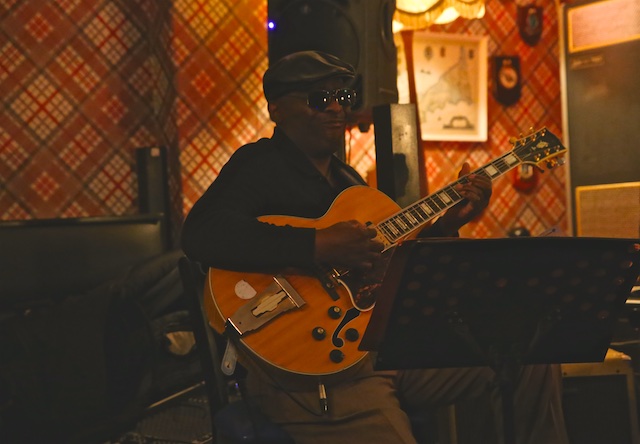 The band played material from their recent album (mostly Benebig’s compositions) and a few standards. There were also compositions by Shem Benebig. Their approach to arranging standards is appealing – numbers like Johnny Mandel’s ‘Suicide is Painless’ are transformed into groove excellence. We heard that number performed at the band’s last visit and the audience loved to hear it repeated. This visit, we heard a terrific interpretation of ‘Angel Eyes’ (Matt Dennis). I confess that this is one of my favourite standards (Ella regarded it as her favourite ballad). Anita O’day performed it beautifully as did Frank Sinatra and Nat Cole. The only groove version I can recall is the relatively unknown Gene Ammons cut (a bonus number added in later years to his ‘Boss Tenor’ album with organist Johnny ‘Hammond’ Smith). That version took the tune at a very slow pace, so slow in fact that you initially wondered if Ammons had nodded off before he came in. It was wonderful for all that (who can resist Ammons).
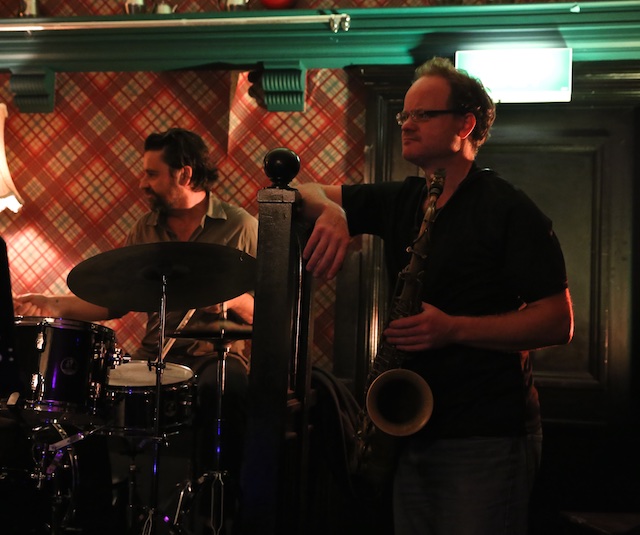 The band began the tune at a slow pace (but not as slow as Ammons), then once through, picking up the tempo, the band settling into a deeper groove, drummer Samsom and the guitarist really locking together, giving the Benebig’s room to create magic. That locked-in beat is often at the heart of an organ-guitar unit and when done well it adds bottom to the sound. Locket’s style of comping is the key to that effect, the entry point for the drummer, the way the guitarist lays back on the beat and comps in a particular way. Samsom heard and responded as I knew he would. He is a groove merchant at heart. On tenor saxophone, Roger Manins was on home turf. Dreamily caressing the melody before his solo.
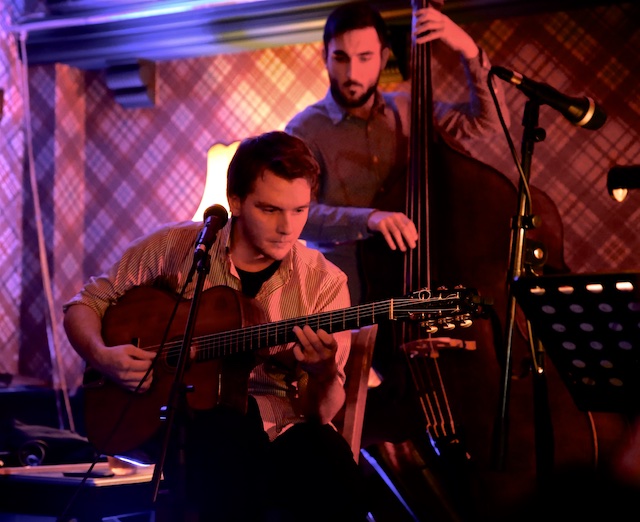 This is the second gypsy swing project at the CJC in four months. The last gypsy gig brought us Wellington band Black Spider Stomp. This time, we experienced the local variant. Wellington is arguably the home of New Zealand Manouche, but it definitely exists around Auckland. Thanks to Caro Manins (La Luna) and Misha Kovalov we feasted on catchy melodic tunes, marvelled at their hard-swinging lines. ‘Twistin the Swing’ and ‘La Luna & the Gadjos’ worked their magic and swing, they certainly did. It doesn’t matter what your Jazz preferences, I defy anyone to keep their feet still during a spirited Manouche gig.
 This is a music that stirs heart and limbs, a holiday from the cerebral manifestations of improvised music. It makes you feel good and the desire to move with it is overwhelming; that is its charm. I recall a recent discussion with Roger Manins about the diversity of Australian improvised music and he said this. “learning to play in really diverse situations is important. It is a feature of the Sydney scene. One minute the musicians are playing in an avant-garde ensemble, then straight ahead and the next minute playing Trad or Manouche”. For developing musicians, learning to swing in bands like this is invaluable, whatever their eventual calling. It was, therefore, good to see up and coming younger musicians in these lineups.
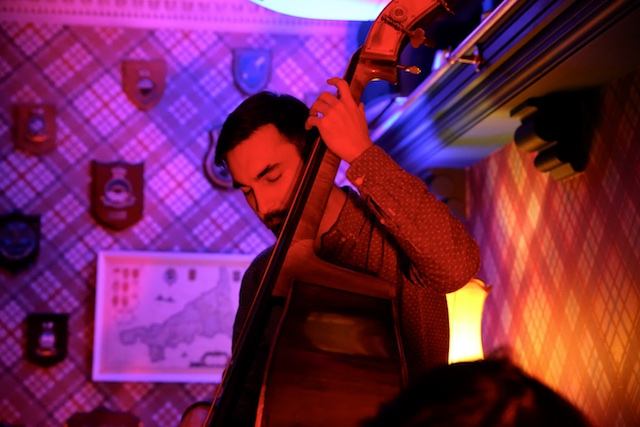
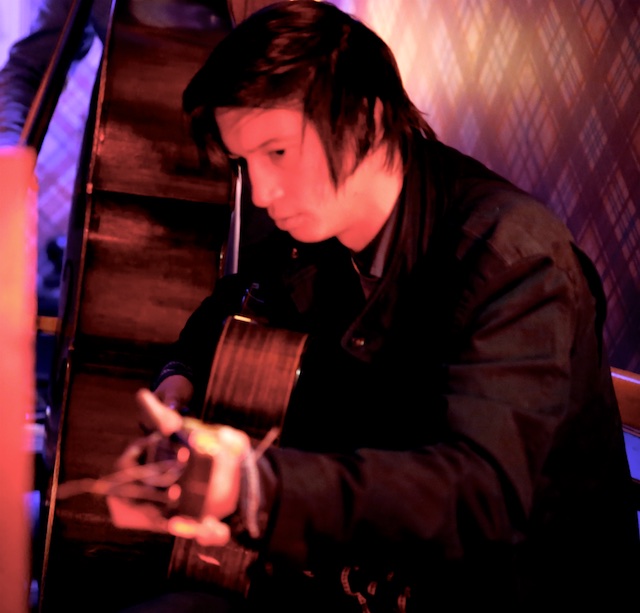 The first set was ‘Twistin the Swing’. A very tasty quartet led by the ensemble leader, composer/guitarist Misha Kovalov. The group featured two Manouche guitars, an upright bass, and a reeds player. Kovalov was a leader in every sense of the word, virtuosic in an almost offhand way and oozing good-natured charm. He made us smile and he made our feet tap; what more could you want in a Manouche leader. This was a hybrid kind of Manouche, as many of the latter-day manifestations are (a perfect example is Lagrene playing Stevie Wonders ‘Isn’t She Lovely’). We heard some Django Reinhart compositions, a familiar sounding Russian tune (whose name I can’t recall but it was a total riot) and a lot of Kovalov’s own compositions. These compositions varied in style between 40’s swing and acoustic blues; sometimes with crazy quotes embedded.
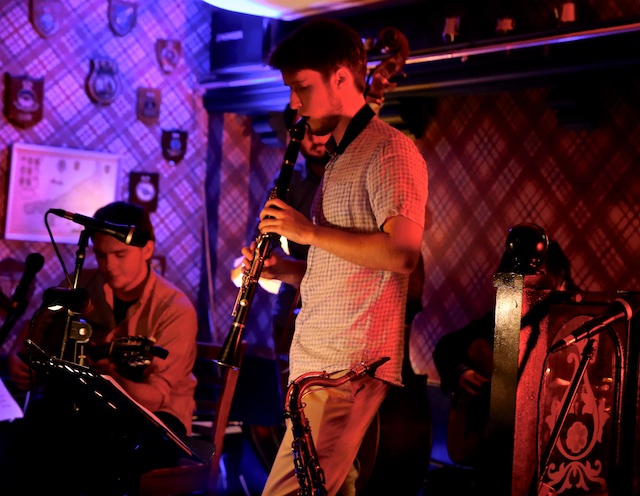 On rhythm guitar was Phillip Beatson, on clarinet and tenor saxophone Asher Truppman-Lattie and on upright bass Djordje Nikolic. Beatson was largely hidden from sight, working his solid rhythm guitar in the shadows; the others all took short solos. It was nice to hear Nikolic playing arco at times, good for a swing rhythm section. It was also good to hear the licorice stick played – a hard task master but especially rewarding in the swing context.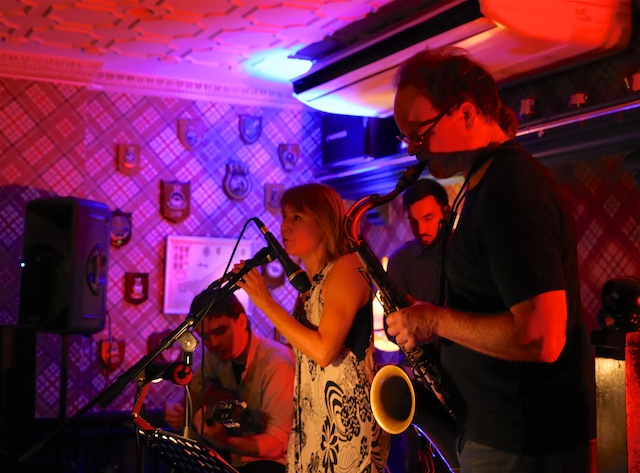
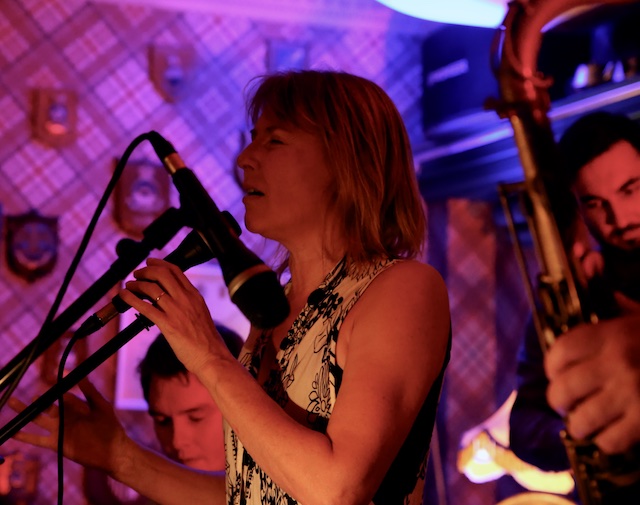 ‘Twistin the Swing: Misha Kovalov (leader, compositions, Manouche guitar), Phillip Beatson (rhythm guitar), Asher Truppman-Lattie (reeds), Djordge Nikolic (upright bass). ‘La Luna & the Gadjos‘: Caro Manins (leader, vocals), Misha Kovalov (guitar), Phillip Beatson (guitar), Roger Manins (tenor saxophone), Djordge Nikolic (upright bass) The gigs took place at the
 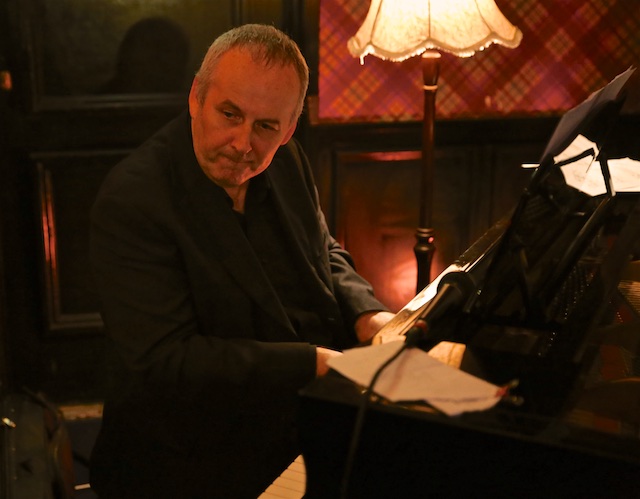 This is pianist Mark Donlon’s second appearance at the CJC (Creative Jazz Club). On this visit, his Shadowbird Quartet featured Aucklanders Roger Manins on Saxophone and Cameron McArthur on bass. The gig also brought Wellington drummer Lance Philip to the CJC for the first time. Both the bass player and the drummer have previously recorded with Donlon. The British-born pianist, educator, conductor is the senior lecturer at the New Zealand School of Music in Wellington
 The first tune of the second set was ‘Nibiru’ and it was rich in narrative and melody. A thing of strange and compelling beauty. The piece began with a repeating pattern on piano, a pattern which shifted harmonically as it progressed. Over this Manins began by stating the melody – seldom straying far from the matrix in the opening stages. McArthur on bass intensified the mood by establishing a counter pattern and then repeatedly plucking at a single note, Philip free to add colour and texture – and he did. I liked this piece very much as it sounded both old and new (a nice effect if you can pull that off). The story behind it added another dimension entirely. ‘Nibiru’ is an imaginary planet beloved of conspiracy theorists, the ones who wear tin-foil helmets when venturing outside. The ones who see an absense of smoke as conclusive proof that the fire is well hidden. The planet evidently reveals itself to the chosen few and is the home of lizard people. I’m not so sure that the believers deserve a tune this nice. The tongue in cheek rendering of this odd belief is anything but ‘end of times’.
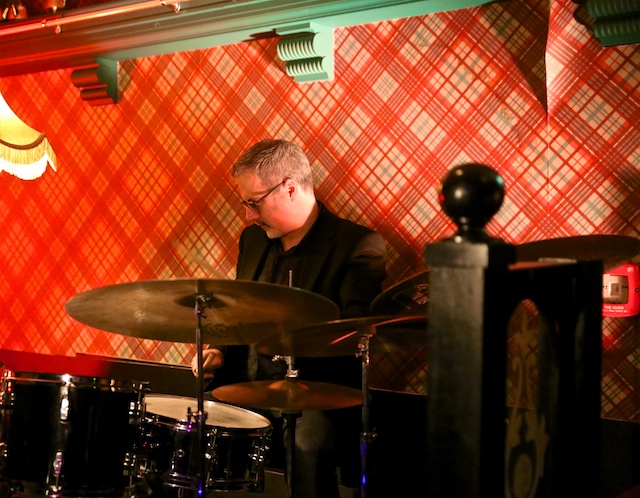 You would expect a group of musicians of this calibre to play well and they did. There are two Donlon albums out shortly and a few earlier ones available. Support local music by experiencing this artist or the bands various iterations. One place to do that will be at the Wellington Jazz Festival in early June.
 This year has seen a lot of international acts through the CJC (Creative Jazz Club), compelling musicians with interesting stories to tell and often with serious gig miles under their belt. As exciting as it is to see the high-end performers of the scene, it is just as important to recognise and evaluate those who might one day take their place. Not all will last the course, but the persistent and the passionate can make that journey. Standing in front of a discerning club audience tests young musicians in ways not easily replicated. Unlike the Jazz School environment, the musicians technical prowess is subservient to the authenticity they bring to the bandstand. Fluffing a line is more likely forgiven than delivering a technically perfect but lifeless performance. Sam Weeks and Sean Martin-Buss tested themselves and came through the fire relatively unscathed.
 The gig was part of the emerging artists series and the musicians first time at the CJC as leaders. Both have previously played as sidemen at the club, but standing anonymously in a horn line is a different thing entirely. I am happy to give this gig the thumbs up as they performed well. It took the first few numbers for them to warm up properly, but warm up they did. The rest of the first set and the one after that delivered crackling performances. All of the material was their own and their writing skills were favourably displayed (especially those of Weeks). A piece titled ‘Missing Together’ by Weeks was a gem – opening with some tricky unison lines, followed by a few bars of counterpoint. They made it sound easy, but clearly, many of these compositions were not. The act of embracing the difficult is how a musician grows. I am glad they took some risks, as Jazz functions best in the absence of complacency.
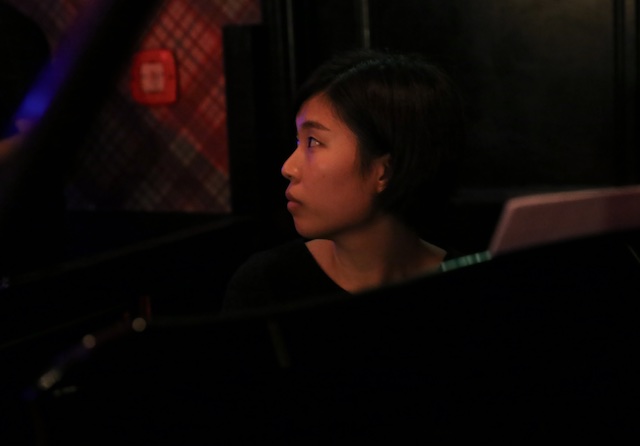 Sean Martin-Buss was on alto saxophone with Sam Weeks on tenor saxophone. Each gave the other ample room and the contrast between the horns was therefore amplified. They also differed stylistically and this gave an added piquancy to the gig. They made good use of interactive Banter, musician to audience and to each other. Off the wall comments came out of nowhere, and the audience included in the joke. The humour was not in the lines but in the offhand delivery. A very Kiwi type of onstage banter – self-effacing, mumblingly casual.
 Emerging musicians are often tempted to rely heavily on musicians from their own graduate class. There is nothing wrong with that per se, but the first question is always, which musicians will serve the gig best? Again the co-leaders made good choices in Tristan Deck (drums) and Eamon Edmundson-Wells (upright bass). The remaining band member was Crystal Choi on piano. Deck and Edmundson-Wells perform in public regularly and both have earned considerable respect. They personify good musical taste. They have talent and better yet, they work extraordinarily well together. It was this combination that tightened up the performance – real assets. Choi was extremely interesting on this gig. I have sometimes noticed a tiny hesitancy in her delivery. On this night, her performance exuded confidence and several of her solos were stunning. The enthusiastic audience responded throughout the night.
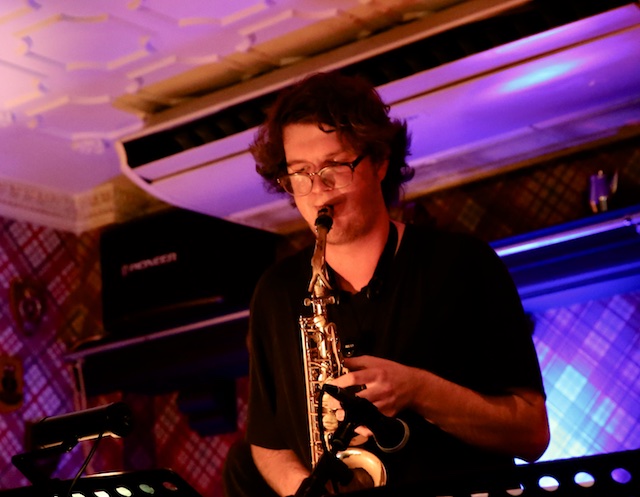 Although the leaders possess perfect vision and are clearly not Venetian, the project was ‘The Blind Venetians’. This was also the name of the final number of the last set; a roistering finale bringing down the cantilevered shutters at gigs end.
 As I write this it is International Jazz Day, a UNESCO sponsored day honouring the diversity and depth of the world improvising scene. It was, therefore, serendipitous that Carl Dewhurst and Simon Barker brought ‘Showa 44’ to town – especially in the days immediately preceding the big celebration. This gig offered actual proof that the restless exploration of free-spirited improvisers, lives on undiminished. I have sometimes heard die-hard Jazz fans questioning free improvisation, believing that the music reached an unassailable peak in their favourite era. To quote Dexter Gordon. “Jazz is a living music. It is unafraid …. It doesn’t stand still, that’s how it survives“. While a particular coterie prefers their comfort zone, the music moves on without them. Younger ears hear the call and new audiences form. Life is a continuum and great art draws upon the energies about it for momentum. Improvised music is not a display in a history museum.
 It is through listening to innovative live music that our ears sharpen. When sitting in front of a band like this the mysteries of sound become visceral. This was an extraordinary gig, at times loud and confronting, mesmerising, ambient and always cram-packed with subtlety. Fragments of melodic invention and patterns formed. Then subtly, without our realising it, they were gone, tantalising, promise-filled but illusory. We seldom noticed these micro changes as they were affected so skillfully – form and space changing minute by minute, new and yet strangely familiar – briefly reappearing as quicksilver loops before reinventing themselves.
 With the constraints of form and melody loosened new possibilities emerge. In inexperienced hands, the difficulties can overwhelm. In the hands of artists like these the freedom gives them superpowers. Time is displaced, tonality split into a prism of sound, patterns turned inside out. The first set was a single duo piece, ‘Improvisation one’ – unfolding over an hour and a quarter; Dewhurst and Barker, barely visible in the low light. This was about sculpting sound and seeing the musicians in shadow added a veneer of mystique. Dewhurst began quietly, his solid body guitar lying face up on his lap. The sound came in waves as he stroked and pushed at the strings, moving a slide – ever so slightly at first, causing microtonal shifts or new harmonics to form, modulating, striking the strings with a mallet or the palm of his hand. The illusion created, was of a single drone repeating. In reality, the sound was orchestral. As you listened, really listened, microtones, semitones and the occasional interval appeared over the drone. Barker providing multiple dimensions and astonishing colour, responding, reacting, crafting new directions.
 In this context, the drummer took on many roles, a foil to the guitarist, creating silken whispers, insistent flurries of beats and at times building to a heart-stopping crescendo. I found this music riveting and the audience obviously shared my view. In the quiet passages, you could hear a pin drop. If that’s not an indication of the musical maturity of modern Jazz audiences, nothing is. One of the prime functions of art is to confront, to challenge complacency. This music did that while gently leading us deeper inside sound itself. No one at the CJC regretted being on this journey. This is territory loosely mapped by the UK guitarist Derek Bailey, the Norwegian guitarist Aivind Aaset and the American guitarist Mary Halvorson. They may take a similar path, but this felt original, perhaps it is an Australian sound (with a Kiwi twist in Manins). The long multifaceted trance-like drones suggest that.
 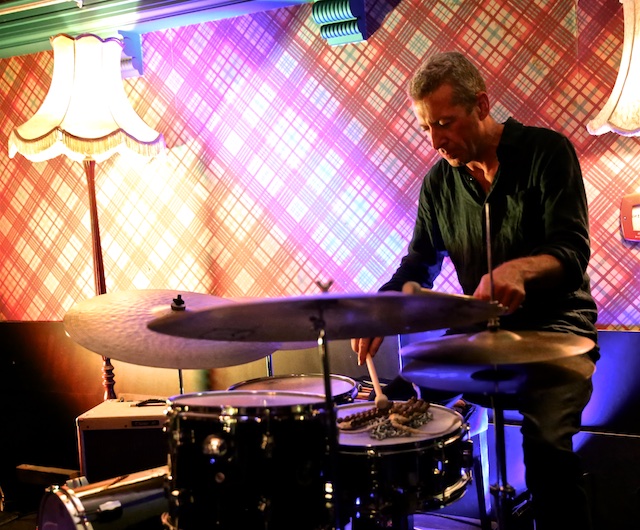 The second set was shorter, ‘Improvisation two’ had Roger Manins aboard. I should be immune to Manins surprises but he frequently catches me off guard. His breadth and depth appear limitless. ‘Improvisation Two’ began with a broader melodic palette. Dewhurst and Barker set the piece up and when Manins came in there was a stunning ECM feel created. Barker tap-tapping the high-hat and ride. Achingly beautiful phases hung in the air – then, surprisingly they eluded us, unravelling as Manins dug deeper – dissecting them note by note. These interactions give us a clue as to how this music works, each musician playing a phrase or pattern and then re-shaping it, passing the baton endlessly.
 JazzLocal32.com