Darren Pickering/Chris Cody

Three (Darren Pickering Small Worlds)
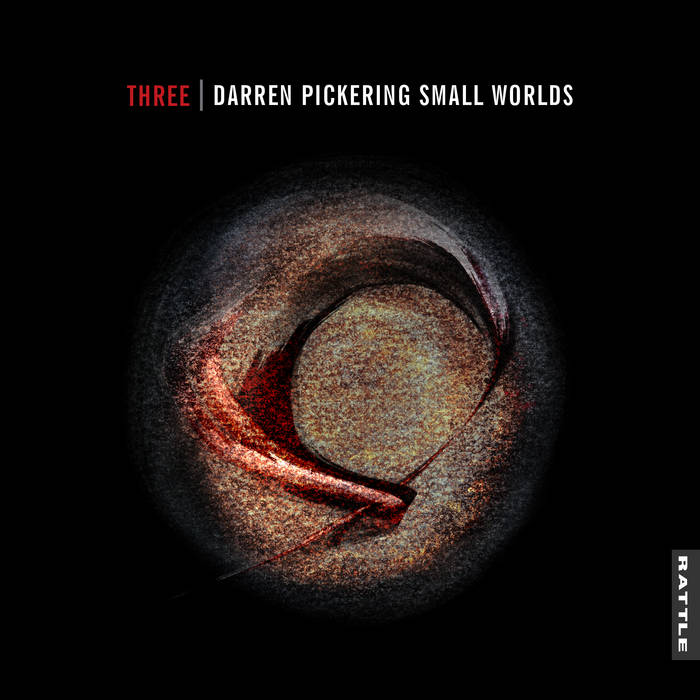
Darren Pickering’s third Small Worlds album, ‘Three’, is a welcome addition to the earlier volumes. While it follows the successful formula developed in volumes one and two, it sounds fresh and endlessly explorative. Throughout the album, snaking lines float, dreamlike, over repeating patterns and carefully layered grooves. Out of this comes the quartet’s cinematic sound. Jazz and cinema are twin arts as they evolved together, often feeding from the same well of resonance. Because of that focus on imagery, you can get inside the sound and experience it on many sensory levels. Listening to this is like watching a great movie – in a theatre – on a rainy day. 

This is a superb quartet; unsurprisingly, after two previous albums, they are hyperaware of interplay. This is particularly important in an album like this, as the soundscape is so open. The liner notes indicate they have equal input into the artistic direction, which makes sense; the democratised approach is evident. This is jazz for our times, probing but gentle and unashamedly open to influences. 

As with the first two albums, the tune times vary in length, enhancing the listening experience. Nothing is extended beyond its natural endpoint. Like the written word, contrasts like this punctuate the ebb and flow. There are small, meaningful solos, but they are skillfully interwoven into through-composed pieces.

Immediately noticeable is Pickering’s touch, and the underlying digital or analogue wizardry never overwhelms. While often understated, his pianism shines throughout. Pickering is a thoughtful composer and writes to his strengths.

Guitarist Heather Webb is pitch-perfect throughout, her sound is so distinctive, with lines that fold effortlessly into the mix. Her avoidance of anything showy or unnecessarily loud marks her as a mature player. I wish more guitarists understood this. The same can be said for the drummer Jono Blackie and bass player Pete Fleming. Both blend into the mix, thus enhancing the music, making the whole greater than the sum of its parts. 

The rainy day groove is particularly evident in ‘Soft Life’. With Webb running her silken lines over Pickering’s synthesised arpeggiation, and the measured, but perfectly placed, beats like slow-dancing footsteps. And the faster-paced ‘Tauhou Waltz’ has a similar vibe. The album maintains this flow, touching on various moods, but always speaking in a calm voice. The album can be accessed from Rattle Records or Bandcamp. https://darrenpickeringsmallworlds.bandcamp.com/album/three

Under Ocean (Chris Cody/Charlie Tait)
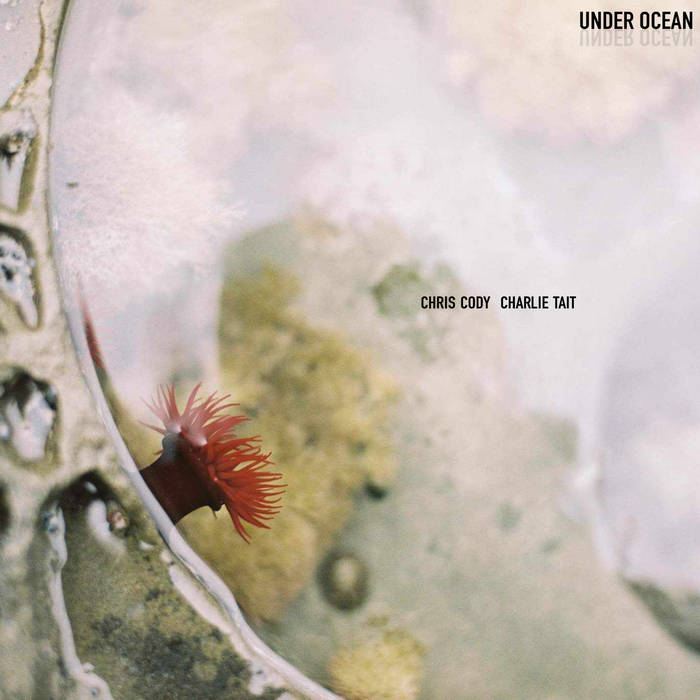
I have long been an enthusiast for Chris Cody’s work, and his two latest releases, each different from what went before, enhance an already impressive discography. Cody has a gift for examining cultural intersections. He gathers events and places, past and present and puts them under a musical microscope, always leaving us with a sense of what it means to be human.  

‘Under Ocean’ is a fresh approach with electronic enhancements and a duo format. The album traverses mental and physical landscapes in unexpected ways and, in doing so, expands not only Cody’s repertoire but the boundaries of improvised ambient-style music. The album is co-led by Charlie Tait, a multi-instrumentalist, sound designer and engineer. Tait is no stranger to sonic creations like this, and the resultant cross-fertilisation of jazz, classical, and ambient electronic music is fascinating. 

There is an increasing imperative for improvising musicians to create music like this as a reaction to the realities of our overly commercialised modern life, to examine our interior landscapes or the natural world. It also reacts to the ugliness that intrudes on the quieter spaces. They combine new and old musical technologies to good effect, as evidenced in the atmospheric opening track, ‘Salt’, which contrasts with ‘Rumble’s’ free playing and the melancholic ‘Lost World’, bringing different moods together as a satisfying whole. 

Mountain to Sea (Chris Cody) 
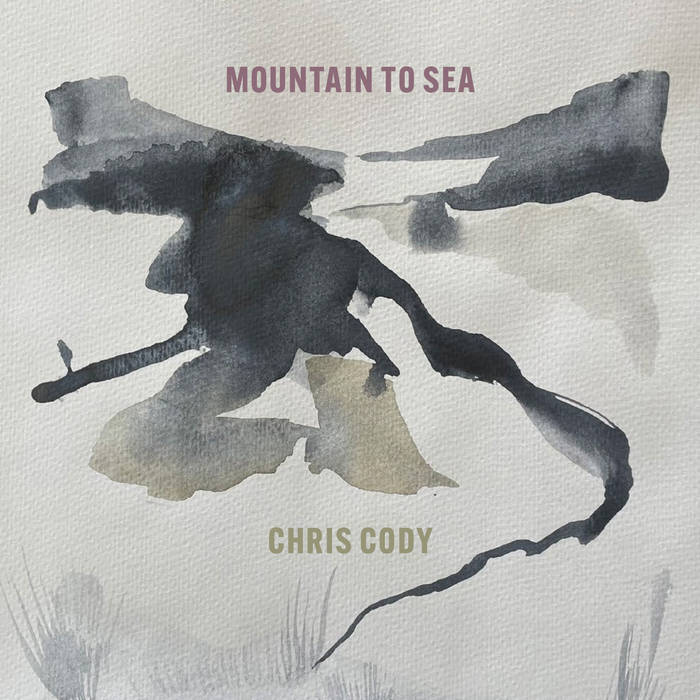
Landscape itself is a featured guest artist on most of Cody’s albums, as his writing always conveys a strong sense of place. I am not referring to specific geographic locations, although they sometimes feature, but to something deeper – cerebral. Cody has a gift for inviting introspection, and as we listen, we examine our relationship to the landscapes and regions he evokes. It is the first thing you become aware of when listening to his albums; ‘Mountain to Sea’ is no exception. 

His compositions and arrangements impress here, but his thoughtful playing is also notable. His lines and voicings convey an instinctive lyricism, an organic sound that has always defined him. The tunes contain nostalgic echoes, but speak of hope too, a heart-on-the-sleeve musical humanism. And, as in previous albums, he conveys more with less. There is ample room for his bandmates to shine, and they do. The care and loving attention each one brings to the project is evident. It is no wonder the unit sounds so good when you consider the musicians, a mix of veterans and younger players, but all exemplary: bass player Lloyd Swanton (a member of The Necks who appeared in Auckland recently) and who appeared on an earlier album ‘The Outsider’ (reviewed recently on this blog), and Sandy Evans, an acclaimed saxophonist on the Australian jazz scene, and lastly Tess Overmyer, a gifted young Australian alto saxophonist, presently based in New York.    

‘Mountains’, a ballad, opens with Ellingtonian chords that speak of grandeur, followed by two beautiful solos, lifted to further heights by bass lines that never intrude, but soar like a raptor. Similarly, ‘Quiet’ reminds me of Evan Parker’s opening on Kenny Wheeler’s ‘Sea Lady’ (Music for Large and Small Ensembles). Ripples, bird calls, lead into an elegiac anthem for the natural world, a place not separate from humankind, with alto, tenor and soprano perfectly balanced, drawing from the same musical well. This is also evident in ‘Dream’. 

As with previous albums, Cody’s daughter Maya has created marvellous cover art.    

Both albums are available on Bandcamp at https://chriscody.bandcamp.com/

JazzLocal32.com was rated as one of the 50 best Jazz Blogs in the world by Feedspot. The author is a professional member of the Jazz Journalists Association, a Judge in the 7VJC International Jazz Competition, and a poet & writer. Some of these posts appear on other sites with the author’s permission. 

A Quieter Place in Times of Turmoil

There are many ways to navigate troubled times. You can deny reality, scream into the void, surf the waves of absurdity, bitterly declaim, or seek quiet while you gather your thoughts. Many prefer the latter, although the other responses are also valid. The last few years have felt particularly untethered as a growing flock of anxieties encircle us. In this space, I reach for artisan teas from China and the type of music that invites reflection. All the albums I review here slow the world’s orbit to a sensible pace and invite reflection.   

Inverted ~ Auckland Jazz Orchestra

We lost Phil Broadhurst back in 2020, but his legacy is enduring, and unsurprisingly, he is constantly in the thoughts of the musicians he worked with. Here, we have a loving tribute to the man and his music, appropriately performed by the AJO, a jazz orchestra peopled with musicians who knew him well. It is the AJO’s fourth album and arguably their finest to date. Tribute albums may be commonplace, but tribute albums like this, born out of fondly remembered connections with the subject artist, stand out from the rest.  

Phil Broadhurst was quiet-spoken but a colossus on the local music scene. He was a musician with many musical talents, all informed by his passions. This was particularly evident in his post-millennium Rattle albums, with their Francophile influence. As a composer, he was particularly gifted, so it is fitting that the compositions on the album were all drawn from that period. Mike Booth, Tim Atkinson and Andrew Hall crafted the arrangements and what an extraordinary job they have done. The arrangements are ‘voiced’ beautifully and thanks to the skill of the musicians, perfectly realised. The album has significantly raised the bar for local jazz orchestras and it places Tāmaki Makaurau firmly on the jazz orchestra map. 

Fortunately, Phil was able to guest on some of these tracks before he passed and it is moving to hear him. We know that he was delighted with what he heard. It is also moving that his beloved partner, Julie Mason, appears on piano on the remaining tracks. I won’t name all the personnel or soloists here because the list is long, but check out the album on Bandcamp. 

I rate everything on the album, but my favourite tracks are ‘Pat’, with Phil teasing wistful magic out of his lovely tune, and Pukeko. Pat features Broadhurst, McNichol on tenor, and Booth on trumpet, the latter, rising to the occasion (Booth arranges both). Pukeko features Gianan on guitar and Booth on flugelhorn. The album is available at Rattle Jazz on Bandcamp. 

Volume Two ~ Darren Pickering 

Deep listeners will appreciate this album for its subtle interplay and warm embrace. It is a fine example of today’s forward-looking improvised music, drawing as it does on the sounds we can all too easily overlook as we drown in the endless iterations of soulless commercialism. Cinematic phrases, slow textural electronic grooves teasing out rich soundscapes, the kind you might hear fleetingly emanating from a softly lit apartment on a summer’s night, wanting to hear more.

It is an album that will reward repeated listening as the subtle minimalism if examined with open ears, will reveal an expansiveness. Pickering has previously demonstrated other musical sides, but I am glad he has chosen to further this one. The band were perfect for what he has created here, understanding that space serves sound. 

There is balance and variety. The opener ‘Oneroa Bay’ sets the tone nicely for what follows. For those who crave something more traditional, there is ‘Blue Mind’, a blend of the crystalline ECM aesthetic and the warm embracing Impulse grooves. Or ‘Mazawati Tea’, an update on the swinging groove trio/quartets we love. 

There is also a degree of abstraction, sometimes floating under a slow-wending evocative melody line as in ‘Reverse’ or pushing at the outer edges of form as in ‘La Perla (for Benjamin)’. The production is of the highest quality thanks to the deft curation of Pickering, Rapaki Studios and the Rattle crew.

Released by Rattle Records and available on Bandcamp; Darren Pickering, piano, Modular, iPad, composition; Mitch Dwyar, guitar; Pete Fleming, Bass; Mitch Thomas, drums. 

Dahab Days ~ Rob Luft

Rob Luft and I often meet up when I pass through London, but it’s been a while. However, I managed to conduct a long-form interview with him late one winter’s night during the pandemic lockdowns. We were relaxed as we ranged over many topics, including the possibility of this album. 

With gigs cancelled everywhere as the world slipped into an enforced state of hibernation, Luft found himself becalmed in Egypt. He remained there for a considerable time, but far from being dismayed, he embraced the situation and opened himself to the sights and sounds of North Africa. The musical and other influences he explored at that time have informed this album. 

You hear the colours and sounds of Egypt, not by emulating an Oud or street caller, but by creating a musical world that throws up filmic images. It is especially so on ‘African Flower’, an interpretation of Ellington’s tune, which in Luft’s hands knits east and west, past and present together seamlessly. His ‘Endless Summer’ is where Luft’s compositional skills are most evident. The skilful integration of the human voice lines tells me that the influence of Kenny Wheeler lives on in the current generation of London jazz musicians. Most of the compositions are Luft’s. 

The last track, an arrangement by Luft of a traditional tune, Lamma Bada Yatathanna, is as respectful as it is innovative. We hear and sense the Arab streets. Collaborating with Elina Duni has added depth to his compositional chops and this album benefits from that. Luft’s powerful presence on guitar is evident, but he has left his bandmates ample room to shine. The result is that the album is more than just a guitar album. It works on many levels. I wish more guitarists grasped this. 

Since we spoke last, Luft has co-led a second ECM album with vocalist Elina Duni and returned to a full schedule of touring and gigging. He has always been an artist to watch. If you listen to Dahab Days, you will hear why. 

Rob Luft, acoustic and electric guitars, kalimba; Joe Webb, piano and Hammond organ; Tom McCredy, bass guitar; Corrie Dick, drums, percussion; Alice Zawadzki, violin, vocals; Byron Wallen, trumpet;, Steve Buckley, alto saxophone, penny whistle.

Dahab Days is available on Rob Luft Bandcamp in digital or vinyl format. 

‘Ondulation’ ~ Alan Brown

Alan Brown’s ‘Ondulation’ album epitomises the sentiment expressed in the post’s header: a quieter place in times of turmoil. It explores quieter regions differently, radiating all-encompassing warmth and conjuring a world of sensory imagery. It is not the first of Brown’s albums to explore ambient improvised electronically enhanced music, but this album opens a portal into something new. It expands on earlier work by adding new digital voices. The resulting textures are rich and nicely contrasted by gently probing piano lines. 

Brown has been exploring this genre for quite a few years. The deeper he dives, the richer the rewards for the listener. The first track, ‘Decider’ is particularly appealing, especially when a young woman’s voice emerges like a beckoning siren. The voice is faint but compelling. The harder we strain to catch the words, the deeper we fall inside the music. 

The rest of the album flows like an otherworldly, beguiling narrative, and the journey should be enjoyed for itself, not over-analyzed. These are worlds crafted for our senses to interact with. We may hear them differently according to mood or disposition. Jazz experimentalism is common in northern Europe. Here, we have a way to go to catch up. Albums like this help us on that journey, and in my view, what Brown has achieved here compares favourably with the works of Aaset, Molvaer and Bang. 

Humans have been shaping sound since the beginning of time by bending notes, creating new textures, creating new chords and playing with harmonics. But while the circuit board and its predecessors extend the sonic possibilities, it is due to the creativity of musicians like Brown that something uniquely human results.  You can purchase and check out the album at Seventh House Rattle Records

Alan Brown, Piano, Ondomo, electronics

LacLu ~ Winter/Fog/Morning 

This last piece, Winter/Fog/Morning, is a teaser for a Rattle album due to appear later this year. Like the other albums reviewed, it fits nicely into the theme of a quieter place in times of turmoil. It is atmospheric, so I immediately wondered if that was Te Henga Valley morning, where the guitarist lives.  Price, like me, lives in the Waitakere Ranges foothills. The seasons and rainforest mists make a spectacular showing there.

It is good to see younger emerging players alongside experienced ones. Price’s guitar work is gorgeous and never overstated, his gentler side is evident here. I have been to several gigs where Max Crook played and he is establishing himself as a reliable band member, open to new ideas. This is my first time hearing Francesca Perussini but I will watch out for the album with interest. 

Keith Price is a Canadian guitarist living in Aotearoa. He is the Convener of Jazz Specialization, School of Music, Faculty  University of Auckland.  Francesca Parussini, on tenor saxophone and Max Crook, drums, have been involved in the Jazz programme at UoA. Cover art by Ainsley Duyvestyn-Smith.

JazzLocal32.com was rated as one of the 50 best Jazz Blogs in the world by Feedspot. The author is a professional member of the Jazz Journalists Association, a Judge in the 7VJC International Jazz Competition, and a poet & writer. Some of these posts appear on other sites with the author’s permission. 

Sumo (Christchurch) @ Backbeat Bar

SumoWednesday 30th May was the Auckland launch of Sumo’s second album titled ‘Shiko’. I am reliably informed that Shiko is a stamping motion which Sumo wrestlers perfect during training. The action drives away evil spirits and when you hear the band, the descriptor strikes you as appropriate. Suspense and surprise are hallmarks of this unit and as in Sumo wrestling, you get theatre, tricky moves, tradition and a degree of inscrutability.  Above all, they showcase quality improvised music.   Sumo (2)
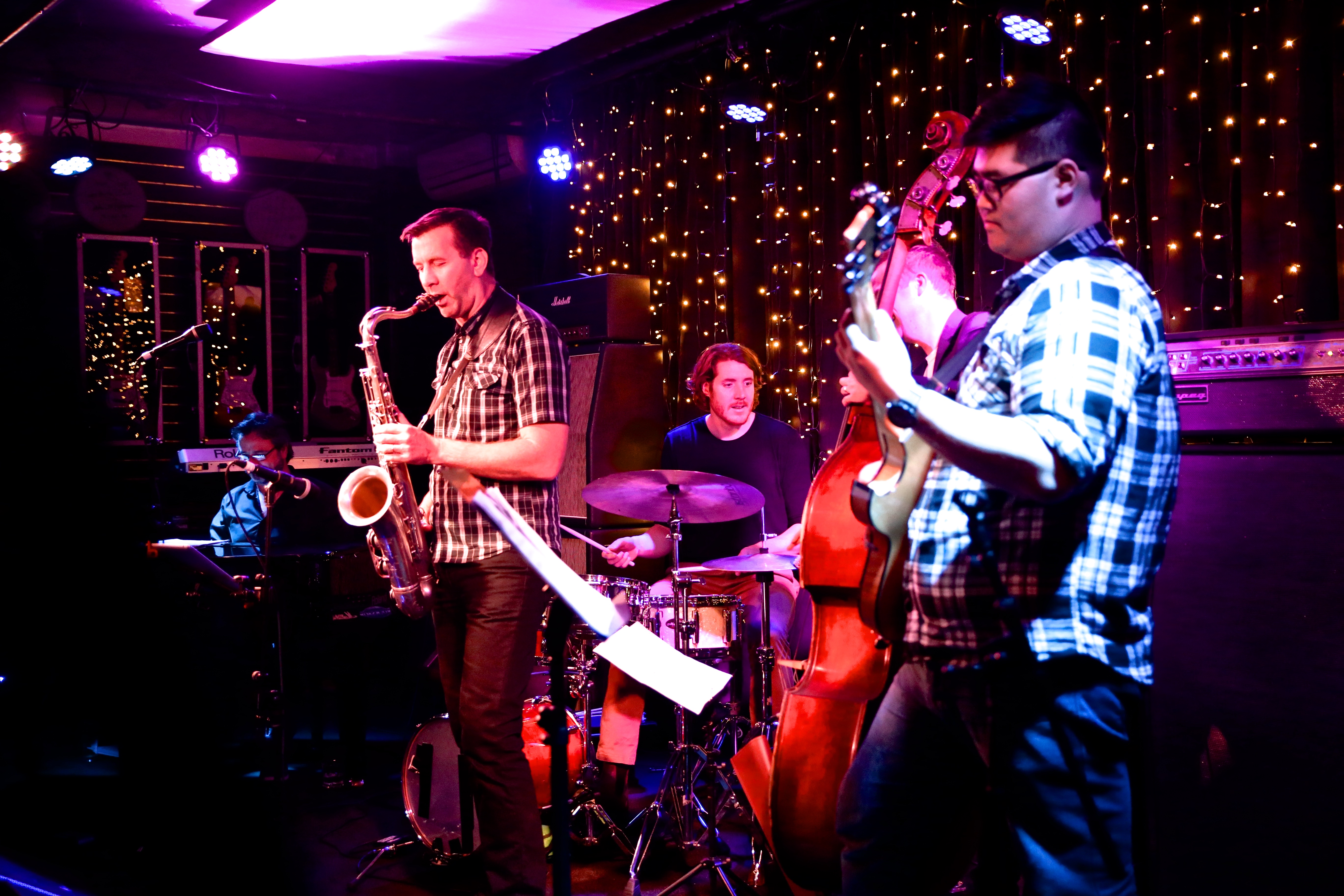
The compositions were the first thing that interested me. Some were warm ballads, but mostly they were propulsive tunes with a compelling forward momentum. Sumo is billed as a quartet, but they regularly invite guests to perform with them and they encourage the guests to bring original compositions to the bandstand. This concept always works, as the best, improvised music arises out of challenges and tensions. Complacency is death in Jazz. The guest on this night was the talented Christchurch guitarist Brad Kang. I had heard his name mentioned by visiting musicians, but I had never heard him perform. He has a real presence on the bandstand and his effortless post-Rosenwinkel runs are jaw-dropping. He made it all look easy when clearly it was not.

The core group is Gwyn Reynolds on tenor saxophone, Darren Pickering on keys, Mike Story on bass and Joe McCallum on drums. During the evening we heard compositions from all of them and their different compositional approaches made the sets interesting. I like bands that exude human qualities rather than mechanical ones and underpinning this group was a warmth and an interconnectedness. Together they have a great sound and it is no wonder that Roger Manins had been trying to lure them north for some time. If there were any lurking bad spirits around that night they stood no chance of survival.

Sumo: Gwyn Reynolds (tenor saxophone), Darren Pickering (keys), Mike Story (upright bass), Joe McCallum (drums) plus Brad Kang (guitar). The gig took place at the Backbeat Bar, K’Road, Auckland for the CJC Creative Jazz Club. May 30, 2018.