Lost Ships on ECM is an album that rewards deep listening. It is deliciously spacious and unbelievably beautiful and the powerful images and exquisite stories will remain with you long after listening. It speaks in many languages, as disparate as Albanian and English. The Romance, Germanic and Balkan tongues unified in improvised song form. The album is a collaboration between UK Jazz guitarist Rob Luft and Albanian born Jazz vocalist Elina Duni. Together they have crafted a rare and precious document. It is especially relevant for current times while gently referencing a fading past.
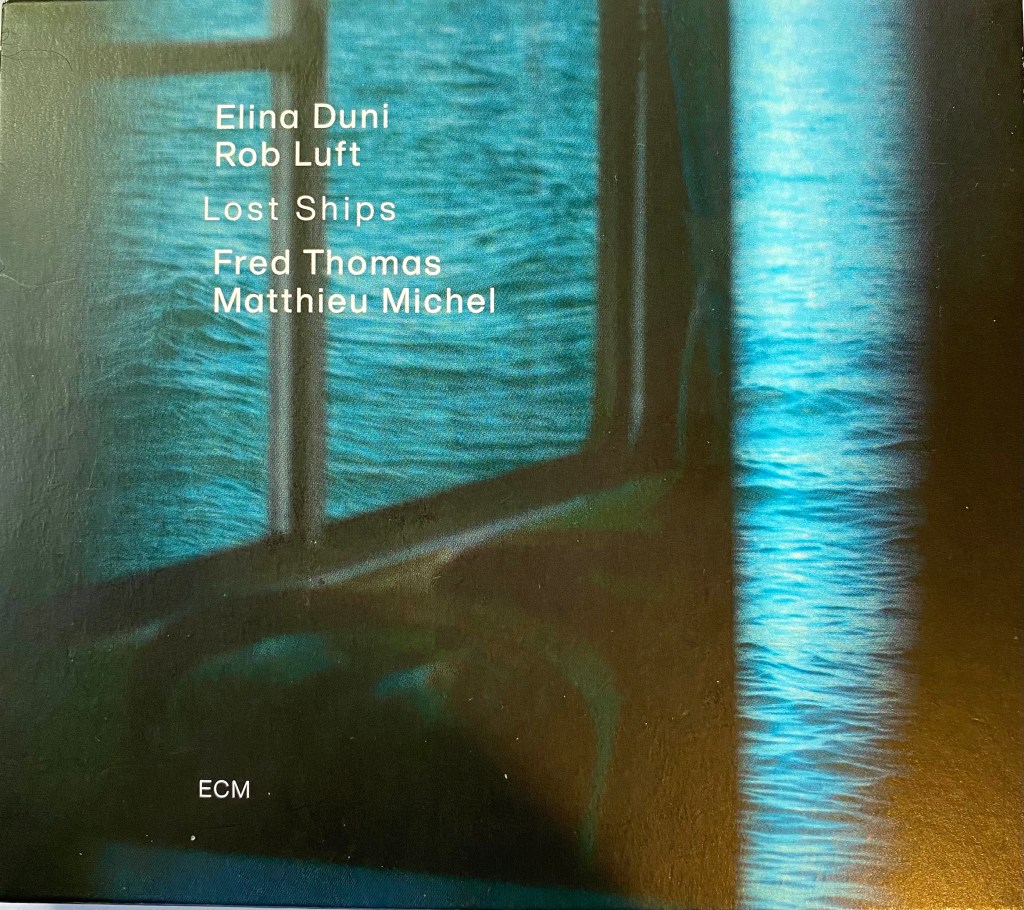
Like many ECM albums, originals, traditional folk tunes and jazz standards are approached with a Euro-Jazz sensibility. An approach where less is much more and an almost preternatural clarity is realised Everything sounds fresh and the album achieves this by breathing new life into what we recognise and by delighting us with the unfamiliar. As always with ECM albums, the recording quality is impeccable, and the musicians take full advantage of this.
The first number ‘Bella Ci Dormi’ (Beauty, You Sleep) is a traditional Italian song conveying intense longing. It opens with the piano and guitar setting up the tune for Duni; her voice, caressed by the delicacy of the arrangement. Duni has an extraordinarily beautiful voice and Luft has gifted her the perfect arrangements. The next tune ‘Brighton’, an original by Duni and Luft is sung in French (with the flugelhorn as another dominant voice).
There is a songbook standard, ‘I am a Fool to Want You’ (Sinatra/Wolf/Herron) and a loved chanson classic ‘Hier Encore’ (Charles Aznavour). This establishes the pattern throughout. Songs from many sources sitting comfortably together. The song ‘Wayfaring Stranger’ (trad USA) was made famous by Johnny Cash, but it has previously been recorded by Jazz musicians (Charlie Haden and Shirley Horn). The two traditional Albanian songs are a rare treat. In ‘Kur Me Del Ne Dere’ or ‘N’at Zaman’, it is not hard to discern the eastern European flavour.
Among the originals are some wonderful tunes, ‘Flying Kites’ is stunning as are ‘Lux’ and ‘Empty Street’. As lovely as the rest are, my highest praise goes to the title track ‘Lost Ships’. The song pays tribute to the migrants who lost their lives in the Mediterranean; gently but powerfully urging us to take action on environmental and humanitarian issues before we find ourselves lost ships on an empty sea.
The trio accompanying Duni is not of a typical alignment. It has two chordal instruments and the pianist doubles on drums. Then there is the flugelhorn. Such sensitive players all. And Luft is on every track and he is a powerful presence without being overt. It is his astonishing voicings and delicately placed runs; none intruding on the vocalist but never-the-less conveying a quiet strength by exploiting timbre and speaking whisper-soft. This was a perfect match and I am not surprised that ECM picked them up.
The last time I encountered Luft, was at Ronnie Scotts, playing a gig with Kit Downes, and it was there that he told me of this ECM project. At the time I had not heard of Duni, but a few months later and back in New Zealand, I posted enthusiastically on the Norwegian avant-garde vocalist Sidsel Endresen. Luft messaged me immediately to say that there was a connection between Duni and Endresen. Intrigued, I kept an eye out for the album, and then the pandemic hit.
I was determined to grab a copy, a real copy, complete with brooding artwork and an outer sleeve. ECM has the imprint of artistic integrity and I avoid listening to any ECM recording in a compressed format if I can. I badly wanted to hear the album, but I waited. I was informed that it could take two months due to pandemic shipping delays, but it took much longer. It finally arrived as winter approached and I took it out of the letterbox as dusk fell. I put it on as darkness fell and let the sounds wash over me. I loved it from the first note. It had been my lost ship, and now it was found.
Lost Ships: Elena Duni (vocals, compositions), Rob Luft (guitar, compositions), Fred Thomas (piano, drums), Matthieu Michael (flugelhorn).
JazzLocal32.com is rated as one of the 50 best Jazz Blogs in the world by Feedspot. The author is a professional member of the Jazz Journalists Association, poet & writer. Some of these posts appear on related sites.
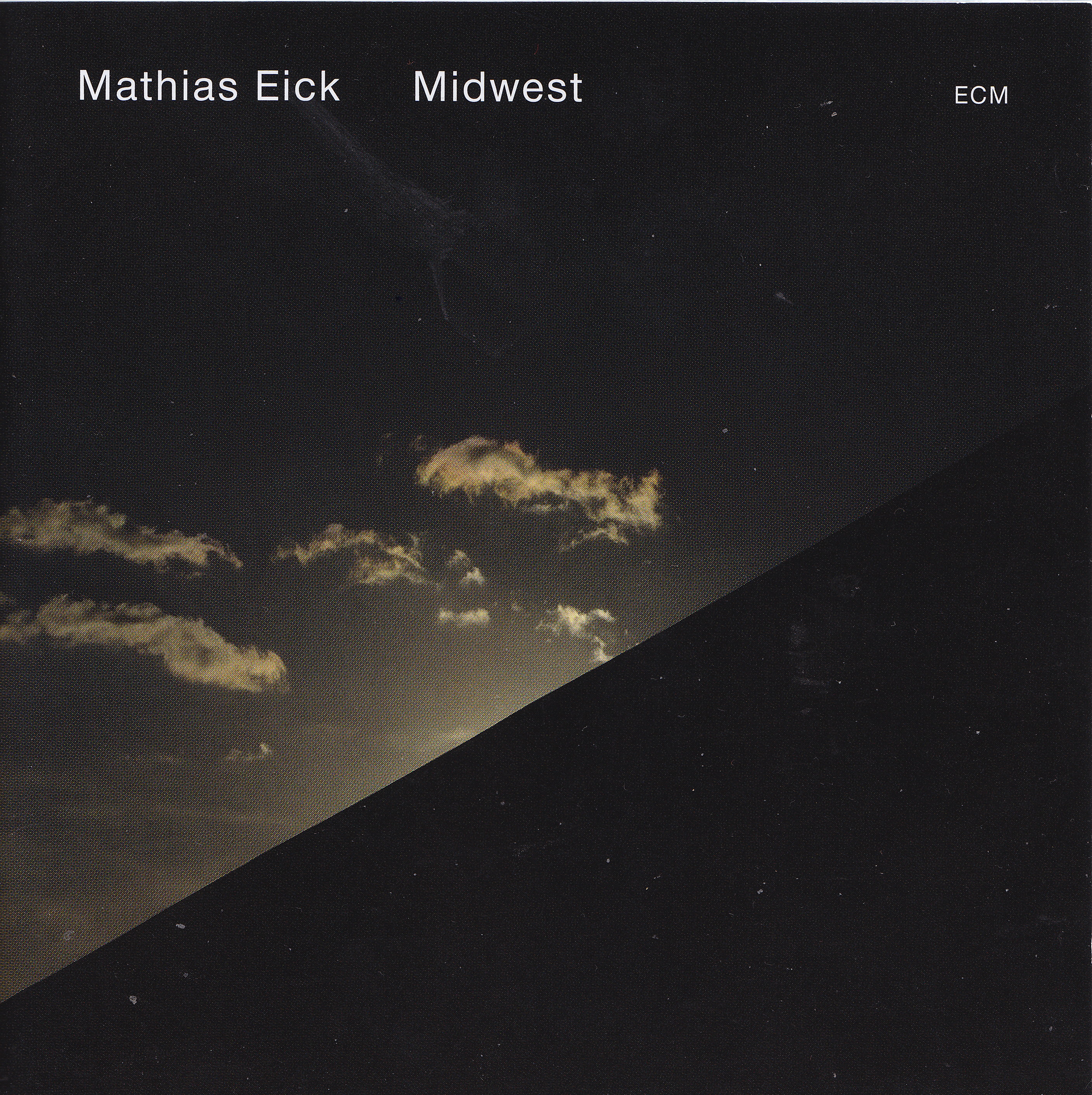 Before hearing the first note, I knew that I would like ‘Midwest’. Mathias Eick is a unique communicator and his compositions gift us with particular ways of experiencing places we have not yet visited. Sound is transmuted and we see what he is seeing. As I listened to the album I was drawn deep into a world of vast open spaces, history and complex human emotion. The connection was visceral as the music brought the plains of the Midwest into the range of intimacy. I sensed the wild grass running between my fingers as I listened. The last album to evoke such a strong sense of place for me was Tomasz Stanko’s ‘The Soul of Things’. ECM is the home of such evocative albums.
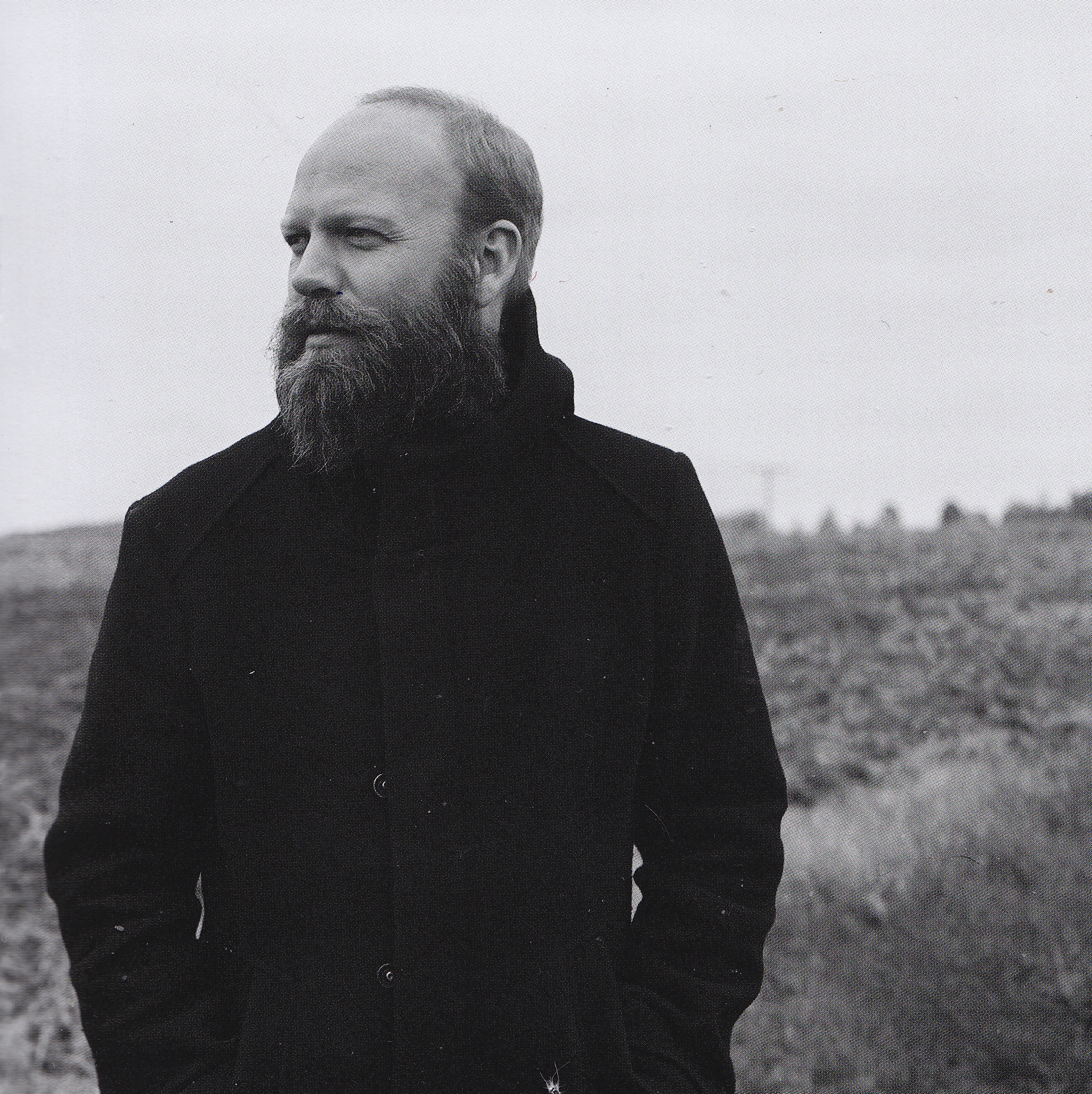 Where I live in the South Pacific, Jazz musicians sometimes pose the question; Do we have our own sound, a unique quality that we tap into? As our scene grows the answer is increasingly yes. This uniqueness of ‘sound’ is evident among Scandinavian improvising musicians and especially so among Norwegian trumpeters. In this case the identity is multi faceted. It is Norwegian and Americana.
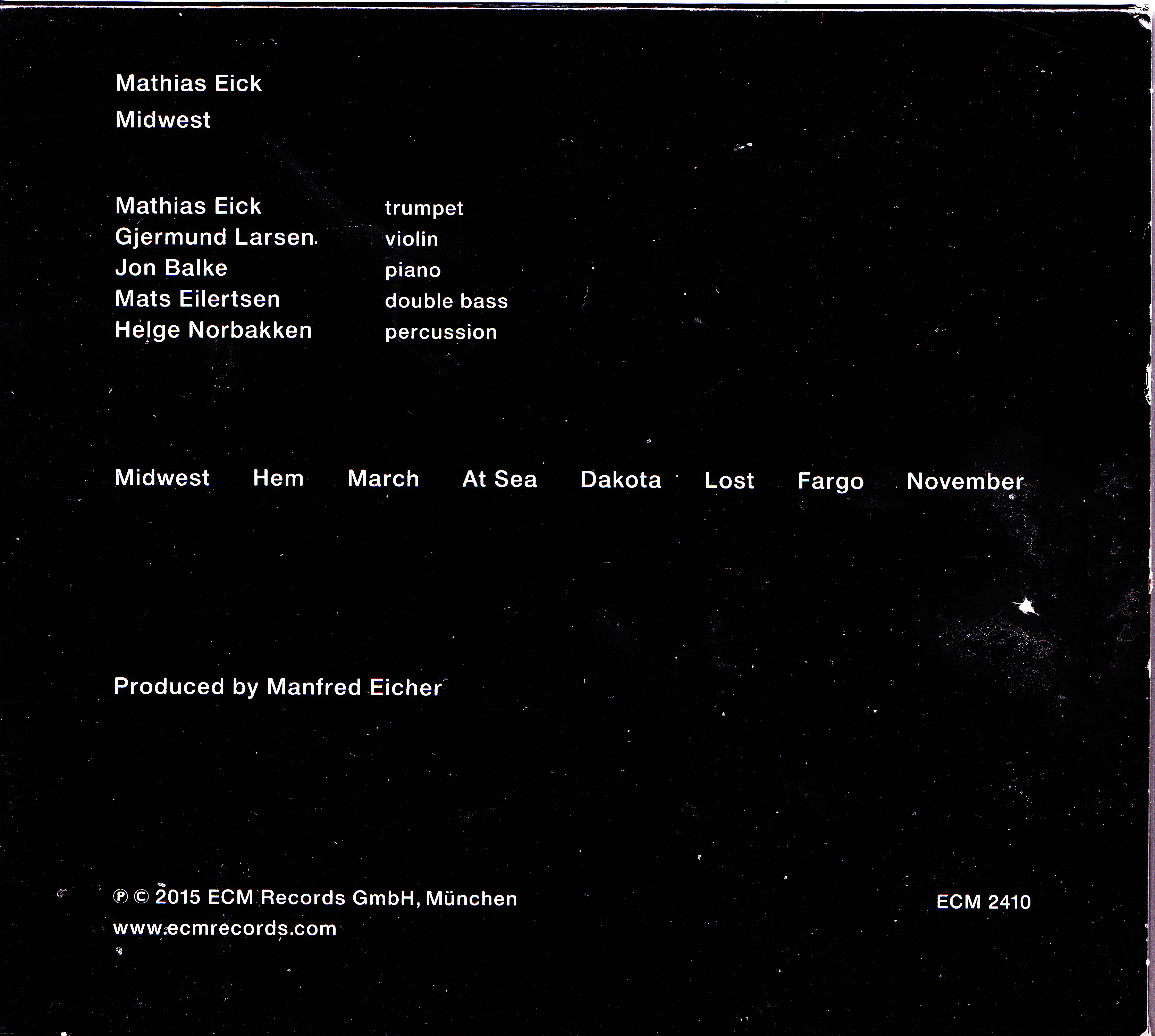 The Midwest is both mythical and real, we feel that we know it intimately. Endless tales arise from the indigenous peoples (who respected it best) and the hopeful European settlers who spread across it looking for a new home. It struck a particular chord with Eick as the peoples of Norway were prominent among those settlers. The writer Lawrence Durrell explains this best when he says that certain places transcend reality and become ‘less a geographical entity than an idea’. ‘Midwest’ is an embodiment of this principle. Midwest by Mathias Eick is out on the ECM label.
 JazzLocal32.com