Aaron Parks/Hania Rani

Aaron Parks ~ Little Big III 
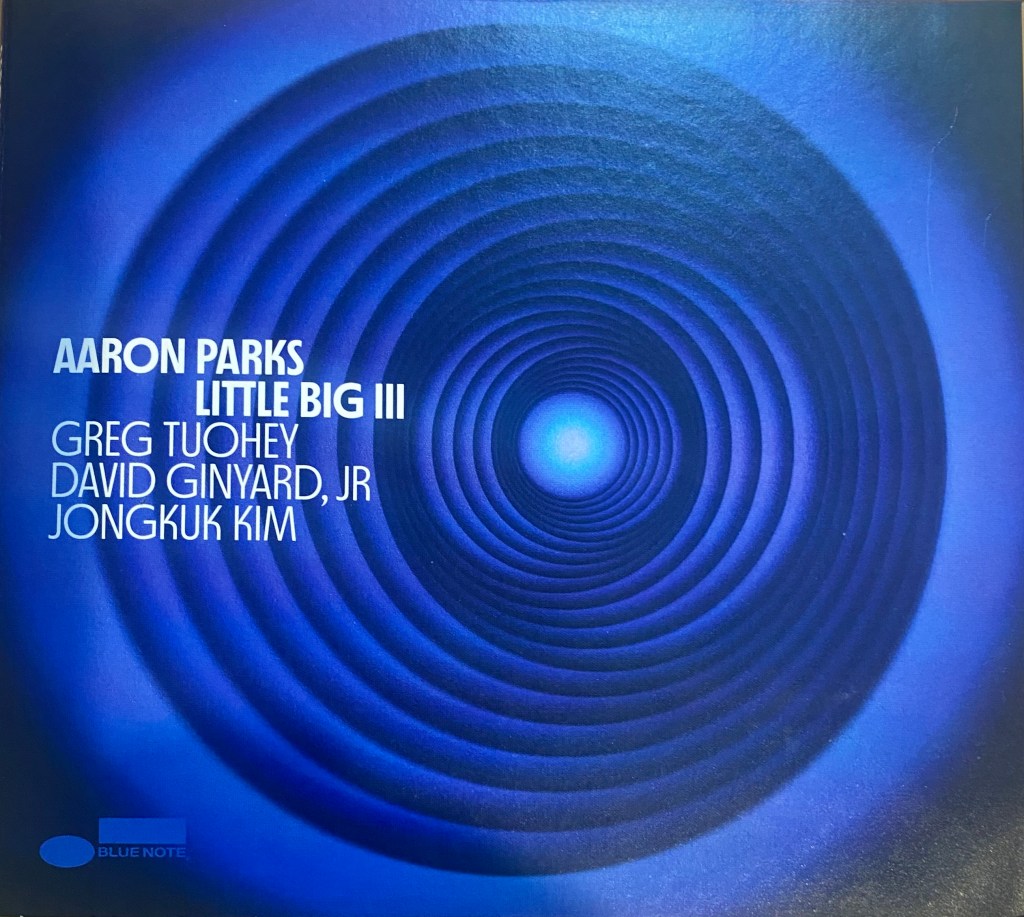
Aaron Parks’ latest album, ‘Little Big III’, is the third in a series titled Little Big and his fourth album featuring a guitarist. The album (and series) also expands the soundscapes and ideas explored on his successful first Blue Note release, Invisible Cinema (2008). It is an album with a big heart which embraces the listener with rich textures and a tapestry of gorgeous melodic lines. Parks is highly regarded as a pianist and composer and never appears to rest on his laurels, reaching further with each new recording. 

The band is in perfect sync, and each player is given the space they deserve. Parks’ compositions are always compelling, but they reach for the heartstrings here. There is considerable technical mastery, but a sense of humanity strikes you most. The tune titles tell you this, ‘ Locked Down’, or ‘Heart Stories’, inviting you into an expansive and unfolding narrative. It feels like a story of our times, but one reminding us of the beauty we may have overlooked amidst the turmoil.

Parks is a distinctive pianist who has never had trouble finding the best musicians to accompany him. Jazz lovers in Aotearoa New Zealand can rightly feel proud in this regard. ‘Invisible Cinema’ and ‘James Farm’, featured bassist Matt Penman. On Little Big 111 and the two earlier iterations, we hear guitarist Greg Tuohey (who first recorded with fellow Kiwi Penman over twenty-five years ago). Tuohey’s playing is magnificent and, along with his bandmates, he contributes tunes too. 

The sharing of the compositional duties has yielded riches. Parks has a distinct style; his tunes are as compelling as they are memorable. I particularly like ‘Flyways’; a pulsating ostinato chant that frees the drums and bass, while the breathtaking melodic lines soar. There are four Parks compositions, all interestingly different. Oriental references are evident in ‘Delusions’ while the lovely ballad ‘Ashé’ has a wistful, folkish vibe. 

Three tunes are Tuoheys, expanding the palette to include funk and Americana. His tune ‘Willamina’ is a joy, it is here in particular that you hear what a great guitarist and composer he is. It evokes tumbleweed towns and gentler times; memories we hold onto lest they slip from our grasp. Bass player David Ginyard Jr’s ’Little Beginnings’ has a beguiling loping pulse and uses a larger palette, to great effect. The drummer, Jongkuk Kim, is new to me, crisp, imaginative and impressive.  I hope there is a Little Big IV in the wings. ‘Blue Note Records ~ available in stores and by streaming.

Hania Rani (Hanna Raniszewska)  
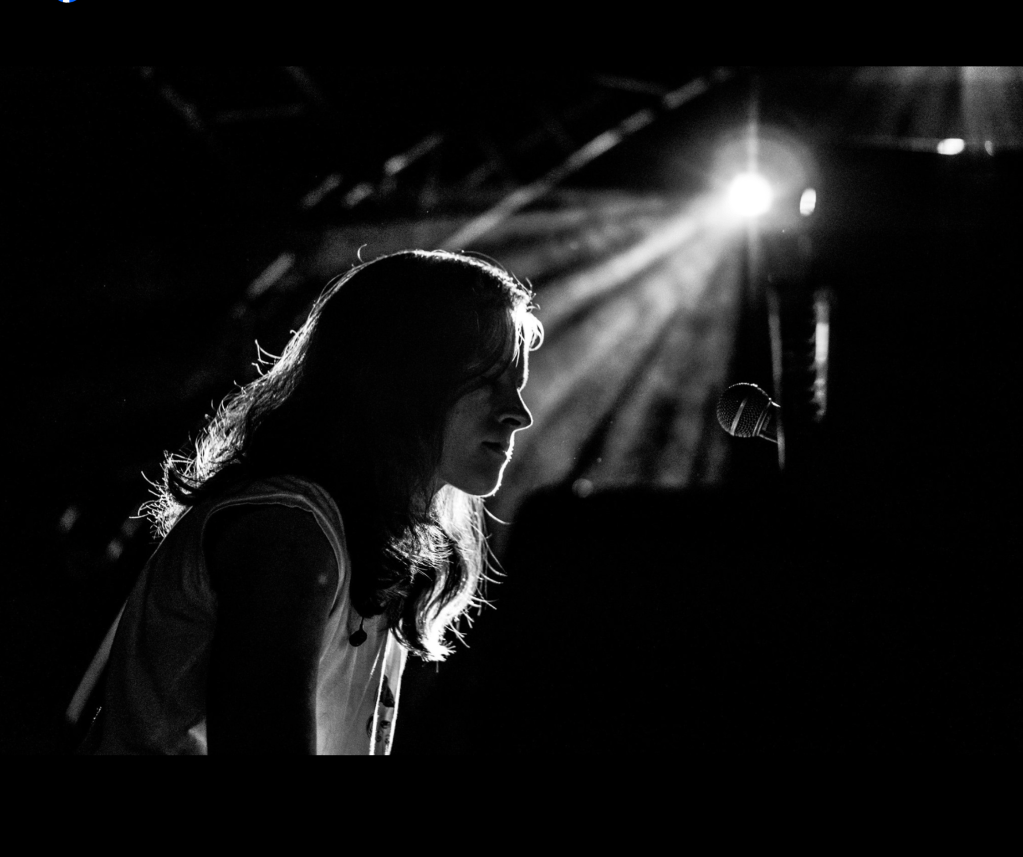
I subscribe to jazz author Ted Gioia’s Substack posts, as all improvised music lovers should. In a recent issue, Gioia highlighted a handful of modern Polish improvisers he suspected would be unknown to audiences outside of Northern Europe. He particularly liked Hania Rani, who he described as his new favourite pianist. 

There is something ethereal and achingly beautiful about her music and everyone who stumbles across it, feels like they’ve uncovered a secret. What initially strikes you as a few simple fragments of melody on repeat, is music for deep listening. Underlying the ostinato phrases are endless changes, finely wrought. She layers and loops while catching her listeners in a silken web of sound; sometimes reaching inside a grand piano, using an upright piano for percussion and adding small digital effects. It is an ever-expanding pedal point over a pulsing drone which may be the key to its appeal. She magics up something complex and deeply satisfying, crafted out of simplicity.  As if that were not enough, she also sings beautifully.

Although not a household name, she gets 7 million views for her YouTube clips, performs at the Louvre and has appeared in an NPR Tiny Desk concert. I have included a clip from a recording she made in Studio 2 in Warsaw, a favourite venue due to its acoustic properties. Sometimes the best things are hiding in plain sight. This is improvised music, but genreless, touching on classical, Jazz and house, but somehow free of those confines.

Rani mainly records for Gondwana Records with seven albums released. It is worth checking her out on YouTube.

JazzLocal32.com was rated as one of the 50 best Jazz Blogs in the world by Feedspot. The author is a professional member of the Jazz Journalists Association, a Judge in the 7VJC International Jazz Competition, and a poet & writer. Some of these posts appear on other sites with the author’s permission. 
Tigran ~ The Bird of a Thousand Voices

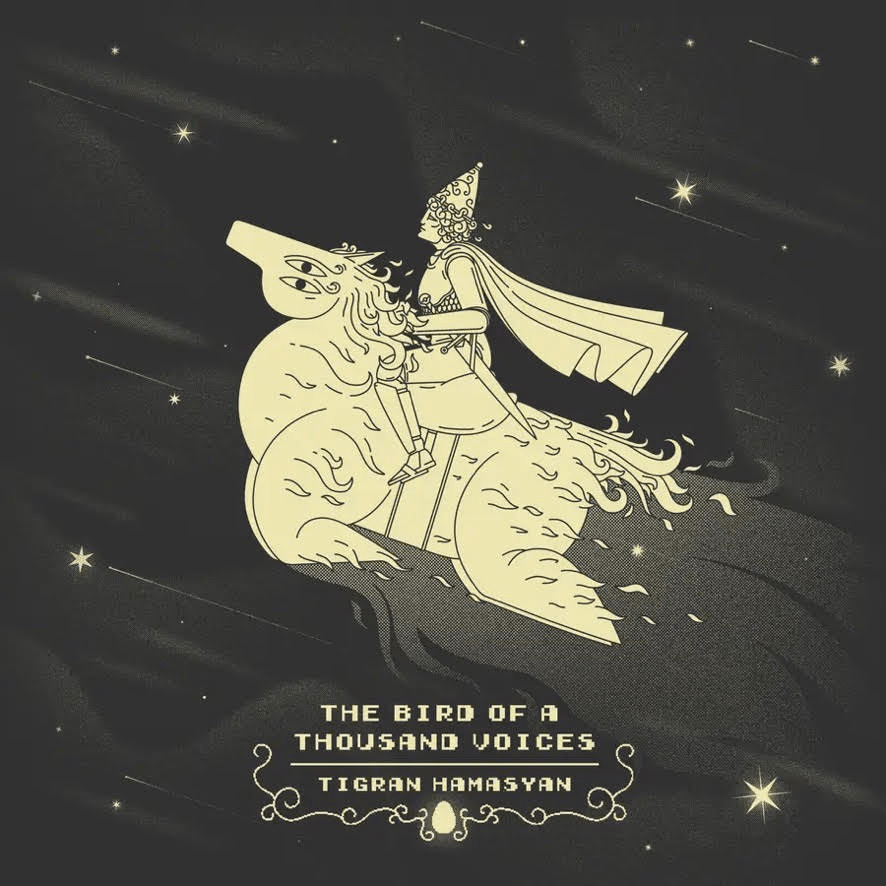
The Bird of a Thousand Voices is an astonishing project, and as I listened and wrote, I weighed up the various superlatives. No other term sufficed. And, to describe it as a concept or a themed album would woefully undervalue it too. The depth and breadth of Tigran Hamasyan’s project is breathtaking and evaluating it requires fulsome engagement. I am not implying that it is unapproachable as there are delightful melodies as light as air, and exotic rhythms to engage, but underlying every note are other worlds, endlessly unfolding–worlds that beg exploration.

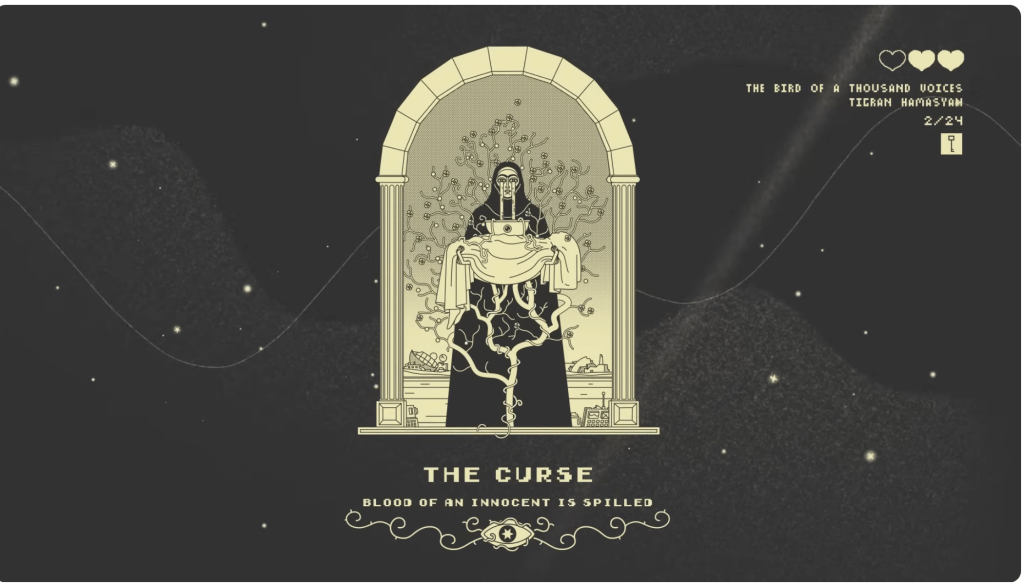
It is a transmedia project with the parts slotting together like pieces of a deliciously exotic puzzle. There is a film, an ancient manuscript, imaginative artworks, an interactive game, a stage show, and a timeless story, all wrapped in and around the extraordinary music of Tigran. It is utterly unique. His sound, touch, and visionary approach as he creates improvised music is singular, and few could pull this off so convincingly. 

The project was inspired by an ancient Armenian folktale (Hazaran Blbul), involving an anthropomorphic bird. The fable tells of an era of great unrest, so the bird embarks on a spiritual quest, seeking world harmony. Still, as with all great quests, physical, spiritual and psychological difficulties are encountered along the way. Tigran states in his summary, that it struck him as a metaphor for the problems confronting today’s world; conflict, inequality and ecological disasters. 

While the project references an ancient Armenian folktale, the bird theme is universal. Birds are sacred to most Middle Eastern, Mediterranean and Northern European cultures. They are frequently seen as messengers from the gods who can predict the future. Some believe they represent the soul or beauty and offer hope of peace. And, it is not just in myths. They warn us today of biodiversity loss, begging us to do better. 

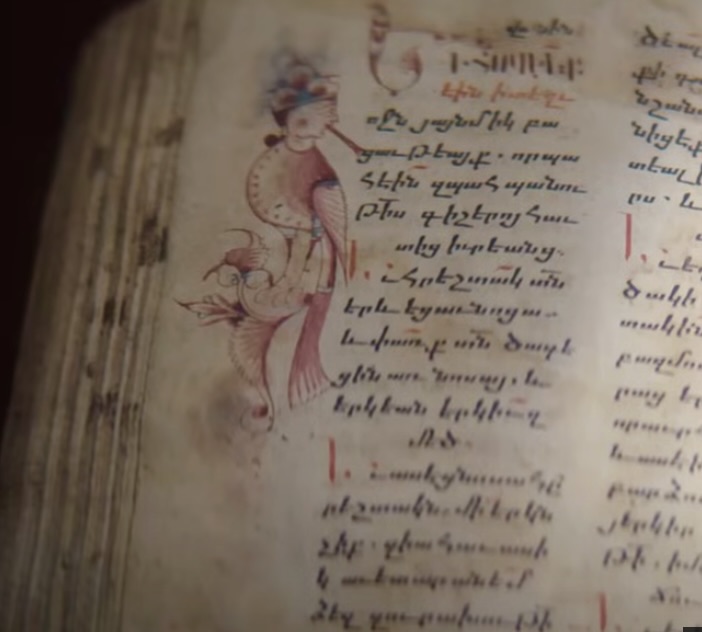
Among the promotional material is a video referencing a medieval illuminated manuscript from Armenia. Inside the manuscript, birds dance out of the vellum pages as Tigran’s Steinway is filmed being airlifted to a mountaintop, and the music dances too. Tigran’s distinctive pianism is immediately recognisable, but a deeper otherworldly quality appears during this recording. His delicate filigree motifs repeat and evolve, choirs or a single voice, echo key phrases and staccato percussive interludes rise, then fade; however, what stays with you is not technique but something more elemental. The project is a prime example of improvised music reaching beyond the familiar as improvised music should. 

illustration excerpted from Armenian archives image

The album engages on many levels and should be enjoyed as the creators intended; by listening, watching, gaming, and contemplating. In collaboration with Tigran, Dutch filmmaker Ruben Van Leer has created cinematographic wonders integral to the music, as has illustrator Khoren Matevosyan. As you enter the website to participate in the game or to enjoy the illustrations and installations, you will find dozens of gifted collaborators credited. While there are too many to mention, the principal musicians are Tigran Hamasyan (piano, keyboards, drum programming, compositions, concept),  Areni Agbabian (vocals), Sofia Jernberg (vocals), Vahram Sargsyan (vocals), Nate Wood (drums and bass).    

A YouTube video showing aspects of the project is available: https://youtu.be/6vEVmU8PdvY?si=LVSrTpl6Puw3mucS and a visualiser track https://youtu.be/kxyFWewUvA0?si=FVpXPFPxW612_nZH

The vinyl album can be purchased via tigranhamasyan.com His music is also available on the usual streaming platforms. 

JazzLocal32.com was rated as one of the 50 best Jazz Blogs in the world by Feedspot. The author is a professional member of the Jazz Journalists Association, a Judge in the 7VJC International Jazz Competition, and a poet & writer. Some of these posts appear on other sites with the author’s permission. 


Wellington Mingus Ensemble visits Auckland


IMG_3660 - Version 2

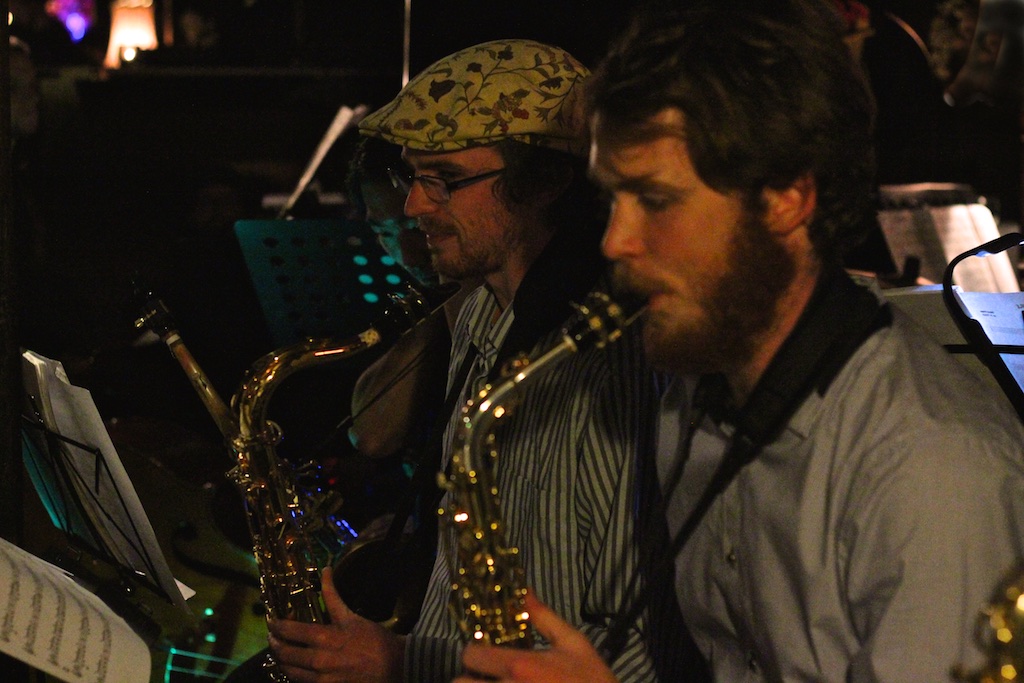
Mingus was the Rabelais of Jazz.  An eccentric humanist who used his musical vocabulary to portray the realities of life as he knew it.  A world filled with great sorrows, blunt speech and joyous abandon; excessive emotions measured in equal portions. Often troubled, frequently combative, but always inspiring.  He brought something unique to improvised music. An ability to impart that Rabelaisian quality, and this was the genius of the man.  IMG_3664 - Version 2  

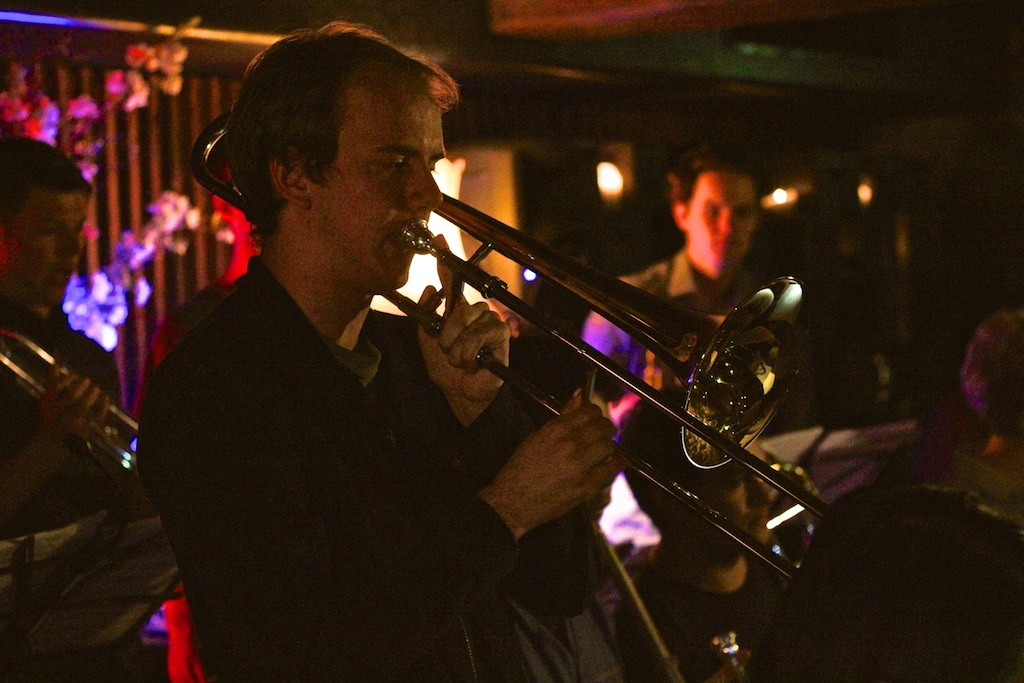
When the Wellington Mingus Ensemble came to town the essence of Mingus came with them. In showcasing his music they demonstrated that they understood the most important thing: the spirit underlying his music. The cries of delight when at particular phrases and the shouts of exaltation echoing through the sets, a collective sense of engagement, each exhorting the other on. This unerring wild enthusiasm gave the music a power that took it free of the charts.  Mingus pieces are invariably greater than the sum of their parts.  IMG_3680 - Version 2

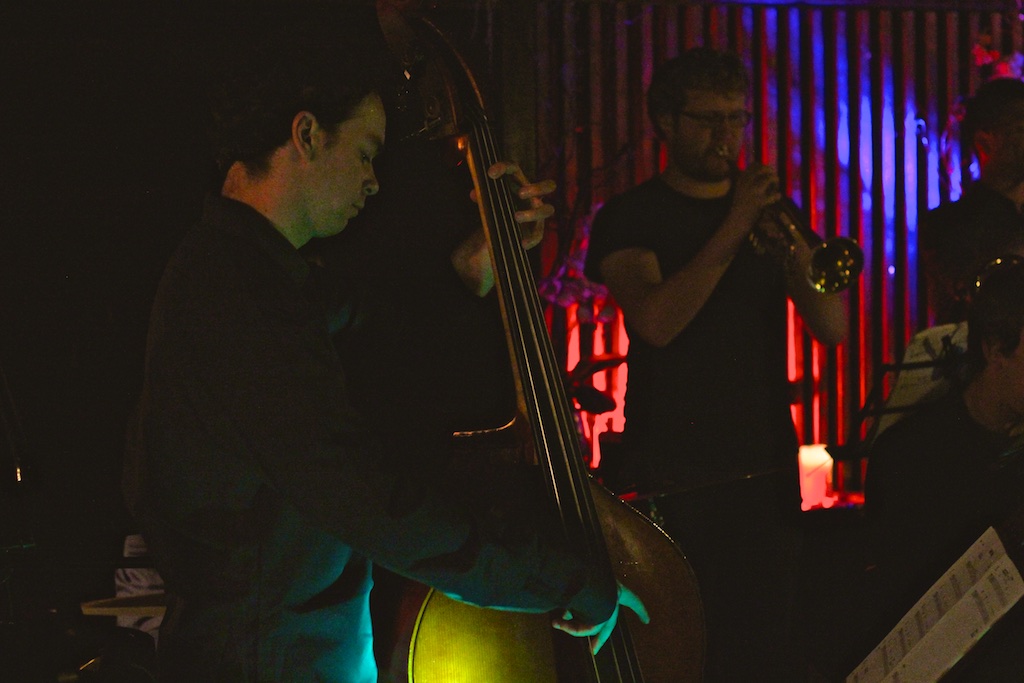
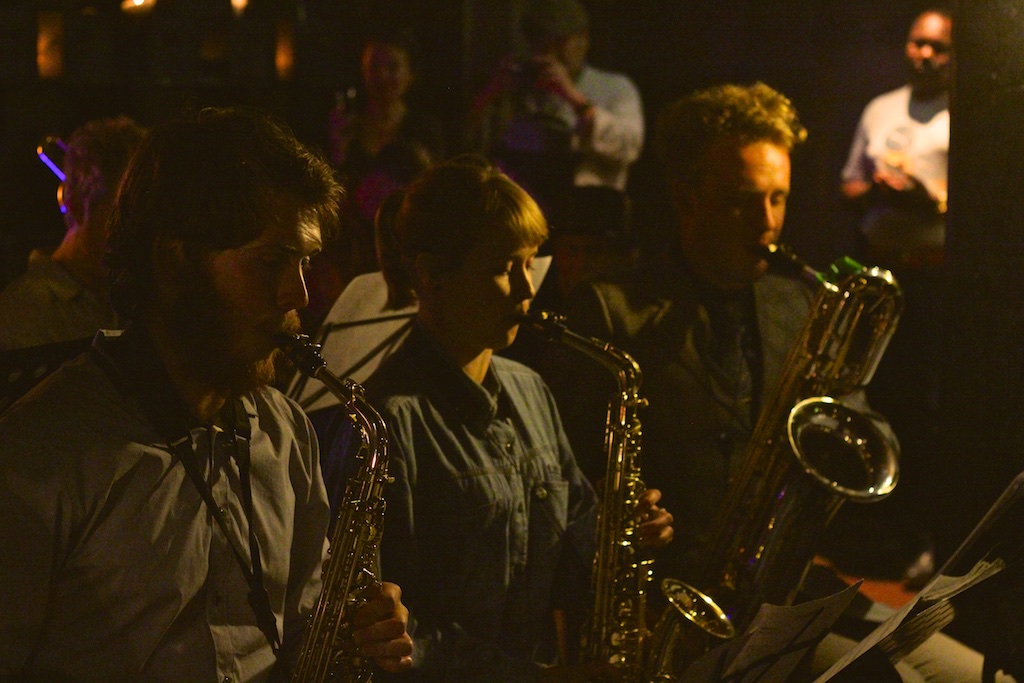
The set list took us on a high-octane Mingus fuelled journey, with the familiar politically charged ‘Fables of Faubus’ and ‘The shoes of the fisherman’s wife are some jiveassed slippers’, bookended by his lessor known tunes.  There are no poor compositions in the Charles Mingus’s songbook. The Ensemble (a sixteen piece band) is punchy, ebullient and confident. This sense of shared enterprise fed into the solos, as the support was always there. The bass work was particularly noteworthy as Mingus styled bass lines are quite unlike any others. Big ups to the baritone player as well, for making a unwieldily beast sing so heartily.

IMG_3676 - Version 2

Charles Mingus occupies a unique place in the Jazz Pantheon and in Mingus bands like this, he has left us with a legacy which thankfully shows no sign of abating. His legacy is an interesting one and different to that of most Jazz musicians. While a Miles or a Bird tribute band will often be at pains to put distance between themselves and the original for fear of comparison, a Mingus tribute band will unashamedly embrace that Mingus feel. There is a rightness about this approach to Mingus, because what at first appears tangible has hidden corners.  There is always a mysterious looseness which leaves you thinking.  I’ve listened to this piece a hundred times before, but it always sounds different.  IMG_3634 - Version 2

This is a great legacy for musicians and fans alike.  He leaves behind so much more than his recorded output; it is as if these Mingus charts are inexhaustible.  The music is full of contradictions; profoundly gospel-referencing passages, dripping with soul are suddenly overtaken by a brassy cacophony on the edge of free.  Anyone who has listened to his Magnum Opus  ‘The Black Saint and the Sinner Lady’ or ‘The complete Town Hall concert’ (with Dolphy, Collette, Mariano, Sims and many others) will get this immediately. For Mingus-loving musicians, the desire to grab a piece of this quirky magic is overwhelming.  The Wellington Mingus Ensemble has achieved that in spades.


What: The Wellington Mingus Ensemble

Saxes: Bryn van Vliet, Eilish Wilson, Jake Baxendale, Garam Jung, Oscar Laven Trumpets: Ben Hunt, Michael Costeloe, James Wisnesky, Daniel Windsor  Trombones: Kaito Walley, Cameron Kidby, Julian Kirgan, Patrick Di Somma        Piano: Ayrton Foote,  Double Bass: Adrian Laird,  Drums: Jacob Randall

Where: CJC (Creative Jazz Club), Britomart 1885, Auckland, New Zealand 26th November 2014