Khmer Live in Bergan (Nils Petter Molvær)

Nearly 30 years have passed since ECM released Nils Petter Molvær’s popular ‘Khmer’ album.  It was a departure from the ECM fare of the day, and not without risk, but it found a receptive audience and sold like hot cakes. NPM (Molvær) laid down a new direction for Jazz, and the 1990s saw a subsequent rise of ambient-leaning improvised music (a genre variously labelled as Jazz acoustic/electronica, future jazz, Nu jazz, etc). It has exerted an increasingly pervasive influence on other Jazz forms over time.  

Since the release of ‘Khmer’, NPM has released dozens of albums, and his status on the European jazz scene is unimpeachable. Many of his albums, such as the original ‘Khmer’, were studio-recorded, but, superb as those albums are, this music thrives on live performance. It is mostly danceable, and the club lighting and pulsating audience create a feedback loop, intensifying the atmosphere. In ‘Khmer Live in Bergen’, you can sense that added energy. 

There is an unmistakable filmic quality to this mood-dominant music, conjuring up imaginary worlds that linger on the outer edge of reality. The listener is invited on a journey, and a narrative unfolds, but it remains elusive. Unless you immerse yourself. The song titles hint at a narrative, but the ebb and flow of the music fleshes it out. Ambient-leaning music always exalts mood over the strictures of form. 

Song of Sand

Despite the title, this is not an exact recreation of the original ‘Khmer’ album. There is no ‘Khmer’ track, for instance, but there are four tracks from the original. As much as a fresh take on the title track might have appealed, the inclusion of ‘Song of Sand’ more than makes up for it. If ever a track evokes powerful dreamscapes, it is this. A distant pulse is heard, soft at first, followed by muffled voices – then the trumpet as the music becomes more immediate, the sound of a caravan navigating its way through dunes, perhaps – each step evenly paced, as it advances over the vast sand-blown landscape. Five of the tracks have appeared on other albums. Of those, I particularly liked ‘Vilderness’, with its Jon Hassell-like resonance, punchy basslines and soaring multiphonic interludes. 

This is an ensemble in the truest sense, and in many ways, a traditional offering in fresh raiment. Everything you hear, including the samples, is created in real time. This is a collective improvisation that moves freely inside a flexible form. Sculpting sound in this way requires many deft hands. Four of the musicians played on the original ‘Khmer’ album: Molvær, Jan Bang, Eivind Aarset and Rune Arnesen. The full ensemble: Nils Petter Molvær (trumpet), Eivind Aarset (guitar & electronics), Jan Bang (live sampling), Pål “Strangefruit” Nyhus (DJ, MPC, programming), Audun Erlien (bass), Per Lindvall (drums), Rune Arnesen (drums, percussion). 

It is on Edition Records and will be released on August 5, 2025. You can pre-order from Bandcamp now.  

JazzLocal32.com was rated as one of the 50 best Jazz Blogs in the world by Feedspot. The author is a professional member of the Jazz Journalists Association, a Judge in the 7VJC International Jazz Competition, and a poet & writer. Some of these posts appear on other sites with the author’s permission.

merging streams – deep rivers

MI0002138631

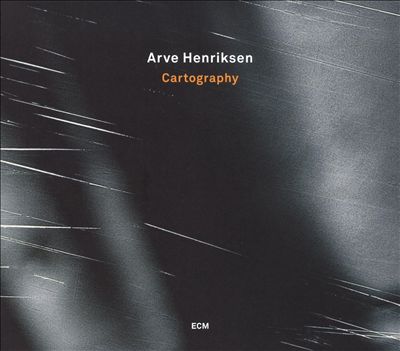
This week my copy of John McLoughlin’s ‘Black Light’ arrived (ARI X 050). A vibrant stream of groove fused with ancient oriental sources. All transformed utterly. Talas sounding like rap, deep groove and the reflective fusing with virtuosic Jazz bravura. In McLoughlin’s hands stylistic purity is a will of the wisp. Every note is fresh; past, present and future rolled into one. I feel the same way about ‘Dream Logic’ by Eivind Aaset and ‘Cartography’ by Arve Henriksen (both on ECM). Superficially the Mcloughlin album is a lot busier than the Aaset or the Henriksen but there are strong threads of commonality. Both draw on deep wells of music, shaping sounds derived from primal and untapped sources in equal parts.

All musical styles originate from another place. If music stands still it risks becoming a museum piece and whether it’s Mozart, Lennon, Bartok, Ayler or Miles Davis the influences are there. Forward looking musicians comprehend this instinctively and explore the vastness of sonic possibilities; knowing that musical innovation comes from open-minded exploration. Innovation never emerges from stasis. When people confine an improvised music like Jazz to a particular style or era they miss the point. Jazz like Latin music or Flamenco is a spicy fusion of rich influences. As older familiar tributaries recede to a trickle, new ones flow; filling the space. It is an immutable law of nature and of improvised music.

In the improvisers hands, nothing should survive unscathed because improvisers are shape shifters. They pirate, parody, transmute, transcend and remake. From older forms come newer forms; sometimes as illusive as silence. This artistic alchemy does not imply a lack of reverence for the past, it is the reverse. Finding new ways of interpreting the world is the highest calling of any artist and no matter what the change the DNA is never lost.

Four years ago happenstance led me to the Nordic improvising minimalists and the fascinating influences that inspired them. There are threads connecting these artists and these run in interesting and often unexpected ways. The ‘Eastern influence’ is an obvious source but there are so many more. Following the 1950’s recordings of Miles and Coltrane either playing over a drone or utilising other scales (like the Phrygian mode), new grooves entered the mainstream Jazz lexicon.

The musicians influenced by Kind of Blue are legion, but the connections are not always obvious. The Byrds, Beatles, Animals, Stones and the Who all made use of modal scales post Kind of Blue. I was surprised to read that U2 claimed that album as a prime influence. Terry Riley is an important figure in the minimalist school and he makes no bones about the effect of Coltrane and Kind of Blue on his thinking. Riley’s ‘In C’ was composed before the term minimalism and his stunning ‘A Rainbow in Curved Air’ took improvised minimalism to a new place. In the late 60’s the serialist trumpeter Jon Hassell met Riley and soon after they studied under the Indian master singer Pundit Pran Nath. Their increased awareness of what is now referred to as World Music became an added factor in their musical development. Along with Riley, Hassell experimented with electronics. 

Later both Riley and Hassell worked with Brian Eno and David Sylvian (ECM’s Manfred Eicher was paying attention). Eno credits Hassell with shifting his perspective considerably. Both coming out of experimental traditions and both unafraid of fusing lesser known ‘world’ musics with electronic music. Out of these discussions arose the concept of ‘Fourth World Music’ and ‘Coffee Coloured Music’ (World Music was not a common term at that time). Eno is a major figure in experimental Rock and World Music having collaborated extensively with David Bowie, Roxy Music and others.

The Nordic Improvisers are the most interesting development for Jazz audiences. Perhaps due to the influence of Jon Hassell, an incredibly strong Ambient trumpet tradition has developed in countries like Norway. Arve Henriksen, Nils Petter Molvaer and Matthias Eik. Eik is less associated with the Ambient improvisers, but his soft rich and at times flute-like sound places him in their ambit. The leading Experimental/Jazz/Electronica ambient improvisers are Eivind Aaset (guitars, programming), Jan Bang (live sampling, Beats, programming, bass), Erik Honore (synthesiser, Live field recording, samples), Arve Henriksen (Trumpets, field recording, voice) Lars Danielson (bass), Sidsel Endresen, (voice), Nils Petter Molvaer (trumpet) and Bugge Wesseltoft (piano, keyboards, electronics). Into this mix add a number of leading European, American and especially British Jazz and avant-garde experimenters like David Sylvian (voice, Programming,samples).

New Zealand Jazz has a foot in this camp with the fine work by Alan Brown on ‘Silent Observer’. Also Browns work with Kingsley Melhuish (‘Alargo’). To that I would add the experimental work of the Korean based kiwi improvising musician John Bell. The local offerings are as good as anything on offer elsewhere. We should trust ourselves to listen rather than struggle with genres. Too much time is spent worrying about definitions. This is ambient but it is not elevator music. It is a music of profound subtlety and if you relax into it, the grooves and pulses will take you deep inside. This is profound music that understands space and utilises silence. In Eno’s words, “an emphasis on atmosphere and tone replaces that of rhythm and melody”. This is a music that rewards careful listening and it goes where it wants without being time bound. Above all it engages the senses in new ways – it is utterly filmic in quality. I highly recommend Eivind Aaset’s Dream Logic on ECM as a starting point. I will keep you posted on New Zealand developments.

The Clips: Terry Riley, ‘A Rainbow in Curved Air 1969’ – Arve Henriksen, ‘Recording Angel’ from ‘Dream Logic’ (ECM) – Jan Bang, ‘Passport Control’ from ‘And Poppies from Kandahar’ (Samadhi Music) – ‘Alargo’ live are Alan Brown/Kingsley Melhuish – Gaya Day is by John Bell.

Sources: (Eno interview) The debt I owe to Jon Hassell – The Guardian. The Blue Moment – Richard Williams (Faber & Faber).