How we hear and process music is the result of endless debate. When a resonant voicing or melodic fragment is freed from the wood, wire or chip, the vibrations refract; entering our consciousness through individualised prisms, and each note coloured by preference, mood and previous exposure. What I heard last Wednesday I can only process through my own lens and how I heard it may not be how it was conceived. The opening number took me directly to a place that I visit often. A warm and familiar place situated in a time before these musicians were born. That place was the early electric Jazz fusion era (I love that shit) and in the second set, to the atypical small ensemble arranging by the likes of Carla Bley, Jimmy Giuffre or French horn player John Graas.
I am not saying that either band were reprising those eras because they weren’t. What they played was freshly minted, modern and innovative. The connection and the intense pleasure both groups afforded me was that meeting place between my point of reference and what they created. This is the eternal triangle of improvised music; musician, instrument and listener. A cycle with an endless feedback loop, which brings me to a second point. The players communicated their passion well; something of themselves. It manifested in the leader’s smiles of delight or in the shouts of mutual encouragement. As young, as they were they had cracked a vital code of musical communication. It is not just chops or clever compositions that push you over the line, but putting yourself at risk, exposing a glimpse of the human being and the joy feeding the music.
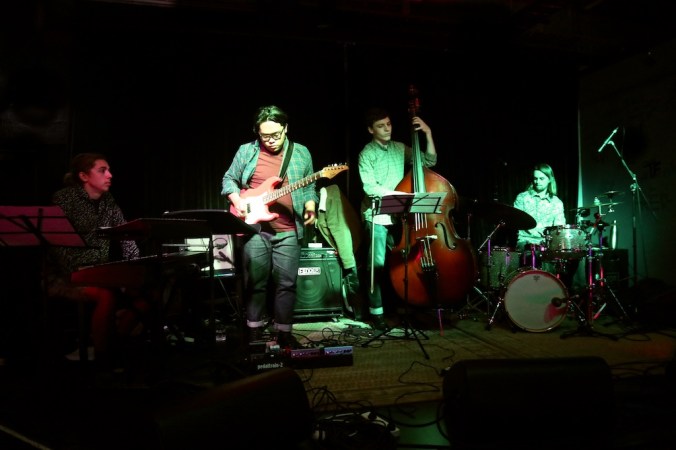
The musicians were mostly from the UoA Jazz Studies programme and the sets were interesting contrasts. First up was the Daniel Waterson Quartet with drums, keys, guitar and bass. The first number was titled ‘Not enough Lithium’ and it was this piece that contained embedded echoes of 70’s fusion. It had various motifs but as it developed, mood predominated. This enabled me to make my own emotional connection to the music. The piece didn’t tell us how to engage but it invited the listener in and I believe that that is important. Some tunes are so nailed down that they feel like a lecture. This was not. All of these musicians are a credit to the Jazz School and I was familiar with everyone except the keyboards player (more on him later). Michael Gianan showed how far he’d come since we last heard him at the club. I last heard Waterson when he played in the Indian Jazz fusion group Takadimi. He is an engaging and innovative drummer and it was good to hear his own compositions.
The second set up was the Wil Goodinson Septet and it was unusual in that it featured bassoon, bass clarinet, cello, bass, guitar and piano. Goodinson is well thought of as a bass player and it is not unusual to catch him in others lineups. This was a chance for him to showcase his arranging skills and his charts were quite exceptional. Apart from the first tune by Joe Henderson, all of the rest were his own compositions. All arrangements were his. This was an interesting ensemble and they navigated the charts with ease. The bassoon and bass clarinet were complimentary and their textural possibilities were well utilised (Asher Truppman Lattie demonstrated his skills here and I applaud his work on this lovely under-utilised horn). The guitar, while not dominant in the mix, was essential as it gave brightness, a gently articulated voice to contrast the bass-rich sound. Holding everything together was the bass. We could not see the leader but his cues were evident as he guided the others through the charts.
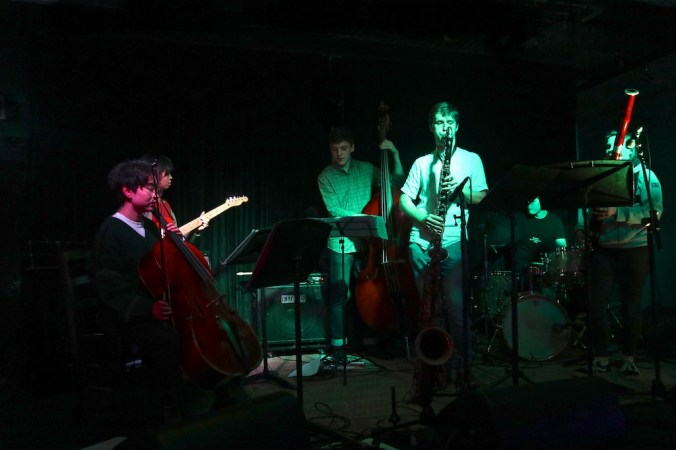
The drums and piano contributed with accents, pulse and solos and both were well placed in the mix I also have a fondness for cello in Jazz and the instrument was well deployed. When bass and cello played unison arco, the air vibrated as the low notes tugged at the senses. It was the sort of ensemble that ECM might feature, but the originality made it hard to pigeonhole as just that.
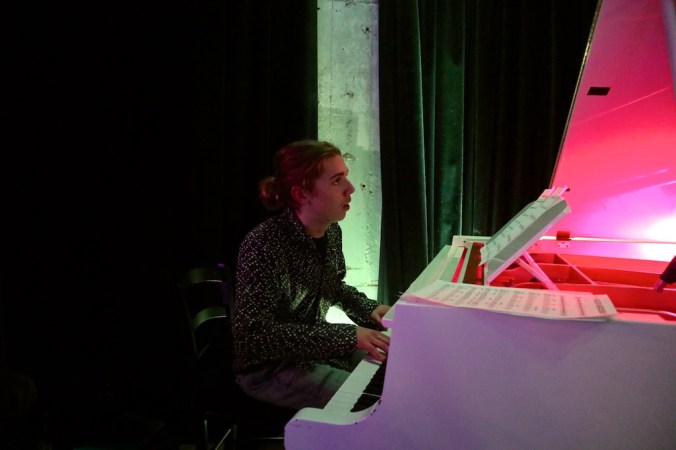
For a few months now, people have asked me, have I heard Joe Kaptein play. Until last Wednesday I had not and after hearing him on Wednesday I admit to being caught off guard. What I heard was a high degree of pianistic maturity; unusually so for a Jazz Studies student partway through his second year. He leaned on no particular style and was as much at ease playing in a freer percussive mode as he was where gentler minimalism was called for. His comping was notable, as was his sense of time. He understood when to play and most importantly when not to; he could lay-out or enter a groove and milk it for possibilities. It felt good to be in on this at ground level and I will watch his journey with great interest. Kaptein and Goodinson played in both sets
. 
Daniel Waterson Quartet: Daniel Waterson (drums, compositions), Michael Gianan (guitar), Joe Kaptein (keyboards), Wil Goodinson (bass).
Wil Goodinson Septet: Wil Goodinson (bass), Joe Kaptein (piano), Kathleen Tomacruz (guitar), Asher Truppman Lattie (bass clarinet), Karen Hu (cello), Monica Dunn (bassoon), Tom Legget (drums)
@ CJC Creative Jazz Club, Anthology, K’Road, Auckland New Zealand 31 July 2019
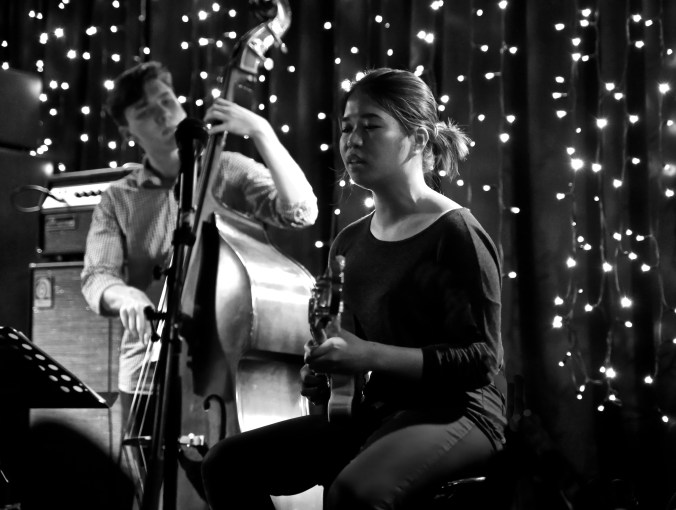
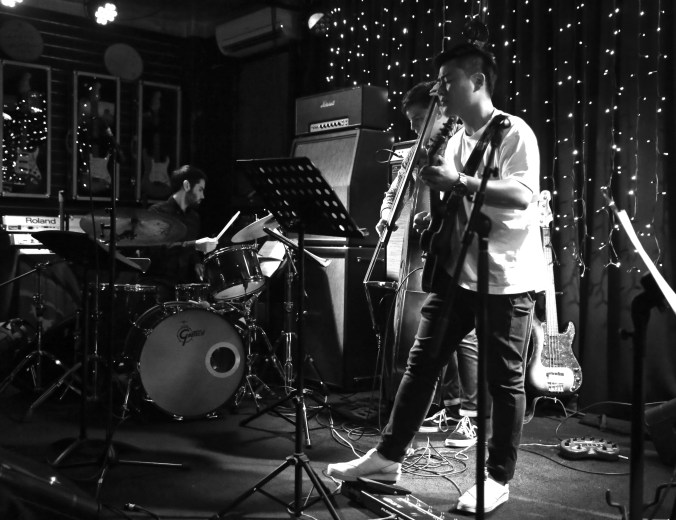 Two weeks ago the CJC Creative Jazz Club profiled two more emerging artists; Seungeil Thomas Hwang and Kathleen Tomacruz. Hwang and Tomacruz are both guitarists but with quite different approaches to their craft. Hwang leans heavily toward the fusion and rock end of the spectrum while Tomacruz, although adventurous, sits comfortably inside the tradition. Both underscore the value of the University of Auckland, Jazz programme; a programme which prepares musicians in the best possible way; fitting them for whatever musical path they choose.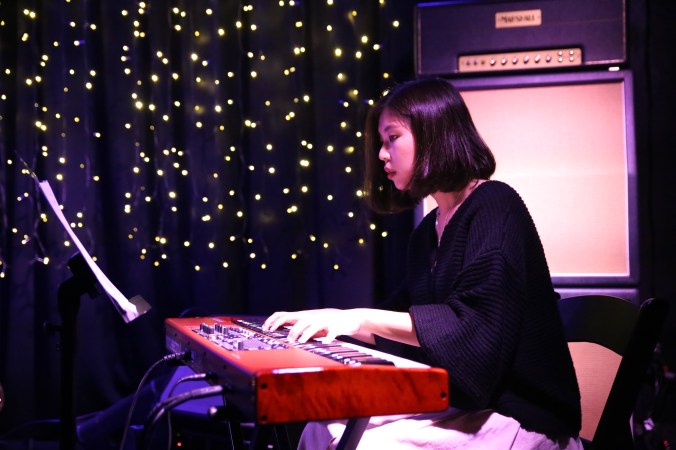
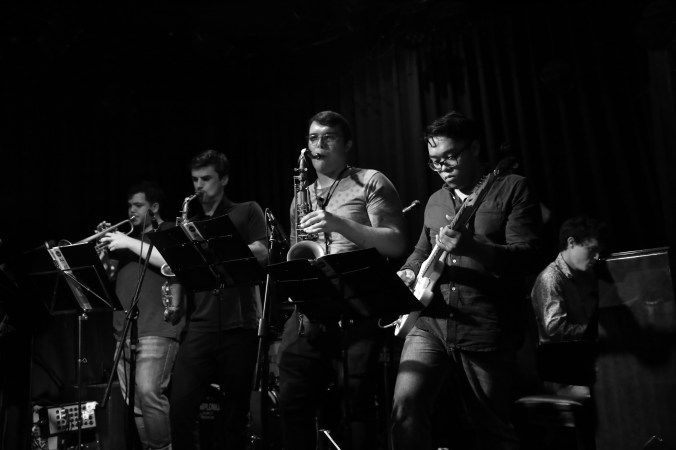 In keeping with the longstanding CJC tradition of keeping twice yearly slots open for emerging artists, late March featured two such sets. First up was a group led by bassist Denholm Orr. Orr has appeared in lineups a number of times, but this was his first appearance playing his own material and as a leader. His recent compositional work has placed increasing focus on arco-bass and consequently, the charts reached into that territory. Arco is not the default style for Jazz bassists but I am seeing a lot more of it lately and I welcome that.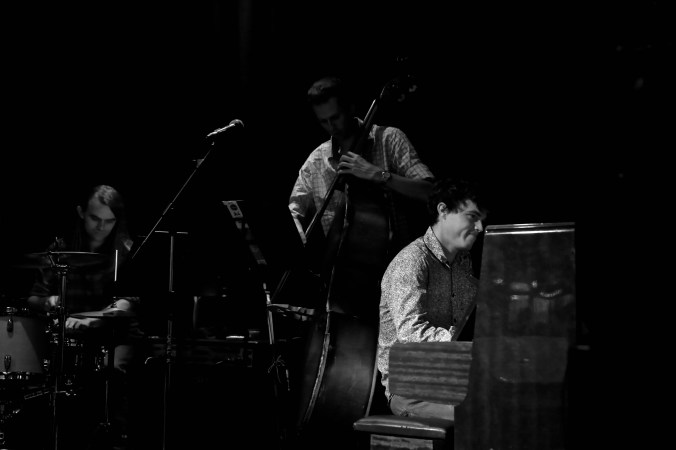
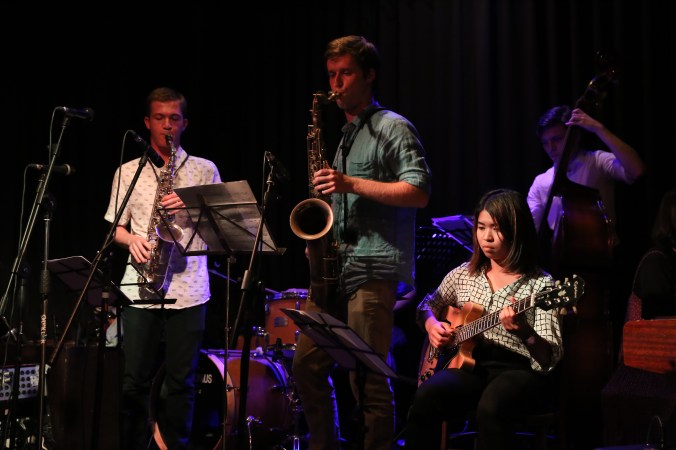
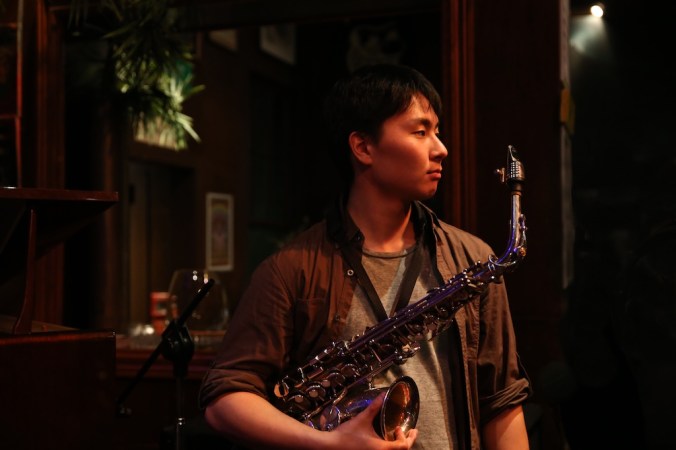 Last week brought us another emerging artist’s gig and this time it featured a Wellington band followed by an Auckland band. Each brought different aspects of improvised music to the bandstand and in a very nice touch, jammed together at the end; a happy meeting place between approaches. With so many international acts scheduled over coming months, it was great to see these young emerging bands given a shot: Again, this was good programming by the CJC.
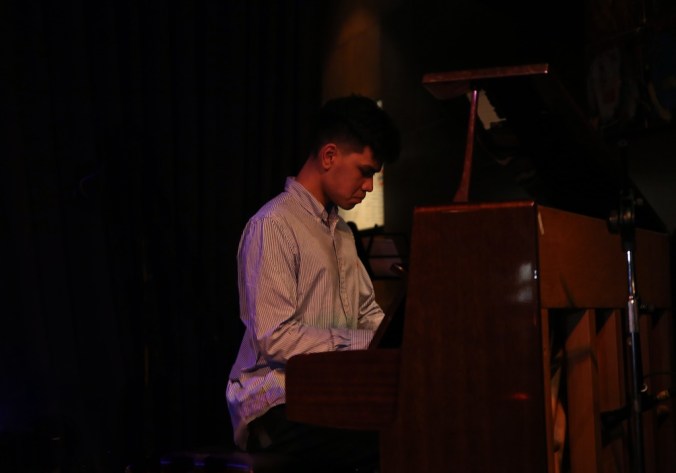
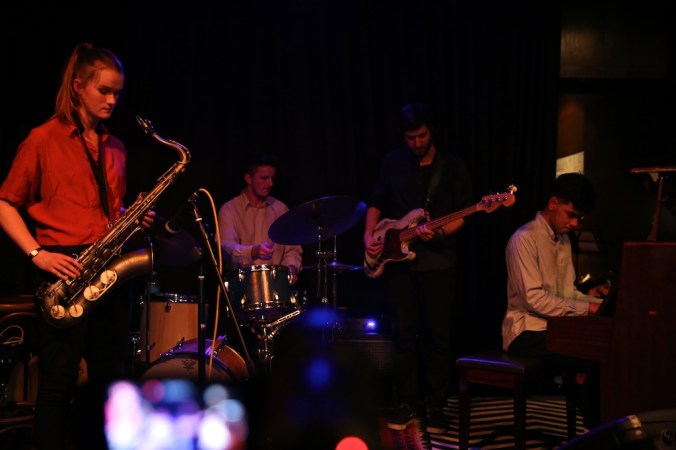 The Leo Coghini Quartet from Wellington took a straight ahead approach and it was obvious from the first number by Coghini, a solo rendering of ‘It Could Happen To You’ (Van Heusen/Burke), that he was an interesting pianist. He is classically trained, but with a good feel for swing oriented tunes. There were some nice originals in the set, but they were most comfortable on standards. I particularly liked the way they played Parker’s latin infused classic ‘My Little Suede Shoes’, also Kenny Garrett’s ‘Wayne’s Thang’. Both were approached in interesting ways (especially the nicely phrased Parker tune). The last number the quartet played was Stevie Wonders swinging groove classic ‘Isn’t She Lovely’ (which I have posted).
  In relation to ethnicity and gender, the modern New Zealand Jazz scene is increasingly reflective of the wider population; It is, therefore, good to see women picking up instruments that were once regarded as being exclusively in the male domain. Louisa Williamson was up front on tenor. She overcame some initial nervousness and played well. The other band members were electric bassist Zane Hawkins and Jeremy Richardson drums (both accomplished players).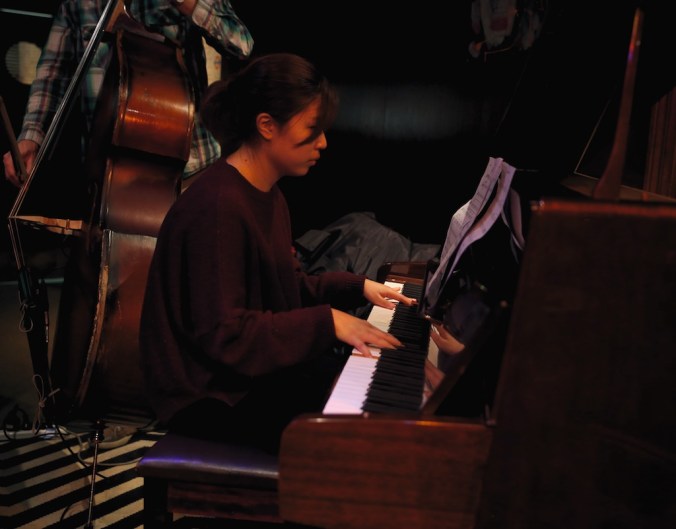
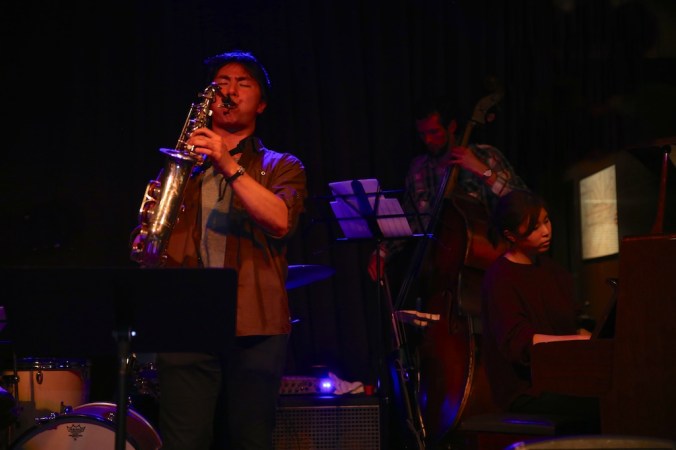 The tune ‘Within Hymn’ had clear references to Coltrane, but it was also interestingly modern. Although there were distinct parts to it, the piece made more sense as an entirety. It began with a bold statement on the horn, then unwound as it momentarily descended into chaos; next came the body of the piece, a building story, a probing at an idea, then changing again and ending with a climax. None of this would have been possible without the right support. Crystal Choi’s percussive chromaticism as she stabbed at the keyboard, the fourths, dissonant flurries; sometimes swinging as if to provide a counterbalance. Her solo was immaculate and each time I hear her now I’m amazed. Watching her musical journey encompass the avant-garde end of town and everywhere on the way is a treat.
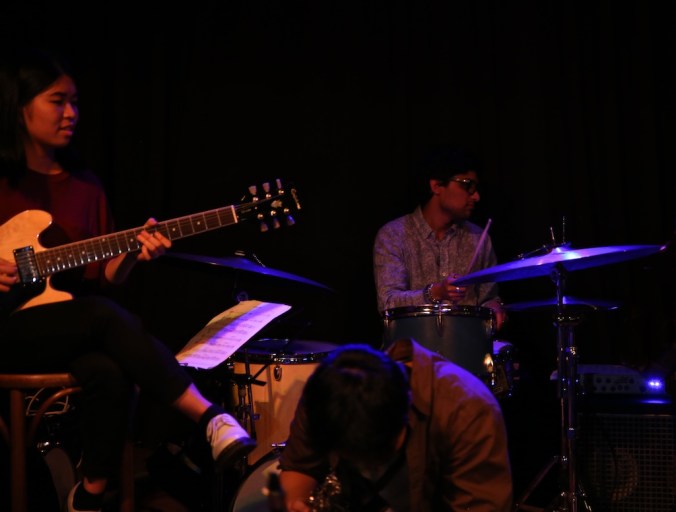 It was not just Choi who made this work, but Denholm Orr and Dean Rodrigues as well. Watch the clip through and judge for your self – these guys are amazing. Now a few bars of arco bass, now free or walking bass, and all the while, edgy polyrhythms dancing underneath. I was also pleased to see Kathleen Tomacruz on guitar – a very credible first gig for her.
 JazzLocal32.com