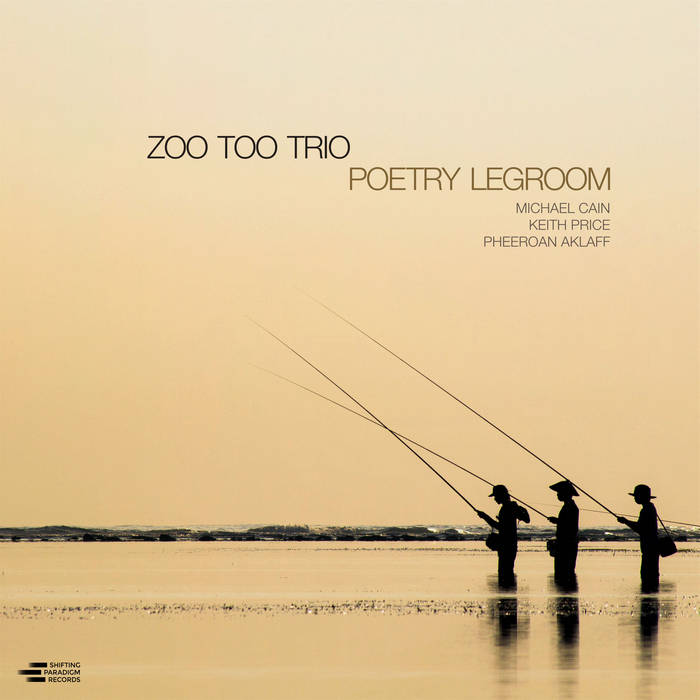
A few months ago, an album was recorded in New York that I couldn’t wait to get my hands on. The pre-release featured several tasty tracks, and its evocative cover image also intrigued. The stars were aligned for a significant album, and so it was. How could it miss with pianist Michael Cain, guitarist Keith Price and drummer Pheeroan akLaff?
It is one of those albums that jazz lovers, whatever their taste, are bound to enjoy. The cover art was prophetic, as its soft golden light and evocative silhouette figures characterised the music perfectly. It is an album to be played through, then played again, and each listening will delight. There’s a sense of place (or should I say places) evident, as the titles reference far-flung locations, but the most important maps traversed are those engraved on the human heart.
‘O’Neil’s Bay’ (Price) is lovely – a bluesy Americana-fused number. The bay in question is familiar to me, nestled against New Zealand’s forest-clad Waitākere Ranges–a hidden bay accessible only on foot. Price lives nearby and has captured the mystical essence of that wild, unspoiled coastline, keyboards, guitar and drums painting with sound.
Another track has the intriguing title ‘Poetry Legroom Okinawa Children’ (akLaff). It unfolds like a miniature suite, adding layer upon layer. Cain’s keyboards arpeggiate over Price’s shimmering chords; the mesmerising drums adding to the feeling of suspension. Like every track that unfolds, you sink inside, holding the moods carefully so as not to spoil the moment.
With ‘Solodos’ (Cain), you understand why Cain is such a well-regarded pianist. The history and the wonder of his music are encapsulated there.
In an album of gems, ‘Waxing Gibbous’ (Cain/Price) is the kicker. Underneath the tune’s languid minimalism, endless aural vistas unfold, displacing time and space into the eternal now. Never has spoken-word poetry been so carefully encapsulated, and the open-hearted colourist drumming of akLaff astounds.
All three musicians have written tunes for the album, and while their approaches differ, they drink from the same creative well. There are no burners, although a quiet intensity is evident as the meditative moods draw the listener into beguiling atmospheric worlds. We live in an era of madness, and albums like this are exactly what we need to assuage our battered senses. Shifting Paradigm Records Bandcamp and streamers.
JazzLocal32.com was rated as one of the 50 best Jazz Blogs in the world by Feedspot. The author is a professional member of the Jazz Journalists Association, a Judge in the 7VJC International Jazz Competition, and a poet & writer. Some of these posts appear on other sites with the author’s permission.
I was idling my way through the morning when a message from a friend in the UK lit up my phone. ’I’m sitting in a Jazz club in Dublin, and I have a Kiwi couple with me whose daughter is an Auckland-based jazz musician. She plays in a band with guitarist Keith Price, do you know her?’ I know Price well and have attended many of his gigs but the name Francesca Parussini didn’t ring a bell. I had missed Price’s last gig so I checked through my invitations and saw that she was a saxophonist and a member of Price’s new band LacLu. The other band member was Maximilian Crook, a versatile, tasteful up-and-coming drummer. I messaged Price for more information and learned that LacLu had recently recorded, resulting in an EP album, due for release later in the year.
Fast forward to last week, when a review download arrived. I listened and was delighted by what I heard. The LacLu album taps into an expansive realm akin to Spiritual/Astral Jazz, whose definition has expanded over the years to encompass improvised music reverencing the natural world. As human-induced chaos and degradation of the environment assails us, music that invites us to reflect on nature is increasingly appealing. The influences cited in the liner notes are Frissell, Lovano and Motian. While influences are evident — touches of Americana, colourist drumming and content-rich minimalism — the album is forward-looking and more than a tribute.
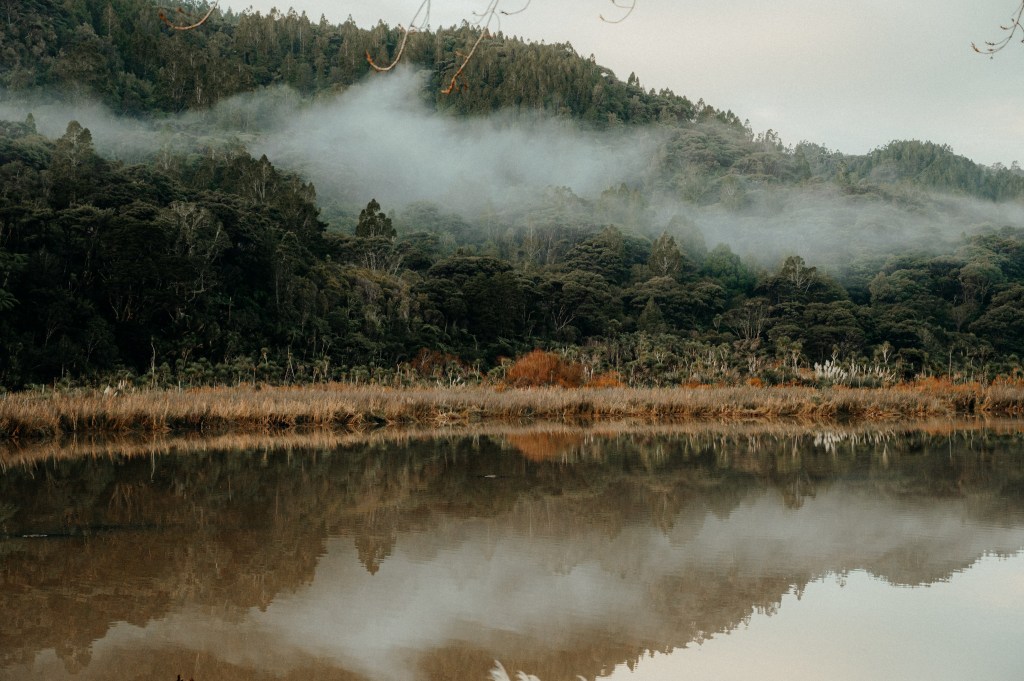
The opener, ‘Winter Fog Morning’, is in two parts. Beginning with haunting pedalled phrases on the guitar, gentle drum and cymbal taps, and whispery phrases from the horn, each underscoring the other as they paint a landscape with deft sonic strokes. You hear what could be bird calls rising out of the fog. The scene has been set and part two expands the vista. What follows at a lilting gait is a melodically and texturally rich tapestry that is both raw and caressing. I live where Price lives, among the Waitākere hills, ragged coastlines and foggy wooded valleys, and the band has captured the beauty of that landscape.
The third track, ‘Stella by Starlight’, pays tribute to a loved standard but pared back, reduced to its essence and done in a way that only skilled improvisers could pull off. Scant phrases of the loved melody appear, change and evaporate. Here especially, Price shows us what he is made of, his playing is evocative and tasteful. This is a gem and it is hard to believe that the drummer and saxophonist are not seasoned performers like Price. They are recent jazz school graduates, but despite the disparity in years and experience, the band performs as equals. The last track, ’Friends and Whanau’ rounds the album off nicely, reminding the listener of our human connections, and the interconnectedness of all life. Here the warm shadings of Americana are most evident.
Throughout there is spaciousness, seamless interaction and open improvisation around composed motifs. The name Laclu references a lake in Ontario and a general locality. The area is described as having ‘indistinct boundaries’. Price grew up near there but never visited the lake and perhaps that is the perfect metaphor for the album. What appears to be place-specific is more than that. It is any place where nature rules, places we can call home if we work with nature, not against it.
Keith Price (guitar), Francesca Parussini (tenor saxophone), Maximilian Crook (drums) – Ainsley Duyvestyn-Smith cover photography, recorded at the Kenneth Myers Centre Tāmaki Makaurau. The album is available on Bandcamp and streaming platforms – click through here at laclu3.bandcamp.com/album/laclu-self-titled
JazzLocal32.com was rated as one of the 50 best Jazz Blogs in the world by Feedspot. The author is a professional member of the Jazz Journalists Association, a Judge in the 7VJC International Jazz Competition, and a poet & writer. Some of these posts appear on other sites with the author’s permission.
There are many ways to navigate troubled times. You can deny reality, scream into the void, surf the waves of absurdity, bitterly declaim, or seek quiet while you gather your thoughts. Many prefer the latter, although the other responses are also valid. The last few years have felt particularly untethered as a growing flock of anxieties encircle us. In this space, I reach for artisan teas from China and the type of music that invites reflection. All the albums I review here slow the world’s orbit to a sensible pace and invite reflection.
Inverted ~ Auckland Jazz Orchestra
We lost Phil Broadhurst back in 2020, but his legacy is enduring, and unsurprisingly, he is constantly in the thoughts of the musicians he worked with. Here, we have a loving tribute to the man and his music, appropriately performed by the AJO, a jazz orchestra peopled with musicians who knew him well. It is the AJO’s fourth album and arguably their finest to date. Tribute albums may be commonplace, but tribute albums like this, born out of fondly remembered connections with the subject artist, stand out from the rest.
Phil Broadhurst was quiet-spoken but a colossus on the local music scene. He was a musician with many musical talents, all informed by his passions. This was particularly evident in his post-millennium Rattle albums, with their Francophile influence. As a composer, he was particularly gifted, so it is fitting that the compositions on the album were all drawn from that period. Mike Booth, Tim Atkinson and Andrew Hall crafted the arrangements and what an extraordinary job they have done. The arrangements are ‘voiced’ beautifully and thanks to the skill of the musicians, perfectly realised. The album has significantly raised the bar for local jazz orchestras and it places Tāmaki Makaurau firmly on the jazz orchestra map.
Fortunately, Phil was able to guest on some of these tracks before he passed and it is moving to hear him. We know that he was delighted with what he heard. It is also moving that his beloved partner, Julie Mason, appears on piano on the remaining tracks. I won’t name all the personnel or soloists here because the list is long, but check out the album on Bandcamp.
I rate everything on the album, but my favourite tracks are ‘Pat’, with Phil teasing wistful magic out of his lovely tune, and Pukeko. Pat features Broadhurst, McNichol on tenor, and Booth on trumpet, the latter, rising to the occasion (Booth arranges both). Pukeko features Gianan on guitar and Booth on flugelhorn. The album is available at Rattle Jazz on Bandcamp.
Volume Two ~ Darren Pickering
Deep listeners will appreciate this album for its subtle interplay and warm embrace. It is a fine example of today’s forward-looking improvised music, drawing as it does on the sounds we can all too easily overlook as we drown in the endless iterations of soulless commercialism. Cinematic phrases, slow textural electronic grooves teasing out rich soundscapes, the kind you might hear fleetingly emanating from a softly lit apartment on a summer’s night, wanting to hear more.
It is an album that will reward repeated listening as the subtle minimalism if examined with open ears, will reveal an expansiveness. Pickering has previously demonstrated other musical sides, but I am glad he has chosen to further this one. The band were perfect for what he has created here, understanding that space serves sound.
There is balance and variety. The opener ‘Oneroa Bay’ sets the tone nicely for what follows. For those who crave something more traditional, there is ‘Blue Mind’, a blend of the crystalline ECM aesthetic and the warm embracing Impulse grooves. Or ‘Mazawati Tea’, an update on the swinging groove trio/quartets we love.
There is also a degree of abstraction, sometimes floating under a slow-wending evocative melody line as in ‘Reverse’ or pushing at the outer edges of form as in ‘La Perla (for Benjamin)’. The production is of the highest quality thanks to the deft curation of Pickering, Rapaki Studios and the Rattle crew.
Released by Rattle Records and available on Bandcamp; Darren Pickering, piano, Modular, iPad, composition; Mitch Dwyar, guitar; Pete Fleming, Bass; Mitch Thomas, drums.
Dahab Days ~ Rob Luft
Rob Luft and I often meet up when I pass through London, but it’s been a while. However, I managed to conduct a long-form interview with him late one winter’s night during the pandemic lockdowns. We were relaxed as we ranged over many topics, including the possibility of this album.
With gigs cancelled everywhere as the world slipped into an enforced state of hibernation, Luft found himself becalmed in Egypt. He remained there for a considerable time, but far from being dismayed, he embraced the situation and opened himself to the sights and sounds of North Africa. The musical and other influences he explored at that time have informed this album.
You hear the colours and sounds of Egypt, not by emulating an Oud or street caller, but by creating a musical world that throws up filmic images. It is especially so on ‘African Flower’, an interpretation of Ellington’s tune, which in Luft’s hands knits east and west, past and present together seamlessly. His ‘Endless Summer’ is where Luft’s compositional skills are most evident. The skilful integration of the human voice lines tells me that the influence of Kenny Wheeler lives on in the current generation of London jazz musicians. Most of the compositions are Luft’s.
The last track, an arrangement by Luft of a traditional tune, Lamma Bada Yatathanna, is as respectful as it is innovative. We hear and sense the Arab streets. Collaborating with Elina Duni has added depth to his compositional chops and this album benefits from that. Luft’s powerful presence on guitar is evident, but he has left his bandmates ample room to shine. The result is that the album is more than just a guitar album. It works on many levels. I wish more guitarists grasped this.
Since we spoke last, Luft has co-led a second ECM album with vocalist Elina Duni and returned to a full schedule of touring and gigging. He has always been an artist to watch. If you listen to Dahab Days, you will hear why.
Rob Luft, acoustic and electric guitars, kalimba; Joe Webb, piano and Hammond organ; Tom McCredy, bass guitar; Corrie Dick, drums, percussion; Alice Zawadzki, violin, vocals; Byron Wallen, trumpet;, Steve Buckley, alto saxophone, penny whistle.
Dahab Days is available on Rob Luft Bandcamp in digital or vinyl format.
‘Ondulation’ ~ Alan Brown
Alan Brown’s ‘Ondulation’ album epitomises the sentiment expressed in the post’s header: a quieter place in times of turmoil. It explores quieter regions differently, radiating all-encompassing warmth and conjuring a world of sensory imagery. It is not the first of Brown’s albums to explore ambient improvised electronically enhanced music, but this album opens a portal into something new. It expands on earlier work by adding new digital voices. The resulting textures are rich and nicely contrasted by gently probing piano lines.
Brown has been exploring this genre for quite a few years. The deeper he dives, the richer the rewards for the listener. The first track, ‘Decider’ is particularly appealing, especially when a young woman’s voice emerges like a beckoning siren. The voice is faint but compelling. The harder we strain to catch the words, the deeper we fall inside the music.
The rest of the album flows like an otherworldly, beguiling narrative, and the journey should be enjoyed for itself, not over-analyzed. These are worlds crafted for our senses to interact with. We may hear them differently according to mood or disposition. Jazz experimentalism is common in northern Europe. Here, we have a way to go to catch up. Albums like this help us on that journey, and in my view, what Brown has achieved here compares favourably with the works of Aaset, Molvaer and Bang.
Humans have been shaping sound since the beginning of time by bending notes, creating new textures, creating new chords and playing with harmonics. But while the circuit board and its predecessors extend the sonic possibilities, it is due to the creativity of musicians like Brown that something uniquely human results. You can purchase and check out the album at Seventh House Rattle Records.
Alan Brown, Piano, Ondomo, electronics
LacLu ~ Winter/Fog/Morning
Screenshot
This last piece, Winter/Fog/Morning, is a teaser for a Rattle album due to appear later this year. Like the other albums reviewed, it fits nicely into the theme of a quieter place in times of turmoil. It is atmospheric, so I immediately wondered if that was Te Henga Valley morning, where the guitarist lives. Price, like me, lives in the Waitakere Ranges foothills. The seasons and rainforest mists make a spectacular showing there.
It is good to see younger emerging players alongside experienced ones. Price’s guitar work is gorgeous and never overstated, his gentler side is evident here. I have been to several gigs where Max Crook played and he is establishing himself as a reliable band member, open to new ideas. This is my first time hearing Francesca Perussini but I will watch out for the album with interest.
Keith Price is a Canadian guitarist living in Aotearoa. He is the Convener of Jazz Specialization, School of Music, Faculty University of Auckland. Francesca Parussini, on tenor saxophone and Max Crook, drums, have been involved in the Jazz programme at UoA. Cover art by Ainsley Duyvestyn-Smith.
JazzLocal32.com was rated as one of the 50 best Jazz Blogs in the world by Feedspot. The author is a professional member of the Jazz Journalists Association, a Judge in the 7VJC International Jazz Competition, and a poet & writer. Some of these posts appear on other sites with the author’s permission.
The genesis of DOG goes back a long way as I first reviewed them in 2012. Over that period they have gained various accolades and awards. They are Dr Lonnie Smith in reverse because the group began their journey as Dr DOG but then ditched the title to better accord with their egalitarian street-dog ethos. Their reputation extends well beyond New Zealand shores and their second album was recorded with guest Australian guitarist James Muller. They have two albums out on Rattle and both are exceptional.
Their first album featured the core group, and each of them contributed compositions: Roger Manins, Kevin Field, Oli Holland and Ron Samsom, The second album followed the same pattern, but with James Muller contributing as well. These are all exceptional players and the albums have allowed them to place a deeper focus on their writing skills. When musicians of this ability come together they are better able to push past arbitrary limits.
Ten years on there is a new guest in the lineup and as always there are new compositions from everyone. I hope that this recent gig is the prelude to a third album because together this iteration is crackling hot. With guitarist Keith Price on board, they moved into fresh territory and alongside the burners, there were touches of big-vista Americana. No wonder the gig was billed as the New Extra Strength Dog. At times it was Industrial strength.
Although the group is co-led, Roger Manins is the compare. Any gig that he fronts will have X-factor and this was no exception. The first set opened with a tune by Price and it was blistering. From the front row, it was like being in a jet-stream but it was not just bluster. Price is a terrific composer and this tune rode a freight train of tension and breathtaking harmonic shifts. It was initially titled #3unnamed, but now titled ‘Karangahape’ (a nearby street with interesting tensions). That set the pace.
With one exception (the encore), these were all new tunes and each complemented the other. This was a feast of good writing, tunes played and written by musicians at the top of their game. In spite of their long association, it is obvious that these guys enjoy playing together. The respect and warmth shine through the music. They are in sync because they respect the music and each other. The large club audience picked up on that, thus completing the virtuous circle.
I have posted the first and last gig tunes as YouTube clips. ‘Karangahape’ (Price) and ‘Schwiben Jam’ (Manins). Both of the DOG albums remain popular and they are available from stores or directly from Rattle (and on Bandcamp). If you don’t own copies grab one now, and if you do, buy one for a friend. We are lucky to have artists of this calibre in Auckland and if we show our support, more albums will surely follow. www.rattle-records.bandcamp.com
Keith Price
JazzLocal32.com was rated as one of the 50 best Jazz Blogs in the world by Feedspot. The author is a professional member of the Jazz Journalists Association, poet & writer.Some of these posts appear on related sites.
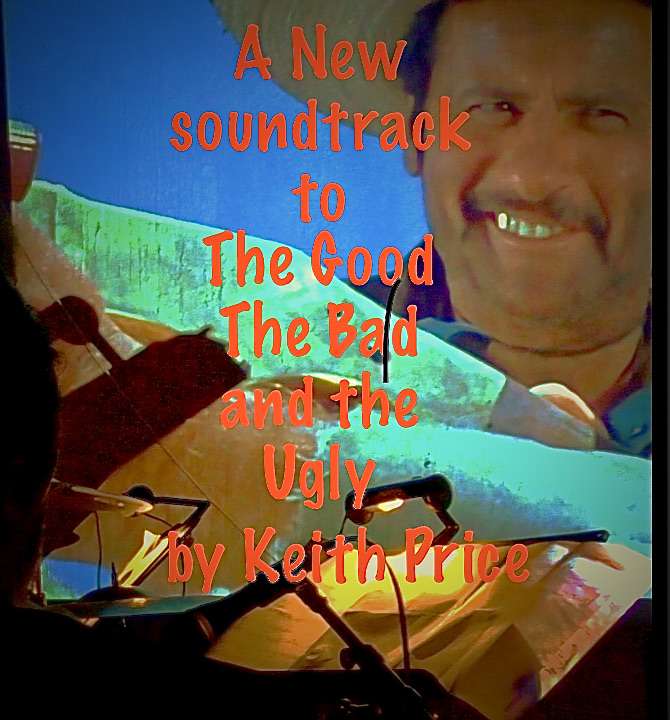
Jazz and Cinema are natural bedfellows and there was no better proof of this than with Keith Price’s Double Quartet gig. A few days ago the CJC held the New Zealand premiere of Price’s ‘New Improvised Soundtrack to The Good the Bad and the Ugly’ and what a rare treat that was. The two art forms have complemented each other since the early twentieth century. Even before the talkies, a pianist would sit watching a flickering screen while he or she would churn out improvised music. In the cinemas segregated for coloured audiences, there were aspiring Fats Wallers, and in the white-only theatres’ grandiose theme music was conjured out of thin air.
While seldom defined as Jazz it was never-the-less reactive to the moment and the first talkie was a (now) controversial film called ‘The Jazz Singer’. Soon after came some iconic Jazz themed movies and in the era of the Neo Realists, a Jazz soundtrack or an incidental jazz segment was indispensable: Elevator to the Scaffold (Miles), Breathless (Martial Solal), Blow Up [Herbie Hancock).
It is not always obvious that a Jazz musician has composed a movie soundtrack but a surprising number of films can lay claim to this connection. John Williams who wrote the Star Wars soundtrack (plus ET Jaws, Schindlers List etc) was a Juilliard trained Jazz pianist (who once worked as a Jazz musician in New York bars). We have Jazz musicians in our own community who often appear in the credits (Crayford, Langabeer etc)
In the case of Ennio Morricone, the reverse is true. He was never a Jazz pianist but his compositions have become jazz standards. I mention Morricone because he composed the original soundtrack to The Good the Bad and the Ugly. This work by Keith Price is not in any way based on Morricone’s score. Price has turned the concept on its head and created something vital and new, and in this case, drawing on the film images to blaze a new trail.
Here, the images are subordinate or equal to the music and there is no incidental music to enhance the segments of dialogue. And because there is no spoken narrative something extraordinary occurs. We feel the music and absorb the images in new ways. It comes to us through many senses, through ears, body and eyes.
This is a through-composed work, but with space and opportunity for the musicians to react to the images (and to each other). It features group improvisation, but there is nothing aimless about the work. Each segment is built on what proceeds it with the charts guiding the ensemble forwards as they interact.
Excerpts from the concert
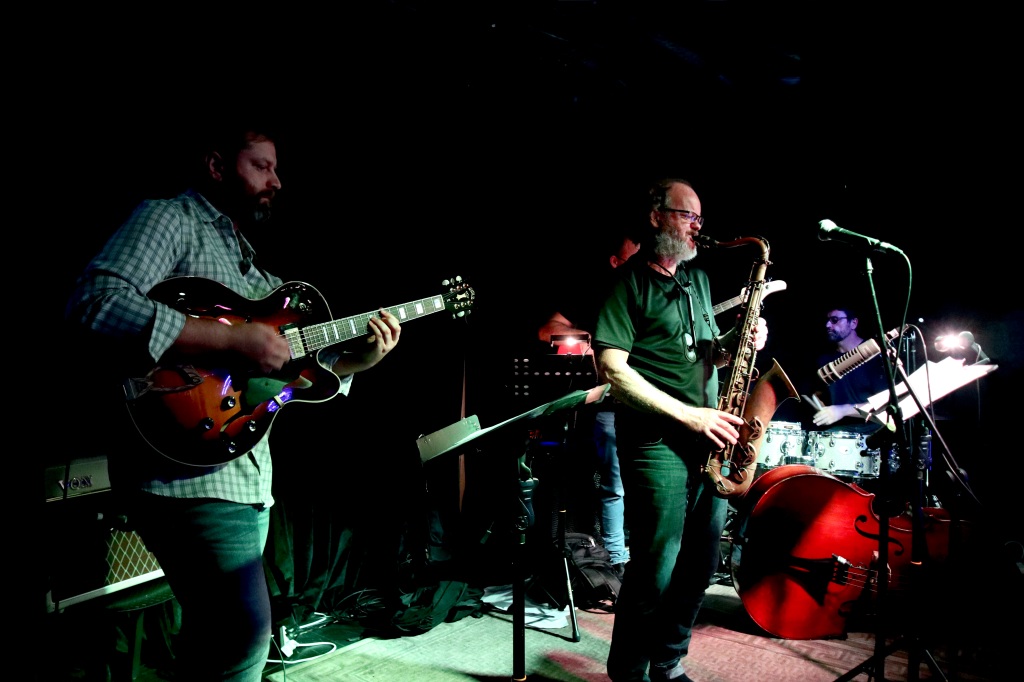
The ensemble was a double quartet and this doubling up of instruments required skilful playing and very good writing. Luckily we got both, and although the gig was loud, the intensity never tumbled into chaos. Each musician took on agreed roles, resulting in a heady, textural mix. There were two keyboards (piano and digital), two drummers, two basses (one upright, the other electric), a tenor saxophone and a guitar.
Price was on guitar and guiding the music with prompts. In a semi-circle facing the screen and keeping an eye on the leader were, Ron Samsom (drums), Olivier Holland (electric bass), Mostyn Cole (upright bass), Malachi Samuelu (drums), Kevin Field (piano), Ben Gailer (keyboards) and Roger Manins (tenor saxophone).
Ben Gailer, Malachi Samuelu, Mostyn Cole & Eli
An unexpected plus for me was having the cinematography of Sergio Leone untethered from the screenplay. A new piece of music to a timeless movie. He was a towering genius of the cinema and it was nice to be reminded of that as we appreciated the preternatural framing of each shot. Leone drew on Samurai tales for his Dollar Trilogy and in doing so he reached beyond genre. These are ancient archetypes reframed and more profound than the faux wild west of John Wayne or ‘Hopalong’ Cassidy. The function of archetypes is to live on through reinterpretation and thanks to Keith Price, this story lives on.
JazzLocal32.com was rated as one of the 50 best Jazz Blogs in the world by Feedspot. The author is a professional member of the Jazz Journalists Association, poet & writer.Some of these posts appear on related sites.
With closed borders and venue restrictions biting, the release date for Kevin Field’s ‘Soundtology’ album became a movable feast. The original proposal would have seen some of his New York band appear, but because of the pandemic, that plan was ditched. If he was flustered by these frustrating circumstances it didn’t show. Making a virtue out of necessity he engaged local musicians and launched his album anyway. It was a night to remember.
Field is one of our finest musicians and his reputation stretches far beyond these shores. He has previously recorded with highly-rated New York Jazz musicians and also with the best of New Zealand’s improvisers. As an adventurous musician, Field eschews stasis and his developmental arc is particularly evident with this latest album. He is an artist who arrives at a successful formula and then turns it on its head. With each album, he makes references to his earlier works, and then he moves foreword. Everything that has gone before becomes a springboard to a new moment and each iteration is better than that preceding it.
There is a lot to like about Fields new album ‘Soundtology’. The tunes are sublimely melodic, and as always, his trademark harmonic developments astound. I have always enjoyed his avoidance of cliche and in this case, there is something else. Even when upbeat, the tunes feel more contemplative, and the space afforded, lets the music speak with clarity. This is the album of a mature composer and it is deserving of wide acclaim.
‘Good Friday’ Live in Auckland
The album has eleven tunes and features two quartets (alternating throughout). This provides contrast while not affecting the flow and continuity. All of these tunes belong together and each unit locates something special. The first quartet features Field (Piano Rhodes), Nir Felder (guitar), Orlando Le Fleming (bass) and Charles Haynes (drums). The second quartet has Field (piano, Rhodes) Mike Moreno (guitar), Matt Penman (bass) and Nate Wood (drums). These are heavy hitters and Field could not have chosen better crews to spin gold out of his compositions. I was immediately drawn to the inclusion of Moreno, one of the worlds great guitar improvisers. I once flew to Sydney just to catch a concert of his.
‘Soundtology’ is a beautifully presented album and it was recorded to perfection. It is an album to be enjoyed on many levels; for its beauty and freshness and for its accessibility. If ever there was an example of complex music made to sound easy, it is here. The tunes are beguiling and memorable, but underlying them are twists and turns which elevate the tunes into listening adventures. A good example is the first track Quintus Maximus. It opens over an ostinato sequence, where a broken rhythmic pattern is established by bass and Rhodes. The intro is a teaser as it hints at possible directions without necessarily committing to them; then the melody soars and brings it together until the underlying ostinato phrases reappear. An interesting and enjoyable piece of music.
The second tune, ‘Good Friday’ is a great composition. It is among the most melodic of Fields tunes and it has been around since he first recorded it on his 2012 Warner release ‘Field of Vision’. Back in 2012, the tune was a slower-paced offering. Over the last few years, I have heard it performed often; now, it has emerged as a punchier version of its former self. It is fascinating to hear good tunes like this under constant development. This is what Field does and it is his impulse toward reinvention that elevates him beyond the pack. It is not surprising that he was recently awarded a doctorate.
There is no better example of its ongoing trajectory than the version of Good Friday we heard at Wednesday’s live performance. It had been rearranged to include a bass clarinet and a soprano saxophone. There were two guitarists as in the album, but the addition of the horns gave us yet another vantage point from which to examine the composition. A band member told me afterwards that the charts were interestingly structured. They forced the soloists to think outside of the square and to avoid any formulaic approach.
‘People factory’ was the perfect vehicle for Moreno, Penman and Wood. This number is like silk in a ruffling breeze, I have never heard Moreno sound better (and he always sounds good). The responsiveness Field extracts from Wood and Penman is also marvellous. This is seamless interplay at its best. Actually, everything is great on this album and there’s plenty of variety. This one is 4.5 stars. My advice is, buy multiple copies and impress everyone with your hip good taste.
Album: Keven Field (piano, Fender Rhodes), Mike Moreno, Nir Felder (guitar), Matt Penman, Orlando Le Fleming (bass), Charles Hayes, Nate Wood (drums).
Live gig: Kevin Field (piano, Fender Rhodes), Michael Howell & Kieth Price (guitars), Nathan Haines (tenor, soprano saxophones), Lewis McCallum (bass clarinet), Cam McArthur (bass), Stephen Thomas (drums).
The live gig took place at Anthology K’Road for the CJC Creative Jazz Club, November 11, 2020
JazzLocal32.com was rated as one of the 50 best Jazz Blogs in the world by Feedspot. The author is a professional member of the Jazz Journalists Association.Many of these posts also appear on Radio13.co.nz – check it out.
Last week saw the welcome return of Canadian born guitarist Kieth Price to the bandstand. This time with his re-formed Double Quartet. The question that immediately arises, is an octet a double quartet? If you were looking for a point of difference, it is hard to find in dictionaries, as the terms are generally interchangeable, but a doubling up of a particular voice is often indicated for the latter. That brings us to the Kieth Price Double Quartet: two drummers two keyboards and two bass players. A big sound.
Two drummer gigs are well established in the lexicon, becoming more prominent with the arrival of the New Thing and Hard Bop; similarly with the doubling up of keyboards and bass. Ornette Coleman had a notable double quartet. Doubling up like this can be tricky, but skilful writing and good musicianship mitigate such difficulties. Loud and strong, but not leaden, is the aim.
The Canadian recorded Double Quartet and the contemporary Auckland unit, both convey raw power. Price summed it up with his tongue in cheek comment on Wednesday.
‘I couldn’t make enough noise with a single quartet’.
It was loud but it was also nuanced, drummers blending as if one or finishing each other’s sentences, crafting a rhythmic polyphony. The keyboards keeping out of each other’s way, but adding accents throughout. The upright and an electric bass taking different roles, balanced against guitar and a tenor saxophone.
While not strictly fusion, the band had a funky fusion feel and would have been welcome at Bill Graham’s Fillmore gigs. There were interesting contrasts in the music, and the interplay between the stylings was especially appealing to those who like full-on adventurous music.
It is unusual to see Olivier Holland on the electric bass, but he obviously relished the chance. The audience enjoyed it also. Instead of pedals, he fed his bass through a laptop. This gave him interesting options and he deployed them enthusiastically. The blending of electric bass and Cam McArthur’s upright was seamless.
Many of the tunes conveyed a deep-funk feel, driven by punchy interwoven bass lines. When Kevin Field took his piano solos, Joe Kaptein, on keys, laid out, and when Kaptein soloed, he brought a classic 70s analogue vibe to the proceedings. The pairing created texture, and best of all, the fabulous club Yamaha piano was back. With Ron Samsom and Malachi Samuelu on drums, and with Roger Manins’ channelling a wild saxophone funk, you were soon cocooned inside a spacious and warm soundscape.
It was Price’s deft hand guiding all of these interactions as he cued the musicians. While not quite free jazz, it was freedom within walls, and it sounded free. The springboard for the solos, the solid grooves sitting underneath the lead instruments. Price providing an interesting contrast as his playing was deliberate and at a lower volume. When he ran unison lines with Roger Manins crazy it set up the mood for what was to follow. It was a good gig to catch.
Canadian Jazz guitarist Keith Price is a welcome addition to the Auckland scene. He brings with him fresh ideas and a musical connection to his hometown. Manitoba is associated with Lenny Breau and Neil Young who both grew up there. Perhaps it’s the proximity to the open spaces which echo in the music, that wide-open sound (and in Young’s case an overlay of dissonant melancholia)? Whatever it is, it certainly produces distinctive musicians. Lenny Breau is an important Jazz guitarist and one who is sadly overlooked, Hearing Price’s respectful acoustic homage on Wednesday, cast my ears in that direction again.
Before moving to New Zealand, Price recorded a collaborative album in his home state of Winnipeg and that material formed the basis of what we heard last Wednesday. While the album features Canadian musicians, it was released on our premier Kiwi label Rattle. ‘Upside Downwards’ is a terrific album and from the first track, you become aware of how spaciousness informs the compositions, a note placement and phrasing which allows the music to breathe deeply. This feeling of expansiveness is also underscored by a certain delicacy. In the first track especially, you marvel at the touch; the skilfully deployed dynamics grabbing your attention, but it is the artful articulation of Price’s playing that is especially evident. Listening through, it impossible not to feel the presence of the open plains and of Lenny Breau.
The co-leaders are perfectly attuned to each other throughout; playing as if one entity. There are no ego-driven flights here and in that sense, it reminded me of an ECM album. I had not come across either the pianist or the drummer before but they impressed deeply. From Jeff Presslaff, that delicate touch on the piano and the ability to use a minimalist approach to say a lot. The drummer Graydon Cramer a colourist and musical in the way Paul Motian was.
Wednesday’s gig was in part an album release, but Price also traversed earlier albums and played a short acoustic set. The album was a trio, but this time he brought four of Auckland’s best to the bandstand. The quintet format worked beautifully and his bandmates were clearly enjoying themselves. These guys always sound good, but it felt like they there were especially onboard for this. In the acoustic set, Price played what looked like a Martin (a Breau and a Young tribute). The other standard was a killing arrangement of Wayne Shorter’s Ju Ju. Why do we not hear that more often?
When setting up my video camera I made the mistake of locating myself near the bar and because of that, there is bleed-through from the air conditioners (the curse of all live recordings). The sightlines are also poor from that end. Never-the-less, I have put up a clip from the first set titled ‘Solstice/Zoom Zoom’. It was worth posting in spite of the defects. I have also posted a sound clip from the album titled ‘6 chords commentary’.
Album: Keith Price (guitar), Jeff Presslaff (Piano), Gradon Cramer (drums)
Auckland Quintet: Keith Price (guitars), Kevin Field (piano), Roger Manins (tenor saxophone), Olivier Holland (upright bass), Ron Samsom (drums). Anthology, CJC Creative Jazz Club, K’Road, 09 October 2019. Recoding available at Rattle Bandcamp.




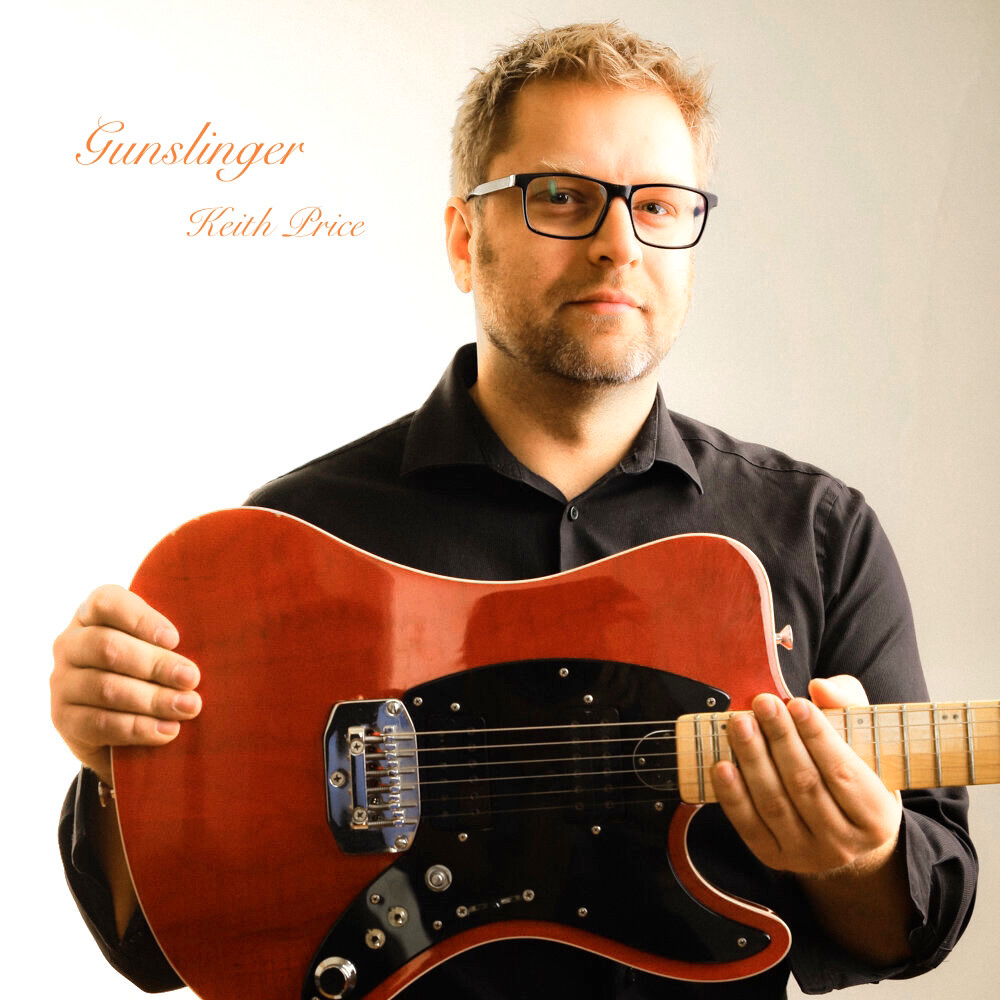
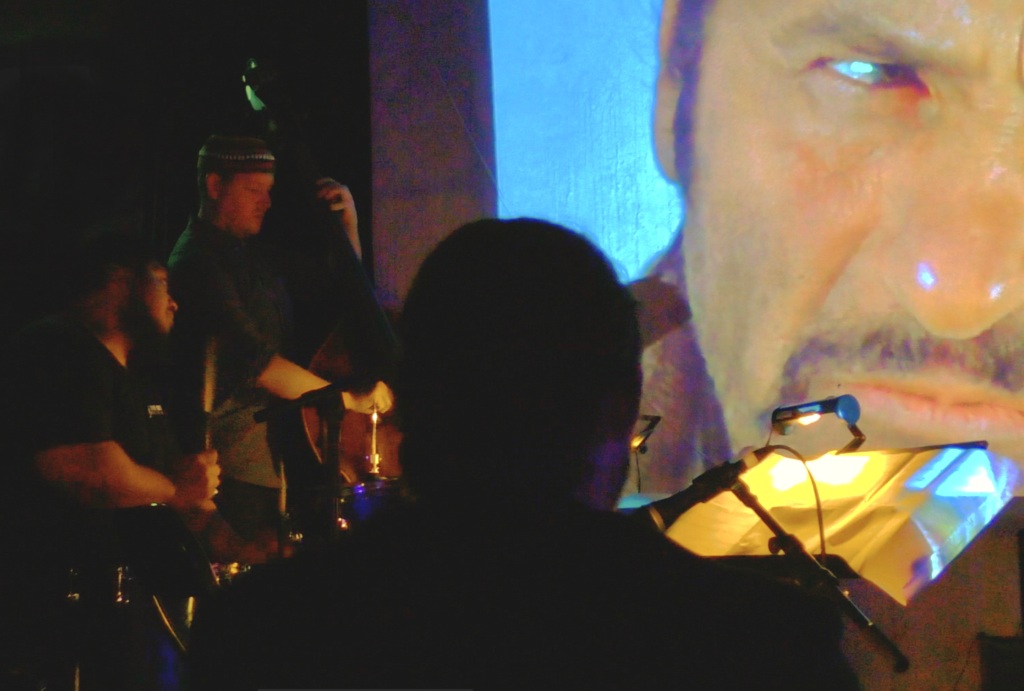


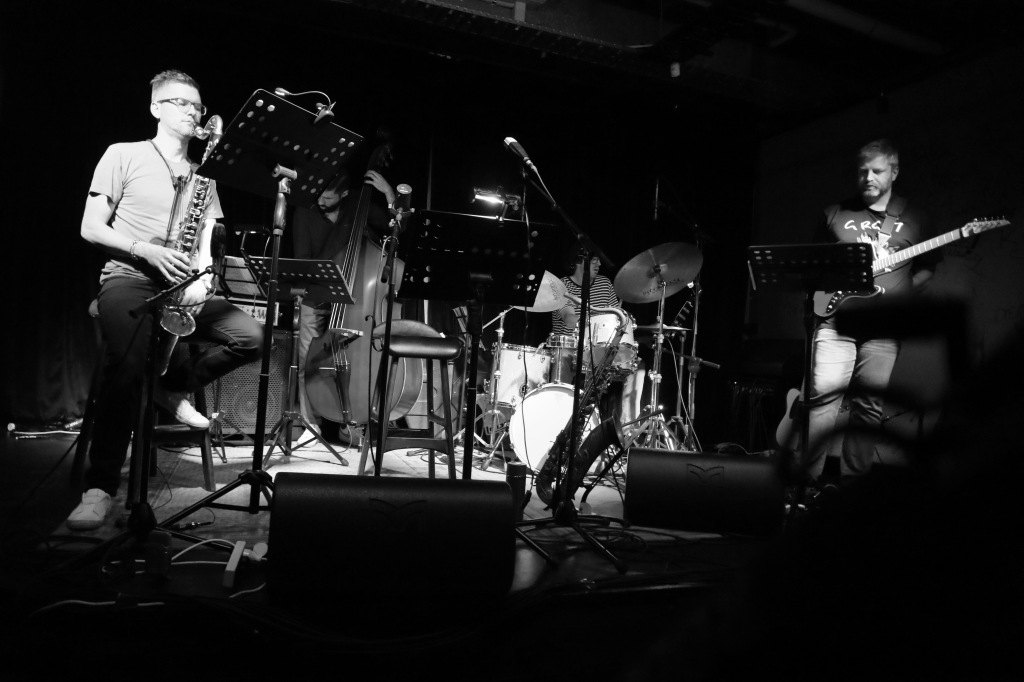


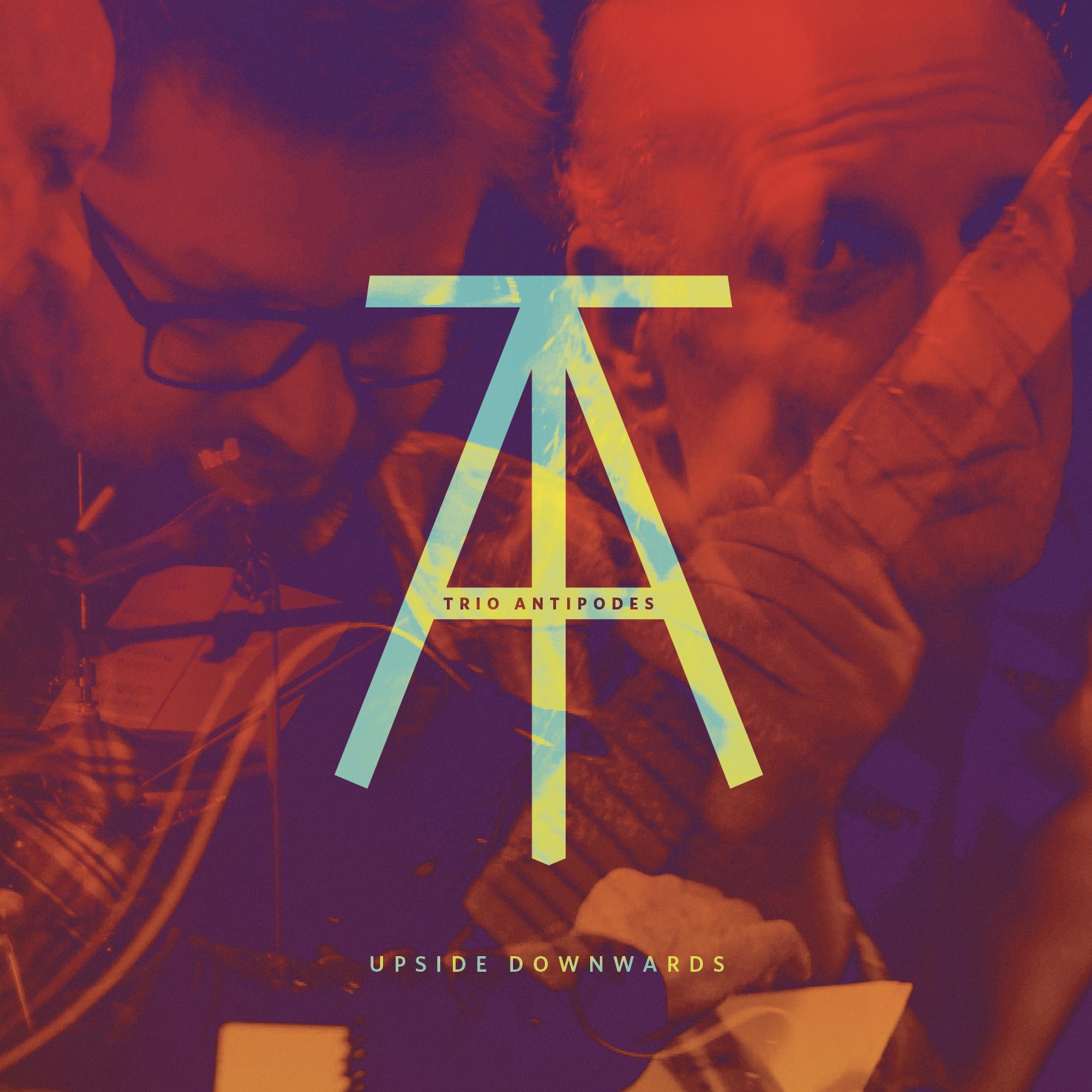 Canadian Jazz guitarist Keith Price is a welcome addition to the Auckland scene. He brings with him fresh ideas and a musical connection to his hometown. Manitoba is associated with Lenny Breau and Neil Young who both grew up there. Perhaps it’s the proximity to the open spaces which echo in the music, that wide-open sound (and in Young’s case an overlay of dissonant melancholia)? Whatever it is, it certainly produces distinctive musicians. Lenny Breau is an important Jazz guitarist and one who is sadly overlooked, Hearing Price’s respectful acoustic homage on Wednesday, cast my ears in that direction again.
 JazzLocal32.com