Darren Pickering/Chris Cody

Three (Darren Pickering Small Worlds)
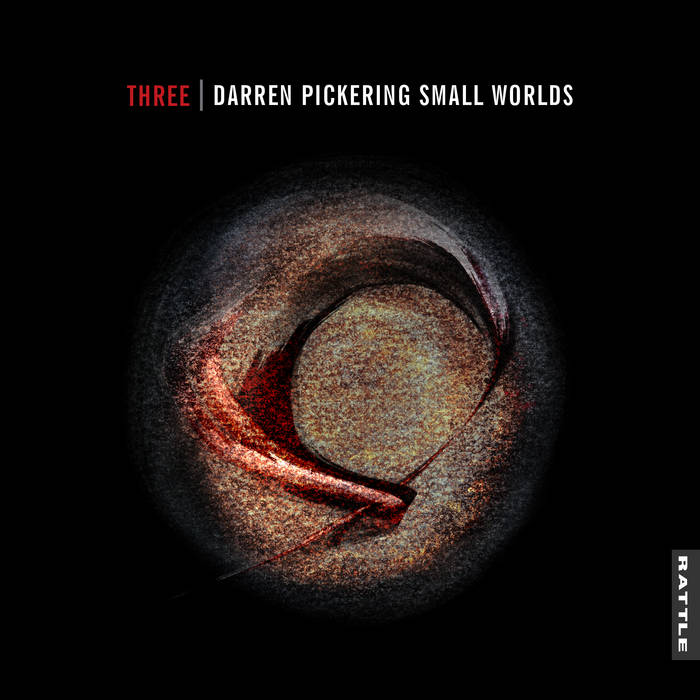
Darren Pickering’s third Small Worlds album, ‘Three’, is a welcome addition to the earlier volumes. While it follows the successful formula developed in volumes one and two, it sounds fresh and endlessly explorative. Throughout the album, snaking lines float, dreamlike, over repeating patterns and carefully layered grooves. Out of this comes the quartet’s cinematic sound. Jazz and cinema are twin arts as they evolved together, often feeding from the same well of resonance. Because of that focus on imagery, you can get inside the sound and experience it on many sensory levels. Listening to this is like watching a great movie – in a theatre – on a rainy day. 

This is a superb quartet; unsurprisingly, after two previous albums, they are hyperaware of interplay. This is particularly important in an album like this, as the soundscape is so open. The liner notes indicate they have equal input into the artistic direction, which makes sense; the democratised approach is evident. This is jazz for our times, probing but gentle and unashamedly open to influences. 

As with the first two albums, the tune times vary in length, enhancing the listening experience. Nothing is extended beyond its natural endpoint. Like the written word, contrasts like this punctuate the ebb and flow. There are small, meaningful solos, but they are skillfully interwoven into through-composed pieces.

Immediately noticeable is Pickering’s touch, and the underlying digital or analogue wizardry never overwhelms. While often understated, his pianism shines throughout. Pickering is a thoughtful composer and writes to his strengths.

Guitarist Heather Webb is pitch-perfect throughout, her sound is so distinctive, with lines that fold effortlessly into the mix. Her avoidance of anything showy or unnecessarily loud marks her as a mature player. I wish more guitarists understood this. The same can be said for the drummer Jono Blackie and bass player Pete Fleming. Both blend into the mix, thus enhancing the music, making the whole greater than the sum of its parts. 

The rainy day groove is particularly evident in ‘Soft Life’. With Webb running her silken lines over Pickering’s synthesised arpeggiation, and the measured, but perfectly placed, beats like slow-dancing footsteps. And the faster-paced ‘Tauhou Waltz’ has a similar vibe. The album maintains this flow, touching on various moods, but always speaking in a calm voice. The album can be accessed from Rattle Records or Bandcamp. https://darrenpickeringsmallworlds.bandcamp.com/album/three

Under Ocean (Chris Cody/Charlie Tait)
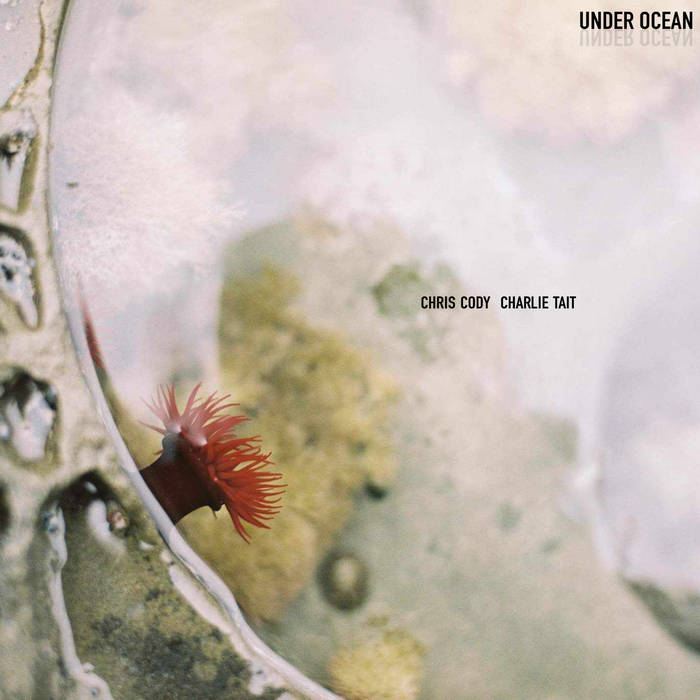
I have long been an enthusiast for Chris Cody’s work, and his two latest releases, each different from what went before, enhance an already impressive discography. Cody has a gift for examining cultural intersections. He gathers events and places, past and present and puts them under a musical microscope, always leaving us with a sense of what it means to be human.  

‘Under Ocean’ is a fresh approach with electronic enhancements and a duo format. The album traverses mental and physical landscapes in unexpected ways and, in doing so, expands not only Cody’s repertoire but the boundaries of improvised ambient-style music. The album is co-led by Charlie Tait, a multi-instrumentalist, sound designer and engineer. Tait is no stranger to sonic creations like this, and the resultant cross-fertilisation of jazz, classical, and ambient electronic music is fascinating. 

There is an increasing imperative for improvising musicians to create music like this as a reaction to the realities of our overly commercialised modern life, to examine our interior landscapes or the natural world. It also reacts to the ugliness that intrudes on the quieter spaces. They combine new and old musical technologies to good effect, as evidenced in the atmospheric opening track, ‘Salt’, which contrasts with ‘Rumble’s’ free playing and the melancholic ‘Lost World’, bringing different moods together as a satisfying whole. 

Mountain to Sea (Chris Cody) 
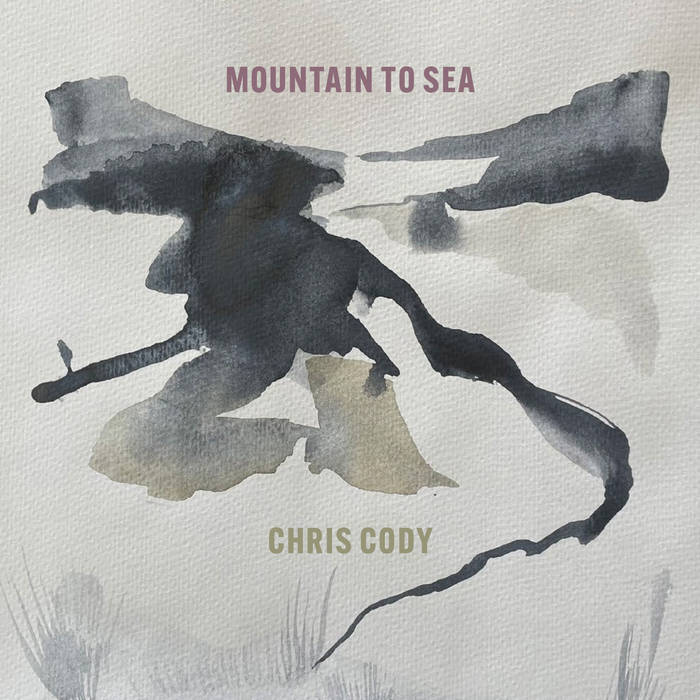
Landscape itself is a featured guest artist on most of Cody’s albums, as his writing always conveys a strong sense of place. I am not referring to specific geographic locations, although they sometimes feature, but to something deeper – cerebral. Cody has a gift for inviting introspection, and as we listen, we examine our relationship to the landscapes and regions he evokes. It is the first thing you become aware of when listening to his albums; ‘Mountain to Sea’ is no exception. 

His compositions and arrangements impress here, but his thoughtful playing is also notable. His lines and voicings convey an instinctive lyricism, an organic sound that has always defined him. The tunes contain nostalgic echoes, but speak of hope too, a heart-on-the-sleeve musical humanism. And, as in previous albums, he conveys more with less. There is ample room for his bandmates to shine, and they do. The care and loving attention each one brings to the project is evident. It is no wonder the unit sounds so good when you consider the musicians, a mix of veterans and younger players, but all exemplary: bass player Lloyd Swanton (a member of The Necks who appeared in Auckland recently) and who appeared on an earlier album ‘The Outsider’ (reviewed recently on this blog), and Sandy Evans, an acclaimed saxophonist on the Australian jazz scene, and lastly Tess Overmyer, a gifted young Australian alto saxophonist, presently based in New York.    

‘Mountains’, a ballad, opens with Ellingtonian chords that speak of grandeur, followed by two beautiful solos, lifted to further heights by bass lines that never intrude, but soar like a raptor. Similarly, ‘Quiet’ reminds me of Evan Parker’s opening on Kenny Wheeler’s ‘Sea Lady’ (Music for Large and Small Ensembles). Ripples, bird calls, lead into an elegiac anthem for the natural world, a place not separate from humankind, with alto, tenor and soprano perfectly balanced, drawing from the same musical well. This is also evident in ‘Dream’. 

As with previous albums, Cody’s daughter Maya has created marvellous cover art.    

Both albums are available on Bandcamp at https://chriscody.bandcamp.com/

JazzLocal32.com was rated as one of the 50 best Jazz Blogs in the world by Feedspot. The author is a professional member of the Jazz Journalists Association, a Judge in the 7VJC International Jazz Competition, and a poet & writer. Some of these posts appear on other sites with the author’s permission. 
The Outsider ~ Chris Cody

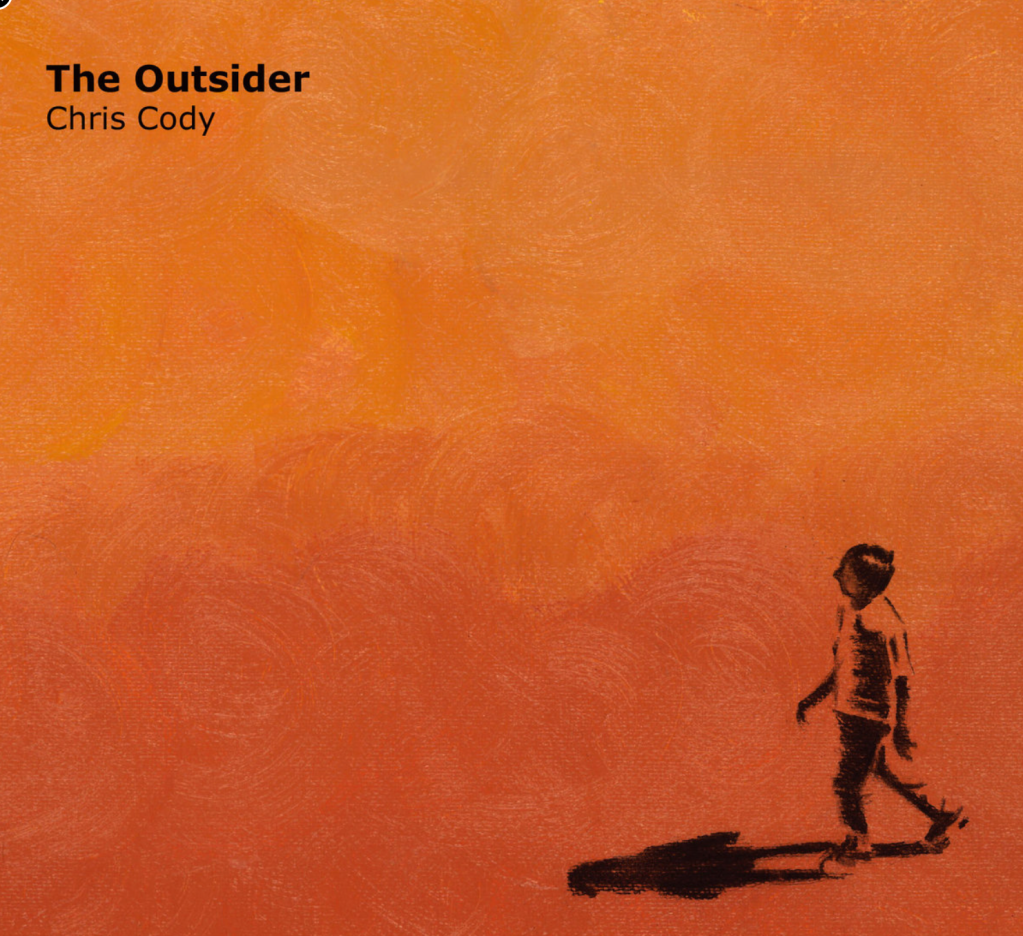
The Outsider is the latest release by acclaimed Jazz Pianist Chris Cody, and as with his previous albums, he unflinchingly holds a mirror up to life past and present. Cody has demonstrated an uncanny knack for drawing back the veil on what we wilfully overlook; colonisation, alienation, belonging and dislocation. And he does so while offering us hope and sublimely beautiful music. This album elevates his already impressive discography to new heights as he chronicles the new reality.  

The title of the album is apt, for its reference to Camus and because we have all of us become outsiders to the lives we once knew. Camus, a French Algerian, wrote his famous novel in 1942 when the European peace was in tatters, the menace of fascism threatened and when the colonised were challenging the hegemony of the old world order. We are living through similar times with a pandemic isolating us, authoritarians threatening us and the postwar consensus looking shakey. We are also confronting our colonial pasts as indigenous voices speak truths. 

The echoes of the world that Camus wrote about are familiar to Cody as he has lived in and performed extensively in France and the former French colonies. Although Australian, his creative milieu is the world at large. He is not only well qualified to tell this story but his skill as a composer, arranger and pianist enables him to tell it well. As the narrative unfolds a rich textural palette is utilised. The octet sounds bigger or smaller depending on the mood. 

The inclusion of the Oud not only broadens the palette but it highlights Cody’s arranging skills. The Oud is a spectacular instrument with evocative brightness and because of its authoritative voice, it is mostly heard with small jazz ensembles. Here, the Oud was woven beautifully into the whole, the three horns giving pleasing contrast. North African stories have immense clarity when spoken through an Oud. 

This is a great lineup, and consequently, they deliver a tight performance whether supporting the soloists or leaning into those delightful bittersweet orchestral voicings. I strongly recommend this album which can be purchased only on Bandcamp either digitally or in CD form. I would opt for the CD, as the artwork by Maya Cody is stunning. Very few album covers match the music as well as this cover does. Purchase at chriscody.bandcamp.com 

JazzLocal32.com is rated as one of the 50 best Jazz Blogs in the world by Feedspot. The author is a professional member of the Jazz Journalists Association, a Judge in the 7VJC International Jazz Competition, and a poet & writer. Some of these posts appear on other sites with the author’s permission

Astrolabe ~ Chris Cody

No one is more fitted to sonically sketch the journey of the Eighteenth-century French explorer known as La Perouse than the Australian born Jazz pianist Chris Cody. In his bios, Cody is referred to as a French Australian musician and that is an obvious qualification. He also possesses an exquisite sensitivity when it comes to communicating complex truths. The colonist versus the indigenous peoples, the scientist versus the open seas adventurer.

 On this album, Cody’s improvisational compass has deftly navigated his way inside a vast sprawling seascape; found ways to lift the veil on colliding realities and woven them into a compelling saga. For all that, the album is not mired in abstract musings; it is grounded in the tangible. Cleverly, he avoids the strictures of the programmatic; opting instead for memorable glimpses, interesting mileposts. He weighs past against present, the science against belief, and all the while carefully preserving the mythologies that feed the spirit.  And like all of Cody’s work, the album evokes a timeless sense of place.  

When you live on the Pacific Rim it is inevitable that tales of ancient navigators capture your attention. Our present realities were shaped by them and for better or worse we are their descendants. There were so many notables, but the epic voyages of the ancient Lapita peoples are always omnipresent. While the Pacific was opened by these early navigators, the European late-comers are no less interesting. Cook is much talked about and the legacy of his voyages is mixed. Other men followed in his wake, as this was the age of scientific exploration, the age of enlightenment. In truth, the scientific voyagers served both science and the expansionist desires of empire builders. La Perouse on his ship Astrolabe was more scientist than colonist, but for all that, his untimely death contains an eerie echo of Cooks violent demise.  

In 1786, navigators relied on the compass for fixing latitude. To fix an approximation of longitude an instrument called the Astrolabe was used; an instrument with its origins in Greek antiquity. Complex mathematical calculations were required and losing your way was a constant hazard. As Harrison’s Longitude fixing watch was still under development, the methodology of open sea navigation often relied on dead reckoning. Dead reckoning sent more sailers to the bottom of the sea than to their destinations.  

Something akin to dead reckoning is close to what skilled improvisers do; risk being at the heart of an improviser’s performance. ‘Astrolabe’ the album, is a work composed for medium-sized ensembles. Piano, trumpet, multi reeds, trombone/didgeridoo/conch, violin, accordion, double bass and percussion. This offered Cody unique options and the textures he creates are marvellous. 

Mundus Vetus (old world) opens with the baritone clarinet establishing a motif over a measured vamp. This piece clearly references the court of Louis Sixteenth who commissioned the voyage. You can sense the courtly processionals and the formality. From that point on we are afforded glimpses of the new and exotic places along his journey.  The sounds of accordions, drums and pacific flutes come and go. ’Becalmed’ opens with trombonist James Greening on didgeridoo, soon overtaken by the crystalline unhurried pianism of Cody. This is music that absorbs and it is best experienced by letting yourself fall into it. It rewards deep listening. 

Departure – Astrolabe

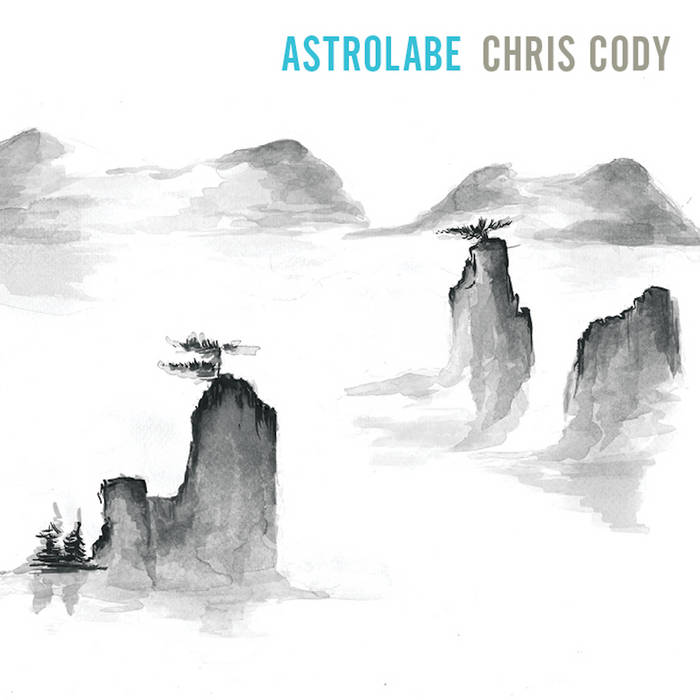
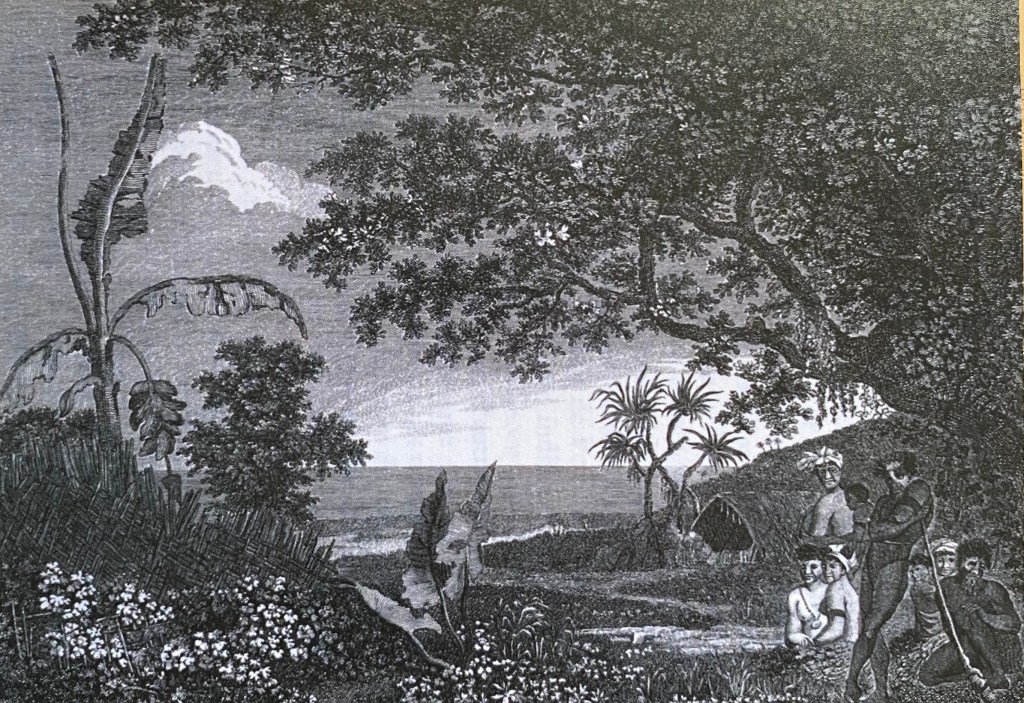
I must also mention the striking physical appearance of the album. The outside cover features a misty ink wash Japanese style by Maya Cody. Inside, you will find extraordinary engravings by Jean de Bonnot and a booklet containing translations from the La Perouse ships journals (translated by the multi-lingual Cody)   

This album will definitely appeal to wider audiences and although it is a first-rate Jazz album it is also beautifully arranged. This is a journey to be enjoyed as a whole. I would place this album in the must-have category, so buy a copy early, preferably by visiting chriscody.bandcamp.com or by ordering it online. 

#random facts: a young Napoleon applied to join the crew and was rejected. Joseph Banks gave La Perouse some of Cook’s navigation instruments. La Perouse sailed into Sydney harbour a few days after Captain Phillip – a few days earlier and perhaps Australasians would be speaking French. Chris Cody lived 25 years in Paris working as a Jazz Musician. If you visit Cody’s Bandcamp page you can obtain all three of his recent albums digitally for $22.10 AUD

JazzLocal32.com was rated as one of the 50 best Jazz blogs in the world by Feedspot. The author is a professional member of the Jazz Journalists Association.