
Those lucky enough to attend any of Jake Baxendale’s ‘Waypeople’ concerts last year will have anxiously awaited the release of this album and his release tour. It is music brimming with exotic textures and tasteful arrangements, but it is more besides. When I attended the concert, I sensed that I was hearing something important. It made a statement about the maturity and evolution of Aotearoa’s improvised music scene and also conveyed a message that the world needs to hear right now. This spoke to our times and cut deep.
Before the advent of written language, and for a good while after, important stories were poetised and sung. This enabled generations to memorise and pass on vital cultural knowledge. In fact, poems were sung and accompanied by musicians long after the arrival of the written word, and the practice of silent reading didn’t occur in the West until well into the Middle Ages (sometime between 900-1200 BCE), and in China, during the Song Dynasty (around 1100 CE).
To the ancients, reading was a communal activity, and so it was with the Tao Te Ching. It spread through oral transmission much like Homer’s epics. Therefore, while various texts are available today, hearing it with musical accompaniment feels right. To the Taoists, music deepened the connection with the natural world and awakened ancient memories. As the Tang Poet Li Bai wrote:
‘The monk from Shu with his green silk lute . . .
Has brought me by one touch of the strings,
The breath of pines in a thousand valleys’
‘Waypeople’ is an album that joins a journey begun over 2,500 years ago, and in doing so, it incorporates the cultural expressions and voices found on that journey. Here, the ancient wisdom of the Tao Te Ching is clothed in a contemporary jazz idiom, utilising the oldest of instruments, the human voice and accompanied by saxophones, clarinets, piano, vibraphone, trumpet, drums, flute, oboe and guzheng. The use of the guzheng is particularly relevant here, as it dates back to the time of Tao Te Ching itself.
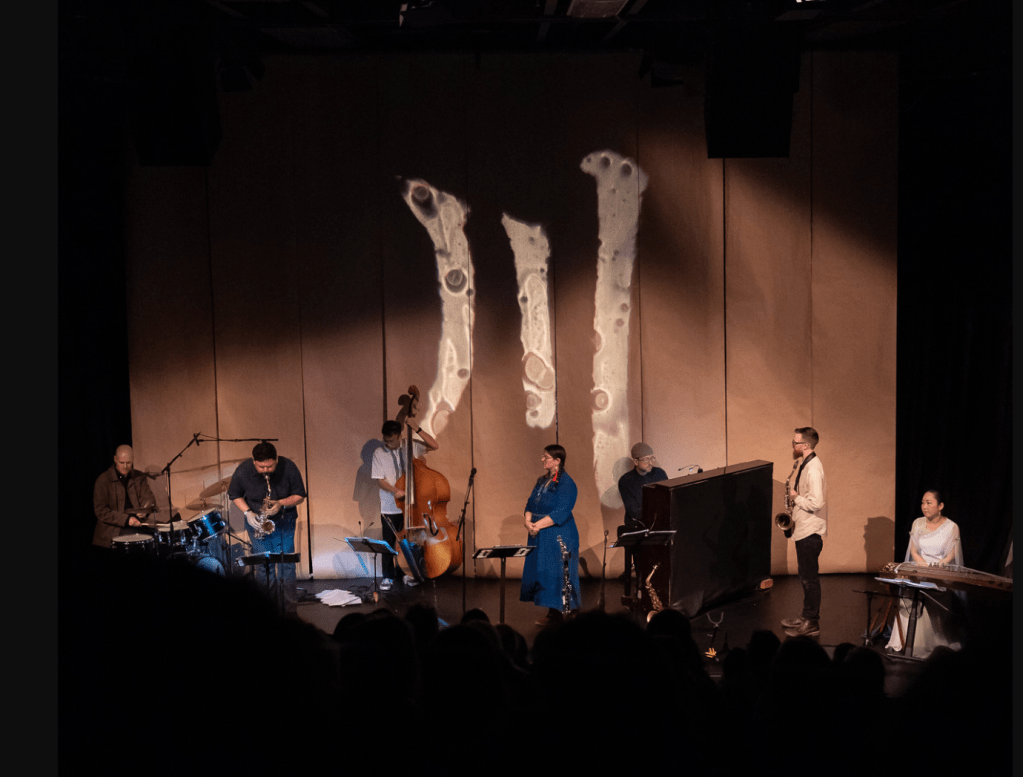
Throughout the album, selected passages of the Tao Te Ching are sung or intoned. Some verses are urgent and imploring, others reflective–opposites are brought into balance. It is therefore entirely appropriate that the translation is that of beloved contemporary author, Ursula Le Guin. What these musicians have captured is the ebb, flow and essence of these important verses. A balance has been found between the old and new, and the ‘old master’ Lao Tzu would surely smile on this endeavour.
Our world today is like it was in the Warring States (475-221 BCE)– it is out of balance. It is obvious that humanity has again taken many wrong turns, so now is the time to retrace our steps and heed this ancient wisdom. Choose peace over war, quiet and reflection over clamour. So, attend the gig if it comes to your town, buy the album on Bandcamp, listen deeply and reflect. There is no time to lose. https://jakebaxendale.bandcamp.com/album/waypeople – or check out the teaser on YouTube
The musicians are from Wellington and Auckland. Chelsea Prastiti (voice), Jia Ling, (guzheng), Jake Baxendale (compositions, alto, tenor & baritone saxophones, clarinet & bass clarinet), Callum Passells (sopranino & alto saxophones), Daniel Hayles (piano & vibraphone), Johnny Lawrence (double bass), Cory Champion (drums & effects), Louisa Williamson (flute tk 2), Ben Hunt (trumpet tk 5), Kaito Walley (trombone tks 2 & 5), J Y Lee (flute tk 10), Millie Mannins (oboe tk 10) – btw how nice to see Roger Manins daughter in this lineup.
“No competition, no blame” – Tao Te Ching
JazzLocal32.com was rated as one of the 50 best Jazz Blogs in the world by Feedspot. The author is a professional member of the Jazz Journalists Association, a Judge in the 7VJC International Jazz Competition, and a poet & writer. Some of these posts appear on other sites with the author’s permission.

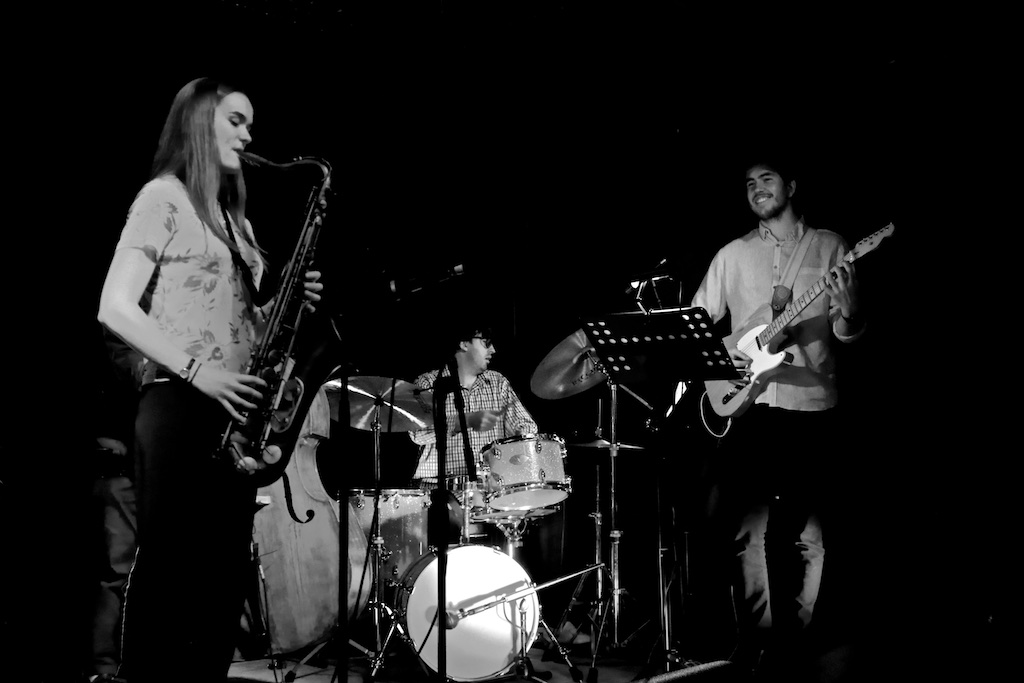 Louisa Williamson is a gifted young tenor saxophonist who has visited Auckland on previous occasions. This time, and for the first time, she visited as a bandleader, showcasing her beautiful compositions. I have always admired her tone and improvisational abilities, but this was a step up. Freed from the comfort of a band she knew well, she cast herself among an array of experienced Auckland musicians. Stephen Thomas on drums, Tom Dennison on bass and Michael Howell on guitar. The only Wellingtonian (besides Williamson) was pianist George Maclaurin and together as a band they delivered. This was engaging straight-ahead Jazz.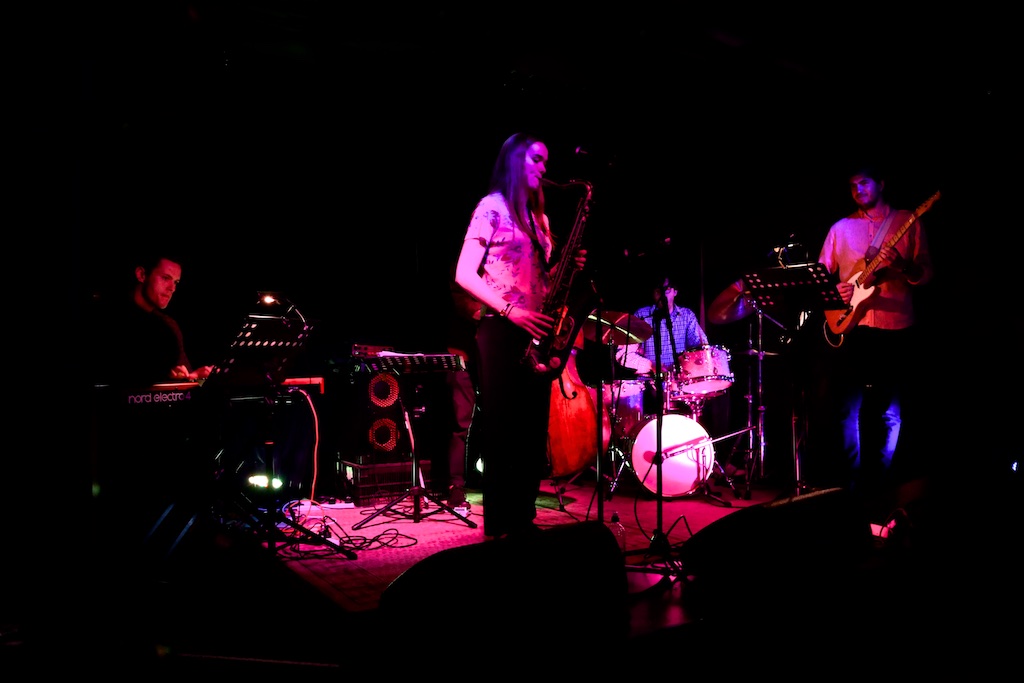
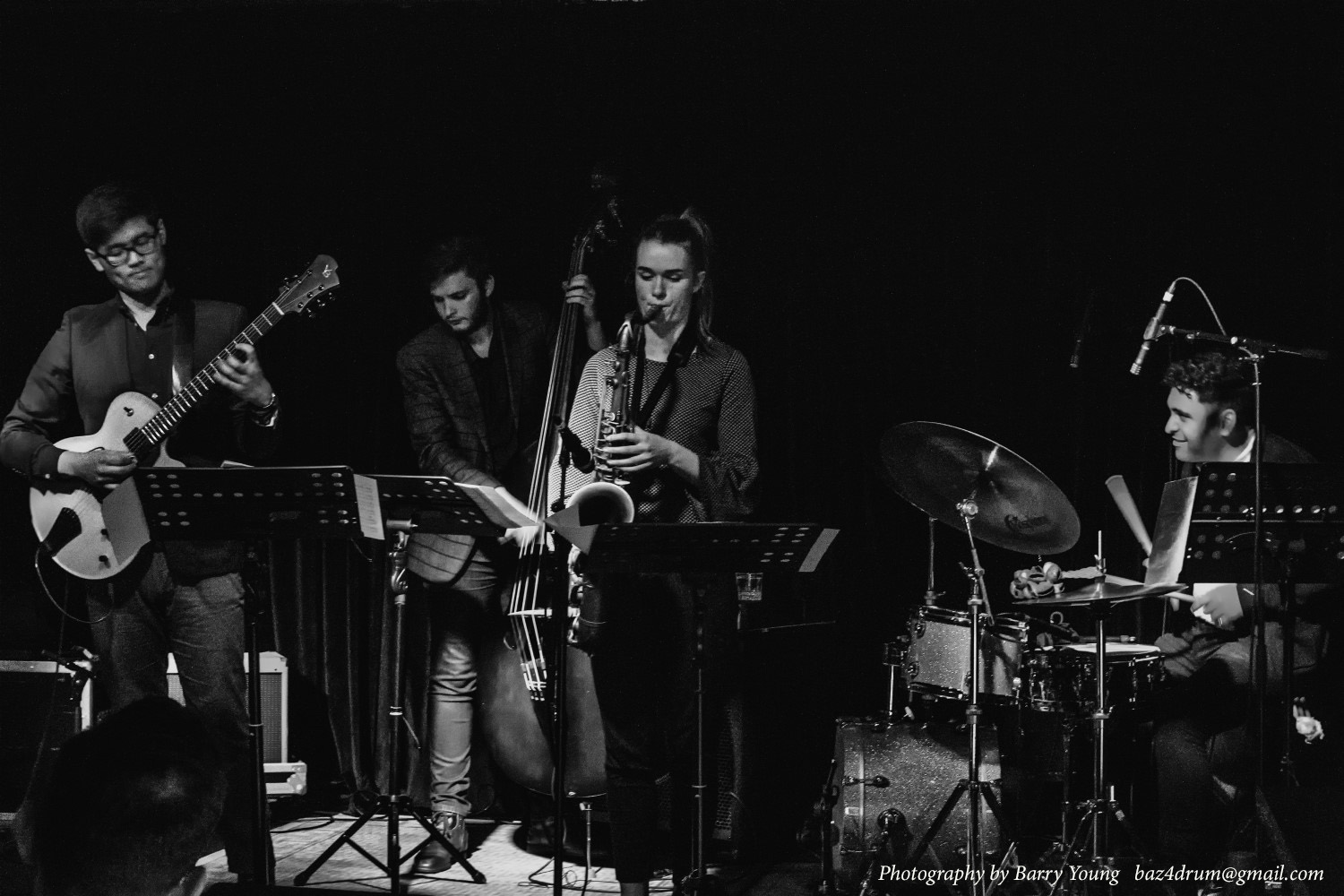 Brad Kang has previously appeared at the CJC, but this time he was here with his own quintet. It is not too much of a stretch to say that most emerging Jazz guitarists during the last decade have demonstrated a liberal dose of Kurt Rosenwinkel in their playing. It is in their sound and their approach to melody and it was unmistakable with Kang. That clean bright tone and the fluent unison lines as he and saxophonist Louisa Williamson ran through the head arrangements.
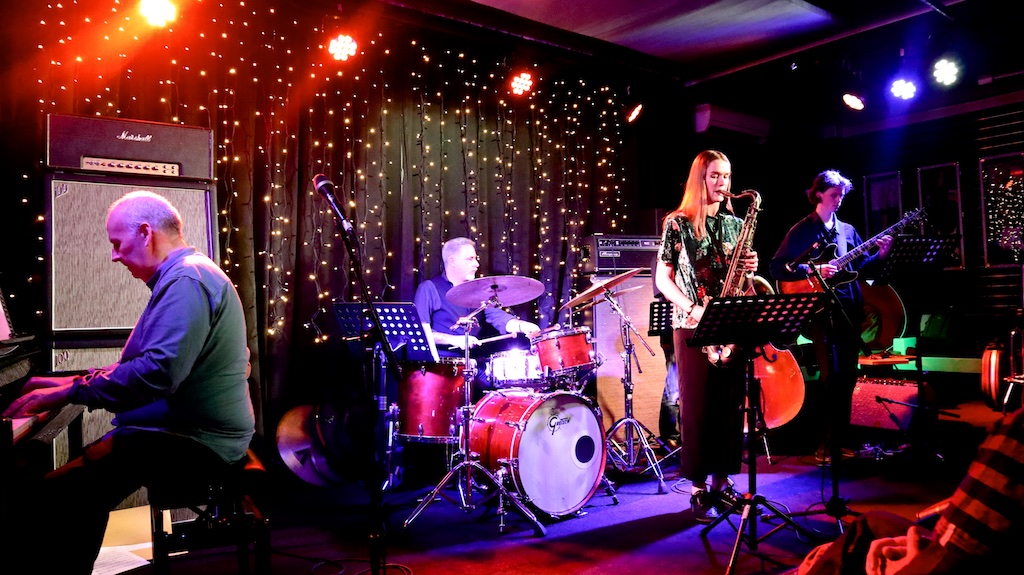 The UK born Mark Donlon is an internationally renowned musician who joined the New Zealand School of Music as a senior lecturer in Jazz Piano in 2013. He has previously appeared at Auckland’s CJC, but never with a quintet. The small ensemble format is clearly a forte as it revealed his many skills. After hearing his recent recording and attending the CJC gig it was evident to me that this particular project hit a sweet spot. What we heard on Wednesday was something special.
 JazzLocal32.com