 Every time an article appeared in the late twentieth century proclaiming the death of Modernism, another appeared shortly after; pointing out, rightly, that profound echoes of the movement will linger and intrigue a while yet. Perhaps because of when I was born, (immediately after the second war), this movement fascinates me and will until my last breath. It was a profound moment in the human journey when the hegemony of historical artistic values were challenged, discarded. Schoenberg, Coltrane, Brubeck, Riley, Colman, Matisse, Picasso, Miro. Pollock, Rothko, Eliot, Pound, Kerouac, and even Freud are defined by this impulse to move free from the received wisdom of history.
Those names and others were significant among the game-changing modernists. The paradox is, that once defined, accepted, the movement they arose from became part of conventional history. The energies arising from the Modernist impulse were profound and so powerful that counter-revolutions are endlessly trying to reset the clock – to recapture late 19th century values, a time when empires and financially powerful men determined our world view (the Trump, Brexit phenomena).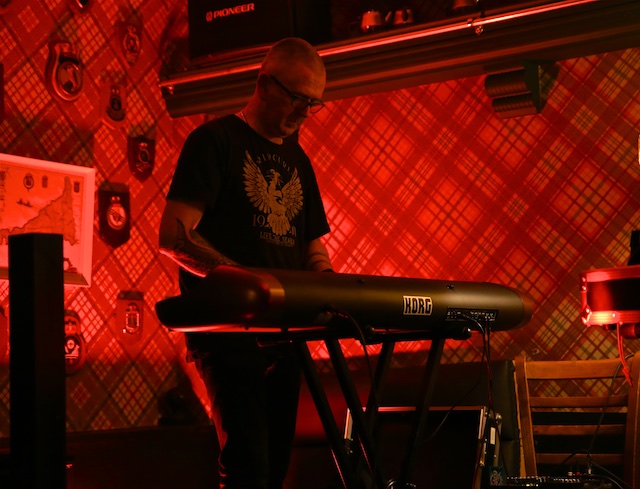 Stephen Small is a wonderful pianist but he is much more than that. He conjures up musical projects that catch people unawares; original projects, affording us a viewpoint on life and art that we would not experience otherwise. The concept behind the first outing of the Mexico City Blues band was to look at, examine the Jazz of 1957, fusing it with the Beat poems of Jack Kerouac (Kerouac wrote Mexico City Blues in that year – see earlier post). This was in part a re-imagining, but also a fresh look through post millennial eyes. When Stephen Small takes on a project he brings to it an immense musical knowledge, but more importantly an eye for the unusual, for quirky detail (no artist, musician, writer or poet worth their salt can succeed without this). When artists do their job well they show us the world afresh.
Mexico City Blues 2016, unexpectedly took us into the heart of Eastern Bloc Europe during the immediate post-war era. What a marvellous idea and what extraordinary music we heard. By coincidence, just before this gig, I was travelling through the former Eastern Bloc and I gained a strong sense of the wonderful music existing there – a music largely obscured from the anglo-centric view, created in an era of strong disapproval and inside hermetically sealed borders. A small cadre of Poles, East Germans, Czechs, Romanians and Russians listened to Jazz when they could. Forbidden LP’s circulated, Radio America broadcasts were devoured and later on there were a handful of US State Department Goodwill Tours (aka propaganda). Small pointed out something important.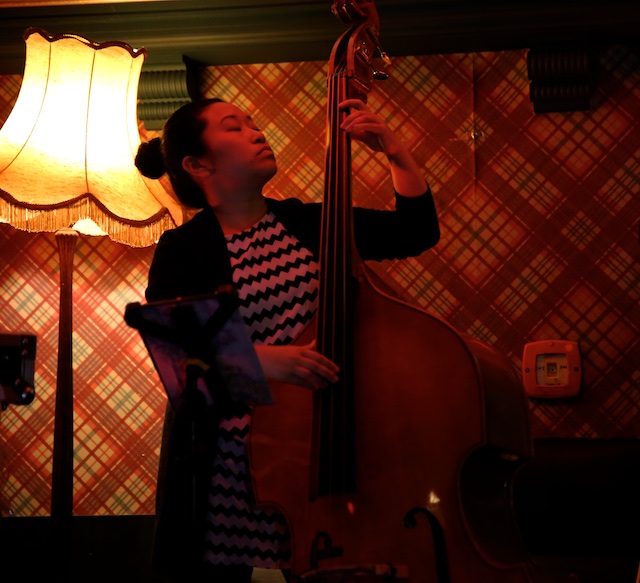
The Jazz that these musicians created, recorded, while referencing the American or Scandinavian music was also very much their own. They hated being told that Jazz was forbidden by the philistine authorities, but they were also suspicious of swallowing the US State Department line. Jazz is and should be by its very nature suspicious of any party line. There is a little Evans, Ellington and Brubeck in their music but what defines these artists is an uncompromising originality. I am a longtime time fan of Polish Jazz, as it is interestingly melodic and distinctive. The most important thing I learned while in Poland was that the ethnic Poles did not rebel against Russia out of any yearning for American capitalism, nor did they despise socialism. They just wanted the jackboots of Russia and Germany off their neck. Nations and art forms are happiest when finding their own way in their own time. Hearing this music is to glimpse the soul of an artistically suppressed people, finding hidden pathways towards the light.
The gig traversed the compositions of four 1950’s to 60’s era Eastern Bloc musicians and paid tribute to the experimental free improvised music of Russia. There was a distinct flavour to all of the pieces. They were lush without over ornamentation, marvellously inventive, moody and original (perhaps tinged with the dark romanticism of Slavonic literature). After hearing these composers, my interest is piqued enough to want to lift this corner of the Iron Curtin further.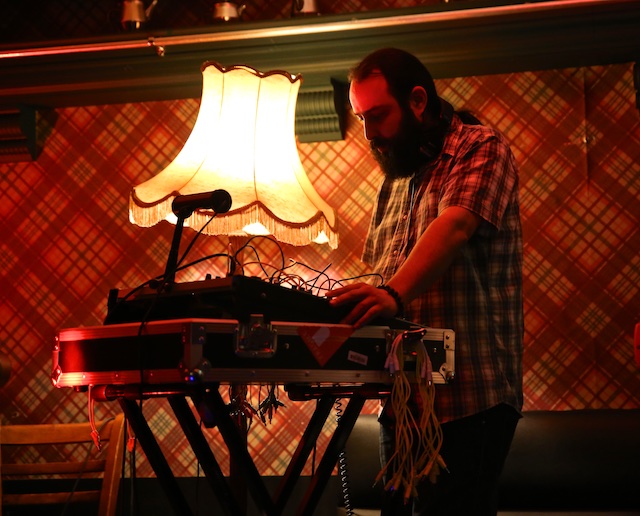
The artist featured most was the amazing Krzysztof Komeda, a wonderful composer and interesting pianist whose dark and moody compositions are forever associated with Roman Polanski movies; a match made in heaven. Anyone who follows the Polish trumpeter Tomasz Stanko will have heard Komeda often (Stanko was in many of the Komeda bands). If you saw Polanski’s ‘Knife in the water’, ‘Rosemary’s Baby’ or ‘The Fearless Vampire Killers’ you have absorbed his music without realising it. ‘Astigmatic’ Komeda’s greatest album, is highly regarded to this day. It signals the first significant shift away from American Jazz sensibilities, establishing a new and predominantly European Jazz aesthetic. I once saw Polanski interviewed about his early movies and he spoke passionately about Komeda and his music. The Komeda compositions we heard were the achingly beautiful ‘Ballad for Bernt’ and ‘Crazy Girl’ (both from ‘Knife in the Water’).
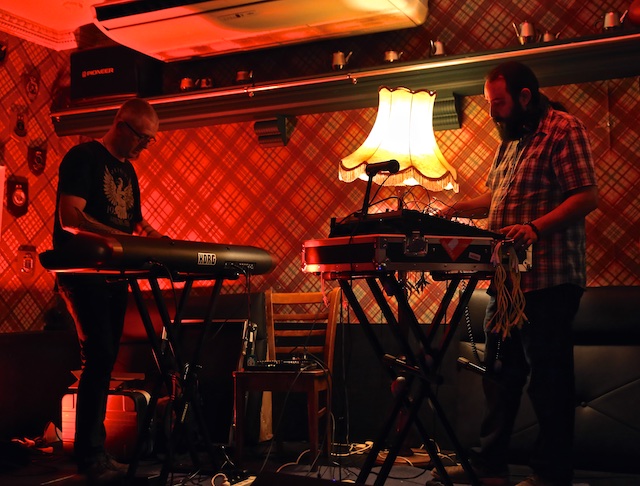
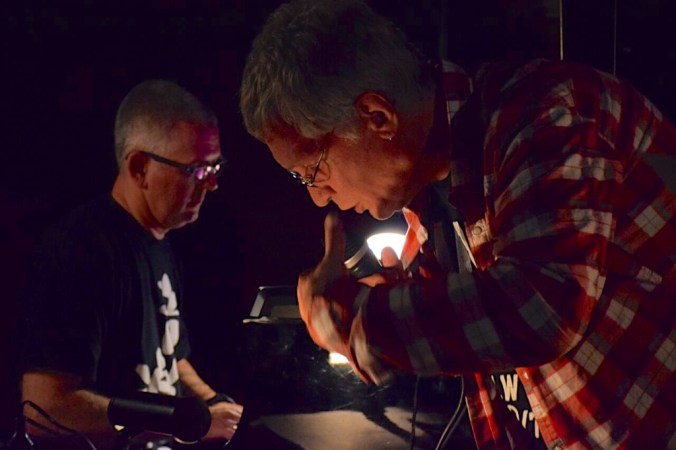
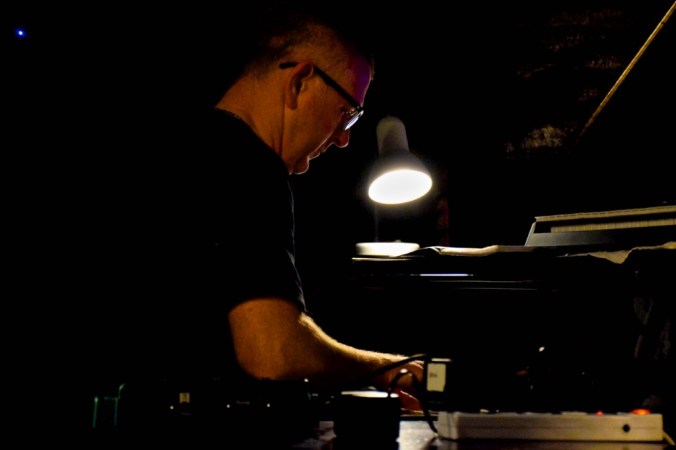
First up was a solo piece, ‘Suite for Jazz Orchestra’ by the East German composer Pavel Blatny. Then Bassist Jo Shum joined Small for two Komeda numbers – following that the duo played ‘Gral’ by Ludwig Petrovsky (another East German). The last piece in the first set was a ballad by Murad Kazhlaev (an Azerbaijani). I have not seen Shum perform for some time but she was magical – her touch and instinctive feel for this interesting music adding deep resonance.  The second set was free improvised music in the tradition of, and honouring the all but forgotten experimental improvisers of 1960’s Russia. For this set Small was joined by Dave Chechelashvili on modular synthesiser. As Small carved out motifs and themes, developing them and exploring the possibilities, Chechelashvili shaped the sound. Small’s Korg keyboard was split and connected with the modular synth; as patch cords were adjusted and knobs tweaked, we heard a music that you don’t expect from Communist Russia. Evidently and surprisingly, this was tolerated because it was perceived as artistic exploration. It was hard not to think of Glass, Reich or Riley and wonder at this parallel development.
Mexico City Blues: Stephen Small (piano, keyboards, concept), Jo Shum (double bass), Dave Chechelashvili (modular synth). November 2nd 2016, CJC (Creative Jazz Club), Albion Hotel, Auckland.
 I made up my mind days before the Mexico City Blues gig that I would not, could not review it. It is some kind of crazy to review a gig where you’re in the band. Logic and custom sensibly warns you to walk swiftly in the opposite direction. The gig passed and I asked others if they would do the review; “You’re wrong man” they said, “You absolutely have to do it, but do it differently – tell a story about what it felt like performing for the first time, and what it felt like as a non musician being part of a high quality improvising band”. I thought about it for a while and gave in. In truth I had a world of stuff churning about in my brain and the subconscious urge to outline the experience was gnawing at me; my thoughts and impressions always seem to spill onto the page somehow (or into a poem) – so hell why not. It’s Gonzo journalism in its purest form; outlining crazy, using ones-self as the hapless protagonist.
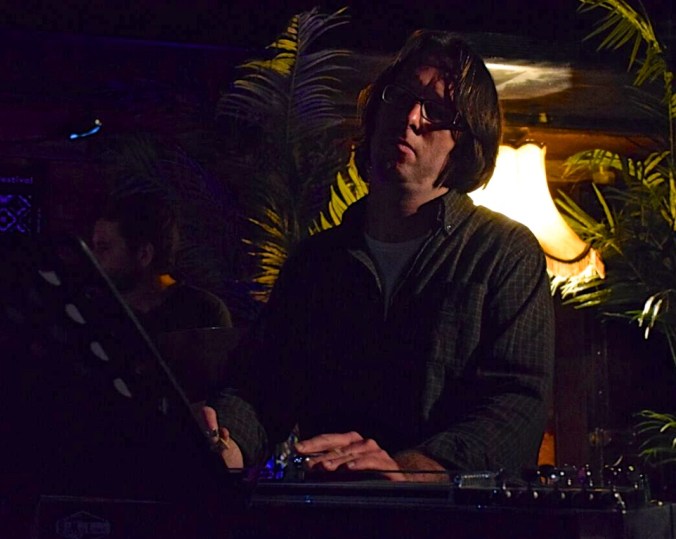 I confided my fears to a few knowledgeable friends, Chris Melville and poet Iain Sharp. Both were very sensible and reassuring in their advice; “Just own who you are man, own your voice. You know this stuff backwards and you know the music”, they said. When I explained the hazards of fitting existing verse to music, drummer Ron Samson told me, “Don’t worry man, we will follow you – your safe with us”. I discussed it further with Stephen and he gave me a set list. From that list I chose three poems that roughly matched the rhythms of tunes. For ‘Goodbye Pork Pie Hat’ (Mingus) I chose Kerouac’s chorus 66 from ‘Orizaba 210 Blues’, for ‘Blue in Green’ (Evans/Davis) I selected the beautiful mystical 1st chorus of ‘Desolation Blues’. I was sure that two poems would be more than enough, but as a precaution I prepared a third as back up – verse 116 of ‘Mexico City Blues’ to Horace Silvers ‘Peace’.
 Jazz gig rehearsals tend to follow a formula, but viewing this process from the outside and being part of it are two very different things. From the inside your inbuilt detached observer gets fired from the cannon of weirdness. You realise just how random Jazz rehearsals are. They begin what becomes a slow descent into the controlled accident. The first hour of any rehearsal is a ‘hang’, insider jokes, war stories and talk of gear and gizmos. Then a sudden flurry of activity follows; disembodied items of musical machinery miraculously forming into new shapes. If the rehearsals are in a Jazz club the activity takes place in semi darkness. Instruments, microphones and amplifiers joined by a spaghetti of wires as the musicians stumble over precarious piles of instrument cases and zip bags. “Oh shit this channel is dead – (from out of the darkness) – don’t worry its the cable – have another in my car – its parked a few streets away. Can we route the cable through the Hadron-Collider? – clip click – sorry false alarm”.
 Then came the truly random bit. “We can cue you in on each piece, or just dive in where ever you think best – we can follow”. The words ‘each piece’ threw me a curve ball. “I have only three poems printed off” I added lamely (or four if you counted a crumpled excerpt from ‘Desolation Angels’ tucked into the back of the folder). “No matter – just say anything – you’re a poet – it will be fine” said Stephen. Then I remembered the paperback of Kerouac’s ‘Book of Blues’ in my bag. “Great” said Stephen, “just pick the poems randomly – do it at the last-minute while we run through the head of each tune – perfect”. This was a band leader channeling the Zen Master – a role quite appropriate to a 1959 referencing gig – throwing me a Koan, an improbable musical puzzle, no escape route possible. When we got to the tune ‘Peace’ I gained confidence, “Ah I have something for this – yeah – Horace Silver”. At this point Stephen casually informed me that they were actually doing Ornette Coleman’s ‘Peace”, another tune entirely. Ornette, ORNETTE – holy crap – panic. Next the gig
 JazzLocal32.com