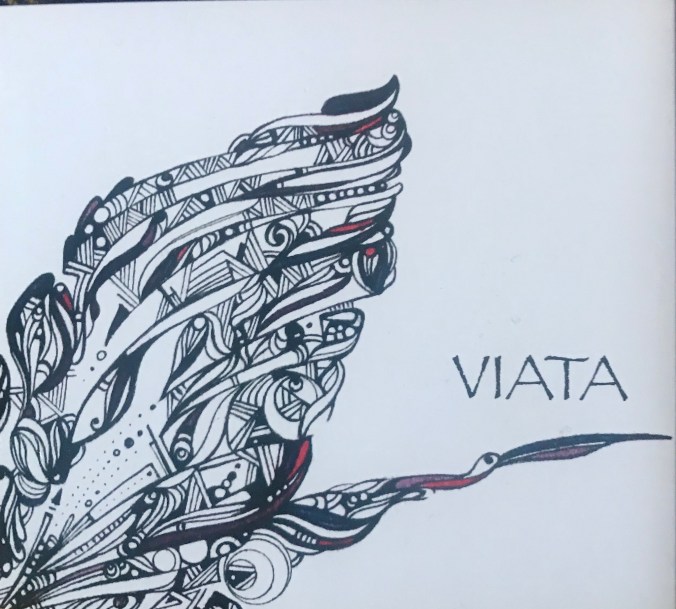
 Viata: When the Eamon Dilworth album ‘Viata’ was delivered, I was just about to head off to a gig. As I pulled out, I fed the CD into the car sound system and was immediately captivated. Some albums grab you like that, cutting through the dross of everyday life and commanding your fullest attention. The next day, freed from distraction I played it again, and as I listened, the power of the music was evident; a private world where carefully layered soundscapes revealed themselves in an unhurried fashion. I have heard Dilworth live and listened to his recordings, but this is ‘one out of the bag’. Over the years I have learned to expect great things from Australian improvisers and this certainly reinforces that well-earned reputation. ‘Arrow’ was a great album but ‘Viata’ is quite exceptional.
Arrow and Alluvium, were broader canvases – more eclectic; but these compositions are pastoral rather than urban landscapes. Revealed are breathtaking aural vistas of the kind you would expect from ECM artists; pristine spacious northern European landscapes. One of the tunes is titled ‘Eich’, a clear homage to Norway’s Matias Eich and it is beautifully realised, but as you work through the album the unmistakable dreamy warmth and gentle slurring of Tomasz Stanko is evident. Jon Hassel helped shape the direction of Scandinavian trumpeters and perhaps via the Nordics, Australian trumpet players also. These are not the only influences evident here and the vast Australian landscapes cannot be overlooked. In spite of its influences, the album stands strongly on its own merits. The quintet utilises the skills of notable Australian musicians; Alistair Spence (piano), Carl Morgan (guitar), Jonathan Zwartz (bass) and Paul Derricott (drums). With these heavyweights accompanying Dilworth, he couldn’t lose. This is an album I really enjoyed. If you listen carefully it is possible to hear a distant Bell beckoning.
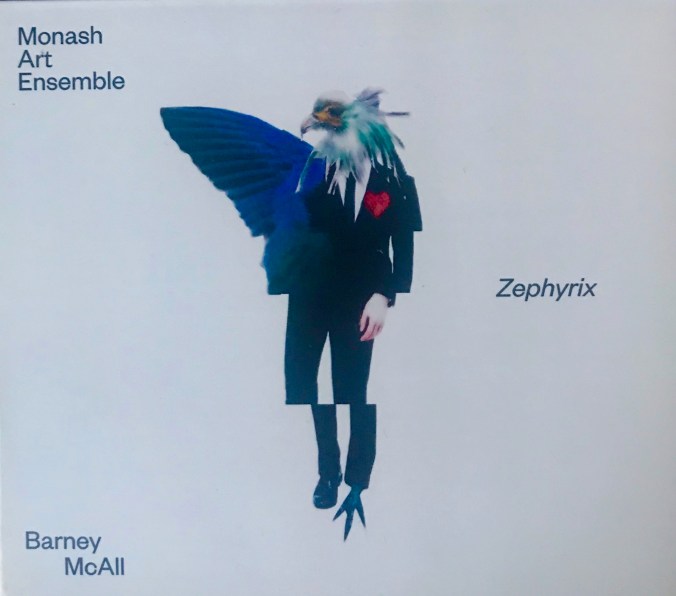 Zephyrix: There is nothing that piques my interest more than receiving news of an impending Barney McAll project. His projects are seldom announced in conventional ways but they creep into your consciousness like portents. You see an image or hear a rumour and know that something is unfolding. A few months ago I noticed a mysterious image appearing below a McAll tweet. There was no explanation, just the word Zephyrix and an image of a man-bird. Because he paints on a vast canvas and because he is a master of subliminal, the image was the message; leaving you with the sense that something extraordinary was about to appear. This how McAll works his magic. By communicating on many levels at once. You always get great music, but embedded in that music and in the related media are archetypes. This album exemplifies his approach to creating art and it touches on his philosophy.
A few weeks after I spotted the image I received an email from Melbourne’s Monash University, inviting me to attend the launch of McAll’s Zephyrix album as a guest. The work was commissioned for the prestigious Monash Art Ensemble, a fifteen-piece Jazz orchestra. The work had six parts and was conducted by the well respected Paul Grabowsky. A few years earlier I had interviewed McAll during his Peggy Glanville-Hicks composers residency in Sydney. The work was composed at around that time.
Although unable to attend the launch I received a copy of the album and as I played it that familiar question arose. How can one artist have such a diverse body of work and yet achieve such excellence in everything that he creates? The answer lies partly in McAll’s work ethic, but above all, it lies in the way he views life and the creative process. The integrity of his vision is never subordinated to the commercial imperatives which often grind artists down. In spite of that (or because of it), he has a large following and wins award after award (he just collected three further Bell Awards for ‘Hearing the Blood’).
As you listen to Zephyrix you enter a world of textural richness with surprises at every turn. Mythical and exotic creatures populate the imagination, only to disappear as another, takes its place. McAll’s work is always strongly allegorical and in this case, the allusions touch on the fundamental struggles of existence. Beginning with the Greek God Zephyr (God of the west wind ) and followed by the voices of Black Crow, White Swan, Peacock, Pelican, Zephyrix and Phoenix. The odd creature out is the most interesting, one of McAll’s creations, the Zephyrix. This is a fusing of the Phoenix and Man – the man wearing business attire, the phoenix perhaps his better self.
As you listen to the album you detect the spirit of Stravinsky, but the touchstones go beyond orchestral Jazz or modern classical music. Even though the references to the past are there, this work sits comfortably among the best of forward-looking orchestral works. It is a journey well worth taking and I am eagerly awaiting McAll’s next project.
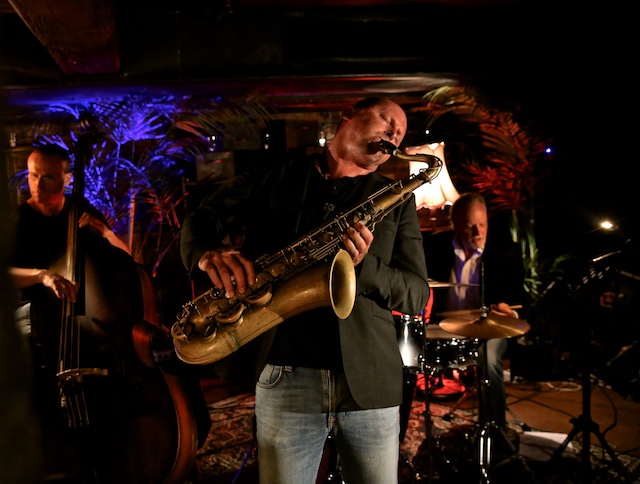 When the word gets about that a Jamie Oehlers gig is imminent, excitement mounts. Having turned people away last year, due to a capacity audience, the CJC offered two sessions this time. As expected, both were well attended. Oehlers is highly regarded in the Jazz world and it is not surprising. His astonishing mastery of the tenor saxophone is central to his appeal, but it is more than that. Every note he plays sounds authentic as if no other note could ever replace it, and all conveying a sense of musical humanism.
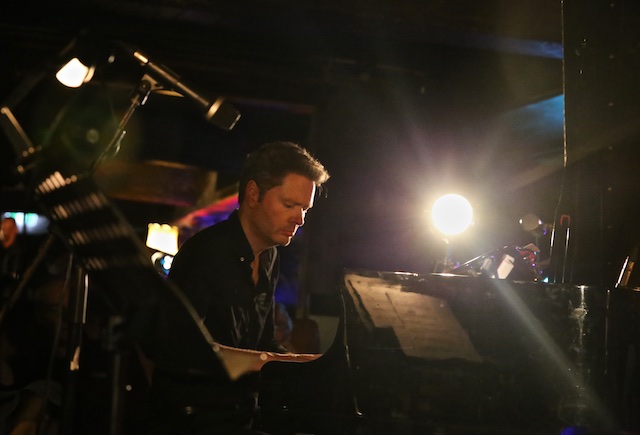 Oehlers has a new album out titled ‘The burden of memory‘ and we heard many of the pieces as the sets unfolded. Accompanying him on the album is a dream rhythm section: Paul Grabowsky on piano, Reuben Rogers on bass and Eric Harland on drums. Each a heavyweight and living up to their formidable reputations. For the Auckland gig, there was Kevin Field on piano, Olivier Holland on bass and Frank Gibson Jr on drums. Jumping in where Grabowsky, Rogers, and Harland had gone was no doubt daunting but they pulled it off in style. All played exceptionally well, but Gibson was a standout. The exchanges between him and Oehlers memorable. These men have history and the old conversations were clearly rekindled on the bandstand. Roger Manins joined Oehlers for the last number of each set and the two dueled as only they can. Weaving skillfully around each other and sounding like two halves of a whole; grinning like Cheshire cats.
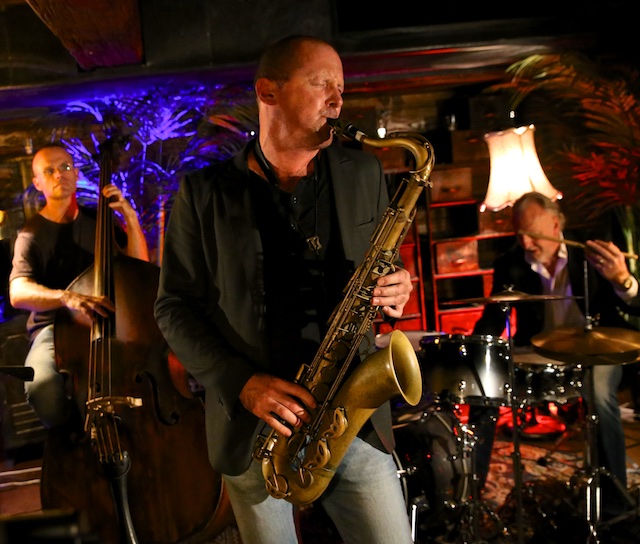 The album title and the song titles speak clearly of the musicians thought processes. He talks of his motivations and his horn takes us there. The burden of memory is a phrase he heard while listening to talkback radio and it resonated with him. He thinks deeply, examines the world about him and this communicates throughout the album. The second track ‘Armistice’ is a good example, possessing a melancholic beauty, and while it throws up the obvious images of a war ending, it also speaks of families and the tentative steps towards new possibilities.
 JazzLocal32.com