Khmer Live in Bergan (Nils Petter Molvær)

Nearly 30 years have passed since ECM released Nils Petter Molvær’s popular ‘Khmer’ album.  It was a departure from the ECM fare of the day, and not without risk, but it found a receptive audience and sold like hot cakes. NPM (Molvær) laid down a new direction for Jazz, and the 1990s saw a subsequent rise of ambient-leaning improvised music (a genre variously labelled as Jazz acoustic/electronica, future jazz, Nu jazz, etc). It has exerted an increasingly pervasive influence on other Jazz forms over time.  

Since the release of ‘Khmer’, NPM has released dozens of albums, and his status on the European jazz scene is unimpeachable. Many of his albums, such as the original ‘Khmer’, were studio-recorded, but, superb as those albums are, this music thrives on live performance. It is mostly danceable, and the club lighting and pulsating audience create a feedback loop, intensifying the atmosphere. In ‘Khmer Live in Bergen’, you can sense that added energy. 

There is an unmistakable filmic quality to this mood-dominant music, conjuring up imaginary worlds that linger on the outer edge of reality. The listener is invited on a journey, and a narrative unfolds, but it remains elusive. Unless you immerse yourself. The song titles hint at a narrative, but the ebb and flow of the music fleshes it out. Ambient-leaning music always exalts mood over the strictures of form. 

Song of Sand

Despite the title, this is not an exact recreation of the original ‘Khmer’ album. There is no ‘Khmer’ track, for instance, but there are four tracks from the original. As much as a fresh take on the title track might have appealed, the inclusion of ‘Song of Sand’ more than makes up for it. If ever a track evokes powerful dreamscapes, it is this. A distant pulse is heard, soft at first, followed by muffled voices – then the trumpet as the music becomes more immediate, the sound of a caravan navigating its way through dunes, perhaps – each step evenly paced, as it advances over the vast sand-blown landscape. Five of the tracks have appeared on other albums. Of those, I particularly liked ‘Vilderness’, with its Jon Hassell-like resonance, punchy basslines and soaring multiphonic interludes. 

This is an ensemble in the truest sense, and in many ways, a traditional offering in fresh raiment. Everything you hear, including the samples, is created in real time. This is a collective improvisation that moves freely inside a flexible form. Sculpting sound in this way requires many deft hands. Four of the musicians played on the original ‘Khmer’ album: Molvær, Jan Bang, Eivind Aarset and Rune Arnesen. The full ensemble: Nils Petter Molvær (trumpet), Eivind Aarset (guitar & electronics), Jan Bang (live sampling), Pål “Strangefruit” Nyhus (DJ, MPC, programming), Audun Erlien (bass), Per Lindvall (drums), Rune Arnesen (drums, percussion). 

It is on Edition Records and will be released on August 5, 2025. You can pre-order from Bandcamp now.  

JazzLocal32.com was rated as one of the 50 best Jazz Blogs in the world by Feedspot. The author is a professional member of the Jazz Journalists Association, a Judge in the 7VJC International Jazz Competition, and a poet & writer. Some of these posts appear on other sites with the author’s permission.

Poetry Legroom (Zoo Too Trio)

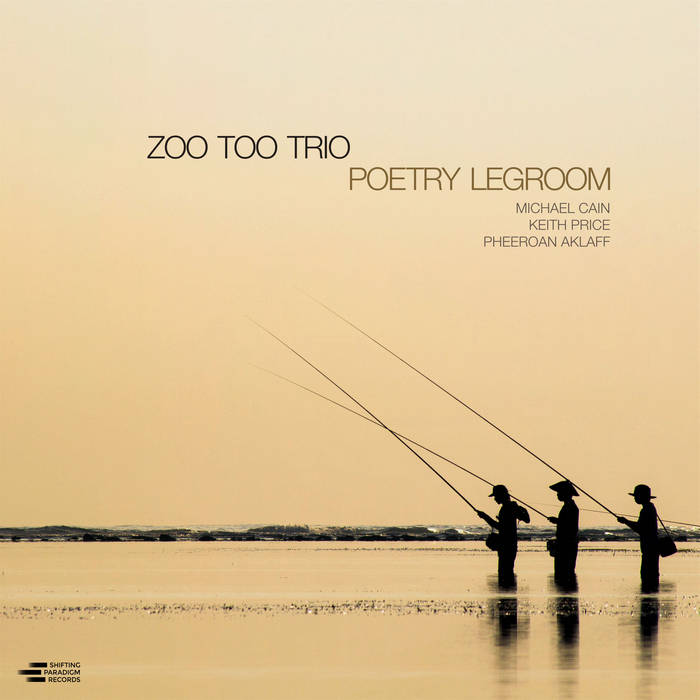
A few months ago, an album was recorded in New York that I couldn’t wait to get my hands on. The pre-release featured several tasty tracks, and its evocative cover image also intrigued. The stars were aligned for a significant album, and so it was. How could it miss with pianist Michael Cain, guitarist Keith Price and drummer Pheeroan akLaff? 

It is one of those albums that jazz lovers, whatever their taste, are bound to enjoy. The cover art was prophetic, as its soft golden light and evocative silhouette figures characterised the music perfectly. It is an album to be played through, then played again, and each listening will delight. There’s a sense of place (or should I say places) evident, as the titles reference far-flung locations, but the most important maps traversed are those engraved on the human heart.  

‘O’Neil’s Bay’ (Price) is lovely – a bluesy Americana-fused number. The bay in question is familiar to me, nestled against New Zealand’s forest-clad Waitākere Ranges–a hidden bay accessible only on foot. Price lives nearby and has captured the mystical essence of that wild, unspoiled coastline, keyboards, guitar and drums painting with sound.  

Another track has the intriguing title ‘Poetry Legroom Okinawa Children’ (akLaff). It unfolds like a miniature suite, adding layer upon layer.  Cain’s keyboards arpeggiate over Price’s shimmering chords; the mesmerising drums adding to the feeling of suspension. Like every track that unfolds, you sink inside, holding the moods carefully so as not to spoil the moment.  

With ‘Solodos’ (Cain), you understand why Cain is such a well-regarded pianist. The history and the wonder of his music are encapsulated there.  

In an album of gems, ‘Waxing Gibbous’ (Cain/Price) is the kicker. Underneath the tune’s languid minimalism, endless aural vistas unfold, displacing time and space into the eternal now. Never has spoken-word poetry been so carefully encapsulated, and the open-hearted colourist drumming of akLaff astounds. 

All three musicians have written tunes for the album, and while their approaches differ, they drink from the same creative well. There are no burners, although a quiet intensity is evident as the meditative moods draw the listener into beguiling atmospheric worlds. We live in an era of madness, and albums like this are exactly what we need to assuage our battered senses.  Shifting Paradigm Records Bandcamp and streamers.

JazzLocal32.com was rated as one of the 50 best Jazz Blogs in the world by Feedspot. The author is a professional member of the Jazz Journalists Association, a Judge in the 7VJC International Jazz Competition, and a poet & writer. Some of these posts appear on other sites with the author’s permission. 

Embers / Release & Return 

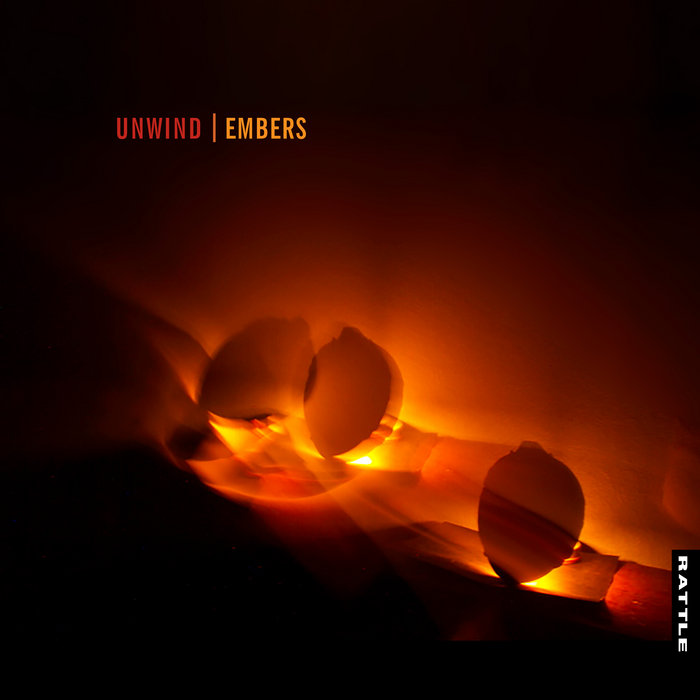
Rattle Records released these excellent albums a few weeks apart. They demonstrate that New Zealand’s improvising musicians are of the highest calibre. Both feature Hayden Chisholm, and the albums enrich each other as if by design, although recorded at opposite ends of the world. 

Embers (Unwind)

This album is the fifth by Unwind, and their second as a trio. The Unwind albums have all been striking for their unadorned beauty, each feeling like a high point. Yet the inventiveness appears endless as they maintain their upward creative trajectory. Only the best musicians can react to each other with such nuance, their quietism filling any listening space.    

Much rests on Hayden Chisholm’s alto saxophone sound, which is preternaturally pure. It’s as clean as Desmond or Konitz, yet utterly unique. It has softness, but a softness that conveys strength and a fluidity that affords him endless possibilities. When playing live, his impact on audiences is palpable. The flute-like alto sounds he creates speak with unusual clarity, creating a balm that the world needs. Feted internationally, known for his skilful use of micro-tonality and throat singing, all his strengths are evident on this album.

A distinctive sound like Chisholm’s requires just the right musicians. Norman Meehan and Paul Dyne are that. In part, because they have been bandmates for years, but it is more than familiarity. On bass, Dyne carries the weight effortlessly, while Meehan’s blues-infused minimalism says as much in between the spaces as in the moments when the hammer meets the wire. You can feel the weight of his ideas behind every note. Thoughtful musicians like this know best how to optimise opportunities. They react instinctively, and nothing is overthought.  

The first number, ‘Around Again’, opens with Chisholm’s plaintive alto keening through the silence, then Meehan’s evocative gospel chords follow. It is an elegant piece and a lovely opening to an album brimming with gems. It exudes a gentle strength that is the hallmark of this band. 

Another number, ‘Good Friday’, conjures subtle emotions. It captures a nostalgic essence, as if evoking a time long past. One we cannot fully recall – a reaction best described by the Japanese term ‘Sabi’. I have seldom heard a piece of Western music that captures that emotion as perfectly as this ballad. And everything in the album flows similarly. Meehan’s compositions are a joy. 

During the album release concert, a particular moment had the audience gasping. After setting the shruti-board drone in motion, the alto began the intro. The pianist was ‘laying out’, listening intently, unaware that his foot had depressed a pedal. An ethereal resonance soon became evident as the harmonics of the alto reacted with the piano. Realising, Chisholm edged closer to the piano and worked with it. A sublime moment of happenstance that had musicians and audience smiling in delight. 

It is our good fortune that Chisholm regularly returns to Aotearoa, the country of his birth. He has an extensive offshore discography, but when playing with old friends, there is a special Kiwi kind of synergy. A reminder that spiritual jazz lives here too. The album is available from Rattle Records in either digital or CD form. https://rattle.co.nz/catalogue/releases/embers

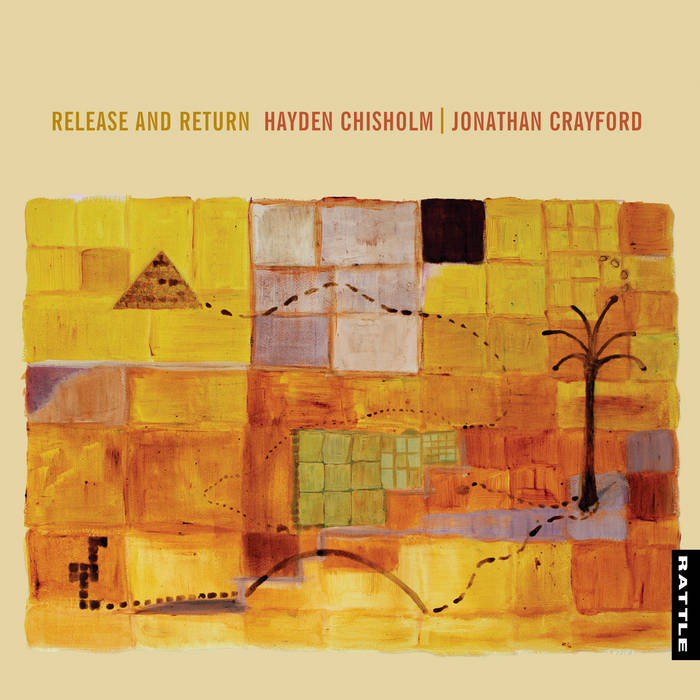
Release and Return (Chisholm/Crayford)

‘Release and Return’ is a duo album featuring Jonathan Crayford on piano and Hayden Chisholm on alto saxophone. It is another standout album, but in a different way from Unwind (reviewed above). It feels more exploratory and is not as consciously introspective. The album captures the joy of master musicians engaging without preconception. As a duo album, the sonorities can be explored more fully. 

Both of these musicians are adept at working with harmonic resonances: Crayford, who prefers audiences to refrain from clapping until the decaying echoes of a final chord are exhausted, and Chisholm with his skillful use of microtonality. 

Mature improvisers like these can draw on everything that they have experienced; it is what forms musical character. Both have travelled widely and listen with open minds to what other cultures or genres offer, be it classical, Carnatic, Spanish or Japanese traditions. 

Crayford’s lovely ‘JC Ballad’ hints at Bach, and in Chisholm’s playing, the influence of Eastern musical traditions is evident, especially when he plays against a drone. In ‘Eldest Daughter’, the wistful opening tune (Crayford), the melody plays softly above, while Crayford’s right hand sounds at times like a feather stroking the strings of a Koto, his left hand, meanwhile, finds the pulse and swing. 

Release and Return stirs deep emotional responses in the listener with its visceral lines, sometimes tender, sometimes raw, as the human condition is examined. This album speaks of freedom and the uncontrived nature of the music that makes it so. 

The album can be purchased from Rattle Records or accessed in digital or CD format via Bandcamp.    https://rattle.co.nz/catalogue/releases/release-and-return

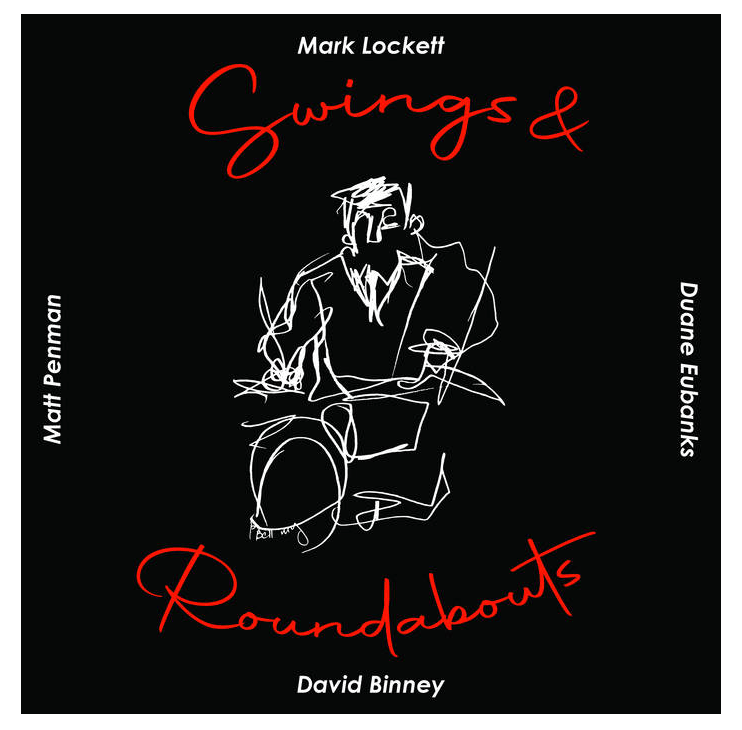
Swings & Roundabouts ~ Mark Lockett

Mark Lockett has released his seventh album Swings & Roundabouts, arguably his finest. The project had been in gestation for a while but like many projects, it was delayed by the pandemic. Still, once the travel restrictions were lifted he headed for New York, engaged some of New York’s finest Jazz musicians and set up the session in the Samurai Hotel Recording Studio, Queens—a studio versed in the intricacies of recording jazz tracks.

Lockett may be a Wellingtonian and from Aotearoa, but he is very much a citizen of the world. He has spent his most productive years dividing his time between New York, Melbourne and his hometown, and frequently touring in between. Over recent years, he is most often caught with chordless configurations, especially saxophone, bass and drums. His drumming style is interesting and these configurations afford him more room compositionally (and as a player). He is first and foremost a storyteller, and his ability to amplify his stories benefits from this type of spaciousness.   

I have often seen Lockett perform with chordless trios, but adding another horn has created interesting possibilities. He has always preferred these configurations and this is another step along the way. These are often referred to as saxophone quartets or trios but unlike Lee Konitz’s famous ‘Motion’, where the drummer kept as much in the background as possible, this is a very democratic unit where everyone shines. The compositions are all by the leader and there are unmistakable references to Ornette, and perhaps even Jerry Mulligan’s chordless quartets (Happy go Lucky). In reality, the term cordless is misleading as chords feature in the head arrangements, but above all, these compositions provide an opportunity for untethered linear improvisation. 

It is hard to imagine a better unit for this project. Dave Binney on alto saxophone, whether moving with his light-as-air alacrity or gently probing at the compositions, locates the most interesting pathways forward. And as he goes, flashes across the firmament with rapid-fire lines. I love what he does here. Duane Eubanks is also well-suited to finding the essence of these interesting tunes and burnishing what he finds. A respected veteran who delivers and provides the counterweight of solidity. The unison lines and the moments where these two converge in counterpoint are immaculate. It is also, always a pleasure to hear Matt Penman and he is so consistent in what he brings to a performance that I have come to doubt that he could ever put a foot wrong. His sound is woody and rich and his lines are perfect. Above all, he lifts those around him. 

And none of this would work with a mediocre or reticent drummer and Lockett is far from being either. His unusually melodic approach to the kit and his ability to react in the moment gifts his band some real meat to chew on. I have never heard him play better. If the release tour heads your way, don’t miss it, and buy the album. Swings and Roundabouts is available on all platforms and is released by Thick Records,  www.thickrecords.co.nz

JazzLocal32.com is rated as one of the 50 best Jazz Blogs in the world by Feedspot. The author is a professional member of the Jazz Journalists Association, a Judge in the 7VJC International Jazz Competition, and a poet & writer. Some of these posts appear on other sites with the author’s permission