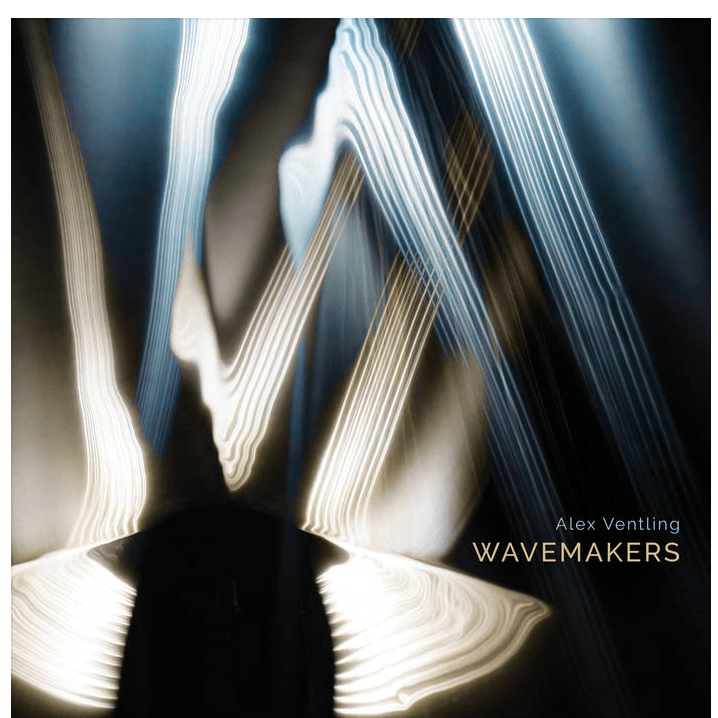
Wavemakers, Alex Ventling’s recent release, has him working with a new sound palette. During his time in Trondheim, he has developed an expansive and beautifully Nordic sound. He has always possessed an open and explorative spirit, but here, he has found a formula that allows his compositions to breathe unencumbered. His compositions float effortlessly, while depth and raw beauty fuel every phrase.
There is pulse and groove throughout, but the patterns morph and shift. Without a bass, the centre is more fluid, leaving room for a variety of interactions. The moody opening number, ‘Tracking’, is a good example with its gentle loping swing feel. Like footprints in a snowscape, it invites you into a beguiling, allusive world.
The piano opens with ostinato chords, followed by a lovely melodic progression. The lines rise seamlessly above the vamp, with violin and vibraphone mirroring the right hand of the pianist. The drummer adds gentle accents. This is very fine writing, and the execution is superb, with violin, vibraphone, piano and percussion playing as if one entity.
On Track two, a human voice is added, not singing lyrics but integrated as another instrument. This is something that the northern European world can lay a claim to; think Norma Winstone, Sidsel Endresen, and Urszula Dudziak. Throughout the album, these unusual instrumental pairings open up new vistas. ‘Trondheim 1, 2 & 3’ are open and crystalline. In those tracks, minimalism is to the fore; the voices arising and disappearing in succession.
Most impressive, though, is the final track, ‘Four Refractions’. This is an evocative folkloric piece of music. It brings joy to the listener, as it dances into the consciousness, and along with the rest of the album, it deserves to be listened to without outside distractions intruding. Tuva Halse, the violinist, is an impressive musician, and I first came across her when I was a judge in an international jazz competition. I knew within minutes that she and her band would be the winners in their category, and so it was. There is no greater pleasure than hearing young musicians living up to their promise.
Ventling has many talents, including filmmaking, as evidenced in the YouTube clip of the title track. Within days of posting, it had had an impressive 66k views. The album has attracted favourable notice, and the band will return to the studio sometime this year. Ventling is in Auckland over February, where you can hear him at the Audio Foundation on the 12th & 21st Feb.
The credits are: Alex Ventling, piano, synth, and compositions. Tuva Halse, Violin. Amund Stenøien, Vibraphone. August Giännestrand, drums & drum machine. Sissel Vera Pettersen, voice. The album is available through Bandcamp.
JazzLocal32.com was rated as one of the 50 best Jazz Blogs in the world by Feedspot. The author is a professional member of the Jazz Journalists Association, was a Judge in the 7VJC International Jazz Competition, is a poet & writer. Some of these posts appear on other sites with the author’s permission.
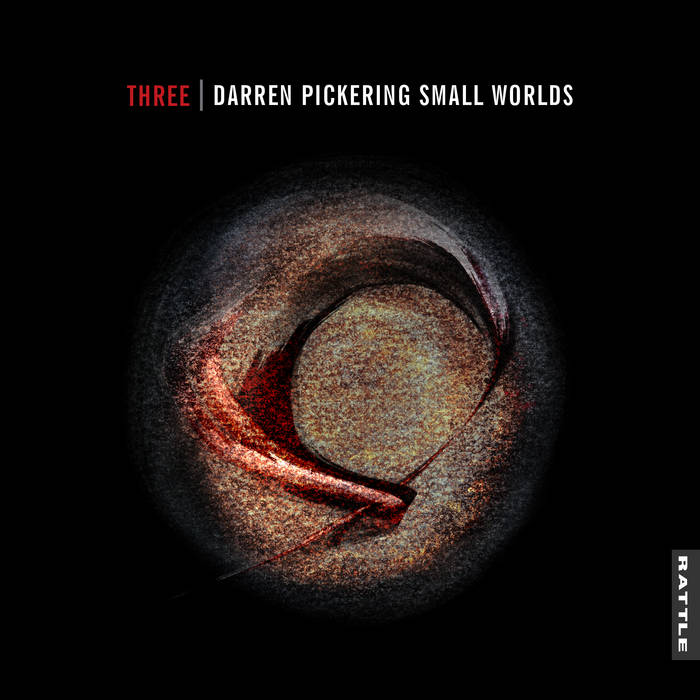
Darren Pickering’s third Small Worlds album, ‘Three’, is a welcome addition to the earlier volumes. While it follows the successful formula developed in volumes one and two, it sounds fresh and endlessly explorative. Throughout the album, snaking lines float, dreamlike, over repeating patterns and carefully layered grooves. Out of this comes the quartet’s cinematic sound. Jazz and cinema are twin arts as they evolved together, often feeding from the same well of resonance. Because of that focus on imagery, you can get inside the sound and experience it on many sensory levels. Listening to this is like watching a great movie – in a theatre – on a rainy day.
This is a superb quartet; unsurprisingly, after two previous albums, they are hyperaware of interplay. This is particularly important in an album like this, as the soundscape is so open. The liner notes indicate they have equal input into the artistic direction, which makes sense; the democratised approach is evident. This is jazz for our times, probing but gentle and unashamedly open to influences.
As with the first two albums, the tune times vary in length, enhancing the listening experience. Nothing is extended beyond its natural endpoint. Like the written word, contrasts like this punctuate the ebb and flow. There are small, meaningful solos, but they are skillfully interwoven into through-composed pieces.
Immediately noticeable is Pickering’s touch, and the underlying digital or analogue wizardry never overwhelms. While often understated, his pianism shines throughout. Pickering is a thoughtful composer and writes to his strengths.
Guitarist Heather Webb is pitch-perfect throughout, her sound is so distinctive, with lines that fold effortlessly into the mix. Her avoidance of anything showy or unnecessarily loud marks her as a mature player. I wish more guitarists understood this. The same can be said for the drummer Jono Blackie and bass player Pete Fleming. Both blend into the mix, thus enhancing the music, making the whole greater than the sum of its parts.
The rainy day groove is particularly evident in ‘Soft Life’. With Webb running her silken lines over Pickering’s synthesised arpeggiation, and the measured, but perfectly placed, beats like slow-dancing footsteps. And the faster-paced ‘Tauhou Waltz’ has a similar vibe. The album maintains this flow, touching on various moods, but always speaking in a calm voice. The album can be accessed from Rattle Records or Bandcamp. https://darrenpickeringsmallworlds.bandcamp.com/album/three
Under Ocean (Chris Cody/Charlie Tait)
I have long been an enthusiast for Chris Cody’s work, and his two latest releases, each different from what went before, enhance an already impressive discography. Cody has a gift for examining cultural intersections. He gathers events and places, past and present and puts them under a musical microscope, always leaving us with a sense of what it means to be human.
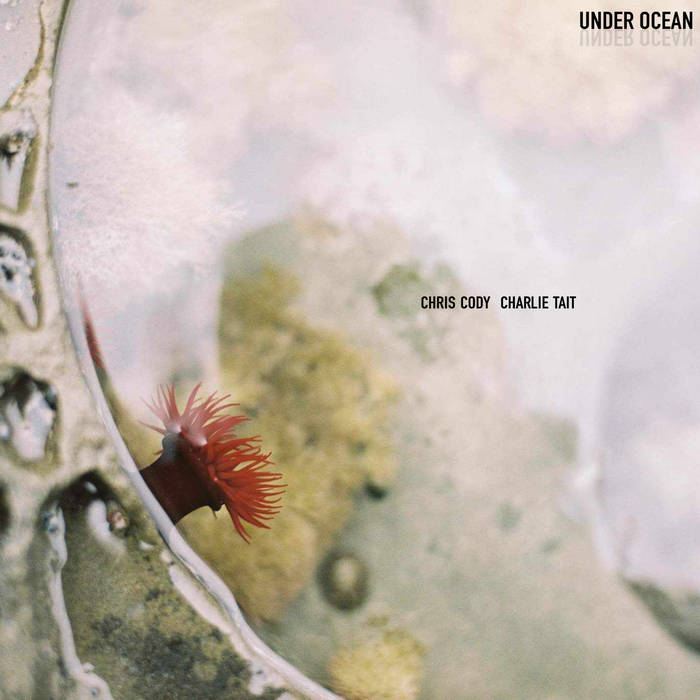
‘Under Ocean’ is a fresh approach with electronic enhancements and a duo format. The album traverses mental and physical landscapes in unexpected ways and, in doing so, expands not only Cody’s repertoire but the boundaries of improvised ambient-style music. The album is co-led by Charlie Tait, a multi-instrumentalist, sound designer and engineer. Tait is no stranger to sonic creations like this, and the resultant cross-fertilisation of jazz, classical, and ambient electronic music is fascinating.
There is an increasing imperative for improvising musicians to create music like this as a reaction to the realities of our overly commercialised modern life, to examine our interior landscapes or the natural world. It also reacts to the ugliness that intrudes on the quieter spaces. They combine new and old musical technologies to good effect, as evidenced in the atmospheric opening track, ‘Salt’, which contrasts with ‘Rumble’s’ free playing and the melancholic ‘Lost World’, bringing different moods together as a satisfying whole.
Mountain to Sea (Chris Cody)
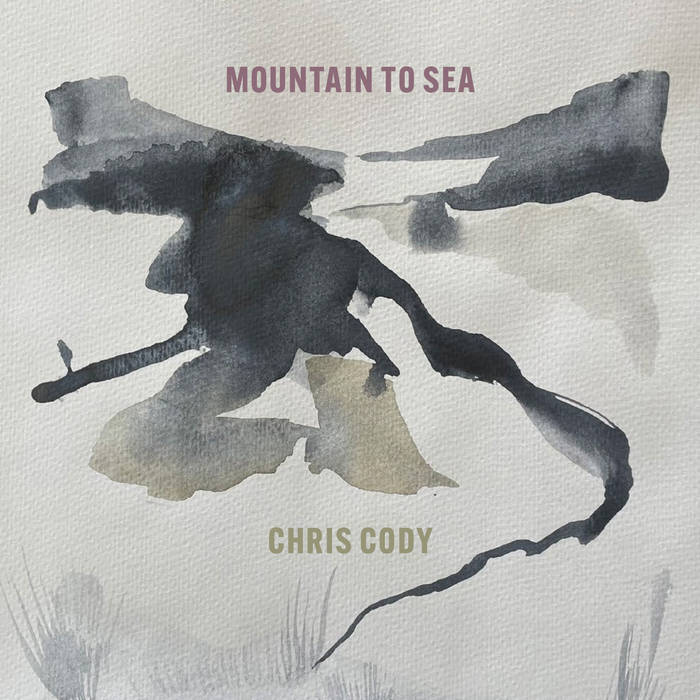
Landscape itself is a featured guest artist on most of Cody’s albums, as his writing always conveys a strong sense of place. I am not referring to specific geographic locations, although they sometimes feature, but to something deeper – cerebral. Cody has a gift for inviting introspection, and as we listen, we examine our relationship to the landscapes and regions he evokes. It is the first thing you become aware of when listening to his albums; ‘Mountain to Sea’ is no exception.
His compositions and arrangements impress here, but his thoughtful playing is also notable. His lines and voicings convey an instinctive lyricism, an organic sound that has always defined him. The tunes contain nostalgic echoes, but speak of hope too, a heart-on-the-sleeve musical humanism. And, as in previous albums, he conveys more with less. There is ample room for his bandmates to shine, and they do. The care and loving attention each one brings to the project is evident. It is no wonder the unit sounds so good when you consider the musicians, a mix of veterans and younger players, but all exemplary: bass player Lloyd Swanton (a member of The Necks who appeared in Auckland recently) and who appeared on an earlier album ‘The Outsider’ (reviewed recently on this blog), and Sandy Evans, an acclaimed saxophonist on the Australian jazz scene, and lastly Tess Overmyer, a gifted young Australian alto saxophonist, presently based in New York.
‘Mountains’, a ballad, opens with Ellingtonian chords that speak of grandeur, followed by two beautiful solos, lifted to further heights by bass lines that never intrude, but soar like a raptor. Similarly, ‘Quiet’ reminds me of Evan Parker’s opening on Kenny Wheeler’s ‘Sea Lady’ (Music for Large and Small Ensembles). Ripples, bird calls, lead into an elegiac anthem for the natural world, a place not separate from humankind, with alto, tenor and soprano perfectly balanced, drawing from the same musical well. This is also evident in ‘Dream’.
As with previous albums, Cody’s daughter Maya has created marvellous cover art.
JazzLocal32.com was rated as one of the 50 best Jazz Blogs in the world by Feedspot. The author is a professional member of the Jazz Journalists Association, a Judge in the 7VJC International Jazz Competition, and a poet & writer. Some of these posts appear on other sites with the author’s permission.
Rattle Records released these excellent albums a few weeks apart. They demonstrate that New Zealand’s improvising musicians are of the highest calibre. Both feature Hayden Chisholm, and the albums enrich each other as if by design, although recorded at opposite ends of the world.
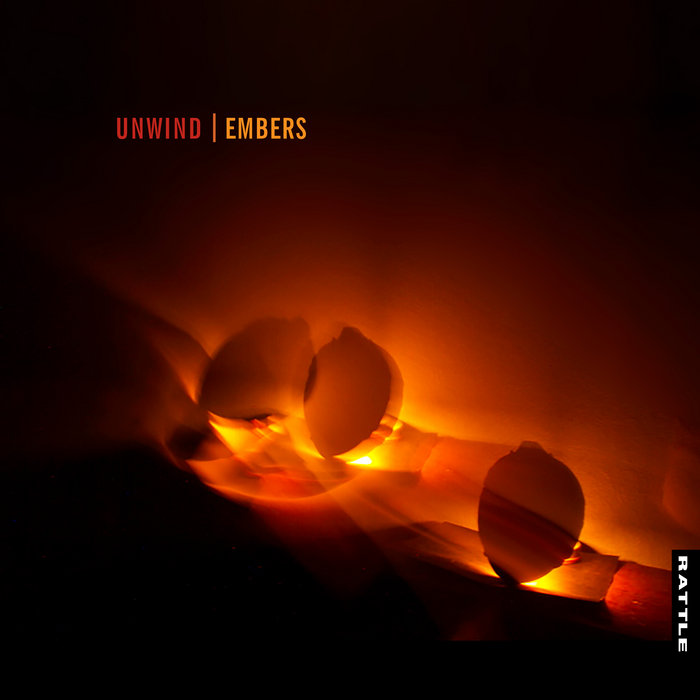
Embers (Unwind)
This album is the fifth by Unwind, and their second as a trio. The Unwind albums have all been striking for their unadorned beauty, each feeling like a high point. Yet the inventiveness appears endless as they maintain their upward creative trajectory. Only the best musicians can react to each other with such nuance, their quietism filling any listening space.
Much rests on Hayden Chisholm’s alto saxophone sound, which is preternaturally pure. It’s as clean as Desmond or Konitz, yet utterly unique. It has softness, but a softness that conveys strength and a fluidity that affords him endless possibilities. When playing live, his impact on audiences is palpable. The flute-like alto sounds he creates speak with unusual clarity, creating a balm that the world needs. Feted internationally, known for his skilful use of micro-tonality and throat singing, all his strengths are evident on this album.
A distinctive sound like Chisholm’s requires just the right musicians. Norman Meehan and Paul Dyne are that. In part, because they have been bandmates for years, but it is more than familiarity. On bass, Dyne carries the weight effortlessly, while Meehan’s blues-infused minimalism says as much in between the spaces as in the moments when the hammer meets the wire. You can feel the weight of his ideas behind every note. Thoughtful musicians like this know best how to optimise opportunities. They react instinctively, and nothing is overthought.
The first number, ‘Around Again’, opens with Chisholm’s plaintive alto keening through the silence, then Meehan’s evocative gospel chords follow. It is an elegant piece and a lovely opening to an album brimming with gems. It exudes a gentle strength that is the hallmark of this band.
Another number, ‘Good Friday’, conjures subtle emotions. It captures a nostalgic essence, as if evoking a time long past. One we cannot fully recall – a reaction best described by the Japanese term ‘Sabi’. I have seldom heard a piece of Western music that captures that emotion as perfectly as this ballad. And everything in the album flows similarly. Meehan’s compositions are a joy.
During the album release concert, a particular moment had the audience gasping. After setting the shruti-board drone in motion, the alto began the intro. The pianist was ‘laying out’, listening intently, unaware that his foot had depressed a pedal. An ethereal resonance soon became evident as the harmonics of the alto reacted with the piano. Realising, Chisholm edged closer to the piano and worked with it. A sublime moment of happenstance that had musicians and audience smiling in delight.
It is our good fortune that Chisholm regularly returns to Aotearoa, the country of his birth. He has an extensive offshore discography, but when playing with old friends, there is a special Kiwi kind of synergy. A reminder that spiritual jazz lives here too. The album is available from Rattle Records in either digital or CD form. https://rattle.co.nz/catalogue/releases/embers
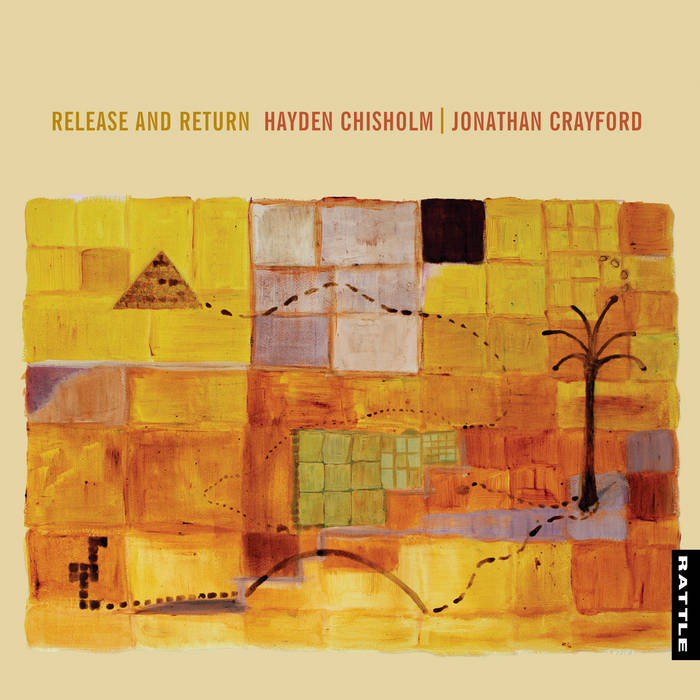
Release and Return (Chisholm/Crayford)
‘Release and Return’ is a duo album featuring Jonathan Crayford on piano and Hayden Chisholm on alto saxophone. It is another standout album, but in a different way from Unwind (reviewed above). It feels more exploratory and is not as consciously introspective. The album captures the joy of master musicians engaging without preconception. As a duo album, the sonorities can be explored more fully.
Both of these musicians are adept at working with harmonic resonances: Crayford, who prefers audiences to refrain from clapping until the decaying echoes of a final chord are exhausted, and Chisholm with his skillful use of microtonality.
Mature improvisers like these can draw on everything that they have experienced; it is what forms musical character. Both have travelled widely and listen with open minds to what other cultures or genres offer, be it classical, Carnatic, Spanish or Japanese traditions.
Crayford’s lovely ‘JC Ballad’ hints at Bach, and in Chisholm’s playing, the influence of Eastern musical traditions is evident, especially when he plays against a drone. In ‘Eldest Daughter’, the wistful opening tune (Crayford), the melody plays softly above, while Crayford’s right hand sounds at times like a feather stroking the strings of a Koto, his left hand, meanwhile, finds the pulse and swing.
Release and Return stirs deep emotional responses in the listener with its visceral lines, sometimes tender, sometimes raw, as the human condition is examined. This album speaks of freedom and the uncontrived nature of the music that makes it so.
The artists profiled here have some things in common. Both have Swiss heritage, work in countries other than the ones they were born in and take a fearless approach to improvising. They are separated in years and in experience but not in their approach. Both seek to extend the language of improvised music and have something interesting to say.
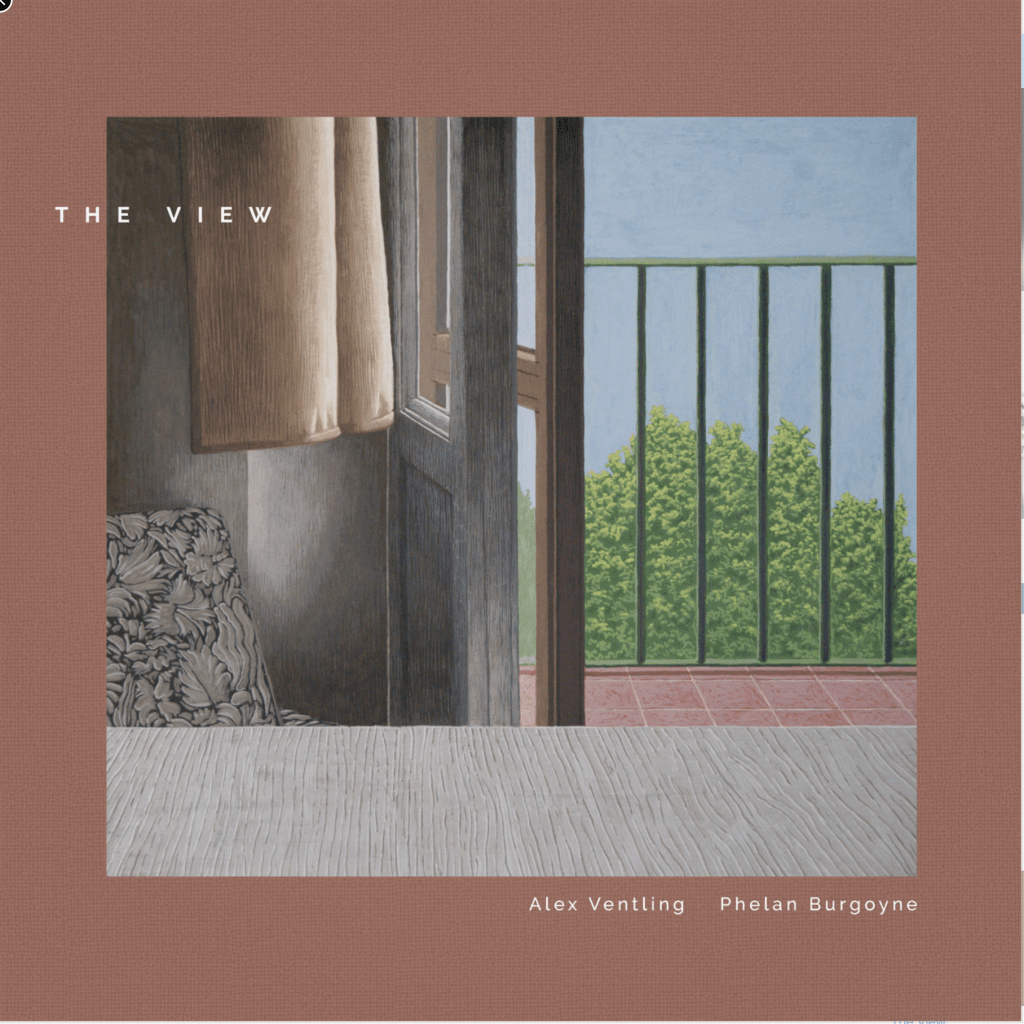
Alex Ventling ~ The View
This is a beautiful duo album; it will stay with you if you listen with open ears. It is fresh and original but snatches of the tradition are still evident, nestling in the compositions. From the opening track, ‘Spiders Steps’, Monkish elements creep in, as jagged spidery lines evolve into a gentle swing. The tune is perfectly rounded. It says a lot and yet does so concisely and simply. It is the perfect beginning for a superb album. Ventling’s pianism is evident throughout, but strikingly so in his resonant ‘In the Mists’. Good pianists know what to play and when, but gifted pianists understand how to sculpt sound and curate even the decaying chords. There are synths but they are used in ways that never once spoil the acoustic mood. That is so on ‘First Train to Finse’ which features guest artist Kim Paterson on trumpet. How lovely to hear him again in this ‘Silent Way’-like setting.
It is an album of surprises as the moods shift constantly. Importantly, they do so without once breaking the flow. Out of it all shines a radiant simplicity, a ‘mysterioso’ simplicity. One blended with oblique Monkish references and a northern European sensibility, a very Nordic soundscape, evoking open spaces, where the music breathes.
With Ventling is a gifted drummer, Phelan Burgoyne. He is the perfect foil for the pianist as he is a master of subtlety. He possesses an acute sonic awareness and understands how to work in the spaces between the notes. He is especially attuned to the harmonic possibilities as he adds his textural touches. This is a masterclass in colourist drumming and I cannot imagine any drummer doing better. He is co-credited as a composer, a collaboration which goes back years. Their synergy is evidenced in every minute of this recording.
This is a very mature album for a musician embarking on his musical journey. The album was released by the Trondheim label Sonic Transmission Records and is available on vinyl and digitally via Bandcamp (or the streamers).
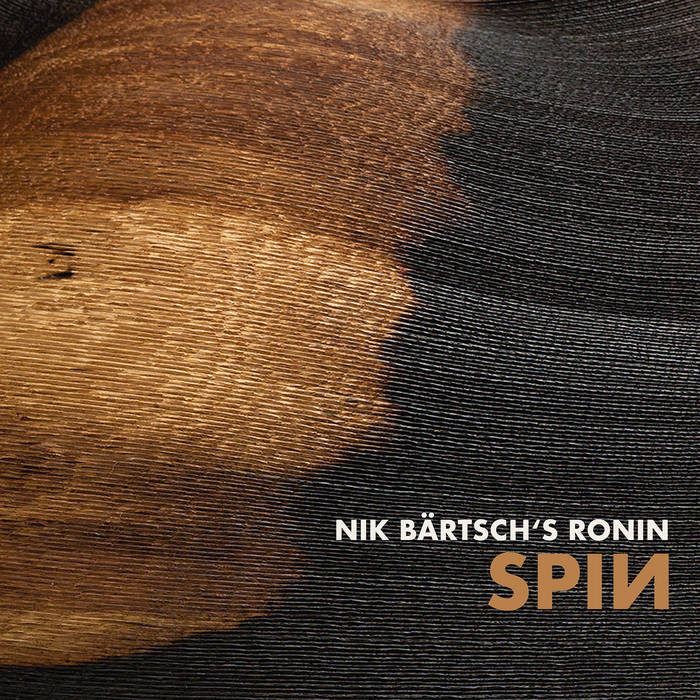
Nik Bärtsch Ronin ~ Spin
Nik Bärtsch’s Ronin has been around since 2002, established following his earlier Ritual Groove Music album (2001). Since then Ronin has released 9 albums with cultural and musical influences scattered throughout; the most obvious being Steve Reich, John Cage and Morton Feldman. He was a drummer before he was a pianist and intricate rhythmic patterns and cycles are evident in everything he does. The other important influence is his abiding interest in Zen Buddhism and taken as a whole, those influences have coalesced, resulting in a unique musical path. His style has been dubbed Zen Funk, but it is improvised music of the highest order and the band has been delighting Jazz critics and Jazz-festival-goers for many years. His seven ECM albums brought him wide critical acclaim.
‘Spin’ works the rich seams opened in earlier albums. This band adheres to its minimalist principles while introducing freshness and open exploration. I have always been drawn to mesmeric or trance music, and this music is, but the tunes also invite quiet reflection. There is freedom within constraints, and that appeals to the heart and intellect.
The first track, ‘Modul 66’, was composed to showcase bass player Jeremias Keller, who recently joined the band. This highlights a subtle shift in emphasis, without changing the ever-present groove. The deep grooves are especially evident in ‘Modul 70-51’ which is mesmerising. A pulse that pulls you deeper into the music without once dulling the senses. This is achieved by surprising chordal and modulation shifts which function like Zen surprises. This is apparent in ‘Modul 40’ which is endlessly inventive.
The way this band works together is extraordinary, moving the emphasis mysteriously as they dance around each other like voodoo priests. It was recorded live at the Big Ears Festival, so ‘Spin’ should be enjoyed in one listening; each ‘module’ informs the next. I recommend that you listen with headphones or in a quiet room. It would be a shame to miss the subtlety. Nik Bärtsch (piano, Keyboard), Sha (bass clarinet, alto saxophone), Jeremias Keller (bass), Kasper Rast (drums). ‘Spin’ is self-released and available on Bandcamp or the streamers.
Other Recommendations to Check Out.
Rob Luft and Kit Downes are artists I have profiled before. Both appear on an interesting album by vocalist Paula Rae Gibson. The album, ‘The Roles We Play To Disappear’ has been referred to as ambient, electronica, and Avante-jazz. It seamlessly embraces many genres and is evidence of how improvised music is growing in multiple directions. Albums like this bring fresh audiences and that is a healthy thing. It is refreshing in these days of awful commercial music to see artists forging uncompromising artistic paths. It is available as a CD or download from Bandcamp.
Rob Luft and Elena Duni recently met with Manfred Eicher to discuss a new ECM release. This is welcome news as the first two releases were stunning. I interviewed Luft during lockdown and have reviewed his albums often. If you haven’t done so already check them out. My review of ‘Lost Ships’ is on this site at http://www.jazzlocal32.com/?s=Luft
Alex Ventling and Kim Paterson recorded on Ventling’s recent tour through New Zealand. ‘Conversations’ is a lovely standards album and is available on Spotify.
One of my favourite Jazz musicians Chris Cody (Sydney/France) has just released two interesting albums. The first is ‘Mountain To Sea’ with Sandy Evans, Tessie Overmyer and Lloyd Swanton. The second and most recent is ‘Under Ocean’, co-credited to Charlie Tait, an ambient improvised album conjuring powerful images. An interesting development from an artist who never fails to please. More on this soon.
JazzLocal32.com was rated as one of the 50 best Jazz Blogs in the world by Feedspot. The author is a professional member of the Jazz Journalists Association, a Judge in the 7VJC International Jazz Competition, and a poet & writer. Some of these posts appear on other sites with the author’s permission.
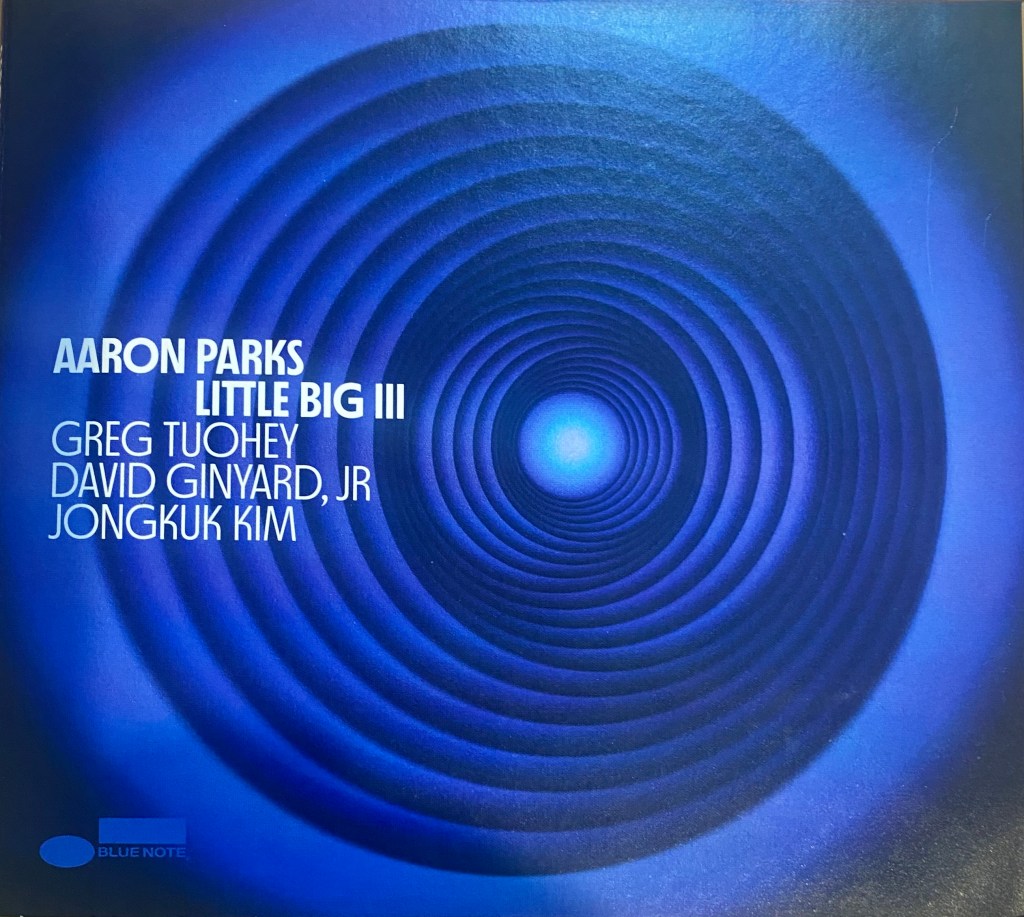
Aaron Parks’ latest album, ‘Little Big III’, is the third in a series titled Little Big and his fourth album featuring a guitarist. The album (and series) also expands the soundscapes and ideas explored on his successful first Blue Note release, Invisible Cinema (2008). It is an album with a big heart which embraces the listener with rich textures and a tapestry of gorgeous melodic lines. Parks is highly regarded as a pianist and composer and never appears to rest on his laurels, reaching further with each new recording.
The band is in perfect sync, and each player is given the space they deserve. Parks’ compositions are always compelling, but they reach for the heartstrings here. There is considerable technical mastery, but a sense of humanity strikes you most. The tune titles tell you this, ‘ Locked Down’, or ‘Heart Stories’, inviting you into an expansive and unfolding narrative. It feels like a story of our times, but one reminding us of the beauty we may have overlooked amidst the turmoil.
Parks is a distinctive pianist who has never had trouble finding the best musicians to accompany him. Jazz lovers in Aotearoa New Zealand can rightly feel proud in this regard. ‘Invisible Cinema’ and ‘James Farm’, featured bassist Matt Penman. On Little Big 111 and the two earlier iterations, we hear guitarist Greg Tuohey (who first recorded with fellow Kiwi Penman over twenty-five years ago). Tuohey’s playing is magnificent and, along with his bandmates, he contributes tunes too.
The sharing of the compositional duties has yielded riches. Parks has a distinct style; his tunes are as compelling as they are memorable. I particularly like ‘Flyways’; a pulsating ostinato chant that frees the drums and bass, while the breathtaking melodic lines soar. There are four Parks compositions, all interestingly different. Oriental references are evident in ‘Delusions’ while the lovely ballad ‘Ashé’ has a wistful, folkish vibe.
Three tunes are Tuoheys, expanding the palette to include funk and Americana. His tune ‘Willamina’ is a joy, it is here in particular that you hear what a great guitarist and composer he is. It evokes tumbleweed towns and gentler times; memories we hold onto lest they slip from our grasp. Bass player David Ginyard Jr’s ’Little Beginnings’ has a beguiling loping pulse and uses a larger palette, to great effect. The drummer, Jongkuk Kim, is new to me, crisp, imaginative and impressive. I hope there is a Little Big IV in the wings. ‘Blue Note Records ~ available in stores and by streaming.
Hania Rani (Hanna Raniszewska)
I subscribe to jazz author Ted Gioia’s Substack posts, as all improvised music lovers should. In a recent issue, Gioia highlighted a handful of modern Polish improvisers he suspected would be unknown to audiences outside of Northern Europe. He particularly liked Hania Rani, who he described as his new favourite pianist.
There is something ethereal and achingly beautiful about her music and everyone who stumbles across it, feels like they’ve uncovered a secret. What initially strikes you as a few simple fragments of melody on repeat, is music for deep listening. Underlying the ostinato phrases are endless changes, finely wrought. She layers and loops while catching her listeners in a silken web of sound; sometimes reaching inside a grand piano, using an upright piano for percussion and adding small digital effects. It is an ever-expanding pedal point over a pulsing drone which may be the key to its appeal. She magics up something complex and deeply satisfying, crafted out of simplicity. As if that were not enough, she also sings beautifully.
Although not a household name, she gets 7 million views for her YouTube clips, performs at the Louvre and has appeared in an NPR Tiny Desk concert. I have included a clip from a recording she made in Studio 2 in Warsaw, a favourite venue due to its acoustic properties. Sometimes the best things are hiding in plain sight. This is improvised music, but genreless, touching on classical, Jazz and house, but somehow free of those confines.
Rani mainly records for Gondwana Records with seven albums released. It is worth checking her out on YouTube.
JazzLocal32.com was rated as one of the 50 best Jazz Blogs in the world by Feedspot. The author is a professional member of the Jazz Journalists Association, a Judge in the 7VJC International Jazz Competition, and a poet & writer. Some of these posts appear on other sites with the author’s permission.
The two albums reviewed feature musicians from Wellington, Aotearoa/New Zealand. The first is by guitarist Callum Allardice, an award-winning musician with an impressive résumé. The second is an EP by vocalist Ella Dunbar-Wilcox (Ella Sophie), her first release.
Elementa ~ Callum Allardice
Elementa is a fine album and Allardice’s best to date. With this release and with this band, he has found the perfect vehicle to showcase his astonishing guitar fluency and compositional chops. He is known for crafting fine charts and melodic compositions and has won the APRA award for best jazz composition three times, but here, he shines as a fully rounded guitarist at the top of his game. There is no mistaking the lineage he arises from, Rosenwinkel and Moreno, and this album sees him vying for a place alongside those who extend that vocabulary, like Charles Altura or Gilad Hekselman.
Allardice’s supporting musicians are well-known in the Trans-Tasman music scene. The quartet includes accomplished Australian pianist Luke Sweeting, respected Australian-based Kiwi bassist Thomas Botting, and a tasteful drummer Hikurangi Schaverien-Kaa from Wellington. These musicians have previously collaborated with Allardice in groups such as The Jac and The Antipodeans, and are familiar figures to jazz audiences in New Zealand.
His accompanying musicians will be familiar. A lineup of Trans-Tasman stalwarts who have played alongside Allardice before in bands such as The Jac and The Antipodeans. The Australian pianist, Luke Sweeting, is a familiar face to jazz audiences in Aotearoa, as is the Australian-based Kiwi Thomas Botting, a respected bass player. The tasteful Wellington drummer Hikurangi Schaverien-Kaa rounds out the quartet.
There is a lot to like here, with the first track, ‘Stone Eyes’, setting up the rest of the album nicely (embedded). It has an otherworldly quality, and like the title track, it reveals Allardice’s remarkable technical skill as he spins out his mesmeric lines. His tone is inviting and warm. The guitarist is virtuosic throughout, but never just for virtuosity’s sake, and this is the clearest indicator of his maturity as a player. Also of note is a fine solo by Sweeting on ‘Odyssey’.
Processed with VSCO with c1 preset
The album is on the Australian Earshift Music label and will be released shortly. It can be purchased via the artist’s website or from www.earshift.com
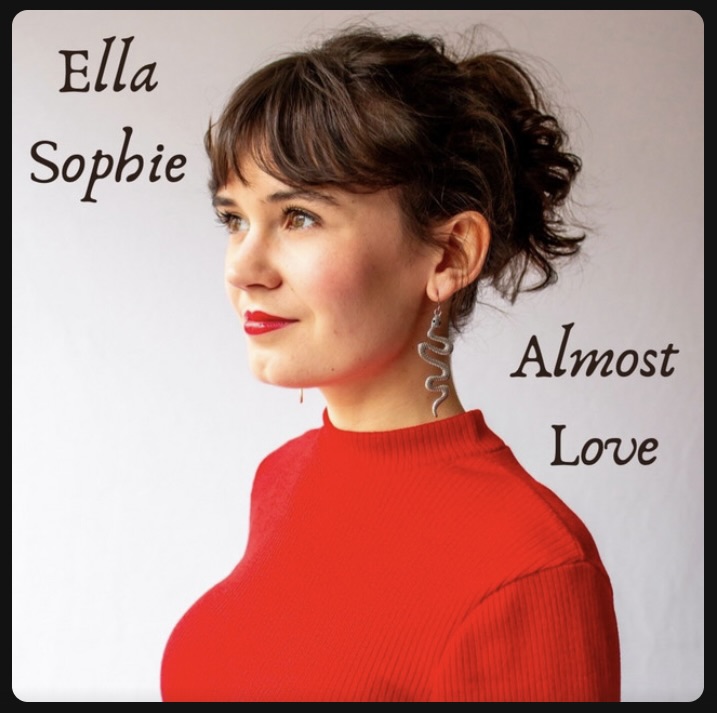
Ella Sophie ~ Almost Love
‘Almost Love’ is the first release EP by Ella Dunbar-Wilcox (Ella Sophie), a New Zealand vocalist, pianist and composer. She is studying for her Masters on the West Coast of America after completing a BMus at the New Zealand School of Music. When I played the album, it was hard to believe that I was hearing a first release. You could add this to a playlist of well-known Jazz vocalists and it would fit in perfectly. The approach is old school, but in the best way, as she interprets by subtle means, making the tunes her own.
The album is mostly Song Book ‘standards’, but her original, ‘Take a Clue’ is a fine composition and fits in nicely. Taking a more traditional approach has paid off. There is an ease, a certain cool, teased out by her playful phrasing and minimal but deft touches of vibrato. Much of that is technique but there is much more on display here. She draws you in, conveys intimacy as she tells a story and makes you a believer. Embedded is ‘I’m Old Fashioned’.
She is receiving airplay in her home country and elsewhere and her voice has been compared favourably to some iconic jazz vocalists. When I played the EP, Anita O’Day and even Blossom Dearie came to mind, with that hint of playfulness in her sound and phrasing. She is also a pianist, but she has engaged a pianist and some LA musicians for this album, and they are just right for her. The other musicians are Alex Frank, Ryan Shaw, Josh Nelson, Talley Sherwood, Ben Burget, and David Donnelly.
‘Almost Love’ was released by ‘TriTone’ and is available digitally on Apple Music, Spotify and YouTube.
JazzLocal32.com was rated as one of the 50 best Jazz Blogs in the world by Feedspot. The author is a professional member of the Jazz Journalists Association, a Judge in the 7VJC International Jazz Competition, and a poet & writer. Some of these posts appear on other sites with the author’s permission.
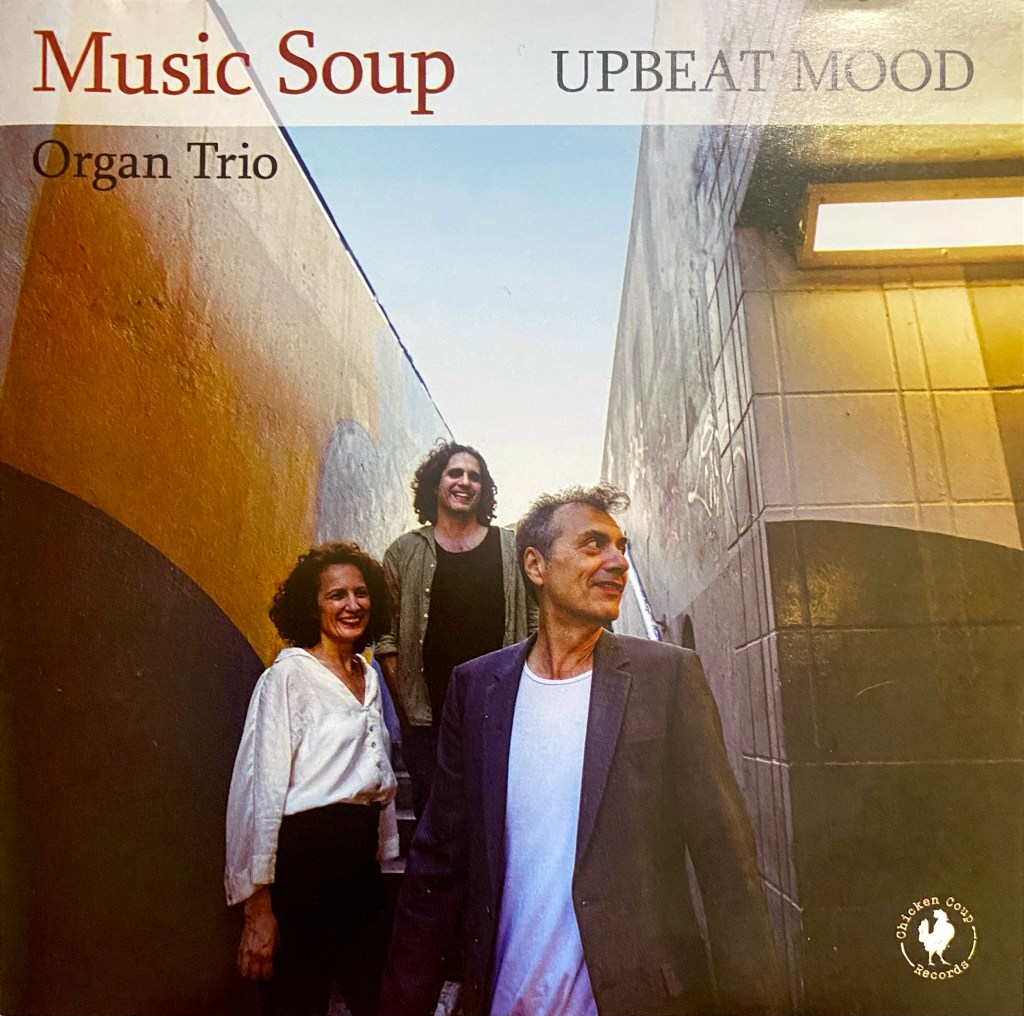
One of the most pleasing formats in Jazz is the B3 trio. It endures because it has warmth and groove in equal proportions and it makes us happy. To unleash the full potential of the B3 a bass pedalboard must be used, and this difficult-to-master art is increasingly rare. There are hands, knees and feet, all doing different things, there are two keyboards and a bewildering array of sliders and knobs to be coordinated. On the new Music Soup album we not only have a skilled pedaling-organist in Evgenia Karlafti but on two tracks a guest pianist (Kym Purling) is added into the mix. This adds to the complexity, as three chordal instruments can clash and crowd each other out; so skilled musicianship and the right compositions are called for. That is what you get with ‘Upbeat Mood’.
The guitarist, Nestor Demopoulos, co-founder of the trio with Karlafti, can power up the groove with solos reminiscent of Pat Martino, Grant Green or Paul Bollenback. His tone is a warm embrace and his comping urges the soloists to greater heights. The other trio member is drummer Vagelis Kotzabasis and his contribution nicely rounds off the core trio. They respond to each other throughout, enhancing the swing feel by their interplay. It is particularly evident on the opening track, ‘Korean Apartment’, a masterclass in Groove.
There is variety throughout, but all of the tunes are imbued with a sense of intimacy—the sort you might experience in a small Athens Jazz club on a balmy summer night. Unsurprisingly, Music Soup has come to the attention of notables like Tony Monaco and Pat Bianchi, the latter supplying liner notes for the album. The tunes are all originals by Karlafti and Demopoulos, except for Burt Bacherach’s ‘The Little Red Book’. The album can be purchased as a CD at www.musicsoupband.com or accessed on streaming channels.
Personel: Evgenia Karlafti (B3 organ), Nestor Demopoulos (guitar), Vagelis Kotzabasis (drums) with Kym Purling (piano – tracks 3 & 6) and Henry Gergen (trumpet track 8).
JazzLocal32.com was rated as one of the 50 best Jazz Blogs in the world by Feedspot. The author is a professional member of the Jazz Journalists Association, a Judge in the 7VJC International Jazz Competition, and a poet & writer. Some of these posts appear on other sites with the author’s permission.
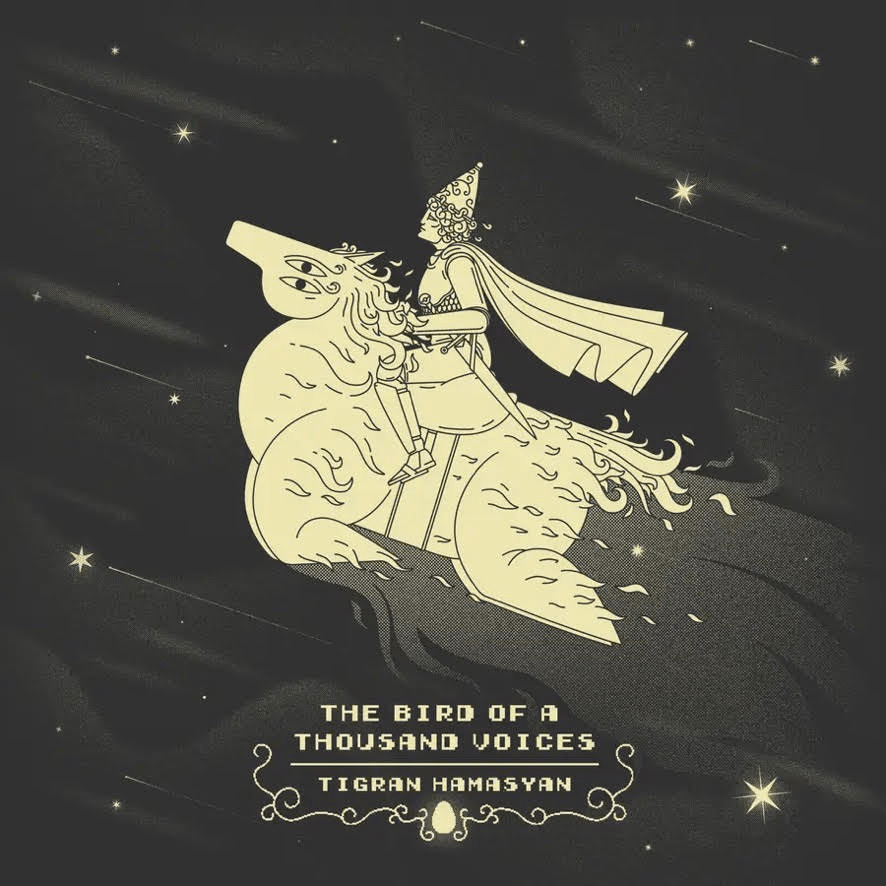
The Bird of a Thousand Voices is an astonishing project, and as I listened and wrote, I weighed up the various superlatives. No other term sufficed. And, to describe it as a concept or a themed album would woefully undervalue it too. The depth and breadth of Tigran Hamasyan’s project is breathtaking and evaluating it requires fulsome engagement. I am not implying that it is unapproachable as there are delightful melodies as light as air, and exotic rhythms to engage, but underlying every note are other worlds, endlessly unfolding–worlds that beg exploration.
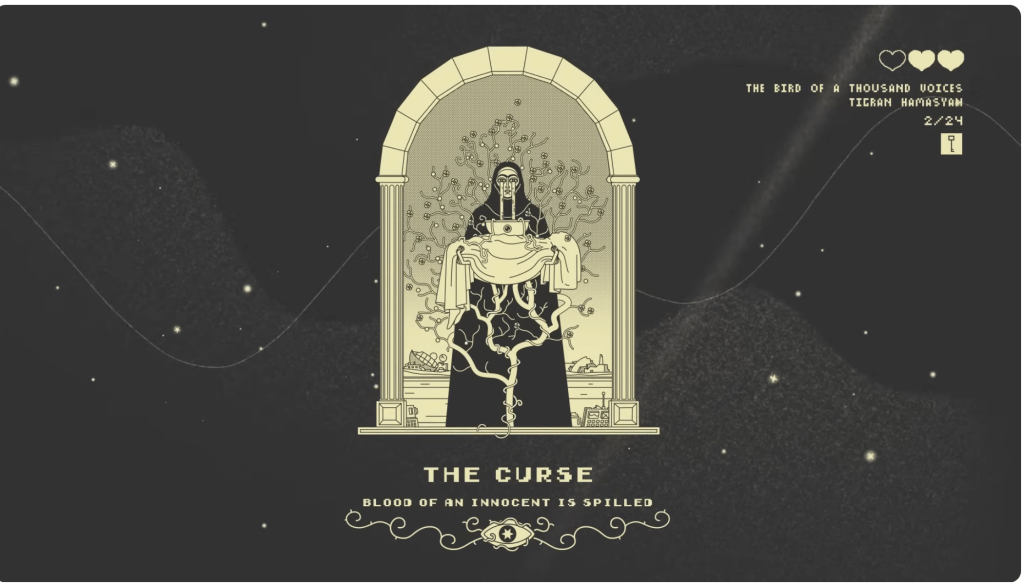
It is a transmedia project with the parts slotting together like pieces of a deliciously exotic puzzle. There is a film, an ancient manuscript, imaginative artworks, an interactive game, a stage show, and a timeless story, all wrapped in and around the extraordinary music of Tigran. It is utterly unique. His sound, touch, and visionary approach as he creates improvised music is singular, and few could pull this off so convincingly.
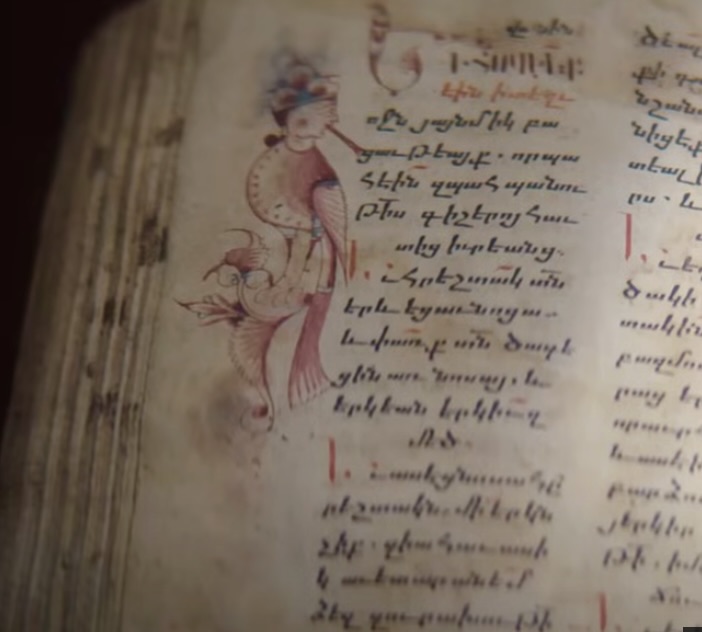
The project was inspired by an ancient Armenian folktale (Hazaran Blbul), involving an anthropomorphic bird. The fable tells of an era of great unrest, so the bird embarks on a spiritual quest, seeking world harmony. Still, as with all great quests, physical, spiritual and psychological difficulties are encountered along the way. Tigran states in his summary, that it struck him as a metaphor for the problems confronting today’s world; conflict, inequality and ecological disasters.
While the project references an ancient Armenian folktale, the bird theme is universal. Birds are sacred to most Middle Eastern, Mediterranean and Northern European cultures. They are frequently seen as messengers from the gods who can predict the future. Some believe they represent the soul or beauty and offer hope of peace. And, it is not just in myths. They warn us today of biodiversity loss, begging us to do better.
Among the promotional material is a video referencing a medieval illuminated manuscript from Armenia. Inside the manuscript, birds dance out of the vellum pages as Tigran’s Steinway is filmed being airlifted to a mountaintop, and the music dances too. Tigran’s distinctive pianism is immediately recognisable, but a deeper otherworldly quality appears during this recording. His delicate filigree motifs repeat and evolve, choirs or a single voice, echo key phrases and staccato percussive interludes rise, then fade; however, what stays with you is not technique but something more elemental. The project is a prime example of improvised music reaching beyond the familiar as improvised music should.
illustration excerpted from Armenian archives image
The album engages on many levels and should be enjoyed as the creators intended; by listening, watching, gaming, and contemplating. In collaboration with Tigran, Dutch filmmaker Ruben Van Leer has created cinematographic wonders integral to the music, as has illustrator Khoren Matevosyan. As you enter the website to participate in the game or to enjoy the illustrations and installations, you will find dozens of gifted collaborators credited. While there are too many to mention, the principal musicians are Tigran Hamasyan (piano, keyboards, drum programming, compositions, concept), Areni Agbabian (vocals), Sofia Jernberg (vocals), Vahram Sargsyan (vocals), Nate Wood (drums and bass).
The vinyl album can be purchased via tigranhamasyan.com His music is also available on the usual streaming platforms.
JazzLocal32.com was rated as one of the 50 best Jazz Blogs in the world by Feedspot. The author is a professional member of the Jazz Journalists Association, a Judge in the 7VJC International Jazz Competition, and a poet & writer. Some of these posts appear on other sites with the author’s permission.
I was idling my way through the morning when a message from a friend in the UK lit up my phone. ’I’m sitting in a Jazz club in Dublin, and I have a Kiwi couple with me whose daughter is an Auckland-based jazz musician. She plays in a band with guitarist Keith Price, do you know her?’ I know Price well and have attended many of his gigs but the name Francesca Parussini didn’t ring a bell. I had missed Price’s last gig so I checked through my invitations and saw that she was a saxophonist and a member of Price’s new band LacLu. The other band member was Maximilian Crook, a versatile, tasteful up-and-coming drummer. I messaged Price for more information and learned that LacLu had recently recorded, resulting in an EP album, due for release later in the year.
Fast forward to last week, when a review download arrived. I listened and was delighted by what I heard. The LacLu album taps into an expansive realm akin to Spiritual/Astral Jazz, whose definition has expanded over the years to encompass improvised music reverencing the natural world. As human-induced chaos and degradation of the environment assails us, music that invites us to reflect on nature is increasingly appealing. The influences cited in the liner notes are Frissell, Lovano and Motian. While influences are evident — touches of Americana, colourist drumming and content-rich minimalism — the album is forward-looking and more than a tribute.
The opener, ‘Winter Fog Morning’, is in two parts. Beginning with haunting pedalled phrases on the guitar, gentle drum and cymbal taps, and whispery phrases from the horn, each underscoring the other as they paint a landscape with deft sonic strokes. You hear what could be bird calls rising out of the fog. The scene has been set and part two expands the vista. What follows at a lilting gait is a melodically and texturally rich tapestry that is both raw and caressing. I live where Price lives, among the Waitākere hills, ragged coastlines and foggy wooded valleys, and the band has captured the beauty of that landscape.
The third track, ‘Stella by Starlight’, pays tribute to a loved standard but pared back, reduced to its essence and done in a way that only skilled improvisers could pull off. Scant phrases of the loved melody appear, change and evaporate. Here especially, Price shows us what he is made of, his playing is evocative and tasteful. This is a gem and it is hard to believe that the drummer and saxophonist are not seasoned performers like Price. They are recent jazz school graduates, but despite the disparity in years and experience, the band performs as equals. The last track, ’Friends and Whanau’ rounds the album off nicely, reminding the listener of our human connections, and the interconnectedness of all life. Here the warm shadings of Americana are most evident.
Throughout there is spaciousness, seamless interaction and open improvisation around composed motifs. The name Laclu references a lake in Ontario and a general locality. The area is described as having ‘indistinct boundaries’. Price grew up near there but never visited the lake and perhaps that is the perfect metaphor for the album. What appears to be place-specific is more than that. It is any place where nature rules, places we can call home if we work with nature, not against it.
Keith Price (guitar), Francesca Parussini (tenor saxophone), Maximilian Crook (drums) – Ainsley Duyvestyn-Smith cover photography, recorded at the Kenneth Myers Centre Tāmaki Makaurau. The album is available on Bandcamp and streaming platforms – click through here at laclu3.bandcamp.com/album/laclu-self-titled
JazzLocal32.com was rated as one of the 50 best Jazz Blogs in the world by Feedspot. The author is a professional member of the Jazz Journalists Association, a Judge in the 7VJC International Jazz Competition, and a poet & writer. Some of these posts appear on other sites with the author’s permission.



 JazzLocal32.com