Creativity is essential to human survival. It is the fuel of adaption and as Darwin pointed out, those who fail to adapt fail to thrive. Creatives understand this and none more so than improvising musicians. It is therefore not surprising that musicians increased their outpoint in a variety of ways during lockdown.
In the early weeks, I noticed a feverish burst of activity from improvisers as solo concerts streamed and unreleased albums materialised; appearing as if conjured out of nowhere. Many of these albums landed in my inbox but because I was caught up in an international journalism project I put them aside for a time. As my posts appeared more frequently and in far away places an increase in review copies landed.
It has been my usual practice to confine my posts to New Zealand or to Australian artists and I try to confine offshore posts to artists I’ve heard live. I rarely venture beyond those self-imposed limits, but during the pandemic, I have broken that rule and moved beyond. These albums provide a snapshot of two diverse locations. They portray an interrupted world but also the constancy of improvisers. Their creativity is what keeps us sane. Improvised music illustrates our connectedness as it builds new languages out of old. It is a universal heart beat created from the babel that is life on earth.
‘The Gathering’ (The Jac) New Zealand
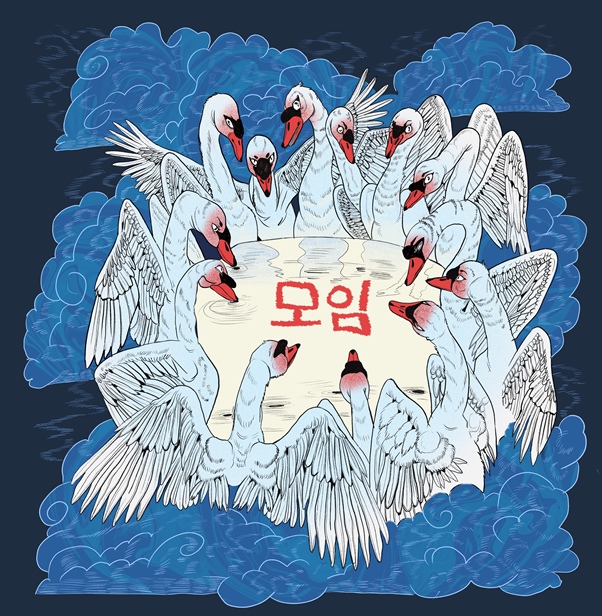
From the time of their formation, accolades for the ‘The Jac’ have kept coming. They are an eight-piece ensemble with a great sound and underpinning that are experienced players, nice compositions and some tasteful arranging. Although they are essentially a Wellington ensemble they have attracted musicians from all over, this giving them a distinct and cosmopolitan flavour. The talented Jake Baxendale is the front person, but there is also real depth surrounding him. On this latest album the quality of the overall musicianship is particularly evident.
While some long-established groups remain static, ‘The Jac’ keeps reaching for new heights. They are rooted in the now and reflect multi-genre inclusiveness. The future of Jazz demands this, as it is not a dead language.
The sound clip I have embedded is titled Tui (composed by Jake Baxendale). This delightful tune is nominated in the composition category for this year’s New Zealand Jazz Awards. The powerful contribution of Nick Tipping on bass and Mathew Allison on trombone especially grab the attention.
This is the Jac’s third studio album but the release plans have been impacted by the pandemic. They have therefore decided to release part of the album on Bandcamp and to release the rest closer to 2021. Why not download the early release digital tracks now and pre-order the rest? The musicians deserve your support. You really need to hear this.
Jake Baxendale (saxophones, compositions),
Alexis French (trumpet)
Matthew Allison (trombone),
Chris Buckland (saxophones)
Callum Allardice (guitar, compositions),
Daniel Millward (piano, compositions)
Nick Tipping (bass),
Shaun Anderson (drums)
‘Totem’ ( Ferdinando Romano / w Ralph Alessi) Italy
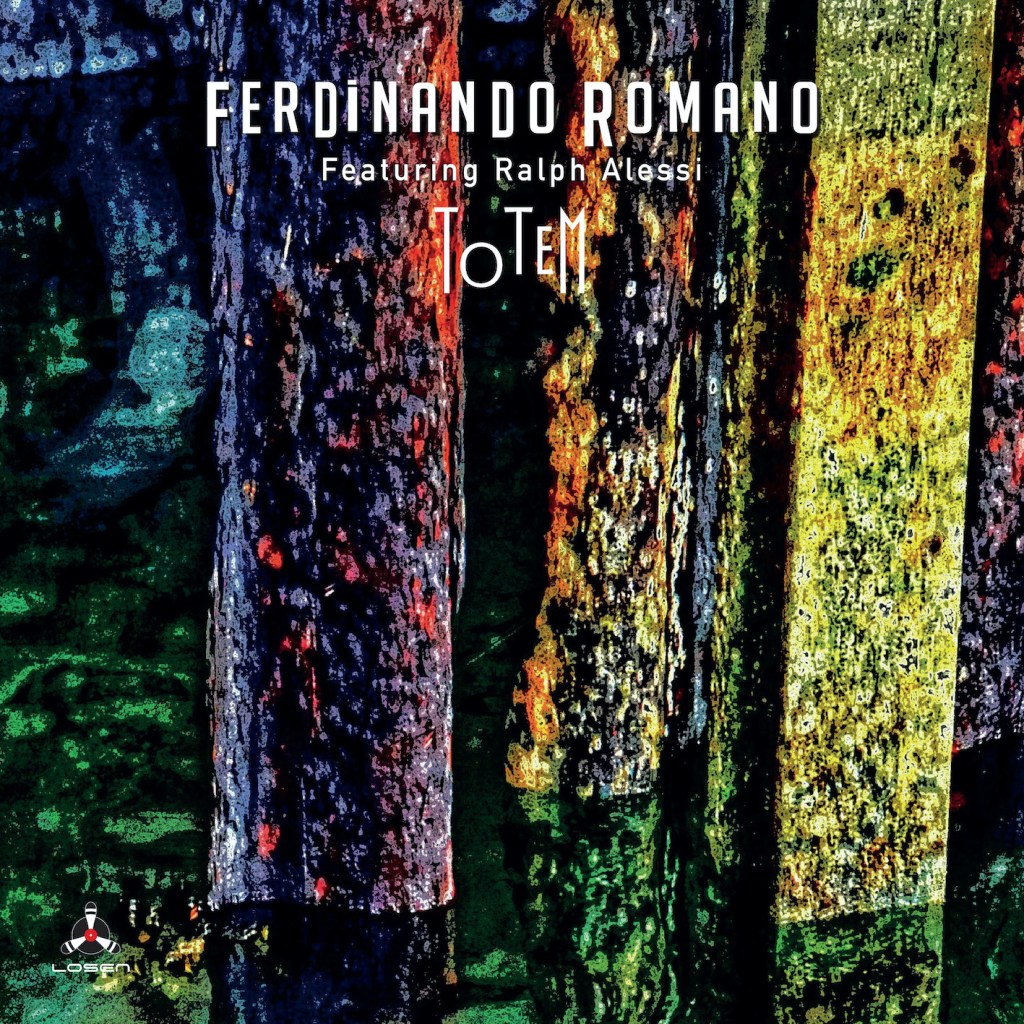
Some albums take a few listenings to get inside, but I fell for this one instantly. With further listening, the attraction increased. Having a modern trumpet stylist like Alessi on board was an inspired choice, but it was also Romano’s engaging compositions that reeled me in. This is a master class in less being more. It is minimalism but it is not stark, perhaps, because it’s from the warmer south.
The musicians move like dancers. Gliding between the fluid embrace of the ensemble playing and the crystalline melodic solo lines with ease, and also playing with real conviction. This is definitely a European sound and at times reflective, but while the music resonates cerebrally, it can find the heart in an instant.
Compositions as finely balanced as this could easily be overwhelmed, but the band reacts to every nuance. There is texture, but melody is dominant. There is dissonance, but never overdone. The tone is set from the first number titled ‘Gecko’; opening over the leader’s pedal on bass, Alessi beguiling us with gentle smears and caressing lines. Then, seamlessly, Caputo picks up the thread, Magrini next, then the ensemble and outro. As a composition, it flows beautifully.
It is natural that Alessi grabs our attention as he is a master of his instrument, but in spite of that, the septet sounds like a band of equals. There are no weak links. This is an album I am likely to play often and hopefully, there will be more like this from Romano.
Ferdinando Romano (bass, compositions)
Ralph Alessi (trumpet)
Tommasso Lacoviello (flugelhorn)
Simone Alessandrini (alto, Soprano sax)
Nazareno Caputo (vibraphone, marimba)
Manuel Magrini (piano)
Giovanni Paolo Liguori (drums)
https://ferdinandoromano.bandcamp.com/album/totem-feat-ralph-alessi
‘Giulia’ (Francesco Cataldo) Italy
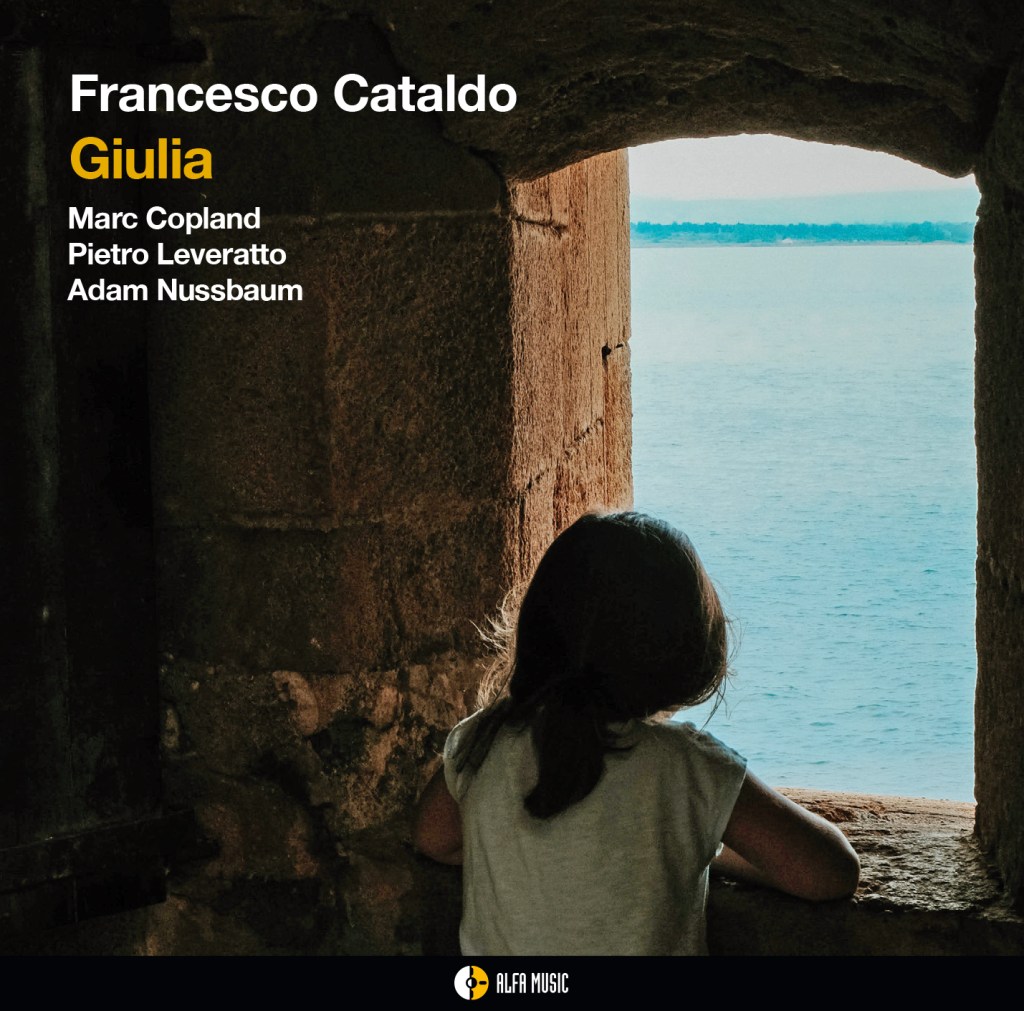
‘Giulia’ was the second Italian album to come my way during the lockdown period and like the first, it is close to the ECM aesthetic. There is deliberation and a sense of purpose behind each phrase and you can feel this especially in the spaces between. At the centre, the clarity and silken softness of Cataldo’s guitar work.
The airy compositions are all the leaders. For the project, he engaged Marc Copland and Adam Nussbaum, both celebrated American musicians and both perfectly suited to realise his vision. The remaining band member is Pietro Leveratto, an Italian bass player of repute. Together they weave a cohesive storyline and in doing so enter the listener’s consciousness. Before you realise it you are on the journey with them.
I have often visited the Mediterranean and hold a deep love for Sicilia which is Cataldo’s home base. The moods here speak of languid salty air and of the startling blue of the Siracusa seafront. I can think of few places on earth so evocative or beautiful. It is the birth and the death place of Archimedes. When an errant Roman soldier was about to slay him, his last words were ‘do not disturb my circles’. Was this in mind when Cataldo wrote his epilogue piece ‘Circles’?
The pieces here all evoke strong images. Some of the connections are obvious as with Levante (my favourite piece), while others are illusive. And presiding over all is the haunting cover art. Was there ever a more beautiful image. Giulia, the daughter of Cataldo and the presiding spirit over this beautiful album.
I live on another island deep in the South Pacific Ocean and that is a long way distant from Sicilia. It is physically distant but this music somehow connects the two places and for those who live on Islands, and who love Islands deeply, those connections hold mystical power.
Francesco Cataldo (guitar, piano, compositions)
Marc Copland (piano)
Pietro Leveratto (bass)
Adam Nussbaum (drums)
AlfaMusic
https://www.francescocataldo.eu/prodotto/giulia-francesco-cataldo/?lang=en
 By the time the second week of the Auckland Jazz Festival arrived, I began to feel my age. I had already experienced a number of late night gigs and a further week of music stretched ahead of me. This was no time to flag, as some interesting and innovative music lay ahead. The festival programme structure provided audiences with variety. The depth and breadth of the improvising scene was on show and I wanted to see everything possible. The week started well with the Meehan/Griffin/Manhire poetry project (see earlier review for this). That gig brought a new audience and I was still
  buzzing come Tuesday.
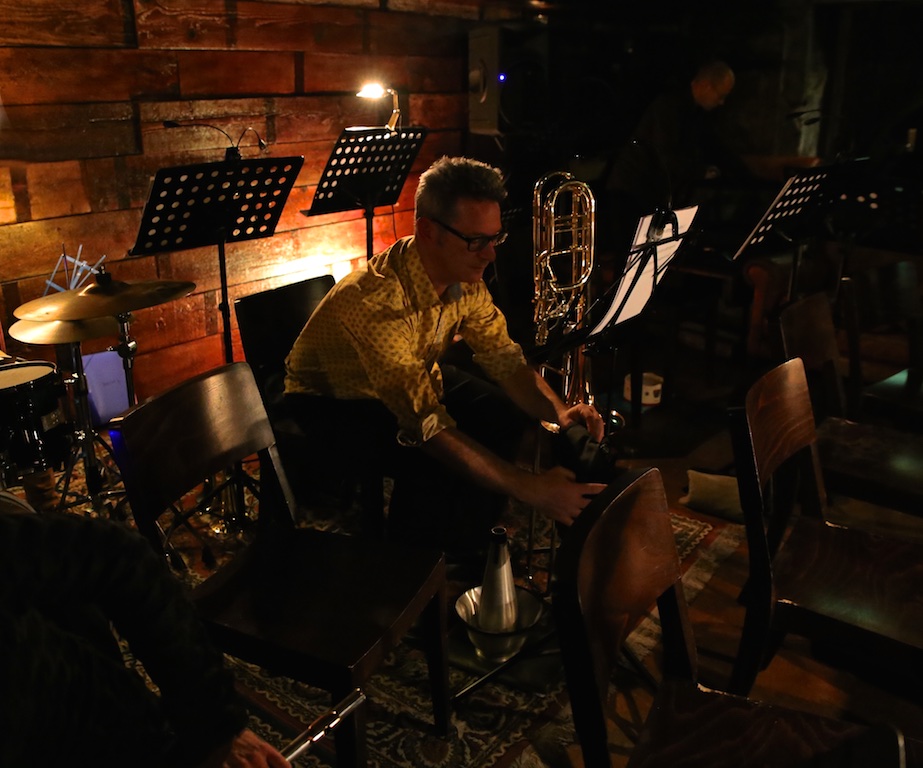
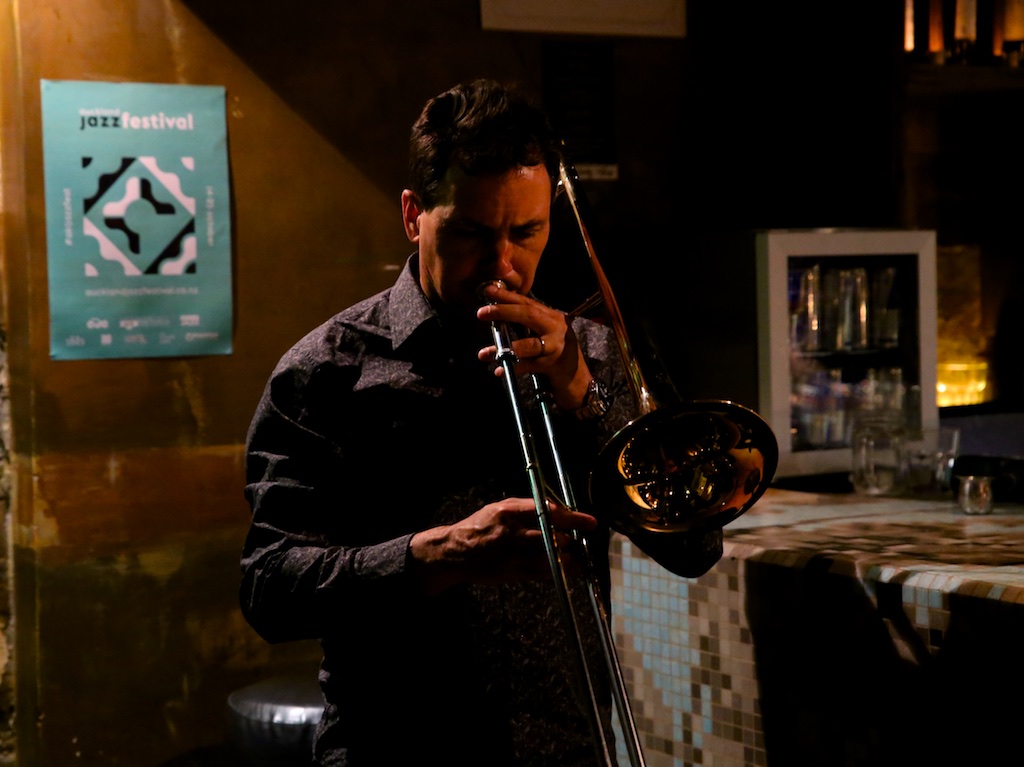 I had volunteered for door duty that night, turning up early to help. I enjoy the Jazz orchestra set-up process – in this case nineteen musicians and a conductor configuring a behemoth in an impossibly small space. It was like witnessing Nasa scientists beginning the launch sequence. Instruments and gauges checked, tapped and rechecked, cabling run out; each adding a layer to the criss-cross tangle of shoes, stands and chairs. Soon there were rows of brassy instruments standing in an (almost) orderly line, with the odd human interloper spoiling their symmetry. Random buzzing sounds came from warming up lips; and all punctuated with honks and plucked notes from far-flung corners of the room. this is the counterfactual of the sounds that follow.
 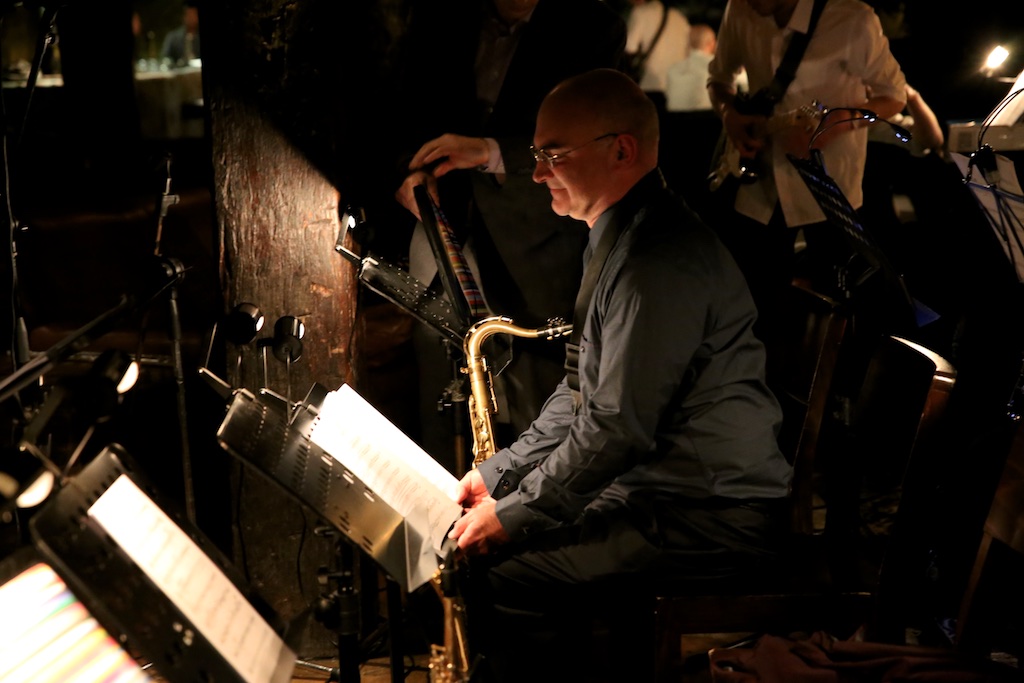 Band leader Tim Atkinson composed and arranged the suite. He has carefully shaped this ground breaking project as befitting a work of this importance. This is a modern piece of music in the mould of Darcy James Argue. Richly textured, evocative of the title and especially in the warm multi layered dissonance that swells out of the quieter passages. The work has captured a mood and an orchestra going places. This is a moment which benchmarks the growing maturity of the Auckland Jazz scene and I am truly glad to have witnessed it. The overall performance on the night was flawless, but if anyone stood out it was altoist Callum Passels. His solo on ‘The Dark Passenger’ was wonderful. it was a feat of story telling, of mood and it oozed freedom – as if he had somehow escaped the confines of room and orchestra. Importantly, he managed this without once deviating from the logic of the composition. I urge people to purchase this album and I guarantee that you will play it over and again.
  On Wednesday I spent time with the
 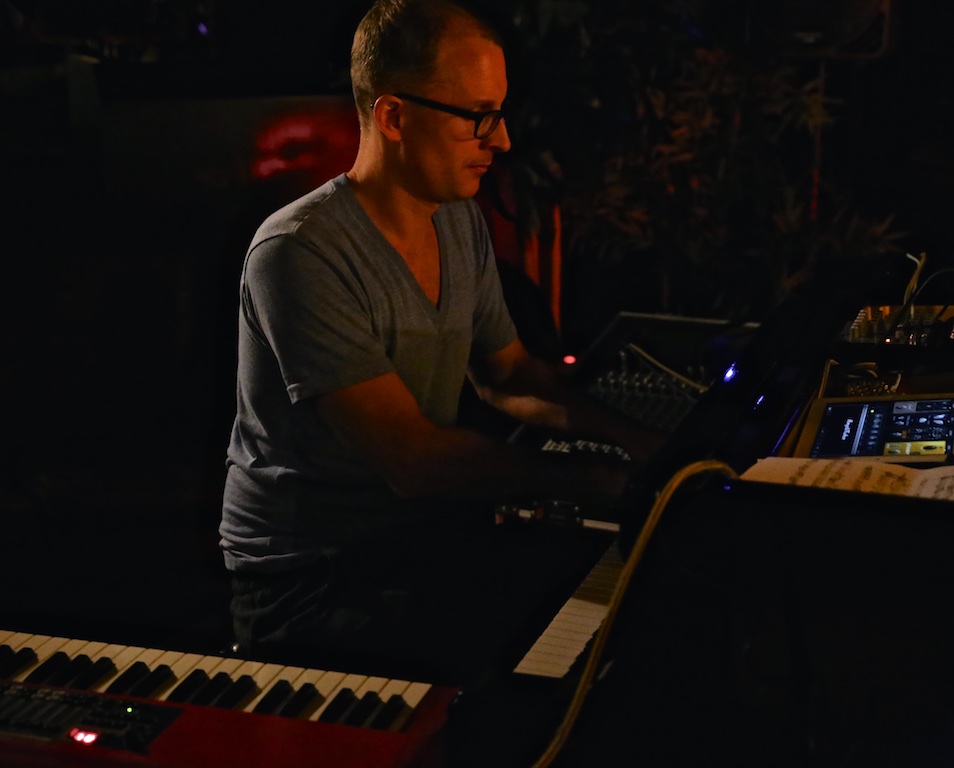 The trio’s set list was a mix or originals and some very interesting covers. What was not composed by Lackner or by the drummer Chazarenc, were often unexpected tunes; Brahms, Cold Play, David Bowie, Rodriguez and Jimmy Hendrix. ‘If Six were Nine’ was simply stunning. Warmly familiar to those of us who remembered the rock original. Taking the bones of a 1960’s tune and infusing it with edgy lines and modern harmonic conceptions. I have long-held the view that the new standards will come from material exactly like this. None of the band were alive when this acid blues classic was cut in 1969, but their joy at performing it was evident. Jimi would have loved it.
 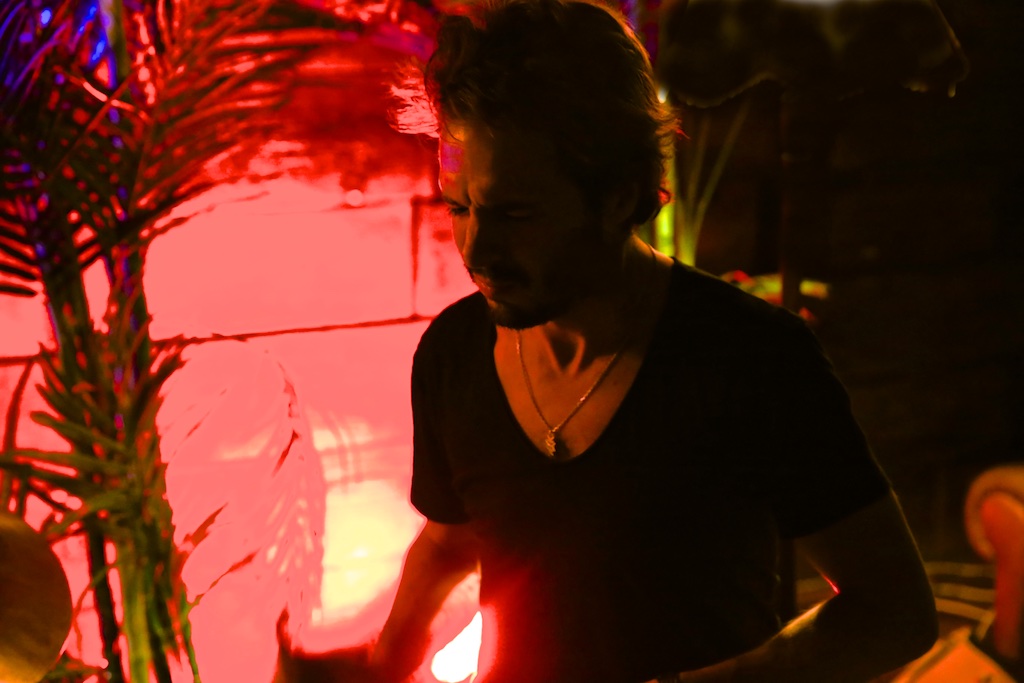 The bass player on this trip was Bruno Schorpe. When offered an upright bass he declined – choosing to remain on electric bass throughout. I’m glad that he did because the instrument had the bite to act as counterweight. Balancing out well the electronics and various effects of Lackner’s keyboards. Then there was drummer Matthieu Chazarenc. He has accompanied Lackner on previous trips and to my ears he is directly out of a great tradition. French Jazz drummers have a sound that is distinct. Like many of his compatriots Chazarenc’s sound is crisp, even dry; utilising dynamics in ways that younger drummers are often incapable of. A label like ACT must surely pick the trio up sometime soon. They would be a perfect fit – much as they would for ECM.
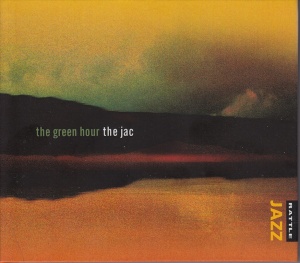 ‘The Green Room
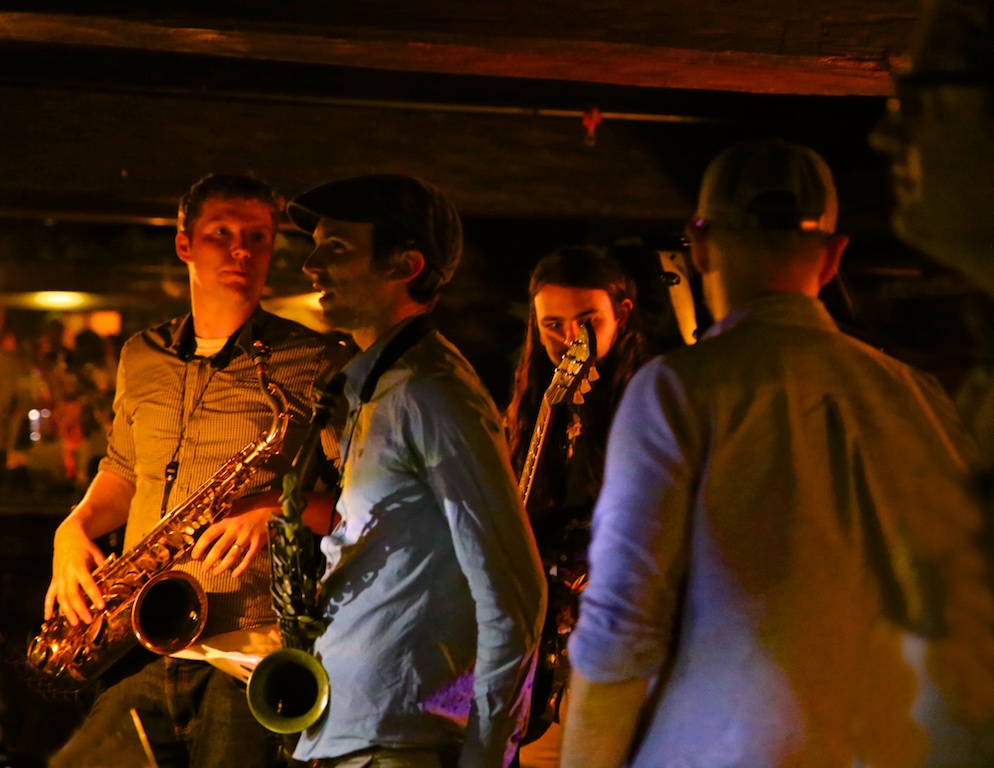 It is almost overkill to single out soloists with a cohesive group like this as every one is notable in some way or another. Altoist Jake Baxendale is their nominal leader and three of the compositions on the album are attributed to him (including the title track). If any number captures the essence of the group it is this. The solo on his tune Andalucia also captures a strong sense of place. I know Andalucia well and this is a convincing testimony.
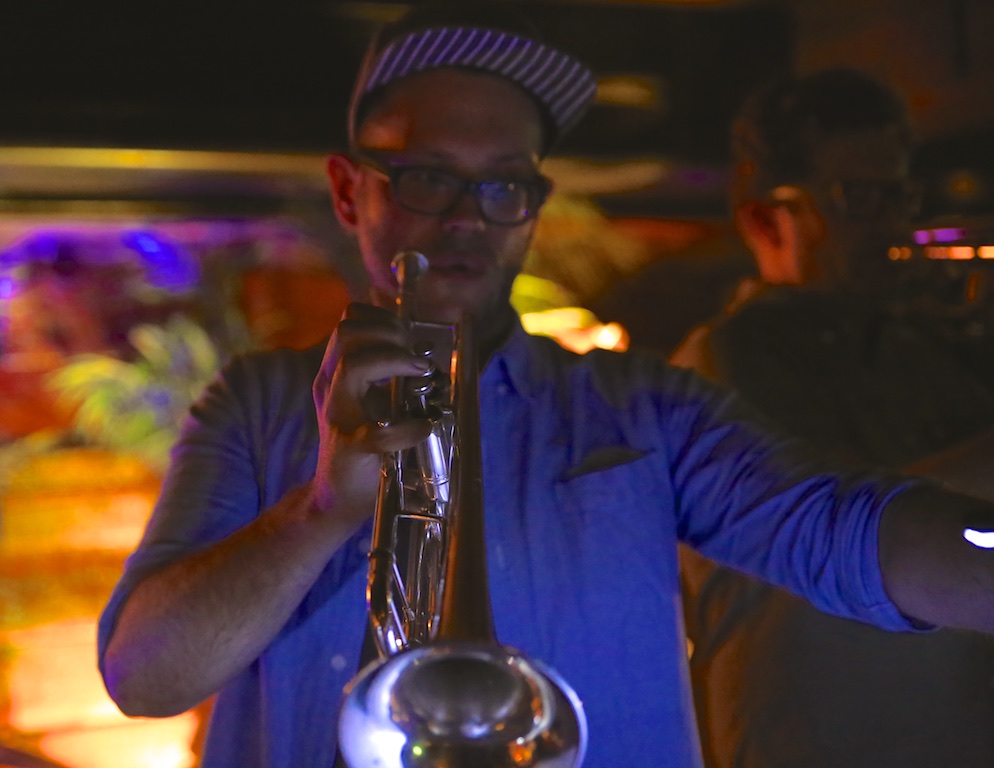 It is hard to know where to start with Callum Allardice; he grows as a musician every time I hear him. His compositions are stunning and his guitar work so fluid and exciting that it defies belief. These are performances that stop you in your tracks and few New Zealand guitarists capture that particular sound. Lex French is another spectacular performer and we would hardly expect otherwise. He is now the leading local voice on that horn. Perhaps the most experienced player is Nick tipping who never puts a foot wrong. On the new album we hear him at his best.
 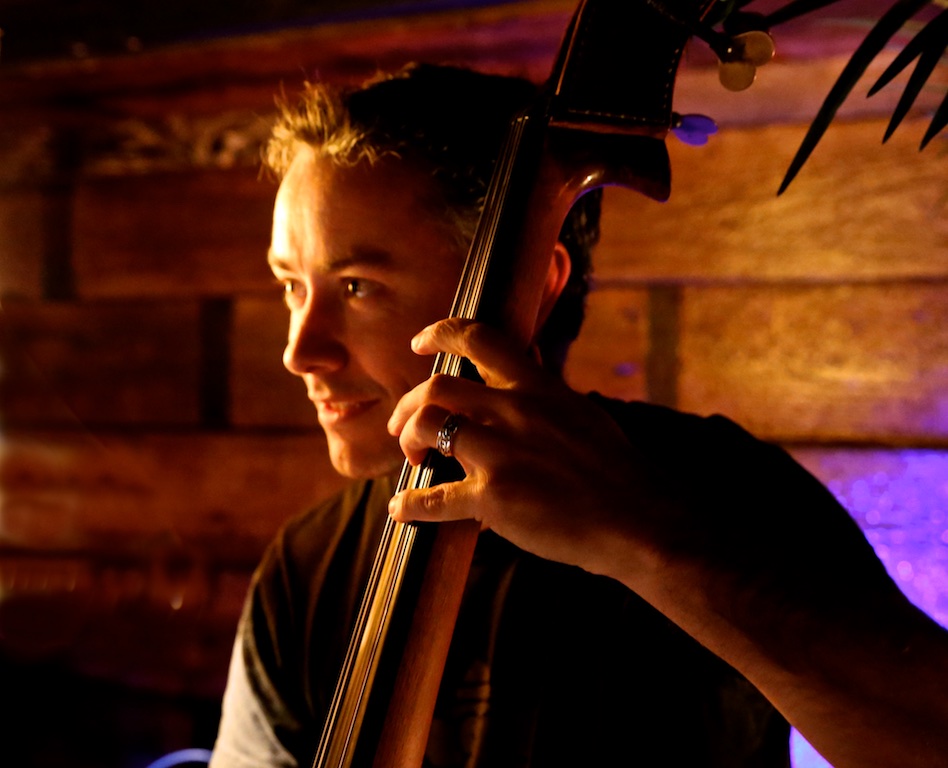 Convincing contributions by the likes of Chris Buckland, Matthew Alison and Shaun Anderson reinforce the view that this is an all-star band. Lastly there is pianist Daniel Milward. He has recently moved to Melbourne and his voice is particularly strong on the recording; more so than on the first album. Not a showy pianist but an extremely tasteful one who gets it just right. I have put up a sound clip of the Allardice Composition ‘The Heist’, as I have loved it since first hearing it (probably at the Tauranga Jazz Festival).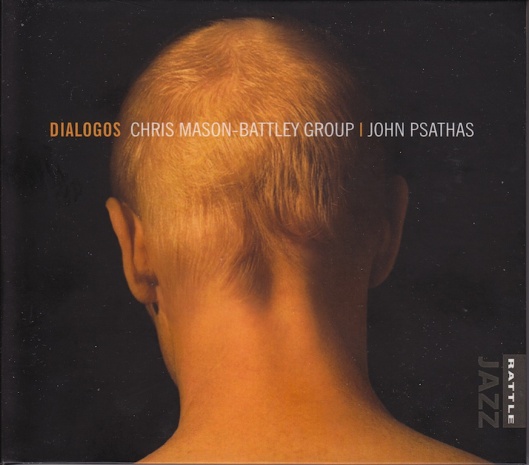
 In Psathas words, “it is not arranging or adapting…(rather) a continuing of the composing process”. There are works or arrangements which re-imagine and examine a work from an outside perspective. That is not the case here. This is part of a developing story and the Psathas vision remains at its heart. I recently read a trilogy by a famous and highly respected author. He had intended to write a fourth volume but died before he could proceed. A year later another author picked up where the original author left off and achieved something extremely rare. He added to the body of work seamlessly; continuing the narrative in ways that were his own and entirely consistent with the original. Although a more serious work, DIAGOLOS was an unmitigated triumph.
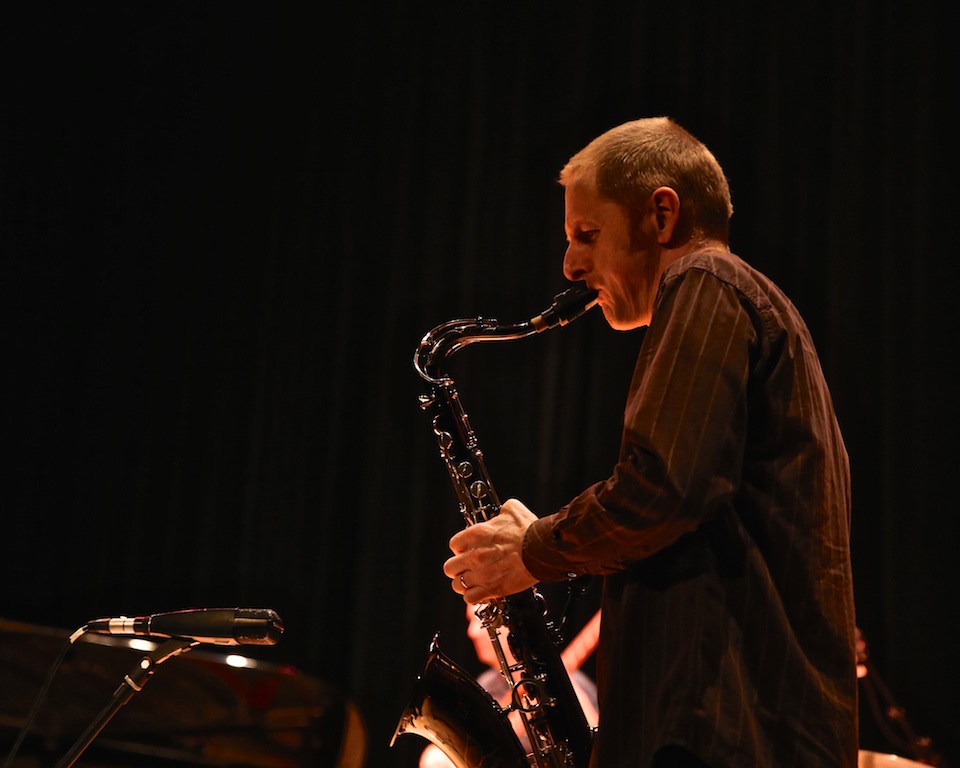
  Mason-Battley is a thoughtful gifted musician, but we don’t see him perform about town very often. Any new project gets his undivided attention and that was the case here. Counter intuitively, it is his careful preparation which affords him the extraordinary freedom he demonstrates on the bandstand. During this performance he took us right to the edge; you gained the sense listening that he was pushing himself a little further with each phrase. It is at times like this that great music emerges. While adventurous with electronics, he evokes a classic Coltrane sound on his Soprano. There are a number of local musicians who double on soprano but few (if any) sound like Battley.
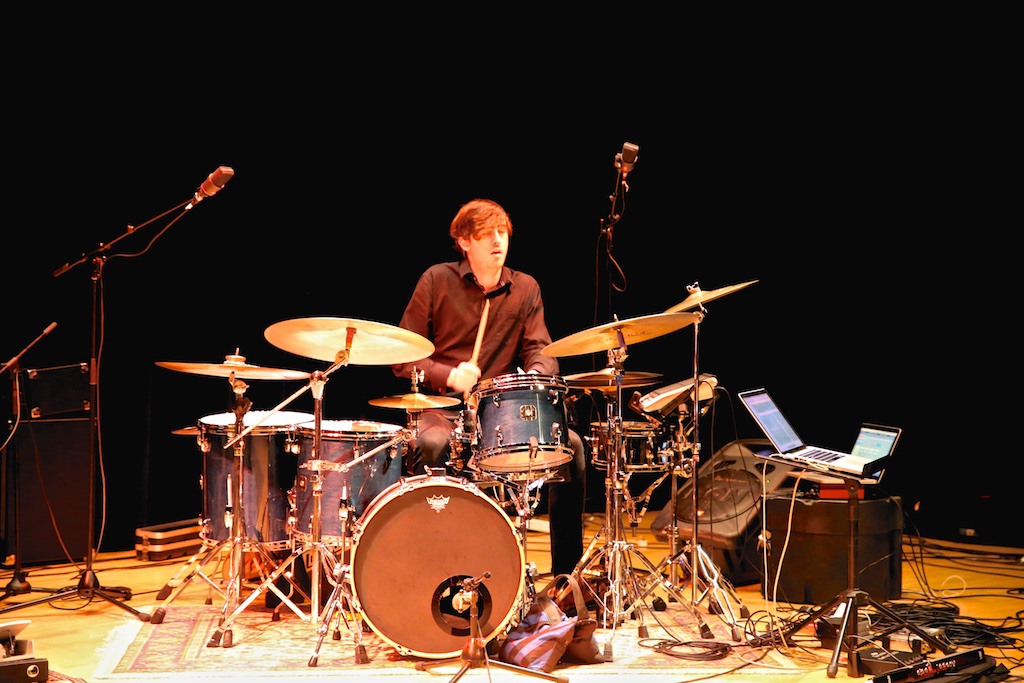
 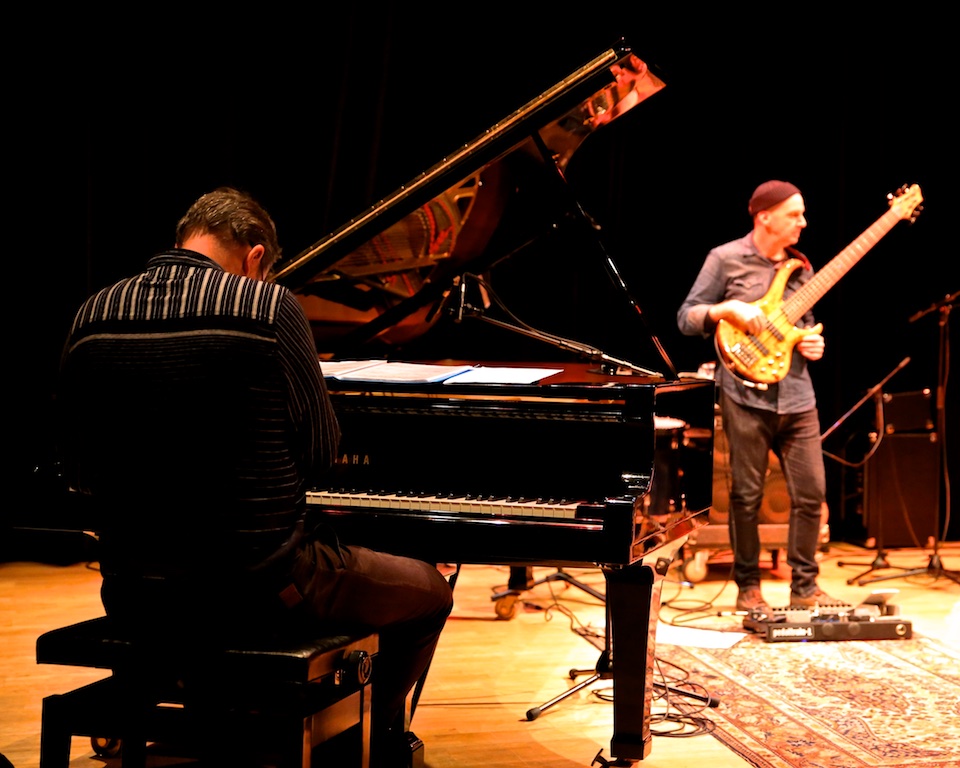 The Chris Mason-Battley Group has been around for some time and the original group set New Zealand records for the number of downloads and albums purchased. For this project core members David Lines, Sam Giles and Mason-Battley remain with the addition of drummer Stephen Thomas. Unlike earlier configurations, there is no guitar. Bringing Thomas into the mix has worked extremely well. The drummer of choice for many gigs and a gifted percussionist in the fullest sense. Psathas music calls for sensitive drum work and Thomas has exactly the right approach. His understanding of subtle dynamics, time awareness and overall sensitivity to the project were very much on display. I also appreciated David Lines piano. Lines early classical training was evident in places and again this made him a very good choice for the project. The work required a pianist with a particular chordal approach. At times he was minimalist and with a particular approach to voice leading. Lines like the other four were indispensable to the project. Lastly there was Sam Giles – an electric bass player I wish I heard more often. Giles often leans towards the avant-garde and innovative projects. That is where he shines.
 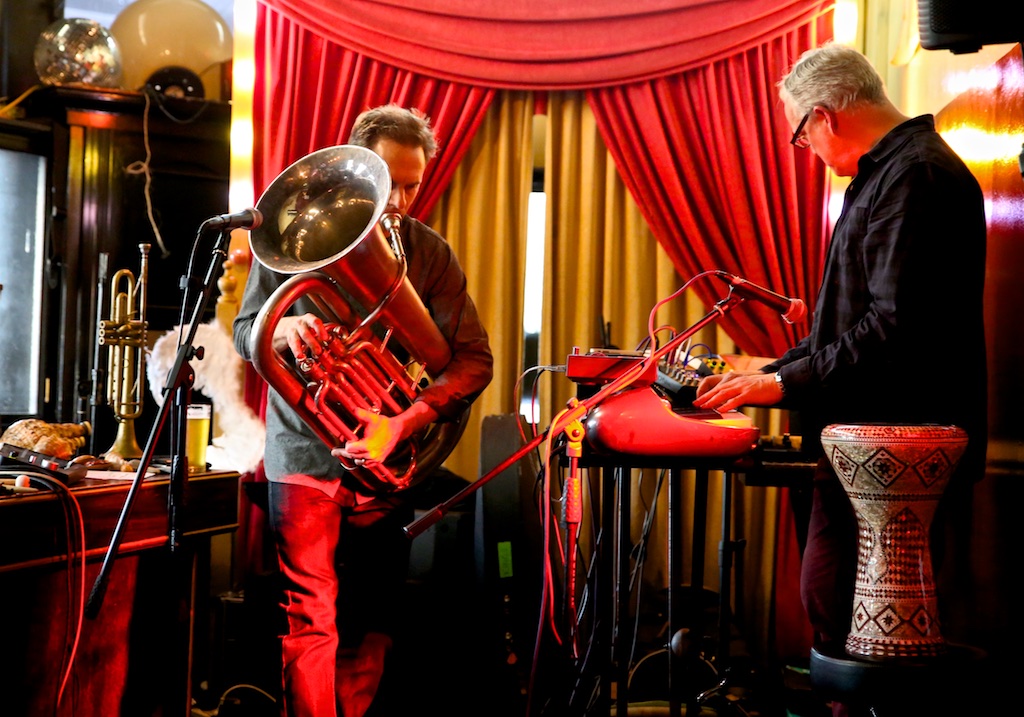 The Last Auckland Jazz Festival gig I attended was the Alan Brown/Kingsley Melhuish
  This has been an interesting Jazz Festival and although it is cliched, there was something for everyone. From manouche through to the avant-garde. I loved that it retained the feeling of local and of intimacy – even when showcasing offshore bands. The CJC (Creative Jazz Club), Rattle Records, 1885 Britomart, Auckland University, Golden Dawn, Portland Public House, Hallertau, Ostro, Lot 23, One2One, Hotel DeBrett, Lewis Eady, The Refreshment Room, the Vic, The Wine Cellar and other venues deserve our heartfelt thanks. Above all its
  JazzLocal32.com