Waypeople ~ Jake Baxendale

Those lucky enough to attend any of Jake Baxendale’s ‘Waypeople’ concerts last year will have anxiously awaited the release of this album and his release tour. It is music brimming with exotic textures and tasteful arrangements, but it is more besides. When I attended the concert, I sensed that I was hearing something important. It made a statement about the maturity and evolution of Aotearoa’s improvised music scene and also conveyed a message that the world needs to hear right now. This spoke to our times and cut deep.

Before the advent of written language, and for a good while after, important stories were poetised and sung. This enabled generations to memorise and pass on vital cultural knowledge. In fact, poems were sung and accompanied by musicians long after the arrival of the written word, and the practice of silent reading didn’t occur in the West until well into the Middle Ages (sometime between 900-1200 BCE), and in China, during the Song Dynasty (around 1100 CE). 

To the ancients, reading was a communal activity, and so it was with the Tao Te Ching. It spread through oral transmission much like Homer’s epics. Therefore, while various texts are available today, hearing it with musical accompaniment feels right. To the Taoists, music deepened the connection with the natural world and awakened ancient memories. As the Tang Poet Li Bai wrote:

 ‘The monk from Shu with his green silk lute . . .

Has brought me by one touch of the strings,

The breath of pines in a thousand valleys’

‘Waypeople’ is an album that joins a journey begun over 2,500 years ago, and in doing so, it incorporates the cultural expressions and voices found on that journey. Here, the ancient wisdom of the Tao Te Ching is clothed in a contemporary jazz idiom, utilising the oldest of instruments, the human voice and accompanied by saxophones, clarinets, piano, vibraphone, trumpet, drums, flute, oboe and guzheng. The use of the guzheng is particularly relevant here, as it dates back to the time of Tao Te Ching itself. 
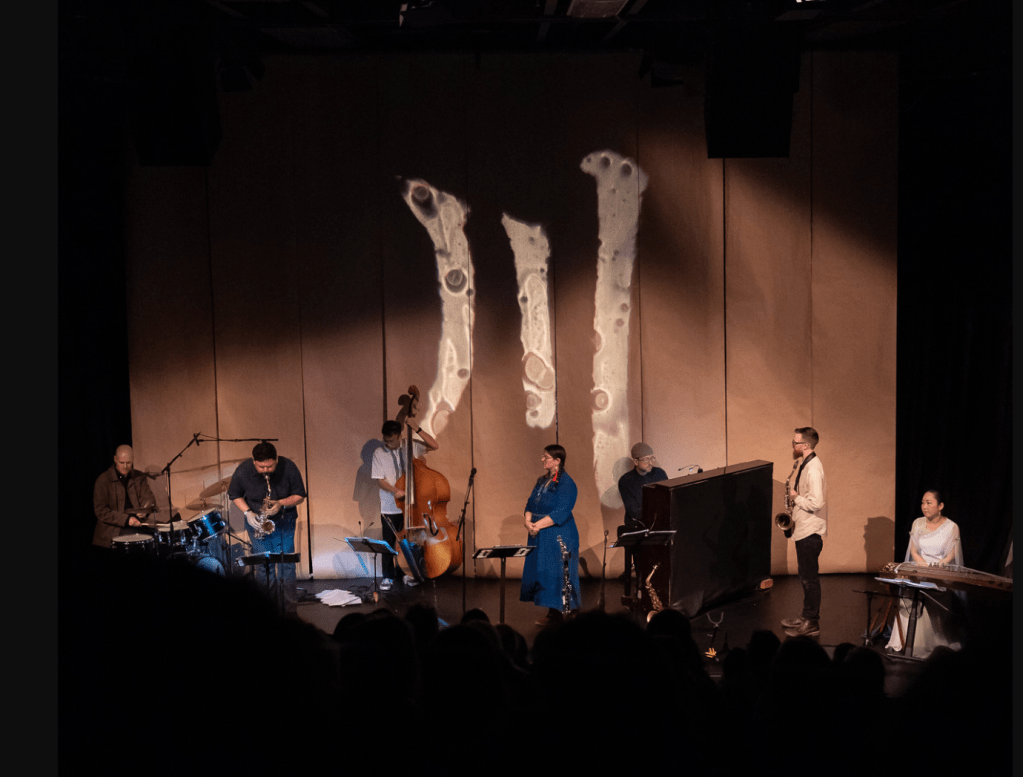
Throughout the album, selected passages of the Tao Te Ching are sung or intoned. Some verses are urgent and imploring, others reflective–opposites are brought into balance. It is therefore entirely appropriate that the translation is that of beloved contemporary author, Ursula Le Guin. What these musicians have captured is the ebb, flow and essence of these important verses. A balance has been found between the old and new, and the ‘old master’ Lao Tzu would surely smile on this endeavour. 

Our world today is like it was in the Warring States (475-221 BCE)– it is out of balance. It is obvious that humanity has again taken many wrong turns, so now is the time to retrace our steps and heed this ancient wisdom.  Choose peace over war, quiet and reflection over clamour. So, attend the gig if it comes to your town, buy the album on Bandcamp, listen deeply and reflect. There is no time to lose. https://jakebaxendale.bandcamp.com/album/waypeople – or check out the teaser on YouTube

The musicians are from Wellington and Auckland. Chelsea Prastiti (voice), Jia Ling, (guzheng), Jake Baxendale (compositions, alto, tenor & baritone saxophones, clarinet & bass clarinet), Callum Passells (sopranino & alto saxophones), Daniel Hayles (piano & vibraphone), Johnny Lawrence (double bass), Cory Champion (drums & effects), Louisa Williamson (flute tk 2), Ben Hunt (trumpet tk 5), Kaito Walley (trombone tks 2 & 5), J Y Lee (flute tk 10), Millie Mannins (oboe tk 10) – btw how nice to see Roger Manins daughter in this lineup. 

No competition, no blame” – Tao Te Ching

JazzLocal32.com was rated as one of the 50 best Jazz Blogs in the world by Feedspot. The author is a professional member of the Jazz Journalists Association, a Judge in the 7VJC International Jazz Competition, and a poet & writer. Some of these posts appear on other sites with the author’s permission. 
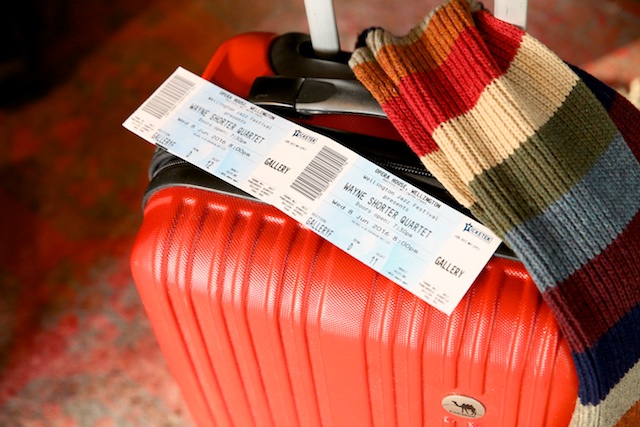
Wayne Shorter Quartet – beyond the time/space continuum

Shorter 099When we talk about Wayne Shorter’s music we immediately run into obstacles. Wayne is like a Zen Master, deliberately confounding our every expectation. To begin such a journey our rational minds need emptying. As the journey unfolds we move beyond comforting reference points; this requires a letting go, real courage. The 2016 Wayne Shorter band is a musical ‘Voyager’, a spacecraft assembled out of earthly components, but sending encrypted sonic messages from an unknown place. What is on offer is a shared journey – but only if we are brave enough. Once you commit there is no looking back.
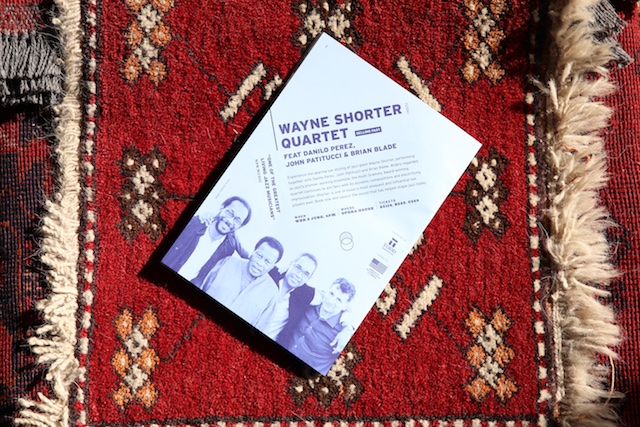
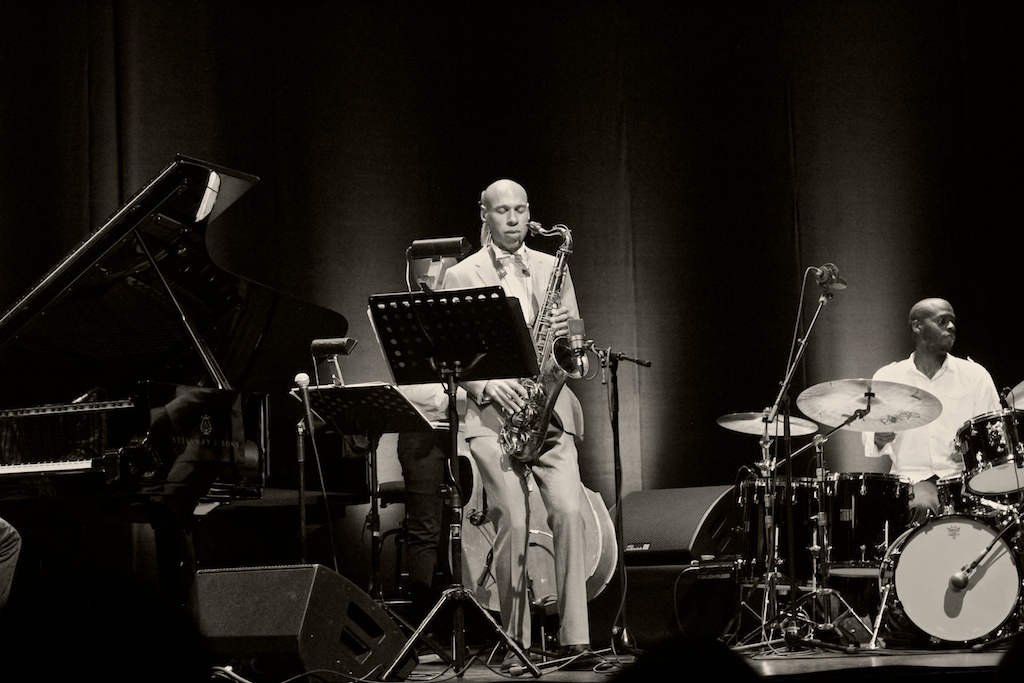
To attempt a detailed description of a concert like this is utterly pointless. Only the ears, eyes, spiritual mind, can evaluate this experience. That is the point – you have to be there – really be there – engaged – then let go. All I can say is how lucky I feel to have seen this band twice in my life. Once in a Roman amphitheatre in Verona Italy during the ‘Standards Live’ 2002 tour. Now 14 years later almost to the day, at the Wellington 2016 Jazz festival. The same band, Wayne Shorter, Danilo Perez, John Patitucci and Brian Blade. Immortals all. Back in 2002, the band unbundled tunes from Wayne’s long career – a career always advancing beyond the edge. It sounded brave and edgy back then. On this tour, he transcended those earlier reference points. Yes, there was form, even charts; just as a spacecraft has a shell. Inside the craft, the band moved freely in the weightless air.

This tends to confound some critics, people who need firm ground beneath their feet. A few have even puzzled over the constant adjustment of saxophone mouthpiece and neck. The perpetual adjustment phenomenon is common to all great saxophonists – it is a manifestation of the never-ending journey deep into sound. In the marvelously written Cook & Morton Penguin Jazz Guide, the word elided appears when describing Wayne’s sound. He often puts the saxophone to his mouth, then pauses and takes it out again – interpreting this or his frequent adjustments as uncertainty is missing the point entirely. The dictionary definition of Elision is; deliberately omitting components of speech or sound. When taken to its logical conclusion the remaining sounds (or letters) become a code. A code we must decipher unaided.

I think it was Lee Konitz who said. ‘Old men should play like old men. When I hear them trying to play like their young selves it sounds wrong’. Old men have important things to say from the viewpoint of life experience. Wayne played like his older self, wiser, braver and unafraid to show vulnerability. I am glad that he did.

After the gig, I spoke to a number of musicians. Almost all were in a deeply reflective mood, basking in the experience. Dixon Nacey a prominent New Zealand Jazz guitarist said to me. Man, I was thinking of you in there and wondering how you could find adequate words to review that? Of course, I can’t.

Dixon and I decided to walk a while, needing to clarify our thoughts. We walked the back streets, weighing it all up, sometimes discussing a particular facet, seeking to understand the importance of what we had seen and heard. Dixon said at one point, “I found that I needed to abandon my trained musician’s brain, the brain that looks for fixed rhythmic, melodic or harmonic structures. A profound lesson I learned from this was, if you decide not to come in, to lay out in unexpected places, that is OK. Trusting another band member to pick up the thread”. There were probably mistakes and this also created deep connections. This music is humanism personified. That vulnerable sound that Wayne emits from his horns is his Bodhisattva voice – it can confront precisely because it is so human.

All worthwhile journeys lead back to the start point, a place where art, imaginings, and life merge. We already understand this music, we just need reminding. Shorter 099 (2)Wellington Jazz Festival 2016, Opera House, Manners Street, Wellington

The Wellington Jazz Festival (WJF) 2014


IMG_1065 - Version 2

New Zealand music fans should enthusiastically support the Wellington Jazz Festival, as it has hit a sweet spot.   It will now be run as an annual event thanks to an enlightened funding decision by the Wellington City Council and the sponsors.  I am enthusiastic about this years festival on a number of levels, not least because it has struck a sensible balance between quality local acts and high-profile international acts.  In doing this the festival producers provide valuable gigs for talented New Zealand artists (or lessor known offshore artists), but they also create a real street vibe.  The Opera House fits the boutique-festival feel extremely well, as it has a warm cosy atmosphere, good sight lines and intimate acoustics.   I certainly don’t decry the use of the Michael Fowler Centre, but shows in these larger and more sterile venues need balancing with lots of club gigs which speak to the street.  This year the balance was perfect.  Jazz Festivals need street vibe as much as headline acts and a carnival atmosphere is a must have.  A reminder that Jazz emerged from the rowdy back streets of America over a hundred years ago.  IMG_1068 - Version 2

I was only able to attend for two days, but Friday night in Wellington city gave me a real Kansas city moment.  As I moved from gig to gig, concert to concert, I could faintly hear the sound of the next gig before I was out of sight of the previous one.  The warm feeling I got as I drifted aimlessly between gigs was worth the cost of the flight.  People were happy just to walk the circuit of bars and gigs, being sucked into each venue by the siren calls of saxophone, drums, trumpet, guitar or keys.  The happy jumble of accessible gigs and the high quality of musicianship couldn’t fail to please.

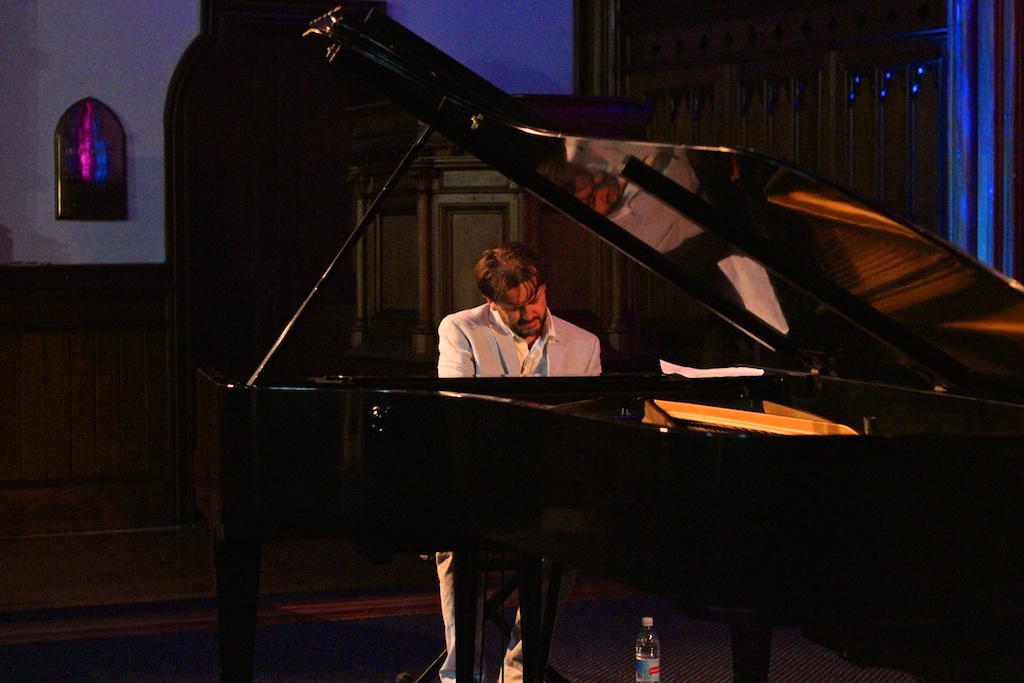
My first festival gig was the Barney McAll free concert in St Peters church.  He has long-lived in Brooklyn but hails from Australia.  I had caught McAll doing a trio gig at Auckland’s Creative Jazz Club the night before, where he impressed the audience so much, that a few of us made sure that we caught him again in Wellington.  McAll is a deep-level improviser bringing the history of this music to each performance.  When he is playing solo piano there is an orchestral completeness to his work.  His left hand often utilising powerful stride bass lines while he moves and stomps in Monk like fashion.  On reflection McAll was very much the festival highlight for me.

IMG_1061 - Version 2

The first headline International gig I attended was the Joshua Redman quartet at the Opera House.  The band opened with a few tunes clearly pitched to a diverse festival crowd, but that changed as they progressed through the set list.  A highlight was ‘Walking Shadows’ (J S Bach ‘Adagio’) which is the title of his new album with Brad Melhdau.  This piece honoured Bach beautifully while giving ample space for fluid Jazz informed conversations.  It was then that we begun to hear more of what the quartet was capable of.  For me however it was the encore that was the standout of the night.  Pulling out a marvellous interpretation of Wayne Shorter’s ‘Infant Eyes’, they showed us the real meat on the bone.  The Redman quartet are a highly polished unit; noticeably propelled by powerhouse drummer Greg Hutchinson (with his heart stopping beats) and anchored solidly by Reuben Rogers.  In contrast Aaron Goldberg takes a minimalist and often oblique approach on piano while Redman’s sound although authoritative is thinner than many of his peers.  The band can certainly pack a punch and Redman’s arrangements did him credit.

IMG_1071 - Version 2

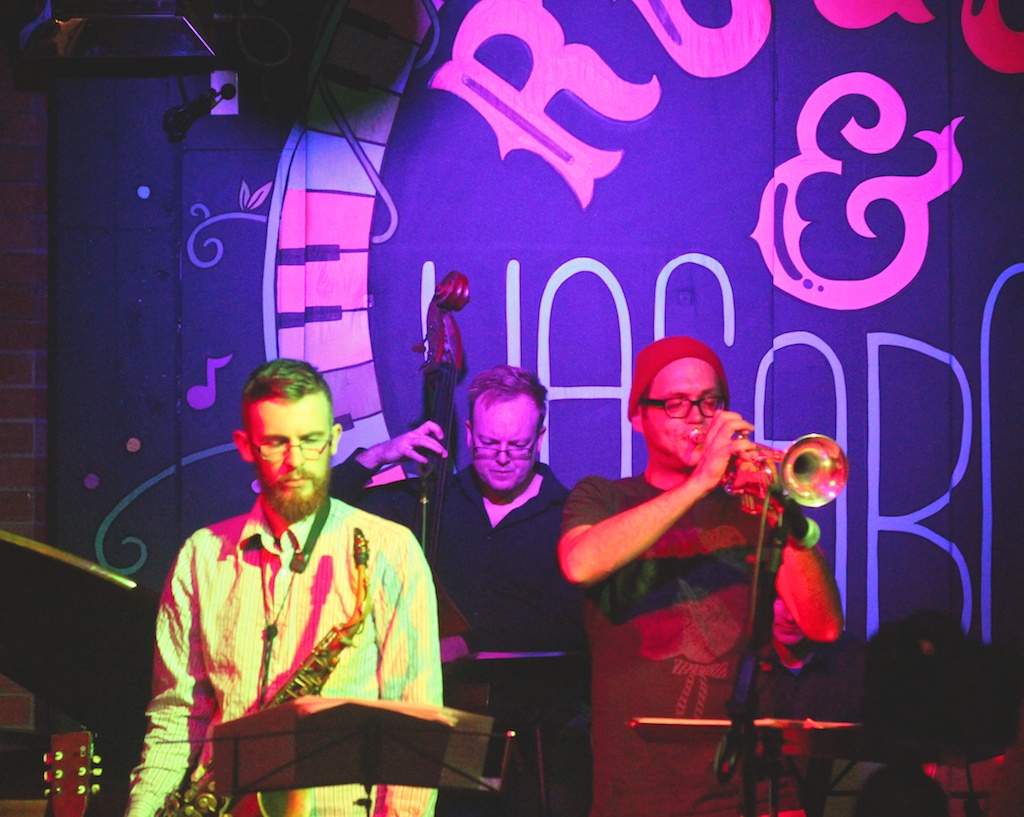
After the Redman concert I headed for the Rogue & Vagabond.   This was the first local band I saw and I wouldn’t have missed it for anything.  There was a themed approach to most of the gigs, with many local bands interpreting famous albums; in this case ‘Thelonious Monk at the Town Hall’.   That was a great choice of album and completely authentic in its interpretation.  The quirky crazy warmth of Monk came through strongly and the excitement drew a melee of happy revellers to the bar.  Congratulations to Jake Baxendale (alto), Mike Isaacs (Tenor), Chris Buckland (baritone), Matt Allison (trombone), Lex French (trumpet), Kelvin Payne (tuba), Rowan Clark (bass), Shaun Anderson (drums) and Ben Wilcock (piano).  I love nonets and this one was perfect.  The gorgeous brass heavy voicings and heavy Monkish accents from the piano, hung in the air like decoded messages from the man himself.   Thursday was only the first night of the festival and in spite of limping around on a sore foot all night, I couldn’t stop smiling as I headed back to the hotel.

After the official opening on Friday night we filed into the Opera House to hear Pablo Ziegler.  A pianist composer who hails from Buenos Aires, he is the leading exponent of Nuevo Tango and an interpreter of the works of the Tango maestro Astor Piazzolla .  This highly rhythmic and often melancholic music was an infusion of European classical, African informed rhythms, hints of Jazz and the beautiful folk ballads of Argentina.  It is a danceable music created by creole musicians and early on embraced by working class Argentinians.  The Ziegler orchestra was essentially the Wellington Orchestra and they acquitted themselves extremely well.  The string section was twenty strong  (including two double basses),  there were two French horns, an oboe, a bassoon, a flute and a drummer who doubled on vibraphone and percussion.   Lastly there was composer, arranger Pablo Ziegler on piano.   I loved this concert in its entirety and especially when an expat Argentinian Fisarmonica Tango-player came on stage to play a ballad.  People often turn up their noses at the accordion and its close relative the bandoneon, but I defy anyone not to feel the emotional power of this instrument in a classic Tango setting.

My next stop was the Corea/Burton concert which started late due to repeated encore’s at Ziegler’s Opera House event.  When he came on, Chick Corea appeared discomforted by the air-conditioning, which would have felt positively arctic after his recent trip to Portugal.  Gary Burton was wearing a sweater and so it worried him less.  The Michael Fowler centre is a huge cavernous venue and controlling the air flow is undoubtedly a monumental task.  Once underway the famous duo delivered a well thought-out program, which included new and older familiar tunes.  The interplay between these two is uncanny and it goes way beyond just finishing each others musical sentences. They are able to challenge and anticipate what the other will do and this allows for high level interaction.  The duo have been playing together for so long now that their musical minds are as one.

IMG_1079 - Version 2

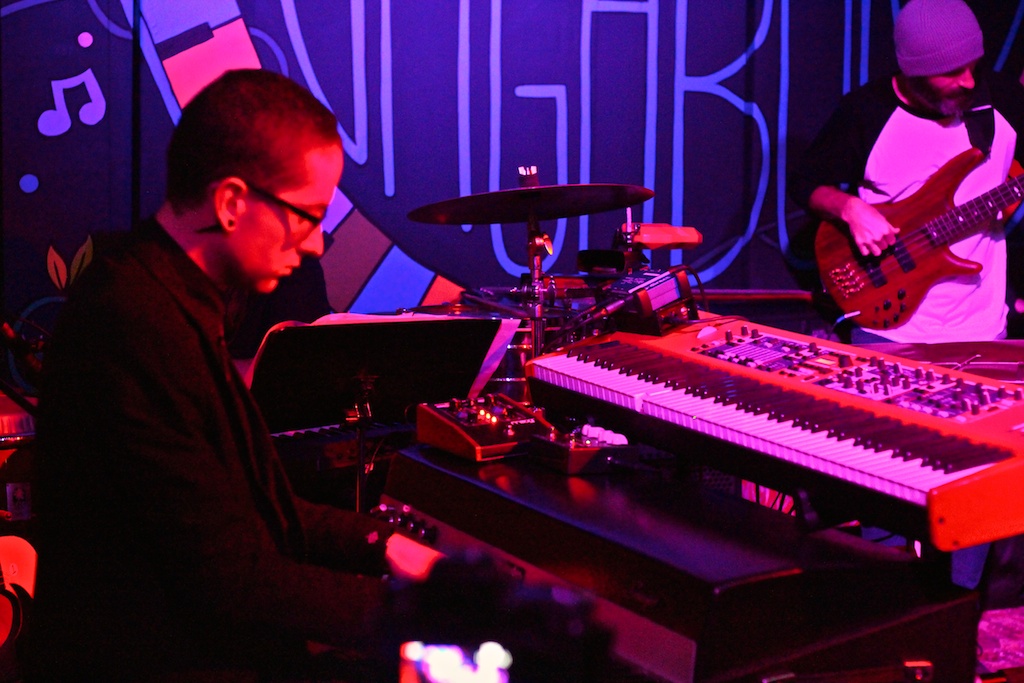
The last gig I was able to attend was back at the Rogue & Vagabond and this time it was a Herbie Hancock ‘Headhunters/Heavy Weather’ tribute.   I am always up for this music as it is surprisingly seldom played in New Zealand.   The band was outrageously good and as I approached, a flurry of urgent beats and a surge of raw energy seemed to fill the streets around the venue.   I am always enthusiastic about Dan Hayles keyboard skills and on this night he played a bank of keyboards to great effect.  On drums was the talented Myele Manzanza (who I suspect was the leader), on percussion Lauren Ellis, on tenor saxophone Blair Latham and on electric bass Rom Smith.   Blair Latham had been unknown to me prior to this, but I will pay more attention in future.  He was simply killing.  IMG_1099 - Version 2

Every large festival leaves you with regrets and mine were primarily about the gigs I’d missed.

There were at least eighty solid reasons for attending this Wellington Jazz Festival.  That was the number of listed events and there were many more unlisted events besides.    The Festival has had its ups and downs, but thanks to the persistence of the festival committee and the Wellington City Council it can now focus on what it does best.  Bringing quality Jazz to a wider audience.  If you are a Wellington local attending is a no brainer.  If you are from out-of-town then plan early and grab a cheap airfare.  You won’t be disappointed.  I wasn’t.

http://www.jazzfestival.co.nz/