Callum Passells, trio, quartet, quintet

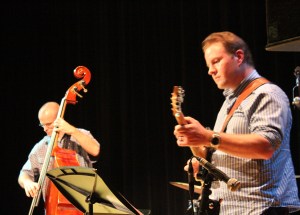
Callum, Cameron & Adam

A few days ago the CJC presented the Callum Passells group.   Callum is a third year student at the Auckland University School of Music (Jazz Studies) and so are his band mates.  If anyone harboured the briefest thought that this group should be cut some slack on account of age or experience, forget it.   What we saw was a slick act, a great programme and the sort of discipline that generally comes with seasoned performers.   This band did the business and they held us in the palm of their hand throughout.

I had only seen Callum perform a few times; once at a house party and once during a jam season.  Those brief encounters had not been enough for me to form a clear view of his abilities and so I arrived with an open mind and no fixed expectations.   I now recall Roger Manins saying that Callum was a terrific saxophonist and that he had the hunger to succeed.  That should have clued me up.
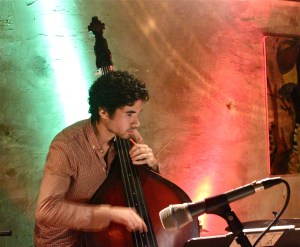
Cameron

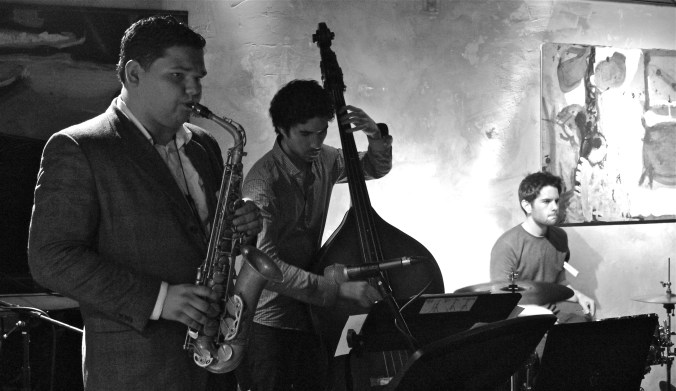
Callum is a very nice altoist and his tone is as sweet or as hard-edged as the tune calls for.  Once in a while I could hear a hint of Cannonball Adderley.  Not a copied lick, but more of a bluesy swagger and the stuttering way that he would burst into a phrase.  During one such moment I must have uttered the word ‘Cannonball’ to myself.  The person sitting next to me suddenly said, “yeah, I heard that too”.

The band was well rehearsed and they had paid attention to the smallest of details including how they presented themselves on the bandstand.  Their programme was quite varied and each number fitted into its place and told its own story.   There were piano-less trio numbers, quartet numbers and quintet numbers.   The tunes were all originals and they were well written.

I have to comment on the quintet arrangements which were simply sublime.  Some of the better arrangers like Marty Paich or Kenny Wheeler could arrange tunes in such a way that smaller ensembles sounded as if they were much bigger.   The advantage of this is that it leaves the listener with a feeling of airiness.  A sense of the space around each instrument.   
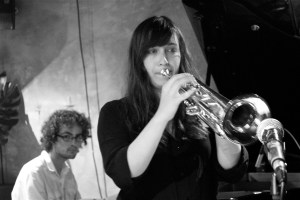
When I first heard the quintet I was surprised at how big the sound was.  There were only two horns, Cullam Passells (as) and Liz Stokes (t, fh).   This is the illusion created by good arranging.  Liz Stokes was especially fluent in the second set and a Wheeler-esk slur added colour to the performance.

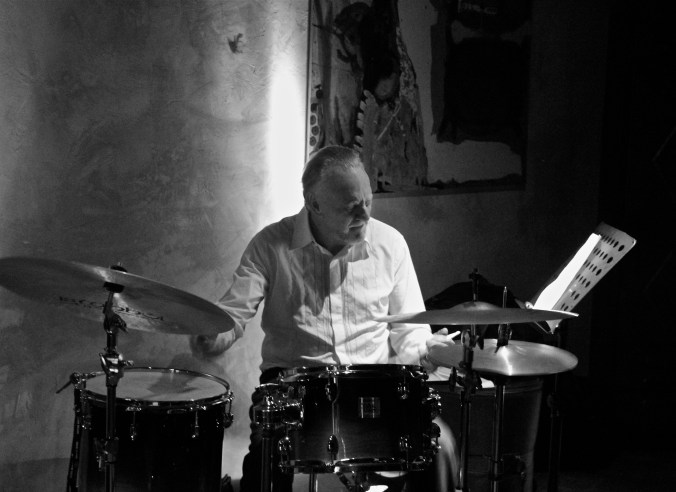
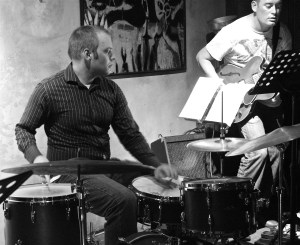
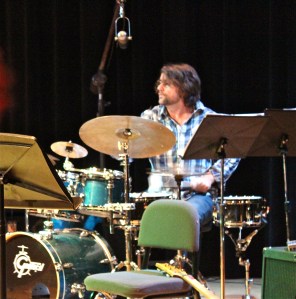
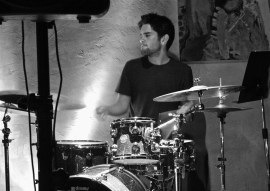
I have seen Cameron play before and he really stepped up a notch with this gig.  I think that he enjoyed it and it was a challenging workout for bass.  The drummer Adam Tobeck was comfortable throughout and he pushed himself harder in the second half.   A blistering solo earned him his stripes with the CJC audience.

The band member I am most familiar with is Matt Steele.   I have liked his playing from the first time I heard it and he was even better at this gig.   He has a mature style but it is different to many of the pianists I hear as his touch is often light and crisp.   His comping is breathtaking as he urges the soloists to greater heights.  While you are always aware of his right hand soaring in chromatic invention during his solos, his left hand weaves its own chordal magic.  If I needed a single word to describe his playing it would have to be melodic.  
The set list was a work of art in itself.  On the page it read like an Imagist poem by Langston Hughes or William Carlos Williams.

The set list was as follows:

Race-car Red Red Race-car, Molasses, What the Fuck is a Persimmon, Money Grubber, I’ve, So This is What it’s Like,  Magnetic North, Wrack, Candied Carrots, Elysium, Greens Waltz, Up Up Down Down Left Left Right Right AB

The band was in order of appearance – Trio:  Callum Passells (leader, arranger, composer, alto saxophone), Cameron MacArthur (double bass), Adam Tobeck (drums).  Quartet add; Matt Steele (piano), Quintet add: Liz Stokes (trumpet flugal horn).

Callum presided over the night with that easy confidence of a born leader. He told very funny stories (especially the WTF is a Persimmon story) and he encouraged his band in a way that ensured they gave their best.   If that is the calibre of students emerging from the city’s Jazz schools then we are in for an exciting future.   Big ups to the band and especially to Callum.


Jazz Cats – Facing a world without Plum

Plum

This morning my small sleek black and white cat Plum died while I stroked her silky old head.   This cat had been deeply loved by my family and she always appeared to share my love of Jazz.   Whether scientific or not I will continue to believe in Jazz Cats; magical animals who occupy a revered place in the Jazz pantheon.   I am not alone in making this connection as the linkage between Jazz and the cat is cemented forever in the hipster argot.   Plum always appeared when I was about to put a CD on and she would ‘lay-out’ hassling for food until the music was finished.    She always spent time sitting on the knees of my Jazz buddies when they called by for a night of music.    Any Jazz activity seemed to please her and she especially liked my friend Stu.

The ‘hang’ will never be quite the same without her; diminished by her absence.   Her soft footfall and shadowy presence filled a room to capacity.    She and I were all the company we needed if my partner was out-of-town.  Jazz cats, digging the sounds and hanging loose in the vibe.

I would watch her with interest if Dolphy or Sun Ra emanated from the sound system.   Nothing was too challenging and no chord too dissonant.   As long as they were Jazz chords and the pulse was right she was fine with it.   I never tried her with Kenny G as I don’t believe in cruelty to animals and I don’t own such music – Plum and I had an understanding of what was cool and that trust was never knowingly violated.

I miss her so much it hurts and every shadow that falls causes me to start suddenly as my hand involuntarily stretches out to stroke her.

She now lies in the cold garden earth below the Coral Tree and I realise that there is only one remedy.   To play Jazz tunes about cats.

‘Baby Plum’ – Jacky Terrasson (What it is),  The Cat’ –  Tom Dennison (Zoo album).    That’s my friend Roger player tenor on the second track – I am so glad that he blew his horn so movingly on that song.

I loves ya Jazz Cat Plum.

Frank Gibson – ‘Hardbopmobile’

Frank Gibson Jnr

Frank Gibson Jnr is New Zealand’s best known drummer as he has been playing and teaching for most of his life. He has accompanied numerous artists such as Milt Jackson, Emily Remler, Sonny Stitt, Joe Henderson, Randy Brecker, Slide Hampton, Mike Nock and the list goes on. He has also occupied the drum chair for many of Alan Broadbent’s recordings. Whether laying down sensitive brush work or powering an orchestra, Frank has long been a presence on the scene. He is a seasoned leader and it was in this role that he returned to the CJC with his ‘Hardbopmobile’ band. As leader he was able guide the proceedings without being overly dominant. He trusted his band to do the business and they responded in kind.

The ‘Hardbopmobile’ lineup is: Frank Gibson Jnr (leader, drums), Neil Watson (guitar), Ben Turua (double bass), Cameron Allen (tenor saxophone).

Neil and Frank have been playing together for some time and the ease with which they communicate on the band stand is translated into good musical outcomes. I noticed straight away that Neil was not playing his usual solid-body Fender, but he was stroking chords and runs out of a modern version of the D’Angelo 1947 arch-top. Man it looked beautiful, just lying on the piano during set-up.

The set list was mostly out of the Hardbop songbook but a few earlier placed numbers were tackled as well (‘Boplicity’ – Miles Davis). A spirited Wes Montgomery tune was played early on and Neil negotiated the changes and the octave chords in the best possible way. A straight out imitation would have sounded clichéd, but this was a respectful modern take on a classic sound. Like all gifted guitarists, he is able to negotiate complex tunes with apparent ease; dancing and leaning into the music as he delivers a storm of fresh ideas. This is wonderful to listen to, great to watch and but the very devil to photograph.

Two monk tunes were played: ‘Ask Me Now’ and ‘I Mean You’. This is where the tenor player Cameron Allen took the lead. In the former tune he took an angular approach, unravelling it as improvisers do and then diving deep inside the melody. I should probably have been aware of this tenor player before now, because he is very good. We appear to have a tradition of producing good saxophone players in New Zealand – getting wider recognition for them and finding them enough gigs is the real problem.

A couple of hard bop classics were played; Joe Henderson’s ‘Isotope’ and Horace Silvers ‘Senior Blues’. The band interpreted these tunes in their own way and to hear a ‘Hendrix’ like riff being mixed into ‘Senior Blues’ was as surprising as it was effective. I would also like to mention the bass player Ben Turua here. He took a few solos and above all he swung hard.

D'Angelo Archtop

Alain Koetsier Band @ Finding Kiwi ‘Standards’

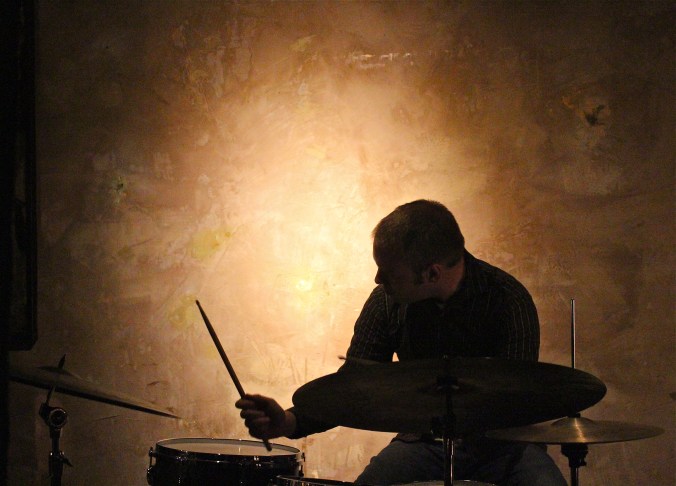
I have watched drummer Alain Koetsier perform over the last year and his credentials on the traps are unimpeachable.  Alain is a drummer with a modern feel and it is plain to see why so many of our top Jazz groups utilise him.  This was probably his first outing as leader and he had chosen wisely on two fronts.  His band mates were consummate professionals and their approach to the music was intuitive.  They interacted as if with one mind.  The second thing Alain did well was to select a set list of recent compositions by New Zealand Jazz Musicians.  I liked the concept.

People expect a band to play their own originals but when a set list focuses on a wider spectrum of Kiwi Jazz compositions it feels respectful.  It somehow lifts the tunes to another level of availability; a place of wider appreciation.  Doing this is a good start point in identifying our own ‘standards’ and some of the tunes played could well reach that bench mark.  As the scene continues to mature this will surely happen.

Alain & Dixon

Alain & Dixon

I was pleased to hear two tunes which had impressed me at recent gigs; ‘Dicey Moments’ by Oli Holland and the wonderful ‘Ancestral Dance’ by Nathan Haines.   Both of these new compositions are distinctive, clever and memorable.  Dixon Nacey compositions also catch the attention as he has a knack for locating the right hooks while providing a solid base for improvisation.The first set had contained ‘Bad Lamb’ (Dixon Nacey).    The tune had nice chordal voicings and the way it unfolded led us easily into the heart of the tune.

Another memorable number was ‘Tree Hugger’ by the Auckland-born bass player Matt Penman.   Matt has moved into the upper echelons of Jazz bass, occupying a respected place on the world scene.   Maybe he will return the compliment one day and acquaint North America with a few of the other compositions.

The gig was fun to experience and obviously fun to play as the musicians enjoyment of what they were doing was easy to discern.  Like many Jazz gigs there was a high degree of spontaneity and perhaps this came from being thrown in at the deep end.   Working musicians seldom have a lot of time to rehearse and when confronted by complex charts they appear to relish the prospect.

The musician that I was unfamiliar with was Pete France on tenor.   I know that he has played the CJC before and my friends tell me that they had hoped for his return one day.    His tone is rich and full and his improvised lines meaningful.   He is also relaxed on the bandstand and when you consider the calibre of his band mates this ease of manner speaks volumes.

Oli Holland

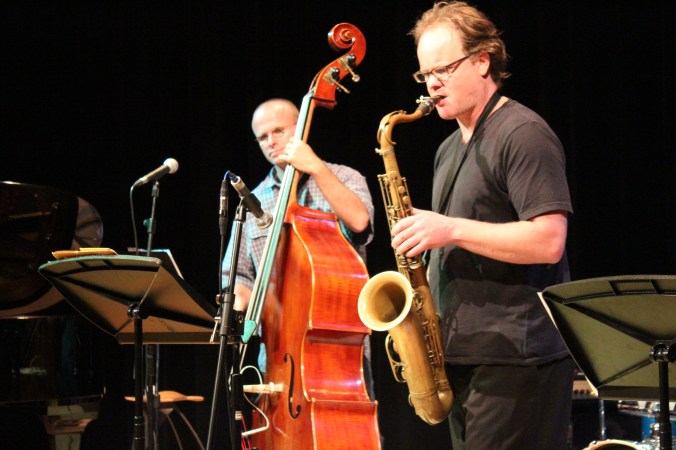
The band featured Oli Holland on bass.  His approach and focus drew you in inexorably as he demonstrated chops, impeccable timing and melodic invention.  His skills are considerable, as he can move from contrapuntal walking bass to melodic invention in an eye blink.   Oli gave his best, but then he always dies.

Pete France & Oli's hand

Lastly I come to Dixon Nacey.  His playing is widely appreciated throughout the NZ Jazz scene. As good as he is, he always strives to do better.   His compositions sing to us and his chordal work and rapidly executed lines astound.    It is good to be in a town where this man is playing and long may it continue.

Well done Alain – more please.

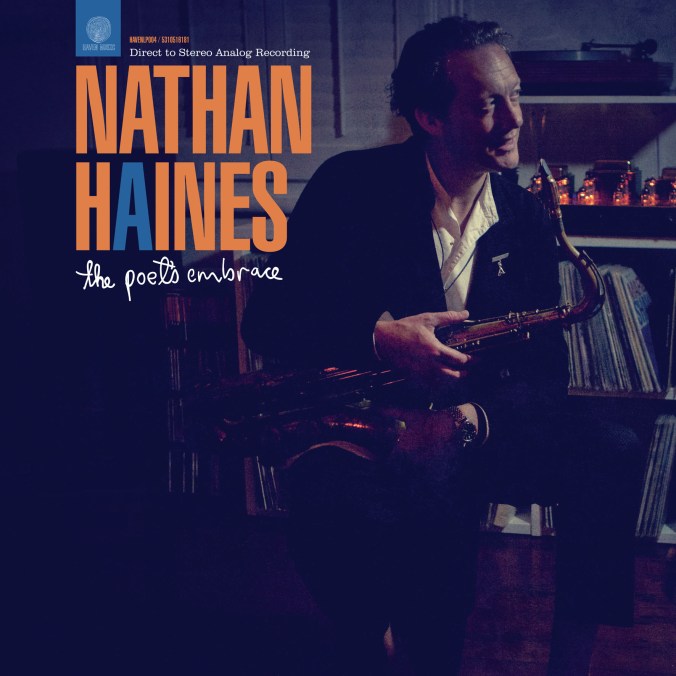
Nathan Haines – ‘The Poets Embrace’

On the 29th November 2011, those lucky enough to be at Nathan Haines CJC gig heard him playing ‘The Poets Embrace’ material.  As far as I know, this was the first public outing for the band and everyone who attended quickly grasped the importance of the event.   Hearing Nathan exclusively playing tenor (and not just any tenor) was intriguing because he is noted for being a multi reeds and winds player.   This gig was somehow different and it had a focus that was palpable.  It was about authenticity and it was about a deeper exploration of Nathan’s music.

Nathan’s approach to his music is a comment on his professionalism.  He divides his time between the UK and New Zealand and he recently headlined at Ronny Scotts Jazz Club in London.  Nathan is one our most talented musicians and I have learned that he never does things half heartedly.

Following that gig Nathan and the band cut an album.     The producer was flown in from London, the vinyl was pressed at Abbey Road, the tenor was a Selmer Mk 6 (ex Brian Smith), The piano was a Steinway B, The recording was made at the York Street studios on analog equipment and using classic microphones….I think you get the picture….glowing valves….absolute authenticity.     Above all this is terrific music and it may become the bench mark for future New Zealand Jazz albums.  The album will be released by Haven Records a division of Warners Music and it should be widely available.

The album is to be released on the 19th March (available on CD or limited edition vinyl)  The promo video is also worth watching as it conveys a real sense of the music we are about to experience.   The attention to detail is evident and one senses that the narrative is an important part of this journey.  People should book now for the launch, which is on Friday March 23rd, 8pm at the Monte Christo Room (behind the TVNZ building Nelson Street).    The entry price for the official launch is $25 pre-sales/$30 at door.  For those who are otherwise engaged on Friday why not get down to JB Hi Fi between 12pm – 12:30pm (any day 19th – 23rd).  If you do you will hear the full band.   It is impressive that a mainstream outlet like JB’s has been so supportive.    Please turn up if you can and this will encourage the store to support more Jazz releases in the future.  If it is wet outside so what, there is no cost to attending and what could be better; Jazz on an Autumn Day.

 These are all great musicians as you will soon hear.  They are; Nathan Haines (ts), Kevin Field (p), Thomas Botting (db) Alain Koetsier (d).

For the gig review see my earlier blog post “The Nathan Haines Fourtet”.

Oli Holland’s Shortland Street Gig

Oli Holland - Roger Manins

I recently received an invitation to Jazz Bassist Olivier Hollands DMA (Doctor of Musical Arts) recital.  It was titled ‘Dicey Moments’.  The gig was held in the Kenneth Myers centre at the top of Shortland Street.   This ornate crenellated building has a solid place in the history of New Zealand Music as it was formerly the home of the old Shortland Street TV studios. In its time the studio had hosted various radio orchestras and a few Jazz programs had emanated from there.  Stephen Small

When an experienced musician and gifted educator like Oli is performing a Doctorate recital it is bound to be an extraordinary gig.  Just playing a few standards would never cut it as the judging panel would certainly be looking for something unique and innovative.  In my view the performance easily met the required standard and all those who attended (mainly musicians) were deeply impressed.  Oli had written a number of complex charts for the recital and these conveyed a profound understanding of how improvised music can work.  While they were undoubtedly a challenge to play, they were still incredibly accessible to the listener.  The tunes flowed as fresh as a mountain stream and better yet they provided wonderful vehicles for the musicians to interpret and blow over.  Ron Samsom

I assume that the brief would be to choose band mates with considerable experience, solid reading skills and depth.  Band mates who would augment the vision, excel, but never overpower the lead instrument or the music.  These musicians were among the best on offer and they understood very well that this was about the music.  Oli remained firmly in control while encouraging the musicians and loosening the reigns when required; this is what a good leader does.

Oli had split the recital into two district halves; so to achieve a chiaroscuro effect and the appropriate contrast in styles, he had chosen two different bands.  One was a straight ahead jazz unit with Roger Manins on tenor, Kevin Field on piano and Ron Samsom on drums (Oli on upright bass).    The second unit was a fusion band with Dr Stephen Small keys, Nick Granville solid body guitar and Stephen Thomas drums.  Once again Oli played an upright bass, which worked exceptionally well, as the slap and bite provided a real contrast to the non acoustic instruments.  In the manner of all good leaders he joked with the audience.   “I used to agonise about the tune titles” he said, “but one day I had the profound realisation that it doesn’t matter what you name a tune. The next tune title has nothing what-so-ever to do with the music”.

The musicians gave their best and I have seldom heard any of them play better. The fusion half had the audience gasping in delight, as Nick Granville’s guitar, soared around Stephen Smalls fusion keyboard flurries.  The success of this recital is a tribute to the musicians but above all it is a tribute to Oli Holland.  His bass lines whether soloing or underpinning his charts worked perfectly.  Dr Oli it is then.

Nick & Oli

Nick Granville & Oli Holland