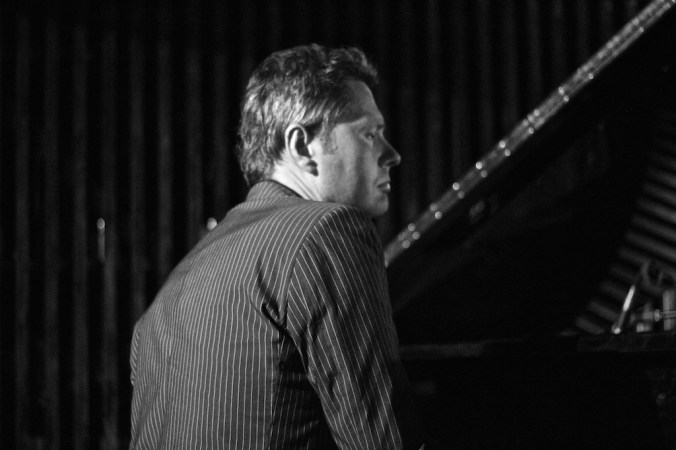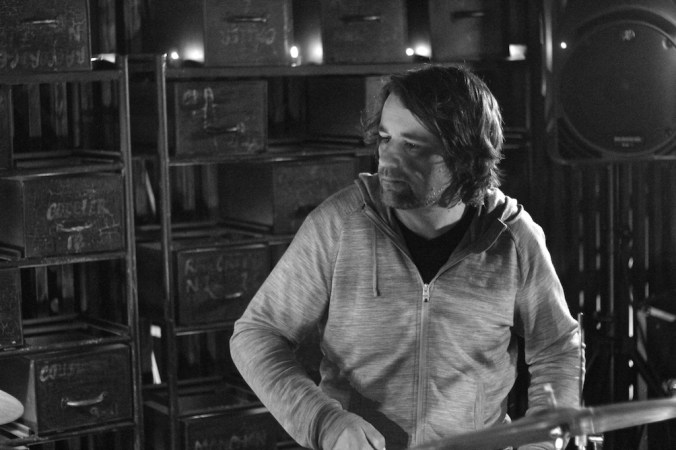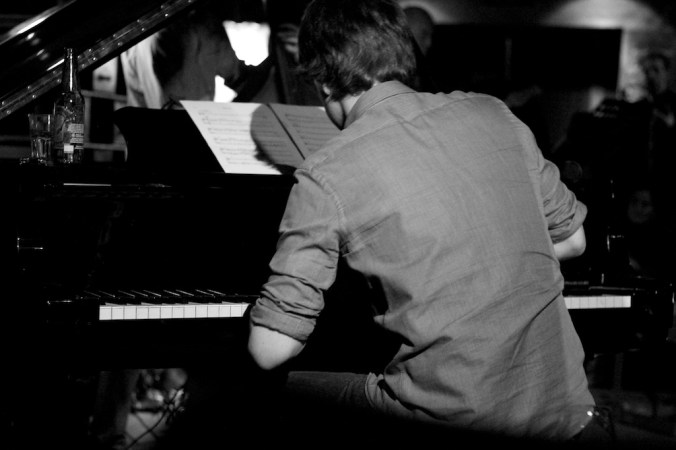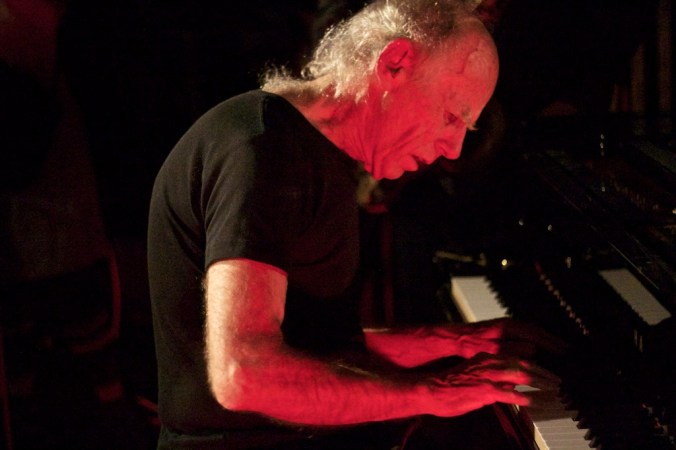
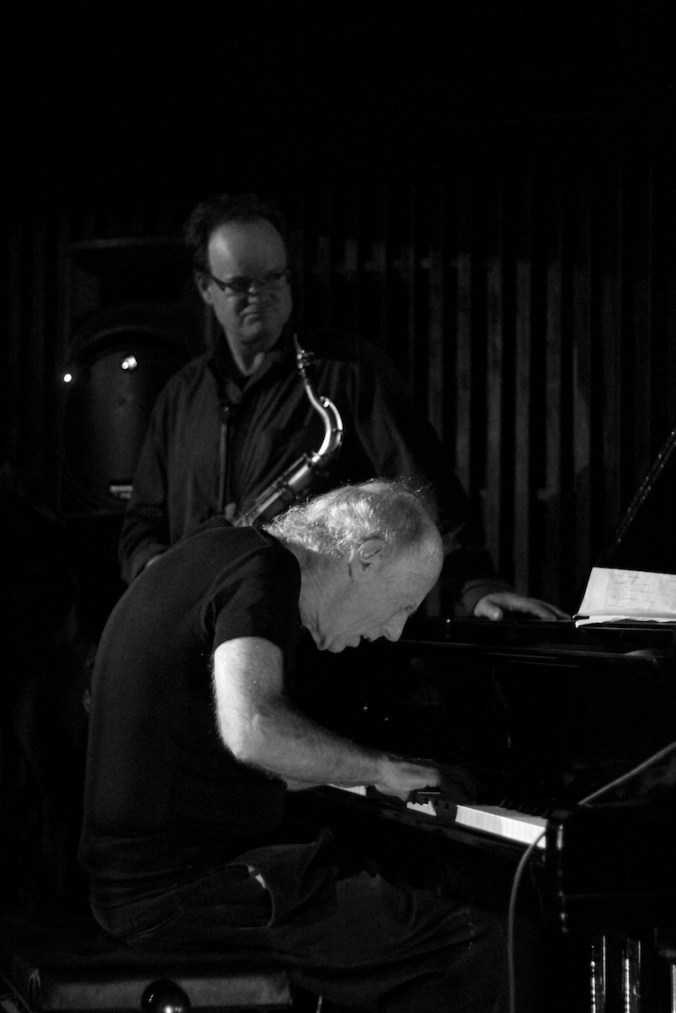
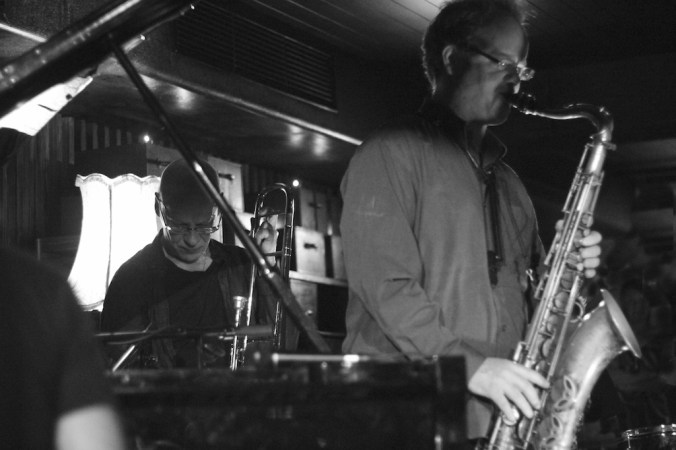
Mike Nock + Roger Manins, Frank Gibson@ CJC

IMG_7906 - Version 2

It was sometime in early June when I first heard the news.  I was sitting with Roger, talking music and shooting the breeze about who we rated.  Suddenly he half turned and said, “Mikes coming back to do a CJC gig”.  The words hung in the air like a siren song and for me the impatient waiting began from that moment.  If Mike Nock was coming to town there would be magic aplenty.  That’s what it meant.  That is what it has always meant.

The word seeped out, first to the music students and then to the wider world, like ripples in an ever-widening arc.  The club would be full that night.

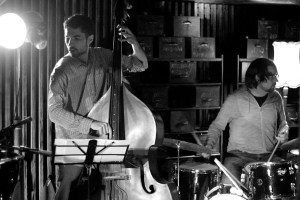
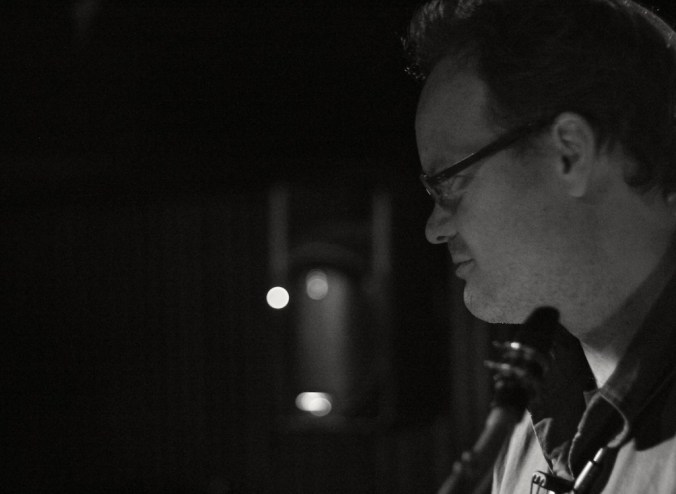
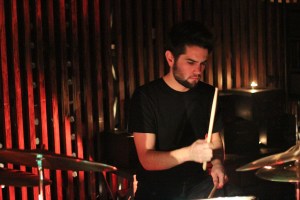
Closer to the gig Roger asked Mike who he wanted in the band.  They quickly settled on a trio format, not your usual piano trio but one with piano, tenor saxophone and drums.   Roger Manins on tenor, Frank Gibson on drums.  Mike had jettisoned the anchor for this gig and he was quite definite about that, no bass.   This is a challenging lineup for a pianist (and for the other band members) because no-one is there to hold the centre.   If you slip there is greater distance to fall.  In this different space wonderful things can also happen and they did.  This was a night among nights.
IMG_7932 - Version 2

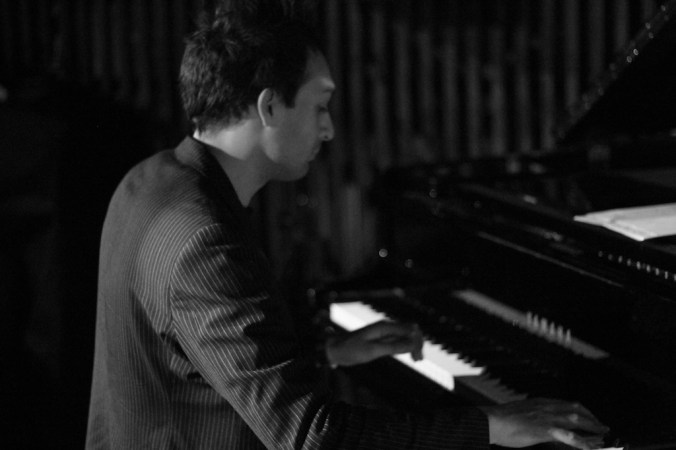
Barely able to contain my impatience I rolled into the club foyer three-quarters of an hour early.   The queue was already snaking back past the basement stairway and well into the upstairs bar.  A seething mass of eager faces.  When the doors finally opened there was Mike sitting sideways on the piano stool and Roger was blowing a few scales nearby.  The music stand sitting to one side abandoned, an unnecessary distraction, in a free ranging gig going where the music took it.

Before the first set I caught up with Mike, talking about his various projects (he was playing with a New Zealand string quartet the next night).  He told me that he was coming back to the CJC with his newest Australian trio in a few months.  Next time bass and drums.  We talked a bit about Jazz musicians from the past, Kiwi’s that he had played with and then the discussion shifted to the older pianists who straddled the swing to bop era.  Like all great pianists Mike lets the entire history of Jazz fall under his fingers and so I asked him about players like Hank Jones and Mary Lou Williams.  When I listen to them I hear such strong left hands, walking chords, syncopation, hinting at a time when ‘harlem stride’ was still an influence.  “The newer and stronger bass players changed that” said Mike.  “As the bass lines become stronger and pickups better the need for such dominant left hand work fell away.  There was too much conflict”.   As a non musician I had never considered that and it all made perfect sense.  I marvelled all the more that Be Bop/Post Bop greats like Hank Jones kept a touch of this earlier style and even when accompanied by strong bass players like Ray Brown, George Mraz and Ron Carter.   I wondered if we would ever see those strong left hand stylists again.   I soon got my answer.
IMG_7897 - Version 2

The set list was not really planned and it changed and evolved as the evening wore on.   The numbers selected were all standards, but they were somehow fresh, as if revealed for the very first time.   The first number was ‘When Your Smiling’ (Shay/Fisher/Goodwin 1889) and the second number was ‘Gone With The Wind’ (Allie Wrubel 1937).  Those two numbers coming together had me wracking my brain as to where I had heard them, heard them played together.  Then it came to me, they were both on one of the earliest of the Brubeck Quartet albums.   ‘Dave Brubeck at Storyville 1954’ was a wild live recording that lacked polish but oozed soul and immediacy.  Afterwards Mike announced  that a Brubeck album had inspired him to play that number – bingo.  These are the connections we love.   If you ingest a large dollop of Jazz history the memories will reward you.  IMG_7901 - Version 2
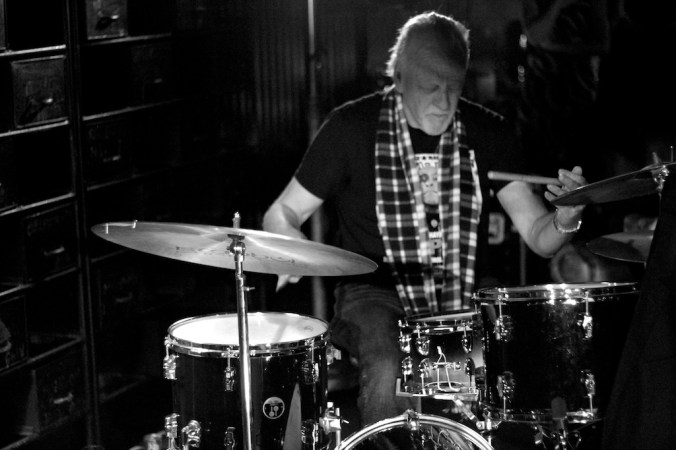
As they played through the first set I realised that the lack of a bass had not impeded them at all.  There it was, that strong left hand of Hank Jones, working the mid lower register while wonderful modern chords and runs flew from his darting right hand.   This was a master class for the senses to grapple with, giving us an unparalleled taste of Jazz piano mastery from an oblique angle.  No matter what Mike threw his way Roger matched it as they danced in and out of reach like well matched prize fighters .  These two have an uncanny level of communication.  It was even more evident later when they played ‘Softly as a Morning Sunrise” (Romberg/Hammerstein).  They had been considering what to play next when Frank Gibson suggested it.  Heads nodded in agreement and Frank set the number up nicely with a melodic intro on his traps.   “We will just see where this goes” said Mike, “could be anywhere”and he proceeded to pick at the bones of the melody.   Where it went was somewhere wonderful.  This is where the magic truly occurred, a moment to be savoured by all present.

They had begun the number, sparingly at first, soon more purposefully.  The level of interplay increased as they unpicked the tune.  Soon all three were working and pulling at the tune like it was a joyful game.  As Roger soloed I watched the trio inching up the intensity by degrees.  At first Roger had tapped out time with his right foot as he played, now he was pawing at the ground like a bull about to charge.   Mike was rocking madly and then standing and dancing some crazy dance.  Frank too was rolling with the beat.  By now they were way outside – blowing free of all constraints.   It was a moment to savour.  The moment.
IMG_7891 - Version 2

As I watched these three, so attuned, a thought struck me,  Mike Nock is originally from Ngaruawahia, Roger from Waiuku.   These two small country towns are close to each other.  What are the odds that rural New Zealand would produce two musicians of this quality.  Maybe it was something in the upper Waikato water supply?

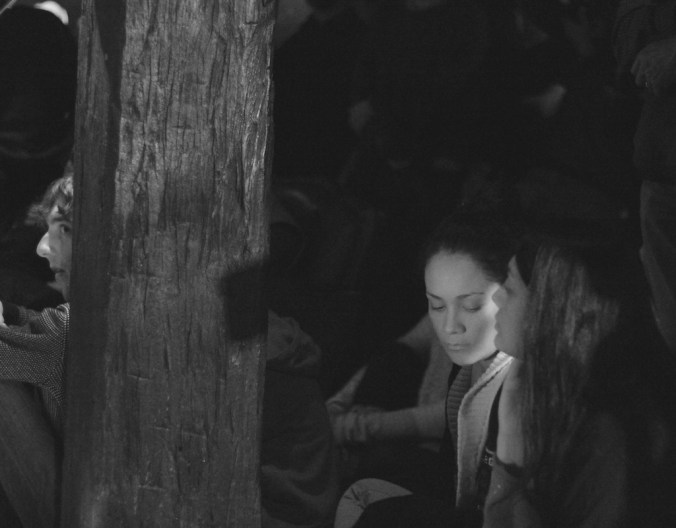
When Jazz musicians are enjoying themselves there are always moments of hilarity, but on this night the best moment came from an unexpected quarter.   The CJC was full, so full  that dozens of people were turned away at the door due to the fire regulations. Outside it was winter, but inside it was hot as hell.  Mike by now stripped to his T-shirt asked if there was any talcum powder for his hands, which were slippery from the exertion.   Caro Manins duly produced a talcum powder container.  Mike wrestled with the lid for a few minutes and then handed it to someone else to unscrew.   Bigger and younger blokes stepped forward in turn, each saying that they were up to the task, but none could dislodge that damn lid.  “Take it back to the shop” said one, “it’s a faulty product”.  At this point a diminutive young woman took the container from the frustrated men, gently flicked off the child proof lock and opened it.  Men often forget the golden rule in these situations, ask a woman.  IMG_7936 - Version 2

During the second set Kim Paterson and Brian Smith sat in for a number or two.   Kim and Brian go back a long way with Mike and both have recorded with him.

As the enjoyment washed over me I could hear the words of Sean Wayland from a month earlier as he announced his gig.  “New Zealand I would like to thank you for Mike Nock”.   With you on that brother.

Who: Mike Nock with: Roger Manins & Frank Gibson Jr.

Where: CJC (Creative Jazz Club) 24th July 2013

And a clip by Jen Sol from the same gig:

Caitlin Smith @ CJC (with Kevin Field trio)

IMG_7827

Caitlin Smith is well-known to those who follow the Auckland music scene, where she is highly respected as a vocalist and voice coach.  Scrolling down her resumé reveals just how active she has been over the years and just how far-reaching her influence is.

She sits comfortably on the Soul to Jazz spectrum, often occupying a stylistic space similar to that of Joanie Mitchell or Ricky Lee Jones.  Her material’s drawn from a mix of originals, standards and pop covers but all interpreted in her own unique way.  She has an impressive vocal range and she can captivate an audience with incredible ease.   She is a true performer and her elegance and professionalism are immediately evident.  It takes years for a performer to look this comfortable in front of an audience and many never achieve it.  The fact that she has a severe vision impairment just adds to her allure.

IMG_7826 - Version 2

The set list was mainly from her latest album ‘Stories to tell: The Thorndon Project’.  Sponsored by The Disabilities Commission and PVINZ (Parents of Vision Impaired New Zealand).  Caitlin and the drummer on the album Mark Lockett (also vision impaired) had pulled together an impressive lineup for the session.    Caitlin (vocals), Alan Brown (organ), Paul Van Ross (saxophone, flute), Mark Lockett (drums).   The purpose of the album is to raise awareness around disability issues and to highlight the dedication of the parents caring for those with disabilities.  This hit me right where I live, because my granddaughter has cerebral palsy and I know just how incredibly hard it is for her.  I am also hyper aware of the sacrifices that her mother (my daughter) lovingly makes each day.

The creative arts are often at the forefront of such campaigns and this one is personal and special.  The personnel assembled for the album are all renowned musicians and while three hail from New Zealand, they are a truly international lineup.   Paul Van Ross is from Melbourne, but he is currently in New York.   Mark Lockett is originally from Wellington but he recently moved to New York.  Alan Brown has a legendary status on the New Zealand music scene and works, performs and teaches around Auckland.

IMG_7836 - Version 2

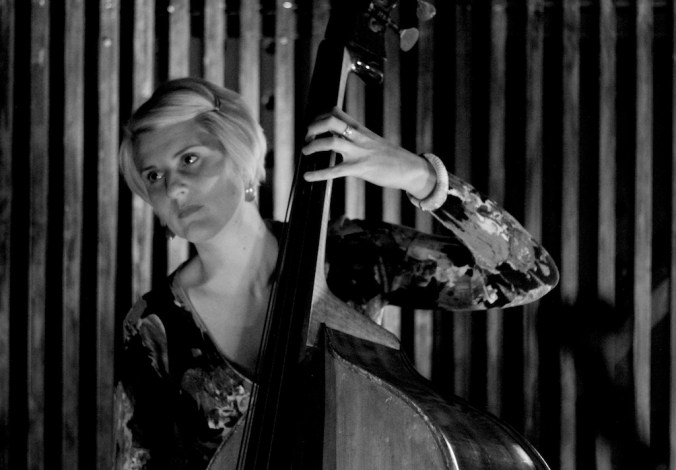
Caitlin had a different band when she appeared at the CJC.  Kevin Field, a regular accompanist for Caitlin had just returned from recording in New York (I am particularly excited about that, as he recorded with Matt Penman and Nir Felder).   Kevin is an extraordinary pianist and leader but he also knows how to accompany a singer.  Anything involving Kevin Field will be worth hearing.  On bass was Vanessa McGowan who bowled me over with her sound and musicality.  I have heard her before but with bigger groups, where she had blended into the mix as a good bass player should in such situations.  In this trio setting she shone.  Her lines were great, but it was the fat warm sound that really captivated me.   She can sing as well.   More of her in trio settings please.  The remaining member was Ron Samsom and he can bring out the best in any band. Whether on mallets, sticks or brushes, Ron is the person you want in your band.   He is simply one of the best traps drummers in New Zealand.  IMG_7830 - Version 2

Caitlin’s own composition ‘In Between’ was impressive and her interpretation of ‘I Don’t Want to Waist my Time on Music you Don’t Really Need’ (Over the Rhine) was edgy and soul infused.    I have chosen a video clip from her CJC band to post; Leonard Cohen’s ‘Hallelujah’.   When I panned to the audience, what the camera failed to pick up out of the darkness was Trudy Lile coming in on the chorus.  Vanessa McGowan also sang beautiful harmony on the chorus.  Jazz singing is evolving and while perhaps this was not Jazz singing in the traditional sense it was a pleasure to hear.   The feel good factor should never be overlooked and Caitlin delivered this.

Dedicated to those with severe disabilities and to their support networks – for Mala and Jennie especially

Who: Caitlin Smith (vocals, leader, composition), Kevin Field (piano), Vanessa McGowan (bass, vocals), Ron Samsom (drums).

Where: The CJC (Creative Jazz Club), 1885 Building, Brittomart, Auckland.

Album: ‘Stories to Tell: The Thorndon Project’  PVINZ imprint – available from www.caitlinsmith.com

Conner McAneny @ CJC (+Nacey/McArthur/Samsom)

IMG_7813 - Version 2

Conner McAneny has played at the CJC on previous occasions, but this is the first time that he has done two sets as leader.  He was ably abetted by the Dixon Nacey trio (with Ron Samsom and Cameron Mc Arthur).   The sets were a mix of standards and originals.   It was particularly nice to hear the fabulous Dixon Nacey composition ‘The Lion’ played again and even better to hear Connor tackle the Lennon/McCartney composition ‘And I love Her’.

For me these two tunes stood out, but for very different reasons.   ‘The Lion’ is from Oxide the second Samsom/Nacey/Haines album and it is a great composition.   The tune moves through several distinct phases, drawing the listener ever deeper as the melody unfolds.  The structure lends itself well to improvisation.  Conner took a different approach to that of Kevin Field (who appeared with Dixon, Ron and Kevin Haines on Oxide) and it worked well.  I like to see local compositions being taken up by other local bands , especially if they are compelling.  We must create our own standards, because we have musicians with good writing skills in our midst.  Having two of the Oxide band in his support group made this an obvious choice.

IMG_7804 - Version 2

The Lennon/McCartney composition ‘And I Love Her’ worked very well as a Jazz ballad and if the arrangement was Connors particularly big ups to him.   I can clearly recall the Diana Krall version (2009), arranged beautifully by John Clayton.  There was also a John Abercrombie version from around that time.  Both were terrific in different ways, but the Sarah Vaughn cover of 1969 sits very awkwardly in her repertoire.  As much as I love Sarah Vaughn, this particular rendering sank like a stone.

I think time is the vital ingredient here.   It was as if there was a musical ‘Wallace Line’ that separated older players from younger in this regard.   For my generation (those alive when the Beatles arrived on the scene) the idea of their material ever becoming jazz standards was strange.  When musicians of the 50’s and 60’s attempted Beatles or Rolling Stones tunes there was an awkwardness and a self-consciousness about what they were attempting.   This is not at all evident in a younger generation of musicians like Uri Caine whose ‘Blackbird’ (McCartney) from the 2001 album ‘Solitaire’, stands up perfectly against any Tin Pan Ally tune.  In my view only a Brad Mehldau could pull off a version of ‘Hey Joe’ so convincingly.  He is young enough to see the tune for what it is and what it could be.  My generation saw such massive hits as the enemy of Jazz; brilliant, compelling but still the enemy.  Perhaps Gil Evans was the exception.  IMG_7799 - Version 2

Connor works hard at his craft and each time he appears we see a more rounded artist.   I have often written about the skills of the other band members and suffice to say, where they go good improvised music follows.

What: Conner McAneny (piano) with Dixon Nacey (guitar), Cameron McArthur (bass), Ron Samsom (drums).

Where: The CJC (Creative Jazz Club), 1885 Basement, Auckland July 10th 2013

Aaron Blakey (Sydney) @ CJC

IMG_7744

Aaron Blakey is someone you warm to instantly.  He communicates with ease and has a relaxed manner about him.  The same applies to his approach to music.  I have heard pianists who feel that they must astound with every note and while that is all well and good, it can be exhausting for everyone.  The more experienced musicians understand that performance is not only about original ideas, but also about communication.  The latter involves working with an audience while you tell an interesting musical story.  I would place Aaron in that category.

Aaron left Auckland for Japan in 2008 and he gigged regularly around Tokyo.  After a few years he returned to study in Auckland before moving to Sydney in 2011.   On this gig his accompanists were Roger Manins on tenor saxophone, Cameron McArthur on bass and Adam Tobeck on drums.  Roger Manins is at the peak of his powers and after his very successful stint with the JMO in New Zealand and Australia, he is more on fire than ever.   He is one of the best saxophonists in Australasia and so having him in any group lifts their game.  Putting him with a fine musician like Aaron Blakey produces especially rewarding results.  IMG_7746 - Version 2

Anyone who has read these reviews or spent some time at Auckland Jazz gigs in the last six months will know just how swiftly Cameron McArthur is rising through the ranks.    He is one of a small handful of must-have bass players when visitors come to town.   Adam Tobeck is fast becoming a regular at the CJC and his abilities were evident at this gig

With two notable exceptions Aaron played his own material and the compositions were all named after people he knows.  With each song, we were ushered into Aaron’s private world.  A world peopled by close friends, eccentric waiters, babies and delightful dancing children.  At the end of the two sets I felt that I would recognise these people if I saw them; so convincing was the imagery.  Live improvised music creates shapes and forms which you can almost grasp, but which evaporate and dissolve in unpredictable ways.  What remains is a series of impressions, a filigree journey imprinted on the ether.  IMG_7759 - Version 2

A good example of this was a tune called ‘Sinclair’s Routine’.  Aaron named this after a waiter who worked at a  busy Surrey Hills restaurant.  He was using the establishments piano to practice one morning and trying out a few ideas, when the waiter said, “I like that, it helps me to go about my routine” .    Not your usual musical commentary but it ended up as great tune and gave us a window into that particular moment in time.   It worked for me on several levels but primarily because I could picture and hear the event in my mind’s eye.   There was a song ‘Jonathan B’ dedicated to an old friend from New Zealand.  As Aaron was explaining the origins of the tune he looked up and said, ” Oh there he is, he just walked in – hi man”,  Once again we connected the song to time and place and this gave added weight to the number.

The track that I have recorded on video is “One for Steve”, which is a dedication to the much admired Steve Barry.   This was certainly a connection that hung in the air as the band played through the number.  Steve (another ex-pat Aucklander) had been playing that very piano only a few weeks earlier and the echo of his gigs was relived through the tribute.

The first of two standards was ‘My Song’ (Keith Jarrett).  It amazes me that ‘My Song’ is hardly ever performed.  There is a view that Jarrett’s three recorded versions are so contained, that musicians shy away from it.  More is the pity because most jazz lovers rate it highly.  During the introduction Roger Manins helpfully suggested that Aaron would actually be doing the Elton John “My Song’.   This was a solo performance and you could have heard a pin drop.  It was great to hear it done and great to hear it done so well.  IMG_7719

The second standard was the Cole Porter tune ‘I Love You’ from the musical Mexican Hayride, placed squarely in the Jazz Lexicon by John Coltrane (Lush Life album).  While Coltrane’s version was with Saxophone, Bass and drums, The version on this night was a duo featuring piano and tenor saxophone (Manins and Blakey).   That these two have been friends for years and that they have worked together many times before, became evident on this number.   The sensitive interplay between them was truly extraordinary and although they took quite different approaches to the task in hand the synergy was uncanny.  It was one of the wow moments which Jazz audiences live for and to my annoyance I had run out of HD video-tape just a moment before it started.   I am sure that they will play it again sometime, as Aaron has promised to return. We hope that he will not leave it two and a half years this time.

For those wanting more there was a Roger Manins gig down at Frankie’s Bar in Wyndom Street two nights later.   This was a similar lineup, but with premier drummer Ron Samsom at the kit.  For this gig Aaron had brought his Fender Rhodes along.  They swung mightily and as I listened I could hear Ron pulling back on the beat.  There is some fine music around Auckland.  All it needs is our continued support.

Who: Aaron Blakey (piano) with – Roger Manins (tenor sax), Cameron MacArthur (bass), Adam Tobeck (drums).

Where: The CJC (Creative Jazz Club) Auckland 3rd July 2013

Mike Nock – albums reviewed

photo - Version 2

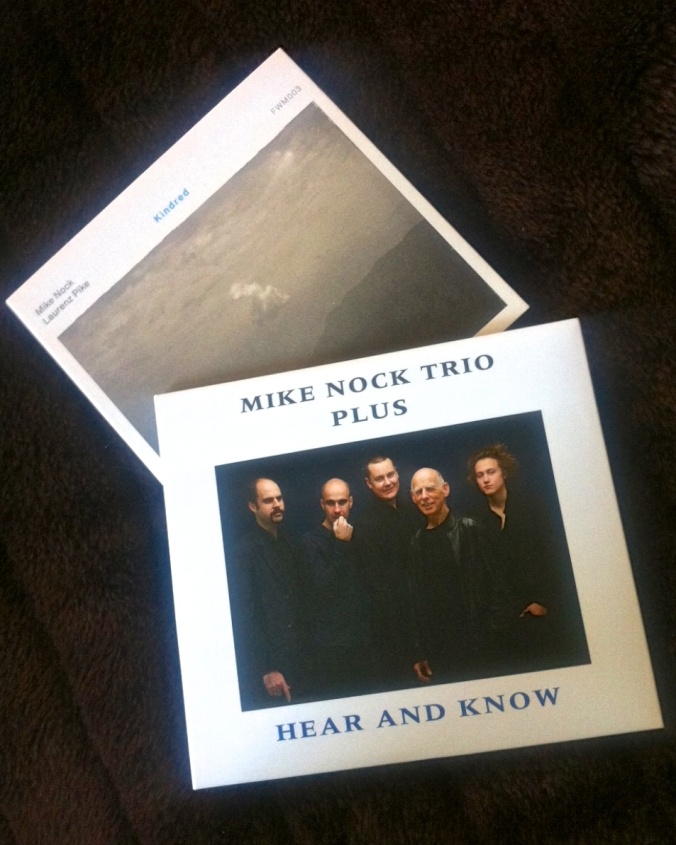
Mike Nock: Hear & Know / Kindred

Mike Nock is always capable of surprising and this has long been his hallmark.  A restless innovator and improviser who never settles on his laurels, Nock is surpassing himself yet again.  ‘Hear and Know’ was recorded in 2011 following his aptly named and deeply satisfying ‘Accumulation of Subtleties’ album.

On ‘Hear & Know’ he is again accompanied by brothers Ben Waples (Bass) & James Waples (drums).  There is an unmistakable synergy between these three and so adding Karl Laskowski (tenor sax) and Ken Allars (trumpet) had its risks.  While there is a different dynamic and altered textural qualities, the magic of intimacy is maintained.   It carries over much of the subtle interplay of the earlier album but creates a different range of moods as well.

I was always impressed by the subtle and profound sub-divisions of mood in the ancient Japanese Haiku.  The almost untranslatable ‘wabi-sabi’ are the moods invoked when we can almost touch something profound, sense it and appreciate the mood, but know that it will be forever illusive.  A further subdivision is ‘yugen’, which is the sense of mystery which underpins profound moments.  To define them more accurately is to lose the moment.    Mike Nock has achieved this for me compositionally and through his recording.   The moods are profound invoking deep and somehow unnamable emotions.

I felt this most strongly on the beautifully named and wonderfully crafted ‘The Sibylline Fragrance’ and later while listening to ‘After Satie’.   In the former piece there was an obvious reference to memory and our sense of smell, which is closely aligned with that.  Beyond that was something else, a sense of the history of this music.  Touching briefly on the past but rooted firmly in the now.   When music achieves this it is especially satisfying.   I have seen the trio performing and I have seen Ken Allars with the wonderful Jazzgroove  Mothership Orchestra.  Karl Laskowski was not previously known to me.   All of these musicians must feel pleased with this album.

‘Kindred’ is the more recent album and one with a pared back line up.  Featuring just Mike Nock on piano and drummer Lorenz Pike, this album seems denser in texture and more introspective.  Lorenz Pike is an interesting drummer and well-chosen; he is obviously colourist in tendency and that is the only choice for this music.  Once again Mike Nock has made a virtue out of contrast.  First impressions are often deceptive though and there is a degree of space and subtlety if we listen.  The stories unfolding are at times free and open but there is always an underlying thread.  The titles also fascinate me as they refer (as with the previous album) to a mixture of things past (references to the classical world), nature untamed and various private worlds.  I am a strong believer that improvised music benefits from narratives, not to define, but to augment the journey.

Mike has created subtle narratives out of the whole, which sit in the consciousness like Haiku.  There is something special about these two albums and I am certain that only Mike Nock could tell these particular stories.

What: Mike Nock – ‘Hear & Know’ and ‘Kindred’ albums FWM Records or visit http://www.mikenock.com

Where: You be able to hear Mike Nock in Auckland on Tuesday 23rd July 2013 at the CJC (Creative Jazz Club).