Alan Brown Trio @ CJC Winter 2014

IMG_1709 - Version 2

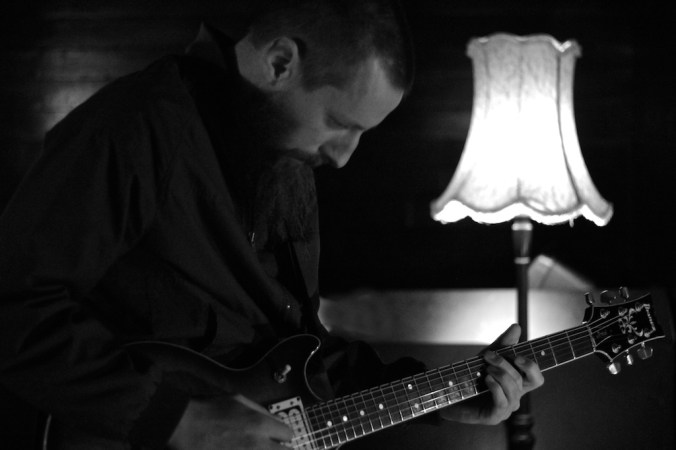
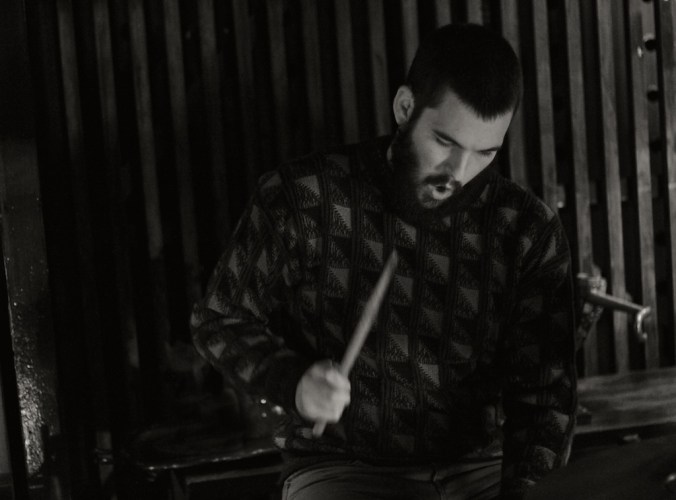
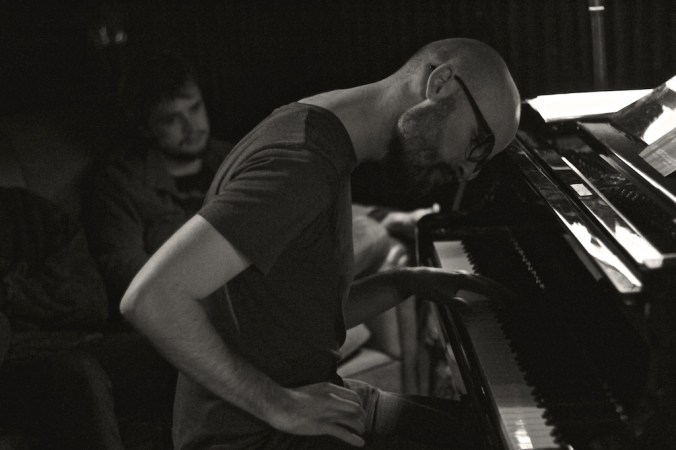
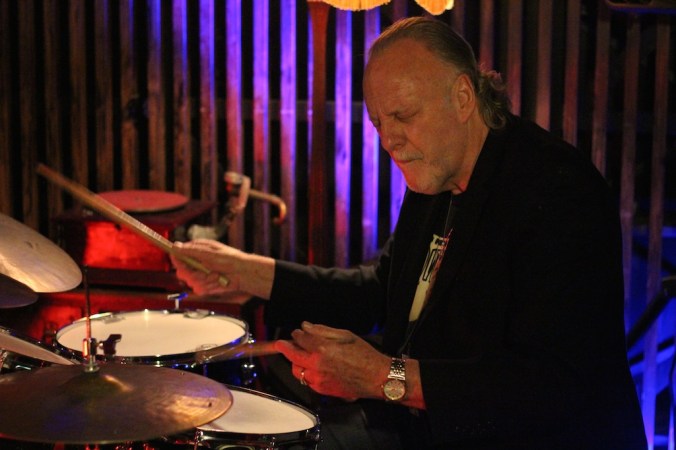
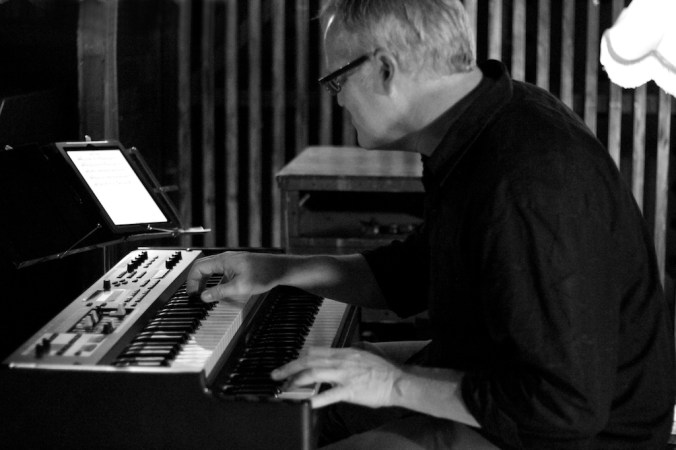
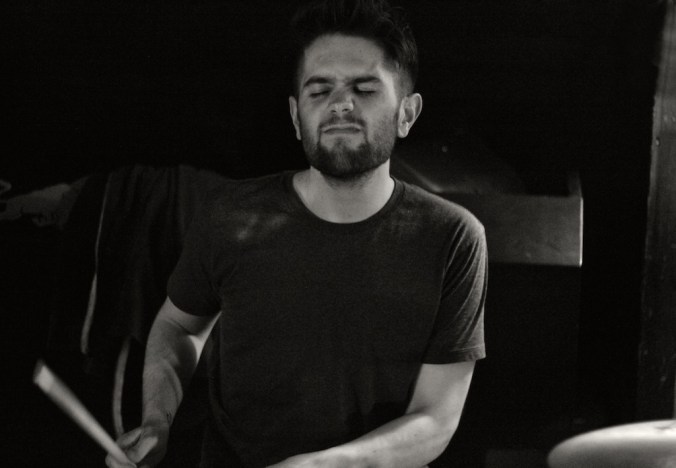
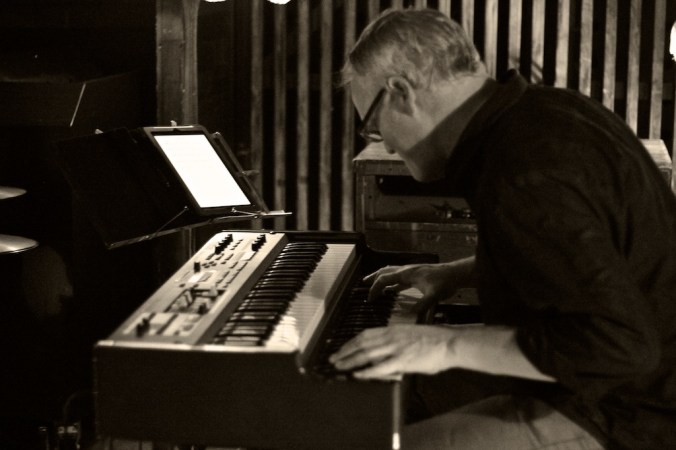
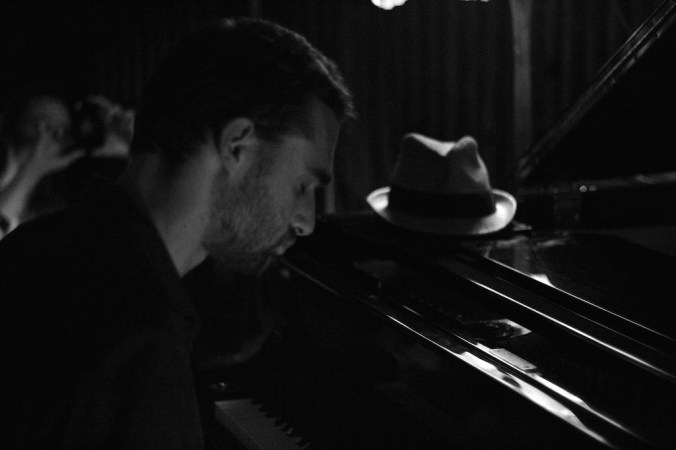
Alan Brown remains perennially popular about town as does his regular guitarist the virtuosic Dixon Nacey.   Last time the trio played at the CJC the gifted groove drummer Josh Sorensen was on traps, but for this gig the replacement was Adam Tobeck.   Tobeck proved a sensible replacement, with his ability to hold down a tight propulsive groove while at the same time imparting that something extra.  Tobeck had even mastered the regulation groove drummers face, which is indispensable in situations like this.  With an organ trio the ability to lock down a groove is essential and the drummer is central to this.    Alan Brown did not have his immaculate (but hernia inducing) C3 with him this time, as he had sensibly turned up with a new Hammond SK2.   As an approved Hammond artist he now has access to such wonders.
IMG_1702 - Version 2

The SK2 came complete with pedals, but as if to acknowledge its illustrious ancestors a vintage Leslie unit sat beside it.  While nothing can replace the B3 sound exactly, the SK2 is a big leap forward.  Brown is a multi skilled keyboardist and he navigated the differences between this instrument and his usual keys with ease.  The only deficit was in the sound mix as those furthest away from Nacey could barely hear him at times.   I suspect that this was down to the Leslie unit, which generates such a strong pervasive sound.

IMG_1713 - Version 3

Those on the other side of the room clearly heard everything and with the utmost clarity.  The looks of pure enjoyment radiated from the row of faces nearest to Nacey.  With each chord or bent string they would gasp in delight and pull back grinning, as if reeling from mock blows.  That is the legacy of this trio, to engage audiences on an intensely visceral level.  That is at the very heart and soul of groove.  It is a music that makes you want to smile and dance, while all the while marvelling at the musicians as they shimmer before your eyes.  IMG_1728 - Version 3

Brown had composed a number of new tunes as well as bringing us interesting reinterpretations of his best-loved old ones.   ‘Shades of Blue’, ‘Charlie’s here’ and ‘Inciteful’ brought the house down.  ‘Inciteful’ was the very last number and the band threw themselves into it with extraordinary vigour.   Each member of the trio gave everything they had and the audience loved it.  The three guys sitting near Dixon Nacey looked as though they had entered an altered state of pure ecstasy.
IMG_1707 - Version 2

Video by Ron Drake – ‘Inciteful’ (Brown)

What: The Alan Brown Trio – Alan Brown (keyboard, compositions), Dixon Nacey (guitar), Adam Tobeck (drums).    www.alanbrown.co.nz

Where: The CJC (Creative Jazz Club), 1885 Britomart, Auckland, New Zealand 23rd July 2014    www.creativejazzclub.co.nz
 

yeahyeahabsolutelynoway @ CJC

IMG_1654 - Version 2

An array of guitar pedals is sometimes deployed to hide a multitude of sins, but in the hands of a skilful improviser the opposite occurs.   Yeahyeahabsolutelynoway! illustrate the best of modern guitar work as they invoke past, present and future.   Their gigs feature their own compositions, with performances drawing upon influences as diverse as rock, country, experimental improvised music and traditional Jazz.  They juggle these competing influences skilfully while still imparting a surprising degree of subtlety.  I have sometimes seen Jazz guitar traditionalists roll their eyes at the sight of pedals, but I would respectfully suggest that they haven’t been paying proper attention to their Jazz history.  IMG_1659 - Version 2

Everyone from Charlie Christian onwards embarked upon a never-ending quest to change, modify, enhance and above all to extend their sound options.   Without those open skies explorers and without enhancements, the use of the guitar in boisterous Jazz lineups would have reached its high-water-mark with Freddie Green.  I love Freddie Green with a passion but the guitar is about more than chords.  Almost every instrument used in Jazz today is modified or extended in some way.   Putting a trumpet through a pedal and working in real-time with loops created by multi phonic effects does not mean that the musician is cheating.  It must be about integrity and the sound.  Beneath the right fingers improvisational integrity and storytelling always come to the fore.   Yeahyeahabsolutelynoway! understand that.

‘Yeahyeahabsolutleynoway’ are the latest addition to the impressive Rattle Records stable.  On the 16th July they did an album release gig at the CJC and for those who braved the winter night it was a treat.  I had listened to the album in advance and so I knew what to expect, but to see them in action held a few surprises for me.  I had wrongly imagined that there would be pre-recorded loops but this was strictly live music.  Every effect we heard was created in realtime, with the constant adjustments from both guitarists giving them an immense palette to work with.  If the sound scape was impressive the tunes were even more so.

IMG_1664 - Version 2

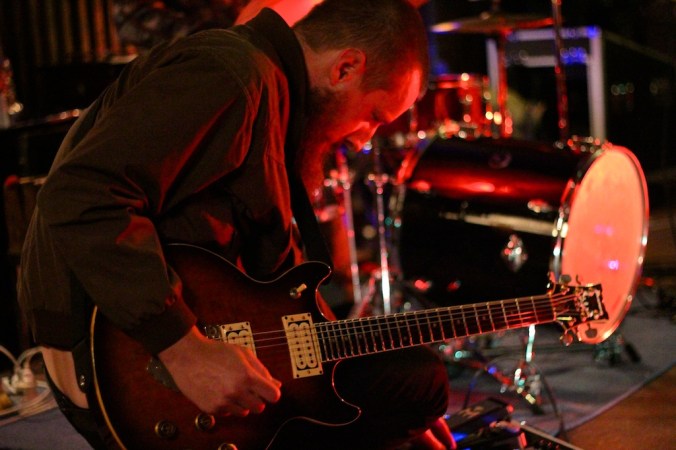
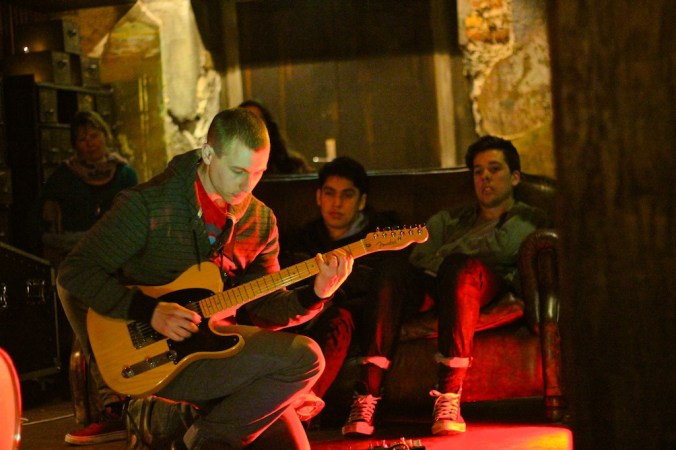
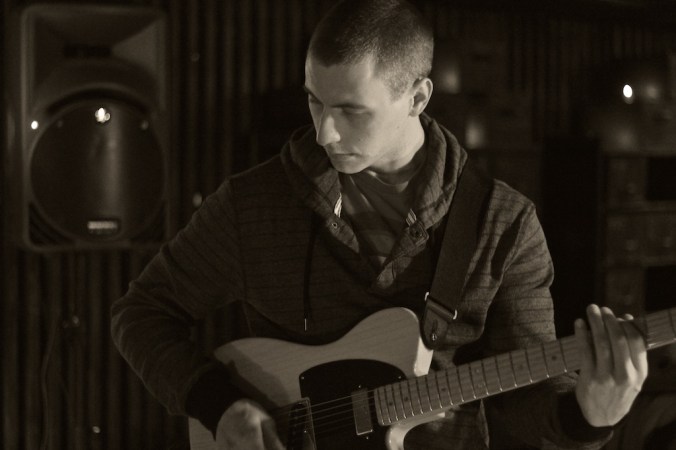
There is something special going on with Australian guitarists at the moment and this band and ‘The Grid’ are occupying a unique space in the antipodean Jazz spectrum.   In the case of ‘yeahyeahabsolutelynoway’ there is no bass guitar, not even a five string.   It is not that unusual to see two six string jazz guitars together in a trio with drums.  What is more unusual is when neither of them takes on the traditional rhythm duties.  These guys were often working the same space, swapping lines or converging on a passage to create a subtle filigree.  While they worked as equals, they never appeared to intrude or crowd in on the other, so attuned they were.  Their focus was always on the subtleties of the music and this made for a good listening experience.  On a beautiful Ibanez solid body guitar was James Brown, who looked more like a member of ‘Z Z Tops’ than his namesake.  On a classy looking blond Fender Tele was Sam Cagney.  Both could be seen crouching at various times throughout the sets, as they coaxed beguiling sounds out of the pedals and all the while playing on through.   The drummer Stephen Neville was vital to the mix and created a seamless flurry of beats or subtle whispers on brushes as required.   It would be hard for me to pin down his drum style other than to say that it was effective and impressive.

IMG_1670 - Version 2

The tunes in the set list and on the recording were varied in approach.  A fun number is the rock influenced ‘Why Sleep?’  When I put the album on at home my partner Darien immediately replayed ‘Why Sleep  over and over.   It is the one to hook you and draw you in.   I liked the Americana feel of ‘Down home’.  It wouldn’t have been at all out-of-place on a Bill Frisell album.  The album was recorded live in Adelaide South Australia where the bands originates from.  Rattle is definitely on a roll this year (yeah, shake rattle & roll) and as the label goes from strength to strength, the CJC (Creative Jazz Club) and the Jazz audiences benefit.   Keep them coming Steve Garden!  IMG_1680 - Version 2

A foot note:  I see that Columbia University is now running a Computer Science course on programming for Jazz Musicians.  As Melhdau and others increasingly follow the footsteps of Herbie Hancock in using programmable devices to extend their range, such courses can only grow in number.   Don’t be too dismayed, this is improvised music folks!  Jazz will strike out in any direction that musicians take.   It is up to us to keep up.  

Who: yeahyeahabsolutelynoway! – James Brown (guitar, effects) Sam Cagney (guitar, effects), Stephen Neville (drums & cymbals)

What: A Rattle Jazz Album: UM.. yeahyeahabsolutelynoway!   http://www.rattlejazz.co.nz

Where: Live album release at CJC (Creative Jazz Club), 1885 Britomart, Auckland, New Zealand      www.creativejazzclub.com


Chelsea Prastiti 2014

IMG_1468 - Version 2 (1)

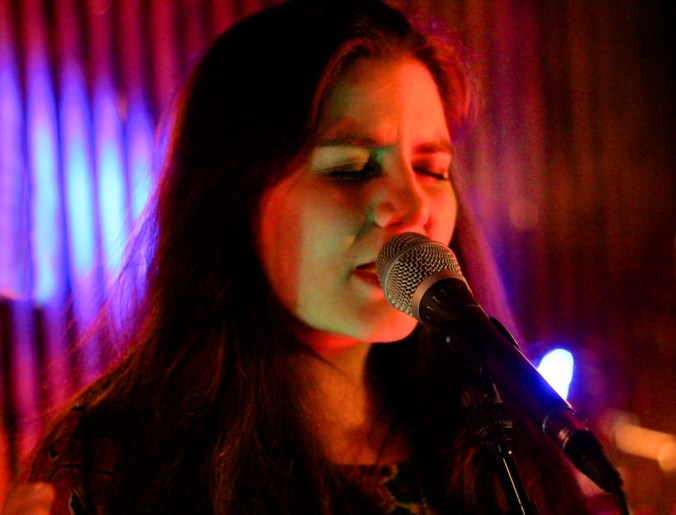
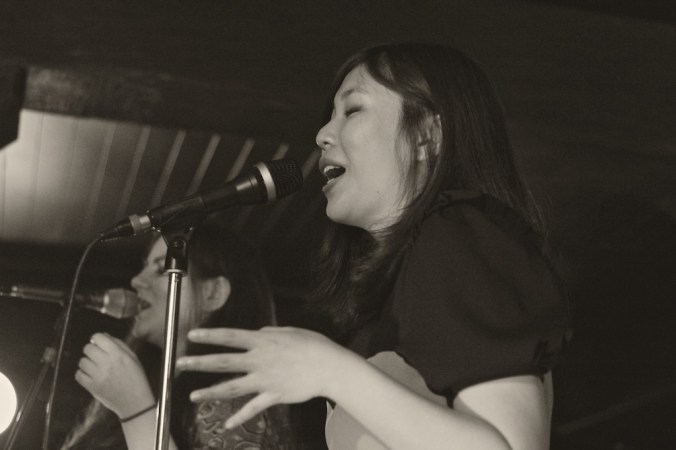
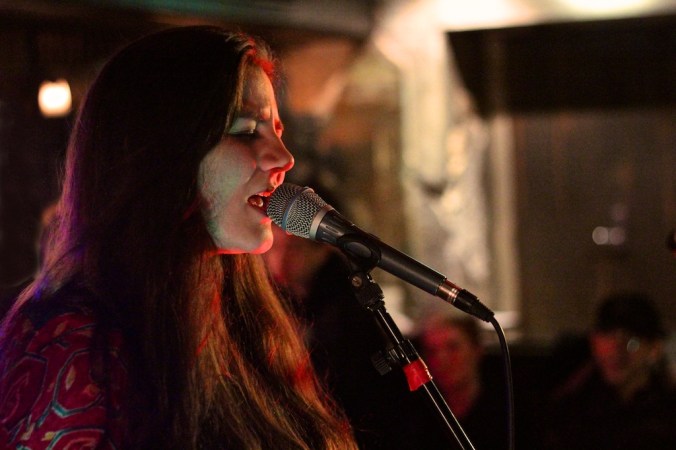
Chelsea Prastiti could be said to represent an intergenerational change in the direction Jazz Vocals are headed.  I have watched her grow in confidence since her time at the Auckland University Jazz School and she is always ready to try brave new experiments.   Because her default is the use of wordless vocal lines, she has better been able to explore the relationship between voice and the other instruments.   This integrated approach is possible for two main reasons.  Her keen awareness of what is happening around her and above all her compositional skills.

IMG_1477 - Version 2

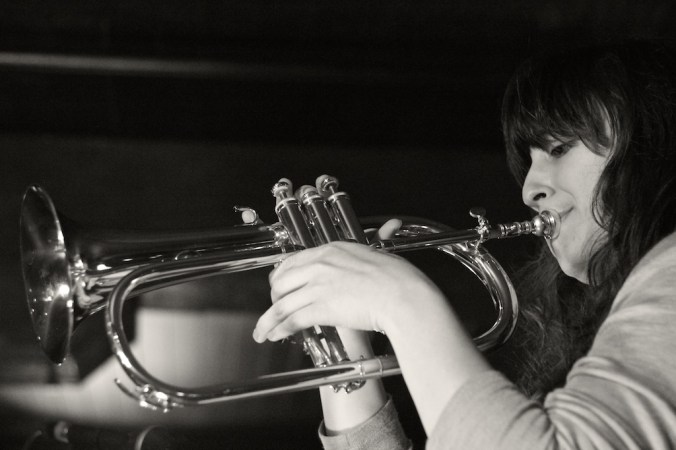
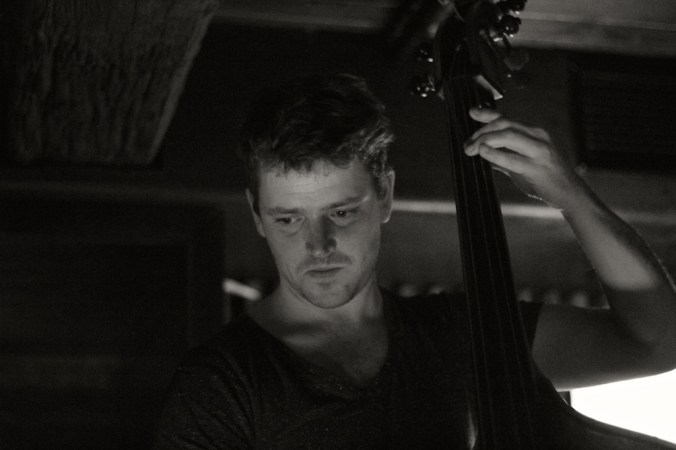
Chelsea Prastiti is writing good material.  At times it feels brave and edgy, but it is always interesting.  Perhaps another factor is the musical familiarity with her band mates.   Her bands generally feature Matt Steele (piano), Callum Passells (alto saxophone), Liz Stokes (trumpet), Eamon Edmunson-Wells (bass) and Tristam deck (drums).   Because they were students together and because she has played with them often, I have gained the impression that she may even write material with them in mind.   One of her best recent performances was as guest artist on Callum Passells last CJC gig.   These two always work well together, but hearing them moving in lockstep as they traversed standards and amazingly innovative free numbers was a joy.

IMG_1511 - Version 2

IMG_1490 - Version 2

There were a few newer compositions and some re-arranged takes on earlier compositions.  Everything in the sets was composed by Prastiti.   I like ‘Bells’ which begins with a simple peal of bells, but quickly evolves into an altogether more complex piece.  Steele was standout on this, never over-playing but making every note count.   His comping was at times minimalist but he conveyed a certain strength.  The rhythmic feel that he laid down was further enhanced by Deck and Edmunson-Wells.   This allowed Passells and Prastiti to explore the tune in a methodical manner.  Steles solo is worth a particular mention on ‘Bells’, as it underscores his growing maturity as a pianist.

IMG_1487 - Version 2

IMG_1538 - Version 2

IMG_1518 - Version 2

Prastiti is involved in a number of local projects including an ethnically influenced a capella group.  It is however her ability to edge toward the avant-garde that always interests me the most.

IMG_1467 - Version 2

What: Chelsea Prastiti (vocals, compositions), Matt Steele (piano), Cameron Passells (alto saxophone), Eamon Edmuson-Wells (bass), Tristan Deck (drums) – Guests; Liz Stokes (trumpet),   Cristal Choi (vocals)

Where: CJC (Creative Jazz Club), Britomart 1885, Auckland, New Zealand.  9th July 2014. http://www.creativejazzclub.co.nz
 

James Wylie/Miles Crayford Group


IMG_1443 - Version 2

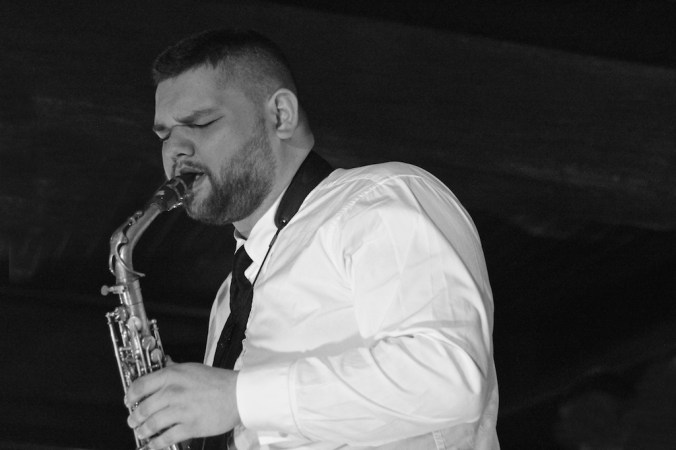
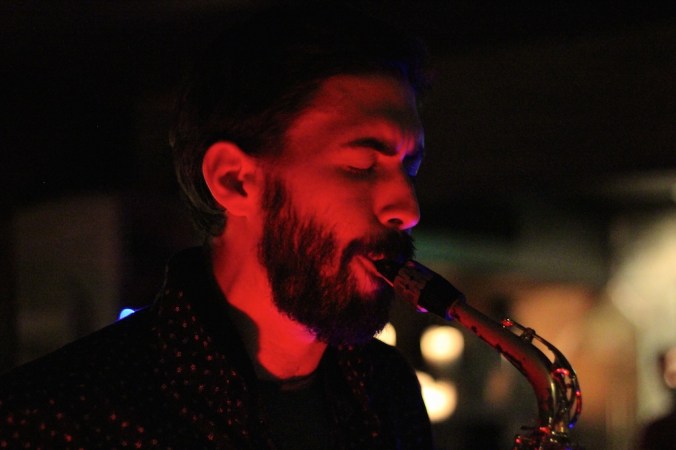
James Wylie last passed through Auckland in late 2012 when he played two gigs at the CJC (Creative Jazz Club).   A gifted alto saxophonist who doubles on clarinet, he has always been popular here.  In his travels around the world, his natural creativity has found endless new avenues for expression, examining, dissecting and assimilating the sounds around him.   What you get from Wylie is authenticity, an authenticity fuelled by indigenous music, country music, his own imaginings and all through a Jazz lens.    Last time he appeared, Greek singer Egli Katsiki accompanied him for two numbers.   This time we were again treated to some improvisations around traditional Greek melodies and to my delight a particularly lovely medieval Arab melody.  This interface between the ancient streams of Mediterranean music and Jazz is one that I am always up for, but seldom get a chance to hear in New Zealand.  Wylie is these days a resident of Greece.

IMG_1426 - Version 2

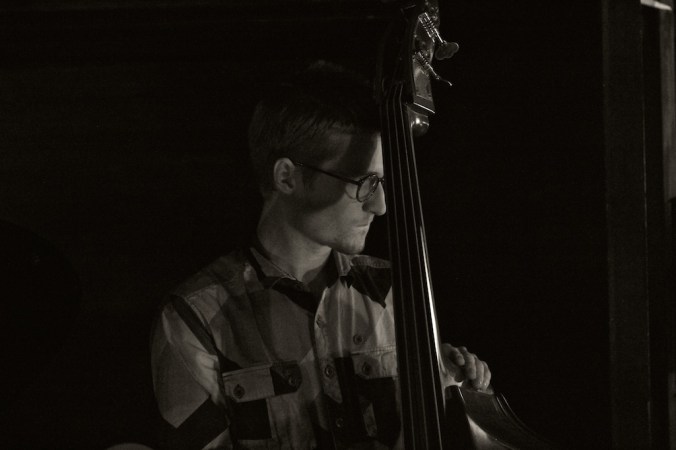
The co-leader Miles Crayford, now based in Auckland, has appeared at the CJC several times in recent months.  An interesting pianist and composer who compliments Wylie in unexpected ways.  This meeting of musical minds stimulated both artists.   The bass player was Mostyn Cole, but Crayford’s usual drummer, the Wellington based Reuben Bradley was replaced by Ron Samsom.  While all respected musicians in their own right, putting such combinations together is not in itself a guarantee of success.   In this case it worked well.   I like Reuben’s drumming enormously, but Ron Samsom gave the lineup an unusual colour that would not otherwise have been there. Samsom can draw on an endless array of styles, in each case arriving at a feel that is indispensable to the improvisers around him.   Like Wylie and Crayford, Cole contributed an original composition or two.   Cole is also based in Auckland these days and that is our gain.  He often incorporates passages of arco bass into his arrangements, perhaps more so than his local contemporaries.  IMG_1438 - Version 2 (1)

The musical connection between Crayford and Wylie was obvious, with the deliciously dark voicings of the pianist giving the alto player much to work with.   The first tune up titled ‘Taniwha’ (Crayford), set the tone for the evening.   A compelling tune with a melodic head, opening out to reveal depth upon depth.   In the second set Wylie showcased some traditional Greek tunes, unmistakable as to their origin, but somehow imparting a hint of that familiar Kiwi sound.  Kiwi musicians are reflections of our national character,  often excelling at what they do but seldom acknowledging their achievements.  Many are deliberately self-effacing, only letting their music speak for them.  Telling their stories in other ways is a writers job.

IMG_1412 - Version 2

I enjoyed this band and judging by the enthusiastic applause, so did the audience.   There was a time when I dreaded our more talented improvising musicians moving overseas as it felt like a loss.   Now I think differently.  Every-time James Wylie, Jonathan Crayford or Mike Nock returns home they bring back something new.   Nothing is ever lost if we listen properly and keep supporting the music.  These musicians and the many students who tread the same path are our legacy; where ever they live.  IMG_1417 - Version 2

Who: James Wylie/Miles Crayford Group.  – James Wylie (alto saxophone), Miles Crayford (piano), Mostyn Cole (bass), Ron Samsom (drums).

Where: CJC (Creative Jazz Club), 1885 Brittomart, Auckland, New Zealand.   http://www.creativejazzclub.co.nz
Brian Smith quartet 2014

IMG_1251 - Version 2

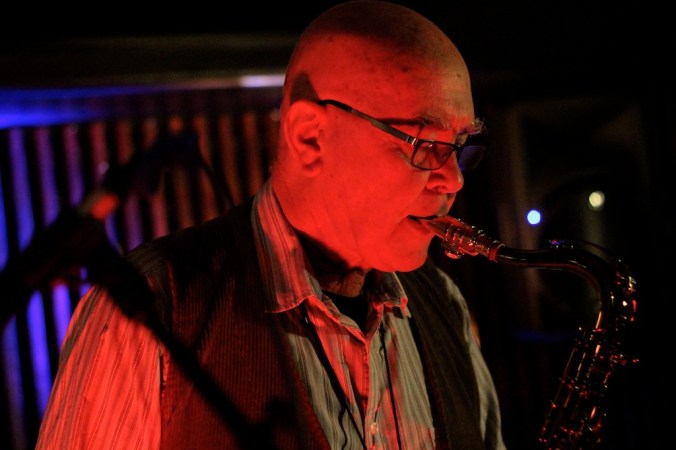
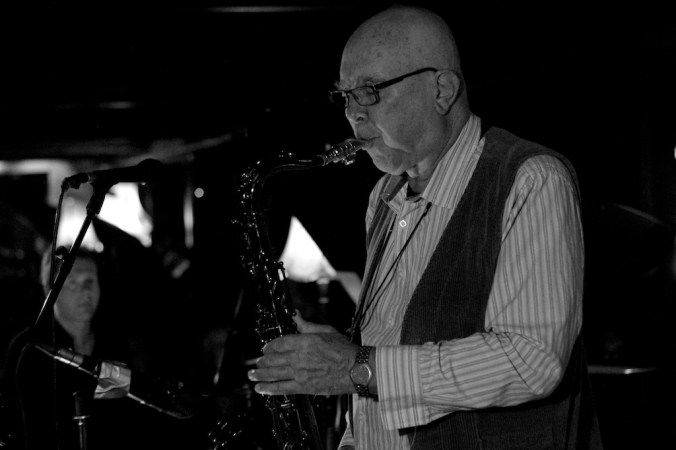
For a man who says that he’s “taking it easy these days”, Brian Smith is remarkably active.  He has been a strong supporter of the recent CJC Sunday Jam sessions,  he still teaches and regularly fronts CJC gigs.   Many regard him as the elder statesman of the tenor saxophone in New Zealand and he certainly has the credentials to fit that title.  It is only when you see him playing his Cannonball or Selmer tenor that you realise just how youthful he is.  Like many experienced tenor players he appears ageless on the bandstand.  That is the alchemy of the instrument and the alchemy of the born improviser.

Advertised as Brian Smith (tenor saxophone), Kevin Field (piano), Kevin Haines (bass) Frank Gibson (drums) but on the night Oli Holland replaced Kevin Haines on bass.

It takes a lot of space to list Brian’s musical credentials and it is all too easy to miss out important elements, but here is a brief summary that I have gleaned from elsewhere;

‘Brian relocated to London in 1964, performing at Ronnie Scott’s and working & touring with such names as: Humphrey Littleton, Alexis Korner, T-Bone walker, Georgie Fame,Alan Price, Annie Ross, Bing Crosby, Mark Murphy, Jon Hendricks, John Dankworth, & Tubby Hayes. He was a founder member of ‘Nucleus’ alongside Ian Carr, which won the European Band competition in Montreaux in 1970, resulting in gigs at Newport Jazz Fest and tours of Italy, Germany, Holland, and America. In 1969 he started working in the Maynard Ferguson band, staying with them until 1975 including touring and recording. He also backed acts like Nancy Wilson, The 4 Tops, Gladys Knight & the Pips, Donovan, Dusty Springfield, Sandy Shaw and Lulu.’

The programming at the CJC is mostly centred around musicians projects.  The gigs are therefore heavily focused on original material or perhaps an oblique take on a particular oeuvre.   We do hear standards but seldom more than one or two a gig.  The exception occurs when international artists arrive in town or when iconic musicians like Brian Smith front a gig.  On occasion it is nice just to sit back and enjoy familiar tunes.  Letting them wash over you, being able to anticipate the lines and comparing them in your head to the versions that you have grown up with.  The very fact that some tunes become standards implies that they have a special enduring quality.  These are vehicles well suited for improvisation and having musical hooks that invite endless exploration for listener and musician alike.  Standards composers are the greatest writers of the song form, but the inside joke is that these wonderful tunes often came from musicals which failed miserably.

IMG_1258 - Version 2

It was great to hear the quartet play ‘You and the night and the music’ which is a firm favourite of mine.  Composed by Arthur Schwartz  (lyrics Howard Dietz), it came from the musical ‘Revenge with music’ which closed on Broadway after a few months.   Frank Sinatra and Mario Lanza revived it and it became popular with Jazz musicians for a while during the 50’s and 60’s.  While the earlier popular renderings tended toward the saccharine, Jazz musicians like Mal Waldren purged the tune of its syrupy connotations.  It was the obscure tartly voiced Lennie Niehaus Octet version (with Lennie on alto, Jimmy Giuffre on baritone and Shelley Manne drums) which won me over.  Over a decade ago I heard HNOP and Ulf Wakenius perform a killing version of it at the Bruce Mason centre and I had not heard it since.  That is until last Wednesday.

IMG_1236 - Version 2

Another great standard was Horace Silvers ‘Song for my father’.  Standards have the power to move us deeply and this tune in particular brought a lump to my throat as my father was slipping away that very week.  One of pianist Kevin Field’s tunes ‘Offering’ was also played and while not a standard it is a favourite about town.   Everyone played well that night with  Oli Holland and Kevin Field up to their usual high standard; Frank Gibson on drums was in exceptional form.  His brush work and often delicate stick work was perfect and it reminded everyone why he is so highly regarded about town.

IMG_1288

I have chosen a video clip from the gig which is arguably the most famous standard of all.  Cole Porters ‘What is this thing called love’.  Cole Porter would always say that the song and lyrics wrote themselves and this version is certainly a worthwhile addition to the selection.  Unlike many of the vocal versions it is fast paced and authoritative.  IMG_1278 - Version 2

Who: Brian Smith Quartet – Brian Smith (tenor saxophone), Kevin Field (piano), Oli Holland (bass), Frank Gibson Jr (drums).

Where: CJC (Creative Jazz Club), Britomart 1885, Auckland, New Zealand –  June 25th 2014   http://www.creativejazzclub.co.nz