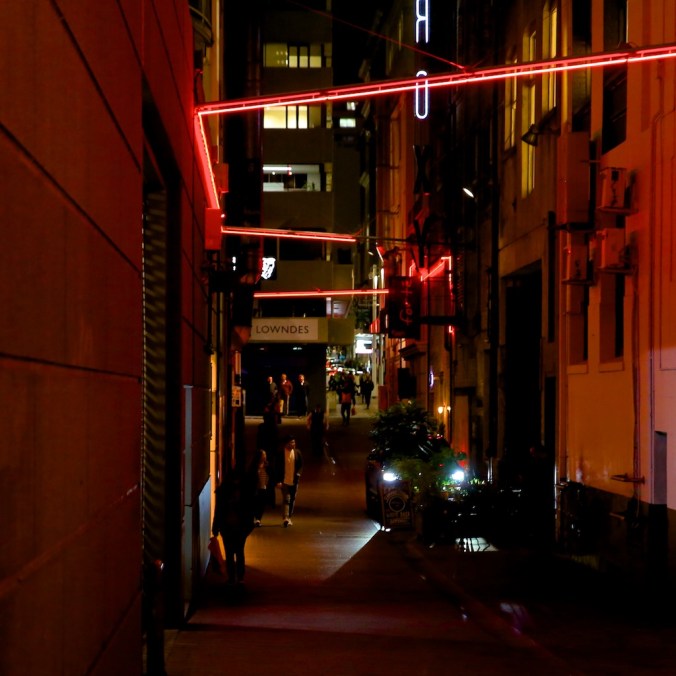
 The world is full of crazy shit at present and it’s time to organise. It’s time to form an organisation; deployable at short notice. ‘Hip Without Borders’ will have no membership card and it will not stand under any flag. ‘Hip without Borders’ will not require you to be a passport holder, because the corruption of nationalism could hinder your passage. Members will know each other on sight; no secret handshake necessary. Members will be subversive poets or out-cat musicians. They will know Miles Davis solo from Boplicity or of John Zorns tribute to William S Burroughs. They will not be able to name one contestant on X Factor or care that they found god afterwards. “Hip without Borders’ will be a proscribed organisation because they will infiltrate the security intelligence services. Members will not believe that the security intelligence services are either intelligent or secure. Members will value bitter-sweet dissonance over a pretty melody; knowing that it is a mirror held to the human condition. They will love mankind unconditionally; in spite of mankind’s fucking stupidity. They will confront power with trickster jokes. ‘Hip Without Borders’ requires your service. – John Fenton – Winter 2015 –
Month: May 2015
Michael Howell & Kenji Holdaway @ CJC
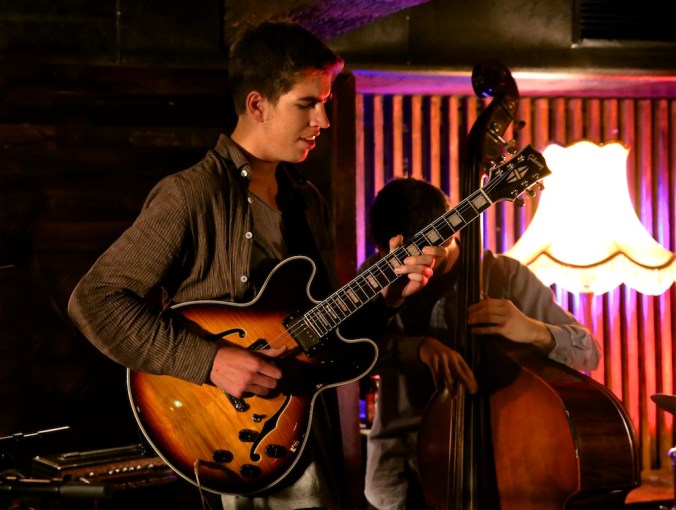 This was ’emerging artists’ night and you wouldn’t have thought so. The club had packed to capacity and the performances were far beyond what you’d expect from students. The artists approached their sets differently, but the end results were equally satisfying. Both study at the Auckland University Jazz School and if that institution is turning out students of this quality it certainly reflects well on the faculty.
  Michael Howell is from West Auckland and for some reason a number of excellent guitarists emerge from that quadrant. Growing up in the Waitakere ranges seems to have gifted his playing with an expansiveness and it is not hard to imagine big vistas and tree-clad hills during his ballad numbers. Howells set opened with a ballad and edged into the faster tempos later. His thoughtful opening took us deep inside the music and this was a good way to start a set. As well as his own tunes he featured compositions by Ben Monder, Sam Rivers and John Scofield. When a guitar trio doesn’t use an organ or piano there is more space to work in. This was well utilised by Howell although he is also adept in larger group situations. I heard him a few days later when he sat in with a number of very experienced musicians and he stepped into that space effortlessly. There were two numbers with piano and fellow student Crystal Choi sat in for these (also adding a vocal line). The other musicians were Eamon Edmundson-Wells on Bass (who also played bass in the second set) and Tristan Deck on drums. These former UoA students have already made their mark on the scene.
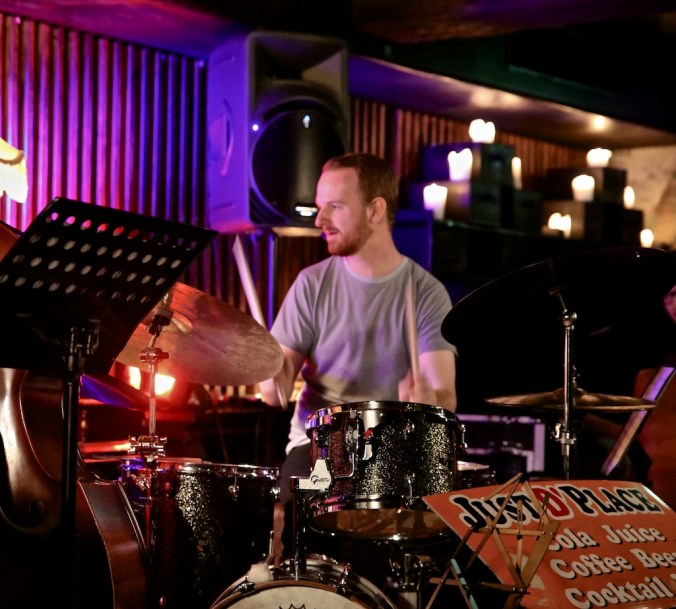
  Kenji Holdaway led the second set and his approach was quite different. Most of the tunes he chose favoured collective improvisation and they draw upon diverse genres. His bandstand presence and the way he approached tunes oozed confidence. He had also chosen some former UoA students to accompany him and his choice was right on the money. J Y Lee is a gifted alto player and he can work the spectrum from avant-garde through to the lyrical ballads that give sentiment a good name. His musicality shone through during this gig and he just gets better and better. On Rhodes and piano was Conner Mcaneny and he often pushed the group into a freewheeling fusion space. Once again It impressed me how well his playing served the music as it was far from formulaic. When the others were playing his comping chords acted as clever punctuation; urging them to reach further and deeper. Another surprise was Tom Legget on drums and perhaps I have not been paying proper attention. I recall him sitting in during the CJC Jam Sessions of 2012. Now he is a fully formed drummer. His contributions tasteful and decisive. Eamon Edmundson-Wells was on bass once again and he showed what a tasteful player he is. While the band was good it was Holdaway who dominated. It was not that he injected himself into others solos for he would regularly lay out respectfully. It was his impressive command of the guitar, that and the sense that he was really across this gig.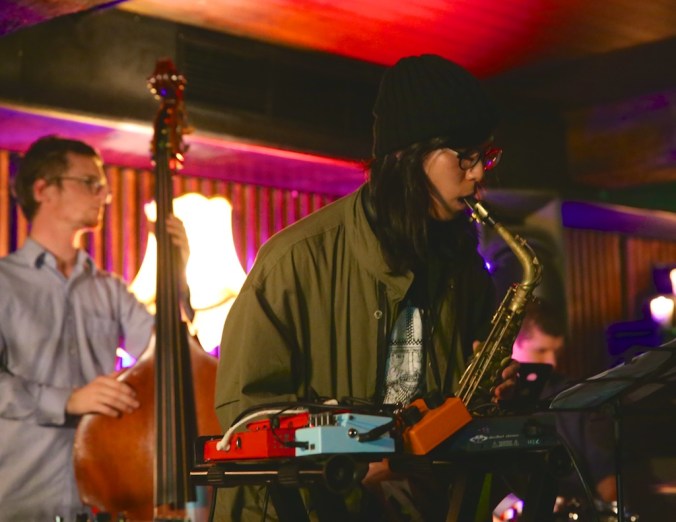
Spammerz, Silent Observer and Ambient Adventures
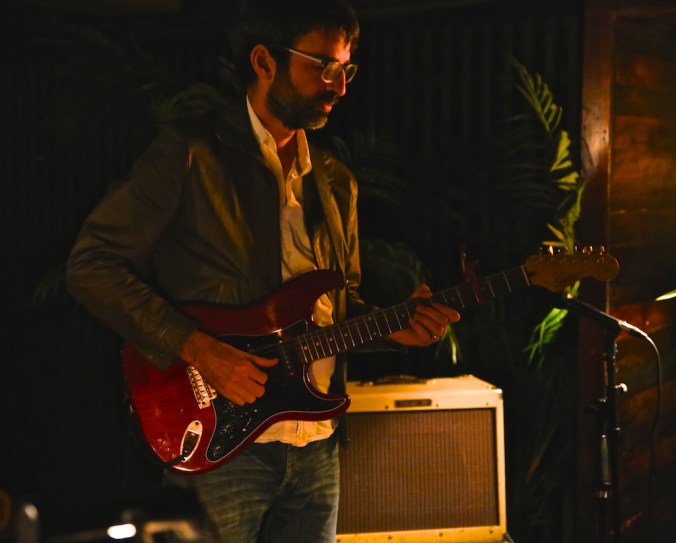 Spammerz is a fascinating group and there is an interesting conceptual approach underlying their ethos. The quartets approach to improvisation is organic; more than might than might be supposed at first encounter. What they play is familiar but at the same time intangible. Constant organic shifts occur underneath the momentum and these apparent contradictions are not accidental. The music while eminently danceable is remarkably free of constraints; there is form, but it is not always fixed. The music has groove but it is cleverly purged of the familiar licks and hooks that usually inform groove music. There are interesting dynamics but these are not based upon loudness or showy pyrotechnic displays. It is ambient, but not in the accepted sense. It is enjoyable.
The leader of the quartet Dan Sperber once described his compositions as ‘unterhaltungsmusik’ (easy listening). This tongue-in-cheek description belies the reality and it hints at his quirky approach to writing charts. Background music was certainly not what the CJC or Golden Dawn audiences heard. They either danced happily or sat mesmerised as the friendly grooves filled the room. Perhaps ‘trance music’ comes closer? 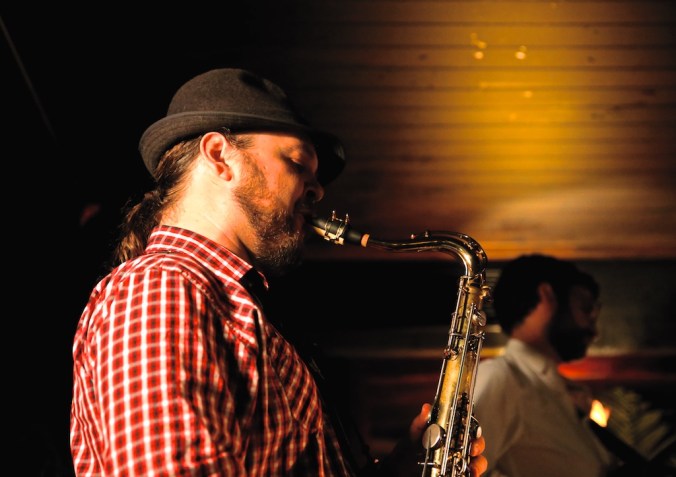 This opens up an interesting conversation about the many forms of ‘ambient’ music being explored at present. These forays are mainly by musicians on the improvised and experimental music scenes. Along the way the term ‘ambient’ is garnering new meanings and it can no longer be confined to the vernacular definition. It implies subtly, depth and a strong sense of being coupled to wider sensory experiences. The difference being that the senses catch on silken threads and not on steel shackles. There is also an illusive quality to this music and to understand the genre better, a good starting place would be Miles Davis ‘In a Silent Way’ or Brian Eno and Jon Hassell (‘Fourth world volume one, possible musics’). For an up to the minute vantage point go to YouTube and locate Elvind Aaset and Jan Bang’s ‘And Poppies from Kandahar’.
 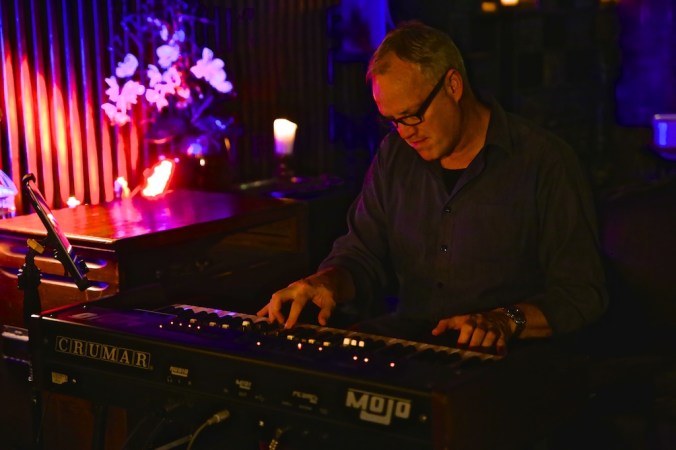 Unlike ‘easy listening’ there are deep emotions engaged by this type of music. Like all trance music cunning voodoo tricks draw you in and as you relax into the mesmerising grooves, you fall deeper into the web. This is music evoking mental pictures and imaginary worlds. This is music that is often served up with dissolving visual images accompanying a clip. The filmic qualities are inescapable.
The Spammerz band is Dan Sperber (guitar), Alan Brown (Crumar keyboard), Ben McNicoll (saxophones) and Jason Orme (drums). Because the musicians have been experimenting and playing with the grooves, the music is constantly evolving. The CJC gig was great, but the Golden Dawn gig just a few nights later was even better. 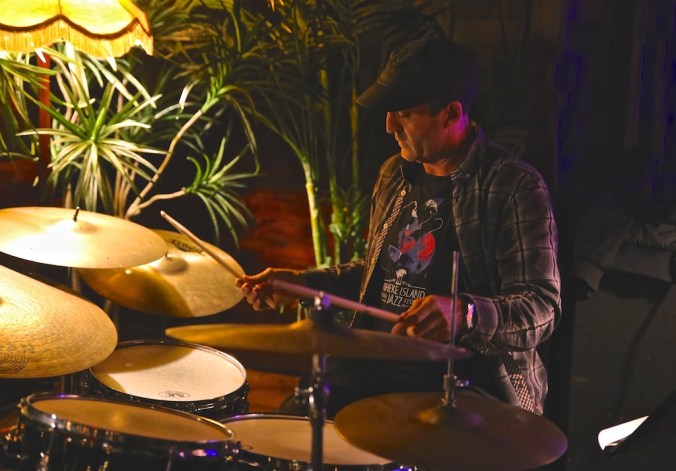 Alan Brown is an asset to any unit and especially so when you consider that this is a crossroads between ambient and groove (both specialties of Browns). Ben McNicoll is a strong presence and his reading of these shifting grooves is always apposite. It is nice to hear such bluesyness purged of cliche. Jason Orme is a veteran of the groove scene but he sounds great in any situation. Spammers music calls for a tight groove but there is also a need for subtlety. Orme is more than up to the task. The leader Dan
The leader, Dan Sperber is best known for his role in ‘New Loungehead’ and the ‘Relaxomatic Project’. In spite of having such strong band mates on this project he is centre stage. His disarmingly quiet persona belies a strength of purpose. A nice guitarist with interesting things to say. 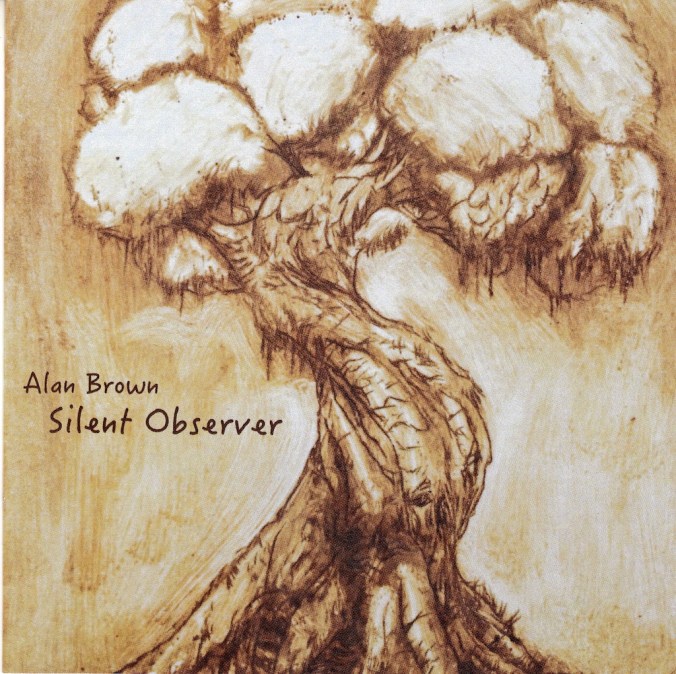 In the same week that Spammerz appeared at the CJC Alan Brown released his ambient album ‘Silent Observer‘. This album has long been anticipated. Anyone who knows Brown will be aware of his longtime interest in the works of the new Scandinavian ambient improvisers. Trumpeters like Arve Hendriksen, Nils Petter Molvaer, Guitarists like Arvin Aaset, vocal innovators like David Sylvian or Sidsel Endresen and electronics wizards like Jan Bang. This is a new frontier open for wider exploration. These artists draw huge audiences in Europe and increasingly audiences from beyond that continent.
While Brown has laid down more soul-filled grooves than most, he is also capable of thinking outside of the square. The concept of this project was clear when he sat down at the lovely Steinway D piano in the Town Hall Concert Chamber. Creating gentle music that is unconfined. This is spontaneous composition informed by place, by the moment, the artists vision and the instrument. With ambient music the spaces between the notes are where much of the music lies. These are like shared dreamscapes and a stream of mental images flows through the mind as we participate.
There is an oversupply of unsubtle loud incessant music cluttering up cyberspace and it is all too easy to forget the importance of silence and subtlety. This music is best enjoyed through headphones or at night in a quiet room. Ambient music is not background music, but the sounds we have forgotten to hear. A child’s heartbeat or the rustle of a tree are the most ancient of ambient sonic archetypes. This album reminds us that hearing is selective and when we enable it as deep as the ocean.
While the piano paints gorgeous motifs there are often subtle synth textures underpinning the pieces. The judicious use of synth adds to the sense of wistfulness while not detracting from the piano. There are also samples folded into certain tracks and these are perfectly chosen. The Robert Graves poem (read by Dylan Thomas) and the whisper-quiet polyglot prayers in 40 languages serve the the project well.
Headland Glow: Alan Brown/Silent Observer –
Spammerz – Dan Sperber (guitar), Alan Brown (Crumar Mojo keyboards), Ben McNicoll (tenor saxophone), Jason Orme (drums). Gigs at CJC (Creative Jazz Club) & Golden Dawn 6th & 10th May 2015
Silent Observer – Alan Brown (Steinway D Piano, Synth) – purchase the album from Alan Brown.co.nz

McAll – #ASIO Mooroolbark
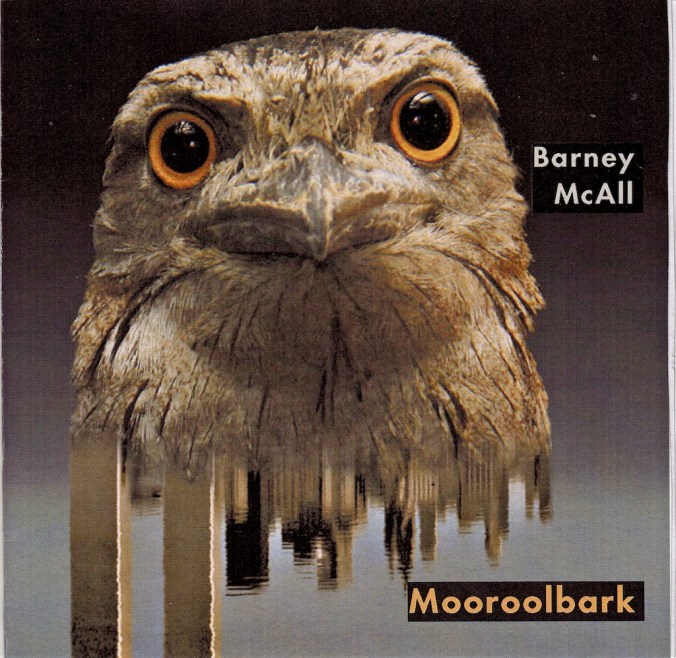 Mooroolbark is a place, an album and a state of mind. It is an intersection of worlds and a testament to Barney McAll’s writing skills .
There is a special place where artistic expression transcends the immediate, a place where archetypes become manifest in varied and subtle ways. This is a place where unexpected journeys begin. Where the eyes, ears, touch, smell and feel guide you inexorably toward ancient and modern shared memories. Jung spoke of this as the ‘collective unconscious mind’ (or the ‘universal mind’). This is a mysterious well of ‘unknowing’ and the best improvising artists navigate its depths. McAll is a musician eminently qualified to navigate this journey.
He is a storyteller and a fearless explorer. Revealing seemingly endless worlds as the patina of time and space reveal new layers note by note. The trick of this is the subtle cues left along the path. If the listener comes with open ears and mind, new depths unfold. In truth these are ancient devices, long the preserve of poets, painters, improvisers and prehistoric cave artists. McAll and ASIO use these subliminal cues to confound, tease and cajole. All is revealed and all is not what it seems. We listen, we enjoy, but there is always a Siren to lure us deeper. ASIO tantalises with motifs that sound familiar, but which often dissolve into something else upon closer examination; echoes from the future as much as the past. These are the archetypes of sound and silence. 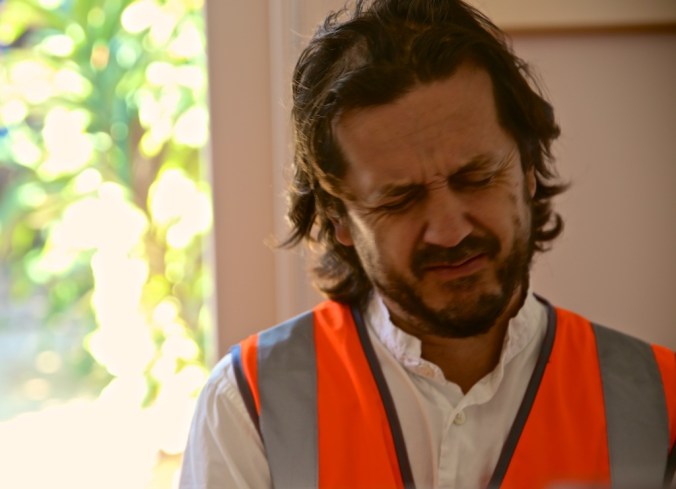 #ASIO stands for the Australian Symbiotic Improvisers Orbit, but even in the title the story deepens? Another ASIO comes to mind, as hard-won Australian freedoms vanish in the eternal quest for security. At a pre-release gig in Sydney’s Basement the band donned high-viz vests with #ASIO stencilled on them; high visibility music juxtaposed with secretive worlds. This #ASIO has some answers. The landscape of McAll’s new album ‘Mooroolbark’ is littered with these potent images and if you let your preconceptions go, they will come to you. These musical parables are modern ‘song lines’; age old stories told afresh. ‘Mooroolbark’ completes a circle. A return to familiar physical and spiritual landscapes. A reappraisal of the journey with old musical friends.
McAll is a thinker and perhaps a trickster as much as he is a musician. To quote from Jungian sources “In mythology, and in the study of folklore and religion, a trickster exhibits a great degree of intellect or secret knowledge and uses it to play tricks or otherwise disobey normal rules and conventional behaviour.”
While his previous albums have featured New York luminaries like Kurt Rosenwinkel, Gary Bartz, Ben Monder, Josh Roseman, Billy Harper and others this is mostly an Australian affair. The one exception is percussionist Mino Cinelu. McAll’s collaborations with Dewey Redman, Fred Wesley, Jimmy Cobb and others have brought him much deserved attention. Now the story moves to his home country. The Mooroolbark personnel are McAll (piano, compositions, vocals), Julien Wilson (tenor, alto clarinet), Stephen Magnusson (guitars), Jonathan Zwatrz (bass), Simon Barker (drums, percussion), Mino Cinelu (percussion), Hamish Stuart (drums), Shannon Barnett (trombone). These are well-known gifted musicians, but everyone checked their egos in at the door. 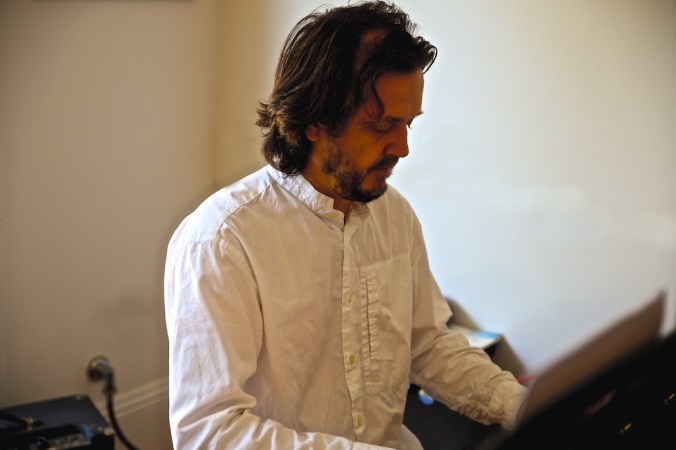 This unit performs as if they are one entity. Every note serves the project rather than the individuals. The sum is greater than its considerably impressive parts. I have seen McAll perform a number of times and his sense of dynamics is always impressive He can favour the darkly percussive; using those trademark voicings to reel us in, then just as suddenly turn on a dime and with the lightest of touch occupy a gentle minimalism. On Mooroolbark everyone’s touch is light and airy, open space between notes, a crystal clarity that surprisingly yields an almost orchestral feel. Avoiding an excess of notes and making a virtue out of this is especially evident as they play off the ostinato passages (i.e ‘Non Compliance).
Because they work in such a unified fashion it is almost a sin to single out solos. Inescapable however are the solos by McAll on ‘Nectar Spur and on the dark ballad ‘Poverty’; which has incandescent beauty. Wilson on the moody atmospheric ‘Coast Road’, and above all Magnusson and McAll on ‘Non-Compliance’. I am familiar with this composition and I love the new arrangement here. 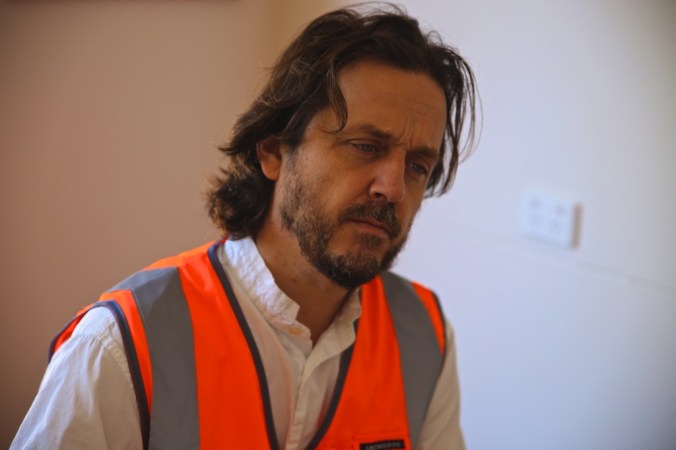 A transformation has occurred with ‘Non Compliance’; morphing from a tour de force trio piece into an other-worldly trippy sonic exploration. All of the musicians fit perfectly into the mix and this is a tribute to the arrangements and to the artists. Zwartz (an expat Kiwi who has a strong presence here) holds the groove to perfection and the drummers and percussionists, far from getting in each others way, lay down subtle interactive layers; revealing texture and colour. Barker on drums and percussion is highly respected on the Australian scene (as are all of these musicians). Adding the New York percussionist Mino Cinelu gives that added punch. On tracks 6 & 7 noted trombonist Shannon Barnett adds her magic and Hamish Stewart is on drums for the last track.
A sense of place may pervade these tunes, but there is also a question mark. This is not a place set in aspic but a query. Places or ideas dissolve into merged realities like the music that references them. Layers upon layers again.
This is art music, street music and musical theatre of the highest order. Everything that you hear, see and experience serves the music in some way. It is a bittersweet commentary on the human experience. A scientist on New Zealand National Radio said that exploring the dark unseen areas of space is the new magic. I think that he is right. This album is replete with trickster references but the intent is deadly serious. This music turns the arrows of listening back on us like a Zen Koan. 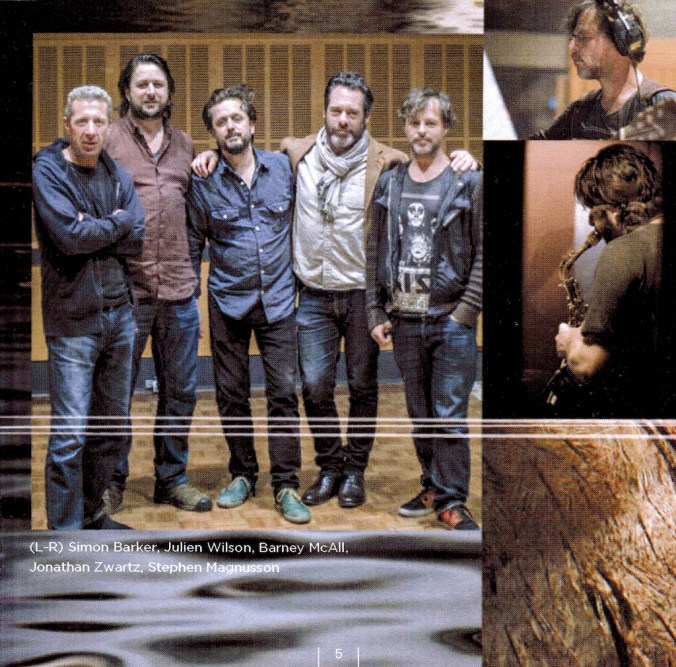 Barney McAll is an award-winning, Grammy nominated Jazz Musician based in New York. He was recently awarded a one year Peggy Glanville-Hicks Composers Residency and he currently resides at the Paddington residency house in Sydney, Australia.
I would urge you to buy the ‘Mooroolbark’ album at source rather than purchase it on iTunes. The cover art and the messages are a trip in themselves. Available June 5th.
For two sample tracks on ‘Soundcloud’ go to: https:\\soundcloud.com/barneymcall
I took the photos of Barney McAll during a two-hour interview with him in Sydney April 2015. I chose not to use the traditional question and answer format as this begged a different approach. For better or worse getting inside a story Gonzo style is what I do. The first and last pictures are from the ‘Mooroolbark’ album artwork by Allan Henderson & Jenny Gavito and Andre Shrimski. The bird is the wonderful Frogmouth Owl (shedding the old New York skyline from its plumage).
The Album: ‘Mooroolbark’ – Barney McAll (piano, compositions, vocal), Julien Wilson (tenor sax, alto clarinet), Stephen Magnusson (guitars), Jonathan Zwartz (bass), Simon Barker (drums, percussion), Mino Cinelu (percussion), Hamish Stuart (drums [8]), Shannon Barnett (trombone [6, 7]) – released 2015 by abcmusic
Purchase information: http://extracelestialarts.bandcamp.com/
Biographical information @ www.barneymcall.com

Mark Isaacs 2015 @ CJC
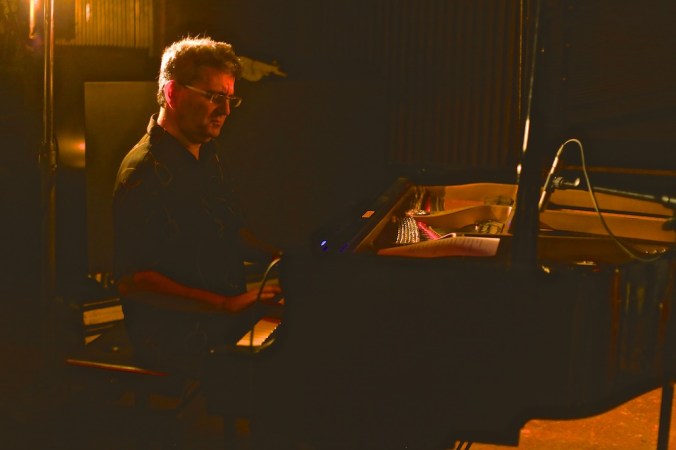 Mark Isaacs is an important and highly respected Australian musician and it was a pleasure to see him in Auckland again. It was October 2013 when he last visited and since then he has been busy with the presentation of his symphony and a number of other noteworthy projects. He is a celebrated Jazz and classical musician and he continues to excel in both genres. Musicians like this are rare, as the two disciplines require very different approaches. When you talk to Isaacs you realise that he is passionate about both. He respects the art forms far too much to settle for anything less than his best. In either genre.
I once recall naively asking a visiting musician whether the ability to perform at the highest level on an array of difficult instruments was a unique skill. I have never forgotten the answer. “No it’s the outcome of hard work and an exponential increase in practice time. Every instrument you play is practiced equally and intensively’. I am certain that the same would apply to working across different genres. That said, I suspect that attitude and aptitude are still somewhere in the mix.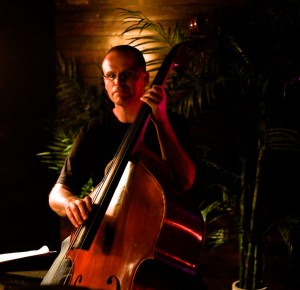
Nothing annoys musicians more than being told that what they do is the result of a gift. It implies that the results come easily to them. Having great chops is only the starting point, as there is more to a successful Jazz musician than technique. Deep level communications are necessary and for a performance to work well, everyone must connect. Musician to musician and musicians to audience. Having something original to say and saying it well is something Mark Isaacs understands. Those performing at this level bring something unique to the equation. Something of themselves. An essence drawn from experience and an intuitive understanding of how time works. No matter how good a pianist, bass player or drummer, a piano trio is still a collaboration. Isaacs must have been happy with Holland and Samsom. They are two of our best musicians. 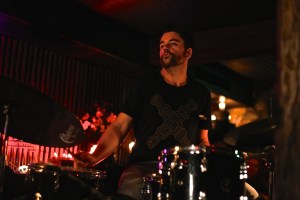
Isaacs comes from an exceptional musical family with a lineage stretching back to the Stephane Grapelli band and probably beyond that. Knowing the depth of his classical and Jazz heritage gives an added perspective to his multifaceted career trajectory.
I missed the first few numbers and arrived at the CJC just as the trio were warming up. The first number I heard was Kenny Dorham’s ‘Blue Bossa’. A much-loved standard that has remained extremely popular. Good improvising musicians extract gold from compositions like this (and often without needing to deviate far from the traditional chart). This was a night of wonderful standards played to perfection. Hearing a superb pianist and a solid rhythm section performing in such an intimate space is something Jazz fans live for. Everyone there experienced the warm glow. A warmth that only nights like this can impart. I truly wish Isaacs lived a lot closer. My appetite for his playing is far from being satisfied. 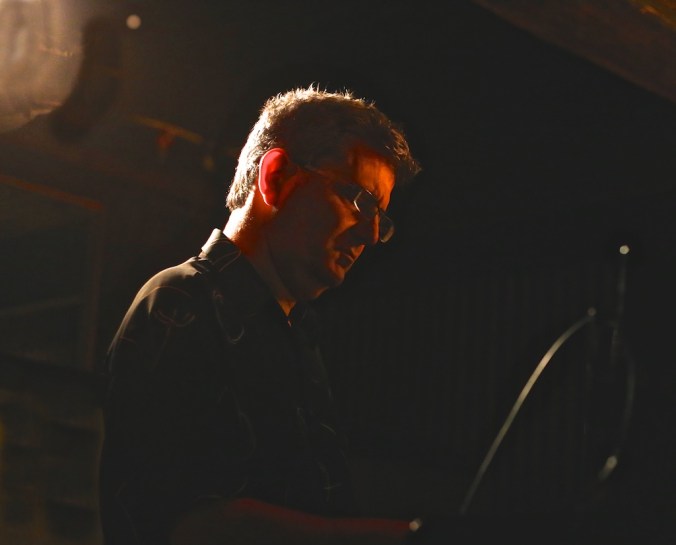 My late arrival was due to a previous gig and as I walked in, the sound enveloped me completely. Before I had settled Ron Samsom had grinned in my direction, Oli Holland had poked out his tongue and Mark Isaacs had given a quick wave (mid solo). With those brief gestures the realisation swept over me that this club and these musicians are family. A. J. a club regular grabbed me in the break and said tongue in cheek, “Thank god your here man, the universe has realigned”. Ron Samsom the drummer added, “Yeah it took us a while to settle because there were two strangers in YOUR chair and you were nowhere to be seen”. I guess I am like the guy who lives perpetually on the bar stool of his local bar. Sort of Jazz furniture.
A performance of Mark Isaacs ‘Symphony’ has been professionally filmed and it was recently purchased by the ‘SKY Arts’ channel. It plays in New Zealand on the 10th June at 8pm. Please support this important work by watching and perhaps writing to SKY Arts and saying how much we appreciate seeing material like this (The same for the recent Mike Nock/Contemporary Dance film on SKY Arts). These are important artists and landmark events. We live in a crass market-driven world where the Philistines try to dictate our taste. Without our support these amazing artists can struggle for wider recognition. Writing to encourage the purchase of such films is the least we can do by way of thanks. Remember, this works best as a collective enterprise and all of us have a role to play in this.
What: Mark Isaacs Trio – Mark Isaacs (piano), Oli Holland (bass), Ron Samsom (drums).
Where: CJC (Creative Jazz Club), Britomart 1885, Auckland, New Zealand, Wednesday 22nd April 2015
 JazzLocal32.com