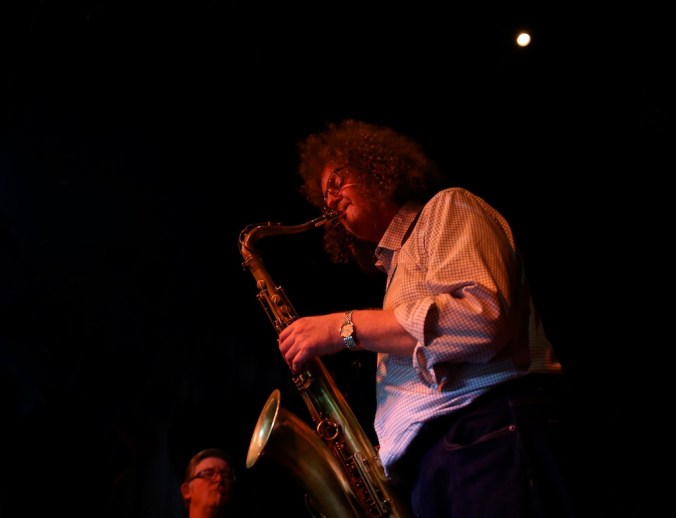
 The popularity of ‘hardbop’ is enduring but we seldom hear it on the band stand. The probable reason is its very familiarity; if you play this music you will be judged against the source. There is also the evolutionary factor: improvised music strives to outlive its yesterdays. It is even less common for musicians to write new music in that idiom or to create a vibe that calls back the era. Such an enterprise invariably falls to experienced musicians; those with the wisdom to reverence the glories without it being merely slavish. Booth and Walters are especially well suited to that task. They have the chops, charts and the imagination and above all, they make things interesting. If you closed your eyes during this gig, you could easily imagine that you were listening to an undiscovered Blue Note album. It was warm, swinging and accessible.
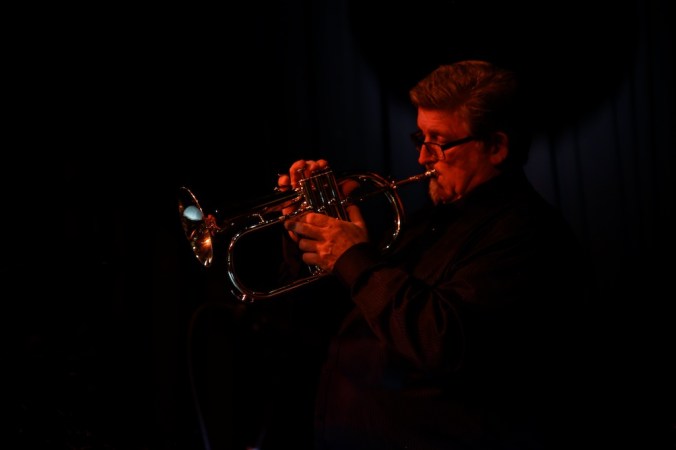 Booth and Walters are gifted composers and on Wednesday the pair reinforced their compositional reputations. Some of Booth’s tunes have appeared recently in orchestral charts. Walters’ tunes while heard less often are really memorable (‘as good as it gets’ stuck in my head a long time ago). These guys write and arrange well. Notable among Booth’s compositions were ‘Deblaak’, “A Kings Ransome’ and ‘On track’. From Walters; ‘Begin Again’, ‘Queenstown’ and ‘Wellesley Street Mission’. There was also a lovely version of the Metheney/Scofield ‘No Matter What’ from the ‘I Can See Your House From Here’ album. I have posted Booth’s ‘A Kings Ransom’ as a video clip, as it captures their vibe perfectly. Booth has such a lovely burnished tone – a sound production that no doubt comes with maturity and a lot of hard work.
 The last number was Walters ‘Wellesley Street Mission’ and I would have posted that, but my video battery ran out. This is a clear reference to the appalling homeless problem which blights our towns and cities. The bluesy sadness and the deep compassion just flowed out of Walters’ horn – capturing the issue and touching our innermost beings, challenging our better selves. I may be able to extract a cut of this and post it later – we’ll see!
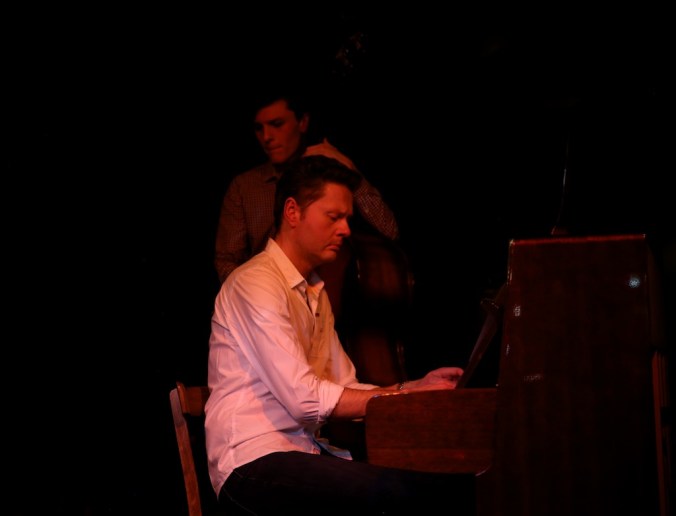
While the gig felt like classic Blue Note Jazz it was not time-locked. As the tunes unwound, the harmonies became edgy and modern and with Kevin Field on piano, they could hardly be otherwise. Here a sneaky clave move, there, an understated flurry, (even a few fourths); mainly though, his typical wild exuberance. Again we saw the maturity and effortless cool of drummer Stephen Thomas. This guy is exceptionally talented. On Wednesday he played like a modern drummer, but somehow, and wonderfully, he managed to include some Art Blakey and Philly Joe Jones touches (crisp pressed rolls and asymmetrical rim shots). Wednesday was the third time that I have heard bass player Wil Goodinson. We should pay attention to this young artist – he is a rapidly developing talent. His tasteful solo’s and his effortless bass lines were great.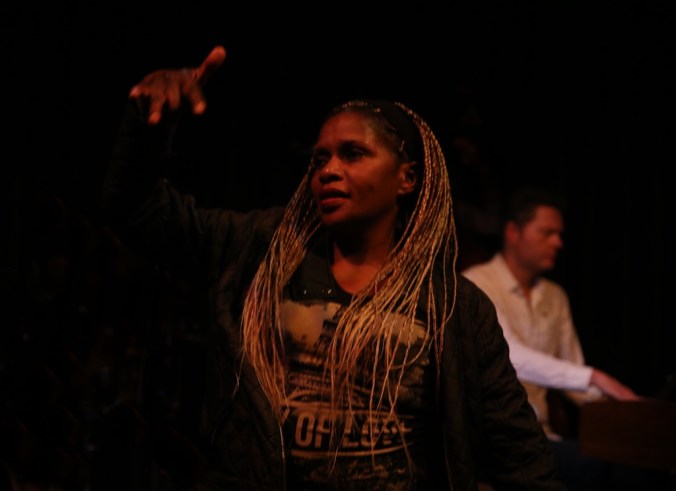 Lastly, there was that mysterious dancer, appearing from nowhere, drawing sustenance from the music until the street swallowed her again.
Walters & Booth Quintet: Craig Walters (tenor saxophone), Mike Booth (trumpet and flugelhorn), Kevin Field (piano), Wil Goodenson (upright bass), Stephen Thomas (drums) @ CJC Creative Jazz Club, Thirsty Dog, K’Rd, Auckland, 23rd August 2017.
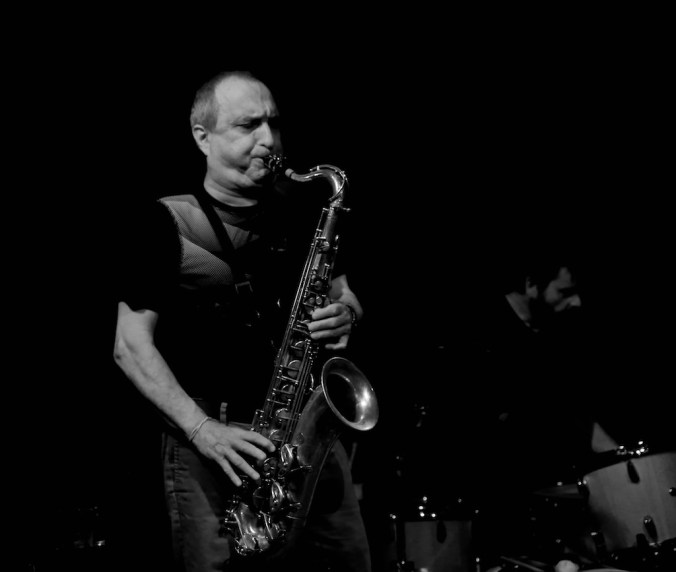 Roger Manins uncoupled the microphone and looked around the club. It was winter outside but you wouldn’t have known it. The windows were steamed up from the heat of a capacity crowd; all eyes were fixed on the stage and the stocky man holding the tenor saxophone. “You know how lucky you are …. right,” Manins asked the audience? A loud cheer went up accompanied by whistles and foot stomping. George Garzone was in town and no one was in any doubt.
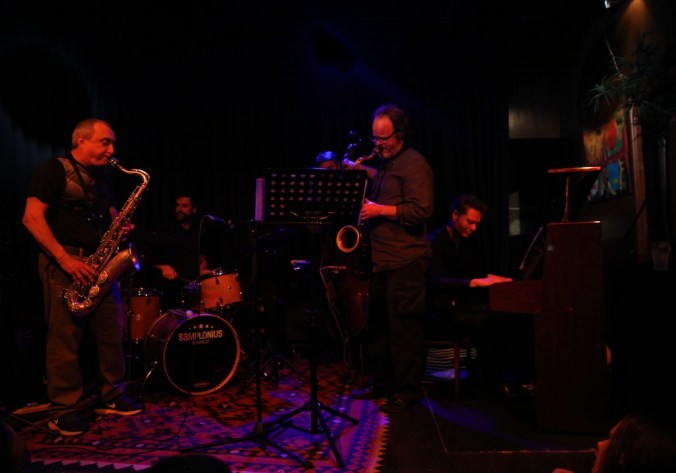 Most of the tunes were in long form and most were Garzone originals. All were perfect for the occasion. As you might expect, the Garzone tunes were springboards for deep improvisation; the heads, however, were memorable and so well-arranged that they stood out. I failed to catch all of the titles because the applause often drowned out the announcements. There was a catchy tune referencing Bourbon Street, A moving tribute to his friend Michael Brecker and a tune titled ‘The Mingus that I know’. They all had pithy stories attached. The two standards were Billy Eckstine’s ‘I want to talk about you’ and a wonderful earthy take on John Coltrane’s ‘Impressions’. I read somewhere that Garzone plays like he talks, in a Bostonian/Calabrian dialect. The cadences and rhythms of speech are part of who we are, it is, therefore, logical that they encompass how musicians express themselves and especially on a vocal instrument like the saxophone.
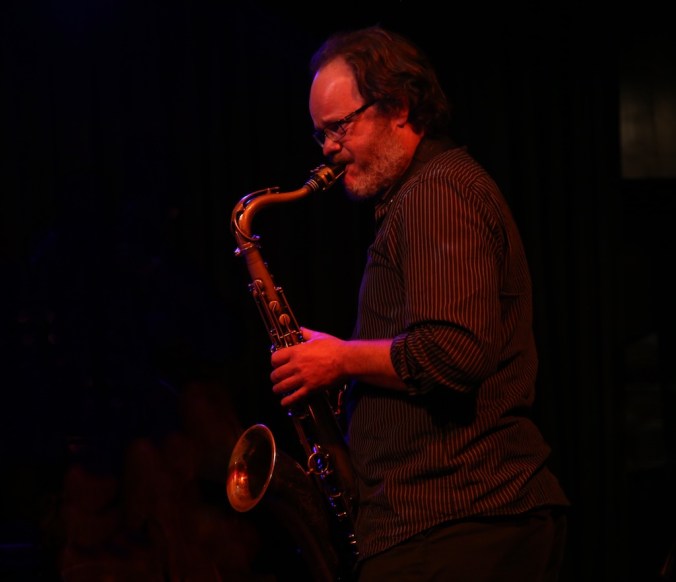 His pick up band were Kevin Field, Ron Samsom, Mostyn Cole and Roger Manins. Like every international who passes through, he heaped praise on the local musicians. Coming from Garzone this really counts. He and Manins go back a way and the synergies between them are evident (the Garzone influence is worldwide and Manins is no exception). Whether playing in unison or in counterpoint, they sounded right together – tenors who knew just how to compliment or when to keep clear. This was a very big sound and when trading fours they cajoled each other as friends might. The rhythm section was energised as well; Cole, Samsom and Field providing rhythmic and harmonic trickery. And at one point, ‘Hey great, I heard some Salsa in that solo’, said Garzone looking in Fields direction.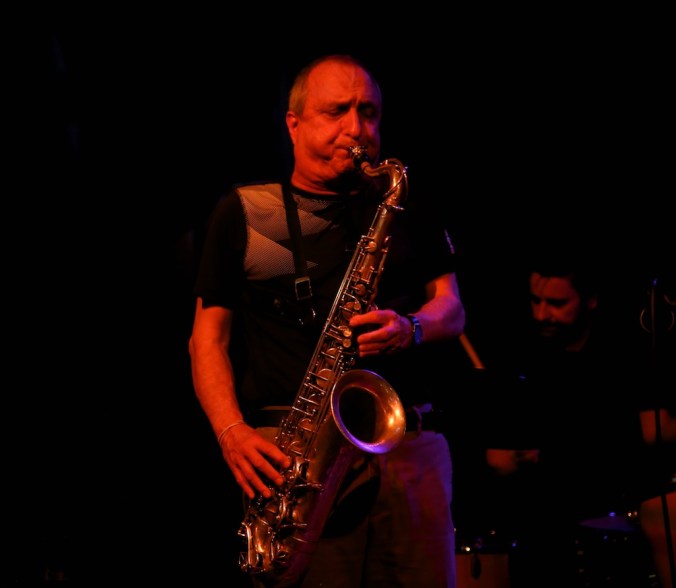
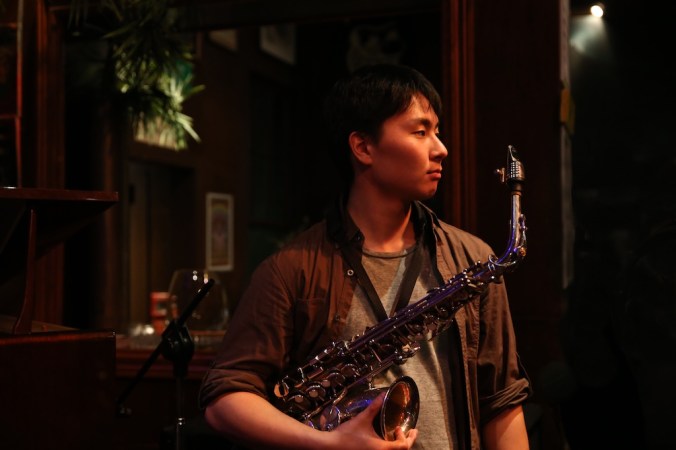 Last week brought us another emerging artist’s gig and this time it featured a Wellington band followed by an Auckland band. Each brought different aspects of improvised music to the bandstand and in a very nice touch, jammed together at the end; a happy meeting place between approaches. With so many international acts scheduled over coming months, it was great to see these young emerging bands given a shot: Again, this was good programming by the CJC.
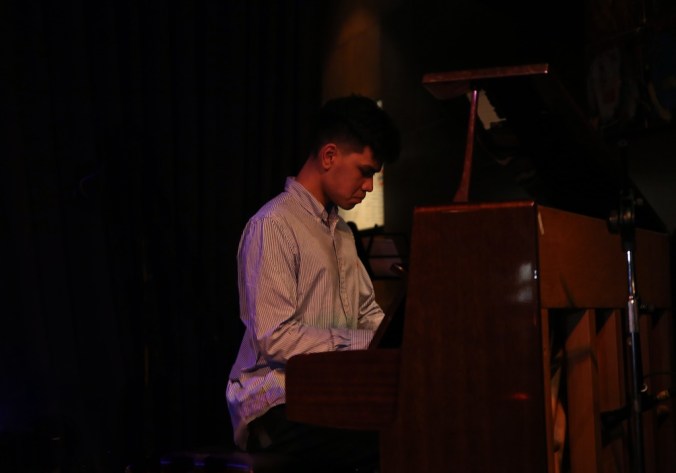
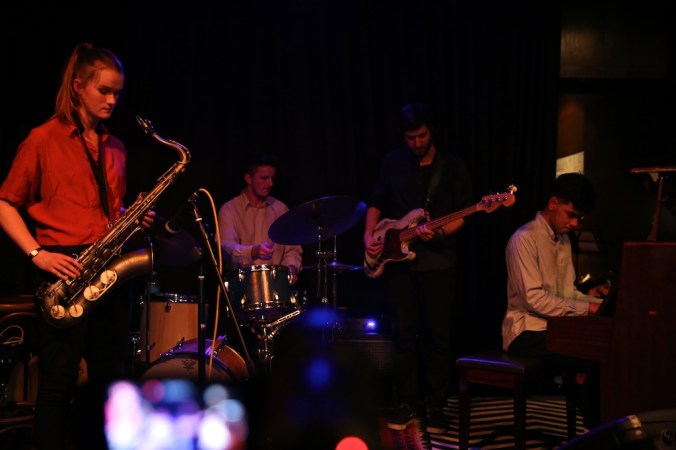 The Leo Coghini Quartet from Wellington took a straight ahead approach and it was obvious from the first number by Coghini, a solo rendering of ‘It Could Happen To You’ (Van Heusen/Burke), that he was an interesting pianist. He is classically trained, but with a good feel for swing oriented tunes. There were some nice originals in the set, but they were most comfortable on standards. I particularly liked the way they played Parker’s latin infused classic ‘My Little Suede Shoes’, also Kenny Garrett’s ‘Wayne’s Thang’. Both were approached in interesting ways (especially the nicely phrased Parker tune). The last number the quartet played was Stevie Wonders swinging groove classic ‘Isn’t She Lovely’ (which I have posted).
  In relation to ethnicity and gender, the modern New Zealand Jazz scene is increasingly reflective of the wider population; It is, therefore, good to see women picking up instruments that were once regarded as being exclusively in the male domain. Louisa Williamson was up front on tenor. She overcame some initial nervousness and played well. The other band members were electric bassist Zane Hawkins and Jeremy Richardson drums (both accomplished players).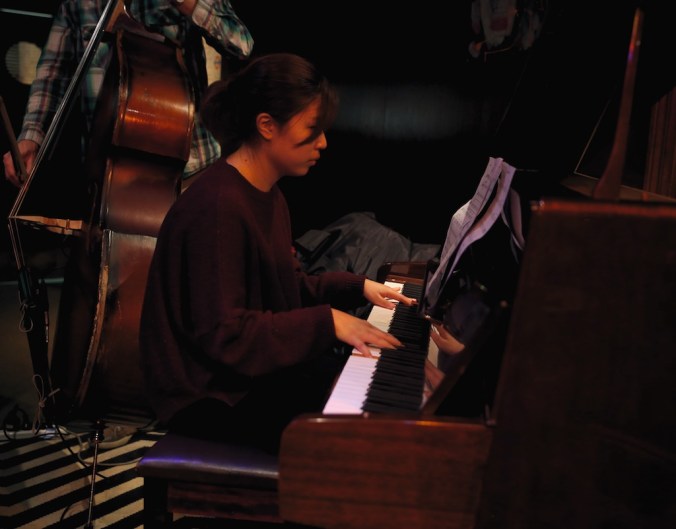
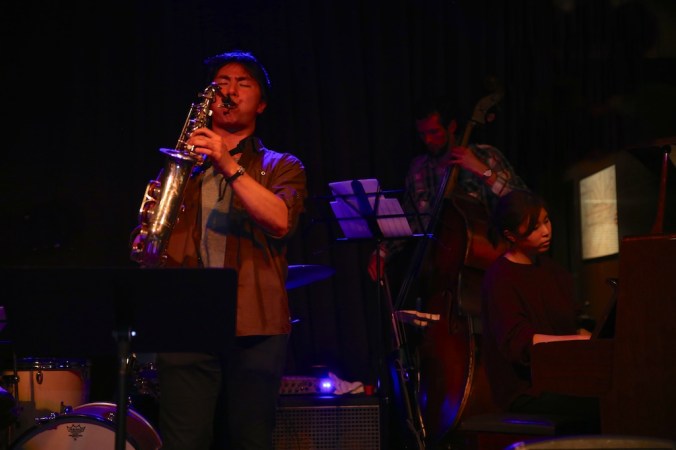 The tune ‘Within Hymn’ had clear references to Coltrane, but it was also interestingly modern. Although there were distinct parts to it, the piece made more sense as an entirety. It began with a bold statement on the horn, then unwound as it momentarily descended into chaos; next came the body of the piece, a building story, a probing at an idea, then changing again and ending with a climax. None of this would have been possible without the right support. Crystal Choi’s percussive chromaticism as she stabbed at the keyboard, the fourths, dissonant flurries; sometimes swinging as if to provide a counterbalance. Her solo was immaculate and each time I hear her now I’m amazed. Watching her musical journey encompass the avant-garde end of town and everywhere on the way is a treat.
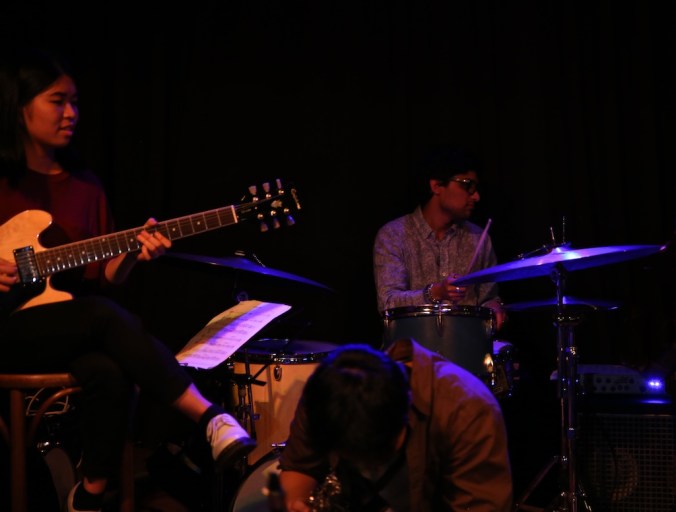 It was not just Choi who made this work, but Denholm Orr and Dean Rodrigues as well. Watch the clip through and judge for your self – these guys are amazing. Now a few bars of arco bass, now free or walking bass, and all the while, edgy polyrhythms dancing underneath. I was also pleased to see Kathleen Tomacruz on guitar – a very credible first gig for her.
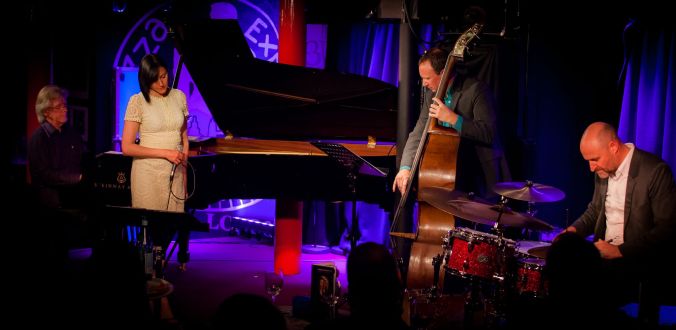 Since ‘Songbook’ was released three months ago the accolades have come pouring in and it’s no wonder. This is a superb album and destined to remain forever embedded in the Jazz songbook lexicon. The worldwide release was timed to coincide with Broadbent’s seventieth birthday; opening to an enthusiastic audience at Ronnie Scotts; then touring the major clubs and festivals throughout Europe and New York. Much about ‘Songbook’ is classic Broadbent; warm, lyrical, and intimate; not to take anything away from the co-credited Georgia Mancio, a highly acclaimed UK-based vocalist.
  This pairing of voice and harmony, lyrics and melody could hardly be improved upon: it is therefore unsurprising that comparisons are made with the classic songbook era. Here, Broadbent has found the ideal foil for his engaging brand of lyrical Jazz, and as a first, every one of his tunes has accompanying lyrics crafted by Mancio. In Songbook, Broadbent’s Quartet West classic, ‘The Long Goodbye’ has become ‘The Last Goodbye’; a moving reference to the passing of Mancio’s father. Tunes like that have long begged such lyrics and it’s nice to see them penned so beautifully. Back in New Zealand, we watch Broadbent’s ever unfolding story with wonder.
 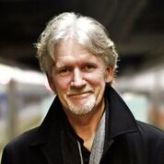 We are proud of him here in his hometown, understanding that his many projects keep him busy; so busy that so we seldom see him these days. As long as we have his albums it is enough, they all have a generous portion of New Zealand buried deep within them. Last month he recorded a new album in the Abbey Road studios, an album with former Woody Herman band mate, drummer Peter Erskine and the amazing bassist Harvie S – plus the London Metropolitan Orchestra. These arrangements could only be Broadbent’s – lush and achingly beautiful. Could there be more Grammy’s on the way?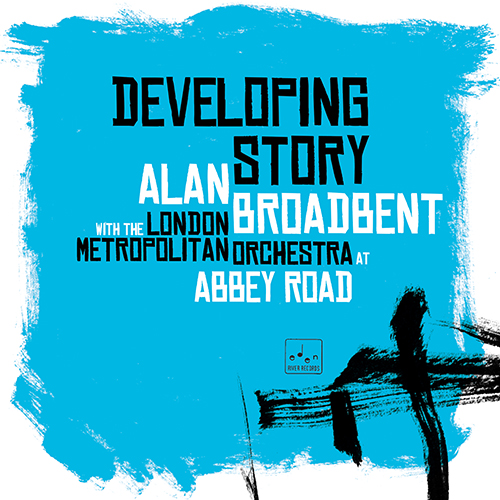
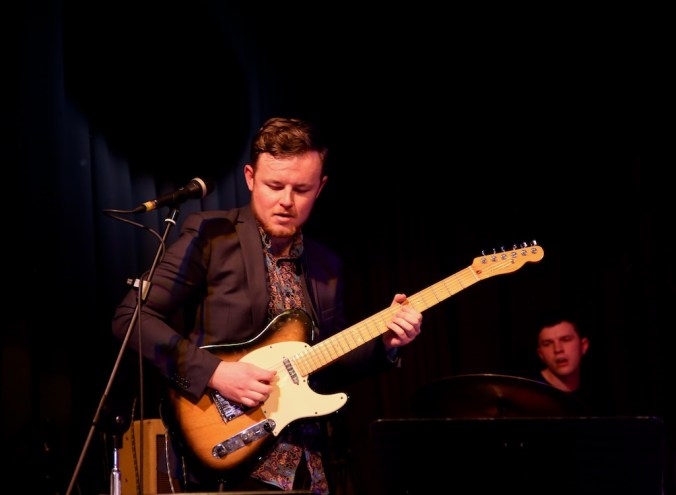 During the first half of 2017, a significant number of respected international artists and established local artists appeared at the CJC Creative Jazz Club. While everyone enjoys such a cornucopia of riches, it is also important to keep sight of emerging artists, those who are just below the radar. No local venue manages to showcase the rich diversity of improvising talent as well as the CJC. This is no accident, as there is a guiding philosophy behind the programming of gigs. No artist, however good, gets an ongoing residency; the gigs, therefore, are different every week, are identifiable projects, and this keeps the audiences engaged. An important part of this is showcasing emerging artists.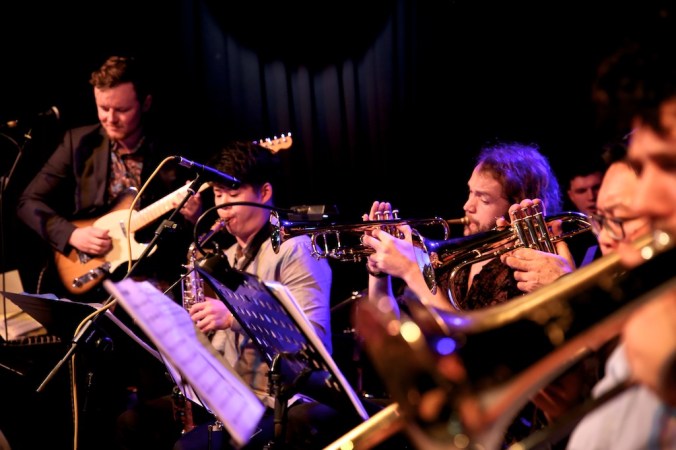
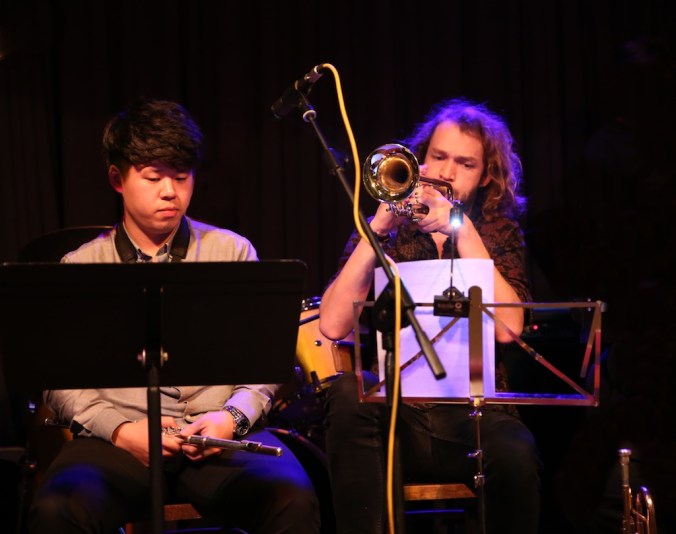
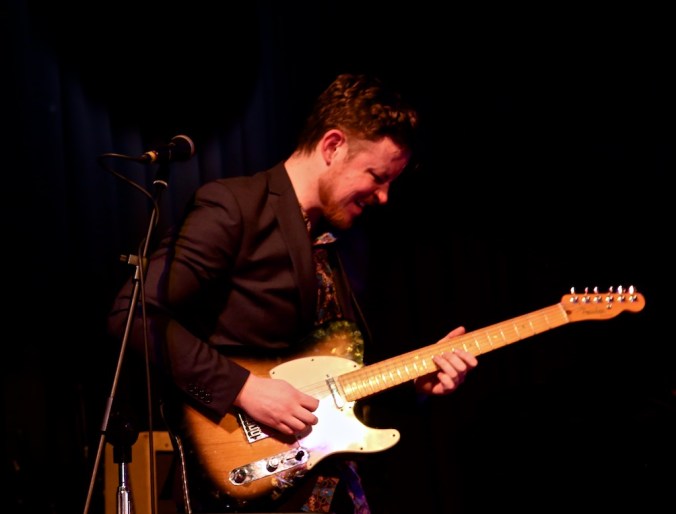 The first number was ‘Tulle’ from the Scofield album, after that we heard a number of his own compositions interspersed with standards. His ‘Who is Kenneth Meyers?’ appealed as did an angular rendition of ‘Surrey with the Fringe on Top (Hammerstein). Given the project in hand, it was unsurprising that he included ‘Boplicity’ by Miles Davis; ‘Birth of The Cool’ being the springboard from which all such arranging sprang. In the second half we heard trumpeter Mike Booth’s ‘Major Event’ – Booth is a skilled arranger and an experienced ensemble composer. It is possible that he has also influenced Swindells’ direction.
 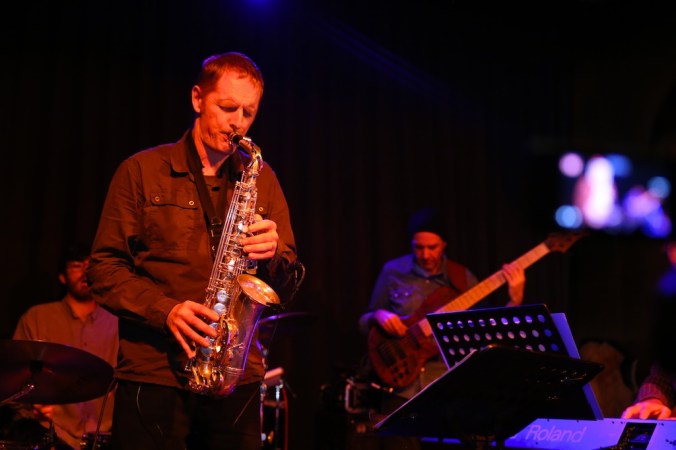 Hearing people talk about the Chris Mason-Battley Group reminds me of the Hindu parable – the blind man and the Elephant. “Oh yeah, that guy has a smooth sweet sound’ one said as if that settled the matter. Well yes, he has got a smooth sound when playing a ballad, but anyone who thinks that defines his music has simply not been paying attention. This band has enormous depth; playing anything from a melodic ballad to music that is way off the grid. What we experienced on Wednesday was music with integrity; at times raw and inventive, drawing us into its heart, emotionally engaging and above all satisfying.
  The first number was ‘Mountain Song’ (by CMB); then they moved to a series of pieces from the CMB John Psathas project ‘Dialogos’ (progressing through excerpts from ‘Song for Simon’ and ‘Demonic Thesis’). As that set progressed we heard a new composition or two and lastly ‘Tahuna Caravan Park’ from his ‘Two Tides’ album. This gave us a broad sweep of his past projects and the Psathas album in particular. Dialogos was widely acclaimed as an exciting and bold step forward for the band – I can highly recommend the album (out on Rattle). Before the band left the stage for a break, Mason-Battley said; “That was the nice half – the second set is nasty half” (quoting from an album titled ‘The Jaberwocky comes to Town’ which had a ‘nice side’ and a ‘nasty side’.)
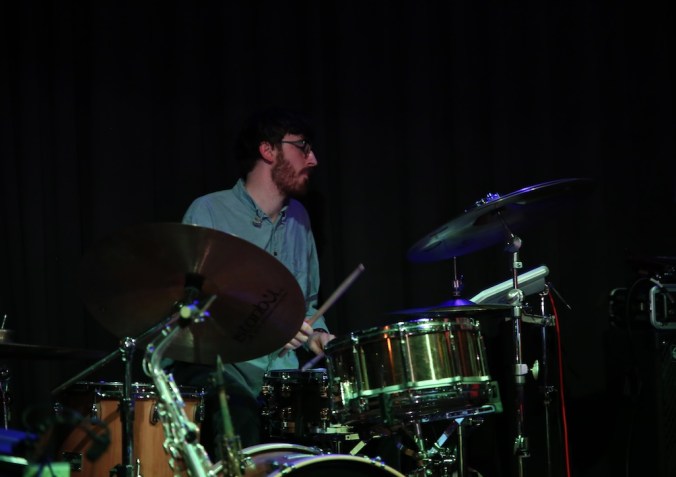 As pleasing as the band were in the first set, they reached much deeper for the second; pulling out an utterly engaging and masterful performance. It began with several of the blacker pieces from ‘Dialogos’, ‘The Calenture Suite’. The drummer Stephen Thomas must be mentioned at this point – His work was integral to the overall performance and it underlined his maturity as a musician. At times subtle, at others incredibly complex – and all made to look easy in his hands. Thomas was extraordinary throughout and although a relative newcomer to this long-established band, his searing flames licked at their underbelly, an indispensible presence. In perfect contrast to the complex drum flurries was Sam Giles on electric bass. Giles is a master of the ostinato – repeated motifs, perfect time feel and the voodoo factor writ large. He is also an influence on the bands direction; favouring Zorn like explorations and paths less trodden.
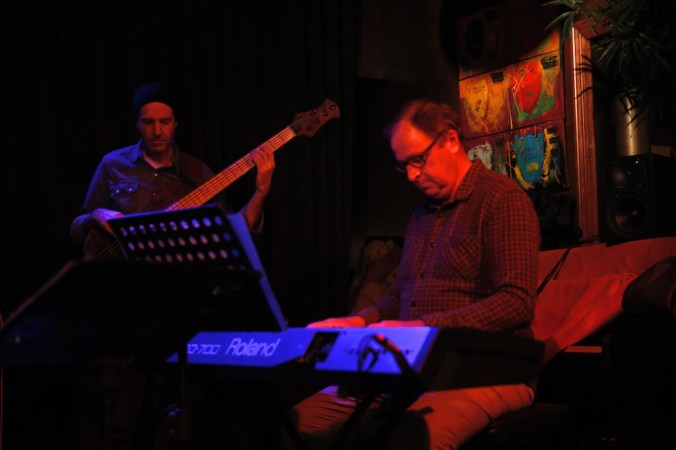
 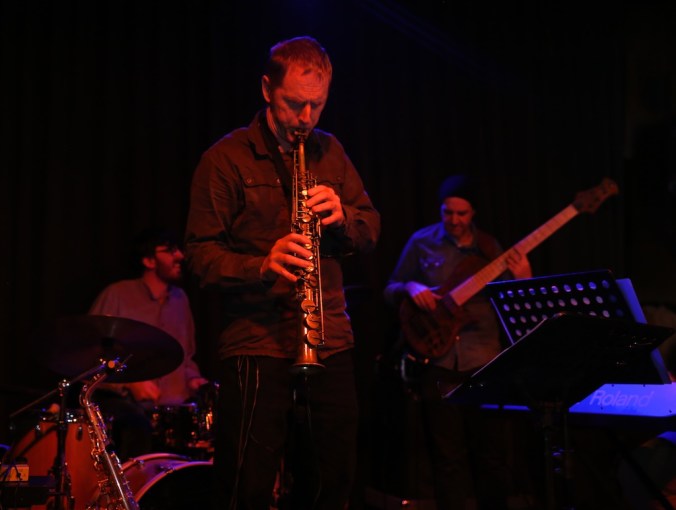 The CMB Group keyboardest is David Lines, an intersting and in my view under-rated musician. On this gig he played a Roland RD-700. What a beautiful piano and Rhodes sound. A machine hardly heard these days, replaced by the Nord Stage or modern Korgs. While the newer keyboards have more bells and whistles, I am unconvinced that their piano sound is an improvement. Perhaps it sounded so good because of Lines touch? He is not a busy pianist and every note counts, in this gig his often voice leading role was perfect for the project (his solos were stunning). I only wish we saw him more often.
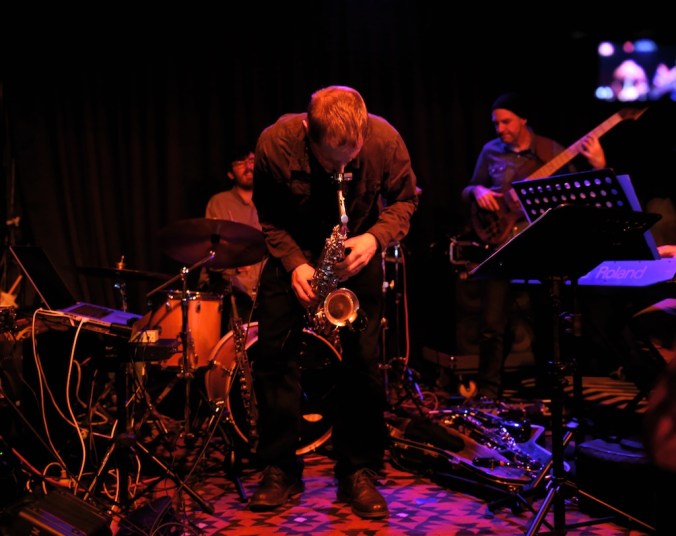 The last tune of the evening was free and political. It was titled ‘The Emperor Has No Clothes’; an obvious reference to the greedy authoritarian amoral elites that hold sway in the world; particularly the Trump administration. It was free and it was raw emotion – in the background a loop recited ‘billions and billions’ – then, faintly at first, we heard the strains of ‘The Star Spangled Banner’. The band read the mood of the audience well with that one – people stomped and cheered afterwards as if someone had taken the words right out of their mouths and rendered them into abstract musical form.
  JazzLocal32.com