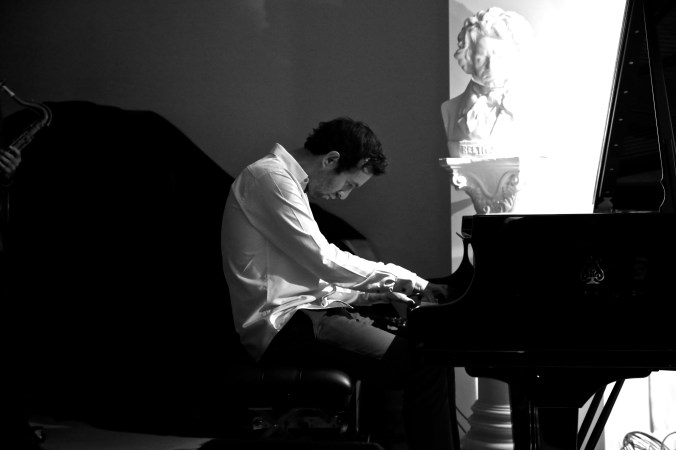
Michal Martyniuk Trio + Jakub Skowronski

Martyniuk (1)When Michal Martyniuk left Auckland for Poland last year, it was hot on the heels of a successful appearance at Java Jazz; the biggest Jazz festival in the world.  It was always on the cards that Martyniuk’s Auckland trio would fare well, as they are the epitome of an inventive, high energy unit and all of that is wrapped up in a very European sound.

While it was obvious to Kiwis and to the enthusiastic Java Jazz festival goers, I wondered how Martyniuk would be received in Europe. I have travelled there often and there are thousands of good Jazz musicians and many fine trios vying for attention. Jazz is valued there, especially in the northeast, and audiences are inclined to be very discriminating. I got my answer shortly after Martyniuk’s arrival, as notifications of media events, club gigs, radio and TV interviews started appearing. He had broken through the clamour and received acclaim in his birthplace. His co-released warm as toast Jazz-soul-funk album ‘After ‘Ours’ and his Jazz gigs, equally acclaimed.  Martyniuk (2)
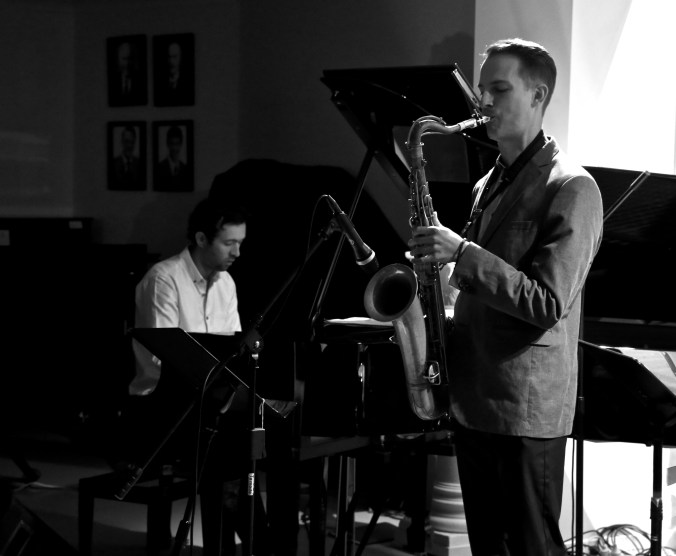
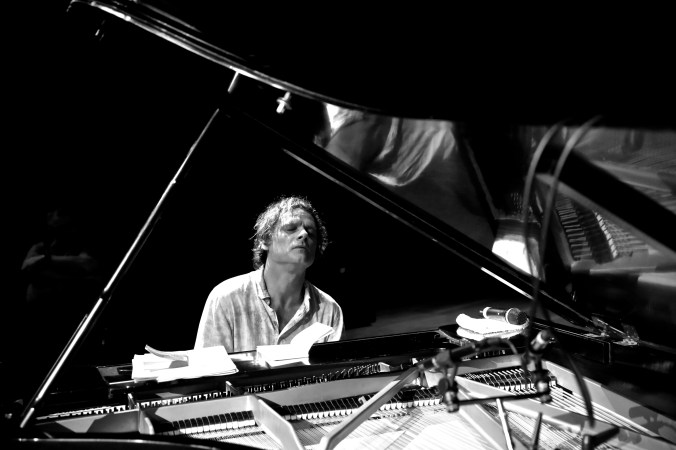
The journey back to the country of his birth had been important for Martyniuk and he has returned with heightened confidence, exuding a sense that anything is possible. This was evidenced by the trio’s live performance at the Lewis Eady showroom. Many New Zealand improvising bands have a laid back organic feel as that is generally our thing. In contrast, this band is tightly focussed, but without that in any way detracting from its appeal. The tunes by Martyniuk are melodic and often rhythmically complex. This is counterbalanced nicely by Samsom and McArthur who create contrast and interwoven texture. The first set was a mix of old and new tunes. His older tunes like The Awakening and New Beginning, familiar in the same way standards are – always pleasing, always yielding up something fresh. His more recent compositions a mix of burners and ballads. Martyniuk (3)
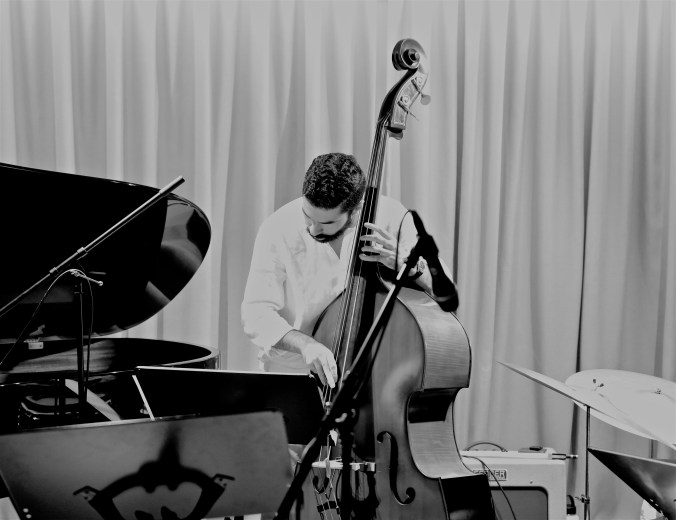
The Lewis Eady gig was augmented by the addition of visiting Polish saxophonist Jakub Skowronski. Skowronski has a beautiful even tone on tenor and like Samsom and McArthur, he’s the perfect foil for Martyniuk. While he made it all look effortless, his solos took us deep inside the music. These guys were made to play together and I hope they remain a unit. They have a lot more to tell us yet and with any luck, we will get to enjoy the continuing story as it unfolds. Those who wish to be part of this journey can contribute via a recently set up ‘Kickstarter’ campaign following this link. There was some really exciting new material recorded in Poland over the last year and the Kickstarter campaign is about getting that released into the world. No one ever regretted supporting great music like this.

.

Michal Martyniuk (piano, compositions, leader), Cameron McArthur (upright bass), Ron Samsom (drums, percussion) + Jakub Skowronski (tenor). You can follow this band and order albums from Empire Agency Co. Bands / Michal Martyniuk Trio
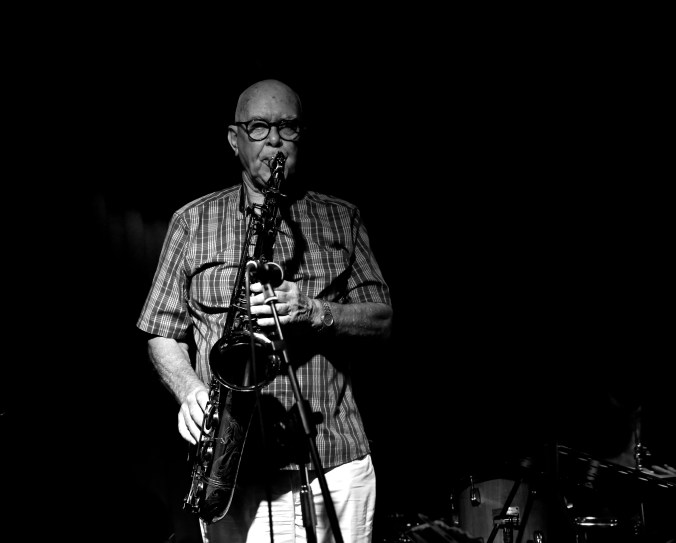


Brian Smith Quintet

SmithBrian Smith is a legendary figure in New Zealand Jazz, achieving career highs that few others attain. Normally artists of this stature settle overseas and are seldom seen after that. It was our good fortune that Smith moved back to New Zealand and in consequence, we get to hear him perform locally. It’s a moot point whether good musicians ever truly retire (luckily, the answer is seldom). Not so long ago he formed a quintet and since then he has been performing at venues around town. While Smith is a regular at the CJC, this is the first time that we have seen the current quintet in action.  The event was predominantly a standards gig and a band of veterans is the right vehicle where standards are concerned. When you bring a selection of loved tunes back into orbit, comparisons are inevitably made. Therefore it pays to choose well and to perform them well and that’s exactly what the Brian Smith quartet did. Smith (1)
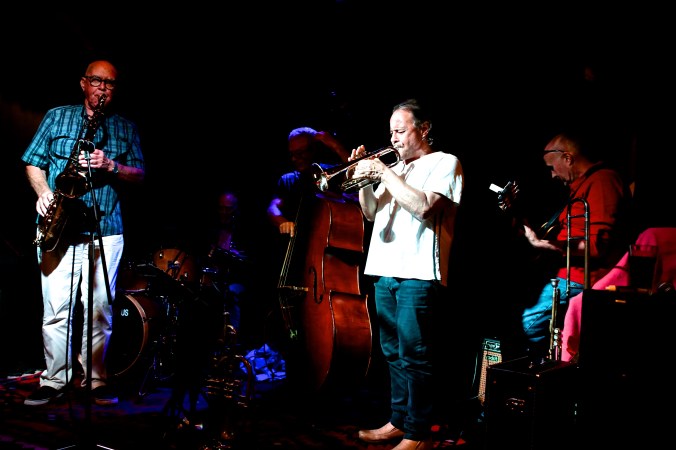
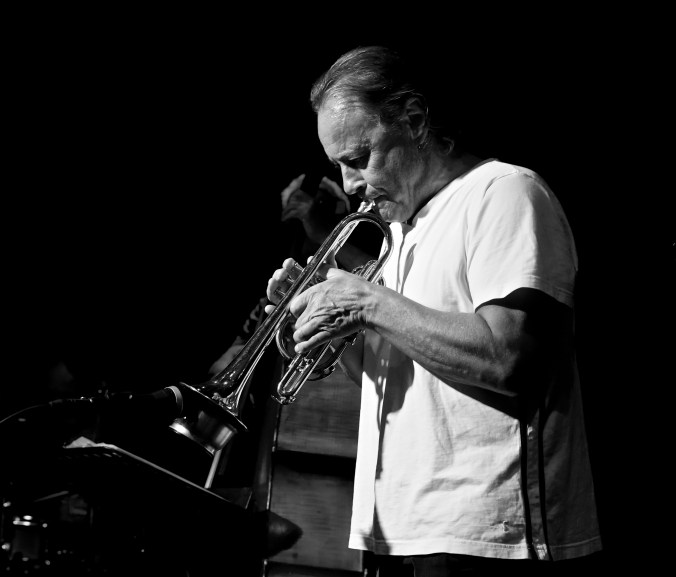
Smith possesses an authoritative air on his horn, the end result of considerable experience and his well-acknowledged chops. Consequently, he always sounds great and always looks comfortable on the bandstand. Behind him in the darkness was Frank Gibson, Jr on drums. Gibson and Smith go back a long way and he is exactly the right drummer to lift these warhorse tunes to glory; most of them coming from the hay-day of Jazz. While Gibson has many strings to his bow, this is his forte. Up front was multi brass and reeds player Chris Nielson. It was good to hear Nielson again and especially on trombone, a horn that has sadly been disappearing from small ensembles since the 60’s. Nielson also brought other horns with him, favouring an American cornet, an instrument which in his hands, produced a strong rounded tone. On bass was Bruce Lynch, a highly competent electric and acoustic bass player who is well-known as a music producer and as a former member of the Cat Stevens band.  Almost hidden on the right side of the bandstand was Dean Kerr on guitar. His guitar work was strongly chordal and supportive of the others, providing well-placed contrast for Smith and Neilson as he comped. Smith (2)

Among the standards were ‘In Walked Bud’ (Monk), Stolen Moments (Nelson), There is no Greater Love’ (Jones), Freddie Freeloader and All Blues (Miles), Killer Joe (Golson), St Thomas (Rollins).  I have posted a clip of the perennial favourite ‘Softly as in a Morning Sunrise (Romberg/Hammerstein). There was also a nice tune by Smith which think is titled ‘Short Shift.

The gig took place at the Thirsty Dog for the CJC Creative Jazz Club on March 7, 2018. Brian Smith (leader, tenor saxophone), Frank Gibson Jr. (drums), Chris Nielson (trumpets, flugelhorn, trombone),  Dean Kerr (guitar), Bruce Lynch (upright bass).

Jonathan Crayford’s ‘Steinway Tour’

SoloJ (1) Rarely, do we get to experience something truly sublime and for this to occur a number of planets must be perfectly aligned. Art at this level cannot be forced as the realization is dependant on both tangibles and intangibles. The musician might be in peak form, but if the room or the instrument is mediocre then the fine edge of perfection is blunted. It is harder to achieve in a capacious concert hall; easier in a well-appointed studio or an intimate vibing Jazz club. There is no manual to guide us to the point of departure. It is a divine alchemy pure and simple.
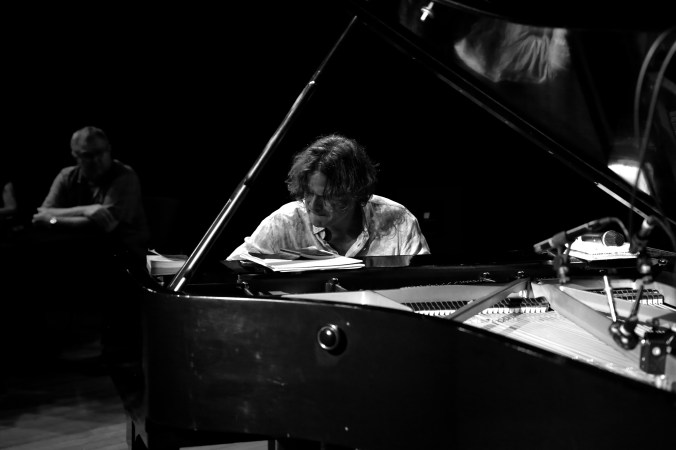
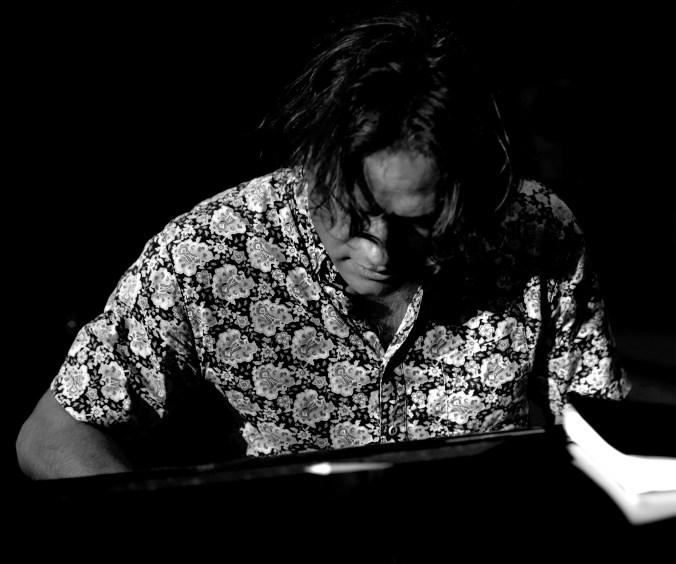

When I heard that Jonathan Crayford would be touring the country with a Steinway D Concert piano and one with considerable provenance, my first inclination was to doubt. This was no small undertaking. The piano in question was special, played by luminaries such as Lily Kraus, who signed it. It was formerly owned by a branch of the Guggenheim family and if Crayford had not asked a friend to purchase it, we would have lost it to an offshore purchaser. The friend, surprisingly, agreed and said, “Now use it”. Crayford is one of the few musicians who could pull this off.

The piano and Crayford travelled up from Wellington a few days ago and the first concert took place on the day of their arrival in Auckland. The lovely Uxbridge Arts Centre in Howick was the first venue; a pleasant, modern 100+ seat auditorium with good acoustics (especially for a piano) and an intimate cosiness.  I arrived early as I was videoing and sat quietly in the darkness; watching Crayford and his magnificent piano get acquainted.

Crayford approaches pianos with reverence and sensitivity. I watched as he played a few phrases – then he paused when a particular voicing took his attention. Putting his ear close and playing it again with a look of delight. He was learning the secrets and subtleties of the instrument. Later during the concert, he gently tapped out a note which had taken his fancy. “Listen carefully”, he said to the audience, pointing to a particular key. A soft harmonic-rich sound reverberated gently through the room – revealing a warm golden timbre. As he shared these insights we felt privileged. Crayford treats fine pianos as living entities; beings to be understood, curated, exalted. When he finished a piece he would gently lift his hands and time would stall as the slow decay of chord or phrase created new harmonics and textures. Sound bouncing off wood, frame and room until it faded into infinity. SoloJ (4)

He opened with a composition of his own, a reflective piece of deep spacious improvisation, perfectly realised and just the right length to reel us in. The awed hush from the audience said it all. This concert was special and everyone there swiftly grasped that. Next, we heard his take on an obscure but unmistakable Monk tune, the familiar jagged lines morphing into new shapes as he went. There was no set playlist, no charts to guide him; just a small black notebook with dozens of possible tunes written down and in no particular order. The piano and his musician’s instinct informing him of the journey as he went. Tunes were chosen or rejected on the fly. His programme consisting mainly of reflective material but with a few faster-paced tunes to balance these out. A tune from the Spanish civil war attributed to Garcia Lorca was an example of the latter. On the slower reflective pieces like a Satie Gymnopedie, he left space for the music to breathe – space for the spirit of the piano to sing through.  He would often play three pieces together and then rise from the piano to quote a line from Shakespeare or to offer an insight into a piece. He is a fascinating speaker and his enthusiasm utterly infectious. Nothing was out of place, everything he did conveyed the magic of the moment. SoloJ (6)

I urge music lovers to clear their calendars and attend these extraordinary concerts as Crayford travels throughout New Zealand. It is seldom that we get to experience projects like this and extremely rare to hear them in such intimate spaces. The most difficult gig in Jazz is the free-ranging improvised solo piano concert. When it works (and this certainly did) it is the most rewarding. This was deep improvisation, sensitive interaction and piano/sound curation at it’s best.  It paid respect to the solo art form and above all to a very special Steinway piano. It was Jarrett like (but without the abuse). It was Crayford at his best and that is enough to satisfy any music lover.

For tour, details check out: jonathancrayford.com – (video up later)

John Fenton  – March 2018

Member-button

Oli Holland’s Jazz Attack

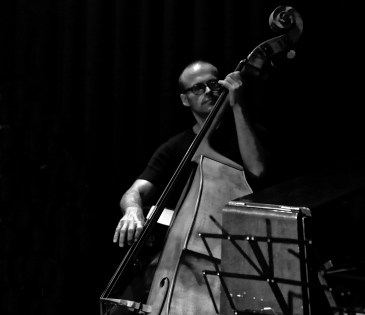
Oli (1)Oli Holland is one of the leading bass voices in New Zealand. He formed Jazz Attack just over a year ago and since its inception, he has been writing new charts and expanding the lineup. Holland writes interesting charts; often complex but always compelling and his last gig showcased a number of these. This was an expanded lineup – adding three of Auckland’s heavyweights for a quartet segment in the first set. His bass is a powerhouse presence and his ringing melodic lines always distinctive. During solos, his vocalised unison lines fleshed out the tone, drew us deeper in – perhaps even influencing his improvisational choices. It is well established that vocalising while improvising on an instrument, fires up the human brain in new and interesting ways.   Oli


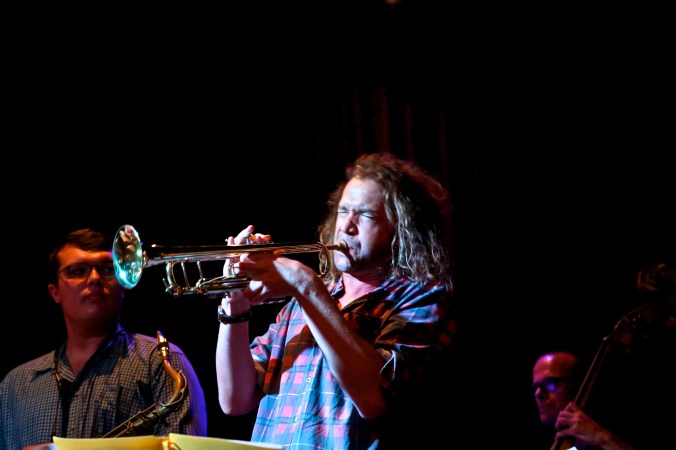
This is predominantly a young band but nicely balanced by two seasoned regulars (Holland as leader and Finn Scholes on trumpet). Adding a segment featuring  Roger Manins (tenor saxophone), Kevin Field (keys) and Ron Samson (drums) provided an interesting contrast. When Misha Kourkov joined Manins in the first set we saw this exemplified. After the head, the two tenors each took solos, Kourkov’s was thoughtful with a nice sense of space while Manins dived in and let his long years of experience and no prisoners approach guide him. The two solos worked very well together and it was nice to see a two-tenor spot which avoided the formulaic line-for-line battle formation.

Oli (3)

While the Holland, Manins, Field, Samsom, segments stung with intensity, the core band used the charts to flesh out the compositions. Nick Dow on the piano was interesting in this regard. His solos short but perfectly formed and his often understated comping lightening the density of the ensemble. Michael Howell on guitar also took a thoughtful approach – both chordal instruments providing depth due to their approach. The two main horns were Kourkov and Scholes (foundation members). Kourkov is rapidly maturing into a fine player and I really enjoyed his contribution. Scholes is always interesting and capable of a great variety of expressions. On this night, his solo’s achieved edge and warmth in balance.

As always with Holland, there were a number of funny stories preceding the tunes, improbable seques which hinted at his motivation in naming them but inviting us to fill in the gaps for ourselves. Holland is widely recorded and has recently recorded in Europe with leading musicians. Any gig featuring Holland is well worth attending and this was no exception. Oli (2)

I have posted a clip titled ‘Van Dumb’.  The gig took place at the Thirsty Dog for the CJC (Creative Jazz Club) on the 28th February 2018.


Lucien Johnson + 5

a2788670674_16.jpgThe eponymously titled album ‘Lucian Johnson+5’ was first released in 2016 and has recently been re-released in Japan on vinal. I have only encountered Johnson performing once or twice as he has spent a lot of time outside of New Zealand. He was born in Wellington, but led an interesting life elsewhere, travelling the world with various innovative bands and living for long periods in Paris. I first encountered him when he toured with ‘The Troubles; a delightfully anarchic folksy ensemble he co-founded along with Scottish Jazz drummer John Rae. After hearing Lucien Johnson+5, I will be paying close attention to his futures offerings.
I became aware of the album’s existence soon after its release, but carelessly lost the Bandcamp access code when I changed computers. I finally regained access, listened and was immediately impressed. This is a mature piece of work with real depth. Given the diversity of experience, the musicians bring to the project that is hardly surprising.  Johnson’s musicianship and compositional abilities are well known – pare him with these five musicians and you get something special. Any project involving Crayford, French, O’Connor, Van Dijk and Callwood is going to grab the attention.

There is a certain mood emanating from this album, a palpable sense of the Iberian Peninsula. It is more than just the track names – it cuts far deeper than that. You will not hear overt Jazz Flamenco or Moorish tunes. You will hear reflective ballads, Latin, hard swing and all with fine arrangements (arrangements which evoke the hay-day of the classic Jazz ensemble). The album warmly invites us to engage, and the deeper we engage the greater the reward. The musicians were clearly onboard with the project and each of them gets a chance to shine. There are many wonderful solos, none that are too long and each solo harnessing to the spirit of the collective. Brilliant musicians all, but with no egos on display.

‘Light Shaft’ has a dancy Latin feel with French and Johnson reacting to Crayford’s rhythmic accenting; Crayford later tying it all together with a masterful solo. ‘El Cid’ is another great tune, again with a Latin American flavour, this time Afro Cuban. The clave aside, it evokes the Reconquista hero perfectly. El Cid’s is a tale well worth the re-telling; especially since modern scholars discovered that his antecedents were actually Moors, the very people he fought with such evangelistic fervour – a modern parable. ‘Zapata’ is another delightful tune and with plenty of meat on the bone.  It opens with O’Connor beating out a Krupa like rhythm on the toms, the ensemble comes in next, navigating a skillfully arranged head with nimble ease. Van Dijk and Crawford follow with stunning solos, but everyone is superb. This is a great piece of ensemble playing and above all it is fun. Here is Zapata:

My favourite from the album is ‘Asturias’. This track has a thoughtful quality and as many layers as a ripe onion. In spite of being a sextet, the ensemble sounds like a nonet at times – capturing the vibe of 50’s Gil Evans. This lies mainly in the skillful writing, as space and texture are maximised. The rich voicings of the horn line are also of importance, as they somehow manage to convey substance and airiness at the same time. Nick Van Dijk in particular, utilising the opportunity to shine through. Crayford and Callwood also have essential roles – Crayford creating a strumming effect, as Callwood did in the opening bars. Asturias is a region of northwestern Spain and also a Flamenco guitar style (a style often adapted to other instruments). Albeniz wrote in this style in the 19th century,  The melody over a strummed pedal chord (the thumb playing the melody line).

When we listen to evocative music, we bring our imagination to the experience. Whether intended by Johnson or not, this album took me back to Spain. I have travelled extensively in Andalucia and rekindling those memories through this music was a pleasure. The artwork is also superb and that is credited to George Johnson. The best place to source this album is on Bandcamp or via the Lucien Johnson website. lucienjohnson5.bandcamp.com


Simona Minns ‘A Hunger Artist’

IMG_6628 - Version 2The heart of the modern improvised and experimental music scene is always an interesting place to be. Audiences tend to be open-eared and accustomed to music from a wide variety of sources. Improvising musicians have always drawn on diverse influences and it is a narrow-minded few who whine about dilution or the good old days. We should never undercut the deeper purpose of music, which is to share stories, communicate on a primal level, interpret. We tell stories to live and how we listen or react to music speaks to our musical maturity. When Simona Minns performed in Auckland last week, she brought with her a variety of influences. and all were approached with integrity.


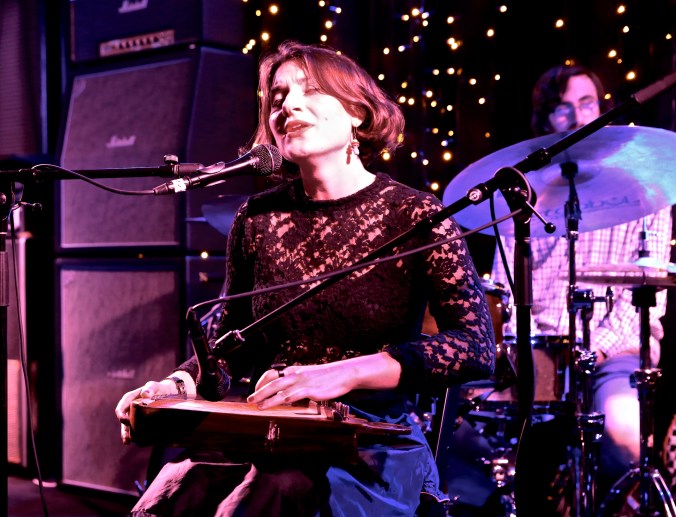
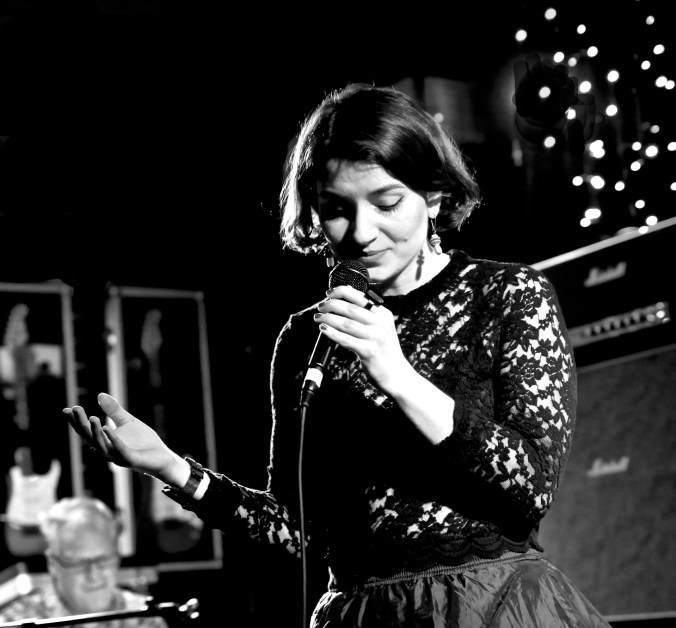
She is billed as a Jazz Singer, composer, arranger and artistic director, and she is unafraid to mash up or blend genres. All of the above descriptors were on show when she performed at the Backbeat Bar and everything she did, communicated an innate sense of fun and adventure. She is a natural performer, but behind that lies careful preparation. Her easy-going confidence disarms, but it arises out of hard work and commitment. A good example of the care she brings to her art lies in her charts. The musicians all commented on how beautifully they were crafted and judging by the solo’s, they were not constrained by them. We heard Jazz standards, old Lithuanian folk songs, tunes from her musical ‘A Hunger Artist’ and some jazz-mashed classic rock.  The audience loved it all and got the musical jokes embedded therein. The fact that she was cleverly comedic in her introductions, enhanced the overall effect. IMG_6586

I first read Franz Kafka as a 14-year-old, and once read, his tales cannot easily be forgotten. They are dystopian and thus disturbing, but a mature reading reveals clever questions, posed for our consideration. Kafka’s ‘A Hunger Artist’ is just such a tale – disturbing, yet raising important issues for all times. Issues which cut to the heart of performance art itself.

The tunes from Minns musical were delightful, and the fact that she could frame them without overdoing the pathos reminded us of the deeper questions posed. Her choice of standards appeared commonplace until you heard them and then they took on a life of their own. All were either re-harmonised or arranged in unique ways. As if to underline this point of difference she created mash-ups from them – blending classic rock and Jazz; often dancing as she delivered her lively performances.  IMG_6612 - Version 2

She had a very fine Jazz unit backing her – a truly superb band and ideal for the task. Alan Brown on keyboards, Cameron McArthur on bass and Stephen Thomas on drums. She also played a classic Lithuanian harp (the Kanklas). While it is a small instrument, it is capable of producing extraordinary melancholic sounds. The sort you hear throughout the eastern block (and even down as far as Turkey or Greece). My favourite number was her mash-up of Gershwin’s Summertime. The band really broke loose on that number and the effects were electrifying. An Alan Brown band in full flight is a wonder to behold indeed. S Minns (11)

Simona Minns was born in Lithuania where she obtained a music degree, later moving to Berklee (Boston, USA) where she obtained a degree in composition. She also founded ‘Syntheatre’ a performance company in Boston. Her albums can be sourced from her website or from iTunes or the various streaming platforms. Her website is simonaminns.com  The Performance was at the Backbeat Bar in K’Road and presented by the CJC (Creative Jazz Club) and the Auckland Fringe Festival on Tuesday 20, February 2018.

I have posted a short clip of her performing a song from the Kafka inspired ‘A Hunger Artist’ – where she plays the Kanklas.