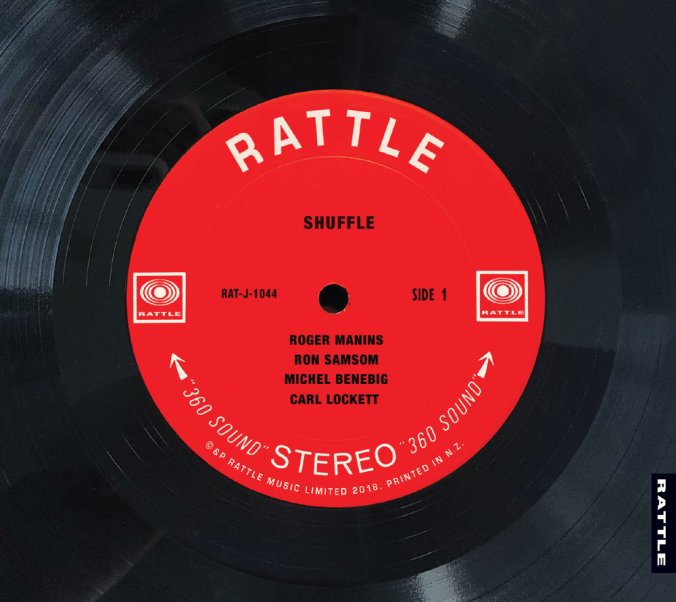
 Sometimes an album blows straight into your heart like a warm breeze off the summer ocean. ‘Shuffle’ is exactly that album. There is an easy-going familiarity to it and you instantly feel good as your body connects with the rhythms. Shuffle achieves that rare feat of sounding both new and familiar. This is the sound that I grew to love many years ago, as practitioners like Jimmy Smith, Big John Patton, Gene Ammons, and Brother Jack McDuff fused Soul and Jazz into a rare amalgam. To appreciate this music you need no acclimatisation; no understanding of Jazz. To appreciate this music you only need one prerequisite, a human heart. It’s ‘groove’, it is sensual and it’s my guilty pleasure.
While the album has immediacy, a long story underpins that. Roger Manins, Ron Samsom, and Michel Benebig have played together for many years, and whenever they get together they thrill audiences. At some point, Benebig, the New Caledonian B3 organ master, decided that he wanted to play with the American guitarist Carl Lockett. In B3 circles, Lockett is a legendary figure having played with Jimmy Smith and Jimmy McGriff. The problem was that Lockett had no Facebook presence, no current management, and no listed phone number. Eventually, he was located and agreed to a tour (he has since played with Benebig on a regular basis). During a trip to New Zealand in 2016, the album was cut.
With the exception of two tunes, ‘Blackwell’ (named after drummer Ed Blackwell) and ‘Patton 8’ (named after groove icon Big John Patton), all of the tunes are Shuffles. If you look up Shuffle in a musical dictionary you will see that it has a deceptively complex structure and that it is hard to describe in rhythmic terms (it has an 8 note feel, essentially playing 3/4 over a 4/4 beat to make the music swing). It is sometimes called the ‘flat tire’. My dictionary gives up trying to explain it and simply states, ‘when you hear it you will understand it perfectly’. It has a loping swing and it’s infectious – or as Samsom writes so beautifully in the liner notes, “The Shuffle is the shit for me. It isn’t just flat, it’s broken, and that’s where the music lies. It’s so beautifully wrong’.
The songwriting duties on the album are shared. One tune by Benebig, two by Samsom and five by Manins. The album begins with a slow, smouldering burner by Samsom titled ‘BB gun’ – what a great way to begin an album – this has that Gene Ammons ‘take me home baby’ feel and it sets up the faster-paced numbers to follow. By the time you get to the solos, you are there, in the zone and understanding why Lockett was so essential to the project. What a great composition and how in the pocket every one plays, and then as you progress through the album you realise that every track is a gem. Manins ‘Shuffle ONE’ (big leg Shuffle), or his ‘Blackwell’ which takes a faster route and gives the soloists a chance to shine while moving at pace. Man, these guys sure can write. Benebig’s tune is a 12 bar blues ‘Dog Funk Walking’. It made me think of John Mayall at his peak (once upon a time I listened to a lot of John Mayall). On this track, in particular, you hear the powerful blues credentials of Lockett laid bare. It is impossible to sound more soulful than he and Benebig do on this. The compositions are all great, but so is the playing.
Samsom and Manins have realised something special here and in the process, they’ve showcased real artistry. I have posted two tracks as sound clips – ‘Gout Foot Shuffle’ (Manins) & ‘Dog Funk Walking’ (Benebig). So it’s Christmas and you know what you have to do now. Rush out and buy at least one copy of this stellar album and experience the joy of North & South Pacific musicians playing up a groove storm. Support local music and tell your friends to do the same. You will never have a moments regret owning an album like this. 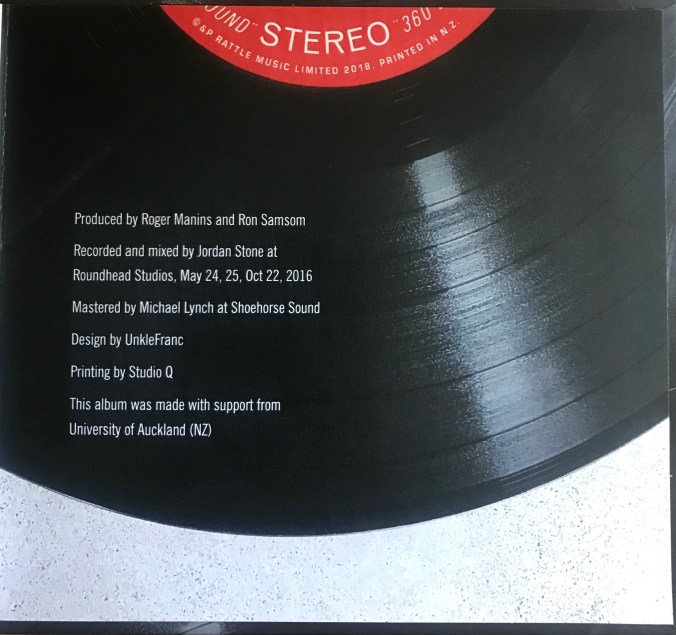
The album is a thing of beauty thanks to Rattle and the amazing cover designer UnkleFranc. As always I acknowledge the hard work and the deft touch of Rattle’s Steve Garden and ‘Roundhead Studios’ in Auckland. The ‘Shuffle’ Lineup: Roger Manins (tenor saxophone), Ron Samsom (drums), Michel Benebig (Hammond A100), Carl Lockett (guitar). You can buy a copy from your local store, Amazon or better yet from rattle.co.nz or online from rattle-records.bandcamp.com
 I was out of the country when Umar Zakaria came to the Backbeat Bar in September. I was particularly sorry to have missed Zakaria’s Fearless Music Tour as they had just won the 2018 Jazz Album Of The Year. Because I was away it took me a while to get my hands on the album and when I did I was deeply impressed. While the name Zakaria may be unfamiliar to many outside of Wellington, he is hardly a newcomer to the scene. He is a graduate from the New Zealand School of Music and the Boston Conservatory and he has performed and studied with significant improvisers from around the globe. Already, accolades are coming his way and when you consider the fact that he is at the beginning of his career, you comprehend just how significant that is.
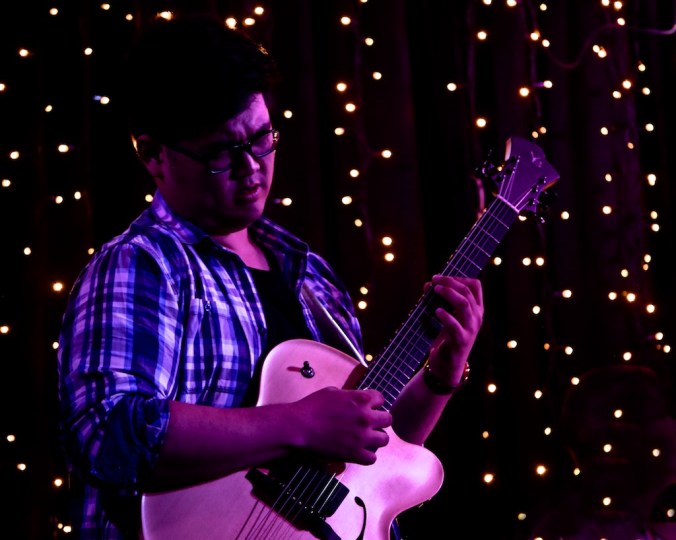
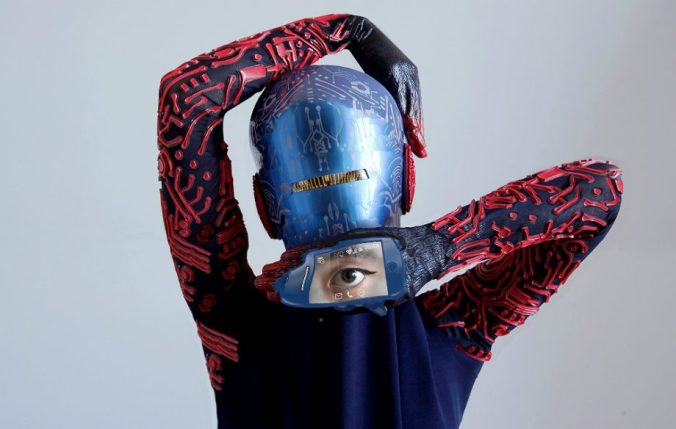 Sometimes I step into the shadows to locate a light that is otherwise denied me. A place where anti-art hides real art and where music appears in bizarre disguises. It can feel like an unnatural place but if you walk on, your eyes soon become accustomed to the half-light. It is only then that the ghosts in the machine become visible. This is the strange world of Anti Pop; a place where those striving to earn a living from popular music bite the hand that pretends to feed them. It is digital Dada – it is an off note brought to a knife fight.
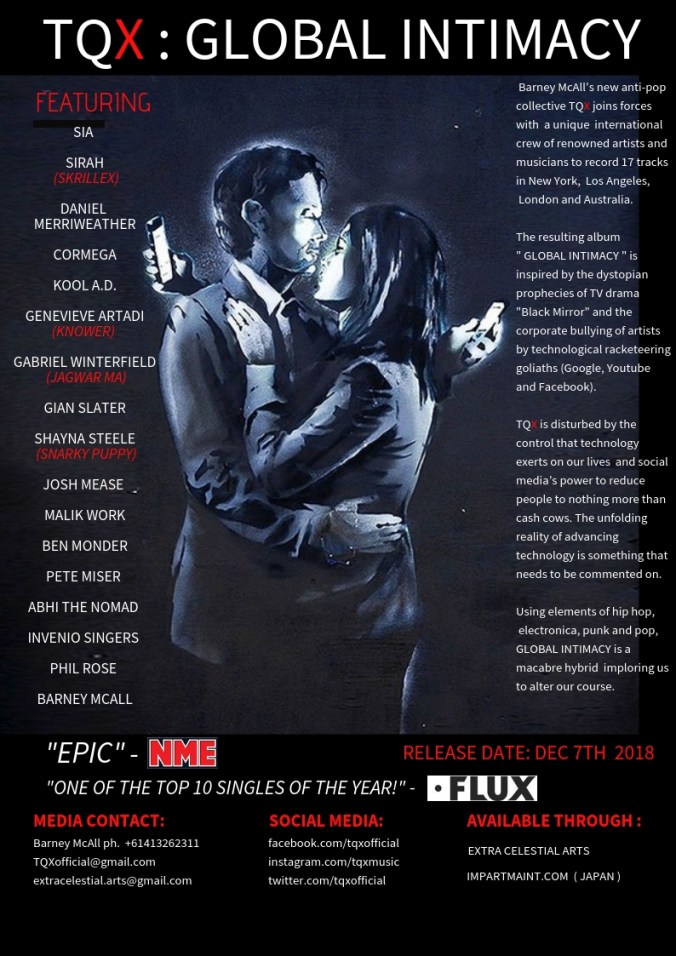 Yesterday primo Jazz trickster Barney McAll sent me a link to this anti-pop album titled Global Intimacy. This ‘revolution is under the radar – ‘it will not be televised’. I recognised many of the names – Sia, Gian Slater, Ben Monder, Barney McAll, Kool A.D. Musicians who come from across the musical spectrum. It was a message disguised as popular music, but the sort that is often confined to student radio or oddball playlists. It was political but not everyone will have the ears to hear the message. The material will not suit every taste but everyone should try a bite. I got the message, understood the flavour, and I hope others do.
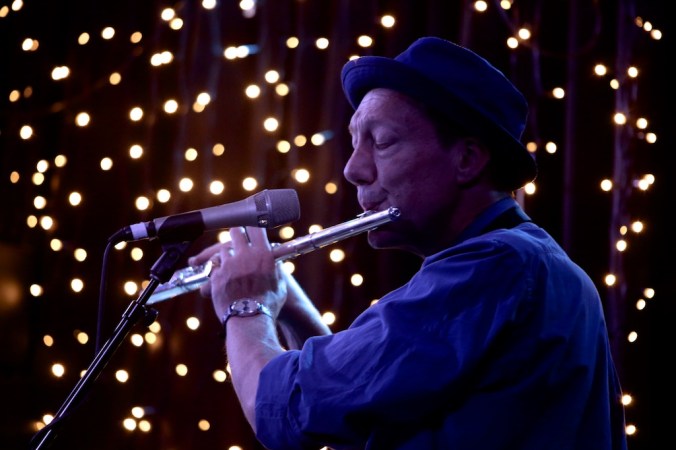 A lot of great live music happened this year but this gig was a favourite. It was danceable, visceral and the deeply rhythmic pulse found its way straight to your heart. As the band played the room radiated an infectious joy and the swaying of the audience amplified it. One by one the feet tapped and the hands moved until no one was left unaffected. Yes, this was music to wash away your cares but underneath that was something of real substance. Latin music that misses its groove is unsatisfying but when it’s done well like this was, it’s simply wonderful. No one in New Zealand could pull this off better than Jonathan Crayford and with co-leader Nathan Haines on board, it was locked down. The final ingredient to this potent tropical brew was master percussionist Miguel Fuentes.
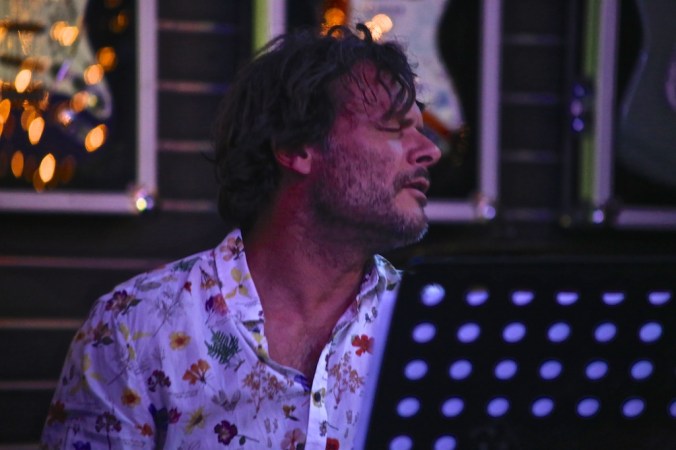 The songbook was a heady fusion of Bebop and Afro-Cuban (or more accurately Afro-Rican as Vidal was from Puerto Rica). When Crayford initially agreed to take the Vidal gig he knew little about Latin music, but a quick phone call to his friend Barney McAll gave him valuable tips. Fast forward to 2018 and it is obvious to anyone who hears him that he absorbed the complexities and rhythms of the music beyond caveat. Although the rhythmic patterns are fixed, for the music to work well it needs something else – a controlled fluidity – the ability to react to the other musicians. Crayford once described it as being a weave which can be tightened and loosened at precise times – without the shape being lost. When you hear the clave patterns skilfully executed and interwoven, the experience is unforgettable.
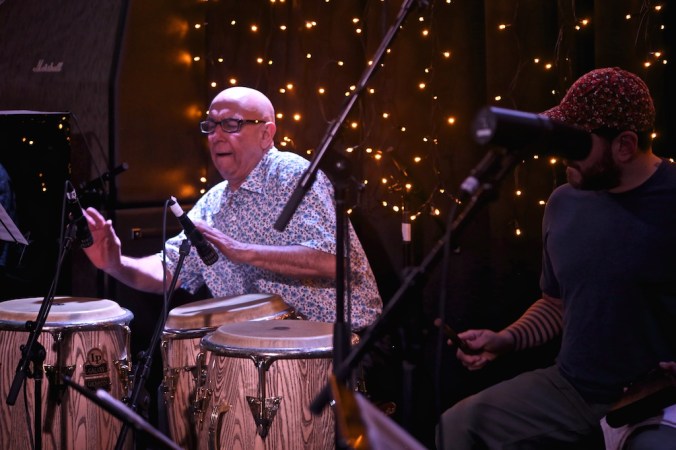 Many Jazz musicians avoided the flute, believing it to be expressionless, but when Haines blows, it has life, character, and edge. As a horn, it has pride of place in Latin ensembles and Latin lineups are diminished without it. Watching these two feed off each other’s lines or grooves is to attend a masterclass. Many years of collaboration has gifted them an acute situational awareness. An awareness that is now instinctual.
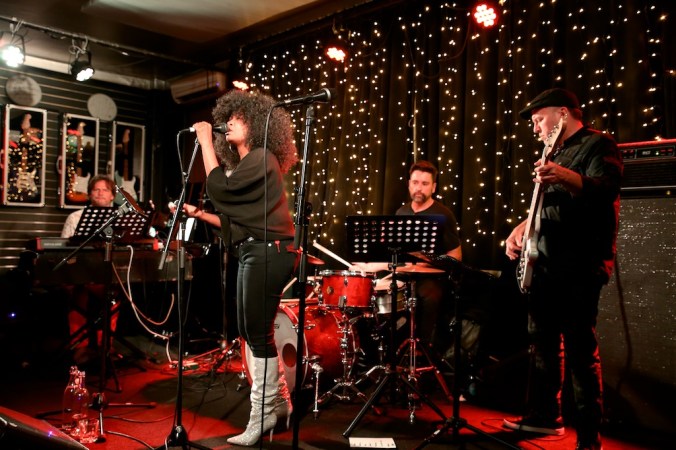
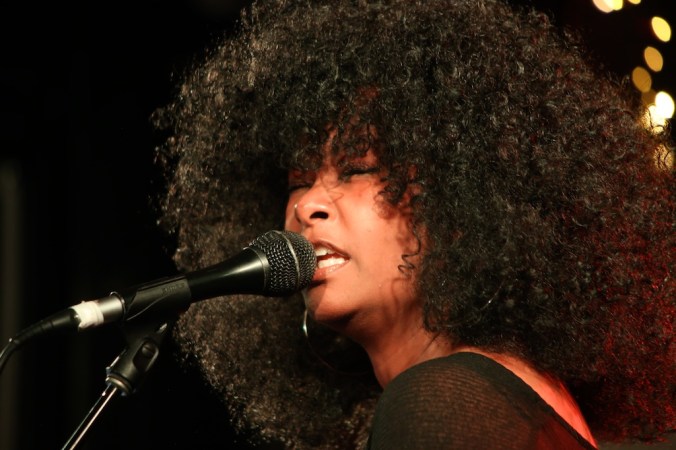 When the Soulful vocalist Vivian Sessoms visited in June last year, we were stunned by her voice and by her powerhouse delivery. We seldom get to experience American R & B styled vocalists in New Zealand and if we do we never see them in intimate settings like the Backbeat Bar. Her voice carries the history of her music and her vocal range and control are approaching the operatic. Sessoms is a vocalist with serious chops and an interesting backstory. Last week she returned.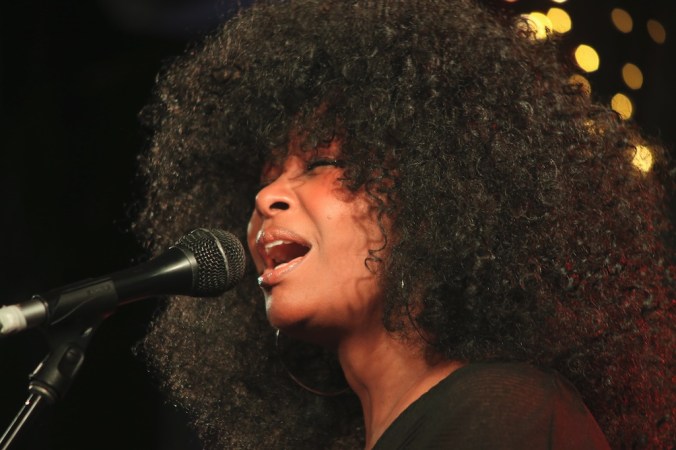
 JazzLocal32.com