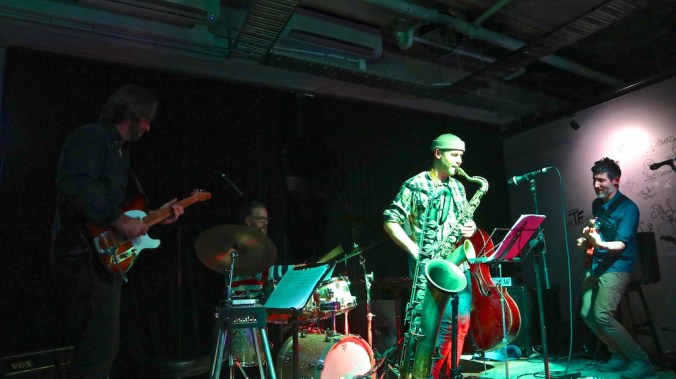
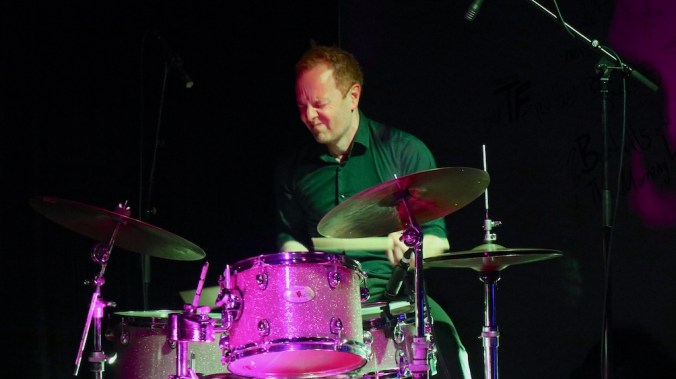
When you look up the term Ruckus in the various dictionaries, the definitions are broad. It is generally defined as a commotion, but it can also describe an argument, the joyful noise emanating from a soccer stadium, loud disputation, the general rowdiness of children and even a fight. With such an array of options at my disposal, I have selected ‘joyous commotion’. This is the term that most fits the bill when alluding to this band. Ruckus has some history in Auckland and especially along the reaches of Ponsonby Road. While the personnel often come and go, the ethos does not. Kicking up the dust in this current melee were David Ward, Neil Watson, Cam Allen, Eamon Edmundson Wells, and Chris O’Connor. David Ward is a central figure in the group and his compositions featured strongly last Wednesday.
Again, it was encouraging to see the high turnout at the CJC after a month in the new K’Road Anthology venue. The word is clearly getting about that this is the best place to enjoy Wednesday nights. Once you descend the stairs, winter becomes a distant memory. While clearly pulling in the crowds, the band is hard to pigeon hole. The music hints at a number of descriptors and among them, terms like Zappa-esque, improvised Americana, Fellini-esque and Monkish all come close. At times they veer towards the experimental but no matter the direction, they are always fun.
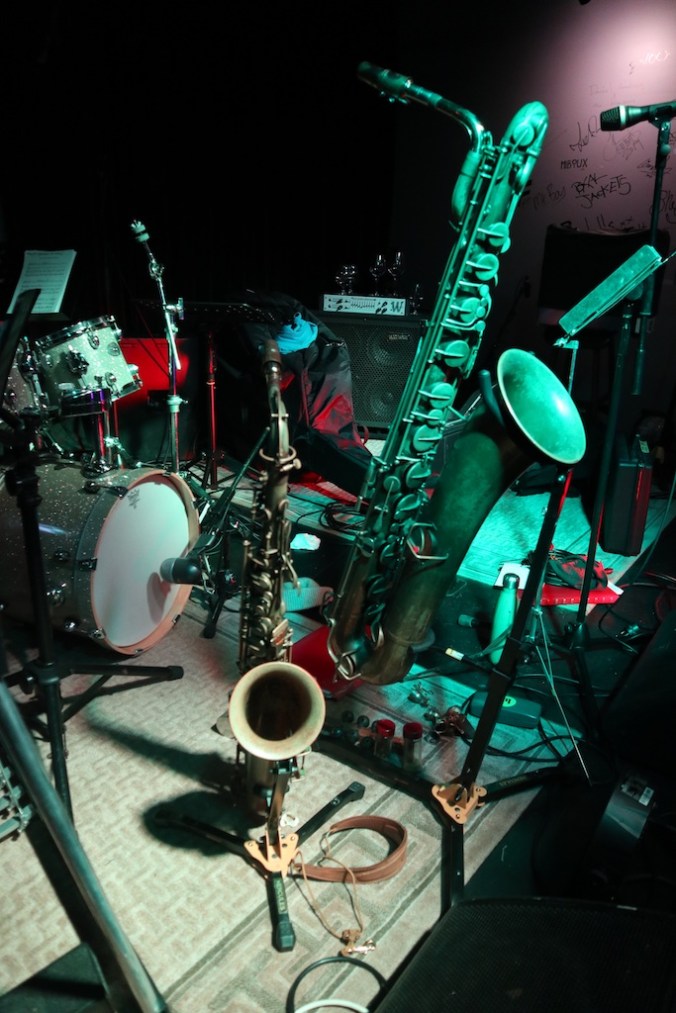
With the exception of an obscure Monk tune, the tunes last week were originals. These were unique arrangements with a textural richness created by instruments full of contrast. A baritone saxophone with a pedal steel guitar plus Fender offers up an interesting sound palette. With O’Connor and Edmundson Wells, the palette is complete. Both have ‘out’ credentials and O’Connor is as much a percussionist as he is a conventional drummer. Allen moved between baritone and tenor and during his solos, but he never departed too far from the over-arching message. This band stands strongly on its collective strength. Ward featured strongly in the heads of the tunes, establishing unusual rhythmic figures then skilfully pulling them apart. When both Fenders were playing they acted as if in sync, moving in and out without clashing. With the pedal-steel numbers, Watson was adventurous, often using the instrument in unexpected ways. He, Ward and O’Conner also made wide use of percussive effects; clicks, squeaks, and muted staccato guitar.
There is mileage to be had in these adventurous offings and I hope that they develop the repertoire further. While it may not be what an audience is anticipating, in this case, they lapped it up. Especially when leavened with calypso.
Ruckus: David Ward (Fender Guitar), Neil Watson (pedal steel, Fender Guitar), Cam Allen (baritone, tenor saxophone), Eamon Edmundson Wells (upright bass), Chris O’Connor (drums)
 The original
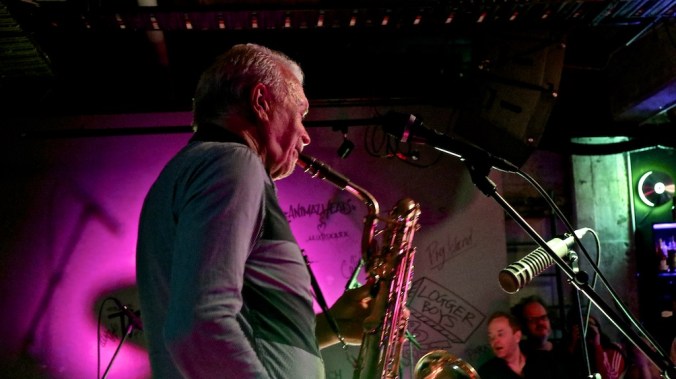
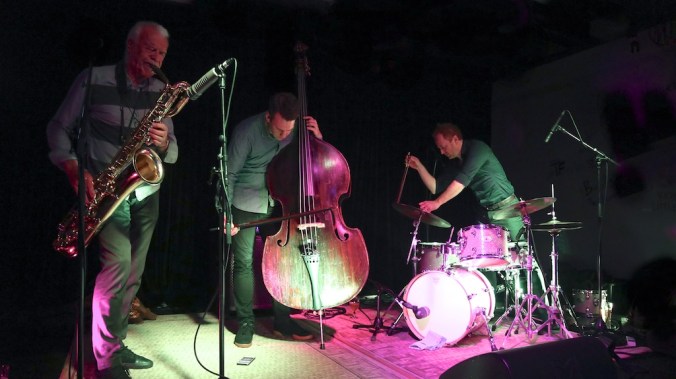 About eighteen months ago I was contacted by Jeff Henderson. He suggested, that I might be interested in a gig featuring two great Norwegian musicians who were passing through. I certainly was. The musicians were John Pal Inderberg and Hakon Mjaset Johansen. I was particularly interested because the baritone saxophonist John Pal Inderberg is associated with Lee Konitz and the late Warne Marsh. I make no bones about it, I am an unapologetic devotee of the Tristanoites. During that particular visit, the duo played a number of Scandinavian folk tunes and in their hands, these became melodic springboards for improvisation and a cloak for standards (with local bassist Eamon Edmundson-Wells). The Nordic region has a rich history of improvised music and it is therefore unsurprising that so many innovative US improvisers have ended up living and working there. With artists of this quality to work with why wouldn’t they? Inderberg and his band are great ambassadors.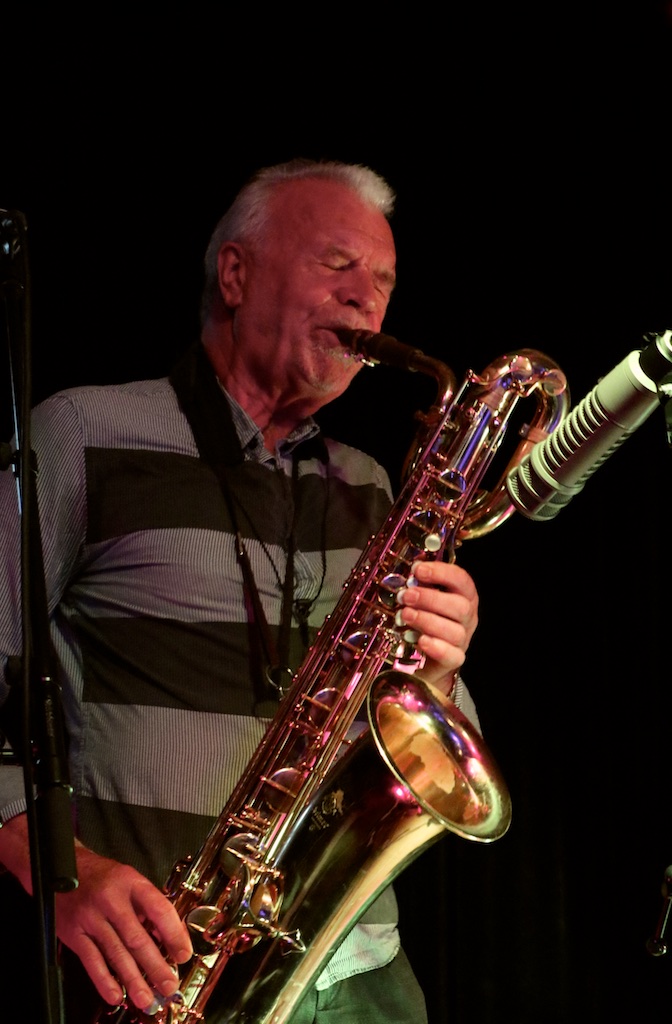
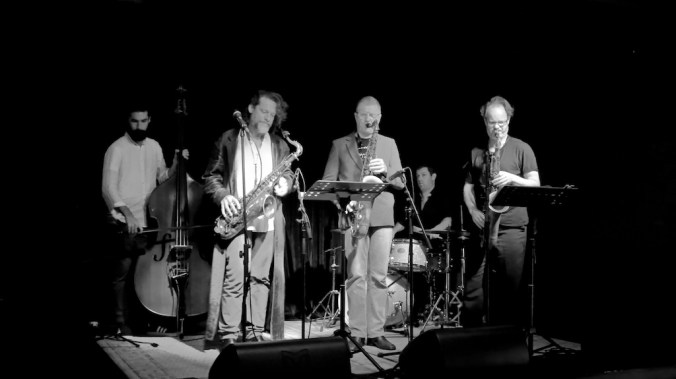 Andy Sugg’s collaborative album ‘TTTenor’ was cut in Melbourne back in 2006 and rightly, it has garnered praise. In a land of significant horn-players, the tenor triumvirate of Sugg, Oehlers, and Wilson was a standout. Three gifted saxophonists who capitalised on the imaginative charts to showcase their formidable skills. Completing the original sextet was an immaculate rhythm section – Paul Grabowsky (piano), Gary Costello (bass) and Andrew Gander (drums). Since then, Sugg has recorded other albums like ‘The John Coltrane Project’ ‘The Berlin Session’ ‘Brunswick Nights’ ‘Wednesday at M’s’ and ‘Tenorness’.


 JazzLocal32.com