Steve Barry Trio – CJC – The Golden Era of Kiwi Jazz?

Steve Barry

A jazz friend said to me after the Steve Barry gig, “perhaps this is the golden era of New Zealand Jazz”?   That stopped me in my tracks because I had posed the same question to another friend three weeks earlier – same words – same sentiment behind it.      We were shaking our heads in wonder at what we had just heard – seriously good Jazz at the CJC led by pianist Steve Barry and accompanied  by Alex Boneham (b) and Tim Firth (d).   Once again a Kiwi born artist was dazzling us with incredible music and it arguably matched the fare of a good New York venue.

These days Steve Barry is a fixture on the Sydney Jazz scene but his fame has spread beyond Antipodean shores.    That he is especially well known and greatly respected by musicians is hardly surprising as his chops are exceptional.   This is probably Jazz for grown ups as it tends toward the cerebral.   To those immersed in this music, treats like this are to be savoured and surprisingly they have come our way fairly frequently this year.

The first number opened with a complex interplay of polyrhythms – like a screw being tightened by degrees as the tension slowly built.   As the band coalesced,the momentum shifted and the air was filled with textured sheets of sound being skillfully laid down one atop the other.   The second track ‘Ambulation’ took a route that Brad Mehldau or Keith Jarrett might have taken – utterly modern in its approach.    This was a band that surprised again and again and for those paying attention to what was unfolding, there was a big pay-off.    Next we were treated to a few Jazz standards; the first of which was George Shearing’s ‘Conception‘.   After that the band moved to a slower paced offering as they executed one of the nicest versions of ‘I’ve grown accustomed to her Face‘ (Lerner & Loewe) that I have ever heard.   Gentle and exquisitely voiced piano, perfect brush work on the drums and a bass solo that worked perfectly.  The piece closed with a lovely arco bass and mallets and it was not hard to see why this juxtaposition of complex songs with gentle standards was pleasing to the audience.

What an adventurous pianist like this needs is risk taking partners and he had certainly chosen well with Alex Boneham and Tim Firth.   Boneham’s abilities were amply matched by Firth, who could move from colourist to hard-driving power-house with ease.  Some of his work on the snare left us genuinely astonished.

Although it hardly seemed possible the second set was pitched at a greater intensity than the first.     Those sitting near me were watching intently as each move by the musicians revealed new wonders.    The last number ‘706 Blues’ was riotous and fun, but as with the earlier numbers it was music with a twist.

This is indeed a golden era of Kiwi Jazz.

To listen go to:http://www.stevebarrymusic.com/live/

When the constellations align – Mike Nock @ CJC

Experiencing a Mike Nock band playing in an intimate club setting is quite different from catching his act in a large concert hall.    In one sense it doesn’t matter, as this cat can whip up a whirlwind of energy in any space, but seeing Mike in a small intimate club is as cool as it gets.  The immediacy of being up-close to a band like this is electrifying.

I had arrived early with a friend, but the club was already at near capacity and there were no available seats.  We were happy to stand as no one wanted to miss this night.    I leaned against the side of a leather couch crammed full of people while up front Roger adjusted his mouthpiece and Ron positioned his kit.  Then we saw Mike and Brett and the lighting was lowered.     As the band began to play it was obvious that they would not need any warming up because they were clearly as up for the gig as we were.    The opening number ‘Hop Skip & Jump’ was up-tempo and Roger just tore it up from the start.   To those who of us who love Mike Nock compositions this music was somehow familiar, but this was also the ‘sound of surprise’.

I am convinced that we could not have seen better in any New York club and in down town Auckland we soaked up the groove feeling lucky to be alive.  In the soft lighting  you could almost see the sparks of energy flying between the band members and the washes of blissful sound permeated every corner of the room.    This was seriously good shit.

Next up was ‘Komodo Dragon‘, a moody number that developed from a beguiling tune into an altogether more profound entity.  The placement of chords under Mikes hands is always a revelation as he knows how to mine an idea for deeper and infinitely subtler meanings.   His chords were sometimes bluesy, but then he would toss in an oblique voicing as if to bring about a subtle shift in the cosmos he was conjuring.   It was like watching an onion being peeled by a master chief.

I was also pleased to see Ron Samson (d) using a mix of mallets, sticks and brushes, as the sound palate that night demanded a more textural approach.   Like all good drummers he knew when to blend into the mix, as a loud overly showy drummer would have been out-of-place.  Roger Manins (ts) is simply a phenomenon and we are extremely lucky to have him resident in Auckland.   He lifted the intensity on ‘Komodo Dragon‘ to such a fever pitch that I actually stopped breathing at some points as the tension was building so much.    Roger is the master of tension and release and he can nimbly shift into double time and then some.        Brett Hirst (b) has been playing with Mike for years and it shows.   He is a terrific bass player and his solos and note placement that night were magical.     The band members were all great soloists but what is better they were able to act as a perfect ensemble.

The second number of the second set was a tune called ‘Homage’ and it began with a familiar chord progression (probably based on the changes of ‘All blues’).   Where it went next is hard to adequately describe, but this was one of the highlights of the evening for me.    Mike developed the theme quickly and as he did so he showed every ounce of his mastery on the key board.  He was tossing in fourths while his right hand darted over the keyboard.   I was immediately put in mind of the middle movement of ‘A Love Supreme‘.   The band was so deep in the groove on this number that the music reached heights beyond the sum of its parts.    To hear Roger playing with such strength and in such an ecstatic state was to be reminded of how Coltrane-like he can be.  As Roger played, Mike continued to ramp up the groove with his Tyner like chords and an overlay of chromaticism.  The band was apiece on this and it was a perfect moment – fresh ecstatic music that paid homage without actually being captured by the past it referenced.

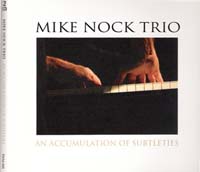
Afterwards I had the chance to speak to Mike about his music and about the scene.   Mike is an easy-going cat off the band stand and he comes across as somewhat of a Jazz philosopher.   He has also retained a very Kiwi sense of humour which delighted me.    As soon as he has made a successful album Mike seems to reach beyond that for the next idea; never one to settle back and rest on his laurels.   Already knowing the answer, I asked him if he was still restlessly reaching beyond the now for newer musical ideas, or would he relax a bit?   He told me that it was his nature to search for a deeper meaning in the music and that he could not do otherwise.  “Some younger musicians than me sound a lot older than I do as they have settled into a safe fixed in time style.  That is not where I ever want to be”.   I told him how much I enjoyed the ECM ‘Ondas‘ label and he observed wryly , ” yeah man, everyone loves it…. now.  Is it even still in print?”.   He said that Manfred Eicher often told him how much he loved that album but as was often the case, it was way ahead of its time.    We also discussed his writing on the recent ‘Meeting of the waters‘ album which is a favourite of mine.   He told me that he felt good about that album but that distribution had been a problem (when was that not the case with Jazz).   Mike has hopes of bringing his ‘Accumulation of Subtleties‘ trio here soon and I would urge fans to grab a copy of that double album.

We talked briefly about the Auckland Jazz scene of our youth and he told me how pleased he was that Caroline, Roger ,Ben and Mike were now running the CJC.    He also said that he was grooved by the young cats wearing ‘pork pie’ hats, but that when he had gone to buy one had found that his head was too small.    “Age will do that” he said.   I quickly jumped in with information from a new longitudinal study which showed that humans actually reach their greatest analytical potential between the ages of 62 and 70 years of age.    He looked at me dismayed and said, “man you could have extended the time frame by a few years.  I am past 70”.

The set list was ‘Hop Skip Jump’, Komodo Dragon’, Gospel Dog’, ‘Joy Remembered’, ‘Transitions’- 2nd set – ‘Afternoon in Paris’, ‘Homage’, ‘Speak to the Golden Child’, ‘Triflin’ Jon’.
August gigs: Nock, Hirst, Manins & Samson

retiring at 80 yrs

For those who are easily led by their particular pied-piper there is live music to be had every week.   In the recent past Auckland live Jazz had been harder to find than other genres, but due to a happier alignment of the stars that is no longer a problem.

The big news is that Mike Nock (p) has been booked into the CJC for two nights – August 10th -11th.   I never miss a chance to see Mike when is in town and so I grabbed two of the first tickets on the market as they wont last long.   Seeing Mike in this warm intimate space will be pure magic.   He will be playing with Roger Manins (ts), Brett Hirst (b) Ron Sansom (d). The club is to be congratulated for bringing together such a line up and having such a good piano must have helped to clinch the deal.  For details and ticket prices follow the link from this site to the CJC (local clubs).   I urge you to become GJC members, visit the club or at least subscribe to the CJC gigs update.

As soon as I learned that the AJO (Auckland Jazz Orchestra) was playing at the Masonic in Devonport I notified a few friends.   I would gladly have attended with them having seen this big-band 6 days earlier, but work prevented me.   Here is a report from the Masonic gig (and about Merv Thomas):

Subject: Last night; Hi John, We went down to the Masonic last night and lucked in to Merv’s last performance.   His 80th birthday is today. He performed in a quintet with Bernie Allen and other ‘old’ friends and sang Tea for Two!  A large group of his family were there with several generations. Also a trombone quartet.  Happy birthday was sung, and some speeches.   I can’t imagine that this was his last blow.    A good night.  Those kids in the Jazz Orchestra are very talented.   Cheers Ruth.

Mike Booth the founder of the AJO has given me some forward dates for the bands gigs.   He said:  “We will be trying Thursdays [once a month at the Masonic Devonport] – There will be a cover charge and we will try this until the end of the year.  Starts Thursday 11 August.”

Lastly I will be going to see the Alex Churchill – Andrea Lisa band on the 3rd of August.    Andrea Groenewald (g) is someone to watch.  She and Alex Churchill have recently graduated from the Massey School of music (Albany campus).

Mike Nock trio

Mikes recent album

Sonny Rollins: Way out West (Pacific)

Sonny Rollins

Image via Wikipedia

Back in January New Zealand Jazz lovers had been delighted to learn that Sonny Rollins would be in Wellington.   This band was the sole International act performing in the (temporarily truncated) Wellington Jazz Festival.  Sonny’s band is comprised of Bob Cranshaw (eb), Kobe Watkins (d) Sammy Figueroa (perc) Peter Bernstein (g).      As there are very few of the great 50’s tenor players remaining among us, my friends and I knew that we had to fly to Wellington to catch the act and had booked early.    It is lucky we did because the seats for the city’s Michael Fowler Center sold out quickly.    In an already busy Jazz year, the Sonny Rollins concert was a headline event in the New Zealand Jazz Calendar and as Sonny had turned 80 recently this was not an opportunity to be squandered.

When the band came on stage there was an initial cheer and then a slight hush as Sonny emerged – bent over and shuffling painfully.  We collectively held our breath as he shuffled to the microphone and uttered a few words.  Then a deafening roar of approval went up as the 80 year old put the golden saxophone to his lips.    It was as if a miracle had occurred because he appeared to grow in stature and from the very first note he was rejuvenated.    He played with a force and virility that would have been surprising in a 20 year old let alone an 80 year old. This was the Sonny of old.   The Saxophone Colossus of Brooklyn Bridge fame was again defying the gods of music; mocking them for trying silence him with age.

The band launched straight into the first number ‘D.Cherry’ which was hard driving and heavily accented by the powerful rhythm section.   Allowing only a 10 second break for the applause they ripped into the second number and apart from  a short introduction well into the concert there were few song announcements (nor an intermission).  This was the Sonny Rollins who had earned immeasurable respect over a lifetime of performance; powerfully taking the music to the edge of the possible.  Perhaps not always a pretty sound but absolutely typical of his vigorous, relentless improvising.  Sonny goes straight to the heart of a tune and then mines it for every ounce of meaning as he tells his story.  I recall a friend saying that his playing is like a dog gnawing on a bone until every morsel is gone.

The band had quickly hit their stride and were soon playing in lockstep.  What could not be denied though was that Sonny was more than the sum of the bands parts.   The versatile Bob Cranshaw is a well known bass player and he lived up to expectations.   The other musician I knew and rated was guitarist Peter Bernstein.   Peter has recorded as a leader a number of times and he is a regular fixture around the New York scene – especially with organ/guitar/drum trio’s in Manhattan clubs like ‘Smoke‘.  I would have liked Peter brought further forward in the mix, as his driving powerful lines are well worth hearing, but competing against the powerful drummer and the well miked-up percussionist was left to Sonny.    His powerhouse tenor sound rode over the top of the two with apparent ease.   The standout number for me was the ‘Annie get your gun’ (Irving Berlin) show tune ‘They say its wonderful’; which was…. wonderful.  Tiring after two energised hours; Sonny said goodnight and launched into ‘Don’t stop the carnival’, which sometimes quoted from his legendary calypso ‘St Thomas’.  The set list from the two hours plus concert was as follows: D. Cherry, Patanjali, Blue Gardenia, Serenade, Newark News, They Say It’s Wonderful, Tenor Madness and Don’t Stop the Carnival.

Sour note: As grateful as I was to Wellington for hosting Sonny, I am still annoyed at the funders for canceling the fuller Wellington International Jazz Festival this year.   I hope they realise how wonderful the last one was and never make that mistake again.   Rugby should never be allowed to negate such an important music festival – sport and music can co-exist if allowed to.

Wellington concert Sonny Rollins

Sonny in full flight Wellington concert

Heavy Metal Bliss – Alan, Roger & Denise

The Roger Fox Wellington Big Band is an in-the-pocket unit and sitting in front of that band is to experience a blast from the Jazz slip stream.   Listening to their hard swinging and tightly focused delivery it was difficult to believe that this was a home-grown band and that they had only been together for around 18 months.    There were of course some veterans in the line up (Colin Hemmingsen – tenor) and above all there was Roger Fox, the man in firm control.   Like all good leaders he teased the very best out of his band.

First up was San Francisco based Denise Perrier who was a very pleasant surprise.   It was as if Carmen McCrae had been conjured into our midst.   Denise is very talented and a real crowd pleaser in the best possible way.   Her powerful smokey bluesy voice and sassy manner were the perfect foils for well executed tunes; enhanced by a killer band.   Starting with ‘easy street’ she moved on to a lovely version of Tom Jobims ‘Wave‘ (it is impossible to praise this tune highly enough). Her version of ‘stormy weather’ was  original and tasteful, followed by ‘every day (I have the blues)‘ which was so evocative of Count Basie that I kept expecting Sweets Edison and Pres to do walk-ons.  The other stand-out tracks were Harold Arlens ‘Oh what a beautiful morning‘ – (a brave but good choice) and ‘God Bless the Child‘ – Billie Holiday/Arthur Herzog.

Wellington Jazz pianist Anita Schwabe appeared undaunted by the presence of Alan Broadbent standing a mere few feet away and this does her credit.  Anita showed her skill that night and to say that her parents (who sat just in front of us) were proud would be a gross understatement.   Nick Tipping (Charmaine Ford trio) was on upright bass and Lance Philip drums.  This is a band which works hard to keep a tight sound and the payoff was the magic that we all experienced.  The nuances of colour that the band members were able to elicit was down to three things; the perfect charts, the leader and the fact that the band members all doubled on other instruments.   This created a wonderfully rich sound-palette to draw from.

While great credit should go to Roger and his band the night also belonged to Alan’s unbelievably well crafted charts.    As Alan said when he addressed the capacity crowd at the start of the second half, “tonight covers a 40 year journey in music – thank you for sharing it with me’.    Roger had been trying to get together with Alan for many years and had often suggested that they work together.    A while ago, out of the blue, he started receiving ‘charts’ from Alan and he quipped, “I became worried about what it would cost me because there is a lot of money to be made in Jazz and especially big-band Jazz”.   Woody Herman and Basie may have been the sub-text but Alan Broadbent was the heart and soul of the evening.

Kiwi jazz fans love Alan’s work and we boast about his Kiwi beginnings at every opportunity.  Alan has written some of the nicest tunes in jazz, but hearing his arrangements played by gifted Kiwi musicians added a new dimension.  Alan, played a few trio numbers and ‘alone together‘ by Schwartz/Dietz was one of the few standards played.   Among Alan’s compositions we heard ‘Bebop & Roses’ ,’Journey Home’, ‘Don’t ask why’, ‘The long white cloud’, ‘Sugar Loaf mountain’, ‘Far in (74)’, and more.

The second half had opened with ‘Journey Home‘, which is the tile track on the new Roger Fox Big Band CD featuring this nights music.   I urge you to grab a copy now; not only because you will enjoy it, but because you will be supporting the best of Kiwi Music.   Better yet, go and see this band as well and tell your friends to come with you.  See ‘event-finder‘ for gigs.

Cowbop vrs Warrington

The Masonic Tavern in Devonport overlooks the Waitemata Harbour in Auckland and the view from there is always easy on the eye.  Last night it was also easy on the ear; in fact as the evening progressed the music developed a distinctly Western drawl.   On Friday night the Tavern hosted two Jazz groups from the USA; the Tom Warrington Trio and the Bruce Forman CowBop band.  These bands exemplified Jazz-infused Americana from differing prospectives and in that variance lay a world of fun.

It is always a pleasure to see the Warrington Band in town and I always seek them out when they pass through (this is their 4th trip to New Zealand as a trio – Tom Warrington, Larry Koonse, Joe La Barbera).  As soon I arrived I spotted Larry the trio’s guitarist (an old friend) and we were able to spend a good few hours catching up and laughing at the outrageous humour of the CowBop quintet (who played the second set).

The Warrington trio opened their set with one of my favourite tunes ‘you must believe in Spring’ by Michelle Legrand’.  For a guitar trio (minus piano) to do justice to this type of highly melodic tune they must keep out of each others way while the guitar and bass execute the right voicings and establish the melody line (implied or otherwise).  This is what good jazz bands do and this band is extremely good.   Joe laid down a solid beat and his brush work is equal to the best in the business.  We heard Evan’s tunes and originals from the ‘Back Nine’ album and it was never less than swinging, intelligent, well executed  music.  All of these guys are stars in their own right having worked alongside the greats of Jazz and their intuitive feel for getting the best out of the music was communicated to their audience.

Like all Jazz fans I could not resist asking Larry later about the various people he has recently worked with and he singled out Alan Broadbent as someone he just loved working with. I hopefully suggested that they should think about recording a duo or quartet album together.  My one regret was not asking Joe about the Pieranunzi/Philip Catherine date – next time.

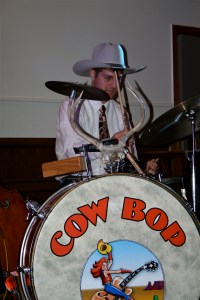
When F. Scott Fitzgerald said that there were no second acts in American life he had not foreseen the second act on Friday night.  This was cheeky, sassy, swinging, bop-infused countrified music and against all odds it was seriously hip.  American life was re-branded that night and as we witnessed it in disbelief, we participated in the fun.  Bruce Forman is a Jazz legend, as he has been a fixture on the Jazz circuit for three decades now.  Like Larry he has also been at the forefront of Jazz education and has accompanied some of the musics icons.   Bruce is a natural comedian and he really pushed the envelope with his in-your-face CowBop humour.  It is hard to describe adequately in words, as the context was everything, but suffice to say it worked.   There were musical jokes of the highest order and some home grown corn; both delivered from under a stetson hat with a twinkling eye.  The CowBop bands treatment Besame Mucho sat somewhere between ‘Cheech & Chong‘ and ‘Diana Krall‘ and I loved it.    As Bruce said when he began the set:  ‘If you try this music at home I urge you to do so responsibly’.  Packs containing the bands CD ‘Too Hick for the Room‘ were supplied with a bottle-opener connected to a memory-stick – pre loaded ready for illegal downloads.  The sly BeBop quotes were everywhere and they slid in between the cow-licks with ease.   Bruce added as I was leaving “The good thing is, if you hate this music you just give it to your enemies“.

This was a great night out and the intimate setting added to the enjoyment – thanks to Roger Fox for bringing them.

                      CowBop drummer

Alan Broadbent & Roger Fox; Bruce Mason Theatre

It has just been announced that NZ  born pianist Alan Broadbent is coming back to perform in Auckland with the Roger Fox Big Band.   The concert is billed as a Jazz Gala – Concert for Christchurch: 8 p m – June 1st  2011.   That is good news for Auckland’s Jazz community because Alan’s mix of perfectly executed standards and his story-telling between numbers makes for a great listening experience (who knew of the rivalry between Vernon Duke and Stravinsky?).   Last year in the Auckland Town Hall, Alan entranced the audience with his anecdotes and his playing and I am hoping that this easy going interactive style will still be evident this time around.   He is headlined to play with the Roger Fox Big Band and several LA based musician’s.   These are Charley Davis on Trumpet and Denise Perrier vocalist.   The event is being billed as a ‘Concert for Christchurch’ and the net proceeds will be donated to Christchurch.   At $44.40 per head and less for some tickets I would hope they get a good audience.   No mention of Joe La Barbera, Larry Koonse or Tom Worrington at this concert.

What could work against the timing however is the fact that the long awaited Sonny Rollins Concert is being held in Wellington 10 days later and that may lure some Jazz loving locals away (or leave them too out of pocket to go to both concerts).

The distribution problems with Alan’s newest CD ‘LIve at Giannelli Square ‘ do not appear to have resolved themselves.    I just received my third email from Amazon telling me that the item is still unavailable and what did I want them to do?.     I have cancelled the order in the hope that Alan will bring some copies with him.

Herbie Hancock: Chameleon, Headhunter, visionary?

Even before septuagenarian Herbie Hancock rolled into town he had been sought out by most of the mainstream media.    This man fascinates people beyond the Jazz world and I suspect that everyone would give a different reason why.   Herbie is simply larger than life and terminal cool is his brand.   When asked by Lynne Freeman of Radio New Zealand whether he was going to spend the rest of his days fine tuning his impressive musical legacy he surprised her by replying, “Music is what I do but it is not who I am.  I am a human being and I want to work on real issues that effect ordinary people”.   A long time devout Buddhist (as is his close friend and long time collaborator Wayne Shorter) he exudes calm and speaks with commonsense.   Herbie does not buy into his star status; but to others he is never-the-less a living legend.
We could feel the excitement mounting as we waited for the show to begin and then right on 8 pm the lights dimmed and drummer Trevor Lawrence strode onto the stage   He laid down a solid mesmerizing beat until James Genus appeared, who then added to the groove on his electric bass.   Suddenly Herbie was on stage; grinning and bowing to the audience and the fun began.    He looked fit and ready to get-down to it.   The group swiftly ripped into an upbeat, spirited avante guard tinged piece (Actual Proof) that was more Ornette than Empyrean Isles.  I suspect that would have taken many out of their comfort zone and this was clearly the intention.   The mood was well set and throughout the concert Herbie skillfully used tension and release in enumerable ways.   As this amazingly high energy group moved through the varied repertoire you could see the joy on their faces.   James genus seldom took his eyes of Herbie and they played as a single entity.   We got spirited renditions of Hancock classics followed by highly atmospheric tunes (such as Joni Mitchell’s ‘court and spark’ from the Grammy winning ‘River’ album with Wayne Shorter).    ‘Court and spark’ and other songs were sung by the fourth band member, vocalist and violinist Kristina Train.  Her voice was smokey and appealing and the crowd loved her.   We heard a jazz version of Bob Dylan’s ‘the times they are a changing’ and Bob Marley’s ‘Exodus’ accompanied by pre-recorded Sudanese musicians.   ‘It’s 2011’ said Herbie as he pointed to the hard drive at the heart of his system. Herbie Hancock is the undisputed master of electronic keyboards and effects, but on Tuesday he reminded us that he still owned the acoustic piano chair as well.
This was the history of post 50’s Jazz and it was the perfect ethnomusicology lesson.    We heard Irish, African, folk music and classic delta blues but the master’s stamp was on all of it.   This edgy musical journey was still unmistakably Jazz.   In the middle portion of the concert however Herbie played solo piano, taking us on an impressionistic reflective journey through his Maiden Voyage albums.   The band came back to accompany him on ‘Cantaloupe Island’ in what was to end a half hour piano medley, which held every one in awe.  Even ‘Round about Midnight’ got an airing.  Not a sniffle , not a cough, even Keith would have been impressed.   The stuff that I loved best was his Headhunter funk and he swung and grooved that like crazy – deep down grooves played with boundless joyous energy.    At the end of the concert he brought on a visiting group of blues rockers; slide guitarist Derrick Trucks and his wife Susan Tedeschi (a loud singer who sounds a lot like Janis Joplin).      This was pure enjoyment from start to finish and if anyone thought that Jazz was in decline they should have seen the age-range of those present.   The faces of the audience as they came out told the whole story.

Beautiful Tunisian Oud Jazz

These You Tube live recordings will please some while others will dislike them.  That is of no real matter because Jazz has never tried to be all things to all people.   Jazz is a restless music and throughout its history it has taken on the voicings and ethos of other musical traditions (often making them its own).   Dizzy, Miles, Coltrane , Latef and others never stopped listening for new and exotic sounds and a lot of excellent music resulted from their interest in non-American music traditions.  

I saw Dhafer Yussef at an International Jazz festival and I will never forget the experience. His band performed breathtaking improvised music, jazz as we know it, but often around very ancient themes. It felt to me like a wonderful addition to the Jazz lexicon. Dhafer is a Sufi and the Sufi traditions are an ancient expression of Islamic culture. Sufi’s follow a mystical peaceable tradition which is gradually becoming better known in the west. Great poets, like Rumi, Hafez, Bulleh Shah and Khwaja Ghulam Farid are of this tradition. Qawwali is the best known form of Sufi music, however music is also central to the whirling dervishes and the ceremony of Sema uses a slow, sedate form of music featuring the Turkish flute and the ney. The West African Gnawa is another form (Randy Westen and Dizzy referenced this).

Dhafer Youssef (Arabic: ظافر يوسف‎) (born 1967 in Teboulba, Tunisia) is a composer, singer,and oud player. He developed an interest in jazz at an early age and clandestinely listened to it during his education at Qur’anic school.[1] He later left Tunisia to start a jazz career and has lived in Europe since 1990, usually in Paris or Vienna. He has played at many of the premier mainstream Jazz Festivals in the world and is mentioned on the USA based ‘All About Jazz’ website. I have been interested to note the number of Arab and Israeli Jazz musicians routinely mentioned in Down Beat and Jazz Times lately. The second clip features a stunning young Arab pianist Tigran Hamasyan and his Moorish Jazz style is quite beguiling. In this second piece the music builds in intensity and I suspect that this is part of the tradition (note the movement of the hands to enhance the vocalese).

Jazz at the Albany Campus-Broadhurst, Gibson, Santorelli & Oatts

GUEST POST:
US saxophonist Dick Oatts is currently visiting NZ and in Auckland he has been working with the New Zealand School of Music at the Albany Campus of Massey University. On Thursday evening the School presented him in a concert playing to a small audience with the re-constituted Phil Broadhurst Trio (Phil on Piano, Alberto Santorelli on bass and Frank Gibson Jr on drums).

I had been aware of Dick’s reputation in the New York big band context and had seen him a few years ago during a visit to NYC as part of the Vanguard Jazz Orchestra which is the feature act at the Village Vanguard most Monday nights but I was intrigued to see him in a combo setting.

I have to say that the performance exceeded my expectations – the group really gelled and Dick showed his versatility on the alto with an energetic and adventurous performance extending the group and featuring many of his own compositions which had the group really cooking. Phil was in great form as always as were Alberto and Frank with whom Dick seemed to have a particularly close affinity. Always good to get out and hear live jazz in a relatively intimate setting.

Stujazz

Miles: Jack Johnson and Jack DeJohnette

Last night the ‘Dark Magus’ was among us again and what a joyful experience it was.   The DeJohnette band performed the often overlooked ‘Jack Johnson’ music, complete with the famous Jack Johnson film as back drop. The original Miles Davis album had been cut in 1970; not long after the more abstract ‘Bitches Brew’ and just before his free flowing ‘Fillmore’ excursions.   A very different sound was emerging and it is only now being properly evaluated.   Miles wanted to carve a pathway right into the hearts of the younger rock audiences and he achieved that without jettisoning all of his loyal Jazz audience.    At the time of its first release ‘Jack Johnson” alternately shocked or thrilled Miles fans.    The music was most definitely not rock music and if anything it was an edgier avante guard type of Jazz.     The brilliance of its execution and the raw electric energy created new fans to replace the older ones who stopped listing.   The  ‘Jack Johnson’ story-line is fundamentally about the issues of race and achievement against the odds, but there is a thread of good natured humour in this celebration of a likable man.    ‘Jack Johnson’ the soundtrack was pure Miles and pure genius.    It is obvious that Miles saw Jack Johnson as a role model.

A large part of Miles genius was in finding the right musicians and giving them the right push.    This resulted in some of the most successful collaborations in Jazz.   The original ‘Jack Johnson’ was actually a pared back version featuring Miles (t),Steve Grossmnan (ss), Herbie Hancock (ky), John McGlaughlin (g) Michael Henderson (b)Billy Cobham (d) and Brock Petters (v).  The first release was soon followed by ‘The Complete Jack Johnson Sessions’ and we saw a much enriched palette with the additional artists -Jack DeJohnette (d), Wayne Shorter(ss), Bennie Maupin (bcl), Chick Corea & Keith Jarrett (ky), Herbie Hancock (org), Sonny Sharrock (g), Ron Cater, Dave Holland, Gene Perla (b), Airto Moreira (perc), Hermeto Pascoal (v, d).

Last night master drummer Jack DeJohnette  presided over a new and updated version of ‘Jack Johnson’.    His guiding hand as a leader was in evidence every step of the way and with a smaller lineup than the original band he achieved the same result.  It was electrifying from start to finish as the soundscape ranged from the hauntingly beautiful (the boxers loneliness after winning the the world heavyweight title only to be ignored in his own country) to the dissonance  accompanying shocking Klu Klux Klan scenes.     The musicians were almost all multi-instrumentalists and their virtuosity on which-ever axe they picked up was evident.   There were two older musicians, Jack DeJohnette and Bass player, Jerome Harris; The rest were younger and all were very talented.   All respect to Byron Wallen for playing Miles so beautifully but the real accolade must go to Jack DeJohnette .   To see him sitting under a large projected image of Miles was to see see a perfect juxtaposition between past and present.

Concerts in the wind.

Quick Concert update:

This Saturday we get to hear the amazing Jack deJohnette – colourist and straight ahead master of the ‘traps’- probably the greatest drummer alive.     Jack’s band is performing an update on the ‘Miles Davis‘ fusion classic ‘Jack Johnson‘.     Next month Herbie Hancock is returning to Auckland (Tuesday 26th March) and his new ‘Imagine Project’ band will include talented Benin Guitarist Lionel Loueke.   I was in touch with old friend Larry Koonse last week (gifted West Coast Jazz guitarist) and he told me that he will likely be here again in a few months with the Roger Fox Big Band.     He may even return with Joe La Barbera like last time.

Lastly saxophone colossus Sonny Rollins is going to be playing in Wellington this winter (July).    As grumpy as I am with Wellington for canceling the International Jazz Festival because of the World Cup I will attend.     Swapping Jazz for rugby is a cardinal sin (or it bloody well should be).