
William Butler Yeats said, ‘The world is full of magic things, waiting patiently for our senses to grow sharper’. I believe this absolutely and am reminded of it when my senses connect with a certain kind of music. Music that transcends mere form and engages with the cosmos. That is the domain of improvised music, a calling requiring a musician to discover magic during a tricky tightrope walk. Then, to cast a spell over those open enough to receive it.
With the advent of applications like ChatGPT, a future unleashing self-generating algorithms is at hand. When that happens, the quantum of magic in the world will diminish and experiencing the magic of creativity goes to the core of what it means to be human.
When an improviser engages with an instrument, the weight of human history informs every choice. It is not number-crunching. The music can arise from ‘form’ or from a conscious decision to avoid elements of form. It can go wrong but still be ‘right’. It is a journey feeding off human interactions, drawing power from those on a bandstand, a live audience or a perceived audience. It is time travel backwards and forwards, but rooted in the eternal now.
Jazz musicians often talk about music as a form of magic, mention the intuitive responses between high-level players, talk about creating new worlds out of beauty or pain, out of nostalgia for a past they never had, and how what we term as ‘character’ is required for a musician to make music that speaks to us. The earliest written references to music refer to ceremonial occasions, funeral rituals, grand processions, weddings or attempts to appease the gods of nature.
Rhythm and pulse are powerful trance mediums, and we respond to unease by embracing trance. Does an algorithm delight in beauty, express pain, have character, feel uneasy or nostalgic?
Tomasz Stanko stated that improvising is about transcendence. He saw it as a form of magic and as religion. The improviser who chimes with our innermost being expresses something about what it means to be human; our propensity for storytelling, our empathy or disquiet, and revealing our innate curiosity.
It is no accident that many improvisers are stargazers or that album covers and tune titles have countless cosmic references. Improvising musicians reach beyond and embrace the improbable. And it is not just the musicians. The listeners participate—if we dare. Our receptivity triggers deep listening, and we react to what we hear by urging the musicians on. We share in the magic because listeners are part of the equation.
Like many, I have watched the advent of generative algorithms with fascination and dread. AI provides valuable tools that will benefit humanity, but there is an urgent need for boundaries and rules. It is for scientists, bioethicists, machine learning gurus and politicians to wade through this minefield. We hope before it is too late.
For creatives, there is a degree of clarity finally emerging, and it was heartening to see the script writers strike, drawing a firm line in the sand. They sought assurance regarding their intellectual property. They wanted to create boundaries and protect what is human.
The clever algorithms do not behave like human learners or human creatives. They can learn in nanoseconds by scanning vast databases and sucking up everything within reach. Software like chatGPT does not concern itself with ethical considerations or the need to verify information or concern itself with intellectual property rights. The algorithms are attracted to ‘noise’; homing in on controversy—like a bee to a pretty flower.
There are reports by writers that novels have been stolen, rejigged and blended to create so-called ‘new’ works. Such theft is beyond human mimicry. A plagiariser can be sued, issued a desist order or required to pay compensation. An array of zeros and ones cannot.
Music industry pundits are evaluating these developments, but I am not holding my breath. The prominent players in the industry utilise such tools to enrich themselves, and always at the expense of the content creators.
The industry has an appalling record of disrespecting artists’ rights and not remunerating them fairly. Inversely, AI is also being deployed by some to identify similarities between segments within tunes. As the software improves, tiny musical sequences come under the digital microscope. Lengthy court battles follow, lick versus lick. Educators, fearful that they may not be able to recognise AI-assisted examination cheating, rely on A1 programs to sniff out other AI programs. It is a strange new world in which past inequities are made worse.
The most pressing issue for the creative sector is to draw a clear line between human-directed creations and purely AI-generated works. Then, setting boundaries and sorting out the copyright implications. And as is often the case, we are late to the party as our inventions wreak havoc.
I love music machines and software, whether analogue or digital, amplifying, distorting or sampling. They enrich the music we listen to. I love to see a guitarist or keyboard player tweaking a peddle board, iPad or slider. I love to watch a recording technician or a student hunched over a mixing desk or computer screen. Humans direct all of the above activities and extend the possibilities of the machines at their disposal.
What humans do with software is astonishing. The music of Eivind Aasart, Jon Hassell or Alan Brown would not be possible without this clever circuitry. Thanks to such specialised equipment, they can capture the nuances of natural acoustic environments or dream-scape worlds. All of the above artists use the devices as extensions of self.
It’s about the magic, and only humans can conjure that up. I attended a jazz gig recently where an 18-piece student band from the University of Auckland Jazz School played alongside Michel Benebig, a master B3 player. They had worked hard to realise his charts and performed well. The delighted smiles on the student’s faces as they experienced the music swirling about them was an essential part of the performance. It was not flawless, but it was better for that. Human imperfections speak of promise, of possibility. As I age, I need the quantum of magic in my life to increase. The deadman’s hand of AI-generated music does not do that for me.
JazzLocal32.com was rated as one of the 50 best Jazz Blogs in the world by Feedspot. The author is a professional member of the Jazz Journalists Association, a Judge in the 7VJC International Jazz Competition, and a poet & writer. Some of these posts appear on other sites with the author’s permission.
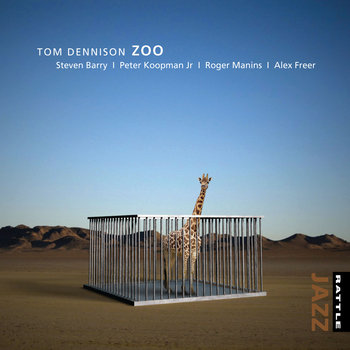


 This is the second Auckland Jazz Festival and what incredibly tasty offerings there are in the programme. The event runs as a fringe festival and this is absolutely the right approach; no corporates making stupid unhelpful suggestions, an intense focus on the best of Kiwi improvised music and international acts with an established connection to New Zealand. The ‘best kept secret’ ethos is a good model for this music and it’s true. In a nutshell the festival tells an all but hidden story; the story of a vibrant diverse Jazz scene, with more than enough talent to wow discriminating audiences. The biggest downside of fringe festivals is that they run on air. Good attendance can mitigate this. With no significant up-front advertising budget, the role of the sponsoring clubs, bars, galleries and local record labels is vital. Those venues and the labels (Rattle in this case) need our support and appreciation. While Auckland has an unfortunate track record of failing to support the arts, the winds of change are in the air. The gigs on offer are diverse and interesting and Auckland will increasingly want a piece of this magic.
 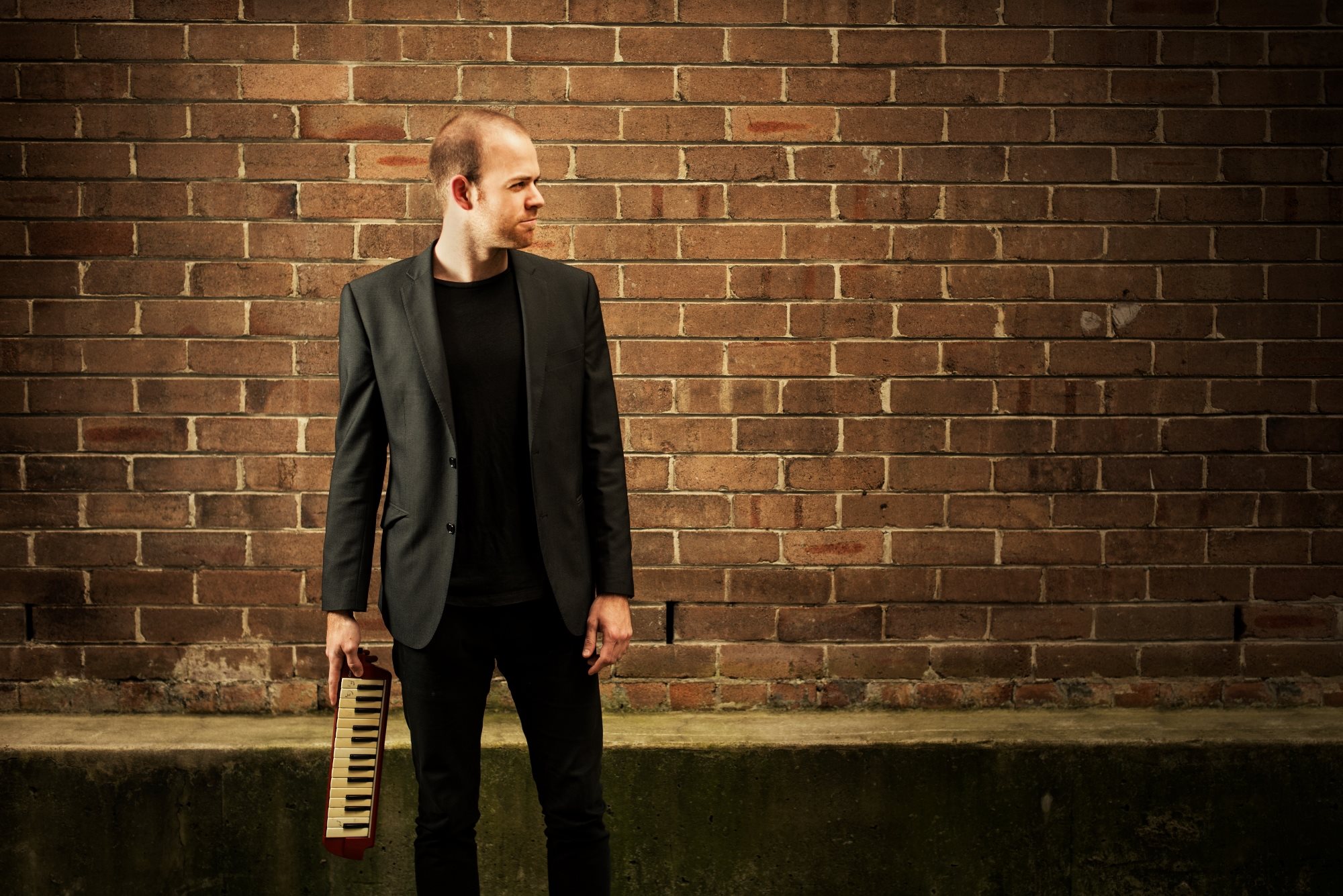 The festival opened on the 14th with a duo of respected Australian musicians, ‘The Prodigal Sons’. P J Koopman (guitar) and Steve Barry (piano) are expats who left New Zealand long ago to work in Australia. Both are fondly remembered by Kiwi audiences and both are now firmly established in Sydney; polished musicians speaking each others language. The years of hard work and performance in diverse situations giving them particular insights. Barry has been widely acknowledged for recent albums and although widely engaged in academic pursuits recently, it is good to see him on the road again. These guys can really swing their lines and do it while spinning out fresh ideas. No tempo deters them, but it was the medium and slow tempos that showed us their best. The two original compositions which particularly impressed me were by Koopman; ‘Working Title’ and ‘Major Minor’. On these tunes the exchanges between the two were breathtaking. They engaged two fine local musicians for the gig and with the talented Cameron McArthur on bass and Andrew Keegan on drums the gig was superb. McArthur and Keegan were there every step of the way and as pleasing as the headliners.
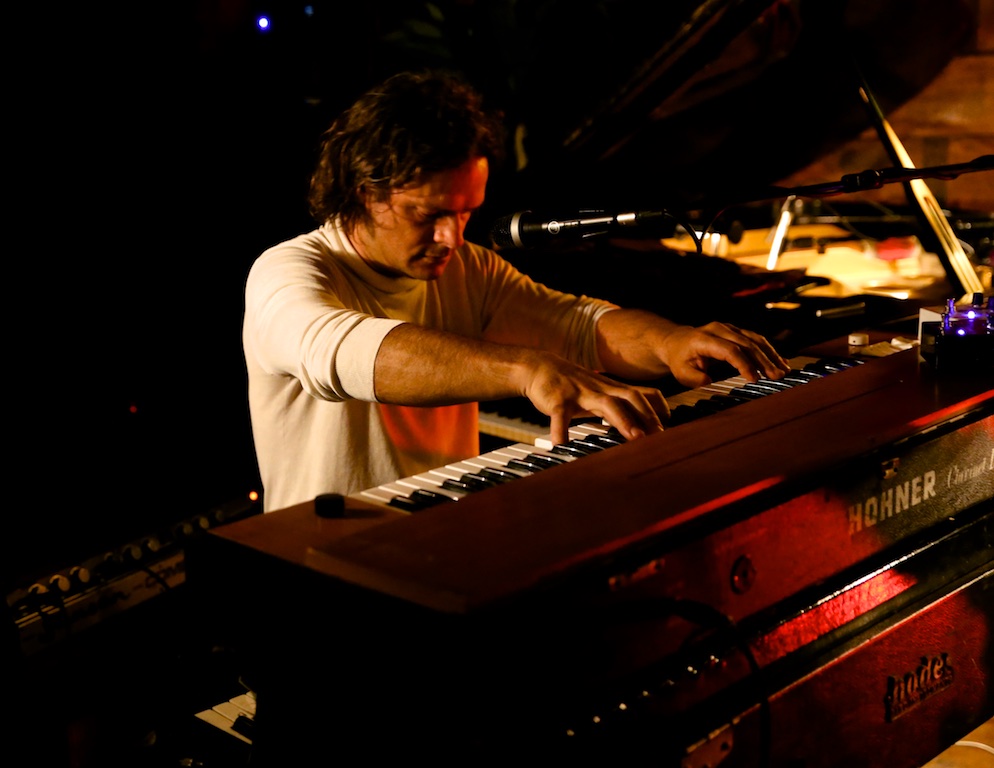 On Thursday the Jonathan Crayford Electric Trio featured. It is no secret that I rate Crayford highly and I would go to see him perform anywhere. Arguably one of our top Jazz exports to the world and undoubtedly one of the more innovative musicians on the scene today. No Crayford project is a half-hearted affair, as this musician lives music in the fullest sense. His musical outpourings are sublime but it goes deeper than his excellent musicianship. Crayford’s vantage point on the creative life is unusual and deeply focussed: few others share his perception.





 JazzLocal32.com