The artists profiled here have some things in common. Both have Swiss heritage, work in countries other than the ones they were born in and take a fearless approach to improvising. They are separated in years and in experience but not in their approach. Both seek to extend the language of improvised music and have something interesting to say.
Alex Ventling ~ The View
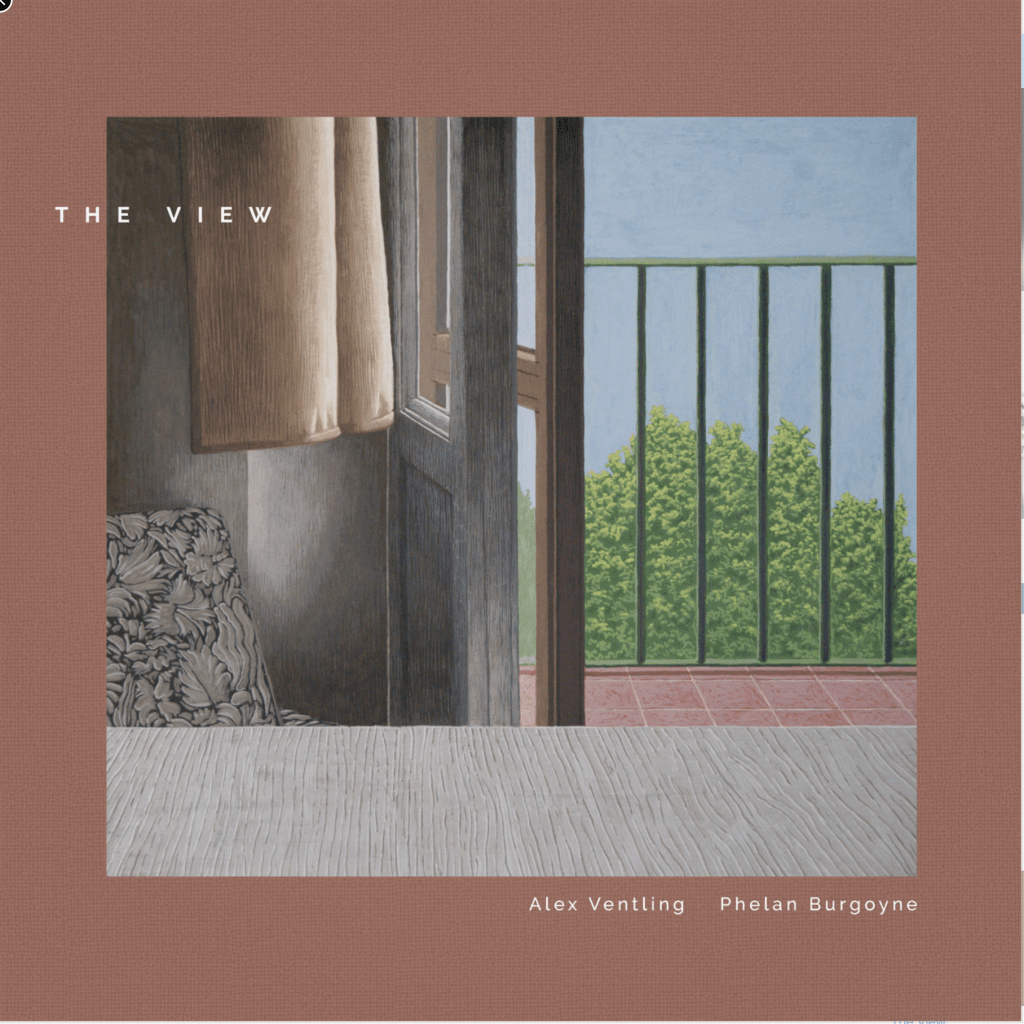
This is a beautiful duo album; it will stay with you if you listen with open ears. It is fresh and original but snatches of the tradition are still evident, nestling in the compositions. From the opening track, ‘Spiders Steps’, Monkish elements creep in, as jagged spidery lines evolve into a gentle swing. The tune is perfectly rounded. It says a lot and yet does so concisely and simply. It is the perfect beginning for a superb album. Ventling’s pianism is evident throughout, but strikingly so in his resonant ‘In the Mists’. Good pianists know what to play and when, but gifted pianists understand how to sculpt sound and curate even the decaying chords. There are synths but they are used in ways that never once spoil the acoustic mood. That is so on ‘First Train to Finse’ which features guest artist Kim Paterson on trumpet. How lovely to hear him again in this ‘Silent Way’-like setting.
It is an album of surprises as the moods shift constantly. Importantly, they do so without once breaking the flow. Out of it all shines a radiant simplicity, a ‘mysterioso’ simplicity. One blended with oblique Monkish references and a northern European sensibility, a very Nordic soundscape, evoking open spaces, where the music breathes.
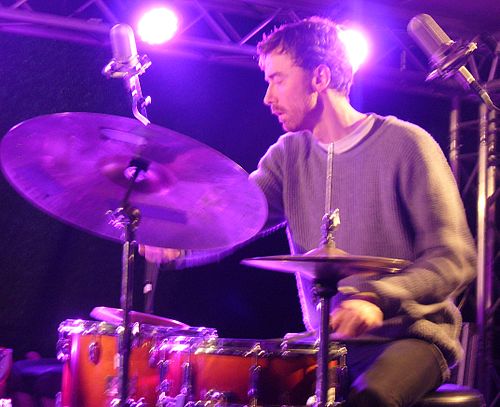
With Ventling is a gifted drummer, Phelan Burgoyne. He is the perfect foil for the pianist as he is a master of subtlety. He possesses an acute sonic awareness and understands how to work in the spaces between the notes. He is especially attuned to the harmonic possibilities as he adds his textural touches. This is a masterclass in colourist drumming and I cannot imagine any drummer doing better. He is co-credited as a composer, a collaboration which goes back years. Their synergy is evidenced in every minute of this recording.
This is a very mature album for a musician embarking on his musical journey. The album was released by the Trondheim label Sonic Transmission Records and is available on vinyl and digitally via Bandcamp (or the streamers).
Nik Bärtsch Ronin ~ Spin
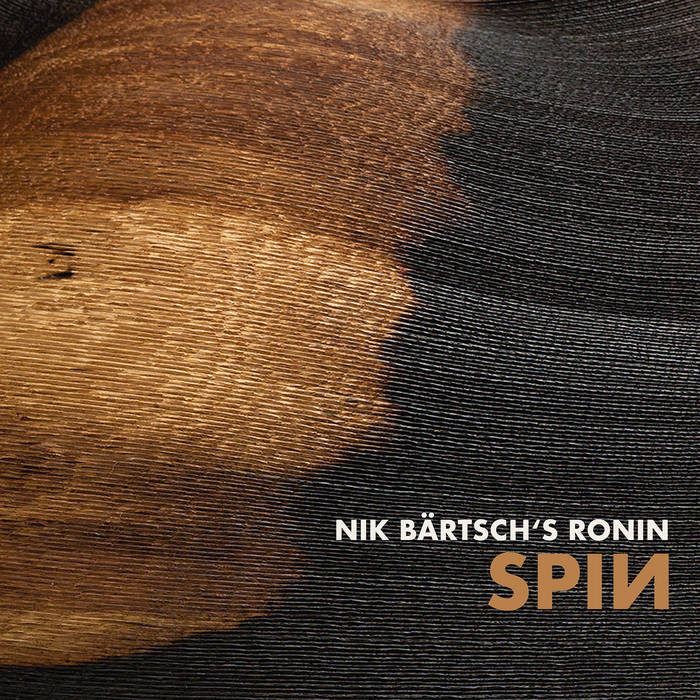
Nik Bärtsch’s Ronin has been around since 2002, established following his earlier Ritual Groove Music album (2001). Since then Ronin has released 9 albums with cultural and musical influences scattered throughout; the most obvious being Steve Reich, John Cage and Morton Feldman. He was a drummer before he was a pianist and intricate rhythmic patterns and cycles are evident in everything he does. The other important influence is his abiding interest in Zen Buddhism and taken as a whole, those influences have coalesced, resulting in a unique musical path. His style has been dubbed Zen Funk, but it is improvised music of the highest order and the band has been delighting Jazz critics and Jazz-festival-goers for many years. His seven ECM albums brought him wide critical acclaim.
‘Spin’ works the rich seams opened in earlier albums. This band adheres to its minimalist principles while introducing freshness and open exploration. I have always been drawn to mesmeric or trance music, and this music is, but the tunes also invite quiet reflection. There is freedom within constraints, and that appeals to the heart and intellect.
The first track, ‘Modul 66’, was composed to showcase bass player Jeremias Keller, who recently joined the band. This highlights a subtle shift in emphasis, without changing the ever-present groove. The deep grooves are especially evident in ‘Modul 70-51’ which is mesmerising. A pulse that pulls you deeper into the music without once dulling the senses. This is achieved by surprising chordal and modulation shifts which function like Zen surprises. This is apparent in ‘Modul 40’ which is endlessly inventive.
The way this band works together is extraordinary, moving the emphasis mysteriously as they dance around each other like voodoo priests. It was recorded live at the Big Ears Festival, so ‘Spin’ should be enjoyed in one listening; each ‘module’ informs the next. I recommend that you listen with headphones or in a quiet room. It would be a shame to miss the subtlety. Nik Bärtsch (piano, Keyboard), Sha (bass clarinet, alto saxophone), Jeremias Keller (bass), Kasper Rast (drums). ‘Spin’ is self-released and available on Bandcamp or the streamers.
Other Recommendations to Check Out.
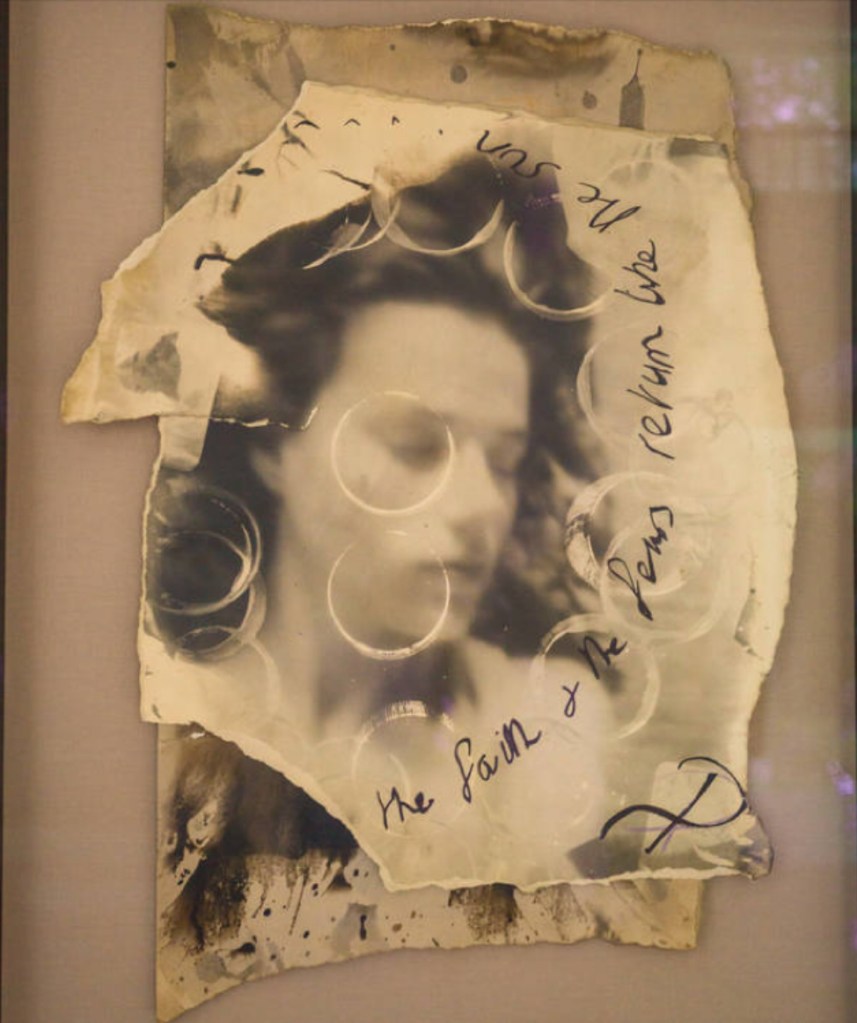
Rob Luft and Kit Downes are artists I have profiled before. Both appear on an interesting album by vocalist Paula Rae Gibson. The album, ‘The Roles We Play To Disappear’ has been referred to as ambient, electronica, and Avante-jazz. It seamlessly embraces many genres and is evidence of how improvised music is growing in multiple directions. Albums like this bring fresh audiences and that is a healthy thing. It is refreshing in these days of awful commercial music to see artists forging uncompromising artistic paths. It is available as a CD or download from Bandcamp.
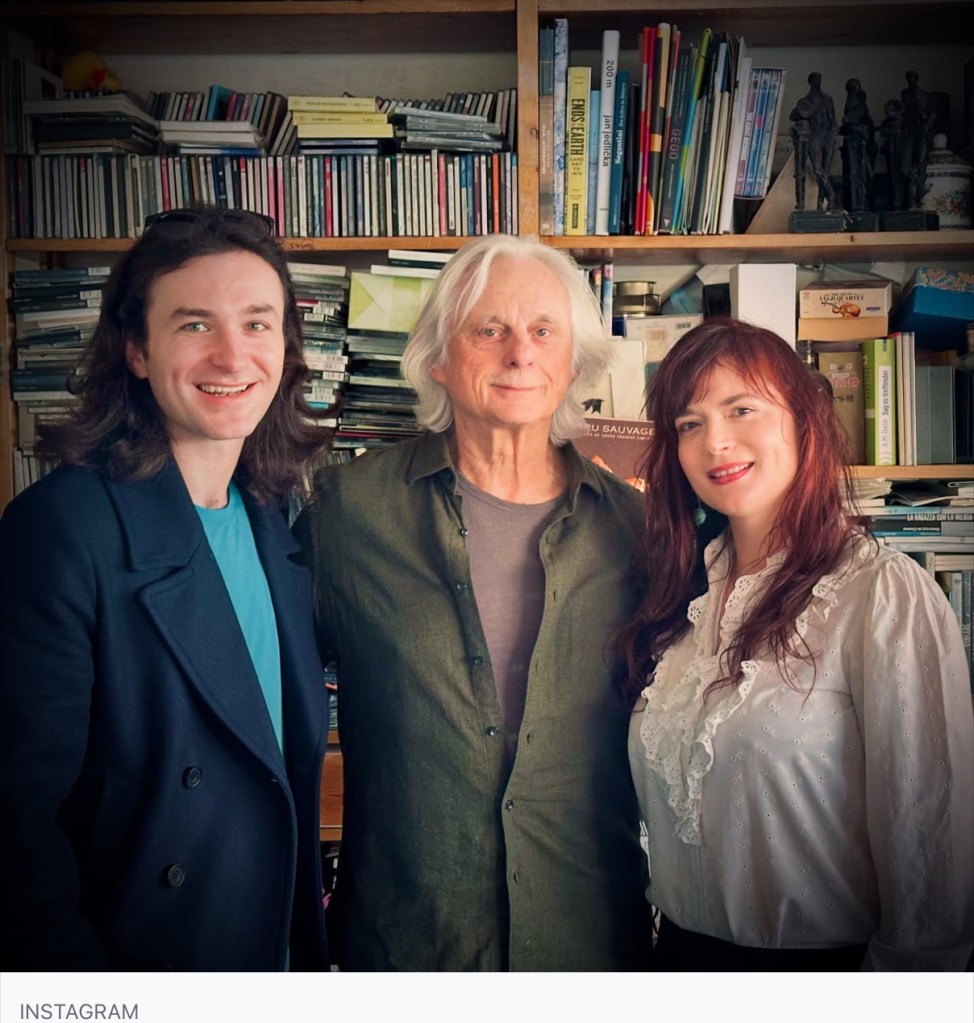
Rob Luft and Elena Duni recently met with Manfred Eicher to discuss a new ECM release. This is welcome news as the first two releases were stunning. I interviewed Luft during lockdown and have reviewed his albums often. If you haven’t done so already check them out. My review of ‘Lost Ships’ is on this site at http://www.jazzlocal32.com/?s=Luft
Alex Ventling and Kim Paterson recorded on Ventling’s recent tour through New Zealand. ‘Conversations’ is a lovely standards album and is available on Spotify.
One of my favourite Jazz musicians Chris Cody (Sydney/France) has just released two interesting albums. The first is ‘Mountain To Sea’ with Sandy Evans, Tessie Overmyer and Lloyd Swanton. The second and most recent is ‘Under Ocean’, co-credited to Charlie Tait, an ambient improvised album conjuring powerful images. An interesting development from an artist who never fails to please. More on this soon.
JazzLocal32.com was rated as one of the 50 best Jazz Blogs in the world by Feedspot. The author is a professional member of the Jazz Journalists Association, a Judge in the 7VJC International Jazz Competition, and a poet & writer. Some of these posts appear on other sites with the author’s permission.














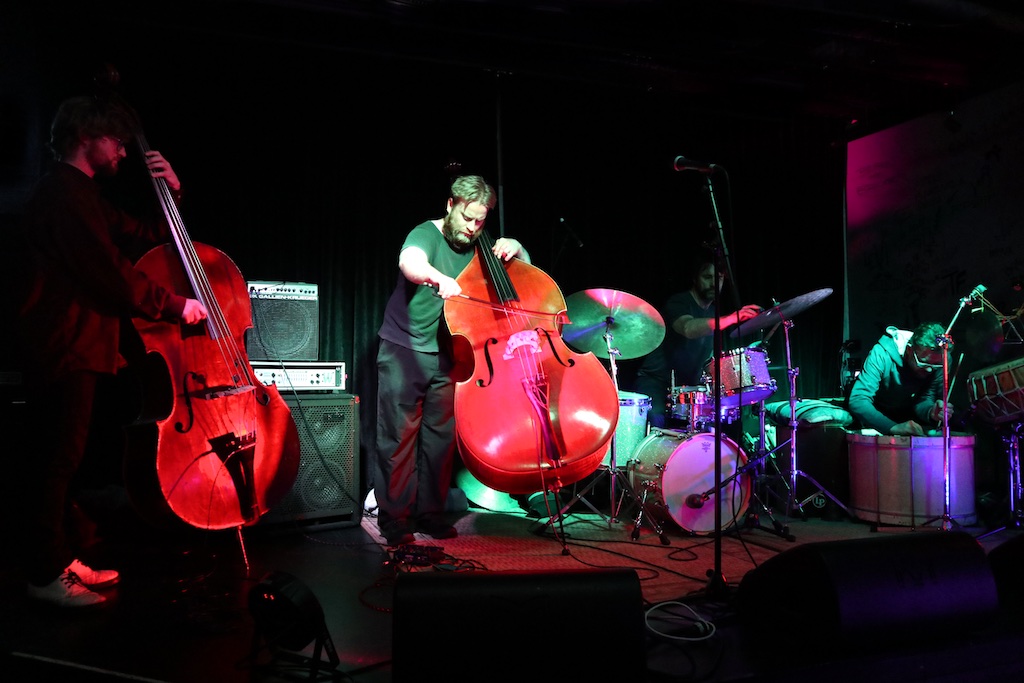 Two bass, two drummer gigs while not unknown usually occur in service of a chordal instrument or of a horn line, and when a solo bass concert occurs, an audience is frequently shown ‘cleverness’. On this occasion, the bass of Elsen Price freed the instrument from the narrow confines of the standard rhythm section or the conventional solo bass repartee; instead, exposing the beautiful resonances and the reach of the instrument. This was sublime music and complete unto itself. It celebrated a gifted musician and a wonderful instrument but without displays of egocentricity. The feat was achieved by inviting us inside the music, and into a sonic cornucopia. We listened and we were captivated.
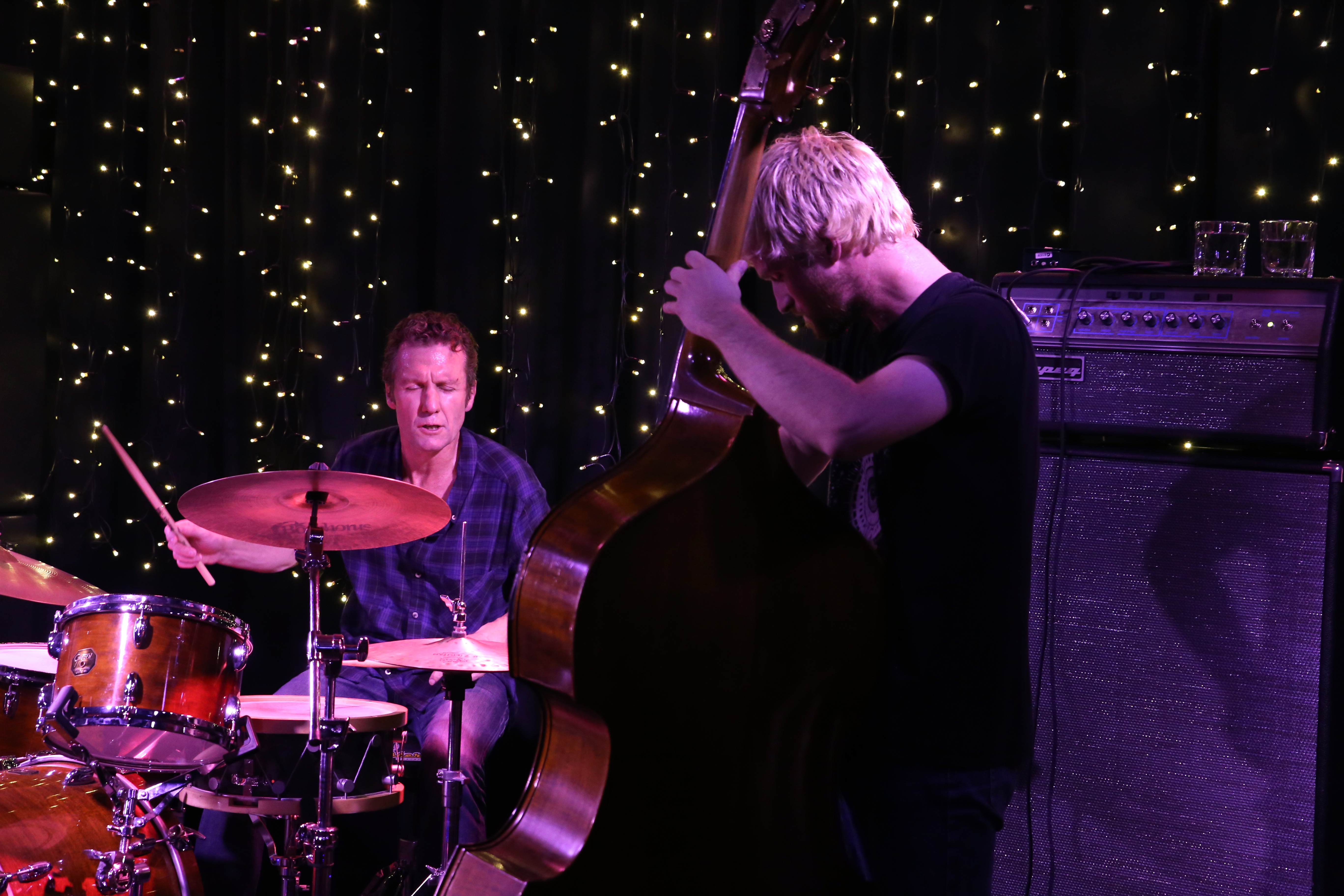
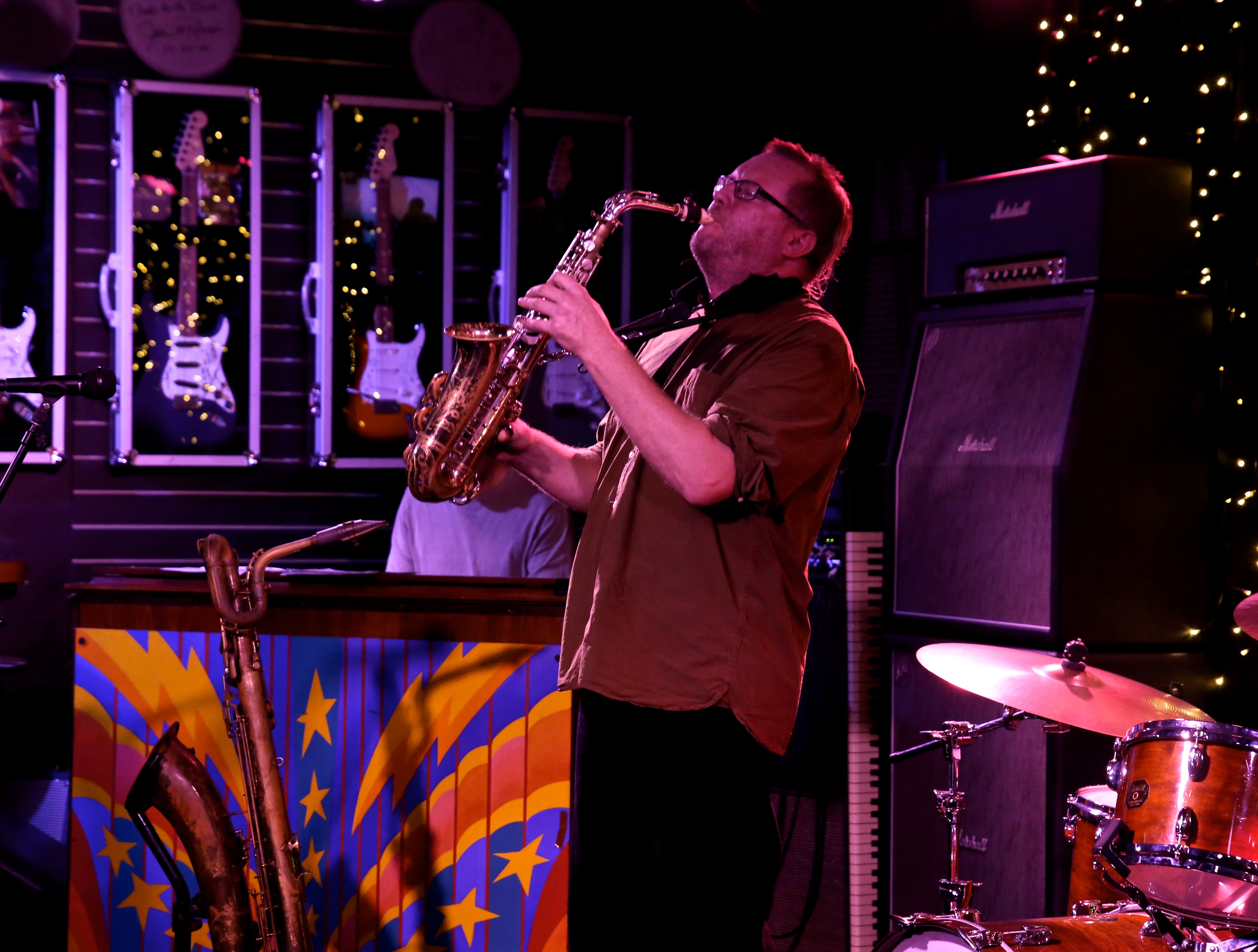
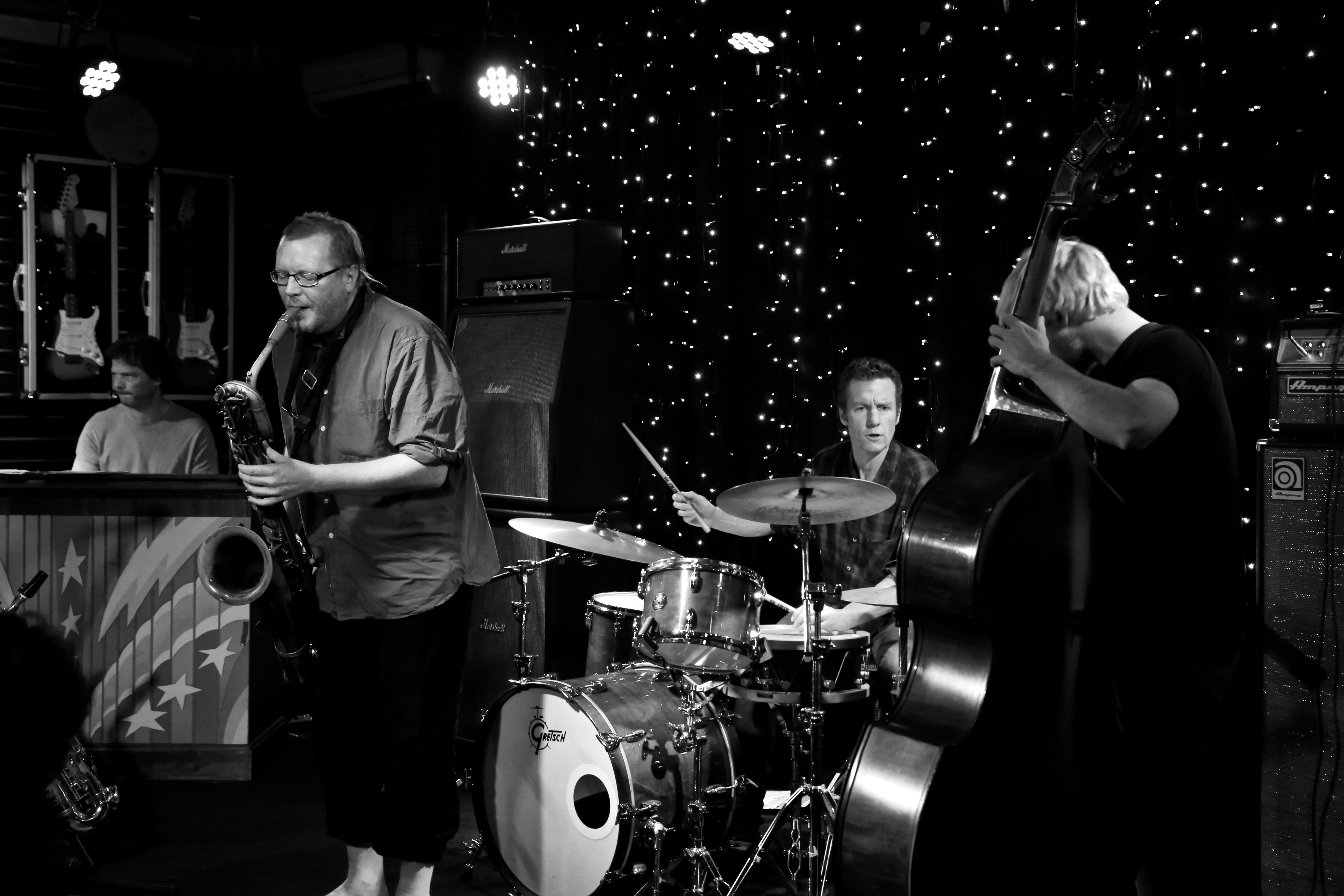 Jeff Henderson is a freedom warrior from outside of the perimeter fence. On the 9th of May, 2018, he marched barefooted into the Backbeat Bar with a ragtag army of irregulars. The audience had come well prepared and a pregnant air of anticipation hung over the bandstand during setup. Unusually, there were no lower ranks in this army, all were battle-hardened veterans (or anti-heroes depending on your viewpoint). All had impressive service records, an advance guard who took no prisoners. Jonathan Crayford is arguably the most famous of the troop, a decorated hero who swiftly commandeered a C3 organ (an ancient analogue machine decorated by psychedelic art and reminiscent of a Haight Asbury weed shop). Beside him sat machine gunner Steve Cournane, a rat-tat-tat freedom fighter recently returned from Peru. The remaining soldier, battle scared and bleeding, was Eamon Edmundson-Wells (his Viking surname tells it’s own story).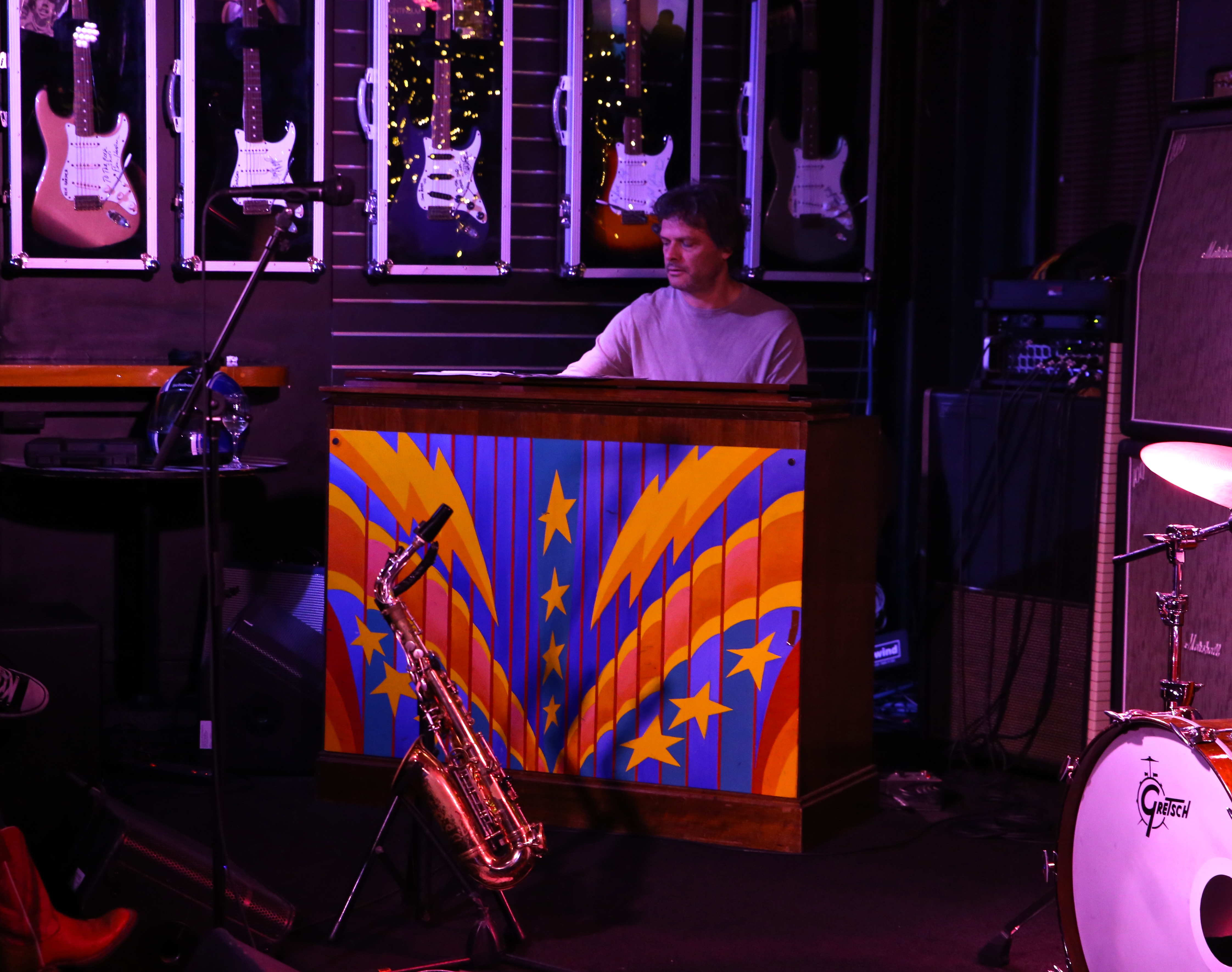
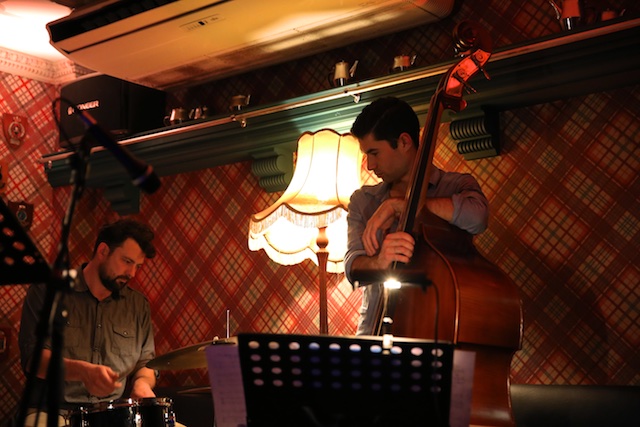
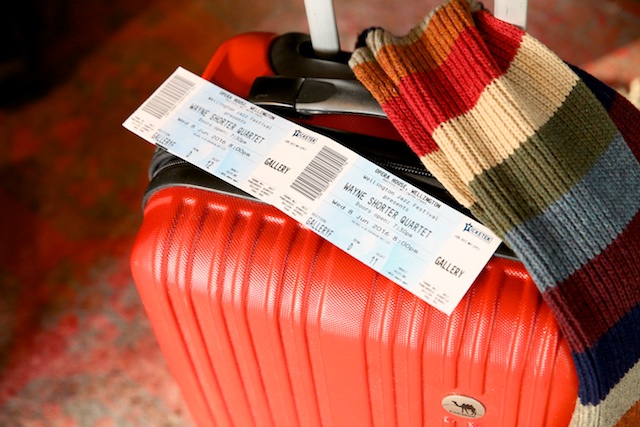 When we talk about Wayne Shorter’s music we immediately run into obstacles. Wayne is like a Zen Master, deliberately confounding our every expectation. To begin such a journey our rational minds need emptying. As the journey unfolds we move beyond comforting reference points; this requires a letting go, real courage. The 2016 Wayne Shorter band is a musical ‘Voyager’, a spacecraft assembled out of earthly components, but sending encrypted sonic messages from an unknown place. What is on offer is a shared journey – but only if we are brave enough. Once you commit there is no looking back.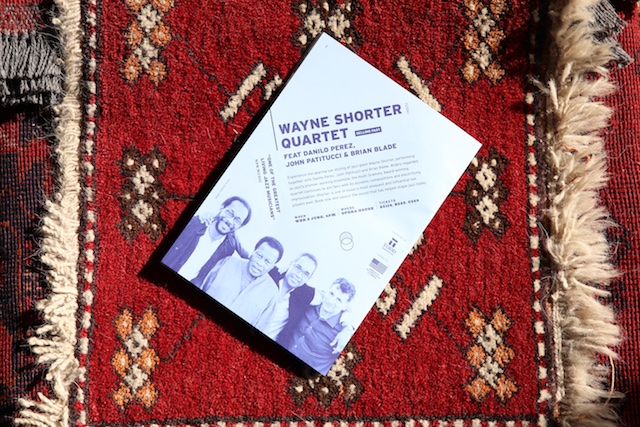
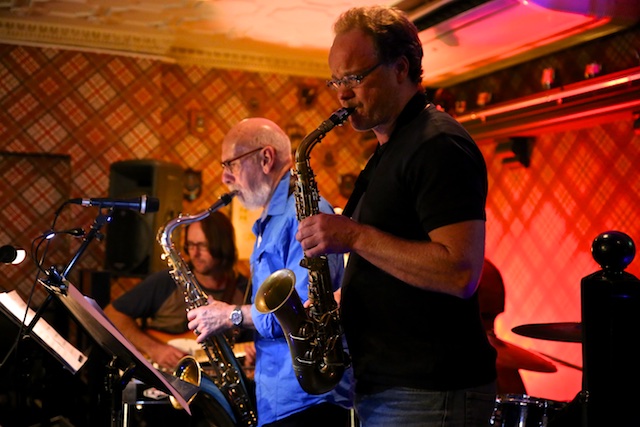 A seasoned New York veteran when asked to comment on the quality of playing by young artists emerging from the Jazz Schools said, “Man they’re such great players. Many of them have chops to burn, but what is lacking is ‘character’. That is not taught in Jazz schools, you gain it inch by inch out of life experience”. To paraphrase Lester Young who put it best, ‘I hear the notes, but what is your story’. The character of a musician (or the lack of it), shows up in the music. Jim Langabeer has ‘character’ to burn. He tells wonderfully human musical stories and they are utterly beguiling.
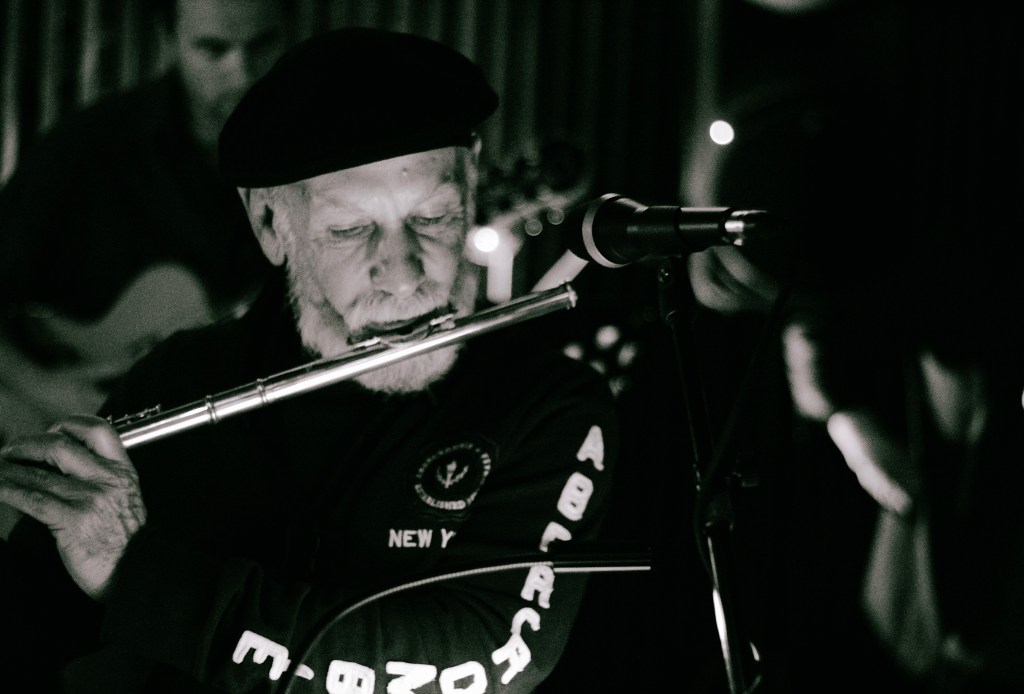
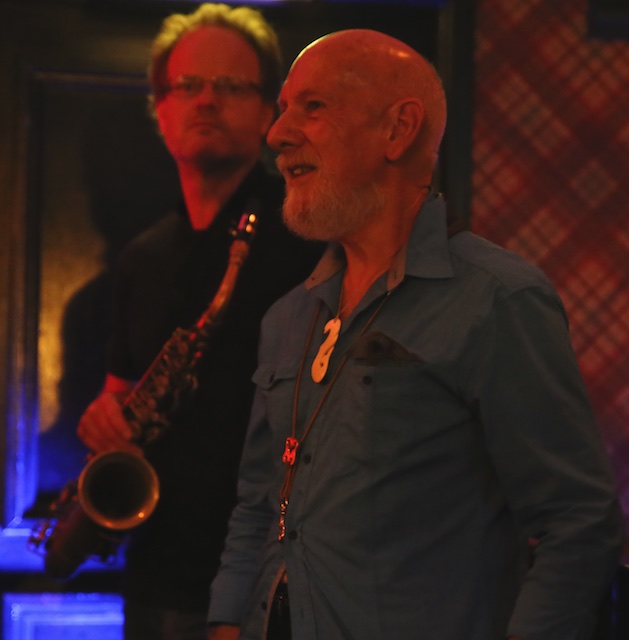
 Langabeer is hugely respected on the scene and deservedly so. He has worked with greats like Gary Peacock and Jaco Pastorius and in spite of absorbing the essence of North American Jazz, his ideas and sound possess a Kiwi authenticity. When he plays his tenor there is often a street-raw raspy intonation. The sound is at times reminiscent of Archie Shepp, but the story and flow of ideas are entirely his own. His flute playing is soulful and as soft as silk in the breeze. Because he is so comfortable in his own space he can incorporate everything from the avant-garde to indigenous music without it sounding contrived. These seamless references work beautifully in his hands. We talked of this after the gig and agreed that many of the earliest attempts at blending middle eastern, far eastern or ethnic music were less successful than now.
  As the boundaries between cultures blur in a globalised world, the mutual respect between improvising traditions grows. I have posted an example of this effortless genre-blending in a clip from the CJC gig titled ‘Ananda’s Midnight Blues’. Those who are familiar with Buddhism will grasp the meaning immediately. Ananda was Gautama Buddha’s childhood friend and later his disciple. Beloved, worldly and yet never afraid to challenge his enlightened teacher. There is a feeling of deep questing spirituality in the piece – reaching beyond mere form.
 Whether Langabeer plays flutes or reeds, everything serves the composition. His spare lines (which are devoid of undue ornamentation) establish a theme and then vanish like a will-o-the-wisp, giving a nudge to the imagination and enriching the piece as a whole. There are no wild flurries of notes on the saxophone or flute because the story resides elsewhere. His writing creates an over-arching logic and the ensemble has the freedom to move in and around tonality. In some pieces ostinato patterns create a drone effect, becoming a single note over which to restate the melody. This freedom allows for an organic interaction, free or inside and with a deep gut-felt pulse.
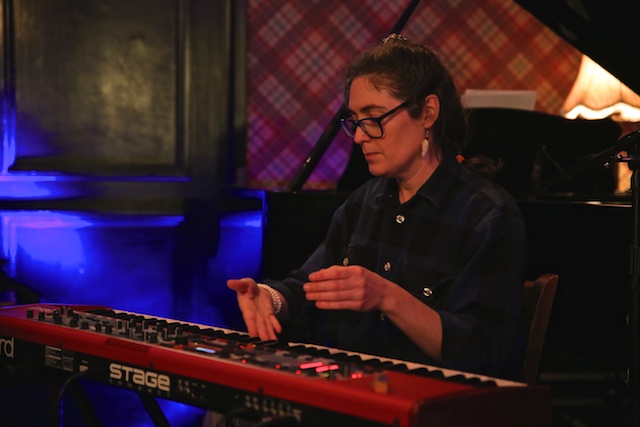
 When putting a band like this together the choice of musicians is supremely important. Not every musician could handle such freedom. Needless to say, Langabeer chose well. The ensemble was rich in contrasting colour, rich in character. It was our good fortune that Jim Langabeer’s daughter Rosie Langabeer was back in town. I can’t imagine a better-qualified pianist for this role. A leading avant-gardist and experimental musician who crafts compelling filigree and rich beauty into her music. Rosie Langabeer can play outside one minute and the next you hear a deep subtle swing, a rare kind of pulse that you can feel in your bones. A gifted composer and leader in her own right, an extraordinary sides-women when required. Moving from percussive, richly dissonant voicings to heart-stopping arpeggiated runs – somewhat reminiscent of Alice Coltrane’s later piano offerings. Her iconoclastic playing delighted the audience.
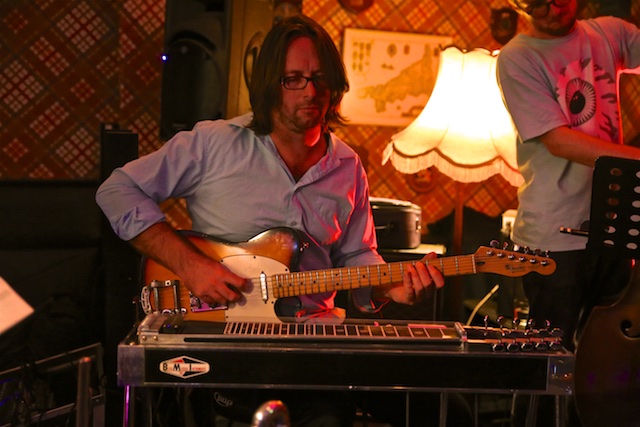
 On alto was Roger Manins. Although the alto is not his main horn he is extraordinarily fluent on the instrument. Langabeer has been focussing on multiphonics and microtonality of late and he and Manins showcased some atmospheric numbers utilising various blowing techniques. Manins has long impressed by playing in a variety of styles with equal facility. On guitar and pedal steel guitar was Neil Watson, bringing his mix of blues, Jazz punk, and avant-garde to the fore. Another iconoclast and one we love hearing. The pedal steel guitar has been in his possession for a year now and his rapid mastery of the instrument is impressive. A difficult beast tamed beautifully. On Bass was Eamon Edmundson-Wells. A versatile young bass player most often found in the company of experimental musicians. His performance on this gig was right on the money.
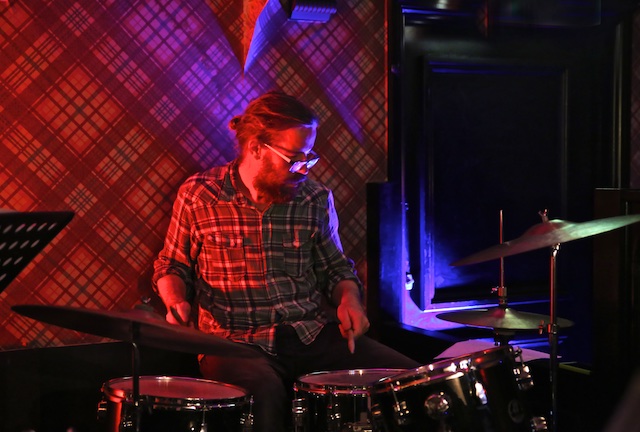
 On drums and percussion was Chris O’Connor. Perhaps more than anyone else O’Connor personifies this free-ranging music. Of all the New Zealand drummers, his are the widest-ranging skills. Colourist, minimalist, indie rocker, straight-ahead jazz, avant-garde, experimental percussion and film work. There is nothing he won’t tackle and everything he touches benefits from his musicianship. When a piece titled ‘Tapu’ was played O’Connor stole the show. While Langabeer played the difficult and wonderfully atmospheric Putorino (a traditional Maori flute of the Taonga Puoro family), O’Connor simulated the Tawhirimatea (A traditional whirring instrument dedicated to the god of winds). The effect was eerie and electrical. Later in the piece he blew through the stem of his snare stand – recreating the effects of the Pututara (a conch trumpet). Only O,Conner could have pulled this off so well. Like Langabeer, he has a deep awareness of multicultural issues.
 The one standard was Strobe Road (Sonny Rollins). A lesser known standard and played with enthusiasm. The remainder was a selection of Langabeer tunes, many referencing Maori of Kiwi themes. His tune Rata Flower was a stunner – it deserves to become a local standard. He has obtained funding from Creative New Zealand for this project and we might see a ‘Sketches of Aotearoa’ album soon. I truly hope this occurs and I will be the first to purchase one.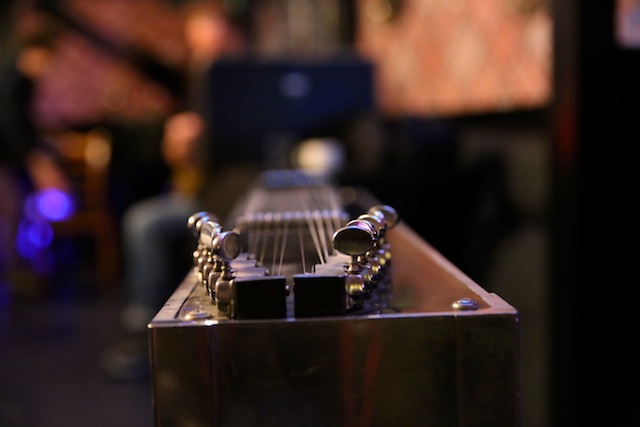
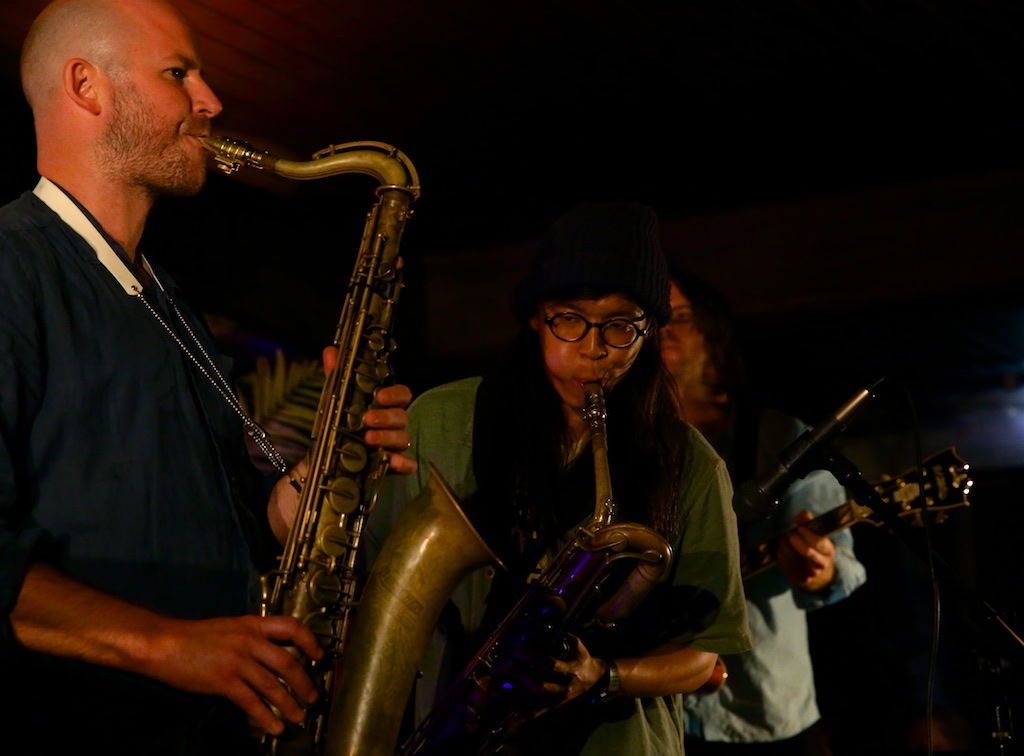 As a group of the worlds leading astrophysicists excitedly ran one last check. At the precise moment that the astonishing mathematical proofs confirmed Einstein’s theory of ‘gravitational waves’, the Circling Sun hit the CJC. This rare cosmic event released fresh gravitational waves which pulsed throughout central Auckland; altering the molecular structure of any ear within radius. It was an appropriate evening for the Sun to manifest this ‘climatic singularity’, preceded as it was by a dog-day as hot as any on record.
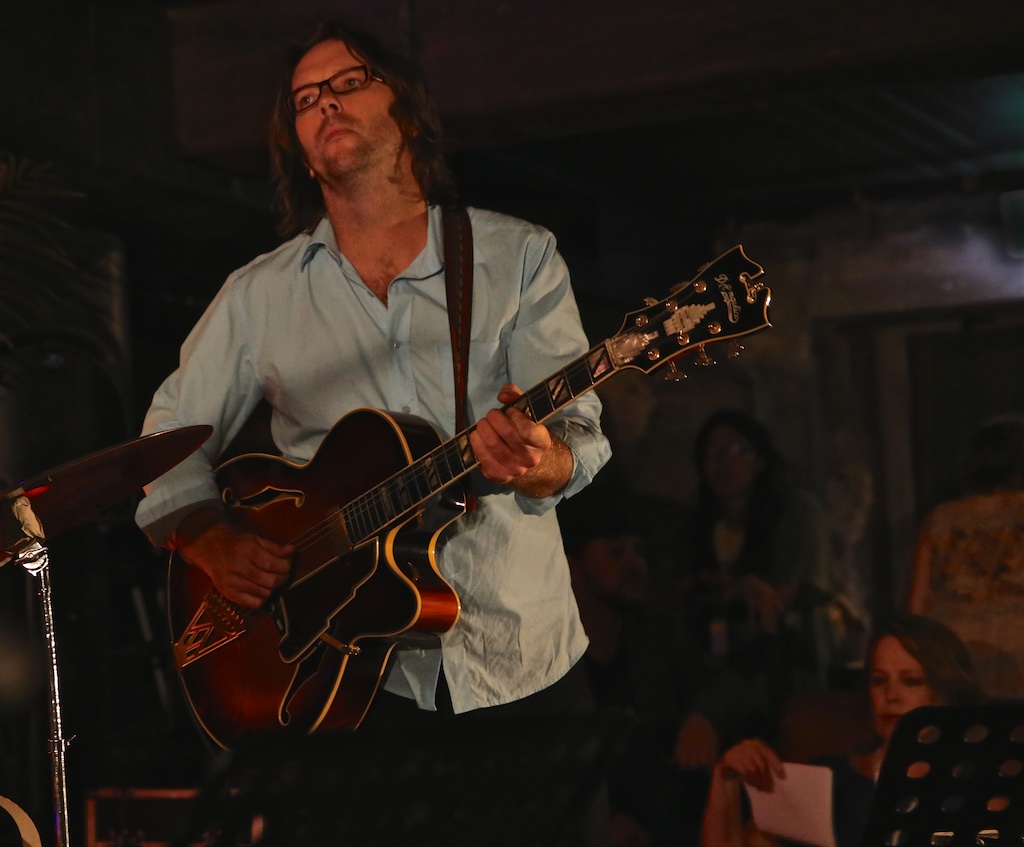
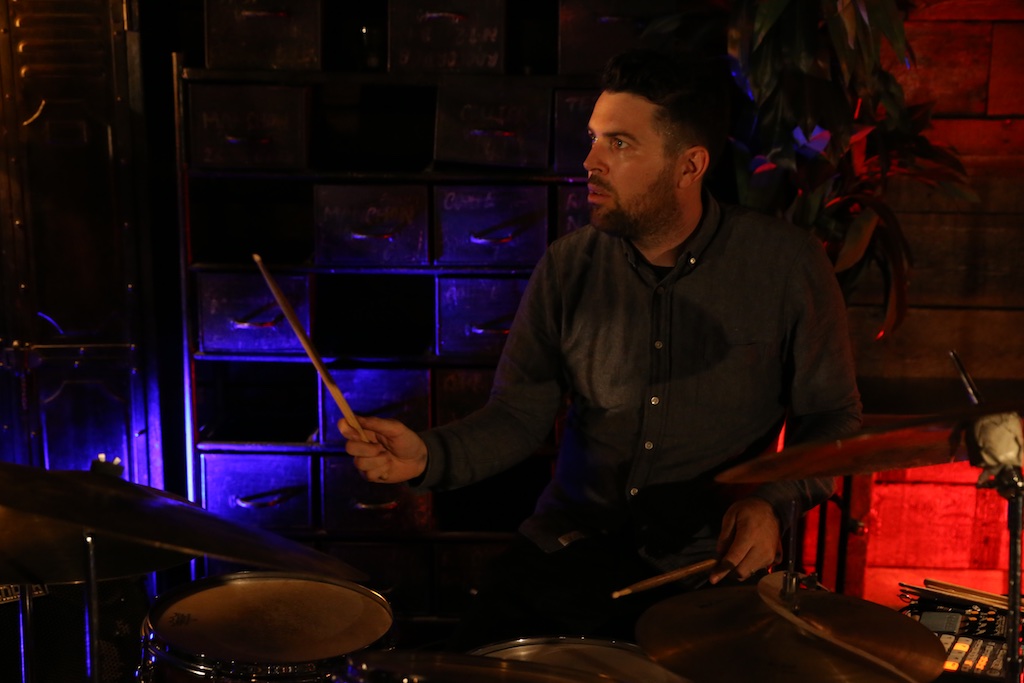 The Circling Sun is more a phenomena than a group. They defy musical form and yet exist convincingly in their own orbit; circling an altered reality. As with all wonders there is much to appreciate. The intricacy of their many machines, the indelible sonic footprint and the sheer joy they bring. I took some guests down to the club that night. Flamenco artists Isabel Cuenca and Ian Sinclair (and Ian’s wife Zarina). I wondered how they would react to this wild unconstrained mix of free improvisation and world beat psychedelic Jazz. Isabel the Flamenco dancer was quick to respond. ‘This is amazing, it has deep passion’. Passion is the heart of many musics and like authenticity it is a vital component. Long live the avant-garde – long live passionate music – whatever the genre.
 In his seminal work “This is Your Brain on Music’ neuroscientist Daniel Levitin reveals the following. ‘A liking for dissonance is a development arising from deeper listening and on attaining musical maturity. A very young child prefers consonance over dissonance, the mature listener increasingly values contrast and enjoys having expectations confounded. After spending time listening to deeper or more complex music, lightweight consonant passionless music becomes boring. There is a neural basis for this’.
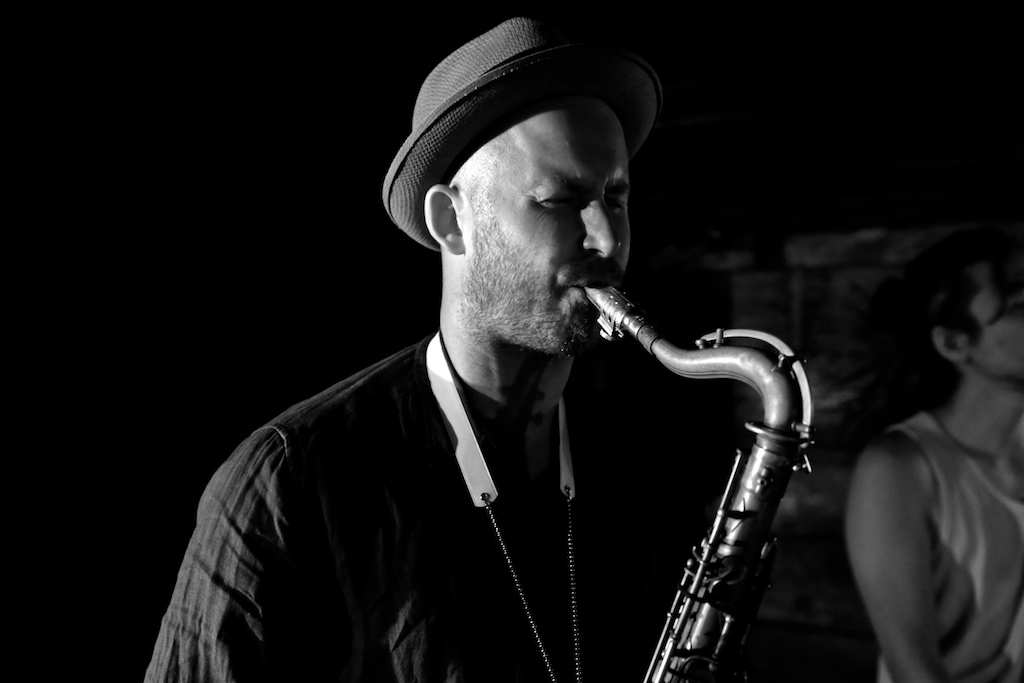 The Montreal born Dyne was just the drummer for a band like this. His musical credentials are impeccable. His expertise extends well beyond the kit to that of producer and forward-looking experimentalist; electronic future beats, hip hop, house, afro beats, boogie funk and instrumental jazz. His work with Ladi6 has brought him to wider attention, but his own Lord Julien recordings and his deeply funky ‘Down in the Basement’ (Vol 2) cuts are well worth checking out. This band has few constraints and it gives him ample room to stretch.
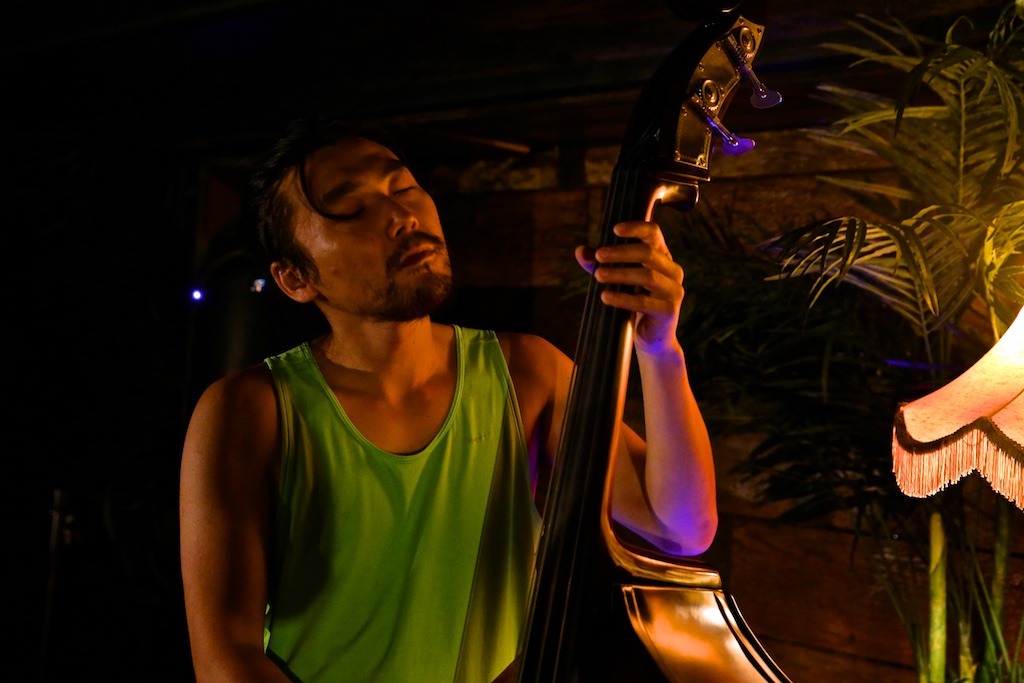 I have long been a Watson fan. The man is fearless and his musical ideas cross territory few others dare to traverse. His increasing mastery of the pedal steel already sets him apart, but his ventures into the experimental avant-garde with the instrument are unique in the New Zealand context. While an accomplished studio musician his preferred gigs are those without boundaries. With Watson you get Americana, blues, Jazz psychedelia or wild forays referencing Marc Ribot & Sonny Sharrock. The Sun suits his wild eclecticism.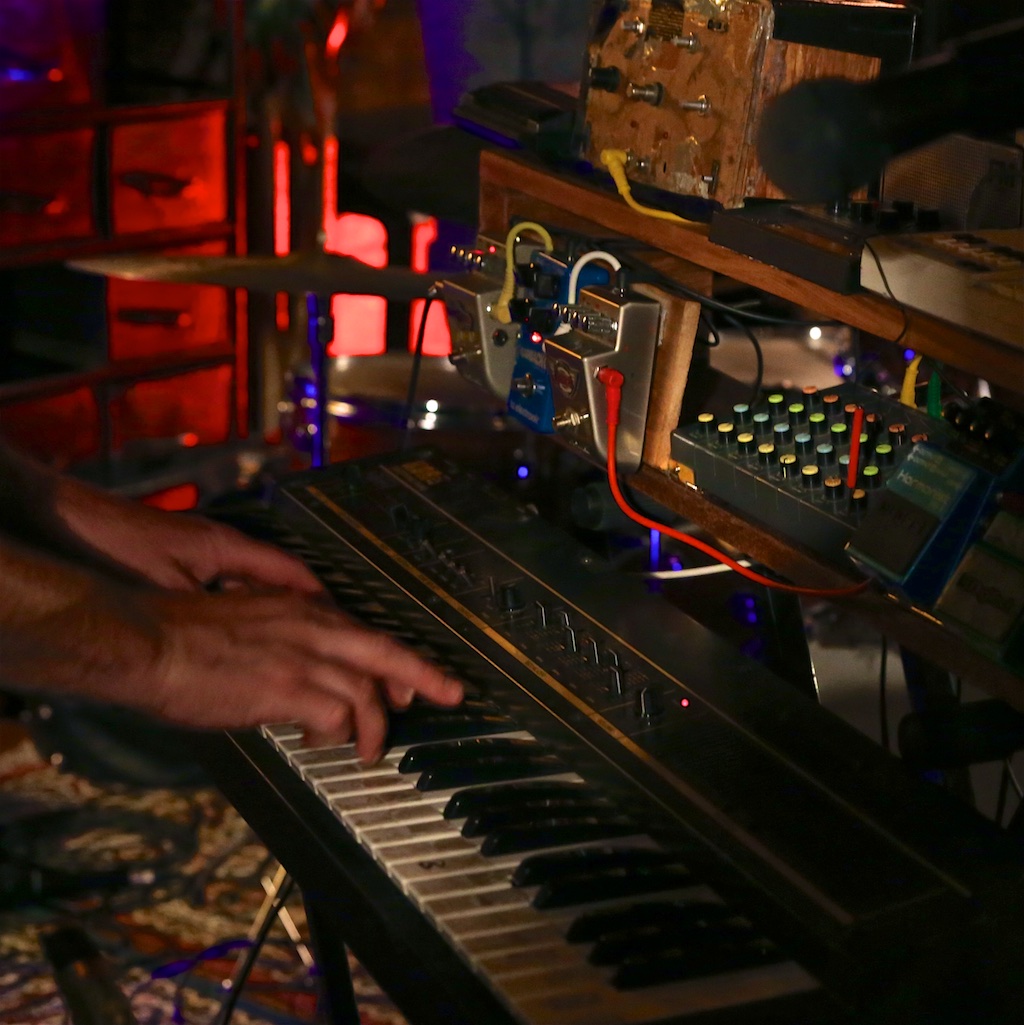
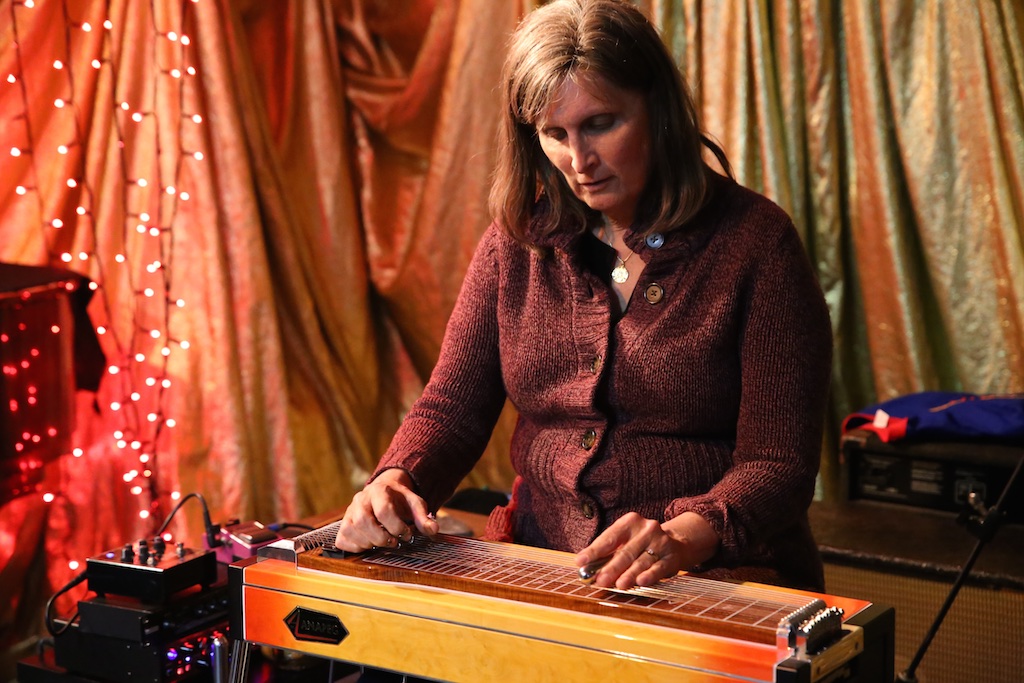 Lately I have attended a number of music workshops. Although not a musician I gain a lot. They offer fascinating insights into the artists creative process and if your lucky, insights into a particular instrument. With music, the more you listen, learn, observe and delve, the more you gain. My reason for attending Susan Alcorn’s workshop was probably different from most attendees. The majority were guitarists anxious to glean practical information or wanting to be convinced that this complex instrument was for them. A handful of others sought knowledge for knowledges sake – dipping another toe in the water of sonic learning.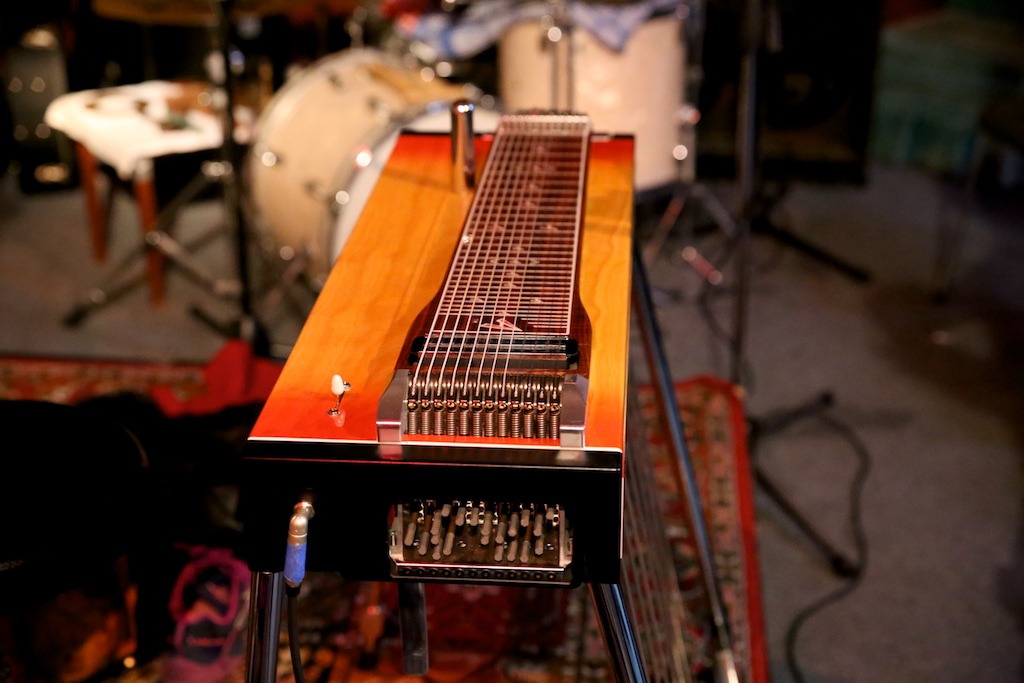

 Mark Lockett is a New York based drummer who visits Australasia once a year. Each time he returns he brings with him a piece of his adopted city. He is an original drummer comfortable in diverse situations; a benign but strong presence in any lineup. His artistic approach under-pinned by an easy confidence and this enables him to interact well and to read every nuance. His wide open ears, communicating the pulse and possibilities of the life he lives as a working musician in a big metropolis. There is also a humour he radiates, which peppers his comments and drumming like aromatic seasoning. A Mark Lockett gig is always original and always enjoyable.
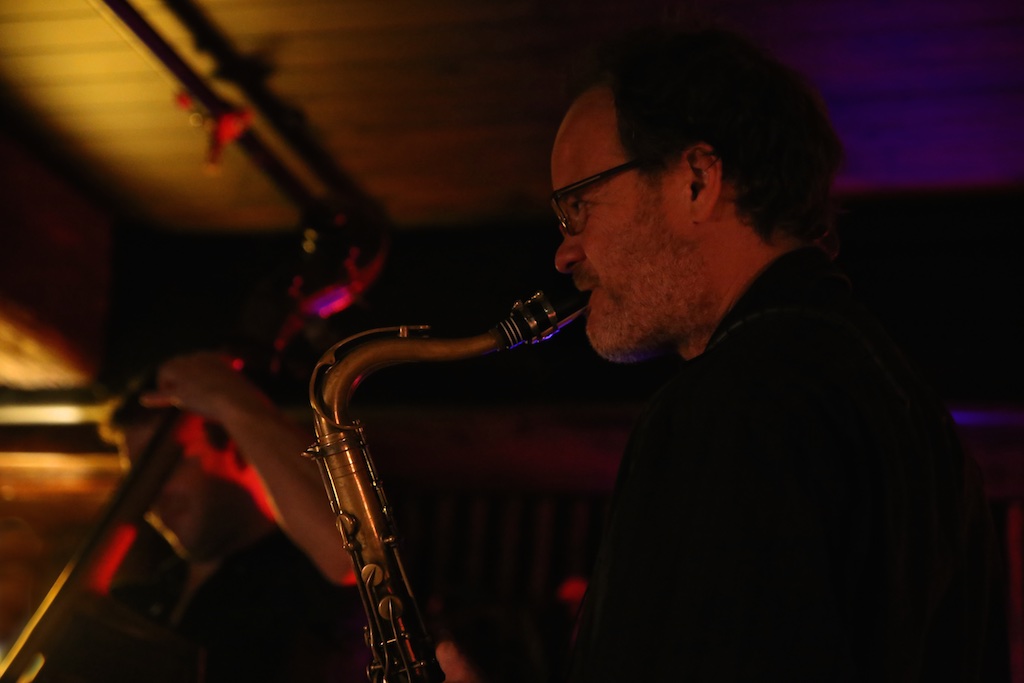 The music of Ornette Coleman while not without constraints frees the artists from many of the hard-wired rules. It doesn’t sound at all out-of-place now but I can remember the storm that surrounded its arrival. A treat for me was the groups rendition of ‘Congeniality’ from the seminal ‘The Shape of Jazz to Come’ album. The controversy surrounding this material is long behind us and every improvising musician has a little of Ornette in them whether they acknowledge it or not.
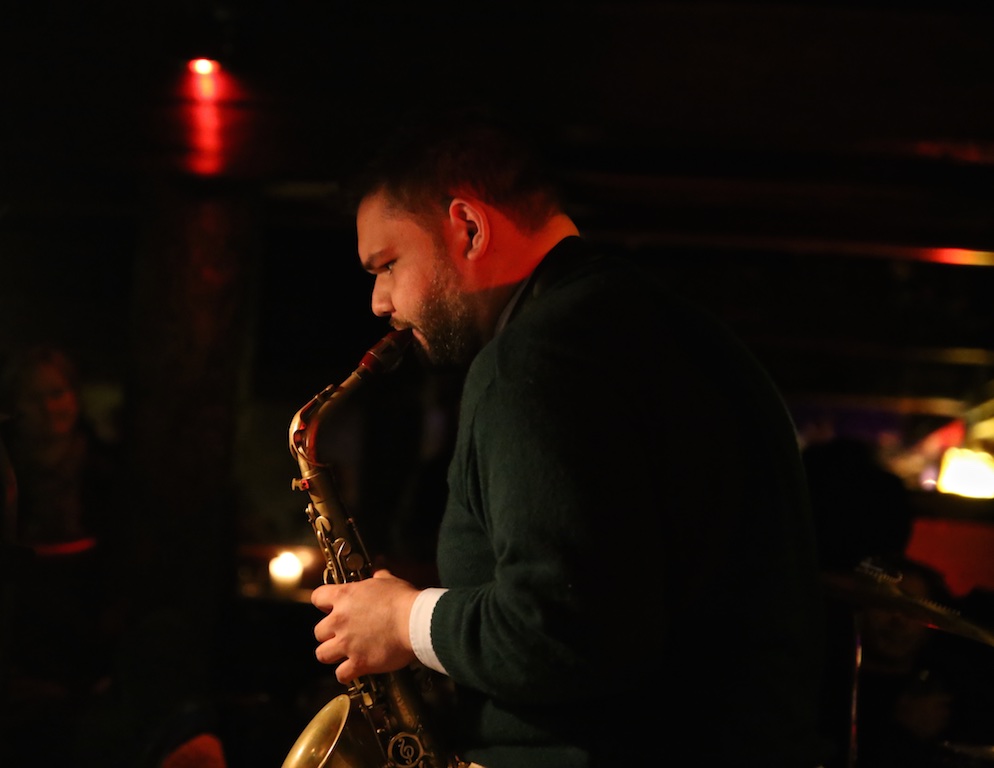 Lockett often forms trios or ensembles that have no chordal instruments. While the musicians played ‘inside’ and ‘out’ they also attempted something we seldom hear in New Zealand. The opening number of the first set was Shiny Stockings (Frank Foster) and they played this in the style of the Mulligan piano-less quartets. Bass, Alto and Tenor in counterpoint and working within the changes. This was nice hear. I have an appetite for more of this.
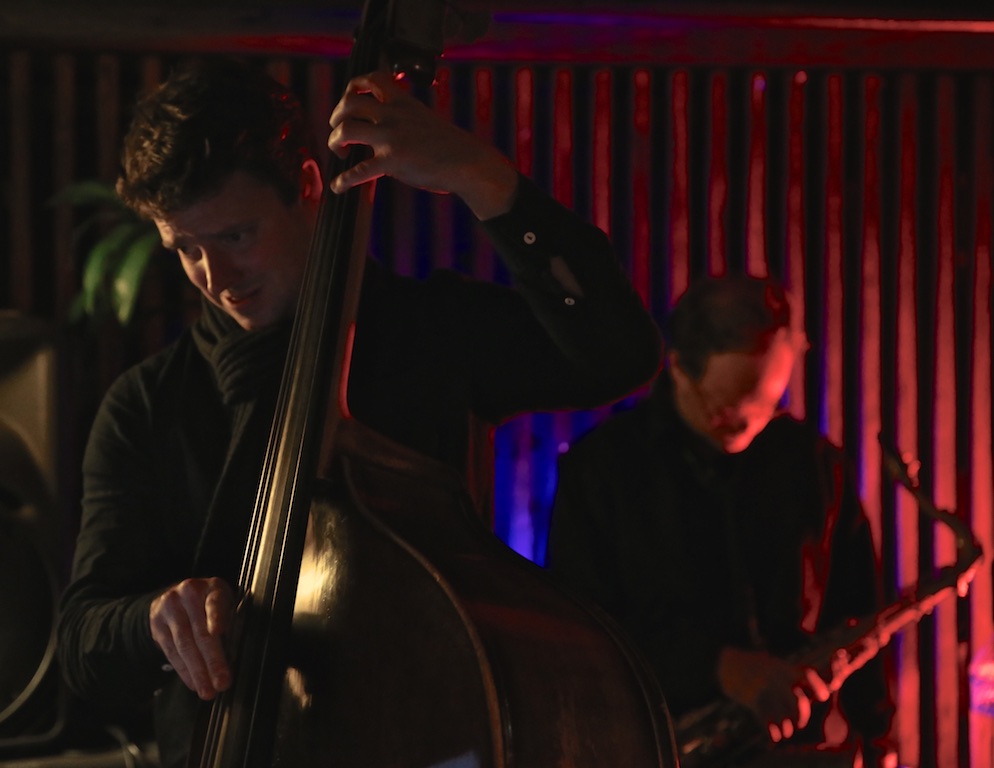 “Playing like that (fast and furious) is meat and potatoes in New York”, he said. He was once told that he could get better control if he held his sticks further down than usual. Because of that and because of his melodic approach, he is very interesting to watch. Somehow the sound is cleaner and with musical drumming like this who needs a chordal instrument. I can’t wait until his next visit.
 JazzLocal32.com