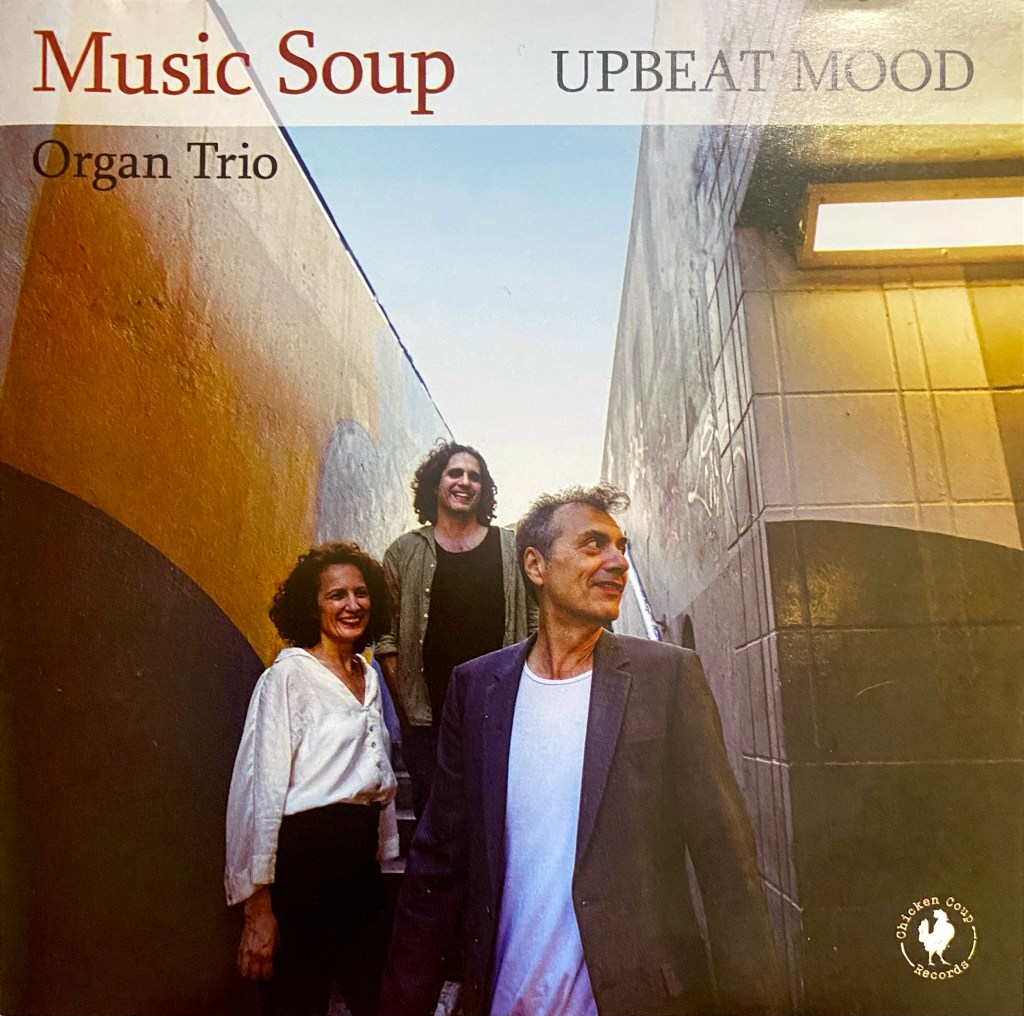
One of the most pleasing formats in Jazz is the B3 trio. It endures because it has warmth and groove in equal proportions and it makes us happy. To unleash the full potential of the B3 a bass pedalboard must be used, and this difficult-to-master art is increasingly rare. There are hands, knees and feet, all doing different things, there are two keyboards and a bewildering array of sliders and knobs to be coordinated. On the new Music Soup album we not only have a skilled pedaling-organist in Evgenia Karlafti but on two tracks a guest pianist (Kym Purling) is added into the mix. This adds to the complexity, as three chordal instruments can clash and crowd each other out; so skilled musicianship and the right compositions are called for. That is what you get with ‘Upbeat Mood’.
The guitarist, Nestor Demopoulos, co-founder of the trio with Karlafti, can power up the groove with solos reminiscent of Pat Martino, Grant Green or Paul Bollenback. His tone is a warm embrace and his comping urges the soloists to greater heights. The other trio member is drummer Vagelis Kotzabasis and his contribution nicely rounds off the core trio. They respond to each other throughout, enhancing the swing feel by their interplay. It is particularly evident on the opening track, ‘Korean Apartment’, a masterclass in Groove.
There is variety throughout, but all of the tunes are imbued with a sense of intimacy—the sort you might experience in a small Athens Jazz club on a balmy summer night. Unsurprisingly, Music Soup has come to the attention of notables like Tony Monaco and Pat Bianchi, the latter supplying liner notes for the album. The tunes are all originals by Karlafti and Demopoulos, except for Burt Bacherach’s ‘The Little Red Book’. The album can be purchased as a CD at www.musicsoupband.com or accessed on streaming channels.
Personel: Evgenia Karlafti (B3 organ), Nestor Demopoulos (guitar), Vagelis Kotzabasis (drums) with Kym Purling (piano – tracks 3 & 6) and Henry Gergen (trumpet track 8).
JazzLocal32.com was rated as one of the 50 best Jazz Blogs in the world by Feedspot. The author is a professional member of the Jazz Journalists Association, a Judge in the 7VJC International Jazz Competition, and a poet & writer. Some of these posts appear on other sites with the author’s permission.
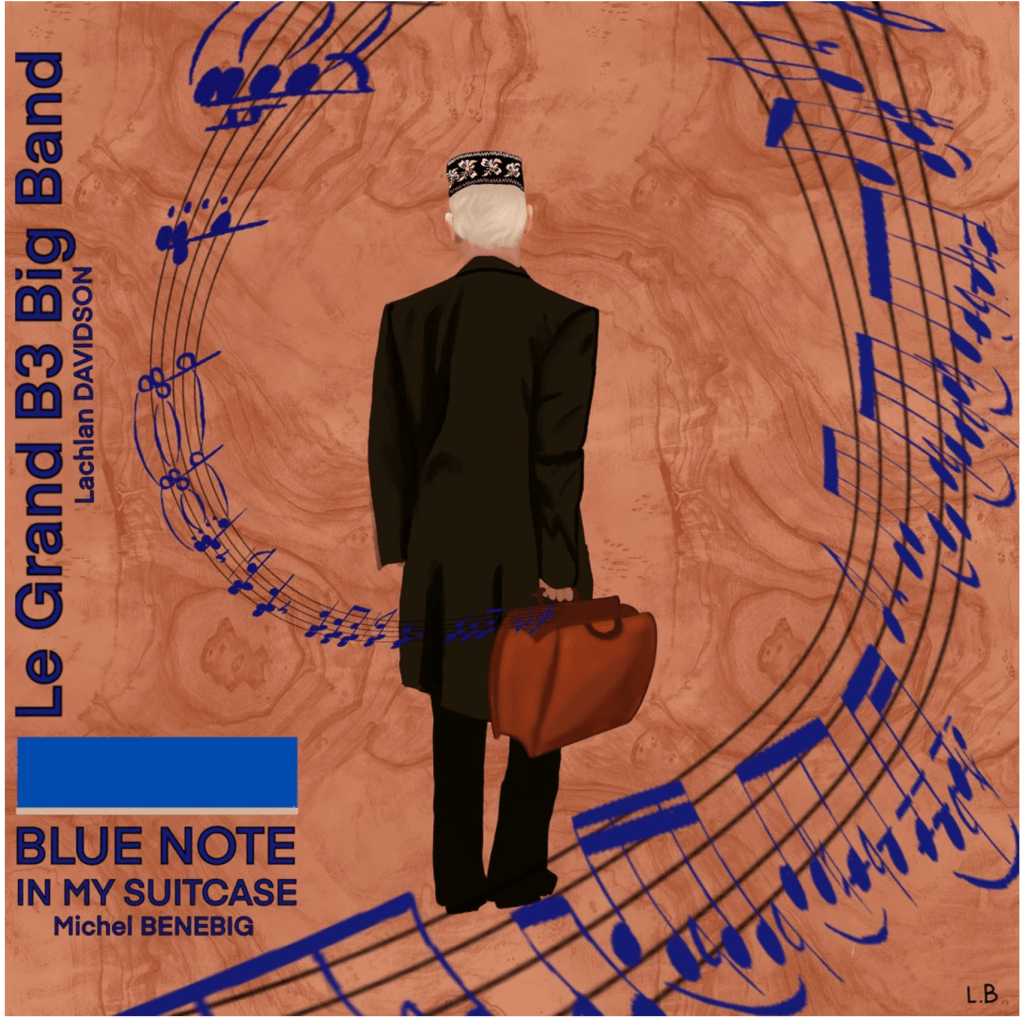
Earlier this month ‘Blue Note in My Suitcase’ was released by B3 Master Michel Bénébig. It is his sixth album and his first with a Jazz orchestra. The album hits the groove spot immediately, and as you listen you realise what a perfect pairing Bénébig’s B3 and the Le Grande B3 Orchestra is, aided convincingly by Lachlan Davidson’s lovely arrangements. The charts are well constructed, giving free rein to the soloists and never overwhelming the organ. Davidson is a respected Australian arranger, teacher, band leader and multi-instrumentalist and his influence is strongly felt here.
It is always a pleasure to hear Bénébig’s in-the-pocket playing but with an orchestra like this charging the atmosphere, he digs deeper than ever into the groove. The ten tunes on the album are excellent groove vehicles, all written by Bénébig, with Davidson credited as co-composer on ‘Try To Explain’. I have always appreciated Bénébig’s writing but he has excelled himself here.
The opener ‘Alenka’s Mood’ is warm and funky, immediately infecting you with its slinky rhythm. It offers up a promise which is fulfilled throughout. As you work through the tunes you are drawn back to the days when infectious danceable music like this was loaded onto jukeboxes and played in steamy groove joints pulsating with dancers. The music brings a smile to your face and fills you with joy and, like his earlier ‘Shuffle’ album, you will reach for it repeatedly. Joining him is Bénébig’s daughter Lucia who is responsible for designing the album cover and creating animation for a promotional YouTube clip. I have posted the YouTube cut ‘Black Cat’ from the album.
A time-honoured B3 big band tradition is followed here, featuring 13 horns which lends considerable heft to the rhythm section. It would be easy to drown out soloists and to eclipse the organ with a behemoth like this but the soloists get plenty of room to shine, and shine they do. The album is available now on Spotify and a vinyl edition is on the way for audiophiles.
Mick Fraser (trumpet 1), Shane Gillard (trumpet 2), Gianni Mariucci (trumpet 3), Rob Planck (trumpet 4), Roger Schmidl (trombone 1), Ben Gillespie (trombone 2), Jessica Jacobs (trombone 3), Adrian Sherriff (bass trombone), Lachlan Davidson (alto sax 1/flute 1/sop sax), Rob Simone (alto sax 2/flute 2), Anton Delecca (tenor Sax 1/clarinet 2), Paul Cornelius (tenor sax 2/clarinet 1), Stuart Byrne (baritone sax/bass clarinet), Jack Pantazis (guitar), Gideon Marcus (drums), Michel Bénébig (A105 Hammond organ Leslie 147), Phil Noy (recording engineer), Lachlan Carrick (mastering Engineer), Lucia Bénébig (front cover art)
~Random Delights~
Sambandha: Heartcore For Nepal
Recently, I received a press release from colleague Arlette Hovinga. The project outlined was the vision of Mikaela Bokova, the manager of Kurt Rosenwinkel’s independent music label, Heartcore Records. The object was to raise money for disadvantaged children in Nepal, and on board for this recording are an impressive list of jazz and world music luminaries: John McLaughlin, Christian McBride, Terri Lyne Carrington, Gerald Clayton, Kit Downes, Anmol Mahara and Dinesh Pun. Sambandha was written by combining two traditional Nepalese folk tunes, and it’s performed by the 20-piece children’s choir Bokova organised while running a music workshop at Mangala School, Babiyachaur, Nepal.
The revenue from the release will go towards buying the children’s musical instruments. In your browser or here, click on heartcore-records.com then once opened, locate Sabandha and purchase your download (5 Euros). It can also be purchased in Bandcamp. Please pass on the word and enjoy. I play this often. You will also find a delightful video on YouTube on the making of this by typing Heartcore for Nepal Sambandha. There is a deficit of joy in today’s world, but giving to those in the greatest need is a sure way to top up the supply.
Skilaa: Tiger In The Water
The cut I am posting is tagged ‘psychedelic R&B’ and the descriptor is intriguing. Everyone featured in this band is an accomplished jazz musician and it shows. Boundaries have been deliberately blurred until a new, fresh kind of music emerges, which catches your attention because it is familiar but not familiar. The concept, compositions and delightful artwork are those of vocalist Chelsea Prastiti. Her boundless energy is evident here. In Aotearoa, it is not unusual for Jazz-trained musicians to make inroads into Indie-Rock, Soul-Funk and Indie-Pop and do it well, even better (think The Beths). Skilaa will be a band to watch. The band are Chelsea Prastiti (vocals, compositions, artwork), Tom Denison (bass), Adam Tobeck (drums), and Michael Howell (guitar) with guest vocalist Crystal Choi (recorded by Callum Passels).
The ‘Astounding Eyes of Rita’ – Trio Natalino Marchetti, Francesco Savoretti, Mauro Sigura
I have previously posted on Mauro Sigura, an oud improviser. He recently sent me this clip of his trio featuring oud, with accordion and percussion. The tune is a well-known composition by Anouar Brahem, ‘The Astounding Eyes of Rita’. Improvised music like this is prevalent across the Mediterranean region and deserves a wider audience. This is such a lovely tune and so beautifully realised here. Mauro Sigura (oud), Francesca Savoretti (percussioni), Natalino Marchetti (fisarmonica). Recorded in Rome.
It is not the first time Kevin Haines and Dixon Nacey have recorded together and I hope it won’t be the last. There is a symmetry binding these musicians, one born of respectful dialogue between generations. Both are well-established and neither has anything to prove. When the stars align in this way, the conditions are right for intimate conversations and that is what we get here. In a departure from their earlier trio albums with Samsom (Cross Now and Oxide), there are a number of standards here, which are balanced by originals composed by the pair. From the swinging rendition of ‘Stompin’ at the Savoy’ to the Nacey original , ‘Sco’, the album establishes the depth of its conversational credentials.
It is surprisingly rare to come across ‘standards’ gigs these days as new music is in the ascendency. It was at such a gig that I first saw Nacey, Haines and friends, play these lovely tunes, vehicles that have stood the test of time. In a quieter moment during the second set, they played Herb Ellis’s Detour Ahead. It was extremely well realised and I thought at the time; these guys should record a few standards as their interpretations bring something fresh to bear.
The album arose from a MAINZ project and there is an irony in that MAINZ (Music and Audio Institute of New Zealand) is considering closing the school. That would be shameful and a disservice to the wider community. There has seldom been a time in human history when we need the arts as much as in the present times. This is especially so with music which can guide, calm, challenge and interpret life’s vicissitudes. The pandemic, however, has given cover to the philistines and everyone from Councils to Academic institutes is wielding a destructive knife.
The album was self-released and is available on streaming platforms. If you type ‘Dixon Nacey & Kevin Haines, Conversations’ into your search bar you’ll find it. Past and present sit comfortably here and a touch of nostalgia is always welcome in troubled times like these.
JazzLocal32.com is rated as one of the 50 best Jazz Blogs in the world by Feedspot. The author is a professional member of the Jazz Journalists Association, a Judge in the 7VJC International Jazz Competition, and apoet & writer. Some of these posts appear on other sites with the author’s permission.
The pandemic hasn’t stopped the music, and while it is true that the clubs, bars and concert halls are placed out of reach for many, music has the qualities of water. It will flow through the cracks until it has found its own level. The recent Kiwi lockdown was mercifully short, and in random and serendipitous ways new music found me. As always, I was happy when it did. Below are three very different albums – check them out.
Early Risers ~ John Scurry’s Reverse Swing
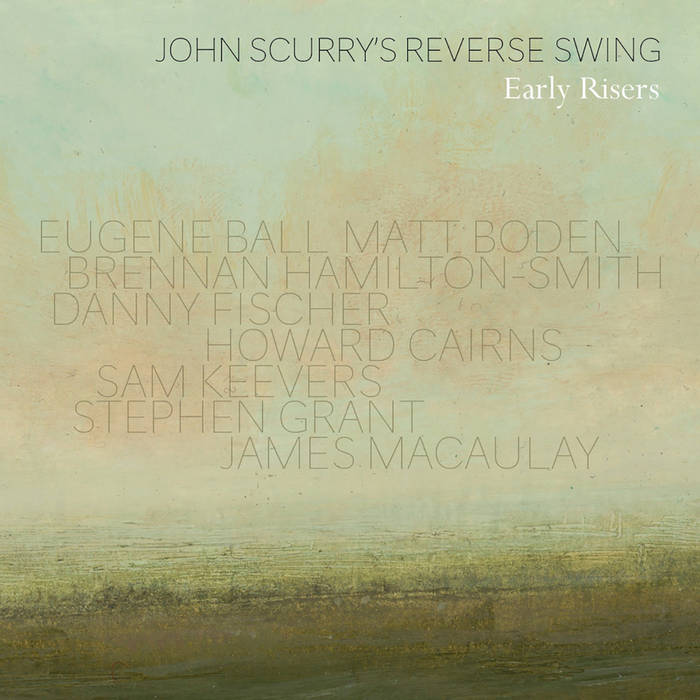
During our recent lockdown I received an album in the post from Lionsharecords. The album, ‘Early Risers’ is John Scurry’s Reverse Swing ensemble, his second such release. Scurry’s earlier Reverse Swing album ‘Post Matinee’ was showered with praise, with one American reviewer describing it as ‘Ellingtonian’. The 2020 album has 19 original tunes spread over two CD’s and we are invited to view each volume as distinct but complementary.
Having recently travelled to New Orleans, I detected those influences in this band immediately. When you spend any time in NOLA, you realise that that city’s influences are very broad indeed. Everything from swing to soulful gator-funk, from Sun Ra to the various free jazz offshoots. It is a living, breathing up to the minute music and one with its own flavour. So it is with ‘Early Risers’, and with this album there are also a multiplicity of rich local influences.
I loved the album for its warmth and approachability. It is instantly engaging, but this is not a nostalgic romp. There is real depth here and many treasures are revealed to the deep listener. The interplay between the musicians is simply stunning and their time feel beyond caveat. Track one on the first album is my favourite and while comparisons can be odious, this gave me the same feeling as I had when first hearing the Cy Touff Octet & Quintet album. Perhaps there is even a hint of ‘West Coast’ as well – Sheldon ?
There are many moods and whether a gentle ballad or a hotter number, all contribute uniquely to the whole. Underpinning each number are the quiet urgings of leader John Scurry’s guitar. We hear swing style guitar infrequently these days and more’s the pity. The tunes here were all penned by Scurry and he is also the co-arranger and producer. He has been a popular feature of the Australian scene for many years and I wonder what took him so long to launch this particular project. to listen go to Early Risers Lionsharecords
The other arranger (and horn arranger) is trumpeter Eugene Ball. Ball is another veteran of the Melbourne scene and a Bell award winner. I associate him with the moderism of Andrea Keller. Here you are overwhelmed by the richness of his sound. His tone production is often reminiscent of the latter-day swing trumpeters like Harry Sweets’ Edison and Henry ‘Red’ Alan.
I have also encountered James McCauley, and again I associate him with Keller. He is perfect in these very different rolls. The band members here are John Scurry (guitar, arrangements), Eugene Ball (trumpet, arrangements), Brennan Hamilton-Smith (clarinet), Stephen Grant (alto sax), Matt Boden (piano) Howard Cairns (bass), Danny Fischer (drums), + Sam Keevers (piano). The textures, tunes and uncanny interplay render this a terrific album. It may have its roots in traditional swing, but I defy anyone, whatever their taste in jazz, not to love this. It is released on Julien Wilson’s lionsharecords.com and on bandcamp. All art-work by John Scurry.
Wax///Wane ~ Lucien Johnson
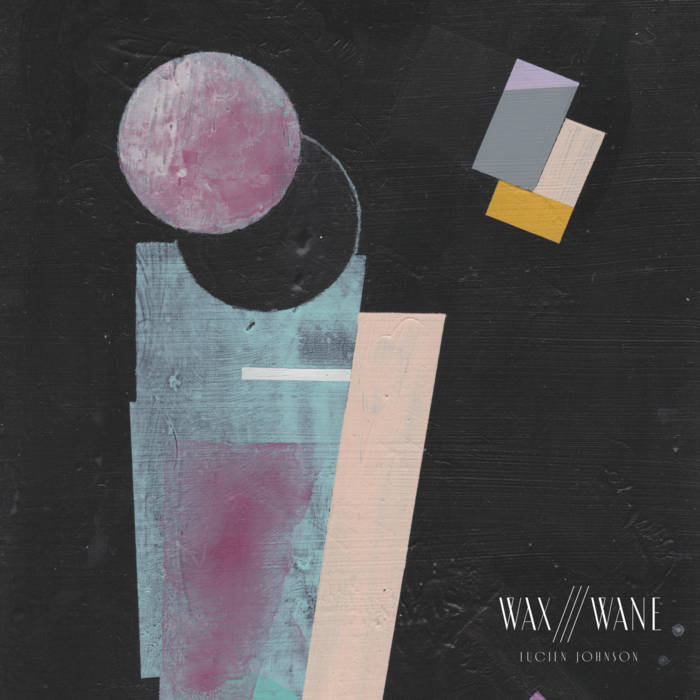
Wax///Wane was released over summer and I’ve just caught up with it. I am always keen to check out gigs or albums featuring Lucien Johnson, so I downloaded it on Bandcamp. There was no information about the band or the recording on the album page, but my ears began to fill in the gaps. John Bell had to be the vibes player, surely it was him (an online search confirmed that)? Few south of the equator punch out modal grooves quite as convincingly as Bell. Of the remaining four musicians, two were known to me and two not. Michelle Velvin was on harp, Tom Callwood on upright bass, Cory Champion on drums and Riki Piripi on percussion (listed under the undividual tks).
The album features six compositions and each of these has an evanescent quality. They hint at places we think we might know, but can’t quite remember. Blue Rain, Forest Rendezvous, and Rubicon appear as if in a dream and as with the missing liner notes, we are encouraged to fill in the gaps with our imagination.
Blue Rain
Johnson has chosen his bandmates well. Bell and Callwood are genre defying and have open-ears, and as with Johnson are well immersed in the freer regions of improvised music. I have seen Cory Champion several times, but never heard him in this context; very impressive. Adding a harp player and percussionist added texture in finely hued layers, and this gave the album that delightful Alice Coltrane feel. It’s great to see the harp revived as an improvisers instrument and especially with the vibes. They could get in each others way, but in skilled hands this is avoided and a shimmering pulse arises to good effect.
Johnson is a musician we most often associate with the Wellington scene, but these days he is perhaps better termed an international musician. Like all modern saxophonists, there is a foundation of Coltrane in his sound. There is also an airy freedom. Here, he has curated a groove fest. The sort of grooves that Bobby Hutcherson, Alice and John Coltrane, Julian Priester and others explored. It is what might be loosely termed spiritual Jazz. Music defying the mundane, an invitation to a better place where gravity is abandoned. In times like this we need music, and actually, we need more music like this. Music that stimulates the imagination and doesn’t preach. The playing here is superb but don’t over think the experience, sink into it and enjoy the trip. The cover-art is by Julien Dyne. Available on Bandcamp Lucienjohnson.bandcamp.com
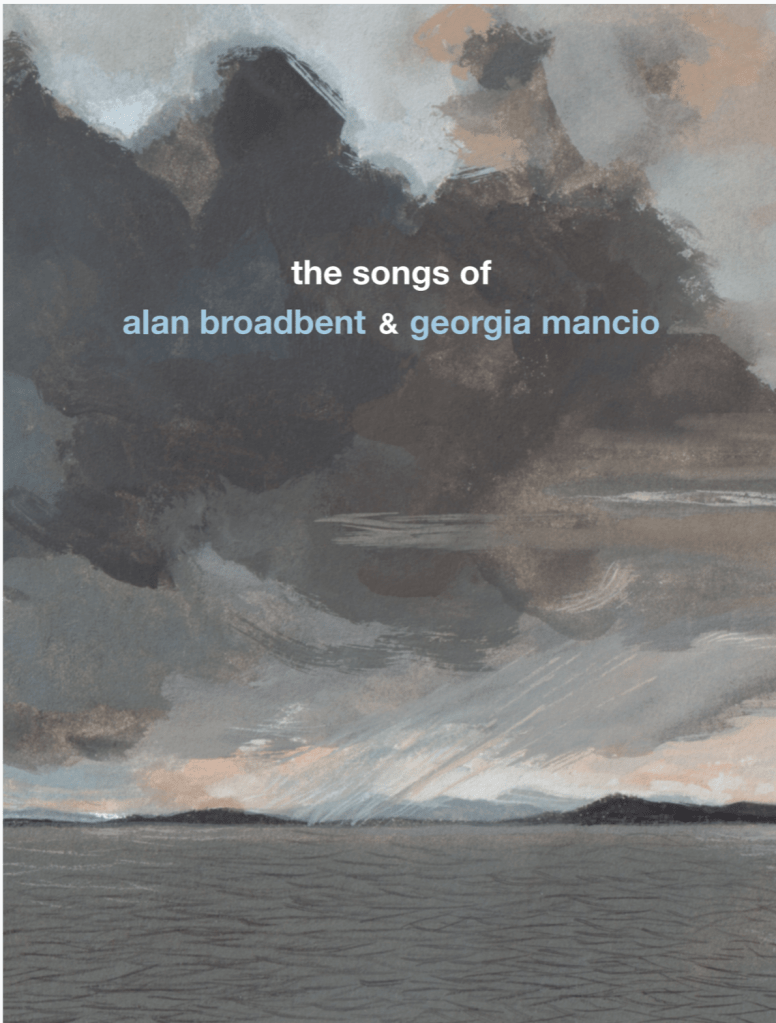
Alan Broadbent/Georgia Mancio ~ ‘Quiet is the Star’
Alan Broadbent has an unerring ear for melody and this is in part, why he makes such a sensitive accompanist. While his albums can really swing, they also take direct aim at the heart. An astonishing technical mastery is evident but it is never allowed to obscure the essence of a tune. To put it more simply, he connects us to real emotions and to human life with its manifest joys and frailties. There are innumerable facets to his long and formidable career and none should be overlooked.
Most recently, he released ‘Trio in Motion’ his second album with bassist Harvie S and drummer Billie Mintz. And if you haven’t done so before now, check out his discography, a body of work that astounds; critically acclaimed albums, two Grammys and so it goes. The man is a legend.
‘Quiet is the Star’ is the second album from the Broadbent/Mancio duo. Their last album’ Songbook’ aired in 2017 and it was pure delight; this new release is a welcome follow up. Georgia Mancio is a London-based award-winning vocalist and lyricist and the pairing has reaped dividends. They have performed together since 2013 and toured Europe and elsewhere to acclaim.
Mancio has a lovely voice and she uses it to great effect, her emphasis though is on breathing life into her lyrics. The stories she reveals are intimate and she invites the listener to share in these experiences. While all good duos are conversational, here we are invited in on the conversation and it is a privilege. Released by Roomspin Records 27 March. Cover artwork Simon Manfield.
JazzLocal32.com was rated as one of the 50 best Jazz Blogs in the world by Feedspot. The author is a professional member of the Jazz Journalists Association.some of these posts also appear in other music sites. When purchasing, please support the Bandcamp platform whenever possible. Respect musicians rights.
Frank Gibson Jr is a legendary figure on the New Zealand Jazz scene. A drummer like his father before him and a Jazz touchstone throughout much of my life. He and I attended the same Grammar school and although he and Murray McNab were two years ahead of me, they were known even then as being cool Jazz- guys. Gibson’s love of Monk and of the Hard Bop era has always been his thing, and it is evidenced in his gigs. No one about town does it better.
With the New Bop Quintet, we get a fresh Gibson line up this time; within minutes of hitting the stage, they’d recaptured the joy of that era. The setlist was broad and included a few tunes that we seldom hear; it also included a nicely penned original by bass player Cameron McArthur titled ‘Three Up, Three Down’. There was only one Monk tune (Straight no Chaser), and the applause after that was thunderous. Everyone loves Monk.
As an opener, the band gave a crackling rendition of a favourite Shorter tune ’Speak No Evil’ and there is no better way to commence a standards gig. Gibson is a strong drummer and his style exemplifies this era; his bop-influenced grooves being unmistakable. In this unit, he has changed things up by including some different musicians. This gave the gig an interesting edge and it worked a treat. Keven Field could fit into any line-up, but he is seldom in a Hard Bop unit. His distinctive harmonic approach edged the sets into new territory, and everyone stepped up to meet the challenge.
You could not have a Hard Bop gig without featuring Benny Golson tunes; there were two of them, ‘Along Came Betty’ and ‘Stablemates’. These are essential Hard Bop classics, and no one ever tires of them. The tune which really stood out though was a seldom played composition by Dexter Gordon, ’Soy Califa’. This was the opening track on his ‘A Swingin’Affair’ album and once heard, loved forever. To do justice to a tune like this requires chops and bravery and the evidence of both was very much on display last Wednesday.
On ‘Soy Califa’, the opening drum beats and the tightly executed head arrangement hooked us, then Pete France took it to a different level entirely. He and Mike Booth gave memorable solos. It is a common complaint that we see too little of France (a Scottish born saxophonist). He is highly regarded about town and when his tenor-saxophone sings, it is wonderful to behold. I have posted a clip of New Bop’s ‘Soy Califa’.
Soy Califa (Gordon)
There were also flawless performances from Mike Booth, as this is the style and era where we hear the best of him. He and France were very well matched and as the band played on, you could feel their enjoyment and their deep love for this music. Field and McArthur while hidden in darkness, were the essential ingredients that rounded off a heady brew.
Whether it’s playing with locals or with Jazz greats, travelling or teaching, Gibson has achieved much in his life; to top that off he has recently gained a doctorate. This was the first CJC gig as we emerged from the second lockdown and it attracted a capacity audience. It was great to have the music back and nice to have it ushered in by a quality Hard Bop unit like this.
New Bop Quintet: Frank Gibson (drums), Mike Booth (trumpet), Pete France (tenor saxophone), Kevin Field (piano), Cameron McArthur (upright bass). The gig took place at the CJC (Creative Jazz Club), Anthology, K’Road, Auckland. September 30, 2020.
There are a number of things that should be on every music lovers bucket list. Experiencing a Basie Orchestra gig live is one of them. This band has the history of modern music in its DNA and after 83 years on the road, they are in their prime. Goodman was always referred to as the ‘king of swing’ but in my view Basie was a better contender for that title. His brand of swing had it’s nascent stirrings in 1927 when Basie joined Bennie Moten. When that band folded he took many of the musicians with him to form the Basie Band in 1935. The Basie band possessed a unique sound, fueled by a nine-piece line up featuring legendary greats like Lester Young, ‘Papa’ Jo Jones and Walter Page. Johnny Hammond heard them in 1936 and invited them to New York where at his suggestion they expanded to become a thirteen piece jazz Orchestra. At this time they were joined by Freddie Green and others. Skillfully, they incorporated the nimbleness of the Kansas City small ensemble swing-feel into a new sound.
When we listened to the Orchestra in Auckland a few nights ago, every iteration of their 83 years was touched upon. Early and contemporary charts, the gorgeous highly arranged charts from Neil Hefti, Frank Foster and Quincey Jones ‘second testament’ era, some newly arranged material, plus a fabulous tribute to the Basie/Amstrong/Fitzgerald collaborations. Giving added weight to that celebration was the inclusion of vocalist Carmen Bradford. Bradford was originally hired by Basie himself and so she has a long association with the orchestra. Hers is a big voice and an instrument perfectly suited to Ella’s songbook. She is a Jazz vocalist in the traditional sense and it is no wonder that Basie gave her a shot. At times she sang duets with various of the band members, but it was when she and Scotty Barnhart got together that the sparks really flew.
Barnhart, a two times Grammy winner is the musical director of the Basie orchestra and a featured soloist. His Louis Armstrong tribute captured not just ‘Pops’ but the great man’s contemporaries, an often overlooked cohort who deserve to be examined more often than they are. Modern trumpet styles are a long way removed from the street rich dirty growls and blues-infused storytelling of those times. A sound which always communicated a world of raw emotion and deep humanity. As the tribute tunes moved through the era, we heard everything from the lighter-hearted ‘A Tisket a Tasket’ (a traditional nursery rhyme), to Gershwin classics like ‘A Foggy Day in London Town’ or ‘Summertime’. Some of the numbers predated the Basie bands like ‘Struttin With Some Barbecue’ (Armstrong 1927) while others were more contemporary like the gorgeous arrangement of Stevie Wonders ‘Ma Cherie Amour’.
Among the most enjoyable moments were the sensitive trio rendition of ‘Hello Dolly’ (Herman) and the ever wonderful and always compelling Hefti arrangement of ‘April in Paris’ (Duke/Harburg). Doug Lawrence the tenor soloist astounded as always (I was sitting next to a young tenor player and his jaw dropped in amazement during Lawrence’s solos). These musicians are so tight that an atomic blast couldn’t separate them and they swing like crazy. I guess 84 years on the road will do that. I have seen this orchestra before and with any luck, I will see it again and again. There is only one thing you can say in summing up a Basie Orchestra performance; “ONE MORE TIME – please”.
The concert took place at the Aotea Centre, Auckland City, New Zealand, July 30, 2018
Every Jazz club needs a Monk night on their calendar and when it comes to Monk the local go-to person is definitely the well-known drummer Frank Gibson Jr. Gibson and the various iterations of his bands have long made a point of keeping the Hardbop era and Monk firmly on our radar. While the setlist was not exclusively Monk, the Monk tunes chosen were a solid mix of seldom-heard compositions and old favourites.
A good example of the former was Eronel which memorably featured on the Criss Cross album. I heard Jonathan Crayford play this number solo a few weeks ago and I recall thinking then – why is this wonderful tune not played more often? We also heard the tune Criss Cross, the title track from that album. ‘Criss Cross’ with its atypical rhythmic displacement is an interesting and bold composition and one which took Monk into new territory. It occurred at the height of his fame. Another lessor known tune was Light Blue, which appears on Thelonius Monk in Action (at the Five Spot). Others like ‘Rhythm-a-Ning’ and ‘I Mean You’ are well-known all were enthusiastically received.
Among the other tunes played were ‘Bessie’s Blues’ by John Coltrane, ‘Beatrice’ by Sam Rivers and an interesting Harold Danko tune titled ‘Tidal Breeze’. The band featured veteran guitarist Neil Watson and Bass player Cameron McArthur, but a newcomer to this particular lineup was Cameron Allen on tenor saxophone. Allen added that nice earthy-brass touch that Monk gigs benefit from. The gig occurred during an intense and devastating storm. Surprisingly, the audience braved horrendous weather to get there, navigating their way through fallen trees, power outages, flooding and through the debris which littered the city streets. It is always right to head for the music in troubled times and Monk is a force of nature in his own right.
The gig took place at the Backbeat Bar for the CJC Creative Jazz Club, Auckland, New Zealand, April 11, 2018.
The last time the Jelly Rolls Jelly Rolls played at the CJC was two years ago and they are just the right band for a pre-Christmas 2017 gig. To my ears, nothing sounds more like Christmas than the Jelly Rolls. Forget your formulaic Christmas albums – this is good times music and you can feel it deep in your bones. The Jelly Rolls are important for a number of reasons, but not least because of their outreach to both provincial and urban New Zealand. The year has gone well for them and after touring the band to unlikely corners of the Island, they arrived in Auckland in peak form. Their particular brand of swing-infused music is seldom heard live and it’s a delight to hear it done (and done so well). To a new generation of listeners, this is often an eye-opener and so it should be. Their playlist comprises originals but also showcases an all but forgotten improvised treasure trove.
Much of the Jelly Rolls music comes from an important moment in the development of Jazz. It digs into the repertoire of musicians like Erroll Garner, Fats Waller, Ahmad Jamal, Jack Teagarden and Oscar Peterson. These musicians were far more important than mere historical footnotes – they were vital stepping-stones to where we are today; larger than life musicians who entertained and made us smile. In the Jelly Rolls hands, all of the above are referenced; not in a ‘let’s do some retro stuff’ way but by encapsulating style and essence. Those who know their music history will pick up these threads but will also enjoy the immediacy. This is music to be enjoyed in the now, enjoyed at a visceral level; foot-tapping body-swaying music. Some of what we heard, the swing material, was from their earlier ‘Live in Cromwell’ album (I love that title).
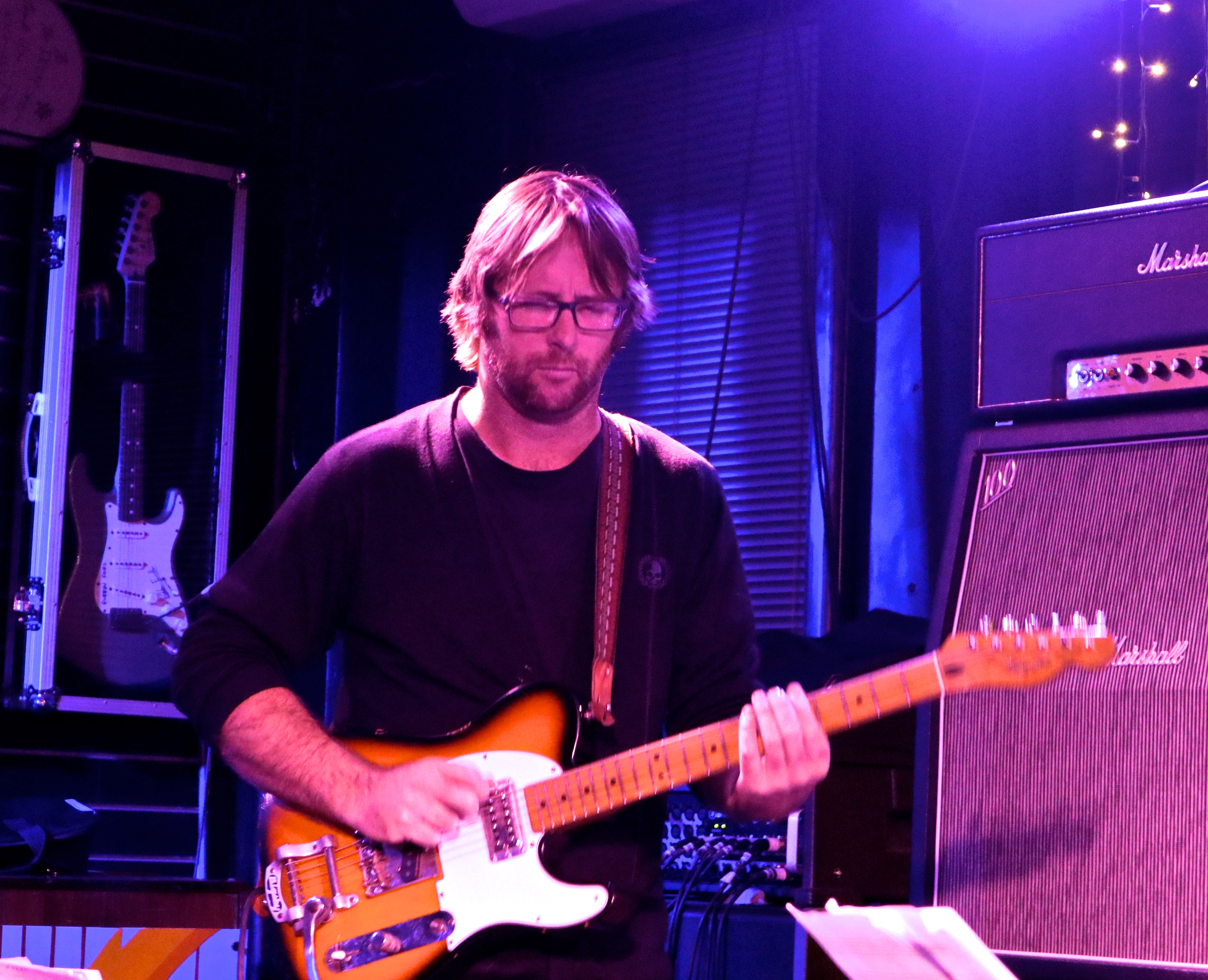
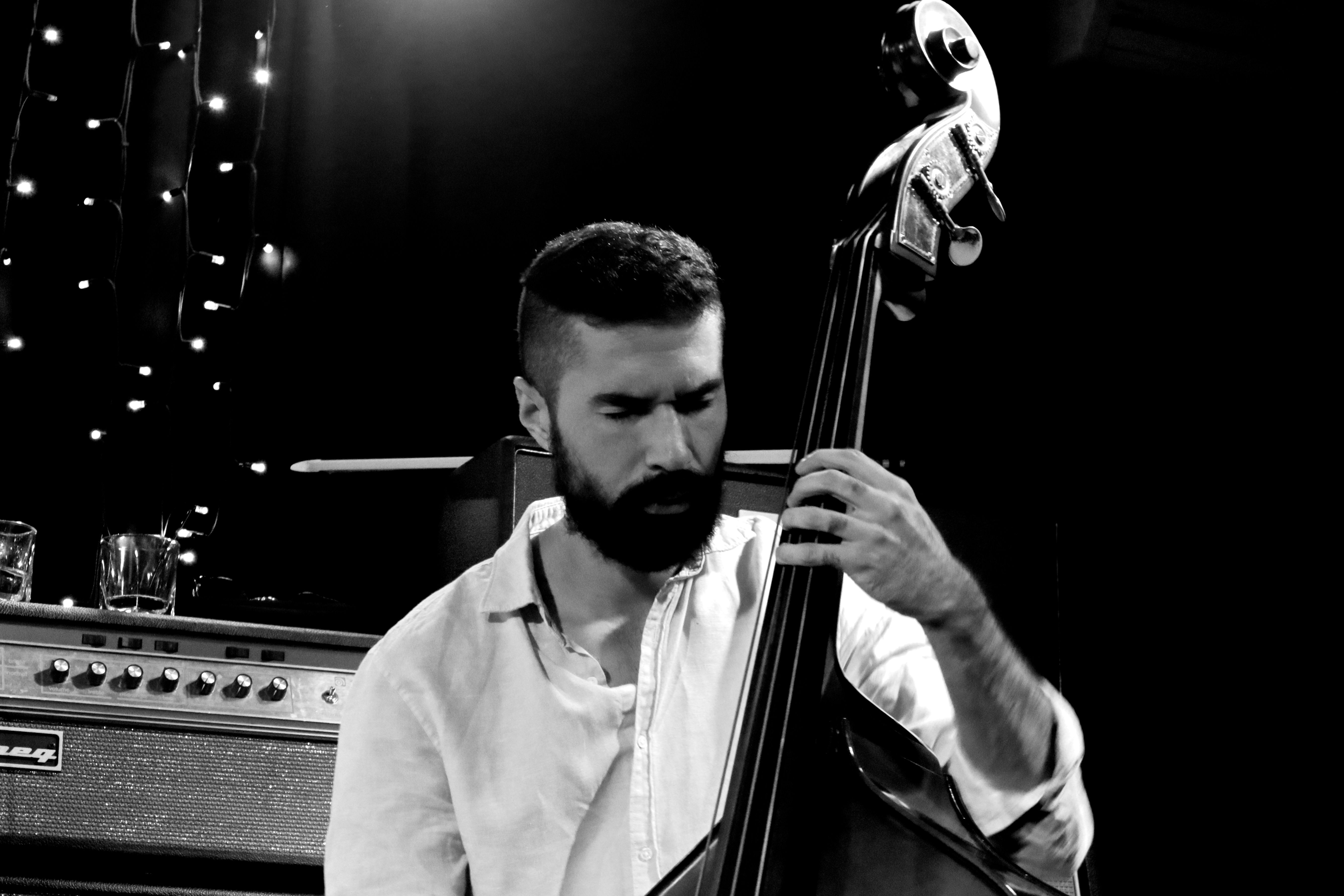
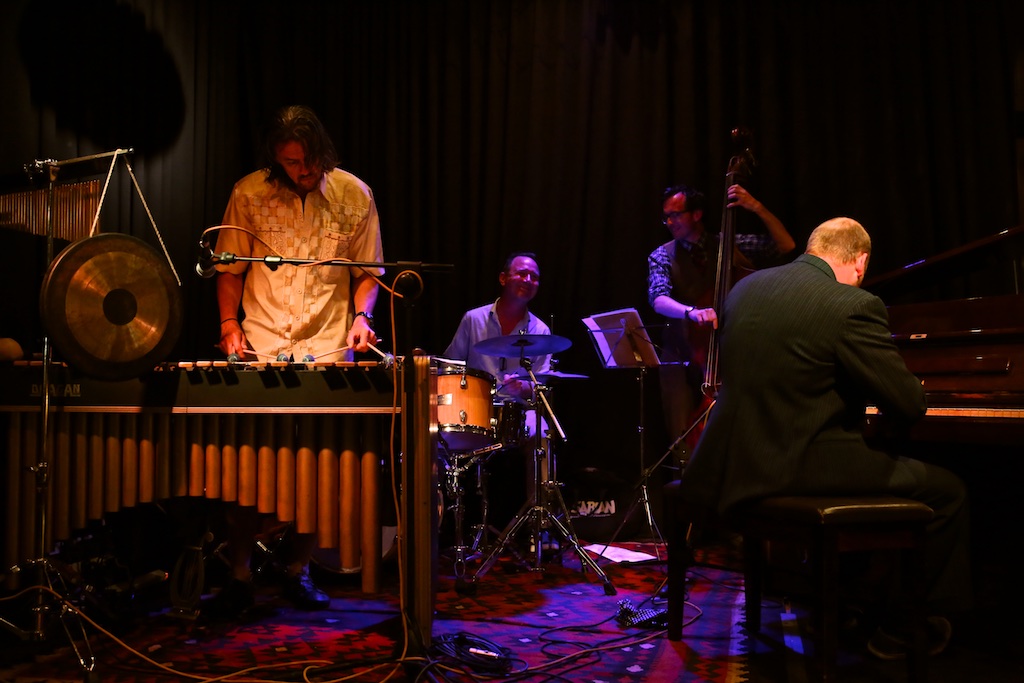
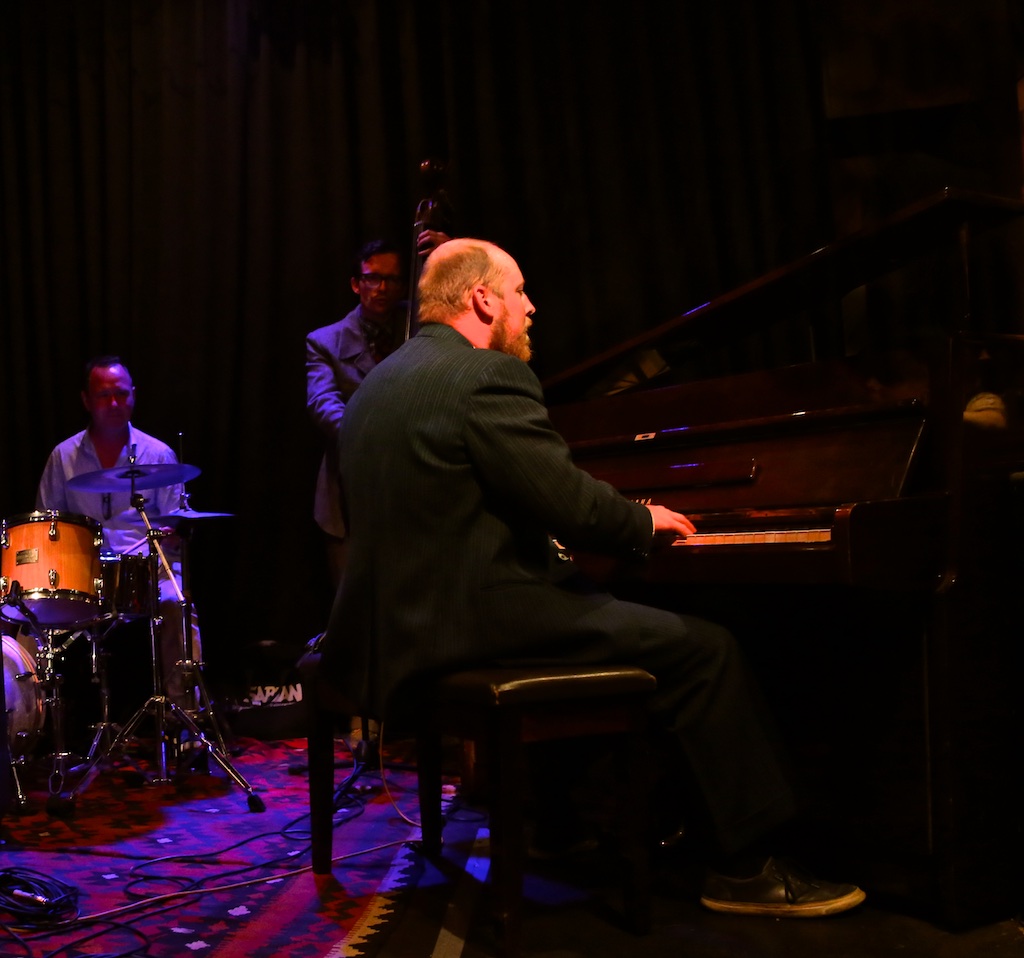
When I last saw Ben Wilcock he was about to move to Rotorua. His new location among the lakes and geothermal marvels prompted him to write some fresh material. The Phantom Canoe is an ambitious project focusing on Te Arawa legends of the central North Island. In deference to local Iwi and Hapu, he consulted elders as the project unfolded. Armed with their blessings and advice, he told the stories in his own voice. The album arising out of that project is on data-card and it includes a short video. There is a piece about a Taniwha, the epic of Hinemoa and Tutanekai is told in several parts but the most dramatic tale is the title track ‘The Phantom Canoe’. Beautifully paced, gently evocative of the landscape and the mysterious story behind it.
A Phantom Canoe appeared on Lake Tarawera on the 13th May 1886 and it was seen by the wiser Maori inhabitants as a portent of the coming eruption. The volcano erupted violently 10 days later, obliterating the villages around the shore and the iconic pink and white terraces. No such canoe had ever been on the lake and those in the canoe were dressed in traditional shrouds. Michael Barker’s vibraphone melody over a repeat pattern on piano and bass was just right for this, Wellington drummer John Rae completing the piece nicely as he evoked the final eruption sequence. It was obvious that the band enjoyed performing together and the audience picked up on that and responded. The line up on Squeaky Weasel, an earlier Jelly Rolls album, was as now Wilcock, Rae and bass player Yeabsley. The addition of Michael Barker on percussion and vibraphone is an evolution that makes perfect sense. Trumpeter Finn Scholes joined them for one number and delivered a well thought through high energy solo. To pick up a copy go to Ben Wilcock Thick Records Ltd – www.thickrecords.co.nz They appeared at the CJC Creative Jazz Club, Thirsty Dog Tavern, K’Road, Auckland on 29 November 2017
Improvised music is a never-ending contest between the familiar and the unexpected. Everything is valid on the journey, but sometimes we forget that tradition can be a springboard and not a straightjacket. We had a good example of that on Wednesday. Because he lives far from here, few if any locals had previously encountered Marc Osterer, but few who heard him will forget his exuberant CJC gig. Born in New York, Osterer has led an interesting musical life. Broadway Shows, New York clubs, principal trumpet (Mexico City Philharmonic) and the Salzburg Festival Austria. While he attended prestigious musical conservatories in New York, there is something else in his sound – something that can’t be learnt purely from academic institutions. Osterer’s Jazz has a firm foothold in the tradition. Louis Armstrong and the great swing-to-bop trumpeters like Sweets Edison. It made perfect sense therefore that the standards he played were from the Songbook and that his own compositions reached deep inside that era.
There was something of the old time back streets and jazz alleys in his sound. The way he phrased and that tasty lip-shake vibrato coming straight after a ‘hot’ clean-toned blast. Sure he is a formidable technician, but there was more than that in his sound. Trumpeters not raised on his streets, not bottle fed on Armstrong, Eldridge, Stewart, Allen or Edison hesitate before diving into that particular sound. Swing-to-bop as played in the 50’s still contained the mellow soulful echoes of its New Orleans beginnings. This period is often overlooked today – perhaps it’s even seen as hokey by some? That’s a shame because the era is a gift that keeps on giving (watch a clip of Roy Eldridge or Henry Red Allen sometime – ‘whomp whomp’). What Osterer showed us were modern interpretations which were credible and which shone fresh light on an oft neglected golden age of trumpet.We also witnessed good chemistry between the visiter and his pick up band. It was not the band advertised but what we got was terrific. Matt Steele was flown up from Wellington and locals (fellow UoA Jazz School alumni) Eamon Edmundson-Wells and Tristan Deck completed the rhythm section. Pianist Steele has been gone from Auckland for over a year and is seldom heard here these days. We do hear Edmundson-Wells (bass) and Deck (drums), but to the best of my knowledge, none of them have performed in this context. Absent were the complex time signatures and post bop harmonies. The tunes stayed closer to the melody and the rhythmic requirements were often two-beat or even something closer to second line. As they played through the sets the joy of discovery showed on their faces and we felt it too. These musicians were still students three years ago but their skills are now well honed. They met the challenge and more. Locals who had not seen Steele play for a while, were buzzing; especially after the blistering Cole Porter standard , ‘It’s alright by me’. Steele’s fleet fingered solo was terrific, and matched by Deck’s bop drumming (complete with appropriately placed bombs and fluid accents). Edmundson-Wells dropped right in behind, pumping out his lines, and it was obvious they were enjoying themselves. Osterer’s compositions tell us how comfortable he is with this style of music. His ‘What’s that smell’ (Jazz should be ‘stinky’ he explained) – a New Orleans referencing tune, then ‘Tune for today’ and ‘Bite her back’ based on a Bix Beiderbecke tune. Among the standards was Chet Baker’s version of the little known ‘This is always’, a steamrolling syncopated version of ‘Limehouse Blues’ (Braham) [Note: I have only seen one Kiwi attempt that, Neil Watson on fender] and a version of Hoagy Carmichael’s ‘New Orleans’.
My favourite tune of the night was the bands version of the Mencher/Moll 1930’s standard,’I want a little girl (of my own)’. This slow burner is another that has dropped from fashion, perhaps due to the slightly creepy title (and the lyrics are definitely pre feminist). What a tune this is though. This was less Armstrong’s version than the Cootie Williams/Eddie Cleanhead Vinson take or even Brother Jack McDuff’s. A low down dark-alley speak-easy version with growls, stutters and smears; giving us the full dose of ‘stinky’ jazz and we loved every second of it. A commentator once stated; “When they find out which part of the human brain holds the love gene, this tune, ‘I want a little girl’ will be present in the DNA”.
Putin recently opined that tolerance and the Western world’s fetish for embracing diversity are signs of weakness. Hermann Goering said something similar, “when I hear the word culture I reach for my gun”. This myopic world view is the domain of strutting fools. The improvised music circuit is our connection to innovation, tolerance and expanded consciousness. On Wednesday nights we forget Trump and Le Pen. For that short window in time we live in a world of exciting ideas and discover the hidden corners of human consciousness. Keep them coming CJC, you enrich our lives.
I have put up two sound clips: ‘I want a little girl (of my own)’ and ‘It’s all right by me’ – enjoy.
Mark Osterer (trumpet, arrangements, compositions), Matt Steele (piano), Eamon Edmundson-Wells (bass), Tristan Deck (drums). 22nd March 2017, CJC (Creative Jazz Club), Thirsty Dog, K’Road, Auckland.
This is the second gypsy swing project at the CJC in four months. The last gypsy gig brought us Wellington band Black Spider Stomp. This time, we experienced the local variant. Wellington is arguably the home of New Zealand Manouche, but it definitely exists around Auckland. Thanks to Caro Manins (La Luna) and Misha Kovalov we feasted on catchy melodic tunes, marvelled at their hard-swinging lines. ‘Twistin the Swing’ and ‘La Luna & the Gadjos’ worked their magic and swing, they certainly did. It doesn’t matter what your Jazz preferences, I defy anyone to keep their feet still during a spirited Manouche gig.This is a music that stirs heart and limbs, a holiday from the cerebral manifestations of improvised music. It makes you feel good and the desire to move with it is overwhelming; that is its charm. I recall a recent discussion with Roger Manins about the diversity of Australian improvised music and he said this. “learning to play in really diverse situations is important. It is a feature of the Sydney scene. One minute the musicians are playing in an avant-garde ensemble, then straight ahead and the next minute playing Trad or Manouche”. For developing musicians, learning to swing in bands like this is invaluable, whatever their eventual calling. It was, therefore, good to see up and coming younger musicians in these lineups.The first set was ‘Twistin the Swing’. A very tasty quartet led by the ensemble leader, composer/guitarist Misha Kovalov. The group featured two Manouche guitars, an upright bass, and a reeds player. Kovalov was a leader in every sense of the word, virtuosic in an almost offhand way and oozing good-natured charm. He made us smile and he made our feet tap; what more could you want in a Manouche leader. This was a hybrid kind of Manouche, as many of the latter-day manifestations are (a perfect example is Lagrene playing Stevie Wonders ‘Isn’t She Lovely’). We heard some Django Reinhart compositions, a familiar sounding Russian tune (whose name I can’t recall but it was a total riot) and a lot of Kovalov’s own compositions. These compositions varied in style between 40’s swing and acoustic blues; sometimes with crazy quotes embedded.On rhythm guitar was Phillip Beatson, on clarinet and tenor saxophone Asher Truppman-Lattie and on upright bass Djordje Nikolic. Beatson was largely hidden from sight, working his solid rhythm guitar in the shadows; the others all took short solos. It was nice to hear Nikolic playing arco at times, good for a swing rhythm section. It was also good to hear the licorice stick played – a hard task master but especially rewarding in the swing context.
The second set brought leader, vocalist Caro Manins (La Luna) and tenor player Roger Manins to the bandstand (Manins replacing Truppman-Lattie). The band was ‘La Luna & the Gadjos’. This set was also unmistakably gypsy but with some Piaf and a few mainstream swing standards in the mix. Caro Manins has a terrific voice and we don’t hear her often enough. The audience reacted with real enthusiasm. Prior to the gig she had expressed some anxiety because a sudden cold had affected her vocal chords. She needn’t have worried. On the bandstand, her voice came through strongly. It was good to hear Piaf interpreted so well, a singer seldom heard by modern non-French audiences. The crowd pleasers from the second set were definitely the standards ‘Swing Brother Swing'(lyrics Billie Holiday) and the ever popular ‘Lullaby of the Leaves'(Bernice Petkere).
To add to the delights of Caro Manins vocals, Roger Manins was crooning on tenor saxophone. Not his fire-breathing post-Coltrane style, but gentle fills or perhaps laying down a muscular Ben Webster swing style solo, complete with vibrato notes which hung in the air, suspended only by breath. On a cold winter night, nothing warms you more. ‘Twistin the Swing: Misha Kovalov (leader, compositions, Manouche guitar), Phillip Beatson (rhythm guitar), Asher Truppman-Lattie (reeds), Djordge Nikolic (upright bass). ‘La Luna & the Gadjos‘: Caro Manins (leader, vocals), Misha Kovalov (guitar), Phillip Beatson (guitar), Roger Manins (tenor saxophone), Djordge Nikolic (upright bass) The gigs took place at the CJC (Creative Jazz Club), Albion Hotel, 18th May 2016.



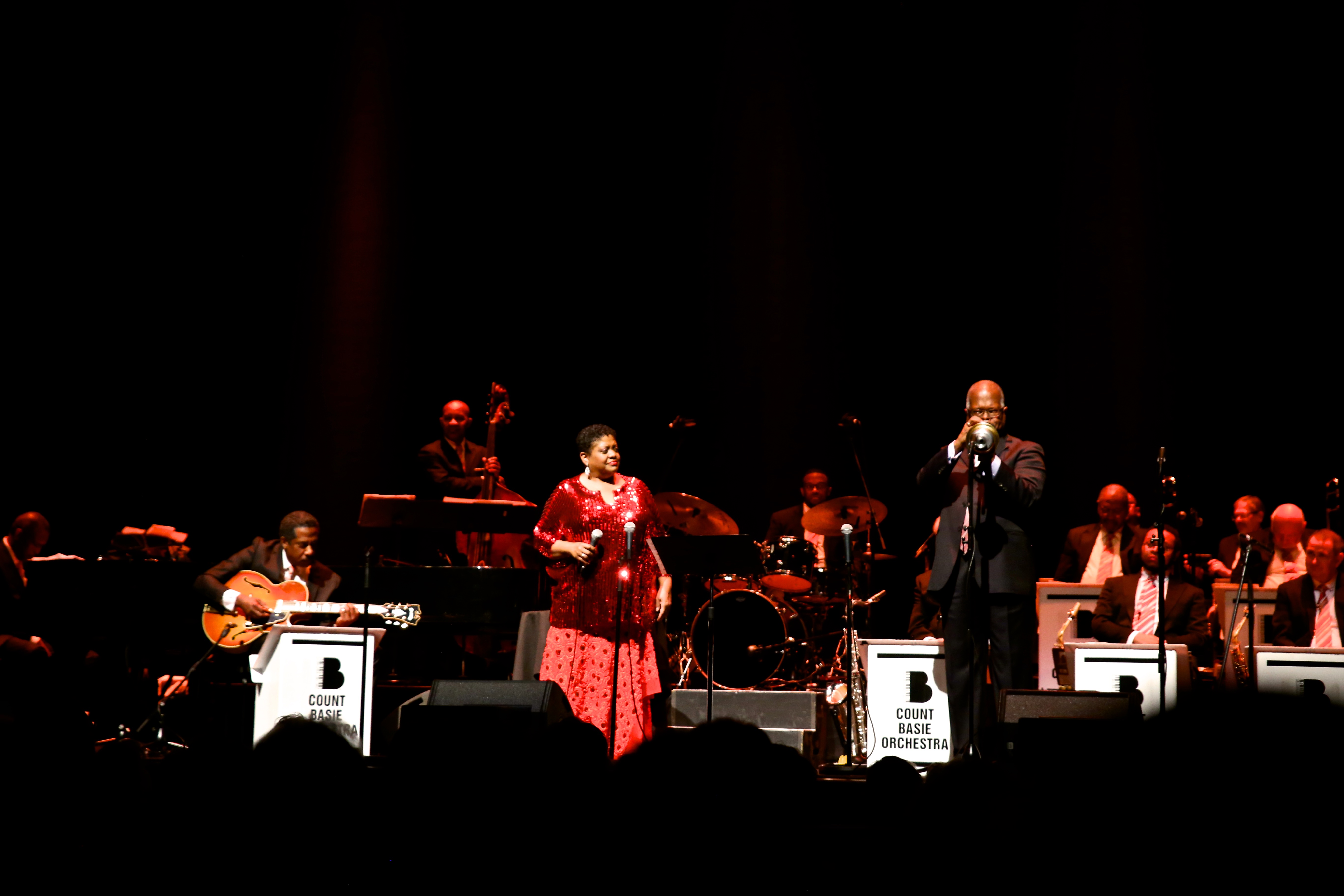 There are a number of things that should be on every music lovers bucket list. Experiencing a Basie Orchestra gig live is one of them. This band has the history of modern music in its DNA and after 83 years on the road, they are in their prime. Goodman was always referred to as the ‘king of swing’ but in my view Basie was a better contender for that title. His brand of swing had it’s nascent stirrings in 1927 when Basie joined Bennie Moten. When that band folded he took many of the musicians with him to form the Basie Band in 1935. The Basie band possessed a unique sound, fueled by a nine-piece line up featuring legendary greats like Lester Young, ‘Papa’ Jo Jones and Walter Page. Johnny Hammond heard them in 1936 and invited them to New York where at his suggestion they expanded to become a thirteen piece jazz Orchestra. At this time they were joined by Freddie Green and others. Skillfully, they incorporated the nimbleness of the Kansas City small ensemble swing-feel into a new sound.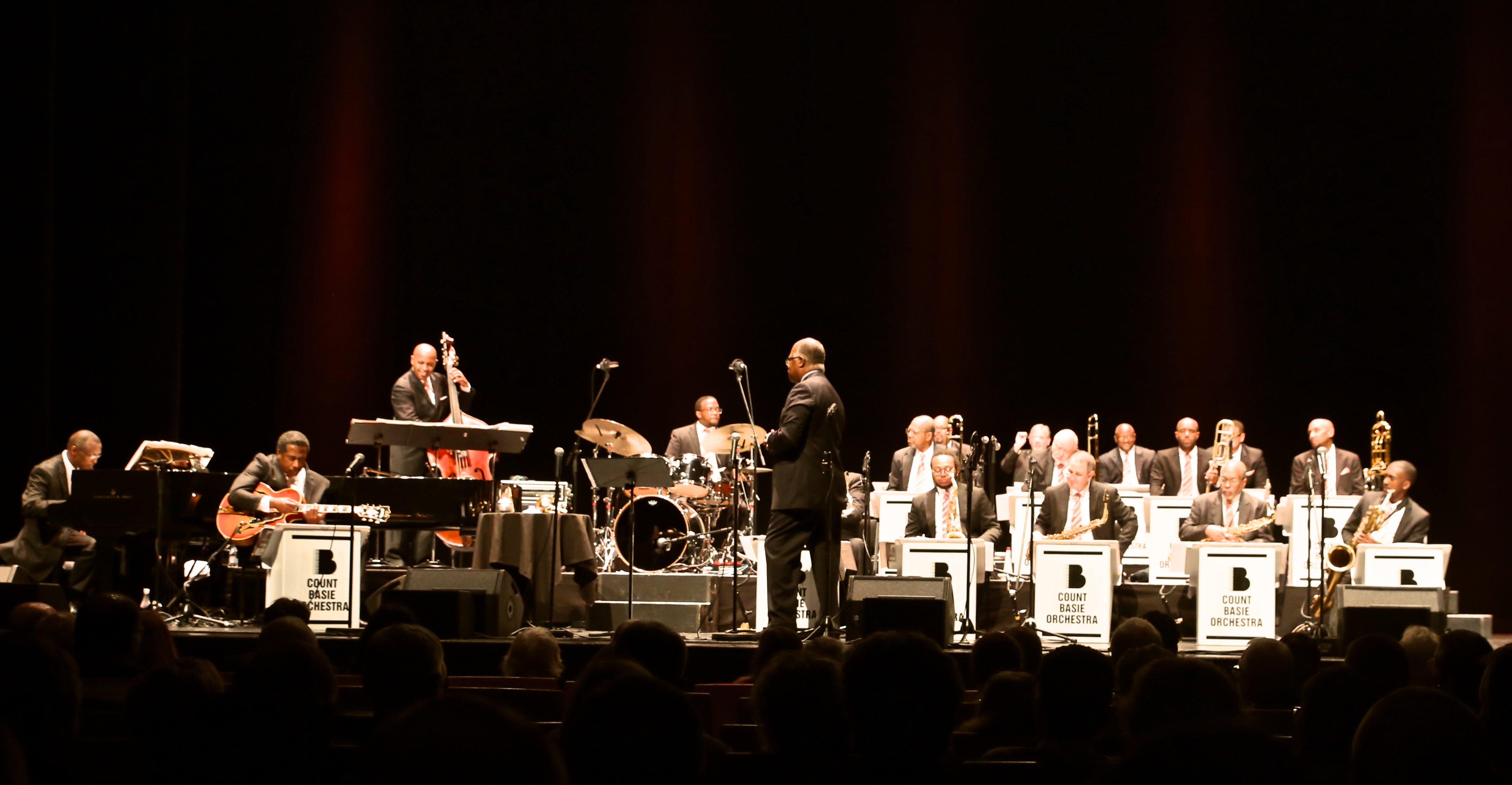
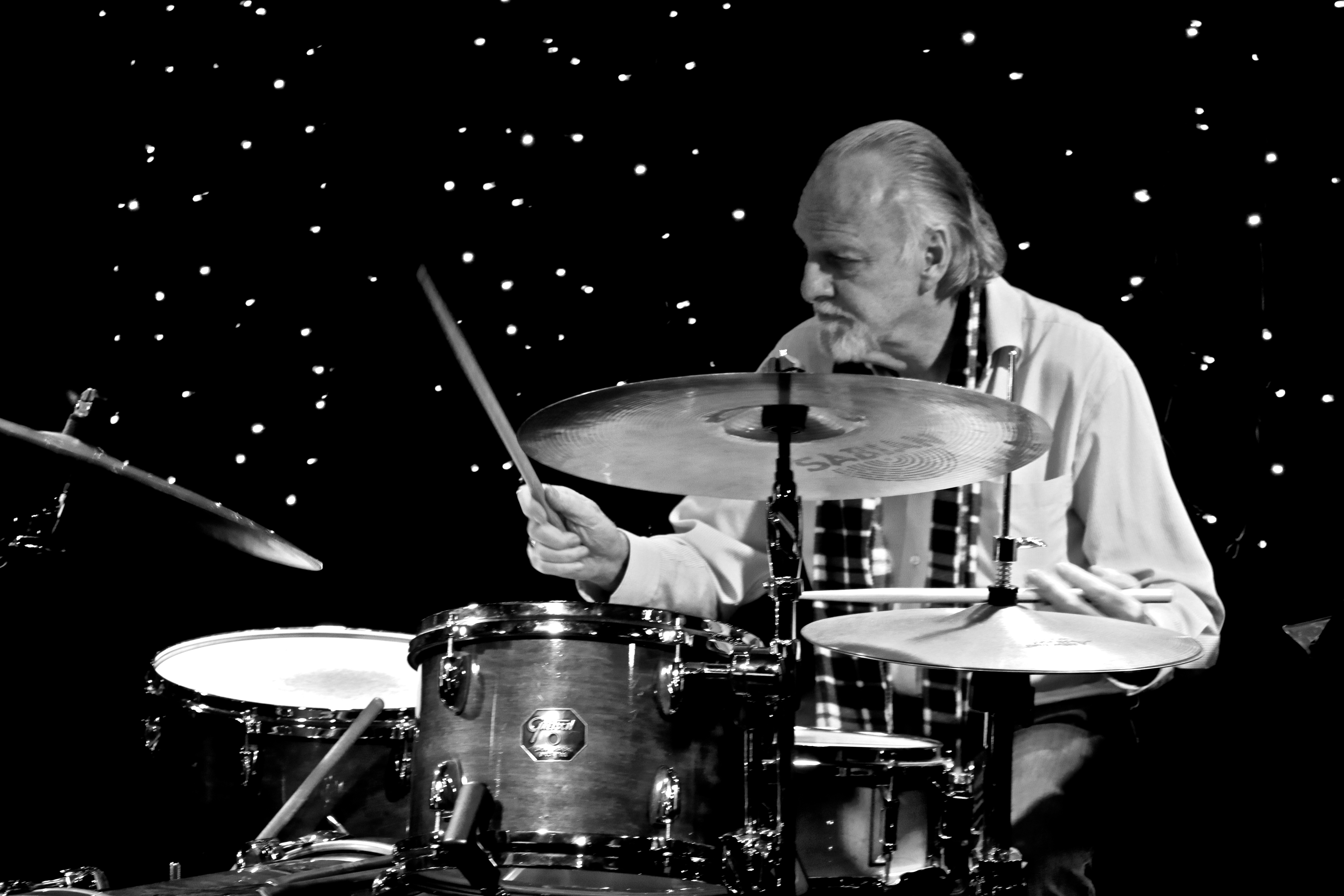 Every Jazz club needs a Monk night on their calendar and when it comes to Monk the local go-to person is definitely the well-known drummer Frank Gibson Jr. Gibson and the various iterations of his bands have long made a point of keeping the Hardbop era and Monk firmly on our radar. While the setlist was not exclusively Monk, the Monk tunes chosen were a solid mix of seldom-heard compositions and old favourites.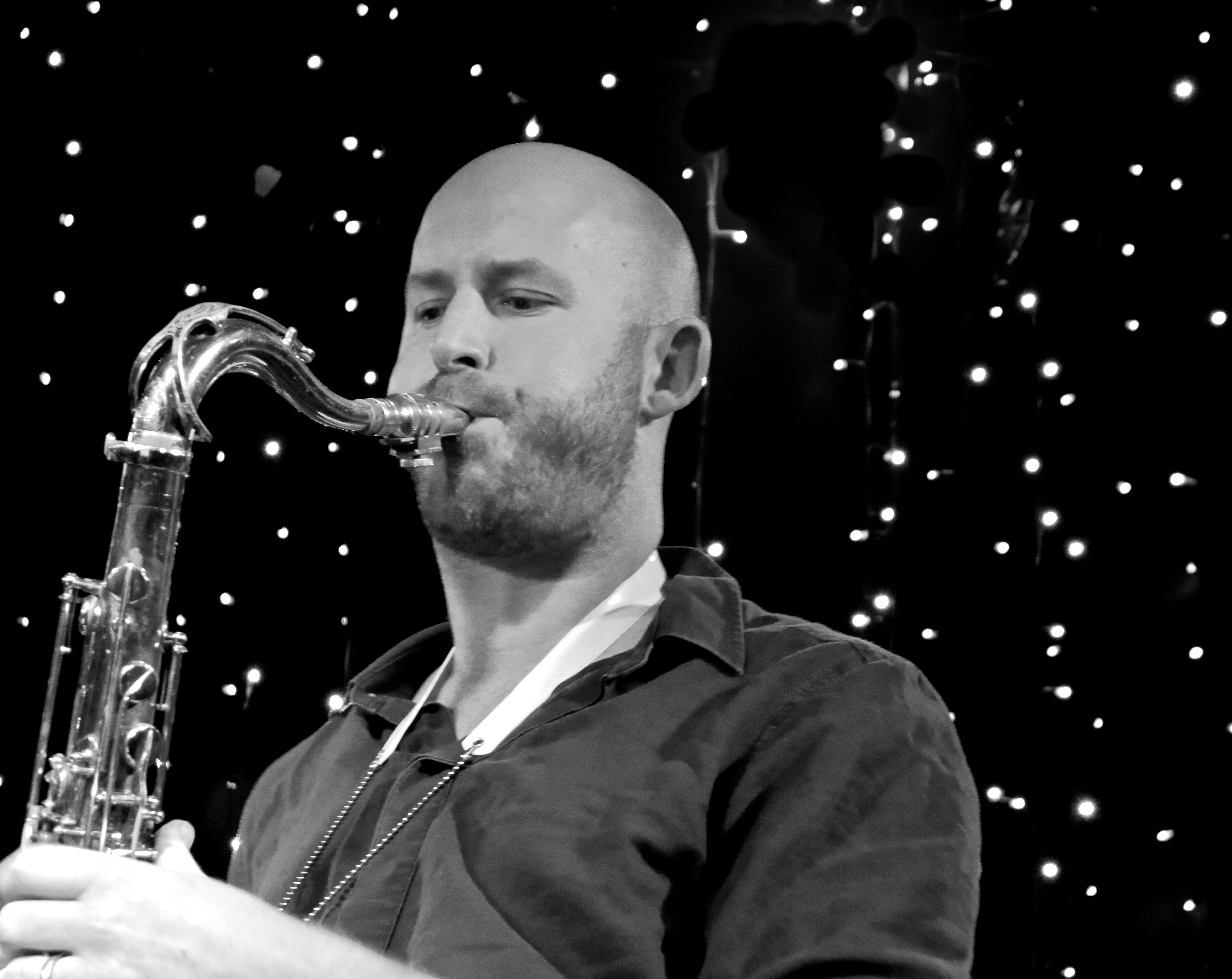

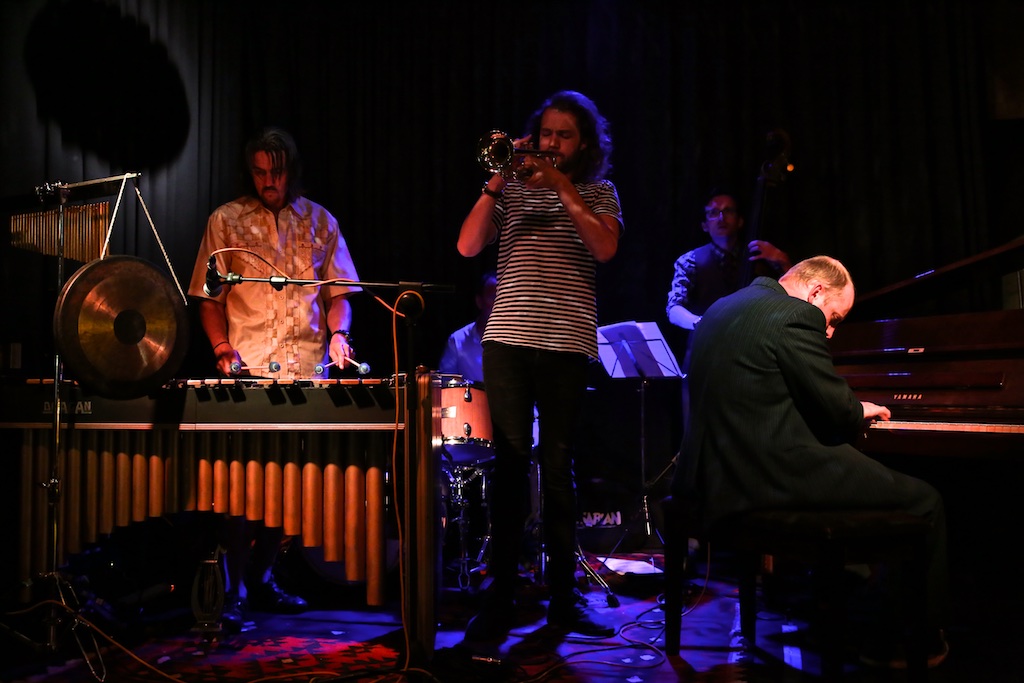 The line up on Squeaky Weasel, an earlier Jelly Rolls album, was as now Wilcock, Rae and bass player Yeabsley. The addition of Michael Barker on percussion and vibraphone is an evolution that makes perfect sense. Trumpeter Finn Scholes joined them for one number and delivered a well thought through high energy solo. To pick up a copy go to Ben Wilcock Thick Records Ltd –
 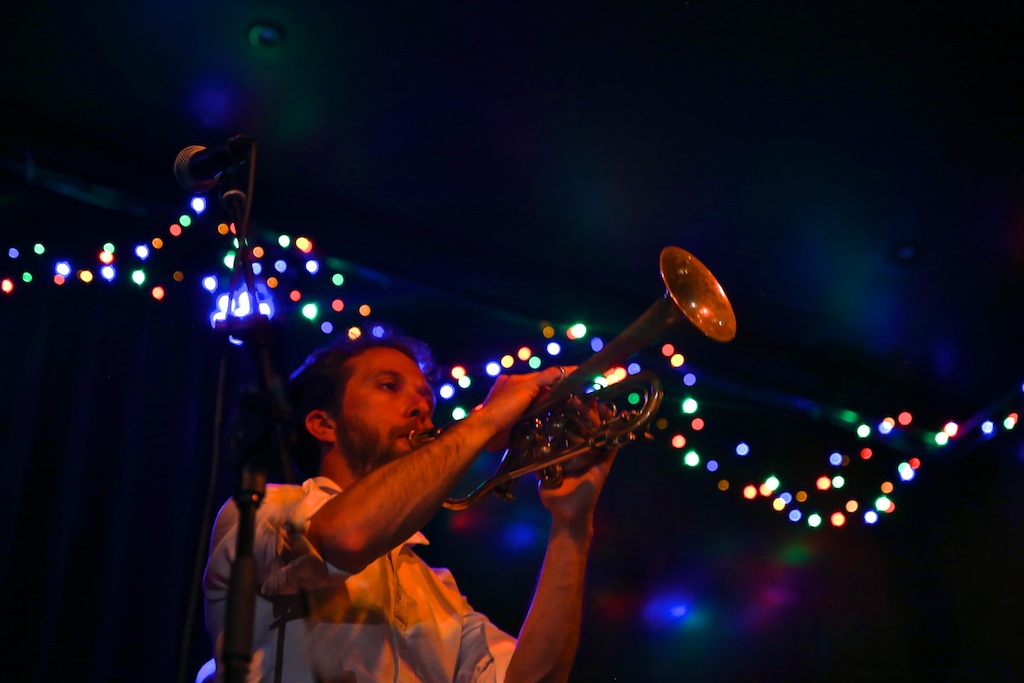 Improvised music is a never-ending contest between the familiar and the unexpected. Everything is valid on the journey, but sometimes we forget that tradition can be a springboard and not a straightjacket. We had a good example of that on Wednesday. Because he lives far from here, few if any locals had previously encountered Marc Osterer, but few who heard him will forget his exuberant CJC gig. Born in New York, Osterer has led an interesting musical life. Broadway Shows, New York clubs, principal trumpet (Mexico City Philharmonic) and the Salzburg Festival Austria. While he attended prestigious musical conservatories in New York, there is something else in his sound – something that can’t be learnt purely from academic institutions. Osterer’s Jazz has a firm foothold in the tradition. Louis Armstrong and the great swing-to-bop trumpeters like Sweets Edison. It made perfect sense therefore that the standards he played were from the Songbook and that his own compositions reached deep inside that era.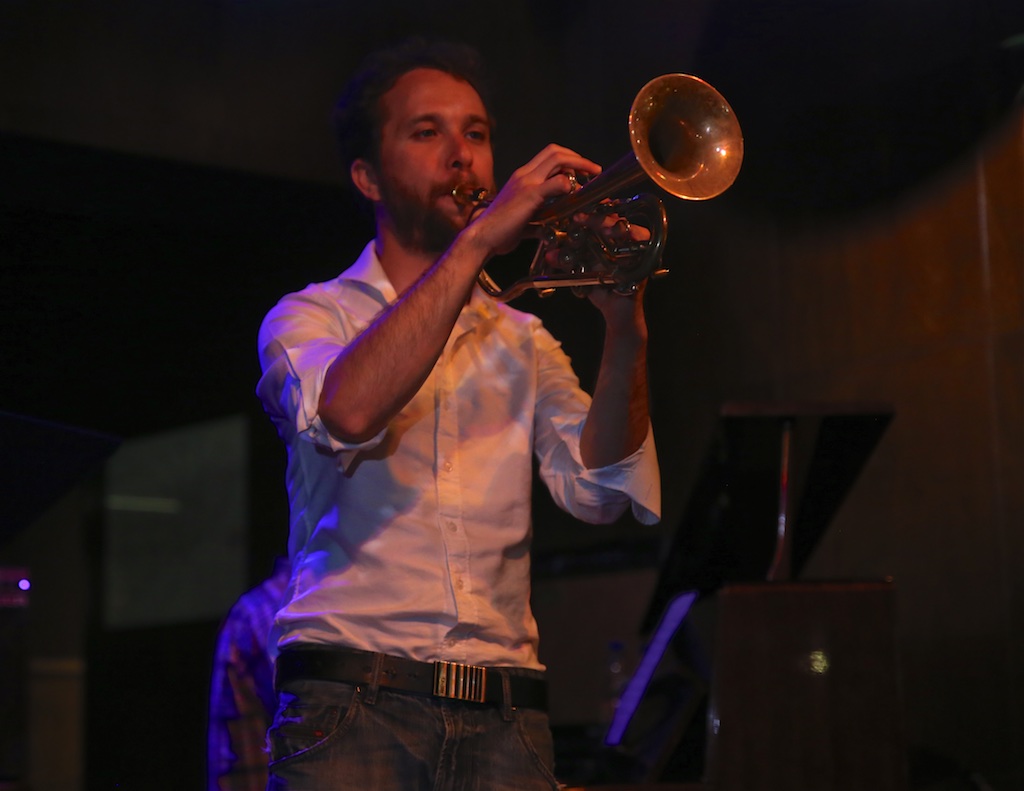
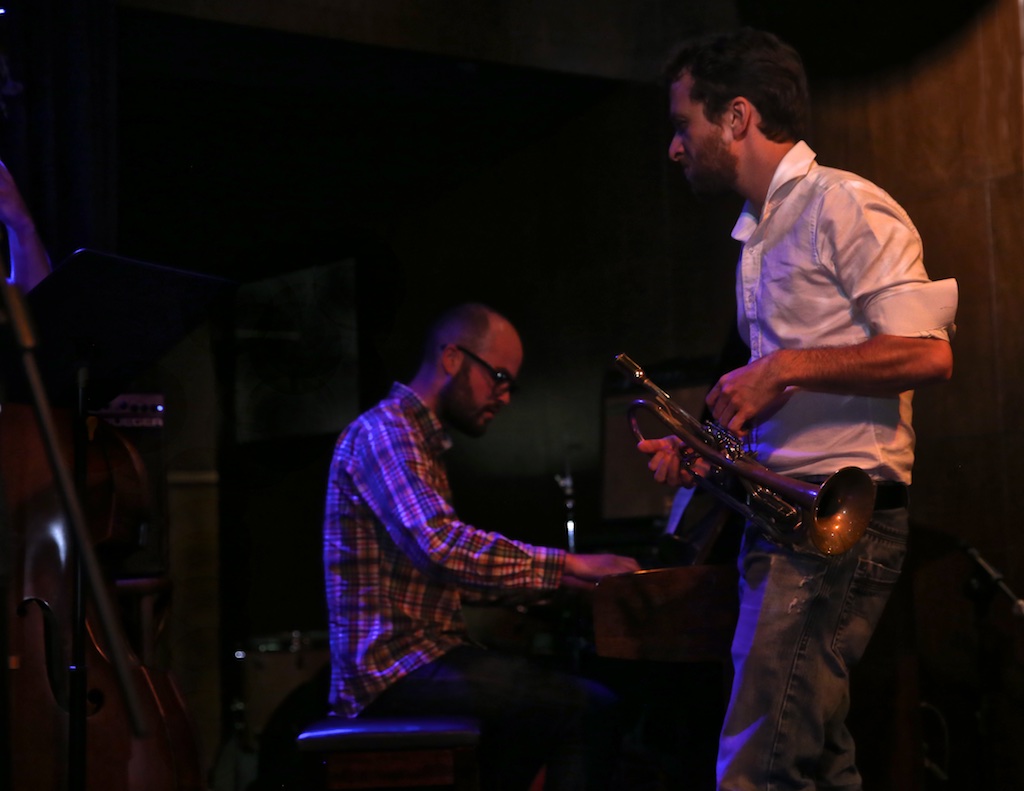 We also witnessed good chemistry between the visiter and his pick up band. It was not the band advertised but what we got was terrific. Matt Steele was flown up from Wellington and locals (fellow UoA Jazz School alumni) Eamon Edmundson-Wells and Tristan Deck completed the rhythm section. Pianist Steele has been gone from Auckland for over a year and is seldom heard here these days. We do hear Edmundson-Wells (bass) and Deck (drums), but to the best of my knowledge, none of them have performed in this context. Absent were the complex time signatures and post bop harmonies. The tunes stayed closer to the melody and the rhythmic requirements were often two-beat or even something closer to second line. As they played through the sets the joy of discovery showed on their faces and we felt it too.
 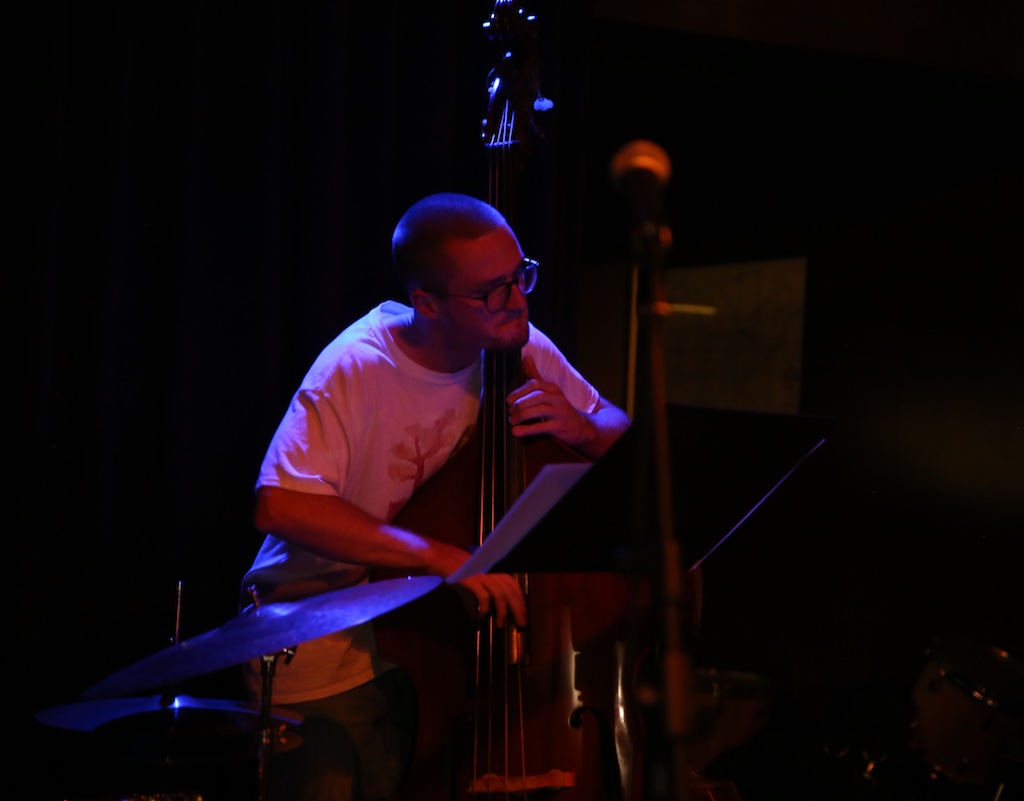 These musicians were still students three years ago but their skills are now well honed. They met the challenge and more. Locals who had not seen Steele play for a while, were buzzing; especially after the blistering Cole Porter standard , ‘It’s alright by me’. Steele’s fleet fingered solo was terrific, and matched by Deck’s bop drumming (complete with appropriately placed bombs and fluid accents). Edmundson-Wells dropped right in behind, pumping out his lines, and it was obvious they were enjoying themselves. Osterer’s compositions tell us how
 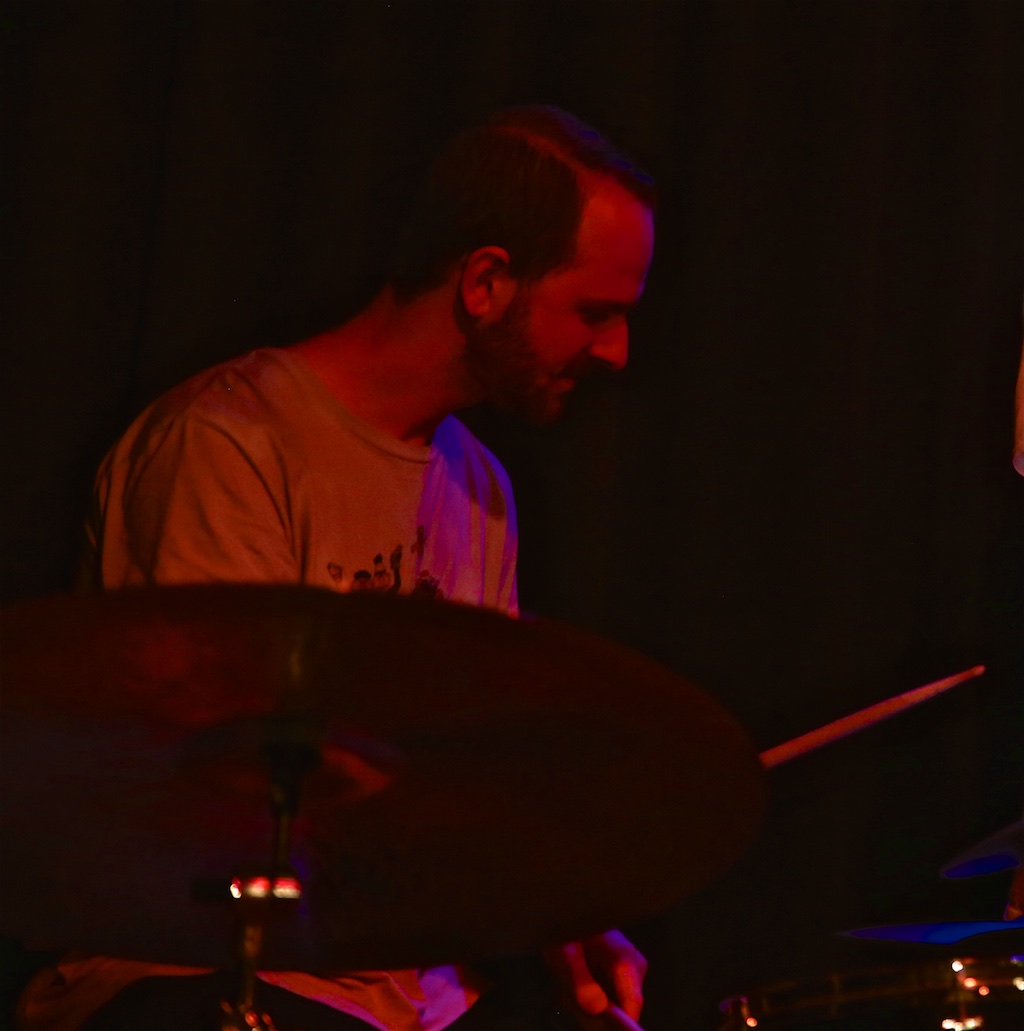 comfortable he is with this style of music. His ‘What’s that smell’ (Jazz should be ‘stinky’ he explained) – a New Orleans referencing tune, then ‘Tune for today’ and ‘Bite her back’ based on a Bix Beiderbecke tune. Among the standards was Chet Baker’s version of the little known ‘This is always’, a steamrolling syncopated version of ‘Limehouse Blues’ (Braham) [Note: I have only seen one Kiwi attempt that, Neil Watson on fender] and a version of Hoagy Carmichael’s ‘New Orleans’.
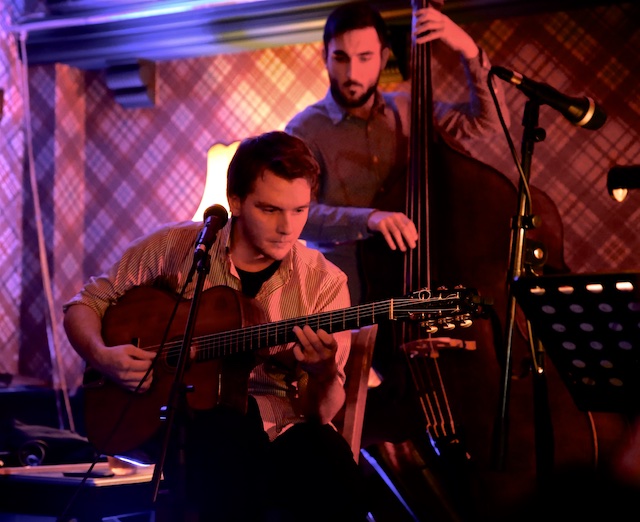 This is the second gypsy swing project at the CJC in four months. The last gypsy gig brought us Wellington band Black Spider Stomp. This time, we experienced the local variant. Wellington is arguably the home of New Zealand Manouche, but it definitely exists around Auckland. Thanks to Caro Manins (La Luna) and Misha Kovalov we feasted on catchy melodic tunes, marvelled at their hard-swinging lines. ‘Twistin the Swing’ and ‘La Luna & the Gadjos’ worked their magic and swing, they certainly did. It doesn’t matter what your Jazz preferences, I defy anyone to keep their feet still during a spirited Manouche gig.
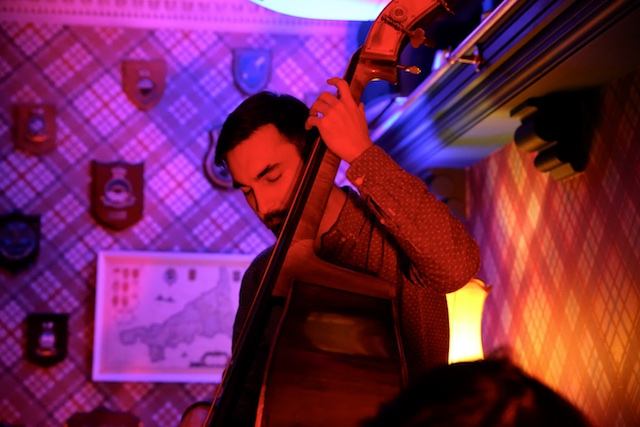 This is a music that stirs heart and limbs, a holiday from the cerebral manifestations of improvised music. It makes you feel good and the desire to move with it is overwhelming; that is its charm. I recall a recent discussion with Roger Manins about the diversity of Australian improvised music and he said this. “learning to play in really diverse situations is important. It is a feature of the Sydney scene. One minute the musicians are playing in an avant-garde ensemble, then straight ahead and the next minute playing Trad or Manouche”. For developing musicians, learning to swing in bands like this is invaluable, whatever their eventual calling. It was, therefore, good to see up and coming younger musicians in these lineups.
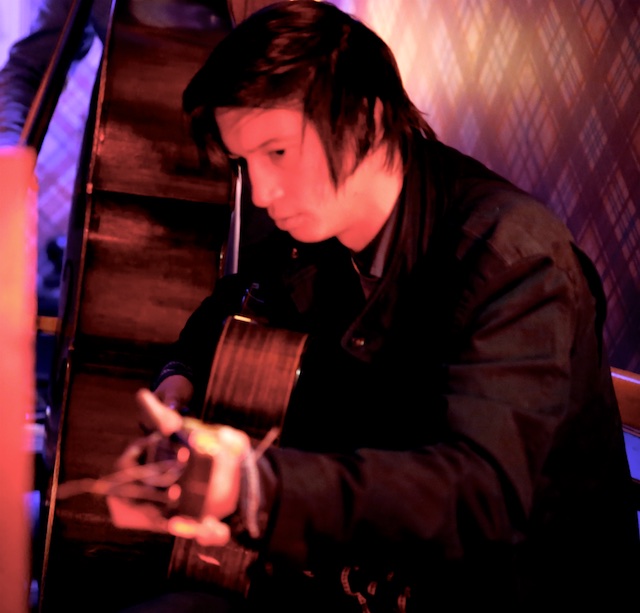 The first set was ‘Twistin the Swing’. A very tasty quartet led by the ensemble leader, composer/guitarist Misha Kovalov. The group featured two Manouche guitars, an upright bass, and a reeds player. Kovalov was a leader in every sense of the word, virtuosic in an almost offhand way and oozing good-natured charm. He made us smile and he made our feet tap; what more could you want in a Manouche leader. This was a hybrid kind of Manouche, as many of the latter-day manifestations are (a perfect example is Lagrene playing Stevie Wonders ‘Isn’t She Lovely’). We heard some Django Reinhart compositions, a familiar sounding Russian tune (whose name I can’t recall but it was a total riot) and a lot of Kovalov’s own compositions. These compositions varied in style between 40’s swing and acoustic blues; sometimes with crazy quotes embedded.
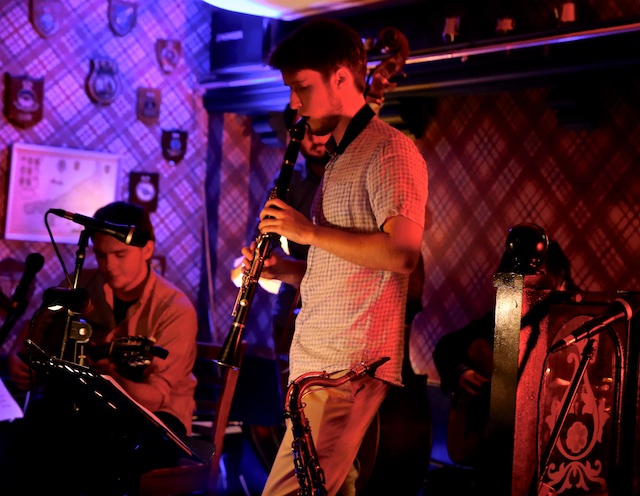 On rhythm guitar was Phillip Beatson, on clarinet and tenor saxophone Asher Truppman-Lattie and on upright bass Djordje Nikolic. Beatson was largely hidden from sight, working his solid rhythm guitar in the shadows; the others all took short solos. It was nice to hear Nikolic playing arco at times, good for a swing rhythm section. It was also good to hear the licorice stick played – a hard task master but especially rewarding in the swing context.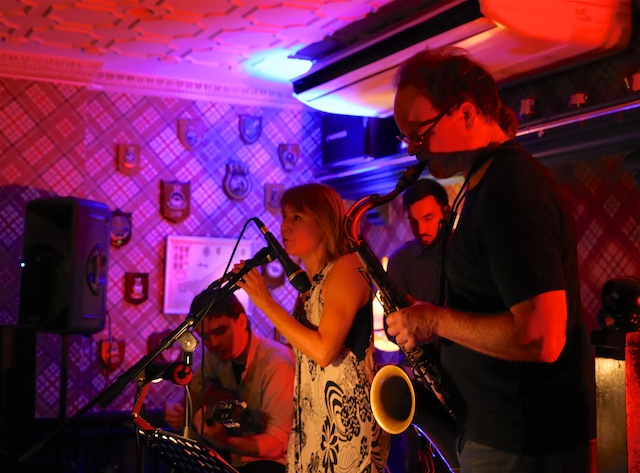
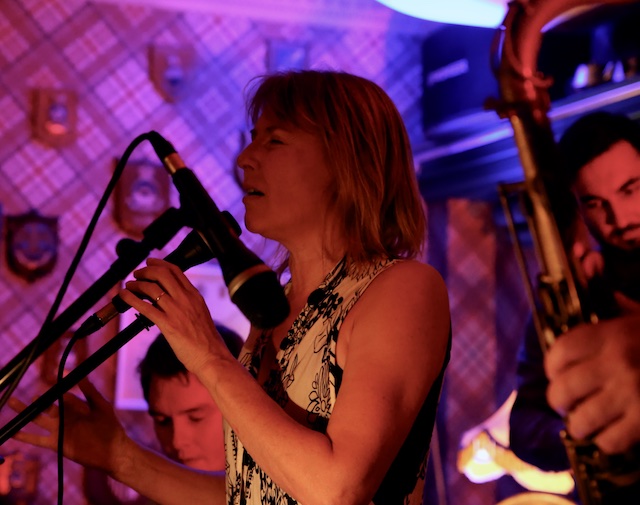 ‘Twistin the Swing: Misha Kovalov (leader, compositions, Manouche guitar), Phillip Beatson (rhythm guitar), Asher Truppman-Lattie (reeds), Djordge Nikolic (upright bass). ‘La Luna & the Gadjos‘: Caro Manins (leader, vocals), Misha Kovalov (guitar), Phillip Beatson (guitar), Roger Manins (tenor saxophone), Djordge Nikolic (upright bass) The gigs took place at the
  JazzLocal32.com