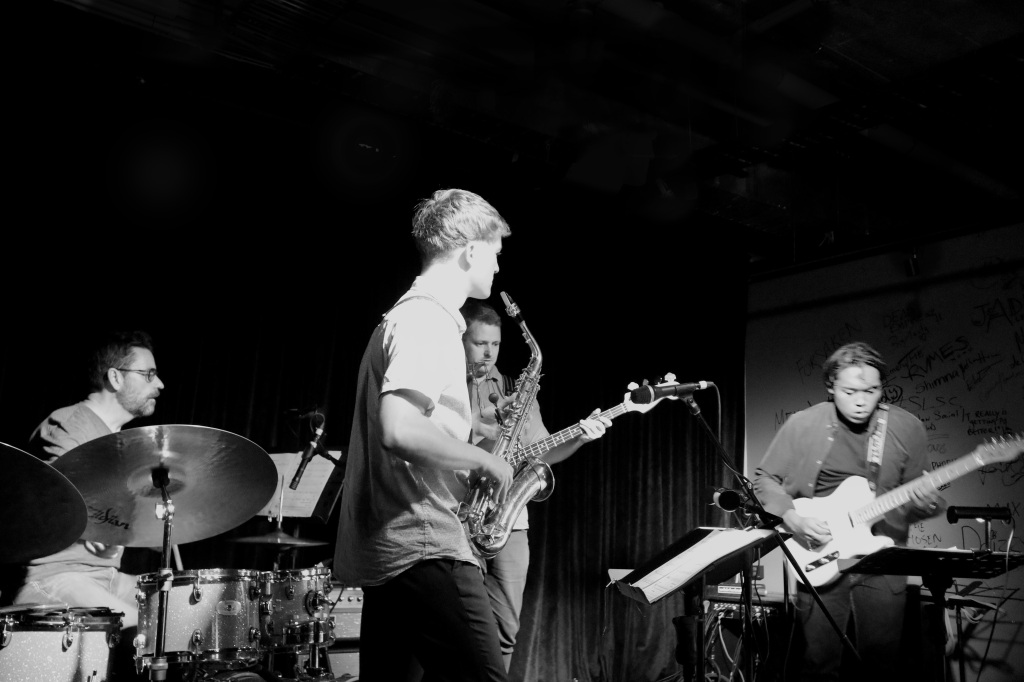
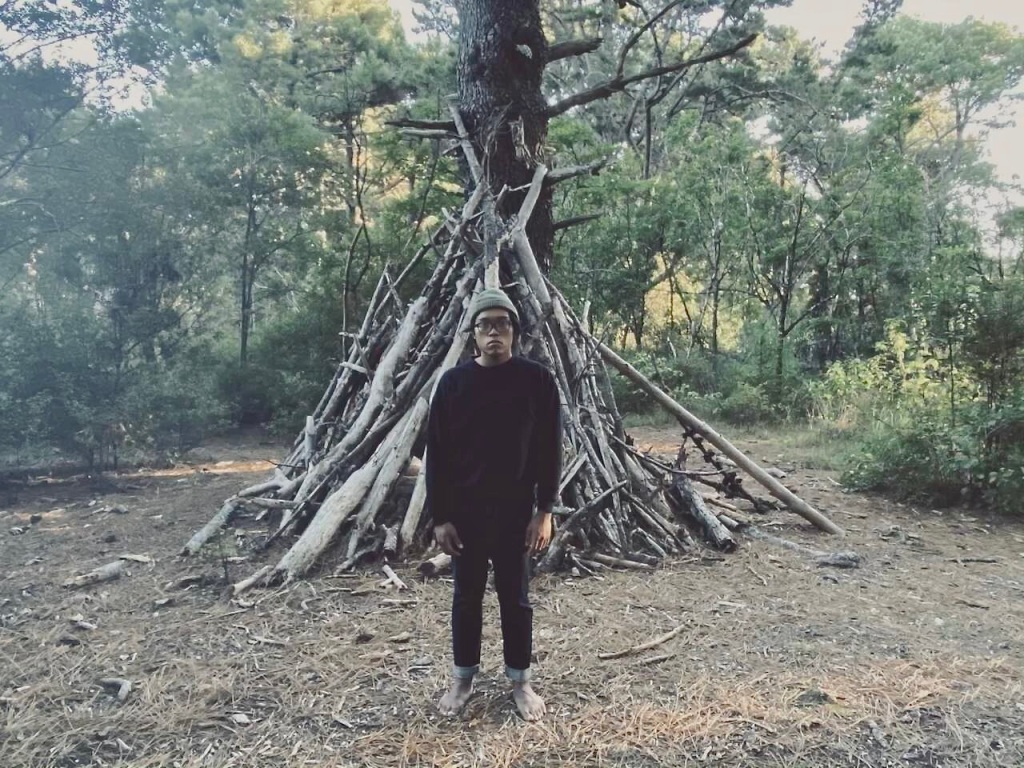
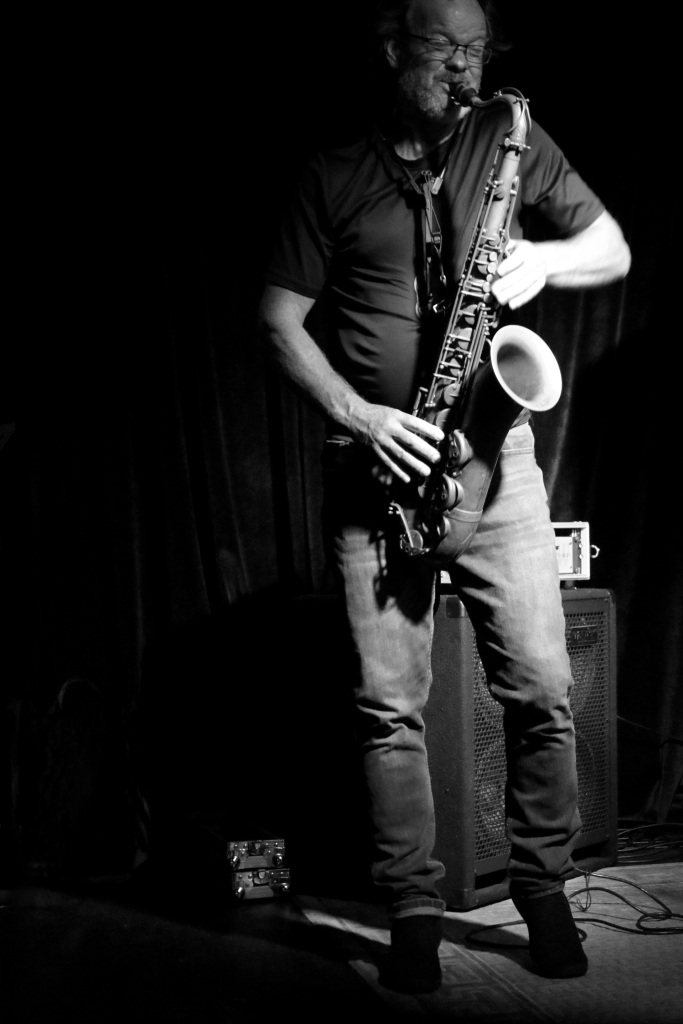
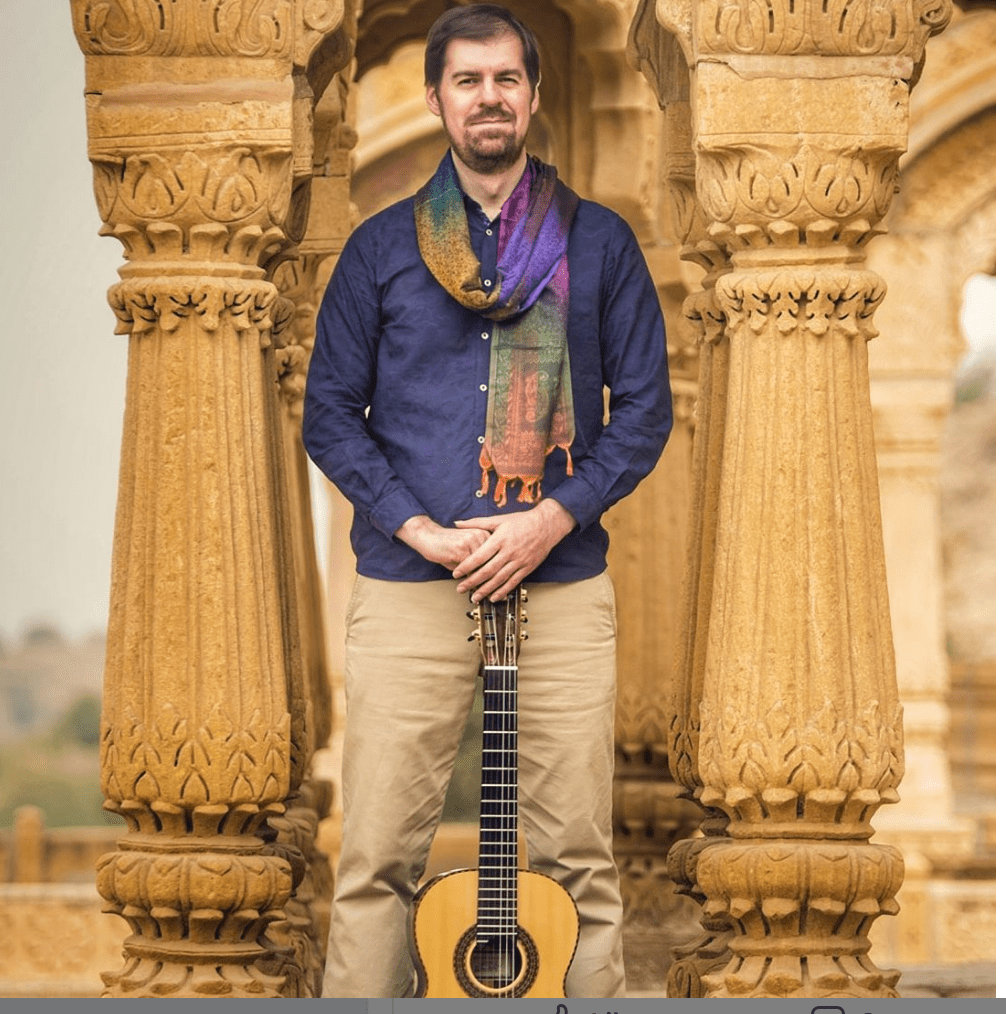
In September 2014, the Scottish guitarist Simon Thacker brought Ritmata to Auckland. I recall that night clearly, as his innovative genre-defying music and entertaining banter enchanted the CJC audience. Since that time, I have followed his endeavors with interest and there has been much to marvel at. As one reviewer put it “(Thacker) is one of the most important musicians of his generation”. He has toured widely, is classical guitar tutor in a number of prestigious universities and has appeared as a soloist with leading orchestras.
Along the way, he has formed various ensembles as he reimagines cultural musical traditions. He is a master of the unexpected and each performance arises from his pan-cultural journeys. At first his music sounds familiar, but upon further listening, you realise that you were mistaken. What you are hearing is something new.
This is a musician with boundless imagination and although his music may be fed by diverse streams and is respectful, it is not confined by the past. The last time we communicated he made that point beautifully. “At no point in history is music more exciting than what we will hear tomorrow”.
His latest project Pashyanti began as a solo project in 2019 and he toured it through the Indian subcontinent, appearing at two of the biggest Indian Jazz festivals along the way. That was to be followed by an appearance at last year’s Edinburgh Festival Fringe (cancelled due to covid), but as with all of Thacker’s projects there is constant evolution underway. This year he has invited contemporary dancer Aishwarya Raut (from the Rambert dance school) to collaborate with him. Together, aided by skillful camerawork and gorgeous lighting, they have conjured up a sonic and visual feast.
There are four segments to the show: MunaSata, Omanjana, Ekla Chalo Re and Nirjanavana. I loved them all, but perhaps because I lived through the sixties, I found Nirjanavana the most compelling. The musicianship and dancing and effects were astounding, as was the otherworldly lighting. Throughout, you will experience the vibe of flamenco or the displaced time of latin music, some Jazz harmonies, slick references to a multitude of eastern traditions and above all, high wire artistry.
The concert is on until 29 August. Pashyanti appears as the Made in Scotland Showcase, an Edinburgh Festival Fringe event. And best of all, it is available online to viewers worldwide via the ticketing Fringe Player app (follow the link). I urge anyone with a love of acoustic guitar, dance or astonishing musicianship to grab a ticket immediately.
JazzLocal32.com is rated as one of the 50 best Jazz Blogs in the world by Feedspot. The author is a professional member of the Jazz Journalists Association, poet & writer.Some of these posts appear on related sites.
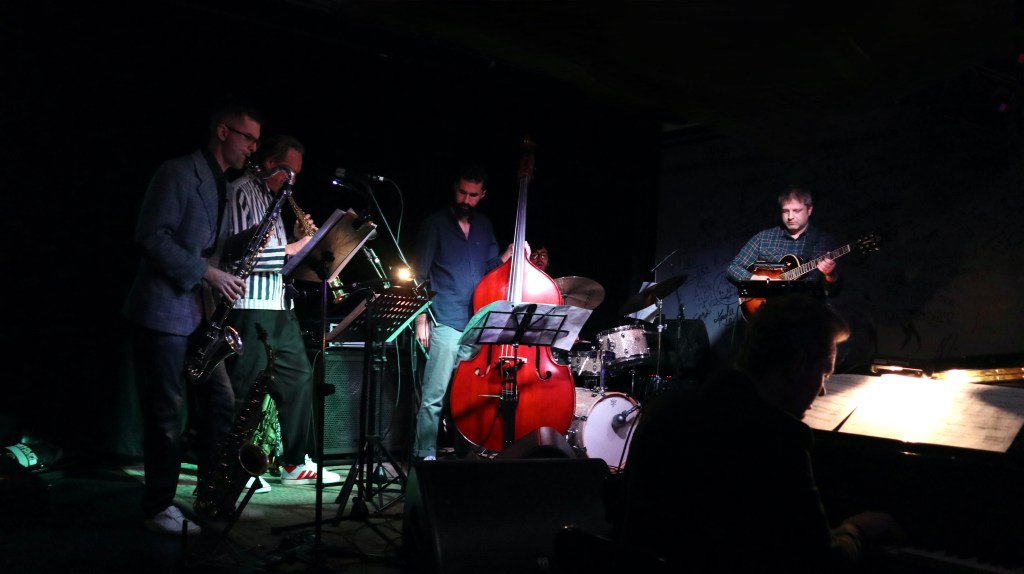
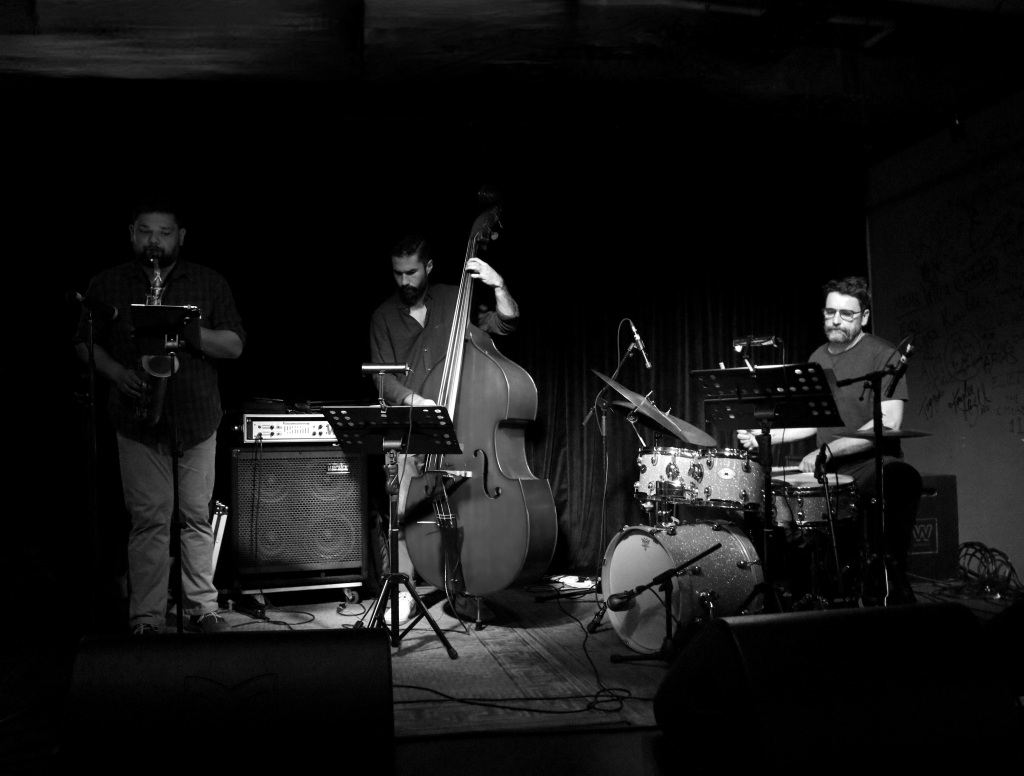
If Alargo had appeared in the year 1644, Matthew Hopkins, the Witchfinder General would have instigated an urgent investigation. Such was the supernatural wizardry and shapeshifting that occurred last Wednesday. On that night we were invited into new sonic worlds and transported beyond the mundane. The event occurred just after the passing of Jon Hassell and that made it especially appropriate. Hassell was a standard bearer for this measured, avant-garde music; and there were others. Eddie Henderson and Miles spring immediately to mind
The point of improvised music is to establish a form and then to craft something afresh. To build, shape and react in the moment, and above all to surprise. Sometimes the surprise comes softly, as a shape is crafted from an unexpected whisper. In the modern world the sources of sound are limitless, but the world is a frenetic and noisy place and we tend to overlook the deeper sounds or the slower journeys.
This particular style of free improvised music takes its time to unfold, and in the process, moments of rare beauty are revealed. However, like all music, it has its structure. It is linear and it ebbs and flows according to the specifics of mood and pulse. Harmonies appear fleetingly then shift or fade. They exist to enhance mood.
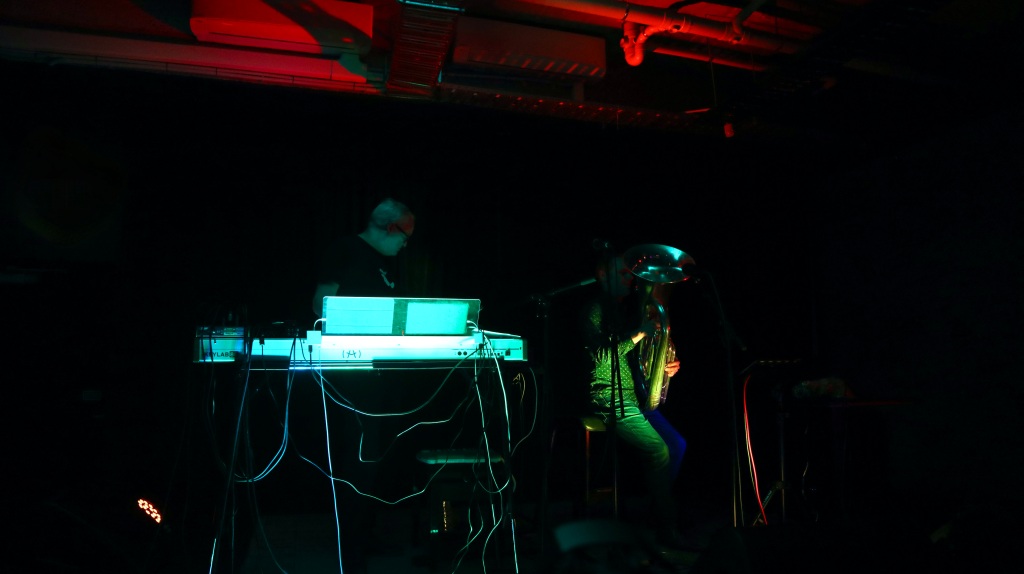
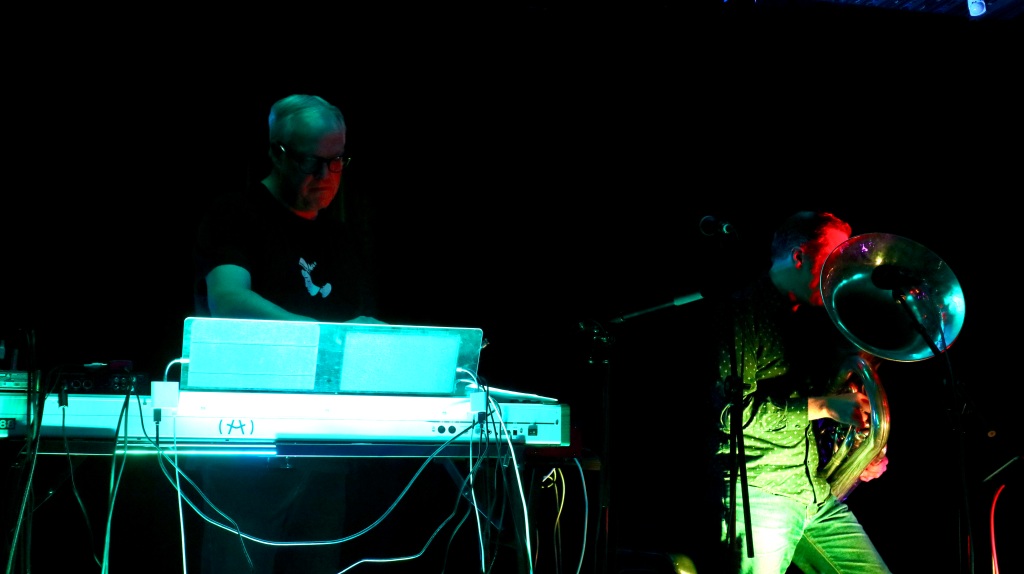
While it was technically a duo performance it was more than that. There were two musicians but they spoke in numerous instrumental voices. All of the voices were shaped in real time and shaped on machines both ancient and modern. It was acoustic and electric. It was analogue and digital and it worked well because the musicians understood and exploited the possibilities. It is seldom that you hear the subtler dynamic possibilities explored as effectively as this.
There have been two Alargo albums released to date, and the good news is that another is on the way. This time Rattle is involved and the experimental nature and quality of the music renders it a perfect fit for the label. There were three tunes from Alargo’s Central Plateau album, two from the Primacy album and the rest were either new pieces or those to feature on the up-coming album. I have posted Actopia which is from Central Plateau, the longest piece of the night and a good showcase for this band.
Keyboardist Alan Brown is a popular and celebrated Auckland musician. He is known for his versatility and deep grooves. It was nice to learn that his famous Blue Train band was performing again recently. As co-leader of Alargo Brown played (utilised) 2x iPads (as sound sources) with synths and effects-apps controlled through a MIDI keyboard, he also played an analogue synth, a darbuka drum and a Suzuki Andes recorder keyboard.
Kingsley Melhuish is well known around town as a multi-instrumentalist. He is as likely to pick up a conch shell as a trumpet; vocalise or play reeds and other brass instruments. He is also a noted academic, composer and educator. On this gig he played trumpet, tuba, conch shells, percussion, vocal effects, a Boss Loopstation and iPad for effects.
The Alargo albums are available via alanbrown.co.nz or in stores. Keep an eye on the Rattle releases for the up-coming album.
JazzLocal32.com is rated as one of the 50 best Jazz Blogs in the world by Feedspot. The author is a professional member of the Jazz Journalists Association, poet & writer.Some of these posts appear on related sites.
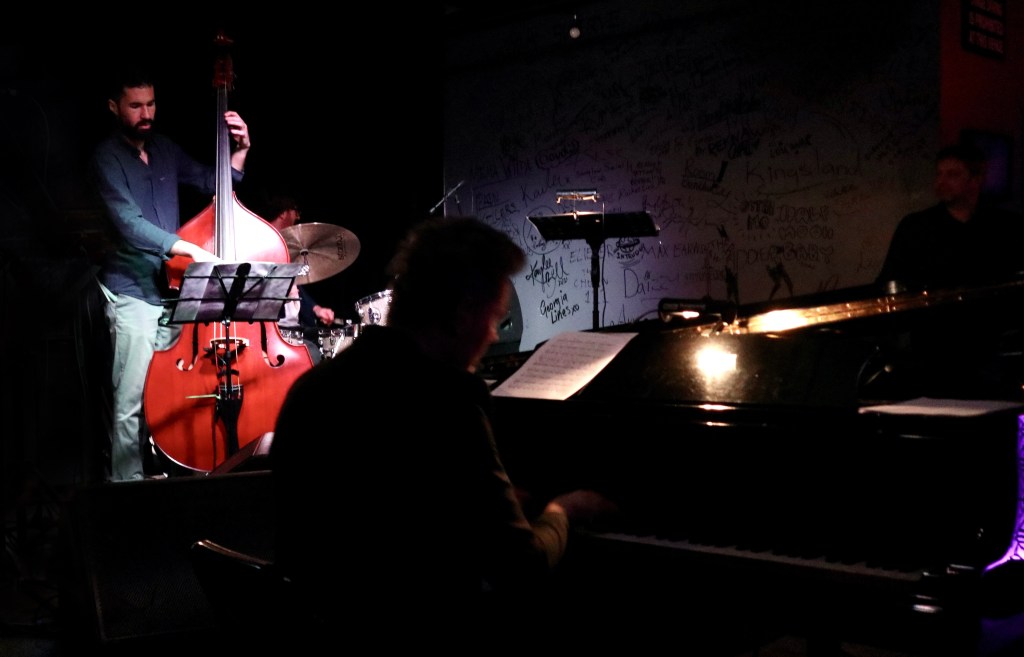
The Bonita Project is fueled by good compositions, nice arrangements and above all by the exuberance of leader Chelsea Prastiti. It is the second time that Bonita has appeared at the CJC in recent times and people returned for more. It is a worthy project as it reimagines a time and rides on a powerful vibe; the sort that the world needs right now. There was always an easy-going breezy quality to post-war Brazilian music and that quality could beguile. Underneath, however, there is a powerful engine, as the melodies float over a plethora of complex rhythmic structures.
It is impossible to listen and to keep your feet still as the urgency underlying the beachy vibe captures you. It is also true that in this golden era there were dangerous political undercurrents. Out of that dashed hope came a flowing of art forms and the authoritarian colonels who tried to snatch it all away could not silence the music. Many of the musicians like Elis Regina were harassed, but the music never faltered.
There were three arrangers credited on the gig, Prastiti, Sinclair and Passells. The compositions were by Prastiti (and with one co credited to Kenji Hollaway). Some of the tunes we had heard before, including the lovely ‘Cassandra’ (posted as a video last time). There were also new tunes and among them ‘Peter Pan’ was especially appealing. The band had changed slightly from last time, with Connor McAneny replacing Crystal Choi. McAneny had been out of the country for a few years and his return is welcome. His piano playing has a muscular quality to it, which was less evident before he left.
The opportunity afforded by a diverse sound palette was well utilised by the arrangers; bringing out the best in the music without overwhelming melody. This was achieved with three vocalists, an acoustic guitar, piano, double bass, percussion, kit drums, trumpet + flugelhorn, clarinet + flute, tenor saxophone and a second flute. It was pleasing to hear a 12 piece ensemble perform in this way. A configuration like this allows an arranger to impart a degree of airiness out of a large ensemble sound. This was achieved by having the instrumentalists or the vocalists moving in and out of the mix as required. The tunes had lyrics, but just as often there was wordless singing. I love to hear the human voice used as a (non-verbal) instrument. Perhaps because of my ongoing enthusiasm for Winston/Wheeler/Taylor in their ECM ‘Azimuth’ days. This was a nice project and all the more so because it was presented with infectious enthusiasm.
Bonita: Chelsea Prastiti (vocals, arranging), Eamon Edmondson-Wells (upright bass), Ron Samsom (percussion), Tristan Deck (drums), Connor McAneny (piano), Michael Howell (guitar), Roger Manins (tenor saxophone), Elizabeth Stokes (trumpet/flugelhorn), Ben Sinclair (clarinet, flute, arranging), J Y Lee (flute), Rachel Clarke (vocals), Gretel Donnelley (vocals), Callum Passells (arranging).
JazzLocal32.com is rated as one of the 50 best Jazz Blogs in the world by Feedspot. The author is a professional member of the Jazz Journalists Association, poet & writer.Some of these posts appear on related sites.
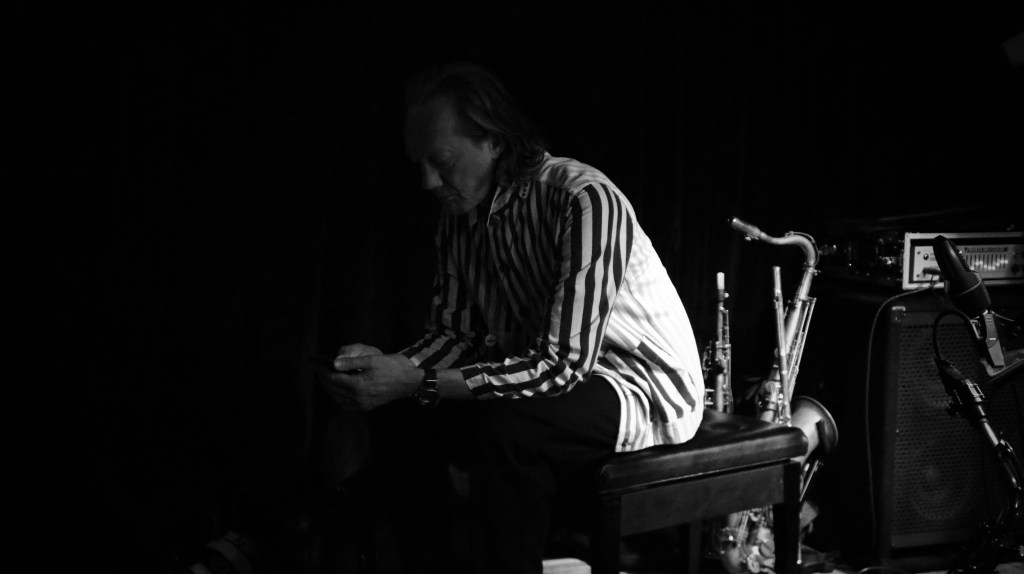
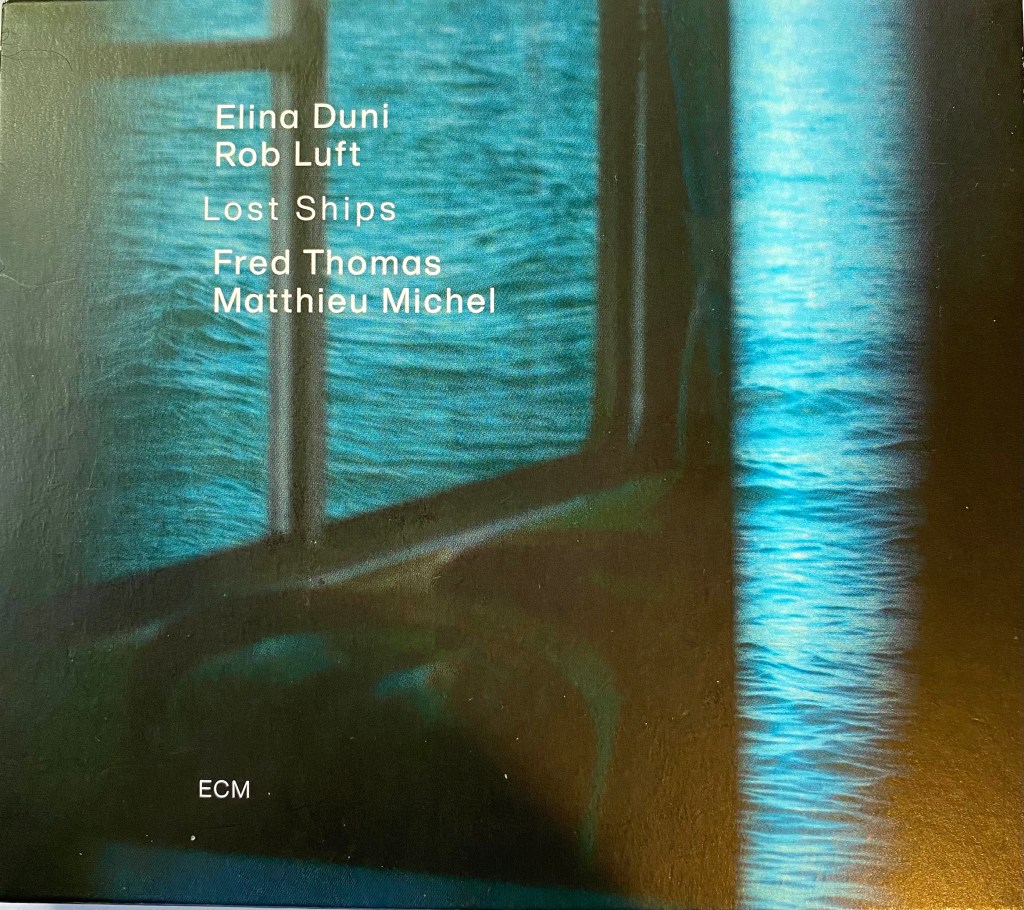
Lost Ships on ECM is an album that rewards deep listening. It is deliciously spacious and unbelievably beautiful and the powerful images and exquisite stories will remain with you long after listening. It speaks in many languages, as disparate as Albanian and English. The Romance, Germanic and Balkan tongues unified in improvised song form. The album is a collaboration between UK Jazz guitarist Rob Luft and Albanian born Jazz vocalist Elina Duni. Together they have crafted a rare and precious document. It is especially relevant for current times while gently referencing a fading past.
Like many ECM albums, originals, traditional folk tunes and jazz standards are approached with a Euro-Jazz sensibility. An approach where less is much more and an almost preternatural clarity is realised Everything sounds fresh and the album achieves this by breathing new life into what we recognise and by delighting us with the unfamiliar. As always with ECM albums, the recording quality is impeccable, and the musicians take full advantage of this.
The first number ‘Bella Ci Dormi’ (Beauty, You Sleep) is a traditional Italian song conveying intense longing. It opens with the piano and guitar setting up the tune for Duni; her voice, caressed by the delicacy of the arrangement. Duni has an extraordinarily beautiful voice and Luft has gifted her the perfect arrangements. The next tune ‘Brighton’, an original by Duni and Luft is sung in French (with the flugelhorn as another dominant voice).
There is a songbook standard, ‘I am a Fool to Want You’ (Sinatra/Wolf/Herron) and a loved chanson classic ‘Hier Encore’ (Charles Aznavour). This establishes the pattern throughout. Songs from many sources sitting comfortably together. The song ‘Wayfaring Stranger’ (trad USA) was made famous by Johnny Cash, but it has previously been recorded by Jazz musicians (Charlie Haden and Shirley Horn). The two traditional Albanian songs are a rare treat. In ‘Kur Me Del Ne Dere’ or ‘N’at Zaman’, it is not hard to discern the eastern European flavour.
Among the originals are some wonderful tunes, ‘Flying Kites’ is stunning as are ‘Lux’ and ‘Empty Street’. As lovely as the rest are, my highest praise goes to the title track ‘Lost Ships’. The song pays tribute to the migrants who lost their lives in the Mediterranean; gently but powerfully urging us to take action on environmental and humanitarian issues before we find ourselves lost ships on an empty sea.
The trio accompanying Duni is not of a typical alignment. It has two chordal instruments and the pianist doubles on drums. Then there is the flugelhorn. Such sensitive players all. And Luft is on every track and he is a powerful presence without being overt. It is his astonishing voicings and delicately placed runs; none intruding on the vocalist but never-the-less conveying a quiet strength by exploiting timbre and speaking whisper-soft. This was a perfect match and I am not surprised that ECM picked them up.
The last time I encountered Luft, was at Ronnie Scotts, playing a gig with Kit Downes, and it was there that he told me of this ECM project. At the time I had not heard of Duni, but a few months later and back in New Zealand, I posted enthusiastically on the Norwegian avant-garde vocalist Sidsel Endresen. Luft messaged me immediately to say that there was a connection between Duni and Endresen. Intrigued, I kept an eye out for the album, and then the pandemic hit.
I was determined to grab a copy, a real copy, complete with brooding artwork and an outer sleeve. ECM has the imprint of artistic integrity and I avoid listening to any ECM recording in a compressed format if I can. I badly wanted to hear the album, but I waited. I was informed that it could take two months due to pandemic shipping delays, but it took much longer. It finally arrived as winter approached and I took it out of the letterbox as dusk fell. I put it on as darkness fell and let the sounds wash over me. I loved it from the first note. It had been my lost ship, and now it was found.
Lost Ships: Elena Duni (vocals, compositions), Rob Luft (guitar, compositions), Fred Thomas (piano, drums), Matthieu Michael (flugelhorn).
JazzLocal32.com is rated as one of the 50 best Jazz Blogs in the world by Feedspot. The author is a professional member of the Jazz Journalists Association, poet & writer.Some of these posts appear on related sites.
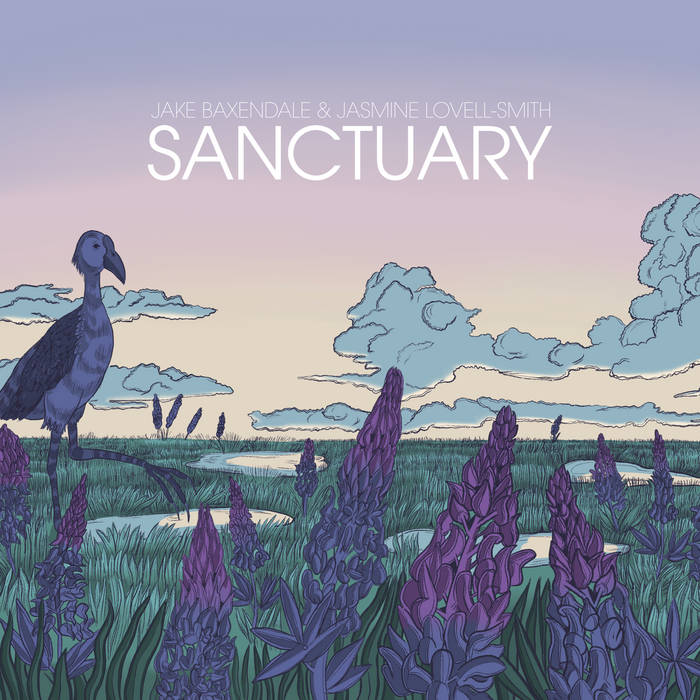
If you follow the New Zealand improvised music scene, you need to check out ‘Sanctuary’, a collaborative album released by the Wellington-based saxophonists’ Jasmine Lovell-Smith and Jake Baxendale. And although the release date was only a month ago, it is already receiving significant attention, including from outside these shores. When you listen to Baxendale’s Walt Whitman referencing ‘Leaves of Grass’ Suite or Lovell-Smiths gorgeous ‘Sanctuary’ suite you will understand why.
The album is replete with imaginative writing. Of tastefully painted brush strokes from an unusually rich colour palette, and this enabled by the configuration of the eleven-piece ensemble. It is saying something important but never at the expense of approachability, for example, Baxendale’s suite, the opener, brings Mingus to mind. Mingus in a Felliniesque wonderland.
The album is getting cut through because it is superbly realised and above all because it speaks convincingly of our times. In Lovell-Smith’s case, there is a distinct pastoral quality to her work and it invites us to reflect. This is similar to the approach that Maria Schneider takes, drawing attention to what is often passed over in haste and clothing the political in a softer raiment.
Because of the writing and the quality of the musicianship, this is an especially cohesive ensemble; but nevertheless, the voices of the individual musicians shine through strongly. First and foremost among the soloists are the co-leaders, Baxendale on alto saxophone and Lovell-Smith on soprano saxophone, each featuring strongly on the album. Both give stunning performances. They have assembled a formidable line up here and no one falls short. Among the fine performances, Blair Lathem on bass clarinet and baritone, Ben Hunt on trumpet, Louisa Williamson on tenor, Hikurangi Schaverien Kaa on drums, Aleister Campbell on guitar and Anita Schwabe on piano (with her innate sense of swing).
Baxendale is acknowledged as an important New Zealand composer and he has frequently been nominated (and has won) Jazz Tui awards. He is the spokesperson for the award-winning group The Jac (the winner of this year’s Tui with ‘A Gathering). He has travelled the world with his music and is associated with a number of New Zealand’s finest jazz units. Also a noted composer is Lovell-Smith who has resided, taught and performed in a number of countries, especially the USA and Mexico. Her return to New Zealand has enriched the scene here as she brings valuable insights and experience with her. Her innovative group the Noveltones is well worth catching.
The subject matter for the two suites, and for the additional pieces are perfectly pitched. Whitman the beloved poet and humanist who spoke his truth in unforgiving times. His love of nature and his common cause with open-minded souls. And Sanctuary, that loaded word that evokes both safety and confinement. The album was recorded after our borders with the world had closed. And while the album evokes a sense of our enforced isolation, it also speaks to our interconnectedness; of human beings existing in a complex ecosystem, and hopefully realising that this is a rare window of opportunity. Music like this helps illuminate our way.
To purchase or download the album visit jasminelovellsmith.bandcamp.com – Tell friends about it and support New Zealand music.
JazzLocal32.com is rated as one of the 50 best Jazz Blogs in the world by Feedspot. The author is a professional member of the Jazz Journalists Association, poet & writer.Some of these posts appear on related sites.
With the opening of borders between New Zealand and Australia, it was hoped that improvising musicians could begin touring again. Apart from three returnees and several stragglers who chose to shelter in place, we had not seen an international for fifteen months. Unfortunately, the pandemic reestablished itself in Australia and that window closed within a week of its opening. There was, however, one musician who timed it perfectly and that was saxophonist Andy Sugg.
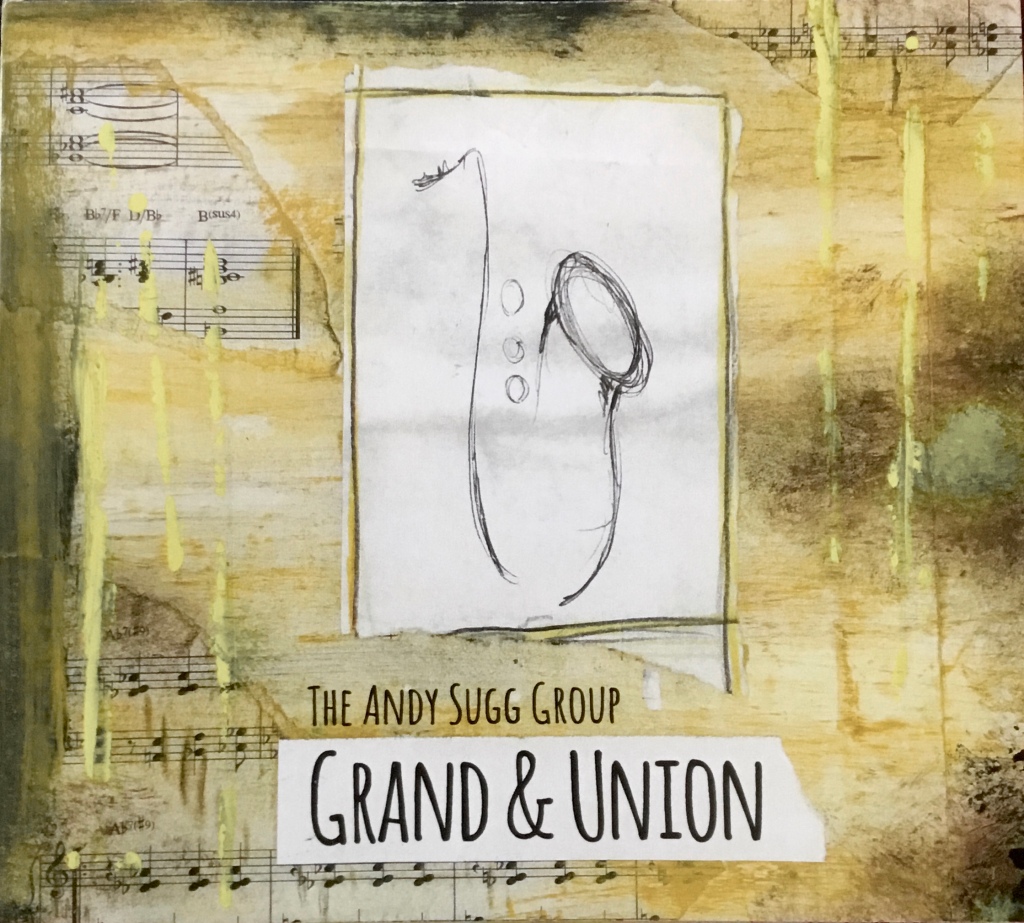
He flew out of Melbourne just days before another lockdown was announced and we were very pleased that he had slipped the net. Sugg is a gifted saxophonist with broad appeal and there was no better way to break the tour drought. The tour was billed as an album release but the setlist also included earlier compositions and two tasty standards. The album titled Grand & Union was recorded in New York in mid-2019 and released last year. For obvious reasons Sugg was unable to take to the road and certainly not with his New York-based bandmates.
Grand & Union is a rail hub in Brooklyn but it is also a metaphor for the album. ‘A musical intersection where styles and motifs merge before moving somewhere else’. It is an album of diverse stylistic influences but the musicians’ craft a tasteful amalgam from the underlying base metals. In the liner notes, the leader mentions Stravinsky as a prime inspiration and ‘The Rite Stuff’ with its deep propulsive groove is the most overt reference; a stunning piece, which evokes the now without jettisoning the history underpinning it.
Sugg is a particularly coherent improviser who takes a listener along as he tells his ear-catching stories, and his tone is particularly arresting. Warm as toast and seldom straying into the lower registers. On the soulful ‘Ruby Mei’, his sound reminded me of the great melodic improviser, Ernie Watts. Much credit is also due to his New York bandmates who are seasoned musicians all, and who worked as a tight cohesive unit.
His Auckland gig featured a local rhythm section and they also acquitted themselves well. The first set opened with the title track Grand & Union and was followed by Ruby Mei and other tunes from the album, Then came a more expansive offering in several sections. This enabled Sugg and the band to stretch out. This was a gig of highly melodic offerings and as an added treat, the second set featured two popular standards. A musician said to me recently; playing a popular standard to a discriminating audience, means, that you must play it extremely well and you must insert something of yourself into it. They did. The standards were the gorgeous ‘Someday My Prince Will Come (Churchill/Morey) and the much loved ‘In a Sentimental Mood’ (Ellington). The audience shouted their approval, obviously delighted. I have posted a YouTube clip from the Auckland gig.
While each of the local musicians has experience playing with offshore artists, considering how long that has been, they were very much on form. Of particular note was Wellington drummer Mark Lockett. I could hear people commenting enthusiastically about his drumming between numbers. They were right to comment as he pulled one out of the bag that night. He and Sugg go back a long way and the connection was obvious.
The gig took place at Anthology for the CJC Creative Jazz Club on 14 July 2021. I recommend the album and it’s worth checking out Sugg’s earlier album also. To order physical copies, download or stream, visit AndySugg.Bandcamp.com
The album personnel: Andy Sugg/tenor saxophone. Brett Williams/piano & keyboards, Alex Claffy/acoustic & electric bass, Jonathan Barber/drums.
Gig personnel: Andy Sugg/tenor saxophone, Keven Field/piano, Mostyn Cole/acoustic bass, Mark Lockett/drums
JazzLocal32.com is rated as one of the 50 best Jazz Blogs in the world by Feedspot. The author is a professional member of the Jazz Journalists Association, poet & writer.Some of these posts appear on related sites.
Last Wednesday’s CJC gig brought us a feast of truly adventurous music and it was beautifully executed. It was ‘free’ and ‘experimental’ and although within the improvised music spectrum, it is probable that many in the audience would not have encountered a prepared piano before. At the heart of the trio was the critically acclaimed pianist Hermione Johnson with drummer Chris O’Connor and reeds player Reuben Derrick. Anyone unfamiliar with a ‘prepared piano’ trio performance could not have wished for a better introduction.
The beauty of experimental music is that you can put away the straight jacket of preconception and bring your imaginings to bear. New and unexpected worlds can be crafted out of the fragmentary detritus of the old. This is surely the ultimate purpose of improvised music. Freeing us from the tyranny of the obvious.
This performance dove into the heart of sonority; creating sounds not generally associated with the instruments that made them. The piano had been prepared before the audience arrived and I wish that I had seen it. I have been lucky enough to witness this ritual on previous occasions, and ritual it is. There is a concentrated delicacy required in instaling the objects which muffle or extend the range of a piano. It is an installation and the precursor of new music. Items like chopsticks are inserted precisely between adjacent strings or perhaps a metal bowl is positioned. Few if any in New Zealand exceed the artistry of Johnson in this regard.
Excerpts from concert
And it was not only the piano that reached for new sounds. No one thinks twice when they hear an instrument’s range extended by electronic means, nor should they when this is achieved acoustically. O’Connor, the drummer’s drummer is the most familiar to CJC audiences. He is one of Aotearoa’s best-loved and most adventurous drummers as he sits astride many genres with deceptive ease. During this performance, he added colour via fingers, mallets, sticks, gongs or rims, and no available surface or drum position was left unexplored. And he underscored the deep pulse emanating from the piano, tapping out some passages with surprising delicacy.
Completing the trio was Christchurch based reeds player Derrick. The last time I saw him perform was in 2013 with his ‘Hound Dogs’. That particular unit performed a Monk heavy set that was well-received as I recall. Since then he has travelled extensively to places like Warsaw, Colombo, Vienna and Ljubljana. He is a noted composer and has collaborated across many cultural traditions. His fluency on the clarinet automatically singles him out, as the instrument is famous for punishing anyone who takes it up half-heartedly. On this gig, he doubled on tenor saxophone and his uncanny ability to locate the acoustic possibilities on both was evident. It’s a pity that he doesn’t live closer, I am up for more of what he has to offer.
Derrick, O’Connor, Johnson
This was music but it was also performance art of the highest order. It stretched us as improvised music should. It was wonderful. The only way that I can begin to do it justice is by abandoning written syntax. Filigree, texture, tropical thunder, raindrops, gamelan orchestra, quasar, delicate motifs, deep pulse, sighs, dance, hot tiles, exquisite, exotic. It reminded me of the first time that I heard Bley/Giuffre/Swallow’s Freefall. My ears were realigned after that experience.
Hermione Johnson (prepared grand piano), Chris O’Connor (drums, percussion), Reuben Derrick (clarinet, tenor saxophone). The gig took place at Anthology, for the CJC Jazz Club, 7 July 2021
JazzLocal32.com is rated as one of the 50 best Jazz Blogs in the world by Feedspot. The author is a professional member of the Jazz Journalists Association, poet & writer.Some of these posts appear on related sites.
As pandemic upheavals continue, in New Zealand we count ourselves lucky. Not only are we one of the safest nations on earth at present, but we have also been experiencing more live music than most. Over recent months various streams of Latin music have come our way and last week we heard the Brazilian born Kiwi Henrique Morales at the CJC Jazz club.
Morales has just released his first New Zealand album as leader ‘Alô Brasil’. He has long been the frontman for the funky Batucada Sound Machine and Santiago Soul Stars and his current band is increasingly popular around town. His musical journey began at a young age in South Brasil, soon bringing him into contact with the most respected musicians of his region. This grounding proved fortuitous as it enabled him to become familiar with the many styles of Latin American music and in particular the regional variations of Brazilian music.
While the music of central America frequently sheds sparks, the Brazilian musical styles are generally associated with a different vibe. They feel like a warm embrace. Once the Jazz world had encountered Yao Gilberto, Elis Regina and the towering twentieth-century genius Tom Jobim, the linking of the two swing based styles was conjoined forever. Brazilian music in all its forms remains popular throughout the world and western influences like reggae and Jazz have readily been adapted and absorbed. Morales interprets the many styles of his home country including Brazilian popular music and Latin Jazz fusion. The material was mostly original compositions by Morales.
He appeared at the CJC with a slightly different lineup to that on the album. The saxophonist Thabani Gapara had been replaced by Daniel McKenzie. The remaining band members were Mark Baynes on the keyboard, Gustavo Ferreira on the bass, Jono Sawyer on drums and Fabio Camera on percussion. I liked the arrangements as they never overwhelmed the warm rhythmic pulse and the melodicism, both of which are so central to this music.
After a long absence from the club, it is good to see Dr Mark Baynes back (twice in a month). He has been concentrating on Latin musical styles for some time now and I can think of no one else locally who is better fitted to accompany South American artists on piano. He also brings his Jazz credentials to the music. His playing was a highlight for me with his Jarrett like vocalisations (freeing the spirit) and his Latin swing feel. Another treat was hearing the soft rich tone Morales evoked as he plucked the strings of his Godin A6 Ultra, a prince among guitars and perfect for Morales’s music. For a copy of the album check out a local store or best of all catch the band around town.
JazzLocal32.com is rated as one of the 50 best Jazz Blogs in the world by Feedspot. The author is a professional member of the Jazz Journalists Association, poet & writer.Some of these posts appear on related sites.
The avant-garde trumpeter, composer and innovator Jon Hassell died this week. He was not as well known as he should have been. He blazed his trail largely out of sight of the mainstream and along the way he created marvellous worlds. His early influences were minimalism, serialism, Indian vocal traditions and Miles Davis. He was a softly spoken trumpeter, a world music innovator, a change agent in rock and a Jazz influencer. On one website sub-genre descriptors call his styles; ethnic fusion, experimental jazz, techno-tribal, ambient improvisation. While associated with many genres, he had moved beyond them to forge a new type of music.
His creations have always been deeply respectful of the older musical traditions. You will find beautifully crafted fragments of microtonal Indian classical music or textural Balinese Gamalon music. At no point does this feel like appropriation. And all layered lovingly over a deep pulse of electronic effects, a funk bassline and none of it rushed. If you watch videos of him playing you will notice that he points the trumpet bell downwards. Sampling and shaping the sound, on wondrous machines like the Eventide Harmoniser; ever shapeshifting as he moves tangentially between harmony and melody. His trumpet sound is unusual, developed out of early experiments with electronic effects as he sought to approximate Kiranic vocal techniques.
As a student, he was attracted to serialism and after graduating he studied under Karlheinz Stockhausen in Europe. On returning to the US he met Terry Riley and performed on the first recording of ‘In C’, a work regarded as a seminal moment in modern music. During the early seventies, he discovered Kiranic singing and along with Riley, La Monte Young and Marian Zazeela, studied under Pandit Pran Nath (Nath was a pupil of the Sufi vocal master Ustad Abdul Wahid Khan). They were later joined by Jazz Musicians and among them Lee Konitz and Don Cherry. Hassell was a Miles Davis fan and several of his albums highlight that influence. His best-known mainstream collaborations were with Brian Eno, Talking Heads, David Sylvian, Ry Cooder and Tears for Fears.
Less well known was his enormous influence on the Norwegian jazz scene. During the last few decades, he would perform with or influence various Norwegian Jazz musicians. Members of the underground techno-Jazz fraternity. Eivind Aaset, Jan Bang, Erik Honore, Bugge Wesseltoft, Nils Petter Molvaer, Arve Hendrikson, Sidsel Endreson and others. A sub-genre that is increasingly accepted by Nordic jazz audiences. (The top video features guitarist Eivind Aaset and electronics mastermind Jan Bang).
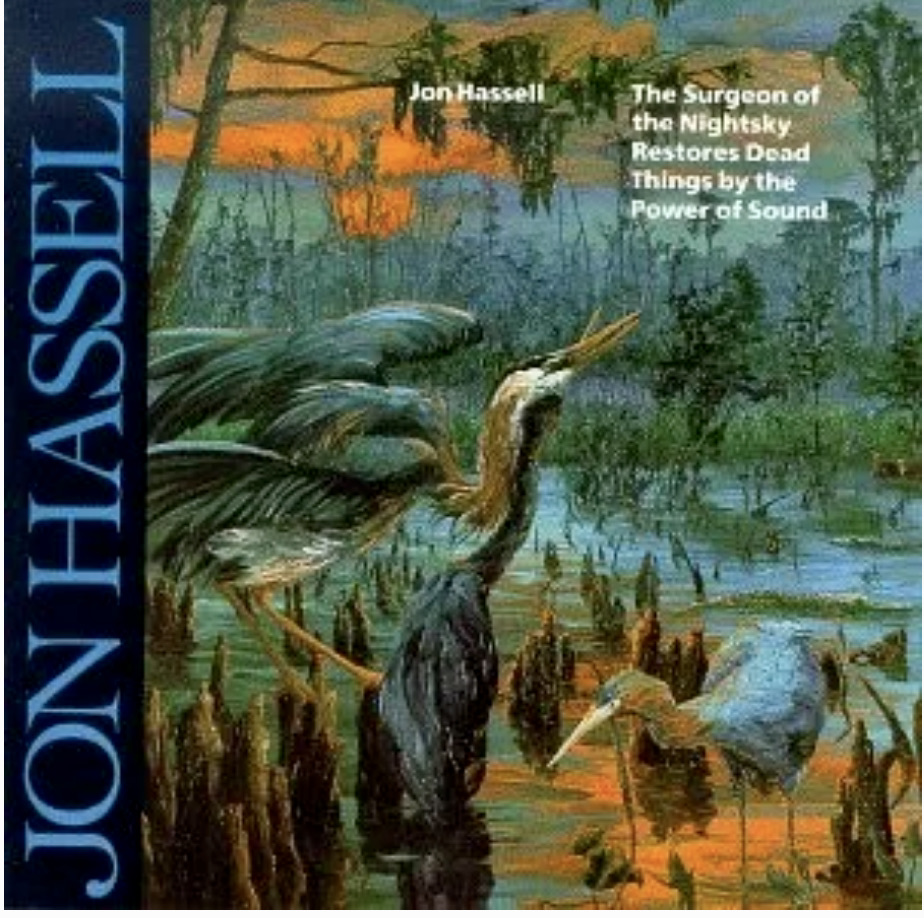
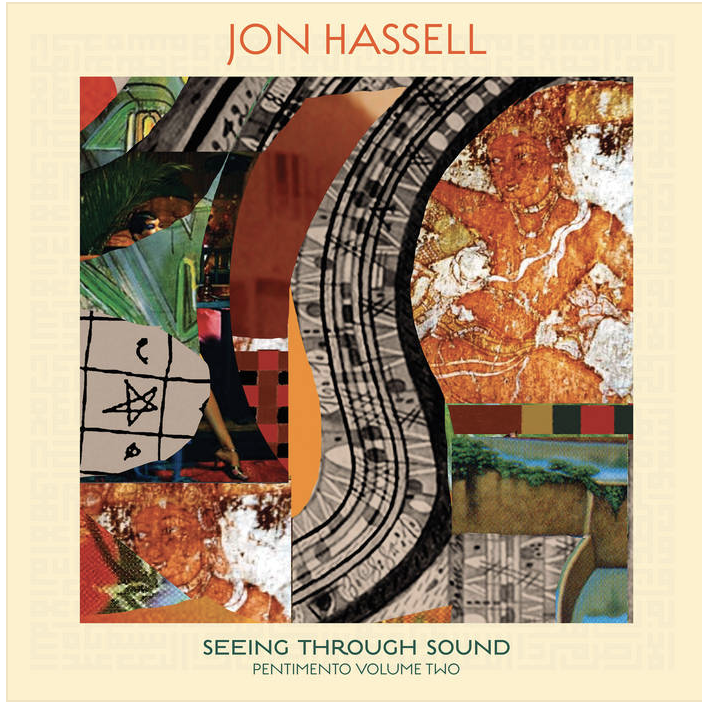
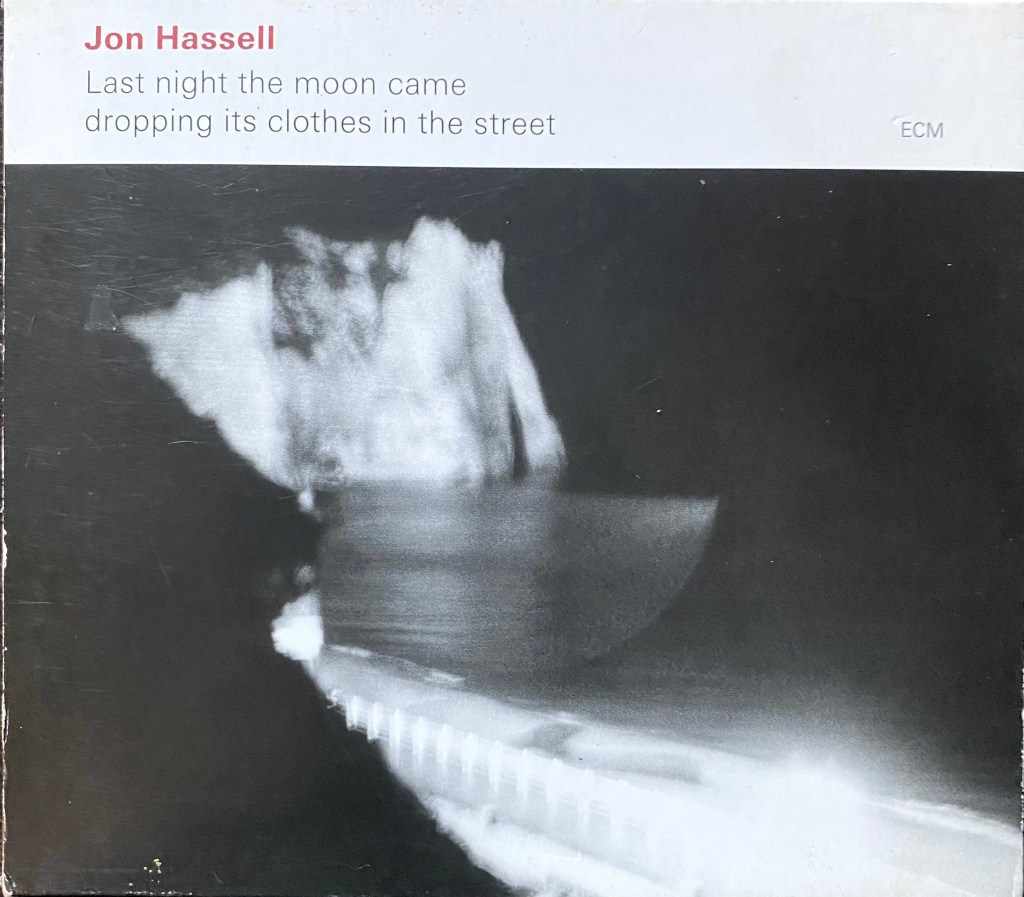
Hassell’s innovations and collaborations have produced some extraordinary recordings. My personnel favourite is his ECM recording ‘Last night the moon came, dropping its clothes on the street’ (the title is from a Rumi poem). On this album from 2009, he plays alongside like-minded Norwegian improvising musicians. He always used evocative album titles and his album covers and videos magnify the effect. Album titles like ‘Vernal Equinox’, ‘Dream Theory Malaysia’, ‘The Surgeon of the Night Sky Restores Dead Things by the Power of Sound’, ‘Mareefa Street, Magic Realism’,’ Listening to Pictures’, ‘Seeing through Sound – Pentimento’ (pentimento: where a painting reveals fragments of an older painting hidden underneath). He painted in the softest of pastels, dabbing sound onto a universal canvas, elevating mood to the position of supremacy and infusing everything with a rare beauty.
JazzLocal32.com is rated as one of the 50 best Jazz Blogs in the world by Feedspot. The author is a professional member of the Jazz Journalists Association, poet & writer.Some of these posts appear on related sites.
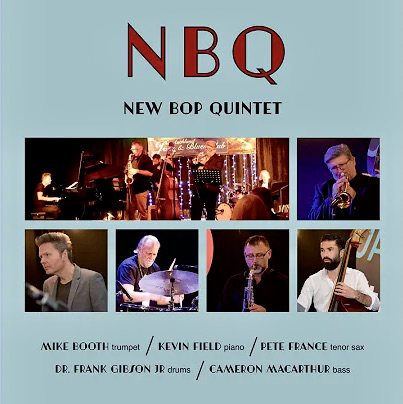
I first caught the New Bop Quintet (NBQ) a few months ago, and since that appearance, they have had considerable success; playing at the Wellington Jazz Festival, appearing in large venues and touring. Now after months on the road they have an album out. An album that could best be termed, a love letter to Hard Bop; that accessible blues-infused genre that quickly became a touchstone for Jazz lovers of all stripes. Outside of the Great American Songbook, the Hard-Bop era produced the best-loved Jazz standards. Many of them are featured on the album.
Putting out albums of familiar Jazz standards was avoided for a time as it invited comparisons with the originals. Now seventy years later there are fresh ears and enough distance to evaluate equitably. It is a well-recorded album and the musicianship is of a high standard. In addition, the more traditional stylists sound comfortable playing alongside modern conceptionalists like pianist Field. It has always been a feature of Jazz that the older styles influence subsequent developments. This is the perpetual two-way dialogue that keeps the music relevant.
I have never heard Mike Booth sound better, and Pete France, who we wish we heard more often. Both played beautifully, that tone. As they played there was the pervading sense that an essence had been captured. The most experienced of the quintet members is undoubtedly Dr Frank Gibson Jr. He is a versatile drummer and one of the most recorded artists in Aotearoa. He always sounds great but he absolutely killed it on this date. With rhythms like that pulsing underneath them, the band must have felt that anything was possible. His ability to carve up time and urge others on is his gift.
Graduating from the UoA Jazz school in 2012, Cameron McArthur was the youngest band member, but since graduating he quickly established himself as one of the pre-eminent bass players in the city. Lastly, on piano, Keven Field. His rhythmic and harmonic approach is unique and forward-looking. He is undoubtedly a modern stylist and most at home alongside the likes of Matt Penman, Julien Lage or Mike Moreno. Having him on board gave the album a strong post-millennium foothold.
While predominantly featuring much-loved standards, there were also four originals. One each was penned by Gibson and McArthur and two by Booth. The compositions all referenced the Hard Bop style and did so convincingly. Gibson’s tune ‘Beaver Fever’ was irresistible. The last time HBQ played I singled out ‘Speak no Evil’ (Shorter) and Soy Califa (Gorden) for comment. During Wednesdays live gig, the arrangements of Green Dolphin Street (Kaper Bronislaw) and Stablemates (Golson) stood out. The arrangements were by France and Field respectively. Booth is also a fine arranger (watch out for the AJO’s new release.
Gibson
The gig lineup differed from the album personnel in one respect, Wil Goodinson had replaced McArthur. He was the youngest band member by a wide margin, but he gave a great performance. His solos were melodic and inventive and he is already nipping at the heels of the more experienced bass players. Lastly, credit must be given to the producers David Innes and Terrance O’Neil-Joyce. They poured heart and soul into this project and should take a bow.
Mike Booth (trumpet), Dr Frank Gibson Jr (drums), Keven Field (piano), Pete France (tenor saxophone), Cameron McArthur (bass), *live gig Wil Goodinson (bass). The album is out on the Manu 6022 Label and available from stores. JazzLocal32.com is rated as one of the 50 best Jazz Blogs in the world by Feedspot. The author is a professional member of the Jazz Journalists Association, poet & writer.Some of these posts appear on related sites.
The Jeff Henderson Trioglodyte project came into being during a period that future anthropologists might well dub the neo-geographical isolation era. The Trioglodyte name evokes an image of cave-dwellers, of waiting out a storm and sheltering beside a roaring fire as the icy wind bites at their door. Like all of Henderson’s projects, this one was memorable and full of surprises. It was guaranteed to clear the cobwebs from a listeners brain and it did so by cunning means. It had three drummers, THREE DRUMMERS.
Humans are hardwired to look for familiar patterns in the world about them. It is how they have survived. But when those patterns become too familiar inertia sets in and complacency follows. This is especially the case with music. Free music confounds some listeners but if they listened, really listened, they would find the familiar. Umberto Eco the Italian semiotician and philosopher pointed out the following. “All music has rules, it is just that some listeners fail to recognise them. When a decision is made not to adhere to any recognisable form, as in avant-garde music, that is a rule”.
The Trioglodytes took us on a journey and although it seemed to traverse unfamiliar territory, in reality, it did not. What we experienced was largely primal and it triggered parts of our brain that we have been conditioned to ignore. The gig opened with a long passage of hypnotic drum beats. From three drummers who were in sync and yet communicating with each other. The usual tune forms had been abandoned but delineations existed to guide us between the sections or mood changes.
Henderson is the master of this type of performance art and because he was performing in front of a Jazz audience he placed Jazz totems throughout the 90 minutes. The first such totem was the opening line from Bags Groove. It was played a number of times, elided, and suddenly abandoned. It was totemic because it demonstrated the power of a familiar melodic line, which has embedded in its essence the unuttered form.
We heard many such references throughout the gig and none were resolved in expected ways. Humans may be hard-wired to seek out familiar patterns and forms, but we are also devotees of puzzle-solving. If we were never challenged atrophy would set in. The references touched on loved Jazz standards through to mystical Albert Ayler lines. My favourite was the powerful phrase from Sun Ra’s invitation to depart via Spaceways Incorporated. ‘If you find earth boring, just the same old, same thing’ (June Tyson memorably sings this in the Sun Ra movie ‘Space is the Place’). I have posted three excerpts and one of those contains that reference.
Others may have reacted differently and there is no right or wrong way to experience a gig like this. I left the gig with a smile on my face and an appreciation of the journey. And the freer sections brought fourth an unexpected memory of an old black and white film. Of Berber reed players dancing about a campfire in the desert and playing brief squealing phrases over endless hypnotic drum beats.
Trioglodytes: Jeff Henderson (saxophones), Eamon Edmundson-Wells (bass), Chris O’Connor (drums)
The gig took place at Anthology, CJC Jazz Club, 16 June 2021
JazzLocal32.com is rated as one of the 50 best Jazz Blogs in the world by Feedspot. The author is a professional member of the Jazz Journalists Association, poet & writer.Some of these posts appear on related sites.
Jazz Funk is a subgenre of Jazz and although it draws on R & B and Soul it is a distinct niche. While it draws on many sources, it never completely overlaps them. It is a black American sound. it is accessible with a strong backbeat, good arrangements and shorter but tightly focussed solos. Above all it is danceable and that brings joy. Back in the seventies, it received a measure of grief from both sides of the spectrum. Jazz purists complained that It was not cerebral enough or too reliant on electric instruments while some in the broader music press complained that it was too much like mainstream Jazz.
From today’s perspective, such nonsense is laughable. When Jimmy Smith, Gil Scott-Heron, Herbie Hancock, George Benson and Freddy Hubbard started releasing stunning Jazz Funk albums the naysayers were left with album sized chunks of egg on their faces.
A few days ago Ben McNicoll brought his popular Jazz Funk unit to the CJC. His unit is called the CTI All-stars Tribute band and the reference is a potent one. The original CTI Allstars were leaders who came together for a large California concert: George Benson, Freddie Hubbard, Hubert Laws, Stanley Turrentine, Hank Crawford, Johnny Hammond, Ron Carter, Billy Cobham and Airto Moreira. The CTI label was the brainchild of record producer Creed Taylor.
Povo
A man whose legacy is incalculable. He worked at Bethlehem Records, ABC-Paramount, Verve, Impulse and A&M before founding CTI (and its imprints). He signed John Coltrane for Impulse, Antonio Carlos Jobim and Stan Getz to Verve. He signed Oliver Nelson, Gil Evans, Bill Evans, Wes Montgomery and many more. His last great project, the CTI label captured a moment in Jazz history, bringing with it those warm funk-infused albums and for a time, a wider audience.
Crab Apple
McNicoll is a musician who puts in the hard yards and he captured the CTI vibe perfectly. While featuring a gig of covers is not a CJC thing, this was much more than that. Yes, CTI covers were aired, but only in the context of an over-arching project. McNichol’s band offered us a valuable window into this epoch and his selection of overlooked standards captured the vibe to a tee. It was great to see these numbers aired as they are often left languishing in the shadows.
The tunes were infectious and they soon brought people to their feet and on a chilly winters night, what could be better? They were tunes redolent of an era and they were happy tunes. For those in the audience around during the seventies, they brought back fond memories, for the rest, the joy of discovery. Among the tunes played were Freddy Hubbards ‘Red Clay’, ‘Gibraltar’ and ‘Povo’. The ‘Taxi’ theme, Herbie Hancock’s ‘Hornet (a funky tune written around two notes), A Bob James and a Wayne Shorter tune and very pleasingly Idris Muhammed’s ‘Crab Apple’, a Louisiana funk classic. This is the music that you can hear in the New Orleans clubs. A unique sound that rides a groove to the moon and back.
McNicoll
I have put up the ‘Povo’ and ‘Crab Apple’ cuts. The band featured Ben McNicolls on baritone saxophone, soprano saxophone and tenor saxophone, Joe Kaptein on Rhodes, Mostyn Cole on electric bass, Kurt Dyer on percussion, Andy Keegan on drums and special guest Jason Herbert on guitar. The gig was at Anthology, CJC Jazz Club, 9 June 2021.
I would also like to acknowledge McNicoll for his tireless work on behalf of the Auckland Jazz scene. Most know him as the person who introduces the gigs each week, but the observant will be aware that he also helps set-up and pack-down; he does the sound checks and sits at the ‘desk’ and on top of that he frequently organises gigs for other musicians. He is a prime example of how a not-for-profit organisation remains functional. In short, he us the archetypal (unpaid) A & R person.
JazzLocal32.com was rated as one of the 50 best Jazz Blogs in the world by Feedspot. The author is a professional member of the Jazz Journalists Association, poet & writer.Some of these posts appear on related sites.
I clearly recall the first time I heard Steve Barry. It was around eleven years ago at the1885. He was not long back from Australia, bringing with him bass player Alex Boneham and drummer Tim Firth. At that time the Creative Jazz Club was located in a dark atmospheric basement; an ill-lit venue bordering on gloomy and perfect for a Jazz club. You would grab a drink, sink into a well-worn leather armchair with broken webbing and wait for the band to begin.
The music that night was unforgettable. Somewhat denser than I was accustomed to at the time, but never-the-less fully engaging and exciting. When the second tune was announced I pushed record on my iPhone because I knew that I was hearing a piece of music that merited further attention. It was a tune that he was working on and it would appear on his first album a short time later. That was the year of Aaron Parks and his Invisible Cinema, and Barry’s tune was titled ‘Parks’. I listened to that phone clip an awful lot over the following months and I could hear the future.
Each time Barry has appeared in New Zealand he has showcased fresh ideas. He is a forward-thinking and innovative composer/pianist and as such he never rests on his laurels. Although born in New Zealand, Australia claimed him long ago. He is popular there, has obtained a doctorate and awards there and teaches at the Sydney Con. As expected, he brought us new compositions this visit, but as I listened I was also reminded of that first gig. While he moves on constantly and is not composing or playing in the way he did back then, there is still a hint of that younger player. Of past learnings gathered and picked through as he builds fresh iterations, crafted in part from the bones. I am not surprised that he studied with Craig Taborn.
His compositions are no doubt demanding and require good responsive players. He had assembled just such a crew for his CJC Anthology gig. Callum Passels on alto, Cameron McArthur on bass and Ron Samsom on drums. Local musicians of the highest quality. Passels has a gorgeous tone, but what sets him apart is his ability to push at the boundaries. His best work occurs when playing compositions that afford him certain freedoms and these compositions worked well for him. At times he would run over the lines which contrasted nicely with his tight unison playing. The sort of advanced musical thinking I associate with Warne Marsh. Perhaps because this was a quartet, the music also felt more spacious. The density and serialism were still evident but as always with Barry, there were fresh vistas revealed at each turn.
The gig took place at Anthology K’Road for the (CJC Creative Jazz Club). 2 June 2021. For Barry’s album visit Rattle Records or stevebarrymusic.bandcamp.com
JazzLocal32.com was rated as one of the 50 best Jazz Blogs in the world by Feedspot. The author is a professional member of the Jazz Journalists Association, poet & writer.Some of these posts appear on related sites.
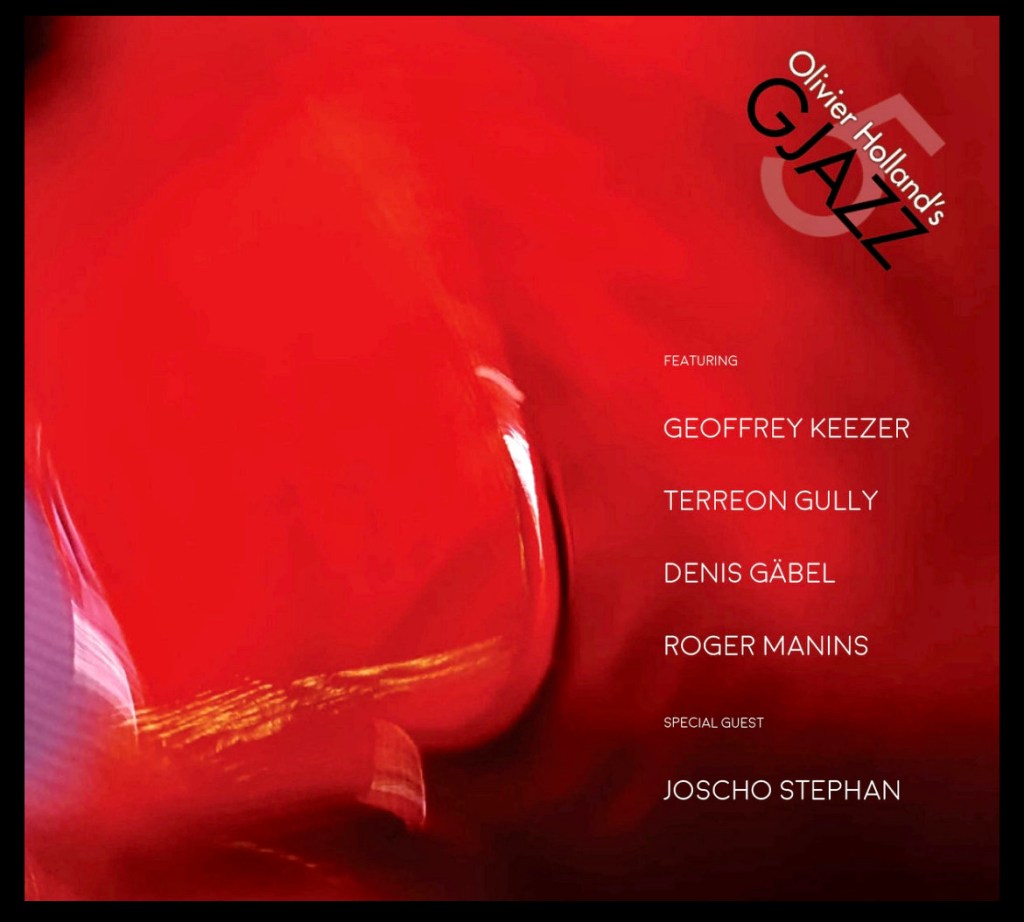
Olivier Holland’s GJazz5 Album release (NZ) was bound to be a significant event as Holland doesn’t do half-measures. When he commits to a project he gives it his all and this project was no exception. Sometime in 2018, he and fellow Auckland musician Roger Manins flew to Germany to record 13 new compositions. Joining them, a formidable lineup of internationally acclaimed musicians and their destination, the renowned Fatorria Musica Studios in Osnabrück.
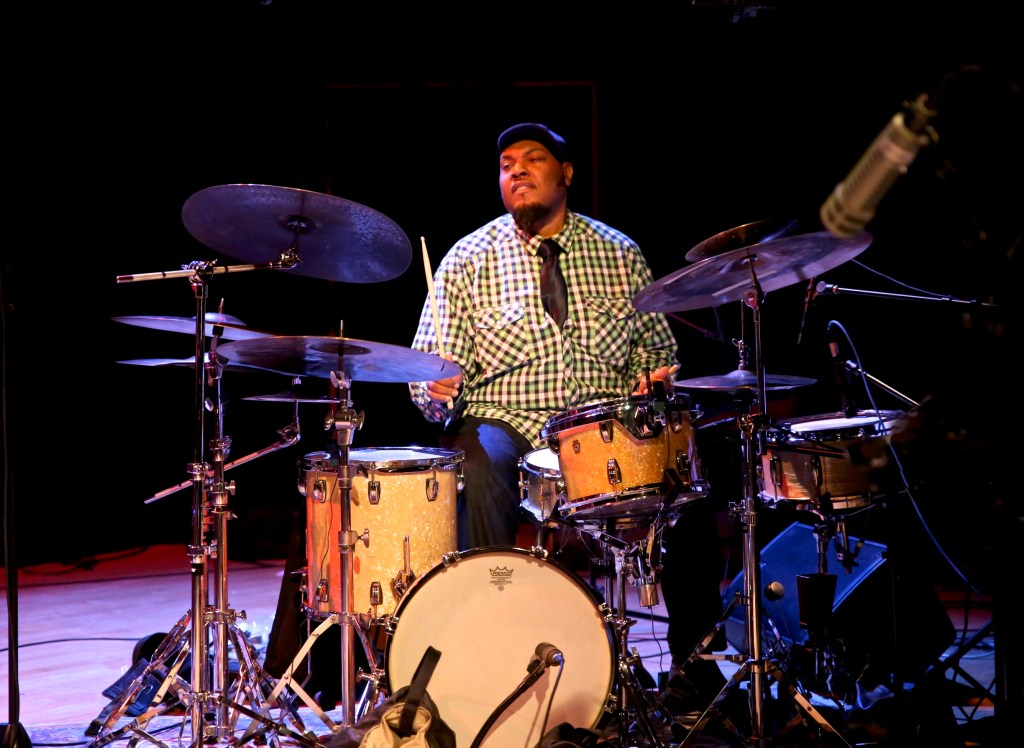
Holland’s compositions are always engaging and these ones, especially so. To give them their best airing he had engaged a number of Jazz luminaries; Geoffry Keezer pianist and educator (USA), Terreon ‘Tank’ Gully on drums (USA), Denis Babel on tenor saxophone (Germany), Roger Manins tenor saxophone (NZ) and guest artist Joscho Stephan guitar (Germany). Holland was formerly from Germany but he is now a senior tutor at the University of Auckland Jazz School.
When you put good material in front of good improvising musicians you can expect good results, but sometimes, that little bit extra is extracted and then the magic. This is a marvellous album and deserving of acclaim. It traverses a range of moods without ever detracting from the overarching mellow vibe. This is a recording you will want to play over and over, and each listening will yield fresh gold.
The first track ‘$10 Per Rat’ has both edge and humour. Holland is known for his throwaway verbal lines on stage and this bleeds through into his writing. He will quickly tell an audience that they shouldn’t read any particular meanings into his tune titles, but then he will follow up with an improbable story to the delight of all present. Good musicianship and good banter are happy bedfellows in my experience.
Track two, ‘Mrs Bombastic’ is the perfect vehicle for Keezer who sets the mood with his evocative intro. There is nothing bombastic about this tune which is reflective, spacious and beautiful. Following that is Morse Code, a tune true to name, dancing over compelling rhythmic patterns with an insistent ostinato bass line. The next tune ‘What?’ appeals to me enormously with its Afro Cuban feel and its funky danceable street vibe – Gabel, ‘Tank’ and everyone, killing it.
‘For Heidi’ was written for Holland’s partner. An achingly beautiful ballad and wonderfully realised by the musicians. The first album is rounded off by ‘EasyAz’. No Kiwi needs to have this term explained, but for the benefit of others, it’s a laid-back vibe that we value so much in this country. The musicians at the live gig told me that playing the tune was far from ‘easyaz’. The old adage about Jazz holds true here, complex music made to sound easy, ‘easy as’.
The only tune not composed by the leader is the first number on the second disk, ‘Tanktified’ by ‘Tank’ Gully. This is a cleverly constructed groove piece and it ties the album halves together nicely. On ‘Dog’ we hear Manins at his best, navigating the warp and weft of the bass lines and beats as he rides over the stop-start segments effortlessly. Another great solo from Keezer as well. Guitarist Joscho Stephan appears on tracks (1), (6) and 13) and his fluid delivery is tightly focussed, enhancing the vibe. ‘EasyAz’ drops into a nice swing feel which soloists Manins Stephan, Gabel, Keezer and Holland, power through as easy as – pumped by ‘Tank’s high octane fuel.
There are no B side tunes here — Venus Fly Trap (a gorgeous solo by Gabel), ‘Bad Tuesday’ which made me smile (Kiwi Jazz fans will get the reference immediately as it is a big nod to Hollands friend and colleague Kevin Field and his delightful composition ‘Good Friday’), ‘Don’t Worry’ (has that dreamy Pharaoh Sanders like vamp), ‘Van Dump’ (tasty unison lines and forward momentum riding on top of a flurry of heart-stopping beats, and those two blistering tenor solos), Lastly ‘10c A Fly’ a joyful tune co-credited to Holland and his son David. What a treat, and as with all of these pieces, carried on Hollands impeccable bass lines and his gravity-defying compositional architecture. None of the musicians can be set apart from the whole because all of the musicians stand out, this was truly a meeting of musical minds.
Following the recording, Holland made several trips to the northern hemisphere, nurturing the project to completion. Then, COVID happened and the American and German musicians were unable to travel to the album release. It would take more than an international pandemic to put a crimp in Holland’s style though and a release was planned using Auckland musicians (colleagues and former pupils).
The New Zealand gig was well signalled on social media with album teasers and a commitment to donate part of the album proceeds to a marine sanctuary off the coast of Africa. On top of that Holland generously forwent sales profits above cost. $5 from each sale plus a generous contribution from his own pocket was destined for Avaaz, a well respected oceanic environmental cause. If anyone is surprised at this generous turn, they don’t know him. His environmental interests are well known and based on first-hand observations as a diver and a blue water yachtsman (he originally sailed to New Zealand from Europe).
I have posted several numbers from the New Zealand gig and they are a small sampling from a superb nights entertainment. Beside Holland was Roger Manins, the only two from the recording band. Filling in for the internationals and killing it, were Dixon Nacey on guitar, Thabani Gapara on alto saxophone, Joe Kaptein on keys and Malachai Samuelu on drums. I am sure that these tunes were challenging, but you wouldn’t know it. More guitar parts were included in the charts and why not with Dixon in the mix. Roger was on top of his game as always and the other three were marvellous. The University of Auckland Jazz School alumni and tutors under Holland’s leadership did the University proud.
In addition to the Auckland clips, I have included some clips from the album. The local gig took place at Anthology for the CJC Jazz Club on 26 May 2021.
JazzLocal32.com was rated as one of the 50 best Jazz Blogs in the world by Feedspot. The author is a professional member of the Jazz Journalists Association, poet & writer.Some of these posts appear on related sites.
Mireya Ramos was an unexpected musical treat because our borders, with very few exceptions, have been long closed to all but Kiwi returnees (and most recently Australian tourists). Ramos is from New York. Very few international musicians have managed to cross the border, and only if they obtained an exemption and subjected themselves to a strict quarantine.
With the Australian Bubble just opened I assumed that Ramos must have come from Australia, but in fact, she arrived here with her acclaimed Flor de Toloache all-female Mariachi styled band to perform at WOMAD 2020. Within days of arrival, the borders had closed behind her. For many pre-lockdown international visitors, the border closure proved to be a silver lining as visas were extended and they could avoid the horrors unfolding elsewhere in the world.
Mireya Ramos is a multi Grammy-nominated (and winning) artist and although the rest of her all-female mariachi band members returned home, she and her partner Andy Averbuch did what creatives do best, they got busy. During the year she has recorded and toured the country and her gigs have attracted enthusiastic audiences everywhere. Her CJC gig featured a variety of Latin and Central American styles with the addition of popular standards.
Her music draws on many genres, but all coloured by a stylistic uniqueness. She is both a vocalist and a violinist and that appealed as well. The violin is not unknown in improvised music, but sadly it is still uncommon. I am fond of the violin in Jazz and Jazz fusion styles and particularly so with Argentinean music.
Listening Jazz audiences are always eager to hear traditional and blended South American music. A good example was the version of ‘Fever’ which morphed into an Afro-Cuban groove. Of all the tunes, that appealed to me the most. It is not often that we get to hear the many and varied Latin styles and whenever we do, we are left wanting more.
Guitarist Andy Averbuch and Bass player Alex Griffith had opportunities to stretch out during solos and they made the most of that, but when Dr Mark Baynes and Lance Bentley locked into a Clave, the magic happened. Ramos has been received enthusiastically in New Zealand and after the pandemic recedes, I am sure that she will be encouraged to return. The band: Mireya Ramos (vocals @ violin), Andy Averbuch (guitar), Dr Mark Baynes (piano, keys), Alex Griffith (bass), Lance Bently (drums).
JazzLocal32.com was rated as one of the 50 best Jazz Blogs in the world by Feedspot. The author is a professional member of the Jazz Journalists Association, poet & writer.Some of these posts appear on related sites.
Drummer led albums often tell stories in different ways and the releases reviewed here exemplify that. On the surface, they are dissimilar, but both convey raw energy and immediacy. These improvisers transcend the ordinary in their search for an ancient to modern language.
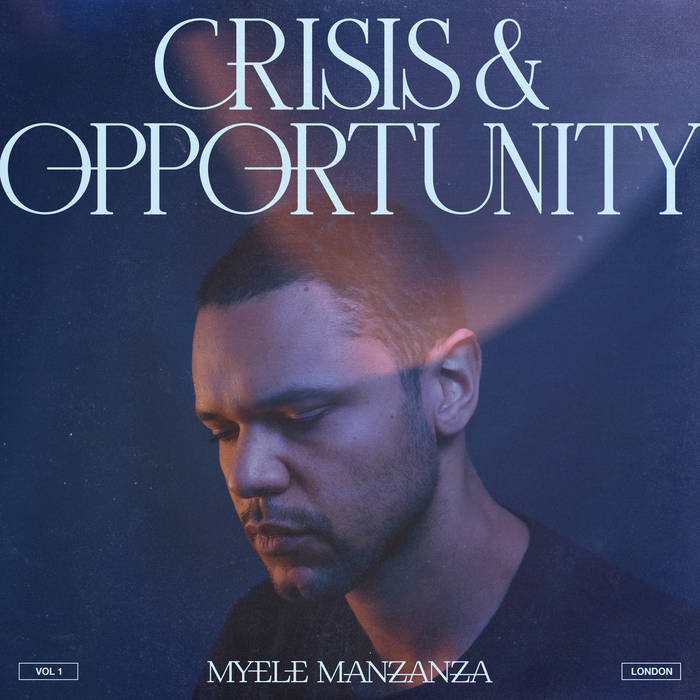
CRISIS & OPPORTUNITY
The first is a newly released album by Myele Manzanza titled Crisis and Opportunity. It is the artist’s eighth release. And this time, his compositions were crafted while the artist was locked down in London during the worst months of the UK COVID crisis. As with his previous albums, there is something big-hearted about this work. As you listen, you gain the sense that he is telling a story that transcends time and place. This is realised through some very fine writing and crafted over his warm mesmerising beats.
Crisis & Opportunity Cover
Manzanza draws on strong roots and influences. He is a Kiwi, a citizen of the world and of African heritage. His father is a Master Congolese drummer and his formative years playing hand drums will have informed his approach to the kit. Among the other influences evident are broken-beat and Jazz electronica. Out of these influences and his own life experiences, alchemy is forged. He is forward-looking and overtly political. He is someone to watch with interest.
Teaser to Crisis & Opportunity
Joining him on the album are some London musicians plus Mark-de Clive-Lowe (a Kiwi Keyboard maestro based in LA). I am familiar with trumpet player James Copus, as his impressive Dusk album came to my attention quite recently. The other horn player is George Crowley on tenor saxophone. When the horns are playing in unison it is hard to believe that the horn line is not much bigger. On piano is Ashley Henry and on bass Benjamin Muralt. Both chasing those hypnotic dancing beats to good effect. And with de Clive-Lowe adding his deft brush strokes, a magnificent Album is realised. If you go to his Bandcamp label you can purchase a digital copy or order vinyl. www.myelemanzanza.bandcamp.com
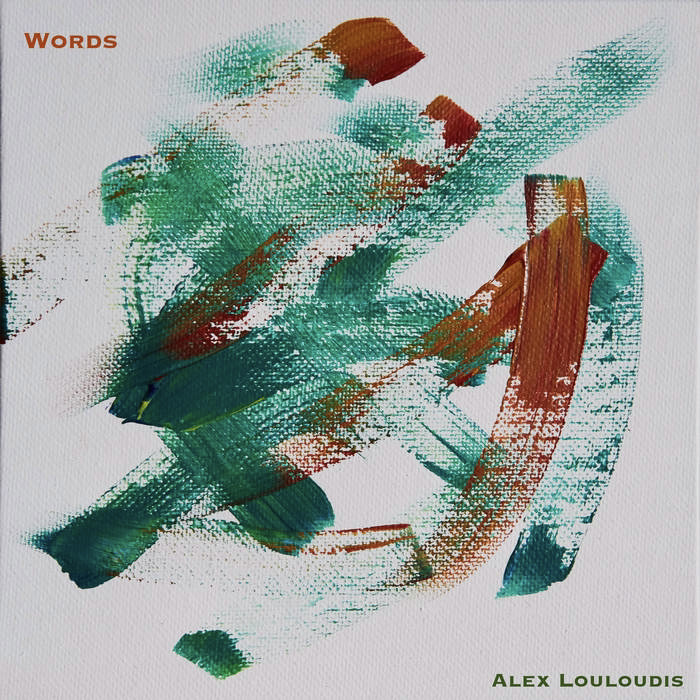
WORDS
The other drummer led album that caught my attention is a free-jazz album released by Alex Louloudis. It arrived as a digital review copy with very little attached information, so I embarked on some research. In reality, the music speaks for itself and the biographical details are of less importance. The first track of ‘Words’ is ‘Surviving’ and it pulls you into a frenetic life-dance full of raw beauty and endless recalibration. It is propulsive and joyous and I fell for it immediately. It is the sort of track that brings me back to listen over and again and because of the immediacy, you know it’s real.
This is free music that can move inside or outside with extraordinary ease. Nothing is quite what it seems and the river of sound flows over a cushion of compelling beats. There is often an ostinato bass line as in The Magic of 3. The melodic lines avoid the obvious and there is almost no repetition of phrases. In the right musical hands, following such principles opens up huge possibilities. This is a killing band and it is unmistakably a drummers band.
I learned that Alex Louloudis was born in Drama, Greece, moved to America to study at the age of 19 and that he records on the Belgian based label ‘Off’. Since completing his studies in New York, Louloudis has moved among like-minded improvisers and attracted favourable attention. Although the artist was previously unknown to me (my bad), he has certainly come to the notice of important musicians and commentators (Gary Bartz, Billy Harper, Reggie Workman, Oliver Lake, Jeff Ballard, to mention just a few). The title track ‘Words’ is the final track and it rounds off the album perfectly. Opening to soft brush beats, it morphs into a dreamy slow-moving rendition of Over the Rainbow, which in turn introduces the reflectively cutting poem, recited by Rosdeli Marte.
The musicians: Alex Louloudis (drums), Raphael Statin (tenor saxophone), Dean Torrey (bass), Rosdeli Marte (vocals #1,6), Kaelen Ghandhi (tenor saxophone (# 1,6), Aaron Rubinstein (guitar #1,6), is available from Bandcamp at https://stilll-off.bandcamp.com/album/words
In this post, I have deviated from my usual practice of reviewing only albums from Aotearoa, New Zealand (or those offshore who maintain connections to our rohe). During the Covid lockdowns, I worked with the world Jazz community on platforms like the Jazz Journalists Assn site to ensure that the musician’s stories still were being told. Many writers were unable to engage, and in my country, we had freedoms others did not. No rule is worth having if it cannot be broken for a good cause. ‘Words’ is the exception that proves the rule and I couldn’t resist.
JazzLocal32.com was rated as one of the 50 best Jazz Blogs in the world by Feedspot. The author is a professional member of the Jazz Journalists Association, poet & writer.Some of these posts appear on related sites.
The genesis of DOG goes back a long way as I first reviewed them in 2012. Over that period they have gained various accolades and awards. They are Dr Lonnie Smith in reverse because the group began their journey as Dr DOG but then ditched the title to better accord with their egalitarian street-dog ethos. Their reputation extends well beyond New Zealand shores and their second album was recorded with guest Australian guitarist James Muller. They have two albums out on Rattle and both are exceptional.
Their first album featured the core group, and each of them contributed compositions: Roger Manins, Kevin Field, Oli Holland and Ron Samsom, The second album followed the same pattern, but with James Muller contributing as well. These are all exceptional players and the albums have allowed them to place a deeper focus on their writing skills. When musicians of this ability come together they are better able to push past arbitrary limits.
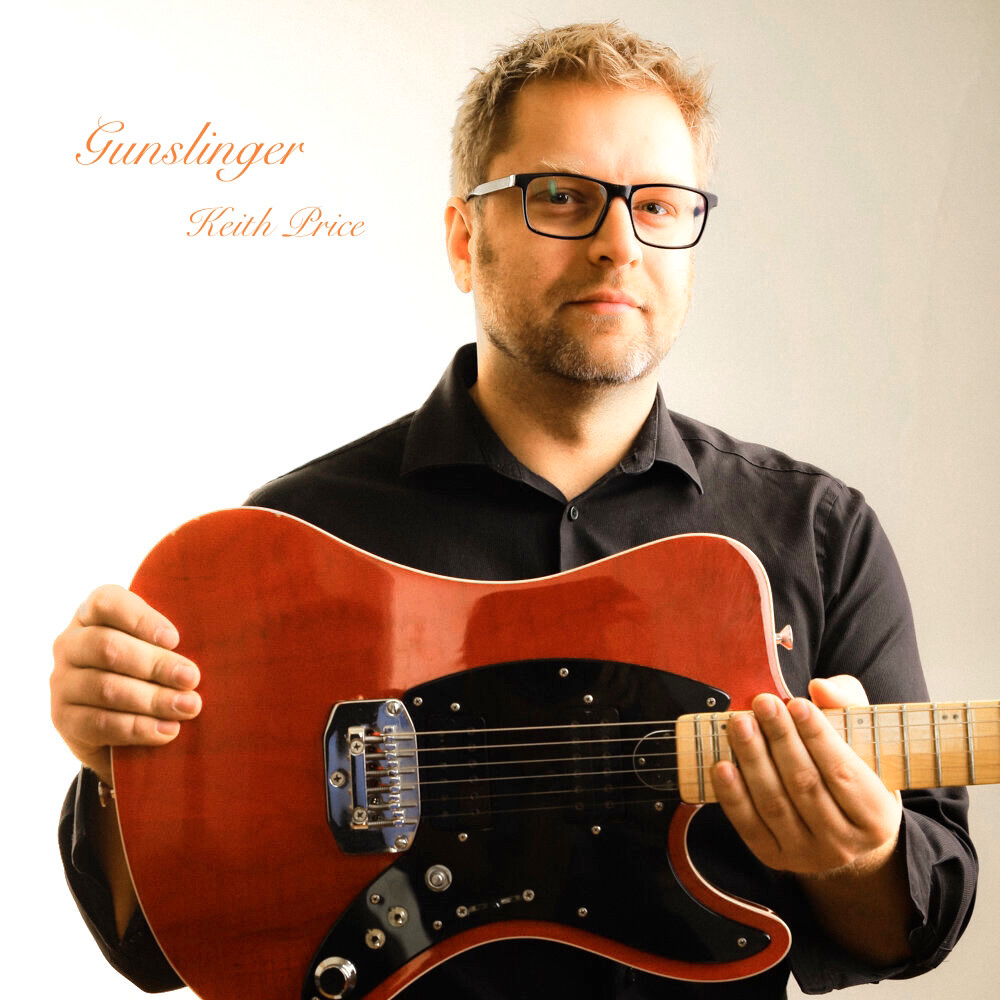
Ten years on there is a new guest in the lineup and as always there are new compositions from everyone. I hope that this recent gig is the prelude to a third album because together this iteration is crackling hot. With guitarist Keith Price on board, they moved into fresh territory and alongside the burners, there were touches of big-vista Americana. No wonder the gig was billed as the New Extra Strength Dog. At times it was Industrial strength.
Although the group is co-led, Roger Manins is the compare. Any gig that he fronts will have X-factor and this was no exception. The first set opened with a tune by Price and it was blistering. From the front row, it was like being in a jet-stream but it was not just bluster. Price is a terrific composer and this tune rode a freight train of tension and breathtaking harmonic shifts. It was initially titled #3unnamed, but now titled ‘Karangahape’ (a nearby street with interesting tensions). That set the pace.
With one exception (the encore), these were all new tunes and each complemented the other. This was a feast of good writing, tunes played and written by musicians at the top of their game. In spite of their long association, it is obvious that these guys enjoy playing together. The respect and warmth shine through the music. They are in sync because they respect the music and each other. The large club audience picked up on that, thus completing the virtuous circle.
I have posted the first and last gig tunes as YouTube clips. ‘Karangahape’ (Price) and ‘Schwiben Jam’ (Manins). Both of the DOG albums remain popular and they are available from stores or directly from Rattle (and on Bandcamp). If you don’t own copies grab one now, and if you do, buy one for a friend. We are lucky to have artists of this calibre in Auckland and if we show our support, more albums will surely follow. www.rattle-records.bandcamp.com
Keith Price
JazzLocal32.com was rated as one of the 50 best Jazz Blogs in the world by Feedspot. The author is a professional member of the Jazz Journalists Association, poet & writer.Some of these posts appear on related sites.
With the borders between Australia and New Zealand open again, visiting musicians are slowly returning to the CJC. One was Ben Lerner, a saxophonist who had utilised his time in lockdown to write some new music. While he played only one set, it was satisfying and complete in itself. We heard two stand-alone tunes and an extended composition in four parts titled ‘The Vocare Suite’.
Ben Lerner
Lerner left New Zealand a while ago and his time in Sydney has seen him further mature as an artist. His sojourn there has been productive as he has performed alongside some well-known musicians such as Mike Nock and Steve Barry. It is good to see musicians of Lerner’s calibre returning, and perhaps we will keep him here long enough for some repeat gigs.
His sound is distinctive, even and beautiful, and can convey a variety of moods with his carefully controlled modulation. Perhaps this is a thing that alto players focus on more than tenor players? The approach served his compositions well, for his ability as a musician extends beyond performance. Strong compositional skills were evident that night, ‘The Vocare Suite’ especially. I have posted part four of that suite in a YouTube clip.
Accompanying him on Wednesday was Kevin Field (piano), Mostyn Cole (bass) and Andy Keegan (drums). All are superb readers and each contributed something of themselves to the project. The sort of musicians you’d hope for in a pick-up band. The gig took place at Anthology K’Road on CJC night.
Alex Pipes Quintet
It’s the second time that I have seen Pipes perform, but the first time as a leader. A recent graduate of the UoA Jazz School and at present completing his postgraduate studies there. It is unusual to see such a polished performance in an emerging artists gig. He plays well, very well, and he writes well also; but perhaps the most surprising thing to witness is how comfortable he looks while performing.
Alex Pipes
A first-time leaders gig before a large discriminating Jazz audience must be daunting. If that was the case last week, Pipes didn’t show it. I have seen students perform who have an abundance of good ideas (and the ability to carry them out) but they sometimes lack the confidence to commit to them fully. I suspect that is the norm. Pipes gig was the counterfactual.
Pipes’ tunes were brimming with interesting ideas. They were melodic and engaging. Certain phrases reminded me of middle-eastern rhythms and whether intentional or not, enterprising. Today’s players absorb ideas from all over and so they should. Improvisation (like poetry) is the fine art of appropriation and above all, it is stealing from and modifying your own best ideas. And to do this and not sound derivative is laudable. Exciting to hear.
The other ingredient, a solid and sympathetic line-up. Pianist Joe Kaptein has appeared at the CJC often and he is increasingly in demand. Like Pipes, he is relaxed and confident on stage. On one gig he will play fusion, on another, straight ahead, or he will dial it down as an accompanist. He is a player who feeds off a room’s energy and he gives back more than he receives.
Upfront, alongside Pipes, was saxophonist Daniel McKenzie. An emerging player and a strong improviser. The flow of his ideas revealing a narrative quality. Bass player Wil Goodinson has appeared many times at the club. He has a solid reputation and he never disappoints. Lastly was drummer Rhohil Kishore. While the older drum styles are implicit, he always reaches for a fresh modern sound. The gig took place at Anthology K’Road on CJC night 5 May 2021
JazzLocal32.com was rated as one of the 50 best Jazz Blogs in the world by Feedspot. The author is a professional member of the Jazz Journalists Association, poet & writer.Some of these posts appear on related sites.
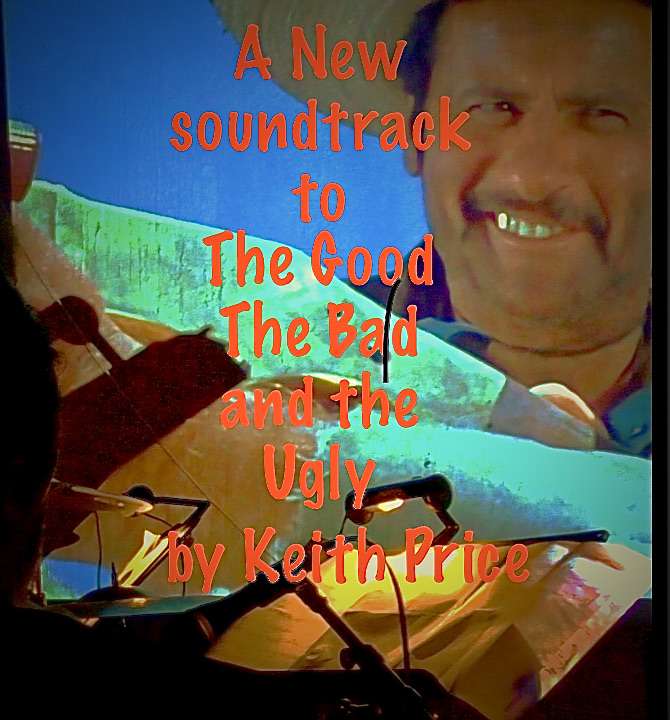
Jazz and Cinema are natural bedfellows and there was no better proof of this than with Keith Price’s Double Quartet gig. A few days ago the CJC held the New Zealand premiere of Price’s ‘New Improvised Soundtrack to The Good the Bad and the Ugly’ and what a rare treat that was. The two art forms have complemented each other since the early twentieth century. Even before the talkies, a pianist would sit watching a flickering screen while he or she would churn out improvised music. In the cinemas segregated for coloured audiences, there were aspiring Fats Wallers, and in the white-only theatres’ grandiose theme music was conjured out of thin air.
While seldom defined as Jazz it was never-the-less reactive to the moment and the first talkie was a (now) controversial film called ‘The Jazz Singer’. Soon after came some iconic Jazz themed movies and in the era of the Neo Realists, a Jazz soundtrack or an incidental jazz segment was indispensable: Elevator to the Scaffold (Miles), Breathless (Martial Solal), Blow Up [Herbie Hancock).
It is not always obvious that a Jazz musician has composed a movie soundtrack but a surprising number of films can lay claim to this connection. John Williams who wrote the Star Wars soundtrack (plus ET Jaws, Schindlers List etc) was a Juilliard trained Jazz pianist (who once worked as a Jazz musician in New York bars). We have Jazz musicians in our own community who often appear in the credits (Crayford, Langabeer etc)
In the case of Ennio Morricone, the reverse is true. He was never a Jazz pianist but his compositions have become jazz standards. I mention Morricone because he composed the original soundtrack to The Good the Bad and the Ugly. This work by Keith Price is not in any way based on Morricone’s score. Price has turned the concept on its head and created something vital and new, and in this case, drawing on the film images to blaze a new trail.
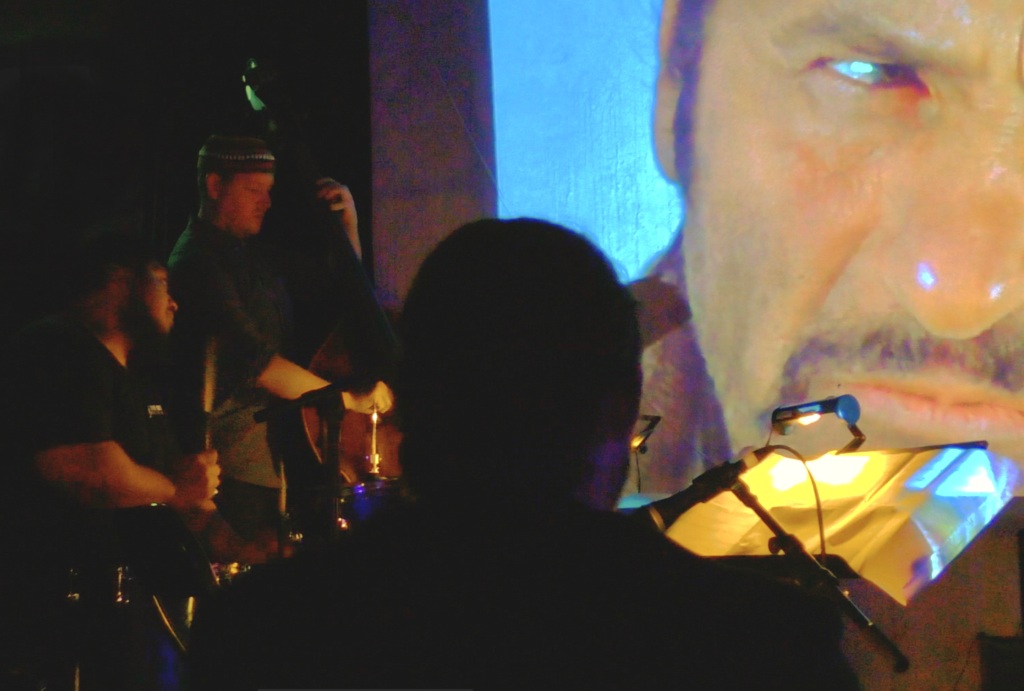
Here, the images are subordinate or equal to the music and there is no incidental music to enhance the segments of dialogue. And because there is no spoken narrative something extraordinary occurs. We feel the music and absorb the images in new ways. It comes to us through many senses, through ears, body and eyes.
This is a through-composed work, but with space and opportunity for the musicians to react to the images (and to each other). It features group improvisation, but there is nothing aimless about the work. Each segment is built on what proceeds it with the charts guiding the ensemble forwards as they interact.
Excerpts from the concert
The ensemble was a double quartet and this doubling up of instruments required skilful playing and very good writing. Luckily we got both, and although the gig was loud, the intensity never tumbled into chaos. Each musician took on agreed roles, resulting in a heady, textural mix. There were two keyboards (piano and digital), two drummers, two basses (one upright, the other electric), a tenor saxophone and a guitar.
Price was on guitar and guiding the music with prompts. In a semi-circle facing the screen and keeping an eye on the leader were, Ron Samsom (drums), Olivier Holland (electric bass), Mostyn Cole (upright bass), Malachi Samuelu (drums), Kevin Field (piano), Ben Gailer (keyboards) and Roger Manins (tenor saxophone).
Ben Gailer, Malachi Samuelu, Mostyn Cole & Eli
An unexpected plus for me was having the cinematography of Sergio Leone untethered from the screenplay. A new piece of music to a timeless movie. He was a towering genius of the cinema and it was nice to be reminded of that as we appreciated the preternatural framing of each shot. Leone drew on Samurai tales for his Dollar Trilogy and in doing so he reached beyond genre. These are ancient archetypes reframed and more profound than the faux wild west of John Wayne or ‘Hopalong’ Cassidy. The function of archetypes is to live on through reinterpretation and thanks to Keith Price, this story lives on.
JazzLocal32.com was rated as one of the 50 best Jazz Blogs in the world by Feedspot. The author is a professional member of the Jazz Journalists Association, poet & writer.Some of these posts appear on related sites.
The Spirit of Ornette Coleman hung in the air last Wednesday, manifesting itself in the form of the Mark Lockett Quartet. It was a quartet devoid of chordal instruments. It was Coleman, not Mulligan. It was original music and an example of Coleman induced Lockdown creativity. The inspiration may have come from Coleman’s approach, but Lockett is a true original. He drums musically and tells stories at every turn. His tune titles, his solos and his announcements are tales from a true raconteur. He is a storyteller with an open vocabulary.
I am always enthusiastic about a Lockett gig and with Lucien Johnson in the line-up, it was a sinch. I have reviewed several of Johnson’s albums, the last one, Wax///Wane, was especially fine. Like Lockett, he is adventurous and his musical fearlessness was an asset here. While Lockett composed the tunes (excepting two Monk tunes), Johnson was the principal arranger.
The resulting gig was a tribute to freedom. The sort that shocked in 1959 and doesn’t know. Colman never abandoned the rules, he just invented new ones. His hard to nail down theory of ‘harmolodics’, an evolving rearrangement of hierarchy, with harmony, melody, speed, rhythm, time and phrases jostling for equality. I think that he would have enjoyed this gig as he never wanted followers. What he wanted, was fellow travellers and he found that with this band.
I can’t recall when I last saw a trumpeter, Oscar Laven. He was smokin’ last Wednesday and his forthrightness and bright tone, balanced out the thoughtful and softer toned explorations of Johnson on tenor saxophone. Everyone took solos and the notes they blew added something worthwhile. Behind them and pounding out meaty basslines was Umar Zakaria. We saw Zakaria recently when he fronted his own gig. Here, he was at his best, a Mingus like figure powering the music to greater heights. He was just the right anchor and the others benefitted from his solid earthy cushion.
As the tour progresses throughout the Islands, the audiences will find much to enjoy, and as a bonus, they will hear Lockett’s tall tales of New York and elsewhere. His banter is worth the ticket price alone and if you add to that the joy of fresh sounding music, it’s a bargain.
Mark Lockett Quartet: Mark Lockett (drums), Lucien Johnson (tenor saxophone), Oscar Laven (trumpet), Umar Zakaria (upright bass). The gig was at Anthology, CJC Creative Jazz Club, 22 April 2021.
JazzLocal32.com was rated as one of the 50 best Jazz Blogs in the world by Feedspot. The author is a professional member of the Jazz Journalists Association, poet & writer.Some of these posts appear on related sites.
The old adage ‘good things are worth waiting for’ proved correct last Wednesday. After two lockdown cancellations, the Michal Martyniuk Trio (+ Dixon Nacey), finally performed their long-awaited CJC gig. There had been much anticipation as the band is popular, and when the gig finally happened, everyone was excited. The European continent is a long way away and so we don’t hear many European bands live. The Martyniuk Trio (whether playing alongside Kiwi or Polish musicians), always manages to capture a piece of that northern vibe for us.
I have previously reviewed Martyniuk gigs and they never disappoint. I like them because they are uplifting. I like them for their melodic and harmonic richness. Martyniuk is a gifted pianist, but his compositions and arrangements are real standouts. The Awakening, The Opening’ Jazz Dance etc. His tunes feel like modern standards and I never tire of hearing them interpreted afresh. He doesn’t rest on his laurels either, bringing memorable new tunes to the bandstand with each gig.
A case in question was a soulful tribute to Lyle Mays (For Lyle). A reflective ballad, celebrating a creative giant now lost to us. The tune, captured the essence of Mays the musician while evoking sadness at his untimely passing. It was also somehow fitting that Martyniuk’s own tunes should be bookended by two Metheny tunes. Metheny’s and Martyniuk’s had been the last gigs I attended in the hours prior to the first lockdown. When tours stopped I recall wondering; when will I ever hear live music again? I listened to both Metheny and Martyniuk over the turbulent months that followed and recaptured the joy of those events. We are lucky to have live music again, and especially when so many others are deprived of it.
Another obvious reason for adding Metheny tunes to a programme of originals was the inclusion of Dixon Nacey in the band. Nacey’s interpretations of Metheny tunes are standouts. During recent gigs, he has introduced many of these into his repertoire and to much acclaim. He was very much on form last week and his soaring smooth as silk delivery filled the room. His warm sound also complimented the richness of the Martyniuk compositions. One of Nacey’s own compositions was also played.
Videoing this gig proved extremely difficult, as the room was dark and the sightlines impossible. It was also a packed house and so capturing the sound from a suitable location was compromised Those who want to hear more of the group should buy an album or go see them live.
The remaining band members, Cameron McArthur (bass) and Ron Samsom (drums) have long been part of the Martyniuk trio (NZ), having played with him for years and having appeared with him at ‘Java Jazz’. They are highly experienced musician’s and familiar with the material so they can explore its facets.
Dixon Nacey
My recommendation is to buy Martyniuk’s records and to check out some of the recent YouTube vids captured in his native Poland or Auckland. I don’t know how long he will remain in New Zealand as his career in Poland is on the rise. While he remains here, do check his band out. It’s a treat you should not deny yourself – from michalmartyniuk.bandcamp.com
The gig was at Anthology, CJC Creative Jazz Club, Wed 14 2021. Michal Martyniuk (piano), Dixon Nacey (guitar), Cameron McArthur (bass), Ron Samsom (drums).
JazzLocal32.com was rated as one of the 50 best Jazz Blogs in the world by Feedspot. The author is a professional member of the Jazz Journalists Association, poet & writer.Some of these posts appear on related sites.
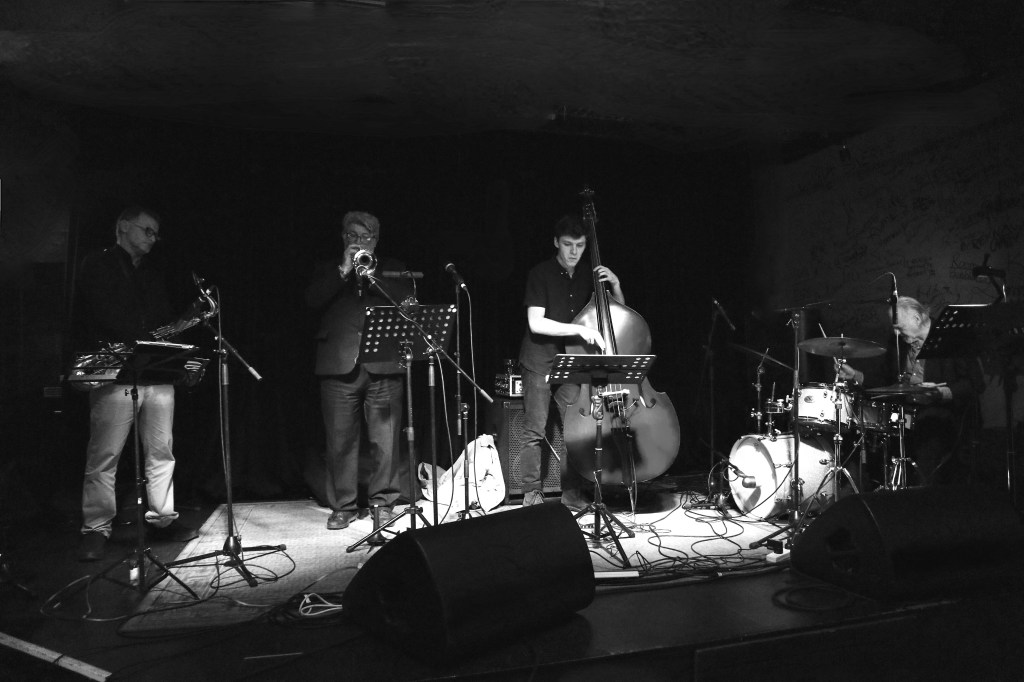
Michael Gianan’s ‘Wouldland’ gig caught my attention immediately. First off, was that wonderfully evocative title (and accompanying poster), suggesting a balm to ease our way through troubled times. For a lover of forests and explorative sounds, it was irresistible. I was hopeful that this event would hit the mark because I have kept an eye on the leader’s trajectory since he graduated with honours from UoA Jazz School two years ago. During that time he has been associated with some diverse and interesting bands. This was his second CJC gig as a leader and the proof was to be in the pudding.
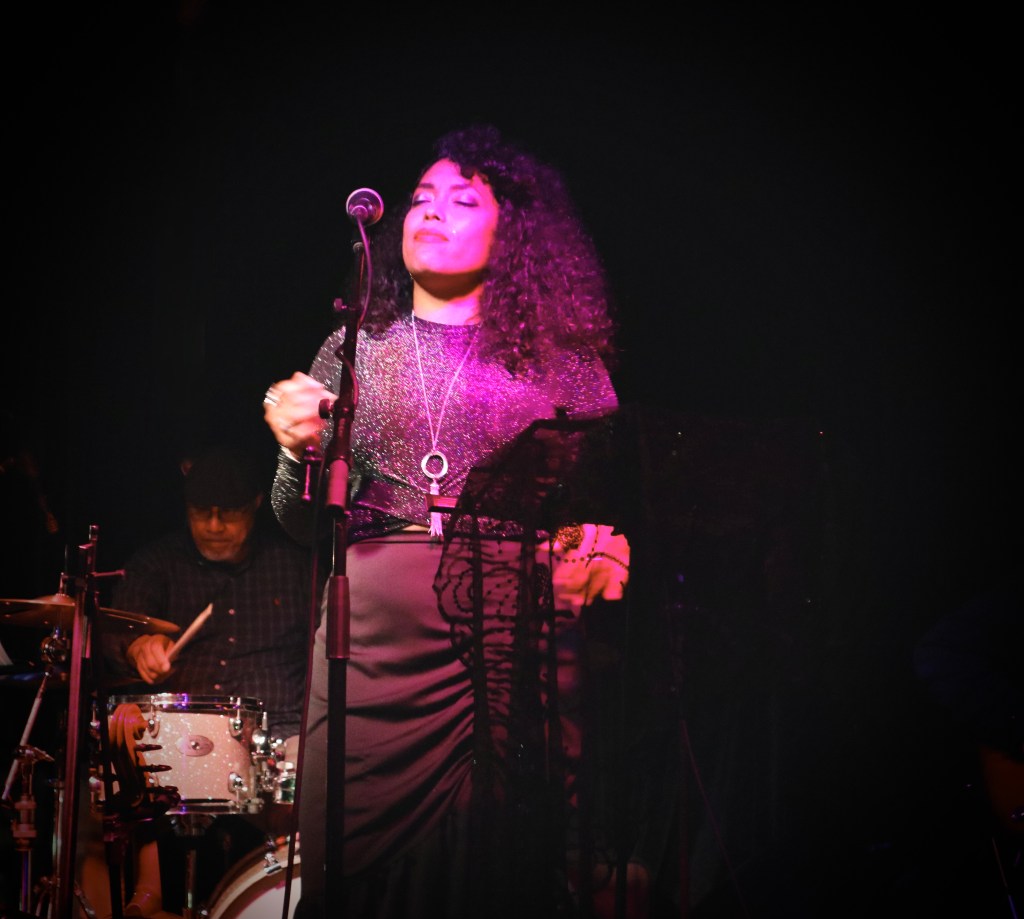
The gig title suggested an elemental offering and in many ways it was. While it referenced many ideas and styles, all were distilled to their essence. Out of this, Gianan had forged a clear vision. It was a surprisingly mature offering and his strength as a leader became apparent as the sets progressed. He knew exactly what he wanted from the musicians and he signalled his intentions as the tunes progressed. The compositions, while structured, did not confine the musicians. They were pieces written with the ensemble in mind.
It was particularly evident in the head arrangements, which were anchors for the developments which arose from them. Brief exchanges between guitar and saxophone, momentarily broke free of the structure, and this contrasted with the steady bass lines and drum pulses. There were burners and ballads, and every twist and tune seemed to balance what had preceded it.
Gianan’s guitar can be either nimble or deliberate, but he never tries to make it just about him. His comping is supportive while the flurry of exchanges with the other musicians are to the point. Gianan’s Jazz school alumni Lukas Fritsch was the perfect foil for him here. His alto lines tight in the heads, and stretching during exchanges. His lines are often elided and I like that, he can say a lot with what he leaves out. Knowing when to leave space is important and again this says something about the quality of the compositions.
Completing the line up were two experienced musicians, Bass player Mostyn Cole and drummer Ron Samsom. Cole’s electric bass work has appeal. There were fragments of vibrato-tinged melody, played in unison; at other times a pumping groove. He was a late addition to the lineup and a good choice. We expect much from Samsom and we are never disappointed. He seemed to relish playing alongside his former pupil. He was on fire.
I have put up a clip titled ‘Manara’. Unfortunately, the battery on my Rode mic gave out, so the filming relied on the camera mic. It is not ideal, but the music shines through. All of the compositions were Gianan’s. The tune titles were intriguing and added something to the vibe. Often Jazz musicians pay scant attention to titles, but not so with Gianan ( Wouldland’ ‘B B Tressler’ ‘Maegraeneous’ ‘Astigmatisn’ Manares etc). Enigmatic titles can add value and these felt like they belonged to the tunes.
It is noticeable when a gig flows naturally. Afterwards, something remains with you, an essence, not just a tune, but a sense of what the musician is communicating. At times, this gig evoked a wistful feel, but it mostly suggested what could be. I for one will wait for what comes next with interest.
The gig was at Anthology, CJC Jazz Club Auckland 7 April 2021 Michael Gianan (guitar), Lukas Fritsch (alto saxophone), Mostyn Cole (electric bass), Ron Samsom (drums).
JazzLocal32.com was rated as one of the 50 best Jazz Blogs in the world by Feedspot. The author is a professional member of the Jazz Journalists Association.Some of these posts appear on other sites by arrangement.
Happenstance is the midwife to surprise and in the musical universe, random events occur often. They appear unheralded, bringing chaos or joy and for seasoned improvisers, they are welcome visitors. So it was with Hot Foot, a band cobbled together in haste; a sonic singularity, a concentration of energy. The advertised gig was an organ trio, but at the last minute, that event was rescheduled, so with hours to spare, Roger Manins revived Hot Foot and how fortuitous that turned out to be.
There is provenance to Hot Foot, but the details remain sketchy. Leader Manins hinted that they had once played at a village market but a long time ago. He introduced the trio with a story about a Sydney band of similar configuration. A saxophone trio he’d played in as a much younger man. For him, that had been a formative experience, a chance to play without the safety net of a chordal instrument. A chance to cut his musical teeth alongside more experienced players and to road test the Sonny Rollins Way Out West trio thing.
On Wednesday, the spirit of Rollins hung over the proceedings, the way Manins gnawed away at a tune and tugged at its fabric without losing the form. We were treated to long intros where a familiar melody was hinted at, then abandoned to a flurry of arpeggios. It was riveting to watch and to hear. There were clear signals and subtle hints as the intros unfolded; sometimes accompanied by verbal exclamations or questions directed at the audience or to Jazz School students. The solos were extracted from the tunes by paring them back and then exposing the naked ideas; sometimes stopping at the brink of freedom. If this sounds chaotic it was not. It was a masterclass for Jazz lovers and it was realised in a spirit of joy and levity.
A saxophone trio reveals the melodic lines unadorned, but in doing so there are specific responses required from a bass player and a drummer. Cameron McArthur’s bass gave us some pared-back harmonic references and more importantly, he centred the trio. In this instrumental configuration, it is important that a bass player holds the form, and McArthur did so admirably. This not only gave the saxophonist the room he needed but opened up opportunities for the drummer.
Drummer Ron Samsom made the most of his space and his musical intelligence came to the fore. His was a modulated voice as there was nothing that intruded or jarred, there was a pulse but it was mainly implied. He explored the kits melodic possibilities and added flashes of colour. Improvisers function best in a high trust environment and that was what we saw last week. It is here where experience counts and where a band manifests personality.
The gig also unleashed Manins alter ego, Comedian Roger. There are often flashes of humour in his musical performances and it is especially evident when he introduces tunes. He never takes himself too seriously and this balances his serious commitment to his art form. His humour is unplanned and you never know what is coming next. The CJC audiences love to see this side of him. The clip I have posted is a Monk tune titled ‘Ask Me Now’. This is a favourite of mine and judging by the whoops of delight when the coda morphed into the tune, it is an audience favourite also. The bravura, the exploration, the verbal interactions; Among the tunes played were songbook standards like favourite ‘Sunny Side of the Street’ (Dorothy Fields/ Jimmy McHugh), Strode Rode (Rollins) and an Australasian Jazz standard, the blistering rendition of Bernie McGann’s ‘Latitude’. Ask Me Now is a question I am happy to answer. Yes, this was a very good night.
Hot Foot Saxophone Trio: Roger Manins (tenor saxophone), Cameron McArthur (upright bass), Ron Samsom (drums)
The gig took place at Anthology, CJC (Creative Jazz Club), Auckland. March 2021
It’s impossible to over-estimate the influence that the CJC (Creative Jazz Club) has had on the Auckland and wider New Zealand Jazz scene. For those unfamiliar with its history, the club was set up over a decade ago, as a place to bring original improvised music to discriminating listening audiences. A secondary function was to ensure that emerging artists were given a shot on select gig nights. Last week brought two bands, the Ben Frater Band and the Rachel Clarke band.
Frater is an undergraduate at the UoA Jazz School and for an emerging performer, his drum-work shows surprising maturity. In common with many up-and-coming performers, his approach is not confined to any particular style and this openness has informed his approach. The gig was billed as swing influenced, but leaning towards fusion, and the descriptor was accurate. Frater is a compelling drummer and he will further enrich the local scene.
The leader enrolled former and current students for this gig and in consequence, a shared vision was evident. CJC audiences are by now quite familiar with guitarist Michael Gianan and with keyboard wiz Joe Kaptein; both have featured often during the last year. The other band members were Jimmy Olsen on electric bass, Andrew Isdale on tenor saxophone and Jack Thirtle on trumpet.
Olson was a powerhouse with those urgent pumping bass-lines; the sounds of Jazz-fusion deserve slippery grooves like that. And Kaptein impressed as he always does, his calm demeanour belying what was flowing from his fingertips. He backed into the pieces like a pro and established grooves on top of grooves; then he reached underneath the bonnet and messed with the sound in a good way.
The groove tunes took a bold step in the direction of improvised Jazz electronica; the direction of Eivind Aaset in particular. I hope that Frater takes us further down that road. It has until now been a Nordic sound and it is extremely popular in the northern regions. This band gave it a Kiwi flavour, and I for one am ready for more. I have posted a clip titled ‘Montgomery’ (Frater).
The second set brought us, vocalist, Rachel Clarke’s band. Clarke had assembled some formidable firepower. Ben Frater and Jimmy Olsen were present again, Gretel Donnelly and Chelsea Prastiti as backing vocalists, Nathan Haines on flute, Alex Pies on guitar and Ron Samsom on percussion. Clarke is a recent graduate from the UoA Jazz Programme and I first heard her when she was called on at short notice to replace Caitlin Smith at a live gig, just days before the first lockdown.
All of the tunes in Clarke’s set had a Latin flavour and more specifically, a Portuguese flavour. Many of the tunes were sung in Portuguese. Again, it is a credit to the Auckland University Jazz School that they nurture such diversity within their programme structure. Out of this diversity, an Auckland sound is being forged.
It can be daunting to find yourself in front of a large discriminating Jazz audience, but Clarke demonstrated her ability to win an audience over. She has a fine voice and she mastered the rhythmic complexities of her Latin tunes with ease. Alex Pipes also nailed the rhythms, with Olsen, Samsom and Frater adding counter pulse and texture. Nathan Haines provided perfect fills and a gorgeous solo or two. His Latin Flute chops are legendary.
JazzLocal32.com was rated as one of the 50 best Jazz Blogs in the world by Feedspot. The author is a professional member of the Jazz Journalists Association.
For those who don’t live where we live, live gig reports could feel like salt rubbed into a wound. I write from a warm Pacific Island. A place where the virus is not in the community but where we can roam free (we don’t have snakes) and where we have live music available. We have had two short sharp lockdowns this year and as we emerged from each of them, the music venues filled up with enthusiastic punters; so what better way to exit the last lockdown but with joyful noise. Ruckus is a genre defying, assemblage of anarchic improvisers under the guidance of David Ward.
Last week saw the inclusion of saxophonist J. Y. Lee in the Ruckus lineup and his bold delivery added piquancy. There were three Monk tunes performed, and on these, Lee played Baritone saxophone. The richer palette worked well and the contrasting instrumentation gave the jagged bouncing lines of Monk’s compositions a rich earthy feel. Ruckus is one of several local groups which invariably include Monk tunes in their repertoire. Ward’s quirky Monk arrangements are always worth listening to.
Ward’s arrangements for Ruckus are also notable for their eclecticism, their lack of cliche. blues, Americana, latin tinge, free and swing and all fused into a jazz-grounded brew. There were folksy ballads and a tango referencing tune (I have posted the latter). This time, there was less Americana influence but it was still evident. The band’s sound is crafted from pedal steel guitar, a standard electric guitar (or guitars), drums, upright bass and multiple saxophones.
As always, Neil Watson alternated between pedal steel guitar and standard electric guitar. He and Ward are old hands at this material and they play off each other well. When both played guitar they never got in each other’s way, throwing challenging lines between them or else comping quietly as they laid down a cushion for the other.
Eamon Edmundson Wells upright bass work stood out on this gig. He sounded great. This is the type of band where he is at his best, the type of band where a degree of freedom is afforded him. Tristan Deck again proved his worth as a multi-faceted and capable drummer. I loved the stick work on the tango-esque number.
JazzLocal32.com was rated as one of the 50 best Jazz Blogs in the world by Feedspot. The author is a professional member of the Jazz Journalists Association.Some of the posts also appear on other sites.