With the opening of borders between New Zealand and Australia, it was hoped that improvising musicians could begin touring again. Apart from three returnees and several stragglers who chose to shelter in place, we had not seen an international for fifteen months. Unfortunately, the pandemic reestablished itself in Australia and that window closed within a week of its opening. There was, however, one musician who timed it perfectly and that was saxophonist Andy Sugg.
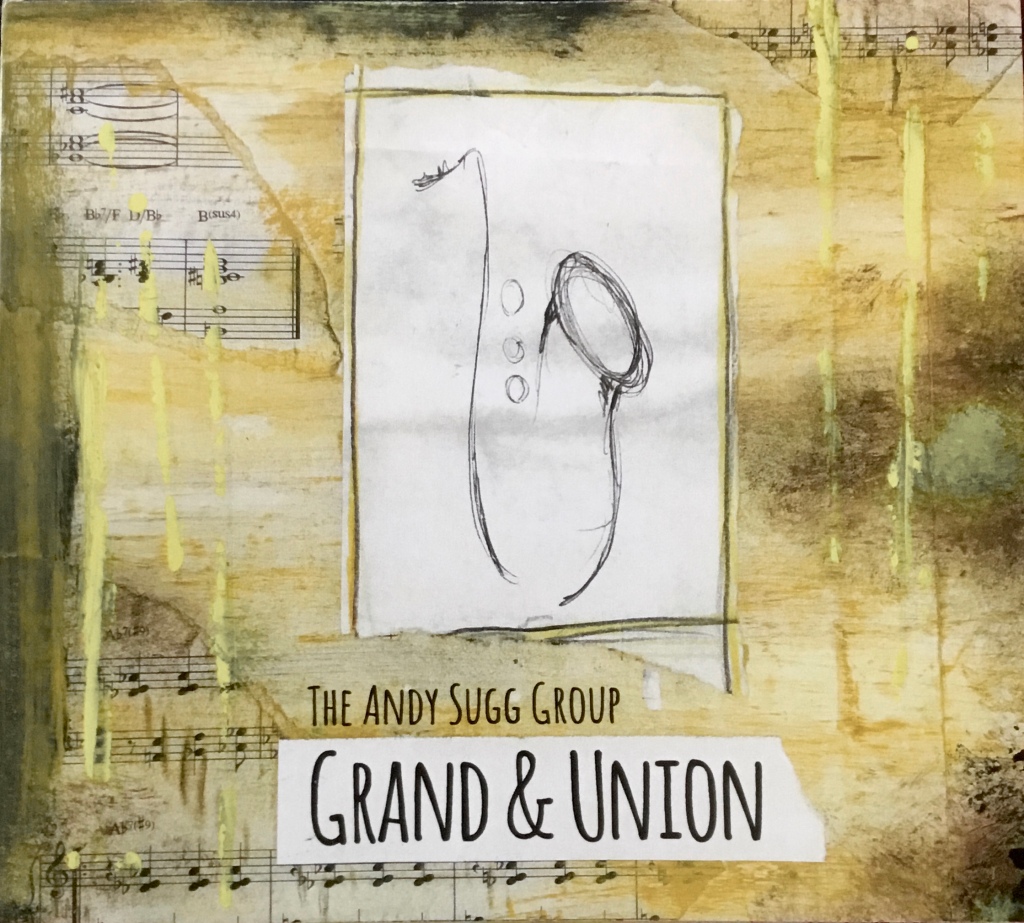
He flew out of Melbourne just days before another lockdown was announced and we were very pleased that he had slipped the net. Sugg is a gifted saxophonist with broad appeal and there was no better way to break the tour drought. The tour was billed as an album release but the setlist also included earlier compositions and two tasty standards. The album titled Grand & Union was recorded in New York in mid-2019 and released last year. For obvious reasons Sugg was unable to take to the road and certainly not with his New York-based bandmates.

Grand & Union is a rail hub in Brooklyn but it is also a metaphor for the album. ‘A musical intersection where styles and motifs merge before moving somewhere else’. It is an album of diverse stylistic influences but the musicians’ craft a tasteful amalgam from the underlying base metals. In the liner notes, the leader mentions Stravinsky as a prime inspiration and ‘The Rite Stuff’ with its deep propulsive groove is the most overt reference; a stunning piece, which evokes the now without jettisoning the history underpinning it.
Sugg is a particularly coherent improviser who takes a listener along as he tells his ear-catching stories, and his tone is particularly arresting. Warm as toast and seldom straying into the lower registers. On the soulful ‘Ruby Mei’, his sound reminded me of the great melodic improviser, Ernie Watts. Much credit is also due to his New York bandmates who are seasoned musicians all, and who worked as a tight cohesive unit.
His Auckland gig featured a local rhythm section and they also acquitted themselves well. The first set opened with the title track Grand & Union and was followed by Ruby Mei and other tunes from the album, Then came a more expansive offering in several sections. This enabled Sugg and the band to stretch out. This was a gig of highly melodic offerings and as an added treat, the second set featured two popular standards. A musician said to me recently; playing a popular standard to a discriminating audience, means, that you must play it extremely well and you must insert something of yourself into it. They did. The standards were the gorgeous ‘Someday My Prince Will Come (Churchill/Morey) and the much loved ‘In a Sentimental Mood’ (Ellington). The audience shouted their approval, obviously delighted. I have posted a YouTube clip from the Auckland gig.

While each of the local musicians has experience playing with offshore artists, considering how long that has been, they were very much on form. Of particular note was Wellington drummer Mark Lockett. I could hear people commenting enthusiastically about his drumming between numbers. They were right to comment as he pulled one out of the bag that night. He and Sugg go back a long way and the connection was obvious.
The gig took place at Anthology for the CJC Creative Jazz Club on 14 July 2021. I recommend the album and it’s worth checking out Sugg’s earlier album also. To order physical copies, download or stream, visit AndySugg.Bandcamp.com
The album personnel: Andy Sugg/tenor saxophone. Brett Williams/piano & keyboards, Alex Claffy/acoustic & electric bass, Jonathan Barber/drums.
Gig personnel: Andy Sugg/tenor saxophone, Keven Field/piano, Mostyn Cole/acoustic bass, Mark Lockett/drums
JazzLocal32.com is rated as one of the 50 best Jazz Blogs in the world by Feedspot. The author is a professional member of the Jazz Journalists Association, poet & writer. Some of these posts appear on related sites.
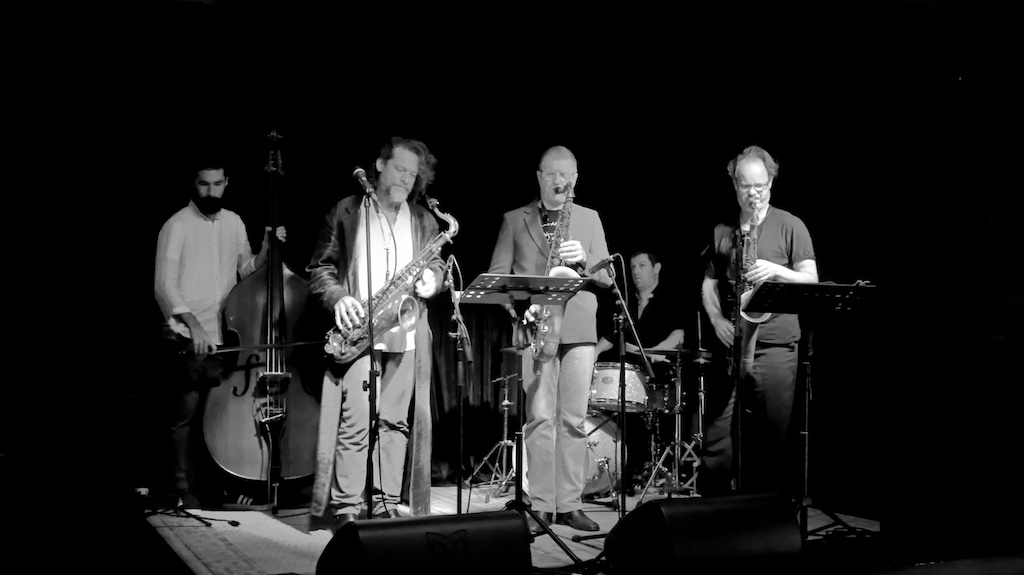 Andy Sugg’s collaborative album ‘TTTenor’ was cut in Melbourne back in 2006 and rightly, it has garnered praise. In a land of significant horn-players, the tenor triumvirate of Sugg, Oehlers, and Wilson was a standout. Three gifted saxophonists who capitalised on the imaginative charts to showcase their formidable skills. Completing the original sextet was an immaculate rhythm section – Paul Grabowsky (piano), Gary Costello (bass) and Andrew Gander (drums). Since then, Sugg has recorded other albums like ‘The John Coltrane Project’ ‘The Berlin Session’ ‘Brunswick Nights’ ‘Wednesday at M’s’ and ‘Tenorness’.
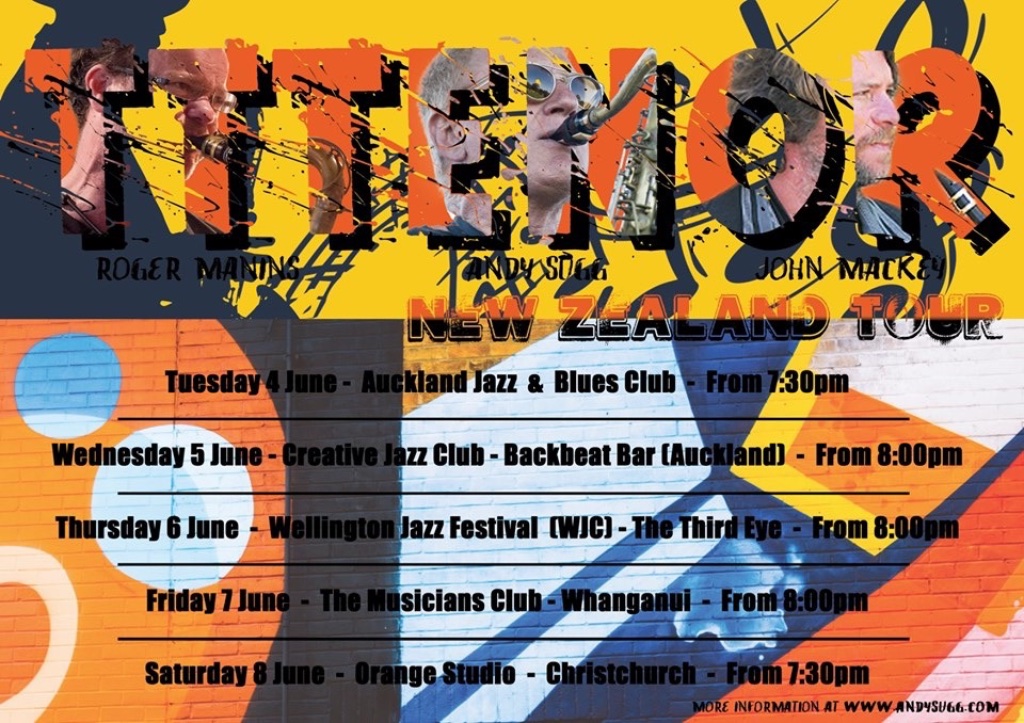
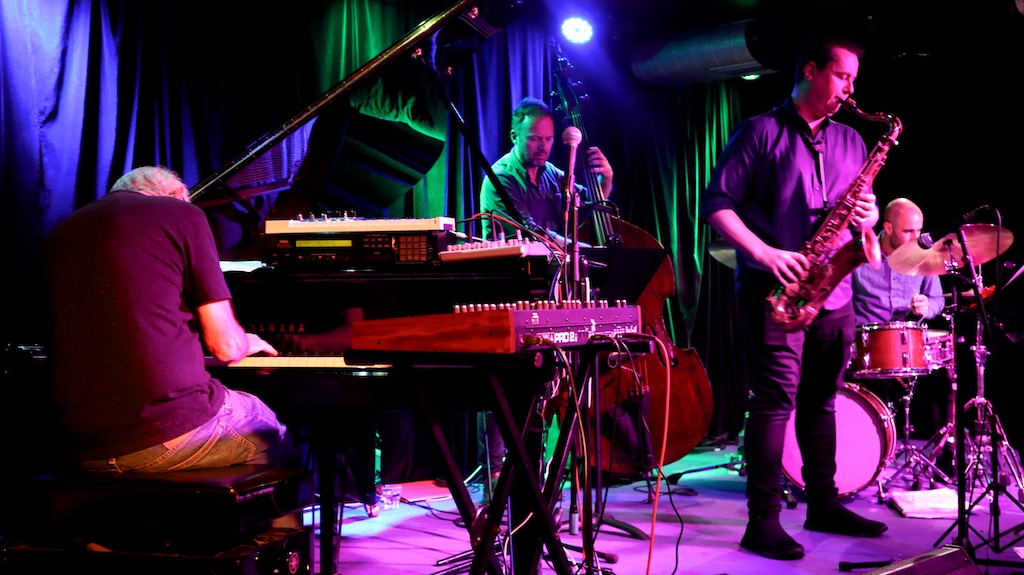

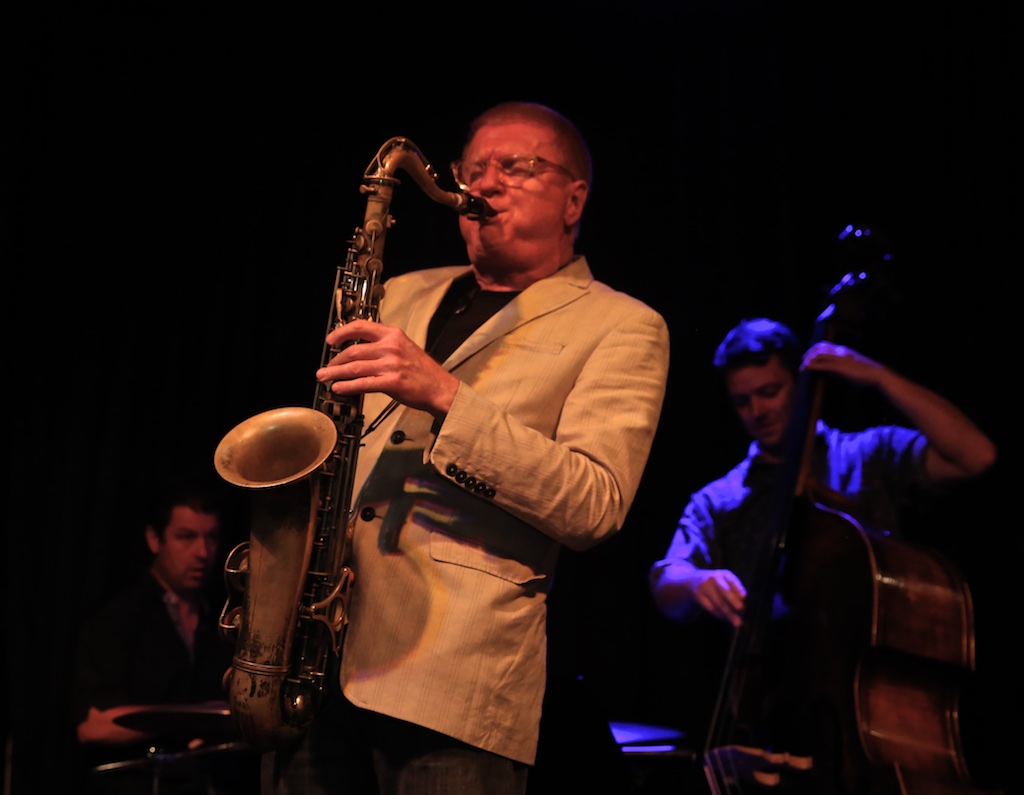 Australia produces some distinctive, muscular tenor players and Andy Sugg is an example of that phenomena. The first thing that grabs a listener is an awareness of the raw power that fills a room when he blows. I am not just referring to volume or his fat rounded sound, but to the way he communicates an innate sense of musical purpose. This comes across as something beyond mere confidence. Deftly progressing through each tune; no over thinking, just a flow of connected ideas – and all carried on that delicious sound.
 It is always tempting to look for comparisons or patterns, it is what listeners do (and probably what many players wish they didn’t do). It is part of how music works, our subconscious looking for a framework, for some reference point – a launching pad, a place of departure where the known departs for the unknown. In Sugg’s playing you could could hear them all. Name a great tenor player and that player was in there, listen harder and suddenly they were gone. Perhaps this is the hall mark of truly innovative players; they channel the essence of others and then dismiss them just as easily.
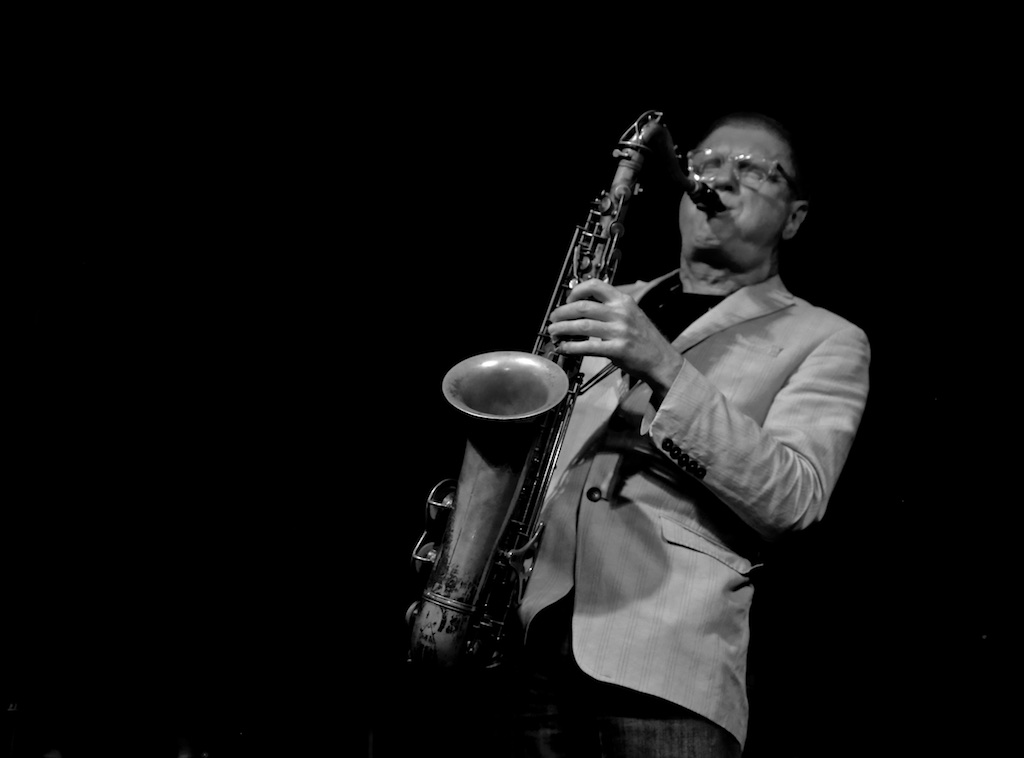
 One of the joys of improvised music is the eternal conflict between the tangible and the intangible. You hear a phrase or a voicing that is maddeningly familiar, you feel a tingle of anticipation, you are on the verge of naming it – but before it takes form it is gone; dissolved into the intangible. Listening to Sugg is to catch a piece of Brecker, but listening to Sugg is also to hear an original. Tradition and innovation co-existing but ultimately spoken in his own dialect.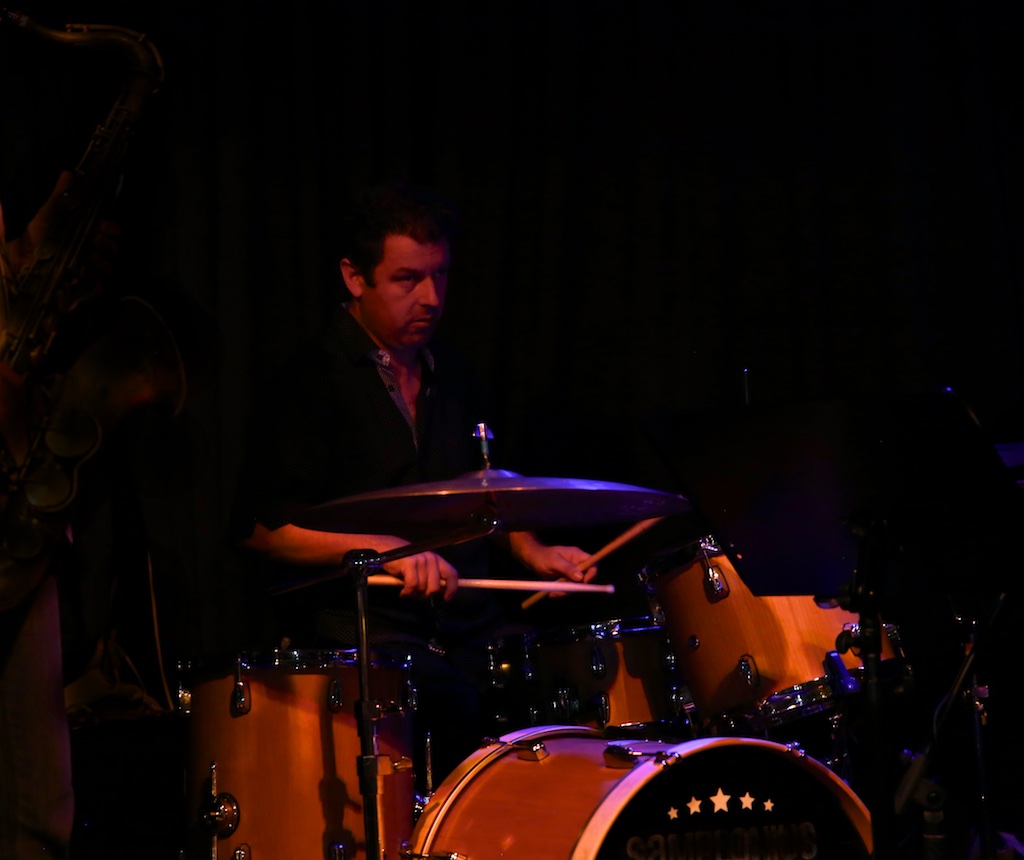
 JazzLocal32.com